
 Ask ChatGPT


 The Daily Stoic
3 Aug 2024 · 1h 12m
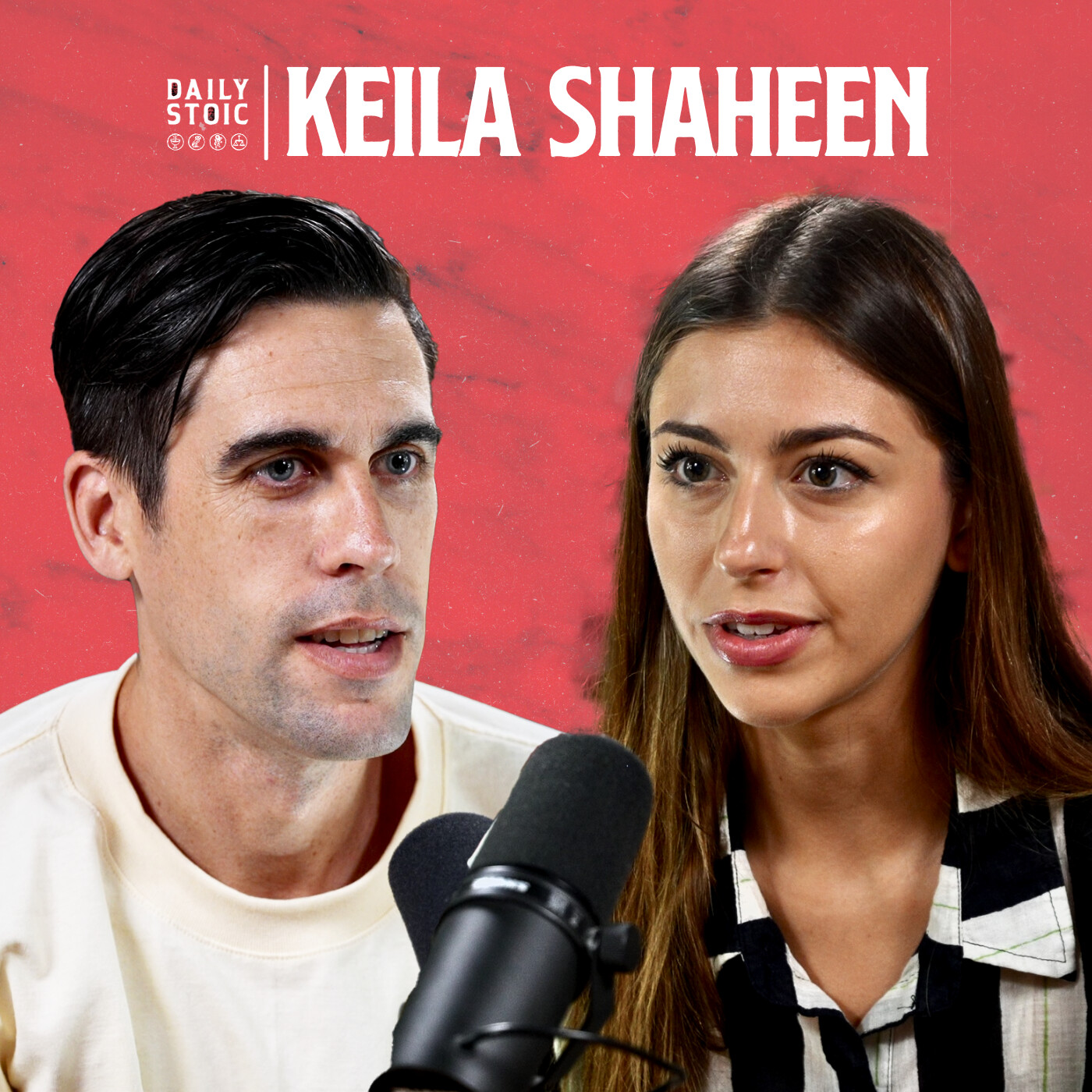
In this episode, Ryan Holiday interviews Keila Shaheen, the author of The Shadow Work Journal. The discussion focuses on the concept of shadow work, journaling, and the profound impact self-discovery can have on personal growth. Keila shares insights from her experience and the unexpected success of her self-published journal.
Written by AI. May contain mistakes.

Get the gist, explore an idea or ask about something said.
 Claude
On The Daily Stoic, what are the key points of this episode?
Searching your listeningAutomatic transcript. May contain errors.
0:28Why choose a Sleep Number smart bed? What can 160 years of experience teach you about the future? When it comes to protecting what matters, Pacific Life provides life insurance, retirement income, and employee benefits for people and businesses building a more confident tomorrow. Strategies rooted in strength and backed by experience. Ask a financial professional how Pacific Life can help you today. Pacific Life Insurance Company, Omaha, Nebraska, and in New York. Pacific Life and Annuity, Phoenix, Arizona.
1:03Welcome to the weekend edition of The Daily Stoic. Each weekday, we bring you a meditation inspired by the ancient Stoics, something to help you live up to those four Stoic virtues of courage, justice, temperance, and wisdom. And then here on the weekend, we take a deeper dive into those same topics. We interview Stoic philosophers. we explore at length how these stoic ideas can be applied to our actual lives and the challenging issues of our time. Here on the weekend, when you have a little bit more space, when things have slowed down, be sure to take some time to think, to go for a walk, to sit with your journal, and most importantly, to prepare for what the week ahead may bring.
1:54hey it's ryan holiday welcome to another episode of the daily stoic podcast you probably heard of a platinum album in music that's when a band sells a million copies now most of us grew up hearing about that that actually meant you sold one million albums um now it's like you sold some albums unless you're taylor swift or adele or something you really did sell those physical albums, but most of the time it's like a certain number of streams translates to one sale. Anyways, still the idea of a platinum album, it means something. And I always wondered in books, like, what is that? And I remember when I heard that Robert Greene's 48 Laws of Power, it sold over a million copies.
2:36I was just like, a million copies. Can you imagine that? That seems, you know, a million, a million, but in book publishing, it's totally different. Like I would say probably 100 ,000 books is the equivalent of going platinum. And selling a million books is like selling 10 million albums, which they call diamond, certified diamond in music. And when I wanted to be an author, the idea of selling that many, like only the greatest of all time I'd ever done, it seemed inconceivable to me. I remember when Trust Me, I'm Lying, had sold 10 ,000 copies. and I was like, I can imagine 10 ,000 people like in a basketball arena, but a million was unfathomable to me.
3:19The Obstacles Away sold something like 3 ,300 copies its first week. That that would go on and ultimately sell a million copies and then 2 million copies. Again, unreal to me. Could have never imagined it. It's funny though, I did this book called Perennial Seller a few years ago, which was about how, you know, when you look at the bestseller list, it tells you what sold that week. But actually the things that move the most units are the things that they didn't sell 10 ,000 copies in a week and then appear at number five on the New York Times list, but they sold 1 ,000 copies a week for 52 weeks and thus sold 52 ,000 copies, right?
3:59So they sold a lot more, even though they never appeared on the list. These are called perennial sellers. And in fact, the New York Times list, for the most part, tends to exclude books that have been on there too long. Every once in a while, a book will reach out of the stratosphere. I was at First Light Books the other day, and I saw two copies of James Clear's Atomic Habits. And James is a dear friend, great episode of the podcast, if you haven't listened. I remember us being at a conference in Toronto many years ago, and him talking to me, and he was like, why should I traditionally publish a book?
4:32He's like, I don't even understand the math. I have this newsletter and he ended up doing it. But anyways, what struck me when I was there, there was a copy of Atomic Habits and it said 3 million copies sold on the cover, which is an incredible amount. And then there was another copy next to it. So they'd just been from different printings or someone had lost it in the back of the store and put it out. And this one said 15 million copies. So just 12 million copies sold between those two printings. And I messaged him and I said, whoa. And he said, I actually think we have one that says 20 million now.
5:04So kudos to him. Seriously, that's like thriller level big for a book. Nobody does that. And for him to do it in such a short amount of time is unreal. Why am I saying all this? I'm saying all this because I read this New York Times piece the other day about this woman who had self-published published a journal. Someone had made a video about it on TikTok and it had sold, self-published a million copies. Again, that does not happen. That is unreal. She was fulfilling the million copies herself. And I was like, this name sounds really familiar. And then I realized I had this book because when Tony Gonzalez, another great podcast guest who I linked to, when he was out, we were sitting on the back porch of the painted porch having lunch and he was like hey i just read this amazing book he's like my son his older son had seen this tiktok video read this book and had gotten him a copy and he was like it's called the shadow work journal and it just like he's like it's bringing up all this stuff and i'm thinking and i was like all right i'll go get it i love that chain like son to father father to friend and then i see it in the new york times and uh and then i noticed her agents are at uta who i've worked with before on some different projects and so i i reached out i was like hey does she live in austin i think she lives in austin right would kayla want to come out and do the podcast i was like we might have something in common both being her book is based on the works of carl young you know we may have some shared experience having taken sort of an obscure, forgotten way of thinking and made it popular on the internet.
6:52And she said, yeah, I would love to come out. And so she came out, Kayla Shaheen, and we just had an awesome interview. And we're talking about something that I really love, which is journaling. I think any journal that gets you to ask questions, that gets you to have some quiet, meditative stillness time is an awesome thing. So check out this journal. She signed a bunch of them at the Painted Porch. I'll link to that in the show notes. And I also wanted to talk to her about something I've talked to James Clear about that I've talked to Mark Manson about, that sort of catastrophe of success, as Tennessee Williams called it.
7:24What happens when you put something out there and it blows up? What does that feel like, right? How do you react to that? How does that change you? What good things come up and what not so good things come up? Kayla came out to the studio. We had a great conversation about all that. She's the creator of Zenful Note, which is a company with her husband. They do a variety of books and journals and a card game. You can follow her on Instagram at Kayla Shaheen or on Twitter at Zenful Note. And grab the Shadow Work Journal. It's really interesting. Grab it at the Painted Porch. And I think you will like this episode.
8:00So enjoy this conversation. And thanks to everyone, by the way. Again, it's unfathomable to me that I would have sold a million copies, not just of one book, but I've done it a couple of times now, and I couldn't do that without all of you. And again, it's unreal to me. I appreciate it so much. And thank you for helping make Right Thing Right Now debut at number one on the list. I spent a couple of weeks there, and now it's just chugging along, and I appreciate that so much. So let's get into it.
8:30It's funny. I think journaling is weird because it feels so basic, like I can't possibly do that much for you, but it is this magical thing. It is a magical thing. And I think that's the problem is that we see it on the surface level. We just see the blankness, the page, but the potential for what is there is the potential that's within us to pour out. And so it's just such a transformative process to put pen to paper in a space that is non-judgmental, in a space that you can be open and honest with yourself and candid. Yeah. You know, the paper isn't judging you. It's just there for you. But it seems weird because like they're your thoughts, right?
9:15So theoretically, you should be able to just be honest with yourself in your own brain. Yeah. Right? For some reason, it coming out and through your arm onto the page. Oh, yeah. It's a physiological thing. It's almost a somatic thing. And we've been doing it for ages in different ways, you know, riding on the walls of caves and transitioning into art. And there's just something so beautiful about separating what is within physically, you know, the instrument of your hands. Yeah, like I should be able to just sit here and go like, what makes me afraid? What is fear? And just like, I'm just going to walk around and think about this.
9:58And it should have the same sort of therapeutic effect or create the same insight, but it just doesn't. It just doesn't. Yeah. I find myself when I'm writing, things will start to come out. Words will start to come out before I realize that they are. And then I'm surprised at what I'm reading. And it's like, and then you look back at, you know, if you have a diary, you look back at your writing and it's like, who is this person? Where was this coming from? And so you start to recognize these different voices and aspects of yourself that are beautiful and part of who you are. And there's so much that we can learn from ourselves.
10:40And it's not like, I mean, there's some things where, I don't know, it's like hunting or holding a baby where you're like, this is like deeply primal and human. Like this is, People have been doing this for tens of thousands, hundreds of thousands, millions of years or whatever, right? It's not like, I mean, we've been doing journaling for a long time. You mentioned sort of cave paintings. But even like cave paintings don't go back that far. It's strange. Even like the modern notebook. I was just interviewing this guy who wrote a really good book called The Notebook. But like this version of a notebook, like this form is like the 1400, something like that.
11:14So it's strange that it would have this kind of profound sort of psychological underpinning and yet be modern. I don't know. It blows my mind when I think about it. Journaling for the 21st century is what they said on Good Morning America when they interviewed me at the end of the interview. So that was kind of eye-opening because, I mean, we're just doing the same things, just reiterating it for different times, for our times. And having something guided and structured is, I guess, what people really needed. Were you a journaler before and why? Like, I do think there's kind of a distinction. There's people who are like, I just crack open a blank journal.
12:01And then there's people who are like, the guided part of it seems to unlock something. Yeah, I was always a journaler, but I would just crack open a blank one and I'd have different versions of journals based on like what vibe I'm trying to get into. Like if I'm just trying to let it out or if I'm trying to be creative and ideate and brainstorm. And then there's, you know, the journal for your emotions and pouring that out. And that's really what prompted me to create a guided format to explore different themes and try to get to the root of those emotions that I was experiencing at the time before I created the Shadow Work Journal.
12:41What's the difference between a journal and a diary? I don't think there's a difference there. Well, I don't know. To me, like, there's like journals, there's notebooks, there's diaries. But I do feel like there's something where like, if you're just like, hey, I'm going to sit down and record what I'm doing. That's different than I'm going to analyze how I'm feeling. There's journals that survive to us as sort of historical artifacts. And they're primarily about like people, places, things. Right. It's more documenting. Yes. Yeah. That can turn into a diary somehow. To me, a diary feels more documentarian than a journal, which I feel like is sort of like exploring the unknown inside of a person.
13:25This isn't called the shadow work diary. I feel like journal is the journey word there. Yeah, that's true. The journal, the journey. Maybe. So what is it you think about the prompts? Because I do think that's something powerful. Like, again, you would think, hey, you're just sitting down exploring your thoughts. They're your thoughts. Why do you need someone to like give you a jumping off point? But there is something I find very helpful about it. Like I use this journal. It's like, have you seen the one line a day one where you're just supposed to write one thing every day? And just the constraint of it is actually really helpful.
14:03Whereas if it's just a blank journal, I'm like, where do I start? The constraint is helpful. And I think we thrive on structure and organization, everything that we do. I mean, we have that foundation of if we're going to move forward, if we're going to progress, we need some sort of routine or ritual or structure. And so having that laid out to you and having some like prompts to start as a stepping stone to that journey in the journal, I think is really helpful for people. Some people ask me, they're like, can I just like do this on my phone? Or they've asked for like a phone version of the Daily Stoke Journal.
14:42Are you a paper person? or uh i'm both really i like all kinds of mediums yeah yeah sometimes i'm just on scavenger hunts for quotes that i've written down or thoughts but it's nice to just have a variety of places and it depends on the person really like a lot of people do prefer to use that digital medium and you know ipads are extremely popular now for journaling and organizing thoughts and reading and writing I feel like there is, like, if we're talking about, okay, this is this timeless thing that we're doing. I think there's something about doing it the way that it's always been done that is helpful.
15:22Like, you're communing with kind of an ancient tradition in a way that you're not when you're typing it into the notes. Oh, yeah. I mean, there's so much stimuli. There's so much going on on your phone. It's a lot of noise. Yes. So just that quiet, that simplicity of just you, pen, paper, there's nothing else, no other noise that's blocking you from tapping in. Yeah. Nothing's going to pop up on the page of your journal and be like, wouldn't you rather do this? Yeah, no notifications or emails or text messages. I put my phone on work mode yesterday and I was still getting notifications. Oh, really?
16:06Figure that out. Yeah. Yeah. It's designed to interrupt you. It is. That's what it's for. To grasp your attention. And I feel like when you have the opportunity to do something without a screen, you should take it because so much of life, you don't have a choice. It's the only way to do it. And so when you have a chance to do something without a screen that's probably worth taking. Yes. But it's also great to have that digital resource on hand. Yeah, sure. You know, in real time, if you're at work and you get triggered and you need to let something out, having that digital space for yourself, I think is important as well.
16:45And we actually have Zenful Note, which is an app that incorporates the practices and prompts of this shadow work journal and it's all in an app. Oh, that's cool. So how do you come to the idea of shadow work and creating a journal? Because it's maybe not the most obvious thing. So I came across shadow work, the term a couple of years back when I was going through my dark night of the soul moment. And I think we all have two lives. The second one starts when you realize you only have one. And so when I realized I was going through transitions in life, I had gotten married, I started my first corporate role.
17:27And so I was in the space where it was just a new phase. So going through life transitions really does, you know, create friction inside of you and make you rethink everything and, you know, doubt certain things. I was just trying to find myself again in the midst of all of this transition. And I've always been interested in like the Myers-Briggs personality types. I'm an INFJ, if that means anything to you. And Carl Jung actually was foundational to the Myers-Briggs personality types. And so we can thank him for that, but also the term like shadow self. So I started getting into that section of psychology.
18:09And I mean, it spoke to me. It's so easy to explore the basics and, you know, look at your personality and look at mindfulness practices and wellness, but there's a whole other side of ourselves that require deep understanding and healing. and a lot of us are living from a wounded place or a place of confusion or feeling lost and so I was feeling lost and I was feeling not like myself like I had to reclaim myself again my child self I entered the stage of adulthood and I lost the magical part of me the part of me that wanted to express and sing and make music and all of this stuff that I wasn't tapping into.
19:03And that created a lack of purpose. So going into shadow work, answering the prompts and like starting from a question and then asking more questions from there and just trying to like, get to that route helped me so much. And I just became so eye open. I was like, okay, this is why I'm like this and this is why I'm like that. And I can, you know, if I bring this awareness here, then I can be more mindful in this kind of situation. And so I started changing the way I showed up in the workplace, in my relationship, for myself. And I just got deep into this work. And I found it difficult to navigate without a guide or a structure.
19:46So I used like the themes that I explored in my personal diary to create this. And yeah, I remember after that really low period of my life, feeling inspired again and waking up early in the mornings, literally like 3, 4 a.m. That's when I felt the most, you know, space internally to explore and create this. And And yeah, it came from a place of my own personal need for it. And then, you know, inspired action to put it in a more structured way, a more approachable way. A lot of people, though, we have like we sense something's not working. We sense like we've lost some part of ourselves or that there's something we're not exploring.
20:34and then what we do is we just go get really busy or we go get drunk or outlets yeah we sort of distract i think as victor franco said you know we distract ourselves with pleasure or we just distract ourselves generally because we know that under the surface there's this thing and if we sit quietly with it it's going to be really uncomfortable it's going to be uncomfortable It's going to be intense. Yeah. I mean, I think that's the natural response is to grasp for things outside of you in order to fulfill something that is empty. And so the process of shadow work is the reverse. It is less is more.
21:17A lot of mindfulness practices, it's more and more and more. Add this to your routine. Do this. Do that. and doing shadow work is very humbling. Less is more. You have to work with what you have inside and explore that. But shadows are dark. They are, but they can also contain light. How's that? That's the other aspect of shadow work that I think is overlooked and maybe in the shadows. The shadow self are parts of ourselves that are hidden or repressed as we grow older in order to fit the mold of society or you know they come from memories that have hurt us and we want to forget about them and so part of ourselves that can be repressed and hidden can be hidden talents or aspirations or dreams that we have pushed down because society told us that that's not right for us or that we need to do a certain path or you know be a certain person in order to be accepted and to thrive in this world.
22:20So a lot of that gets lost in the shadows as well. So part of shadow work that is more lighthearted is exploring your child self and your hidden passions and interests and all those things that made you feel alive and excited when you were younger. And you're not just going to find, oh, this horrible thing happened to you when you were eight and you forgot about it, but you could also find, oh, there were these things that lit you up when you were eight that people told you were not practical or impossible, or you didn't believe you're good. Like you could find the thing you were meant to do, or you already, that's at least that you enjoy doing.
23:01Like we don't have to make our passions, like our whole world, even if we incorporate that in our daily lives here and there, like that's still going to fuel your soul in some way. And I think that is enough. That is more than enough. I just think it's interesting. We talk about like finding our purpose or finding our passion as though it's this like thing that's out there. And there's also this implication that like, we have not encountered it yet, right? As opposed to what you were meant to do or what is amazing to you or exciting or joyful or wonderful to you. You've known your whole life. You've just suppressed or been told to put away or you put it aside.
23:42And so, yeah, when you do shadow work or when you do any kind of sort of inner work, you're not necessarily just going to find darkness, but you could find the lightness that you covered up. Yes, exactly. I think most of us had something that we were really excited about that was really amazing. and then for some reason the adult world intruded or adult cynicism intruded. I mean, we've lost our sense of play as adults and incorporating that back in can bring so much joy in our lives and living in joy, like N joy. I've been thinking about that word a lot lately. Sure. Living in the joy is so necessary for us to build connections with each other, for us to find the glimmers in the now and not to complicate the present moment and live in that joy.
24:36So bringing that play back into adulthood is also a very healing experience to our inner child. Yeah.
24:52Thanks to Toyota Trucks for sponsoring this episode. When I bought my ranch in 2015 out here in Bastro County, I drove my car about halfway down the dirt road that we live on, thought this isn't going to work, stopped, parked it, walked the rest of the way home, borrowed my wife's car, drove into Austin and bought a truck. What I bought was a Toyota Tacoma. And this truck wasn't just transportation getting me to and from my house. It unlocked a whole different style of living for us, not just on the ranch, but in our little Texas towns. There were places I could go now that I couldn't go before, especially out here in the piney forests, through the fields, and on the unpaved roads like the one that I lived in.
25:37We got to go deep into the hill country's wild beauty. We've driven all the way out to East Texas. We've driven across the country. And by we, I mean not just my wife, but both my kids who I drove home from the hospital in that truck. Toyota trucks are built for those who understand that the best adventures happen when you're willing to veer off course, because you never know when you'll end up on a Toyota adventure detour. And of course, this is stoicism, too, because every detour, every obstacle is an opportunity. But it's helpful if you can handle the difficulty inherent in that. If you've got the resilience and the right companion to make it wherever the road takes you.
26:17Discover your uncharted territory. Learn more at toyota.com slash trucks slash adventure dash detours.
26:30We're all like sort of totally unique, right? Never existed before. We'll never exist again. We've had unique experiences. And then we end up kind of just doing what everyone else is doing. Over and over again. Yeah, exactly. Yeah, we get lost in the cycles. and become robots in a way. So let's, yeah, we need to bring back that expressiveness in whatever way that looks for ourselves. Is there a difference between like a shadow side and what they call like the inner child? Are those two ways of saying the same thing? Or what do you feel like the difference is? They're definitely different. The shadow side contains, you know, aspects of your inner child, but the shadow contains, you know, all of your desires, your fears, your anxieties, your sadness, your doubts, your talents, your passions, all of the things that are living in the unconscious that have not been brought up to the conscious.
27:32So the inner child, it's within us all. We were all children at one point. Yeah. So some aspects of your persona as an inner, as a child can be contained in the unconscious, can be left and abandoned. So the shadow is, it's like, I think when people hear the shadow, they think, oh, that's like my dark side. Is that what it means? It's the unseen, the unknown. And I think that's why it's called the shadow. And there's other connotations with the word shadow that sound more negative and elusive and kind of evil and dangerous. But that's not what it is. It's what we don't immediately see. So these are the hidden motivations and urges and desires and feelings.
28:25things that still affect your daily life that can you know influence your the way you act in social settings or you know if you act out for whatever reason and you come back to yourself and and you say oh that didn't feel like me like that didn't come from me i wasn't acting like strongly to that yeah like if if you're questioning like i'm not acting like myself right now then question that? Like, what are you acting like? And is that part of yourself that you're not seeing? What is there to uncover there? Yeah. I think from the inner child work that I've done, what I've tended to find is that when I'm, when I'm acting that, when I'm doing something that doesn't make sense or have a really strong reaction, there's some version or logic of it that would make sense to a younger version of myself.
29:18You know what I mean? That this is something that I made up when I was 15 or when I was 12 or when I was nine, I made something up that helped me explain or understand the world I was in or what I was experiencing. It was necessary at that time, but it doesn't make sense anymore because I'm not 15. And that how a 15-year-old would respond in this negotiation or under this stress is not good. You would not put put a 15-year-old in charge of X. And that's effectively what we end up doing. Yeah. And then sometimes that 15-year-old will show up in your life. And when you are in that negotiation, you have to explore that inner team that is coming up.
30:08So it's like different parts of our lives pop up in our adulthood because they're calling out to us, trying to send us a message and tell us what we need. Have you read Joan Didion's essay on keeping a notebook? It's amazing. She has this little essay on keeping a notebook and she's talking about it. And she's saying that the reason you keep a notebook, she's like, you probably think that as a writer, I keep this notebook because it's like where all my ideas are. And sometimes it is, you know, you write down a scrap of dialogue or an insight or whatever, and it appears in a book. But she's saying that really what she finds when she goes back through her journals is like that she says she's keeping on like nodding terms with the person that she used to be.
30:51And that if you don't, that person will come up anyway, just like in a very inopportune moment. And there's something interesting about, I mean, obviously, yeah, so you're working on a journal, you're talking to some young, you're talking to some version of yourself. But there's also something strange when you go back through a journal and you are seeing, you've captured on the page a younger version of yourself or a version of yourself in the midst of some crisis that you didn't know how it was going to end up. And then you're like, who is that person? And sometimes it's exactly who you are now.
31:26And sometimes you're like, what were they thinking? It's so strange. It's one of my favorite things to do every couple of months is to go back through all my journals and meet that person again. What strikes you about that? Like when you look at a younger version of yourself and by younger, it's nostalgic. And I think, I mean, if you think about looking at a scrapbook from when you were a kid, it's, it's like that, but you're not capturing those pictures. You're capturing a picture of your inner worlds, not your physical world. And so going and looking back at that just reminds you so much also why the why's like oh this is why this happened and this led me here and I had these contemplations and doubts but that inspired me to you know take this action so it's all like going back looking at the dots that have been connected do you find yourself when you look at your own journals that you're just dealing with the same thing over and over again like do Do you, like, what strikes me is that I'm still struggling with the same things.
32:31Yeah. I see some of the same themes and sometimes new ones come up, you know, because we're constantly evolving in life and taking different shapes. So that evolution is also something that I see. I know you've talked about anxiety before. Like when I look at my journals or I think back to things I used to think, a lot of what strikes me is how worried I was about stuff. Yeah. And how little that worry did about that thing. And how perpetual that worry is like, it's just always it just finds there's always that one thing that picks at us. Yeah, for me, that thing is social anxiety. Like I love this one on one conversations.
33:14But if there's more than four or five people in a room, I'm just like, how should I act right now? So that comes up for me a lot. But I also notice the personal growth, even with the same struggles. Now I can manage those moments better. Now I have that internal toolkit to go about those situations when I face them. So it's beautiful to see that aspect as well. What is your shadow work told you about your social anxiety? Like, how is how is your understanding of your shadow informed how you feel or think about those moments of social anxiety? I mean, I definitely had to explore my inner child when I was exploring my social anxiety.
34:01I started moving around a lot when I was in fifth grade. I moved schools and then I moved middle schools and then I went to boarding school and high school. And I think that movement isolated me and kept me in like my own world. So I always had trouble joining friend groups and sticking with a friend group and being accepted in, you know, the social settings of a school environment. So a lot of it came from that. So it throughout like being in a room of 20 strangers throws you back in a way to being a little kid in a classroom and not knowing where you fit and probably the exhaustion and the work of like, I have to figure this out.
34:49Yeah. I have to make it happen. Yeah. The pressures of building connections with people who already had their people that can isolate you a lot as a child and as a teen, especially. But yeah, that was something I explored. And that's, that's the other aspect of shadow work is learning how to build a relationship with yourself and with, you know, all parts of yourself. So it's really a commitment. It's the same commitment as if you were to go on a date with someone or to, you know, choose to be in a relationship with someone. You have to choose to be there for yourself, to show yourself love and, you know, self-evaluate and see if you are strong enough to contain all of who you are.
35:35It's deep work. I reread one of my favorite novels a couple months ago. It's his book, Bright Lights, Big City. And he has this scene and he's talking to his mother, I think is dying. And he's saying, he's telling her like on his first day of school or something that he'd been late. He shows up, everyone's already in the classroom and the lecture's going and he shows up and everyone sort of looks at him. And he said he felt in this moment that he was behind and that it struck him right then that he would never catch up. And I think that to me is such a quintessential, that's like inner child slash shadow, that you just have this idea that you're behind and that everyone else is feeling this other way.
36:19and that you're sort of constant, like you have this anxiety, all the feelings that being behind would bring up in a person. And then the interesting thing was he's sort of telling his mom this. And she, of course, has no idea that he was late for the first day of school and she couldn't have helped. Like there's the vulnerability of your sharing. And then she's like, like everyone feels that way. And she wasn't being dismissive in the way that we could be like, oh, we all get that. Just normalizing the... Yeah, you have this feeling and you think you're the only one carrying it around. Of course, like everyone feels the exact same way.
36:51Everyone shares these emotions and these, I mean, we're humans. And I think that's another really special outcome of this journal is that the network effect online. One person started sharing their feelings and creating that vulnerable space for others to connect with that and then start sharing what they're going through. So when you start to see someone else open up, that creates a safe space for other people to open up. When we have an emotion, because I think some people think stoicism is like, you have the emotion and you shove it down, right? Or you don't indulge it. Do you think there's something about that?
37:34Like when we have feelings or thoughts or fears or whatever, and we suppress them, do they go into the shadow? Is that kind of what happens? If you have thoughts and feelings and you suppress them, do they go into the shadow? Yeah. Like, is there something kind of inherently suppressed about the shadow? Like that's where, that's why it's in the shadow as opposed to in you. It's because you're denying it or not exploring. Yeah, anything that you're suppressing that you want to ignore, like turn your face away from that is residing in the shadow. And so we need to learn how to sit with ourselves and sit with those aspects and engage in a dialogue with those aspects of ourselves.
38:14even if you have like real conversations out loud in the mirror yeah that is an aspect of shadow work where it's like you go face to face and you meet that side of you and you start to ask it questions you know see where it's coming from and approach it you know as if it was a part of you that needs help that needs that care and attention we often like you know dismiss it and even bully those aspects of ourselves and we feel guilt and shame around them but we need to embrace and build the courage to to help those aspects of ourselves have you done uh like chair work where you talk to the younger version of yourself yeah in a chair it's crazy how like it seems like if you describe it to someone it seems like first off it seems silly it does and it seems A lot of these things seem silly, but they're so powerful.
39:11You're like, I can't just talk to you. And how quickly you can slip into actually having a conversation with a younger version of yourself. And how, I mean, all the emotions that can go. It's crazy. It is. It's amazing. Yeah. Yeah. You don't think you're, you have this duality or this multiple parts of yourself until at someone's instruction, you can like easily find, you can find yourself literally having a conversation with that version of yourself. Yes. And you're like, oh, okay, that's it. This is there. Exactly. Maybe that's journaling is just a slightly less awkward version of that. That's a great way to put it.
39:50Yeah. Because you are, there's a distance, like they're in your head, but now they're here. And so your thoughts go from here. The one foot that it's traveling is actually an enormous distance. And then you're allowed to look at it from the outside. And there's kind of like a bridge between that journaling and then real dialogues like chair work where you can in the middle, I guess there's just the talking to yourself aspect if you're going on a walk and you're kind of thinking out loud and letting things out and just talking to yourself, I think is also one of those similar to journaling experiences.
40:30One of my favorite stories in Stoicism, there's this stoic named Cleanthes and he's walking through Athens and he hears this guy talking to himself. And it's like a not a nice conversation. He's like, you piece of shit, you know, he's just doing what we do. He's beating up on himself. And Cleanthes is walking by and he just stops him and he says, hey, I just want to remind you, you're not talking to a bad person and then he walks away and the idea of the con like how how naturally and unthinkingly the conversations we have with ourselves are fucking brutal like you would never allow so if you would never allow someone to talk to you or a younger version of yourself the way you're doing so harsh and if you just saw two people like if you're walking by and a man was talking to a woman or a woman's talking to a man And they were talking, you'd be like, come on, guys, this is terrible.
41:19You can't do this. And we do that to ourselves. Right. And that's where self-compassion comes in. Yeah. I catch myself sometimes being hard on myself, but that's when I remind me to say sorry, like literally apologize out loud. Like, I'm so sorry. You don't deserve that. You are so loved and appreciated. I love you. Yeah. And it sounds silly, but you feel that inside of your body and you start to feel more accepted by you. Yeah. If you could read a transcript of your thoughts, which is kind of what that journal is, you'd be like, who is this abusive person? Right? Yeah. And you would put a stop to it, but we just kind of just let it operate in the background.
42:05Yeah. I wonder what percentage of people, the voice in their head is a nice voice. What it sounds like. I think that's one of the prompts in the journal. Really? What does the voice in your head sound like? I got to imagine the vast majority of, I mean, millions of people have done it, that they're not like, it's the sweetest person. Like, they're so nice, so forgiving, so tolerant. They're always encouraging me. It's never that. Yeah, that's the goal. Of course. The goal is to get to the place where we can incorporate some of that. I think the common answers would be critical. Yeah. Being critical on myself, worrying, anxiety, it's anxious, or, you know, some people just think negatively, they have a negative self-concept.
42:50Yeah. And so then they have negative thoughts about their lives. That was a really hard thing to hear as a parent. And like, it sort of, it keeps you up at night, but it keeps you honest, is realizing like you're creating the voice in their head with the way that you treat them or the things that you say. And how similar, I think many of our, if we're being honest, like how close is the voice in your head to the voice of mom or dad? For a lot of us, it's like one-to-one. Yeah. It's generational. Yes. That's another aspect is exploring the shadows of generations before you of your parents, asking them what their shadows were when they were growing up and then seeing if that pattern is projected into your life.
43:36Yeah, we inherit shadows. My sister-in-law was saying once that she was like, you know, I found myself like I was afraid to drive at night. That's what she was saying. And then she was like, and then I was thinking about it. And I was like, why am I afraid to drive at night? And then she was like, wait, I'm not afraid to drive at night. My mom is afraid to drive at night. And I was like, that's exactly what I do on so many things. Like is we just have these views, these assumptions or this voice that, you know, is repeating in our head. It's telling us stuff that we haven't actually thought about, questioned or asked.
44:17Is this mine or is it somebody else's shit that I'm carrying? I have the same realization about driving. Really? Yeah. I've always been so afraid to drive. and after talking to my mom more about it I realized that she has trauma around driving she got in a car crash when she was a teen and she also lost a sibling to a car crash too actually so that's always been like really bad memories around driving yeah and road rage I mean come on I don't see how a lot of people aren't afraid of driving I had a much less severe one but it was like, I don't like cats, but I really actually like, I just never been around cats.
45:05Like I don't, there's nothing about cats. I'm like, I just love cats, but I realized like my negativity about cats was not for me. Like the feeling was too strong to be mine for a person that didn't have cats. Yeah. And I heard someone go like, by the way, this is like what, what racism is. Like you get it so early, right? It's obviously not from your experiences. you're just inheriting somebody else's hatred or assumptions that they probably got from someone else that are based by definition or because of what it does to you not based on any actual interactions with the thing that you're repulsed by but i was just realizing oh yeah like i'm it's so it's not like oh suddenly now i have like 20 cats but i was just like i don't really have any feelings about this.
45:56And the strong, when I feel the strong feeling, this is a remnant of something somebody gave to me and I carried around for a while, but I don't have to continue to have it. Right. It's really important to question why. Yeah. Why you feel, you know, repulsed by cats or certain people. Yeah. Or driving or whatever. Because if we don't know them, I mean, then who are we to judge and where is that judgment coming from? It's coming from a place inside of us that maybe that judgment is living inside of us and a reflection of something inside of us that we are judging. I forget who said that, but whenever you hate something, there's usually something in them that you hate in yourself and that that's what you're primarily reacting.
46:43Yeah. Hate is really interesting. I think there's a lot. Yeah. There's a lot of passion behind hate. Sure. And like if we care about something so much to hate it. Yeah. You know, that's always been a really interesting. Yeah. Like the opposite of love is indifference. Like hate and love are actually closer than you would want to. Right. And indifference is like the the worst out of all of them, because then you're neutral and don't care. By hating it, you clearly think about it a lot and think about it very strongly. that's probably when you really feel hatred about something that's probably a prime opportunity for shadow work because you can explore what it is that you're not admitting about this thing or what's actually motivating this thing and then you might find that actually you love that thing yeah or it can point you towards you know some of your values that are you feel like are being compromised because of that thing that you're hating so it helps you understand your motivations and values too behind the hatred behind the anger
47:59one of the things i think you do when you're journaling which i've heard from my therapist whenever i would say something she would go like or you describe a situation and she'd say like well, what are you making up about that? Right. And so like at the core of stoicism is this idea that, you know, event things, events are objective. And then we have like opinions about them, right? We're saying that this is bad. We're saying this is good. We're saying this is shitty. This is wonderful. That it's a bull market. It's a bear market. It's like the market exists. It doesn't know whether it's a bull market or a bad market.
48:32Hurricane doesn't know that we put a name on it. And what I think you're doing in the journaling, as opposed to a diary, is you are exploring what you are making up about that thing, what you think about that thing, and why you're stripping back the labels that you placed on them. Yes. There's actually a scene in Mark Sareos' Meditations where he's looking at this feast, and he's saying to himself what it is. He's like, this wine is like rotten grapes. And he's like, this is a dead pig. That's actually an interesting kind of shadow thing where you're like, well, what is it actually? Not like what does society say this is.
49:10Yeah. What is it physically? Yeah. Tangibly. Not what does my desire say that it is? Not what does language say that it is? But like, what is it actually? What is the core of it? Yes. Yeah. Like these books around us, there are tree stumps that have been sliced. Yes, exactly. This can be helpful if you were really like pining after something or you really think something's important or will change everything. You're like, I got to be present. And you're like, you mean the house built by slaves that a bunch of the worst people who ever lived have lived in? And you're like, OK, it's not it's not to say you don't want it, but by sort of counterbalancing it, like the Stokes, you strip the thing of the legend that encrusts it.
49:54And then you can see it for what it is. And it might still be worth going after, but it's probably not going to mean the same. Right. Yeah, that's really interesting. I mean, our world is so man-made and curated and polished and shaped and marketed. Yeah. I mean, the more we strip back, the more we peel back and come to the root of the tree, the root of the thing, the root of ourselves, then we can ground ourselves more and find that humility. So you put out this journal and then it just blows up. like on a level you couldn't have possibly imagined. Yes. How did you think about that success? Because I imagine there like shadow side isn't just like, oh, why am I destroying my marriage?
50:38Why is my life falling apart? Shadows also, I think, really important or like exploring that stuff's really important when things go shockingly well, when you get everything you ever wanted or dreamed of. Yeah. So I had self-published the Shadow Work Journal. Yeah. Three years before everything started blowing up or two years before everything started blowing up. So one year later, here I am after things were blowing up. I remember seeing one of the first videos that a creator had posted and I was so scared. I thought it was immediately going to be a bad video. I don't know. Like I just. Yeah, like this is something that I made for myself.
51:13It was like a passion project. And I mean, when I told my friends and family about it, they didn't say much. It wasn't like, you know, super eye opening for them. they didn't dive into it straight away. So seeing that, that first video and seeing like how beautiful they talked about the journal and their experiences and them just sharing their positive feedback, it was, it filled my soul. And that just started snowballing over and over again. And so seeing that effect was, it was a lot. I mean, I was packing and shipping things out on my own. And I mean, we were getting like 300 orders a day and then it started climbing up to 3000 orders a day.
52:02And so at one point I had to work with the 3PL and start outsourcing that the printing and the shipping. And then when I did work with the 3PL, they were limited on like the amount of books that they could ship out and create every day. So I would literally open up inventory in the mornings and then it would sell out at the end of the day. And that was like over a month of doing that. And so it just continued to expand and I had to quickly evolve the business with the demand that was there. And my husband, Abraham, that's here, he helped me so much with this. He has a background in logistics and supply chain.
52:44So that was a huge help. But yeah, I mean, the success happened so organically and it was a very grassroots. Yeah. That's very unusual. It is very unusual, but I think people are so powerful in their word and their voice. And that's really what kind of fueled the fire of this movement. No, at the end of the day, all things that are successful are successful because of word of mouth and it's like somebody like word of mouth i think is the most powerful form of marketing of course and the most hands off like we weren't running ads the entire time yeah we weren't really marketing i i had a surreal experience the same way where so i wrote this book and it came out the obstacles the way did okay and then like amazon discounted it i think we had we had done the promo we were going to discount it for one week.
53:36And then Amazon just like kept it discounted. And so like we watched the sales just sort of steadily go like this. It's weird how your whole life can be changed by one person making a video or one, you know, editor making a decision or it probably in both of our cases, some quirk of an algorithm, which isn't even human, can be the difference between millions of people seeing something and 10 people seeing something. It's crazy to visualize that magnitude. I was watching the Mexico versus Brazil game at A &M and there were millions of people, or I don't know how many people were there, but I was thinking this amount of views would equate to this portion of the stadium and just visualizing that magnitude.
54:22It's incredible what these algorithms can do. Yeah, I think the algorithms are one of the most powerful forces on Earth. They serve as either good ideas or bad ideas or they confirm things or challenge things. But yeah, it's also weird to have a conception of what one million people is, is pretty mind blowing. Yeah. I think algorithms are really, really interesting. I think the human mind inspires algorithms in a way. So then looking at our social media platforms can give us a really clear idea of the collective conscious of humanity and where our attention is focused at in today's day and age.
55:10Well, also, I mean, I'm sure you've seen it's like, okay you the algorithm if someone does something and they work on it you can use the algorithm to spread something that takes people to do inner work and think you know you could use the algorithm to spread ancient philosophy you can also use the algorithm to spread like complete and total garbage and you sort of decide which one of those people you're going to be yeah and exactly that's if you don't have kind of an inner compass, your compass is just like whatever is doing well. And that's a pretty dangerous place or way to go through the world.
55:48Yeah, that's why I think it's really important to mindfully and consciously engage with content. Yeah. Because that behavior and that engagement that you make is going to reflect the rest of the content you see. So if you find yourself drained or uninspired or feeling like lower vibrational emotions after scrolling on Facebook or Instagram or whatever, I mean, just change that inner algorithm so you can start seeing a change in your digital algorithm. I was actually thinking about that in terms of kids. Like I think about all the dumb stuff that I believed as a kid or that I experimented with or tried out and how, because most of my childhood was, let's say, pre-algorithm, that exists, but it's not like following me in the way that an ad I clicked eight years ago is still influencing what gets surfaced to me and how, what a dangerous thing that could be that you click on one thing or you hear one thing or you go through a phase.
56:56and then the job of the algorithm is to give you more things like that that can keep you stuck in that mental space yeah it's almost like we need to create some cultural practice where we like it's like a hard reset yeah you like create a new account and then i think that's a thing like reset like clear history clear we should all do that totally totally it's like get a new computer just get all new accounts because yeah you're being followed by these things that you explored and they're trying to be like, you're this person. You're this profile that we have of you. And the reality is we can be whoever we want.
57:36We can and should be changing, but we won't if we're surrounded by the same inputs over and over and over again. Yeah, I'm writing a book right now called The Book of Shadow Work. And one of the chapters is exploring just this. Really? Like social media in the shadow, the digital age in the shadow. There's so much there. And one of the exercises in the book that I'm creating is like an exercise, a shadow exercise where you take your phone out and you scroll on your feed and then you start to self-assess like your thoughts while you're scrolling. Maybe you're judging someone here for this. Maybe you see this piece of content that's calling you out.
58:15So there's ways that we can consciously scroll and see things from the outside and see how our inside is affecting that. Yeah. Like, you know, the word like hate follow, like we follow something you don't like. What a weird insight into the human mind where you're like, this thing brings me no pleasure. It brings me the opposite of pleasure. Yeah. It's feeding something inside of you. Yes. And I actively engage with it almost more than I do on things I actually like. Yeah. I can't be good for you. No, it's so ironic. So many ironies. Yes. Okay. So it blows up. What did the success of it, you know, be it now I have to fulfill all these things or fame or finance, what did it reveal to you about yourself?
59:08Because that's what's interesting about the shadow is like sometimes we have to be in external situations or exposed to things to discover new parts of ourselves or issues that just weren't unlocked because we weren't exposed to those feelings or temptations or stressors. Yeah. I mean, the success has unlocked the artist inside of me that I was struggling to tap into before. Because it confirms you're like, no, you're good at this. You did it or it wouldn't have resonated. Now I can believe in myself to do more of it. So it's allowed me to tap into that creativity and believe in myself more and continue giving to others.
59:58because that's really what I wanted to do in the first place is to help give the key to others to unlock inside of themselves. So it's been a beautiful journey and the aftermath. I mean, now I get to work with so many people on this. There's so many people involved. I have agents that help me. I have, you know, my editors and teams at Simon & Schuster that are now involved. And they have like a shadow squad where we're all like constantly emailing each other. And yeah, it's very collaborative. And I love to collaborate with others. And I've been speaking to a lot of therapists and getting them involved.
1:00:43Could you feel the success? Like, I know there's something weird. Like, it's like, you want this thing. You're working for it. Like, nobody puts out anything into the world. And they're like, I hope this sells like zero copies. Then it sells like a lot. Or then people go, this changed my life. you know, this whatever, win some award. And then the irony is like, we worked, maybe I'm speaking more for myself here, but you worked really hard on this thing and you get it and you're like, this makes me uncomfortable. How did the weight of it land? Oh yeah. I mean, at first I think I was like cringey to myself when I released the journal, I felt weird.
1:01:17I was like, should I put this out there even? And I surpassed that. I broke through the cringiness. I shared it because I saw the potential of this kind of work since it had such a profound impact on myself. And it's a very universal thing to do. So many people can benefit from doing the inner work and assessing the self. I think it's really important to build that relationship with yourself. So yeah, I pushed past the cringiness, just started embracing this work and putting my work out there as a writer, as a creator of this journal. and yeah i think more people should put their work out there it's interesting right like the the self-consciousness that you have to get over to put something out in the world like ego not in the freudian sense but in like the colloquial sense ego is like a wonderful hack for that because you're like i'm amazing everyone will love it of course it's going to do well that can help you get over like the embarrassment or the self-conscious putting But that's like not a good place to do art from.
1:02:26But there's this tension then. So if you don't feel that, if you come from a place of honesty and self-awareness to then put something out in the world that by definition is not your best work because nobody does your best work the first time. Like there's the learning curve of getting good at the thing. And then nobody, I mean, even with yours, like you're as close to a like, you know, sort of big online success as they come. It still took a while, right? It did. It was not overnight. Yeah. That's for sure. But like the ability to be bad at the thing to know audience is a weird skill set that you have to have.
1:03:05Yes. But like you mentioned, creating work from a place of ego and trying to satisfy maybe people or situations around you versus creating from a place of soul and passion and purpose. Yeah. That's what stuck me to continue sharing this when there was no audience. It was just me. You have to actually like it and think it's good. If you're doing it because you're waiting for everyone to celebrate you, you're probably not going to be able to endure the long period of time where that's not happening. And I think it's weird because a lot of artists and successful people are very egotistical. This is, I think, indisputable.
1:03:46And yet art is fundamentally art products, whatever. It's fundamentally about the person buying it, right? Like, or else they wouldn't, right? Like if you, if you make the thing from a, this is all about me, this is only for me, like, who's it going to resonate with? So there is this tension that is required. Humility, I actually think, is a better place to come from it because humility has a sense of weakness and a sense of awareness and a sense of self-consciousness that it has to be about some shared thing. It can't be about you. Yeah. And there's a value assigned to things. So it's like you start to think of your self-worth and what your work is worth.
1:04:31and so that can be transactional there's also the purpose of admiration like seeing the beauty in the art yeah and seeing that sort of value side of it but it's so this came out for it was out for a year before that video happened right and so it's interesting to think like so you you make the thing it's there for a year and then one day someone uploads a video and then within a year it sold a million dollars. Nothing changed. Yeah. I mean, and it was selling like a decent amount before, you know, it was enough to help cover my living costs. And it was a great source of income and I believed in it passionately.
1:05:12So I never let go of trying different things and continuing to upload videos online and all that good stuff. But I just mean, like Stokes talk a lot about this idea of externals, right? And so the internal, the thing is the same. And then it's not selling, it's selling okay. It's selling amazing. Whether it's good or bad, like whether it was what you wanted to do and it was meaningful to you and you were proud of it, should be unchanged in any of the states. I mean, it's hard rationally and as a human being to not think of something as a success once it is done very well. But like you ideally want to be at that place because what if you did something that's great that just because of the algorithm or the time it came out or because you still published it instead of traditionally published it, it didn't do well.
1:06:02That doesn't mean it sucks. So much great work out there that's buried underneath all of this. Yeah, it's been a magical experience. And TikTok was definitely a huge factor in the success. TikTok shop was created when I first uploaded to TikTok shop. It was still like the beta program. So, you know, I also came at the right time to be one of the first sellers on TikTok shop. And I think that gave the journal some space to stand out as well. Interesting. Yeah. It's weird. There's a way you're supposed to go, like how a book is supposed to be written and published and discovered. The traditional route.
1:06:43Yeah. Oh yeah. It's changing. We're changing it. But now you are doing the traditional stuff. In a way, in a creative way. No, I just mean now you are experiencing that way too. And you probably realize that it never could have happened that way. Right. It probably wouldn't have ever happened that way if I was pitching the journal right when I, like before I self-published it as a method of publishing. Well, you just couldn't have been in the TikTok shop. So your main sales channel just wouldn't have existed. Exactly. So you're doing more books. You have like a whole series you're doing now, right?
1:07:21Yes. I'm working on the book of shadow work. And then I am going to work on a light work journal as well. What's light work? Light work is a concept that I'm still exploring and trying to develop. It's not as clear as shadow work. There's not a light self terminology out there. But if we think of shadow work as the art of becoming whole and picking up those broken pieces and putting them together, then light work is the outward expression of that wholeness, is the act of pouring out that wholeness into the world. So finding those strengths, those gifts that you hold, learning how to serve society in a positive way to contribute to a better society, you know, showing self-appreciation and looking at the glimmers.
1:08:16And yeah, so that's the beginning of the light work concept. I bet there was a freedom and a lightness to doing it the first time. You're self-publishing, you have no expectations. It's directly from your personal experience you've never done a book before is there a shadow side to like well now i have all these things and there's expectation like how do you stay in that pure personal less self-conscious place i feel like it's it was the inverse like there was more shadowy sides of self-publishing because there's no one around you and you're kind of just doing things yourself yeah and there might there's always things that you don't catch so having the additional support with the traditional publishers has been more organized.
1:09:04I'm, I feel empowered and supported. And I honestly love structure and like the editing process and that whole writing process is really fun. So. Yeah. It's also, it's easier to do a thing that you've done before because now you at least know you can do it. And the first time you're like, I don't know, you don't, you know, like when they They say like trust the process. It's easier to trust a process you've been through. That's true. I had to create my own process to, and then learn how to trust it. And then, you know, the publishers saw that process and they were like, how can we support you here and learn from your process as well and incorporate that into what we're doing and how we're doing it?
1:09:50Yeah. So. Yeah. I heard one, someone in the music industry saying there was a difference between a hit and a freak. And a hit is like, you know, something that's big. And then there's a freak, which is just like at a whole other level. And I think it can be hard to have a freak because books don't sell as many copies as your book sold in a short amount of time. That just like, I mean, even just for how many views did that one video do? Like a hundred million, like something insane, right? That's just at a whole other level. That's a huge scale. Yeah. I still get goosebumps just thinking about the magnitude.
1:10:25And I mean, it sold a million copies before I even worked with the publisher. So having that all set up and figure it out, you know, it's like, how did I do that again? I don't remember. Well, it can be a lot. I think this is a reason why like there's sophomore slumps or whatever, right? It's hard to go back to create that magic, but you have to, I think, get to a place where you're just doing the thing as opposed to thinking about the thing. Exactly. Or thinking about what's tied to that thing, because there's so much tied to this now. And I'm now learning to step back away from all the noise and all the people and the projects and the deadlines and just find that quietude, find that inner compass, create from that space of inspiration, because that's where this was born from.
1:11:21And then the other, I think this probably pulls us full circle, which is like, what's powerful about journals is that they're the only things that can help you with certain problems, right? Like, like what you're talking about. I mean, look, are there a handful of people in the world that could relate to what you're talking about? Sure. But also no, you know, like journals, journals are how you work thing through the things. like I think about why is Mark Surrealist writing this book Meditations? It's because he's the emperor of Rome and it's not like he's got like a group of friends that you can talk to about how hard it is to be the emperor of Rome or how weird it is.
1:11:57Like only a handful of people have ever had that ever in human history. And there's something about a journal I think that helps us deal with our own unique problems and circumstances. And it's obviously wonderful to talk to other people and you need to find, you know, peers in whatever it is that you do, whatever your life is. But like, there's some things that no peers can help you with and only the page can help you with. Absolutely. There's just so, so many truths and answers that reside within us that we are not aware of. And this medium, simplistic, accessible medium can be the platform for you to to find that totally and i think it's the only i don't think so you think that's the only medium i don't know i do i don't know what's another way you can work out those those kinks yeah those things i think uh art you know it's the same almost the same medium in terms of having like that blank canvas telling that story with color yeah symbolism because words are labels for those symbols and emotions.
1:13:10There's other ways to express that on paper as well. I guess, yes. Just dedicated, quiet, expressive time is the way to do it. It's like you're channeling from yourself. Channeling things outward. You're so often surprised. You're like, where did that come from? Yeah. Journaling is an art in itself. Artists take chaos and create stories and it's like chaos taking shape and so the process of shadow work journaling is that inner chaos that is you're then creating the shape of it and seeing what what that figure looks like yeah is it scary is it big is it small is it vulnerable so it's it's uh it's the art of inner work the shadow work i love that you want to go check out some books let's do it
1:14:07thanks so much for listening if you could rate this podcast and leave a review on itunes that would mean so much to us and it would really help the show we appreciate it and i'll see you next episode
1:14:22you
1:14:35Look, ads are annoying. They are to be avoided, if at all possible. I understand as a content creator why they need to exist. That's why I don't begrudge them when they appear on the shows that I listen to. But again, as a person who has to pay a podcast producer and has to pay for equipment and for the studio and the building that the studio is in, it's a lot to keep something like The Daily Stoic going. So if you want to support a show but not listen to ads, well, we have partnered with Supercast to bring you a ad-free version of Daily Stoic. We're calling it Daily Stoic Premium. And with Premium, you can listen to every episode of The Daily Stoic Podcast completely ad-free.
1:15:23No interruptions, just the ideas, just the messages, just the conversations you came here for. and you can also get early access to episodes before they're available to the public. And we're going to have a bunch of exclusive bonus content and extended interviews in there just for Daily Stoic Premium members as well. If you want to remove distractions, go deeper into Stoicism and support the work we do here. Well, it takes less than a minute to sign up for Daily Stoic Premium, and we are offering a limited time discount of 20 % off your first year. Just go to dailystoic.com slash premium to sign up right now or click the link in the show descriptions to make those ads go away.
Journaling allows us to release our thoughts and feelings, but shadow work journaling takes it to a much deeper level. Shadow work is based on Carl Jung's idea that we all have a “shadow self” which holds our repressed thoughts, feelings, and experiences. This side of us is hidden in our subconscious, but impacts how we show up in all areas of life.
Keila Shaheen, author of the viral sensation The Shadow Work Journal, joins Ryan to talk about what shadow work is, why shadow work journaling reveals hidden aspects of yourself, and how the Stoics spoke about the benefits of journaling. Keila also talks about navigating the unexpected viral success after self-publishing The Shadow Work Journal and what she has personally discovered about her own “shadow self”.
📚 Grab a copy of The Shadow Work Journal by Keila Shaheen
Keila is also the creator of Zenfulnote which is a variety of books, journals, and a card game | https://zenfulnote.com/
You can follow Keila on Instagram @keilashaheen and on X @zenfulnote
🎙️ Former NFL player, Tony Gonzalez, introduced Ryan to The Shadow Work Journal - listen in to Tony’s interview on The Daily Stoic!
📓 Pick up a signed edition of The Daily Stoic Journal: 366 Days of Writing and Reflection on The Art of Living: https://store.dailystoic.com/
✉️ Want Stoic wisdom delivered to your inbox daily? Sign up for the FREE Daily Stoic email at https://dailystoic.com/dailyemail
🏛 Get Stoic inspired books, medallions, and prints to remember these lessons at the Daily Stoic Store: https://store.dailystoic.com/
📱 Follow us: Instagram, Twitter, YouTube, TikTok, and Facebook
See Privacy Policy at https://art19.com/privacy and California Privacy Notice at https://art19.com/privacy#do-not-sell-my-info.
