
 Ask ChatGPT


- Podcasts
- The Daily Stoic
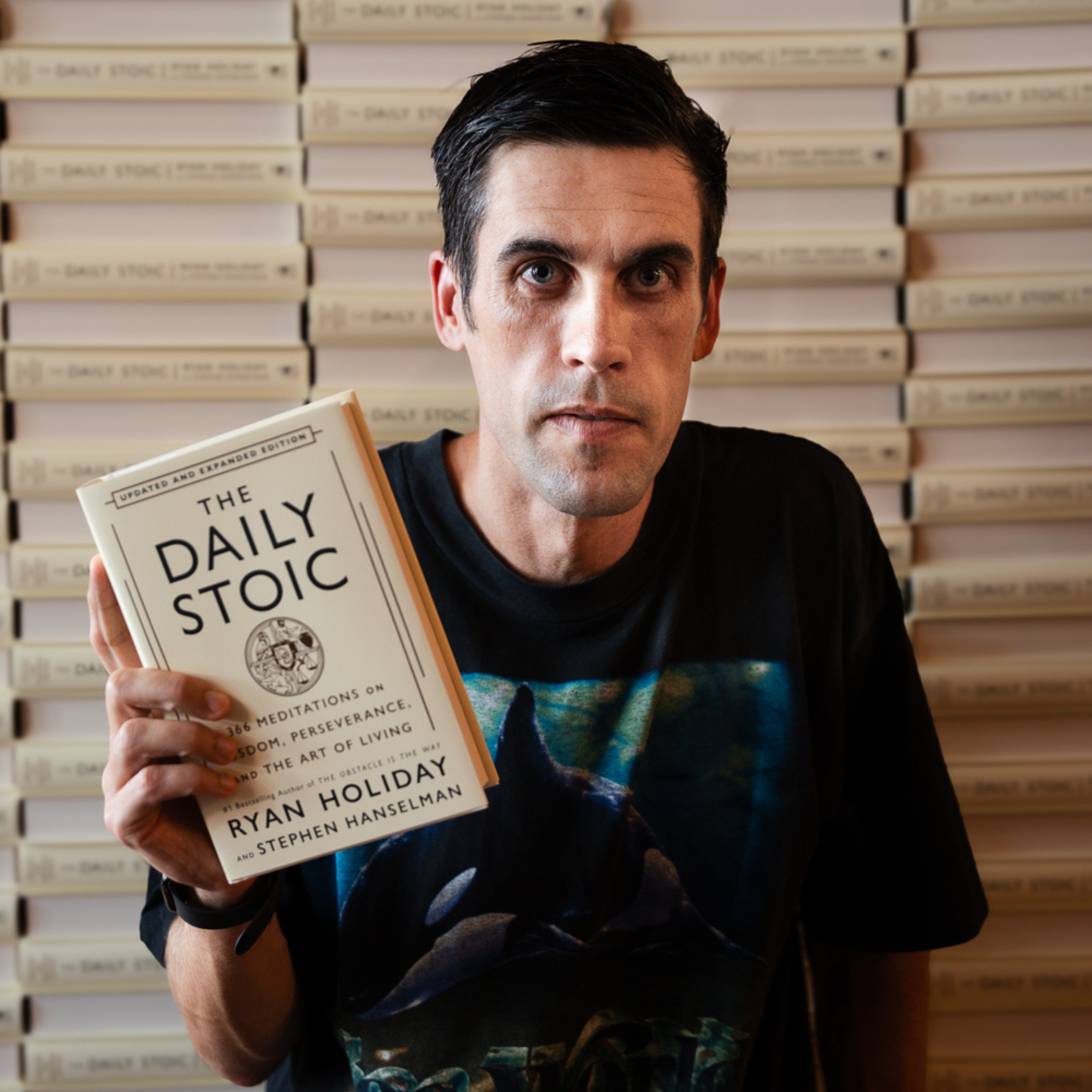
- What a Decade of Stoicism Teaches You About Life
In short
Steve Hanselman and the Daily Stoic host revisit a 10-year anniversary edition of “Meditations”/Daily Stoic-style entries, arguing Stoicism helps people stay steady amid constant change (politics, illness, AI). They discuss how the book was reworked: adding 60+ new translations, deepening cross-references among Stoics, and expanding chapters on the four virtues and justice.
Guest backgrounds
Steve Hanselman has been the host’s agent since 2011; he met the host at a Napa conference. He’s Tim Ferriss’s agent too. Hanselman studied at Harvard Divinity School, can write/read Greek and Latin, worked at Harper Business, and previously helped produce daily devotional-style books.
Key claims
Stoic ideas persist because they’re “common property,” evolving through translation and culture (e.g., Epictetus → Eleanor Roosevelt; Epictetus → Serenity Prayer). The virtues (courage, discipline, justice, wisdom) govern daily life; justice includes expanding “circles” of concern (Hierocles). Change is neither good nor bad; the task is to be good inside it.
Notable examples
Seneca realizing he’s aging; Marcus quoting Epictetus (“persist and resist”); Marcus and Musonius Rufus aligning on “a different way to pray” (control desires); Stoic “wrestler” and moral responsibility; Arius Didymus mapping the four virtues; Hierocles’ circles of concern; Corsica as Seneca’s exile site.
Written by AI. May contain mistakes.
Chapters
0:28
The Journey with Steve Hanselman
Discussion about the long-standing partnership and collaboration on stoicism.
“It's the AI-powered business management suite that securely connects all your data.”
1:46
The Journey with Steve Hanselman
Discussion about the long-standing partnership and collaboration on stoicism.
“So there's probably nobody I've talked to about stoicism more than Steve Hanselman.”
3:08
Reflecting on a Decade of the Book
Reflection on the past 10 years since the book's release and its impact.
“It's been a wonderful, lovely partnership.”
4:06
Life Changes and Stoicism
Exploring personal life changes and lessons learned through stoicism.
“We wanted to think about this, as I said, like if we were doing the book today for the first time with what we know, how would we do it differently?”
5:24
Seneca's Wisdom on Aging
Discussion about Seneca's insights on aging and perspective.
“I recall when the book came out, we were just having a national election.”
7:22
The Power of Perspective
Examining how perspective shifts over time through historical references.
“and all the wonderful things that even came out of it.”
9:20
New Insights in the Anniversary Edition
Delving into the new insights and translations in the updated book edition.
“And here, 2000 years later, people go on vacation.”
11:18
Connections Among Stoics
Exploring connections and relationships among stoic philosophers through quotes.
“than, you know, we even had originally in the work.”
14:02
Musonius to Marcus: A Philosophical Lineage
Explore the connection between Musonius, Epictetus, and Marcus Aurelius.
“You know, and this was like when I was first working on the book and putting the glossary together.”
14:50
Persistence and Resistance: Key Stoic Principles
Learn about the Stoic principles of persistence and resistance as discussed by Marcus Aurelius.
“I don't think we gave ourselves the freedom to put more than one quote.”
Show all 31 chapters
16:20
Connections in Stoic Thought: Quotes and Meditations
Discover how various Stoic quotes relate and the evolution of their interpretations.
“So I think this new edition is better in the sense that it's just a little fuller.”
17:41
Lost Wisdom: Meditations as a Historical Document
Understand how Marcus's writings preserve lost cultural insights.
“So do we think Marcus had a copy of Musonius' lectures then?”
19:19
Translation of Stoic Ideas Through Time
Examine how Stoic ideas have been translated and adapted across generations.
“But like that's the only line extant from that play.”
23:34
Translation of Stoic Ideas Through Time
Examine how Stoic ideas have been translated and adapted across generations.
“There's electrical issues, stuff you thought was taken care of, but is suddenly your problem.”
26:01
Exploring Virtues in Stoicism: The Four Virtues
Delve into the Stoic virtues and their importance in guiding our lives.
“trying to get back to important things that we missed that needed to be included.”
28:01
Hierocles and the Stoic Golden Rule
Learn about Hierocles and the Stoic concept of expanding one's circles of concern in ethical behavior.
“But yeah, so October, you know, it was great to get that in there, but we also got in someone we missed the first time around too, and that's Hierocles.”
29:26
Arius Didymus and Stoic Influence
Explore the impact of Arius Didymus on Stoicism and its role in Roman governance.
“The the kinder you are to someone who is further from you or can do less for you, the more sort of beautifully crazy the act of virtue is.”
31:38
Public Life of Stoics
Discover the roles Stoics played in public life and their struggle for justice in governance.
“Or do they sort of withhold their objections publicly and try to exert will and influence privately or quietly?”
33:31
Pragmatism in Stoicism
Understand how Stoicism can be practical and the real-world implications of its teachings.
“You know, we're all citizens of the world.”
35:46
Epictetus and Moral Dilemmas
Examine Epictetus' teachings on moral dilemmas, agency, and personal responsibility.
“They come straight from the headlines from Politico.”
38:09
Epictetus on Identity and Duty
Delve into Epictetus' views on identity, duty to family, and social obligations.
“And that is just the magic of the Stoics.”
40:26
Stoicism in Modern Context
Reflect on how Stoic teachings apply to contemporary issues and societal structures.
“Like, I've always found it peculiar that Epictetus doesn't really say anything about whether people should be able to own slaves or not.”
42:04
The Origins of Stoicism
Explore the beginnings of Stoicism through Zeno's journey to Athens.
“loathed being dependent on these, you know, stupid people to pay for their lifestyle.”
44:44
Stoicism and Modern Society
Discussion on Stoicism's relevance in today's rapidly changing world.
“I think Seneca's point about like, look, as long as money is earned, honestly, it's fine, Right.”
47:48
Philosophy's Role in AI Ethics
Examine how philosophy majors are addressing ethical dilemmas in AI.
“And, you know, it's what makes the new books possible.”
50:48
Navigating Change with Stoicism
Learn about Marcus Aurelius' perspective on change and stability.
“They've got philosophers working on this problem.”
53:09
Updating Stoic Wisdom
Discussion on the challenges of updating popular Stoic texts over time.
“and at the same time what do you change?”
55:18
Future of Stoic Literature
Reflections on the potential for Stoicism in future writings and editions.
“So it was kind of fun to layer all that in as well.”
56:00
Reflections on a Decade of Stoicism
The hosts express pride in the longevity and impact of their work on Stoicism.
“I'm glad we're still visiting it all these years later.”
56:52
The Genesis of The Daily Stoic
A discussion on the origins and inspirations behind The Daily Stoic book.
“I mean the assisted living facility that you'll be in in 15 years.”
57:52
The Joy of Collaboration
The hosts share their collaborative journey and the fulfillment it brings.
“I've worn many hats over the years, but when your gut, having been a bookseller, an editor, a publisher, and an agent, when your gut's telling you something, you learn to go with it.”

Ask about this episode
Get the gist, explore an idea or ask about something said.
 Claude
On The Daily Stoic, what are the key points of this episode?
Searching your listeningTranscript
Automatic transcript. May contain errors.
0:00Ryan Holiday: They say that every day your business is late to AI, you fall two days behind. One of the things we've been talking about at our staff meetings at Daily Stoic is how can we use AI to maximize efficiency? And how can we make sure that it's buying us time to do the things that only humans can do? We want to improve our workflow so we can be more human, more connected, better at what we do. And if you're not having these conversations with your team, I hate to say it, but you are already late. And if you are lost when it comes to how AI can help you, well, there's NetSuite Next. You probably know NetSuite.
0:34Ryan Holiday: It's the AI-powered business management suite that securely connects all your data. And it's a unified suite that brings your financials, inventory, commerce, HR, and CRM into a single source of truth, trusted by over 43 ,000 customers. And NetSuite Next is the next huge leap in how business gets done because AI is built into everything you do. It automatically surfaces custom insights throughout your day. AI agents work alongside to help you solve problems and handle routine work. And anytime you have a question, you just ask, just like having a conversation with a colleague. NetSuite is customized for a wide variety of industries, so it supports the way your business truly works.
1:11Ryan Holiday: Whether that company earns millions or even hundreds of millions of dollars, it's time for NetSuite Next. For the first time ever, you can try NetSuite Next for free. If your revenues are at least in the seven figures, go to netsuite.ai. slash stoic. It's built for every industry, ready for every boardroom, netsuite.ai slash stoic. Welcome to the Daily Stoic Podcast, designed to help bring those four key stoic virtues, courage, discipline, justice, and wisdom into the real world.
1:46Ryan Holiday: So there's probably nobody I've talked to about stoicism more than Steve Hanselman. Steve Hanselman has been my agent since 2011, if you can believe that. We met at a conference in Napa, California. He's Tim Ferriss' agent as well. And I had this idea for a media book, and we got connected. And that book came out in 2012. And then the way it works in publishing is you have an option. The publisher has an option on your next book. And so as the book was starting to come out, Steve and I were talking about what I wanted to do next. And I said, you know, I think I want to write about stoicism. And, you know, I think your average agent would be like, probably have a similar response to what my publisher thought about that, which is not that exciting.
2:34Ryan Holiday: But Steve, as it happens, is a big fan of the stoics. And he actually went to Harvard Divinity School. He can write and read in Greek and Latin. And so he encouraged me. And that became The Obstacle is the Way. And then it was actually Steve's idea to do the Daily Stoic. As we talk about in today's episode, he had done a number of sort of daily devotional books when he was a publisher. He'd worked at Harper Business, and he suggested that. And so obviously this working relationship has been quite fruitful, but he's someone I call and talk about stoicism all the time. And he's taught me about it.
3:08Ryan Holiday: I've taught him. It's been a wonderful, lovely partnership. And it queued up an episode I've been meaning to have for a long time on the show, which is Steve Hanselman and I nerding out about Stoic philosophy and this process of working on and reworking the book. So with today's release date, I want to bring you that conversation. And here's me and Steve reflecting on the last 10 years. Thanks to everyone who supported the book when it came out. Thanks to everyone who's supporting the new edition, which is out today. You can grab signed and numbered first editions of it, as well as the assigned and numbered first editions of the Leatherbound, which I'm even more excited about.
3:48Ryan Holiday: All of that at dailystoic.com slash DS10. You can also grab it anywhere books are sold. I just recorded the audiobook. There's the e-book. All of that is there. And I hope you like it. You know, neither Steve and I were satisfied. We're just kind of doing an updated forward and, you know, just tweaking the cover. We wanted to think about this, as I said, like if we were doing the book today for the first time with what we know, how would we do it differently? And I think you'll see that in here. And I think you'll really enjoy this conversation. So here's me and the one and only Steve Hanselman.
4:21Ryan Holiday: Man, it doesn't feel like this book came out 10 years ago. Does it feel that way to you? It's kind of shocking to me. You know, when I first started working on the book and just remembering the twins were like 10. and now they're seniors in college. Wow. Yeah, you know, it's funny. I actually did a Daily Dad email about this. I've probably done a Daily Stoic version. You can feel other things aging around you very quickly. You know, like you meet someone's kid and they're just getting their driver's license and then you bump into them again and they're starting college and you're like, wow, when did that happen?
4:54Ryan Holiday: But you yourself don't feel like you're aging very quickly. Or I know that this book is 10 years older than it was, but you don't feel like 10 years of your own life have gone by because you're in it day to day. So it's only that period of being away from something that you can kind of see time. It's like you need a stationary point to measure your progress against. Absolutely. Well, one of the most interesting stationary points in this whole journey was, I recall when the book came out, we were just having a national election. And it created such an uproar. And I'll never forget the kind of flood of letters and communications we got from people on both sides of the aisle.
5:41People were just searching for a way to ground themselves and to find some peace and comfort. And I remember when Deborah Messing first posted about the book. It was in the very early days. And she was talking about how cool it was and how much it was helping her.
5:59Ryan Holiday: Yeah, she was one of the first sort of celebrities to read the book, I think. But you know what's interesting to me about that stationary point idea is that Seneca talks about this in either one of the letters or in one of the essays. I forget which one. But he talks about how he returns to the estate that he grew up on and he starts to sort of lay into the caretaker for not taking care of the trees that are growing around the house, that they're starting to die and look worse for wear. and I'm imagining the sort of trees that you see when you're in the Roman countryside, although I guess maybe it would have been in the Spanish countryside, but he's like displeased that these trees aren't doing well.
6:44Ryan Holiday: And then the caretaker responds and goes, the trees are just old, my friend. He's like, the trees were healthy when you were young and you and the trees are no longer young. You know, Seneca sort of realizes like, oh, I'm showing my age just as much as the trees are. Yeah. You know, the other thought I was having about this is a year out after the book came out, we were together in Toronto speaking, and I fell ill and ended up, you know, going through a kind of major battle with kidney cancer and all the things that happened around that and all the wonderful things that even came out of it. three years of research that produced lives of the Stoics.
7:30That all happened because I was, you know, put in bed for a while.
7:34Ryan Holiday: You're right. That was that convention about Stoicism in Toronto and you, we were sitting there and you sort of had some stomach pains or something and you went, you know, it could have been food poisoning, it could have been whatever, and you found out in a foreign country that you had cancer. Yeah. And that feels like a long time ago. Yeah. Now, you know, I have I have annual checkups now. I just went through my ninth one. Wow. Well, life can change like that. And then it can also change. It can also change back like that. Right. Like it can it can get irrevocably worse in a moment as Seneca knew.
8:08Ryan Holiday: And then it can also get irrevocably better as Seneca knew. And then all of those sort of ups and downs kind of even out or recede into the distance as time passes. Yeah. We worked on lives together. I was taking such comfort from the lessons of the stoic lives, you know, as we were working on that. And, you know, it's fun now that today we're actually including two chapters as bonuses in this new anniversary edition. So, you know, it's it's funny speaking of life changing in an instant. Somebody that I know sent me a picture yesterday of their copy of Letters of a Stoic that they bought at the Painted Porch.
8:54Ryan Holiday: And they were they were in Corsica and that they thought I would like that, which for people who don't know, Corsica is where Seneca was exiled. And I said something like, nothing shows the stoic power of perspective quite like the fact that the place that Seneca wrote an essay bemoaning his fate for being exiled at, you know, and from his essay, you get the sense that he's on this barren rock in the middle of the ocean. And here, 2000 years later, people go on vacation. He wrote a number of important works there, including the book on anger to his brother. yes it wasn't so bad i guess is what i'm saying though he made it sound like he was being tortured and uh it's actually uh basically an island in the mediterranean that that people take expensive trips to go visit because it's so beautiful let's talk about the book a little bit because i mean obviously it's got a new cover and new end papers and some little things like that i went through it with obstacle i went through it here i'm going through it with trust me i'm line, which I'm doing an anniversary edition, and then I've got to get started on the Ego is the Enemy anniversary edition.
10:03Ryan Holiday: There's something weird about going back and looking at something you did a long time ago. So I have some thoughts on the entries, which are more my domain on the book. But as you went back and looked at the translations, you know, with a decade of distance, what struck you about them? Well, there were there were several motivations kind of going into that. I think the first and one that, you know, we have carried with us from the beginning is, of course, making sure that our favorite passages were in here. Yeah. Of course, there were a whole bunch that we use all the time and, you know, you send out to the world that we didn't include the first time around.
10:42So we were able to gather up a lot of that. The other layer that was there from the beginning and that really played into adding in, we've got more than 60 new translations in the book here, but was the connections the Stoics were constantly making to each other. Marcus quoting Epictetus, Epictetus quoting Sonius Rufus, you know, Seneca quoting Eccato. So it's like throughout. And so it was fun to kind of deepen and suss out and pull in some more of these connections than, you know, we even had originally in the work. That was a lot of fun to do.
11:24Ryan Holiday: It's like in a world of AI, you know, it's much easier to sort of layer things on top of each other and notice similarities and patterns. But it kind of did take 10 more years. I don't remember exactly how long the first draft of The Daily Stoic took, but let's say you work on a book for six or eight months and you don't know if it's going to work. You would just never take 10 years to compile all your favorite quotes and tweak them and work on them. So it has been an interesting experience as you and I have both continued to read and talk about and study The Stoics. You're going like, oh, wait, what he's saying here is the same as what this other stoic was saying over here.
12:07Perfect example of one of the new connections we made here. It actually goes back to the launch of the original edition and people's response to it that were messing in particular. Because at the time, a lot of people were embracing the same persist and resist.
12:26Ryan Holiday: Yes. And that's actually an Epictetus quote. Yes. We never included it in the first edition, even though back then I was signing a lot of the books, which is, you know, Epictetus is Greek for persist and resist. Right. It's about courage and self-discipline. And so we now have that included in the new edition on May 31st. But what's fascinating about it, and again, we do this throughout the book, but we pair it with a Marcus Aurelius quote from book five, verse 33, where he's actually directly quoting those same words. Well, and what I think is interesting is that also I would take it as an allusion to Masonius Rufus, who has this quote about how, you know, there's the difficult things where the labor passes quickly, but the good endures.
13:28Ryan Holiday: And then the shameful things where the pleasure passes quickly, but the shame endures. And to me, he's saying like, persist in doing the hard things that are good and resist doing the bad things that are bad. I actually, you know, persist and resist sounds like a political slogan. It sounds like, you know, sort of storming the barricades, but it may actually have a much more individualistic connotation, which is like, do the virtuous stuff, don't do the unvirtuous. And then when you notice how if Musonius is Epictetus's favorite philosopher and Epictetus is Marcus's favorite philosopher, the sort of provenance of that idea going through the three of them makes perfect sense.
14:14You know, and this was like when I was first working on the book and putting the glossary together. When you start going through all the Greek, you realize that there's this line that goes, Musonius, Epictetus, you know, Marcus, it's there. To back to the point you're making about, you know, what these passages are telling us, that Alice Gellius is the one who preserved Epictetus' saying. And he said that it was two faults that were by far the worst and most offensive. the first was the lack of endurance and the second is the lack of self-control and then he summed that up in those two words persist and resist and marcus when he in 533 he's saying what can sustain us to the fated end simply to revere and praise the gods to do good deeds for our fellow human beings and to persist and resist another layer on this is you always love to quote gregory hayes yes on marcus 533 he does something completely different with persisting resist he says be lenient on others and strict with yourself yes which is a very unusual place to take the translation but in our politically polarized world i actually love what he's done with that it's like hey give people the benefit of the doubt and be a little tougher on yourself totally
15:55Ryan Holiday: You know, and I think the idea of how these quotes go together, I don't know about you, but I feel like in the first draft, there was only a handful of days where we had more than one quote. I don't think we gave ourselves the freedom to put more than one quote. The idea was a quote a day and then a meditation for the day. I do feel like with the success of the book, we felt a little bit more empowered to take that space. So I think this new edition is better in the sense that it's just a little fuller. I don't mean it's longer, it's just fuller. There's less white space on those pages. Another great example is September 14th in the new edition.
16:37And this struck me from the beginning after the book came out, and I realized I'd missed this incredible connection between, direct connection between Musonius Rufus and Marcus Aurelius. so if you go to september 14th now yeah which is entitled a different way to pray so we have you know the original quotation that we had in there from marcus where he's talking about you know instead of asking for all these things why don't you just shift the way you're going about everything you don't need to ask for deliverance when you can deliver yourself and if you go and you compare it to musonius rufus's seventh lecture the wording and the examples are exactly the same you know instead of you know trying to win someone else's wife how about you know to control your own desires you know yes it's the exact same thing that marcus is same.
17:40Same list.
17:41Ryan Holiday: So do we think Marcus had a copy of Musonius' lectures then? He must have. And, you know, he doesn't do what Epictetus did, where he would say Rufus says. But there are a number of passages where it's pretty strong. And this one to me was one of the most obvious, so I want to make sure that we got it into this edition. And that would make sense, right? He wouldn't need to be so precious about attribution when he's writing to himself. And I think there's two things there. The other one that jumps out to me as one that we found, a connection we found later, is Marcus talking about being like a wrestler.
18:23Ryan Holiday: And he talks about pancration and fighting and how you close your fist and you have your weapon. And then when we were writing Lives of the Stoics, I believe we found, was it Panitius or was it Posidonius that had said, We realize that Marcus is borrowing this metaphor. Yeah, he had an idea. He was saying you have to be ready for the unexpected lows. So I thought that was incredible that, yeah, you realize only by layering over and over and over again that you can kind of find these convergences that are just too similar to be coincidences. Right. But but my favorite part about meditations as a historical document is the way that it accidentally captures some things that have been lost.
19:06Ryan Holiday: I guess Cicero does this as well, but but, you know, more deliberately so, you know, that that line from Euripides that Marcus quotes, he says, you know, why should you be angry at the gods as if the gods should notice? I believe the Hayes version. I forget what ours is exactly. But like that's the only line extant from that play. And so he must have seen it or read it. And then sometime in the intervening centuries, we lost the rest of it, which is pretty incredible. Yeah, there's so many things that you notice, and Heraclitus is constantly quoted by Marcus. And, you know, I was thinking about, you know, you always see the Heraclitus quote that character is fate.
19:51In fact, you talk about it in one of your commentaries on the passage in the book. And it's interesting because the original Greek there, ethos, anthropo, daimon, it's actually, if you translate it, in fact, one of the most recent translations by Glenn Most, he put it this way, that for a human being, your character is like a personal god. So it's this very interesting way of putting the responsibility. If you're going to attend to your character, you're going to have a good God ruling over you. If you fail to attend to your character, you're going to have a bad God. Or as the Stoics often talk about, you'll have a tyrant in charge.
20:41Ryan Holiday: Yeah. It's interesting because basically what's happening over the 2 ,500 years or so that all this is transpiring is that the wisdom— is getting, it's like, it's getting simmered down every generation, just a little bit tighter, a little bit better, right? You read some of the 16th century translations, and it might as well be in a foreign language, even if it's in English. And then you read, you know, even, who was the guy at the University of Virginia who first translated Marcus? George Long. You even read some of his, and it's clunky, and it's hard to get into. And that's just the translations, Right.
21:16Ryan Holiday: That's when they are sticking strictly to what the ancient said. But then also there's this this sort of part where the idea escapes confinement and it enters into conventional wisdom or into the world. Right. Like I remember right around the time the Daily Sto came out, I was giving a talk to the Pittsburgh Pirates at their training camp in Bradenton, Florida, and they had on the wall, you know, it's not things that upset us. it's our opinion about things. Right. And like, they didn't even know that that was an Epictetus line. Like they were, they were there to have me talk about stoicism and they didn't know that they had, you know, what they thought was a cliche or a bit of conventional, just an inspirational saying they didn't know actually came directly from the Stoics.
21:58Ryan Holiday: The other example I think of is, you know, Epictetus, he says, you know, whenever someone upsets you or you find yourself taking an offense, say to yourself, you know, I am responsible for this because it basically takes two to get upset. And then, you know, 1900 years later, Eleanor Roosevelt says something like, no one can make you feel inferior without your consent. She has said the same thing, not as a translator, but just as a conveyor of a bit of wisdom. And she said it better, right? Like, no offense to Epictetus, but she said it about as well as it could humanly be said in the English language.
22:32Ryan Holiday: Like, there's no fat to cut out of that line. And so one ultimately ends up replacing the other. Right. And and that's kind of, as I think Seneca said, like the best ideas are common property. Like these ideas, they're not just getting translated and retranslated. They're also getting changed and adjusted to work in these different contexts. And so sometimes people don't even know that this is Stoicism. The Serenity Prayer is a great example of basically Epictetus put in slightly more poetical language by Reinhold Niebuhr in like the 1950s. So as I was saying on Bill Maher, that sounds like an idea that's always been with us because it has always been with us.
23:17Ryan Holiday: It's just that specific formula or formulation you can trace to one guy in the middle of the 20th century. Yeah, I think it's really well put. It would be nice if the purchase price of buying a home was the major expense or the only major expense. But if you've ever bought a house, you know the expenses just don't stop coming. There's plumbing failures. There's HVAC breakdowns. There's electrical issues, stuff you thought was taken care of, but is suddenly your problem. And that's where HomeServe comes in. It is a subscription for your home for as little as$4.99 a month. They've got your back.
23:55Ryan Holiday: Repairs hit fast and hard. You know, you're searching for a contractor, whatever. You could already be on the phone with HomeServe's 24-7 hotline scheduling a repair. It's super simple. You choose a plan for your needs and your budget. And when something on your plan goes wrong, you call the hotline and they start the repair process. They've helped homeowners like you for 20 years with a trusted national network of 2 ,600 local contractors I have spent way too much of my life and time trying to figure out how to fix things myself Trying to meet someone who was supposed to show up and then didn't show up Looking through bills, comparing bids It's just a lot And when you're in over your head, it's hard to get out from under it Well, join the millions of customers who trust HomeServe for 50 % less for your first year.
24:48Ryan Holiday: Go to HomeServe.com slash stoic. That's HomeServe.com slash stoic for 50 % less savings compared to renewal price and void in Florida. Violent threats against executives are growing at an alarming rate. When a company experiences backlash, executives are the first people that are blamed. And people try to track them down through their address, the personal details that are available online. so that backlash can lead right to someone's front door. The team at Ironwall knows this better than anyone. They protected some of the most targeted executives and individuals on the planet for almost two decades.
25:24Ryan Holiday: As a white glove enterprise security service, they protect your people with continuous personal data removal, proactive prevention tools, and human-led emergency support. Someone goes looking for your executives, Ironwall ensures they hit a dead end. So here's what to do. Go to ironwall.com slash daily stoic. you fill out a quick form and you can request a free risk assessment. Their team will show you just how exposed your executives are and how to lock it down before the threat reaches their front door. Ironwall.com slash Daily Stoic. Learn how to stop online threats before they become real world attacks.
25:57Ryan Holiday: The link is in the show notes. The other thing I mentioned was, you know, we were trying to get back to important things that we missed that needed to be included. And so I think Probably the best month that exemplifies that is October in the new book. And we actually start off on the first day with a pretty major piece from Arius Didymus there, which is the most complete description we have from the Stoics of what the four virtues are, what their sub-virtues are. and it's a remarkable place to begin in thinking about what the virtues are and how they should be governing our lives. When Marcus says that the fruit of this short life of ours is just two things, you know, a good character and acts for the common good, what Marcus is talking about is living the virtues.
27:01When we're living them, we're making not only our own character better, but we're making what we do with others better. Yeah.
27:11Ryan Holiday: And I think, you know, when we were doing the first edition, we were mostly drawing from the works of Marcus Epictetus and Seneca. You know, Musonius Rufus's works were only then kind of just being republished. There wasn't a popular edition of them. I got basic to bring it out. Yeah. I'm sorry, Yale. Yale University Press. Yeah. Yeah. And then Arius Didymus is even harder to read, right? Like his works are in, doesn't Arius survive to us via Strabo or something, right? Like it's like an edition inside of an edition, right? Yeah. It's, you know, it comes to us from Staveus and the SBL has published a very fine translation of it, which includes the Greek text, which is the Greek text that I've used.
28:01But yeah, so October, you know, it was great to get that in there, but we also got in someone we missed the first time around too, and that's Hierocles. Yes. So October 4th and October 28th, we have some Hierocles, you know, who's basically, you know, he was teaching and at his heyday around 150 AD. So, you know, Marcus is a younger man at that point, you know, sort of rising up through the ranks. But he's really articulating what some have called the Stoic golden rule, this whole notion of the circles of concern. And ethical behavior, the way we behave in life, should be to attempt to draw the further circles out from us, closer to us so that we treat a friend like family.
28:50We treat strangers like friends. We treat foreigners like, you know, they're part of our own people. And it's an easy thing to think about, but it's a very hard thing to practice.
29:04Ryan Holiday: It dovetails so nicely with the sort of Christian ethos, which is coming out from, you know, in this moment of the idea of love thy neighbor, Right. And that a society is sort of defined by how it treats the stranger. And the further the person is from you, you know, sort of the the the more beautiful. I think Hierocles calls it a beautiful madness. Right. The the kinder you are to someone who is further from you or can do less for you, the more sort of beautifully crazy the act of virtue is. Exactly. And, you know, in the August 28th, we pair Hierocles with Marcus. and you know they're the basic idea they're both talking about is look just start from here we're made for each other well so to go to arius didymus just just because i think that is an interesting one um just because it dovetails with with my sort of commonplace book stuff that i talk about if i'm remembering correctly like arius didymus's work survives because someone else was doing a commentary on it's a very weird book to read right you're like you're reading a book inside of book with a guy's notes on the sides or something like that right exactly it's basically an attempt to gather up teachings on you know the topic of ethics and in the course of doing that you're you're getting some other bits of information like some of the clientes fragments you know we have come from there so you're hearing about other philosophers but scholars know we're also getting large sections of what were major works by these philosophers.
30:41Ryan Holiday: And Arius Didymus is Augustus's tutor, right? One of two of his Stoic tutors. Yes, along with Athenodorus. Who basically none of his works survive except for a handful of fragments that we get from Epictetus and from Seneca about him, right? Yeah. And we write about this in Lives, but the fact that the first Roman emperor had two Stoic tutors, it sort of created this trajectory where the Stoics were in the center of the halls of power and they had influence and they had clout. Yes. And I mean, it sets in motion a good thing, which is Marcus Aurelius, the Stoic king. And then you could also argue it sets in motion Seneca, the sort of enabler slash, you know, martyr under Nero, right?
31:31Ryan Holiday: Like what is a Stoic's role in a corrupt society or in a dysfunctional government? Does the Stoic sort of resist from the outside, which is a path that some of the Stoics take? Or do they sort of withhold their objections publicly and try to exert will and influence privately or quietly? And I think that, again, that's why I'm happy we included these chapters from the lives because there is this very strong thread of the notion of justice, and in particular in the public lives of the Stoics and how they were trying to work it out, whether they were advisors or actually holding political office, working on the resistance from the fringes of the halls of power, promoting their own candidates for office who they thought would get closer to that ideal, all of that.
32:27Ryan Holiday: Yeah, it's fascinating. I think one of the things that I took from working on Lives is, you know, sometimes when you read the Stoics from afar, you know, the ideal can seem impossible, right? You know, are they saying, have no fun, try nothing, do nothing. But then when you pair the ideas with who they were in person, it's not that it comes off as hypocritical or a contradiction. It just comes off as, I mean, we have a whole month in the book about the idea of pragmatism. I think because so many other philosophers were impractical and theoretical, we sometimes assume that's what the Stoics were and judge them only on their philosophy.
33:17Ryan Holiday: And we forget that the ideas were mitigated or balanced out. They came with the presumption that a person would be making hard decisions in the real world, as say Marcus Aurelius did. You know, Marcus Aurelius didn't go, oh, I'm a philosopher. You know, we're all citizens of the world. We're all made for each other. So if these, you know, tribes want to invade Rome's borders, like let them have it, right? Like he's having he's talking about this within the confines of going. This is a country. It has borders. I have a legal duty. This is my tradition. Now, they don't always get it right. And sometimes the ideas are hypocritical and sometimes the Stoics were complicit or responsible for evil acts.
33:58Ryan Holiday: I'm just saying that that all these ideas were said within a rich and full existence as opposed to a scholarly exploration. exploration. Although it's, you know, it's fascinating to me, even someone like Epictetus, who you could argue was the least public of all the great figures. But look at his whole orientation. I mean, he's basically getting all the spoiled brat rich kids, you know, from Rome and elsewhere in the empire in his classroom. And they all think that they're going to go and memorize all this stuff and chop logic and come in and be, you know, masters of the universe. and he's just constantly popping their bubble.
34:42He's like, that's not what it's about. You know, are you actually taking this stuff on? Are you living it? You know, show it to me. Show me how you're working it out in your own life. You know what I mean? He uses the example of like, you know, if you're a wrestler, you know, I could just look at your shoulders and I know whether you've been to the gym or not.
35:02Ryan Holiday: And what's so interesting about it is, I mean, by nature of the fact that his student goes on to be the teacher of the emperor, He was a professor, but he wasn't a community college professor. He was a professor at a war college or a professor at an Ivy League university where he really is teaching and preparing the future masters of the universe for their inevitable role in society. And, you know, he had as a young boy, he had a front row seat on the court of Nero, you know, working for Epaphroditus. And he tells these great stories about things he saw. And they're not very flattering. Sure. They come straight from the headlines from Politico.
35:50Ryan Holiday: It could be written today, some of the things he's talking about. You know, he may have been removed, you know, through the exile, you know, Domitian to Nicopolis, but, you know, people like Arian came. Yeah, sure. With his lectures. People like Hadrian came, you know, emperor, to attend his lectures. Well, you know, what's really interesting is, so I'm working on the Stockdale book now, and I was just finishing up the part where he, you know, after the events of Tonkin, he has to decide, you know, I've witnessed this thing, and I get the sense that my government is, you know, about to launch, at best, a foolhardy, but at worst, an illegal war.
36:36Ryan Holiday: And he says, you know, in this moment, he thinks of Epictetus, right? And he tells us the passage that he had memorized, which is the passage I believe we have in the book about how everyone's assigned a role in life. And you have to be a good actor in that play. And I thought that was an interesting reading of Epictetus, right? Because I'm not sure Epictetus would say, you know, if your government wants you to do something that you think is wrong, but you're a uniformed military officer, you should just do it. So I said, well, let me go back through Epictetus and see where else Epictetus might have talked about this dilemma.
37:10Ryan Holiday: And it was like so many passages. It took me a week to go. I mean, he talks about Socrates being drafted to fight in the Peloponnesian War and should he go or not? And then he talks about Socrates being sent to arrest someone by the 30 tyrants and how he refuses. And then he talks about, you know, Helvidius being asked to, you know, stop saying criticisms of Domitian and Vespasian in the Senate. And he refuses. And then the really interesting one is he goes, there may be a time when a tyrant asks you to bear false witness. And what are you going to do? Right. And you go, wow. Okay. Like, I'm just imagining this guy on an aircraft carrier 2000 years later, opening up this book and somehow a Greek slave has has written at length about his exact moral dilemma.
38:10Ryan Holiday: And that is just the magic of the Stoics. And how Epictetus could have known, it is beyond me. But there's just something truly unbelievable about that. Yeah, so powerful. So powerful. And that sort of fundamental moral of his teaching is that you have to take responsibility. Yeah. And whatever the roles that are yours in life, as hard or difficult as they might be, whatever you're facing, you have to turn to it and face it. But what is interesting about it is like there is, I think, particularly in Epictetus, there is kind of a fatalism. There is ultimately a lack of some lack of agency. Right.
38:58Ryan Holiday: In this other passage, he goes like, okay, you owe duties and obligations to your father. And then the student goes, yeah, but my father is a bad person, right? And he says, oh, so you only owe duties and obligations. He's like, is the law that you owe obligations to only a good father or that you owe obligations to your father, period? And the student goes, oh, okay, I get it. And I think today, you know, it would be a sign of progress that we would say like, no, no, no. If your father is a bad person, if your father is asking you to do something that's wrong, this is where your judgment comes into play.
39:39Ryan Holiday: This is where you're empowered. You know, the next passage is even more anachronistic. He talks about this wrestler who is wounded in war and becomes impotent and he commits suicide. And he says, did he commit suicide as a as an athlete or as a soldier or something? And Epictetus says, no, he committed suicide as a man. And so so for Epictetus, his view is like somehow genitalia is inextricable from from your identity as as a man going forward, which I think a lot of wounded soldiers in 2026 would take issue with. Right. And to go back to Vietnam, even more so there when people were stepping on landmines and stuff.
40:21Ryan Holiday: There are all these fascinating moral questions in the Stoics, but it's not as if they are the final word on any of these things. Like, I've always found it peculiar that Epictetus doesn't really say anything about whether people should be able to own slaves or not. Zeno kind of did and Seneca kind of did. But Epictetus, who you'd think would know a thing or two about it, doesn't say anything. Everyone assumes that there are in the social class above him that they're greater than he is. Yeah. So his rhetorical move is always to point out just how much they're a slave to foolish things. Yes. But he's not able to go, by the way, all these class distinctions are preposterous and arbitrary.
41:06Ryan Holiday: He can see through some of the constrictures of his time, but not all of them. And I do think it's, you know, it's better. We make progress. Like, just from the success of the book, maybe you've gotten this too. sometimes people will go, oh, you know, what would the Stoics think about you selling their wisdom or whatever, right? And I go, well, you know, Epictetus and Seneca and Marcus, let's say, are better examples. You know, they're not selling their books because they didn't live in a society based on mutual exchange, right? They lived in this sort of stratified sort of oligarchic society in which it was more or less impossible for someone to, you know, make a living on, you know, their creativity or their art.
41:53Ryan Holiday: Even the artists of those times were mostly the sort of supplicants of rich Roman patrons, right? And you can read in Juvenal and Marshall just like how much they loathed being dependent on these, you know, stupid people to pay for their lifestyle. We live in a marketplace of ideas. Yes. And there's a lot of dribble out there. I always like to think about the beginnings of Stoicism. Zeno washed up in Athens. You know, where does he take refuge? In a bookstore. You know, his father had brought in books from his travels. And it's in a bookstore where he discovers the philosophers who will change his life.
42:37And it's in the marketplace of the agora where, you know, he would begin to teach what he'd learned.
42:46Ryan Holiday: Benjamin Franklin said time is money in 1748. That was his advice to a young man. 278 years later, some of us, depending on what you do, are still spending part of every month typing receipts into a form. It's bad use of your time. That's bad use of company time. expense reports are tedious it's not what i want my employees doing well ramp makes collecting and submitting expenses super simple with ramp expenses submit themselves you just text or email your receipt and ramp categorizes codes and submits it and when you book business travel with ramp they find the best flights and hotels you're actually allowed to book you don't find out later that your company's only partially going to cover it ramp is the only finance platform that employees and finance teams both rave about, and companies have saved over$12 billion with Ramp.
43:38Ryan Holiday: Time is money. Save both with Ramp. New customers get$250 off at ramp.com slash daily stoic. That's ramp.com slash daily stoic. Violent threats against executives are growing at an alarming rate. When a company experiences backlash, executives are the first people that are blamed, and people try to track them down through their address, the personal details that are available online so that backlash can lead right to someone's front door. The team at Ironwall knows this better than anyone. They've protected some of the most targeted executives and individuals on the planet for almost two decades.
44:14Ryan Holiday: As a white glove enterprise security service, they protect your people with continuous personal data removal, proactive prevention tools, and human-led emergency support. Someone goes looking for your executives, Ironwall ensures they hit a dead end. So here's what to do. Go to ironwall.com slash daily stoic. You fill out a quick form and you can request a free risk assessment. Their team will show you just how exposed your executives are and how to lock it down before the threat reaches their front door. Ironwall.com slash daily stoic. Learn how to stop online threats before they become real world attacks.
44:47The link is in the show notes.
44:51Ryan Holiday: I think Seneca's point about like, look, as long as money is earned, honestly, it's fine, Right. Like and that's sort of the point. And I do think I do think there's something much better about this world that we live in. To go to the point, like the world that Epictetus is is sort of going, well, who's the slave? He's not able to question whether there should be slaves or not. Right. And and there's something about the sort of Roman society where it's like, look, some people are allowed to be philosophers and some people are allowed to explore and think about ideas. But 90 % of the population is, you know, living these nasty, brutish and short lives.
45:32Ryan Holiday: Like, we've made some improvements since then. And the free exchange of ideas and the publishing industry even, which you've worked your whole career in and I work in, is an improvement on the old way of doing things. Yeah. Well, you know, for me, it's my life has been lived in and with books. And, you know, from my days as a scholar to having a bookstore, like one you run now, and then a publishing and then as an agent. But, you know, the insight I had as a young man was that books change lives. And what's more exciting than that? And being part of that, it's very humbling to be at this anniversary for the Daily Stoic and to know the millions that have read it.
46:23And we're now, I think, in 40 languages around the world. It's very humbling to think about, but it's also very energizing because we just hear from so many different kinds of people all the time about how much this book means to them and how helpful it's been in living their daily existence.
46:44Ryan Holiday: Well, I try to think, like, how many Stoics have ever existed in history? Like, cumulatively up until 2016, how many copies had all the works of the Stoics ever sold? You know, it was certainly more popular than some other forms of obscure philosophy, but I think it would surprise people how relatively small—and there's probably more people talking about and thinking about Stoicism right now than have ever existed. You know, it's a perennial problem in publishing. I talked about this before, but, you know, when I first started at Harper Business, I couldn't figure out why Peter Drucker wasn't selling more copies, you know.
47:28If there was ever a canon of business wisdom, you know, that deserved reading, it was Drucker's work. And so to solve that problem, we sort of came up with the Daily Drucker as a way of introducing a full range of the work. And publishing is built on the backlist and on the great wisdom, you know, authors of old. And, you know, it's what makes the new books possible. But, you know, from time to time, publishers have to go in and rework and recast and represent even those classics, which they're built upon.
48:07Ryan Holiday: Yeah, I mean, the right cover, the right packaging, the right title is a way to, what do they say, like old wine and new skins is the ancient expression. And you're taking something that people don't think would be accessible or practical to them and showing them that it is. And to me, that was always what I was trying to do with my work on stoicism, starting with The Obstacles of the Way, in which, you know, is now seen as a book about stoicism. But I specifically didn't talk about stoicism very much at all in the book. I wanted it to be informed by and full of Stoic wisdom. But we say this in the intro, the phrase Stoic philosophy has a handful of check marks against it from the outset.
48:56Ryan Holiday: Stoic people think is bad. Philosophy people think is bad. No one's like, I need more ancient philosophy in my life. And I mean, now, obviously, with the success of it, that has changed to a degree. But I think, look, there have been no shortage of imitators since, and almost none of those books have had much of an audience. Well, you know, it's just, again, thinking about all the changes in the world. You know, we talked about the political polarization and how that's always been a kind of element of how people are coming into and responding to the Stoics. They're just finding steadiness, you know.
49:34Yeah. You know, and the pandemic and what we saw through that. I mean, what a radical shift of society, how we work, how we understand our lives, the balance of everything. That all shifted. And now here we are on the eve of this new edition launching, and we have an even more huge transformation underway with AI. And in the middle of this, which for many people is a quite frightening and incredibly fast-moving phenomenon, what is going to be our response? And, you know, it's interesting what I'm hearing. We have a son at Amherst College, and we're just tuning into the president the other night, and he was talking about a boom in philosophy majors right now.
50:25Ryan Holiday: Right, because there's all these ethical choices that the AI companies are making. And the AI companies are hiring philosophy majors. There have been some very interesting pieces written on this that the people who are kind of on the inside of how do we set the ethical boundaries around these large language models? How are we going to control and develop them? They've got philosophers working on this problem. Well, and that goes to, I think, the idea that Marcus talks about in meditations, which is like the only constant is change. Time is a rapid torrent of events that is just whipping by us.
51:06Ryan Holiday: Every time you think something's stable, you're about to be reminded that it's not. And that to be angry or scared or worried is to get it wrong. He's saying even usia, even essence, what you think is the essence of something, even that is changing. My favorite line from him is where he says, you're frightened of change, but what could exist without it? Like, his point is that, like, like we're now like, well, AI is going to disrupt everything. And it's like, yeah, but 10 years ago, you were you were worried that we were in this moment of change. You are now trying to preserve the thing that you were afraid of happening 10 years ago.
51:44Ryan Holiday: And so we're always trying to keep this thing stable, even though 10 years ago, 20 years ago, 100 years ago, this was our worst nightmare. You want to call the status quo the good. And, you know, now the new thing you want to you want to call the good. Yes. Well, we were and you and I were just talking about this as I'm doing the final edits, which I want to talk to you about that. I noticed when I was reading the audio book, there's the quote from Marcus where he says, like, change is basically not good or bad. It just is. He says, like, the change isn't bad for happening and the status quo isn't good for staying the same.
52:19Ryan Holiday: It just it just is. And you got stoicism is about figuring out how to be good inside that. The things are objective outside you. But what you do is not. Yeah. This whole idea about, you know, crying over what's changed or, you know, locking in, you know, with white knuckles to the new reality as if you can't lose that now. You just have to let go. Yes. And I'll make sure to point anyone who complains about us changing their favorite entry in the book to this exact idea, because that was a hard thing, right? Like you have a book that's clearly resonated with people. It's clearly worked. What do you go back and change and adjust?
52:59Ryan Holiday: I mean, there were some cultural references that didn't hold up. There were people who maybe proved themselves to be different than we thought they were. I would like to think I'm a much better writer I'd like to think you're better at translating 10 years later and at the same time what do you change? This is what I'm concerned with as I do the Trust Me I'm Lying 15 anniversary edition is like obviously it has some value as a historical document of what it was capturing at the time to change too much is to necessitate changing all of it and if you're going to change all of it well I probably wouldn't write it today at all so what you change and what you leave is an interesting both philosophical and creative question.
53:40Yeah, well, that book did have a way of looking around the corner.
53:44Ryan Holiday: Yeah, unfortunately. Yeah. Again, with AI, I think there are some important updates that could be made. Yes, yes. But I think, you know, I wanted to change what I thought needed to be changed without looking too closely at what was too popular, right? You have the data of like, oh, well, this is the most quoted passage or this is the most highlighted passage. This is the one that does best on Instagram. Like, obviously that's important data, but if I feel like it's not what I think anymore, I feel like it could be better, I still wanted to go through and change it. But it was a mix. I think there are some entries that didn't get touched at all and some that are totally different.
54:21Ryan Holiday: And then others where I just, over 10 years of doing the Daily Stoic email, that's what's interesting about this project is like it stopped September, 2016 when it came out. But in another sense, I kept writing it every single day for the next decade. So I just got a lot more reps in it. And there's just some stoic themes that I feel like I had better takes on in 2017 than I did in 2016 or 2026 than I did in 2016. And we subbed those in there rather than just leaving the first pass. Yeah. Yeah. And I think you did that incredibly well. So of the new material on the translation side, what's interesting is how much of it is Seneca.
55:05We added a whole bunch more Seneca, including a lot of the most favorite quotes. But I was just surprised at how many new Seneca I found that spoke so well to existing entries. So it was kind of fun to layer all that in as well.
55:27Ryan Holiday: I wonder if that's a function of Seneca writing more in prose than Marcus Aurelius and Epictetus did. I mean, obviously, they're all writing in prose, but Marcus and Epictetus were writing in a format much closer to what's captured in the Daily Stoic, right? It's a block quote. It's a fragment. It's an idea. You get a lot more thematic development and returning to themes. But I just mean Seneca, the Seneca quotes are all extracts, right? You're taking them out of a larger passage. And so he doesn't lend, even though in some ways he's more quotable because he's probably a better writer, in another way, you know, it's a slightly less conducive.
56:08Look, I'm really proud of this thing.
56:10Ryan Holiday: I'm glad we're still visiting it all these years later. And I hope that we do a, I don't know, what would be the next anniversary? Hopefully you're still around and I'm still around to do a 25 in 15 years. How about that? That sounds good to me. Let's go for it. I'll have to come visit you in your home to do the 25th anniversary. You got to get a chance to walk through the library here. I think I told you when we were working on lives, I had something like 300 books and 500 articles. So just the Stoic library alone here would be worth an afternoon time. Why? I mean the assisted living facility that you'll be in in 15 years.
56:56Don't put me there.
56:58Ryan Holiday: Yeah. No, it's crazy. It's crazy. That would probably be the next benchmark, right? 25-year anniversary edition, which, God, when? Oh, man. Hopefully, the AI swarm hasn't killed us all by then. Well, it's going to be an order of magnitude change, for sure. I'm very excited for this, and I hope people enjoy it. And let's give credit where credit is due. You know, all these people listen to The Daily Stoic. They follow The Daily Stoic on social media. They associate it with me. you were the genesis of this idea. You were mentioning Daily Drucker earlier. That was the inspiration for the Daily Stoic because you had published that book.
57:39Ryan Holiday: And I'll say this, you told me, you were like, hey, I think we should do this book of Daily Stoicism quotes. And I said, I don't know. And you said, it'll be your bestselling book. And I thought that sounds like something an agent would say. And who knows? You turned out, who knew it? You turned out to be 100 % correct. Thank you. I've worn many hats over the years, but when your gut, having been a bookseller, an editor, a publisher, and an agent, when your gut's telling you something, you learn to go with it. Well, this is where all those hats converged into one super hat. It was the idea, you did the translations.
58:21Ryan Holiday: It was what you'd studied in school. It all came together perfectly for this book. And I'm better for it. And I hope everyone who's listening and reading understands that they're better for it too. Ryan, I absolutely adore working with you. This has been, it's been the work of a lifetime. And again, what a humbling experience to see the lives it's touching. Amazing. All right, Steve, I'll see you soon.
58:55Thank you.
From the publisher
Ten years ago, Ryan’s longtime literary agent and coauthor Steve Hanselman suggested a book that Ryan wasn’t sure he wanted to write. To mark the anniversary of The Daily Stoic, Ryan and Steve revisit the idea that started it all, the unexpected ways it changed their lives, the Stoic lessons they understand differently now, and what they chose to change in the new edition.
The new 10th Anniversary Edition of The Daily Stoic is out TODAY! 👉 Grab your copy here: https://store.dailystoic.com/pages/the-daily-stoic-10
🎟️ DAILY STOIC LIVE | Ryan Holiday is coming to a city near you! Grab tickets here | https://www.dailystoiclive.com/
🎙️ AD-FREE | Support the podcast and go deeper into Stoicism by subscribing to The Daily Stoic Premium - unlock ad-free listening, early access, and bonus content: https://dailystoic.supercast.com/
✉️ FREE STOIC WISDOM | Want Stoic wisdom delivered to your inbox daily? Sign up for the FREE Daily Stoic email at https://dailystoic.com/dailyemail
--
Stop online threats before they become real-world attacks. Visit ironwall.com/DAILYSTOIC and request a free Risk Assessment to see exactly how exposed your executives are.
Hosted on Acast. See acast.com/privacy for more information.
More from The Daily Stoic
All episodes
We use cookies.They keep VO running smoothly and help us improve it. Privacy policy