
 Ask ChatGPT



The Daily Stoic is a podcast hosted by Ryan Holiday that explores the teachings of Stoicism, focusing on lessons from famous Stoic thinkers like Marcus Aurelius and Seneca the Younger. Each episode offers insights on navigating life’s challenges through Stoic philosophy, often featuring listener Q&As and interviews with notable figures.
Written by AI. May contain mistakes.

Get the gist, explore an idea or ask about something said.
 Claude
On The Daily Stoic, what are the key points of this episode?
Searching your listeningAutomatic transcript. May contain errors.
0:00I'm recording this on a Monday, and Monday is our grocery store day in our family. I usually pick my kids up from school and we go over to Whole Foods, get all our groceries for the week. Although here very shortly, we're going to go over there to get our Thanksgiving turkey because they've got a bunch of great options. Turkeys start at$149 a pound if you have Prime with organic birds at$299 a pound. And they only carry no antibiotic ever turkeys that will bring quality to your table at a great price. Whole Foods has great everyday prices on all your Thanksgiving essentials, whether you celebrate with a massive family or just a few close friends.
0:37Everything they sell has high standards to help you shop with confidence. Enjoy so many ways to save on your Thanksgiving spread at Whole Foods Market. Why choose a Sleep Number smart bed? Can I make my sight softer? Can I make my sight firmer? Can we sleep cooler? Sleep Number does that. Cools up to eight times faster and lets you choose your ideal comfort on either side. Your Sleep Number setting. Enjoy personalized comfort for better sleep night after night. It's the final days of our Black Friday sale. Recharge this season with a bundle of cozy, soothing comfort. Now only$17.99 for our C2 mattress and bays, plus free premium delivery.
1:11Prices higher in Alaska and Hawaii. Check it out at a Sleep Number store or sleepnumber.com today. Look, ads are annoying. They are to be avoided, if at all possible. I understand as a content creator why they need to exist. That's why I don't begrudge them when they appear on the shows that I listen to. But again, as a person who has to pay a podcast producer and has to pay for equipment and for the studio and the building that the studio is in, it's a lot to keep something like The Daily Stoic going. So if you want to support a show but not listen to ads, well, we have partnered with Supercast to bring you a ad free version of Daily Stoic.
1:56We're calling it Daily Stoic Premium. And with Premium, you can listen to every episode of the Daily Stoic podcast completely ad free, no interruptions, just the ideas, just the messages, just the conversations you came here for. And you can also get early access to episodes before they're available to the public. And we're going to have a bunch of exclusive bonus content and extended interviews in there just for Daily Stoic Premium members as well. If you want to remove distractions, go deeper into Stoicism and support the work we do here, well, it takes less than a minute to sign up for Daily Stoic Premium, and we are offering a limited time discount of 20 % off your first year.
2:34Just go to dailystoic.com slash premium to sign up right now or click the link in the show descriptions to make those ads go away.
2:45Welcome to the weekend edition of the Daily Stoic. Each weekday, we bring you a meditation inspired by the ancient Stoics, something to help you live up to those four Stoic virtues of courage, justice, temperance, and wisdom. And then here on the weekend, we take a deeper dive into those same topics. We interview Stoic philosophers. We explore at length how these Stoic ideas can be applied to our actual lives and the challenging issues of our time. Here on the weekend, when you have a little bit more space, when things have slowed down, be sure to take some time to think, to go for a walk, to sit with your journal, and most importantly, to prepare for what the week ahead may bring.
3:36Hey, it's Ryan. Welcome to another episode of the Daily Stoic Podcast. I was in Palm Springs a couple of months ago and I went for this little run. And this is the reel that I recorded while I was running. It is 4 p.m. in Palm Springs. It is 105 degrees outside. My wife says I have a mental illness, but I am training for this marathon. It's going to be hot in Greece. I'm going to do it early in the morning. But the idea is you do it when you don't want to do it. You push yourself when it's hard. You try to keep it within reason or bounds. Maybe this is beyond that, but it's the only slot I have.
4:15We just flew in from Texas a couple hours ago, and then we have dinner, and then I have a talk tomorrow. So I'm going to do this run. I've done it before. It's beautiful. It's going to be very hot and tough. But you challenge yourself, and it all leads you to where you want to go. I just hope I don't get heat stroke, and I hope I can make it back. So I've said this before. I don't know if my running habit is always totally healthy. The fact that I can't not do it is maybe something with stoics would be a little suspicious of. But, you know, you got to pick your poison sometimes. I think better this than a more destructive habit.
4:50If you listen to part one of this episode, you heard me introduce Nick Thompson, our guest. Nick is the CEO of The Atlantic. He runs to and from his office every day. He's also an American record holder for men in the 45 plus category in the 50K race. So he doesn't mess around. Also a great writer. And apparently we go way back. He tells a story at the beginning of part one, where apparently I'd asked him about something for an article I was writing for The Observer, where I was an editor many years ago, almost 10 years ago. Now, I guess this would have happened maybe even more now that I'm thinking about it.
5:30It goes way back. Anyways, it was kind of just a delightful full circle interview. We ended up talking much more than I thought we were going to talk, which I think is a good sign. You know, you never know when you're having guests on, are they going to be someone that you're going to hit it off with? Or sometimes people aren't always well set up for the conversation style. I do. We've actually taken a briefing guest go, Ryan doesn't always ask questions. Sometimes he just says stuff and then it's your turn because not everyone can handle that. Maybe it's not the best style, but it's my style.
6:00And I either want to have a good conversation or I want to wrap it up as quickly as possible. And in this one, I did not feel that way. We really got into it. And in part two, we talk more about the discipline of running, some of his thoughts on journalism. He's the CEO of one of the longest standing magazines in the country. And we talk about the Signal Gate crisis, which they were right in the middle of. Then we talk about some stoicism at the end, which was a nice surprise. As I said, Nick is the CEO of a magazine that dates back to the 1850s that's published some stoics over the years, including Emerson and Thomas Wentworth Higginson.
6:36Previously, he was at Wired and The New Yorker. That's where we connected for the little thing we talked about at the beginning of part one. And he's a great runner. He has a new book called The Running Ground, A Father, A Son, and the Simplest of Sports. I thought it was beautiful. I thought it was haunting. There's a bunch of daily dad stuff in there too, mostly what not to do as far as his father was concerned. But you can follow Nick on Instagram and on Twitter, NXThompson, and check out his new book, The Running Ground, A Father, A Son, and the Simplest of Sports.
7:28This is the problem with my father being told by John F. Kennedy that he's going to get to the White House before him, right? Like it suddenly makes it hard to appreciate little successes because you really need like big successes. And so, you know, huge success at a young age is a blessing and a curse. Relatively few wunderkins turned out to be that wonderful. It's like the promise is there and all the ingredients are there, but there's something. Maybe it's you needed the drive to really earn it and you don't have it because you think it's yours or I don't know. Maybe it's like in the older, less competitive, less meritocratic.
8:05Not that our world is perfectly meritocratic, but when they were deliberately excluding large swaths of the population from the competition, you could be mediocre and entitled and still get pretty far. And now a lot harder. Yeah, you're competing not just against men, women, people from all different backgrounds, but also like the whole fucking world. Right. Like Harvard used to just be for this small part of the country could go there. And now it's like, no, no, no. Do you know how many people live in China? Right. And they're best people. They all want to go there too. They go here too. Yeah.
8:38That can be either really inspiring and invigorating or it can kind of just. Well, and then it also like you can get your credential and you can win in the 1960s in an easier world. And then you're competing in the 1990s and the 2000s in a much harder world. Right. And that was tricky. Yeah. I think that it kind of explains the political environment that we're in a little bit too. Although there obviously is a youth movement to it. A lot of it is like people going like, hey, like I don't like this new competitive environment. I'm not as comfortable in this competition. Like I'm really good at trading stocks, but I'm not good at being polite to people.
9:15and you're saying that politeness and respect and collaboration is also one of the skills required to win in this competition. Fuck that. Fuck you. Let's take this part of the game off the table and just compete in the area that I'm comfortable with. And that's not how it works. It's not as well, it shouldn't be how it works. Yeah, no, right. But it's like, hey, they invented the forward pass at some point in football. And so the game changed. And you're like, no, no, no, I just like to smash into people. That's the football I like. But that's not the football we're playing anymore. It's a different, more elegant, finesse game now.
9:51And so, yeah, one of the skills that's so important, it's going to change even more with AI when it starts changing, like upending businesses, changing the way we work, changing the way we relate to each other, like the ability to adapt and to play, like to adapt to football where there's no forward pass, to adapt to football where there's a forward pass and to adapt to football where you've got like half your team is robots. Like that's like part of the skill for the next 20 years. Have you read this biography of William F. Buckley? The Sam Tannenhaus biography? I haven't read that, no. It's incredible.
10:20Really? He's a great writer. I mean, Tannenhaus is, and Buckley is an amazing person to write about. I mean, I was like, do I need to read an 800-page biography of someone I don't care about and also don't like? Yeah. And I'm like, no, I need every page of this. It's really good. Yeah, it's really good. And it's kind of the same. You're like, oh, this guy was just born. Well, first off, talk about sort of overbearing fathers. That's sort of original sin. I was fascinated by the amount of intellectual energy. Once you understand the father, you go, oh, this, all this work and all this thinking and all this sort of rhetoric and elegance and artifice is just trying to dress up the inherent anti-Semitism, racism, reactionary-ism of the anti-communism of the father.
11:09You're just like, he can't be like, well, dad hates Jews, so I hate Jews. It's like, well, that's not okay anymore, but I got to figure out. You could have fought against it. I mean, you do have a bunch of options. No, no, no. Of course you could. Obviously that would have been better. What I'm saying is he gets the beliefs from his father. He accepts them, but they're not acceptable. Right. He creates this whole political movement around kind of sublimating the raw kind of energy behind it. Yeah. But making it palatable. So interesting. And creating a way that other people who didn't get that spoon fed to them can believe, oh, okay, actually, Joseph McCarthy isn't a liar and a drunkard and a fool.
11:54No, he's actually serving this purpose. And it's like, it's fascinating. Yeah. Wow. I'll have to go buy that in the bookshop when I'm on my way out. So the idea of the bookstore is it's just the books that my wife and I have loved. Okay. And so I've got like 100 pages left, but I will definitely carry it. Yeah, sometimes there are these figures and you're like, oh, this is kind of a key to understanding not just a moment in time, but then this moment in time is a way to understand like today's moment in time. Yeah, no, my previous book was on the Cold War. It was called The Hawk and the Dove. It was about Paul Nitz and George Kennan.
12:28And what drew me to that story is something quite relevant today. So they're like the two people who are key in American foreign policy from 1945 to 1990. They completely diametrically disagree on all matters of foreign policy. and yet they maintain a friendship. And like part of what drew me to that story was thinking, this is something that needs to be told for today where we have such a hard time talking to each other, right? That was very common then, because even with Buckley, right? He's like friends with all these people that he is either attacking their lifestyles or their choices. And I can't, part of it's good.
13:00And then part of it, you go, there's a professional wrestling element of it that I don't like, which is like you are saying these horrible things or claiming to believe these things or enacting these policies, but on an individual level, you clearly don't believe it. Right. Okay, the professional wrestling analogy is good, but as a general principle, our country would work a lot better if people who disagreed with each other in politics were also having dinner with each other and able to sort of talk, understand, work through it. Two people who sincerely believe diametrically opposed things, them being able to come together, collaborate, not see the other person as the enemy or a traitor or whatever.
13:39That's great. To understand, it's like even just to listen, right? To get outside of your filter bubble and to listen, right? And maybe you don't change your view overall, but you actually understand it in a much deeper way because you've challenged your assumptions. And so much of the problem today is you live inside an information bubble, you live inside a filter bubble, you live inside a social bubble. We've segregated ourselves geographically, right? Like where we are right now is actually, it's great. There's a real mix of people across the middle of both spectrum, but most of America, it's all blue or it's all red, right?
14:04And that's a shame. Yeah, no, I do think this sort of great sort that's happening is beneficial in that way. Yeah. I think too many, there's no reason that all media has to be based in New York city or Los Angeles. Yeah. It's one, I mean, one of the things we're trying to do at the Atlantic, obviously we're based in New York and Washington, but like we're starting a strategy of going to every state, right? Like we're doing a big partnership with the Texas Tribune festival in November. Um, just asked me to talk at that. You should, you should talk at that. It'd be great. Um, I'll be there. Um, you know, So we're spending time in Austin.
14:36We're doing an event in every state in the country, right? Wow. We are trying to get writers, you know, as far across the political spectrum as we can, right? So we are doing our best to be a magazine about America. Yeah. And you need people who have a sort of a basis and a familiarity with other parts of the country. Totally. I actually think of all the Trump ideas. Sometimes there's occasionally a good one. I do think relocating certain government branches makes sense. I think it's good the CDC is in Atlanta. Why would that also need to be in Washington, D.C.? Yeah, you should. I mean, let's hope the CDC survives.
15:10Like I would like it to stay in Atlanta and have as many employees as it did a year ago, but we'll see. Yes, I absolutely agree, right? Like move the government around, put in different places. And with the Atlantic, you know, I love having writers around the country. You just have different perspective. You learn different things. You know, you want people who come from different schools. It's hard, like there are a lot of like reasons why journalism centralizes in New York, but you know, do your best to get outside of it. But a lot of it is because at some point you had to like physically hand someone the draft of your story.
15:39Right. And that's not so necessary. Or someone wanted to be able to walk downstairs and look at the printers. Right. And so, yeah, why it's concentrated there, just like why tech is concentrated in Silicon Valley, historically makes total sense. But for the ecosystem to remain vibrant, you want, I think, kind of a diaspora of people in different places. We're doing our best. Yeah. And yeah, there's no reason, like, there's no reason the writers themselves need to all be in one place. They don't want to be in one place and you can send them around and they can go, they can live in Washington. They can get all their sources, which is very valuable, has worked out great for us.
16:16But like, send them around the country. You show up at DC cocktail parties, sometimes you get added to group chats. It's wonderful. But it's wonderful to have them going around the country. Well, it was funny knowing about that story and then reading the book. I was like, I wonder if you had to go on some long runs to process how to handle this. It was funny. I didn't, you know, because I'm the CEO, not the editor in chief, I don't know what the Atlantic is going to run today. Like I'm not involved in that process. And when that story came out, it all was so clear that we were in the right and that the folks criticizing us were in the wrong.
16:47Of course. That it wasn't like a 60-40 thing. It was like a 99.9 to 0.1 thing. Yeah, no, no. That one's not, that's not even like the Pentagon Papers where there's some moral dilemma. It's very clear. Very clear. And in fact, and Jeff Goldberg, the editor in chief who gets included in the Signal chat, handles it perfectly, right? He doesn't disclose the classified information. He calls the White House. The White House says, yep, that's true. No problem. We publish it. Then after they've said it was true and after we've published it, like Nikki Haley and Pete Hegseth go out and like, that story is false.
17:16It's nonsense. There's no class. And we're like, usually it works the other way around. Like normally you lie and then say it's true. You don't say it's true and then lie afterwards. Well, the amateurness, too, of the, hey, it's not true, even though they could have very clearly looked at the chats and then been like, oh, shit, we got to be very careful about how we deny and spin this story because we're setting them up for the next move. So what's alarming to me about how that happened, not just the general incompetence of it, but let's like you take something like the Cuban Missile Crisis and you go, OK, Secretary of Defense and the president better be very well versed in game theory because they do something.
17:58The other side does something. And this process can spin wildly out of control. You want someone who's able to have that kind of strategic empathy and savvy. So they tell the pilots, if you're shot at, you say it's birds, right? Because they know what will happen if they say they're shot at, right? Yes. And so to go to get off the plane and be like, there was nothing in this text. It didn't happen. And it's like he knows and he's in the media. Right. So he he's seen scandals and covered them. And he would have some instincts as a journalist, even a very partisan one of how he would how he would attack or spin this story if he was trying to make someone look bad.
18:37And he like doesn't understand that he's so emotional and then nurses these grievances and then so impulsive that he can't think that he's serving to you on a silver platter your next story and the story after that and the story after that. And you go, this is not a guy I want going eyeball to eyeball with the secretary of defense from another country. Right. Yeah, it was a very weird situation. So I didn't actually have to go on any long runs to process this. I just kind of sat back and was like, wow, this is working out really well for us. I just meant that not the long runs to decide what you're going to do, but just the stress of sometimes you have those days where you're like, have I just spent all day refreshing this as it's coming in?
19:23Yeah. And those are the days that I feel like I really need to process or else I'm just going crazy. Because I wasn't my regulated self throughout the day. I was in this crisis mode. Yeah. No, I definitely had that where you're like, you're responding to comments and, you know, there were things that, you know, they were, um, it's a perpetual adrenaline dump. I'm sure for about 72 hours. And the white house is like, the Atlantic is a failing magazine, losing money. I'm like, no, no, actually we're doing great. Like we're profitable. We've turned the corner of subscriptions that are record high.
19:53We've been around since 1857. Like, you know, you can say you don't like us, but financially, like I run the PNL, we're crushing it. You know, like I got those facts. They're right here. so there were some things I had to respond to.
20:11Thanks to Toyota Trucks for sponsoring this episode. When I bought my ranch in 2015 out here in Bastro County, I drove my car about halfway down the dirt road that we live on, thought this isn't going to work, stopped, parked it, walked the rest of the way home, borrowed my wife's car, drove into Austin and bought a truck. What I bought was a Toyota Tacoma And this truck wasn't just transportation getting me to and from my house. It unlocked a whole different style of living for us, not just on the ranch, but in our little Texas towns. There were places I could go now that I couldn't go before, especially out here in the piney forests, through the fields, and on the unpaved roads like the one that I lived in.
20:56We got to go deep into the hill country's wild beauty. We've driven all the way out to East Texas. We've driven across the country. And by we, I mean not just my wife, but both my kids who I drove home from the hospital in that truck. Toyota trucks are built for those who understand that the best adventures happen when you're willing to veer off course, because you never know when you'll end up on a Toyota adventure detour. And of course, this is stoicism too, because every detour, every obstacle is an opportunity. But it's helpful if you can handle the difficulty inherent in that. If you've got the resilience and the right companion to make it wherever the road takes you, discover your uncharted territory.
21:38Learn more at toyota.com slash trucks slash adventure dash detours. Look, when you're hiring, you don't want just anyone. You need the right person with the right background who can move your business forward. And when I need candidates who match what we're looking for at Daily Stoic for any of my businesses, we trust Indeed Sponsored Jobs, because when you're hiring, Indeed is all you need. You can give your job the best chance to be seen with Indeed's Sponsored Jobs. They can help you stand out and hire quality candidates who can drive the results you need. And according to Indeed, data-sponsored jobs posted directly on Indeed are 90 % more likely to report a higher than non-sponsored jobs because you reach a bigger pool of quality candidates.
22:25And you should join the 1.6 million companies that sponsor their jobs with Indeed. People are finding quality hires on Indeed right now. In the minute we've been talking, companies like yours made 27 hires on Indeed. Spend more time interviewing candidates who check all your boxes, less stress, less time, more results now with Indeed Sponsored Jobs. And listeners of this show will get a$75 sponsored job credit to help you get your job, the premium status it deserves at indeed.com slash daily stoic just go to indeed.com slash daily stoic right now to support the show by saying you heard about indeed on this podcast indeed.com slash daily stoic terms and conditions apply if you're hiring do it the right way with indeed well again yeah like you i think you can get used to saying whatever you want well that was the weirdest thing about the crisis.
23:22It was like, do they think like, cause sometimes you can lie and BS your way out of something, right? Do they really think that they can lie and BS their way out of this? Cause like there's screenshots, right? It's not, it's not questionable. It's like. Well, here's what I think has happened. And this is a shift we haven't quite figured out what to do with. Cause I just went through this thing where I was supposed to give a talk to the Naval Academy. And then they basically, they found out that I was going to mention that they'd been removing books from the library and they revoked my thing like minutes before I was supposed to go on.
23:54And so I, thinking of the old paradigm, I was like, guys, the person delivering the message is obviously not the bad guy and is just someone who's having to think about his pension, right? And I go, I think you think you're going to avoid controversy by not doing this, but you understand it's going to be a lot more controversy. This is how it works. I was like, you've publicly announced this talk, even if I don't say anything about it, journalists are going to know. Some student is going to say something. You're going to get way more attention. And then he goes, yeah, yeah, I understand. And then I realized, oh, they don't care about negative attention at all.
24:33We are post a world where, I mean, the fact that Pete Hegseth did that and didn't lose his job tells you, did the signal gate thing, it didn't lose his job. You realize, oh, it would have to be almost unfathomably bad, the scandal that for us to reenter a world where a New York Times story or a Wall Street Journal story or an Atlantic story helps you lose your job. Because you're already unqualified for the job to begin with. And it's embarrassing that you're even in the job. So like this normal world where a journalist reporting that you are unqualified is not serious enough. So what are they afraid of?
25:18Like in this case, these people, this is like a three-star admiral or whatever that is ultimately making this decision. He or she is worried not about the New York Times piece that I'm going to write about my invitation being revoked or the subsequent CNN story. They're worried about the president screaming at them. Right. Or they're worried about someone coming after them for mortgage fraud. Right. Or Elon Musk sending a tweet about them. Yeah. Or they're literally worried about a crazy person showing up at their house. Right. Because of the attention. And so I think that's the scary world we're entering where like it's actually public embarrassment or losing face is no longer an effective deterrent because on the other side, you have this stick of like violence or...
26:09And you got to hope that like somehow this reverses and we get a more trustworthy, believable civic discourse, but we haven't been going in the right direction for quite some time now. Yeah. I don't know how you put that car back on the track. Well, my hypothesis a couple of years ago was that if you could fix social media, right? So that you would go on Twitter, you would go on Instagram, you would go on threads, and you would emerge with a deeper understanding of the world as opposed to just like a hotter understanding of your viewpoints. If you could do that, you would solve a lot of these problems.
26:41If you could have the internet exist as a place where it's like Kennan and NHTSA, where you're learning from each other. And so I tried to build a social media platform. And the moment to do this is now, while social media is fragmenting and while you have the opportunity with AI. AI can introduce you to new viewpoints. AI can help you challenge your assumptions. AI can help you think through things more deeply, right? There is an opportunity to do this. I don't know who is going to do this. And it doesn't seem like the platforms are doing that because there's obviously a business imperative to, you know, Twitter just moves further and further to the right, deeper and deeper filter bubble threads, like he's countering that blue sky.
27:15But there is a way to get there. Like you're probably in group chats where you can have real discourse and you're in the group chat because you're like, you agree on something else that put you in the group chat. Like you're either, You're part of a community. You're soccer dads. You're whatever. So you have this thing that binds you that's outside of the hard issues. And then you can talk about the hard issues. That is doable, right? And like getting that done at scale is like a project that would do so much good for America. Yeah. You could argue that Elon Musk might ultimately do the world of service by effectively destroying Twitter.
27:48Yeah. You know, like it's certainly gotten worse and had real consequences for how many brains it's broken. But like, it's also dying at the same time. I had, you know, when he took it on, I was like, it's probably gonna get worse, but maybe he'll make it better. But it hasn't. Well, it's interesting that he decided to, it's clearly like it broke his brain quite some time ago, right? Like, how does this guy that used to read Soviet rocket manuals and host salons about space so he could figure out the aerospace industry and then the solar industry and then electric cars and batteries and all, like this guy that was this first principles thing thinker, not that long ago, like, recognizably a first principles thinker at the highest level go to a guy that's, like, tweeting misinformation from, like, Russian bots?
28:38Like, how does that happen? At three in the morning, right? Yes. And hundreds of times a day. Yeah. Right? Like, clearly, to me, that's one of the starkest examples of, like, what an information diet can do to a person. I mean, he went from being, like, as good a shape as you could be in. Right. To like one of those people that, you know, is like on the TV shows where it's like, I weigh 3 ,000 pounds and I, you know, I have to be lifted out of my house by a crane. Like he went from as healthy as you could be. I mean, also probably always an asshole and weird and on the spectrum and whatever. But like lived in not just reality, but on the cutting edge of all these breakthroughs.
29:19Right. Like lived in the future and now just. Yes. Lives in fantasy land. I do think that the more time you spend on Twitter, like the more likely it is to break your brain. You see that with lots of colleagues. You see there's lots of people you work with, not with everybody. And if you could change the architecture, right? If you could like somehow fix it and change it, or you could build an alternative platform that would do. I mean, my inspiration for this project, which we, you know, since sold shut down was a conversation with a friend of mine where we're like, what is the best thing you could do for America right now?
29:48Like what, like if all the things that one could possibly do, like part of the reason I work at the Atlantic. It's like my genuine view that the Atlantic helps American democracy by informing people across spectrum, by like knocking at everybody, by doing deeply fact-checked reporting. And that my skill is like building business models for publications like this. So if I'm going to do something good for the world, it is to make as much money for the Atlantic as possible so we can hire as many journalists as possible and put them in our editorial machine. And I had this conversation with a friend, like what is the best thing you could like reasonably do for America?
30:16It's like, well, if you could fix the way the social media algorithms work, that would be it. Yeah, no, because it certainly has broken a lot of people's brains. And I do think that's a big part of it. But when I said it, I don't know how you put that cart back on the tracks. I mean, like, where we all agreed that there were certain things, like, if you accidentally add a reporter to highly sensitive, you know, sort of war plans, and you don't resign in shame. Right. Or even admit it was the wrong thing to do. Yeah, yeah. That's obviously a social media problem, but that's also like, that's what happens when you live in a culture or world where honor means nothing and reputation means nothing.
31:01That's further upstream, I think, than even social media. Yeah, that's true. Even like, imagine, you think about the, when he's asked, right, if he wants to be Secretary of Defense, he should have said, I'll be spokesman for the Defense Department. Because like, he's just like, no part of him is like, I am not, like, if there was ever an instance where imposter syndrome needed to rear its head, it should be here. You know, like, it's remarkable. I mean, he really – he has a strange sense of what needed to happen, the most important thing for American warfighting. But he did have a sense that like to fix the American warfighting machine, you have to sort of get rid of the trans soldiers.
31:42And he really believed that was the number one thing to do and he was the guy to do it. So I guess in a way I'm defending him. Like he – I don't agree with what he thought was the central problem in the American military. But he did think there was a central problem that he was the first person. I think he thinks that's a central problem with the American military and sort of the global ecosystem because he just doesn't know literally anything about it. Like, I think all of them have this view, Musk included, of like how the world works from like tweets they've read, like tweet threads they've read.
32:13Yeah. And from like Fox News stories. but they just don't, they don't, they like, when you, they don't understand how these organizations and systems evolved, why they exist, you know? And part of that, I think, is the Silicon Valley thing of like, I don't know anything about this industry, but I'm going to disrupt it, right? Is like kind of become an ethos of all of, not like I'm going to understand it inside it out and then fix it or improve it or blow it up because of X, Y, and Z. But it's like, yeah, yeah, yeah, I get how it works. You know, and that goes to your first book. Like take someone like Kenan or like they were deeply informed, not just like on an intelligence basis, but like they knew all the literature and the class.
33:01They speak the language, right? Like you speak Russian, you go and you live there and that helps gives you an understanding. You don't do like one real estate deal for McDonald's in Moscow, right? And suddenly you're the guy to do it. Yeah, we have given up a lot on expertise in our government, which is a real shame. Yeah. I mean, one of my favorite Atlantic writers is Tom Nichols and his book about the death of expertise. Like just this sense that like I know better because I thought about this for eight seconds. Yeah. One of the stories that just crushed me from the last year was the story of the United States Institute of Peace, which is where my dad worked.
33:32And like my dad, for all his foibles and flaws, like knew a ton about Asia. Right. Lived there, written lots of books, studied it, cared a ton about it. And then, you know, Musk comes in and it turns out like there's a guy, the U.S. Institute of Peace has been funding. He's been advising us on like our strategy in Afghanistan and like helped us prepare for meetings with the Taliban. but a long time ago he worked for the Taliban before he overthrew the government. And then he switched sides and he'd work for him because that was how you got a job. And so Musk comes in, it's like, United States Institute of Peace is funding the Taliban.
34:03And you're like, no, that's not what's going on there. Like this guy who 25 years ago had an administrative job, switched side, in fact, advised the Trump administration on how to meet with the Taliban. He got a grant because that's what the United States Institute of Peace does. It funds people who have expertise, who advise our government, so we can make the right decisions about policy in Afghanistan, right? But if you like kind of just want to destroy it and what you care about is not expertise in government, but how to get a good tweet, right? Well, then you blow it up. And so the whole institute where my dad spent a lot of his life is blown up with this utter nonsense, right?
34:38And it's like, was the United States Institute of Peace like the most efficient organization? I have no idea, right? Based on what my dad said, maybe it could have been better here and there. But like, surely it's the kind of thing that we should be doing in the world. And to blow it up over stuff like that just made my heart break. Yeah, I mean, it's interesting that he basically takes, and he's a big character in the book I'm just finishing, but I think it's a fascinating trajectory of a human being. But like, he basically takes Twitter, wrecks it, and then, you know, drives its valuation into the toilet.
35:11Although there's some now financial chicanery about whether it's an AI company and it's supposedly worth doing the dollars. Well, he's made a lot of money off Twitter, net, net. I mean, like he's drove the business into the toilet, but he's like used it to help his other businesses and like gotten leverage and political power. And is that real or is that financial, you know, shenanigans, I think? So put that aside. But basically the business of Twitter itself, which he, you know, so he takes it over. But sorry, the lesson he takes from all this is like this is an effective and smart way to do reforms and changes, right?
35:42There's not a playbook for hostile takeovers that like has also been, you know, figured out over generations. But like probably Twitter did have way too many employees and a bunch of them needed to be taken off the books like for it to maintain its viability. That's very different than laying them all off indiscriminately and then having to rehire some of them and then accidentally laying off the janitor who, you know, cleans the toilets. And now the toilets are overflowing. And, you know, maybe there is too many leases on the books, but just not paying the leases is not enough. Like, there's a way to do things.
36:17And I don't mean it. It's like, this is how we do things in polite society. But there's like, there's a way to do things. And then there's chaos and dysfunction. And like, it's interesting that we have taken a lesson in the dangers of chaos and dysfunction and been like, let's apply that to the place where we make nuclear weapons. It's insane. And like, let's blow up all of USAID in such a way that we now have warehouses full of food that we were going to send to children in Africa that is now rotting. And we're not sure how to dispose of it. Yeah, yeah. You could just say, hey, give all the stuff to Africa and then we're closing it down.
36:56You can still end up with the same outcome. Just one isn't incredibly wasteful and extra cruel. But if cruelty is the point, as the famous Atlantic story puts it, then you don't care. And then that's actually the algorithm that you're trying to gain. And that's not good. It's not just good for the, not good for the world. It's not good for the people doing it either. That's a remarkable thing. It's not good for anybody. And like, I think about Nitz and Kennan and like what they would think about this and just like watching the world of expertise where you fought hard and you disagreed and then a world where expertise doesn't matter and like where care doesn't matter.
37:30Okay, but that's an interesting question. Do you think if you drop them in to where we are today, yes, they might go, this is crazy. You can't do any of this. But what's interesting to me is how many experts and people who were of and in love with this system even have become those. Like you go, this is a Supreme Court justice. Like if there's anyone who could be like, I might agree with some of the policies, but I don't agree with the way you're doing it, it would be that person. I think you're watching how difficult it is to remain sane in an insane environment. Yeah, that's true.
38:12We just took our kids to an outdoor performance at The Nutcracker. They had a snow cone and then they went insane in the car ride home. And one of the things I try to remind myself when that's happening is that I don't control my kids' behavior, especially when they're too far gone like that. But I do control how I respond, right? That's stoicism, but it's also what Dr. Becky talks about. Dr. Becky is a clinical psychologist and a bestselling author, and she founded Good Inside, which is there to give parents practical, actionable tools for handling those everyday challenges with confidence. My wife introduced me to Dr.
38:48Becky's books. I love them. I've recommended them a million times. I've had her on the podcast. And as it happens, Dr. Becky is hosting two live Q &A events for good inside members. I am one of them. She signed me up for it about a year and a half ago. I've loved it ever since. On December 1st, you can join Dr. Becky for her How Not to Raise Assholes event, which is about avoiding entitlement and raising kind, Empathetic Kids. And on December 15th, she's hosting her How Not to Lose It over the Holidays event, which I'm sure we could all use. As I said, I'm a big fan of Dr. Becky. She's been a great influence for me as a parent and just as a human being.
39:30And Daily Stoic listeners can join for 15 % off with code STOIC15. You just got to head over to goodinside.com to catch the events.
39:45I think a lot of people go along with the insane environment because they're afraid. You mentioned earlier, they're afraid of the consequences of not going along with it. But also a lot of people like some people just feel like, OK, the system is insane. And my best role is to do the best I can. Yeah. Right. Like I'm and those, you know, I have a bunch of friends who like work in the Trump administration. Some of them work on like AI policy where like it's actually pretty good. Right. Like there are a bunch of like smart people and I disagree with the way they deal with China and all that. But like, you know, I have a bunch of friends who have made a commitment saying, you know what, this is crazy, right?
40:16There's a lot of nonsense going on, but I'm going to go in there and do my best. And I do actually wonder with NHTSA, my grandfather, like he would have like wholly objected to everything. But he also might have said, you know what, I'm going to go in and like try to like move it in my direction as best as possible because this is America and we're all committed to America. And that's like the most important thing. Yeah. And the human capacity for rationalization is immense. Yeah. And the capacity of ego to tell yourself like, no, no, no, I'm essential. Right. And I need to keep my powder dry or I need to be there in the room for when this really bad thing happens.
40:57That's if I'm not there, like it's this sort of. Well, that might be true. It might be true. But also if everyone convinces themselves of that, then nobody ever actually does it. But sometimes it's true. What if like, you know, was it true of Mark Milley in the last two months of the Trump administration, the first term that like, you know, who knows? Yes. No, no. I think about that a lot because one of the classic examples in antiquity is like Seneca is Nero's advisor. And he has to, you know, he probably is rightfully telling himself, I'm the adult in the room. I'm preventing this from getting bad.
41:30He's also the guy that's like, look, I know he just murdered his mom, but like, it's my job, you know? And so it's this interesting thing because, yes, there are sometimes that person, right? If Mike Pence is not there on January 6th, it goes very differently. And yet, almost certainly, you are not Mike Pence, right? But somebody was, there was one person who was Mike Pence, right? Right. Right. Right. So how do you know? You don't. That's like where the sort of academic philosophy meets real world reality. So do you think Seneca should not have worked for Narrow? I don't know. Well, and then you go, okay, the last time, what happened when we tried to get rid of that one emperor?
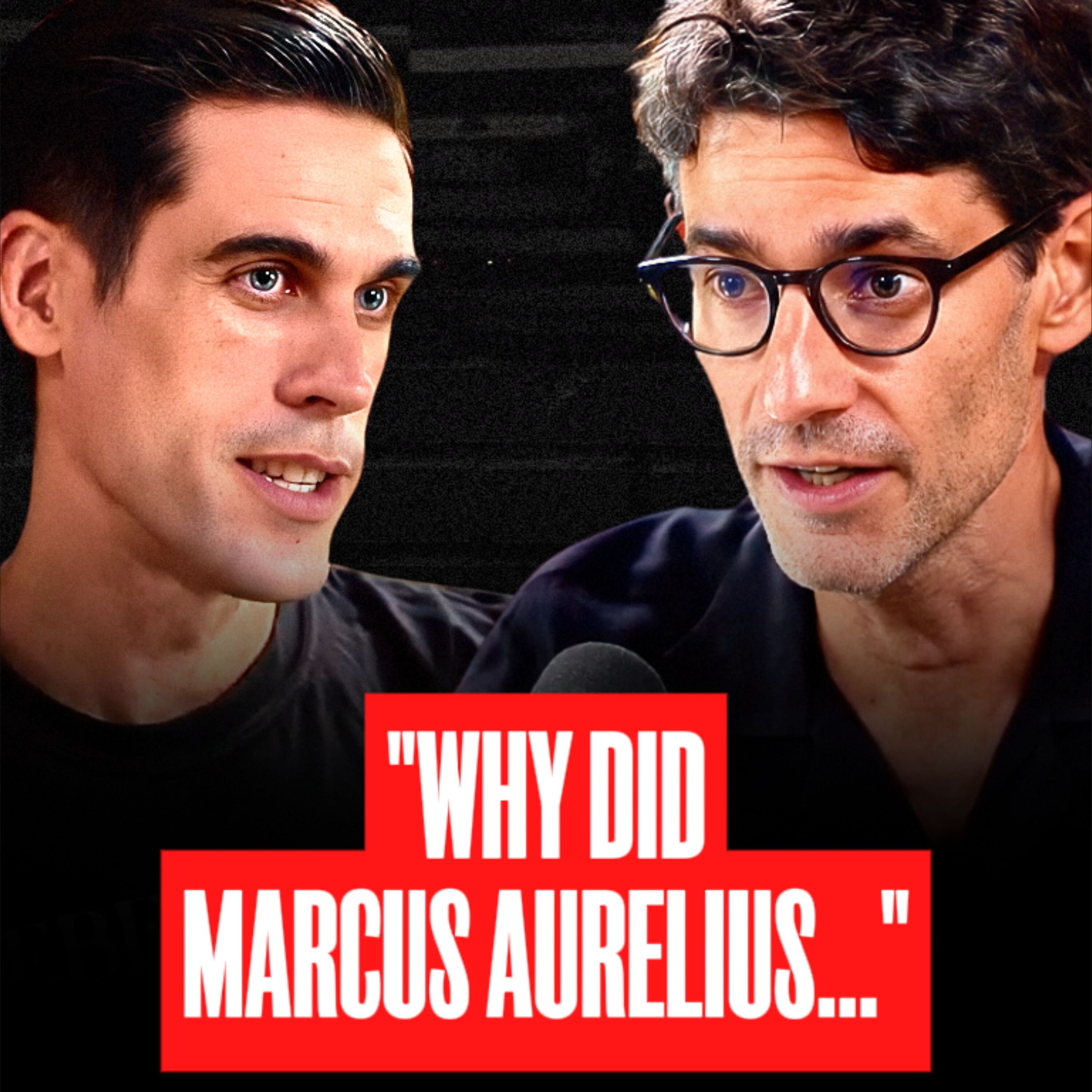
42:11How did that go? Oh yeah, Rome had a horrendous civil war and then we ended up with another emperor forever. Yeah. So like there is this, there's a book I'm going to give you in the bookstore about this exact topic, but yeah, I don't know. I think you can debate it either way and I think it's actually very important that you debate it. Yeah. But it's complicated. All right, let's go to another one. Okay. Why did Marcus Aurelius hand the emperorship to his son? This is the infinitely fascinating one. This history is not my history. I've always had, I won the Mark Rostorilius Award when I was in high school.
42:42So I've always had a little bit of interest. I mean, it's kind of an interesting part of the book where I win this big award in Andover for just scholarship and leadership. And my dad is drunk and storms the stage to congratulate me, which was amazing. But in any case, it's like the perfect life philosophy. You talk about it all the time. It's incredible. His writing is just amazing. Meditations are awesome. I really think that part of the reason I'm so excited about this podcast is the lessons of stoicism are like so deeply ingrained in my book in like a subtle way, not in a way I ever lay out there.
43:07And yet he makes the decision that like ends the Roman empire. To be fair, it does go for like another 300 years. The decline of Rome is closely over time. The trajectory kind of like... If you're the last of the five good emperors, that says something about you, right? So what happened? I know. So I think part of it is related to the themes of your book, which is like trauma, right? So five emperors in a row, or four emperors in a row, don't have a son. So they get to choose their successor. Well, Marcus Aurelius not only has a son, but he has like five sons. So it's already complicated. I think one thing we can take from this is this is why hereditary kingships are bad.
43:49Totally. When you have five sons, it's easier to not give it to any of them than if you have one son. And so he tries to get, the plan was to give it to the first one. Then the plan was to give it to another one. Then the plan was to have two of them rule as co-emperors, as he did with his stepbrother. And then the problem is they keep fucking dying. So all of them die. He loses six children, die before adulthood. So Commodus is the only one left, which in and of itself, if you're like, why is Commodus as bad as Joaquin Phoenix portrays him, which he is, you go losing half your siblings before adulthood would fuck you up, right?
44:26So if you're Marcus Aurelius, maybe you should realize that and then be like, okay, I'm not going to give it to this guy. I'm going to give it to this other guy. Yes. Right. But this has also never happened before in human history where a king has chosen someone over their own children. Right? So like, this is the dilemma. And this is where I think Stoicism has this kind of idea of like duty and you're not in control and you play the hand you're dealt maybe falls woefully short in this instance. But like we're told by historians who are writing around this time, I actually have a chapter about this, weirdly to connect it back to Elon Musk.
45:01It comes back to like who advises you. So it's not like everyone, as far as we understand from the evidence, it's not like everyone's like, Kamis is a psychopath at age 11 and he can go nowhere near. And Marcus Aurelius won't hear anything about it and does it anyway. As far as we're told, he seems somewhat promising. And by the way, Nero has five good years first. It's called the Quinquineum Neronis, where he listens to Seneca. Yeah. And then he goes off to deep end. So there's some evidence that it seemed like it was going in an okay direction. And then we're told that he entrusts his son, who is not fully of age, as I understand.
45:43He's not 30 or something. He entrusts his son to the smartest advisors and thinkers in all of Rome, many of whom had taught Marcus himself. And the idea is like, hey, if you listen to these people, you'll do all right. And he promptly fires all of these people and does not listen to them. And so to me, it's something about, yes, power corrupts absolutely. But this is why we have corporate boards. This is why there's checks and balances. And it is very hard. So Marcus really should have figured this out and somehow like, okay, I'm going to give it to you. but you have to listen. You have to have your Seneca.
46:23Well, no, no, no. What I'm saying is I think he did, one argument is he did basically everything you can do. And if someone chooses not to listen to their advisors and rejects all of the teachings that they've been given and decides to be a wild maniac instead, there's only so much you can do about that. Yeah. Right? So I think mostly what we use classical history for is to teach kind of anecdotal lessons that are more applicable to our slightly less insane situation. So what I take from comments, okay, this is what happens when you reject the advice of people who are more informed than you. But I think if Marcus Rullis was sitting here, the first question you have to ask is, what happened?
47:04This is insane. Because I don't think there's anything in the historical record that explains it. Like there's no, like he knew it was a bad idea and did it anyway. And there's no, like, we were all surprised by it. It's kind of this black hole of like, you just don't know. I mean, maybe it's... And there's nothing in his diaries about the choice. No. Yeah. Or his letters. And yeah, it's weird. But it's like Churchill's son sucks. Roosevelt's sons suck. There are very few world leaders who have had amazing children. I mean, we're now dealing with the RFK Jr. testimony today after RFK the first.
47:49And you got to lay a good chunk of that, not on his dad, but on his grandfather, who was a maniac and a monster. Right. You know, like, so it's, I think part of it, part of it has, it's almost more explicable in those full dynasties. Like King Charles, you're like, okay, this is why we don't have this system. Right. It's a dumb system. But what's remarkable about this period of Roman emperors is that it wasn't that system. Yeah. Like he was violating precedent. Right. He didn't have to do it. Yes. Yeah. And there could have been some other like stop or some way to... Anyway. But what's remarkable to me, like I think that's fascinating, equally fascinating and baffling is what happens when Mark Sreelius becomes emperor, which is the first thing that he does is give half the power to his adopted stepbrother.
48:43So you're like, at some level, he's not like this power loving, like dynastical, you know, Macbeth character. And that comes through in the diaries and in all the notes and everything. And like, you know, and you really appreciate that kind of leadership and the humility and that kind of leadership. Yes. And then even Hadrian, which doesn't have the son, to set this in motion is remarkable. Which makes the ultimate decision so much more shy. It's fucking fascinating. Yeah. It's a great historical... I mean, I'm not a Roman historian, but it is an amazing question, and I've always wondered about it.
49:16I suspect the only reason there is not a book on it is that there's just not the material. Right. I mean, who knows? Maybe there... No, no. I just mean the evidence is so... There's like five lines about it. There's not... But it is a... Maybe it would make a better novel. I would read a novel about that. That would be an excellent novel about like Marcus Aurelius' choice. Yes. Why? Yeah. Because you could decide to make communists cartoonish or not cartoonish. And there are all kinds of things. When you have like an unqualified son, like the Saudi princes do this. Like you give them like something amazing.
49:49Like you go run this like beautiful piece of land. And you have like - Look, Egypt's yours. Right. But this guy is - You're not going to make the decisions, right? Like you can go run this hotel chain. You can have a great time. We'll set you up with a nice car, right? But like, you're not gonna make the important decisions because it's not really right. But that's also easier when you have 40 sons. Right. And not - Not one who's left after. Yeah, and then there was one. Yeah. And then also, I mean, you think it's like, it's a major innovation when they're like, actually the daughter can do it too.
50:22Like that's a thousand years later. They're like, oh, maybe the daughter can do it and then she can get married and that's an innovation. Are there other elements of stoicism where you're like, this is wrong, like this doesn't apply now? Well, I just think it's interesting. You talk about like you're sort of groomed for some job. At no point is Marcus like, I don't want to do this. Right. Like he would have been so much happier as like an academic or as a philosopher, like, or as the advisor to the emperor. At no point does he seem to think like, oh, yeah, I can do what I want. Right. Because there is this kind, I think the idea of agency is a concept that comes later.
51:02Or even, I just did this Daily Stoke email. There's this letter from George Washington where he's like, basically like, I really hope someone does something about this slavery thing because it's like so bad. And it's like, I don't know, maybe the guy starting a new country could do something about it. Like there's literally no one in a better position to do something about this problem than the guy writing this letter going, I hope someone does something about this. And it's interesting that you get this guy who's literally the most powerful person in the world. And he seems to have this like very circumscribed understanding of like what his capacities are.
51:41Right. And I guess that's kind of a letdown considering how rare philosopher kings are. like jimmy carter one of the most thoughtful fundamentally decent people to ever become president to become the most powerful man in the world like immediately gets to work and he's like here's all the important things i want to do right there's like not really any of that in marcus surrealist which i find also fascinating like there's no reforms there's no like like that scene at the beginning of gladiator where he's like rome is meant to be a republic like i'm to do, like, I think he takes from stoicism that that's just not how it's done in real life.
52:19Right. So in a way, like what you're teaching is like, follow these lessons, but there's some things you should do a little differently, right? If you are made emperor of the world, like, you don't have to be quite as humble as the stoics are teaching. Like you should go and like, maybe fix some of the problems. Yeah. I mean, look, there's what's in our control and then there's what's not in our control. That's the basis of stoicism. Yeah. Well, what about all the stuff in the middle. There's obviously some stuff that we have some ability to influence, or some say over, or should try. And that's, I think, missing in the Stoics.
52:54There's also just a, I mean, there's not a resignation, but yeah, there's just an understanding that the status quo is what it is. And that I think can be helpful. But if everyone thought that, where would we be? Right. You really don't change a whole lot. Yeah. And I think that's Seneca's dilemma in the court of Nero. Yeah. And I think I, you know, I, as I said earlier, like my running life, I think about stoicism like a decent amount because like the daily habits of running connect very deeply. And I fully believe that part of what went wrong with my father is like kind of alluded, it was almost like he didn't have this like stoic belief.
53:33Right. But the other thing about running that's so interesting is that like sometimes you have to not accept like how fast you can go. Like when I think about my running life, you know, there are a couple of moments where I just made these huge breakthroughs by essentially denying the sort of what seemed like the obvious limit, you know, once kind of inadvertently because I didn't know how far I was running the other, like through sort of a more psychological process in my forties, but that's kind of anti-stoic, right? It's like, it's sort of flipping it. It's anti-stoic and it isn't. I mean, there's that famous line about how a reasonable person adapts themselves to the world and the unreasonable person adapts the world.
54:10And it's thus progress depends on the unreasonable man. Right. Right. So like, where would we be if there weren't people who challenged things and tried to do things and whatever? At the same time, like it's easy to overstate the passivity of the Stoics. Then when you look at like who they were and what they did, I mean, like Cato doesn't accept this. Right. The founders are like steeped in Stoicism. They're like, we should start a new country. Right. So there is this sort of long lineage of sort of Stoics who are active in public life, who are not just like doing their duty and questioning nothing, but are kind of not just actively engaged, but like radical.
54:46There's a whole generation of Stoics known as the Stoic opposition. So you contrast Seneca in Nero's court with this guy named Thrasia, who's like basically like the perpetual thorn in Nero's side and is like active and again ultimately gives his life in that sort of resistance. So like I think our understanding of who the Stoics were is over-informed by what they wrote and not informed enough by what they did. Yeah. And that is interesting because it's so much a philosophy about you're supposed to do it, not say it. Yeah. And you go, oh. That's a funny irony. Okay. So maybe they're like, sure, don't get too passionate.
55:27Don't get too worked up about things. That's because they're super passionate, involved, active people. And like, so it's not the, like, sometimes I'll see this because I'll post something about like, especially in this kind of very aggravating, triggering, outrageous world we live in. It's like about not being upset by everything you read. And people go, so you're just telling me to sit here and do nothing? Suck it up, yeah. And it's like, well, you're probably already doing nothing. So, you know what I mean? You're commenting on TikTok pieces. Like, I don't think you didn't take time out of the massive, you know, global nonprofit that you run to comment on this thing.
56:04You're already doing nothing. But like, I think they're saying, no, no, no. If you're in the arena, then you've got to be in control of your emotions because the stakes are very high. Right. And so I think we sometimes, if you take it that these are people involved in the thick of things saying, don't get triggered, don't get upset, manage your emotions, focus on what you control. That's very different than like the Epicureans in their garden saying the same thing. Because the default for one is engagement and the default for the other is disengagement. Yeah. You want to check out some books? Yeah, I'd love to check out some books.
56:39I got time. All right, great.
56:47Thanks so much for listening. If you could rate this podcast and leave a review on iTunes, that would mean so much to us and it would really help the show. We appreciate it and I'll see you next episode.
Running isn’t just good exercise, it’s Stoicism in motion. In part two of Ryan’s conversation with Nick Thompson, CEO of The Atlantic, they talk about how running mirrors the daily discipline of Stoic philosophy, the decline of expertise in modern life, the one decision Marcus Aurelius made that changed history, and what the Stoics might have gotten wrong.
Nick Thompson is the CEO of The Atlantic, an American magazine founded in 1857, which earned the top honor for magazines, General Excellence, at the National Magazine Awards in both 2022 and 2023. In his time as CEO, the company has seen record subscriber growth. Before joining The Atlantic, he was the editor-in-chief of Wired magazine. He is also a former contributor for CBS News and has previously served as editor. He has long been a competitive runner; in 2021, he set the American record for men 45+ in the 50K race.
Check out Nick’s new book The Running Ground: A Father, a Son, and the Simplest of Sports
Follow Nick on Instagram and X @NXThompson
🎟️ Come see Ryan Holiday LIVE: https://www.dailystoiclive.com/
👉 Support the podcast and go deeper into Stoicism by subscribing to The Daily Stoic Premium - unlock ad-free listening, early access, and bonus content: https://dailystoic.supercast.com/
📖 Wisdom Takes Work by Ryan Holiday is out NOW! Grab a copy here: https://store.dailystoic.com/pages/wisdom-takes-work
🎥 Watch the video episodes on The Daily Stoic YouTube channel: https://www.youtube.com/@DailyStoic/videos
🎙️ Follow The Daily Stoic Podcast on Instagram: https://www.instagram.com/dailystoicpodcast
✉️ Want Stoic wisdom delivered to your inbox daily? Sign up for the FREE Daily Stoic email at https://dailystoic.com/dailyemail
🏛 Get Stoic inspired books, medallions, and prints to remember these lessons at the Daily Stoic Store: https://store.dailystoic.com/
📱 Follow us: Instagram, Twitter, YouTube, TikTok, and Facebook
See Privacy Policy at https://art19.com/privacy and California Privacy Notice at https://art19.com/privacy#do-not-sell-my-info.
