
 Ask ChatGPT


- Podcasts
- The Daily Stoic
- What It Means to Be on That Hill
In short
Seth Wickersham explains the meaning of Bruce Springsteen’s “I’ll be on that hill” as a metaphor for showing up, paying the price, and doing the work despite uncertainty, internal struggle, and limited control over outcomes (Stoic-style: you control effort, not results). He ties this to ambition in sports and writing, the role of luck, and the loneliness/competitiveness of creative careers.
Guests
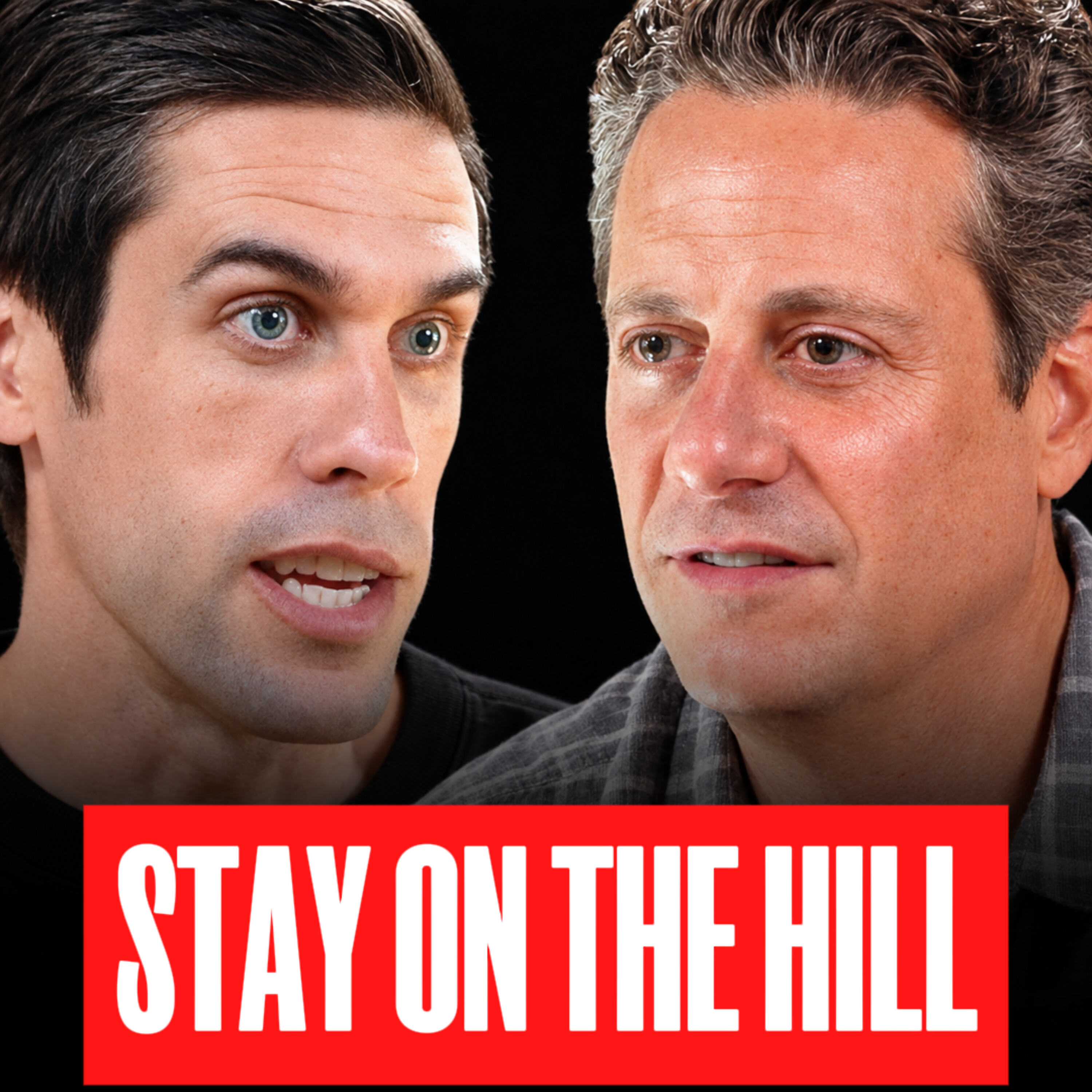
Seth Wickersham, ESPN sports writer and author of It’s Better to Be Feared and American Kings; his new book Be on That Hill compiles two decades of reporting on athletes/coaches pursuing greatness. Host: Ryan Holiday (Daily Stoic).
Key claims
“Being on the hill” is internal perseverance; luck shapes careers; competitiveness must be balanced with celebrating others; success requires self-mythologizing.
Notable examples
Tom Brady’s career randomness; Brady’s draft-position counterfactual; Kurt Warner texting Brady after a Super Bowl loss; Wickersham’s own job search odds (few magazine slots).
Written by AI. May contain mistakes.
Chapters
0:45
Exploring Springsteen's Influence
Ryan discusses Bruce Springsteen's impact and introduces Seth Wickersham.
“But I think people who are Bruce Springsteen fans, there's just something about little lines, little things that he says that just sort of worm their way into your brain.”
3:40
The Concept of 'Being on That Hill'
Seth articulates what 'being on that hill' means to him and its significance.
“I'll link to that in today's show notes.”
6:20
Writing and Internal Struggles
Seth reflects on the internal struggles faced by writers and athletes.
“and being on time and, you know, being propelled by something that is kind of mysterious.”
9:00
Career Paths and Luck
Discussion on the challenges of becoming a magazine writer and the role of luck.
“But I'm curious how you think about that.”
12:20
The Costs of Pursuing Greatness
Exploration of what it costs to strive for success and the differing levels of ambition.
“You know, it can get you like a book deal or something like that.”
15:43
Tom Brady's Career Reflections
Explore Tom Brady's thoughts on luck and career trajectories.
“I've written about him a lot in my life.”
16:33
The Reality of Success
Examine the balance of hard work and luck in achieving success.
“And I, you know, I said, do you ever think about the randomness of your career, you know, and how easily it could have been someone else?”
18:09
Competitiveness in Sports and Writing
Discuss the different forms of competitiveness in sports versus writing.
“And, you know, a lot of them are happiest when they're unhappy, which is, you know, another kind of like really prevalent theme in anyone who does creative work.”
22:41
The Loneliness of the Writer
Delve into the solitary nature of writing and the pursuit of excellence.
“And it's really like all of these things are ingrained within you and it's the cop, the race, so to speak, is to get the best version of it out.”

Ask about this episode
Get the gist, explore an idea or ask about something said.
 Claude
On The Daily Stoic, what are the key points of this episode?
Searching your listeningTranscript
Automatic transcript. May contain errors.
0:00Ryan Holiday: Welcome to the Daily Stoic Podcast, designed to help bring those four key Stoic virtues, courage, discipline, justice, and wisdom into the real world.
0:14Ryan Holiday: Hey, it's Ryan. Welcome to another episode of the Daily Stoic Podcast. I am a Bruce Springsteen fan. Took my kids to see Bruce Springsteen here in Austin. A couple of months ago, I had to fly into New York to do a talk. I flew back and flew into JFK, flew out of Newark. And I was at the airport in a Bruce Springsteen shirt. And this guy's like, oh, my gosh, you're wearing a Bruce Springsteen shirt. And I was like, oh, yeah, I forgot. I was in I was in New Jersey. But I think people who are Bruce Springsteen fans, there's just something about little lines, little things that he says that just sort of worm their way into your brain.
0:56Ryan Holiday: I talked, I think, in the Daily Dad book about this line that wormed its way into Johnny Cash's mind, that line about how there's nothing better than blood on blood. Well, my guest today, the sports writer Seth Wickersham, who's been on the podcast before, one of my favorite writers, also has a line from Springsteen that wormed its way into his brain, something he's carried around with him for years. And it's this line about being on that hill. Let me actually play the Springsteen lyric for you real quick.
1:44Ryan Holiday: In Seth's interpretation, that line is about showing up. It's about being willing to pay the price. It's about wanting something so badly, even when it's hard, even when no one's watching, even when you're not sure how it's going to turn out that you do the work. I do think there's something stoic in there, too. You don't control whether you win. You don't control whether people appreciate it. You just control whether you're out there doing the work. You don't control whether you get to the top of the hill like Sisyphus, but you control whether you're doing what you're supposed to be doing. Seth and I are going to talk about that in today's episode.
2:22Ryan Holiday: It's a shorter episode. But Seth, who is a great writer at ESPN, is the author of It's Better to Be Feared and American Kings, which is a great book about the position of quarterback. And his new book, Be on That Hill, is two decades of reporting and writing about athletes and coaches and that pursuit of greatness, the people who are fighting to be on that hill. And in today's episode, we're talking about that phrase, where the idea of being on the hill comes from, how he thinks it captures something essential about the people he has written about, about who he aspires to be as a writer, and all the things it evokes, right?
2:59Ryan Holiday: Ambition and obsession and perseverance, what it costs to keep climbing that hill, what it costs to try to stay on that hill. Whether you conquer the hill or not is not up to you, I think the Stokes would say. But whether you're on it or not is. Seth has been a finalist for a National Magazine Award. He's been anthologized in some of the best magazine sports writing in this country. His book, It's Better to Be Feared, was a nonfiction book of the year by Sports Illustrated. And you can follow him on Instagram and on Twitter at Seth.Wickersham. And you can pick up copies of Beyond the Hill, It's Better to Be Feared and Love, and American Kings at the Painted Porch, which we have carried since before I first had him on the show because I am a big fan.
3:40Ryan Holiday: I'll link to that in today's show notes. Let's get into it.
3:49Ryan Holiday: Okay, so tell me about this idea of being on that hill because it's sort of the through line of the book, but I think it's an interesting concept. I've listened to that Springsteen song many, many times. I don't think that lyric ever jumped out at me. So what does it mean to you?
4:04Seth Wickersham: You know, when I collected the stories in the book and you try to find like a unifying theme, right? And my working premise at the moment, and I reserve the right to change my mind, but my working premise is that like, these are all about internal struggles of people trying to achieve something. And so, you know, I love Springsteen. I have since I was a kid. And, you know, I go around and around about what album is speaking to me best at a moment. But I find when I'm in the darkest creative places, you know, that Darkness on the Edge of Town speaks to me the best because it's an adult album. It was really his first adult album.
4:46Seth Wickersham: And, you know, when he sings that lyric, it's the last song and the last verse of the last song. And, you know, he says, I'll be on that hill because I can't stop. I'll be on that hill with everything I've got.
5:12And I'm like, you know, that's the prayer.
5:15Seth Wickersham: You know, that's the hope in a weird way. And, you know, he was once explaining that line and he said, you know, The setting for personal transformation is often found when we're at the end of our rope. And I really, you know, your work helps. You know what I mean? All these internal monologues that you're dealing with and you're wrestling with all the time. But that's one of those lines that I can cling to when, you know, you're just kind of creatively stuck or in a dark place and you have to figure out a way through it.
5:47Ryan Holiday: So does being on the hill for you, is that kind of the aspirational element of Springsteen? where it's like, you know, I got to get out of this town. I got to make my mark. But then also it's like, I got to conquer these demons. It's sort of all of it and more of like where I am isn't working. So I got to get there.
6:09Seth Wickersham: Well, and also just showing up, you know, it's all those things. You know what I mean? But it's also just like, you know, whatever the thing is you need to do being there and being on time and, you know, being propelled by something that is kind of mysterious. And depending on how you talk about it can either sound like incredibly romantic and cool, or, you know, incredibly annoying and precious. But, you know, it's, you know, again, it's all these internal forces that you have within you and where they take you. And, you know, being on that hill, you know, means, you know, you've kind of left some of those romantic ideals behind a little bit and you're showing up for whatever the thing happens to be.
6:58Seth Wickersham: And, you know, that's kind of how I looked at it. And, you know, when I was putting together stories for the collection, you know, again, some of these things can sound kind of insufferable. So I'm trying to be careful, but what stood out was just how hard they all were and how, you know, I didn't want to ignore that. And so when I was kind of trying to, you know, write an introduction to it and introduce the ideas and the themes that I get at and the conversation really that happens throughout the book, you know, I kind of wanted to say without trying to say that it's harder for me than anybody else, because I don't think it is just that these things are struggles and they're all struggles.
7:36And everybody who I really write about in the book is, you know, struggling internally and in
7:42Seth Wickersham: some part, maybe their idea of themselves or what they could become is in peril. And how do they, how do they go forward and how do they reconcile with that and deal with it?
7:52Ryan Holiday: Well, cause I was thinking about it, cause you do talk about this sort of, uh, in the intro, you talk about sort of like the scene of writers that you came up with, how few slots there are to actually be able to do what you do, which is obviously something that sports writers have in common with athletes in a way that maybe we don't think about it with like movie critics, even though there's not that many movie critics, we don't go like movie critics and movie directors are both, you know, trying to be on that hill for, for some reason, I think that's because maybe, you know, the role of the critics seems to, you know, not always be to sort of celebrate and tell stories, but to, to sort of tear down or to say what's wrong.
8:32Ryan Holiday: But I don't know, I related to that and I relate to it because like the phrase I always use like as a writer, like I'm not trying to sell the most or be the most famous, but I am trying to be in the league. That's how I think about it. Like I think about how many guys are in the NBA. Obviously, some leagues have more players than others. But I just think about like being in the league that like hard work and a little bit of luck can get you in the league. Now, whether you're the Jordan of that league or the highest paid player in that league or, you know, on a championship team in that league, all these things tend to at some level be more outside your control than just like making it period.
9:15Ryan Holiday: But I'm curious how you think about that.
9:17Seth Wickersham: Yeah, well, so when we were in college, you know, me, Wright Thompson, Justin Heckert, Steve Olentik, Tony Rehagen, you know, all these guys who were just like fantastic writers and great friends. You know, we all had our different versions within the palette of what we wanted to do. But I think we all kind of settled on wanting to be magazine writers. Yeah. Like, I think that's where we found the most combination of creativity and depth and, you know, timelessness, all these things. And so, you know, we would look at the mastheads of magazines. Kids, you can look up what a masthead is. Yeah. And, you know, the odds weren't good.
9:55Seth Wickersham: You know, Sports Illustrated at the time had something like 28 writers. I think ESPN Magazine might have had nine or 10. And then you're talking about the Esquires and the GQs that have like seven or eight writers. So those odds are not good. And we kind of had a little bit of a blind faith that. well we're the best things that you know that that are coming up you know we're gonna do this whatever it might be and you know then writing as it always does will you know take a sledgehammer to that idea and make you work through it but that was like kind of where we were coming from it's like how do we get from Columbia Missouri to you know the point where one of these editors and chief who has a fancy office in midtown Manhattan, you know, says that's the voice that I need.
10:44Seth Wickersham: So when I was applying for jobs, I had a really, at college, I had a really high opinion of myself and I applied to like six places, right? The New York Times, Boston Globe, Washington Post, ESPN Magazine, Sports Illustrated. I think that was it. Right. And I took a trip to New York to try to meet with those people and try to, you know, increase the odds. And like, you know, it wasn't going well. And I printed up 40 some resumes and clips and cover letters to send out to just like every major metro newspaper because I, you know, was coming up on not getting a job. ESPN called with an opening. They couldn't get me in right away.
11:21Seth Wickersham: But, you know, just come here. We'll pay you and then we'll hire you when we get clearance to fill this position. So I did that. And, you know, my parents weren't thrilled about it because at the time, until I got brought in full time it wasn't you know benefits you know that type of thing um it was a couple months without that but like if i had been offered a job by sports illustrated or the washington post rather than espn in that context i probably would have taken them i don't know for sure but i probably would have and if i had look i probably would have been part of the sports illustrated layoffs at some point i probably would have been part of the washington post closing its sports section.
12:00Seth Wickersham: And so you look back on those things and you're just like, holy cow, was I fortunate to land where I did and, you know, be surrounded by the people that I was surrounded by. Because you can't predict that stuff.
12:12Ryan Holiday: Yeah, there's a Nassim Taleb thing that I think about all the time, and I'm going to forget the specifics of it. But he basically says like, you know, hard work can get you a professorship. It can get you a BMW. You know, it can get you like a book deal or something like that. But he's like, luck and black swans are a private jet, you know, a Pulitzer or a Nobel prize, right? Like there's making it. And then there's like superstardom and that, that like, we'd like to think that the difference between Tom Brady and Tiger Woods and whomever, and then the, the, the people in the league that you've never heard of is just like, they work that much harder, but it's not, it's a, it's a whole other set of circumstances usually.
12:53Ryan Holiday: but and then you know obviously there is a cost some people are willing to pay that other people aren't willing to pay but that's why i like the title of the book it's like the goal should be to be on the hill like to necessarily make it to the top of the hill and knock everyone else off the hill and be recognized for being like all those things you know that's like a dream on top of a dream on top of a dream but the core motivating force has to just be that that main one's like I want to get there, right? Like I want to make it to the hill. I want to be on it. And then I'll figure out from there.
13:30Ryan Holiday: We were in Rome this summer and my family and I stayed in this amazing palazzo that we booked on Airbnb. It had these frescoes that were twice as old as America. Just one of the most beautiful places I've ever stayed in my life. And in fact, I found out later that the people that owned it were listing their place on Airbnb, they were the third family to ever own it. I just thought it was so cool. By listing it on Airbnb, they were not only able to pay to restore and take care of this incredible piece of history, but they were also able to share it with the world. So if you're planning on being away, if you have a property or an extra bedroom or maybe a vacation home, you should consider listing it on Airbnb.
14:18Ryan Holiday: It can be a great way to earn some extra cash while you travel, and that can help offset the cost of your trip, or it can go towards whatever comes next. Your home might be worth more than you think, and you can find out how much at airbnb.com slash host. This episode is sponsored by BetterHelp. I've made no secrets, because it's not a secret and not something I'm ashamed of about going to therapy, right? I've been going to therapy longer than I've been doing the Daily Stoic podcast, longer than I've been a writer. Basically, the first time I got a job with health insurance, I found myself a therapist.
14:55Ryan Holiday: Actually, no, I'm thinking about it. No, I got my first one when I was in college. And this is something that today's sponsor, BetterHelp, is great at and makes easier. BetterHelp does the initial matching work for you so you can focus on your therapy goals. They've got a short questionnaire that helps you identify your needs and preferences. In 12 plus years of experience and the industry leading match fulfillment rate, they usually get it right the first time. But if you're not happy with your match, you can switch to a different therapist at any time. Got over 30 ,000 of them. Better is a feeling defined by you.
15:30Ryan Holiday: And for BetterHelp, it's a BetterHelp therapist who really gets you. So sign up today and get 10 % off at BetterHelp.com slash DailyStockPod. That's BetterHelp.com slash DailyStoicPod.
15:43Seth Wickersham: You know, I write about Tom Brady. I've written about him a lot in my life. I've talked to you about him a lot. And he's, you know, some of my magazine stories on him are in the book. And there was two separate conversations I had with him that were about a decade apart. And the earliest conversation was, you know, he's just getting started. And, you know, the first couple of years of his career just happened so fast. And he goes from zero to global superstar, just like that.
16:07Ryan Holiday: Yeah.
16:07Seth Wickersham: And he said to me, you know, I think of all the time if I had been drafted by like the Arizona Cardinals at 198 rather than the New England Patriots of 199, you know, I might be out of the league right now. Yeah. And it was interesting perspective to have when he was, you know, 25, 26, 27 years old. So then fast forward, I'm interviewing him as he's entering the back third of his career. So he's like late 30s. And I kind of referenced that. And I, you know, I said, do you ever think about the randomness of your career, you know, and how easily it could have been someone else? And it was so interesting because his reaction was so different.
16:46Seth Wickersham: I mean, he tilted back, he weirded his house and he tilted back in his couch and he just kind of stared at the ceiling. And I was like, and he goes, well, it was very defensive. Yeah.
16:57Ryan Holiday: You can no longer conceive of you not making it right. The story becomes too real.
17:01Seth Wickersham: I was doing these things and the other ones weren't. Yeah. And, you know, there's a lot of truth to that. There's a ton of truth to that. And yet there's also the luck of circumstance. And, yeah, you know, and I think that like when you're talking about wanting to be on the hill or, you know, I think you put a great, you know, I want to be in the league, you know, whatever it is. I hope that I'm one of those guys that, you know, yes, a lot of it comes down to discipline and, you know, choices you make and all these things. But a lot of it is you have to be able to just kind of be at peace and kind of celebrate the fact that a lot of it's out of your hands.
17:39Ryan Holiday: No, it's funny that that Brady story is funny because in the Halberstam book on Belichick, they talk about how they would keep that picture of Brady on their desk as a reminder that they didn't know. Like that they didn't actually make an incredible draft pick, that they thought they were picking somebody up who was worth more than, you know, the 199 spot, but they were not picking the goat. And I think that is a seductive part of the story as you get older and you get more accomplished. You lose the ability to conceive of the alternate realities or the other timelines, which just as easily could have been true.
18:16Seth Wickersham: the self-mythology to a certain extent and you know i think that to be successful there's a part of you that has to self-mythologize and you know you can sound incredibly precious and insufferable talking about it or you can almost kind of sound endearing at times talking about it but it has to exist a little bit within you um and you know the people that i write about in the book you know, they're extremists. And, you know, a lot of them are happiest when they're unhappy, which is, you know, another kind of like really prevalent theme in anyone who does creative work.
18:53Ryan Holiday: Well, it's interesting with sports compared to say writing, like obviously sports is driven by competition because it is a contest between you and another person. It's a contest between you and a record, there is this binary win-loss thing. And so, you know, not to stretch the metaphor, it's more of a game of king of the hill, right? Like where you're having to knock other people off the hill. Whereas what we do, or imagine your journey, that competitive drive, it's there a little bit because you're measuring yourself against your heroes and what you see as great work. And at the same time, it is not so zero sum as, as other things.
19:38Ryan Holiday: Um, so when, when you think about like getting to the summit, as you've seen it at athletes and then in your own life, how do you think about competitiveness?
19:48Seth Wickersham: Yeah. I mean, you have to have an insane internal competitiveness. Like I was always very internally competitive and very hard on myself. I was never one of those guys that like when they lost, you know, was screaming and whining and all those things. It was more like self-loathing that took over. You know, when I was playing quarterback or playing basketball, you know, in high school, whatever it might be. I think that like what I've learned, I think, in the course of, you know, writing and doing these stories is that, you know, if you define yourself by those zero-sum things, you're asking for a really tough existence.
20:25Seth Wickersham: because even the people who define themselves, you know, wins and losses. After Brady lost one of his Super Bowls, I think it was a Super Bowl, Kurt Warner texted him and he said, you know, being the best doesn't mean you win every time. It just means you win more than everyone else. And it meant a lot to Tom in the moment, even though, you know, he clearly defines himself by how this, you know, winning the last game of the season. And I think as a writer, you know, know, there's a real balance between being competitive, being, you know, proud of what you do and also being able to be happy for other people and celebrate their successes.
21:05Seth Wickersham: And, you know, even if they might beat you out for an award or whatever it might be, I think that like the people that I see in my career who were writers who struggle with just being able to celebrate their friends and their peers who can't handle it. I don't know if that really helps them in any way. Like, I don't think it's a differentiator. I think it's just like one of those things that they have to figure out a way to limit. You know, you can't unwire it for yourself, but you have to figure out a way to limit it.
21:33Ryan Holiday: Well, that's the tricky thing because you're in the league of the people doing the thing, but you're also your own league. You're your own brand. Like one of my favorite lines of all time, I just sort of, I've used to shape my career. The manager of Iron Maiden was once asked, some question about the music business. And he goes, I'm not in the music business. He says, I'm in the iron fucking maiden business. And his point is like, I don't really care what the trends of the industry are going. It doesn't matter if somebody else sells a lot of records. Like my job is to sell this band, right? Like my job is to help this band to do what it wants to do.
22:12Ryan Holiday: And I think that that is like an important lesson. Like you're not actually in publishing or the magazine business, like you chase the stories that you like chasing and you write them in the way that only you can write them. And then when you realize the logical conclusion of that is that actually there is no competition because there's no one doing what you were doing, right? Like you have this monopoly. And so it becomes much more this sort of personal, this sort of race or exercise in maximizing your potential or realizing what you have within you or, you know, doing what you're capable of doing as opposed to getting certain awards or, you know, having the biggest contract with this magazine or publishing the most stuff or the most reader, like all that stuff is not actually a good metric of what you're doing.
23:05No.
23:05Seth Wickersham: And it's also lonely, you know, and I think that like one of the things that I was really fortunate, I think you also, you know, to come up at an era where you can have access to perspective on writing very easily because writing is so lonely and it's such a, you know, that, that idea you just expressed of it being you in the keyboard. And it's really like all of these things are ingrained within you and it's the cop, the race, so to speak, is to get the best version of it out. And that can be liberating and it also can be debilitating. And, you know, going back to, you know, Tom, Junot, or, you know, some of these like great writers who, you know, I think especially around like, I want to say 07, 08, 09, 2010, there was just a ton of these websites that came up that wanted to interview writers about writing processes.
24:02Ryan Holiday: Yeah.
24:03Seth Wickersham: And, you know, learning about Tom Junot's writing process, who's, you know, might be the greatest magazine writer ever. I mean, certainly he's definitely in the league and hearing about how, you know, difficult it is and how he fully scraps stories and starts from scratch and all these things. I think it's just reassuring in a way, because again, I've been to your office, you know, outside of Austin, you know, there's, there, there's not a lot of room for other people. It's you in that office and that writing chamber. And, you know, it's what you make of it that day or what you're able to make of it.
24:38Seth Wickersham: And I think that like having the The ability to zoom out and to gain a little bit of perspective and context for your peers or people you look up to and how difficult, you know, this craft can be has been one of the kind of enormous blessings, you know, of my professional life.
From the publisher
How do you keep climbing when there’s no guarantee your work will pay off? Sportswriter Seth Wickersham joins Ryan to talk about the Springsteen lyric that inspired his new book Be On That Hill, the role luck plays in success, and what keeps ambitious people showing up when the work gets hard.
📚 Books Mentioned:
- Be On That Hill by Seth Wickersham
- It’s Better To Be Feared by Seth Wickersham
- American Kings: A Biography of the Quarterback by Seth Wickersham
🎶 Lyrics are from Darkness on the Edge of Town - Bruce Springsteen
Seth Wickersham is a senior writer at ESPN and the New York Times bestselling author of Be On That Hill, It’s Better to Be Feared: The New England Patriots Dynasty and the Pursuit of Greatness, American Kings: A Biography of the Quarterback. Focusing primarily on longform enterprise and investigative work on the National Football League, Wickersham has been a finalist for the National Magazine Award for Reporting, and his stories have been anthologized in the Best American Magazine Writing, the Best American Sports Writing, and Next Wave: America’s New Generation of Great Literary Journalists, among others. Released in 2021, It’s Better to Be Feared was named Nonfiction Book of the Year by Sports Illustrated and Best Sports Book by the National Sports Media Association.
Follow Seth: X & Instagram: @Seth.Wickersham
Grab copies of It’s Better to Be Feared, American Kings, and Be On That Hill at The Painted Porch | https://www.thepaintedporch.com
🎟️ DAILY STOIC LIVE | Ryan Holiday is coming to a city near you! Grab tickets here | https://www.dailystoiclive.com/
🎙️ AD-FREE | Support the podcast and go deeper into Stoicism by subscribing to The Daily Stoic Premium - unlock ad-free listening, early access, and bonus content: https://dailystoic.supercast.com/
✉️ FREE STOIC WISDOM | Want Stoic wisdom delivered to your inbox daily? Sign up for the FREE Daily Stoic email at https://dailystoic.com/dailyemail
--
Stop online threats before they become real-world attacks. Visit ironwall.com/DAILYSTOIC and request a free Risk Assessment to see exactly how exposed your executives are.
--
Wealthfront’s high-yield cash account: https://www.wealthfront.com/stoic
This experience may not be representative of other Wealthfront clients, and there is no guarantee of future performance or success. Experiences will vary. Ryan Holiday, who’s a client of Wealthfront, receives cash compensation from Wealthfront Brokerage for paid testimonials in his podcast, creating a conflict of interest. More details available via the referral link. The Direct Deposit Plus Investing Program from Wealthfront Advisers LLC and Wealthfront Brokerage LLC provides eligible clients a 0.25% APY increase above the base APY on eligible Cash Account balances (up to an overall boosted rate of 4.30% for a limited time when including the three month 0.75% APY boost for new clients) when you direct deposit $1,000 a month, plus open, fund, and maintain an investing account. Wealthfront may change or end the program at any time and determine eligibility at its discretion. Terms apply. Full details at wealthfront.com/promo-terms.
The Cash Account, which is not a deposit account, is offered by Wealthfront Brokerage LLC ("Wealthfront Brokerage"), Member FINRA/SIPC. Wealthfront Brokerage is not a bank. The Annual Percentage Yield ("APY") on cash deposits as of January 30, 2026, is representative, requires no minimum, and may change at any time. References to the APY for the Wealthfront Cash Account, including any APY increase, are to the APY paid by insured depository institutions that participate in our cash sweep program (the "Program Banks”). Wealthfront Brokerage does not pay interest. Wealthfront Brokerage sweeps cash balances to Program Banks, where they earn the variable APY.
Instant and same-day withdrawals use the Real-Time Payments (RTP) network or FedNow service. Transfers may be limited by your receiving institution, daily caps, or participating entities. New Cash Account deposits have a 2–4 day hold before transfer. Wealthfront does not charge fees for these services, but receiving institutions may impose an RTP or FedNow Fee. Processing times may vary.. Fees & Eligibility requirements may apply to certain checking features.
Investment advisory services are provided by Wealthfront Advisers LLC, an SEC-registered investment adviser. Investing involves risk, including the possible loss of principal. Securities investments are not bank deposits, bank-guaranteed or FDIC-insured, and may lose value.
See Privacy Policy at https://art19.com/privacy and California Privacy Notice at https://art19.com/privacy#do-not-sell-my-info.
More from The Daily Stoic
All episodes
We use cookies.They keep VO running smoothly and help us improve it. Privacy policy