
 Ask ChatGPT


 The Daily Stoic
20 Jun 2026 · 55m · 19 chapters
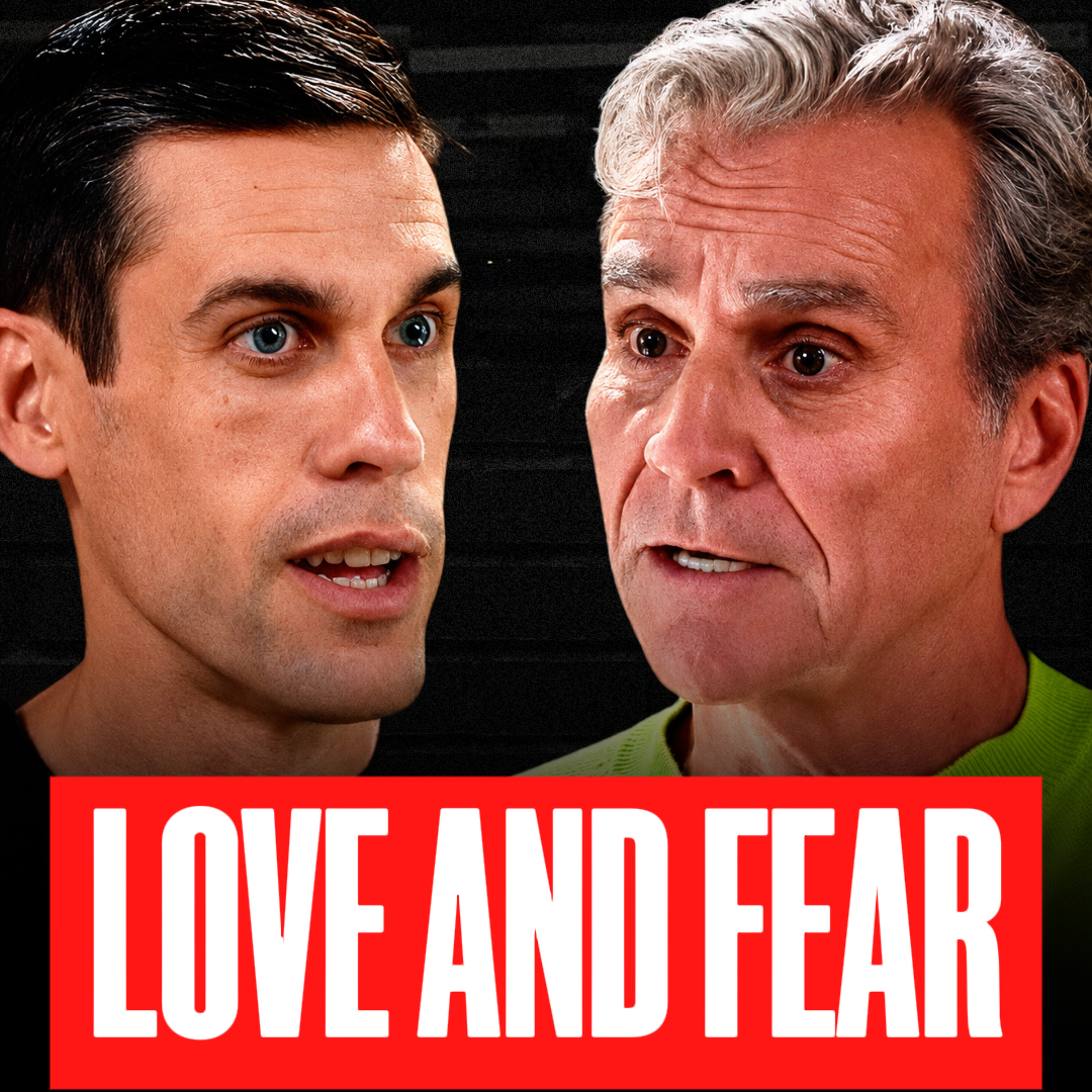
How fathers shape sons—contrasting Stoic lessons from Roman emperor Marcus Aurelius’s adopted father Antoninus Pius with journalist Tom Junod’s real-life experience of a terrifying, charismatic, cruel father.
Antoninus taught Marcus compassion, humility, open-mindedness, decisiveness, self-control, responsibility, and respect for tradition without cruelty; Marcus learned to avoid “dyed purple” ego and to govern himself first.
Antoninus intervenes when a teacher tells Marcus to “get a hold of yourself” after grief, saying “let the boy be human”; he listens to critics and rejects flattery; he manages health and work ethic; he stays calm under provocation and forgives a customs agent.
Tom Junod is an award-winning journalist (National Magazine Award, James Beard Award, Emmy) and author of In the Days of My Youth. He wrote a profile turned into the film A Beautiful Day in the Neighborhood. Key claims from Junod: He built a mythology of his father to manage terror, later reframing the book as about “moral injury” from living with a hidden, abusive secret life.
Written by AI. May contain mistakes.
Learn about the bookstore's recent renovations and outdoor space.
“The Painted Porch at my bookstore here in Bastrop, Texas has a porch on the back and it is painted.”
Explore how Marcus Aurelius became a great leader through his upbringing.
“How does a boy of aristocratic but sightedly non-royal bloodlines become not just the most powerful man in the world, not just the emperor of Rome, but become such a great man of history?”
Learn about the compassion that shaped Marcus Aurelius through Antoninus.
“And it is this influence that is the foremost guide to Marcus Aurelius' great life.”
Discover how Antoninus influenced Marcus Aurelius' philosophical outlook.
“but also to imbue in him as a future leader.”
Understand the work ethic of Antoninus and its impact on Marcus Aurelius.
“And yet at the same time not being cynical and negative, but being planted right here in reality.”
Exploring the virtues and teachings of Antoninus that influenced Marcus Aurelius.
“And we can imagine that's not an easy thing to do when you have the power of life and death over other people.”
The significance of self-control and responsibility in leadership as seen in Marcus's view of Antoninus.
“Everything was to be approached logically and with due consideration, in a calm and orderly fashion, decisively and with no loose ends.”
The importance of connecting with other fathers and sharing experiences.
“unstained character and to be an unselfish person.”
Reflecting on the complexities of parenthood and our perception of parents.
“I'd love to see you at dailydad.com slash society.”
Explore the complexities of human behavior and the impact of our past on our present.
“which is like, hey, I'm not great at this.”
Discuss the significant and complicated influence of Tom's father on his life.
“The thing I thought was interesting about your dad in the book is like, even in your view, you know, he's this glamorous guy.”
Examine the concept of moral injury in relation to personal trauma and family dynamics.
“But I think that he didn't lie about like that.”
Discusses the complex emotional landscape of growing up with a dysfunctional parent and the resulting moral injuries.
“He becomes, I think I call him at the end of the book, a bedroom gangster.”
Discusses the complex emotional landscape of growing up with a dysfunctional parent and the resulting moral injuries.
“sometimes the inability to see what's happening in their pipeline.”
Examines the contradictions of masculinity, honor, and personal relationships through the author's perspective on his father.
“And I don't know how you look at it, but to me, the book is about loving a guy who might be and probably is a bad man.”
Exploring the complexities of paternal relationships and their impacts.
“And not only enables him, the thing is, we're thrilled by it.”
Delving into personal family history and the significance of uncovering secrets.
“And I'm bringing him, he loved my father so much that I'm bringing him some of my father's ashes in a shot glass so that he can spread them in the lake behind his house.”
Discussing the duality of wanting to emulate and reject parental influences.
“To me, the the proof that I did the right thing, you know, it exists.”
Understanding the importance of positive role models in our lives.
“It's a pretty remarkable relationship they have.”

Get the gist, explore an idea or ask about something said.
 Claude
On The Daily Stoic, what are the key points of this episode?
Searching your listeningAutomatic transcript. May contain errors.
0:00Ryan Holiday: The Painted Porch at my bookstore here in Bastrop, Texas has a porch on the back and it is painted. We actually just repainted it and then we were sort of trying to fix it up a little bit. It's been sort of an afterthought but we're trying to make it a little bit nicer and we bought some new outdoor furniture, some chairs, a rug, some string lights, you know just some stuff that the employees and I myself can hang out on. You know this is the best time of year in Texas. It's cool and nice. days are still long but not so long anyways where did we get all the furniture we got it from wayfair outdoor seating grills major appliances storage patio lights rugs decor wayfair is your one stop shop for home installation and assembly services are available for a truly seamless experience wayfair deals with the hard parts so you don't have to with over 20 million five-star reviews you can hear from real customers before you buy patio season is here and these deals won't last, head over to Wayfair.com right now to get your outdoor space ready for way less.
1:01Ryan Holiday: W-A-Y-F-A-I-R.com.
1:04Tom Junod: Wayfair, every style, every home.
1:06Ryan Holiday: As a business owner, I'm super familiar with how important a strong internet connection is to keeping everything running smoothly. A slight delay in the internet connection in the store, it could mean missed sales, a lag in a Zoom call or a podcast recording could mean you lose everything you were doing. When every minute matters, every transaction, every customer, you cannot rely on a subpar internet connection. You need a provider that's reliable. You need Spectrum Business. Spectrum Business keeps businesses of all sizes seamlessly connected with fast, reliable internet, advanced wifi, phone, TV, and mobile services.
1:43Ryan Holiday: They offer 100 % US-based customer support 24-7 to help you stay up and running and are sure to have the right plan for you with tailored connectivity solutions and packages built for every business budget. Millions of business owners rely on Spectrum Business to keep them connected. Visit spectrum.com slash business to learn more. Restrictions apply. Service is not available in all areas. Welcome to the Daily Stoic Podcast, designed to help bring those four key stoic virtues, courage, discipline, justice, and wisdom into the real world.
2:18Ryan Holiday: How does a boy of aristocratic but sightedly non-royal bloodlines become not just the most powerful man in the world, not just the emperor of Rome, but become such a great man of history? How does this absolute power given to him at a relatively young age not make him awful? How does he manage not just to be corrupted by his privilege and his fame and his influence, but managed to prove himself worthy of the responsibility. It was his adopted father that made Marcus Aurelius the person that he became. And we know this because at the end of his life, Marcus Aurelius sits down and writes what he learned from Antoninus.
3:03Ryan Holiday: And it's an impressive, beautiful, inspiring list. And that's what's gonna be the through line of today's video.
3:14Ryan Holiday: As I said, Marcus Aurelius is not born to be the emperor, but he catches the notice of Hadrian, then the emperor of Rome. But Hadrian, knowing that he doesn't have much time left and thinking that Marcus Aurelius is too young, understands that he has to come up with a guardian to help and teach Marcus Aurelius what he needs to learn. So Hadrian adopts an older Roman senator named Antoninus Pius on the condition that he in turn adopt Marcus Aurelius. And it is this influence that is the foremost guide to Marcus Aurelius' great life.
3:49Ryan Holiday: The first thing that Marcus Aurelius says he learned from Antoninus was compassion. And that's not a trait common with most Roman emperors, but it is in fact why Hadrian chose Antoninus in the first place. We're told that Hadrian is looking out over the forum and he watches Antoninus help his elderly father-in-law up a flight of stairs. And Hadrian is struck by the compassion, the kindness, the gentleness. And it's part of what makes him think that Antoninus could be the person to do this unusual thing. And this would have been a particularly powerful image for the Romans because part of the founding Roman myth involves Aeneas fleeing Troy, carrying his father.
4:33Ryan Holiday: I just take it to mean that Antoninus had a good heart. He wasn't mean. He wasn't cruel. He wasn't aggressive. He wasn't domineering. There was still goodness and kindness in him. And we actually know of Antoninus directing this towards Marcus Aurelius specifically. Marcus Aurelius' crime has just been told that his favorite teacher has died. And one of the Stoic philosophers says to Marcus, like, we don't do that. That's not how this works. Like, get a hold of yourself. And Antoninus, overhearing this, intervenes. He says, let the boy be human for once. This empire doesn't take away natural feeling.
5:10Ryan Holiday: And so here is a moment of grace. He probably understood that Marcus Rullus was shamed and embarrassed. He probably understood this is a young man going through something difficult. And here we have Antoninus extending compassion and understanding and empathy. And what a powerful thing that was to give Marcus Rullus in that specific example, but also to imbue in him as a future leader.
5:33Ryan Holiday: Although Antoninus is not explicitly described as a philosopher, He is a lowercase p philosophical person. He sees the big picture. He's calm and measured. And Marx really says that Antoninus honors those who were true philosophers. And yet he wasn't snooty and condescending or dismissive of those who pretended to be philosophers, nor was he easily misled or intimidated by them. I think it's important that we see the study of philosophy as critical to the good life. And it's a pursuit that we have to undergo all of our lives. Musonius Rufus, the teacher of Epictetus, would say that every king needs to be a philosopher, but every philosopher needs to be a kingly person.
6:16Ryan Holiday: Ultimately, Antoninus was a kingly person and a philosophical person. And it was that example that was incredibly powerful for Marcus Rullus to see in action, that he was both reflective and in the arena. We're told by Mark Sreles' biographer, Frank MacLynn, that Antoninus has a liberal attitude towards education, that he thought people should have a broad basis in the humanities, not just masters of their disciplines, but also well-versed in politics, the problems of state. So Antoninus is not a bookworm. He's not a bookish nerd. He's not a pen and ink philosopher. He's active and attentive to the world around him.
6:58Ryan Holiday: When Mark Sreles talks about throwing away his books and and focusing on what's in front of him, focusing on being a good man. We can imagine that Antoninus is sort of looking at him and going, hey, buddy, come focus on this. This is the important thing. I want you to see this. We can imagine Antoninus being a pragmatic and realistic influence on Marcus Aurelius, showing him the world as it was, not as he wanted it to be. And yet at the same time not being cynical and negative, but being planted right here in reality.
7:39Ryan Holiday: Antoninus was reflective, philosophical, and yet he was also decisive. We're told from Marcus that Antoninus has this remarkable and unwavering adherence to his decisions. Once he reached a decision, once he made a choice, there was no hesitation. He took action. And this ability to decide, it's really important. Emerson says we cannot spend the day in deliberation, right? We have to make choices. A leader, a father, an executive, and yes, even a philosopher and a teacher has to be able to decide, has to be able to make hard decisions, not hem and haw, not be paralyzed, not get in their own head, but make hard choices.
8:32Ryan Holiday: Look, unfortunately, most leaders aren't humble, and the world would be better if they were a bit humbler. While Hadrian was on his deathbed, he summons Antoninus to come talk to him. Antoninus pushes back, right? He's not interested in superficial honors, we're told. He's not excited. He's not pumped for this. It wasn't something that he wanted. And we can imagine that Hadrian seeing this little bit of reluctance in Antoninus was the final confirmation that he made the right decision. Mark Surilis calls out Antoninus's restrictions on acclamations, that he didn't like or want people to flatter him.
9:15Ryan Holiday: He He didn't want honors. He just didn't see this as making him better or more important than anyone else. And Marcus Aurelius also points out his casual and self-effacing manner around his friends, that he didn't want people treating him differently because of who he was. And we can imagine what a powerful example this was for Marcus Aurelius to see once he himself took that power, that it doesn't say anything about you as a person, that ego is the enemy, that you are still a human being, that you shouldn't be stained purple, as Marcus Aurelius says, by the power and position and wealth that you have.
9:55Ryan Holiday: One of the things that Marcus Aurelius takes from Antoninus that he could not have possibly taken from Hadrian was his open mind, right? His willingness to be criticized or to change his mind. Marcus Reulius liked the way that Antoninus would listen to anyone who could contribute to the public good. He would listen to people he disagreed with. He would listen to people who didn't like him. He would listen to anyone who had a good idea. Now, Hadrian, on the other hand, was famous for bullying people into agreeing with him, to not criticizing him, to even falling prey to his reality distortion field.
10:33Ryan Holiday: There's a famous exchange between Hadrian and one of his advisors, where the advisor admits that Hadrian is right, even though he's not. And when a friend says, why'd you do that? The man says, ah, I think you forget. The person who controls 50 legions is always correct. This is not how Antoninus thinks about being emperor. And it's a lesson he passes on to Marcus Rius, to be humble, yes, and then to keep an open mind and to learn from anyone who can teach him.
11:03Ryan Holiday: there were some roman emperors that were lazy that were entitled um that basically didn't do the job tiberius retreats to this pleasure palace on an island nero preferred reciting poetry and only the fun glamorous parts of the job but antoninus we're told that that he manages his his food and fluid intake so he'd have to spend less time exercising less time on bathroom breaks. He wanted to be focused. He wanted to be in tip-top shape. He wanted to be in service of the empire. He wanted to be able to physically and mentally do the job. And when Marcus Aurelius talks about rising early, working hard, doing what his nature demands, that work ethic is something he saw reflected in Antoninus for two decades.
11:55Ryan Holiday: And this is so easy for hardworking people to do. Antoninus doesn't neglect his health. He doesn't abuse himself. So basically by eating healthy and taking good care of himself, he was setting himself up for success. He was taking good care of himself so people wouldn't have to take care of him. It's a terribly inefficient shortcut that we take. We neglect sleep. We neglect taking care of ourselves. We neglect going to the doctor or the dentist because we don't have the time. And what this does is create problems that ultimately take a lot of time from us. It all comes down to hiring. You got to find the right people for your team and you got to bring them on board and you got to onboard them quickly.
12:39Ryan Holiday: You know, just throwing up a job posting and hoping you get lucky. I've just found, well, you don't get lucky enough. If you want to find quality hires, well, you should check out Indeed right now. People are finding quality hires on Indeed right now. In just the 30 or so seconds we've already been talking, people have made dozens of hires on Indeed, according to Indeed data worldwide. Their sponsored jobs posted directly on Indeed are 95 % more likely to report a hire than a non-sponsored job. So join more than 3.3 million employers worldwide that use Indeed to connect with quality talent that fits their needs.
13:17Ryan Holiday: spend less time searching and more time actually interviewing candidates who check all your boxes, less time, less stress, more results. When you need the right person to cut through the chaos, this is a job for Indeed Sponsored Jobs. And listeners of this show get a$75 sponsored job credit to help get your job the premium status it deserves at Indeed.com slash stoic. That's Indeed.com slash stoic right now. And support the show by saying you heard about it on this podcast, Indeed.com slash stoic. Terms and conditions apply. Basically, since the early days of launching Daily Stoic, which was 10 years ago this year, we have been using today's sponsor, Shopify.
13:59Ryan Holiday: If you've bought anything from the Daily Stoic store, if you've bought anything online or in person at the Painted Porch, then you have also used Shopify. We use it because it's the best. We use it because it helps keep the lights on. And I even had the founder of Shopify, Tobias Lutke, on the podcast a couple of years back because he's also a fan of stoicism. Look, to use Shopify, you don't have to be a technical genius. You don't have to be a big business, although you can be. They've got plenty of resources to help you make your store work the way you want it to. Shopify also has a bunch of helpful AI tools you can use to write product descriptions, page headlines, even enhance your product photography.
14:39Ryan Holiday: Best yet, Shopify is your commerce expert with world-class expertise in everything from managing the inventory to international shipping to processing returns and beyond. And if you get stuck, Shopify is always there to help with their award-winning 24-7 customer support. Start your business today with the industry's best business partner, Shopify, and start hearing with Shopify today. Sign up for your$1 a month trial at shopify.com. slash stoic. Go to Shopify.com slash stoic. Probably more than Mark Surrealist, Antoninus was a people person. And we can imagine that's not an easy thing to do when you have the power of life and death over other people.
15:23Ryan Holiday: But Antoninus took this seriously. He didn't want things to change between him and his friends. He didn't want people to be intimidated by him. He didn't want his power and success to come at the expense of relationships. And these relationships are work, and it's work that philosophers didn't do often enough. And I think we can see in Marcus Aurelius learning from Antoninus the importance of being social, of being kind. Actually, the very first thing that Marcus Aurelius says that he learns from Antoninus when he mentions it in meditations, that Antoninus never exhibited rudeness, lost control of himself, or turned violent, that he never expected his friends to keep him entertained at dinner or to travel with him, and that anyone who had to stay behind to take care of something always found him the same when he returned.
16:17Ryan Holiday: Despite all of Antoninus's success and influence, he didn't just remain humble. It didn't corrupt him. It didn't go to his head. And I mean this in both senses. One, there's an exchange we have about Antoninus and his wife. His wife is sort of marveling at how powerful and important they become. And Antoninus says, actually, it's the opposite. We've now lost all of our success and wealth. He was saying like, this belongs to the Roman people now. He was saying we have to be beyond reproach. We can't indulge ourselves. We can't be reckless. Not only was Antoninus not into big, you know, sort of aggrandizing, flattering sycophancy, but he tried to be a good steward of the budget.
16:54Ryan Holiday: Like he tried to understand that there were more important things than his ego. Marks really says that he admired the way that Antoninus kept public actions within reasonable bounds, games, building projects, distributions of money, and so on. And that he looked to what needed doing and not the credit to be gained from doing it. He wasn't slapping his name on buildings. He wasn't asking people to make art dedicated to him. It wasn't about him because he knew he wasn't special. And he knew that having statues and parades, it didn't reflect on you, who you were, what you did is what reflected on you.
17:30Ryan Holiday: When Mark Sturulus says self-reliance always, he was thinking of Antoninus's simple and straightforward and no-nonsense attitude and approach. I think Mark Sturulus describes this quite well when he says that you could have said of him, as they say of Socrates, that Antoninus knew how to enjoy and abstain from the things that most people find it hard to abstain from and all too easy to enjoy. He had strength, perseverance and self-control in both areas, the mark of a soul in readiness indomitable. And that Marcus says when he had nice things and it was appropriate, he enjoyed them. And when he didn't have them, he didn't miss them.
18:09Ryan Holiday: And this kind of humility and straightforwardness is something that Marcus really tries to model in his life.
18:19Ryan Holiday: When a plague hits Rome and Rome is devastated and overwhelmed when Rome had financial problems or military problems. Who did Marcus Aurelius turn to? He turned to the experts, turned to his advisors. And he learns this from Antoninus. As Marcus Aurelius says, he had a single-mindedness, he was never content with first impressions, and he never broke off the discussion prematurely. He knew that he had to balance this expert advice against competing experts. He had to ask probing questions. It was his job to find out what really mattered, what was really the best course of action. And again, this is very different than the emperors who thought they were anointed by or ordained by God, that every thought they had in their head was genius or brilliant or obviously right, and who intimidated other people into telling them what they wanted to hear.
19:16Ryan Holiday: what antoninus did that that far too few leaders do is he took responsibility said hey the buck stops with me he stepped up he saw that leadership was a responsibility it was a burden right that's what marx really says he learns from antoninus a willingness to take responsibility and blame for the empire's needs for the treasury he didn't think that this was the future's problem or that this was to be blamed on the past. He said, hey, I'm in charge right now. This is my job. I'm going to do my best. And that really inspires Marcus. And it's always good to see people in positions of responsibility being responsible, right?
19:57Ryan Holiday: Because if they don't take responsibility, if they don't take ownership, they are being, by definition, irresponsible. policy.
20:08Ryan Holiday: Marcus Aurelius has a temper, but he knows he has a temper and he's working on controlling it. And we know he learns this from Antoninus because he definitely didn't learn it from Hadrian. There's a story about Hadrian getting so mad at one of his secretaries, he stabs the man in the eye. Antoninus, we have no stories of him doing anything like that. We have no cruelty. We have no sadism. We have none of the things that unfortunately characterize so many of the actions and anecdotes about the Roman emperors. Instead, in Antoninus and in Marx Reus, you have people struggling to maintain their self-control, their self-command, because the stakes are really high.
20:44Ryan Holiday: Seeing Antoninus be so self-controlled, not flying into these rages, it gives him a sense that that actually is the most impressive thing. Marx Reus says, when you lose your temper, realize that there's nothing manly about this. Mark Cerelius mentions offhandedly like some exchange with a customs agent in some part of the Roman Empire. And we don't know exactly what happened, but probably the guy was a jerk or the guy didn't treat the emperor with enough respect. This could have been a death sentence for a person like that, but not under Antoninus. Mark Cerelius says that the way he accepted the customs agent apology, that's all we know about it, right?
21:22Ryan Holiday: So not only did he not get angry, but he was forgiving and he was patient. He understood that people are human and people make mistakes.
21:33Ryan Holiday: One of the things that Marcus learns from Antoninus is a respect for the old ways, what the Romans would call the most maiorum, right? Traditional values. You know, he respects tradition. He respects virtue. He wasn't radically progressive or radically disruptive. He wasn't radical in any way. And yet what Marx real is admires about Antonin is that for all this lowercase c conservatism, he was still compassionate. He was still kind. He was still open and flexible. And he wasn't obnoxious and retrograde. Antonin is respected tradition without needing to constantly congratulate himself for safeguarding our traditional values.
22:16Ryan Holiday: He wasn't some Fox News dad. He wasn't some, oh, the kids these days. He respected tradition and traditional values. And yet he wasn't judgmental. He hadn't hardened his heart. And he was open-minded and flexible, which is a really important trait.
22:39Ryan Holiday: we know that mark sherelius hated lying he hated hypocrisy he hated uh people who said one thing and lived differently and and what he loved about antoninus is that what you saw with antoninus was what you got he had so few secrets that the only secrets he had were state secrets And even then, not many of them. That he was transparent, that he was open, that if people could have seen what was going on in the palace, they wouldn't have been horrified. They wouldn't have been angry. It wouldn't have undermined his legacy. Not virtue signaling, but being virtuous. And Antoninus, in being both a powerful and important leader and a good person, that this wasn't a contradiction in terms, was really meaningful for Marcus Aurelius.
23:29Ryan Holiday: And it's one of the most powerful lessons that parents can show their kids that they aren't just paying lip service to these ideas, that they really believe them, they really matter, and they really are putting them into practice and that the kids can too.
23:46Ryan Holiday: Although Antoninus had a lot of power and ruled over a large empire, what struck Marcus Rullius most was how much Antoninus was under his own power, how he governed himself first and foremost. No one ever saw him sweat. Everything was to be approached logically and with due consideration, in a calm and orderly fashion, decisively and with no loose ends. When Seneca says that no one is fit to rule who is not first master of themselves, that's what Marcus learns from Antoninus.
24:21Ryan Holiday: So, Mark Sebelius is given the gift of Antoninus, not just for a short period, as Hadrian had probably expected it to go. Life expectancy then not being super long. But Mark Sturilius is able to learn and serve underneath for over 20 years. So he gets to see this in action. He gets to learn a lot from them. They have a long relationship, much longer than Mark Sturilius' actual relationship with his father who died when Mark was quite young. He mentions Antoninus in the beginning of Meditations and then it is in book 630 where Mark Sturilius is talking about escaping the corruption of power being dyed purple, being imperialized, and how the purpose of this existence is to have an unstained character and to be an unselfish person.
25:05Ryan Holiday: And he says that Antoninus is his model in doing this. And I thought I'd wrap up on this Father's Day video with what he said he learned from Antoninus, because it's worth just putting down for the record one more time. He says, Take Antoninus as your model always. His energy in doing what was rational, his steadiness in any situation, his sense of reverence, his calm expression, his gentleness, his modesty, his eagerness to grasp things. Now he never let things go before he was sure he had examined them thoroughly, understood them perfectly. The way he put up with unfair criticisms without returning it, how he couldn't be hurried, how he wouldn't listen to informers, how reliable he was as a judge of character and of actions, not prone to backbiting, or cowardice or jealousy or empty rhetoric, content with the basics and living quarters and bedding and clothes and food and servants, how hard he worked, how much he put up with, his ability to work straight through till dusk, his constancy and reliability as a friend, his tolerance of people who openly questioned his views and his delight at seeing his ideas improved upon, his piety, Antoninus Pius, without a trace of superstition.
26:21Ryan Holiday: And he says that if you can live like that when your time comes, your conscience will be as clear as his. What a great gift Antoninus was to Mark Aurelius, and a great gift both of their examples are to us that we can pass on to our own children.
26:43Ryan Holiday: When my first son was born, I was looking for a place where dads could talk, where we could share the wins and the losses, talk about what's to come and also commiserate about the hard days. And I couldn't find it for the same reasons that you probably haven't been able to find it because it doesn't exist. So I spent the last couple of years building it. And now we're making something new called Daily Dad Society. And it's not a lecture hall. The idea is that it's more like a campfire circle where every month we dive into recommendations, tips. You get stuff that we like, that we've tested here at Daily Dad, stories, studies, screw-ups.
27:23Ryan Holiday: We would love to have you join us. You can do that if you sign up right now at dailydad.com slash society. I know that I needed this and I'm really excited to share it with you. If you want to be part of a circle of dads that show up for their kids and each other. I hope you join us today. I'd love to see you at dailydad.com slash society.
27:49Ryan Holiday: At some point, if we're lucky or maybe if we're honest, we stop seeing our parents just as parents. I was saying this to my nine-year-old yesterday. We'd had a bit of a rough day and I was saying something that I wish I'd heard my parents say, which is like, hey, I'm not great at this. This is my first go around. I was like, I don't even know that many nine-year-olds. I was like, I mean, obviously I was nine once, but that was a long time ago. And I just don't have that much experience with this. I was like, I'm not even that much older than you, right? Like, I just wanted him to understand, as I think we should understand about everyone, that we're all people or complicated people or flawed people or people with fears, secrets and contradictions and stories we only partly understand.
28:32Ryan Holiday: Now, some more so than others. This isn't like a blanket excuse, and I certainly wouldn't use it as one. Ultimately, we're accountable for the things that we do, for the things that we say, for the impact of our choices and actions on other people. But this is that kind of gray area that one of my favorite writers has spent his whole career exploring. This is Tom Junode. As a journalist, he's written profiles you've almost certainly read. There's a famous one about Mr. Rogers, which turned into a Tom Hanks movie. He's won about the jumper on 9-11. He's won a National Magazine Award, a James Beard Award.
29:09Ryan Holiday: He's won an Emmy. You've seen him at GQ and Esquire and ESPN. You know, he's written about public figures and people with hidden lives, things right beneath the surface. But he has this new book, which when I read it earlier this year, it hit me really hard because It's about a very complicated, twisted, dark, screwed up, in some cases, evil person. And it just happens that that person is Tom's father. His dad was charismatic and complicated and also cruel, dishonest, sadistic even. A user of people, a user of women, a liar, a cheat. Maybe worse, right? He loomed very large in Tom's life. He shaped him.
29:53Ryan Holiday: He frightened him. He scarred him, scarred many of the people that he was around. And so Tom came out after I read the book and I wanted to talk to him about his dad, about parenting, about human beings. This is a really good conversation. I was so happy to have him on the podcast. I'm going to bring you some other chunks of it as well. But you can buy his book, In the Days of My Youth. I Was Told What It Means to Be a Man. We've got signed copies. You can follow him on Instagram at Tom Junod. You can go see the film A Beautiful Day in the Neighborhood, which was based on his Esquire piece. You can read his articles.
30:29Ryan Holiday: And let's get into it. The thing I thought was interesting about your dad in the book is like, even in your view, you know, he's this glamorous guy. He's cool. He's a movie star. And then I'm reading it all these years later. So far from that world, I'm like, this dude sells purses? Sells purses. And so it's funny how like the not even the fictions, but kind of like our own narrative, our main character energy can can be like one, it can be so profound. We live in it. And then, too, we bring everyone along with it. And then it becomes this like just mutually it's like a suspension of disbelief.
31:08Ryan Holiday: Like, if you told me your dad was a senator or, you know, a billionaire or what, like this super, you'd be like, oh, OK, this kind of makes sense. Yeah. But he's just like pretty much a regular guy.
31:20Tom Junod: Sort of a regular guy. I mean, we lived in a middle class Long Island town. Yeah. I mean, I think you're onto something here because, you know, as I write in the book and establish in the book, I was terrified of my dad. Yeah. And I think that one of the ways that I found to sort of to deal with that terror was to build up my dad and my head to build to build this narrative. Yeah. And then what that led to eventually was this desire to find out his secrets. And I think that the fact that I sort of built him into this colossus sort of gave me finally permission to like find out what he was hiding.
32:08Ryan Holiday: It's funny. I was just thinking about this morning as I'm doing this Vietnam writing. And like it mentioned that Errol Flynn's son was a magazine journalist in Vietnam who went missing. And it's like, if you told me that this was the novel of Errol Flynn's son or the memoir, I'd be like, oh, OK, yeah, his dad was the biggest movie star in the world and a crazy person and all this. Or if this was the memoir of like John Glenn's son or Neil Armstrong's son, you'd be like, I get it. This is this larger than life, like like high wattage person. Sure. And I guess it's a testament to the force of his personality that he could will this into existence.
32:45Ryan Holiday: But, you know, it's... I don't...
32:48Tom Junod: I think it is a testament to the force of his personality. I'm not the only one. Yeah. I mean, a lot of people thought of my dad in that way. When he had you in the room or at the dinner table, I mean, you never just said to yourself, well, you're just a salesman, dude. It was never that. You didn't... You could think a variety of different things to sort of get through the moment, but that was not one of them.
33:14Ryan Holiday: And he was kind of six degrees of separation, always relatively close, you know, like to stuff that's happening, big moments in history, you know, people with money. So it was believable, I guess.
33:28Tom Junod: Yeah. But when my father, you know, one of the biggest things that's ever happened, you know, post World War II was the creation of American suburbia. And the way that my dad told that story was that the guy, the inventor, the Thomas Edison of American suburbia is. Bill Levitt. He goes, my father goes out to, you know, on a drive from Brooklyn, goes to a house in Levittown. Who's there? It's Bill Levitt himself. What does Bill Levitt do? He, you know, allows my dad to get the house for much less than he would normally have charged. And why? Because he liked my face.
34:05Ryan Holiday: And it's like, I've met people like that. And when you share that story, you're like, wow, that's a great story. And then you're like, oh, like you're stepping back. You're Like, okay, a guy who sells houses met you and sold you a track house that he sold to millions of other people at a slight discount. This actually isn't cool at all.
34:20Tom Junod: A$25 discount. Yeah, this isn't cool at all.
34:24Ryan Holiday: And in fact, when I see how hard you're selling the story, I actually kind of feel sad that this is an accomplishment to you. But in the moment, that charisma is so infectious. And it's clear that they believe it, you know?
34:39Tom Junod: Well, we find our mythology at hand. Whatever's closest at hand, we, you know, especially if you're of the storytelling bent, whatever's at hand, you sort of turn into your mythology. And that was definitely the case with my dad.
34:54Ryan Holiday: Yeah, I knew this guy and he would sort of he would talk about the things he was going to do so vividly that he would and then tell that so often that it would start to feel to him as if it had already happened. And then, you know, it would come and go. Some of it he would do, some of it he would not do or wouldn't go exactly as he planned. But he told the story so many times that it had, in fact, happened. And it's almost Trumpy in the ability to, like, project a reality so vividly to yourself that it is more real to you than actual reality.
35:29Tom Junod: Yeah. But I think that my dad was definitely, like, not, like, the big fish kind of guy. Like, there's that whole, that book and that movie, you know, Big Fish. There's an element of truth to it. There's an element of truth in a lot of it. And especially about his sexual escapades.
35:45Ryan Holiday: Yes.
35:46Tom Junod: There, I think that that's where he was not bullshitting. Probably worse than... No, I mean, much worse. And it's a much bigger burden on a son to have like that be the thing, like the secret, like the secret thing is the place where you can vouch for your father's magnificence or whatever. I mean, that's just like, that'll mess you up. But I think that he didn't lie about like that. Yes. And so like the Gabor sisters thing, I mean, it sounds like vintage sort of big fish style stuff, but I don't think so.
36:26Ryan Holiday: Yeah. And at the same time, it seems glamorous. And then when you see it all laid out in the pages of your book, you're like, oh, this is a compulsion. This is a thing that can't like any one of the instances or a handful of the instances, fine, that's the part of a normal, adventuresome life. And then you go, oh, you're actually, you were not free to not do this.
36:47Tom Junod: That's right.
36:48Ryan Holiday: Yes. Like I'm just reading, I just reread a bunch of James Salter's novels. Yes. Did you ever read him? I did.
36:54Tom Junod: I read Light Years and Sport in the past time.
36:56Ryan Holiday: Yeah.
36:56Tom Junod: And Burning the Days.
36:58Ryan Holiday: Burning the Days. So Burning the Days was the one I read most recently. And you're like, oh, you're a sex addict. Right. You know, like this is a memoir. And I think in that, the 20th century period of men, maybe it didn't have this name. But you wrote a memoir about how often you cheated on your wife and never once did you express any shame or guilt or remorse or even acknowledge. Or even explore himself in that way. Well, it's like your wife's not even mentioned. Like she doesn't exist as a person to you. That's like not, that's like your legal life. And then your fantasy life is this world on the page.
37:35Ryan Holiday: It was it was a it's an incredible memoir. If you're just caught up in the prose and the story of it, you feel one thing. And then if you step back and you go, if this was my dad, how would I feel? And again, you're like, wait, you had children. They're barely in this book. Right. You realize it's a lot of what it's not saying is what it's.
37:54Tom Junod: And James Salter had sort of a literary version of what my dad had. I mean, he had charisma as a prose writer. I mean, he had a beautiful, beautiful, rare prose style that he could basically sell any story, including that story. Yes.
38:12Ryan Holiday: Yeah. And and I thought about this when I was reading it profoundly shaped by his wartime experience for which there was no treatment or help or decompressing your father. And then him, obviously, it's like, I think for Salter, like being this badass fighter pilot seemed cool at the time. And then there's all the war is a moral injury. And if it is not explained as such, it doesn't change the fact that there is the injury.
38:42Tom Junod: Okay, so this is really interesting because I wrote that in there. Why? In your bookstore. Because I wanted to talk about moral injury. Because I think that living with my dad and worshiping at the altar of my dad constituted a sort of moral injury. And I think that my book, I mean, there's a lot of things that are never mentioned in my book. A lot of words that are never said. Trauma being one of them. Sex addiction being another. Even abuse comes as a surprise to me. It's not part of the palette of words that I'm using. And moral injury is another. And yet, I think that the book is very much about moral injury.
39:33Ryan Holiday: Yeah. I mean, for that generation, we sent them out to do this thing, feed them into this machine. Some of them came home. Some of them didn't. There was unlike other wars, there was at least some moral clarity about why they were there. But that doesn't change what you're seeing around you. Right. You know, and then you came home to this country that wasn't like the one you left. It was now an industrial behemoth and imperial power and also experiencing wealth and prosperity. the unprecedented in human history, are you going to sit down and process your moral injury or are you going to go party and...
40:13Tom Junod: Not when Bill Levitt likes your face. Not when Elizabeth Taylor can't keep her eyes off you, according to my dad. So yeah, that was all there for them.
40:25Ryan Holiday: Like I think about my grandfather, he also at Normandy. And then I remember him, he bought this condo in Hawaii. And I go like, I imagine explaining a condo in Hawaii decades later to a person who's on the beach in Normandy, like those would have been like, did I die? What is like, how could you comprehend? And so so the America that he comes back to and the temptations and the prosperity and the the busyness of it, I mean, I imagine it would have been like heroin or something.
40:57Tom Junod: Well, but especially for my dad, because I mean, my dad was seriously wounded, you know, in the in the hedgerows of Normandy. He suffered. First, he was hit by the force of a grenade, if not the shrapnel. And then when he was in the field hospital, the field hospital got hit by artillery. And so he almost died. I mean, the rumor that I've heard, not from him, but from, you know, my cousins and my aunts was that he was given last rise. And so then after that, he's about to go back to the front. And what happens? there's a lieutenant who hears him sing and takes away his gun and transforms him from an infantryman to a band singer.
41:40Tom Junod: Gatsby-esque. It is. It's Gatsby-esque. It's Don Draper-esque. And the name of the act, the show, is called For Men Only. So that my father goes back to the United States, he goes back to Brooklyn, and tries to sing. Yeah. And can't and doesn't. He chokes, as he told me, when he went to do a tryout for Arthur Godfrey. So he chokes. And so what does he do? He becomes, I think I call him at the end of the book, a bedroom gangster. But he's also a bedroom celebrity. And that's his legitimate celebrity is betting and wooing probably hundreds of women.
42:24Ryan Holiday: That's the one place where he feels like who he almost could have been had. Has been realized. Yes. Has been realized.
42:32Tom Junod: And then you have a son, me, who is watching this and believes in his father's celebrity, but follows that celebrity to the place where it really exists, which is, you know, in regard to sex. And that is forbidden. That is secret. That is never to be spoken of. And so, hence, that's why I wanted to talk to you about moral injury.
42:57Ryan Holiday: Yeah. And in a way, we have the kind of language and understanding to deal with more obvious and straightforward forms of abuse. Yes. But in a way, like, yeah, dad gets angry and hits me is disorienting, but at least it's straightforward. Sure. Like what you went through would have been profoundly disorienting and destabilizing. Sure. Because not only would you not fully understood what was happening because it's cloak and dagger, but like it's not clear that there's anything wrong with that necessarily as like that. Your father's probably thinking, oh, I'm just living my life. This has nothing to do with you.
43:36Ryan Holiday: Sure. And he doesn't like the understanding isn't there of what's happening and you don't understand what's happening. And that is the moral injury of what you're subjected to.
43:43Tom Junod: And the I mean, the only measure of my father's wrongdoing was my mom's tears.
43:50Ryan Holiday: Yeah. Yeah. And she doesn't fully understand what's happening or articulate it either.
43:57Tom Junod: She can see it and she knows it, but she doesn't articulate it.
44:00Ryan Holiday: But I mean, if your mother had left when you were five and said, he's a piece of shit, that would have given you some clarity. So you're looking around and going, I don't think this is right. This is wrong. Is my dad a monster? And then you're like, but mom's more or less okay with it day to day. That's another element of destabilizing too.
44:20Tom Junod: Well, you know, well, once again, I mean, my, you know, my mom, you know, she would, she would go into the, her bedroom, you know, in the afternoon and just, I think that she was taking pills. I know that she was taking, she used to have, you know, migraines and I don't know whether to put my, you know, quote marks around those migraines or not, but she would take the pills and then just go out, you know, go into the bedroom and pass out for three hours. Right. What am I to make of that?
44:45Ryan Holiday: Sure. I mean, even, yeah, that whole era, like, our understanding of what an alcoholic is or isn't is not, you know, is still kind of being formed. And, yeah, it would have been, I mean, how a kid, how a teenager makes heads or tails of this would have been impossible.
45:02Tom Junod: Yeah, especially when I know as a teenager that the room where my mom repairs to, you know, just to get away from it is where my father like keeps his stuff. It's in that room. And to anybody who doesn't know the book, you know, there's a point in the book where I open my father's briefcase and find and find like hard evidence of his secret life. And that's what he that's that that briefcase is sitting at the bottom of the closet in the same room where my mom has passed out on the bed.
45:39Ryan Holiday: Yeah, and the pressure of that, like it's this combustible situation because you know all the ingredients and you know that they could be combined at any moment and you don't know how that's going to go.
45:52Tom Junod: That's right. And you don't know what you're supposed to do either. Do you tell her?
45:56Ryan Holiday: Yeah.
45:57Tom Junod: She's suffering and she's suffering because of this unseen thing. Right. Do you make her see it? Right.
46:04Ryan Holiday: What's the right thing to do?
46:05Tom Junod: What's the right thing to do there?
46:06Ryan Holiday: Yeah.
46:07Tom Junod: I mean, I've thought of that a lot, and especially as in writing this book, because, I mean, when you write a book like this, you ask yourself whether you're doing the right thing.
46:18Ryan Holiday: Yeah. You know, most businesses are asking themselves these days, how do we make AI work for us? There's a lot of possibilities. Guessing is risky. There's maybe a steep learning curve. But I think we all understand that sitting on the sidelines is not an option because you know your competitors are using it right now. Well, with NetSuite by Oracle, you can put AI to work today. NetSuite is the number one AI cloud ERP trusted by over 43 ,000 businesses. It's a unified suite that brings your financials, inventory, commerce, HR, and CRM into a single source of truth. From software and IT services to healthcare, equipment manufacturing, financial services, and many other great American industries, NetSuite delivers a customized solution for your businesses, and it's not some bolted-on tool.
47:08Ryan Holiday: It's AI built into the system that runs your business, whether you're a big one or a small one. If your revenues are at least in the seven figures, get their free business guide, Demystifying AI at netsuite.com. That guide is free to you at netsuite.com. You know what silently kills sales teams? sometimes the inability to see what's happening in their pipeline. And part of the reason they can't do that is because they use software or CRM that's so complicated that people don't even log in. I do this all the time. You get some tool and you're like, I'm going to use it. And then it's so complicated, you don't use it.
47:45Ryan Holiday: And that's where today's sponsor, PipeDrive, comes in. It's an easy, intelligent CRM loved by growing sales teams, and most important, actually used by them. Pipedrive gives your team one complete trusted record of every customer in deal. It's all centered around a visual pipeline where you can see everything, what stage a deal is in, what needs to happen next. Then you've got complete clarity on your entire sales process in a glance. It's fast to set up, easy to learn, and genuinely delightful to use. Switch to a CRM built by salespeople for salespeople and join over 100 ,000 companies already using Pipedrive.
48:23Ryan Holiday: And our link gives you an exclusive 30 days free instead of the usual 14-day trial. No credit card or payment needed. Just head over to Pipedrive.com slash stoic to get started. That's Pipedrive.com slash stoic. You can be up and running in minutes.
48:38Tom Junod: In this book, I mean, I try to see my dad as a human being. I try not to do a tell-all. I try not to come in with a grudge. And I don't know how you look at it, but to me, the book is about loving a guy who might be and probably is a bad man.
48:58Ryan Holiday: Yeah, I think just like as a person, I can see how your professionalism prevents you from being as angry as a person you would be allowed to be. Do you know what I mean? I think both probably from work you've done on yourself, but then also your sort of journalism hat, you are always thinking about what it's like to be him. What was he thinking? whereas like i could also see an argument as just like a son being like fuck this guy you know and it's interesting to watch the tension between those things in the book well so i was like
49:32Tom Junod: where the fuck this guy came in and never used exactly that kind of formulation but where i did make a decision along the way it was like okay i am gonna tell this story i've never told this story I've forbidden myself from telling the story and now I'm going to tell this story and all the people that are in it I'm going to tell their stories to. And I'm not going to ask for permission.
50:02Ryan Holiday: Yeah.
50:02Tom Junod: I mean that's the one thing I do not do in the book and did not do when I was writing the book was ask for permission. Yeah. I just wrote the book.
50:12Ryan Holiday: Given the title and what's happening in the world, I do think it would be worth talking about like the idea of masculinity. Obviously, your dad's version of it in some ways, like we need more of it. And in other ways, we have to eradicate it from the face of the earth. And you can see how generations of those flawed ideas haunt people and create this cycle.
50:36Tom Junod: And are right now sort of making a comeback.
50:38Ryan Holiday: Yeah. Yeah. So how do you think about that?
50:39Tom Junod: There's that commercial, there's that Miller Lite commercial where there's a kid, young man, he's at a bar and he's looking at his phone and there's a girl sort of flirting with him. And then Christopher Walken is at the bar and says, hey, go talk to him. Go talk to her. Don't look at your phone, talk to her. And so there's this lesson about manhood that's being promulgated right now on our TV screens. And I have to say that I sort of agree with it. I see my dad in that position. He's sort of the Christopher Walken in that position saying, hey, go out and experience life. You might take your lumps, but if you have confidence in yourself or at least exude confidence, you'll do okay.
51:29Tom Junod: And so I sort of agree with that. But I think that at the same time, I mean, I see a lot of people sort of out there and they're using masculinity essentially as a shield. I mean, and they're using it as a shield to accomplish one thing, which is being able to lie your face off with no consequences. Yeah. And I think that that is like the thing that I would love to address, you know, even just now, because I don't address it in the book. The book is it's my story. I don't I don't get political in the book at all. But I think that the idea that that masculinity manhood gives you a get out of jail for free card, I think is like, yeah, is intensely damaging.
52:24Ryan Holiday: changing it's like they want the sort of old-fashioned ideas of masculinity with like action and strength and whatever but they don't want any of the other ideas that were inseparable from it at least as an ideal in the past you know honor dignity you know those are the big words i
52:43Tom Junod: mean you just said the biggest word which is honor yeah and and you don't see masculinity being championed as a means of honor. And I look at it and I think that somehow my dad actually taught me, not by example, but at least in his words, that honor was a worthwhile goal.
53:04Ryan Holiday: Problem is we look back and we focus on examples where they either lived up to it or didn't live up to it. And what we really should be talking about is that these are all encompassing ideas, not things that you can compartmentalize. Like I'll give you two examples I thought about from the book. So on the one hand, there's a scene where you as a kid, because hurt people, hurt people, you're bullying this kid in the neighborhood. Your dad sort of finds out and he puts a stop to it and he sort of, he's like, this is not what we do basically.
53:30Tom Junod: Pick on someone your own size. Yeah.
53:32Ryan Holiday: There's some kind of honor and there's a valuable lesson in there. Same time, there's no honor in repeatedly humiliating your wife, lying, cheating, stealing, all the things. But I don't think your dad probably saw that as a contradiction in terms because he probably had some sense of like who you owe honor to and who you don't.
53:52Tom Junod: Well, I think that that's a, I think that that's a really, it's a really interesting question. So is manhood the thing that, that gets you to the point where you are allowed to have this other second life or is, or should it be the thing that basically tells you to not to have that life to put on the brakes? And I think that like, That's like a really interesting and confusing question. I mean, did my dad's actions invalidate his words? Did his actions basically prove that the words were empty? Or how I look at it is like the words were good if only his actions had been better. So my book begins with the sentence, everybody knew.
54:44Tom Junod: And I think that what you're talking about right now, that there was an entire society set up to basically allow the founding fathers to do whatever they really felt like doing while, you know, producing the poetry and the, you know, the genius vision that, you know, gave birth to this country. But my founding father was my dad.
55:12Ryan Holiday: As it is for all of us.
55:13Tom Junod: And he had a whole system in place of enablers, mostly men, who basically allowed him to do, you know, whatever he wanted. Men who also had, you know, really, really deep relationships with my mom, or at least what I consider deep relationships with my mom. I mean, you know, my Uncle Johnny, my God, you know, my godfather, Frankie Klein, who called, you know, every Saturday morning to see like who my dad was betting and to see who I liked, you know. You know, all these guys, they were really good friends with my mom.
55:54Ryan Holiday: Your grandmother was an enabler, also a victim, but an enabler.
55:57Tom Junod: Yeah, 100%. So my dad had this whole sort of world that enabled him to do what he wanted to do. And not only enables him, the thing is, we're thrilled by it. It was celebrated. They celebrate.
56:11Ryan Holiday: Different than enabling, which is kind of this secret, tacit acceptance. It was like, this is part of who you are. This is great. This is impressive.
56:20Tom Junod: They were doing it for him. Like, you know, like my dad somehow convinced people that like the things that he was doing was just like proof that life held sort of untold and unseen marvels.
56:35Ryan Holiday: Yeah. Yeah, that's the kind of darkness of it. And the contradiction where they're not thinking about what this would be like for the children in the house, what it's like for your mom, what it's like for, yeah, the women who are being sort of chewed up, spit out of the system.
56:54Tom Junod: There's that moment in the book where, I mean, I am just about to turn 50. It's the day before I turn 50. And I go to see Frankie Klein, who was my father's wingman in Florida. And I'm bringing him, he loved my father so much that I'm bringing him some of my father's ashes in a shot glass so that he can spread them in the lake behind his house. there's a transaction that's going on i give him the shot glass and he says anything else and i say yeah who was this woman um of my father's in florida and then everything changes yeah but what he says is so you know yeah because i wouldn't have told you if you didn't know right and that's what enables me to get in and to find out well what her name was and that's the route that I take throughout the rest of the book because I am trying to find out something, not just write about my dad.
57:53Tom Junod: The world that my father left behind is a world that I try to investigate and infiltrate and do.
58:01Ryan Holiday: Yeah, it's like in recovery, they say you're only as sick as your secrets. And so like the secrets, people think they're helping by preserving the fiction or not challenging you on the fiction. And this is true in individual relationships, individuals, but then I think it's also true as a society. Like there's the things we don't want to know. Like we vaguely know what happens in a slaughterhouse or in a sweatshop, but we're like, I know that I probably have to buy more expensive shirts, you know? And, and so, so society understanding that you don't really want to know doesn't tell you. And so do you have, and all of us are guilty of it and all, some of us are better at it than others, but I think we're all guilty of just like, I know, but I don't want to really know because if I really know, it's like, um, yeah.
58:51Ryan Holiday: How does the other half live? What do you do about it?
58:53Tom Junod: Well, in this book, you know, finding out the secrets does require me to act. And the way that I do act is I, I try to find out, you know, the, the people that my father sort of left behind. Yeah. And, you know, that that to me ultimately becomes for me, whenever I sort of ask myself about, like, did I do the right thing with this book? To me, the the proof that I did the right thing, you know, it exists. And she and she, you know, more to the point, she exists. I have a I have a you know, I have sister that I find at the end of the book. And I mean, I wrote to her this morning and she wrote to me.
59:34Tom Junod: I mean, we we are we have a. now a sibling relationship. And it's like a great gift of my life, in my life. And I never saw it coming.
59:46Ryan Holiday: The Wright Thompson profile of Tiger Woods, he quotes someone, I think about this all the time. He says, mirror, mirror on the wall, we become like daddy after all. How have you wrestled with that?
59:59Tom Junod: I've, you know, just tried to, you know. Do you think that's true? I do. I do. I, you know, and I think, cause I think that, I think that in, in my life, I made two vows, one to myself articulated and one to myself just in my, you know, in my bones and in my cells. And the, the one that I articulated to myself is I am never going to be like him. And the one that I couldn't articulate to myself is like, I want nothing more than to be like him. And so, you know, I've had to balance those things. It's the north and south. It is. It's the north and south. Yeah. And so, you know, and this is where I think Rostoma system really comes in here.
1:00:45Tom Junod: And I got to say that, you know, reading Marcus Aurelius over the last week has given me sort of like a new kind of self-talk. It's given me a language in which to address these things. I'm not bullshitting you on that.
1:01:01Ryan Holiday: In Marcus's life, he loses his father very young, but then he loses his father and then he comes under the sway of a monster, Hadrian, who's like, although a very capable emperor, a killer, not exactly a sadist, but a person who you would expect would be attracted to absolute power. And so he kind of has this, well, I don't want to be like him. And if you notice, he almost never appears in meditations. He's not in the list of acknowledgments. That start the book, right? Yeah. Yeah. But the dominant entity in the acknowledgments is not his mother, who he clearly loved. It's this stepfather, Antoninus, who you might have predicted they'd be at odds with each other.
1:01:45Ryan Holiday: Because they're not related and they're jockeying for power and they're in this forced, arranged kind of marriage. But he, I mean, in the days of my youth, I was told what it means to be a man. That could come from that passage of Mark Sreos talking about Antoninus. And you just see like, oh, if you get lucky enough to come in the orbit of an incredible person and you decide to listen, it can really heal a lot of wounds and get your compass dialed in. It's a pretty remarkable relationship they have.
1:02:26Tom Junod: you're listening to this podcast so i know you've got a curious mind here's a helpful fact you might not know yet drivers who switch and save with progressive save over 900 on average pop over to progressive.com answer some questions and you'll get a quick quote with discounts that are
1:02:43Ryan Holiday: easy to come by in fact 99 of their auto customers earn at least one discount visit progressive.com and see if you can enjoy a little cash back. Progressive Casualty Insurance Company and Affiliates. National average 12-month savings of$946 by new customers surveyed who saved with Progressive between June 2024 and May 2025. Potential savings will vary.
Some fathers show us who to become. Others show us who not to become.
In this Father’s Day weekend episode, Ryan looks at two very different examples of fatherhood. First, he reflects on Marcus Aurelius and the extraordinary influence of Antoninus Pius, the adopted father who taught him compassion, humility, discipline, responsibility, and how to hold power without being changed by it.
Then Ryan talks with Tom Junod about the harder side of inheritance: what it means to love a father who caused pain, kept secrets, inspired fear, and still shaped the man his son became. Tom’s new book, In the Days of My Youth I Was Told What It Means to Be a Man, is about masculinity, moral injury, family secrets, and the lifelong work of deciding which parts of your father you carry forward and which parts you refuse to repeat.
Tom Junod is senior writer for ESPN, where his work has won an Emmy and the Dan Jenkins Medal for Excellence in Sportswriting. He is a two-time winner of the National Magazine Award for Feature Writing, and a winner of the James Beard Award for essay writing. Previously he was a staff writer at GQ and Esquire. The film A Beautiful Day in the Neighborhood was based on his article in Esquire.
Follow Tom on Instagram | @tom_junod
📚 Grab signed copies of In the Days of My Youth I Was Told What It Means to Be a Man by Tom Junod at The Painted Porch | https://www.thepaintedporch.com/
👉 Join The Daily Dad Society before Father’s Day and get $60 off your yearly membership with code FATHERSDAY: https://dailydad.com/society
🎟️ DAILY STOIC LIVE | Ryan Holiday is coming to a city near you! Grab tickets here | https://www.dailystoiclive.com/
🎙️ AD-FREE | Support the podcast and go deeper into Stoicism by subscribing to The Daily Stoic Premium - unlock ad-free listening, early access, and bonus content: https://dailystoic.supercast.com/
🎥 VIDEO EPISODES| Watch the video episodes on The Daily Stoic YouTube channel: https://www.youtube.com/@DailyStoic/videos
✉️ FREE STOIC WISDOM | Want Stoic wisdom delivered to your inbox daily? Sign up for the FREE Daily Stoic email at https://dailystoic.com/dailyemail
See Privacy Policy at https://art19.com/privacy and California Privacy Notice at https://art19.com/privacy#do-not-sell-my-info.
