
 Ask ChatGPT



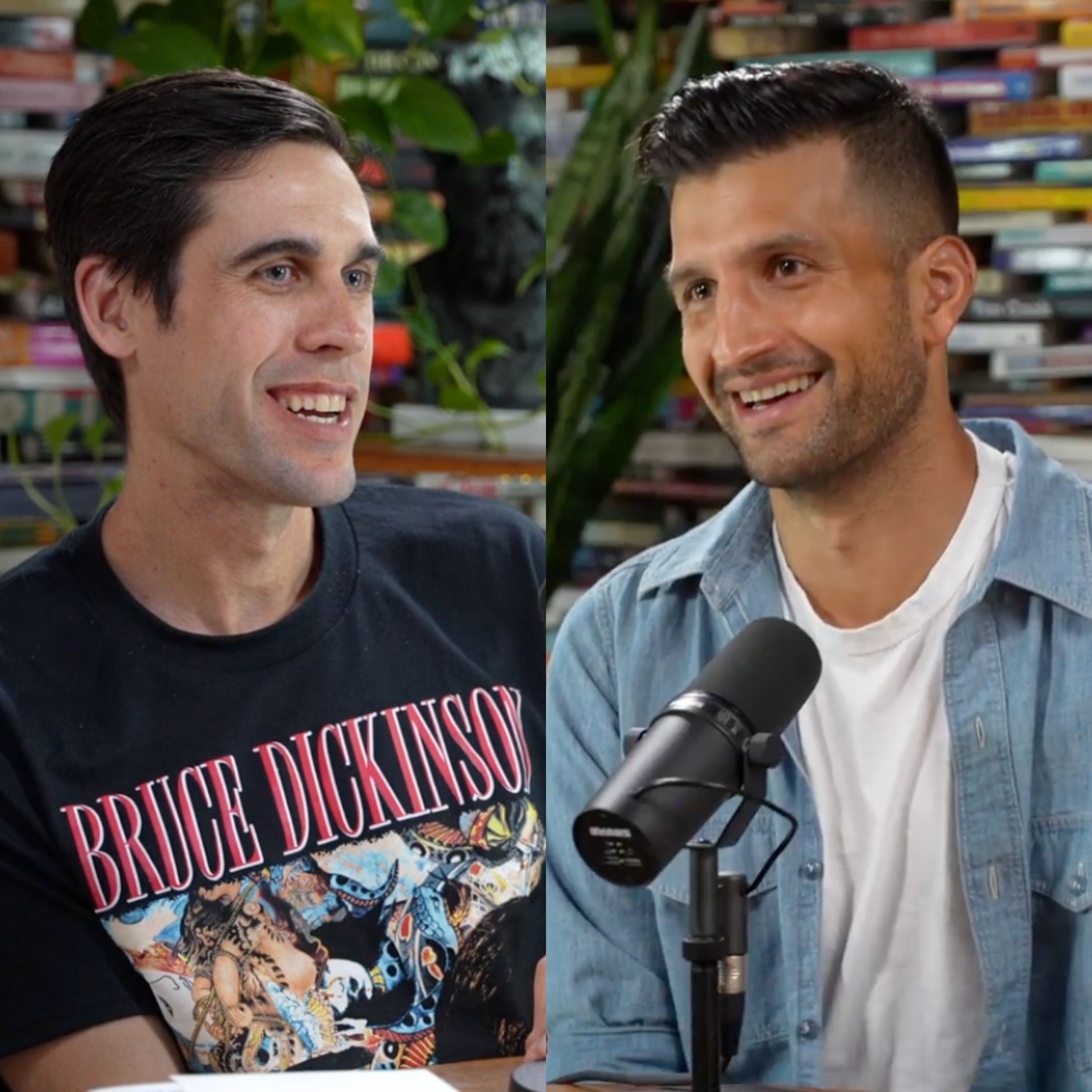
In this episode of The Daily Stoic, host Ryan Holiday interviews Sahil Bloom, an entrepreneur and author of The 5 Types of Wealth. The discussion revolves around the Stoic perspective on wealth, fulfillment versus financial success, and the quest for a well-rounded life. They explore what it means to be "rich," the importance of having "enough," and how Stoicism can inform our understanding of wealth and fulfillment.
Written by AI. May contain mistakes.

Get the gist, explore an idea or ask about something said.
 Claude
On The Daily Stoic, what are the key points of this episode?
Searching your listeningAutomatic transcript. May contain errors.
0:00I'm recording this on a Monday, and Monday is our grocery store day in our family. I usually pick my kids up from school and we go over to Whole Foods, get all our groceries for the week. Although here very shortly, we're going to go over there to get our Thanksgiving turkey because they've got a bunch of great options. Turkeys start at$1.49 a pound if you have Prime with organic birds at$2.99 a pound. And they only carry no antibiotic ever turkeys that will bring quality to your table at a great price. Whole Foods has great everyday prices on all your Thanksgiving essentials, whether you celebrate with a massive family or just a few close friends.
0:37Everything they sell has high standards to help you shop with confidence. Enjoy so many ways to save on your Thanksgiving spread at Whole Foods Market. Why choose a Sleep Number smart bed? Can I make my sight softer? Can I make my sight firmer? Can we sleep cooler? Sleep Number does that. Cools up to eight times faster and lets you choose your ideal comfort on either side. Your Sleep Number setting. Enjoy personalized comfort for better sleep night after night. It's the final days of our Black Friday sale. Recharge this season with a bundle of cozy, soothing comfort. Now only$17.99 for our C2 mattress and bays, plus free premium delivery.
1:11Prices higher in Alaska and Hawaii. Check it out at a Sleep Number store or sleepnumber.com today. Look, ads are annoying. They are to be avoided, if at all possible. I understand as a content creator why they need to exist. That's why I don't begrudge them when they appear on the shows that I listen to. But again, as a person who has to pay a podcast producer and has to pay for equipment and for the studio and the building that the studio is in, it's a lot to keep something like The Daily Stoic going. So if you want to support a show but not listen to ads, well, we have partnered with Supercast to bring you a ad free version of Daily Stoic.
1:56We're calling it Daily Stoic Premium. And with Premium, you can listen to every episode of the Daily Stoic podcast completely ad free, no interruptions, just the ideas, just the messages, just the conversations you came here for. And you can also get early access to episodes before they're available to the public. And we're going to have a bunch of exclusive bonus content and extended interviews in there just for Daily Stoic Premium members as well. If you want to remove distractions, go deeper into Stoicism and support the work we do here. Well, it takes less than a minute to sign up for Daily Stoic Premium, and we are offering a limited time discount of 20 % off your first year.
2:34Just go to dailystoic.com slash premium to sign up right now or click the link in the show descriptions to make those ads go away.
2:45Welcome to the weekend edition of the Daily Stoic. Each weekday, we bring you a meditation inspired by the ancient Stoics, something to help you live up to those four Stoic virtues of courage, justice, temperance, and wisdom. And then here on the weekend, we take a deeper dive into those same topics. We interview Stoic philosophers. We explore at length how these Stoic ideas can be applied to our actual lives and the challenging issues of our time. Here on the weekend, when you have a little bit more space, when things have slowed down, be sure to take some time to think, to go for a walk, to sit with your journal, and most importantly, to prepare for what the week ahead may bring.
3:36Obviously, there are multiple definitions of what it means to be rich. My friend Ramit Sethi talks about, you know, having a rich life. But you could have a large amount of money in the bank and have a very impoverished life. Seneca talks about how poverty isn't just having too little, it's also the desire, the need, the quenchless thirst for more. They're very poor rich people. And the Stoics, when they talk about wealth, they have obviously a more expansive definition than just how much is in your bank account, how much land do you have, how powerful or important you are. In the Daily Stoic Wealth Challenge, which I think is one of our best sort of deep dives into a subject that a lot of people need help with and a lot of people are interested in, but the Stoics have very counterintuitive and interesting teachings on, we have, again, this more expansive definition.
4:30In it, I sort of argue that Epictetus is one of the richest Stoics, and Seneca, who was quite wealthy, is one of the poorest Stoics, because Seneca's ambition gets him into this morally compromised place. And Epictetus, despite literally being a slave, fundamentally owns himself and the things he needs to be happy. He has a smaller life, but a bigger command of himself, I guess. So when I had today's guest on the podcast, one of the questions I opened with was, you know, in which ways are you poorer than you would like to be? Sahil Bloom wrote this book called The Five Types of Wealth. And what he says in the book is that we have different forms of wealth.
5:13You can be rich in some areas and poor in others. And that a well-rounded life means you've done well in all these different areas. And the reason I ask that is before the podcast, I was thinking about my own life. I've done well financially, even before I was a writer. I don't really want for anything in that sense. But there's ways that I'm not doing as well as I could or should. You know, sometimes my wife and I go, we're doing too well to be this anxious or this stressed out, to feel this compelled to do and put up with certain things. Like, what is the point of it? Right. That's that's really what we're saying.
5:52and yeah, I think about anxiety. I think about stress. I think about insecurity, not like, you know, the not being enoughness, doubts. I think about it when I'm away from my family because I'm working. Although I've said this at Daily Dad, you know, like being rich is how much you see your kids. I feel pretty good about it as a whole, but I'm just saying there are certainly moments when I'm like, why am I in this hotel room? Why am I here? Why am I putting up with this? Why am I doing it this way? And I think that's a really important and essential question to ask yourself, like not how much money do I have, but how impoverished am I in areas that if I put my mind to it, if I made different decisions, if I prioritize different things, I would have a wealthier or a richer life.
6:39And my guest today, Sahil Bloom, as I said, wrote The Five Types of Wealth, which came out in February and landed on the bestseller list. It hit number two, which we talk about in the episode. Like, you can hit number two and feel like you hit the lottery, or you could hit number two and feel like you got screwed, like something was taken from you. And those are very different ways of seeing the same thing. And so in today's episode, Sahil and I talk about our definitions of wealth, about success, what we can learn from the Stoics about these very things, how resiliency is a form of wealth, and much more.
7:11Sahil is the owner of SRB Holdings, a managing partner of SRB Ventures, an early-stage investment fund. He graduated from Stanford University with an MA in public policy and a BA in economics and sociology. He's also on the Stanford baseball team for four years. You can follow him on Instagram and on Twitter at Sahil Bloom. He has a great newsletter. It's one of the ones we recommend if you ever sign up for the Daily Stoic email, which I hope you do. ConvertKit or Kit, who we use. Sahil's is one of the ones that we recommend and he recommends us. He sent many subscribers over to the Daily Stoic and to the reading list email over the years.
7:48So thank you to that. Maybe that's even where you heard from us. So all of this is to say, I was very excited to have Sahil on the podcast. I've read his writing for a long time. I think you will like this interview. And if you want to check out the Daily Stoic Wealth Challenge, I will link to that in today's show notes, or you can join Daily Stoak Life where you get it and our other challenges for free.
8:09So I think when people think wealthy, their first thought is money. But it strikes me that that's almost the least important or certainly the least meaningful form of wealth. Because I would say I've met some very poor rich people. I think we all have. We don't have to look far to find examples of the Pyrrhic victory, if you will. The idea of the victory that comes at such a steep cost, it might as well have been a defeat. The battle won, but the war lost. We all know or have heard stories of that billionaire or centimillionaire who has made hundreds of millions of dollars, but they have four ex-wives and three kids that don't talk to them.
8:49And we live in a society where we pat that person on the back. And we write books about that person oftentimes. And we ignore the fact that they have suffered these defeats in these other areas of life. And the challenge that I have seen is that culturally, we tell every young person, we indoctrinate them into this idea that that is what a wealthy life looks like, that you go and make a lot of money. And we ignore the fact that there are these clear deficiencies in these other areas. And my call to action around all of this is to ask yourself if that is what winning the game looks like in the traditional definition yeah is that actually a game that you care to win yeah because i think obviously money is a means to an end and if you could get the end without money that's probably a good way to do it and if you get the money but it doesn't actually allow you or facilitate the the the end that you have envisioned as what you want your life to be again you went about it the wrong way yeah the way that i've always thought about this is it's sort of like a maslow's hierarchy of needs question where yes money buys happiness in the early days it very directly allows you to you know take care of basic needs food shelter take care of the people around you even the early days of like affording basic pleasures sure vacations those basic things they clearly do buy happiness and the science actually proves that out the early part there is a very clear direct correlation the challenge is what happens after that yeah and for most people we get patterned into this understanding of that linear relationship where an incremental unit of money equals an incremental unit of happiness and then we're convinced that that is going to exist in in perpetuity yeah and it doesn't and you learn that at some point either the hard way or you learn it by understanding it internally so that you avoid the hard way.
10:43Yeah. Yeah, it's like having a great life without any money is probably not possible. But just because you have a lot of money doesn't mean you're going to have a great life. It's a good way of articulating it. Money isn't nothing. It simply can't be the only thing. Well, it's definitely not everything. And if it's the only thing, I would venture to guess it's a shitty life. Like one of the things I've been struck by on some of the really wealthy people I meet, it's not just that they're poor in the sense that they're missing out on happiness or family or, you know, something, some kind of meaning or they're just not a good person, that form of poverty.
11:23But even though they have a lot, they don't feel rich because what they want is more. Seneca talked about how, you know, poverty is obviously having too little, but it's also just wanting more. So you can, by this definition, you can be an incredibly impoverished billionaire or millionaire. You can come from incredible wealth. But if it doesn't feel like enough to you or what you need is more and more and more because you're trying to have more than someone else or you're trying to have the most, you're always going to feel deficient. That idea of enough, that word enough, is so central to this entire concept, right?
12:03It's that the famous story of Kurt Vonnegut and Joseph Heller going to the house of that billionaire in the Hamptons. And Vonnegut says, how does it feel that this guy just yesterday made more money than your most famous book? Catch 22 made in its entire lifetime. And Heller says, I've got something that he'll never have. Vonnegut says, what's that? The knowledge that I've got enough. And that is so important, especially in this day and age, because when they said that, it was a long time ago. That's pretty social media. Now, you have more awareness of other people's lives and highlight reels than ever before.
12:38And that makes the embrace of your present enough or your definition of enough that much harder to actually internalize. Well, I also imagine, let's say that story is in the 50s or 60s, right? I imagine if you looked at what income inequality looked like then, or you looked at like, let's say that guy's probably some CEO of some big company. Back then, a CEO probably made 20 times more than the average employee. And today, the CEO might make 200 times more than the other employee. So it's not just like there's something timeless about like, hey, you got to have enough. But there's also something that I think modern technology and globalism, all these things have unlocked, which is the potential to be like unimaginably wealthy.
13:20Like Elon Musk has lost since the election more money than what previously generations of the richest people in the world combined could have ever even conceived of happening. Do you know, like the idea that he's lost hundreds of billions of dollars of personal net worth is insanely incomprehensible. And I think it just fucks with people's heads. Like what, what is enough or what is a lot even, right? Like maybe it's impossible for humans to ever fully have enough from like a biological standpoint, having enough. But can you just get to a place where you comprehend that you have a lot? that's a huge victory and that is that is the the understanding that you are wealthy like hey i have a lot i have i have so much that other people are jealous of what i have and then again we can expand this definition to not just be like how many people wake up every day and are sad or depressed that they're they're not married or they don't have children or they don't have a like there's we have things that people would be profoundly jealous of and yet people wake up every day and think they don't have a lot.
14:27It's funny, even in hearing you articulate that, so much of the way that we articulate these things is impressing other people. It's like, oh, I want other people to be jealous or envious of the thing that I have. And I often think about that in the context of mental time travel in your own life. How many things that you have today are things that your younger self would have dreamed of? Or more than... I sometimes go, like the goal is to write one book so i did that and i did a bunch more but i don't there's there's something about the diminishing returns but also just about the way that we sort of do this accounting in our head it doesn't feel like you are way past the mark that you aimed for and so it's all yeah it's all more than you would have dreamed of originally but you don't you're not waking up and actually feeling every day hey i'm playing with house money because what the mind does is immediately go to, well, other people have more, oh, it's possible to do more.
15:19And then you're - And you have changed. You are more proficient. You are more skilled. You are better. And so you naturally say like the thing that your previous self wanted is now undershooting what my capability is because I have grown. I do think that, look, I've experienced this very recently in a pretty visceral way in my own life that like I was in my office a few weeks ago, just before the launch of this book. And I was working on something very focused, locked in on something for the launch. And my son, who's two and a half years old, came barging into my office and started doing two and a half year old things.
15:52He was like jumping up on the desk, throwing things around, making a mess. And I started having this very negative train of thought of like, why is he doing this? This is so annoying. Doesn't he know I'm trying to focus? Shouldn't he be out of here? All these things. It's gonna prevent me from doing what I'm doing. Yeah, the negative, you know, the spiral. And in that moment, I caught myself because there was a little picture on my desk of the two of us. And I took myself back in my own mind to four years ago, when my wife and I were in the middle of a two-year struggle with infertility. I had prayed every single night for two years that we would one day have a healthy child.
16:29And there I was in that moment complaining about the exact thing that I had prayed for. Yeah. And it was a reminder to me of that fact that sometimes in life, the things that you pray for become the things that you complain about if you let them. If you aren't able to catch yourself in those moments and say, I am literally living out the prayers of my younger self, catch yourself and pull yourself back into that moment. You are actually living out what your younger self prayed for. But we can create that awareness and take action against it. We're not incapable of doing that. It may be that our natural human disposition is to continue to experience that hedonic treadmill, that desire for growth.
17:10It just needs to be grounded in something more meaningful than money. Yeah. And I'm not saying like the goal is to appreciate all the ways that you have things that make other people jealous. Like that's the goal, but it can be so easy to take things for granted and to think that something is nothing, right? Like that your health, like how many people who are in a hospital are jealous of the people out the window just walking around living their normal lives, right? Or someone in prison is jealous of someone who has freedom. Someone who works for themselves is maybe jealous of someone who has the security of a job.
17:44Conversely, someone who has the security of a job is jealous of someone who has the freedom of working for themselves. And you just can diminish what you have as not being a lot, to say nothing of not being enough. And you don't realize that there are people who are waking up every day, praying for that thing or like grinding it out for a shot at one of those things. And you're like, oh, I feel poor because I don't have this or that. You know what I mean? Yeah, I do. It totally resonates. And I think that it's why I go back to the importance of the things that you measure in your life. Like Peter Drucker has this famous quote, what gets measured gets managed.
18:23Yeah. The idea that the thing that you can measure ends up being the thing that you myopically focus on, narrowly hone in on. and money historically has been the only thing that we measured money's measurability is so clear i mean and it was a feature not a bug right it's what allowed capitalists free markets to grow all these things commerce um but unfortunately it is clearly not the sole measurement of building a good life so if the goal is to build a good life you need to measure for the bigger picture that that broader war rather than just the one battle and what i find happens to people is when you do not have that mindset, you default to the one thing that you can think about.
19:00Yeah. And you've lost sight of those others. And so a person, an example is like one of my college classmates got a Stanford degree, decided to move back home to his hometown. He wanted to be a gym teacher and he coaches high school sports outside looking in people like, oh, he's not doing so great, right? Like a kid got a Stanford degree and now he's coaching gym and coaching high school sports. But if you look at the bigger picture of it, he probably makes 50 grand a year, right? So on the normal scoreboard. He's not doing great. Look at the bigger picture of his life. Zoom out. He lives close to both sets of parents.
19:29They have multiple kids that are super close with their grandparents. He is extraordinarily fit. He loves what he gets to do because he has to act in service of others every single day. He's outside several hours a day. He has actually an abundantly wealthy life and is extraordinarily happy. But you need to actually measure for that in order to recognize it in the moment that you have that level of wealth. Yeah.
19:57We just took our kids to an outdoor performance at the Nutcracker. They had a snow cone. And then they went insane in the car ride home. And one of the things I try to remind myself when that's happening is that I don't control my kids' behavior, especially when they're too far gone like that. But I do control how I respond, right? That's stoicism, but it's also what Dr. Becky talks about. Dr. Becky is a clinical psychologist and a best-selling author, and she founded Good Inside, which is there to give parents practical, actionable tools for handling those everyday challenges with confidence.
20:32My wife introduced me to Dr. Becky's books. I love them. I've recommended them a million times. I've had her on the podcast. And as it happens, Dr. Becky is hosting two live Q &A events for Good Inside members. I am one of them. She signed me up for it about a year and a half ago. I've loved it ever since. On December 1st, you can join Dr. Becky for her How Not to Raise Assholes event, which is about avoiding entitlement and raising kind, empathetic kids. And on December 15th, she's hosting her How Not to Lose It over the holidays event, which I'm sure we could all use. As I said, I'm a big fan of Dr.
21:09Becky. She's been a great influence for me as a parent and just as a human being. And Daily Stoic listeners can join for 15 percent off with code STOIC15. You just got to head over to goodinside.com to catch the events. Thanks to Toyota Trucks for sponsoring this episode. When I bought my ranch in 2015 out here in Bastro County, I drove my car about halfway down the dirt road that we live on, thought this isn't going to work, stopped, parked it, walked the rest of the way home, borrowed my wife's car, drove in Austin and bought a truck. What I bought was a Toyota Tacoma. And this truck wasn't just transportation getting me to and from my house.
21:51It unlocked a whole different style of living for us, not just on the ranch, but in our little Texas towns. There were places I could go now that I couldn't go before, especially out here in the piney forests, through the fields and on the unpaved roads like the one that I lived in. We got to go deep into the hill country's wild beauty. We've driven all the way out to East Texas. We've driven it across the country. And by we, I mean not just my wife, but both my kids who I drove home from the hospital in that truck. Toyota trucks are built for those who understand that the best adventures happen when you're willing to veer off course.
22:31Because you never know when you'll end up on a Toyota adventure detour. And of course, this is stoicism, too, because every detour, every obstacle is an opportunity. But it's helpful if you can handle the difficulty inherent in that. If you've got the resilience and the right companion to make it wherever the road takes you. Discover your uncharted territory. Learn more at toyota.com slash trucks slash adventure dash detours.
23:03what are ways you think you're poorer than you would like to be i have a tendency to get very narrowly locked in on things during short bouts like and almost i mean i probably have a level of undiagnosed ocd where i get sort of obsessed with something and that gives me tunnel vision around that one thing. And so my tendency is to have these seasons of unbalance that are sort of hopefully followed by seasons of balance. But I don't do that season of balance if I don't force it. Okay. And so what I've like had happen in my own life recently is I went through this season of unbalance as the book was coming out all the push into that as you know, well, and my whole intention was like, okay, coming out of that, I'm going to zoom out, I'm going to be home a ton, tons more time with my family, the people I care about.
23:52And that season of unbalance ended and then there were all these new opportunities that came up and so then i'm chasing another season of unbalance so the area of my life that suffers the most when that happens is my social wealth it is my relationships with uh you know namely those few people that i feel like are the most important and that is a huge area that i need to work on yeah no that makes sense yeah i think like the idea that you are not as wealthy as you could be in areas of your life I think is an interesting way to think about it because, yeah, you're like, no, I'm doing well. This is what I'm making.
24:28This is how the market is. But really, it's sort of independent to whether like you're living the kind of life that you want. I think the way you just said it at the end is exactly how I think about it too, which is I often think about what do I admire most in the people that I admire. So when I look at people and I admire something, I admire them as a human. What is it actually that I admire about them? The number one thing across the board, if I'm going to look at commonalities, is that they only play the games that they choose to play and they are ruthless in saying no to all of the other ones.
25:03I've texted you this before that I really admire this about you as a person. Susan Cain is another person I really admire in that vein. People who are very deliberate about the things that they take on because they recognize that they're trying to create a big picture of their broader life they're not chasing every new exciting opportunity and that's very difficult when you're new to being given those opportunities yeah for sure that's when it's the hardest i think it's what you're admiring is when it looks like someone has some level of command over their own life and as opposed to being commanded by the events or the circumstances of their life i think right it's like a maker versus a taker yeah yeah we're just like, hey, this person is intentional versus reactive.
25:49They're sort of setting the pace, making the decisions, setting the priorities, aligning the values, as opposed to just doing what everyone else is doing or just doing whatever pays the most or would get them the most attention or athletes. Yeah. It's the people who are truly willing to say no to something that is actually quite exciting because it doesn't align with the one thing that they are truly focused on. Yeah. Like the someone, you know, Seth Godin actually, I think is a great example of this. Like he will just respond to an email and just say, no, that's not something that I do. Yeah.
26:26Whatever that is. No, that's just not something that I do. I think Tim Ferriss has done that. Well, I think you do that. Well, like there are just there are people who have gotten to a level of self-awareness. And I think it requires that a lot of introspection and self-awareness to say like i have actually i am building something and this does not this truly does not fit within it it may be an amazing opportunity it may pay me a bunch of money it may do all sorts of things for my prestige my status whatever but it does not fit within this yeah and so i'm not going to do it yeah no it's funny i was just well i just saw a thing like mark zuckerberg was on this podcast and i was like if i was mark zuckerberg i would never fucking do a podcast ever in my fucking life do you know what like there was something there was something there's something and these extreme examples maybe there was a good reason but these extreme examples i think are illustrated because you realize like you think you'll get to a place where you just feel good and you don't feel compelled and you don't feel obligated to do things that don't really matter do you know like this guy controls the largest platform if he had anything he wanted to say to anyone he could do it like that and here he is getting the same hey will you come on my podcast email and saying yes like it's crazy insecurities are a hell of a drug man yeah i think a lot of times like our actions in the present are just commanded by our insecurities of the past yeah and if you did not feel cool when you were young that's very and now you are cool yeah and you are able to pursue things that make you feel cool like going on big podcasts like having uh you know a bunch of attractive women uh be interested in you it gets men into trouble over and over and over again, right?
28:05Like, I mean, every, you know, now successful, very wealthy guy that ends up having an affair and ruining his marriage, losing his children, all of these things, it's like it was grounded in some childhood insecurity in some way. Yeah, yeah, yeah. And so you realize, okay, this person is, you know, holds this office, you know, has this amount of power, you know, achieve this rank or has this amount of money. But fundamentally, they don't feel enough, you know? Yeah. Yeah. And look, I think that that is human. That is natural. But it is also massively empowering to recognize as a quote unquote normal person.
28:41Yeah. To say these people that I admire and look up to, they are actually no different than me in a lot of these ways. They still tell themselves the same negative stories. They still feel the same imposter syndrome. They still suffer from the same insecurities, those same things that I am feeling. That doesn't go away. No, it definitely doesn't go away. And yeah, the point is not to judge them and go like, oh, they're broken and I'm not. It's to actually realize how we're all similarly broken. Yeah, I remember when you first do this stuff, you're like, hey, anytime anyone will let me talk about it, that's my thing.
29:09I have to do it. And then I remember getting some radio interview request or something. Someone read something. I wrote, hey, we're big fans. Will you come on the show tomorrow? Or actually it was a thing that was even more pressing. It was like a live spot. And I was like, so I have to change my whole day to be this. And then I just was like, oh, I don't have to do this. Not only does it probably not going to matter, like it's not going to do anything because the one-to-oneness of any media is pretty – when you actually sort of drill down is pretty ephemeral. But it was like I don't need to do it even if it did.
29:45Even if it sold 10 ,000 books, it wasn't going to change my life in any way. So why can't I just have the day that I already planned? And there's something like realizing that probably changed my life more than any amount of money, getting any amount of money changed. Right. Because you could have the money, but not have the realization. And so you're still like, you know, it's like that scene in Billions at the beginning where he says, what's the point of having fuck you money if you never say fuck you? There's not a lot of people that ever actually say fuck you. And then if that's too rude for you, what about just like, no, thanks or not right now?
30:23You tell yourself the point is to get the power or money or freedom, but then do you ever actually use it to free yourself in any way? I think it's pretty rare that anyone does. It's like having a fuck you freedom or having fuck you life is much more important than fuck you money. To be able to just say like, no, I'm not doing that. Like, think about the wealth that comes from knowing what you like and what you don't like and deciding to orient around doing the things that you like and not doing the things you don't like. Like, how many much more powerful or wealthy people wake up and more or less have a day filled with things that they'd rather not be doing?
31:15like i remember uh so there's a playground right down on the other side of this hill behind the bookstore and my wife called me like a year ago and she's like hey we're at the park i called her to see what asked her a question she said hey we're down at the park and i said oh i'll just be right there i just walked down in the middle of the day and played with my kids at the park and i can do that like i can do that because of financial reasons i can do that because of lifestyle logistics reasons i can do that because i work for it you know there's a handful of things that contributed to me being able to just blow off work in the middle of the day and do what I wanted to do with my family.
31:51And as I was walking down there, I was like, oh, this is what I was working for. This is what wealth is. And I could be a billionaire and not be able to do that. It reminds me of the scene from Mad Men where Don Draper says, that's what the money's for. That's the point. I recently got asked what my definition of wealth was. And I think the person anticipated that I was going to go through a list from the book and talk about the five types of wealth. And my response was the ability to take my son in the pool at 1 p.m. on a Tuesday. Sure. And to me, that encapsulates the entire definition of my wealthy life.
32:28I want to have the time freedom to be able to do that. I want to be healthy enough to be able to do that. I want to have the type of relationship where my son wants me to actually be in the pool to do that. And yes, I need a little bit of money to be able to have a pool in the first place. But like beyond that at some point it's like i actually don't need more than that and i don't need more than what i have today in order to be able to do that that recognition is really powerful and then it becomes about making the right decisions about what the more is that you are chasing because it doesn't mean having enough the tendency when people hear that is to say like okay i'm just going to shut everything down that feels like complacency exactly and so it's balancing life Life is all about tensions and the way that you navigate those tensions that exist.
33:11And this one tension of presence and ambition is, I would argue, the most challenging and most important tension to navigate as a parent in particular. It's like this 10-year window that you have with your kids or 18 years, if you want to be optimistic, that like 95 % of the time you have with your kids is over by the time they turn 18. Right. 75 % is over by the time they turn 12. And yet that is when you are told to be chasing every single more that the world has told you you should want. Navigating that tension to actually be able to decide what are the mores that I truly feel are important.
33:51How am I going to bring my family and my kids along on that journey and mission with me to navigate that balance between the tension or sorry, between the ambition and the presence? That is where my head is at right now. Yeah, it is interesting that this is a little further afield of what we're talking about, but it struck me the other day that there's something kind of crazy about generationally now with the age people have kids because like you tend to have kids right around when your career is first. Like if you had kids in your early 20s, your time's not very valuable because that's the time you're working a lot, but the quantity is there because the quality is not there.
34:34Do you know what I mean? Like there's something hard about having kids right as the compound. There's actually a Dua Lipa song where she talks about it's really hard to stop working right when things start working. And that's something I think very hard, particularly for women where like you're asked to exit the workforce right after you're seeing the returns of five to 10 years of having invested in the workforce. Do you know what I mean? Very interesting. Whereas on either side of it, you're probably better off. like 30 to 40 is like a tough decade to be like have a big demand on your time that is you know there's the opportunity cost is very high right then that's very interesting it'd be interesting to think about so like uh the 30 to 40 range i just think it would be very easy on the back end of that say you end up having a kid at 40 to say the exact same thing like it's just starting to work because it always you know it like the way compounding works like it's always next year is always going to be better than this year if you're on a compounding engine and so uh it is interesting though to think of like the early 20s kid versus the mid 30s kid um how different that experience is of like what are you giving up what am i stepping off what you're giving up is a bunch of shit you probably shouldn't be doing anyway yeah do you know what i mean like like when you're in your 20s it's like yeah you had to get home because there's a babysitter or whatever it's like that would be good yeah i probably would have benefited from that to be honest and made made fewer dumb decisions.
36:00I've been saying like, wealth is how much you see your kids. And power is how much control you have over your own schedule. So you think this senator or this general or this CEO is very powerful, but actually their assistant is very powerful because the assistant tells them where they have to go. And invariably you talk to these people and there is someone who they're very concerned about making happy. Do you know what I mean? Whether it's - Everyone has a boss. Yeah, everyone has a boss. Whether it's the majority shareholder, it's the higher ranking general, it's the president, it's the secretary of defense, it's the, you know, it's somebody, right?
36:45There's always going to be a bigger boat. Yeah. Over and over again. There's someone, there's usually someone who decide, who can imperil your boat, right? Like, hey, if this happens, I'll lose this deal. I'll lose this shot. And so you think that people who get to a certain point would feel very secure and then be able to take risks or be able to say no to things. But actually, there tends to be an insecurity there and a lack of freedom because they are trying to keep what they have or keep their opportunity to get to that next thing. Like you would think, hey, a senator is one of the 100 most powerful people in America and thus the world.
37:28Plus they have guaranteed job security, right? Like you're a Republican in Montana. You're not losing your job, right? But you're not actually interested in the job you have. You want to be a cabinet secretary or you want to be governor or you want to be president. And therefore, you don't actually have your job because you have one eye on a different job. And so you meet these people who you think are powerful or wealthy and actually because they want something different, they barely even have the thing that they have. Or you could argue they fundamentally don't have the thing that they have.
38:00They can't use all of it because they're afraid if they do it, there will be consequences. Yeah. I have experienced that even just recently. It's basically the arrival fallacy across all of these areas of life that we build up this idea of having arrived once we achieve X. And I'm a made guy now. Yeah. Now everything is going to be great. I've hit the top of the mountain. I've arrived. My life is going to be great. My fulfillment, content, I'm going to be happy. I'm just going to chill. I'm going to make$5 million and then I'm going to be able to chill. And I write about it literally in the first few pages of the book, I write about it.
38:31And then I experienced it in my own life as soon as the book came out. I spent three years working on this. The whole buildup was like, I just want to be on the New York Times bestseller list. I made this as the most important thing for a silly reason, which was my grandmother on my Indian side, Indians, very like status culture of like these hierarchies, measurables. And I told my grandmother, I was writing this book in, uh, this was January of 2023. And the first thing she said was New York times. And I was like, yeah, I'm going to do that. And she passed away in October of that year. And so in my mind, I was like, I'm going to do that.
39:10I'm going to make good on that commitment. I built it up. I got it. And I went to bed that night. And the next morning I woke up, I kid you not, the first thought that went through my head was not like, oh, this is amazing. I did the thing. It was, I wonder if I could hit it again the second week. Sure. Right. And it was just, and now it's like, oh my God, I got to stay. But it actually started earlier than that, right? Because first the goal was to write a book, right? You wrote a book proposal and you were like, wouldn't it be so cool if someone bought this? Like that was success. It's like yourself.
39:37And then you're like, what? Then you're like, I got to make a book that's good, right? And then at each step, you're just moving the goalpost a little bit. And the interesting thing is we move the goalpost further and further away from the thing that we have any actual control over. So the goal is, hey, I want to write a book. That's pretty in your control. Hey, I want to write a book that the New York Times, with its complicated subjective algorithm, decides is a bestseller. You've moved from a goal 100 % up to you or more or less 100 % up to you. to a goal that's like not just not 100 % up to you, but a black box where people are regularly do all the things they're supposed to do and don't get it.
40:21And that's the torture that we inflict on ourselves. And we go from a goal that's me versus an obstacle, like, hey, I wanna climb Mount Everest. That's me versus my limitations or me versus the obstacle, to I want to rank in a certain way against other people doing that same thing, right? So the difference between, like how many people have done the hard work to write a book? That's standing out. But you're like, hey, no, no, no. On the list of the 10 people this week, I have to have sold the most. You went from a, we go from a, I'm not saying you because I do it myself, but we go from the part that's up to us to the part that's least up to us.
41:01And what you're essentially doing is taking your definition of success or wealth or happiness or whatever it is and going you get to decide if i it's conditional you make the conditional statement it is um it's cicero's metaphor of the archer yeah like you you do everything you draw the bow all of the preparation that you control and then you release the arrow and you no longer are in control a gust of wind anything could happen the target could move or fall over it's just one of those funny things where like i know these i wrote about it like i need to read my own book to remind myself because the constant awareness and the self-awareness to recognize when you are falling into those traps to course correct and get yourself back into the right place is, um, it's very difficult, but that daily reminder and that daily awareness of it does really help.
41:47Without that metaphor from sister of the archer that comes from the Stoics, Epic Tita said this line about how, if you want to win only run races where winning is up to you. And so, yeah, if your thing is, Hey, I, I'm a winner. If I run five miles, as long as you don't quit, you get that thing. But if you're, if you're not, no, no, no, I have to be faster than these other people, I have to be given the Garland or the award, then you better hope the race isn't rigged. You know, you better hope that you're not up against the fastest person in the history of the world, right? Mel Robbins selling 80 million books a week.
42:20Well, I was going to ask you. So you hit the list, but what part of you was frustrated that it was number two versus number one? So I've always had this joke in my mind that I've been saying to my wife for the last few years that the absolute worst thing in the world is being the number two New York Times bestseller. I've done it. Because no one says they're a number two. You either say you were a New York Times bestseller or number one. Might as well have been number 10. And you might as well have been number 10. And when it happened, I was tremendously proud of it, to be honest. I actually didn't feel the frustration of not being number one simply because of just how insane the sales volume difference was.
42:56I think I would have been disappointed if I had found out it was like 100 books or 500 books. I would have wondered like what more. That is hard. I think what number two does, it's not like, oh, I'm not as good because someone else is number one. I think what you feel in that instance is, could I have done more? Yeah. And that comes down to, did you do your best? Yeah, I couldn't have done more. If you honestly feel like you did your best, then you can sit with a number two. But if you're like, I pull my punches or I was afraid to really, I was afraid to say that I really wanted it and that's why I didn't get it.
43:28That is a bit of a pill. Yeah, there is a, there's two things here. One is a few months before the book launch, I was journaling and I had this recognition that sometimes in my own life, I hold myself back from giving 100 % on something because I'm afraid of what will happen if I do give 100 % and still fail. Yeah, that's like every teenager. Yeah, it's self-protection mechanism that becomes self-rejection in some ways. You don't put yourself out there. And so I flipped a switch. It was like, I'm going to go absolutely all in. And if I fail, I'm going to fail. map like i'm going to fail uh daring greatly if you will and um that was one that was a really important switch that i flipped the other thing that i recognize is that if you were to map out like the perfect course to living a happy life it would be tiny steady incremental growth over long periods of time you would just say like i want my like life to just get better like this very slowly getting number one they want it all on the first go they want everything to go right And that is actually a tried and true path to misery.
44:33I see that all the time with like my professional athlete friends. Everyone wants to be a professional athlete. They want the fame. They want a$100 million contract. The worst thing in the world is making$100 million when you're 25 and then being like completely lost for the rest of your life because you have no idea what your identity or purpose is. I don't know if that's the worst thing in the world, but it could be a problem. Correct. The worst thing in the world with the constraints of like, hey, I have more money than I know what to do with uh but i have seen over and over again the struggle of like the dramatic spike success that you then fall for i mean it's it's called the nova effect it's like a scientific phenomenon of uh the unhappiness and the misery that follows dramatic lucky or good fortune events because you have this reset to the baseline yeah and um that that reset is much more painful when it was an enormous early in life thing.
45:28And so part of me also had that sensation of like, you do, if you get number one on the first book that you do, you're like, what do I, like a second book, you're going to be massively disappointed if you're number five, massively disappointed. Yeah. There's also something like, do you want to be successful or do you want to be a freakishly successful? And there's probably some, there's probably some kind of minimum effective dose, like, or some band where you want to succeed at what you do, you want to be good at what you do, you want to be in the league, but I don't know if you actually want to be jockeying for the one or two spot, you know?
46:06And the New York Times list is interesting because it's only a snapshot for a very brief period of time, as opposed to, you know, being the overwhelming like the biggest thing in your space you know um there's also the question of like i had a conversation with morgan housel about this who has sold 10 million plus copies of psychology of money has never been on the new york times list for that book has sold way less copies of same as ever uh but it was on the new york times list and his reaction was something to the effect of like am i trying to hit bestseller lists or am i trying to sell books and impact people yeah and the answer is pretty clear when you frame it that way what's also funny i mean morgan sold millions of copies in places where the royalties aren't so great right like like i love morgan but it's funny just like a publishing thing it's like sometimes you you go look are what you're after a number to brag about or are you after like the best way to have done so it's like would you rather sell from a financial standpoint would you rather sell 200 000 books at a hardcover royalty price?
47:12Or do you rather sell 2 million books in a foreign market where the accounting is not so good, right? And sometimes you can find yourself jealous or comparing yourself to someone or something. And you're not actually doing the math on what's actually, it's apples to oranges, or it's just, it's like, look, what was the point, right? Like obviously reaches the point, so that's great. But but like you sometimes you can end up being or you hear someone sign some huge deal or whatever, and then you find out, hey, actually, this is a very incentives based deal. And your less notable deal is in real terms actually much better.
47:58Right. And so it's like, what was the point? An impressive press release where people think you made X or was the point X? Yeah. Right. Like was the point is the point to have started a startup that raises a lot of money in which you don't actually get any of it? Or is the point to start a business that is profitable and that money ultimately goes into your bank account at some at some point? And so sometimes you end up it's not even just apples and oranges. You're comparing real and unreal social media points and real shit in real life. The best career advice I've ever heard is the question, do I want this job or do I want other people to see me having this job?
48:43Asking yourself that question before you take a job of like, do I actually want to do this job or do I just want the LinkedIn post to say that I'm humbled and honored to accept this job and the status that comes with it? My first job was in Hollywood. I worked at this talent agency, this big movie producer, and he was like, just the number one thing you have to understand is he's like, money is always better than credit. So people will take less money to be an executive producer or they want to be their name on the deal. And he's like, I just want the money. Not that he was only money motivated, but he was just saying, he's like, don't chase what people think of you.
49:20Chase the thing that is real, which is getting the, you know, your piece of that thing. And I've always thought about that. Like when I did ghostwriting for a long time, if my goal is to be seen as an author, I'm going to spend a lot of time arguing over a cover credit, which I don't give a shit about at all. Like I want to argue over deal points, right? I want to argue over my piece, whether people credit me or not. I can't take that to the bank. There was this old saying in my private equity days, in my finance days, you can't eat IRR. The idea of IRR is the internal rate of returns. You're looking at the actual projected return of a deal, but it's not about the actual cash that you've received back yet.
50:08It's just on paper in a lot of cases. people will say you can't eat IRR because all these firms will show these amazing IRRs. Oh, you're making like 30 % IRR on this deal, but all you can actually eat is cash returned into your bank account. So it's like prioritize that thing because that's what you can actually eat at the end of the day. It's a perfect way of saying that. I also, on the point earlier, we're talking about the stoic archer concept and that idea of like the things you can control versus the things you can't this is another one of those fundamental tensions of life that i wrestle with on a daily basis which is this tension between process and outcomes because i would argue that this is like a pendulum swing culturally where i think carol dweck and all the work around mindset some of these other works that came out told us that like process and inputs and effort is really what matters we need to phrase that he swung the pendulum but we can't lose sight of the fact that the thing that allows you to eat is your outcomes.
51:07It is not how much effort you put in or how much process you put behind it. Adam Grant had this thing, he was talking about a student that he had who was debating their grade on a paper with him and saying that the grade didn't reflect the effort that they put into the paper. And he was like, well, I don't grade for effort. I grade for the quality of the paper that you created. And so we have to remember that because we live now in this era of like effort porn. Like right now there's this meme on the internet of these morning routines The guy like dunking his face into the water and this whole like elaborate morning routines.
51:38No one gives a shit about your morning routine if your output sucks. And on the flip side, if your output is incredible, everyone is going to ask about your morning routine. No, I was at this dinner once and this billionaire was talking about this like social entrepreneurship. And he's like, these people keep talking about how they donate a percentage of their revenue to charity, a percentage of their profits to charity. And he was like, percentage of what? You know, like his point was that it's not a successful business. Like you can say, hey, I'm donating 10 % of my sales to, you know, blind children.
52:15But if you don't have a lot of sales, this isn't actually that generous of a thing. And so, yeah, there is this kind of tendency to go to sort of fetishize the process or the purity of the intention. but if you're not doing the thing and if it's not working it's all sort of for for not that's also just the uh i'm adding that to my list of things that are like socially acceptable flexes where like people if you especially if you live in a big city uh and you go to like any sort of event there's this kind of like list that no one speaks about of ways of saying i'm rich without telling you that i'm rich okay and i feel like i'm going to add that to the list my favorite one is when people say something about their family office or that they're investing off their own balance sheet.
53:00Yeah. And it's like, just like, you're trying to just tell me that you're rich. Like I'm investing off my balance sheet, but I'm like, sometimes you meet like a 28 year old and they're like, oh yeah, I'm just investing off my own balance sheet. No fun. And I'm like, come on, man, give me a break. Save it for later. That's funny. Yeah, no, I do think focusing more on process than on outputs is the way to do it, but you are ultimately judged on outputs. I was talking to someone who worked for me once and I was like, look, look at the numbers. The numbers are not good. And they were like, but I thought you said, you know, we focus on process, not outputs.
53:35And I was like, I focus on process, not outputs as a creator. But your job is to make things for me. I have to judge you ultimately on something in the same way that my publisher is going to say, this is all well and good. but your sales are down year over year or the book failed to launch, I don't really give a shit. So you do need to have both. But the tricky thing is, and this is why I think the pendulum can swing in the wrong direction either time, is it often is the best way to get the outputs is to focus exclusively on the right inputs and processes. But yeah, ultimately you are judged based on, did you make the sale or not?
54:21Sometimes in the short run, outcomes are dislocated from process, but in the long run, the two normally converge is the way I've always thought about it. It's sort of like when you look at markets, right? Like oftentimes value and price are dislocated, but you think that in the long run, value and price will converge when you look on a longer time horizon. So I've always thought that the way that you'd navigate this tension is to say exactly that which is i need to have regular zoom out points to adjust my process and to reflect the fact that the output outputs or outcomes are either uh good or bad because like you know we celebrate people who pounded their head into a wall for 10 years and then had the success like people always talk about mr beast he like made oh this many videos before he got a million views and so we look at that and say it's just about the reps he just did so many reps that's not the reality The reality with the people that had those successes is that he maniacally obsessed over every single video and got slightly better in some tiny way from every single rep.
55:23So he adjusted the process. You have to have internal metrics that you are looking at, right? Like I think Bill Walsh, his first year with the 49ers, he goes like 2-12. And then the next year he goes like 2-12. But they're fundamentally different seasons. Like they almost won a good chunk of those games or they would have won had certain things not happened. There's a way to sense progress even if the external results are more or less the same. You have to know what you're – I mean you have this quote in the book. It's one of the great Stowe quotes. If you don't know what port you're sailing towards, no wind is favorable.
55:59It's problematic if the port you're sailing towards is everyone is saying I'm doing a good job. or some sort of gatekeeping kind of a metric. But if you can go, hey, nonwithstanding the record, we are playing much better football. That's what I'm judging the team by. And that's how you tell yourself a story that allows you to turn a team around. At the same time, you can't go two and 12 more than one or two seasons where you get fired and then all your plans are irrelevant. And so you have to have both the internal story you're telling yourself that's not so connected to external results, But you also have to have a compelling narrative that allows you to manage the politics of the situation so you have the runway to do the thing that you're trying to do.
56:45It's like how everything converges to storytelling and sales at some point in life. Like, do you have a patron that is willing to support you on that thing? If you don't. And if you lose that person, you're in trouble. Yeah. Yeah, yeah. Or are you independently secure in a way that allows you to sort of be bad for a while or beat your head up against a wall for 10 years? Or what is the thing that's going to allow you to – you know that expression about the market can remain insolvent or the market can remain irrational longer than you can remain insolvent. What is the thing that is going to allow you to do what you need to do to eventually let effort and results correlate?
57:25Because it's not always immediate. Yeah.
57:38It's also the reason that the greatest CEOs in the world are not the smartest people at their companies. They're the best storytellers. They have an unbelievable capability to take a whole bunch of disparate data in on one side and have a clear, compelling narrative come out the other side. like that skill is such a useful one across trying to build in any domain the ability to go do that because that's what allows you to build those relationships to keep those patrons or to find new ones when you lose the one that you needed i mean the best politicians do a great job of that too right it's like how do i get the narrative that is the soundbite that leads to the version of the truth yeah and we live i mean again we live in an era where that parable of three men make a tiger like if you say something three times people are going to believe it at some point whether or not it is true it actually doesn't matter whether it's like the perfect version of the truth as long as you've repeated it enough such that the people that you need to believe it believe it is the truth and that's good and bad obviously in a bunch of different ways but the best storytellers are the ones who can make the case that the tiger exists over and over again yeah and where ego i think comes in is if you're really good at that but you're not that good at making the stuff, you know, at some point somebody calls you out on it, right?
58:55Or at some point you have to, the story has to match reality or, or you have to have, you know, made your exit before, before those things. But I think sometimes storytellers or, or sort of very persuasive people can get themselves into trouble because you're so good at talking about the thing that you start to believe your own. I mean, Elizabeth Holmes is a great example. Yeah. I mean, I think that that's like the, uh, it's the Icarus paradox, right? Like you fly too close to the sun and it melts your wings and you fall. The thing that made you great early on is the thing that kills you. Or you just, you need, you have to balance the ability to tell a compelling story that gives people the willingness to fund you or give you runway or space with the ability to deliver that thing.
59:38And you need that. You need both of those or yeah, you better hope you exit before you get found out. That comes down to me to this idea that I've thought about, that I've written about, which is the value of having truth tellers in your life. Because one thing that happens as you get more and more successful, and you see it with some of these success stories, is it is clear, abundantly clear, that they have no one in their life that can come to them and give them the smack across the face. Because at some point, either they have made it psychologically unsafe to do that to them, or people just find it more beneficial to pat them on the back and say, like, you're great keep doing your thing over and over again and if you have that happen and all of a sudden you're in this high position you don't have a single person in your life that can say something to you i mean i think about the value of my wife as being so indispensable in this regard because if i ever got to the point where i had some ego around anything i was doing like i'm still changing the diaper like i still have to go do the thing and i'm you're no different having people in your i mean my mom indian mother very beneficial in that regard frankly like you know still wants me to go to medical school.
1:00:49Now I think I'm off the hook with the book, but until then I was not. But having truth tellers in your life, even one, I think prevents you from falling victim, or at least makes it significantly less likely. Well, I think the craft can also be a truth teller. If the thing you do is really hard and it kicks your ass all the time, it forces a sort of honesty that certain more forgiving mediums don't. So I think an algorithmic world is very dangerous as say like a content creator, right? Because you don't have to be that good to be really popular on TikTok or Instagram. I think podcasts are really, I don't want to say they're easy, but this is not a super rigorous medium in the way that say writing or music or painting or whatever is rigorous in that it it sort of humbles you it i would say podcasts don't humble you they they puff you up and so what can happen is you get well known but you don't have the day-to-day craft that is reminding you what an apprentice you still are does that make sense it does make sense like uh you having something super and i think this is where sort of genetically gifted people off like in sports like when you're so good and you've been so good your whole life it's hard for you to actually love how fucking hard that thing is because it's not hard for you right and you need you need the the sort of day-to-day ass kicking to keep you on planet earth it sort of reminds me of the mike tyson quote everyone has a plan until they get punched in the mouth yeah like playing a sport where you're actually physically getting punched in the mouth metaphorically or literally in his case, does have that natural effect over periods of time.
1:02:34Yeah. Like as long as it remains hard for you, I think you're in a good spot. If it starts to get easy for you, this is what I think when you're going to get in trouble. I feel like that has been a common thread in my own life, my baseball career for sure. But even in my present path, anytime I started to feel like I have it figured out, I am inevitably about to get slapped in the face by something. Yeah. And I almost like fear that feeling now. The way where I'm like, oh, man, everything feels easy. Uh-oh. What is it? What's going to come? What's happening? And there's always something. It's like pride comes before a fall from the Bible.
1:03:09It's kind of the same thing. I was thinking of different forms of wealth. So time is a form of wealth. Happiness is a form of wealth. Peace and quiet is a form of wealth. Family is a form of wealth. But one that I think maybe we don't talk a lot about is resiliency is a form of wealth. It's an insurance policy. So like if you have the ability to bounce back, that's obviously going to serve you well. But also if you have the ability to not be – or if you have the ability to kind of remake yourself in different circumstances, if you can deal with the shit that life throws at you, in some ways that's kind of like the most essential form of wealth.
1:03:52Adaptability is probably the single most important trait for long-term success and happiness. I've always differentiated and I find an important distinction between preparation and planning in this regard. I think as young people, we're told that we need to have the perfect plan. You're like, oh, I need my five-year, 10-year, 15-year plan. And the metaphor I think of when I look at this is like an explorer setting out for a voyage. In Europe, they were going to go explore uncharted territories. they're not trusting that they have the perfect plan to get them from where they are to where they need to go they are trusting in their preparation and their ability to set a direction and then navigate whatever storms come yeah life is no different than that and preparation always beats planning preparation is about the expectation of chaos that you're going to navigate the chaos that inevitably comes so how can you set yourself up to be prepared to be adaptable in those situations Yeah, there's a thing in meditations or markets where this is saying that adaptability is the ability to say, oh, that's just what I was looking for.
1:05:01And you think about how a person who, because of a market strategy, because of a career strategy, because of how they want to be, they need things to go a certain way. Right. Like, hey, I need the economic numbers to come in this way. I need weather to not, you know, destroy what I've built. I need people to like me, whatever it is. Right. Like if you need things to go a certain way, that's a sort of a fragility or an exposure to Murphy's law, fortune, whatever you want to call it. But if you're the kind of person who can work with whatever happens, because either you know, hey, I can come back from this, or because you have come up with a kind of an anti-fragile strategy, that's good.
1:05:43Like one of the benefits to say writing about stoicism versus, I don't know, some other topic is like the world falls apart. My work becomes more relevant, right? Yeah. But then also personally, hey, if you have a set of skills or strategies that allow you to deal with adversity, you're going to endure and last longer than someone who needs sort of fair weather conditions. It sort of unlocks a tolerance for uncertainty, which I view as absolutely critical, especially in the current era that we're in with the amount of change that's happening. And look, I always hesitate to say, oh, it's different now.
1:06:22If you're a student of history, like, sure, you can find analogs throughout history of like massive change happening, whether it was the Industrial Revolution or plagues or wars or famine or whatever it was. But we undoubtedly live in a time of incredible change coming in technology and the way that we work and all of these things. And I think that over and over again, the person who can tolerate uncertainty a little bit longer is the one that will eventually figure out a way to win. Yeah. And put aside winning, if you're someone who uncertainty does not make you unhappy or anxious or miserable or whatever, that itself is a huge win, right?
1:07:06So if you're like, hey, this is the formula for you being successful in all circumstances, obviously that's great. here's a formula for just not being a fucking wreck no matter what happens or or being able to find good and joy and fun and whatever and whatever happens that too is i think a form of kind of wealth and so the idea of like look the the number one thing you could cultivate in yourself the number one thing you want in your company i think the number one thing you want in your kids is just resiliency the ability to deal with shit because life is full of shit and shit going sideways, that's as big of an asset as, hey, I've got two years of financial runway in the bank, right?
1:07:49You could have that, but if you're not resilient, you're in bad shape. You could have no runway in the bank, but if you're someone who figures stuff out, you're going to figure stuff out. Yeah. And that resiliency is built through action. I think about my own life, my stress and anxiety feed on idleness like times of scrolling on my phone sitting around thinking about other people's lives like that is when i feel stress and anxiety when i am taking action on something no matter how small it is it melts it completely goes away you're like starving it of the oxygen that it needs to breathe but imagine you could you decided to sit down and work on being able to be idle, what that would add to your sort of resiliency, your sort of toolkit, whatever you want to call it.
1:08:40But if you're like - It depends on how you define idleness. Yeah. But I relate to what you're saying. So I'm just, I'm saying like, if you're like, as long as I'm busy, I'm good, right? Then you're in a tricky spot because sometimes, I mean, five years ago, the world was like, you are not going to be busy. Watch this, right? And then there's a fragility there, right? So I think, or like, look, I process a lot of stress, difficulty, whatever, in physical exercise. That's my thing. That's a great strategy. I'm glad I have that. What if I get in a car accident and lose my leg? Now I'm fucked because you just took this thing from me and I'd have to come up with a new way, right?
1:09:19Obviously a better system would be sure work out while you can love that practice but cultivate also the ability to not do the discipline to not yeah work yeah i define like when i think of idleness in my own life i like i think of meditation solitude walking all as action sure um more so than idleness what my idleness is like scrolling on my phone and to be honest like if i were to map my own happiness during the course of days, my unhappiest moments are 100 % on social media scrolling through my feed. And so if I were to like try to just increase my average happiness in the days, the first thing I would do would just be like, okay, I'm just not going to scroll on Twitter or anywhere else, Twitter in particular.
1:10:02But it is interesting to think about how can you, what is the resilience toolkit, especially for our kids? I mean, I think like I have a three-year-old, I hope to have more children in an uncertain future where I have no idea what they're going to do for work, what are the skills that we want our children to be cultivating and building? Because it is very different than the skills that we were told to build growing up. I mean, as recent as five years ago, the number one thing you were told to learn how to do was code. And now everyone is saying that coding is going to be completely obsolete as a skill.
1:10:34And so like all these people that spent all this money, got all this student debt to go become coders and engineers, you're like, oh, well, chose wrong sorry man like actually what was really useful was being a like normal personable human being yeah actually the the the project manager is more well suited for the new environment than the the i mean the like the complete miss on the predictions around this stuff is fascinating to me of like you know it's it's sort of um i don't know if you've read uh the sam bankman freed book that michael lewis did i forget what it was called the funniest part of that whole book to me was when he was at Jane Street and they predicted the election, but they got the direction of the trade wrong.
1:11:13So they knew that Donald Trump was going to win in 2016, an hour before the actual results came out. And they made this enormous bet in trade and they traded it wrong. They predicted the market was going to collapse and they lost hundreds of millions of dollars. And it's sort of been like that. You're like, okay, this wave of change is coming with AI. And what's going to happen is all the physical labor is going to be completely gone. And it's all going to be about intellectual capital and it's gone the exact opposite direction like the first people that got wiped out were the people that were told that they were building the one skill that matters no it's the irony is like it comes back down to like a good liberal arts education either self self-taught or collegiate doesn't matter but a good broad base of skills and adaptability and resilience oh it turns out that's the the thing the the same thing that's been good to have for 2 ,000 years is pretty much the thing that's going to work in the future.
1:12:10What's old is new. Speaking of what, you want to go check out some books? Let's do it. Thanks so much for listening. If you could rate this podcast and leave a review on iTunes, that would mean so much to us and it would really help the show. We appreciate it and I'll see you next episode.
1:12:36Thank you.
If wealth meant fulfillment instead of finances, how rich would you be? In today's episode, Sahil Bloom, entrepreneur and author of The 5 Types of Wealth, joins Ryan to unpack how they balance ambition and fulfillment. They discuss the concept of having “enough”, their definitions of being wealthy, what we can learn from the Stoics about living a rich life, and more.
Sahil Bloom is the owner of SRB Holdings, the managing partner of SRB Ventures, and author of The 5 Types of Wealth: A Transformative Guide to Design Your Dream Life. He holds a master’s in public policy and a bachelor’s in economics and sociology from Stanford University, where he was also a four-year member of the Stanford baseball team.
You can follow Sahil on Instagram and X @SahilBloom
Sign up for Sahil's newsletter here: https://www.sahilbloom.com/newsletter
📚 Pick up signed copies of The 5 Types of Wealth: A Transformative Guide to Design Your Dream Life by Sahil Bloom at The Painted Porch
💡 The Wealthy Stoic: A Daily Stoic Guide to Being Rich, Happy, and Free explores how stoic ideas can be applied to personal finance, wealth-building, financial mindset, and how it can help you overcome common financial obstacles and challenges
Get The Wealthy Stoic: A Daily Stoic Guide to Being Rich, Happy, and Free & all other Daily Stoic courses for FREE when you join Daily Stoic Life | dailystoic.com/life
🎙️ Follow The Daily Stoic Podcast on Instagram: https://www.instagram.com/dailystoicpodcast
🎥 Watch top moments from The Daily Stoic Podcast on YouTube: https://www.youtube.com/@dailystoicpodcast
✉️ Want Stoic wisdom delivered to your inbox daily? Sign up for the FREE Daily Stoic email at https://dailystoic.com/dailyemail
🏛 Get Stoic inspired books, medallions, and prints to remember these lessons at the Daily Stoic Store: https://store.dailystoic.com/
📱 Follow us: Instagram, Twitter, YouTube, TikTok, and Facebook
See Privacy Policy at https://art19.com/privacy and California Privacy Notice at https://art19.com/privacy#do-not-sell-my-info.
