
 Ask ChatGPT


 The Daily Stoic
11 Apr 2026 · 39m · 14 chapters
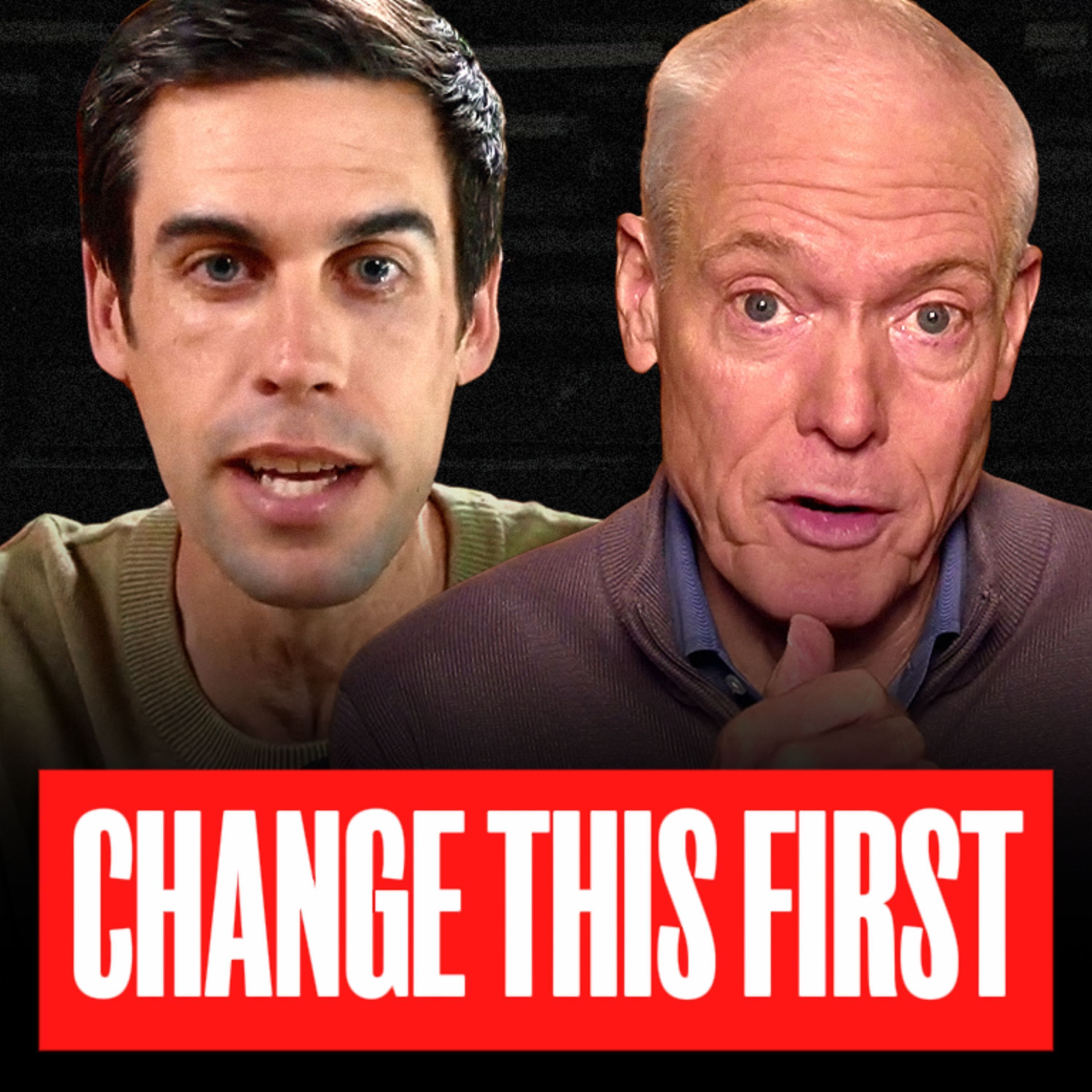
How to respond when life “doesn’t go as planned,” using Jim Collins’s “cliff” framework from What to Make of a Life—life is never “cliffless,” and adversity can shift you from being “out of frame” to “in frame.”
Most cliffs are unavoidable; you can’t plan for them, only choose how you respond. Competence without being “locked in” collapses under adversity. Don’t judge a life mid-story: “the story of the life is not done till it’s done.” Excellence and integrity of effort matter more than outcomes; later-life creativity can be strong.
Catherine Graham’s leadership “click” after her husband’s suicide and the Washington Post crisis; Gerald Ford’s presidency as an unwanted, contingent outcome; Tony Morrison and Robert Plant producing major work after 60; Alan Page preparing for a Supreme Court “cliff” by starting law school while playing.
Jim Collins (author of Good to Great; researched and wrote What to Make of a Life over ~10 years). Host: Ryan Holiday (Daily Stoic).
Written by AI. May contain mistakes.
Discussion on Jim Collins' new book and the insights about self-inflicted wounds.
“And as it happens, most of our wounds are self-inflicted.”
Exploration of how life challenges can lead to self-discovery and reinvention.
“That's Pesty.com slash Doik for an extra 10 % off.”
Reflecting on how adversity shapes our paths and the importance of adaptability.
“You think you want conditions to be a certain way.”
Explore how personal and external factors create significant life transitions.
“Yeah, I think some of those events are external.”
Discuss the potential for creativity and impact later in life, countering common beliefs.
“And even though they can see the cliff coming, they don't really treat it as a cliff that's coming until it's on top of them.”
Learn the importance of focusing on intention and integrity in work, regardless of outcomes.
“which is that kind of these things happen and you kind of sort of the peaks or the peak creativity or the peak impact or the peak this or whatever kind of happens here.”
Reflect on balancing current efforts with future aspirations in life and work.
“I would maybe posit that there's a bit of a paradox here.”
Explore the evolution of a writer's skills and the importance of enjoying the process.
“And just like I would argue this book, which I think is your best book, wouldn't have been possible without the other projects leading up to it and that it's all building to it.”
Learn about the concept of multiple potential paths in life and the importance of adaptability.
“So a couple thoughts on that, and one through the lens of being a writer and the other with this notion of kind of preparation for what you might be made for.”
Understand how luck and external circumstances shape our lives and successes.
“Graphic designer or curator of ancient artifacts.”
Discuss the nature of success and the importance of focusing on the quality of work.
“But it strikes me that what you're seeing and all those other people is a kind of strategic flexibility and an adaptability that allows them to face different situations and go, okay, I can work with this.”
Discover how writing can lead to personal growth and emotional changes.
“One of the things that I was struck by in the note that you sent me and some of the things you've said is it seems like you were really changed by writing this book.”
Reflect on the importance of understanding others' journeys and avoiding premature judgments.
“And that shift, I'm out of the try to change and mold people mode at all.”
Jim Collins shares insights on personal growth and the value of the writing journey.
“You can't see it exactly because you're not inside me.”

Get the gist, explore an idea or ask about something said.
 Claude
On The Daily Stoic, what are the key points of this episode?
Searching your listeningAutomatic transcript. May contain errors.
0:00Ryan Holiday: Welcome to the Daily Stoic Podcast, designed to help bring those four key Stoic virtues, courage, discipline, justice, and wisdom into the real world.
0:14Ryan Holiday: Hey, it's Ryan Holiday. Welcome to another episode of the Daily Stoic Podcast. I'm going to read you a quote here. Whether you prevail or fail, endure or die depends more on what you do to yourself than on what the world does to you. That is not a quote from Ego is the Enemy, although it is a book I read while I was writing Ego is the Enemy because that was a weird book, right? I'm trying to look not at people who have succeeded, but where people have failed, where they've gotten into trouble, what causes those troubles. And as it happens, most of our wounds are self-inflicted. Most collapses come from within, not from without.
0:58Ryan Holiday: That quote is actually the back cover of a really good, very well-known book called How the Mighty Fall and Why Some Companies Never Give In. This is from Jim Collins, who wrote Good to Great as well. I read How the Mighty Fall when I was researching Ego is the Enemy, as I said. And in part one of this episode, I told you about Jim Collins and I, how we overlapped on Oprah. But we had a lovely conversation about his new book, What to Make of a Life, Cliff's Fog, Fire, and the Self-Knowledge Imperative. It is a great book. He says it's the best work that he's done in his life and it changed him.
1:36Ryan Holiday: And I would agree with that. I think it is his best book. He said he spent 10 years researching it, two years writing it. And you can tell in the pages, it is a fantastic book. He has a little thing here at the beginning where he lists some of the people profiled in the book. It's a who's who of people I've profiled in my book, people that I think you'll want to know from Lucy Burns, the suffragette, Jimmy Carter, Gordon Cooper, the fighter pilot, Gerald Ford, accidental president, Michael J. Fox, Benjamin Franklin, John Glenn. Catherine Graham, who I wrote a lot about in Ego is the Enemy, Grace Hopper, Dolores Huerta, George C.
2:16Ryan Holiday: Marshall, Barbara McClintock, Toni Morrison, Sandra Day O 'Connor, Jimmy Page, Alan Page, Alice Paul, I.M. Pei, Richard Sherman, Santana, Meryl Streep, Barbara Tuchman, Vera Wang, Maurice White, Deborah Winger. This is just a great book. And not only is there a lot of research and distilled wisdom down in it, but I think it's a jumping off point for a bunch of people you're going to want to read and learn about. So I'll just get into part two of the conversation. This is me and the great Jim Collins. We have copies of Good to Great and What to Make of a Life at the Painting Borge Bookstore. And he assured me as we were wrapping up that he's going to come out and see us sometime.
2:53Ryan Holiday: So I'm excited about that as well. Thanks to Jim for coming on. Enjoy.
3:04Ryan Holiday: It's pretty remarkable. Our time is our most precious resource. It's the thing we have the least of. And then we spend it in the most frivolous ways. It occurred to me just how much time I was spending getting in my car, driving across town, finding parking, going up to my therapist's office to sit down for one. I thought I was spending one hour of my time on self-care, on working on myself, on thinking about things, processing stuff. But actually, I was spending like an hour and a half, sometimes two hours, because the process was so inefficient. And that's where today's sponsor comes in. If you've considered going to therapy, but maybe you feel like you don't have time, you don't have energy, or you don't have money, you should check out BetterHelp, because BetterHelp makes starting therapy easy and continuing therapy easy as well.
3:52Ryan Holiday: BetterHelp matches you with a therapist based on your preferences, their clinical experience, and over a decade of matching expertise. You can easily switch therapists at any time. But most of all, you can do the therapy from your own home, from your phone. Join the 6 million plus people who've gotten help from BetterHelp, the platform you can trust. You can just click the link in the description below or you head over to betterhelp.com slash dailystoke to get 10 % off your first month of therapy. It's spring here in Texas and that means new kinds of bugs. We are dealing with it because we have a house at the bookstore.
4:29Ryan Holiday: We have Tracy's up the street, our little grocery store. And we don't like bugs and the customers don't like bugs. Well, Pesty has helped make hanging outside at home more enjoyable by keeping the bugs at bay with their DIY pest control kit. The Pesty kit comes with everything you need to do your own pest control. Pro-grade pesticide. That's the same stuff that the pros use. Sprayer, mixing bag, gloves, instructions. You can even get a kit customized to the season, location, and weather. And with Pesty, it starts at just$35 a treatment. With their DIY kit, there's no strangers in your house or appointments to make.
5:06Ryan Holiday: Pesty gets rid of over 100 types of bugs, from spiders to ants to roaches and scorpions. It's also kid and pet friendly. Get bugs out of your house with Pesty. Just go to Pesty.com slash Doik for an extra 10 % off your order. That's Pesty.com slash Doik for an extra 10 % off.
5:25Jim Collins: I think that's one of the really big things about all this is that the die is never fully cast until the entire life is written. Right. And what's so powerful about looking across entire lives through these lenses is you can see times when they're even lost. And they're really out of frame. And they're really confused. And they're absolutely in the fog. And then they can end up in a time when they really are in frame. And everything clicks. And in the same life, you can have multiple cycles of that phase, of that phasing in and out. And that is actually something that when you go into a time, when you feel like I'm out of frame, this just isn't, you know, it's okay or it's terrible or it's whatever.
6:10Jim Collins: It's not the end of the story. It's never the end of the story until it's really the end.
6:16Ryan Holiday: And don't you think part of the problem with being sort of highly competent at something that you don't truly love or you aren't truly made for, you know, you can pull that off provided everything is going pretty well, right? And what I think can happen, the real doom is when you are competent, but not locked in, and then you experience adversity or difficulty, you come to a cliff as you're talking about. because the compensation or the recognition or the social acceptance, none of that is going to be sufficient to get you through that truly difficult period. That's the danger of it, I guess.
6:59Jim Collins: I think there's multiple. I think being comfortable in it for a really long time is also a danger, right? Because you could end up just having decade after decade after decade pass by and maybe never end up with the satisfaction of being in frame. the way a number of the people, all the people in our study did at certain chunks of their lives. And, or you can have the description you have, which is that you have a cliff that upsets everything and then you have to recast to begin with. But what's interesting to me about that is that sometimes the cliffs are what throw you into frame. They're not necessarily always what throw you out of frame.
7:38Jim Collins: So for some of our people, the cliff can come along and they were in frame. then you have the end of your test piloting astronaut career. You go into a phase of being out of frame. And so the cliff is, I'm no longer an astronaut. I'm no longer a test pilot. I'm no longer a fighter pilot. That part of my life is largely over. And now I have to reconstruct from there. And that can be a foggy out of frame patch that then leads to another version of being in frame. In that case of, say, being a senator. But you can also have cases where somebody marvelously discovers being in frame that they never knew they had before that came from the cliff.
8:18Jim Collins: So Catherine Graham, who became one of the great corporate CEOs of all time, imagine you have a similar experience I did when you read her story. So the first half of her life, there's not a lot of evidence of huge chunks of being in frame the same way that the second half of her life was. And she had this cliff, a horrendous, awful cliff when she lost her husband to the disease of manic depression and he took his own life. And not only that, he'd run the family company, which her father had bought, which was the Washington Post. And so she had kind of this second aspect of the cliff, which was what should happen to the company now also?
8:55Jim Collins: I have to deal with this. But also, I've now got this question of the company. I've never seen myself as the leader of the company. when one of her friends said, well, you could always run it. She was like, oh, no, no, no, no. Me? Are you kidding? And yet, as she stepped into it, and it was a series of steps, eventually what happened is the window frame shifted and she discovered to her great joy and astonishment that she had within her an amazing set of encodings for her corporate leadership. And once that clicked into frame, she became the Catherine Graham that was so beautifully well-constructed for leading through some monumental courageous episodes.
9:41Jim Collins: And so I think sometimes what happens with these cliffs, because that's the construct of the study, is looking at into the cliff, through the cliff, and out of the cliff. Sometimes the cliff ends a time of being in frame, and you have to reconstruct, but also sometimes the cliff almost causes the conditions for coming into frame for the first time. So there may be somebody out there today who is in the curse of competence doom loop. And their career is going to get wiped out by AI. And that'll be a cliff. But maybe actually what that cliff will be, will actually be the starting point of through the fog, through the cliff of actually getting into frame for the first time.
10:26Jim Collins: And that may well happen for a lot of people.
10:29Ryan Holiday: Yeah, you think you want your life to go a certain way. You think you want conditions to be a certain way. You think you have a preference or a preferred mode of operation. And then life sort of reminds you that you don't get a choice.
10:45Jim Collins: You have choices how you respond, but you don't have choices as to what life throws at you, right?
10:49Ryan Holiday: Yes, exactly. Then you get your actual choice, which is what are you going to do about it? And you had this great line in the book, the fruitless search for a cliffless life. You know, I think people think they want it to be comfortable. They think they want it to be clean. They think they want it to be simple. They think they want to get X, Y, and Z. And you don't actually know. Like, you have no idea that that's actually the best way for you. And almost certainly it isn't. Because when you look at the lives of the people you admire the most that have the most impact, that have, you know, sort of become what they're capable of becoming, you cannot not notice how adversity and difficulty and seemingly bad breaks turned them into that.
11:34Jim Collins: Yeah, you know, I think it's interesting because I had picked the cliff construct because it, I just thought there are lots of reasons I picked it. But one of which is I felt that it would be a really powerful way to sharpen the lens on the question of how people answer the question of what to make of life because a cliff can, you know, become such a stark moment that you at partway along the way in your life, you have to answer the question at least maybe a second time. Like, gosh, everything has changed around me. My life is fractured under my feet or I accomplished what I set out to do or whatever it is.
12:07Jim Collins: And now I've got to answer the question again. And if I can look at two people facing a similar cliff and see how they each answer that question differently and what are the patterns I can learn a lot. But in the process of that, I, with my research team, we spent, I think it was on the order of a couple of years of the research where I said, you know, what we really need to do is we also need to find some lives that we can study, that have enough information on them, that didn't have a cliff, didn't have a major cliff. Because I really want to know, is the pattern of those lives different, those who have cliffs and those who don't have a major or mega cliff?
12:44Jim Collins: And this was one of those wonderful things that happened in the research, which was, in a certain sense, we had a disappointment, which was we couldn't find anybody that met the test of a cliffless life, which was actually not a disappointment because it was a great learning. Every time we found someone that we thought might be a cliffless life in terms of major cliffs, you started studying their life and you would find, oh, actually, they had major cliffs or even mega cliffs. And I just finally concluded cliffs are us. The odds you're going to get to the end of a reasonably long life without experiencing cliffs and certainly at least one or two major cliffs along the way, I think are astronomically close to zero.
13:33Jim Collins: So a number of our people can see their cliffs coming, but also sometimes you can't see them coming. I mean, they can just be, you wake up and, you know, you've just, you know, your husband dies in a plane crash and it upsets your entire life. Or you wake up and you discover you have a disease diagnosis that you didn't see coming the day before. Even things where you just, there's just kind of almost this shattering effect. And those cliffs, you can be sort of prepared for them in a way, but you cannot plan for them. And I guess I've come to the conclusion you're going to have them. You're just going to have them.
14:14Ryan Holiday: Yeah, I think some of those events are external. It's a war. It's a shipwreck. It's an economic disaster. And I think the reason you can't find a truly cliffless life is that we seem to do a good job of creating them for ourselves if they're not external, right? You wake up one day and you realize you don't like what you do anymore, or you have a crisis of faith, a religious crisis of faith or a political awakening. There's going to be those transition points as moments of awakening or insight or truth, whether they originate from inside or outside. The question or, as you said, the place we have a choice is do we take them seriously and change in light of them?
14:56Ryan Holiday: Or and maybe this is sadly more common than it needs to be. Some people just keep on trucking and ignore it and don't take what they can out of it. And that's that's the real shame of it, I guess, is is when you come to one of those cliff moments and you don't get that growth or insight out of it. What you were talking about, people kind of almost bringing about their own cliffs.
15:17Jim Collins: And we do have cases in the study where people played a real role in what became a cliff. We have the two people who were in Watergate and they were in the Nixon White House. They very clearly played a role in what ended up then going to prison and being disgraced and having to reconstruct their lives out of that. They really did play a significant role in the major turning cliff of their life. There are other cases where just the role you've chosen in life is the one that has a built-in cliff. So if you're a professional athlete, right, and we have professional athletes or people who were gold medal skaters or professional football players in the study where you've essentially, you are doing something that the cliff is inevitable.
16:04Jim Collins: You're not going to be playing all pro defensive linemen at age 60. It's just not going to happen. And so you have these other times where it's like I've chosen a path that has a built-in cliff. and you can either choose to prepare for that cliff ahead of time. Alan Page from the Minnesota Vikings began putting himself through law school while he was still playing in the NFL. And then that led to his second frame of being a Supreme Court justice. He was already laying the foundations for an inevitable cliff. Those cliffs are easier to manage if you choose to because you can see them coming. Then there are the ones you just can't see coming.
16:46Jim Collins: One thing I've found with CEOs, and I spent a lot of time in the world of business leadership and CEOs and people running large organizations, for-profit, not-for-profit, and so forth. They are often very unprepared, even though it's almost inevitable that it's going to come, for the end of their executive careers. Yeah. And so it's not unlike being an athlete and you are defined by your executive role, your executive leadership. And just like Jimmy Carter being done with the presidency at age 56, they hit 60 or 65, when actually your best, most creative capabilities are in many ways just beginning.
17:24Jim Collins: And that has ended. And you often see a period where they're really not certain at all what to do next. And it's a very common pattern of people in these very intense roles that very, very much defined them coming to an end when there's a lot of life left to go. And even though they can see the cliff coming, they don't really treat it as a cliff that's coming until it's on top of them.
17:52Ryan Holiday: Yeah, our ability to delude ourselves about that is pretty universal. I think about that as an author. So this studio we have lined with books and there's this company where you can just buy books by basically by the pound or by the inch to decorate for, you know, like a movie set or whatever. And one of the things I sometimes look at it, I think I go, you know, some of these were huge books when they come out, when they came out. Some of these authors were the biggest authors in the world. And it wasn't that long ago. And now, you know, where are they? At some point, you do your last book. At some point, your sales trajectory peaks and it's a downhill climb from there or it's a descent from there.
18:37Ryan Holiday: And so it's like we all know that there's an expiration date on what we do, whether you're a musician or a professional athlete or just a human being and that we know we're all mortal. And yet we just sort of continue as if we're going to be the exception to the rule and gravity does not apply to us.
18:55Jim Collins: Okay. So can we spend a moment on this? Because I come at this with a really different view, a different lens after having done this study. I absolutely agree with you. There is one for certain expiration date. Yes. And that is, we don't know what it is. We don't know what it is. Whatever your expiration date is and my expiration date is as a person on this planet, we know that it will come. We know that life is kind of the ultimate punch card, right? And the Warren Buffett idea, you only have so many punches of investments. Well, life's like that. We only got so many punches. And you kind of have a statistical idea of how many there are.
19:35Jim Collins: But every five years you spend on a project, that's a punch, right? And one day you're going to be out of punches. So we know that. So there's an expiration date. But one of the things that I really, I get very animated about this. So you'll have to forgive me if I get animated about this. this idea that our best, our most creative, our most impactful, our most, things we do in our life are going to be earlier. And that later in life is going to not compare well to that. And that, and that it's going to be like this and sort of like this kind of cycle down. I, this study, one of the most uplifting things for me from the whole thing is that that is inverted for me.
20:23Jim Collins: I actually reject the idea now that our younger selves have to tower over our older selves. And I was so struck by the number of spectacular things that the people in our study did late in life. There's that wonderful little statistic in the book. You take all the pages of the biography, the major biographies of Benjamin Franklin, and you ask what percentage of the books are left when Franklin turns age 60. And the answer is 53%. So he hits age 60, and over half, over half of what is going to be most interesting, creative, spectacular of his life is yet to happen. Tony Morrison didn't write Beloved until 56 or publish it.
21:10Jim Collins: Jazz at 61, over half of her books after the age of 60. Robert Plant has been doing some of the greatest music of his life, late in life, right? Almost all of his Grammy nominations and all of his wins come late, including that amazing album where he comes together with Alison Krauss and they do Raising Sand. And you would think that, well, you know, it was the Zeppelin years. Well, there was great music. But Raising Stand is a stunningly exceptional piece of music. And that comes, he's already heading into his seventh decade of life. And you can take a look at the I.M. Pei does the Louvre Pyramid in his 70s.
21:54Jim Collins: He does the Museum of Islamic Art in Doha at age 91. Carter, who we were talking about earlier, which is the most, like you could look at it as that, well, nothing's going to compare to being president, except, by the way, the rest of his life, which in many ways exceeds it. And so I come away uplifted by sort of this image of an arc, which is that kind of these things happen and you kind of sort of the peaks or the peak creativity or the peak impact or the peak this or whatever kind of happens here. And then the rest of life you're sort of dealing with it. That's towering in the past. and I invert it now to where it's like, well, those are sort of warm-ups.
22:39Jim Collins: Those are just warm-ups. And out here, out here is what is potentially really spectacular. So you hit 60. I'm 68. I have more energy than when I was 38. And part of that is because being really fueled by the examples of the people in this book and what they did late. It's like, wow, 68's just kind of, I'm maybe just really getting going. And the key is one of your key teachings you give people, Ryan. One of the things I really love about what you contribute to people is to decouple the excellence, the integrity of your work, the excellence of your work, the creativity of your work, the intention of your work from the result.
23:27Yeah.
23:27Jim Collins: And that if you separate those and you basically say, I don't know if Raising Sand is going to be a five Grammy winner. It did. But he didn't know that. Sure. But the point was to blend his voice with a voice that sounds like an angel, to learn how to sing as a duo rather than a single, to reimagine even some old Zeppelin songs in bluegrass and do new pieces of music and create this spectacular album. That had ended up having a great result is phenomenal. But even if it hadn't, he still would have done it. And that sense of like what matters is the intention and the integrity and the excellence and the expression of your encodings over here.
24:16Jim Collins: And that can only grow and improve and kind of expand over a life. And the results will be whatever they will be. But if we define everything by the results, we're in a trap. But if we define it by how and what we're doing, there'll be a variation in the results. But that's kind of separate from the sheer beauty and creative excellence of what I might be doing. And so I come away with, there is no shelf life. There's only your life. Yeah.
25:00Ryan Holiday: We are coming up on the 10-year anniversary of the Daily Stoic book, Daily Stoic website, which also means we're coming up on the 10-year anniversary of the Daily Stoic Shopify store. We've been using Shopify since the very beginning with Daily Stoic. We sold a print, I think, first, and then shortly thereafter, we came out with the Memento Mori coin. And we've used Shopify because we love it. We even expanded it out to the bookstore when we opened the bookstore. I guess this would have been in 2020, 2021. So we've been using Shopify forever because Shopify is the best and the biggest commerce platform there is.
25:38Ryan Holiday: It's behind millions of businesses all around the world. 10 % of all e-commerce in the U.S. is with Shopify. It helps you tackle inventory, payments, analytics, and more. You don't have to have multiple websites. You don't have to figure out who hosts or, you know, all this stuff. Shopify is everything all in one place, making your life easier and your business operate smoother. They've also got great customer service. Start your business today with the industry's best business partner, Shopify, and start hearing with Shopify today. Sign up for your$1 a month trial at shopify.com. Go to shopify.com.
26:17Ryan Holiday: slash stoic. If you're selling online or out of a storefront, it's a full-time gig for you or a side hustle. You know the challenge. It's not easy. It's a lot of work. You're hoping that people find your listing. You're waiting for them to walk in. Well, WhatNot flips that. On WhatNot, you go live and sell directly to people in real time. They see what you got, they ask questions, and they buy and they keep coming back. Whatnot is the largest dedicated live shopping platform. Beauty, collectibles, electronics, luxury, fashion, even cookies. Sellers can build real thriving businesses. Whatnot buyers spend more than an hour a day in the app and they're not just browsing, they're bidding, they're buying, they're coming back and you can go live and show off your products to those people and turn what you love into real income.
27:05Ryan Holiday: People selling on Whatnot sell 10 times more than other major marketplaces because you're not just listing products, You're building real connections with your buyers. And for a limited time, Whatnot will match your first$150 in the first month. Visit whatnot.com slash sell to start selling. W-H-A-T-N-O-T dot com slash sell. Whatnot.com slash sell.
27:30Ryan Holiday: I think that's all very well said. I would maybe posit that there's a bit of a paradox here. On the one hand, you should believe that your best work is in front of you. Everything you're doing today is preparing you, training you, the seed corn of some future project that you can't even conceive of. In the same way that for Stockdale, he doesn't know that those dark days at the academy, those middle years of the 50s where he feels like he's missing all his shots, when he's far from the action, when he's getting passed over for things. He doesn't know that this is all preparing him for the Hanoi Hilton, but he just has to have faith that he's being prepared for the life he's meant to have.
28:06Ryan Holiday: And just like I would argue this book, which I think is your best book, wouldn't have been possible without the other projects leading up to it and that it's all building to it. And that one of the joys of writing is that a lot of writers do do their best work towards the end of their life because the expertise and the mastery is cumulative. It might not always be the best selling, but it can be the best work. I like to think the example I always bring up is like Michael Lewis didn't know that his life and the great financial crisis were converging and that he was perfectly, perfectly suited to write that book at that moment.
28:42Ryan Holiday: So there's that. And yet, if you're waking up day to day thinking that what you're doing right now doesn't matter because you're destined for some future bigger thing or if you're miserable today and it's all contingent on getting some big shot 20, 30, 40 years in the future that is recognized and beloved, well, then you're really in trouble because that might not happen. And so it's this tension of like, hey, you love what you're doing right now and you're fully immersed in it. You're in frame as you're saying. You're giving everything to it your absolute best. And you're understanding that you might get this bonus of it's training you for some future thing that you can't conceive of.
29:29Ryan Holiday: That's at least how I try to think about it.
29:31Jim Collins: So a couple thoughts on that, and one through the lens of being a writer and the other with this notion of kind of preparation for what you might be made for. I think one of the things that I came away from this study really appreciating, another sort of uplifting evolution for me by studying their lives, is the wide range of things that we're made for. And so kind of there's one view of the world, which is you need to, you know, the Abe Maslow idea of self-actualization. Discover what you're made to do and commit to pursue it with excellence. It doesn't speak to how successful it is, is to commit to pursue it with excellence.
30:07Jim Collins: But there's this asterisk, which is, well, but what if I don't find it? What if I don't find it? And what this study showed me is because people often have these cliffs that threw them into frames that they couldn't have envisioned before. And often, even in a single life, had multiple frames, right? printing empire to scientist to nation founder, for example. What I really realized is that the constellation inside us is vast. And it's not a matter of finding what I'm made for as if there's one. It's simply finding one of the many possibilities at any given time of what I'm really encoded for.
30:46Jim Collins: And so long as it's one of them, there will be others I'll never discover. That's okay. So long as at any given time, there's a good chance I find one of them. You and I ended up writers. But maybe we would have ended up in frame in a very different way if the contingent paths of our life had gone a different path. If Jimmy Page hadn't discovered a guitar almost by sheer serendipity because somebody left it behind in a house that his parents moved into when he was 10 years old, maybe his life would have come into frame in a very different way. Graphic designer or curator of ancient artifacts. I always thought that Jimmy Page would be great at that.
31:26Jim Collins: But his life ended up in music. And I find it very uplifting, the idea that there are multiple shots on goal, multiple possibilities, and life is enormously contingent and enormously full of random events. And which permutation we end up in that's in frame is partly up to us, but it's also largely up to a lot of factors that are outside of our control. And I was struck by how unplanned many of the lives were. When the roulette wheel spun, they ended up in frame with something. There was often a great big surprise. They didn't know that that's where they're going to end up, just like Jim Stockdale didn't know he was going to end up in the Hanoi Hilton.
32:11Jim Collins: I actually find that very uplifting because it removes this pressure, this idea that I got to find the one thing. but it's just a thing of many possible things. One thing on the writing, I've been really lucky with my writing. I never expected it to be as successful as it's been. And, but you know, somebody, sometimes people have asked, well, how do you make a bestseller? My answer is you can't. All you can do is write the best piece of work you're capable of at the moment that you're writing. it. Good to great, which will forever be something that, you know, completely changed my life. In some ways it was hard to manage because I was prepared for failure, but I wasn't prepared for success and I wasn't prepared for the level of what would come at me from that.
33:08Jim Collins: But, you know, it came out right as 9-11 happened. So I thought it was probably just going to get buried anyway. And yet somehow it caught the world. And what I realized is that the zeitgeist makes the bestseller. You don't. You write the book, but you don't get to decide. Your readers get to decide. The zeitgeist at the time gets to decide ultimately how successful that book is. Right. And so you can't make a bestseller. I mean, you know, I suppose with just your, you know, there are certain things where you have a platform and, you know, that guarantees a certain number of readers and so forth.
33:43Jim Collins: But the real take of a book, the only thing you control is ultimately what's on the pages of the book. And after that, zeitgeist is with you or zeitgeist is not. Your readers are with you or your readers are not. And you don't determine that. Yeah.
34:02Ryan Holiday: And what I mean about sort of the future is like, if you're one of those people where you're like, all of this is leading up to when I become president or when I am in charge of this or when I do that's a really vulnerable place to be because all these things have to go a certain way. But it strikes me that what you're seeing and all those other people is a kind of strategic flexibility and an adaptability that allows them to face different situations and go, okay, I can work with this. I can work with that. I can turn this into that. And so their life, it can go in a variety. It ends up going in one direction or a couple of directions.
34:38Ryan Holiday: But the point is, it could have gone in any number of directions based on whatever material or opportunities, fate, fortune, circumstance happened to dole out to them.
34:48Jim Collins: One of my favorite chapters in the book is the roulette wheel of life. And it looks at luck and the contingencies and so forth really through the lens of their lives. And I love the story of Gerald R. Ford because his life is full of these. And you would think that becoming president would be this great pinnacle, this great success, but he didn't want to be president. He wanted to be Speaker of the House. And he was most in frame operating in the House of Representatives where he was the man with no enemies, many adversaries who had different views, but no enemies. And he made friends really well and he could really get things done.
35:28Jim Collins: But because of the zeitgeist of the time, his party didn't control the House. And then a whole bunch of things that were completely outside of his control, which had to do with the fall of the Nixon administration, you know, eventually led to him becoming vice president. And then he was going to be president. He had nothing to do with it. He never wanted to be president. Never expected it. And all of a sudden, the thing he really wanted to be got taken away from him as he was Speaker of the House. and instead he got what probably was like second or third or fifth prize for him, which was he got to be president.
36:04Jim Collins: And then there's this wonderful, I love this little vignette after Carter's inauguration, which was a beautiful thing the way he shined a light on Ford in that inauguration and let Ford have a moment in the light. It was just beautiful. Ford gets on the helicopter to leave the mall and instead of circling over the White House, he told the pilot, don't circle over the White House, circle over the Capitol. Wow. Because that's my real home. Yeah. And to me, it was just like, you know, even if you become president, it might not be what you planned and it might not even be what you want.
36:49Ryan Holiday: That's beautiful. The idea that all you control is what's on the page, I think that might be an interesting place to close. One of the things that I was struck by in the note that you sent me and some of the things you've said is it seems like you were really changed by writing this book. And it is a departure. It's different than the other books. Like you clearly made the decision to go in not just in a less business direction, but in a more personal direction yourself as the writer. It opens with a story about your father. I've always believed that the first thing you should think about when you're sitting down to write a book, and I think this could be expanded to any creative project, is will you get better for doing it?
37:32Ryan Holiday: Will you get better because of the subject matter you chose? You learned a lot and it changed you? Or will you get better because you chose something technically difficult that in having to figure out how to do, you add some element to your skill base? But it strikes me that on this book, you chose in a couple ways to tackle something that, again, it could sell zero copies. I'm sure it will sell quite a few. But you will consider the project a success because of who Jim Collins is at the end compared to who he was when he started it.
38:07Jim Collins: It's a really nice way to kind of have a circle on our conversation because we go back to your opening story about Stockdale. Yeah. And the idea of be the best, but what does that mean? And so I do believe this is the best I've done so far in terms of the quality of the work and the writing and all of that. But what does best mean? And I think that it's really the ways in which I changed. And what I'm really grateful for in having gone through the 12 years of doing this project is the way I changed through it. Not just in what I think. There's lots of ways in what I think that changed. dramatically, because that's what good research does.
38:48Jim Collins: It changes what you think. But my emotional landscape is what really changed. And in ways that I'm really happy with, one of them, I used to, and I was struck by some of the way you bring in the Stoics on this. I mean, I really did used to spend a lot of emotional energy feeling really frustrated with what people or not. Yeah. People who work with me, people in my life. And I would be frustrated with what they're not. I'd be frustrated they're not more like me. I'd be frustrated and I would try to change them. And by watching the people's lives in this study unfold as I lived alongside them in researching, I began to see the beauty of when they were in frame and when they were not in frame.
39:33Jim Collins: And I instead began to see it as like, well, no, the real question is, what amazing encodings do those people have? And when they're in frame, it's beautiful. And now my emotions are to look for the ways in which I'm truly grateful for what people are rather than frustrated with what they're not. And to really allow myself to help them be in positions where they're very much in frame. And that shift, I'm out of the try to change and mold people mode at all. I just want to see them in frame and then feel grateful for what they are. This whole notion of a worthiness hierarchy. I think I carried around in my head a lot of kind of this idea that there's the big visible impacts and the things that if you did something like the 19th Amendment, it's somehow more worthy than something else that might be less visible in the world.
40:30Jim Collins: Maybe even making the most beautiful Zen garden in your backyard. That's changed for me. I don't want to look at people through a worthiness hierarchy. Are you more worthy than this person? But rather, are you in frame and excellent with what you do, regardless of how visible it is? I really don't want to judge other people's lives because we're all encoded differently. And also this idea, and this, I think, really ties into your work, Ryan, about how people looked at the folks that you studied, looked at their lives, which is, you know, The story of the life is not done till it's done. And the impulse to kind of judge a life partway in progress or to be frustrated because somebody's been in the fog for a long time or whatever, right?
41:14Jim Collins: To realize that there's still a lot of this story yet to be written. And if maybe I had met Admiral Stockdale when he was a young lieutenant or something, or I guess just before becoming commander or whatever, Or is it kind of say, well, you know, maybe I would see him differently when I knew the whole story. But actually to kind of look at it and say inside this person, I don't know the whole story of their life. Yeah. And what's yet to come could yet be some of the most wonderful, glorious things yet to see. Do not judge. Yeah. And those are ways in which I really evolved because of studying these lives.
41:51Jim Collins: And in many ways, if you think about what makes better, it's what happened to me. That is how I see the best part of the book. You can't see it exactly because you're not inside me. Yeah. So however many people read it, I hope people do read it because I think it will create great conversations in their lives. I want them to share it and discuss it. But the worst case scenario is I think I'm a better person for having gone through the journey of doing it.
42:22Ryan Holiday: It was a good use of the time you put in it already. Everything Else is Extra, which is the best place to be on the eve of a book launch. Just to be clear, I think it will be and certainly deserves to be a bestseller. I love the book. I think it's right there alongside the others. And it's been an honor to chat.
42:41Jim Collins: It has been an honor to chat. Keep up the great work, Ryan. Thank you. I love how you know how much I value principles that last, right? Real, durable, ultimately human ways of looking at things. And I love the way that you've gone back to people like Marcus Aurelius, like Seneca, people who, it doesn't matter that they lived all centuries ago. What they saw and understood is deeply true and powerful. Everybody thinks that everything profound has to be new. And it does not.
43:15Ryan Holiday: That's very well said. Well, thank you very much.
43:46Jim Collins: We'll be right back.
43:54Jim Collins: Shortcodes by a mile. Lease the shortcode today at usshortcodes.com. Your tax refund just got a massive glow up. It's time to rev up your refund at Toyota of Downtown Chicago. Toyota Downtown Chicago is doubling your tax refund down payment up to$2 ,500. Plus, stack those savings with financing as low as 3.99 % APR for up to 72 months. Don't just spend your refund, upgrade your entire vibe. See Toyota of downtown Chicago today or shop now at DTToyotaChicago.com. For well-qualified buyers, see dealer for details. Offer expires April 30th, 2026.
What if the hardest moments in your life aren’t detours but the very things that put you on the right path? In Part 2, bestselling author Jim Collins explains why the moments that derail you are often the ones that redirect you.
Jim Collins is a bestselling author and one of the leading voices on leadership and human performance, known for books like Good to Great, which has sold millions of copies worldwide. His research-driven work explores what separates the truly exceptional from the average, with a focus on how people confront the biggest questions of leadership, purpose, and life.
Jim Collins’ new book 👉 What to Make of a Life: Cliffs, Fog, Fire and the Self-Knowledge Imperative is out now! Grab a copy here
📚 Pick up a copy of Good to Great by Jim Collins at The Painted Porch | https://www.thepaintedporch.com/
🎙️ AD-FREE | Support the podcast and go deeper into Stoicism by subscribing to The Daily Stoic Premium - unlock ad-free listening, early access, and bonus content: https://dailystoic.supercast.com/
🎥 VIDEO EPISODES | Watch the video episodes on The Daily Stoic YouTube channel: https://www.youtube.com/@DailyStoic/videos
✉️ FREE STOIC WISDOM | Want Stoic wisdom delivered to your inbox daily? Sign up for the FREE Daily Stoic email at https://dailystoic.com/dailyemail
See Privacy Policy at https://art19.com/privacy and California Privacy Notice at https://art19.com/privacy#do-not-sell-my-info.
