
 Ask ChatGPT



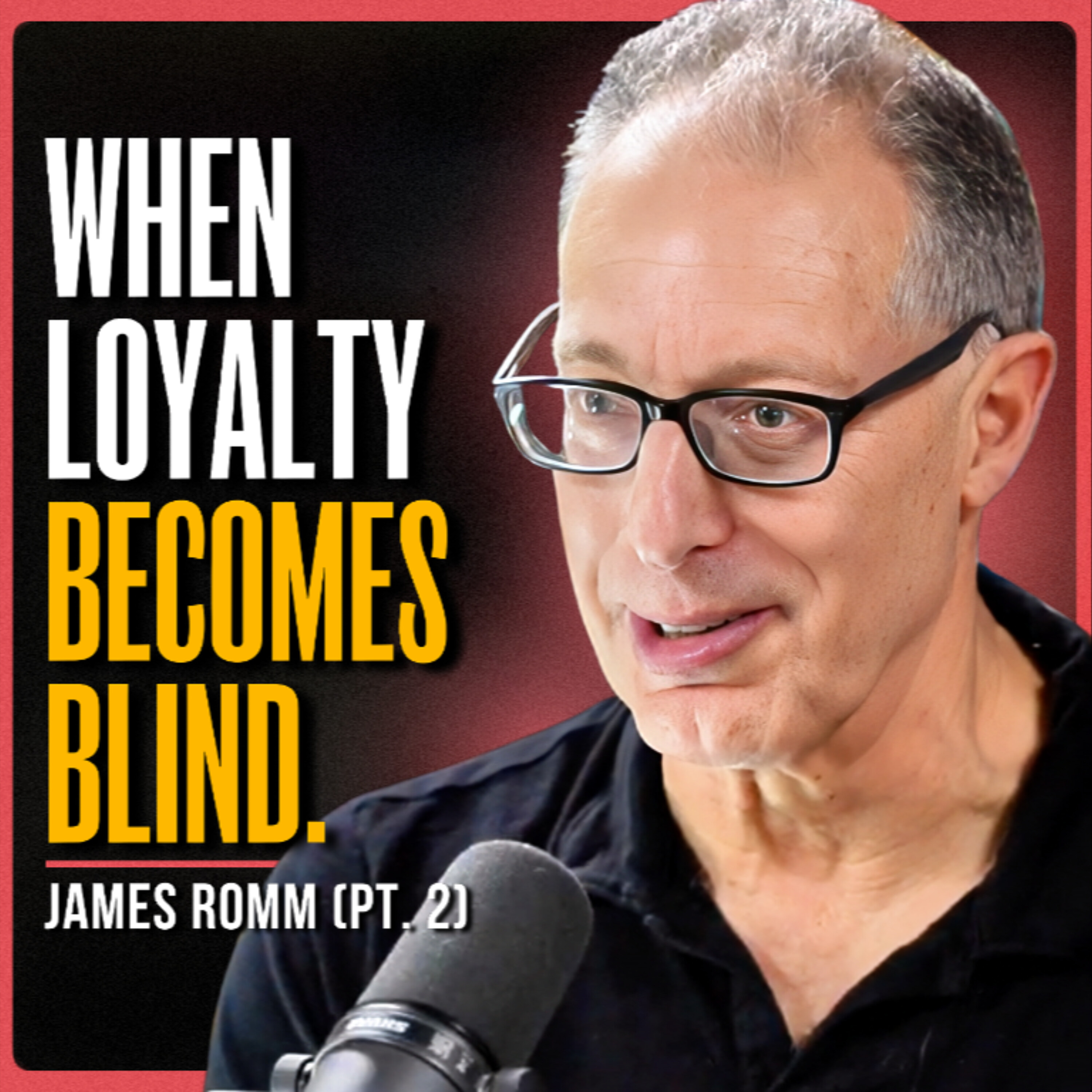
In this second part of a two-part series, Ryan Holiday interviews historian James Romm about the tumultuous lives of ancient philosophers amidst the tyranny of their times. The discussion revolves around the philosophical dilemmas faced by figures like Plato and Seneca, particularly their compromises with power and integrity in the context of ancient Greece and Rome.
Written by AI. May contain mistakes.

Get the gist, explore an idea or ask about something said.
 Claude
On The Daily Stoic, what are the key points of this episode?
Searching your listeningAutomatic transcript. May contain errors.
0:28Why choose a Sleep Number smart bed? This message comes from Capital One. The Capital One VentureX Business Card has no preset spending limit, so the card's purchasing power can adapt to meet business needs. Plus, the card earns unlimited double miles on every purchase, so the more a business spends, the more miles earned. And when traveling, the VentureX Business Card grants access to over a thousand airport lounges. The VentureX Business Card. What's in your wallet? Terms and conditions apply. Find out more at CapitalOne.com slash VentureXBusiness.
1:04Welcome to the weekend edition of The Daily Stoic. Each weekday, we bring you a meditation inspired by the ancient Stoics, something to help you live up to those four Stoic virtues of courage, justice, temperance, and wisdom. And then here on the weekend, we take a deeper dive into those same topics. We interview Stoic philosophers, we explore at length how these stoic ideas can be applied to our actual lives and the challenging issues of our time. Here on the weekend, when you have a little bit more space, when things have slowed down, be sure to take some time to think, to go for a walk, to sit with your journal, and most importantly, to prepare for what the week ahead may bring.
1:55Hey, it's Ryan. Welcome to another episode of the Daily Stoic Podcast. So I was in Athens a couple months ago now, I guess a month and a half ago now that you're listening to this. And every morning I would try to go for a long run to see something that I knew only pretty much I would be interested in. And my family would be like, well, cool. So, you know, I ran out and saw the Lyceum, which is where Aristotle taught. I went up to all these different hills around Athens. My little kids wouldn't have to hike all the way up or I wouldn't have to carry them all the way up. I saw that thing that we call Socrates' jail.
2:33No, he wasn't actually jailed there. And one of the things I also went to see, which was a decently long run from where I was staying in Plaka, which is right under the Acropolis. I went to see Plato's Academy. And I remember looking it up. I asked Donald Robertson beforehand. He's like, oh, yeah, it's right over here. He told me where it was. I look it up on Google Maps and I'm like checking the hours. You know, the Lyceum, for instance, you have to pay an entrance fee. You know, the Olympic Stadium, there's an entrance fee. The Acropolis is so busy, there's a fee. It's like a timed entry. But Plato's Academy was just like in the middle of a park.
3:05It said open 24 hours a day. I said, well, this can't be right. One of the most famous sites in all of the world. It's a direct line from Socrates to Plato to Aristotle, Alexander to Zeno, Marcus, all the way down to where we are today. Surely this must be in a protected park. It must be an archaeological museum. It must be a world heritage site. No, it's just a park. And it's like a hole in the ground. You run all the way to this park. It's not in a particularly nice area. You get in this park and just this kind of hole in the ground. The signs are all like, you know, all the script is off the signs.
3:41if you didn't know anything, you'd think it's just a pile of rocks. And I just thought, on the one hand, this is terribly sad. On the other hand, it's a statement to the embarrassment of riches that Greece has. Like here, they have to choose between this site and that site. And Plato's Academy hasn't been reconstructed. It was funny. A couple of weeks later, I was in Philadelphia and my son, as I've said, is obsessed with Hamilton. We go and see Benjamin Franklin's house, which had been torn down, but they'd like built like a scaffold that they kind of built. It's like a ghost version of the house.
4:12You can imagine what the house looked like, sort of cool sculpture. And I just think Benjamin Franklin's house is preserved in this way. And yet a few weeks before I was standing in the place where it all happened, where it all began, and I'm left to my imagination to even conceive of what Plato's Academy looked like. I was thinking a lot about Plato while I was there, of course, because he's the guy that it all began with in a sense, but also because I just had a really fascinating conversation about Plato with James Rahm for the podcast. Let me read you this paragraph from his book, Plato and the Tyrant, the fall of Greek's greatest dynasty and the making of a philosophical masterpiece.
4:53Did Plato, while extolling the good as the source of transcendent joy, end up collaborating with evil? Has he sought benevolent ends by unsavory means? How far had he bent the noble ideas of Republic, its unwavering commitment to justice, when he'd entered a world where injustice prevailed? Was it thinkable, the most troubling question of all, that he'd written Republic in part to explain his missteps in Syracuse, or to obscure them? I raved in part one of this episode about James Rahm's book, Dying Every Day, which is about Seneca in the court of Nero. His book, Plato and the Tyrant, is about Plato's similar, complicated, complex, inexplicable, confusing, and yet all too relatable time in the court of another tyrant.
5:45Seneca and Plato agree that the philosopher has to be a doer. And the problem is that to be a doer in the world, particularly the political world, means imperfection, means contradictions, means complexity, means making hard decisions. Did Seneca always get it right? No, of course not. That's what dying every day is about. And did Plato always get it right? No. And that's what we talk about in today's episode, the manipulation that charismatic or demagogic leaders can rely on to bend us to their will. We talk about Seneca's hypocrisy. We talk about Plato's hypocrisy. We talk about their gullibility.
6:25Talk about their savior complexes. We talk about what's missing in today's world that was present in ancient Greece and Rome and vice versa. And then at the end, I walk him through the painted porch and we pick out some books. It was a lovely conversation. I am a big fan of Professor Rahm. He teaches classics at Bard College. He's the author of many books. Won a Guggenheim Fellowship. He's translated Seneca. His edition, Dying Every Day, is one of my favorites. His book, How to Die, which is a collection of Seneca's thoughts on death, is one of my all-time favorites. We have signed copies of that.
6:57He signed them while he was here. He also signed Plato and the Tyrant, Dying Every Day. And his translation of Seneca, How to Give. All in all, great thinker, great writer, someone who has influenced and shaped me quite a bit. This is his second time on the podcast. Early in the week was part one. This is part two. But he was back on the podcast in July of 2020. So you can go back and listen to that. You can follow James on Instagram at james.rom and check out his work, jamesrom.com. I think you will really like this interview. Thanks.
7:30I read Dying Every Day when I was at American Apparel. I had come back. They'd fired the CEO and we were trying to save the company. And I was sort of wrestling with more minor version of the same sort of temptations. And I was it was thinking back to how had this person who was sort of unstable and reckless and made all these terrible decisions, how at every step of the way, he managed to convince the smartest people to give him more and more money. I think it's fascinating that sort of after everything, Trump managed to go to Silicon Valley and convince these people who are primarily a venture capitalist, your job is most of the ideas turn out to not be good.
8:12Your job is to bet on founder. Like their job is to read people and see which person is worth giving millions and millions of dollars to and can successfully build and run a company. And Trump manages to convince them that he's not what he obviously is. And then promptly, you know, tanks the economy doing exactly what he said he was going to do. And these same people are like, we didn't think he would actually do it. Right. And I think that's the timelessness of the seduction, which is like, over here, I'm saying and showing you this. And then over here, I'm saying something different. and the human capacity to hear which one of those we want to hear.
8:59Yeah. And for Plato to have gone back to the court of Dionysius II a second time, five years after departing in a terrible debacle the first time and having caused a rift in the royal family that resulted in his protege Dion getting exiled. That is really, it's another stunning example of self-deception. Yeah, the mental gymnastics that humans are capable of will never cease to surprise you. That's right. And Plato says that he devised a test. You know, this is really a testament to his naivete. He devised a test to see whether Dionysius was a suitable student, that he was going to tell him exactly how hard it was going to be to become a philosopher.
9:51And probably he had in mind years and years of studies, starting with geometry and astronomy and higher math and going up to dialectic. And he was going to see whether, how he would react. So he lands in Syracuse for the second time, well, the third time, but the second time under Dionysius the Younger and presents him with this scenario. And Dionysius says, oh, well, I already know all this stuff because other people have told it to me. And at that point, Plato is sort of done. But the fact that after having lived with him five years earlier for months and months and seeing exactly what kind of person he was, you know, a drunk, a libertine, unstable emotional figure that he still thought, well, you know, maybe he'll pass the test and I'll have a true student on my hands.
10:45Yeah. I imagine Seneca, you know, he's somewhere in one of his villas and the messenger rushes in, you know, we have news that, you know, Nero's tried to kill his mother. and Seneca's grabbing his toga, you know, and rushing over to the palace. I'm going to tell him this time, you know, this has to end. You can't do this. Like, I'm really going to confront him. This is it. You know, it's like, we're going to have the come to Jesus conversation, which maybe he literally could have used that expression. That's right. Jesus having overlapped with Seneca. But, you know, we're going to have it. And he's walking there.
11:22I'm going to confront him. I'm laying on the line. I'm giving him the ultimatum. And then by the end of it, you know, Nero has talked himself out of it. Right. And then soon enough, he does kill his mother and crosses the next red line and crosses the next red line. And the real skill of the Neros, of the tyrants, of the Trumps, et cetera, is their ability to read those people and to know what they have to say to them and what their levers are and how to manipulate them. That at some level they see through them and they know how to get them in their pocket. Yeah. There's a great phrase that James Comey used in the first Trump administration.
12:10He eats your soul in little bites. That was a description of what he saw going on in those closed rooms where people were huddled with the decision maker. Yeah, because didn't he say like the first day they all get called into his office and Trump basically forces them to all say that it was the biggest inauguration crowd they'd ever seen. that that's really the test is like, can I get you to accept an absurd premise? And if I can, then what you have told me is, I think people think it's about loyalty, but it's more about you have shown me a glimpse into your soul, which is that you want the job more than you care about your principles or notions like the truth and honesty, et cetera.
13:05And if I can get you to make that little compromise, or if I can get you to show me that that's who you are, then this is going to go well. Yeah, very true. And Nero had a similar test with the murder of his mother that he put out a story that his mother had been conspiring against the regime and was an enemy to the regime and had to be eliminated on that grounds. And Seneca wrote the letter in which that was put forward to the Senate. And Tacitus says, no one blamed Nero because they knew he was a rotten apple, but everyone thought Seneca had just gone to the dogs. Yeah. So then later when Seneca says, I'll give you all my money, I want to leave.
13:51Nero goes, no, you don't. Like Nero knows. Nero knows, not only has he actually compromised him and he knows where the bodies are buried, literally, but he knows that Seneca is corruptible and ambitious above anything else. Yeah. Well, I mean, we should give Seneca at least the credit for saying he wanted to leave. Sure. That was courageous. And then withdrawing from the court into a kind of private, you know, his private chambers pretending to be sick, according to Tacitus, and not going out in public with the emperor. So he at least had enough self-respect to distance himself. Yes. If not remove himself.
14:36It's too little too late, but it still happened and it didn't happen for everyone. Yeah, exactly. And I think we'll see the same in our current band of followers. You know, there will be some who will eventually say, you know, I can't go on with this. It's too much. Yes. And we'll have to, well, Mike Pence. Yeah. Take the example of Mike Pence. You know, went along, went along, went along. Finally, it was a bridge too far. Literal insurrection. Yeah, right. That's where I draw the line. Yeah. And now, you know, we hail him as a hero of conscience, or some do.
15:19human your body has a performance superhighway 60 000 miles of blood vessels that deliver oxygen and nutrients to every cell this of course is your cardiovascular system it's the foundational system that powers everything we do both elite athletes and longevity experts invest directly in the cardiovascular system because supporting healthy blood flow is critical for energy, recovery, mental clarity, and overall performance. That's where human comes in. That's human with two ends. They started out of research at the University of Texas near where I live and have 15 years of experience making award-winning supplements for nitric oxide production and healthy blood flow now used by over 160 pro and college sports teams.
16:07Human cardiovascular health Daily is a plant-based and made from clinically studied ingredients like grapeseed and seed kelp extract. It supports nitric oxide production for healthy blood flow and energy while also supporting blood pressure and helping support the delicate interlining of your blood vessels. Just two capsules each morning will power energy and recovery while also playing the long game by supporting long-term vascular health and healthy aging. Human has an exclusive offer for our listeners. You can visit human.com slash stoic for an extra 15 % off your first purchase. That's Enter code STOIC, stoic at checkout.
16:42That's human with two N's, dot com slash stoic for an extra 15 % off with code stoic at checkout. Thanks to Toyota Trucks for sponsoring this episode. When I bought my ranch in 2015 out here in Vastro County, I drove my car about halfway down the dirt road that we live on, thought this isn't going to work, stopped, parked it, walked the rest of the way home, borrowed my wife's car, drove into Austin and bought a truck. What I bought was a Toyota Tacoma. And this truck wasn't just transportation getting me to and from my house. It unlocked a whole different style of living for us, not just on the ranch, but in our little Texas towns.
17:21There were places I could go now that I couldn't go before, especially out here in the piney forests, through the fields, and on the unpaved roads like the one that I lived in. We got to go deep into the hill country's wild beauty. We've driven all the way out to East Texas. We've driven across the country. And by we, I mean not just my wife, but both my kids who I drove home from the hospital in that truck. Toyota trucks are built for those who understand that the best adventures happen when you're willing to veer off course. Because you never know when you'll end up on a Toyota adventure detour.
17:59And of course, this is stoicism too, because every detour, every obstacle is an opportunity. But it's helpful if you can handle the difficulty inherent in that. If you've got the resilience and the right companion to make it wherever the road takes you. Discover your uncharted territory. Learn more at toyota.com slash trucks slash adventure dash detours.
18:27Well, Nero does that test multiple times, right? Cheats his way into the Olympics. and you know i think some people think it must have been absurd vanity and i think at some level there is some kind of intuitive understanding of like what can i get people to accept you know and then he does this doesn't he he like murders his wife and then he says like no my boyfriend is my wife right this this is her all along thracia basically seneca's opposite in every way as a Stoic goes, no, like he just refuses to, he refuses to say what is demonstrably untrue. You know, like he just refuses to rubber stamp an outright farce, which again, doesn't seem like much, but most of the Senate goes along with it.
19:14And so it's this kind of moment, how can I get you to slowly compromise yourself? So then you are too compromised to challenge me when it matters. Right. Right. You can't pull out because that would be admitting that everything you've done up till now has been a mistake. Yeah, like I interviewed Adam Kinzinger here and for him to take that stand on the second impeachment, he has to look in the mirror and go, why didn't I do it the first time? It's always hard to admit you were wrong. It's very hard to admit you were wrong when you would have to accept guilt and shame for things that you were then complicit in or responsible for.
19:58Yeah. And that's a bridge too far for a lot of people. Yeah. Right. It's very difficult. It's a terrible dynamic that sunk costs, as we say, that you've invested too much to ever admit that you were wrong. Yeah. Yeah. And so we continue to spiral. Yeah. That's one thing we haven't figured out as a society, which is how do you give people a soft landing? Some Roman strategist, I'm forgetting who it was, said that you should pave your enemy a road of gold behind them to retreat. You know, that like when you force someone into a corner, they fight it out to the end. And that we're so quick to indict and criticize and paint someone as all this or all that, that we make it hard for them to jump ship.
20:50Yes. Or to turn. That's right. And the ancient world had the same problem. You know, you read about changes of regime, changes of government in Athens, you know, flip-flopping between oligarchy and democracy. And each side that took power booted out the leaders of the other side or even executed them. Right? It was not possible to have a climb down to say, you know, okay, you were wrong. We accept you. There's no truth and reconciliation commissions. it's all about just destroying the other side as soon as you get power. And so Plato was very aware of that problem in Syracuse, and that that was probably what was going to happen.
21:36And he tried to prevent it in his letters. And it's very, very moving, actually, to see him struggling against the prevailing Greek tendency to destroy your opponent. Yeah. I mean, for Seneca, that decision to go to Nero and go, I'll give you all the money back. Just let me leave. And then he goes, yeah, it doesn't work that way. You can't leave. That's the predicament that I think most people who, however aware they should have been earlier and however sooner we would have liked it to happen, what they're wrestling with is the incentives and the reality of like, no one's looking at Mike Pence and going, it worked out well for him.
22:16You know, like he lost his political position and then he's rejected by his own party. And then it's not like the other parties are we begrudgingly respect and appreciate the decision, but we're not like coming to our tent, you know? So you're you essentially make yourself an island and nobody wants to be an island. Yeah. And what's interesting about Seneca is that in spite of his voluminous writings, he wrote probably, I don't know, we have maybe half a million words preserved and there are other things that were lost. And even in his letters to Lusilius, when he's already separated himself from Nero, he never uses his pen to critique the regime.
23:05He only says very obliquely, these letters are like a salve, like a skin cream that I use to alleviate my rash. Yes. But I can't ever cure it. And that, I think, is an oblique reference to his own pangs of conscience over the collusion of the last 15 years. But he never openly attacks Nero. He never discusses the fire of Rome, which was the hugest event of his times, but reflected badly on Nero, was thought to be Nero's fault. So he just keeps it out of his writings. Do you think he planned to do it later? Because he does write the searing critique of Claudius. Yes. And he does this safely after Claudius's death.
23:57So maybe he planned to, but it's not like the Romans had free speech in that sense. Right. So, you know, today you can write your tell-all memoir and you can piss off the president and maybe they can come after you for some unrelated things, but they can't get you for just saying what's true. Yes. Well, we know that Seneca was dictating a philosophical treatise as he was dying on the orders of Nero. And presumably he had freedom of speech there. Tacitus doesn't tell us what was in it. He says this is well known to everyone, but unfortunately it wasn't preserved. So maybe there he said something more direct.
24:38We know that Petronius, who went down in the same purge as Seneca, did use his last moments, his last hours, to dictate a list of Nero's sexual crimes. Wow. To embarrass him and tell the public exactly what had been going on in the palace. My favorite sort of last words related to Nero is who was there was some soldier or someone who's sentenced to death and he's looking out over the grave right before he's about to be thrown into it. And he says, even this is not up to code. Yes. Marvelous, hard nosed old soldier. We tend to think of these regimes as brutally efficient, but actually they're mostly their hallmark is their incompetence.
25:26Yes, very true. Like that's the wrong, the fire isn't probably his fault, but certainly how it was handled was. And his construction of the golden house on the ruins, his own enormously expensive pleasure palace. Well, the tension I've been thinking about, like Seneca embodies this, but I guess Plato does too, is like, it is true that somebody does have to be there to mitigate. It is someone's unfortunate and terrible job because we don't singularly decide who our leaders are. There is always someone whose job is to mitigate, hey, sir, I think that's a bad idea. And they do tend to be men, so I'm not being sexist there, unfortunately.
26:13Sir, this is a bad idea. Here's all the problems with what you're about to do. or, you know, hey, call me if the president is about to, you know, start talking about nuclear weapons so I can intervene. Right. You do need that person. And to get to that place, you have to make some compromises and not always say what you think. Right. Like at some level for Mike Pence to be where he was on January 6th, Mike Pence had to degrade and compromise himself in all those other ways. Right. Yeah. And so that does need to happen. That is true. And yet you're probably not that person. Right. Right. So like the tension or the struggle, the ego, I guess it's ego that makes us think that we're that person.
27:02Right. The ego says, okay, yes, I'm fundamentally good inside and I'm saving myself for some moment of significance. And so that's why I'm doing all this stuff that runs contrary to what I actually believe. And it's all leading up to this big historical moment. And it's like, no, chances are you should probably just tell your coworkers that you shouldn't be doing this. You know, like chances are you should just speak up now, not save it for some future grand moment. And I think that's where Plato and Seneca and Cicero, all these great philosophers get themselves into trouble, which is that instead of doing and saying what was obviously right in the moment, they were telling themselves it was more important that they save themselves for some later moment.
27:51Well, Plato, I think, was pretty forthright. And he does say that he sugarcoated it a bit when talking to Dionysius, telling him he needs to sober up because Dionysius was a bad drinker, and he needs to reform his lifestyle. He needs to find friends who are reliable because they're devoted to moral virtue, not because they're getting free food and handouts from the regime. But just go back. I mean, it's this tension between access and integrity. Yes. And I got to preserve my access, even though I'm slowly compromising my integrity. That's the tension. And obviously they all failed that test at some level.
28:41Yeah. Yeah. Of course, what's missing from our society, which is present in both the Greek and Roman picture, is that a philosopher who's widely respected, as both Plato and Seneca were, has automatic access because the ruler needs that legitimacy. He needs a philosopher, an esteemed philosopher at his court in order to appear to be an enlightened person. Yeah. Yeah. We have lost that. Also, like for them, politely declining is not so much an option, right? The specter of death and real danger, you know, now it's, I don't want to lose my access. It's like, okay, so you don't get reelected and then you go make millions of dollars as a lobbyist or a consultant.
29:29Like you're not actually – the downside is so much lower in today's political environment. So it is much – it's even more about ego than the sort of calculated, you know, balance between all the different factors. Another element that we haven't talked about is the coterie of flattery, the role of flattery in an imperial court. Yeah. Plato talks about this in his letter to Dionysius. He says, I've become aware that a person of great wealth and power will tend to attract flatterers and toadies. Yeah. And that will inevitably corrupt his regime. Yeah. And Dionysius surrounded himself with such people.
30:16There was even a Greek term for them, the Dionysio flatterers. Wow. That they were kind of a motley crew of toadies and suck-ups. and there's stories told about them that just blow the mind as to how low people were willing to go. Some of them, because Dionysius was nearsighted and apparently felt, you know, diminished by that, they would pretend to be blind and they'd grope around at the table for their food so that he would have to take their hand and put it to their place. So he could feel good about himself? So he would feel better about himself. Exactly. See, I'm a good person. I help blind people.
30:56Yeah. And they have it worse than I do. So I'm not really suffering so badly. Wow. Yeah. I mean, that's just so indicative. Probably it's apocryphal. Sure. But it still points to the dynamic that the desire to inflate the ego of the tyrant and the rewards that you get for doing it was a huge part of the composition of these courts. Well, the narcissism required to think I deserve to be the most powerful person is the sort of secret weapon and then also the inevitable undoing of those people and most leaders, right? Because first off, if you don't think you deserve to be the king or the president or the richest person, you're probably not going to arbitrarily find yourself in that position.
31:49It's the thing that draws you to go do the things that would put you in that position. And then how are you once you're there, though, how are you going to get the information that you need to maintain even a tenuous connection to reality so you don't blow it all up? I mean, like that's what's so striking about Biden's debate appearance is that up until it happened and then even after, like he seemed to think that it would go well and that it did go well. Because who is going to tell the most powerful person in the world that they're no longer or seemingly appear to be no longer qualified to be that person?
32:29You don't do that and keep that job. Like I found that with a much less but similar personality. I've worked with similar personality types who are obviously much less powerful. But it's effectively a kamikaze mission. Like you are to deliver the truth that they desperately need to hear. You are destroying yourself because if they hear it, then their power goes away. And if they don't like your message, you go away. And so very few people are going to tell them what they need to hear. Nobody told Putin that invading Ukraine would be a bad idea. But, you know, even though it's a historical axiom that you don't invade Russia in the winter, which he does.
33:19You know, he believes Ukraine is part of Russia. It's like the one military strategy we know is that that is going to bog you down and it's going to be a disaster. Even if it somehow eke out some victory, it's just not going to go well. Who can tell him that? Because it's a one-way ticket to the gulag. Well, the fact that you can compare those two things is very disturbing. as to what the presidency has become in this country, the fact that there wasn't an effort to deter Biden from running for a second term, and even after his debate wasn't enough of an effort in his inner circle to get him out of the race.
33:56I mean, it astonishes me. It truly astonishes me and deeply indicts our whole political system. I think the Democrats, I mean, we don't want to get too much into current politics, but the Democrats really can't move forward as a party until they acknowledge the failings of that moment. And it's only just the reckoning has barely even begun. Yeah. And it's obviously there's no moral equivalency there. You know, deciding to run for a second term when you are increasingly old is not the same as invading Ukraine. But the timelessness is emperor, president, CEO, local mayor that ceases to be able to be criticized or get honest feedback or information.
34:46That is just a timeless part of the human experience that we create the bubble that prevents the information that we desperately need from getting it. Yeah. Yeah. And you hear a lot of commentators, people that I listen to, asking, especially about current Congress, you know, is this job so irreplaceable? Yeah. Couldn't you do well going back to your law firm or writing a book or going on the lecture circuit? Is it so addictive that you can't bear the thought of losing your job? It's astonishing. But what's interesting, and this is where I think it does, this all seems like, oh, this only pertains to politics or whatever, but it's like, how many major figures in media turned out to be like Me Too style monsters that these people knew socially at parties, you know, that these people had run-ins with, whether we're talking about Roger Ailes or Bill O 'Reilly or Harvey Weinstein, these people had meetings with those people, or these people had power and could have said something or done something, and they didn't, because that's what we do.
36:04We go, it's somebody else's job to say something, or they say, I'm not in a position yet. We do what Seneca does. It's like, I got to wait, or I got to, if I do it right now, we just, we come up with reasons to not do what obviously needs to be done or obviously needs to be said. And then it goes on and on. And then we're shocked and appalled when it all comes out. And then we're very quick to ask why other people in other industries didn't do something sooner about their own version of this same thing. There's a wonderful story in Herodotus to turn things back to the ancient world. The portrait Herodotus paints of Cambyses, the emperor of Persia, is really the first study of tyrants and their courts in the Greek canon.
37:00about 100 years before the events of my Plato book, but it's very much a forerunner. And Cambyses has gone mad. He's become paranoid and murderous. And he's gotten his vizier, a man named Praxaspes, to do some of his dirty work, including killing his brother to prevent him from taking the throne. And after Cambyses' death, a usurper comes to power who pretends to be the dead brother. And manages to convince people that he's legitimate. And Prakash is the only one who knows the truth because he did the murder. And he's gone, you know, really far along with the rulers, you know, Cambyses and then his successor.
37:47But he finally can't go the last step when the Persians tell him he's got to go up on this tall tower and announce to all the Persians that this is the legitimate ruler. He climbs the tower and instead says, this is a phony. I killed the real successor and you're being ruled by a fake and then leaps to his death. Wow. So in the end, he's able to tell the truth, but only at the cost of his own life. That's the line, right? We talked about this earlier. Like everyone has the line. It's usually much later than you want it to be. Mm-hmm. Yes. Being asked to murder the king's brothers, not the line.
38:31Being able to lie about it years later, that's the line. But it's still immensely courageous. It was courageous for Seneca to ultimately turn on Nero. It was probably courageous even for him to subtly criticize Nero in his plays, you know, and certainly it was courageous how he went out. But that doesn't it doesn't excuse it, but it does remind us of the infinite complexity of human beings. I'm glad you mentioned the plays because that's a feature of Seneca that doesn't get a lot of attention. And I think you're right that he used them to express obliquely some of his misgivings and his attacks of conscience, and especially the play Thaestes, which is a study of autocratic cruelty and sadism.
39:25Yes. And it's directed at a man who's portrayed as a Stoic philosopher. Yeah. And that play is, to my mind, autobiographical. Totally. Yeah. And the fact that we don't know whether the plays were put on, we don't even know if they were circulated. There are some who've even argued that Plato, that Seneca didn't write them because there's no evidence in his prose works that he wrote tragedies. He never talks about it. But to my mind, they're somewhat like the diary of Marcus Aurelius. They're a personal expression of inner anguish that he may have written mostly just for his own self. And he was taking his life in his hands by writing them.
40:08There's not some clear legal line when you're dealing with Nero that says, if you say this, I'll kill you. But if you say it this way, I won't. I mean, the emperors sometimes—there were people who were sent to death for working on biographies of Brutus. Yes. So even just to talk about someone who generations previous had killed an emperor was enough to get you on the wrong side of the current emperor. So for Seneca to even be fooling with some of this would have been immensely dangerous. That's right. You hear under Tiberius that people who wrote tragedies with anti-monarchical themes got into terrible trouble.
40:53Yeah. Yeah.
40:59We just took our kids to an outdoor performance at the Nutcracker. They had a snow cone. And then they went insane in the car ride home. And one of the things I try to remind myself when that's happening is that I don't control my kids' behavior, especially when they're too far gone like that. But I do control how I respond, right? That's stoicism, but it's also what Dr. Becky talks about. Dr. Becky is a clinical psychologist and a best-selling author. and she founded Good Inside, which is there to give parents practical, actionable tools for handling those everyday challenges with confidence.
41:35My wife introduced me to Dr. Becky's books. I love them. I've recommended them a million times. I've had her on the podcast. And as it happens, Dr. Becky is hosting two live Q &A events for Good Inside members. I am one of them. She signed me up for it about a year and a half ago. I've loved it ever since. On December 1st, you can join Dr. Becky for her How Not to Raise Assholes event, which is about avoiding entitlement and raising kind, empathetic kids. And on December 15th, she's hosting her How Not to Lose It Over the Holidays event, which I'm sure we could all use. As I said, I'm a big fan of Dr.
42:12Becky. She's been a great influence for me as a parent and just as a human being. And And daily Stoic listeners can join for 15 % off with code STOIC15. You just got to head over to goodinside.com to catch the events. What can 160 years of experience teach you about the future? When it comes to protecting what matters, Pacific Life provides life insurance, retirement income, and employee benefits for people and businesses building a more confident tomorrow. Strategies rooted in strength and backed by experience. Ask a financial professional how Pacific Life can help you today. Pacific Life Insurance Company, Omaha, Nebraska, and in New York.
42:54Pacific Life and Annuity, Phoenix, Arizona.
43:02There's a line about George Washington that the more you read about him, the more you like him. And Seneca, it's kind of the opposite. And then there's some level where you cross over to the other side and it's just so complex. You just decide, I'm going to like the things I like and not think about the things I don't like so much. Just probably what he was doing. Exactly so. Yeah. Yeah. He had aspirations. He doesn't ever claim to be a sage, to have attained some kind of high plane of stoic virtue. He says he's a, you know, he's a prophet Kiskehans. He's on the road. Yeah. Even in his letters to Lusilius, when he's in his 60s, he's still on the road to virtue.
43:48Which is also what a pastor who's just been caught having extramarital affairs would say. You know, like, I do sin, you know, and it's like, okay, but, you know, it's a brilliant device. even though it's true and relatable, we're all on the road, it's also the perfect manipulative thing to say to excuse your abhorrent behavior. Yes. Right. So there are many ways to look at these people, both Plato and Seneca. And I don't mean my books in any way to be a takedown of either of them. They're just complex. Yes. And they present themselves one way in their writings, or in In Plato's case, they present philosophy one way in his dialogues, and the life lived is much more complex.
44:38Yeah, Seneca's thing about it's okay to be wealthy as a philosopher provided your money is not stained in blood. Come on! Or provided that you don't regard it as an essential to your happiness. Yes, but I'm just saying you became rich in neuroservice. What is a better example of money stained in blood? Like, what is there any more extreme example? Like, I can't think of one. Also, you're writing this on your estate tended by slaves. You know, there's something, again, we're all flawed individuals. And then there is some level where hypocrisy is so extreme that it becomes disqualifying across the board.
45:24And he flirts with that. He flirts with that. Yes, I agree. It would be easy to reject him. if one were inclined to do so. And I don't ever do that. I still think he's an admirable figure, but deeply flawed and deeply complex. As we wrap up, one of the things you wrestled with in the book, and I think Tacitus did too, you know, Seneca's death is in some ways the perfect embodiment of Stoic philosophy. The faces it bravely, he faces it honorably, and goes to the end like a Stoic philosopher, like his hero Cato did. But as always with Seneca, there is this, is it a performance? You know, is there something false?
46:13Or there's always the one eye to how this is going to be seen by other people. That's right. That you don't get in Marcus Aurelius. You get Marcus Aurelius' last words, And you don't get the sense that he is doing that to put a period on the end of meditations. That's right. And Seneca has an audience as he's dying. He has a circle of friends around him to whom he's addressing himself, speechifying and dictating his last treatise. So, yes, he was in the public eye right up to the end. And Tacitus says he'd been preparing for this moment. But you take that to mean not preparing for it as in we all have to face our death some way.
46:57It's like, hey, no, every fireworks show needs a grand finale. Yes. And he had stored up a drink of hemlock to die like Socrates. Yeah. He must have anticipated, you know, the end is coming and this is how I want to go. Unfortunately, it had gone bad or something. It had lost its potency. And so it didn't finish him off. He had to go to another method. He had to go to plan C. Well, let's go check out some books. All right. Well, thank you. This has been a wonderful conversation.
47:31This is my bookstore. Oh, it's your book. Yeah. Okay. And we have a lot of your books, obviously, as well. Uh-huh. Peyton, do we have that Joan Didion book, Notes to John? Yes. Do you know where it is? Yeah, it's in the background. Can you grab me one? Yes. Give me that one. I think you told me about this book over here, which I love, Travels with Herodotus. I think you mentioned it in the intro of your Herodotus book. Maybe I did. I forgot. But I loved it. Oh, great. I thought it was very good. And now there's one called Travels with Epicurus. Yeah, have you read this? No, I have not. We're going to Greece this summer, but you might like it.
48:10Oh, really? What parts are you going to? We're doing Athens, and then we're doing a whole road trip. My son's obsessed with Greek history. And so we're doing the Olympic sites, we're doing Ithaca, going to Thermopylae. Where else are we going? I don't know. It's like a whole road trip and then we're going to spend some time at the beach after. Yeah, anywhere we should go? Well, a site that many tourists miss, but it's really impressive, Messini. not Mycenae, but Messenae, M-E-S-S. It's on the west coast of the Peloponese, or not the coast, but the west part of the Peloponese, like south of Olympia.
48:51And it's a Hellenistic city, it's incredibly well-preserved. Okay, all right. I'm gonna try to do, my goal is to do the, I'm gonna run from Marathon to Athens. Are you serious? Yeah, I'm gonna. Do the Marathon, right? Yeah, I'm gonna do the Marathon. Oh, that's marvelous. Yeah. Is there a path that connects the two? Oh, this is the Joan Didion book. Oh, wow. So it's like each one just has January 5th, 2000. It's remarkable as notes, but then it's the fine line, like we're talking about with meditations. It's a fine line between how much of it had an eye towards publication and how much of it didn't.
49:32But then also, who would type up the notes after the therapy? Wouldn't you just tell your spouse about it? Yeah. You know, so I think you'll like this. Wow. That means for me to keep. Yes. I pick out some books I think you would like. Oh, thank you. But have you read The Last of the Wine? Oh, I've always wanted to read that. I had not ever read it, and I was upset that no one in my life told me that it existed, honestly. But I thought it was beautiful. You want this one, too? Sure. I'd be happy. Yeah, my favorite part. At the end, you know, there's this wrestler named Plato that enters their circle.
50:06Uh-huh. That's great. A wrestler. Yeah. I was asked about his wrestling at a book event I did with Mary Beard. Yeah. And I was embarrassed that I didn't know the story of his wrestling, and so I had to say, where is that? Now I know because it was sent to me later. That's funny. But, yeah. No, it was really good. Uh-huh. I didn't know about this one either. Yeah. Which ends with Seneca. Does it? Yeah. Yeah, let me see if I can find it. So the last part is, so obviously Augustus has died. Right. But the last, it's a book of letters and reports. But so the last letter is a letter from someone to Seneca.
50:51AD 55, so that's just when Nero came to power. So I thought this line, it says, I am only grateful to you for remembering me and for overlooking the fact that I did not speak out on your behalf during the unfortunate time that you were forced to spend on the barren waste of Corsica. You have understood better than most, I suspect, that a poor physician without worldly power, nor even a hundred like him, could have prevailed against the will of one so erratic as our late Emperor Claudius. So it's like, I knew I should say something, I wanted to say something, and I couldn't, but obviously you understand.
51:27My heart was in the right place. Yes, and on some level Seneca, although it's fictional, could understand because I'm sure there were so many people that he in turn did not speak out for because he was saving his capital with near. Yeah. Is that your cat? This is, yes, this is one of the cats. We have two cats in the bookstore. Oh, I have a black cat also. They're marvelous. They're just hanging around. Black cats have a very distinctive character. They're more curious and I think they're smarter. Why do you think that is? I don't know. There's something about What about the correlation with the coat?
52:04They get very spoiled, but then sometimes we think they're happy, and then every once in a while someone will come in with a stroller, and the cat will jump in the bottom of the stroller and try to snoop. They do get away. Yeah, exactly. Someone came back with the cat one time, because they actually did get away. Anne Rowe wrote a biography of Pontius Pilate. Really? And it's fascinating. Oh, here it is. Obviously there's not much historical basis for it, because he's sort of in an England. So it's mostly kind of like a literary biography, but I just... Through the Samuel Johnson Prize, wow. It's one of my favorite books that I've ever read.
52:42Wow. I mean, his boss is Tiberius, and so, you know, she's trying to give this sense of what it would have been like to be a sort of periphery member of that administration, and to have someone who's causing trouble for you, as Jesus was, and thinking, well, I don't really care, but this guy doesn't want disruption. And so how do I tamp this down? It's a fascinating book about how do you have a job inside of corrupt, dysfunctional, brutal administration. Wow, that sounds like a great one. Yeah, I really liked it. Okay. Will you sign these? Yep, absolutely. What are you going to do next? Have you thought about your next book?
53:32Well, I actually have a project on the Stoics with Norton that will just put together a lot of the more important ancient texts and with annotations and introductions, kind of an anthology. so but like like of so marcus seneca epictetus and then the others too and some of the minor figures yeah interesting yeah you know their series the annotated series norton annotated they did they've done like ulysses grant s grant virginia wolf no they've done like just oh i'd like to use a thousand and one nights okay um they're big you know high but high gloss lots of illustrations and so on. Well, I do love annotated.
54:18I just read an annotated 100th anniversary edition of The Great Gatsby, which is really good. Oh, yeah. And then, you know, Robin Waterfield has an annotated edition of Meditations, which is really good, too. Yes, his is very good. I agree. So it'll be, like, one, it'll be a big book or it'll be more like these smaller ones that you've done? They're big hardcover books. They're like, yeah, they're like this size. Okay. even larger. That's fun. Yeah, but as to what I'll write as an author, I don't know. I've sort of told all the best stories that I know in ancient history, the ones that interest me the most, and I might move on to historical fiction maybe or, you know, some other genre.
55:05That would be cool. Yeah. Then you'll like Last of the Wine. Maybe it'll inspire something. Well, Mary O 'Neill does It does inspire me. I just read Fire From Heaven for the first time this semester. She has another one that people told me I need to read. I forget what it's called. Another famous one. Well, there's one that concerns the Plato story. What is it called? The Mask of Apollo. Okay. The Mask of Apollo tells the same story as Plato and the Tyrant. Interesting. It makes Dion a very heroic figure. Huh. Whereas I tend to see him more. So you said you did an event with Mary Beard. She seems to not like the Stoics at all.
55:43Is that right? Yeah. Well, she doesn't like Play-Doh. She made that clear. She called him, what did she call him? A bad apple or something? No, what was the phrase she used? So who does she like? I don't know. Now into the Roman Emperor, so obviously she doesn't need to write about people she admires. Huh, I wonder why that is. So how did you end up in this part of the world? Well, we moved to Austin and we liked it. and then we just decided if we're going to live in Texas, we should really live in Texas. So we have like a little ranch out here that we live on. I see. Stage two? Yeah. All of them that you're willing to do.
56:21Okay, yeah. Well, now my place is not to avoid Glock. I got plenty of time. What's the best place? Yeah, anywhere, yeah. We sell a lot of this book because I've been raving about it for a long time. Oh, that's so great. I love this book. That's so great. And I also love the contrast. Here, let me grab Letters of the Stoic. of what letters of the stone yeah the center but the contrast between what seneca wants you to think he looks like and what he actually looks like right i know they change and that was discovered fairly recently right um in the 19th century late 19th century yeah yeah yeah you got away with it for a while yeah i saw that bust in berlin last year these weren't yeah where was i I was in Ireland and I went into the Irish state building or whatever, and they had a huge painting of Seneca that I was very surprised to see.
57:20Oh yeah, in the Dublin castle they had the death of Seneca. Is that right? Yeah, which I was not expecting. Whose version of it? I don't remember, but it was probably not the original, but maybe it was a British export. Because there's a lot of Renaissance canvases. Are you going to do any more for the Princeton collection? I do have another one coming out, yeah, How to Live. Oh. They liked the way that How to Die has succeeded. Yes. It's the best-selling one in the whole series. Well, it's got the best title. It's certainly the most arresting title. It's got the most arresting title. And he's probably the best writer of them.
58:05I think so. I mean, some of the volumes that they've done are kind of hokey. You know, how to drink. Yes. And look, if it wasn't a bunch of poetry, it might have sold better. Like, how to be content is good, but then you have to read a bunch of chorus poems, which I found enjoyable, but your average person is probably not going to read. Yeah. Yeah. And also you've got the problem that poetry you lose so much in translation. Yes. My favorite one in this series, other than How to Die, is the How to Be a Leader one of Plutarch, which we have right there. Just because he was so... That's obviously what Plutarch was trying to teach, is the lesson...
58:49He was a biographer, but not in the modern sense of being a biographer, which is like, let me get all the dates and places right. You know, probably wrong as much as he's right, but it's about the sort of moral lesson that you're supposed to take. Right. Yes, he's very much a moralist and also deeply interested in political life. Well, yeah, and actually probably a better lesson than Plato that it is possible to be a writer and in the arena without morally compromising yourself so embarrassingly. That's right. Of course, he had the advantage of living in a backwater and not having to deal with the central problems of administration.
59:35Yes. But maybe that's the point. And Seneca does say something about that, right? That if sort of national politics are corrupt, then you can work locally. If local politics are corrupt, you can write. You know, that you should find the place where you can contribute. I'm not familiar with that passage, but that sounds like something you would say. Well, of course, he has that dialogue about otium, about retirement from politics. There, he really can be accused of hypocrisy, that he's urging other people to go into private life and stay out of politics, even while he's at the center of it.
1:00:20Thanks so much for listening. If you could rate this podcast and leave a review on iTunes, that would mean so much to us and it would really help the show. We appreciate it. And I'll see you next episode.
1:00:48Look, ads are annoying. They are to be avoided, if at all possible. I understand as a content creator why they need to exist. That's why I don't begrudge them when they appear on the shows that I listen to. But again, as a person who has to pay a podcast producer and has to pay for equipment and for the studio and the building that the studio is in, it's a lot to keep something like the Daily Stoic going. So if you want to support a show but not listen to ads, well, we have partnered with Supercast to bring you an ad-free version of Daily Stoic. We're calling it Daily Stoic Premium. And with Premium, you can listen to every episode of the Daily Stoic podcast completely ad-free.
1:01:36No interruptions, just the ideas, just the messages, just the conversations you came here for. And you can also get early access to episodes before they're available to the public. And we're going to have a bunch of exclusive bonus content and extended interviews in there just for Daily Stoic Premium members as well. If you want to remove distractions, go deeper into stoicism and support the work we do here. Well, it takes less than a minute to sign up for Daily Stoic Premium, and we are offering a limited time discount of 20 % off your first year. Just go to dailystoic.com slash premium to sign up right now or click the link in the show descriptions to make those ads go away.
History has a way of looking calmer than it really was. In this PT. 2 episode, Ryan sits down with historian and author James Romm to talk about the messy, dangerous, and often absurd reality of life in ancient Greece and Rome, especially for the philosophers who tried to “advise” the powerful. From Plato’s naïve trips to Syracuse, to Seneca’s complicated dance with Nero, to Marcus Aurelius resisting the pull of corruption, they discuss the timeless tension between access and integrity.
James Romm is an author, reviewer, and a Professor of Classics at Bard College in Annandale, NY. He specializes in ancient Greek and Roman culture and civilization. His reviews and essays have appeared in the New Yorker, the Wall Street Journal, the London Review of Books, the Daily Beast, and other venues. He has held the Guggenheim Fellowship (1999-2000), the Birkelund Fellowship at the Dorothy and Lewis B. Cullman Center for Writers and Scholars at the New York Public Library (2010-11), and a Biography Fellowship at the Leon Levy Center of the City University of New York (2014-15).
Follow James on Instagram @James.Romm and check out more of his work at his website, www.jamesromm.com
📚 Get signed copies of James' latest book Plato and the Tyrant, and his other books Dying Every Day, How To Die, and How To Give, at The Painted Porch | https://www.thepaintedporch.com/
📚 View the full list of books mentioned in this episode here: https://www.thepaintedporch.com/collections/james-romm
🎥 Head to Ryan Holiday’s YouTube Channel to watch him give James Romm book recommendations at The Painted Porch: https://www.youtube.com/watch?v=iUuxMfJRc2c
🎙️ Listen to James Romm’s first episode on The Daily Stoic Podcast: https://dailystoic.com/romm/
📖 Preorder the final book in Ryan Holiday's The Stoic Virtues Series: "Wisdom Takes Work": https://store.dailystoic.com/pages/wisdom-takes-work
🎙️ Follow The Daily Stoic Podcast on Instagram: https://www.instagram.com/dailystoicpodcast
🎥 Watch top moments from The Daily Stoic Podcast on YouTube: https://www.youtube.com/@dailystoicpodcast
✉️ Want Stoic wisdom delivered to your inbox daily? Sign up for the FREE Daily Stoic email at https://dailystoic.com/dailyemail
🏛 Get Stoic inspired books, medallions, and prints to remember these lessons at the Daily Stoic Store: https://store.dailystoic.com/
📱 Follow us: Instagram, Twitter, YouTube, TikTok, and Facebook
See Privacy Policy at https://art19.com/privacy and California Privacy Notice at https://art19.com/privacy#do-not-sell-my-info.
