
 Ask ChatGPT



In this episode, host Ryan Holiday interviews historian and author James Romm about the historical phenomenon where intelligent and principled individuals become enmeshed with tyrannical leaders. They explore historical examples and the broader implications of this trend, discussing figures like Plato and Seneca in the context of their relationships with political leaders.
Written by AI. May contain mistakes.

Get the gist, explore an idea or ask about something said.
 Claude
On The Daily Stoic, what are the key points of this episode?
Searching your listeningAutomatic transcript. May contain errors.
0:28Why choose a Sleep Number smart bed? This message comes from Capital One. With the Spark Cash Plus card from Capital One, you earn unlimited 2 % cash back on every purchase and get big purchasing power so your business can spend more and earn more. Steven, Brandon, and Bruno, the business owners of SandCloud, reinvested their 2 % cash back to help build the company's retail presence. Capital One, what's in your wallet? Find out more at CapitalOne.com slash Spark Cash Plus Terms Apply. What can 160 years of experience teach you about the future? When it comes to protecting what matters, Pacific Life provides life insurance, retirement income, and employee benefits for people and businesses building a more confident tomorrow.
1:16Strategies rooted in strength and backed by experience. Ask a financial professional how Pacific Life can help you today. Pacific Life Insurance Company, Omaha, Nebraska, and in New York. Pacific Life and Annuity, Phoenix, Arizona.
1:36Welcome to the Daily Stoic Podcast, where each weekday we bring you a meditation inspired by the ancient Stoics, a short passage of ancient wisdom designed to help you find strength and insight here in everyday life. And on Wednesdays, we talk to some of our fellow students of ancient philosophy, well-known and obscure, fascinating and powerful. With them, we discuss the strategies and habits that have helped them become who they are and also to find peace and wisdom in their lives.
2:22Hey, it's Ryan. Welcome to another episode of the Daily Stoic Podcast. I want to take you way back. This would have been 2015, I think. 2014. I don't know. The collapse of American Apparel. I've just put out The Obstacles Away, just finished the book tour, and then American Apparel implodes. The board fires Dove Charney. I was involved in some of that. And then I got called back as a consultant as they tried to sort of salvage the company that had been essentially run into the ground. I'm in LA and I'm walking up, is it Vermont? I'm walking up the street in Los Feliz near where Robert Greene lives.
3:04I pass Skylight Bookstore, which is one of my favorites. And I see in the window a book with a statue of Seneca on the cover. Oh, that's interesting. It's a new book. What is that? And it's this book called Dying Every Day by James Rahm. And it's about Seneca in the court of Nero. That is the subtitle. I think it was close. I have to come back the next day. I grab it and I read it. It sort of blows my mind. It blows my mind because, hello wife, I'm in the middle of recording an intro, but I can hit stop here. Sorry about that, everyone. My wife decided to come into my office and I guess I had to talk to her.
3:40No, we actually just had a lovely meeting with our podcast producer. Okay. Back to what I was saying. Claire, don't cut any of that out. I'm sure it's riveting for everyone. You were in the meeting. You know how important it was. Okay. So I'm reading this book about Seneca being Nero's advisor. Now, I vaguely knew this from my reading of Seneca then, but I'm still relatively early in my journey into the history and the larger context of Stoke philosophy. And so I'm reading this sort of mortification and horrification. Seneca is more than just like a guy that knew Nero that was giving him advice and Nero wasn't listening.
4:16He was intimately involved. He was complicit. He was an enabler. There's a very long Greek word that James Rahm has in this book that they often used to describe Seneca. In Rome at that time, the word vaguely translates to tyrant teacher. Now, this is all fascinating to me as a student of the philosophy, but it's all the more fascinating to me as I'm sitting there in the wreckage of American Apparel. And this person that I had advised, that I had admired, that I was learning from, I would say he was primarily a mentor to me, not be a mentor to him. I'm talking here, the founder of American Apparel.
4:56I am feeling something close to, I don't know, deja vu. It's hitting very, very close to home. There's a quote from Seneca in one of his plays where he talks about how crimes return upon their teachers. And I'm watching, you know, this man destroy the company that he built. He's coming after me personally. We were worried my car was bugged. I was getting death threats. It was this crazy, very, very ancient thing. It was like a deposed king trying to rule his kingdom from afar. And as I went through all this here, I am reading about Seneca. So I've always had a profound relationship to this work and this interpretation of Seneca.
5:43And I first talked to James back in July 2020, back during the early days of the pandemic, in the middle of the first Trump presidency. And I had a bunch of questions about Seneca that I'd always wanted to ask. It was one of my favorite interviews that we've done. And I wanted to have him back on the podcast because that book has not only stayed with me, but he has a new really interesting book that's actually quite similar as far as its subject matter. It's called Plato and the Tyrant, the fall of Greece's greatest dynasty in the making of a philosophical masterpiece. This is about Plato's relationship with a tyrant of his time.
6:28So James came out to the studio. We did this in person because there is no longer a pandemic in between us. And we had this wonderful conversation, which I'm very excited to bring to you. We're talking in this episode about why philosophers shouldn't just be writers, they should be doers. And yet the tension of being a doer in an imperfect world. We talk about Seneca's letters and Plato's letters and many more things. And I'm excited to bring you this episode. James is an author and a professor of classics at Bard University. He specializes in ancient Greek and Roman culture. his reviews and essays have appeared in the New Yorker and the Wall Street Journal and the London Review of Books, The Daily Boost, and other venues.
7:11He's won a Guggenheim Fellowship. He was a scholar at the New York Public Library, among many other things. He is also a translator of Seneca. You can read his edition of Seneca called How to Die and his other one, How to Live. He signed copies of The Plato and the Tile, Dying Every Day, and How to Die, and How to Give. When he was here, you can follow him on Instagram at james.rom, and you can go to his website, jamesrom.com. Enjoy.
7:42I've been saying in some of my talks, I think when we think of antiquity, we think of the past, we think of it as kind of stable or even peaceful. Like we think of Socrates in the golden age of Athens or whatever, and then you go, well, actually Socrates lived in the middle of a great power conflict through essentially a world war than in the time of the 30 tyrants. Plato lives through not just a good chunk of that, but also, as you talk about in the new book, sort of tyrants all over. You know, Seneca lives in the time of Nero. The sort of peacefulness of it is an illusion. They would have lived in what they thought were scary, unstable times.
8:22Yeah, very much so. And that's really what the Republic is all about, trying to stop things from changing. Yes. From going downhill. Yeah. And they would have gotten together and been like, can you believe what so-and-so, like they would have been doing the same sort of political gossip that we do, or they would have had the concern and the anxiety that we have. This sort of same human phenomenon of like, this is crazy. What are we doing? We've been there in the ancient world too. Yeah, absolutely. For a lot of people, life was very precarious. The loss in combat could mean your city's wiped off the map.
8:59I mean. Yeah, you could be sold into slavery. Yeah. I mean, the chances of total disaster were very high. Yes. For a lot of people. In the way that we think like, this could lead to a recession. They're thinking, oh, it could lead to all the men in our society being murdered. Exactly right. Yes. That happened on many occasions. Yes. And they were as powerless to do that much about it as we are. You know what I mean? Like it's this sort of existential dread and terror that must just be part of this human condition. Well, at the same time, they had a lot more control, I guess you could say, in that, you know, if you fielded a strong army or if you had strong fortifications or if your community was really unified.
9:49I just mean the average citizen. The average citizen. Just the average person is, I hope we get it together. Otherwise, it's going to be bad for me. You know, that sort of thing that we're all thinking now. Yeah. Just that like you can do your part, you can vote, you can have your opinions, you can know what you should be. But will society get its act together and stave off disaster is sort of just a timeless part of human society? Yeah. Questions we're facing right now, as you say. Yeah. And by the way, I very much admire your own stand in the recent dust up with the Naval Academy and all that.
10:30And your, you know, communications about it. We have to stand up. We do. Well, you know, I was thinking one of the indictments you could say about modern society is that like when was it Domitian, he bans all the philosophers. Right. There was this point where philosophy was transgressive and largely at odds with the powers that be. This is why Epictetus is banished. Philosophy is controversial. And I was thinking that it says something about us today that I'm not sure they're exactly coming for the philosophers anymore because they don't have that much influence. And then I read another op-ed after mine where Graham Parsons, who's a professor at West Point, resigned.
11:10He's a philosophy professor and he resigned and then was condemned by the secretary of defense. And obviously that's not good. But on the other hand, it is good to see philosophy in the mix. Like it should be in the mix and it should be sort of debating and challenging the powers that be. Otherwise, what good is it? It's just sort of debating abstractions. Exactly. Which is exactly what Plato was afraid of, that if he didn't go to Syracuse, didn't try to influence an actual regime in power, that he would be accused of being all talk and no action. And that was one of his main motives for making the first journey and the two subsequent journeys.
11:53Yeah, it's like a good intention that leads to a bad spot. Yeah, exactly. The road to hell. Yes, we're right. Because philosophers shouldn't be just writers. They should be doers. And maybe this is what leads Seneca astray too, is he wants to be in the room where it happens and loses his bearings as to when one should leave the room where it's happening. Yes, I know that you have the two books there. You can see I took a few notes on this one. Yeah, they're very parallel stories. And it's a fine line, I guess, between wanting to be a doer and not just a talker. And then when is your ego leading you into a bad place?
12:36That's right. And when do things get so messy that you have to extricate yourself? Seneca tried to extricate himself but failed. Yes. And Plato succeeded but then had to answer all kinds of questions about what went wrong, why did he bail, and the disaster that he left behind became much worse after his departure. So, yeah, things got very sticky. Well, I have this quote that I think it sort of strikes me as maybe the sort of through line of both here, books, but I had this on my desk. I don't know when or why I wrote it down. But Pompey's last words, where you quote Sophocles, he says, whoever makes his journey to a tyrant's court becomes his slave, although he went there a free man.
13:21And so you think you're going to do good work for a flawed person, or that you're going to be above the industry that you're working in, right? Because most of us aren't going to go work for actual emperors or kings, but you think you can go into that place and not get your hands dirty, but you can't. Right. Exactly. The philosopher has ideal notions of what politics is about as the republic. I mean, the republic enshrines those ideals in the highest way. And then when you hit the ground, hit the ground splattering, as it were, things don't work out so neatly. So for Seneca, it's fascinating to me because obviously Nero doesn't start out as a tyrant.
14:08Right. His mother is obviously flawed and maybe you could have said he could have seen it coming. But with Seneca, it seems much more like a frog in a pot. The heat is slowly being turned up and then he's in that space where they say it's very hard to see something that your salary depends on you not seeing. And he can't get out. Yeah. Nero started off a relatively good path. The first five years of his reign were later referred to as the Quinquennium Neronis, the best time of the Roman Empire. It wasn't until he became a 20 or he approached his 20s and had the – actually, no, he was well into his 20s after five years and more gumption, more autonomy and took the reins into his own hands more and then things started to really crash.
15:05Yeah. And is it mental illness or is it what power – is it that power is itself kind of a mental illness? In his case, very much so. The freedom to do anything, to have whatever pleasures he wanted, to kill his mother or whoever else he wanted, have the Praetorian Guard at his beck and call, those would drive many human beings into delusions and insanity. And in his case, he was already a little shaky to begin with. So it just sort of exaggerated his natural flaws.
15:50Human, your body has a performance superhighway. 60 ,000 miles of blood vessels that deliver oxygen and nutrients to every cell. This, of course, is your cardiovascular system. It's the foundational system that powers everything we do. Both elite athletes and longevity experts invest directly in the cardiovascular system because supporting healthy blood flow is critical for energy, recovery, mental clarity, and overall performance. That's where human comes in. That's human with two N's. They started out of research at the University of Texas near where I live and have 15 years of experience making award-winning supplements for nitric oxide production and healthy blood flow, now used by over 160 pro and college sports teams.
16:37human cardiovascular health daily is a plant-based and made from clinically studied ingredients like grapeseed and seed kelp extract it supports nitric oxide production for healthy blood flow and energy while also supporting blood pressure and helping support the delicate interlining of your blood vessels just two capsules each morning will power energy and recovery while also playing the long game by supporting long-term vascular health and healthy aging human has an exclusive offer for our listeners. You can visit human.com slash stoic for an extra 15 % off your first purchase. That's enter code S-T-O-I-C stoic at checkout.
17:12That's human with two N's dot com slash stoic for an extra 15 % off with code stoic at checkout. We just took our kids to an outdoor performance at the Nutcracker. They had a snow cone and then they went insane in the car ride home. And one of the things I try to remind myself when that's happening is that I don't control my kids' behavior, especially when they're too far gone like that, but I do control how I respond, right? That's stoicism, but it's also what Dr. Becky talks about. Dr. Becky is a clinical psychologist and a best-selling author, and she founded Good Inside, which is there to give parents practical, actionable tools for handling those everyday challenges with confidence.
17:54My wife introduced me to Dr. Becky's books. I love them. I've recommended them a million times. I've had her on the podcast. And as it happens, Dr. Becky is hosting two live Q &A events for Good Inside members. I am one of them. She signed me up for it about a year and a half ago. I've loved it ever since. On December 1st, you can join Dr. Becky for her How Not to Raise Assholes event, which is about avoiding entitlement and raising kind, empathetic kids. And on December 15th, she's hosting her How Not to Lose It Over the Holidays event, which I'm sure we could all use. As I said, I'm a big fan of Dr.
18:31Becky. She's been a great influence for me as a parent and just as a human being. And daily Stoic listeners can join for 15 % off with code STOIC15. You just got to head over to goodinside.com to catch the events.
18:50I think there's an interesting contrast, right? Because so both Marcus Aurelius and Nero are not born to be emperor. through an odd series of machinations get chosen for it. Both get introduced to philosophy and philosophers pretty early. There is this sense that the job will be hard and that they need to be philosophical. So they're both trained in Stoic philosophy, Marcus Aurelius by Junius Rusticus, Nero by Seneca himself. And it goes in very different directions. Yes, Marcus Aurelius is the anti-Nero in many ways. What's ironic is that his teachers had all learned from Epictetus, who had been present at the court of Nero and had probably seen the disaster with Seneca.
19:40So there is a direct line of transmission, really, from Seneca to Marcus. But the two of them are very distinct. And of course, Nero and Marcus are just antithetical. The one man who clung to his moral principles, even in spite of immense duress, immense pressure. And the other who collapsed, really, as soon as the opportunity for wrongdoing came around. And I wonder how much the swing vote is their mother. Because what does he say about his mother? Marcus's description of his mother is her reverence for the divine, her generosity, her inability not only to not do wrong, but to even conceive of doing it in the simple way she lived, not in the least like the rich.
20:31That's basically the opposite of Nero's mother. Yes, right. And so maybe that's the swing vote. That could be. Yes, the parentage. And of course, Nero also lacked a father. But so did Marcus. Well, Marcus was adopted and had a very positive role model to look up to in Antoninus. But the problem of Nero being fatherless for really his first 13 years and then having Seneca as a surrogate father who at that point was already, you know, almost two generations older and not a very paternal type, I don't think, never had children of his own. And so, yeah, parenting was a big dividing line for those two.
21:14Yeah, that's interesting because Marcus is attached to Antoninus and Hadrian probably thinks he's going to live for a few more years and he lives for like 20 years. And Marcus actually takes to this apprenticeship and decides like, yeah, I don't want to be emperor right away. I'm fine being the number two. And Nero is basically, that's what Seneca is set up to be, although he's not made emperor himself. and Nero listens to him for a little bit and then stops. I always come back to that famous Barone statue of Seneca and Nero sitting together. And obviously it's not of the time, but you can see in Nero's body language, some sense of what it would actually be like to have access to the potentially the wisest man of your time and think you know more or not be interested in hearing from them.
22:05Yes. Or to actively reject what he's telling you. The problem of Nero's love life right from the get-go divided Seneca and Nero because Seneca wanted to defend the legitimate wife, Octavia, who represented the stability of the empire, the future dynasty, and the union of the two branches of the royal family. And Nero didn't want anything to do with that. He wanted the hottie. Yeah, it's at some level, no one can tell the emperor what to do. But Marcus Aurelius is bound by some sense of tradition or honor or norms. And then I would say the philosophy itself, like the philosophy is telling him, like Epictetus is telling Marcus what to do in that he has sort of laid down these precepts or these sort of ideals to aspire to.
23:02And Nero has none of that. and one of them spins off the planet and the other doesn't. Yeah, it's a fascinating study. The place of Stoicism in the heart of the Roman Empire in the palace and the fact that it later got banished from the palace as a threat to imperial power. That too is part of the story. And you mentioned Domitian and the exile of the philosophers from the royal court. At that point, it had been determined that Stoicism could not get along, could not be incorporated into the power structure. That time of Nero is so interesting because you have all these different kind of stoic characters and they each sort of show us a different way that you respond to tyranny or dysfunction or corruption.
23:59So you have someone like Agrippinus, who's kind of this, like, marches to the beat of his own drummer. He says, I want to be the red thread in the white sweater. Then you have Epictetus who's sort of powerless inside of it and just trying to focus internally, you know, just how do I find freedom within myself when I am literally, you know, in chains. Then you have Seneca who's the collaborator, you know, it's sort of mitigator, martyr type. And then you have a Thracite, you have these other ones who are sort of more aggressively rebellious and revolutionary, I guess. and I mean they all end up effectively in the same place I guess the Stoics would say it doesn't like they all they all end up not making it out alive but there's this sort of different different paths that you can follow and then it's sort of left to us all these thousands of years later to say like which role do you want to play yes very true and it's interesting that Marcus has become sort of our primary touchstone for Roman stoicism and by far more popular, more widely read than either Seneca or Epictetus and certainly more so than the other minor figures.
25:14You know, Marcus has really gripped the imagination, I think in part because of his royal power because he was able to resist the pull into hedonism, into vice, into family murder. Of course, he did some bad things. Let's not— We still grade him on a curve. We grade him on a curve, yes, very much so. And compared to the things he could have done and that Nero did, he comes out looking pretty good. Yeah, yeah. It's weird to give him credit for not murdering his mother. Yes. But that was, or I think there's that scene where Hadrian gets mad at a secretary and he stabs him in the eye with a stylus.
26:01And this is just like, oh, that's what happens when the emperor gets mad. And so it's almost incomprehensible to go like, okay, that's the world that Marcus lived in. That's how he could have acted. That's how he saw his predecessor act. And then so you have to go, wow, it's pretty remarkable that you were not anywhere close to as monstrous. Yes. I mean, on the column of Marcus Aurelius in Rome, you see butchery of the highest caliber, you know, people presenting severed heads to Marcus as trophies. And, you know, that was the reality of the war he was conducting against the Marco Mani at the time he was writing the meditations.
26:47So we have to hold those two things together somehow in our minds. But nevertheless, the meditations remains a hugely inspiring work. And I think it's partly because of its internal quality, the fact that he's addressing these thoughts to himself. He's not writing to a public the way that Seneca is or preaching the way that Epictetus is. he's really recording these thoughts for his own internal spiritual exercise. Yeah. And that's very much what a lot of people are doing with Stoicism today. And, you know, a lot of your work, the Daily Stoic and so on, is giving people tools to do that, to develop their core.
27:33It's probably unique amongst philosophical texts, certainly all books, in that it wasn't written for publication. And so there's no performative element in it. Right. And your book sort of pierces that bubble. It's hard to read Seneca the same way once you read your book and once you know the context and once you realize, oh, this is him wanting to be seen as stoic. What's so remarkable about Marcus Aurelius in meditations is that he'd probably be mortified that we're reading it. And so that it comes off as stoic there is really a clue that he must have been that way internally. And we're just getting, it's like we're catching him singing in the shower and it turns out he's got a beautiful voice.
28:22Yes, that's a good analogy. Of course, one could be a cynic and say he presented it in the guise of a diary or a personal journal, but it really was not. But I take him at his word that the title is sometimes given to himself. Yes. The title Meditations is a modern invention. So, yeah, I believe in that. I suspect at some level there was a little bit of a, well, I hope, you know, maybe someone will see this someday because the writing is so beautiful. You know, it is, again, in the masterwork of prose, which makes it all the more impressive if it wasn't written for publication. At the same time, if it was for publication, you'd think there'd be a little, you wouldn't start so many sentences in the middle of a sentence.
29:05You know, like there's an oddness to it that it's extra masterful if there's this meta level of I'm intending this for publication, but I want it to be seen as a private diary. That almost makes it more impressive that he could pull it off for 2000 years. Yes. And that's a very unlikely scenario. Yeah. And that actually corresponds fairly closely to my argument for accepting the letters of Plato in my book, Plato and the Tyrant, as legitimate writings of Plato, even though some scholars dismiss them as fakes. That you have to assume if it were a fake that someone with incredible literary talent and a genius for impersonation and no discernible motive except to deceive people created them.
29:56And that is just an unlikely scenario. It's much, much more credible to think that they are the writings of Plato and thus I use them as my evidence in the book.
30:14Thanks to Toyota Trucks for sponsoring this episode. When I bought my ranch in 2015 out here in Bastro County, I drove my car about halfway down the dirt road that we live on, thought this isn't going to work, stopped, parked it, walked the rest of the way home, borrowed my wife's car, drove into Austin and bought a truck. What I bought was a Toyota Tacoma. And this truck wasn't just transportation getting me to and from my house. It unlocked a whole different style of living for us, not just on the ranch, but in our little Texas towns. There were places I could go now that I couldn't go before, especially out here in the piney forests, through the fields and on the unpaved roads like the one that I lived in.
30:59We got to go deep into the hill country's wild beauty. We've driven all the way out to East Texas. We've driven across the country. and by we I mean not just my wife but both my kids who I drove home from the hospital in that truck. Toyota trucks are built for those who understand that the best adventures happen when you're willing to veer off course because you never know when you'll end up on a Toyota adventure detour. And of course this is stoicism too because every detour, every obstacle is an opportunity. But it's helpful if you can handle the difficulty inherent in that. If you've got the resilience and the right companion to make it wherever the road takes you.
31:39Discover your uncharted territory. Learn more at toyota.com slash trucks slash adventure dash detours.
31:51Well, you know, it's an interesting modern analog to this. And this is funny. So this is this was Joan Didion's table. Really? Yes. And the chairs, too. And so I don't know if you saw this new book that they just published. So her estate published, they found after her death, a stack of papers bound in an envelope or in a manila folder next to her desk that were the notes that she had typed up every week after her appointments with her therapist. and they were addressed to John, her husband, and they were, she was dealing with her own issues, but she was primarily dealing with her daughter's descent into alcoholism and the family's struggle to try to keep her safe and keep her sober and not be codependent and not, you know, just all the horrendous vexing decisions that you would make as a parent of an adult child who's struggling.
32:47And so there are these typewritten notes set in a folder next to her desk addressed to her husband, and they've just published them. And there's this debate about whether she would want them to be published, whether she wrote them with an eye to them being published, which I think is interesting. And then if you read them, it's riveting and beautiful and almost like an epistolary novel. And I think that's partly because someone that talented can't, I'm sure her to-do list was well-written. She's just so good at it. But even if it was privately written for her husband and she never wanted it to be read, I think there must have been some other part of her that is inherently a performer and an artist and is trying to do it well.
33:33And then, you know, I'm sure as you were getting up in age and you'd be cognizant of what you were leaving in an envelope next to your desk where you did your work. But it is interesting to have this glimpse into someone's unaffected private struggle. And I think that's what meditations is. Because we also don't know how it was organized. We don't know if there was stuff excised in or out of it. We don't know if it was like, is this work he did over 20 years? Is this two months? You know, that would change how you think about it too, right? Was this him editing and rewriting or was this just what he was, is this just what he needed over a two month period of his life?
34:17And then with the last meditation being effectively him saying goodbye to life, is he writing it like as he's dying of the plague or did he write it years before and then someone put it there? It just, it's infinitely fascinating just as a literary, you know, device. Yeah. To try to reconstruct the circumstances. And the same is true of the letters of Plato, which are also first person documents that Plato probably never imagined would be read many centuries after his death. And in one case, a private letter that he didn't imagine would be read by anyone except the recipient. And by some miracle, we have them today.
35:00And they give us insight into Plato that we don't get from his dialogues. We don't ever hear him speaking in a first-person voice. And is that very different than Seneca's letters? Very different. Seneca's letters, although they're addressed to Lucilius, theoretically, they're a private communique. They undoubtedly were written with the public in mind and widely circulated. And many people feel it was a fiction that there was even a communication with Lucilius that there was no two-way exchange of letters. It was just Seneca creating a fiction of a correspondence. Interesting. And he is trying to teach the audience?
35:37Is he trying to, is he like a modern writer writing to educate an audience? Or is he more like a propagandist trying to portray something about himself. I think it's a mixture of the two, but I would put the emphasis on the latter that he's at the end of his life. He's been, well, he doesn't know yet that it's the end of his life, but he's in his 60s. He's been serving Nero for 15 years and things have been going steadily downhill. And he's aware that his reputation is badly sullied. At the same time, He's trying to extricate himself from politics. So this is sort of his apologia pro vita sua, right?
36:19He wants his life to be seen in a certain perspective, a positive one. And so he creates this philosophical self-portrait at the end of his life. This is a Kissinger type writing books about history or whatever to sort of launder the reputation. Launder and also present the best side of himself where a lot of Rome had seen a worse side. Yeah. And unlike a sort of a modern, like today, if you served a corrupt or corrosive regime, you would write a tell-all where you act as if you've been opposed to this all along and you made it less bad and you would spill all the secrets. You do a confessional sort of memoir tell-all.
37:06But Seneca can't do that. That's right. That's right. So he chooses the letter genre, which is exactly what Plato did as well, because 12 of his 13 letters, well, one we know is a fake, but the majority of his 13 letters are public letters written for public consumption and widely circulated. And those two, especially the seventh letter, which is by far the biggest and longest, are efforts at spin control. Yes. So again, the timelessness of like, we think some of these things are just kind of modern inventions of media culture, but like people have been doing it for 2000 years. Exactly. Yes. The need to present an image, to craft an image, which of course was perfected by Alexander the Great, the generation after Plato, but Plato was already working hard at it in the middle of the fourth century BC.
38:02Well, the Kissinger thing is interesting because I'm reading and writing about Vietnam right now. And just that this guy's writing a book about AI, like right before he died. You know, he published a book with, I think, Eric Schmidt or something. And you're just going, this guy that effectively killed hundreds of thousands of people, treasonously prolonged a war, just like one of the worst of the worst, right? You know, as time passes, some of that you lose track of and you're like, well, we wrote some interesting things about, you know, the future of technology. And you just kind of go, oh, that's a playbook, I guess.
38:41Yes. With public political figures, one can never draw a fine line between what's their authentic philosophy or their authentic point of view and what is crafted for public consumption. So is that a type, you think, that gets – like, does politics turn you into that person or is it that those people are attracted to politics? You know, that's a great question, especially a pressing question in Plato's case because he had never thought of himself as a political player and he'd never been involved in politics until he went to Syracuse. And he's at great pains to explain his motives for going there as nonpolitical, that he didn't want to meddle in the rulership of Syracuse.
39:32He wanted to, A, protect his protege, Dion, and B, convince people that he was not all talk and no action, that he had enough conviction in his beliefs to try to act on them. But he went reluctantly, he says, and he got out as soon as he could. So I think in Plato's case, it's especially that he was not naturally interested or certainly adept at politics. And his participation there bears that out because it became a disaster very quickly. Yeah, there's like a sort of, you would think that they would be really good at reading people, but there's kind of a lack of savviness, like an inability to see what is so obviously a flaw in someone's character or approach.
40:26Or maybe it's an ability to be persuaded in the room. There's a line in Meditations where Marx Reels thanks his philosophy teacher for teaching him not to fall for every smooth talker. And then you think Aristotle falls for Alexander, Plato falls, Seneca certainly falls. There is this seduction that happens. And it's almost not the seduction in the way that those tyrants seduced everyone else, which is I'll make you rich and famous and powerful. It's almost another level of it where it's like, this person's flawed. I can see that. And I'm not going to be one of the enablers. I'm not going to be one of the low.
41:09I'm going to be above them using them for my purposes or that I can reform them or I can control and contain them in a way that other people can't. Yeah, right. And in Plato's case, the seduction was that if he could convert a young man to philosophy. So Dionysius the Younger at the time when Plato arrived at his court was only 30. Yeah. Plato was already in his 50s. And he says in his letter, if I could convince this one man to follow philosophy, that would start a chain reaction that might save the whole human race. Yes. So the grandiosity of that, I mean, it's off the charts. That's what I was going to say.
41:54It's this sort of martyrdom grandiosity sort of thing that's happening where they, I don't want to do this. It's going to be hard for me to do this. It might end badly for me to do it. But also, I alone can fix it. You know, I am the last line of defense. And it almost never ends well. And in retrospect, it's clear that they enabled that person far more than they constrained that person. Yeah, true. Now, in Plato's defense, you could argue that he had seen enough of the disasters of Athens by the time he went to Syracuse that he could legitimately think that democracy was failing, other systems of governance were failing, Greece was falling apart, was deteriorating rapidly, economic life was going downhill, and something had to be done to stop the slide.
42:49Yeah. I mean, Seneca is making the same bet. He idealizes Cato, but he's like, that Rome is gone. We've got an emperor now. It's my job to make the emperor not as bad as they might otherwise be. Exactly. And we've seen this in our own times. You know, people who've attached themselves to recent presidents and current presidents have thought, you know, I can at least mitigate the harm. I can snatch papers from the desk. Right. Exactly. I can stop the worst things from happening. And that justifies my participation even though I'll be forced to collude with things I really don't believe in. Yes.
43:31Thanks so much for listening. If you could rate this podcast and leave a review on iTunes, that would mean so much to us and it would really help the show. We appreciate it and I'll see you next episode.
43:59Look, ads are annoying. They are to be avoided, if at all possible. I understand as a content creator why they need to exist. That's why I don't begrudge them when they appear on the shows that I listen to. But again, as a person who has to pay a podcast producer and has to pay for equipment and for the studio and the building that the studio is in. It's a lot to keep something like the Daily Stoic going. So if you want to support a show but not listen to ads, well, we have partnered with Supercast to bring you a ad-free version of Daily Stoic. We're calling it Daily Stoic Premium. And with Premium, you can listen to every episode of the Daily Stoic podcast completely ad-free, no interruptions, just the ideas, just the messages, just the conversations you came here for.
44:53And you can also get early access to episodes before they're available to the public. And we're going to have a bunch of exclusive bonus content and extended interviews in there just for Daily Stoic Premium members as well. If you want to remove distractions, go deeper into Stoicism and support the work we do here. Well, it takes less than a minute to sign up for Daily Stoic Premium, and we are offering a limited time discount of 20 % off your first year. Just go to dailystoic.com slash premium to sign up right now or click the link in the show descriptions to make those ads go away.
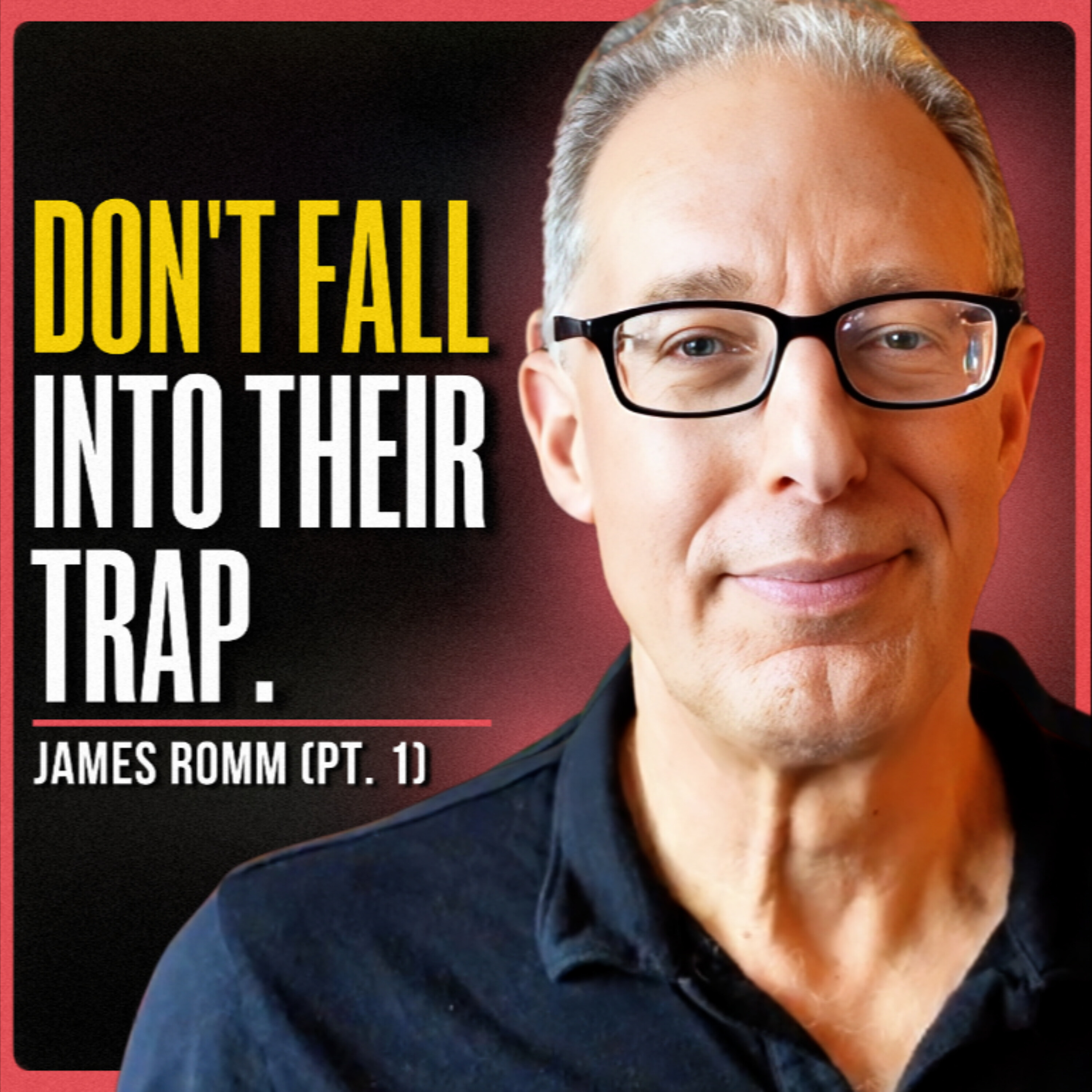
What makes smart, principled people work for the worst leaders? In this conversation, historian and author James Romm and Ryan dig into the timeless trap that’s snared some of history’s greatest minds, from Plato and Seneca to modern politics. They talk about the seduction of access, the slow erosion of integrity, and why walking away from a tyrant’s court is so much harder than it looks.
James Romm is an author, reviewer, and a Professor of Classics at Bard College in Annandale, NY. He specializes in ancient Greek and Roman culture and civilization. His reviews and essays have appeared in the New Yorker, the Wall Street Journal, the London Review of Books, the Daily Beast, and other venues. He has held the Guggenheim Fellowship (1999-2000), the Birkelund Fellowship at the Dorothy and Lewis B. Cullman Center for Writers and Scholars at the New York Public Library (2010-11), and a Biography Fellowship at the Leon Levy Center of the City University of New York (2014-15).
Follow James on Instagram @James.Romm and check out more of his work at his website, www.jamesromm.com
📚 Get signed copies of James' latest book Plato and the Tyrant, and his other books Dying Every Day, How To Die, and How To Give, at The Painted Porch | https://www.thepaintedporch.com/
🎙️ Listen to James Romm’s first episode on The Daily Stoic Podcast: https://dailystoic.com/romm/
📖 Preorder the final book in Ryan Holiday's The Stoic Virtues Series: "Wisdom Takes Work": https://store.dailystoic.com/pages/wisdom-takes-work
🎙️ Follow The Daily Stoic Podcast on Instagram: https://www.instagram.com/dailystoicpodcast
🎥 Watch top moments from The Daily Stoic Podcast on YouTube: https://www.youtube.com/@dailystoicpodcast
✉️ Want Stoic wisdom delivered to your inbox daily? Sign up for the FREE Daily Stoic email at https://dailystoic.com/dailyemail
🏛 Get Stoic inspired books, medallions, and prints to remember these lessons at the Daily Stoic Store: https://store.dailystoic.com/
📱 Follow us: Instagram, Twitter, YouTube, TikTok, and Facebook
See Privacy Policy at https://art19.com/privacy and California Privacy Notice at https://art19.com/privacy#do-not-sell-my-info.
