
 Ask ChatGPT


 The Daily Stoic
15 Jun 2024 · 1h 10m
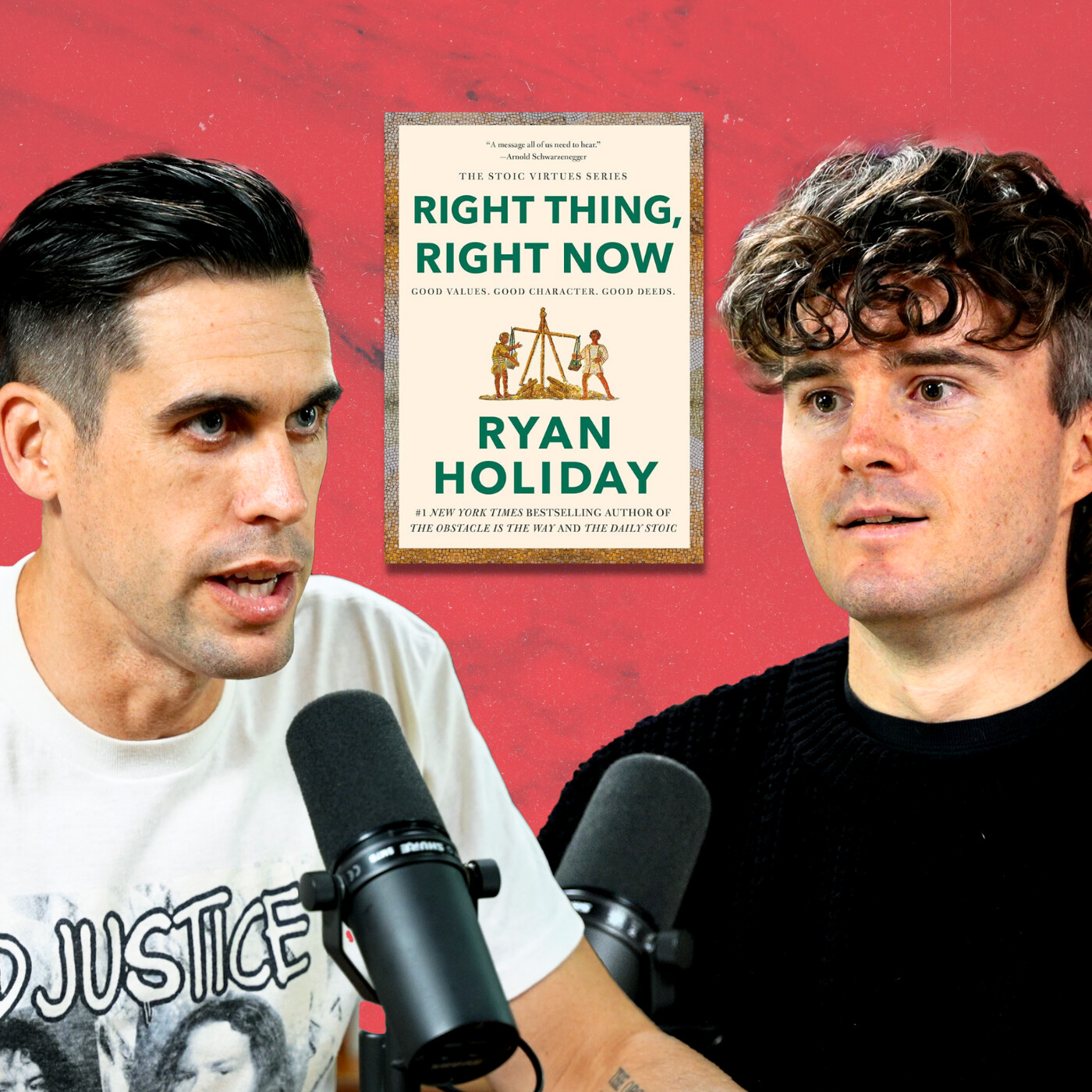
In this episode, Ryan Holiday is joined by his research assistant, Billy Oppenheimer, for the second part of their discussion on the Stoic virtue of justice. The conversation delves into various themes including the downfall of American Apparel, the importance of personal accountability, the cyclical nature of success and failure, and the narrative of justice as presented in Holiday's new book, Right Thing, Right Now.
Written by AI. May contain mistakes.

Get the gist, explore an idea or ask about something said.
 Claude
On The Daily Stoic, what are the key points of this episode?
Searching your listeningAutomatic transcript. May contain errors.
0:00It's time for Cyber Monday, Dell Technologies biggest sale of the year. That's right, you'll find the lowest prices of the year on select Dell PCs like the Dell 16 Plus with Intel Core Ultra processors. And with built-in advanced AI features, it's the PC that helps you do more faster. From smarter multitasking to extended battery life, these PCs get the busy work done so you can focus on what matters most to you. Plus, you can earn Dell rewards and join many other benefits like free shipping, expert support, price match guarantee, and flexible financing options. They also have the biggest deals on accessories that pair perfectly with your Dell PC, improving the way you work, play, and connect.
0:38Whether you just got started holiday shopping or you're finishing up, these PCs and accessories make perfect gifts for everyone on your list. Shop now at dell.com slash deals and don't miss out on the best prices of the year. That's dell.com slash deals.
0:54The world is full of tours. But you don't choose a Toyota truck to follow the beaten path. You choose it to find the places in between. The detours, where each adventure pulls you toward the next. And wrong turns turn out right. So why would you ever take a tour when you could take a detour? Toyota Trucks.
1:27Welcome to the weekend edition of The Daily Stoic. Each weekday, we bring you a meditation inspired by the ancient Stoics, something to help you live up to those four Stoic virtues of courage, justice, temperance, and wisdom. And then here on the weekend, we take a deeper dive into those same topics. We interview Stoic philosophers. we explore at length how these stoic ideas can be applied to our actual lives and the challenging issues of our time. Here on the weekend, when you have a little bit more space, when things have slowed down, be sure to take some time to think, to go for a walk, to sit with your journal, and most importantly, to prepare for what the week ahead may bring.
2:21Hey, it's Ryan. Welcome to another episode of the Daily Stoic Podcast. I was telling you last week about my researcher, assistant, copywriter, Billy Oppenheimer, who interviewed me in part one of the episode. And I don't know if I totally expressed my excitement at how cool a thing that was for me to watch, even though I was in it. That might sound weird, but one of my favorite chapters in Right Thing Right Now is about coaching trees. And I really dug into the San Antonio Spurs, Greg Popovich specifically. So Greg Popovich is one of the greatest coaches in the history of the NBA, no question.
2:59All these championships, this super long playoff streak, an Olympic gold medal, I think an Olympic bronze medal, just a powerhouse in the history of the NBA. And to do it all in one franchise is incredible. But what's so impressive to me about Greg Poffage, and something I've gotten to know, getting to know some folks at the Spurs since I moved to Texas, is that he has the most impressive coaching tree in sports. That is what his coaches have gone on to do. Adam Silver, the commissioner of the NBA, once said that it feels like they're doing a coach's clinic down in San Antonio. In fact, the best coach in the WNBA is one of Popovich's protégés, Becky Hammond.
3:45And a good chunk of the NBA has been through the San Antonio Spurs organization at some point or another. One sports writer said that Greg Popovich doesn't have a coaching tree. He has a coaching forest because those coaches themselves have gone on to have incredible coaching trees, Steve Kerr being a great example of this. And so that was something I wrote about in the book. and a part of justice that I wanted to highlight that it's not just what you do. It's not just the barriers you break or the things you accomplish, but it's what do you do for others? How do you bring others along with you in your success?
4:19And I've been lucky enough to have a couple of different interns and assistants go on to do things. I was talking about Brent Underwood, whose book we ran an excerpt of a couple of months ago. He started as my intern or assistant. Christo, who runs Tim Ferriss' podcast with someone that used to do Billy's job for me. And so it was really cool as I was thinking, it was like, okay, I want to talk about the new book and I want to explain it, but who would I have talk to me about it? Who would I trust with that? I was like, you know what? Billy would be perfect for this. And one of the reasons I also wanted to have him do it is he's got a book coming out in 2025.
4:53And I was like, you got to get some reps interviewing people and let's do it in a safe space. So we sat down, he interviewed me about Right Thing Right Now, which he saw come together. I moved him to Austin. in February of 2020. So great timing with the pandemic. He did a year of remote work before we really sat down and started working more together in person, which was the whole idea. I was like, you know what, why don't you come into the orbit and I'll really show you how this stuff works. And then, you know, we didn't get to do that for a while, but it's been awesome. So he worked on the Courage book as my research assistant.
5:25He worked on the Discipline book as my research assistant. And so many different things in Right Thing right now are related to things I had him chased down, including when I was like, okay, I'm doing a chapter on Greg Popovich's coaching tree. Illustrate that for me. Show me everyone who's in the coaching tree, not just the people I would think of. So this was a great conversation. This is part two. If you want to listen to part one, that came out on Wednesday. Right Thing Right Now came out on Tuesday. And I think you will really like this interview. It was an awesome conversation, flipping the tables.
5:56I did this with Tim Ferriss many years ago. I guess I would consider myself part of Tim Ferriss' coaching tree, because he was so instrumental in my career. And he helped publish The Obstacle is the Way and Ego is the Enemy, which set up Right Thing right now to even happen. We're still honoring those pre-earned bonuses. You can grab those at dailystoic.com slash justice. You can check out Billy's newsletter, which is awesome. He sends it out at 6 p.m. on Sunday every week. Not always. Sometimes I can tell he waited till the last minute and it goes out at 6.05 or it goes out at 2 a.m., but it's a great email.
6:27I love getting it every week and I've recommended it to a lot of people. So I'll link to that in today's show notes. But please grab Right Thing right now. Good character, good values, good deeds at dailystoic.com slash justice. Or grab it on whatever retailer you want and we'll honor those bonuses at the same website. Thanks everyone who did support the book and I hope you like it and I can't wait to hear from you.
6:54Seinfeld and Larry David, they talked about they would just go out in public settings and observe and just try to get ideas for the show. And then when the show got really big, they couldn't go out in public because they would just be mobbed by fans. And then it became way harder to write the show. Yeah, your life ceases to be normal. Yeah. And Robert Greene talks about this in the 50th Law. Like you have to have this direct connection with the audience because that's ultimately who you're servicing. And the more successful you are, the more intermediaries there are between you and that thing.
7:27And then you can even, I mean, I've known artists that have done this where they almost come to like hate and resent the fans. Like I knew this one author who like as they worked more and more on themselves, they like almost looked back. They were almost like ashamed of who they were because they couldn't admit that to themselves. They came to like despise the people who were fans of them for that reason. And so they had this like, not just an arm's distance between them and the stuff, but this like repulsion because it was them unevolved. Do you know what I mean? Like when the person would come up and be like, I love your stuff, man.
8:08You changed my life. Right. They felt shame because they didn't like the person that that person liked. And they couldn't integrate that person into their life then. They couldn't go like, I was this person, I'm now in this person, and I needed to be that person to become this person. It was a like, they basically just sort of blew up their whole career. And I think there is some self-loathing and a desire for oblivion that motivates some of these figures sometimes. Because it's impossible to express. It's really complicated and possible to unpack. but there is just this like they just this just doesn't work for them anymore yeah huh do you know that song uh little room by the white stripes no it's like 37 seconds long or something like that huh it's like the trajectory of starting out in your little room making stuff it's successful so with the success you get a bigger room and then he's like in that bigger room like you forget how you got started yeah and and then you go back to the little room but this i've not heard this of like wanting to blow up because you're, you're no longer identifying with that person that started out.
9:18Yeah. I think often you'll see artists try to reinvent themselves because they don't want to be for the people that they're currently for. Right. Like oftentimes to be really successful at a thing, you yourself were not balanced or healthy or evolved or whatever. Right. And so one of the rewards of success is hopefully access to things or time or space to work on your stuff. Right. I mean, imagine an artist who is now sober getting up and performing the songs they wrote in the depths of addiction or some partying phase. Like you would have a weird relationship with that work. I mean, I have a weird relationship with my first book, which is like a version of myself that I don't see myself as anymore.
10:10But I've tried not to relate to it from a position of regret, but just like an empathy and an understanding, but also I'm glad I'm not that. But I do feel like when people come up to me and they're like, I love that book, or I see what that book did for people that I don't like or I think are not positive contributors to humanity. I'm like, well, what, you know, what is that? Or like the disconnect between what you thought that book was going to do and what it did for people. Yeah, sure. I was thinking earlier when we were talking about the Prima and Kerouac thing and like how one of the rewards of mastery should be like you get more efficient and you're better at what you do and it takes less time.
10:54But often people like Kerouac get like more and more consumed and have less and less time for things other than that. Yeah, the craft or whatever? Or like in Musk's case, it seems like if you read the Isaacson book, it seems like all he does is work on whatever it is. So, sorry, what do you mean? It's just interesting, like he should be able to afford and he has the ability to be more efficient in like the work he does, but it's all he does. Yeah, I mean, you'd think that you'd be able to create a system that was very efficient and effective that allows you to do all these things and not run around like your hair is on fire.
11:35But then his brother said something like he's addicted to the drama. That's like the fundamental theme of his life is like drama and chaos. And I've met people like that. There's just this like pattern that they're enacting. Like Doug Charney in American Apparel was like that. So it'd be like things would be going well. And then there was this like cycle where he'd be like, I'm changing fucking everything. You know, or he's like, we're all going to Montreal right now and we're going to reimagine things from the ground up. It'd be like, oh, someone did the math and built up this transition plan where we're going to move a lot of the shipping and distribution from this old eight story building that was very ineffective to this like big flat, like Amazon style warehouse, like 45 minutes from here.
12:23Okay, here's the plan. We're going to approve it. This is the timeline. And then Dove drives out there one day and maybe he got news about something or he was worried. And he's like, I want it all here by the end of the month. And they're like, it's not physical. He's like, fucking do it, man. And it blew up his life. It blew up the company. I mean, he literally, towards the end, he was living in his office. He didn't, like Musk did at Twitter, he put showers in and he was sleeping on this cot and not that he was sleeping. And it was this sort of manic spiral of craziness that ultimately sunk him and the company.
13:01That like, it's not only he shouldn't have done it, I don't even know if he needed to know that that facility existed. Like, you know, like, I'm not sure Ralph Lauren wakes up and he's like, what building are we shipping clothes out of these days? Like, he's like, no, what's cool? You know, he's like, he's thinking about the parts that only he could think about. I remember one time we had this like fucking three hour meeting in Dove's office where it was like, I'd walked in and I was like, hey, like, what do you think about this? And then he's like talking to me. He's like, get Marsha in here.
13:30And then he's like, get this person in here. And one by one, he called like literally every executive in the company to his office. Yeah. Who he then talked at for like three hours. Nothing got accomplished. It was the theatrics and the craziness. It was whatever. And then as we were leaving, I remember Marsha. I was like, Marsha, what the fuck was that? You know? And she was like, you have to understand Dove wants an audience a little bit more than he wants to make money. And so understanding that a lot of this stuff, it's like, it's funny, in Meditations, Mark Sturios talks about nature's inadvertence, like how sometimes things are the accidental byproduct of other things.
14:06Well, this is also true of like deeply dysfunctional things. Like sometimes the deeply dysfunctional person is also as a byproduct creating art or business or insights or whatever. Right. And it was like Dove really wanted like an audience and a scene and he wanted power and he wanted women. He wanted all these things. And it was like the desire for that accidentally created an enormous fashion company. Right. You know? And then the desire for those things ultimately destroyed said company. If what you actually need is like drama, excitement, I mean, most of the time that kills you or, you know, leads nowhere.
14:48But one time out of a billion, it makes you a billionaire. Right. And so it's like, what is the force that's compelling or motivating a person? This is all funny because this is in the next book. Well, you also have the North Star chapter in this book. Yeah, that's true. Oh, for Kev Charney? Yeah. And it sounds like what he said was the North Star was actually like the line about the audience matters more than the money to him. That was always a North Star, but he kind of like distracted himself or deluded himself with thinking that like these other things were important. Well, yeah, early on, it's like he wanted to make a positive difference and he really loved fashion and he loved people and he loved doing things.
15:32and over time though in the way that an addiction kind of swallows a person the desire for attention the desire for chaos and energy and then ultimately like an insatiable need for validation and i guess dopamine and whatever sort of swallows all of that and yeah the north star goes from hey i want to revolutionize fashion and i care about all these workers to like I'm this slave to my appetites and urges. And it was a powerful force early on, and then ultimately superseded by a more powerful force. And it destroyed that company. Tens of thousands of people lost their jobs. Investors lost millions and millions of dollars.
16:19She lost hundreds of millions of dollars. And I think Mossad, the positive good that that company could have continued to do as the largest carpet manufacturer in the United States that was paying its workers incomprehensibly generous salaries, you know, ceases to exist. And it has this tragic effect of like, if you were to say, hey, I want to make a made in USA fashion company, people would be like, it doesn't work. Look at American Apparel. Look where that ended up. So it's also proving, it's not just it didn't work for you it's like a nail in the coffin of even the idea yeah well it's similar to the regulist thing of like the downstream consequences sure and like him setting up the future to like be people that keep their word i mean think about elizabeth holmes right so it's not just that she defrauds the government and defrauds her investors and screws over the employees who decided to work for her instead of taking stock options at some other startup But like, what if, I mean, the idea is not insane, right?
17:23Like, what if you could, from a single drop of blood on someone's finger, learn all this information? How much more information would we get? How much better and faster would we find things out? Ostensibly, at some point, someone will actually be able to make that idea work. But think of the reservations and the headwinds that they're going to face to make that work. So the cost isn't just to her and to that singular business. But yeah, it's like Regulus is saying, like, if she had come out and said, I can't make it work, something's wrong, she would have gotten fired and they would have replaced her or whatever.
17:57But instead, she made everyone suffer. Like, now that's, like, even, I imagine, I don't know this, but I bet if you just looked at the VC inflows to that space, like, biotech, period, I'm sure suffers as a result of it. just entrepreneurs in general female entrepreneurs in general just you think of the consequences the knockdown effects of other things that were harder because of the fucked up path that she took yeah in hindsight like we were saying how antonitis is like helping the step father up the stairs it was an indicator of like larger character traits how like early on when you look back was like, oh, Dove is capable of, of.
18:41Oh, with Dove? Or just like a small thing that was like, those two things are connected. I mean, I'm certainly people knew it before I even started there. Right. And I should have known better. And I think what I have come to understand is that like, okay. So I started working in American Barrel because Robert Crean was on the board and Robert was like, you got to hire this kid. He can help you with a bunch of stuff. And Dove invites me to his house. And then he's like, come see me at the factory. and I mean, it's the nicest house I've ever been to and it was the biggest factory I'd ever been to, right?
19:13I knew why I wanted to work there, right? Like it's clear to me why it was attractive and exciting and in my self-interest to do so. But why does a then 40 something year old man who has all this stuff, who has access to the best talent in the world, why is he hiring a 20 year old, right? And why is he entrusting him with all of these things? in retrospect it's because i would not recognize things that his peers would obviously see you know what i mean it's not that like we now use this word grooming for everything which i think is fucked up but like i mean he there's a reason he chose young ambitious naive people to work there instead of poaching them from other companies yeah right it's because Because, you know, in my term, he wanted people who were extremely hardcore, but not informed enough to see the insanity that was obvious to anyone else.
20:14And so that's actually the thing about dictators and cults and whatever is by definition, they don't attract the best people. They attract first the people who have some sort of affection or attraction to people like that. And I can kind of see in my own family, like different people have worked in places like for similar figures. But like, so there's something about just how I grew up that was like, when I saw that, I wasn't like, get me away from that guy. I was like, I want to work there. But then also they self-select for the people who are either willing to turn away or to not see is obvious to other people.
20:56I think James Comey talked about this like his first day in the Trump administration. He walks in with a bunch of people and Trump is like, that was the biggest inauguration crowd in history, wasn't it? Right. Like, and he's like, in that moment, Trump is deliberately or not, like whether it's just a habit he's cultivated to feed his own ego or he's much more diabolical in the way like maybe a Putin would do. he's going like, will you willfully deny reality because it's what I want from you? You know, like, will you tell me what I want to hear more than what your own two eyes in front of you are obviously telling you?
21:42And there's some people that will, and some people that won't. And the people that won't, he knows are going to be a problem for him at some point. That's your Alexander Vindmans, that's your James Mattises, that's your McMasters, that's your Rex Tillerson, that's all the people who ultimately resign or quit or turn against him. And the ones who are still with him are still with him. And the same is true for Dove. There are still people, despite him blowing up American Apparel and doing all the things that he did, that still work for him and think that he's the victim in what happened. And he probably thought I was one of those people and he thought a lot of other people were those people and it turns out they weren't.
22:18But yeah, that's the selection. There's a Voltaire quote, he says, he who can make you believe absurdities can make you commit atrocities. And it's not always as extreme as that. But the point is, can I get you to debase yourself or to deny what your conscience or your eyes are telling you to continue to want to work for me? If so, you're who I want. And I think there was a part of my life. I think the ambition was a part of it. I think not knowing better was a part of it. I think a bunch of things were a part of it where I was like, he told me things that in retrospect, I'm like, that should have been it.
23:01You know, that was insane. What are you talking about? But I was like, sure thing, boss, you know, or like I had the unique experience also of working at that time for other people and then also going on and working for other people like that. And a lot of times what happens is you don't have the pattern recognition to go, oh, this is what they all say. So you work for someone who gets canceled or me too'd or something and they tell you how actually they're the victim and actually here's how it went. and people that you go, if you trust that person, you like that person, you're on their side, it makes sense to you.
23:41Well, when you talk to the 30th person that's told you the exact same thing, you go, they can't. It's like a defense attorney. At some point you realize like, my clients can't all be innocent. They're all telling me the same shit. I think later I came to go, oh, okay, this is how these people operate. This is what they do. And I think that gave me some insights into Musk or to Trump. It also gave me insights into your Nero's and, you know, your whomever's of history. Like, this is a type of person that recurs over and over again. And they, and these are also the people that I can, I remember reading James Rahm's Dying Every Day during the takeover slash restructuring of American Apparel and going, oh, oh, this is much more familiar than it should be to me.
24:33Right. Like I could, I understood it in a way that I think your average reader wouldn't because like, oh, I'd been in Versailles or Nero's court. Like I'd seen what that, how those people operate and what they do. Yeah. It's interesting to contrast it with like, you just are looking into that Marshall Eisenhower story and how their first meeting came about because Eisenhower was like a young kid that told his boss that he should cut something out of his memoir. And he didn't cut it, but Marshall kind of liked that. He was like, had the balls to suggest it. Yes. Marshall, who I talk about in the Justice book a little bit, has the greatest coaching tree in basically the history of the world.
25:11He picks presidents and four-star generals and people who win World War II, along with a bunch of politicians. But yeah, he seemed to understand And that his job was to find people who disagreed with him, who had a lot of potential, but whom he could delegate stuff to. That was Dove's thing, is that fundamentally he didn't want competent people around him because competent people threatened his control. Right. I think Marshall saw something in Eisenhower, made him think he could shape this person, but also that he was fully formed enough that he wasn't, he wasn't, he was fully formed enough that he wouldn't be shaped into a sycophant.
25:55Someone said that what MacArthur did, the fatal flaw of MacArthur, which ultimately sowed his demise, was that the thing about MacArthur's staff is that no one could afford to be first rate. That fundamentally, there was a ceiling on how good you could be around MacArthur before he came to perceive you as a threat. Either get rid of you or become alienated from you and... Do what you weren't as good at. Yes. And that's the real problem with Vigo is that it can't see it as a team sport where you want to be surrounded by really great people. And I think Marshall saw his role as being a cultivator of talent as opposed to building an organization that worked for him personally.
26:57Right. And ultimately, MacArthur is undone by the incompetence of some of his subordinates who don't serve him well, right? They don't tell the truth to him. And they also make a bunch of mistakes. And so, yeah, how do you cult? How do you your coaching tree isn't just this sort of generous thing. It's that you need people around you are good because they they challenge you and force you to step up.
27:30Well, it's almost here. Christmas is just a couple of days away and maybe you're scrambling. You're like, what should I get my dad? What should I get my mom? I got to get something to my sister. People love showing off pictures of their kids, and that's where today's sponsor comes in. I've gotten one as a gift. I've given it as a gift. The Aura Digital Picture Frame. It's easy to use. It never gets old. You're constantly updating it with new pictures. Aura Digital Picture Frames are so much better than any digital picture frame I've ever seen. It's got a high resolution. It's got a color calibrated display.
28:02You can add video. you have two pictures come up at the same time picture and a video it'll pair photos together for you like two pictures of the same person or from the same day it's really easy to set up you just download the app connect the frame and then you can pick photos and videos right from your phone from anywhere in the world and there's a reason oprah added it to her favorite things three different times for a limited time save on the perfect gift by visiting aura frames.com to get$35 off Aura's best-selling Carver Matt Frames, named number one by Wirecutter by using promo code STOIC at checkout.
28:35That's A-U-R-A frames dot com promo code STOIC. This deal is exclusive to listeners and frames sell out fast, so order yours now to get it in time for the holidays. Support the show by mentioning us at checkout. Terms and conditions apply. You hear that? That's not just a Toyota truck. That's the sound of no crowds. No alerts. No distractions. And no telling what you'll find next. You know, like a detour. So why would you ever take a tour when you could take a detour? Toyota trucks.
29:24yeah it's another kind of similarity to like the marcus marcus's story of bringing in talent and like did that piece about when like the plague broke out yeah and like he he brings in um i'm forgetting the guy's name he has this great line in the beginning of meditations which i thought about yeah a lot during the plague and then it struck me as as a distinction obviously between the Trumps of the world or good leaders of the world, but also at American Apparel. It says something about how he yielded the... Oh, his willingness to yield the floor to experts in oratory, law, psychology, whatever, and to support them energetically so that each of them could fulfill his potential.
30:02And it's funny, he's saying fulfill his potential. I think Marcus means they could fulfill their potential, but I think it's so they make you better. Right. Like Eisenhower and Omar Bradley and all these generals that and young officers that Marshall discovers and gives jobs to and delegates to, they allow him to fulfill his potential literally as the chief of staff, but also just as like a leader and a human being. Like you benefit from the success of the people underneath you, especially in that case where like you're all fighting and working for the same thing. Yeah. Not only was that a lesson, but he says it's the most important thing he learned.
30:43Yes. And you can imagine like another type, like a Dove Charney type, seeing that and being like, the lesson that he internalizes is like weakness or like, do you know what I'm saying? No, I always thought it was remarkable, like how many people worked there and then how few went on to work at other companies or do other things. Right. There was like a handful of us that that that wasn't like the peak experience of our life, that that was a stepping stone, you know? And you see this, like Trump's ostensibly this billionaire. He literally had a show where he picks like a reality show where he picks talented business people.
31:17Like Shark Tank, there's literally like hundreds of huge companies that have come out of Shark Tank. Yeah. What have the people from The Apprentice gone on to do? Yeah, that's a good point. What, like, tell me someone who got their start at the Trump companies. You know what I mean? Like, tell me someone, like Warren Buffett has this whole generation of investors. Like all the big hedge funds have people who like, they work for here, then they went on to do this, you know, like the PayPal mafia is a thing, right? Peter Thiel has an incredible coaching tree of entrepreneurs that have come off of him.
31:49And then also politicians and thinkers and whatever, you don't have to like all of them, but like, it's clear he is a cultivator of talent. And it's usually a sign if a person does not have that underneath them. It means that either they were lucky or they're inherently selfish and fragile because you can't afford to be first rate around that person. Right. Or like the things they do are not transferable to anything else. Yeah. I talk about Popovich in the book. What I think is so impressive about Popovich, His coaching tree, like Belichick has a pretty impressive coaching tree, but they're all kind of like these mini Belichicks.
32:30And it hasn't always worked at other teams. A lot of them come back and work for Bill Belichick. Really created an incredible system, not disputing it at all. But I think what's so incredible about Craig Popovich is that Becky Hammond, Mike Brown, Steve Kerr, these are very different coaches with different styles and different approaches and have built very different teams. Like it's one thing to make replicas of yourself. Some people are so threatened that the idea of a protege is unfathomable to them. And then other people, they think a protege is a replica of yourself. Right. I think the highest form of it is you're able to identify talent, period, and then help that talent become what it is meant to be, not what you would do if you had it.
33:23right yeah yeah it made me think of uh bill walsh and how he cultivated joe montana steve young a couple others i forget it's really only been brady with that i guess but he's not like a montana or steve young sure he's been in the super bowl that seems to be an indication that like it was less belichick than it was brady well i think yeah yeah to look at popovich and to have it over multiple eras. And I think football is different because sometimes a team is built around a quarterback and he got lucky in that he had the quarterback this whole time. But if you look at the, if you watch the Tom Brady roast, you look at some of those players.
34:05He had a generation of football talent in all these different ways. I think the less your coaching tree looks like you, the more impressive it is, and then probably the more generous it is. Yeah. As I guess what I'm saying. Yeah. It was funny when I was talking to RC once about this, because I talked to him, RC Buford is the CEO of this person who was the GM. I was like talking about it as a coaching tree. And he was like, but what about? And he starts like talking to me about like all their like social media employees and ticket salespeople. Right. He was saying like their front office staff gets poached too.
34:45Yeah. He was like, you don't know the half of it. Yeah. He was like, it's a real problem. But I think he meant it in a positive. He was saying like, he was saying that as the CEO and the GM, he saw the coaching tree as being more than just coaches and players. You know, like, what did the, like, we hired this kid straight out of college to be a marketing intern. And then today they're the CEO of this company. Like he was saying, like he was saying organizationally, they see themselves as a cultivator and generator of talent. People who try to give chances and opportunities to people that maybe other people don't see or open doors for them.
35:27And that like it expanded my mind too. Like for me, if I only saw myself as like, okay, I've helped these other writers succeed as opposed to, you know what I mean? Like, Hey, this person I gave, I, this person who worked the front desk at the bookstore 20 years from now, I would like, like, Hey, I gave you your first job. Or like Brayden, like this kid that was like, you know, it's also an interesting like trait of, cause it's, it's easy to imagine wanting to do everything you can to not let those people get away. Sure. The talented people. And it's, it's like a headache and it takes a lot of time to replace those people and what it is about somebody that is.
36:05I actually think it's, I think the other thing we miss is like, okay, obviously, would it be better if the world was more fair, if people got more chances, if people didn't discriminate, if people didn't mistreat people, whatever, right? And yes, as a society, we have to come together to solve those problems, of course, right? This is what politics is about and the legal system is about. But like, there's also just like, what are you doing as a person in the sphere that you contain? So when Robert F. Kennedy takes over the Justice Department, he makes civil rights a priority. So he's going and he's saying like, you know, University of Mississippi, you can't discriminate against black students that want to come there.
36:45And you can't segregate. He's like, and the refrain amongst a lot of southern governors and politicians and university presidents at that time was, but how many black people work in the Justice Department? You're saying that our system is unfair and unjust, but you, where you actually have control over it, are actually operating under the same assumptions. We think the same thing. You don't mean this. And so he had to go, oh, yeah, here I have real hiring and firing power. How am I going to do that first? Yeah. Right? Now, they were arguing this in bad faith because they didn't want the Justice Department to be integrated and diverse either.
37:26but he understood like, oh, okay, yeah, I'm going to have to fight tooth and nail to desegregate the South is going to be this incredibly difficult legal battle. But who am I hiring in my office right now? Yeah. Let's start there. Let's start there. And also let's not let ourselves off the hook because our heart might be in the right place, but look at the situation around me. Do I actually believe this and hold this to be true? Or is this a standard I'm holding? other people to. And I think that's this fundamental thing. Like justice is not this thing. Justice discipline is not this thing that you enforce on other people.
38:03It ultimately has to start with you. Then stoicism going, well, what part of this is in my control? What can I do right now? Yeah. This is a little bit of a leap maybe, but it came to mind. The Taylor Swift story of like the music industry and her masters and initially like speaking out about it, but But then Kelly Clarkson is like, hey, you could do this. Yeah. You have this control. And she starts like. Yeah, I'll just rerecord my masters. Although the irony is that now, from what I understand, like labels are closing that loophole. Like she did it so brilliantly and so like made it clear how fucked up the system was that now they're like, we'll never let someone do that to us again.
38:48But yeah, right. Like you can rage against the injustice of a situation and the unfairness of it generally. But at some point you got to decide, well, what, where do I have some power here? Yeah. And what can I do about it? Yeah. Have you ever read anything by Eric Hoffer? Yeah. He came up when you had me look into some Eisenhower stuff. Eisenhower like mentioned his book, The True Believer or something. He's also in the wisdom book because General Mattis hitchhikes as a kid to go to an Eric Hoffer book signing. And wow, I remember that story. And he asked Hoffer for some advice and Hoffer says, uh, write down everything interesting that you find.
39:30Yeah. And that's how he starts this habit of notebooks. Uh, Hoffer actually did it with note cards. They, they're at Stanford. There's like, uh, hundreds of file cabinets full of note cards. I told Madison, I was like, I don't know if you know this, but like it came full circle cause he's at the Hoover Institute. So I was like, you got to go check him out. Did he go? I don't know if he went, but like the idea of like Hoffer as this sort of longshoreman philosopher, cultivator of wisdom is very fascinating. Yeah. Super fascinating guy. There's a book, it's like the passionate state of mind and other aphorisms or something like that.
40:05And he has this line in there about, it just may be that a perfect society is a stagnant society. And like, if you think about who like revolutionaries were, acting on what they perceive to be an injustice against them. But then if you think of why an artist makes what they make or why anyone does what they do is to solve some sort of problem or injustice that is being imposed against them. Well, that is the fundamental misunderstanding of Stoicism, that because Stoicism or the Stoics resign themselves to things that are outside of their control, they're somehow apathetic politically or disengaged from the world.
40:49But in fact, not just in ancient history, you have this thing called the Stoic opposition who defies Nero and a bunch of the other terrible emperors and in fact gives their lives like in protest or is forcibly executed for their resistance to this sort of tyranny. For your Seneca-like collaborators, we also have the contrast of Thrasia, who's this freedom fighter, resistance figure. But the philosophy that inspires the American founders more than anything is stoicism. They're inspired by Cato, most of all, this figure who says, I do not accept that this is how the direction that things are going, this is how it should be.
41:31And they invented a new nation. I mean, it's called the revolution. They invent a new system of government. They change the world. Did they accept a bunch of things and injustices from their time that they shouldn't have accepted? Of course. But they also, the best of them challenged that in their own way, too. I mean, Washington is slowly comes to understand slavery differently and is one of the few founders who frees all his slaves upon his death. But the idea of them being apathetic politically is belied by all the major moments of the time that they're involved in. There's this translator of Epictetus, Thomas Wentworth Higginson, who I've been reading a lot about, who is not just involved like he's one of the supporters of John Brown.
42:13He is this intense activist against the fugitive slave law and is radicalized by watching sort of northern slave catchers come into Boston and take people back into slavery. And so he leads one of the first black troops in the black regiments in the American Civil War. So like the Stoics have always been incredibly engaged politically and in pursuit of justice. Were they also realists and pragmatists? Yeah, of course. But to them, the contrast between the Stoics and the Epicureans was the Epicureans sort of retreat into inward personal development. And the Stoics, for all their interest in inward personal development, ultimately thought that those were skills, mastery of one's emotions, sort of all the things that go into being Stoic is what you needed if you were in the arena, literally and figuratively.
43:03So I just hate this idea that Stoicism is this acceptance. Like, there's this quote where it's like, the rational man adapts himself to the world. The irrational man tries to adapt the world to him. So therefore, all progress depends on the irrational man. And so there is this rational component to stoicism, but there's also this fundamentally irrational part. Like, Cato is crazy that he thinks he can withstand the forces of change and tyranny of his time. But he says, fuck it, I'm going to try. You know, like the founding of America is insane. Totally, yeah. And so stoicism is not tamping down that insanity.
43:47It's helping them keep their head about them in the midst of that insanity. Yeah. So there is like the idea that you're going to eradicate slavery as an institution, which has existed throughout human history, is insane. And yet, instead of accepting that it's insane, Higginson is using stoicism to manage himself inside the insanity which he is attempting to eradicate or resolve. If you're reading stoicism and you're like, the world is terrible, it is what it is, and I have this philosophy to help me not have to be sad about that, you're missing what it's about. Yeah. I often think about the founders and how just insane what they pulled off really was when you kind of think about it.
44:41I think I talk about this in Courage is Calling, but when you look at the average age, it's even more insane. Yeah. Just the idea that they would do that, and I'm not sure it had really ever been done before, the idea of a colony breaking off and becoming its own thing. And just taking on the great power of the time. Yeah. Like a bunch of kids just like, hey, let's - Yeah, they were like, the oldest one was like 30. Like, it was insane. It was insane. I think it's encouraged, the story of Benjamin Rush or something like that. It's like an anniversary of the day they decided they were going to do it.
45:14And he's like, I just can't escape the thought of being in that room and knowing we're signing our death warrants. Yeah, because in retrospect, it works out. So you go, they obviously knew this was great. It was that we see it as this monument of, you know, legal thinking, right? Like they came up with this idea and it's so smart as opposed to, yeah, you have these guys walking into a room, betting their life, literally by signing their thing. He says, yeah, we were, each of us was signing our own death warrant and our hands trembled as we did it. Yeah. The sheer courage of that and irrationality of that.
45:55And yet somehow it squares with their understanding of classical virtue, I think is very lovely and important. And just like how fed up you have to be with the injustice or like what you perceive to be. Yeah. I tell the story in this book about Thomas Clarkson, who basically invents the abolition movement from scratch in Britain at roughly the same time. And that these 12 people just get together from these different backgrounds with basically no political experience. And again, that they're able to say that this thing, which none of them have experienced personally, and negatively impacts their life in no way.
46:35And in fact, the wealth and power of the country they live in is built on the back of this institution of slavery, thousands of miles away. For him to go, you know, this shouldn't be happening. And we 12 people can make it stop happening. is an incredible, and then to succeed at that thing. Within a few decades, slavery is abolished in the empire and the tide is turning against it globally from one guy. And so we don't like the great man of history theory because everything is structural, everything is systemic. There's all these other complicated facts. I think we do ourselves a real disservice to understand history that way.
47:25Because yes, it is true that those things exist, but the world is what it is in so many moments because certain individuals decided to go left instead of right, you know, or decided to get involved instead of not getting involved or to ask a question or to make a move instead of the alternative. And there's this, Mark Struill's passage where he goes, you know, if it's humanly possible, know that you can do it also. To see those figures as not somehow fully formed men and women of destiny who have something that you don't have, but to see them as just regular people. I mean, Thomas Clarkson is a college student at Oxford.
48:05I mean, I guess that's hard. Not everyone gets into Oxford, but he's a college student at Oxford who's asked to write an essay about this question of whether slavery is morally right or wrong. And from that essay changes the course of human history and saves millions and millions and millions of people from a life of bondage and death and destruction and liberates, you know, all the other people from complicity in that horrendous system. You know, what did you write your thesis about? So he has this moment, he's walking his horse, he's riding his horse home from Oxford and starts thinking about like, well, could I do something about it?
48:44He's struck by this thought that's so powerful he has to get off the horse. He goes, I think I could like, and not only could I, like I should. To me, that is as much stoicism as mastering your emotions.
49:03Human, your body has a performance superhighway. 60 ,000 miles of blood vessels that deliver oxygen and nutrients to every cell. This, of course, is your cardiovascular system. It's the foundational system that powers everything we do. Both elite athletes and longevity experts invest directly in the cardiovascular system because supporting healthy blood flow is critical for energy, recovery, mental clarity, and overall performance. That's where human comes in. That's human with two Ns. They started out of research at the University of Texas, near where I live, and have 15 years of experience making award-winning supplements for nitric oxide production and healthy blood flow, now used by over 160 pro and college sports teams.
49:51Human Cardiovascular Health Daily is a plant-based and made from clinically studied ingredients like grapeseed and seed kelp extract. It supports nitric oxide production for healthy blood flow and energy while also supporting blood pressure and helping support the delicate interlining of your blood vessels. Just two capsules each morning will power energy and recovery while also playing the long game by supporting long-term vascular health and healthy aging. Human has an exclusive offer for our listeners. You can visit human.com slash stoic for an extra 15 % off your first purchase. That's enter code S-T-O-I-C, stoic at checkout.
50:26That's human with two N's, dot com slash stoic for an extra 15 % off with code stoic at checkout.
50:37What is the story? It's a similar like a person hears something. Should they do something about it? they don't do it and it turns out that it was like a person that fell and like that's the story of Kamu's uh the fall yeah he's walking through the streets of Amsterdam and he hears a scream and a splash and there's some part of him that thinks somebody just jumped or fell in the water and then there's the other part of him that goes yeah couldn't yeah you know couldn't be bothered yeah and his life is changed by this refusal of the call yeah and that call is I think sometimes explicit, but sometimes it's not explicit, you know?
51:16And, or sometimes it's life and death and sometimes it's not. But the decision to get involved and to not turn away is, I think, where justice and courage, the two of the cardinal virtues, intersect with each other. And then the discipline is the not quitting, right? You think about how many years Clarkson fights, how many miles he travels by horse and by wagon and by sea, and how many court documents he reads, and how many arguments he gets into, and how much money he raises, and how many nights he stayed up till two or three in the morning pouring over these documents and preparing these speeches and writing these bills.
51:54And then, yeah, the sheer strength of mind, but also the wisdom, right? All the virtues are inseparable in that way or that, but ultimately, you know, they were equal, equally dedicated and equally adamant proponents of slavery. So justice is to me, the key swing vote in the other virtues. It renders it either admirable or awful. Yeah. It's all like Clarkson wasn't the first person to become aware of how wrong that system was. So it's kind of an example or an illustration of the, like, you can commit an injustice by doing nothing. Yeah, which Mark Serious says, yeah, sure. And like how many people committed that injustice.
52:40I mean, in the beginning of meditation, the Mark Serious is proud of himself. He says that I never laid a hand on any names to female slaves. So at best, he's talking about physical abuse. At worst, he's talking about sexual abuse. And he says this in such a way that we know he obviously knew that other people did it, and he must have been repulsed by it because he saw it as something that he should not do. And yet, with all this power, doesn't do much about the institution as a whole. Both Antoninus and Marx-Ruiz apparently passed some laws that prevent some abuse against slaves or allow them to eventually get their freedom.
53:17I'm not sure of the specifics. He didn't do nothing about it, but he didn't free all the slaves. You know, he didn't speak out forcefully against the institution, which is a bit sad given that his philosophical hero is Epictetus, a slave who is tortured and abused in the system of slavery. So he's not exempt from his own high standards there. You know, he says you can commit an injustice by doing nothing. Also, he commits an injustice by doing nothing about it, just as literally every century subsequently doesn't really do anything about it. but like we all see things and we know they're terrible or we know that they're sad or we know we could see things like you could watch videos about factory farming and know more about it but you know then probably change where i eat so you don't want to i remember dove would say that about american pair he's like he's like you can't make and sell a bikini for five dollars without somebody getting fucked you know he's like it is not fucking possible he's like i know what it takes to do these things.
54:19And that's what Clarkson helps England see in the campaign to abolish slavery. He's like, there's human flesh in the sugar that you're eating. People were chewed up, used up, and spit out, and in fact died, so you could make tea taste less bad. And when you see how the other half lives, and Jacob Rees said this, when you see how the other half lives, you're then faced with this question, like, and then what? Like, and what are you going to do about it? And that's why we don't want to know. Because if we knew, then we would have to do something about it. Or live with the knowledge of not doing anything.
55:01Yeah. And then become the person who says, yeah, but I deserve a$5 bikini or I deserve, I don't want to pay$4 for a hamburger. It should be$1. And I don't care what sort of abuses are necessitated by my desire to get it at this price. Yeah. Yeah. I don't know. It makes it feel like when you think about those things and just the vastness of the issues and where do you begin? Where does one begin? Yeah. Mother Teresa said something like, when I think of the mass, I do nothing. like when I think of the one, I get involved. Do you know the story of the starfish? No. So this is famous story. Maybe it's real, maybe it's not, but this kid's at the beach, walks to the beach one morning and it's covered in starfish that have washed up all over the shore.
55:49And he's horrified. You know, the storm has washed all these living creatures up and they're dying on the beach. And so he's starts throwing them back in the ocean. And this adult comes much more informed, you know, experienced, jaded adult. And he goes, you're never going to throw them back in. What does it matter? You know? And the kid says it matters to this starfish as he throws it back in the ocean. And so the idea that, yeah, if you think of all the problems that face humanity, it's hopeless, it's pointless. But if you help one person, it matters to that person. there was an election in this little town two cycles ago that was decided by two fucking votes.
56:31Right. You know, two fucking votes. Yeah. Two people didn't show up and vote. And so this person won versus this person. And maybe because that person doesn't show up, this person gets elected and a new housing development that makes housing more affordable doesn't get built, you know, or whatever, right? Like this law that does this doesn't happen or does happen. Like these things make a huge shift. So if you think about the preposterousness of your vote mattering, you're not going to do it. If you think about, is it in my control to do it? Yes or no? Then you do it. And these things matter. There's something about looking at the enormity of the problems that's actually very self-serving.
57:18because then you go, well, there's nothing I can do about it. And so I should just live my life as if it's not a problem, or I should just yell about the problem as opposed to dealing with it at some smaller level where I would have impact. So like they say all politics is local, but the vast majority of people's focus is on national and international politics. Meanwhile, what are you doing about where you live? Why are you walking past a piece of litter? What are the decisions you're making about your business? I think that's been a weird experience. As a writer, you're only really dealing with ideas.
58:00But then with Daily Stoic, I've had this unique experience where it's like we manufacture physical things. And so, I mean, nothing like the scale that I experienced when I was at American Pearl, but I had to decide. We have this coin about the four virtues. Like, do I want to make this coin, which talks about courage and wisdom and justice and doing the right thing? Do I want to make that in China for much cheaper and then have to ship it by a container ship or airplane, you know, thousands of miles? Or do I want to pay many times more to manufacture it at a facility in Minneapolis that's been in business for 150 years and pays its employees a fair wage.
58:42It's like a family-owned business. One is better for me, you know, to go back to that Regulus thing, one is better for me and not better for the customer. Right. We made the Daily Stoic book at this. There was this company, we found them, they were in Texas, but they manufacture in Belarus where they've been for like decades. Except for Belarus is basically like a Russian satellite that, I mean, that's where Putin currently stores nuclear weapons. They've sort of rubber stamped the invasion of Ukraine. And I remember I was talking to Congressman Tim Ryan, who was on the podcast, who obviously knows, had a bit more access to the intelligence than I did.
59:16And I was like, hey, look, Belarus isn't technically on the list of sanctioned companies. I could continue to do business. And I'm not nearly at the size where someone would come after me for doing it. But I was like, what do you think? And he was like, Belarus is Russia. He's like, your call. And I was like, OK, we'll find someone else. And we found this company in the UK that has also been doing it a long time, but it's not like 10 % more. It's like 250 % more. Yeah. But I can't sell it for 250 % more. Like that's just out of my pocket and it wasn't fun. Yeah. But the reason that you study people from history is you want to study people who had to make vexing, incredibly difficult decisions, like regulous deciding, hey, am I going to keep my word and die or break my word and live in shame that only I would know.
1:00:10And you go, okay, if they could do that, can I choose between worse margins and a clear conscience and better margins? And it might be a little bit embarrassing if people found out. And so you make those decisions and it is a muscle. Like I think part of the reason, like one of the decisions we made really early on with Daily Stoic, is I've always thought Black Friday and Cyber Monday were super gross. Like, so you all get together as a family on Thanksgiving in America, and you're talking about gratitude and the important things in life and whatever. And then you go to Walmart and fight for a big screen TV.
1:00:49You know what I mean? Like the contrast of like family time and then mass consumerism has always struck me as disgusting. But that's like where companies make a lot of their money is like, those are the two of the biggest retail and online retail days of the year. And so I felt gross just philosophically, like just doing a sale. So like the first couple years of Daily Stoic and the Painted Portrait or whatever, I was like, we'll just treat it like a normal day. We won't do a sale, but the sales were higher anyway, just because people were. And so I said, okay, we're actually going to use this slot to do like a fundraising drive.
1:01:24And so we did, I think we've done Feed for America most of the time. We've raised almost like millions, millions of meals for it, right? Like I put up money and the data store community does it. But mostly the opportunity cost of that slot is the price is the expensive thing, right? The point is it was practice making an expensive but right decision. It was practice making an expensive right decision. Yeah. And you get used to it. You go, hey, I'm a person who makes expensive but right decisions. I'd rather say no to this and be proud of myself than say yes and feel a little gross. I know that this is a thing you can develop because I was not always that person.
1:02:04I think about people that I've worked for and things that I've said yes to, and I wish that I had done it differently. And it was hard for me to even consider saying no to them at different points in my life. And just this year, I mean, I turned down a ton of money to speak at this conference from this person who I think is a fucking crook, you know? I mean, he's not literally a crook. Like, what he does is not illegal or has not currently been indicted or charged for it. I think he's also gross. And I think he's like a scammer. And he offered me a bunch of money to do this thing. And I was like, eh, you know?
1:02:39Which should be the benefit of success is the ability to do that. And I don't fault people who like they're doing it. Well, I do, but you know, it's one thing if you're doing it to survive. Yeah. But like the point of your success should be, it should put you in a position to make better decisions. So like, what's the point of having the better margins if you can afford not having the better margins is how I thought about it. And so that's a, that's a muscle that I built over time that I, if I had to make that decision in 2010, definitely couldn't have made it. Yeah. Could I have even made it two years ago?
1:03:11I don't know, but you develop it. And that's what the Stoics are doing in the journaling and the talking and the writing and the studying of history. It's to get to a place where you can, let's just not even say do it every time, but do it more often than not make the hard right decision. Yeah. I was going to ask, like, from just the process of writing the book and just spending so much time with this topic and the virtue of justice, like, if there were any new ways in which you came to see, like, Stoicism? That's a good question. I mean, I definitely see the Stoics as being more engaged and progressive, not in the American sense of the word, but progressive in that trying to change and improve things and make things better.
1:03:51That's not the reputation they have. And I think I'm excited to help rehabilitate that perception, especially now with stoicism being misused and contorted to sort of support this kind of modern day, know nothing, bro, sort of, you know, I hate some of what stoicism is being made to rationalize and support. Like, stoicism is not supposed to help you be a better sociopath. It's supposed to help you be a better person in all senses of the word. courage, discipline, justice, wisdom. It's all around that virtue of doing the right thing, good character, and works for the common good, as Mark Strasse was saying.
1:04:31That is really important to me. Not always the most popular with the audience, but it wasn't popular then. I mean, a lot of Stokes died. So it's very easy to be like, I'm happy to publish an email that will get unsubscribes. And in fact, I kind of think about, well, if that's what people are resistant to or upset about, then it means I'm not talking about it enough. Right. I could certainly see a world where Daily Stoke would be bigger if I never touched on those things. And I can certainly see where there's a huge audience to be had telling certain people, mostly young men, only the parts that they want to hear about it.
1:05:09Yeah. And someone will do that. Someone is doing that. But it doesn't have to be me. I heard someone go like, look, every person is entitled to a lawyer, but that person doesn't have to be you. That's how lawyers think about it. The system is predicated that everyone deserves a defense attorney, but just because some morally repugnant, fucked up, awful person wants to hire you doesn't mean you have to do it. And I think there were times in my life where I felt like maybe what someone was going through was a little unfair or it was still a good opportunity or whatever. And I would go, well, someone's going to do it.
1:05:47So it might as well be me, but it didn't have to be me. And understanding that I think is important, but I guess just understanding stoicism at this deeper level, I think is very important to me and what I'm talking about more and more. And it's what gets me excited. Is there anything where you'd update from the stoic perspective on justice? That's a good question. I don't know. I mean, I'm not really that interested in what the Stoics thought about like sort of specific things, right? Like when people go, what do the Stoics have to say about politics? Like what they had to say about politics was that you should participate in the polis, like in politics.
1:06:24And they're mostly all politicians. Yeah, they didn't. Yes. But they didn't go like, here are the Stoic policy positions. There's lots of like, like I would probably disagree if Admiral Stockdale had expressed his political platform right now. Would I agree with all of it? Probably not. But his idea that a Stoic, if asked to serve, should serve. I think we're in agreement there. And in broad strokes, what America's role in the world is, what honor and decency and value, you know, probably in. So I think if we think of the Stokes having a lot to teach us about character and values as opposed to tax policy, we're probably a bit closer to what it should be.
1:07:10And I do think, though, the Stokes—I mean, a lot of where we are today, I feel, is like we have a bunch of problems, and you have a group of people who want to deny that those problems exist or the moral obligation to do anything about those problems, and then other people who have a bunch of policy proposals, some of which are correct and some of which are not correct. But first and foremost, we have a disagreement about whether we should do anything. And I think that is where stoicism first and foremost is of service. Like the idea that we're just going to go, yeah, hundreds of thousands of people should die every year because the Second Amendment exists.
1:07:53It's preposterous. Do you know what I mean? And the idea that we should just let it rip in a pandemic because it puts us in vexing dilemmas between individual freedom and collective action problems. That still doesn't go, well, whatever. You have to solve for these problems. You have to balance these conflicting things, not just thoughts and prayers. Right. You know, that's fucking bullshit. Yeah. what about like Seneca and like his serving Nero and being there this is the million dollar click with the modern like analogy of like I thought I could be a part of changing this person yeah are you the are you the adult in the room or you complicit in what's happening um I understand this because I mean I felt like I was that in American Apparel at a certain point I stayed not because I thought Dove was doing an amazing job but because like I'd hired people and I could protect those people.
1:08:52At the same time, I also like getting paid, you know? And I was, I'd never just walked away and quit anything on principle before. That was not a muscle that I had. So I guess I just really sympathetic to how hard that choice is and how insidious, I mean, the afterword of Courage is Calling is all about this, how insidious the things we tell ourselves, like when Upton Sinclair said, you know, it's really hard to get someone to understand something that their salary depends on them not understanding. That is very, very, very true. And it's also true that there have been moments in time where had a worse person been in that position, things would have gone differently.
1:09:34You can criticize Mike Pence all you want for being a sycophant and an enabler and that he should have known better, all of that. And yet Trump had replaced him and there was someone else certifying the election on January 6th, or someone else who didn't stand up to the president as he attempted to execute a coup that would have been quite familiar to the Stoics, the Catalan conspiracy being a pretty good parallel here. We might live in a very different country right now, right? And so Seneca tells himself, I'm preventing Nero from being what Nero would be without me. seems self-serving and flattering and like he's just a martyr or whatever.
1:10:18But the first five years of Nero's reign are even at the time held up by historians as really good. Seneca's grip loosens. Seneca maybe does get caught up in things, but then Seneca does leave and Nero doesn't get better. Nero gets much worse. And maybe Rome doesn't burn. Yeah, maybe it goes differently, right? Maybe if Cato hadn't killed himself and found some way to work within the system, we don't know what the, you know, the historical alternative. So, so there's something self-serving about walking away also. Yeah. It's like that line of, um, you never know what worse luck your bad luck saves you from.
1:11:01Yeah, sure. Maybe it is quite possible that if Seneca was not in there, like it'd be far worse. It's also interesting how like There's not somebody as well-known from Commodus' circle of the way in which Seneca is complicit in Nero's... Yeah, yeah. That is interesting. I don't know. Is that just because Seneca established himself in other ways? Yeah, I don't know. It's like he became famous as a writer, and then people were like, well, actually, did you know also he was complicit in Nero's? Yeah, I don't know. I don't know. That's a good question. The reality is very rarely does the adult in the room make a positive difference.
1:11:39It's like the Hamilton line of if there's a fire you're trying to douse, you can't put it out from inside the house. Oh, interesting. Yeah. H.R. McMaster is a fan of Stokes. He wrote this book called Dereliction of Duty, and he looks at the chiefs of staff and the advisors to the president, all the presidents through Vietnam. And he notes that even though to a rule, almost every single one of them had some strong disagreement with the direction of policy, either that it should have gone, that it could have been saved had they gone in earlier and more troops or that it was a lost cause and needed to be wrapped up.
1:12:16He said not a single one resigned in protest. And so how could the president not take from that, every president take from that, that people were more or less in agreement with the policies? Right. And he asked one of them. And then one of the generals said, if I resign in protest, it's a news story for a couple days. And then you know what I am? I'm an ex-general. But, and this is where the Seneca thing is so interesting. you weren't having that much influence in the house either. Right. You know? Yeah. That's McMaster's book? Yeah. It's called Dereliction of Duty. It's pretty incredible. And then the craziness of him to become the national security advisor to the president and ultimately having to resign.
1:13:03Right. It's like he wrote this book 30 years ago. That was before? Wow. Wow. H.R. McMaster is a general who is Trump's national security advisor. Got it. Okay. So maybe that's kind of like the, like, what did they go on and do? Well, yeah, Seneca's point is like, if you can be of service to the many in government, great. If you can be of service to your city, great. You know, if you can't do that, can you be service to an audience like through writing? And then could you just be of service to the community, Like as a human being, like, can you help someone, you know, move or something, right? Can you feed a beggar, you know?
1:13:44And his point is that there's multiple spheres in which we can operate. Ideally, you operate for as many people as possible, but to not neglect the lower ones. Yeah. The circles of concern and starting with the most local.
1:14:14Look, ads are annoying. They are to be avoided, if at all possible. I understand as a content creator why they need to exist. That's why I don't begrudge them when they appear on the shows that I listen to. But again, as a person who has to pay a podcast producer and has to pay for equipment and for the studio and the building that the studio is in, it's a lot to keep something like the Daily Stoic going. So if you want to support a show but not listen to ads, well, we have partnered with Supercast to bring you a ad-free version of Daily Stoic. We're calling it Daily Stoic Premium. And with Premium, you can listen to every episode of the Daily Stoic podcast completely ad-free.
1:15:02No interruptions, just the ideas, just the messages, just the conversations you came here for. And you can also get early access to episodes before they're available to the public. And we're going to have a bunch of exclusive bonus content and extended interviews in there just for Daily Stoic Premium members as well. If you want to remove distractions, go deeper into Stoicism and support the work we do here. Well, it takes less than a minute to sign up for Daily Stoic Premium, and we are offering a limited time discount of 20 % off your first year. Just go to dailystoic.com slash premium to sign up right now or click the link in the show descriptions to make those ads go away.
Ryan is the one answering questions today as his research assistant, Billy Oppenheimer, joins him for part 2 on what the Stoic virtue of justice is actually about. In this episode, Ryan and Billy talk about the downfall of American Apparel, accepting personal responsibility, the cycle of success and self-destruction, and the powerful stories of justice in Right Thing, Right Now.
Don't forget to tune into part 1 of Billy and Ryan's conversation if you missed it!
Billy Oppenheimer is Ryan Holiday’s research assistant and the writer behind the newsletter, Six at 6 on Sunday. To read more of his work, check out his website billyoppenheimer.com.
📕 Right Thing, Right Now is out now! To pick up your own copy, visit https://store.dailystoic.com/
✉️ Want Stoic wisdom delivered to your inbox daily? Sign up for the FREE Daily Stoic email at https://dailystoic.com/dailyemail
🏛 Get Stoic inspired books, medallions, and prints to remember these lessons at the Daily Stoic Store: https://store.dailystoic.com/
📱 Follow us: Instagram, Twitter, YouTube, TikTok, and Facebook
See Privacy Policy at https://art19.com/privacy and California Privacy Notice at https://art19.com/privacy#do-not-sell-my-info.
