
 Ask ChatGPT



In this episode of The Daily Stoic, Ryan Holiday interviews Bonnie Tsui, a journalist, swimmer, surfer, and author, discussing the intricate relationship between physical fitness and mental resilience. Inspired by the Stoic teachings of Seneca, the conversation explores how rigorously treating the body can enhance mental discipline and overall well-being.
Written by AI. May contain mistakes.

Get the gist, explore an idea or ask about something said.
 Claude
On The Daily Stoic, what are the key points of this episode?
Searching your listeningAutomatic transcript. May contain errors.
0:00I'm recording this on a Monday, and Monday is our grocery store day in our family. I usually pick my kids up from school and we go over to Whole Foods, get all our groceries for the week. Although here very shortly, we're going to go over there to get our Thanksgiving turkey because they've got a bunch of great options. Turkeys start at$1.49 a pound if you have Prime with organic birds at$2.99 a pound. And they only carry no antibiotic ever turkeys that will bring quality to your table at a great price. Whole Foods has great everyday prices on all your Thanksgiving essentials, whether you celebrate with a massive family or just a few close friends.
0:37Everything they sell has high standards to help you shop with confidence. Enjoy so many ways to save on your Thanksgiving spread at Whole Foods Market. Why choose a Sleep Number smart bed? Can I make my sight softer? Can I make my sight firmer? Can we sleep cooler? Sleep Number does that. Cools up to eight times faster and lets you choose your ideal comfort on either side. Your Sleep Number setting. Enjoy personalized comfort for better sleep night after night. It's the final days of our Black Friday sale. Recharge this season with a bundle of cozy, soothing comfort. Now only$17.99 for our C2 mattress and bays, plus free premium delivery.
1:11Prices higher in Alaska and Hawaii. Check it out at a Sleep Number store or sleepnumber.com today. This message comes from Capital One. The Capital One Venture X business card has no preset spending limit, so the card's purchasing power can adapt to meet business needs. Plus, the card earns unlimited double miles on every purchase, so the more a business spends, the more miles earned. And when traveling, the VentureX Business Card grants access to over 1 ,000 airport lounges. The VentureX Business Card, what's in your wallet? Terms and conditions apply. Find out more at CapitalOne.com slash VentureXBusiness.
1:52Welcome to the Daily Stoic Podcast, where each weekday we bring you a meditation inspired by the ancient Stoics, a short passage of ancient wisdom designed to help you find strength and insight here in everyday life. And on Wednesdays, we talk to some of our fellow students of ancient philosophy, well-known and obscure, fascinating and powerful. With them, we discuss the strategies and habits that have helped them become who they are and also to find peace and wisdom in their lives.
2:36So the body should be treated rigorously, Seneca said, so that it's not disobedient. obedient to the mind. You know, we don't tend to think of philosophers as strong or fit, but of course they were. Although, you know, whenever we have AI or an artist sort of do a rendering of the Stoics, they are just jacked. We're talking about this at a staff meeting. I was like, guys, from a creative standpoint, the Stoics were not this jacked. It is absolutely absurd. In some of these cases, these are old men. They did not have a six pack. Okay. This is sort of like Chad stoicism, if you will, or something.
3:14It's like, it pops in a Instagram reel or a YouTube thumbnail, but it, you know, it's not accurate. The fact that it's putting the Greek statues, which were already pretty generous to shame, shows you how out of control it is. But that isn't to say that the Stoics were weaklings. I think the Stoics were fit and they had a better diet back then. well, better and worse, but they're certainly eating less junk food than we were today. So that's what I kind of wanted to talk about in today's episode. Bonnie Soy is one of my favorite writers. She wrote this book I absolutely love called Why We Swim.
3:48She was on the podcast when it first came out. She has a new book out called On Muscle. So I was really excited to talk about one of my favorite forms of physical activity and then just the idea of physical activity in general and how this intersects with philosophy. And so in today's episode, Bonnie and I talk about building mental discipline, this idea of muscle memory and how our physical strength and our mental intelligence come together and much more. I had a nice run and swim. Let's see, I ran five and I swam about 50 laps. On the morning that I did this interview with Bonnie, I swum in Barton Springs.
4:26I usually, when I swim in Barton Springs, I try to do a mile and then I just do some extra walking that day. I was feeling in the drive over this morning. I was like, I'm not doing enough strength training. I want to do a bit more of that. And her book is an excellent explanation. Peter Atiyah talks about this in Outlive, that basically everyone should be doing serious strength training of some kind. For me, it's just a time issue. I spend so much time on the running and the swimming and the biking, the cardio stuff, which is so good for me mentally. I actually don't do enough physically on the strength training side.
4:58As some not so nice social media commenters like to let me know every once in a while. Bonnie is a journalist. She contributes to the New York Times. As I said, her book, Why We Swim is incredible. And then On Muscle is also really good. You can grab signed copies of Why We Swim at the Painted Porch. She signed a bunch while she was here. And be sure to check out her new book, On Muscle, which is out now. You can follow her on Instagram at BonnieTSUI8. And you can check out her website at bonniesoy.com. Enjoy.
5:36So there's a line from the Stoics that I thought you might like. They say, we treat the body rigorously so that it's not disobedient to the mind. Ooh, I love that. Yeah. I mean, you say something like that in the book that basically the whole purpose of the mind is to boss the body around. Yeah. To make the body do what it's supposed to do. Yeah. Or to make it do what it doesn't want to do. But then also the body has its own intelligence, which I think is really what I learned about muscle itself. It's smarter than we think it is. Well, yeah, because so the mind says like, hey, jump in the water, even though it's cold or go for the run, even though you don't want to.
6:15And then there's also this part where the mind says you're done. You can't. And actually the body is capable of more than the mind thinks it can. Yes. You know, both like the lifting the car up off the baby, but also like you have another mile in you and you don't think that you do. And that tension is really interesting. It is. And when can you access that extra mile or that extra surge, right? Yeah. So I kind of feel like exercise is really like a metaphor. Like obviously exercise is good for you physically, but it's also this metaphor, this like the meta muscle that you're building is like you do stuff that you don't want to do.
6:56Yes. Or you're a person who understands. Like when I'm in the middle of a book, I sometimes go and I don't want to keep going. I go like, I know this feeling. Yeah. You know? Yeah. I know that you just don't listen to that. And what's on the other side? Finishing. You know what I mean? Like that dip or that valley of despair that you feel in the middle of any project is also when you feel like in every workout. Usually it's not, usually I feel like in the workout, the desire to quit is more at the beginning than in the middle. Right. Yeah. Yeah, for sure. And I think it's because you have to have the activation energy to get going.
7:36Yes. And then you have some coasting flow period. And then maybe if it's further than you or longer than you're accustomed to, then that's that final push. But you've already, but it's this. For me, it's this. Yeah. Yeah, I guess that's true. There's the activation energy. That's the part probably most people struggle with. And then once you get over the activation, then there's the, hey, you said you were going to do five miles. Can you actually do an extra? Or the first three sets are easy, but you know that the fourth set is actually where the muscle gets built. Yes. And that you have to not just do it, but you have to do it with the same commitment and in fact, probably more rigor than you did the first three sets.
8:21Yeah. And with some deliberation. I think sometimes because you're starting to fall off in form and so you have to kind of like recompose yourself. Yeah. And is that what you mean? Yeah. Yeah. Like if you did the first three sets well and then because you're tired or it's hard, you just sort of half do it or pretend you do. If you do it with crappy form on the fourth set, you might as well not do it. Yeah. Like the whole point is that you have to hold yourself to the same standards as before, because this is really actually where you're building the muscle. And I think that metaphor is also true.
8:55And right, it's not just, hey, I kept going on the book, but like, I tried as hard when it was hard as I did when everything was going well, like the tailwind versus the headwind. Yeah. And then also, I mean, because you mentioned writing, you kind of come back when you're writing the book to kind of go over it again and reshape it. And maybe that's the kind of, I don't know, there's something about the shaping that is also feels muscular to me. Oh, totally. I sometimes said that like, because you know, you talk to someone and they're doing their first book and they're like, I'm almost done. And I'm like, no, you're halfway.
9:31Like writing a book, getting to the end of a first draft, you think you just finished the marathon. And you know, you go into like a shoot like in a race and then they lead you and because you're all there you come over here and you think they're taking you to like a metal stand or something but in writing they're actually just taking you to the starting line of the next marathon which is editing and then you could say like the third marathon is is uh marketing right promotion like you think you're done and you're not even close to done and so there is something about you think you've just given everything you have and you're out.
10:07And then in fact, like you have so much further to go. And the interesting thing is you do, you have way more in you. Like it was, your body was lying. Yeah. Yeah. Well, and I think what's so interesting about muscle is that there are all these different characteristics. And as we're talking about writing, I'm thinking about the stages of writing. And then in terms of muscle, there are different aspects of it that we attribute to ourselves in character and that we admire. If you think about, you know, strength, flexibility, action, you're a person of action, you're in good form, you're enduring and gritting through something like it's, these are also qualities that we attribute to like personhood.
10:50And I think, you know, all the various aspects of like writing, you're using your, you know, you're using all of your skills to kind of go through and over and over again. I feel like muscle allows you to do all of those different things too. Yeah. And there's probably also, you could, you could go into the idea of form versus function, you know, like, okay, so you just wrote a lot, but is it any good? Right. Yeah. Does it work? Yeah. Does it work? And, and that, yeah, maybe actually the harder thing is, is the, the excising and the deletion and the refining than just the doing, like, sometimes people will be like, oh, I'm writing 5 ,000 words a day.
11:26Like, I don't give a shit about word count. Yeah. You know, like. Are they any good? Yeah. Are they any good. And probably also, I would say that if you do have a high word count every day, it's probably, it's the weightlifting equivalent of really bad form. Like, did you actually do a thousand pushups or did you do a bunch of unacceptable pushups that you're passing off as pushups? There's no way. So that's a very funny way to think about it. Because it's hard to do good writing. I mean, publishable writing and writing are very different You know, I used to write a lot longer. I used to be able to do this vomit draft, which I wish I don't, I can't do it anymore.
12:06Really? It takes me, it takes me a lot more to actually like allow myself to get it out. But do you think you're better? I sure hope so. Right. Yeah, I would hope so. I would hope that the things that are coming out, the words that are coming out are more well chosen, but sometimes they're not. Yeah. It's just that I think I don't just get it all out in the same way because I have to be, I don't know, I think I'm just more, and sometimes I think that's a loss. Yeah. Yeah. There's something, I mean, there's something raw and authentic about sort of stream of consciousness writing, but there's also kind of a laziness to it.
12:41Yeah. Yes, that's true. You know, like, I think when you look at a great athlete, what they tend to be defined by is that there's no extraneous movement. There's no wasted energy. That's grace. Grace is interesting because it is about control and almost efficiency of movement. Like you said, there's no wasted movement, but it only comes with a constant refinement. So in the beginning, when you're doing the motion or the dance or the stroke or the run, you're kind of all over the place. There's high variability, right? And that's the whole, your muscles and your motor neurons are not, it's not something they've done enough practice-wise to cut out all of that extraneous business where that looks ugly.
13:31Yeah. But don't you think there's also this intersection of like, when you're young, you can afford to waste energy and be inefficient? Yeah. And then as you get older, there's this intersection between the decline of your sort of physical prowess, but also your mastery of the movement or the skill. And so that's what's arresting the decline is that you are not so inefficient anymore. And you also probably, I would layer on top of this, your understanding of what you need to be good at what you're doing. So you're managing diet and sleep. You're mindful of all the loss that is happening. Yeah, for sure.
14:13Refinement. Yeah, it's tough. There is some sweet spot where you are energetic and motivated and you have the raw sort of power and you're pretty good at the thing. Yes. You know? Yes. I'm like trying to, I'm holding on to that beautiful synergy of things. And I think even when you're young or across the arc of your life, of your physical life, especially if you're an active person who has loved doing something physical. And if there are certain practices that you really, really enjoy on multiple levels. And so it is really fun to feel that you've achieved this mastery of the thing and also that your physical state is still like somewhere over there where you can like take advantage of and enjoy it so much.
15:09Yeah. Yeah. Yeah. Like I found when I was younger, I could just write anywhere, like on any amount of sleep or any routine or any practice. and now it's like, like I used to get so much work done on airplanes and now like the second I'm on an airplane, I'm asleep. Really? Yeah, because I have kids. And so it's like, if I'm by myself, I have nothing to do and no one can bother me. And I'm just gonna. I'm just out. Whereas like before I might've been like editing or right now I can't marshal the concentration and focus. I can't just like brute force it. I have to be like, no, no. If I miss like the window to do the thing, I'm probably not only am I probably not going to be able to do the thing.
15:50I think I also kind of have some of the awareness to go like, don't even try to do the thing. Yeah. You know, like this is bad timing. Yeah. You missed it. Yeah. But that's just you being smarter and more tired. What's your favorite form of exercise? Right now it's surfing. I think, you know, swimming will always be there for me. But surfing has been a like a more recent thing that. So we were talking about acquiring enough skill that you feel that you can enjoy the thing in a more consistent way. And I'm still like, I still have so much to learn. And I think because you're always, you're moving on a constantly, you're always adapting to the surface, the playing surface.
16:34And I think that for me, like both from a muscular control way and just mentally, like it's a lot always. And when all of that stuff comes together, it feels so magical. And I think I know how ephemeral it is. So for me, it keeps me interested. And I think as I'm getting older, as a person who has always been an athlete, I want to have the thing that keeps me working towards it. Is it hard enough physically? Oh my God. I know it's not easy, but there's something like golf is obviously a physical activity, But it's also more of a sort of a mental and a control thing. But you're not like exhausted after a hard round of golf, right?
17:19Like golf is more, I wouldn't say an activity, but it's kind of this zen thing. And I sometimes put surfing in that category. Oh my gosh. Well, you are sitting around a lot, but you are also, remember that you are fighting the ocean. Sure. And you paddle so much more than you actually are surfing. so that's where the swimming training comes in handy yeah so yeah like when i like i guess also like a game of pickup basketball is fun but like it's um i don't know i i tend to need like the solo activity that is uninterrupted do you know what i like yes yes first i think i would define surfing as a thing with a lot of burst of activity but not like sustained yeah doing the yeah so you have to do it for longer.
18:04Oh, right. In order to, yeah. To get there. Yeah. But I know exactly what you're talking about when you're saying I need to have a practice in which I'm alone in my head, and yet I'm moving so that those, both your mind and body can get what they need. Yeah. Yeah. Like I've done Brazilian jujitsu and one of the reasons I don't really do it anymore, and even though my kids do it, I can't bring myself to also do it, is that it's like, it doesn't actually check the box. I would still have to go running or biking or swimming. But from what I understand, Brazilian jiu-jitsu is exhausting. Oh, no, no, it is.
18:40It's just not checking the sort of solo cardio - Yeah, and meditative. Meditative thing for me. It's a class that you're taking. So I kind of need that. What else do you do? Do you swim pretty regularly or - Yep. I swim and I'm surfing. And then because of this book, I know how much I have to lift and strike trade. And it is like, if I've learned one thing, it's everybody should be lifting. Yeah. Because that is the thing that's going to keep you going. I mean, because I think what was so interesting about this book is that learning how much your muscles are talking to your brain and exercise is something that, you know, as soon as you're moving your muscles, it's sending messages to your brain and all around your body.
19:28But it is doing things like making, you know, your hippocampus bigger. You know what I mean? It's just so not like that. It will physically bulk up your brain. Bulking up your muscles bulks up your brain, which I think is so, we all know that like exercise helps us to, you know, be healthier people, think more clearly, settle our body, you know, all these like kind of truisms and like, you know, kids do better in school with PE, you know, like we all know that like we have little kids who are like riding around and then once they have had their physical activity, they can settle and they can pay attention.
20:00But it's not just like folk wisdom, it's that you know that it is actually doing things to your brain. Like biochemically, there's messages going back and forth and the muscles actually send out signaling molecules called myokines to your brain and the rest of your body. And so everything is working because of that. Like, I just find that so fascinating. Yeah, there's something timeless about it too. I think that we've been done a disservice by the toga because the toga is such a billowy form of dress that we don't, I think we're forgetting that first off, most of the time they weren't wearing the togas, they were like exercising in the nude.
20:35But that underneath the toga, they were jacked, you know, like Socrates was an athlete, Like that they were training and wrestling and weightlifting and running and the javelin and the discus. I think today because we think of like a philosopher or a smart person or an academic. It's really cerebral. Yes. And we almost excuse them from the physical world as opposed to what it was in the ancient world and what I think it is at its best, which is like they are fused together and that you have to have both. Yeah. That you're really depriving yourself if you're not developing physically. Yeah. And don't you think it's interesting knowing that in our culture, American culture, Western culture, that there has more recently been this funny dichotomy between brain and body where there's like, if you work on one, you're taking away resources from the other.
21:29I mean, which is like somewhat true to some extent, of course, but that you're just because you have big muscles, you're dumb, dumb jacks or whatever, or just because you are very intellectual and cerebral that you are a weak. I don't know. It's like, it's so funny how there's this, why did we set that up? It's something about our thing with specialization. Yeah. You know, that like specializing in one demands the atrophy of the other, as opposed to being a well-rounded person. I mean, there's that Latin expression, mensano, incorpore sano, like a strong mind and a strong body, that they're two sides of the same kind of development.
22:01Yeah. And yeah, it's kind of sad. There's a Socrates thing I think about where he says that, like, first off, he says no one should be exempt from being in fighting shape, basically. Like he says your country could need you. Yeah. And there's something sad. I think I saw a stat like 50 % of young people could not join the army if they wanted to. Uh-huh. Because they're just physically unqualified, which is like, so you could argue it's like a national security crisis. But he said, like, aren't you, Socrates said, like, aren't you curious? Like, aren't you curious what you're capable of physically?
22:38And that there's something like fundamentally unintellectual about being like, hey, this thing that this miracle, like freak of evolutionary processes that I've been given, I'm just going to do the absolute minimum with and not see what I'm capable of doing. Yeah. And so there's kind of like a neglect to it. It's almost sacrilegious to me to not – and I'm not saying you have to be incredibly strong or you have to be some sort of elite athlete. But like to not be kind of testing your limits and challenging yourself and communicating with your body is strange. And to your point, you don't have to be an elite athlete.
23:20You don't have to be like a strong man, strong woman. And I think that you don't have to be that in order to take advantage of what your body is and what your muscles can do for you. And I think that's something that I also wanted this book to be, like a book about muscles for people who don't think they have to care about their muscles. And my mom, I love what my mom said about it. You know, she said, it's the book about muscles for people who didn't know that they needed to learn about their muscles like me. and and i do you know and it was like that for why we swim too like i wanted that book to be obviously it's for swimmers people who identify it as i'm a swimmer but for people who you know even if they are afraid of the water that we all have some relationship with water yeah and in this case we all have a relationship with our bodies we all have a relationship with like moving through the world which is what our muscles do yeah and it's like it's about capability it's about action And so like that philosophy of muscle is kind of cool to me.
24:20Like that's what I took away from the process of writing it.
24:31Thanks to Toyota Trucks for sponsoring this episode. When I bought my ranch in 2015 out here in Bastro County, I drove my car about halfway down the dirt road that we live on, thought this isn't going to work, stopped, parked it, walked the rest of the way home, borrowed my wife's car, drove into Austin and bought a truck. What I bought was a Toyota Tacoma. And this truck wasn't just transportation getting me to and from my house. It unlocked a whole different style of living for us, not just on the ranch, but in our little Texas towns. There were places I could go now that I couldn't go before, especially out here in the piney forests, through the fields, and on the unpaved roads like the one that I lived in.
25:16We got to go deep into the hill country's wild beauty. We've driven all the way out to East Texas. We've driven across the country. And by we, I mean not just my wife, but both my kids who I drove home from the hospital in that truck. Toyota trucks are built for those who understand that the best adventures happen when you're willing to veer off course, because you never know when you'll end up on a Toyota adventure detour. And of course, this is stoicism too, because every detour, every obstacle is an opportunity. But it's helpful if you can handle the difficulty inherent in that. If you've got the resilience and the right companion to make it wherever the road takes you, discover your uncharted territory.
25:58Learn more at toyota.com slash trucks slash adventure dash detours. Look, when you're hiring, you don't want just anyone. You need the right person with the right background who can move your business forward. And when I need candidates who match what we're looking for at Daily Stoic for any of my businesses, we trust Indeed sponsored jobs because when you're hiring, Indeed is all you need. You can give your job the best chance to be seen with Indeed's sponsored jobs. They can help you stand out and hire quality candidates who can drive the results you need. And according to Indeed data, sponsored jobs posted directly on Indeed are 90 % more likely to report a hire than non-sponsored jobs because you reach a bigger pool of quality candidates.
26:45And you should join the 1.6 million companies that sponsor their jobs with Indeed. People are finding quality hires on Indeed right now. In the minute we've been talking, companies like yours made 27 hires on Indeed. Spend more time interviewing candidates who check all your boxes. Less stress, less time, more results now with Indeed Sponsored Jobs. And listeners of this show will get a$75 sponsored job credit to help you get your job, the premium status it deserves at Indeed.com slash Daily Stoic. Just go to Indeed.com slash Daily Stoic right now to support the show by saying you heard about Indeed on this podcast.
27:22indeed.com slash daily stoic terms and conditions apply if you're hiring do it the right way with indeed there's a roman expression i have it in the book that i'm doing now where they were saying like a good education should teach a child like about books and how to swim oh yeah and just like just like if you don't know those two things that was like a moral failing if you didn't know how to yeah but then you just read about like pretty much like right after that just nobody learned how to swim. Like Benjamin Franklin was considered a fucking weirdo because he knew how to swim and he would swim.
27:57Like sailors didn't know how to swim. Fishermen don't know how to swim. Yeah. It's just, I think that's kind of the point that Socrates was making. It's like, you have this thing and you're just remarkably uncurious about doing what it can do. Like, imagine you make your living on the ocean and you're like, but I don't go in there. Like that seems strange. It does seem strange. Like you're studying, you're a biologist, but you don't take walks, you know, or, you know, like you're not, you're not studying this biological marvel that you reside in. Yeah, exactly. You live in it. We all live in them.
28:31Yeah. There, yeah, there's something about that, that it's a real deprivation and a sort of a blinkered perspective to not be like pushing yourself. I recognize that the thing that we live in, this house we live in, is something that can actually bring joy and enlightenment and curiosity. But also that it's malleable. Yes. Yes. That's the thing. Every second it's changing. And I think if you understand that, it's also very empowering because you can be different tomorrow. You can be different next month, next year, like 10 years around, 20 years. And that just because you haven't done it to date doesn't mean that you can't do it.
29:16Yeah, there's a metaphor in that. Like whenever, if you see some big, strong person, like they definitely didn't look like that at one point. Yes. You know, like they were a different person. Yeah. And it's this idea that we can change. You know, and all the research, like science now is like, it's pointing towards with people who are aging. But, you know, I think a lot of us are very, you know, understandably, we think we get to a certain point in our lives and we think, okay, I'm who I am. I can't, I don't do that. And I think what scientists have learned about muscles is like, even if you haven't exercised your whole life, that if you start exercising, you will have all of these gains and improvements in your health.
30:00Not just physically, but mentally. Yeah. And that whenever you start, you can start in your 70s. I mean, there are all kinds of crazy stories about grandmas who have now are like, they have no meds. They can go up the stairs, no problem. They can bench meds. And that speaks to the malleability of muscle and our bodies as a whole. Do you see that commercial where it's like a grandfather and he's like lifting this kettlebell and he's doing all these exercises with his kettlebell and he can't figure out why this old guy's working out so hard? Yeah. And then it's Christmas. There's a knock on the door and he opens the door and it's his grandson and he can pick him up.
30:46Oh. And so the idea is like you're going to want muscles at some point for something. Yeah. Yeah. But muscles are a lagging indicator of work you did a long time ago or have been doing. Do you know what I mean? Like I say this in the book I'm doing now about wisdom. Like at some point, there's going to come some moment where you have to make a decision. Right. Or you're going to be faced with some complicated problem. And you're going to wish you had knowledge and information and skills that take a long time to have accumulated, to accumulate. And it will be the same is true with sort of muscle and fitness.
31:22Muscle is a preparation for action, a future action. Yes. That's exactly right. Yeah. It's a way to give yourself the gift of something in the future. Yeah. And I mean, that example of the grandfather picking up the grandson at the holidays, I mean, that's very poignant because that's a small thing too. It's not like what people think of when they're like, I'm going to go lift. Yes. Right. Right. Right. Yeah, yeah. Muscle isn't for like, you know, bending iron bars in half. Yeah. Although you could if you wanted to. Right. And maybe that's your – you know, maybe you unload things from boats. That's your job.
31:58In which case you have a very real practical need for that skill. But I think most of the things we need muscle for are much more pragmatic and practical. Yes. Prozac and yeah. Yeah. Getting the can off the high shelf or whatever. You know Rich Roll, right? Yes. Yeah, his famous story is like, he gets winded walking up a flight of stairs. And that's what changes his whole life. And you're just like, oh, yeah, like a functional adult should be able to go up a flight of stairs, barring some kind of injury or disability. Like, I was made to do more than what I'm capable of doing. Yeah, sitting at my computer.
32:34totally no you you have to you have to do the work because you're going to want it and i mean a lot of the work i've read on like longevity and stuff is like there's also a point where it's obviously never too late but like most of the gains were much easier to make a long time ago yeah yeah it's hard to like if you're at 70 starting to lift the kettlebell because you want to lift your grandkids you know but i think the point is you can still do it Those gains can actually come faster because you're starting from such a low-flow. This sounds terrible, but you will see the gains and maybe that actually keeps you going.
33:08That's true. But there's like a... You obviously don't want to get injured. If you don't get out of shape, then you don't have to get back into shape. Yeah. Don't we all ebb and flow? Ryan, even you. Of course. No, of course. But it's easier to maintain than to start. So I guess what we're saying is start now, people. Yeah, of course. Yeah. Yeah, and it doesn't have to be a lot. No, it doesn't. I'm a big believer in momentum. Yeah. And it creates its own momentum, basically, is when you do it. Yeah. Yeah, maybe in the ancient world, you could wrestle for 30 minutes and diet as it was. It's pretty easy to stay in decent shape.
33:46Yeah. Like, we also have an incredible headwind today. Yes, we do. That people in other societies and certainly in other eras just didn't remotely have. Food is, I mean, it's the convenience era and it's all so easy. It's so divorced from where it came from. Yeah, true. Right? And so it's plentiful. It's cheap. Well, the amount of calories you can consume in a single item has gone up and up and up. Yeah. And the amount of calories you can burn in a form of exercise essentially remains the same. You know, maybe they could turn up the temperature in the room or the resistance on a, you know, an exercise.
34:28Like there's some ways we can get more efficient, but fundamentally the body's doing the same activities. Like they were lifting rocks before and now we have a bar with weights on it. But like you're burning roughly the same amount of energy. And doing less. Yeah. Over the rest of the course of your day. And then the drink you get at Starbucks after has, you know, a month's worth of calories in it or whatever. Like it just in. Depends. Did you add the whipped cream, Ryan? Just genetically just designed to pack more taste and calories. And also make you want it. Yes. Sure. That's the other thing.
35:06Well, and you have to do much less to get it also. It's not like, OK, so you would have to not that long ago, not just like work out to burn energy, but have to burn a significant amount of energy to consume energy. Yeah. Like cooking was harder. Right. And took longer. Yeah. Yeah. And then, you know, maybe you're even hunting to get the thing that you're consuming or you did at one point. And now, you know, it's delivered to you in an instance. You're fighting an uphill battle. Yeah. And I think that's where I think wanting to be more active and deliberate in those choices. It's hard, though.
35:42I mean, I am as vulnerable as the next person to all of that. Of course. And so I'm constantly. We know. We already. We don't need to talk about that. we know how easy it is. Talk to me about muscle memory, because I think that's an interesting concept. Yeah. Well, one of the things that I learned early on with this book that was so fascinating about muscle memory, we're always, we think mostly, the muscle memory we think of is, okay, classic example is riding a bike. You learn how to do it when you're a kid, you're kind of messing around with it, and then it becomes second nature. And, you know, that kind of memory is like, it's motor neuron memory, right?
36:16So like we were talking earlier about like the learning a thing and it's like highly variable at first. And then it over time, because you get better at it with practice, like you don't have to dedicate so much of your brain to it because all of that circuit has been repeated and repeated. And so you know how to do it. And so that's usually, you know, that's what we think about when we think about muscle memory, which is that's it. But that doesn't live in our actual muscles. But what I learned is that there is actually muscle, like our muscle cells are like actually in our muscles. Remember past exercise.
36:53So this is on both a cellular and an epigenetic level. So how muscles get bigger is not that the cells themselves multiply, like skeletal muscle cells. Like these are generally like we're born with a certain amount of skeletal muscle cells. That's what moves us around, right? And so it's not that those cells multiply and divide and you get more of them. It's that there's like a special kind of like muscle stem cell that when you exercise and you get these tears that then are repaired by these nuclei from these stem cells, like kind of like bulking up the muscle. That's sort of one path in which that happens.
37:34And so sometimes after exercise, those nuclei stick around for a while. And so then the next time you are like having a big physical, you know, push that they remember and your cells can react and get bigger, faster or more easily. And so then the other kind of muscle memory is called epigenetic muscle memory. And so it's not like the DNA, you know, it's not like the genes change, but certain with exercise, certain genes are like turned on and off. Yeah. Right. And so the ones that are turned on, like, will, you know, kind of make your mass come back faster the next time around, even like after a hiatus of like, you know, and I think that athletes have always kind of anecdotally know this to be true.
38:19Like you go and you work out, you take, you know, you have like the off season or whatever, and you come back. And it's not that hard as, as hard. It was the very first time that you were like bulking up and like getting this muscle mass. And so it's, it has a memory. Like there's like all this really interesting research that shows that certain genes get switched on and those ones will promote muscle growth. Yeah. There's something I think in philosophy, or at least the philosophy that I write about in stoicism, where you kind of notice they're just saying these same things to themselves over and over again.
38:51They're not writing it for you. The Stoics were writing it for themselves. Like, hey, when this happens, you're supposed to think this. When this happens, you're supposed to think this. And I think they're kind of creating that form of muscle memory also The sort of the comfortable, well-worn grooves of like how it's supposed to go. And I think that's similar to like what an athlete is training in, not just trying to get big and this is my body's sort of fighting weight. This is where I'm supposed to be. But also like you kind of just learn the, yeah, when this happens, I do this. When this happens, I do that.
39:22Like when I pick up a guitar, even though I haven't had a guitar lesson in 20 years, I know the scales. My fingers can just go into the scales because I have practiced it so many times. That's not a thing. I couldn't tell you what the notes on the scales are, but my body knows that thing. And just like I know how to do, yeah, riding a bike or like I know different training things that my coaches would have us do when I ran cross country and track. You just kind of slip into this groove of like, this is what the training is. This is in my body now. Yeah. You hold that knowledge in your body. Yeah, you hold it in your motor neurons, but you also hold it in your muscle cells.
40:05There's some really interesting research that even cancer patients, obviously cancer and chemotherapy and all of the treatments, like they really screw up everything, right? And your muscle cells hold, you know, they show like a epigenetic profile of like someone much older, someone who's been like ill or, you know, injured. And oftentimes that profile is someone who's older. But if they have had recent studies where even like 10 years out, if like going through like a period of like five months of aerobic exercise can reverse that epigenetic profile back towards like a normal, healthy, like age appropriate profile.
40:48Which is like, I mean, again, like the malleability, our personal ability to change, even when you've been knocked out by illness, injury, just all of the terrible, you know, things, challenges that we face in life that you could still claw your way back. I mean, there's something really, I find very inspiring about that. And your body's kind of telling you that. And we're just kind of only learning, starting to learn about the ways in which that happens. Why do you think that's there? Is it just that we kind of have this software or this hardware and it just, this is what it does and it doesn't matter what happens.
41:25It just sort of goes back to what it does? I think that our cells and specifically our muscle cells that we're talking about, of course, the muscle cells are among the most adaptable, changeable cells in the body. You can even, like, depending on the stimuli from birth, the tissue is like very uniform, right? But you're getting like different electrical neural stimulation that causes like fast twitch muscle or more like, you know, slow twitch. And you can change like your heart muscle, like all of like, it's all different, right? But it all changes because of environmental stimulus, internal like, you know, electrical stimulation from your neurological system that causes those cells to do what you need them to do.
42:14Yeah. And there's like really weird, like you can, like, there's been that like study that I think Alex Hutchinson wrote about it. That was like the twin study. That was these two guys, like when they were young, they were both athletes and, you know, they had the same like amount of like fast twitch, slow twitch muscle profile. And then I think by the time they were in their 50s, like one of them was a truck driver. And then one of them had like been injured like as a young man and so kind of stopped exercising. and the other one was like continuing to train and do triathlons and matthons and stuff.
42:45And their body composition of their muscles was so vastly different. And you are born with like a certain amount of like generally like fast twitch, slow twitch, or like your proportions are genetically, but it's not fixed. You can change it through what you do. And so I think like that example is like, these are two guys who are genetically the same, but their like life and circumstances and what they are doing like you have agency in that yeah i saw a picture ones of like a skeleton of like a really like an x-ray of a really overweight person yeah and you're just like oh it's still the same skeleton yeah right so it's like that that other person is inside that larger person and they that they yeah they have the ability, not the ability, the raw materials or possibility is there.
43:36Yeah. That's kind of what's interesting about some of these magical drugs they've just invented. Right. When it's like, oh, okay, if we can override habits or practices - Or the genetic programming that predisposes you to do that. And then suddenly, oh, all things being equal now, they have the same amount of food noise as an athlete. Right. Right. They can transform very, very quickly. Yeah. Yeah. Yeah. I mean, I just saw that I guess there was an article in the New York Times about cardiologists and diabetes. And it's startling. Well, these doctors who have all the information about what they need, but haven't been able to solve their own health problem.
44:18Because they are, like you said, facing all of the same challenges, like both from their own bodies telling them this and the world. And right. They knew, they know all the things that they're supposed to be doing and they still weren't able to because of this, you know, programming in their bodies and like those drugs. Yeah. Holy moly. Like. Although I read a different New York Times piece a couple of weeks ago, they were basically saying like, you know, the prescription has always been like diet and exercise. And one of the things that these drugs do, cause they are so good and such an incredible, like, it's fascinating to me that like basically we're on the precipice of these, I mean, the COVID vaccine, like an mRNA vaccine is just magic.
44:58Like we just, in a year we invented a vaccine, never done that before. And then a year later we invent these drugs that just magically cure obesity basically. And everyone's like, why aren't we having technological breakthrough? Like these are incredible. Like, and we're just kind of sitting on just how transformative they truly are. But But anyways, like the prescription has always been diet and exercise, right? And every doctor has said diet and exercise. And now it's basically like these shots and you don't need to exercise. Like they're so good and they so control the inputs that you can lose an incredible amount of weight.
45:36And I was reading that and I was like, oh, that's very interesting. And then it's like my thinking was, sure, the exercise might not be a physical health component of the equation. but it's still as essential. If you told me that running or swimming or biking or lifting weights, the things I try to do, one of those things every day, that it not only didn't have health benefits, but that it had some health consequence, I would still do it every day because it has other benefits. Do you know what I mean? To me, the primary reason to exercise is its effect on my emotional regulation and my sanity and clarity and perspective.
46:18Yes. It's doing other things for you that these drugs are not going to be able to do. And also keep in mind that these drugs are very new. And so we don't know what the long-term consequences are. Also, we know that people are losing muscle, right? Like probably - That's actually what you have to work out more because your body's eating itself. Exactly. So it will be very interesting to see what happens 10, 20, 30 years down the line with these. But I do think, to your point, yeah, there is a whole very complicated dance that's happening in our bodies when we do exercise that is – we don't quite understand all of the mechanisms.
47:03It seems unusual that you would be able to remove such an essential human function. Which is movement. Yeah, from the thing and not have incredible. Right. We are meant to do this thing. It's like, look, maybe they didn't need to take as many wandering walks in the ancient world because walking was the primary means of transportation. But in a world where you can easily drive anywhere and everywhere, you don't have to deliberately build in walking as part of your life or you lose this essential human function. Yeah, we are designed to move. That is like hard stop. There are so many weird ways in which we've interfered with that in a very basic essential life way.
47:46And so it is hard to zero in on one in the absence of all the other variables.
47:58We just took our kids to an outdoor performance at the Nutcracker. They had a snow cone and then they went insane in the car ride home. And one of the things I try to remind myself when that's happening is that I don't control my kids' behavior, especially when they're too far gone like that, but I do control how I respond, right? That's stoicism, but it's also what Dr. Becky talks about. Dr. Becky is a clinical psychologist and a best-selling author, and she founded Good Inside, which is there to give parents practical, actionable tools for handling those everyday challenges with confidence. My wife introduced me to Dr.
48:35Becky's books. I love them. I've recommended them a million times. I've had her on the podcast. And as it happens, Dr. Becky is hosting two live Q &A events for Good Inside members. I am one of them. She signed me up for about a year and a half ago. I've loved it ever since. On December 1st, you can join Dr. Becky for her How Not to Raise Assholes event, which is about avoiding entitlement and raising kind, empathetic kids. And on December 15th, she's hosting her How Not to Lose It over the holidays event, which I'm sure we could all use. As I said, I'm a big fan of Dr. Becky. She's been a great influence for me as a parent and just as a human being.
49:16And Daily Stoic listeners can join for 15 off with code STOIC15. You just got to head over to goodinside.com to catch the events.
49:30I would guess that most of the proclaimed health benefits of cold plunges are total nonsense. You know what I mean? Because I've been around long enough that I've seen every time there's some trendy faddish thing, it has all these benefits. And then one by one, And they kind of get whirled away. But there's still the nugget of truth. I still do it. I still think it's essential because to me, it's like we were designed to be uncomfortable and to force ourself to do hard things. And we live in a life where if you're not careful, or in fact, if you are careful, you will never have to do anything uncomfortable or unpleasant or hard.
50:08And what atrophies is not like the toughness of your skin, being able to endure cold water. That's there. What atrophies is your willpower to make yourself do shit that you don't want to do but you know is good. And you see the consequences of not doing hard things in the world. You then stop caring about other people. It's a really— Why do you think you stop caring about other people if you don't do hard things? Because it takes effort to care for other people. Yeah, sure. Not just yourself and not just to say like, I will do all of the easy things and just for myself or just for my small little pod of like, you know.
50:54I think about it's like you're inside. It's nice. You're warm. And then my wife and I realized like we left something in the car. Like who goes and gets the thing from the car, right? Like just like life is a lot of unpleasant things. and you want to cultivate a muscle that doesn't whine about it, that doesn't make excuses, doesn't push it off on other people. It goes, yeah, I'll go get it. And if that was the hardest thing that you had to confront any day and it looms so large, you would never go help your neighbor push their car out of the snow. I don't know. I'm just making that up. Or sit down and do work or go in a vulnerable place.
51:39There's all the things that you need to do that require that sort of meta muscle or that muscle memory of like, I'm going to force myself to do this. Yes. And in putting forth that effort, oh, this is something that I was very, there's value to that. Yeah. Okay. So like one of the sections of the book is about endurance and what it means to endure. And so why is it that we have all these runs for causes? Yeah. And you're kind of like, well, why do I have to run to give money to raise money for cancer? Can I just write a check? Right. And so, but I think why we do it is a demonstration of caring.
52:18Yes. And isn't that interesting? Yes. It matters and it's a way like physical, even in this like really bizarre virtual world we live in, increasingly more and more so that to put forth physical effort and suffer is a display of caring. It shows that you have skin in the game. Like it is a sign to your fellow people that you care so much that you are putting yourself in an uncomfortable place. That's what I meant by like if you never did it. Well, also realizing that these causes that the fun run or the whatever is attached to is itself a long, hard slog. Like the March of Dimes, which is originally is about polio, right?
53:00Yeah. Like it took decades. I mean, polio had been around for a long time, but like when society got serious about doing something about this virus that was affecting young people in a terrible way, it wasn't like they're like, oh, we're going to do it. And then it wasn't like COVID where it took a year and we discovered a vaccine. Like it took decades and experimentation and organizing and all of this stuff. And like think about how long they've been trying to find cures for cancer. And they haven't. Yeah. But they found things that have made big differences, right? And like, we want to think there is this magical shot or button or pill that will solve it.
53:37And that's not how they cured AIDS. But they effectively have by attacking it from all these different angles. The chances of you dying of AIDS in a developed country are extremely low, even if you contract it, right? Because of these. Because they, and that was 40 years of public health collaboration and sacrifices. It's this like slow accretion of effort. Yeah. And it's slow. Like, right. It's a slog. It is an endurance run, you know, and it is interesting how there's this parallel of like physically showing that this progress is happening. Like there is forward progress to make the actual progress happen.
54:14Like, I find that fascinating. Well, like I'm supposed to interview Catalan Carrico, who basically invents the mRNA vaccine. But like her story, like she spent like 40 years in the bowels of academia, like not her work not being appreciated. Yeah. 40 years is too long. Many decades in the bowels of academia. Her work not being appreciated. She had to constantly reapply for this job. She never made more than like$60 ,000 a year. Like she was not like a tenured professor at, you know, Harvard. And yet her work becomes the basis of the government. Right. Well, and it also, in the individual year, she made no mark-rated progress.
54:55Yeah. And then one day, all of that work and energy crystallizes or catalyzes with a development in the outside world. And suddenly, very quickly, you get to a thing and then a shot is in a person's arm and then they have an immunity. That is the result of all of that endurance and all of that work and all of that getting up and going to the office in Pennsylvania. when it was cold and she didn't want to and her boss was being an asshole. You know what? Like that's why you cultivate this sort of I do hard things. I'm okay being uncomfortable. And it's this larger metaphor for how you do fucking anything.
55:34Yeah. Yeah. And sometimes not knowing, often not knowing where that's going to lead. Well, I don't know if you get this, but like if you run or swim or whatever, people always ask you like if you're training for a race. Uh-huh. Because it's like inconceivable that you would do it to do it. Are you ever training for a race? I don't. No, I don't do any. Like my joke is usually like, this is the marathon. Like doing it every day for no reason is the challenge that I get lit up by. I'm kind of like that too. But I understand that people, some people really need that motivation to do the thing. And competition can get things out of you that's not capable.
56:12I don't have a problem with it. I'm just saying like the larger competition is with oneself. Yeah, you're like, this is it. Yeah. This is it. This is my race, guys. There's a Kenny Powers joke that show Eastbound and Down where someone asks him if he's, you know, doing and he goes, I'm not trying to win at my hobbies. You know? Yeah. Like, I just think like you're surfing because you love surfing and the process of surfing and the day-to-dayness of it, not because you're trying to go pro at surfing or win some competition. It also reminds me, and I don't know if this is true for you, but I'm so in my head a lot of the time.
56:47And so it's a way to think only about that thing for that period of time. And so for me, swimming is different because I'll be swimming along and I will be thinking about something and then I will be distracted and then I won't. I'll be thinking about my stroke count or whatever. But that's like a more variable just depending. But with surfing, almost always like, you know, there's something to look at. I'm focusing on like the way the light looks, like there's, you know, animals in the water, there's otters and dolphins and whatever, and like whales. And that's very helpful to me to like to kind of clear the slate and only be like with my friends or alone or like just out.
57:32And to me, that reset, that kind of like is so valuable because I, and it isn't like I'm existing as a physical in the thing. Yeah. So I don't know how often you, when you're running, are you taken out of your self? So then when I'm in the water, right? Like I take my phone when I run or my bike because I get lost or, you know, whatever. Sometimes I take pictures of things or, you know, and it's also where my music, it's like, I know I could put the music on my Apple watch, but it's a pain in the ass. I sometimes get interrupted. I never get interrupted underwater, you know? And there's also a sort of sensory deprivation element to the water that's very important.
58:14Calming. Yeah. That tamping down, muting. Yeah. What I love about Barton Springs is Barton Springs is always 71 degrees. And so like yesterday, it was warmer in the water than outside. And so there was something about like, I'm entering a different world. Like this is the outside environment. I bet you were excited to get in. Oh, yeah. That time because it was not the opposite where it was like hot and then cold. I mean, I've been in Barton Springs. I went one time with Robert Greene, actually the day I got married. And it was in late February, but it started snowing, which it never does. But the water is the same as when it's been 110.
58:51Yeah. And like, it was this also weird thing where it was like, the hard part was the stroke, not being in the water, but your body coming out of the water. There's something about, yeah, I'm entering this other world. I think I like swimming in pools and I have a bunch of favorite pools too. But what Barton Springs is, is you're like, I'm in the fishes world or the turtles world or the, you know, the ocean is this immense universe. You know that you're the alien. Yeah. You're the thing that doesn't belong. Yes. Yeah. That's also, I mean, a good reminder always. Yeah, totally. No, no, I like that.
59:23I'm going to Greece this summer. So I'm very excited to swim there. I know you've talked about this in your stuff. Yeah. Yes. Where are you going to go? We're doing Athens and then we're doing, my son has picked out all these places. So then we're doing like a road trip all throughout. So he wants to go to Ethica and Marathon and Delphi. So where are you going to swim? Are you going to swim in Piraeus where they had the first Olympic event? I was going to ask, where should I swim? I mean, anywhere in the Aegean. You're just going to be like, I want to get in that because of that color is just nuts, right?
59:54You want to immerse yourself in it. So many places. I mean, I thought it was really interesting to swim at Piraeus, the Port of Piraeus, because that was like historically where they had those first swimming races. It's not very pretty. It's a port. But I mean, I just I had spent a summer doing let's go travel guides like when I like right after college in the Quiclades. And so I just was like swimming around all the islands. And I just thought this is the best swimming. Yeah. You know, anywhere. Get in anywhere. Well, just the things like people have been swimming in it for thousands and thousands of years is pretty unreal.
1:00:29It's, and you will feel that too. You'll feel that history at the same time. It feels so immediate. Yeah. I think about, um, no, the Abel Tasman National Park. So North shore of the South Island of New Zealand, that those colors were kind of that just blue green. I mean, the Aegean blue, right. It's like, but, but it is, it, it was that kind of like cerulean blue green. That's the only other place that I can think of where it was like instantly, like, I need to get in that because you're just something in your brain is like, you know? And then the irony of Homer describing it as wine dark. What are you talking about?
1:01:06It's green. Wasn't it the whole thing where he was like colorblind or something? Yeah, maybe he was colorblind. Where that supposition was that? Yeah, or I don't know. That makes a lot of sense because I don't know what he was looking at otherwise. Right? It's just amazing. As we wrap up, how do you think about it? You start the book and you talk a lot about your father sort of inspiring your love of this stuff. How do you think about teaching it to kids? That is such a great question. So when the pandemic happened, my kids were seven and 10, seven and nine. And so we were on the one hand, delighted that they were at the age in which they actually wanted to hang out with us all the time and be in the house all the time.
1:01:48And what we started doing, you know, obviously it starts getting old real fast. And so we have to do like pandemic PE with them or whatever. And at certain point in time, we, and they know like that our kids have grown up seeing my husband, Matt and I like doing the physical things that we love. So they know both of us are, you know, that, that, that there's modeling. Yeah. But one of the things that we started doing was for minor infractions, we would make them do burpees. So they like, you know, left the door open or unlocked or that they started bickering and they were mean to each other. We'd be like, 10 burpees.
1:02:27And they'd be like, what? Like just, I mean, and, and then it was my husband's idea at first. And I thought it was so funny and they thought it was funny. But now, you know, five years later, they can do some damn good burpees. They've done thousands of them. Yeah, they've done thousands of them because they're, you know, but, but like you're asking me sort of how, you know, you, you have the lessons that you kind of then from your own life, you impart on your kids. And I think there's just that they know that there's value in physicality because there is. And, um, and they see it in something as stupid and brosque as burpees, but also there's like, I almost think that there's like a moral obligation to it too.
1:03:07And we talk about this and obviously the, the philosophies that go back to the, you know, classical era are valuing like the physical and the mental and the moral and like they all go together. And I think that that collapsing is something that I would want my kids to know. Yeah. Well, I think one of the things that being a parent does is it takes a toll on you. Part of being a parent is neglecting stuff about yourself, unfortunately, right? You have to give up on certain things. You don't have much time for doing certain things. You have to put other people before you and your sort of health, your physical practices.
1:03:45This can be one of the first things to go. But it's so you have to you have to think about it not as a selfish thing. Yeah. Like your kid's health. One of the biggest predictors of your kid's health is like what kind of shape you're in. And so the decision to be like, hey, I'm going to go for a run or I'm going to work out or I'm going to actively think or try. But like is you're not just doing it for you. Because you're modeling it for them and you are teaching them and you're also showing them what you want them to do, which is throughout their life, prioritize this thing. Not give in to excuses and very reasonable reasons to not go do the thing.
1:04:27Like if they see mom going for a run, even though it's raining, even though she's busy, even though she's tired, what a powerful message that's sending to them on some future day. when they're deciding between sitting on the couch and not. It is the not obvious way to demonstrate care. Yeah. Both for yourself and your family and those future selves, you know, who are going to come. They're going to be grateful to you that you did it. And it's also a way to, if you do it right, a way to connect. Yes. You know? Yeah. You share the thing. Yeah. Well, you were talking about that even now, every time you lift weights, you said you think of your dad.
1:05:07Yes, I do. And I hear like in his downstairs studio, like the clanging of the weights or whatever. And I see him moving from the weight bench to over to where he was working on his latest painting. You know, like it is like this, like you said, these loops that we're doing, these like physical muscle memory things. That's where it comes from for me. Yeah. And it's a, yeah, it's getting outside. It's doing stuff together. It's a forced bonding experience. Force burpees, force laps around the walk, force runs to the parking lot. Yeah. Yeah. Totally. Yeah. We're going for a walk. We're going outside.
1:05:41We're going on a bike ride. Just it's a thing you get to do together if you do it right. Yeah. Yeah. Like thousands of miles I've done with my kids in a bike trailer or a bike stroller. You know, they don't enjoy it as much. But like. What are the things that they love to do? Or they're kind of starting. Remind me. No, I mean, if I'm like, hey, we're going to go do this thing. Obviously, they would rather do a different thing than that. But it's like, no, this is how. But do you see like the nascent. Well, I can tell in myself and in them when we didn't do it. Uh-huh. You know, when we haven't been spending outside time and we haven't been walking or moving.
1:06:18Like it's kind of like. Yeah. If I wasn't even there, if I was just listening on the phone, I could tell whether they've been doing it or not because they're like different. They behave different. Just as I behave different. I have a different level of tolerance for things, you know. But yeah, you said something in the book about how every time you lift something, you realize you're lifting yourself. Yeah. And I think that's also why you're teaching your kids that they are under their own power, that they're operating under their own power. They're carrying themselves or that they have a capacity that they're going to want to be able to draw on later.
1:06:53Yeah. And it resides within them. Yeah. And that basically nothing can take it away. That's always there. you have it in any and every circumstance. Yeah. I think that if you can make them understand that it's there from an early age, then they will always know that it's there, right? And isn't that zillions? Yeah, or that, hey, when you're stressed, like go for a walk or a run or do something hard and you will feel better. Like you have this magical free thing that can help you that's more in reach than drugs or the internet You know, like that it's this thing that you can use at any moment to get perspective, to calm down, to get serotonin or whatever.
1:07:37That it's just this thing that is there if you want it. Yeah. I think that's very powerful. And yeah, and then you have the muscles to use for other things. Show off. Flex. It's actually a great stoic thing. There's so many metaphors in the ancients about exercise that obviously they weren't watching this on TV, right? So it has to be coming from experience. Yeah, it was like within whatever was in their environment, their culture. Yeah, but Epictetus is talking about how if you went up to someone and you wanted an athlete, you wouldn't say like, show me the weights. You would say, show me your shoulders.
1:08:21Really? Yeah, like you would, you want to see the thing. Yeah. Like, it's not the tools. I'm going to start asking people that. Well, I thought of that because your dad would just make you flex. Yeah. You know, like, he's like, he's saying, like, show me the proof of the work. Yeah. That's what the quote is about. Like, you know, like if someone's describing their writing routine and the tools they use and the software, then you go, okay, but where are the books? Yeah. You know, like, show me the work. Show me the output, the product of the process. That's what it's really about. And I think if anything, exercise is a demonstration.
1:08:58That's what exercise is. It's the, what is it giving you? Show me the proof. Do you want to go check out some books? Yeah, I do. Let's do it. Thanks so much for listening. If you could rate this podcast and leave a review on iTunes, that would mean so much to us and it would really help the show. We appreciate it, and I'll see you next episode.
1:09:47need to exist. That's why I don't begrudge them when they appear on the shows that I listen to. But again, as a person who has to pay a podcast producer and has to pay for equipment and for the studio and the building that the studio is in, it's a lot to keep something like the Daily Stoic going. So if you want to support a show but not listen to ads, well, we have partnered with Supercast to bring you a ad free version of Daily Stoic. We're calling it Daily Stoic Premium. And with Premium, you can listen to every episode of the Daily Stoic podcast completely ad free, no interruptions, just the ideas, just the messages, just the conversations you came here for.
1:10:32And you can also get early access to episodes before they're available to the public. And we're going to have a bunch of exclusive bonus content and extended interviews in there just for Daily Stoic Premium members as well. If you want to remove distractions, go deeper into stoicism and support the work we do here. Well, it takes less than a minute to sign up for Daily Stoic Premium, and we are offering a limited time discount of 20 % off your first year. Just go to dailystoic.com slash premium to sign up right now or click the link in the show descriptions to make those ads go away.
"The body should be treated more rigorously, so that it may not be disobedient to the mind." — Seneca
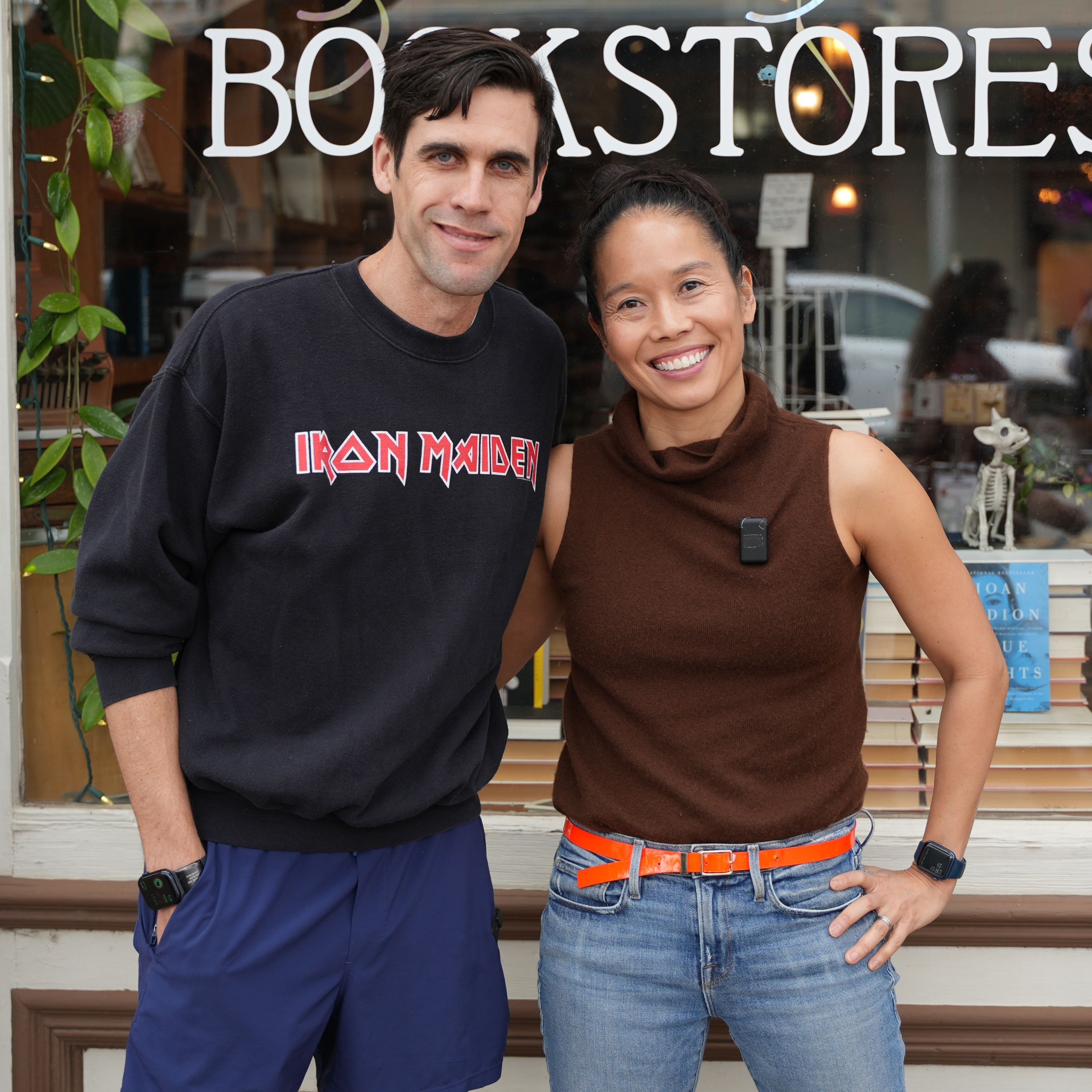
In today’s episode, Ryan sits down with Bonnie Tsui - author, swimmer, surfer - to unpack the deep connection between our muscles and mental resilience. They dive into everything from the intelligence of muscle memory, what the ancient Stoics knew about strength that we’ve forgotten, how exercise can actually bulk up your brain, and much more.
Bonnie Tsui is a journalist, New York Times contributor, swimmer, surfer, and the author of American Chinatown: A People’s History of Five Neighborhoods, Why We Swim, and now On Muscle.
📚 Grab signed copies of Why We Swim at The Painted Porch and be sure to check out Bonnie's new book On Muscle | https://www.thepaintedporch.com/
Follow Bonnie on Instagram @BonnieTsui8 and check out more of her work at www.bonnietsui.com
🎙️ Listen to Bonnie Tsui’s FIRST interview on the Daily Stoic Podcast | Apple Podcasts & Spotify
🎥 Watch top moments from The Daily Stoic Podcast on YouTube: https://www.youtube.com/@dailystoicpodcast
✉️ Want Stoic wisdom delivered to your inbox daily? Sign up for the FREE Daily Stoic email at https://dailystoic.com/dailyemail
🏛 Get Stoic inspired books, medallions, and prints to remember these lessons at the Daily Stoic Store: https://store.dailystoic.com/
📱 Follow us: Instagram, Twitter, YouTube, TikTok, and Facebook
See Privacy Policy at https://art19.com/privacy and California Privacy Notice at https://art19.com/privacy#do-not-sell-my-info.
