
 Ask ChatGPT



In this episode of The Daily Stoic, host Ryan Holiday interviews Jefferson Fisher, a personal injury attorney and communication expert. They discuss the art of argument and communication, drawing insights from Stoicism, Fisher's legal practice, and historical figures like Abraham Lincoln.
Written by AI. May contain mistakes.

Get the gist, explore an idea or ask about something said.
 Claude
On The Daily Stoic, what are the key points of this episode?
Searching your listeningAutomatic transcript. May contain errors.
0:00I'm recording this on a Monday, and Monday is our grocery store day in our family. I usually pick my kids up from school and we go over to Whole Foods, get all our groceries for the week. Although here very shortly, we're going to go over there to get our Thanksgiving turkey because they've got a bunch of great options. Turkeys start at$149 a pound if you have Prime with organic birds at$299 a pound. And they only carry no antibiotic ever turkeys that will bring quality to your table at a great price. Whole Foods has great everyday prices on all your Thanksgiving essentials, whether you celebrate with a massive family or just a few close friends.
0:37Everything they sell has high standards to help you shop with confidence. Enjoy so many ways to save on your Thanksgiving spread at Whole Foods Market. Why choose a Sleep Number smart bed? Can I make my sight softer? Can I make my sight firmer? Can we sleep cooler? Sleep Number does that. Cools up to eight times faster and lets you choose your ideal comfort on either side. Your Sleep Number setting. Enjoy personalized comfort for better sleep night after night. It's the final days of our Black Friday sale. Recharge this season with a bundle of cozy, soothing comfort. Now only$17.99 for our C2 mattress and bays, plus free premium delivery.
1:11Prices higher in Alaska and Hawaii. Check it out at a Sleep Number store or sleepnumber.com today. This message comes from Capital One. With the Spark Cash Plus card from Capital One, you earn unlimited 2 % cash back on every purchase and get big purchasing power so your business can spend more and earn more. Steven, Brandon, and Bruno, the business owners of SandCloud, reinvested their 2 % cash back to help build the company's retail presence. Capital One, what's in your wallet? Find out more at CapitalOne.com slash Spark Cash Plus Terms Apply.
1:52Welcome to the Daily Stoic Podcast, where each weekday we bring you a meditation inspired by the ancient Stoics, a short passage of ancient wisdom designed to help you find strength and insight here in everyday life. And on Wednesdays, we talk to some of our fellow students of ancient philosophy, well-known and obscure, fascinating and powerful. With them, we discuss the strategies and habits that have helped them become who they are and also to find peace and wisdom in their lives.
2:37Hey, it's Ryan. Welcome to another episode of the Daily Stoic Podcast. We had Dave Carey on the podcast a couple of years ago. Dave Carey was shot down over Vietnam. He spends five or six years in the Hanoi Hilton, and one of the fellow inmates is James Stockdale. And he said something towards the end of it. I asked him if he had any parenting advice. And he said, you know, you got to remember as a parent, every conversation, the goal is to get to the next conversation. And that's kind of really stuck in my head. It was such a great way to think about it. And I think about it as a parent all the time.
3:09Like, hey, we're going on this outing. We're doing this thing. The goal is not to win at this activity or to get it to go the way that I want it to go. It's that my kids will want to do it again and will want to spend time with me again. And I think about this when I'm in an argument with my wife or I'm going back and forth about something like the goal of this is to get to the next thing. And that's why the title of today's guest's new book, which has been up and down the New York Times bestseller list, struck me. It's called The Next Conversation, Argue Less and Talk More. You know, you're probably familiar with Jefferson Fisher's work.
3:46He records these Instagram reels like in his car. I think he started doing it before cases. He's a lawyer or, you know, before meetings or whatever. You just record in his car. They're great. Actually, this is one of my favorites. He's talking about how to stay in control of the conversation. Let me play it for you. Three power phrases that keep you in control. Number one, instead of you can't speak to me that way, which gives all your power away, you're going to calmly and almost unbothered say, I don't respond to that. Here you're keeping all the power by saying, if you're going to talk to me, you will change your tone.
4:20Number two, instead of I'm still talking or excuse me, I'm not finished, which gives all your power away, you are going to calmly say, I cannot hear you when you interrupt me, which keeps all the power and says, if you want me to listen, you won't interrupt me. And number three, instead of insisting, that's not what I said. When you're in an argument, which gives all your power away, you're going to ask the question, what did you hear? It keeps the power by requiring them to show evidence and puts the burden of clarity on the other person. And that's how to keep your control. It's great stuff, right?
4:49Because that's one of the hard things is you start a conversation. This happened to me just the other day. You're trying to talk about something. And then all of a sudden you're like, how do we end up here? How do we end up doing this thing again where both of us are unhappy, where we're not talking about what we started talking about, right? And then maybe even you win that conversation, but it was a pyrrhic victory. It came at a very high cost to you, the relationship, right? Do you want to be right? You want to stay married. Do you want to be right? You want to have a good time, right? You got to make these trade-offs.
5:18And I really liked this episode. I did not think we would end up talking so much about Abraham Lincoln, which we ended up doing. It was great. I think we really hit it off. It was nice talking to a fellow Texan slash Louisianian. He is basically right there on the border between Texas and Louisiana, Beaumont, where I have been many times back when I used to live in New Orleans and I would come to Austin. And now that I live in Austin, when we drive to New Orleans or we drive down to the beach in the Panhandle, it's a convenient place to sometimes stop at a holiday inn or whatever after you're exhausted and then drive the rest of the way.
5:55Texas is so big. I think Beaumont to El Paso is like 600 miles, 700 miles, something crazy. None of this has to do with today's episode. But Jefferson Fisher, he's a personal injury attorney. He owns a law firm here in Texas. He started making these videos, as I said, in his car. And they have done hundreds of millions of views all over the world. And you can grab signed copies of the next conversation at The Painted Porch and follow Jefferson on Instagram and Twitter, Jefferson underscore Fisher. And at YouTube, Jefferson Fisher. And on TikTok, Just Ask Jefferson.
6:33Epictetus, one of the Stokes, he said that the way you know you're making progress in life, like the proof that the philosophy is working, he said, is that you're having fewer arguments. Like you're not fighting with people about shit that doesn't matter. And I think that's a pretty good, like, to me, like, I think we think, oh, that person's wise because like they know the answer to all things. But it's like, to me, if wisdom isn't translating to being a generally agreeable, chill, easy to get along with person, you're not doing it right. Yeah. I find that it's always the principle of getting to more by doing less.
7:14Like from all of that is always people who accumulate a lot of things. You have more money. I have to feel like I have to do all the things. And they realize, no, the true wealth is getting rid of all that and actually having a very small world. Like the more friends you have, it's actually very, you want the fewest friends a lot of the time you get the most value in yeah so it's always the reverse yeah and and i think the idea of what if it's not contributing with the folks have this idea of a smooth flow of life like if it's not translating to chill and connection and the ability not to get sucked into fights and conflict that doesn't really matter like it's not working Right.
7:56That's a very good sign. Yes. And the same, the opposite is true. I mean, it is, whenever you can get in that state of finding more ways to have peace. Yeah. In all things. Yeah. The more of a sign that is you're doing the right thing. Yeah. Like, so Elon Musk has moved all his stuff to this little town. Like, we thought this was going to be like this chill, quiet place. Right. Boring company. He moved Twitter here. SpaceX is here. And then Tesla. Is it really? Yeah. I remember Tesla. And then the Tesla factory is right on the other side of the county. but we're closer to the Tesla factory than Austin is.
8:27Oh, wow. So it's great. Yeah, like when we go to like soccer practice and stuff, you can just be like, oh, you can just tell this person moved here to work at the Tesla factory. You can just tell, like it's just people. Yeah, yeah, yeah. So many people. You can spot them a mile away. Yeah. Yeah. Like he's obviously a genius, but he wakes up every day and gets into the dumbest fights you can possibly imagine. And I go, how smart can you be if you can't let someone be wrong about something that doesn't involve you? You know what I mean? And so I think what's interesting about your stuff is obviously you're talking about how do you negotiate?
8:59How do you talk? But so much of it is just like not doing it. Yes. Yeah, that's spot on. I mean, I've certainly been disappointed with – I was never big on Twitter to begin with. And I've certainly been disappointed with the trajectory. I feel like it's kind of taken on. Yeah. But certainly guided by the person who has it and owns it now, right? and i i mean in the book i this is what i live by like the fastest way to lose your peace of mind is to give someone a piece of yours yeah and it's that same philosophy of if you're always in an argument if you're always in some kind of chaos of creating the scuffle the scraps there is a much bigger concern and that is within yourself of where are you going?
9:50What's your why? What's your purpose? If you're always, I mean, I find the people that, let's say in school, I saw, and I know you did too, the kids that were always in the fights had the hardest life that you never saw. Of course. You know, the ones that were the bullies, the people that is, they are not getting something fulfilled at home. That's hard for you to realize when you're their peer. Oh, we never see it. Because you're like, why is this person being awful? We never see that. Then you realize, oh, they were not winning. Even if they were winning that fight, it sucked to be done in every way.
10:21Absolutely. And I've seen it. I can remember there was a kid in class who always fell asleep. And at that time of my life, I had no clue what their world was. So I kind of like, that dumb student, didn't make good grades. Now, both of our kids are at the ballpark together. And I know his whole backstory of like, he was living house to house, parents were gone. He just slept on friends' couches. Terrible. And I'm like, oh my gosh. Like that's, you talk about who really overcame, who really had adversity. It wasn't me, it was him. And so having that realization now as we get older, it's so much that principle that how I see it is the person you see is not the person you're talking to.
11:04Yeah. Yeah, it's always that inner dialogue, that inner conversation, that life that they have that you just don't know anything about. Yeah, you said something once that's struggling. You said the fastest way to lose a relationship is to win the argument. Yeah. And I think that's true also. It's like you're so intent on being right that you're willing to win this battle and then lose the war, right? And so there's something about conflict. Oh, look, are there some times where you should stand up for yourself and something's really worth fighting for? Sure, but most things are probably not those things.
11:38Right. You find that the issue that's stated is rarely the true issue. Sure. There's always something that is beneath that.
11:53Thanks to Toyota Trucks for sponsoring this episode. When I bought my ranch in 2015 out here in Bastrop County, I drove my car about halfway down the dirt road that we live on, thought this isn't going to work, stopped, parked it, walked the rest of the way home, borrowed my wife's car, drove in Austin and bought a truck. What I bought was a Toyota Tacoma. And this truck wasn't just transportation getting me to and from my house. It unlocked a whole different style of living for us, not just on the ranch, but in our little Texas towns. There were places I could go now that I couldn't go before, especially out here in the piney forests, through the fields, and on the unpaved roads like the one that I lived in.
12:38We got to go deep into the hill country's wild beauty. We've driven all the way out to East Texas. We've driven across the country. And by we, I mean not just my wife, but both my kids who I drove home from the hospital in that truck. Toyota trucks are built for those who understand that the best adventures happen when you're willing to veer off course, because you never know when you'll end up on a Toyota adventure detour. And of course, this is stoicism, too, because every detour, every obstacle is an opportunity. But it's helpful if you can handle the difficulty inherent in that. If you've got the resilience and the right companion to make it wherever the road takes you.
13:17Discover your uncharted territory. Learn more at toyota.com slash trucks slash adventure dash detours. We just took our kids to an outdoor performance at the Nutcracker. They had a snow cone and then they went insane in the car ride home. And one of the things I try to remind myself when that's happening is that I don't control my kids' behavior, especially when they're too far gone like that. But I do control how I respond, right? That's stoicism, but it's also what Dr. Becky talks about. Dr. Becky is a clinical psychologist and a best-selling author, and she founded Good Inside, which is there to give parents practical, actionable tools for handling those everyday challenges with confidence.
14:00My wife introduced me to Dr. Becky's books. I love them. I've recommended them a million times. I've had her on the podcast. And as it happens, Dr. Becky is hosting two live Q &A events for Good Inside members. I am one of them. She signed me up for it about a year and a half ago. I've loved it ever since. On December 1st, you can join Dr. Becky for her How Not to Raise Assholes event, which is about avoiding entitlement and raising kind, empathetic kids. And on December 15th, she's hosting her How Not to Lose It Over the Holidays event, which I'm sure we could all use. As I said, I'm a big fan of Dr.
14:38Becky. She's been a great influence for me as a parent and just as a human being. And Daily Stoic listeners can join for 15 % off with code STOIC15. You just got to head over to goodinside.com to catch the events.
14:57Whenever you set out to win an argument, you will eventually, if you always set out to win it, you will lose that relationship because it's the tug of war. If you're the person that always has to be right in every argument, every decision, and you fight to the death on every element, nobody will want to be with you. It's a very lonely place to be. You know, being right doesn't keep you company. It's just not, it's not going to keep you warm at night. Yeah. There's a Springsteen lyric, like he says, we fought so hard over nothing. We fought till nothing remained. Yeah. And it's like, you took something that was nothing, you turned it into something, and then you reduced everything to nothing in this thing that, you know, and you talk to people like, why don't you speak to these people?
15:41What happened here? And they're like, I don't know. You know, it's like, you don't even, it's a thing you won't even remember, but that intensity in the moment. So you're good at fighting, but bad at picking what to fight about. Yes. Typically we know, I mean, we're married. The biggest arguments come from the dumbest things. Yes. I mean, the dumbest things. And that's where it gets you, where you go, you know what? No, that's what happens when we get in that argument. Something happens where we go, you know what? No, now it's the principle of it. Yes. As an attorney, I'll definitely have these clients that come in and they want to do something.
16:14And I'm like, but what's it getting you? You have to kind of have to set them down of, I understand it doesn't feel good. You need to see three years from now when you're in litigation and you're in every deposition and you're having all this, how much is going to weigh on you at night? Yeah. So don't think about this now. I want you to think about the nights that you're not going to be getting sleep for the principle of it. So that for the principle of it, I think is a killer. the lies we tell ourselves, right? You're right. Generally unprincipled people decide like, no, no, it's all about the principle.
16:45Exactly. In this one thing. You're so right. You know, it's not like, you're not this saint going through, like, I would never, you're not making principle decisions day to day, but then in some conflict, you're like, it's the principle. I got to show the world that this is not okay. Exactly. Yeah. At some point it gets into this, where it goes south the quickest is where you go, you know what, I need to remind them who they're talking to. It's kind of like that mentality of, I don't know who you think you are. As soon as you go down that road, you've lost. You don't know it, but you've lost. You've certainly lost a chance to grow closer together with that person.
17:21Well, you've lost any connection to rational sort of self-interest. There's something primal about like, hey, if I let people treat me this way, I'm going to end up murdered in my sleep, which we could understand in a tribal thing. Sure. In a world where we basically lived in gangs, the sort of logic of a gang would be inscribed in our DNA, but that's not the situation. It's also a really bad way to live. Oh, yeah. It's a tiring way to live. But that's what happens in every conflict, every disagreement. If you said, if you told me, you know what, Jefferson, I don't disagree. Yeah. My body goes, hey, I didn't like that.
17:58Like without me even saying it, my brain and body go, we don't like that. We feel undermined. They're trying to attack you, hurt your credibility. And that's the, I feel threatened. And so to attack that threat, I will either say something hurtful to fight you or I'll say, you know what, forget it. I don't have to be here and flight. I mean, it's just to get out of that. It's the same natural primal instinct that we have. It's funny that you would come from a legal background. Cause like there is this, I think, believe it's an age old stereotype. It goes back to Shakespeare, spirit that lawyers don't have principles.
18:28You can't like first kill all the lawyers, right? Right. Oh yeah. And then you take one of our most principled politicians of all time, you take Lincoln. Yeah. And he's a lawyer. He makes his living as a lawyer. And I'm writing about him in the book that I'm doing now. He was fascinated. Are you really? Yeah, yeah. I'm a huge Lincoln nerd. Well, I'll give you a bunch of Lincoln books. Good. Okay. But Lincoln's thing, someone made that joke to him. Some kid was saying something about it and And he said he hated it. And he said, you know, he's like, if you can't make an honest living as a lawyer, try to make an honest living not as a lawyer.
19:02Right. Like try to find some other profession. And it's interesting that he gets the name Honest Abe from being a lawyer. Right. Like he was principled in the way that we're talking about, which is he was like, don't go to trial on this. I think sometimes people think being principal, insisting, being unyielding, that is like the honest, like true, courageous thing. And actually, you know, discretion being the better part of valor. Yes. Like just going, hey, is this worth it? The ability to go like, this is not that important. Right. I'm not compromising my principles, but I don't need to prove to you in this scenario by ruining you.
19:40Yes. Yeah, yeah. Or whatever. Oh, it's my favorite thing about him. And it's a team of rivals, which is by far my favorite of them, is how when he gets the nomination and then he gets the presidency, and he's the least likely to do any of this, how he brings Stanton, McClellan, Seward, I mean, all of these people into his world. And then you have some of them actively against him, openly, in the paper. Oh, yeah, actively underpising him, lying to him. In the paper. Yeah. They're in his cabinet. Yeah, yeah. And it's just incredible how he decides not to address it. Yes. Like with them. I just find that to be so incredible how, I forget which one it is.
20:24I don't think it was Stan, but he, the one that was most vocal against him and very jealous who Abraham knew that it was him who had put it out into the paper and was doing all this stuff. And he said, he didn't even bring it up. Instead, he brought him in closer, made him even more important. Yeah. And that's what I mean about sort of that's the sign that you got it. Yes. You're like, this can't bother you. Right. It doesn't bother you. You don't take it personally. Yeah. You're able to still get... It's not like... I think people think if they're like that, they'll be a doormat or whatever. Right.
20:55He got what he wanted out of those people. He was almost doing it from a Machiavellian point of view. Yes. He was like, I need this from this person. Yeah. So I don't care that they'll insult me or drag my name through the mud or whatever. They can't harm me as long as I'm getting what I need from them in this situation. I think he took that from the sort of rough and tumble legal world that he came from. I mean, imagine being like you're a lawyer on horseback in these small towns. I mean, like I was, he represented, how many cases do you think he represented where the client was accused of bestiality?
21:31Because it was more than one. That's incredible. That's how nasty his world was. It's wild. And they did it on a circuit. Yeah. That's wild. They would ride around all with each other in the same hotels and inns and stuff. For any way listening, that's why they call it like the Ninth Circuit, Tenth Circuit is because it was an actual geographic area that they would have a judge and attorneys with them and travel town to town and hold court. Yes. And so Abraham would say, I take this client. You take that client. Sometimes he's the prosecutor. Sometimes he's the defense attorney. You don't get to choose.
22:02The judge is usually the same. And yeah, I think what comes out of that is this sort of genius for interpersonal dynamics and understanding that people do fucking crazy things, but you can't let them wind you up. And you just have to figure out how to get what you need from them, how to prevent this crazy situation from getting crazier. That's what makes him so uniquely suited for the most sectional conflict you can imagine, a civil war. and there's not just one civil war, but then there's a civil war in the North between the sort of more conciliatory Democrats and Republicans. He just knows how to deal with factions, which is like a skill that almost no politician seems to be able to have anymore.
22:48Wield unwieldy people. That quiet strength. I mean, I think there's also the sense of right now politicians are set up to have the quick comeback. As soon as news comes out, we got to put it on Twitter. or we got to have announcement about it. Like there's no sense of distance. And I was raised, my dad's philosophy is, my dad's very diplomatic. And he's the only one really of his line is like that. Dad is very diplomatic. I have other uncles and cousins that are like bull in a china closet and they want their way. And everybody's in the legal field. I'd come in high school, I'd come into my dad with a problem and I would be up in arms, you know, I'm ready.
23:24And he would just go, so? And I'd go, well, dad, you don't understand. Like I'd keep on ego. So, I mean, so what? Exactly. So what are you going to do about it? And so he always would come down to this line. He'd always say, don't make that your Alamo. He'd always ask me that. Do you want to make that your Alamo? Sure. And is that the hill you want to die on? And at the end of the day, it was, no, you're right. But that was continually fed into me of the don't make that your Alamo. Sure. Of that really influenced a lot of the direction of my life. But I feel that is very in line with this Lincoln-esque type of mentality of, yeah, I see that.
24:04I see this struggle. I see this fight. Let me give it some time. Like Lincoln does have an Alamo, right? The Alamo, the country is staying together. The biggest, yeah. But everything else is negotiable, right? And that's the genius is that sort of rigidity and the flexibility. Whereas I think a lot of people just have the flexibility in that they stand for nothing. Yes. Right. They don't care about anything, whatever works. This is like Stephen A. Douglas. I don't think we, because he was so eloquent in the debates and he's kind of like heroic after the war breaks out. He was a piece of shit. The reason we have a civil war is because he puts forth this idea of popular sovereignty because he wants the railroad to run through Chicago.
24:47Right. Like that's his thing. It's like he's flexible on effectively everything because it's good for his political career. Yes. And his Alamo is like, hey, if I do all this shit, I can control the course of the transcontinental railroad and that'll make me rich, right? So he like unleashes all this chaos because he wants the railroad tracks. So we have people who are too flexible on everything. And then we have people who are too rigid on everything and they end up also getting nothing. Lincoln has this sort of magical combination of like, hey, the non-negotiable here is we're keeping the union together.
25:23And it gets held against him, but he says, look, if I could free all the slaves to keep the union together, I would do it. And if I could free none of the slaves to keep the union together, I'll do it. The point is that's the main thing. And then his other main thing is he doesn't think slavery should be expanded. That's legally all he feels he's able to do at that moment. And so when you have this sense of, okay, these are the two things that matter. These are my Alamos. I'll work with anyone for any length of time in any way to either prevent those from happening or not happening, right? He tries everything, like all the different things with every different positive, and it works.
26:01But that's what you need, that combination. Have you seen the movie with Daniel Day-Lewis? It's incredible. It's the best. It's so good. I've watched it so many times. That scene where he's banging on the table and he goes, to see what is before us. Yes. It's the only thing that counts. In the book, I was like, I never quote from movies, like in the books. It just doesn't work. Right, right, right. And I was like, please let that be based on something. And it's not really based on something. The part where he goes, I am the president of the United States. Hold the immense power. That is a real thing.
26:30He wrote that. That's like a real line. Is it really? He didn't shout it at the cabinet. He said it. But again, same thing. I get chills thinking about it. Oh, it's one of the greatest lines. Didn't they say like hell's bells or something like that? Or what does he say? He has like some little line. He's like, good God. Tammany Hall Hucksters. Yeah, exactly. Or he's like, yeah, I forgot what he says. Oh, he says, good God, man. Yeah, I thought he was like, yeah, good God. Yeah, he has like these little lines. That's one of the great things. But even there, he knows, look, you've got to pass this amendment.
26:58Yes. Right? And basically everything, even on this side of bending the law, is on the table as long as you do the thing. So this ability, and that's why I love that quote so much. She's like, to see what's before you is the only thing that counts. So often in arguments, in disagreements, if you don't know, like military strategies call this the center of gravity. If you don't know the center of gravity of the thing, then you don't know what to go all the way on and what you can bend on. Yes. But you got that ability to know what's what is where it all comes from. And the ability to see beyond it.
27:36There are times where I see in the litigation side that somebody just, they have to have the struggle right now. I have to give them, I have to tell them, I have to prove my point. And it's going, but then what happens after? And then what happens after that? They're so focused on that moment in time that they just don't have the capacity where you have people who just put the blinders on. They just don't have it to see beyond the conflict. Okay, you say what you want to say. You get it all out. You be the big bad boy. You got it. all right you're wearing the big pants say what you need to say sure you got it out you heard them you feel good now what yeah now what do you got you ready to apologize how yeah it's it's like this whole okay you got it out you won the argument congrats what do you got where do you go now right and that gets lost yeah no it gets lost because we are really bad at seeing the costs of winning yeah right like how's this person going to feel after you make them feel really fucking stupid Yeah.
28:33Or after you make them beg for mercy. Yeah. Or, you know, like, yeah. And I think obviously a bad lawyer or a bad advisor is going to tell you, you know, how to win the thing. But they're not going to tell you like, hey, you're going to end up being a loser at the end of the winning. Yeah. Right?
29:02I see so much that the people who say the thing they wanted to say, that they thought it's going to be this revolutionary, the person across them is going to go, oh, you're so right. How could I ever be so dumb? I am a monster. You're so right. Yeah, I agree. That moment never comes. And it's all they have won is awkward silence the next time they see them or pass them down the hall, or they walk by them in the hallway, going to the living room in the kitchen, because that's your spouse. You know, you still have to, you know, that weird like pass you do, if you're both in the kitchen at the same time you need in that drawing, you're like, can I get, I mean, it's just, you can sense that, that tension.
29:40It's, it's still there. And there's so much people go to social media. Yeah. This, this killed me. This always killed me is I'd have, a family member, most likely, go onto social media and just criticize some political belief. That's fine. And then everybody underneath within comment, and then everybody's just backbiting and being terrible. The next day, what happened? Yeah, you solved it. To your 78 followers. You got it. It's all done now. Congrats. Yeah, you solved it. So that kind of stuff. I mean, there are people in small town Texas in particular who do not talk to each other because of what's gone on the last eight years, five years of because of political opinions most of the time or beliefs that have been spouted on social media that they thought because they said it or gave their opinion that all of a sudden it's just done.
30:37And that's just not the case. Yeah. I regret pretty much everything I've ever put on social media as I was thinking it. Do you know what I mean? Like anytime I've taken the time to write something or create something or craft it and edit it and whatever, I feel pretty good about it. But anything I have said extemporaneously has not held up well. And even if it held up well, I don't think it's that important anymore. Right. It was important in that moment, just in that moment. And then the new cycle goes and it's the next day. Yeah. And so I think there's this great idea from the Stoics, which is that you always have the power to have no opinion.
31:15Yeah. And just to be like, I don't have an opinion. And I think that's tough, right? To have no opinion is tough because we're opinion having machines. It gets put against you, honestly, if people feel like you don't have an opinion or you're too lukewarm on it. I just mean like you have your taste, you have the way you do it. So you have the opinion. But so let's say you're not aspiring. You think it's impossible to aspire to have no opinion. You can certainly express fewer opinions, right? Do you know what I mean? That's a great way to say that. It's a more attainable goal. It's like you can think whatever you want about your kid's friends or their taste or whatever.
31:50You can just also shut the fuck up. You don't have to tell them. Yeah, exactly. Just the idea that you can have the opinion and not share the opinion is weirdly, I think people think that is disempowering. It's actually incredibly empowering. Like, I think this, but I don't need you to know it. I think that is, and maybe you might think differently, but so much of that has festered because of social media. It's like, I have - They need you to have the opinion. Exactly. Business model depends on you. Now, there is a place that I open the app and it says, what are you thinking? It's my prompt. And I tell them, and you know what happens?
32:22Somebody likes it. That gives me value. Somebody commented. Somebody likes it. Oh my goodness, I matter. I'm special. And they continue to just give, like when in the history of ever, Have you criticizing somebody's point of view or giving yours ever changed their mind? Ever. Ever. Well, social media started with what are you doing? Yes. That's interesting. We're the same age. Yeah. And then it moved to what are you thinking? Yeah. Or what are you mad about? And I think that shift is pretty bad for both the audience and the creators. And the only people it's good for is the social networks that monetize engagement.
33:02Right? Yeah, yeah, yeah. You just, so what are you doing? There's only a finite amount of stuff, right? But you can have an infinite amount of opinions. Yeah. And so one is obviously much more incendiary, which one lends itself to conflict. You support what people are doing. Right. You disagree with what they are thinking or what they believe. And so it goes from a sort of a supportive ethos to a conflict ethos. And it's just bad. It's bad for everyone. Certainly corrosive. Yeah. Yeah. Yes. And I mean, I was going to say, we're the same age. We remember when Facebook, you had to have a college email.
33:38I had to wait to get my college email to get my Facebook. Yeah. Same. I had, it was youtexas.edu over there. And it was that. It was, what are you doing? Yeah. Yeah. And then all of a sudden it's now, it's just taking on an entirely different animal. What I hate is when I see from the litigation standpoint, and I know lots of attorneys that are in family law. Okay. where social media just breeds terrible things of people that it, what happens in that forum changes the dynamic of real life for these people that they don't want to talk to one another, or they decide that somebody is good or bad based upon that of what you said, I think is spot on.
34:19We are opinion making machines. Yeah. Yeah. And, and the idea that you would like some of the things that people share, I'm like, you can just keep that to yourself. You know what I mean? Like, I saw something once where someone was talking about some celebrity couple, and they were like, everything I've ever learned about this couple has been against my will. You know? And their point was that like, all this stuff we don't like about them, they just like can't not share their awfulness. And if they just kept it a little bit closer to the vest, they'd be much more likable and personable. And just the idea that, yeah, you don't have to share what you're thinking about stuff.
35:00I think it goes back to the need of wanting to feel special and acknowledged. My favorite is in small town Texas, you have people that give these like little cliff hangers and they're like, you really get to find out the people that you trust and keep in your circle. You know what I mean? And like, they want you to go, what happened? Exactly. Or like, Hey, send prayers to really need your prayers today. Y 'all, you know, it's just like, what's going on. It's, they need the feeling of that. They, that they're here on this earth and they exist. Yeah, yeah, yeah. And there's better, slightly more socially productive ways to do that.
35:32And I like that you have, you can still have your opinion, just be in the habit of giving less of them. Yeah. And also, I think the more I get older, and I think the more philosophical I become, the more comfortable I am with you having dumb opinions, right? Like, I don't, like, you know, there's that cartoon, like, I can't come to bed, like, someone's wrong on the internet. it like i feel less inclined to correct right or intervene yeah or let them know what i know yes you know yeah yeah um i do that with my kids i mean like my son will have a he'll try out new words a lot of time last uh last week's word was haste like hasty yeah and so he'll he'll be oh that was so hasty i'm like that's not the way we use it yeah but you can keep trying it and like Like, even though he's using it wrong, go for it, buddy.
36:26Like, yeah, it's like, I know what it is. But it's the same kind of dynamic where if just because they have a different opinion and you know the truth, if you want to tell me the sky's purple, knock yourself out. You know, that's the inner confidence in the peace that we were talking about. Well, not yucking people's yum. Have you heard that expression? No, but I love it. Yeah, don't yuck someone else's yum. It's like, I cannot wrap my head around why you would... I don't like video games, so I don't even like playing them, but I certainly can't wrap my head around watching someone else play video games.
36:59Millions of people do. And the people that are doing it are like some of the least charismatic, interesting people that I've ever seen in my life. But I'll sit there and watch these videos and like, you know? Yeah, of course. And then I'll listen to them tell me about them because like, I don't need to convince them that this is dog shit. It definitely sucks. Yeah, yeah. It definitely, like, we've been watching this one of this guy who, like, explores abandoned buildings. And, like, his voiceovers, it would be a step up if Chad GPT wrote them for him. Right. Like, he's using all the words wrong.
37:34It's so bad. And you're just like, look, the algorithm blessed this guy. Yeah, yeah, yeah. And he probably made one video, like, 10 years ago that blew up. And now he just travels around exploring these things. And they're so bad. but I'm just focused on the part of it that I like, which it is cool while these bills. So we're watching these videos, you know? And like my thing is to not have that opinion, at least to the person who it would be unpleasant or demoralizing or conflict oriented. If he, you know what I mean? Like my son doesn't listen to this. So, but like, I've just, I've just tried to get better at being like, I can't watch this.
38:13It's terrible. Yeah. Oh yeah. You know, because whatever. Well, there's now, a lot of the videos we watch are, we watch people watching another video. Yes. Like, those are extremely popular. We're watching somebody else watch and react to a video. Well, and look, like, this makes sense. Well, okay, for the last 15 years, there was a very popular show called Tosh.0, where a professional comedian would watch videos and make fun of them. And he's a talented, smart person. Right. And then these are just random goobers who are much like, like, if you could say that's easy to do, they are doing it much easier in the sense that like, they are less smart, less funny.
38:57Yeah. And doing less work. Right. But I'm like, if this is what you want to watch, this is what we'll watch. Thanks so much for listening. If you could rate this podcast and leave a review on iTunes, that would mean so much to us and it would really help the show. We appreciate it. And I'll see you next episode.
39:44We'll see you next time. Thanks. Have a good one. Yep, that too. Want one place to manage all your online and in-person sales? That's kind of our thing. Wherever you sell, businesses that grow, grow with Shopify. Sign up for your$1 a month trial at Shopify.com slash listen. Shopify.com slash listen. Look, ads are annoying. They are to be avoided, if at all possible. I understand as a content creator why they need to exist. That's why I don't begrudge them when they appear on the shows that I listen to. But again, as a person who has to pay a podcast producer and has to pay for equipment and for the studio and the building that the studio is in, it's a lot to keep something like the Daily Stoic going.
40:32So if you want to support a show but not listen to ads, well, we have partnered with Supercast to bring you a ad-free version of Daily Stoic. We're calling it Daily Stoic Premium. And with Premium, you can listen to every episode of the Daily Stoic podcast completely ad-free, no interruptions, just the ideas, just the messages, just the conversations you came here for. And you can also get early access to episodes before they're available to the public. And we're going to have a bunch of exclusive bonus content and extended interviews in there just for Daily Stoic Premium members as well. If you want to remove distractions, go deeper into stoicism and support the work we do here.
41:14Well, it takes less than a minute to sign up for Daily Stoic Premium, and we are offering a limited time discount of 20 % off your first year. Just go to dailystoic.com slash premium to sign up right now or click the link in the show descriptions to make those ads go away.
You might prove a point in an argument, but what will you lose in the process? In today’s episode, Jefferson Fisher and Ryan talk about the art of handling arguments, drawing on wisdom from the Stoics, Jefferson’s real-world legal practice, and Abraham Lincoln’s legendary diplomacy. They discuss why being "right" isn't always worth the cost, how to stay grounded in the age of social media outrage, and the importance of knowing your “Alamo,” the hill you’re actually willing to die on.
Jefferson Fisher is one of the most respected voices on communication and arguments in the world. He is a Texas board certified personal injury attorney and law firm owner of Fisher Firm. Millions of people and some of the world's leading brands come to Jefferson for advice and practical strategies to communicate more effectively.
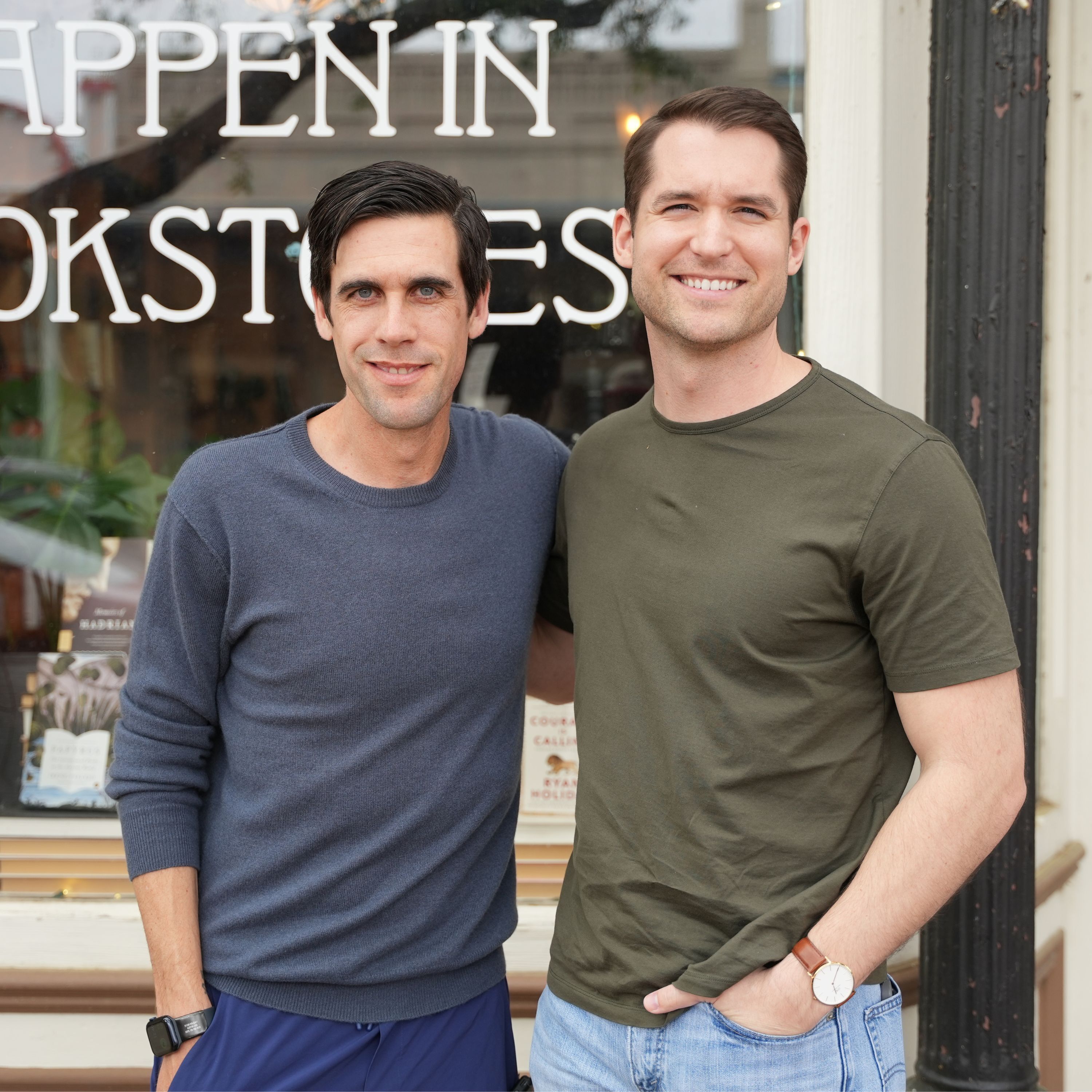
Grab a signed copy of Jefferson’s book, The Next Conversation: Argue Less, Talk More, at The Painted Porch!
Follow Jefferson on Instagram and X @Jefferson_Fisher, on YouTube @JeffersonFisher and on TikTok @JustAskJefferson
🎙️ Follow The Daily Stoic Podcast on Instagram: https://www.instagram.com/dailystoicpodcast
🎥 Watch top moments from The Daily Stoic Podcast on YouTube: https://www.youtube.com/@dailystoicpodcast
✉️ Want Stoic wisdom delivered to your inbox daily? Sign up for the FREE Daily Stoic email at https://dailystoic.com/dailyemail
🏛 Get Stoic inspired books, medallions, and prints to remember these lessons at the Daily Stoic Store: https://store.dailystoic.com/
📱 Follow us: Instagram, Twitter, YouTube, TikTok, and Facebook
See Privacy Policy at https://art19.com/privacy and California Privacy Notice at https://art19.com/privacy#do-not-sell-my-info.
