
 Ask ChatGPT



Written by AI. May contain mistakes.

Get the gist, explore an idea or ask about something said.
 Claude
On The Daily Stoic, what are the key points of this episode?
Searching your listeningAutomatic transcript. May contain errors.
0:00I'm recording this on a Monday, and Monday is our grocery store day in our family. I usually pick my kids up from school and we go over to Whole Foods, get all our groceries for the week. Although here very shortly, we're going to go over there to get our Thanksgiving turkey because they've got a bunch of great options. Turkeys start at$1.49 a pound if you have Prime with organic birds at$2.99 a pound. And they only carry no antibiotic ever turkeys that will bring quality to your table at a great price. Whole Foods has great everyday prices on all your Thanksgiving essentials, whether you celebrate with a massive family or just a few close friends.
0:37Everything they sell has high standards to help you shop with confidence. Enjoy so many ways to save on your Thanksgiving spread at Whole Foods Market. Why choose a Sleep Number smart bed? Can I make my sight softer? Can I make my sight firmer? Can we sleep cooler? Sleep Number does that. Cools up to eight times faster and lets you choose your ideal comfort on either side. Your Sleep Number setting. Enjoy personalized comfort for better sleep night after night. It's the final days of our Black Friday sale. Recharge this season with a bundle of cozy, soothing comfort. Now only$17.99 for our C2 mattress and bays, plus free premium delivery.
1:11Prices higher in Alaska and Hawaii. Check it out at a Sleep Number store or sleepnumber.com today. This message comes from Capital One. With the Spark Cash Plus card from Capital One, you earn unlimited 2 % cash back on every purchase and get big purchasing power so your business can spend more and earn more. Steven, Brandon, and Bruno, the business owners of SandCloud, reinvested their 2 % cash back to help build the company's retail presence. Capital One, what's in your wallet? Find out more at CapitalOne.com slash Spark Cash Plus Terms Apply.
1:49Welcome to the weekend edition of The Daily Stoic. Each weekday, we bring you a meditation inspired by the ancient Stoics, something to help you live up to those four Stoic virtues of courage, justice, temperance, and wisdom. And then here on the weekend, we take a deeper dive into those same topics. We interview Stoic philosophers. We explore at length how these Stoic ideas can be applied to our actual lives and the challenging issues of our time. Here on the weekend, when you have a little bit more space, when things have slowed down, be sure to take some time to think, to go for a walk, to sit with your journal, and most importantly, to prepare for what the week ahead may bring.
2:40Hey, it's Ryan. Welcome to another episode of the Daily Stoic Podcast. I wish, you know, everything went smoothly. Everyone did their job. Everyone lived up to their side of the bargain. If relationships or, you know, arrangements never went south, but that's just like kind of not how it goes. I've had disputes with partners. I've had disputes with, you know, someone did floors in my house and they screwed it up or the floors didn't live up to the warranty and then they weren't going to replace them. And that was a whole thing. You know, you just have conflicts, right? Conflicts are inevitable in life.
3:16And going round and round right now with a different contractor. And one of the things I think about is not how do I win, but also how do I not lose, right? I like playing not to lose. It's not always the best way to think about it. But what I'm saying is that, and this is a very ancient idea, the idea of a Pyrrhic victory, which is based on this ancient general who wins, but he takes such an enormous toll on his army and on his cause that, you know, it's effectively a loss. He says, I can't survive many more wins like that. I'm going through this thing and I go, look, I'm fighting with a person who doesn't exactly know what they're doing or maybe even has a tenuous grasp on reality.
3:59So how do I stand up for myself? How do I stand up for my interests, but also not get dragged into this crazy thing where if my time is worth a lot more than this person's time, or I prioritize my time very differently than this person, how can I make sure that I don't let that make me irrationally angry or do something I disagree with. And that was something I talked about with today's guest, Jefferson Fisher, who I'm a big fan of. He started making these videos back in 2022. He's a lawyer. He'd make them between hearings, record appearances, just record them in his car. And they go on and they start doing millions and millions of views.
4:35One of my favorites, so I'll play this for you. It's like, how do you respond to disrespect? How to respond to disrespect. Number one, with 10 seconds of nothing, don't say a word. See, for 10 whole seconds, they're going to have to sit alone with their words. They'll play back what they just said. And by you not giving them the reaction that they wanted, they'll feel exposed while you look controlled. Number two, calmly and assertively say, that's below my standard of respect, period. Or that's below my standard for response. What you're saying is what you just did is beneath my values, beneath me.
5:14You flip the power dynamic. And number three, understand that no matter what they say in response, it will pale in comparison to the message that you just sent them, that you will stay in your ground and you will hold by your standard. And that's how to respond to disrespect. And the Stoics talk a lot about this. Like, how do you not get in this sort of escalatory cycle that you can't get out of, right? There's a famous story about Cato where he's slapped and then it could have descended in this whole fight and he goes, you know what? I don't even remember being hit. How do you not get sucked into it?
5:47They say about wrestling with a pig, you'll both get muddy and the pig will like it. It's not the expression. How you think about arguing, how you think about these conflicts that inevitably arise in life, you can't be a doormat. You can't let people walk all over you. You got to advocate for your interests because sometimes those other people depend on those interests. Right? And then you have other interactions either with this person again or with other people. You can't just concede everything. But at the same time, you can't just fight like this matters because sometimes it doesn't really matter.
6:17So how do you make that decision? It's not an easy thing to do. And that's why I wanted to talk to Jefferson Fisher. He's a fellow Texan slash Louisianian. I love his stuff. And you can check out his videos on Instagram and Twitter, Jefferson underscore Fisher. on YouTube at Jefferson Fisher and on TikTok, Just Ask Jefferson. And grab signed copies of his new book, The Next Conversation, Argue Less and Talk More, which was just released and has been selling like crazy because it's awesome. And he is great. Enjoy part one and part two of this episode. It was so good that we split it up. I did not think we would talk about Lincoln as much as we did, but we did.
7:00It was great. And I think you're going to like it.
7:04My grandfather, who is, he's from around Jasper, Texas, Southeast St. Augustine, very deep East Texas. And he always has a lot of isms. And they're gold. They just kind of come out of anywhere. And typically when I'm talking to him, especially when I was growing up, complaining about a friend that I was having trouble with, and I was trying to get this friend to see a certain thing. Just, no, you're not understanding. And my grandfather just, he always just whipped these things out of his pocket. And he said, sometimes you just got to let him walk to get there. And I was like, what? He's like, sometimes you just got to let him walk to get there.
7:43I'm like, okay, that actually makes a lot of sense. No, those things are so good. Yeah. You know, me, I'm trying to get him to just push him right there. Come to me. You got to let him walk. You got to let him walk. I remember I first moved to New Orleans and had this little apartment in this big sort of ramshackle house on St. Charles and we're there like two days. It's like one of these crazy tropical storms comes in. It's like raining all this stuff. I go, wow, this storm is nuts. I'm talking to this lady, she's sitting on the porch and she goes, don't like the weather, just wait. It'll change.
8:13And I go, oh yeah, that's pretty good. I think about that all the time. Like, cause most of the stuff that drives me nuts that like my kids are into or fads or trends or whatever. They're like, I think about the ones that I used to think that about. Where are they now? They're gone. They're gone. It's a fad, you know? And so you're trying to arrest the fad or rabbi. It'll take care of itself and burn out. Yeah, I think that it's the same thing. Like when we first had kids, if you doesn't like what your kid's doing or it's going through like a, not just that, but you're really having a rough patch.
8:47The baby is irritable, everything. every about every two weeks, it's gone. Yeah. And it's gone. And what was bothering you then or what was having your trouble with now is gone. It's the same way a lot of times with our everyday interactions, which means it's happening to us too. Yeah. I mean, it's - Well, I think what your grandfather's expressing, and it's something you get when you talk to people who are much, much older, they have that philosophical view because they've been through it a lot of times and they've been through longer cycles than you can. So understand that someone who's 80 years old has been through cycles that you're not even aware are cycles because you haven't been alive long enough.
9:28Right? Like when you're in high school, you're like, I'm going to be here for four years. That's crazy. It does. You've never been through a four-year – you've never been like, oh, this thing takes four years. Even the day feels long. Yeah. From like eight to three. Exactly. And then, you know, you get through it and you go, oh, yeah, sometimes there's things that suck that last four years. Yeah. Right? And then that helps you when you have a bad president or it helps you when you're, okay, I got to work this job for four years. And then you go through a decade cycle of something. Then you go through a two-decade cycle of something and you just start to get a sense, okay, it's all cyclical or it all passes, but I just wasn't aware of the time horizon yet.
10:06It was so long that I was mistaking it as forever or permanence, but it's just as ephemeral and transient as a winter storm or any other thing just over a longer period of time. And in that sense, when you study history, you go, oh, yeah. Remember like this dynasty in China that like we learned about in one paragraph but lasted for 800 years? Right, yeah. Or even like, you know, they go like, are we Rome? Like people say this, do you know how long the decline and fall of Rome was? It was like 800 years. Like that's not a thing to be worried about. Like there's definitely things to be worried about, but like we should be so lucky if the decline is as long as the rise.
10:50It will be over before you, you know, well after you. And so when that wisdom of like, oh, yeah, yeah, this could, this almost certainly is a phase, a fad, a cycle. And I just haven't endured something long enough to understand that that's what's happening. Yeah. You just haven't been in it as long as you need to, to come out of it. Yeah, yeah.
11:19Thanks to Toyota Trucks for sponsoring this episode. When I bought my ranch in 2015 out here in Bastro County, I drove my car about halfway down the dirt road that we live on, thought this isn't going to work, stopped, parked it, walked the rest of the way home, borrowed my wife's car, drove into Austin and bought a truck. What I bought was a Toyota Tacoma. And this truck wasn't just transportation getting me to and from my house. It unlocked a whole different style of living for us, not just on the ranch, but in our little Texas towns. There were places I could go now that I couldn't go before, especially out here in the piney forests, through the fields, and on the unpaved roads like the one that I lived in.
12:04We got to go deep into the hill country's wild beauty. We've driven all the way out to East Texas. We've driven across the country. And by we, I mean not just my wife, but both my kids who I drove home from the hospital in that truck. Toyota trucks are built for those who understand that the best adventures happen when you're willing to veer off course, because you never know when you'll end up on a Toyota adventure detour. And of course, this is stoicism, too, because every detour, every obstacle is an opportunity. But it's helpful if you can handle the difficulty inherent in that. If you've got the resilience and the right companion to make it wherever the road takes you.
12:43Discover your uncharted territory. Learn more at toyota.com slash trucks slash adventure dash detours. Look, when you're hiring, you don't want just anyone. You need the right person with the right background who can move your business forward. And when I need candidates who match what we're looking for at Daily Stoic for any of my businesses, we trust Indeed sponsored jobs. Because when you're hiring, Indeed is all you need. You can give your job the best chance to be seen with Indeed's sponsored jobs. They can help you stand out and hire quality candidates who can drive the results you need.
13:22And according to Indeed, data-sponsored jobs posted directly on Indeed are 90 % more likely to report a hire than non-sponsored jobs because you reach a bigger pool of quality candidates. And you should join the 1.6 million companies that sponsor their jobs with Indeed. people are finding quality hires on indeed right now in the minute we've been talking companies like yours made 27 hires on indeed spend more time interviewing candidates who check all your boxes less stress less time more results now with indeed sponsored jobs and listeners of this show will get a 75 sponsored job credit to help you get your job the premium status it deserves at indeed.com daily stoic just go to indeed.com daily stoic right now to support the show by saying you heard about Indeed on this podcast.
14:10Indeed.com slash daily stoic terms and conditions apply. If you're hiring, do it the right way with Indeed.
14:22Do you find that a lot of your stoicism and all, do you find a lot of the wisdom that you've gained and interest comes from any of your grandparents at all? Yeah, I think most elderly people are sort of by definition kind of naturally stoic. Like at that point, if you put 60, 70, 80 years on this planet, you start to get a sense of what's in your control, what isn't. You start to get a sense of both the shortness and the interminableness of life. Right, right, right. You get a sense of the stupidity of human beings. You get a sense of how uncommon common sense is and how these kind of just basic principles need to be repeated over and over and over again.
15:02And yeah, I think definitely with my grandparents, but I think just, and anytime you're around someone and they kind of just have that presence, that sort of even-keelness, you're like, I want that. Yeah. That seems like a better way. Yeah. That's a better frequency than whatever I'm on here. I think that a lot of what I talk about in the book and a lot of what you have in your books is the same idea of we are pushing and looking for that, that calm energy. Yeah. Like when I went to my grandparents, it did feel like everything slowed down. It did feel like I was secure and I was safe. And, you know, my grandfather, you could ask him, everything was just so slow.
15:45You could say, Hey, did you, you have that wrench in the, in the shed? And he'd go, yeah. You know what I mean? Like you'd have six seconds before you'd ever get any kind of information. Or my favorite were when my grandmother and grandfather were in the same room and she's going off about something. She's telling me about this. And, you know, the cat and we had something problem. She's got some of this and she's just talking on it. And he usually would just have something and he's maybe it's the paper and she's grabbing about something. He's going, uh-huh. Like she's talking and he's going, yeah, I know it.
16:23You know, and he's, every once in a while, he'd give her a cockeyed look, you know, but it's just this sense of they've lived long enough that they've seen it all. They felt it all. How long were your grandparents married? They're still married. They're both still, oh my goodness, that's over 60 years. So like, they've had bad decades. Oh my goodness. Do you know what I mean? Like, if you can wrap your head, you go like, man, it's been, my wife and I have been fighting so much lately, you know, and it's like been like two weeks of like whatever. And it's like, can you imagine? They're probably like, oh man, 72.
16:54I don't know. Like we slept in separate bedrooms for two years. Oh yeah. And you're just like, okay, you elongate the scale and all the things that feel very urgent and massively significant, they're just, their significance is reduced. Yeah. My favorite's when she just totally roasts him right in front of him. He does not even care. She's like complaining about his medicine routine or something, and he just doesn't even faze him. And I see that, let's put it in a practical sense of you're at work, you have an email or whatever. In that moment, you get heated, you want to just send that text back, that email back.
17:34Rarely, if you wait just one day, does it have nearly the impact or consequence or you really even have the care to do what you were going to do the day before or say what you were going to say? Well, we always like to have the last word, right? And it was very empowering for me to realize I could just always have the last word as far as I was concerned. So like, because I realized I was going back and forth with someone when I was at American Apparel. I sent them this, like, you know, we've been going back and forth. And I was like, laid it all out. I said what I had to say. And then I just didn't get a reply.
18:07So I was like, I got the last word. I done. They obviously understood that I eviscerated them, accepted defeat. I won. And I won. And then it was like, you know, a couple months later, I had to send them an email about something else. I searched in my inbox for them and I found out they'd replied. I just hadn't seen it. You didn't know. And then I went, I can just not answer this. I was like, I just had three months where I thought I got the last word, but I didn't. It was sitting. Right, yeah. Them getting the last word was sitting here right now. And then I thought, I'm just going to keep it this way.
18:37Right. I'm not going to open this email. Yeah. Like, I'm going to give myself the last word. And you know what? I'm going to give them the last word. And by the way, everything's been fine ever since. And so just the idea of like, hey, I'm going to say what I have to say, right? And then I'm going to let that be the end of it. If you want to reply, I'll listen to you. I just don't have to accept it. I don't have to let it get to you. I don't have to see in my mind that you somehow beat me or own me or we're now on uneven footings. Like we just had this argument with someone we paid to do something and it's crazy.
19:08And then my wife and we went into this meeting. We're like, look, let's just go into this. We know we're right. We'll let him say whatever he wants. And then we'll get the thing we need done. We'll get the agreement to get the thing we need done. And he can blame whoever he wants. He can vent however he wants. But like, he leaves a conversation thinking he's gotten the last word. We left the conversation getting the thing resolved. Right. Everybody wins. Yeah. You have the ability to do that if you choose. If you have the discipline for it. Yeah. Yeah. Yeah. There's definitely that sense of, and I see it in arguments.
19:41The one who has the last word often loses. They're the one that you paid dearly to get the last word. Yes, that's exactly right. And when you're not that person, you always look like the bigger person in the argument. And I've done it before at a mediation where it was totally strategic of doing this, where I knew the other side, very, very mouthy, very, very mouthy. And we have these things called opening sessions. You can have to choose them. And I wanted one for this reason. We got together. And of course, the other attorney, you kind of had to have your opening statement. Yeah. In other words, other attorney starts going on.
20:14why their case is so good. And then their client gets to share a few things and how bad we are, how good they are. And we just let them go. We just let them go. And then when they were done, we just said, well, thank you very much. We like to take a break. And then we left. Like the media was in on this. All was good. We took a really, really, really long break. And it got to the point where the other side was dying to hear from us. And had we spoken in that moment, they would never have listened. But we got to where we let them be the one that had the last word, so to speak. And then we waited like four hours until we wanted to come back.
20:52And by that time they were like dying to hear what we were going to say. And so whenever you can add that distance between what they say and when you respond, like that's all the control right there, because there's some people that they just want the fight. Like there are people that were raised in these really bad environments. I say bad environments, maybe not as productive environments where they go argue with me. I need to feel like you're in it with me. I need to, they like it. They have to have the argument. And in many ways, when you feel like you're, you always have to have the last word, you're typically the one that has to apologize first.
21:28I feel like that's what's going to happen. Yeah. You use the word discipline. I think like the discipline to be able to go, I'm pissed off. What you're doing is unjust. It's unfair. but I don't need this thing. You know, I'm going to like, how many business partner disputes? Almost invariably. Just buy the person out. What is the amount of money that will make this go away? There is almost no chance that litigating this thing will end better for either of you. Never does. And certainly it will take longer. So what is the amount of money? Right. Now, look, are there some cases where you have to demonstrate a credible threat that you're willing to litigate so they don't just get to pick an unlimited number?
22:11Sure. But if you go into it knowing, hey, I'm not going to allow this to... It takes two to fight, so I'm not going to allow this to ever become that thing. That takes a lot of discipline. People think the civil rights movement was these people protesting and then just getting attacked. The amount of discipline that they had trained themselves in to not fight back was incredible. And they went to schools for, there were schools that they went to. It was unreal. There were like training sessions where they would practice, like one person would be the white person and the other person would be the black person.
22:45And often when there were sort of diverse civil rights protest groups, the white people would have to assume the role of the bad guy, the bad white people and practice saying horrendous shit. So you could actually have exposure to not letting your buttons get pressed as someone is pressing the buttons and the amount of discipline it takes i mean like your most basic there's this famous scene i talk about i think in this was destiny where martin luther king's giving a speech and this man comes on stage and just starts beating martin luther king like in front of a thousand people and like there's this moment where like every biological self-preservation and then also just like that hurt yeah yeah yeah When boys are fighting or wrestling, and then it turns into a real fight.
23:30Like that's happening. People were just amazed at the discipline he has. They said he dropped his hands like a baby. They could hear like fist on flesh. And we don't properly qualify that as discipline. It seems like the opposite of discipline. But that's what it was to go like, are you done? Yeah. You know, let's move on. I saw when I was clerking, I was with a local county judge. and there were two attorneys that were in his office, in his chambers. And I was sitting in the corner and they're just going after it and each other, two chairs. And there's like, judge, she did. And he did. And they're just going after each other.
24:08And he's just listening the whole time. And he just listens and they get it. And he goes, you done? Yeah. You get it all out. And this is time. Y 'all get it all out. Yeah. All right. Thank you. I appreciate it. And then, and then they took off like, right. That was, that was it. There's something to be said for, and I think you, you put it wonderfully, these moments where someone decides to walk on the pier. It's their bad behavior. It's that thing that they said that really, let's say it's a derogatory, offensive, it's an insult. They're walking themselves out on a ledge and you could either decide to ratchet it up or just let them be exposed.
24:46Exposure of that kind of behavior is frightening to them. When you can put that spotlight - It's a very vulnerable place to suddenly be. Extremely. And so when, for example, like when somebody, how I teach, if somebody gives you, says something that's condescending, instead of being direct with it, you kind of treat it as like water, like it's not affecting you. You could say something as simple as, how do you feel when you say that to me? Or did you mean for that to sound rude? I mean, it just puts such a spotlight on their behavior that now without you having to do anything, it's kind of you're dropping your hands and letting their behavior be the one that speaks
25:32we just took our kids to an outdoor performance the nutcracker they had a snow cone and then uh they went insane in the car ride home and one of the things i try to remind myself when that's happening is that i don't control my kids behavior especially when they're too far gone like that but I do control how I respond, right? That's stoicism, but it's also what Dr. Becky talks about. Dr. Becky is a clinical psychologist and a bestselling author, and she founded Good Inside, which is there to give parents practical, actionable tools for handling those everyday challenges with confidence. My wife introduced me to Dr.
26:08Becky's books. I love them. I've recommended them a million times. I've had her on the podcast. And as it happens, Dr. Becky is hosting two live Q &A events for Good Inside members. I am one of them. She signed me up for it about a year and a half ago. I've loved it ever since. On December 1st, you can join Dr. Becky for her How Not to Raise Assholes event, which is about avoiding entitlement and raising kind, empathetic kids. And on December 15th, she's hosting her How Not to Lose It Over the Holidays event, which I'm sure we could all use. As I said, I'm a big fan of Dr. Becky. She's been a great influence for me as a parent and just as a human being.
26:50And Daily Stoic listeners can join for 15 % off with code STOIC15. You just got to head over to goodinside.com to catch the events.
27:05There's a story about Frederick Douglass. He's trying to get on some stagecoach or train and And he's traveling in this party of people and there goes, you got to go to the back of the car, right? You're not allowed to go to the front. And one of the white members of the party, I'm so sorry, you've been degraded in this manner. This is horrible. And he goes, these people don't have the power to degrade me. Because I'm Frederick Douglass. It feels disempowering to let someone speak to you a certain way, let someone treat you a certain way, to allow certain things to go on. and it's actually incredibly empowered.
27:42I mean, the self-command and self-confidence you have to have to go like, it doesn't matter where I sit on this car. That doesn't change. Now, that doesn't mean you accept the injustice of it legally. Clearly his whole life is dedicated to overturning all of these things and seizing his basic rights as a human being. I mean, this is a guy who beats the shit out of his own overseer and realizes, this is a famous story he tells in his memoirs, he beats the shit out of the guy who was about to whip him. And he says, the day I realized that I would not be whipped anymore was the day I became half free.
28:17So this is not a guy who just endures abuse, but he just realizes that external things have no purchase or power over sort of who we are. And so I think when you can have this sort of confidence and accept the empowerment of like, I'm okay with you being wrong. I'm okay with you thinking that about me. I'm okay with you trying X, Y, or Z because I know who I am. I know what I'm doing. I know what I'm supposed to be doing. And I have confidence in my ability to sort of figure this out. That's a pretty magical slash powerful and I think inspiring place to come to life through. I think anytime you can have that mindset of knowing who you are and being in that purpose, you're always going to talk and communicate from a position of strength.
29:02There's a difference of me saying, you can't talk to me that way versus I don't accept the way you're talking to me. Yes. That's very much such a mindset of what I'm trying to control versus you can behave how you want. That's not what I do. Well, this is the definition of stoicism, the idea that you can't make them not do it, but you can make yourself not react to it. The worst thing that would happen, And the Stoics would say, it's not that somebody says something horrible to you, and then you allow yourself to be harmed by that. That's sort of the first failure. Like somebody said something and you decide to interpret it as rude, and now your feelings are hurt because you're a fragile snowflake.
29:41That's a failure of Stoicism. But the second failure of your Stoicism would be somebody says something to you or does something to you, and then you become a different person in getting revenge or showing them, hey, you can't talk to me that way. Right. That's where we actually truly get harmed is when this person who, you know, they are the party in the wrong, in the divorce, the business dispute, the legal thing, whatever, they are wrong. But then if they turn you into this person that you don't even recognize, then they've truly won. Right. You know, like if you become that embittered, angry, consumed person because of it, like they definitely won.
30:23Yeah. I think that there's this sense of you never give them a reason to make you feel less or to make you feel like you are degrading your character. Yeah. There's that idea. I forgot who said it is if you argue with a fool, like onlookers won't know the difference. I like the one, if you argue with a fool, they'll call you foolish. Or if you talk sense to a fool, they'll call you foolish. Exactly. Exactly. Yeah. It's that. You have to remember, they think they are just as much as right as you think you're right. And so when you set out to win that argument, you're only tightening the knot. And the worst things you say to each other, the harder you pull, it is always the longer it takes to untie that knot.
31:08And sometimes it takes years. There are family members who haven't spoken to each other in years. I'm talking mother, daughter, dad, son. I mean, just for years, don't talk to each other because at some point in time, they pulled on that knot and decided this is the only direction I'm going. Yeah. I like the, you can't reason a person out of a position they didn't reason themselves into. Yeah, that's a good one. And just going, okay, this is an irrational, emotional thing for you. Not even to be, sometimes you're saying that in a condescending way, like you're a crazy person, you believe in a conspiracy theory.
31:42No amount of evidence is pulling you out of this. But also it's just like, hey, no, this is emotional to you. This is connected to something in your childhood. This is something you're passionate about, whatever. I'm not going to argue you out of that. No amount of facts or figures is what's going to persuade you here. So what is going to persuade you? I don't know the answer, but it's not that. So let's start by just not wasting a bunch of time trying that. What I found is that when there is someone who is, let's say, 100 % committed to what they have, the only way I can get them to open up their mind at all is if I start asking them questions about what they believe and how they came to believe it and what they rely that on.
32:25And then usually what I find as it became a part of who they are, it became their identity. So if I were to just tell them, if I say, Ron, you're wrong, Most likely I'm saying that thing you learned at church camp when you were in second grade is wrong. I'm telling you your grandmother's wrong. I'm telling these people who molded and shaped you are wrong and terrible and dumb. So it's like, I'm calling you dumb. I'm calling everything you want's new dumb. Right. And that is part of your identity. And you'll never, never get them to come to your side of the court by just saying you're wrong. But if I get really curious about, and I don't really like using that word as much curious.
33:01I think it can be overused. If I ask questions that are truly interested in how you came to believe that, naturally in the progression of that conversation, at the end, what I have found is they go, not that they go, they often will kind of go, well, I just poured all of my cup out. What do you have in yours? Yeah. And then that's where they kind of are open to hearing what, how you believe what you believe. And they're like, huh, okay. And you find out that how you each got there wasn't unreasonable at all. I'm a big believer in stipulating. So I go, I'll stipulate, here's what I think. I'll stipulate, let's stipulate what you think.
33:38Good. Now, what the fuck are we doing? You know what I mean? Like, you'll spend a lot of time arguing over your facts. Right. Well, no, this is true. Well, in my view, it happened this way. Like when we went through this conflict with this guy, we're like, okay, here's why you think we're here. Right. Here's why I think we're here. Yeah. We're here. Yeah. I don't like you. Yeah. You don't like me. Yeah. We would like to not have any more, as few interactions as possible. We would like to cease collaborating. So what do we need to do to get an end date to this project? A list of responsibilities, a list of things that I owe you, and then let's never talk again.
34:17You know what I mean? No. As opposed to, let me win, get you to roll over and expose your belly, and then I'm the dominant one. It's not going to happen. Yeah. And people use that a lot in trial. So we have stipulations at trial and attorneys that are very good at it will use them to their advantage because a lot of the times, just like you said, you have certain sides and clients that get so caught up in trying to prove a fact when that's not even the fact that matters. Yes. It's not material. It's not determinative of the case because at the end of the day, a jury gets a set of questions from a jury pattern charge, jury pattern instructions, where are they going to have?
34:59And so this little bit of fact plays no chance whatsoever. So it's really strategic. And you typically change stipulations right at the end. You can cut somebody's entire case of what they were all planning on by saying, oh, Your Honor, we agree with that. Yeah, we'll stipulate to that. Stipulate, Your Honor. That right there. And they go, But I had this whole, we had three witnesses prepared for this. And I spent two weeks preparing. Yeah. If you can just get down to that, this is what we stipulate. This is what I agreed to and I agreed to. Where does that leave us? Yes. What are we doing? Exactly.
35:30What is the resolution? Because clearly this is not working. Yeah. So how do we wrap this up? Yeah. As opposed to what I think is tempting from an irrational standpoint and then sort of a status quo is just staying in the shit of it. Yeah. You know, just like, let's just go round and round and round and round. You live with it. Yeah. Yeah. It just lives in your head. And what I find is that what will never happen is the extremes. What you ultimately want is not at all what they will ever go to. Yeah, sure. And their extreme is something you will never go to. So the whole like, what do you want?
36:07They're like, no, I'm never giving you that in a million years because that's what you want. Yeah. Same thing. It's like, you have to find a way to take a haircut and another haircut. And another haircut of just what will you, you're not going to be happy with it. Like every mediation, nobody's happy. Yeah. Nobody got what they wanted. Right. Well, and what mediation and what settlement is all about, and I think it's a great principle to apply to the rest of your life is like, okay, if you win or I win, what's this going to cost? Like verdict aside, this is going to cost X. Yeah. Right? In legal fees.
36:35Not even just money, but I mean, just time. This is what it's going to cost. So like basically anything less than that, or maybe even anything close to that is worth considering as close to the outset as possible. Yeah. And then you take all the uncertainty out and you move the fuck on. You got it. It's like this idea of we can agree that what we're trying to do is reduce the pain for each of us. Yes. And so how can we reduce the most pain for both of us? Yes. I mean, that's really what you're just trying to sift and sift and sift. and you find people that go, I'm never taking anything less than this, they always do.
37:11The person's going, I will never do this. They always do. If you're really interested in coming down, it's not what you want. It's ultimately what you need. And what you need is just to have that pain gone. No, and it's weird to think like, this is what Lincoln learns in 5 ,000 cases over 25 years. And it's like, there wasn't a better person to navigate something like the Civil War than Lincoln. And I love that. It's just, to me, it's such the coolest story of you have each one of them, his biggest opponents and critics. Yeah. And then you have them just weeping when he died. Like just. Yeah. Just couldn't, they were inconsolable.
37:51I mean, Stanton is the one who like fucks him when they're both lawyers. Right. Yeah. And then he's the one who basically says like the last words to him as he does. He says, he belongs to the agent. To the agent. You're just like the arc. You know, Lincoln talked about how we turn our enemies into friends. Yeah. He didn't just mean that like, oh, that's what the country should do. That was his actual personal philosophy that he embodies as a leader. It's just mind-blowing. I think it's such a beautiful, beautiful example of when you can feed the other person what they're missing. And at that point, it's just to feel like they're part of the conversation.
38:27Yeah. They matter. And he had such an effective way of telling stories and almost kind of these parable-esque type of philosophies of how he taught principles. Going with a guy who was not reactionary. Yeah. He looked weird. He walked weird. You know, this face is just melancholy until he started talking. The guy you never suspect, it just turned into the greatest healer. And that includes with his friends. Yeah. Apparently it was like almost preposterous. preposterous. Like people be arguing politics at a table and he would just interject with some inane story. Like he was just the master of like, let's not do this.
39:06Exactly. Let's not do this. Or like the cabinet would come in and he's just like, I want to read you this dumb joke book, you know? Yeah. He was always telling stories and they're like, not this again. Right. Right. But it was a way of like just utterly disarming and dismantling the points of contention. Yeah. having the sense of patience to be able to have that it's i love team arrivals i think and i mean you even the relationship with his wife i mean just she's like you know she's just doing her doing her thing but he was uh had such a way of doing it all right i want to show you some some lincoln books i'm excited man yeah all right you mentioned melancholy did you read lincoln's melancholy uh i have it i don't know if you have okay so this is one of my this is Lincoln biography of a writer.
39:53Have you read that one? I have not read that one. Okay, so that's like just looking at him as a writer, which is of course an amazing writer. And he wrote all his speeches down. So it's him as like a thinker. But this is my favorite one. This is a good one. President Lincoln. You read that one? Okay, that one's incredible. That one's so good. Lincoln's Virtues by Miller is also very good. But have you read Lincoln at Gettysburg? I have not. So like my favorite factoid about that one. That, there's more pages in that book than words in the Gettysburg Address. But like, his basic argument is that Lincoln is making a, like we think of Gettysburg as this like inspirational speech.
40:29Of course. But it's actually a legal argument in which he suddenly, subtly redefines what the war is about, like right in front of everyone's noses. Right. Like everyone thinks they're fighting to keep the union together. And he's writing, actually no, he's saying, no, that we're dedicated to this proposition that all men are Korean people. And that's what we're on this battlefield. He redefined it. Yeah, Will's argument is that most of the people who died at Gettysburg would not have agreed before the speech that that's what they were there for. And in fact, many of them were probably explicitly against that.
41:01Very, very opposite. But he's doing this beautiful thing in a lawyerly way of just redefining and then proving in the address that, hey, no, no, we're actually here. And that is sort of a second, it becomes sort of a second founding document. But if you can see it as a legal argument from a lawyer, it makes a lot more sense. Yeah, I can tell he's framing his argument. Yeah, yeah, yeah. I mean, he doesn't mention Gettysburg, doesn't mention any of the people who fought there. He doesn't mention anything about the battle at all. It's just an argument as to why they're there. That's incredible. Yeah, and the guy that spoke before him, that your point about, they just let them do all the talking, the guy before him gave a two hour address.
41:47And here comes Lincoln. The prayer was longer than the Gettysburg address. Jeez. And so it's also this mastery of, I think probably as a lawyer or two understands, like juries get tired. Oh yeah. They don't want to hear from people. Like just lay it out. Even long prayers. Yeah, and so his point of like, Like, that it's so short. I think his mind is also, how do you print this in a newspaper? Right. Like, so, is he speaking to the 5 ,000 people at Gettysburg? No. He's speaking to us now, right? Like, it's this masterful sort of foundational document, and he's seeing it that way. And that's one of my all-time favorites.
42:25These are awesome. This is the Timo High book. Oh, yeah, Timo High, of course. Incredible. Yeah. Her book, Leadership, is really good. Yes. Because it's sort of a best of all of them. Yeah. I haven't read it, but I know she has it. I'm interviewing her next week, actually. Are you really? Yeah. Okay, this is an obscure legal book I think you would like, which is... And you've read all of these, I think. The premise is that they're all books that my wife and I have read and loved, as opposed to just any book. Are you just a speed reader? No, I mean, this is over the course of a life. I didn't all read these all yesterday.
43:01I'm looking for furious hours.
43:09Okay, Furious Hours. So, after Harper Lee writes To Kill a Mockingbird, she doesn't write for a very long time, but she has this idea for a book. She wants to write about this preacher in this town in Alabama who is murdering family members to take the insurance money. And she goes to write this book. And so half the book is about the case. Okay. Like about the, it's like a true crime book about the true crime. And then the other half is about her and writer's block and how she never ends up publishing this book, but she moves to this town and she goes to the trial every day and she's gonna write a book about it, but she never does.
43:49But it would have been an incredible book if she had. Wow. Because she doesn't get enough credit. She was Truman Capote's like collaborator on In Cold Blood. Oh. Because they were childhood friends. like he's dill in to kill a mockingbird is that right yeah they're childhood friends and so he's fictionalized in that book wow yeah that's cool yeah i didn't know that yeah it's nuts so that one's super good i think you'll like that one i like this these are all great books yeah that's the idea it's only only only hits all killer no filler yeah it's beautiful um How you doing? You had Chris Voss on, right?
44:27Yeah, Chris is fantastic. Yeah, and then I saw you interview Charles Duhigg, super communicative. Yeah, it was awesome. I love these. And also like, Robert's book. He's just a really cool guy. And then Sihil's came out. Have you seen... I have not. Is this the 50s? No, no, that's the 50s. That was the first book I was a researcher. But this one, so this is like the 25th anniversary edition of 40 Lens of Iron. So it's like Machiavelli on this side. And then, oh Machiavelli on this side. I see what you did. And then Robert on this side. It's my favorite. It's pretty cool. That's awesome. Do you nerd out on books now?
45:10Like when you look at the covers and all this stuff? Yeah, yeah, yeah. Because I've been through that process now of what it really takes to build a cover. Choices? Yeah. Yeah. Sure. And you don't think about it, like just the white space, the font. Yeah, or you have ideas like, I want to have color pictures. You published yours first? When you're like, what, 22? My first book came out when I wrote it when I was 24. It came out when I was 25. That's crazy. That's trust in line. I actually do. So this is my only related, loosely related to the law book. The Sapiens is good. This is my book, The Inspiracy.
45:49which is about so so Peter Thiel is outed by Gawker okay which is a gossip website and he takes his friends is horribly offensive and doesn't like him so he decides he's gonna destroy them but instead of suing them because what they did to him was perfectly legal he searches out cases where they have done things on the wrong side of the law and funds them because he's a billionaire And so he they run a sex tape for Hogan and he sues them for a hundred million dollars and he tells Hulk Hogan and the lawyer he's like I'll pay for whatever just looks for plaintiffs to take these cases with the idea of slowly bankrupting them And so the Hogan case goes and like at every step of the way Gawker is trying to settle and they can't figure out why why Hockoogan is not settling.
46:41And it's because the one condition of taking the case was that you have to take it to a verdict. And so he, which is like, it's like breaking the legal system. At every step of the way, both parties should be incentivized to settle. And he's not hoping not. And eventually they went$140 million and it bankrupts the company. And there's definitely people who weaponize that. Well, what he realized, so the big sort of moment in the case is he realizes that he deposes like, basically it's this gossip website and they've sort of broken the system, which is they realize that. They can basically say anything they want about anyone because you never sue a media outlet because it just makes the case more popular and they almost always have more money they can do, right?
47:31And so he's going to, starts pursuing the case and he gets the CEO and the editor, the CEO of the company's been around for like 15 years, he gets them into deposition. You know, the first question of a deposition is, have you ever been deposed as part of a lawsuit before? And he goes, no. And then he realizes, oh, nobody's ever gotten this far before. And that's what, like, so they seem invincible. They're actually not invincible, just no one's No one's ever challenged them in any way. So they weren't following the rules. They were actually very reckless because they thought they were invincible, but they weren't.
48:05That's incredible. Yeah. That's awesome. That's a great story. It was a crazy, weird book to do. That's a great list, man. I'm trying to think. What else do you like? What else are you into? Tell me, I just, I'm curious. I've always been curious about your coins. Just how that kind of came to be for you. You know, like in the military, they carry like challenge coins. So it's sort of based on that. You just have that idea of just, you know what I should do? Well, so in a lot of like Renaissance art and churches and stuff, they have like memento mori, like the reminder of mortality. And I was like, you know, you'll see it would be like a philosopher at his table and he has a skull there.
48:40I was like, oh, it would be cool to have some kind of like memento mori. Table something? Something. I was like, I'm probably not gonna buy a skull. And I was like, what if I had like a challenge, like a challenge winner? So that's where the memento mori one came from. That's cool, man. That was like, I don't know, eight or nine years ago and then it was like I was like let's just make like 500 of them yeah and that'll pay for me to have one right you know like I'll just yeah yeah and then we've sold like tens of thousands it's been crazy yeah you want one? It's like incredible I'd be honored.
49:09Which one would you want? So we have uh which one whatever you think kind of captures our talk. Our talk all right um can you give me a four virtues one? I've also been following this Daily Dad stuff. Oh thank you. I really like it a lot. That's my... Is that like your passion project? Yeah, I would say so. In a good way. Yeah, no, totally. No, totally. Like, it's my... Our kids are pretty much the same age. Yeah. I would say it's really much better writing it. And so if it sells one copy, then great. Right. But like in writing it, I just say the stuff to myself. Oh, of course. And do you ever like find...
49:46Because I know you travel and I travel like with my kids. Yeah. That something will happen and you're like, I need to remember that thought. I need to remember that little... uh all the time we uh yeah oh here it is a four virtues it's cool it's awesome man so the four virtues of stoicism our courage discipline justice yeah and that's what that i have this one in here but yeah yeah so i don't care yeah man this is uh this is so impressive yeah what uh what an awesome life you've well thanks you've carved out man it's great and you're in bastrop yeah yeah yeah i love it when i found out you're in bastard i was like what just say i thought the exact same thing when I found out you're in a bone bar.
50:24Yeah, and that's why I was like, no, I'm not coming to Bastard without bringing my goods. There we go. Here, we gotta take a picture. I read a lot. It's sort of my job. You can't write without reading. For almost 15 years now, once a month, I send out an email with my favorite book recommendations for that month, books that I've been reading, books that I've been going through, books that changed my life, that inspired me, that I can connect to what's happening in the world. And you can sign up right now at ryanholiday.net slash reading list.
50:57Thanks so much for listening. If you could rate this podcast and leave a review on iTunes, that would mean so much to us and it would really help the show. We appreciate it and I'll see you next episode.
51:25Look, ads are annoying. They are to be avoided, if at all possible. I understand as a content creator why they need to exist. That's why I don't begrudge them when they appear on the shows that I listen to. But again, as a person who has to pay a podcast producer and has to pay for equipment and for the studio and the building that the studio is in, it's a lot to keep something like the Daily Stoic going. So if you want to support a show but not listen to ads, well, we have partnered with Supercast to bring you a ad-free version of Daily Stoic. We're calling it Daily Stoic Premium. And with Premium, you can listen to every episode of the Daily Stoic podcast completely ad-free, no interruptions, just the ideas, just the messages, just the conversations you came here for.
52:19And you can also get early access to episodes before they're available to the public. And we're going to have a bunch of exclusive bonus content and extended interviews in there just for Daily Stoic Premium members as well. If you want to remove distractions, go deeper into stoicism and support the work we do here. Well, it takes less than a minute to sign up for Daily Stoic Premium, and we are offering a limited time discount of 20 % off your first year. Just go to dailystoic.com slash premium to sign up right now or click the link in the show descriptions to make those ads go away.
What if you could learn a few simple, powerful tricks to handle arguments and conflict more effectively without losing your cool? In today’s Part 2 episode, communication expert Jefferson Fisher shares his practical approaches to communication that will help you stay calm, clear, and in control even in the heat of tough conversations.
Jefferson and Ryan talk about the urge to have the last word, the discipline it takes to remain composed in conflict, and the Stoic lessons on emotional control and restraint.
Jefferson Fisher is one of the most respected voices on communication and arguments in the world. He is a Texas board certified personal injury attorney and law firm owner of Fisher Firm. Millions of people and some of the world's leading brands come to Jefferson for advice and practical strategies to communicate more effectively.
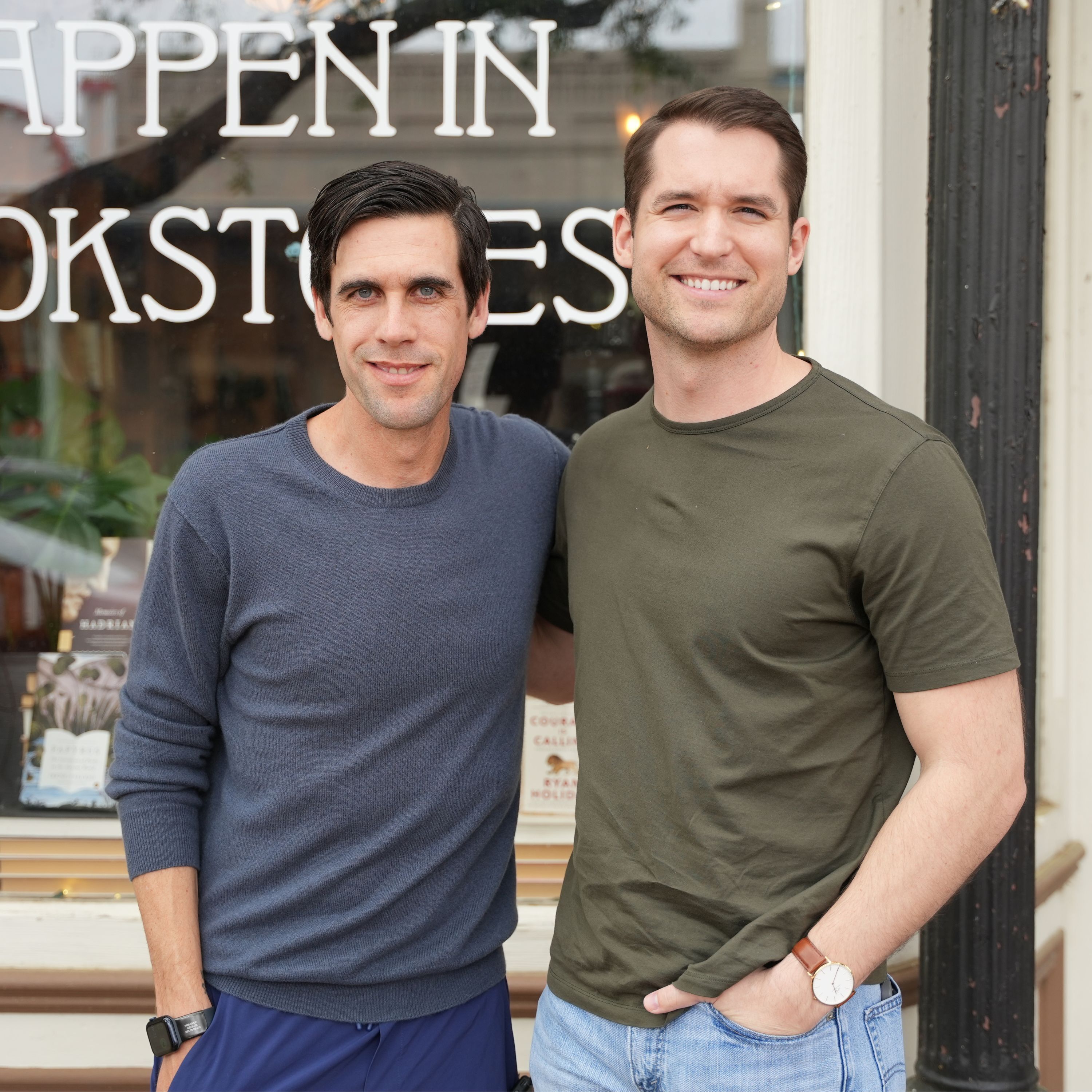
Grab a signed copy of Jefferson’s book, The Next Conversation: Argue Less, Talk More, at The Painted Porch!
Follow Jefferson on Instagram and X @Jefferson_Fisher, on YouTube @JeffersonFisher and on TikTok @JustAskJefferson
📚 Check out all the books Ryan gave Jefferson here | https://www.thepaintedporch.com/collections/jefferson-fischer
Sign up for Ryan's free monthly reading list newsletter: https://ryanholiday.net/the-reading-list/
🎙️ Follow The Daily Stoic Podcast on Instagram: https://www.instagram.com/dailystoicpodcast
🎥 Watch top moments from The Daily Stoic Podcast on YouTube: https://www.youtube.com/@dailystoicpodcast
✉️ Want Stoic wisdom delivered to your inbox daily? Sign up for the FREE Daily Stoic email at https://dailystoic.com/dailyemail
🏛 Get Stoic inspired books, medallions, and prints to remember these lessons at the Daily Stoic Store: https://store.dailystoic.com/
📱 Follow us: Instagram, Twitter, YouTube, TikTok, and Facebook
See Privacy Policy at https://art19.com/privacy and California Privacy Notice at https://art19.com/privacy#do-not-sell-my-info.
