
 Ask ChatGPT


- Podcasts
- The Daily Stoic
- You Are Not Fixed
The Daily Stoic2 Jul 2026 · 21m · 11 chapters
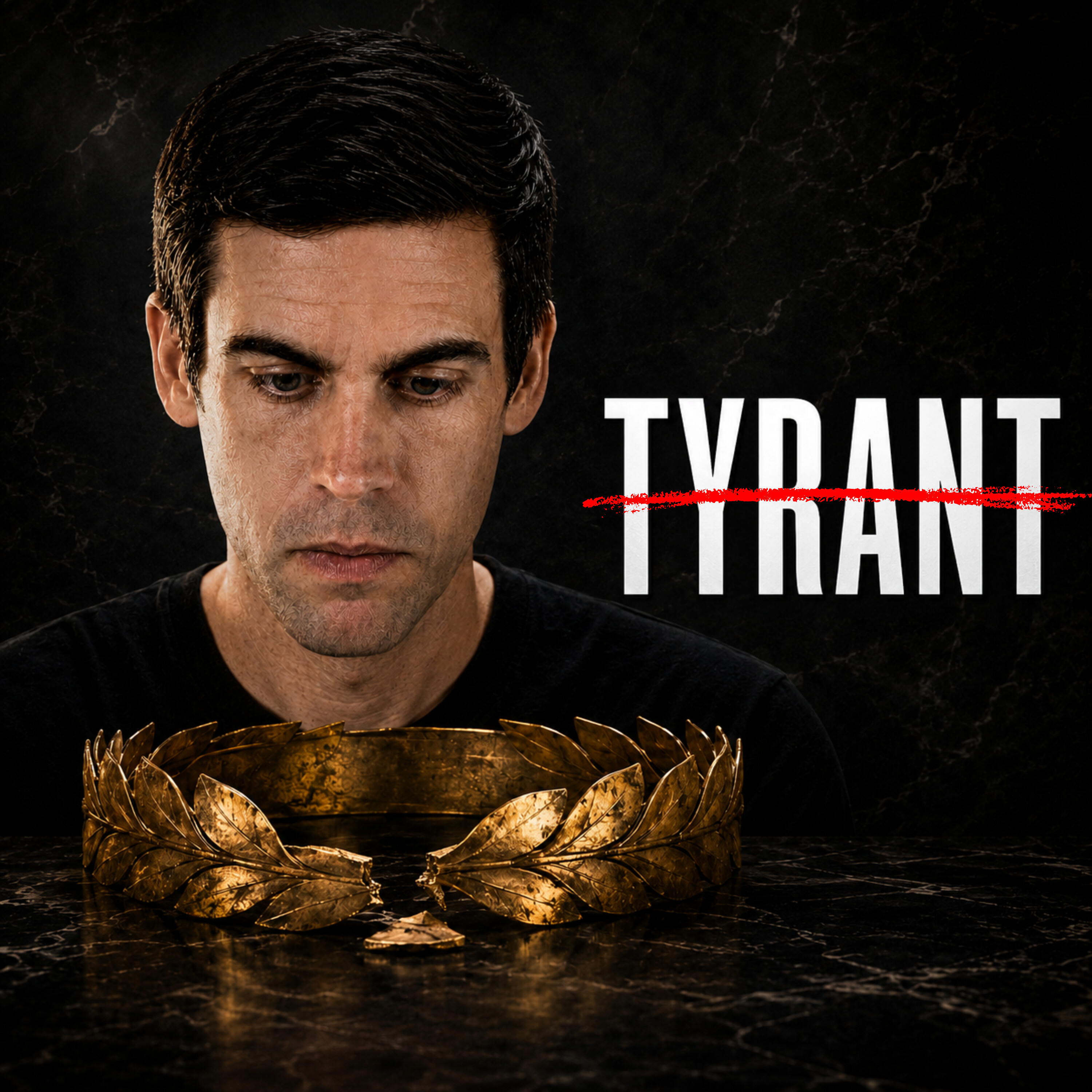
You Are Not Fixed | How A Stoic Would Respond To A Tyrant
In short
Stoic response to tyranny and the idea that you’re not “fixed”—you can change—using courage as public duty, not emotional numbness.
Guest
Tim Urban, creator of Wait But Why and author of “What’s Our Problem,” who discusses lifelong distraction and procrastination and a growth mindset.
Key claims
Stoicism preserves agency over thoughts/emotions/responses; courage and justice require speaking truth to power; Stoicism is not silence, complicity, or avoidance; virtue may fail to “win,” but betraying values is a kind of death.
Notable examples
Epictetus’ story of Roman senator Helvidius Priscus confronting Emperor Vespasian—refusing to stop speaking despite threats of death; Helvidius is later exiled and executed by Nero.
Written by AI. May contain mistakes.
Chapters
0:45
Recognizing Our Flaws
Discussion on common human flaws and the struggle to improve.
“with some of these very habits, namely distraction and procrastination.”
1:40
Tim Urban's Perspective
Introduction of guest Tim Urban and his insights on distraction and change.
“We must remember the hopeful note that Marcus Aurelius strikes at the end of meditations.”
3:00
Courage and Stoicism
Discussion on courage exemplified by Helvidius Priscus in ancient Rome.
“He basically told him to shut up, to stop criticizing the regime.”
5:00
Lessons from Helvidius
Exploring the significance of Helvidius's actions and Stoic philosophy.
“He wasn't interested in Stoic philosophy because it would make him more resilient or more productive because he was attracted to the riddles and the puzzles of it.”
12:50
The Cost of Virtue
Discussion on the challenges of maintaining integrity and virtue in tough situations.
“We all have different roles and jobs, right?”
14:00
The Power of Duty and Courage
Explore the essence of stoicism through the actions of Helvidius against tyranny.
“Helvidius's friend, could attest, is very often extremely painful.”
15:00
Stoicism vs. Passivity
Understanding the true nature of stoicism as active engagement, not silence.
“It's not avoiding conflict at all costs.”
16:40
Historical Context of Stoic Opposition
Learn about the historical figures who embodied stoicism in their opposition to tyrants.
“I get this all the time, but this is just totally wrong.”
18:35
The Cost of Integrity
Discuss the sacrifices paid by stoics and the importance of integrity in moral actions.
“He ended up dying on the floor of his house while Caesar triumphed.”
20:00
Confronting Power with Truth
Examining the necessity of speaking truth to power in all circumstances.
“It's like they say in the Bible, what good is it to gain the whole world if you lose your soul?”
Show all 11 chapters
21:40
The Legacy of Stoicism Today
Reflect on how stoicism can guide our actions in modern political and ethical dilemmas.
“Stoic philosophy inspire us to do, whether we're talking about Vespasian or Nero or Hitler or Stalin or anyone from the ancient world or today, they are requiring, they are dependent on the cowardice of others.”

Ask about this episode
Get the gist, explore an idea or ask about something said.
 Claude
On The Daily Stoic, what are the key points of this episode?
Searching your listeningTranscript
Automatic transcript. May contain errors.
0:00Ryan Holiday: Welcome to the Daily Stoic Podcast, designed to help bring those four key Stoic virtues, courage, discipline, justice, and wisdom, into the real world.
0:14Ryan Holiday: We all have bad habits. Some of us procrastinate. Nearly all of us, as Seneca said, are slaves to something, food or sex or booze or ambition. We don't work as hard as we should, or we work too hard, too quick with our temper, or we're too slow to ask for help. The point is, we're not what we could be. And in some cases, we're quite messed up. Indeed, we are all quite flawed. On an episode of the Daily Stoic podcast with Tim Urban, he's the creator of Wait But Why, and he's the author of this book called What's Our Problem, I talked to Tim about his lifelong struggle with some of these very habits, namely distraction and procrastination.
0:50Ryan Holiday: And Tim was quite aware about how his weaknesses in these areas have made things harder for him over the years. But he also expressed a sincere belief in his ability to change and grow. In other words, he was broken but not fixed. He retains, despite this discouragement, a growth mindset. He refuses to relinquish what the Stoics believed was our ultimate power, our sense of agency over our own thoughts, our emotions, and our responses to life. You know, it's easy to be cynical about ourselves. We know more than anyone how long we've been struggling with things. We know how ingrained our bad habits are, how hard it's going to be to get over them.
1:32Ryan Holiday: But we can't give up. We can't quit on ourselves. If we don't believe we're capable of change, who will? And if we don't believe we're capable of change, then we are definitely not capable of change. We must remember the hopeful note that Marcus Aurelius strikes at the end of meditations. Within 10 days, he says, you will seem a God to those to whom you are now a beast and an ape if you return to your principles and the worship of reason. I really want to tell you about the Daily Stoic Habits course, Daily Stoic Habits for Success, Habits for Happiness. It helps you do what the Stoics are talking about, which is how to avoid bad habits, how to form better new habits.
2:12I think it's one of the best things we've done. It's six weeks of habit formation, thinking about philosophy, applying it to your everyday life. These are habits I try to apply in my life that Marcus and Seneca and Epictetus and Musonius and all the Stoics we've talked about try to apply in theirs. It's great stuff based on philosophy, psychology, research, history, and I think you're really going to get a lot out of it. You can check that out at dailystoic.com slash habits, or if you join Daily Stoic Life, which you can join at dailystoiclife.com, You get that course and all our other ones for free.
2:46So check both those out. Daily Stoic Life and Daily Stoic Habits for Success, Habits for Happiness.
2:59Ryan Holiday: It was on the senator's way into the Senate that the emperor stopped him. He basically told him to shut up, to stop criticizing the regime. The senator said, it's my job as a senator to do and say what I think. So the emperor threatened to remove him from the Senate. And so the senator said, that's well and good, but while I am a senator, I will continue to do my job. And so the emperor Vespasian fixes the stoic philosopher Helvidius Priscus with a stare and says, if you don't stop, I'm going to have you killed. And Helvidius says, you do your job, I'll do mine. This is what courage looks like.
3:38Ryan Holiday: It's not performative. It's not even public. It's the politician putting not just their job, but their life on the line to do what they think is right. As rare as this was in the ancient world, I think it's rarer still today. And I want to talk about this story a little bit because I think it provides us some valuable lessons about courage, real courage, that we can apply here in the present moment. people think that the stoics were teaching us to become emotionally detached numb spectators even as the world burns around them and this is emphatically not what stoicism is or was and helvidius's example is proof of precisely that i think it needs to be said the stoics believed in and believe in courage public courage the courage to tell the truth courage to do your duty the courage to stand out, the courage to stand firm, even when there is power and pressure and fear, even when your interest is in compromising.
4:37Ryan Holiday: And very few people embodied that more than Helvidius here in this example. Helvidius is a Roman senator who lives in the first century AD. He's not born into some super powerful, important family. He's not emperor. He's not a general. He's just in many ways you're ordinary politician, but someone who came to believe that philosophy and indeed public service came with obligations. He wasn't interested in Stoic philosophy because it would make him more resilient or more productive because he was attracted to the riddles and the puzzles of it. He studied philosophy and he put it into practice because he believed it prepared you for moments like this because it was a philosophy for the man in the arena.
5:20Ryan Holiday: It would be nice if life was soft and safe and everyone got along, but it didn't, right? You're going to have moments where comfort collides with your conscience, where it collides with your career, where there is corruption and temptation, and it's probably safer and better to do what everyone else is doing. For Helvidius, philosophy was armor. It was preparation for this moment, a moment which is not unique in history, where the most powerful person in the world tries to silence you or tempt you or challenge you or corrupt you. But here, the emperor comes to him and says, stop getting in my way.
5:57Ryan Holiday: Where the emperor comes to him and says, be silent. Where does he draw this fortitude to say, why don't you make me? Now, this story about Helvidius, it comes to us from Epictetus. I think Epictetus is an interesting source here because Epictetus, who was a slave, was owned by someone who was high ranking in Nero's court. So Epictetus would have seen lots of Roman politicians, lots of wealthy, powerful, important romans and he would have seen how they debased themselves out of fear of nero out of greed wanting to profit from nero a lack of backbone and spine and so for him to call out this example with helvidius i think is illustrative because he would have seen the opposite of it far more than he would have seen examples of it vespasian is not the worst emperor of rome certainly he wasn't anywhere near as bad as Nero or Caligula or even Claudius.
6:50Ryan Holiday: He's not as bad as others, but clearly, like so many authoritarian rulers, like so many strongmen, he did not appreciate criticism or opposition, especially public opposition. We have this even in democracies, right? The president calls and you don't want to be on the wrong side of the most powerful man in the world. The problem with this is that good governance requires opposition in fact by rubber stamping by being a sycophant by not speaking the truth when you see it you are actually doing the emperor or anyone you serve a grave disservice right the whole story about how the emperor has no clothes it's a funny story we tell kids the true moral the true lesson of that story is like the emperor is is being taken advantage of and then not being well served by everyone around him who's afraid to hurt his feelings.
7:39Ryan Holiday: He's not getting the truth that he is in fact embarrassingly naked and exposed. In the American system, ambition is supposed to check ambition. There is supposed to be, by zealously guarding your prerogatives, by being a senator, by not rubber stamping, by speaking up, by criticizing, by saying, I don't think that's a good idea, or hey, that's illegal, or hey, that's morally wrong. You are actually not just doing your job. You are operating as an important check on power. And we know that unchecked power ultimately hurts not just the leader, but the public at large. The context of their interaction comes on a day where Vespasian, we can deduce, is trying to ram something through the Senate, which was largely a performative body anyway.
8:23Ryan Holiday: And he asks Helvidius not to attend. And he's probably asking him not to attend because he knows he's going to oppose it. Vespasian doesn't want the opposition. And so So he doesn't want an opponent there. But Helvidius says, look, I'm a senator. I have to show up and do my job. I'm not going to, by absenting myself, tacitly approve what you're doing. So just here, this is remarkable, right? He's not going along to get along. He's not playing by the fake rules. It's not about him either. In fact, he probably doesn't enjoy the opposition or the conflict. He's just saying like, look, I was elected by the people.
8:56Ryan Holiday: I was appointed to this position. I have to do this job. This job comes with duties and responsibilities, and I can't abandon them just because it's inconvenient for you or, more importantly, just because you asked me not to. Then what does Vespasian do? He escalates. He says, okay, if you come, just don't speak. But again, Helvetius says, my job is to speak. He says, if you don't ask for my opinion, if you don't do something I disagree with, then sure, I'll remain silent. But again, look at the logic here. The logic here is duty and responsibility. he's not like relishing the conflict or the disagreement he's not doing it because oh hey this is good for my career this plays well to the media you know this is red meat for my base he's saying like look i gotta do what i gotta do and so again helvidius and vespasian are in this inevitable conflict because one doesn't want the person to do the job and the other person is insisting that they do their responsibility and their duty and i think this is the essence of Stoic philosophy, and it's something that we are sorely missing here today.
9:59Ryan Holiday: Look, you should be able to be comfortable anywhere, but you should also be comfortable inside your own house. Like your space should feel like you should look the way you want it to look. You should have the stuff that you want to have. And that's where today's sponsor Wayfair comes in, because a budget doesn't need to get in the way of having all of those things. With plenty of options for every style you can imagine. You will definitely find something you like on Wayfair and at a price you can't beat. Got a new rug for the living room on Wayfair. You know, normally rugs are just like crazy expensive.
10:34And then you're like, do I like this rug?
10:36Ryan Holiday: Do I not like this rug? But look, we know we got kids, we got a dog. We don't want to spend a ton of money, but we want something that looks good. We want something that lasts. And on Wayfair, we got the best of both worlds. A rug that matches our style, doesn't cost too much. The dog tracks mud, clean it, you know, whatever. We want it to look nice. We want to be comfortable with it. We don't want to have to stress about it. Delivery was super easy. Wayfair also has installation and assembly stuff so I could spend my time writing instead of getting angry at some frustrating instructions. Working online is easy.
11:09Ryan Holiday: It's all delivered right to your door. Wayfair products have over 20 million verified five-star reviews to help you make the right call. And I recommend shopping with Wayfair verified. Your shortcut to the good stuff. Their team of product specialists vet everything by hand using a 10-point quality inspection so you know you're getting a great piece no matter your budget. Are you ready to upgrade your home for way less? Well, head over to Wayfair.com right now to shop all things home and get your space ready for less. That's W-A-Y-F-A-I-R.com. Wayfair, every style, every home. This episode is sponsored by BetterHelp.
11:46Ryan Holiday: I don't think Stoic Racism is about being emotionless, but it is about thinking about those strong emotions. We have questioning them, getting to the bottom of them, asking if they're healthy or productive or not, asking if they're based on anything real or not. And these are all questions I've been over with my therapists over the years. I said plural because I've switched at different times in my life based on where I lived, what I need. One thing that's been consistent, though, is I always do remote therapy. I want to find the best person, which means I don't really care where they live. Also, I don't want to drive across town.
12:17Ryan Holiday: I don't want to wait in traffic. I don't want to do any of that. That's where today's sponsor comes in. If you've been considering therapy, check out today's sponsor, BetterHelp. BetterHelp makes finding a therapist super easy. BetterHelp does the initial matching work for you. You can switch at any time. And with over 30 ,000 therapists, BetterHelp is the world's largest online therapy platform, and they serve more than 6 million people globally. Don't let stigma stand in the way of support. Start therapy with BetterHelp. Sign up and get 10 % off at betterhelp.com slash dailystokepod. That's betterhelp.com slash dailystoicpod.
12:50Ryan Holiday: We all have different roles and jobs, right? We're a citizen, we're a senator, we're a parent, we're a city council member, we're on the board of a nonprofit, we're an officer in the Marine Corps or in the Army. And this role comes with certain obligations and responsibilities. Now, these are not just aligned with the customer or the public or whomever, but they are uncontested and uncontroversial. But there are moments where these obligations become inconvenient, where they become onerous, where they become complicated, where they become potentially even painful. And that's the test. It's easy to be virtuous when virtue is rewarded, when virtue is celebrated, when virtue is very well understood.
13:32Ryan Holiday: It's easy to be honest when the honesty is safe or there are no stakes. But what happens when you have to say something that you know someone doesn't want to hear? Right. They say it's not a principle unless it costs you money. doing the right thing when it costs you, that's what we're talking about. And it's here that Vespasian makes those stakes explicit. He threatens Helvidius with death, which is power that the Roman emperor has. And death at the hands of the Roman emperor, as Jesus could attest, or Seneca, Helvidius's friend, could attest, is very often extremely painful. And yet, even so, staring down his own fate.
14:09Ryan Holiday: Alvidius says, you do your job. It's not going to prevent me from doing mine. If you think that as the emperor, you have to kill me over saying and doing what I think is right, so be it. I'm going to be a senator up until my final seconds on this planet. And that act of devotion, that act of duty and responsibility and courage is something that has echoed down through the ages. He's basically saying to the emperor, you can control whether you punish me, but you don't get to decide whether I betray my values. You can kill me, but you can't make me debase myself. You can't make me be someone other than I want to be.
14:48Ryan Holiday: That's something only we can do to ourselves. And that is what stoicism is. I think this is so important, right? Stoicism is not silence. It's not complicity. It is not powerlessness, right? It's not avoiding conflict at all costs. It's not pretending that injustice doesn't matter because it's happening far away or it's happening at levels far above us. It's not emotional suppression, and it's certainly not dodging responsibility under the guise of cultivating inner peace. The Stoics believed we had duties to ourselves and duties to other people. This is where the virtue of justice comes in. Courage and justice are related to each other.
15:25Ryan Holiday: The Stoics believe we have a duty to truth, to society, that if they swore an oath, if they said they would do something, if they believed that they were put here to do a task, They wouldn't let anything get between them in that task, even if that would cost them, even if they'd be criticized for it, even if they'd be attacked by it. And so the Stoics consistently found themselves in opposition to corrupt and tyrannical rulers. Now, Seneca plays more of a dual role in Nero's time, and he is rightly flayed by this, not just by historians ever since, but by people in his own time. he was contrasted with say Thrasia who is just a perpetual thorn in Nero's side as a senator as Helvidius was and actually this group of Stoics becomes known as the Stoic opposition and time and time again they stood up when they saw something that was happening that was wrong when they saw someone breaking the law breaking the rules and this goes back to Cato who is the mortal enemy of Julius Caesar again Thrasia in the time of Nero Agrippinus has this sort of perpetual hereditary hatred of demagogues and tyrants and then of course we have helvidius confronting this passion as well so these are not detached spectators these are people who are living their philosophy publicly they have a political philosophy and then they have their actual philosophy and they're applying these things even when it is not safe to do so so this version of stoicism that sometimes you see people talking about on the internet it's just wrong This one that's like, stay out of everything, don't care, none of this matters, focus on yourself, why are you being political, it doesn't make a difference, you're going to offend some of your audience.
17:02Ryan Holiday: I get this all the time, but this is just totally wrong. If your version of stoicism makes you passive in the face of corruption or injustice, that is not stoicism. That's cowardice. That is self-protection with a philosophical label. Stoicism isn't just like posting nonsense on the internet, right? I think it's really important that the criticism that Helvidius is doing has real stakes to it like he's not tweeting about this like he's saying it to the emperor's face he's doing it when it actually costs him he is engaged and active he's not lobbing this from another country from far away from safety he is doing it in the arena he's doing it in the room where these things happen that really matters too it's easy to just criticize from the outside but how are you really putting your ass on the line with these things that's part of this too.
17:48Ryan Holiday: Helvidius isn't just this like gadfly, eccentric, contrarian. He's not just trying to get attention. He's not just trying to build his brand as like a countercultural figure or something. Again, he is part of the system. He's engaged in the system. He is participating in the system, but it's there that he is speaking and saying these truths. It's so easy to be an outsider. Again, like today, it's easy to be active on social media or say, hey, I don't like what's happened in my country, so I'm going to move to another country, and maybe from there, then you're criticizing. No, no, no. Helvidius is doing this from inside the tent, as long as he's able to be inside the tent.
18:24Ryan Holiday: I think that's really powerful too. Now, here's the part that we have to talk about, because sometimes we sanitize these stories when we tell them. We round off the edges. I'd love to tell you that Cato, one, triumphed over Caesar. He did not. He ended up dying on the floor of his house while Caesar triumphed. Thrasia is executed by Nero. Agrippinus is exiled. Helvidius does not win over Vespasian, not in the strictest sense of that word. Vespasian doesn't go, you know what, you're right. I was being an asshole. I'm so bowled over by your bravery. I'm going to change my ways. Helvidius was not executed by Vespasian.
19:01Ryan Holiday: He's later exiled by Nero and then ultimately executed by Nero. He pays the ultimate price for this. We'd like virtue to guarantee success. We'd like moral righteousness to triumph. It might be true that over the arc of history, it bends towards justice, but that requires a lot of pulling and it requires a lot of sacrifice. The Stoics did not think that courage alone would triumph, that you would always win, that just having your heart in the right place is enough. But they did believe that trying to do the right thing and failing was better than preserving your hide or your career or your life at the cost of your honor and your values.
19:40Ryan Holiday: They understood betraying yourself, that going along to get along, that lying or that cowering in fear was a kind of death. For instance, in the modern political context, to sell out but keep your seat or your office or your job is to lose something even more important, which is the value of that job, the dignity of that job. It's like they say in the Bible, what good is it to gain the whole world if you lose your soul? The Stoics know we don't control our leaders necessarily, right? Helvidius does not control Vespasian. He didn't get a vote in whether he was exiled or not. He could not defy death, but he does control whether he allows his fear or his self-interest or his greed or his love of having a seat at the table made his decisions for him.
20:27Ryan Holiday: And that distinction matters. Helvidius doesn't ask, what's going to happen to me? How is this going to work out? He says, what does my duty obligate me to do? What am I required to do here? What is the right thing? And then he did that. You do the right thing, Parasharila says, the rest doesn't matter. Doesn't matter if it's cold or warm. He says, it doesn't matter if you're tired or well-rested. He doesn't matter if people appreciate and understand it or not. It doesn't matter if it's celebrated in your own time or vindicated historically or vindicated, never. What matters is what your obligation, your training, your responsibility, your moral compass tells you to do here in this moment.
21:04Ryan Holiday: I don't really care what you do, whether you're an elected official or an ordinary citizen. It's all of our jobs, all of the time to speak truth to power. And anytime we're given a chance, anytime we're in proximity of that power, our job is not to tell them what they want to hear, is not to try to keep things pleasant or fun, our job is to speak up. You do ultimately have to pick a side, especially in times like this, especially when there are abuses and hypocrisy and injustice and evil happening around us. This is specifically what Stoicism is telling us to do. And the great examples from Stoic philosophy inspire us to do, whether we're talking about Vespasian or Nero or Hitler or Stalin or anyone from the ancient world or today, they are requiring, they are dependent on the cowardice of others.
21:56Ryan Holiday: They are looking for you to compromise. They are looking for you to accommodate yourself. They are looking for you to do what they want you to do, not what you know you are supposed to do, not say what you are actually thinking and actually believe. So just as much as we needed it then, we need it now. We need people who challenge the status quo. We need people who refuse to compromise. We need people who speak truth to power, people who do their jobs, even when it's inconvenient, even at great risk to themselves, even when it means they might lose said job, or even when it means they might lose things that they cherish even more than those jobs.
22:34Ryan Holiday: And I think that's a powerful example from 2000 years ago that can inspire us today in our own moments. Most of us will not have to face an emperor, but sooner or later, we're all going to face some kind of temptation where silence benefits us, where someone is asking us to look the other way, when someone is asking us not to do what our job or our duty or our conscience knows we need to do. And it's in this moment where character and philosophy has to come in, where it gets real. And that's the question that Helvidius' example leads us with. Not, how is this going to go for me? What are other people going to think?
23:09Ryan Holiday: Is this going to be easy or hard? but what does my duty require of me here? What does virtue demand of me here? And if I'm not gonna do it now, when am I gonna do it?
From the publisher
If we don't believe we're capable of change, then we are definitely not capable of change.
👉 The Daily Stoic Habits for Success, Habits for Happiness course is a six-week challenge designed to change your entire relationship with habits for the better. Sign up to take the first step toward a more effective, happier life | https://challenge.dailystoic.com/habits
🎥 VIDEO EPISODE | Watch this episode here: https://www.youtube.com/watch?v=jbtkWCCKkkg
🎟️ DAILY STOIC LIVE | Ryan Holiday is coming to a city near you! Grab tickets here | https://www.dailystoiclive.com/
🎙️ AD-FREE | Support the podcast and go deeper into Stoicism by subscribing to The Daily Stoic Premium - unlock ad-free listening, early access, and bonus content: https://dailystoic.supercast.com/
✉️ FREE STOIC WISDOM | Want Stoic wisdom delivered to your inbox daily? Sign up for the FREE Daily Stoic email at https://dailystoic.com/dailyemail
Wealthfront’s high-yield cash account: https://www.wealthfront.com/stoic
This experience may not be representative of other Wealthfront clients, and there is no guarantee of future performance or success. Experiences will vary. Ryan Holiday, who’s a client of Wealthfront, receives cash compensation from Wealthfront Brokerage for paid testimonials in his podcast, creating a conflict of interest. More details available via the referral link. The Direct Deposit Plus Investing Program from Wealthfront Advisers LLC and Wealthfront Brokerage LLC provides eligible clients a 0.25% APY increase above the base APY on eligible Cash Account balances (up to an overall boosted rate of 4.30% for a limited time when including the three month 0.75% APY boost for new clients) when you direct deposit $1,000 a month, plus open, fund, and maintain an investing account. Wealthfront may change or end the program at any time and determine eligibility at its discretion. Terms apply. Full details at wealthfront.com/promo-terms.
The Cash Account, which is not a deposit account, is offered by Wealthfront Brokerage LLC ("Wealthfront Brokerage"), Member FINRA/SIPC. Wealthfront Brokerage is not a bank. The Annual Percentage Yield ("APY") on cash deposits as of January 30, 2026, is representative, requires no minimum, and may change at any time. References to the APY for the Wealthfront Cash Account, including any APY increase, are to the APY paid by insured depository institutions that participate in our cash sweep program (the "Program Banks”). Wealthfront Brokerage does not pay interest. Wealthfront Brokerage sweeps cash balances to Program Banks, where they earn the variable APY.
Instant and same-day withdrawals use the Real-Time Payments (RTP) network or FedNow service. Transfers may be limited by your receiving institution, daily caps, or participating entities. New Cash Account deposits have a 2–4 day hold before transfer. Wealthfront does not charge fees for these services, but receiving institutions may impose an RTP or FedNow Fee. Processing times may vary.. Fees & Eligibility requirements may apply to certain checking features.
Investment advisory services are provided by Wealthfront Advisers LLC, an SEC-registered investment adviser. Investing involves risk, including the possible loss of principal. Securities investments are not bank deposits, bank-guaranteed or FDIC-insured, and may lose value.
See Privacy Policy at https://art19.com/privacy and California Privacy Notice at https://art19.com/privacy#do-not-sell-my-info.
More from The Daily Stoic
All episodes
We use cookies.They keep VO running smoothly and help us improve it. Privacy policy