
 Ask ChatGPT



In this episode, Dr. Peniel Joseph, a prominent scholar of American history and author, discusses the monumental events of 1963. This year was marked by significant occurrences such as the assassination of JFK, Martin Luther King Jr.'s "I Have a Dream" speech, the Birmingham Campaign, and the intense struggles of the Civil Rights Movement. The conversation centers on how these events shaped American society and politics, emphasizing contrasting strategies between figures like Malcolm X and Martin Luther King Jr.
Written by AI. May contain mistakes.

Get the gist, explore an idea or ask about something said.
 Claude
On The Daily Stoic, what are the key points of this episode?
Searching your listeningAutomatic transcript. May contain errors.
0:00I'm recording this on a Monday, and Monday is our grocery store day in our family. I usually pick my kids up from school and we go over to Whole Foods, get all our groceries for the week. Although here very shortly, we're going to go over there to get our Thanksgiving turkey because they've got a bunch of great options. Turkeys start at$149 a pound if you have Prime with organic birds at$299 a pound. And they only carry no antibiotic ever turkeys that will bring quality to your table at a great price. Whole Foods has great everyday prices on all your Thanksgiving essentials, whether you celebrate with a massive family or just a few close friends.
0:37Everything they sell has high standards to help you shop with confidence. Enjoy so many ways to save on your Thanksgiving spread at Whole Foods Market. Why choose a Sleep Number smart bed? Can I make my sight softer? Can I make my sight firmer? Can we sleep cooler? Sleep Number does that. Cools up to eight times faster and lets you choose your ideal comfort on either side. Your Sleep Number setting. Enjoy personalized comfort for better sleep night after night. It's the final days of our Black Friday sale. Recharge this season with a bundle of cozy, soothing comfort. Now only$17.99 for our C2 mattress and bays, plus free premium delivery.
1:11Prices higher in Alaska and Hawaii. Check it out at a Sleep Number store or sleepnumber.com today.
1:22Welcome to the Daily Stoic Podcast, where each weekday we bring you a meditation inspired by the ancient Stoics, a short passage of ancient wisdom designed to help you find strength and insight here in everyday life. And on Wednesdays, we talk to some of our fellow students of ancient philosophy, well-known and obscure, fascinating and powerful. With them, we discuss the strategies and habits that have helped them become who they are and also to find peace and wisdom in their lives.
2:06Hey, it's Ryan. Welcome to another episode of the Daily Stoic Podcast. I would say two of the most influential sets of books that I have ever read, and they were epic. And, I love those doorstop biographies, but when I read Robert Caro's series on Lyndon Johnson, which I believe it's four books, and then he's working on the fifth, that opened my eyes just to what great writing could be, to how power dynamics work, ambition, and how the American system of government works. I mean, the first book has like 200 pages just on the history of Texas that helped me understand where I live. It was an incredible series, some of the best writing you ever read in your life.
2:49And then after I made my way through that series, which I didn't do in order, actually, because I bought one on vacation one time, I started on like the third one, and I went back and then forward. I've always been looking for those sort of epic series. And another one I read that changed my life, that changed how I understood where I live, changed how I understand my country, changed how I understand even many of the Stoic virtues, namely the virtue of justice, was Taylor Branch's series on Martin Luther King. which is three books. I'm trying to think about how many pages. If I had to guess, and maybe I'll let Claire, my producer, jump in and see how close I am with this guess afterwards.
3:28But I would guess the Taylor Branch series is like 2 ,000 pages, maybe 2 ,100 pages cumulatively. And then I would say the Lyndon Johnson series is 2 ,500, 2 ,800 pages. I could be way off. I read them in paperback, but they take a while. Each one's like 700 to 900 pages. So it is a huge commitment, but there's just something about the depth that they go in and something about all the side characters and tangents in the scenes. It's just some of the greatest writing in American history. Now, what does this have to do with today's guest, who actually was introduced to me by the great R.C. Buford, formerly the GM of the San Antonio Spurs and now the CEO of the Spurs franchise, one of my favorite people.
4:15He's been a great supporter of my work. He comes to the philosophy dinners that we've been doing with the Virtue Series. We did one for courage. We did one for discipline. We did one for justice. And then we're going to do another one here. If you buy a bunch of copies of the wisdom book, I think you can grab that pre-order at dailystoic.com slash pre-order or dailystoic.com slash wisdom. I don't know. I'll link to it in the show notes or Claire will pick the right link to leave in here. But the point is, R.C. said, hey, there's this guy we've had out to talk with the team and the organization.
4:46And he's someone whose works influenced me and opened up my eyes. He said, you got to talk to Dr. Peniel Joseph, who has written this new book called Freedom Season, how 1963 transformed America's civil rights revolution. So to go back, what does this have to do with Lyndon Johnson? Well, Dr. Johnson is at the LBJ School of Public Affairs, which is at UT. The presidential library is also there. So when I looked up this person that R.C. Buford had recommended, I was like, oh, wow, this guy writes about the civil rights movement and American history at the LBJ school. These are like my two loves, right?
5:25These are my two loves intersecting with each other. And I read his book. He came out to the studio and we had an awesome conversation because 1963 is just an absolutely pivotal year of American history as we immediately get into in the episode. This is a topic I've been reading a lot about, not just for the Justice book, but also for the Courage book, and also just shaping how I understand the world. I think when you live in tumultuous times, when you live in times of unrest and dysfunction and division, one of your best options to understand what's happening now is to go back to previous times like that.
6:00And then you can understand the forces at play, the personalities at play, the stakes at hand. And I think Freedom Season and this sort of deep dive into 1963 is obviously a great example of that. His other books, fascinating. He wrote one called The Sword and the Shield, which is sort of a compare and contrast of Martin Luther King and Malcolm X. And he wrote a book called The Third Reconstruction. He signed copies of those at the Painted Porch. I just really enjoyed this conversation. And then at the end, we did a little walkthrough of the bookstore and we were looking at those big, huge biographies.
6:36we talked about Taylor Branch, we talked about Robert Caro. And then he points, he's like, oh, have you read this Hamilton biography? And I said, read this Hamilton biography. Not only have I read it myself, and am I listening to the audio book with my son, but we are obsessed with Hamilton in this household because of my eight-year-old. And he said, oh, my daughter is exactly the same way. She's roughly the same age. They had went to see it in New York, and then they were seeing it in Austin. And so it was just funny. I wouldn't think my love and fascination now, which goes back almost 10 years with Alexander Hamilton, would be connecting me with all these other parents.
7:09But that seems to be the boat that everyone with young kids is in right now. Anyways, this is a great episode. I think you're really going to like it. Enjoy. We will talk again very soon. And like I said, you can get signed copies of Dr. Joseph's books, Sword and the Shield, The Third Reconstruction, and Freedom Season. And also, you can pre-order Wisdom Takes Work, which is my final book in my series, not quite as epic as Robert Caro or Taylor Branch, but you can grab that at dailystoic.com slash pre-order.
7:42So tell me why is 1963 the year? Yeah, that's a great question. You know, 63, I stumbled onto 63 really doing research on other topics, right? And every time I got to 63, you know, you've got the Kennedy assassination, you've got Birmingham, Alabama, that sort of explodes. You have all these things, but in these other projects, I always had to rush through 63, but I always kept coming back to it and saying, that's a really important, neat year, but there's no legislation passed. So there's no civil rights act, there's no voting rights. So it was kind of like, and freedom season, what I've found is that 63 is really the origin point and the origin story for all the other things that you're going to see in that decade.
8:31So when you think about hippies, when you think about Haight-Ashbury, when you think about protests at the Pentagon, the Black Panthers, when you think about LBJ, we're in Texas, Undon Baines Johnson, 63 is the key to what we think about as the 60s. Right. It was also interesting to me to think how aware they were that it was the anniversary of the Emancipation Proclamation. Like, is it in the I Have a Dream speech? I don't remember exactly, but Martin Luther King is basically like, we're here to cash a check. Yeah. Like, you promised us something exactly 100 years ago, and enough is enough. Absolutely.
9:08And emancipation, that's a great point. People are excited that it's the centennial of the Emancipation Proclamation. President Kennedy, but civil rights activists are pushing him to sort of sign a second Emancipation Proclamation that is both symbolic, but also showing sort of how the federal government is behind a new sort of wave of freedom. Yeah, like seemingly those sort of anniversaries and symbols shouldn't matter, but it mattered at that time in a way that, you know, in the decades since you sort of lose, oh, this is why it happened in 63, why there was a kind of an urgency and a relevance to it, as opposed to 61 or 60 or any other, even 64.
9:52I mean, there's a reason it happened then, I think. Absolutely. And 63 builds upon what's happened with the Brown decision in 1954, the desegregation decision, the Montgomery bus boycott, Emmett Till. 1957 is Little Rock Central High School. Eisenhower sends the 101st Airborne Military to escort these young Black children to school. And then you mentioned 1960. 1960 is the sit-in movement in Greensboro, North Carolina, which is a Woolworth's lunch counter, which is now a civil rights museum, 65 years later. And 61 are the Freedom Rides. And then 62 is James Meredith becoming the first Black student to enroll at the University of Mississippi, or Ole Miss, as they call it.
10:31So it's like 63 is the year it comes to a boil. Yes. In positive and negative ways. So the book is a hopeful book too, because what's interesting about this book, and this is the book that I've had the Kennedys in the most, and it's fairly balanced with a bunch of protagonists. James Baldwin is the beating heart. There's really a bunch of positive stuff that happens. It's a book where you've got John Bircherites and William F. Buckley alongside of James Baldwin and Medgar Evers and John F. Kennedy. And so people are having surprisingly robust debates over freedom. And there's a point in the book where at the March on Washington, there are white supremacists across the street and NAACP activists are saying, we support their right to be across the street, even though we disagree with them.
11:18And they're eventually sort of pushed out of the march, but only because they violated the agreement that they had. They weren't supposed to make an organized speech at the March on Washington. And they do. And George Lincoln Rockwell, who's the head of the American Nazi party, they're sort of escorted out. Right. But it just shows you the kind of dynamism of the time where you could have, you know, white supremacists at the March on Washington. And people are saying, well, I support their free speech right to be here. And also the way that history sort of rounds off the rough edges. I mean, I've never even heard that before.
11:53You know, like that that was there, that we're not talking about that because it's uncomfortable and weird and dark. And like it was this moment that we all agreed on and supported. But of course it didn't. Like, you know who George Raveling is? Yes. So I just did a book with George Raveling and he was one of the things that he always points out because he ends up with the I Have a Dream speech is that obviously it went well and people knew the speech mattered. But it's only in the decades later that it becomes the I Have a Dream speech. Like Kennedy, he says Kennedy gives the name to it. But the point is, it was a speech in a political moment, but it only becomes the American icon and symbol as history is written and rewritten.
12:34Retrospectively. Absolutely. Absolutely. The exciting part about 63, though, is they know they're making history. And it's not just King, it's everybody. And so Baldwin is a great example. So Baldwin goes from just being sort of this writer to this real activist who's taking tours of the South Fakur, who's on the cover of Time Magazine, massive story in Life Magazine, meets up with Bobby Kennedy at Bobby Kennedy's dad's apartment and has this big three-hour té-to-té with him. So they know that there's a special year brewing and global stuff is happening. So Kennedy is in Bonn in Germany and speaking before a million people.
13:10I mean, it's an extraordinary year. There's an energy that's huge. And what people do, I think, erroneously with this year is they act like the president's assassination is a fait accompli. And that's the furthest thing from the truth. So by the time November 22nd happens, yes, it's this epical watershed. In certain ways, I argue that in a lot of ways, I think about America, we still haven't recovered from the Kennedy assassination or the assassination of the children in Birmingham. We still just never recovered. But that wasn't a fait accompli. People are shocked. Yes. People, you know, like that wasn't how we're supposed to go.
13:46It's also 11 months into the year. Yes. It becomes the consequential defining event of that year as if there weren't 11 months of other momentous things, each one of them, you know, a watershed sort of transition. Like it's the largest, the March on Washington is the largest amount of Black people ever in one place. Yeah. There's just thing after thing after thing. And then the crescendo is the assassination. Is the assassination. Yeah. That's crazy. I didn't think about that.
14:39transportation, getting me to and from my house, it unlocked a whole different style of living for us, not just on the ranch, but in our little Texas towns. There were places I could go now that I couldn't go before, especially out here in the piney forests, through the fields, and on the unpaved roads like the one that I lived in. We got to go deep into the hill country's wild beauty. We've driven all the way out to East Texas. We've driven across the country. And by we, I mean not just my wife, but both my kids who I drove home from the hospital in that truck. Toyota trucks are built for those who understand that the best adventures happen when you're willing to veer off course.
15:22Because you never know when you'll end up on a Toyota adventure detour. And of course, this is stoicism too, because every detour, every obstacle is an opportunity. But it's helpful if you can handle the difficulty inherent in that. If you've got the resilience and the right companion to make it wherever the road takes you. Discover your uncharted territory. Learn more at toyota.com slash trucks slash adventure dash detours. We just took our kids to an outdoor performance at the Nutcracker. They had a snow cone and then they went insane in the car ride home. And one of the things I try to remind myself when that's happening is that I don't control my kids' behavior, especially when they're too far gone like that, but I do control how I respond, right?
16:08That's stoicism, but it's also what Dr. Becky talks about. Dr. Becky is a clinical psychologist and a best-selling author, and she founded Good Inside, which is there to give parents practical, actionable tools for handling those everyday challenges with confidence. My wife introduced me to Dr. Becky's books. I love them. I've recommended them a million times. I've had her on the podcast. And as it happens, Dr. Becky is hosting two live Q &A events for good inside members. I am one of them. She signed me up for it about a year and a half ago. I've loved it ever since. On December 1st, you can join Dr.
16:45Becky for her How Not to Raise Assholes event, which is about avoiding entitlement and raising kind, empathetic kids. And on December 15th, she's hosting her How Not to Lose It over the holidays event, which I'm sure we could all use. As I said, I'm a big fan of Dr. Becky. She's been a great influence for me as a parent and just as a human being. And Daily Stoic listeners can join for 15 % off with code STOIC15. You just got to head over to goodinside.com to catch the events.
17:21yeah it could have gone differently i mean the bullet goes an inch the other way and you we might be talking a very different story about 1963 might be all good largely good absolutely i mean he he does if he doesn't have the corset on it's just a shot to the neck that he could recover from right and so the death shot only happens because he happens to be wearing that corset for his bad back. That table you walked by in there, that table is a table from the school book depository. Oh, wow. And I've been to the school, but it's an amazing sight. Absolutely. Yes. That is the striking back. You know, like if the civil rights movement is this sort of innovations as far as protests and organization, then we're also about to see all the backlash of violence as a part of the counter playbook.
18:10Yeah. There's a counter revolution happening. One of the things I teach my students is that the country is more than one thing simultaneously. So what's so interesting about 63 is you see the good, the bad, you know, there are conspiracy theorists. You see the John Birchers, right? You see arguments among liberals, like people are having now in 2025, Norman Potter is at the time, who becomes a conservative, but is having an argument with his friend, Jimmy Baldwin in Commentary Magazine about how do we get to this racial justice thing? And certainly Jimmy Baldwin's The Fire This Time really puts out a huge, I think, still unbelievably important paradigm for reconciliation that's based on confronting sort of the original sin of racial slavery.
18:57But Baldwin thinks of Americans, black, white, whatever color, as a strange kin and a strange family. So I think Baldwin is really the key. And that's kind of the revolutionary way of looking at it. Although some people will say Baldwin's naive. I don't think he's naive at all. He thinks of us as family. And he says that, you know, one day we're going to remember this as how could we have done this to us rather than them? Yes, which is kind of how we think about it now. I mean, the vast majority of people look back at segregation and Jim Crow, and it just doesn't make any sense. And that's probably, I think, why we have some of the problems that we have, is that it's so incomprehensible, like the Holocaust, that you have trouble wrestling with it and then seeing the analogs and seeing the lessons and seeing the ways that something like that doesn't just happen.
19:50It's a process. And there's a reason we're really sensitive about not doing certain things because it starts a process that invariably ends with stuff like that. Agreed. And when you think about the Holocaust and slavery and different things, I think people now sort of don't want to talk about it in a way that in 63, we did feel comfortable talking about it. And in 63, this is what's going to lead to things like roots and all this different stuff that become these huge pop cultural explosions because we're like, okay, let's talk about it. Part of it is that World War II just happened. Nuremberg trials 18 years ago.
20:26What's so interesting about this period, and this is one of the big moments in American history, is that the country feels it can conquer anything. And so even though there's, again, there's contradictions, there's inconsistencies, but that feeling that animates the spirit of America is really glorious. And that's what helps bring about all these positive changes, even while simultaneously you have people who are saying, no, I don't want to go for it. Medgar Evers becomes a great example of this, who's in Mississippi, sort of fighting the good fight, trying to end racial segregation, who this book documents him before the assassination, certainly after, but before where you see this local military hero, football star, 37 years old, weightlifter when weightlifting wasn't a thing, right?
21:15Before Arnold. Before Arnold. And who's like, you know, sort of almost out of a comic book in terms of how sort of with the jaw and you see this figure, he's like built from granite. That's a good point. I think the way we sand down the edges of things, we see Martin Luther King preacher, so many of the civil rights movements were preachers, but a lot of them were fucking badasses. Like even James Meredith, James Meredith was like a badass. And a big part of it for him was like, you're not going to fucking tell me what to do. And then there was some quote he said once where he was like, I refuse to accept that anyone has the power to scare me.
21:50These were, I mean, war heroes. These were people who got training. These were people who could kick the shit out of you. And so they were, I think, at some level just tired of their inferiors kicking them around. And that's when you look at these pictures of some of these Southern politicians, these Southern sheriffs, then you look at who they're up against, you kind of get it. You're like, I'm going to let this guy tell me where I can and can't eat or make me afraid. Absolutely. I know how to use a gun. I know how to defend myself. And they're iconoclasts. That's what's so great. Because politically, in certain ways, some of them don't fall along Democratic or Republican lines.
22:27Actually, Meredith later, he's kind of a weirdo. Yeah, he's just an icon. He's like his own thing. He's libertarian, if anything. And so what's so interesting about this time period is that all of this is mashed up together. You know what I mean? And you can get people like James Baldwin on the Today Show and meeting Bobby Kennedy, Jack Kennedy talking about him, but he's also organizing the celebrity contingent to the March on Washington. So Marlon Brando, and you see Brando Young, good looking, Paul Newman, great looking, you know, like these folks all came out. So you could feel like everybody felt the energy.
23:01You could feel that something was happening and it was global in scope. You know, the evening before the March on Washington, W.E.B. Du Bois was the first black person to get a PhD at Harvard, founder of the NAACP. He passes away in Ghana at 95. Ghana was the first independent West African country in 1957, the former British Gold Coast. In 1960, the United Nations had said it was the year of Africa because of all these different African countries being decolonized. very, very hopeful year alongside of the tragedies. Well, yeah, that's Africa. And I mean, just sometimes how we perceive history kind of prevents us from seeing how things influence each other.
23:40But I think people think like Gandhi's obviously a long time before Martin Luther King. Not like the same distance, the Holocaust to the March on Washington is like the same distance as Gandhi freedom in India and the civil rights movement. Absolutely. We're talking less than two decades here. Yeah. And Gandhi and King in certain ways are very much contemporary. So many people who were connected to Gandhi before his assassination are connected to King, including Bayard Rustin, who's the organizer of the March on Washington, who had gone to India to learn about nonviolent civil disobedience. But people like Kwame Nkrumah called it positive action.
24:19And Kwame Nkrumah, prime minister, then president of Ghana, was a nonviolent activist and architect. architect and King meets up with Nkrumah in 1957 alongside of Richard Nixon. And that's what's so interesting. The time period is much more fluid. You have Nixon and King in Ghana for the freedom celebrations in ways that, you know, obviously we've moved away from that to our detriment. Right. Yeah. It's like Gandhi invented a piece of technology, which is like how you organize and bring about social change that had literally never existed before. Like, what are his options? You want to get the British out of India.
24:58Either a foreign power comes and helps you or you engage in some sort of guerrilla conflict violence. And he says, no, actually, hey, we can organize. And then using mass media, which is this new thing, we can create this sort of narrative, this story, this pressure that forces social change. I don't like now that seems so obvious to us. And it's such a part of the fabric of, you know, Western and I mean, all democracies. Right. But that was like invented and it was like new and in the air. And King and all these people you mentioned, they're like the first ones to apply it outside that context.
25:36So in today, like we're talking about how social media is changing everything. It's like that was a form of social media or technology that had just been added to the playbook. And people are like looking at all these different things they can apply it to. Yeah. Gandhi is the proof of concept. And then King right here in Montgomery, Alabama, but then Birmingham and other places. And 63 is interesting too, because Birmingham becomes the key showdown vis-a-vis non-violence. We're going to have Selma and all these things, but Birmingham is what pushes Jack Kennedy. It pushes the whole world to acknowledge that something has to change in the United States fundamentally, right?
26:13And it's the dogs and the fire hoses. But also, there's thousands of people who are arrested in Birmingham, including young people. Some as young as six, seven, eight. I've got a scene in here where there's a nine-year-old girl who's telling her classmates to hurry up or they won't be arrested. And they're bringing in their toothbrushes and stuff. So this is extraordinary. in ways that I think unless you do civil rights tours and visit those jail and you'd find it very hard to believe because who amongst us would let our children sort of go to prison? Well, what a debate that was. That was a tactical decision that was not, there was no consensus that that was a good idea.
26:53Yeah, that is really interesting. And I do think, again, we think it's like, oh, they're all preachers and oh, they were all just protesting. I think because we look at the pictures, we see people walking in the streets, but it was like the protesting was the means to the end. The end was getting arrested, right? Like the point was, which they took from Gandhi to fill the jails, to like overwhelm the system because the idea was like, hey, if they do it one by one, which is what they've been doing for a hundred years, they win. We actually outnumber these people and we have supporters in the North and all over the world that if they could see what was happening, if it wasn't happening in secret, it would suddenly take on a different light.
27:34And so it's like the protesting, I think we learned the wrong lesson. In my view, the protesting was the pretext to create the police overreaction to flood the judicial and prison system or jail systems to then create so much pressure that things would have to change. It wasn't, oh, we're just going to all get in the streets and show them that we're serious. So now I feel like today people are like, well, we should all protest. It's like, nobody gives a shit. I didn't think they gave a shit then either. Yeah, yeah, yeah. I think with the protests, I think it's complicated in this sense that they did want to do the jail, no bail.
28:08Absolutely. But at the same time, one of the things I've seen doing the research on this book is that there were other places like Danville, Virginia, and just all across the country who did protest and just the very act of protesting. So for them, some of them went to jail, but a lot of them didn't. The very act of protests showed a kind of collective community. And at times, one great example of this is the protest outside the Justice Department on maybe June 15th, 63, that Malcolm X is at. But the New York Times and other newspapers talk about there's a noticeable Asian American presence, and there's a noticeable white presence at this protest, right?
28:48So the very act creates, and some people say a kind of theater. And I agree with what you're saying. There is a performance to this, that we're going to show and narrate a story with our bodies. But I also think that there was something radically democratic about what they were doing by getting together and protesting peacefully, right? So it's something that even Bobby Kennedy, I've got a scene here where he's talking with Jack Kennedy and they're talking to all these business leaders and different stuff. But he's saying after a while, he's saying, you know, if I was treated like the Negroes and Negroes are how people said to consider black people at the time.
29:25So it's not something to be taken offensively. But Negroes, if I was a Negro, I would protest, too. And he said it's a time honored American tradition. So that's what's so interesting, that the protest becomes something that's actually in this time period patriotic. Yes. Very transgressive in a way that it is post civil rights movement, not transgressive. And so I think, again, we kind of learned this wrong lesson, which is like, it's showing our numbers. Like, okay, in 1963, that's a powerful statement. In 2023, it's a less powerful statement. Although in 2020, think of BLM. Sure. 25 million people, it seemed like it was going to transform the world.
30:04But maybe that's the point, which is like, just showing, hey, a lot of people support this. Yes. Is insufficient political pressure. Yeah. Because today we have polling that already shows that. They've decided not to give a shit. Yeah. I guess what I'm saying is we don't give, and you talk about this a lot in your Malcolm X, Martin Luther King book, which I think is really interesting. Both of them were very astute at discerning political leverage and applying pressure. Like Martin Luther King talks about how, yeah, there's the power of persuasion, but there's also the power of coercion. coercion.
30:36And that's fundamentally what they were doing is showing, it's a show of force, as opposed to just like, hey, let's all get together and show that there's a lot of us. They were trying to apply political pressure, I think, in a very astute way. And then what I guess you would call Malcolm X, the sword, right? There's the menace of violence in Malcolm X that buttresses what Martin Luther King is doing. But they're both astute political actors. And And we just, again, don't think of them that way. Like Kennedy has a quote about how people want their kids to be president, not politicians. And that distinction, I think people want Martin Luther King to be this, I don't know, like this preacher activist when really he was an astute political operator who managed to do things that have never been done before or since.
31:25And you can be all those things at the same time, right? And I think that with Malcolm, mentioning Malcolm, Malcolm in 63 is applying a lot of pressure by criticizing both the Kennedy administration, but also criticizing King. So he plays a very interesting role saying that, you know, you shouldn't send women and children in this. We should be able to defend ourselves. But he also tells Kennedy that he's a hypocrite for speaking about freedom overseas, but not speaking as robustly about freedom at home, at least until, and there's a chapter called Kennedy's finest moment, which I think the three days in June when Kennedy goes to Hawaii, and then the American University nuclear non-proliferation speech, human rights speech, and then the civil rights speech are the best days of the presidency.
32:12I would add, certainly being in Germany. Yeah, Berlin. I'm a Berliner. Yeah, I'm a Berliner. But I think those are Kennedy's best days. Because I think in certain ways, Kennedy's an idealist, even though everybody says he's a realist. And what I mean by idealists in this context is that I think he would want freedom and would want dignity and citizenship for all. And when you see the most soaring of his rhetoric, it's there. Yeah. Then it becomes, how do you implement this, right? But that tension is also there in Kennedy and LBJ, which is Kennedy is probably the idealist and the great speaker.
32:48And then LBJ, you're at the LBJ school, is the astute political operator who manages to bully it through into existence. Like if you had to ask which one of them is more racist, I mean, Kennedy is less racist than LBJ, certainly. But LBJ is the one that passes it because he understands at some level raw political power and he manages to sort of wield that power. And I think, again, we kind of look at the civil rights movement in this period and we think it's like they triumphed because they were right. And it's like they were right and they seized power and exerted leverage and coercion to enact an agenda.
33:25Absolutely. I think the whole triumph because they're right is a very dangerous perspective, which paralyzes movements today. Because just because you're right doesn't mean you're going to win. Yes. And you do have to have and see the pressure, the pressure points. And you know, one thing I think is 63 that was there that's not there today was we were willing to talk to different people across the political spectrum in different ways. And I think, you know, you've got William F. Buckley, Baldwin, all these different people who've got very different ideas of what, you know, freedom should be. Some people are pro-segregationists, some people are racial integrationists, but they're all willing to speak to each other in a way.
34:06So it's like, it's a huge cacophony in a way. You know, I would push back on that a little bit. I think it's actually something slightly different, which is that, you know, you watch that clip with Baldwin and Buckley, or you watch, you know, when he's on certain shows, what Baldwin was doing, it wasn't that he was willing to talk to people he disagreed with. He was good at beating the people. Do you know what? Like, this is a problem I think we have today, which is not only do we have this like, hey, don't go on that show. Let's cancel this person, whatever. We only going to talk to our people.
34:35But then when you do get the rare moments of crossover, it's not a compelling argument. Baldwin just eviscerates Buckley. And then there's that famous one where he's talking about what makes that sheriff use the cattle prod. And you're just like, he's emasculating that guy. They were incredibly effective communicators. And so, I mean, we live in a media environment that thrives on conflict. The problem is, I think, is that the bad actors are more skilled that the communication techniques and the sort of demagoguery and the using the tools, and they're just, they're winning. You know what I mean?
35:16Like Baldwin was not just courageous to go into those environments, but he was really good at it. Yeah, I mean, I agree with you in the sense that when I say people are willing to talk to each other, I mean have arguments and debates with each other in public, which also serves a great tool of public education for people. So there used to be even television shows like that, where people would actually have a vigorous but respectful debate. So in that sense, I'm thinking more, there's a kind of civility that's still there, even though some of these people couldn't stand each other. Some of them were friends.
35:51And even intra-civil rights, Malcolm X had debates with Bayard Rustin, James Baldwin, James Farmer of the Congress of Racial Equality, all these different people. He wanted to debate Dr. King. Dr. King wouldn't debate him. Which is smart, because Malcolm was just a terrific debater. So I think what we don't do in public, even on podcasts and different stuff, is say, hey, if I'm going to invite somebody who has a diametrically opposed view, we're going to be respectful, but let's have an argument. Yeah. I think the ability to go into the lion's den and win or not get torn up is like, that's how you change people's minds.
36:31Because otherwise, you're just talking to your people, right? And so, you know, like Harris not going on Rogan. Like, I think she doesn't go on Rogan, one, because they don't think they need to. But I think at some other level, they were concerned that it wouldn't go well. Exactly. And I don't think you don't have that. Malcolm X could have talked to anyone. He's never on the losing end of any of the discussions because they're just so good. Like he was a cut his teeth as a sort of street preacher, basically. So he's just so good at it. And Jimmy Baldwin is just such an incredible thinker and speaker.
37:00It's just it's incredible.
37:12Do you think Harris couldn't have argued with Rogan? Because she's a prosecutor. To me, I thought some of her best moments was when she was combative. I guess, but when you watch her on 60 Minutes or whatever, you're not like, oh, give me, take this case straight to the people. I think she struggled with it, not because she's not mentally capable of it. I think she struggled with it because it's a skill you have to cultivate that our echo chamber media system, especially on the left, they just don't have a lot of practice having hostile interviews. Like she's not talking to Joe Rogan on her staff every day, like his proxy on her staff every day because that's not the world she lives in.
37:50So there's just a softness to some of the arguments and the cases that I think make it hard to go into these more adversarial things and come out on top. And then I think, I mean, not to get too in the ways, But part of the reason bringing Tim Walz on the ticket was he was supposed to go do that. And then he didn't do it either. And so you basically, you ceded a whole group of the electorate to the opponent. Yeah, no, that's a good point. Walz is supposed to do that. Your VP is supposed to be that attack dog. And if you measured by that, it wasn't a great VP choice in that sense. It just wasn't deployed right.
38:25But you can't argue that Vance was not a good attack dog. He went, I mean, you disagree with the attacks. Yeah, yeah. But he did the thing. No, no, that's true. Yeah. And yeah, I think that's one of the delightful parts of the historical record is those clips of them sort of going in there and making the case directly to what I imagine was largely white America watching these shows and going, oh, this guy's sharp, you know, like, and this guy knows what he's talking about. And probably that's what even the I Have a Dream speech did. You're just like, oh, because they're not in those churches. No.
38:55They're not hearing Martin Luther King every Sunday. And neither had the Kennedys. That was the first time they heard a full speech. And that's why you were alluding it to earlier, Ryan, when the president meets up with King, he says the first words he says are, I have a dream. And, you know, it's extraordinary that that's the first time they heard him. And Kennedy, JFK tells his brother he's damn good. Yeah. Bobby later on in oral history says he gave a hell of a speech. It's extraordinary because I do think minds were changed because of that speech. Well, it's like when they would see black athletes for the first time and they're like, oh, they're better than us.
39:26Like when you deliberately don't familiarize yourself with something and then you see it in its best, that's kind of a stunning reversal, I imagine. So, yeah, I imagine part of the march on Washington was like, oh, these are like astute political operators and they're good rhetoricians and like there was something who they're really talking to. And I think RFK says this somewhere. He's like, you know, when you guys start registering Black voters, your politicians will have to, they said something like they won't be so fresh. Yeah. Because like there'll be power. And I think showing just, there is something about a million people and then the quality of the oratory that must have been stunning about the March on Washington.
40:09If you're in Washington and you're used to a rigged system where you don't have any competition. Yeah. And so many people left because so many black people were going to come. Quarter of a million to a quarter of a million. Yes, yes. Yeah. And I mean, I think a big wake up call for Kennedy is also what Martin Luther King is able to do in that first campaign, swinging those critical. They realize, oh, this is like a, this is a constituency that's kind of up for grabs. When you think of King and Malcolm X, who's your guy? Yeah. You know, I think the safe answer would be both. Sure. You know, I think, and I'm actually writing something on King now, I think you do need both.
40:49So I think Malcolm becomes your main avatar for what I've called in that book, Sword in the Shield, radical Black dignity. And by dignity, I mean, Malcolm has a perspective that all people, and this includes not just Black people, are given, and because he's a man of God, Islam, God-given human dignity. That's his big thing. Now, Malcolm thinks of citizenship as merely the external recognition of dignity. King thinks of citizenship as something different. He thinks citizenship is absolutely required so people can utilize that dignity, right? King is pushing towards citizenship and these laws and this legislation because he thinks that we have to connect dignity to citizenship.
41:38Whereas Malcolm feels that because of racial segregation, the system is rigged against you and they're never going to externally recognize your dignity. Over time, I think they both come to see you need both. You need to understand. And for Malcolm, that dignity was both a pride in being Black and connecting it to Africa, but it also was a pride in being a human being. And when you think about Malcolm during the last year, he becomes this human rights revolutionary, saying that we're all in this together. And he wants to coalesce with whites who are interested. He says this at Oxford University in December of 64.
42:14He said, I want to align with anybody who's willing to change the miserable condition on the face of this earth. and all these students are clapping and stuff, but it's not just African and Middle Eastern students and it's white students right there, right? And it's not because somehow they've been mesmerized by him. It's because he's really talking about a revolutionary human rights agenda. Whereas King, his notion of citizenship, he's relying on the federal government as a partner to make these things sacrosanct. So King believes in our institutions more than Malcolm X does. Yeah. Yeah, that's right.
42:49I've kind of been thinking of Malcolm X as demagogue sounds judgmental, but he originally, you know, he doesn't have a lot of sort of specific policies that he's after. He's got this sort of populist, there's an antagonism and anger. It's a kind of burn it down mentality. And then it's in that last year of his life that he becomes, I think, a more fully formed sort of political and moral figure in a way that King probably was all along. You know, I would push back in this sense. I think when you think about Malcolm, here's what he's trying to do. And I would use a word like maybe you could say he's a propagandist instead of demagogue.
43:27What he's doing from the time he's out of jail in 52 all the way to 64 when he leaves the Nation of Islam, he is Black America's prosecuting attorney. And I write that. And what I mean by that is this, he's prosecuting the entire United States of America for a series of crimes against black humanity. So he doesn't need a policy agenda. What he wants to do, and he's very interesting here, he wants to speak truth to power to both blacks and whites, but in different ways. With black people, he wants them to recognize their dignity, but like a preacher in the Christian church that he abandoned, because he's a Muslim, he's very critical of black people.
44:06He's always telling them they're not doing enough, right? That they're not respecting themselves enough. They're not respecting black women enough, right? Really very interesting. And that's where sometimes conservatives, small C conservatives like Malcolm X, right? And what he's doing as a prosecutor though is really interesting because he's convincing huge amounts of white people that there's this history about the United States that they're unaware of. This history of colonialism in Africa. this history of racial segregation and lynching. And that's why so many white people are drawn to Malcolm X even before 64.
44:43It's not because Malcolm is criticizing them and these are snowflakes who love to be criticized. He's introducing them to a part and a fabric of their society that they've never been introduced to before. And they find it very, very intriguing. Some of them, and we have oral histories about this, some white people get introduced to their own politics through Malcolm X. So they say, I was sitting and somebody convinced me to go hear him. And because of that, I later become a feminist or I later find out about labor history or later find out about my roots in Ireland. And you're like, wow, you got this through a Malcolm X speech?
45:20And so he's very interesting. Because he's kind of shattering the paradigm. His job is just to diagnose the full extent of the systemic rot, right? And the history, he lays out this case. And Martin Luther King has a slightly harder job, which is activating and organizing and interfacing with people in a way that, you know, Malcolm X is more, I think, just the communicator than the head of a sort of political apparatus in the way that Martin Luther King ultimately has to be. Certainly, because Malcolm is head of a movement that's an insurgent movement of people who consider themselves Black nationalists, Pan-Africanists, you know, that whole mix.
46:01But King is trying to interface with the system to try to reform that system, which means King is a lobbyist. Yes. He's an expert. He's running these different campaigns in these different cities, and there's memberships and fundraising in a way that, yeah, Malcolm X just isn't doing because he's communicating more nationally and globally through his words. So they both have coalitions, but it's coalitions that eventually, I think, would have converged and in certain ways do converge through their surrogates. But while they're alive, circumstances disallow them. They meet one time in the U.S. Senate, yeah, March of 64.
46:40And another time, December of 64, Malcolm is at a speech at the 369th Armory where King is being feted for winning the Nobel Peace Prize. So he listens to a whole King's speech and then talks about it the next day, but they're never able to really sit back and grapple with each other. And it would have been important for them to have a, can you imagine that debate? It would have been important for them to have a debate, an argument over what the best steps, the next best steps were pragmatically. Yeah. It's one of those, what do they call it? The narcissism of small differences. Yes. Where you just have these people who should see that they have so much more in common than differences, but they can't, which is an irony, I guess.
47:16Yes. No, absolutely. I tend to admire, as a writer and as a philosopher, I'm all about Malcolm because I think he's so, there's something about the self-taughtness and the acuity with which he does it. And then I think Martin Luther King doesn't get enough credit for his organizational and strategic and political abilities. And then because Malcolm X spoke so eloquently about fighting and putting your body on the line, it takes away from the fact that Martin Luther King was a tough motherfucker. Oh, yeah. You know what I mean? Like, this dude gets stabbed in the heart. And his physicality, I think, is underrated.
47:53Oh, no, absolutely. And I think even him as a philosopher, I think one of the things I teach my students all the time is Letter from Birmingham Jail, because what that is, is a theory of justice. And it's a very, very complex, very, very profound theory of justice that he wrote himself. Written in the pages of books, right? Or what was he writing on? He was writing on pages of newspapers, toilet paper. He was in Birmingham City Jail. And what's interesting in Letter from a Birmingham Jail is not only does, one thing that's very prescient, he talks about white liberals and sort of their inability to stand courageously with the movement.
48:26And that has real echoes, especially for our own time. But he also says that an unjust law is not something that good people need to follow. That's really, really important. I mean, and that's where people like William F. Buckley, they really attacked him after that because they're like, he's fomenting chaos. Yeah, that's straight from Gandhi. And he's fomenting, you know, anarchy and the whole thing. But he has a huge theory of justice and why we can't wait for justice and the immorality of allowing injustice to spread, even if it's sort of being peacefully spread in Letter from Birmingham Jail.
49:01So that's one of the most profound pieces of writing that any American has ever produced. And it's something that's not taught enough. And you see how tough minded he is when you read that, too. He talks about his little girl and them not being able to go to fun town in Atlanta and what that does. I love that. Again, we think of the civil rights movement as this high-minded ability to vote and constitutional rights and all this. And he brings it so practically. It's like, I can't take my daughter to a theme park in Atlanta. And she's sad about that. And the ability to communicate that must—I mean, that would have been incomprehensible to Thomas Jefferson because he doesn't know what a theme park is.
49:41But it's bringing that real to a modern person, the anachronisticness of it. You know what I mean? There's just something very modern about that. You know, two speeches that are looked at in the book that I think don't get enough attention. One is the JFK June 11th civil rights speech that I get deep into. And in that speech, JFK, he extemporizes part of it. Part of it is written with him and Bobby Kennedy and Ted Sorensen, who's this brilliant speech writer who I had a chance to meet when I was at Brandeis before he passed. And what he does in that speech, which is really super, super important, is that he looks at what's happening almost as a social scientist.
50:20He looks at the rate of Negro babies who are dying. He says that we're sending Blacks off to Vietnam and we don't ask what race they are when we send them in the military. But he says that this is a moral issue and he's now taking the language of King and Gandhi. But in that speech, he says, those who do nothing invite shame as well as violence. Those who act boldly recognize right as well as reality. And that's a 17-minute speech. Some of it extemporized. But that is the first speech that a president of the United States had ever given where he's talking about, in specific ways, racial disparities and juxtaposing how it would feel if you were white, if you were Black in a society that was anti-Black.
51:04and he's saying it on national television. It's truly extraordinary and it gets lost in the din of history. It gets lost and LBJ overshadows it. And I have LBJ as a great moment at Gettysburg and here as vice president. So LBJ is always this giant figure. But Kennedy, that speech is an extraordinary speech and that's the monument to his civil rights legacy. Yeah, and really it's like what, the sword and the shield have come together because what they're doing is they're prodding the Kennedys to get further and further out on the ledge on one hand, and then they're orchestrating these clashes in these different cities that are going to force it into the news.
51:43And then the rhetoric has to respond to the political reality. You said this shouldn't be happening. Here it's happening. Then you have to do something about it. And this is the sort of pincer movement of the civil rights movement. It's just, there's never really been anything like it. And that didn't just happen. I mean, that happened against everyone trying very hard for it not to happen. And so, again, we don't give the people enough credit for what they were able to make the system do. And what 63 does, to amplify your point, it introduces a 50-year racial justice consensus in the United States.
52:18I argue that ends with Shelby v. Holder. But for the next 50 years, in a bipartisan way, you have to support this idea of citizenship and dignity legislatively. You can say it's too much or too little, right? But you have to support it. That means Presidents Kennedy, Johnson, Nixon, Ford, Carter, Reagan, Bush, Clinton, Bush, Obama are all part of that, right? And so it's really extraordinary. And really, when we think about racial progress, racial progress is always alongside setbacks. But if you look at the 50 years that 63 unfolds, it becomes the 50 years where Black people, Hispanics, Asian, queer folks, women of all colors have the most access to institutions in American history, make the most money, create the most wealth, have the most elected office in the whole history of the Republic.
53:17So that's why 63 is so important in such a watershed. Beautiful. You want to go check out some books real fast? Yes. Thanks so much for listening. If you could rate this podcast and leave a review on iTunes. That would mean so much to us and it would really help the show. We appreciate it. And I'll see you next episode.
54:00I understand as a content creator why they need to exist. That's why I don't begrudge them when they appear on the shows that I listen to. But again, as a person who has to pay a podcast producer and has to pay for equipment and for the studio and the building that the studio is in, it's a lot to keep something like the Daily Stoic going. So if you want to support a show but not listen to ads, well, we have partnered with Supercast to bring you a ad-free version of Daily Stoic. We're calling it Daily Stoic Premium. And with Premium, you can listen to every episode of the Daily Stoic podcast completely ad-free.
54:41No interruptions, just the ideas, just the messages, just the conversations you came here for. And you can also get early access to episodes before they're available to the public. And we're going to have a bunch of exclusive bonus content and extended interviews in there just for Daily Stoic Premium members as well. If you want to remove distractions, go deeper into stoicism and support the work we do here. Well, it takes less than a minute to sign up for Daily Stoic Premium, and we are offering a limited time discount of 20 % off your first year. Just go to dailystoic.com slash premium to sign up right now, or click the link in the show descriptions to make those ads go away.
1963 was a transformational year in American history—JFK's assassination, Martin Luther King Jr.'s “I Have a Dream” speech, the Birmingham Campaign, the rise of the Civil Rights Movement, and escalating Cold War tensions. It was a year that changed the soul of America.
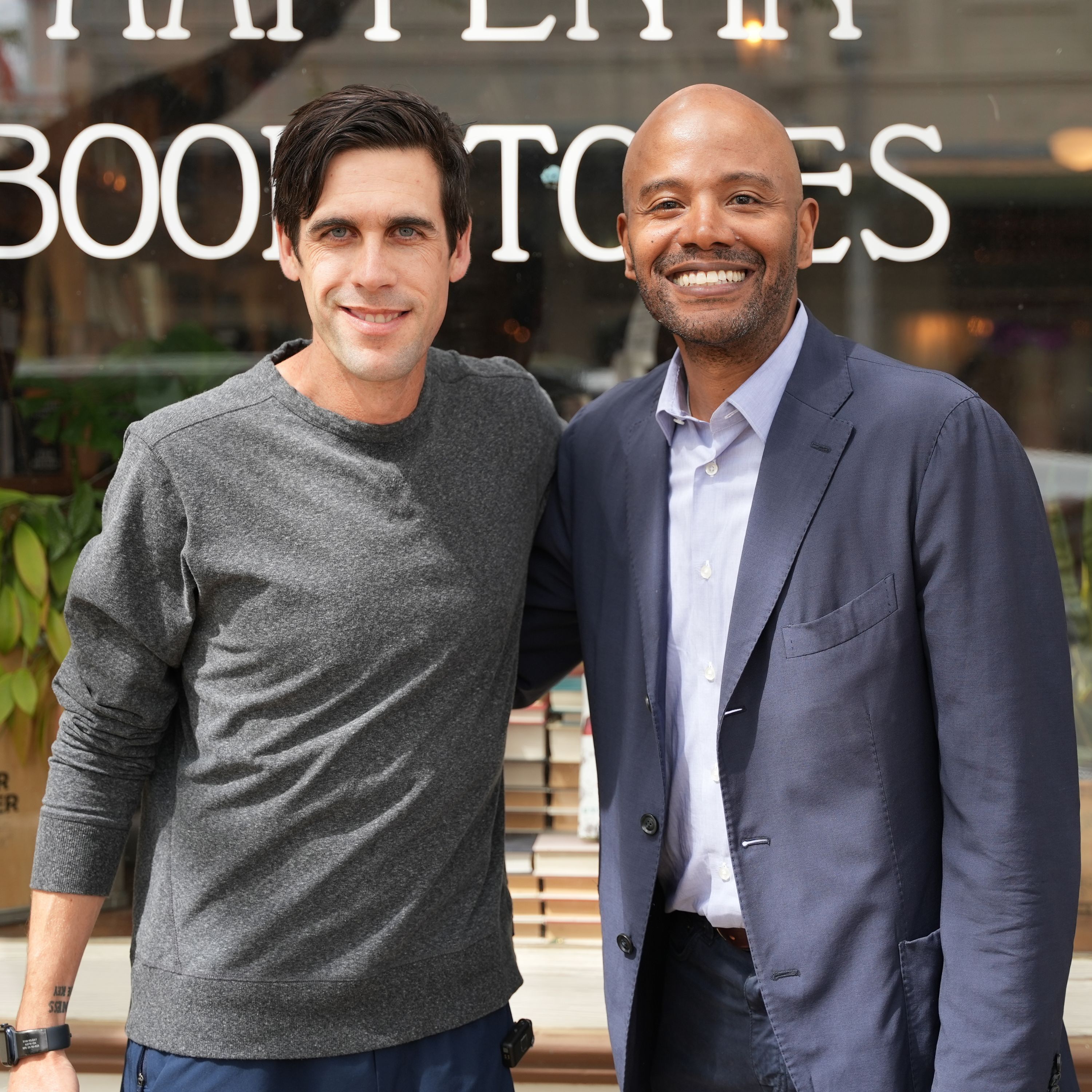
In this episode, Dr. Peniel Joseph, author and professor at the University of Texas at Austin, joins Ryan to discuss how 1963 ignited a decade of transformation. They discuss the pivotal events of the year, the contrasting strategies of Malcolm X and MLK Jr., and how this single year reshaped the course of future generations.
Dr. Peniel E. Joseph is the Barbara Jordan Chair in Ethics and Political Values, founding director of the Center for the Study of Race and Democracy at the LBJ School of Public Affairs, and distinguished service leadership professor and professor of history at the University of Texas at Austin. He is the author and editor of eight award-winning books on African American history, including The Third Reconstruction and The Sword and the Shield.
📚 Pick up a copy of Freedom Season: How 1963 Transformed America’s Civil Rights Revolution by Dr. Peniel Joseph
📕 Grab signed copies of Dr. Peniel Joseph’s books The Sword and the Shield and The Third Reconstruction at The Painted Porch | https://www.thepaintedporch.com
Follow Dr. Peniel on Instagram @Dr.PenielJoseph and on X @PenielJoseph
The three-volume "America in the King Years" by Taylor Branch has a total of 2,912 pages | Grab the series at The Painted Porch
📖 Preorder the final book in Ryan Holiday's The Stoic Virtues Series: "Wisdom Takes Work": https://store.dailystoic.com/pages/wisdom-takes-work
🎙️ Follow The Daily Stoic Podcast on Instagram: https://www.instagram.com/dailystoicpodcast
🎥 Watch top moments from The Daily Stoic Podcast on YouTube: https://www.youtube.com/@dailystoicpodcast
✉️ Want Stoic wisdom delivered to your inbox daily? Sign up for the FREE Daily Stoic email at https://dailystoic.com/dailyemail
🏛 Get Stoic inspired books, medallions, and prints to remember these lessons at the Daily Stoic Store: https://store.dailystoic.com/
📱 Follow us: Instagram, Twitter, YouTube, TikTok, and Facebook
See Privacy Policy at https://art19.com/privacy and California Privacy Notice at https://art19.com/privacy#do-not-sell-my-info.
