
 Ask ChatGPT


- Podcasts
- The Daily Stoic
- You Think You Want Autonomy. You Don’t.
The Daily Stoic6 May 2026 · 20m · 14 chapters
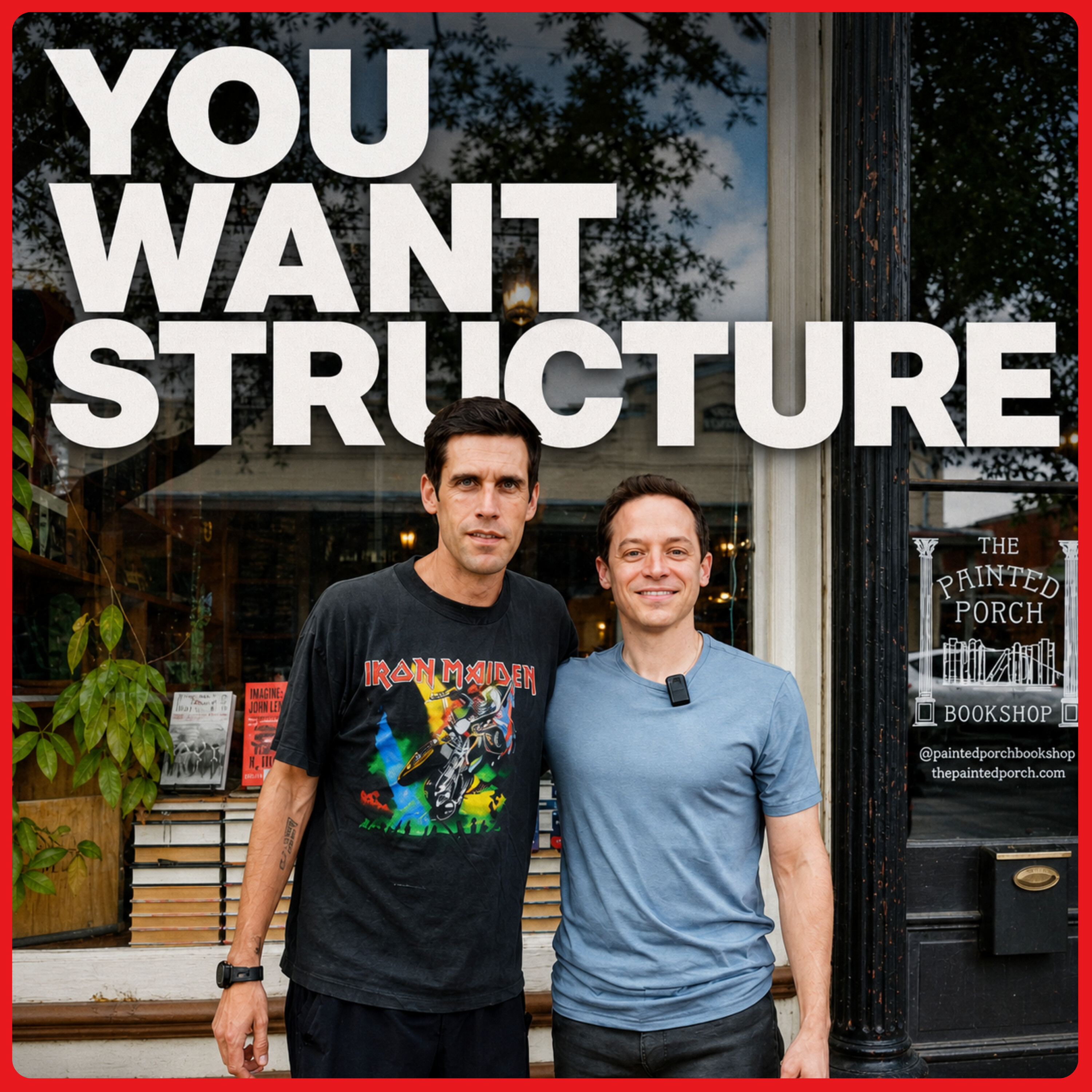
You Think You Want Autonomy. You Don’t. | David Epstein
In short
The episode argues that “autonomy” as freedom from all rules is a trap; constraints provide containment, focus, prioritization, and sustainable creativity—“freedom within a framework.”
Guest
David Epstein, author of Range and Inside the Box: How Constraints Make Us Better. Background: cognitive/behavior-focused writer; discusses his own writing process, deadlines, and how success changed his ability to self-contain.
Key claims
Without limits it’s harder to know what matters or make good choices. Deadlines can boost creativity when they force monotasking. Success can erase constraints and lead to self-indulgent or unfocused work. Relationships and parenting are “good constraints” that create rhythm and prevent work from consuming life.
Notable examples
Epstein’s tighter, earlier book submission using a “master thoughtlet” and strict cutting; his post-Range autonomy that he later “reined in”; the metaverse as an autonomy fantasy that became a costly governance failure; self-publishing as decision overload.
Written by AI. May contain mistakes.
Chapters
0:45
Understanding Autonomy
Exploring the concept of autonomy and its implications on freedom.
“But in today's episode, I want to talk about how that kind of freedom can actually become a trap.”
1:30
The Paradox of Freedom
Discussing how absolute freedom can lead to paralysis and lack of fulfillment.
“He came out and did the podcast a couple weeks ago.”
2:20
Introducing David Epstein
An introduction to David Epstein and his book on constraints.
“relationships and even children can be good constraints and why the best creative work so often happens not with endless options, but within a frame.”
3:20
The Role of Constraints
Why limits can enhance creativity and lead to better decision-making.
“We have used Shopify for over a decade, first with Daily Stoic, now with the Painted Porch.”
5:44
Productivity Through Constraints
How constraints can lead to increased productivity and focus.
“Okay, so I only had like an hour to write this morning.”
6:40
Obstacles as Opportunities
Viewing obstacles as chances to clarify priorities and explore.
“And it's actually usually when you don't get it the way that you want it that you do your best.”
7:50
The Importance of Feedback
Discussing the role of feedback in refining ideas and projects.
“And I think when you have not everything you want, whether that's too little time, too little resources, you're forced to clarify what are the really important things here.”
8:45
The Impact of Success
How success can often remove necessary constraints for better work.
“And I think you hit on kind of two separate important things there.”
10:00
Autonomy and Its Limits
Exploring the downsides of having too much autonomy.
“one of the reasons I got interested in this topic, there was like a hefty dose of me search because basically I sucked.”
11:10
The Metaverse Discussion
A critique of the metaverse and the pitfalls of excessive freedom.
“And not only can you do whatever you want, but then you can, in the instances when you might be challenged or you might not be bringing your best self to something, people will, will, indulge you.”
Show all 14 chapters
14:01
The Illusion of Total Freedom
Explore the pitfalls of seeking absolute autonomy and freedom.
“isn't just, you know, expanding into every nook and cranny.”
15:29
The Dangers of Self-Publishing
Understand why self-publishing can lead to inefficiencies and lower quality.
“And I think you used the word contain there earlier.”
17:29
Finding Structure in Freedom
Learn how establishing boundaries can improve productivity and creativity.
“But I'm aware enough that I've just lost perspective and that you really need that other person.”
19:52
The Value of Commitment and Constraints
Discover how commitments can help overcome indecisiveness and lead to focus.
“Like it's a constraint in a good way in that there are suddenly other important demands on your time.”

Ask about this episode
Get the gist, explore an idea or ask about something said.
 Claude
On The Daily Stoic, what are the key points of this episode?
Searching your listeningTranscript
Automatic transcript. May contain errors.
0:00Ryan Holiday: Welcome to the Daily Stoic Podcast, designed to help bring those four key Stoic virtues, courage, discipline, justice, and wisdom into the real world.
0:14Ryan Holiday: You think you want autonomy. Here's why you don't. We tend to think of freedom as freedom from, right? Freedom from rules, from limits, from obligations. We want total flexibility, total autonomy. We want not just the ability, but the power to do whatever we want, whenever we want, to not be constrained or controlled. And we want this sort of abstractly, but also practically, like we sort of shudder when people are telling us what to do or how we have to do it. But in today's episode, I want to talk about how that kind of freedom can actually become a trap. because without these constraints, without structure, without anything to push against, without anything channeling us, it gets a lot harder to know what matters.
1:06Ryan Holiday: It gets harder to make the right or even the interesting choice. It's harder to prioritize, harder to create, harder even to feel fulfilled. One of my favorite writers is David Epstein. I've raved for many years about his book, Range. I read his new book back in January. It comes out this week, But I read in January, and I will say I did feel frustrated at the constraint of not being able to talk about it until now. He came out and did the podcast a couple weeks ago. I had to sit on this episode. But I'm really excited to bring this sort of segment to you because we're talking about an idea that's at the center of his new book, which is called Inside the Box, How Constraints Make Us Better.
1:50Ryan Holiday: We're going to explore this little paradox that I think the Stoics understood super well, that limits are not only not the enemy, but they are, in fact, the opportunity. And sometimes they are what makes true freedom and, to say nothing, of greatness and creativity possible. So David and I are going to dig in real briefly on why absolute freedom can be paralyzing, why success can destroy the very constraints that made success possible, and why relationships and even children can be good constraints and why the best creative work so often happens not with endless options, but within a frame. So if you ever thought, I need more time, I need more flexibility, I need more freedom, I think this conversation will help you turn that around a little bit and ask a better question.
2:36Ryan Holiday: What if the thing that is restricting you is actually holding you forward, actually sending you in the right direction? And, you know, the obstacle is the way. As I said, I'm a huge fan of David's work, raved about his books. Do read Inside the Box. Also read Range if you haven't already. And then here, listen to us chat. When we open the bookstore, we have Tracy's down the street. One of the things that happens when you have a business is like, you get all these people that are trying to sell you these different products and services. Oh, this is the right platform. This is the right tool. This is what you should use.
3:10Ryan Holiday: most of it's not good. Most of it's a scam. Most of it doesn't help. But the most important choice we made with the Painted Porch, other than physically where we were, was using Shopify. We have used Shopify for over a decade, first with Daily Stoic, now with the Painted Porch. It's a choice we've never regretted. It's a major part of the business, and we wouldn't have succeeded without it. They've grown with us over the years. We've grown with them for almost 10 years now. It's great. And we're not the only ones using it. Shopify is the commerce platform behind millions of businesses and brands all over the world.
3:47Ryan Holiday: They do 10 % of the e-commerce in the U.S., from household names to Gymshark and Allbirds to little brands just getting started and little things in between like Daily Stoic. Everything is all in one place, making your life easier and your business operations smoother. And if you get stuck, Shopify is always around to share advice with their award-winning 24-7 customer service, which we have used many times at Daily Stoic and with The Painted Porch. It's time to turn those what-ifs in to sales with Shopify today. Sign up for your$1 per month trial today at Shopify.com slash Stoic. Go to Shopify.com slash Stoic.
4:29Ryan Holiday: Shopify.com slash Stoic. this episode is sponsored by better help i don't know about you but the idea of therapy can bring up some resistance right some hesitation not only does it take a lot of time but it requires you to get vulnerable it requires you to get outside your comfort zone and that resistance can get in the way of doing something that's good for you and so one way we can reduce that is by virtual therapy. And that's where today's sponsor, BetterHelp, comes in. Knowing that if I have to drive across town, if I have to wait in traffic, if I have to look for parking, these are all excuses I'm going to use to not take the time to do this thing that I know that I should do.
5:13Ryan Holiday: BetterHelp makes starting and sticking with therapy easier. You take their quiz, they match you with a licensed therapist. You can communicate with that therapist however you want. Phone, video, text. You can join over 6 million people to date who have gotten help with BetterHelp. May is Mental Health Awareness Month. Find support and have someone with you in therapy. Sign up and get 10 % off at betterhelp.com slash dailystoicpod. That's betterhelp.com slash dailystoicpod. Okay, so I only had like an hour to write this morning. I thought I would get more time. But weirdly, not getting, because my day is disrupted because I'm doing something later.
5:55Ryan Holiday: I feel like I actually had a more productive day because I knew I only had an hour. Yeah. Yeah. I mean, I find that completely right. It's like Duke Ellington famously said, I don't need time. What I need is a deadline. Yes. Because he couldn't like monotask unless he had a deadline. I kind of find that same thing. If I don't have a somewhat compressed time, I'll start thinking about all the different things I could be doing. Whereas if I have a compressed time, it's like drives me to focus really carefully. And I think that's like, there's actually research on creativity that shows that So deadlines can either boost or inhibit creativity depending on if it leads you to monotask or multitask.
6:30If it leads you to monotask, it's wonderful and you're more productive and more creative.
6:33Ryan Holiday: I think it's just generally the idea is like we think we want it how we want it. Like we think we want freedom. We think we want preference. We think we want it the way we want it. And it's actually usually when you don't get it the way that you want it that you do your best. Yeah. I mean, cognitive scientist Daniel Willingham, as he says, you think your brain's made for thinking, but it's not. It's made for preventing you from having to think whenever possible because thinking is like energetically costly. Yeah. And so left to your own devices, your brain goes for convenience, like doing things you've done before, not working too hard, all these things.
7:08So it's only if you block that proclivity for convenience that you can actually do hard things, basically.
7:14Ryan Holiday: Right. By having some kind of constraint, whether it's a deadline or it's, hey, you're going to have to bang this out on an airplane or you've got to do the call between calls or not having it the way that you want it to be forces you out of your comfort zone and forces you to do it fresh and flexibly and all these things. And also, I think, to clarify the core of what you're trying to do. So one of the things that I hope, maybe the mindset shift that I hope this book engenders is from seeing obstacles as just limiting things to seeing them as opportunities to clarify priorities and launch productive exploration.
7:53And I think when you have not everything you want, whether that's too little time, too little resources, you're forced to clarify what are the really important things here. I mean, on a larger scale, things like memento mori, right? It's like you don't have all the time you might want, so you better clarify your priorities. So in some ways, it's like that on a more tactical scale, I guess.
8:12Ryan Holiday: Yeah, it forces you to question your assumptions because you don't have it the way that you want it to do. So you have to jettison some of the stuff. It's like if they came to you and said, hey, you got to throw 20 % of the cargo overboard. You're going to ask yourself, okay, well, what is the important cargo? Or if they said, hey, you can't do it the way you normally do it. You got to do it differently. you really think about what you were doing and why you were doing it and what you were trying to accomplish in a fresher way that you just didn't have to do it. Totally. And I think you hit on kind of two separate important things there.
8:49One is that jettisoning 20%, right? Which, think about our writing. How much other stuff do you want to get into every book you write? How many other ideas do you have?
8:58Ryan Holiday: I mean, I have to give, like, when I send the book to people, I don't go, give me your thoughts because they're usually garbage. I say, if you have to cut 15 % of this, what would you cut? Tim Ferriss did this to me a bunch of times. So now I do tell the people, I go, here's the book, it's 12 chapters. Tell me your favorite chapter and your least favorite chapter. And if you had to cut one chapter, what chapter would you cut? And then they go, oh, I mean, I wouldn't cut anything, but if I had to, and now all of a sudden they give you more honest feedback, it would have to be pretty bad for you to read like your friend's book or watch your friend's movie or whatever it is and go, yeah, this whole part sucks.
9:37Ryan Holiday: Just get rid of it. Right. But if you said, hey, no, no, no, you I have to cut 15 minutes from this speech. What would you cut? Now, all of a sudden, they're going to go like, OK, well, this is the part that I feel like is actually not as good as the other parts. So it's sort of a forcing function to get feedback and criticism that you wouldn't ordinarily get. I mean, that kind of discipline is crucial, right? For the stuff that we do. I mean, this time, I will say one of the reasons I got interested in this topic, there was like a hefty dose of me search because basically I sucked. There's a reason why I've come out with a book every six to seven years, right?
10:10And then the first two, I wrote 150 % of a book to get one book. And then after the last one, after range, I became a dad and I said, I cannot do that again. I caught a trip to Arctic Sweden for my first book, right? Like you don't want to be in that position. And so this time I made this thing I call my master thoughtlet, organizing all my ideas. It was 100 ,000 words long, printed it out on paper, went to a hermitage in the garden of a Franciscan monastery for two days and just read it with, you know, no Wi-Fi note. Read it one page at a time. And then as soon as I was done, it's whatever salient stuff is in my brain.
10:42I'm making an outline on one page with it right now. And if it's not on that page, it's not going in the book. And this is the first time I wrote to length. The book's 20 % shorter and I think tighter than my others. and I turned it in early, which is like for my first book, I had to get a year extension, a year. Like you'd write eight books in that time that I got an extension. This time I was done early and I thought I just like sat on it for a few weeks. I didn't even know what to do. I turned it in early. But that those forcing functions, like you said, they're crucial.
11:12Ryan Holiday: When the reason you, I imagine a little inside baseball for people, but the forcing function for you, and this is probably why sometimes like there's a sophomore slump or people's other work isn't as good, is that one of the things that happens is because of your success and your first book was good and successful, but then range was a smash. Like you can now do whatever you want. Yes. Right. And not only can you do whatever you want, but then you can, in the instances when you might be challenged or you might not be bringing your best self to something, people will, will, indulge you. Yes. Right.
11:49Ryan Holiday: So you could have had a mediocre idea. You could have had a very self-indulgent idea. You could have had a book that was too long, a book that was actually two different books smashed together. You could have gone in a bunch of not great ways. What success often does is obliterate constraints. Yeah. And you would think that would be winning, right? Just like you'd think that, hey, I have a full day to work on this project. That's great. That's actually not great because you'd probably do better if you only had an hour or if you had to truly earn selling this book in a way that your previous success wasn't exempting you from some of the stuff, you wouldn't work as hard.
12:29Totally. I mean, it's actually given me some insight into why I think a lot of musicians, when they break out, they then make like a terrible second album, basically. And that kind of exactly happened to me after my first book actually did pretty well. then I was given an offer to basically sign a blank book contract like without an idea right yes and I almost did and then I didn't thank goodness because it's a terrible thing one reason I needed an extra year in my first book is because I hadn't done like enough research ahead of time because I hadn't been forced to because I was already a writer at Sports Illustrated and it was based on a long article I'd written so I didn't really have anything forcing containment right so I'd been so bad even with range which worked well I was terrible at like drawing boundaries around my project, which was bad for my personal life, first of all.
13:15But also, the book probably could have been a little more coherent in some respects. And this is actually, not to go aside, but I just remembered we were at a writer's retreat together once after Range came out. And we were asked, what are you optimizing for this year? And I said autonomy, because when I finished Range, I left my job. I was working at ProPublica as an investigative report at the time. But then I left that and for the first time had total freedom. And I said, I want to spend every minute of the day in a manner of my own choosing. Yeah. Right. Fast forward two years. Definitely such a thing as too much autonomy.
13:49Now I've been reeling that back, right. Containing my workday, joined a nonprofit board in my community, like inconveniencing myself to sync up my schedule with other people and to find ways to contain my workday. So it isn't just, you know, expanding into every nook and cranny. It's like I think about when Mark Zuckerberg first advertised the metaverse. And he said, it's going to be amazing. Everyone is going to live in a universe totally tailored and individualized just to them. And I didn't think about it that much when he said it at the moment, but now I'm like, that sounds like hell. You know, that's like the path where I was going with so much freedom.
14:23It's like, you're just living on your own.
14:25Ryan Holiday: The irony is the metaverse was itself a terrible idea. And that if Mark Zuckerberg had a different corporate governance structure around him, like he didn't control Facebook so much. and he and Facebook wasn't so immensely profitable, that terrible idea would have been killed. And because it's on its face, stupid and lame. If he'd had us as advisors, if only. Yeah, but I'm just saying like, that ended up being like a 40 or$50 billion mistake. That like, I think most reasonable people, and I don't mean this in like, sometimes there's groundbreaking ideas and you don't get it. It's just like, you were solving a problem that no one asked you to solve, doing the thing that people don't want to do.
15:07Ryan Holiday: And probably even if it was an experiment could have been done much smaller and more effectively, gotten the feedback that you overwhelmingly got on this enormous experiment later, like maybe before you changed the entire name of the company to reflect this new thing. So again, you think you want total freedom. You think you want absolute power. You think you want no constraints. And I think you used the word contain there earlier. We tend to think of constraints as the bad thing. But the other side of constraints is containment. It contains the downside risk of you being catastrophically wrong or out of touch or whatever.
15:47I mean, even had the you said, you know, most reasonable people could see that the metaverse was stupid. I think even had it worked, I think it would have been terrible for people. Because, again, I was starting to do that in real life, going into a universe of my own creation where I was on my own schedule and, you know, not inconveniencing myself. So I think maybe a lot of people actually would have gone for that, but it would have been terrible. Just like a lot of people would go for what I was going for and saying, I can spend every moment in my own individualized world now because it seems so attractive.
16:14It feels like what you want, but it's actually bad for how humans, you know, a hyper social species can thrive.
16:20Ryan Holiday: Again, this is a little inside baseball, too, but I think you can see where it applies to other things. One of the reasons I don't like self-publishing is that, again, you think you want to get the final say on all things and be able to do it. I find most self-published books take longer than expected. They're not as good as they could have been. There's all these reasons they don't work that it turns out that the inefficiencies and the frustrating nature and the bureaucracy and the constraints of traditional publishing prevent from happening. I mean, I would say that I'm well aware that I don't want the final say.
16:57Like in book projects, so this is at least from the time of signing contract to turning in, I turned in a little early, but it was meant to be two years. And the first year I don't write. All just architect. Like the more experience I've gotten, the more I realize it's about the architect from one of the sentences. And there is a certain point where I realize I have completely lost perspective. There's stuff that's interesting to me that I just have no idea if it's interesting to other people anymore. And so that involves, you know, what journalists call drowning some of my kittens or killing your babies, where there are things that I think are really kill your darlings.
17:26Yeah, that I think are really painful. But I'm aware enough that I've just lost perspective and that you really need that other person.
17:33Ryan Holiday: Well, it's also just like, hey, like you throw off all the rules. You can do it. It can be as long as you want. It can come out whenever you want. The cover can be whatever you want. You don't have to compete with other titles. All that. Again, it seems like it'd be freedom. But in a way, it's kind of a prison because now you have to make all these decisions instead of going like, hey, this is how we do things here. And hey, you got to make this decision by this date and this decision. But like also to go back to deadlines, which is where we started, if every deadline is movable because you're actually in charge, that's a real problem to be in.
18:02That's a real problematic space, too. When I signed this contract, I tell my agent he knows that I freak out as soon as I sign the contract. I'm like, what did I do? Can we get a did I sign it in pencil? Can we erase it? And his reaction this time was like, look, as you know, most people don't meet their book deadline. It's just a suggestion. I'm like, don't say that. Do not tell me that. I need to treat this thing as super real. So it was like I was reading about Hayao Miyazaki, the great animated filmmaker, and he had a colleague who called him the never ending man because he was like, if we didn't say this is the day we're showing this in a theater.
18:31Yes. He would never stop. He would never stop.
18:34Ryan Holiday: And as you get more successful and you have more leverage, all those things do become more flexible. And so the governance has to become a form of self-governance. Either you have to force yourself into things that you can't wiggle your way out of or you have to say, no, no, no, no. this is the deadline and I'm holding myself to it, or this is the way it's going to go today. Yeah. Freedom within a framework. And I find that even within my days, like one of the things that once I became like not a daily employed journalist anymore, I would also say like, my competitive advantage is going to be, I'm going to let this project swallow every moment of my life.
19:07Right. And so I found that I also had to start, you know, not being in an office anymore, containing my own work day. I sort of stole from Isabel Allende, who's a, I think one of the, not just I, a lot of people think is one of the greatest living writers where she'll light a candle at the beginning of every workday and then blow it out at the end. And she's like, that's the end and closes the door and goes out. And I did not have that before.
19:26Ryan Holiday: When the candle runs out, she's done, which would also be powerful. Yes. It's like you flip an hourglass and you're like, I have two hours or whatever it is. And I mean, I use electric candles because I'm not as brave as her and have too much paper in my office. But it was the first time where like once I was out in the office, I realized I needed a way to end the day, basically. Otherwise, it's like I'm thinking about it while I'm doing stuff with my son and all that kind of thing. So, you know, just all the structure's on you. Well, people sometimes are worried, you know, like having kids or getting married will like sort of tie you down.
19:57Ryan Holiday: And I go, yeah, to reality. Like it's a constraint in a good way in that there are suddenly other important demands on your time. There's this Philip Roth quote that I hate because he also sucks. But it was, you know, in my life, it's always, it was something like there's always an emergency and I'm the emergency. Or like his point was, it's all about him. Yeah, yeah. And because he's the center of gravity of this whole universe as this powerful, big writer person. And like, yeah, you actually don't want your work to consume your life. You want it to be an important part of your life, but not the totality of your life.
20:39Ryan Holiday: And having soccer practice or a kid that's sick or, you know, somebody who's going to be mad at you if you blow off dinner, whatever it is, it actually forces you to keep some semblance of regularity or normalcy, which turns out is actually very important. Totally. And that not only for your well-being, but also for kind of your rhythm. Yes. You know, like people need rhythm and like seasonality in their lives. And I don't think it impairs performance. Like, I don't think we're saying don't be ambitious or anything like that. Like, I think I'm better now than when I, in the past when I did let it totally swallow my life.
21:15It's the most important thing to me in that hour that I have. Or that two hours. But you only have the hour. You only have two hours. That's right. And I find that incredibly helpful. And like, I feel now like I could write more books too because I have a better balance in that way. Like I have more constraints and structure. It's ultimately more sustainable. Absolutely. To your marriage point, by the way. So another problem I had with excessive autonomy was I said, gosh, a book is so consuming. I'm not going to write one until I find the perfect topic. So I spent all this time dipping my toes into topics and say, this is really interesting, but not perfect.
21:47I'm going to keep looking. And I spent like a long time doing that. You know, I mean, the pandemic was involved, but let's say two years. And then I come across this Mihaly Csikszentmihalyi quote, the psychologist who coined the term flow for the feeling of immersion and activity. and he's talking about marriage, but it could be applied to anything where he says, one of the great things about being committed, if you're committed by choice, is you can stop wondering how to live and start living. Like you don't spend that energy wondering, is there a next better thing? Right. And that's what I immediately realized that's what I was doing with topics and you're never gonna get the perfect one.
22:19Right. So it was like that day, I was like, I'm super interested in constraints. I obviously need them. I'm writing a proposal on this right then. And of course, you know, two weeks later, I'm five times as interested in it as I was before I started.
22:30Ryan Holiday: Hey there, just a heads up, I'm going to be on tour this summer and fall. You can come see me in San Francisco and Portland in June. You can see me in Australia and New Zealand in October. In August, I'm mixing my months up here, but in August, you can see me in Chicago and Minneapolis and Detroit. Then I'll be on the East Coast sometime in November and December. Anyways, grab tickets to that, dailystoiclive.com. Hope to see you there.
23:26We'll see you next time. Or shop now at DTToyotaChicago.com. For well-qualified buyers, see dealer for details. Offer expires April 30th, 2026.
From the publisher
You think you want more freedom, but too much of it can work against you. In this episode, Ryan talks with David Epstein about why constraints can actually make us better. They discuss how deadlines sharpen focus, why too much autonomy can become a trap, and why “freedom within a framework” may be more useful than total freedom.
David Epstein is the author of the #1 New York Times best seller Range: Why Generalists Triumph in a Specialized World. His third book, Inside the Box: How Constraints Make Us Better, is out now!
📚 Grab signed copies of David Epstein Books at The Painted Porch:
Connect with David Epstein 👉 Instagram, YouTube, X, Substack
🎟️ DAILY STOIC LIVE | Ryan Holiday is coming to a city near you! Grab tickets here | https://www.dailystoiclive.com/
🎙️ AD-FREE | Support the podcast and go deeper into Stoicism by subscribing to The Daily Stoic Premium - unlock ad-free listening, early access, and bonus content: https://dailystoic.supercast.com/
🎥 VIDEO EPISODES| Watch the video episodes on The Daily Stoic YouTube channel: https://www.youtube.com/@DailyStoic/videos
✉️ FREE STOIC WISDOM | Want Stoic wisdom delivered to your inbox daily? Sign up for the FREE Daily Stoic email at https://dailystoic.com/dailyemail
See Privacy Policy at https://art19.com/privacy and California Privacy Notice at https://art19.com/privacy#do-not-sell-my-info.
More from The Daily Stoic
All episodes
We use cookies.They keep VO running smoothly and help us improve it. Privacy policy