
 Ask ChatGPT


 The Daily Stoic
23 Aug 2025 · 54m
Written by AI. May contain mistakes.

Get the gist, explore an idea or ask about something said.
 Claude
On The Daily Stoic, what are the key points of this episode?
Searching your listeningAutomatic transcript. May contain errors.
0:28Why choose a Sleep Number smart bed? This message comes from Capital One. The Capital One VentureX Business Card has no preset spending limit, so the card's purchasing power can adapt to meet business needs. Plus, the card earns unlimited double miles on every purchase, so the more a business spends, the more miles earned. And when traveling, the VentureX Business Card grants access to over a thousand airport lounges. The VentureX Business Card. What's in your wallet? Terms and conditions apply. Find out more at CapitalOne.com slash VentureXBusiness. The wait is over. Dive into Audible's most anticipated collection, The Best of 2025, featuring top audiobooks, podcasts, and originals across all genres.
1:13Our editors have carefully curated this year's must-listens, from brilliant hidden gems to the buzziest new releases. Every title in this collection has earned its spot. This is your go-to for the absolute best in 2025 audio entertainment. Whether you love thrillers, romance, or nonfiction, your next favorite listen awaits. Discover why there's more to imagine when you listen at audible.com slash best of the year.
1:43Welcome to the weekend edition of the Daily Stoic. Each weekday, we bring you a meditation inspired by the ancient Stoics, something to help you live up to those four Stoic virtues of courage, justice, temperance, and wisdom. And then here on the weekend, we take a deeper dive into those same topics. We interview Stoic philosophers. We explore at length how these Stoic ideas can be applied to our actual lives and the challenging issues of our time. Here on the weekend, when you have a little bit more space when things have slowed down, be sure to take some time to think, to go for a walk, to sit with your journal, and most importantly, to prepare for what the week ahead may bring.
2:35Hey, it's Ryan. Welcome to another episode of the Daily Stoic Podcast. So a couple of months ago, my wife was out of town. So I was like, you know what? While she's gone, I don't want to do dishes. I don't want to cook. I don't want to have to figure out how to get them off their screens or come up with activities. So I just went and I stayed at this hotel that's not far from the painted porch called the Lost Pines Resort. It's this really cool hotel tucked way back along the Colorado River out here in Bastrop County. And one of my friends from high school happened to be in town. So he was there.
3:06So our kids were playing. We were floating around in the lazy river. I'm out making s'mores with my kids at this big fire that they have there at the hotel. And the guy walks by and goes, hey, are you Ryan holiday. And I go, yeah, I am. And it turns out this was Owen Doherty, who we'd gone back and forth over email, setting up the interview I was doing the next day. He's actually the right-hand man to General McChrystal, who I was going to have on the podcast, whose book On Character, I really love. You heard me talk about it in part one. So anyways, that was a lovely little coincidence. We prepped a bit for the interview.
3:38I was really excited to have General McChrystal on. He's not just someone I admire, but he's someone whose books I'm a big fan of. He wrote a great book on leadership, a great book on teamwork called Team of Teams. He wrote a really fascinating memoir of his time in the U.S. Army, where he served in Iraq and Afghanistan. And then this book is all about character, which, of course, is in short supply these days. I have made quite a few notes on it. I was really looking forward to this interview. I thought it turned out great. I am excited to bring it to you now. In part two, we talked a little bit about how we teach character to our kids, how we model these ideas.
4:16We talked about resilience, talked about getting honest feedback, integrity, and more. And then afterwards, we did our standard walkthrough where we nerded out about some books. You can tell the general is a lifelong reader. I'll bring that on a YouTube video here coming up very soon. But in the meantime, here's me bringing you part two of my conversation with General Stanley McChrystal.
4:41Your point about commanding like it's your last job, I think that's another thing we get very wrong with the fact, like, what is the point of a six year term? If actually all you're thinking about is another six year term, another six year term, if every job is for life, if every if your main thing is to keep doing the thing, you're never going to make the hard leadership decisions that need to be made, that they designed. and they designed for you to make and they entrusted you to make because you're always delaying to the future. Yeah. In the Army, there is an eye of the needle from colonel to brigadier general.
5:19About 2 ,400 colonels were looked at every year and 40 were selected for brigadier general. So that's the most rigorous cut. And what they found was, or what my experience was, when a person was selected for brigadier general, they became more conservative in their actions, less risk-taking, because they were close enough. They were in the in crowd. They had stars. They could see even more stars possible. And they start to play carefully. Yes. They don't want to lose as opposed to win. And you saw it in staff actions in the Pentagon. You saw it in the way they interacted with senior leaders. And yet in many cases, we promoted them because they were risk takers and iconoclastic.
6:02But it's like we cut the offending knots off the piece of wood so that it wouldn't rub anything wrong way. If the point of education is sort of moral education, we should be—there's certain examples that you want to explain so you get a lesson as a leader. I think one thing that every school child should learn is right after the assassination of John F. Kennedy, Lyndon Johnson is thinking about what his presidency is going to be about. And he says, we're going to pass this civil rights bill. And his staff says, I think we should wait until after reelection. We should wait till later in the term.
6:38And he looks at him, and this is a dyed-in-the-wool Southerner who has been resistant to civil rights, who has played the game as long and as craftily as you could play the game to get powerful in the South. He says, oh, what the hell is the presidency for? He's like, I'm now president. I'm going to do the thing that needs to be done. I'm not going to delay it till the future. I think that's a powerful story that apparently when Jimmy Carter was president, they said the one thing you could do to piss off Jimmy Carter was to say, let's wait till the second term, which, by the way, turned out to be a pretty good read on his part because he didn't get a second term, you know?
7:16And so the idea of like, no, I'm going to do it later. I'm going to do it when I'm older. I'm going to do it when I'm more secure. I'm going to do it after I retire. I'm going to do it when the kids are out of school. I'm going to do it when the market's better. No, you won't. If you're not going to do it now, you're probably never going to do it. And this gets to the life decision that I saw a lot of my students from Yale and whatnot. And while they were at school, I'd ask them what they were going to do. And they'd give me one description. And then when they graduated, they went into investment banking or something.
7:48Because they had to make the money first to then be the supposedly good person they wanted to be. I can't save society until I have enough money to be able to do that. And I can't say that's wrong, but I can say most people who get out and make a bunch of money don't end up saving society. Yes. So you would be different than the average. Yeah. It's insidious logic. It's like, look, you might, I'm going to clean this up in the morning. Right. Maybe, but probably not because you've already said it can be delayed. Exactly. People are mad that Tim Cook isn't this revolutionary, creative visionary.
8:26And it's like, how do you think he worked for Steve Jobs for so long? Like those two, they wouldn't have got along. He is a very specific type of leader. And that's how he made his way quietly up through the ranks. And that's why he's been really good at what he did, which is preserving and iterating on the legacy. But he's not going to invent the apple car. That's not what he cultivated. I think the problem is people tell themselves, oh, I'm going to go along. I'm going to play my role. I'm going to make my way up the ranks or I'm going to accumulate this thing. And then I'll be this transgressive, rule-breaking iconoclast.
9:07And you just spent two decades proving that that's not who you are. I used to describe in the military where we would have promotion boards that basically weren't very sympathetic to real iconoclasts. And so then you get to a certain rank and you got this group of people. They may be men, women, minorities, et cetera. But the common DNA is they're army officers. You made it through the system. So they have much more that makes them homogenized the same. And we can't expect something dramatically different from what we bred for. Yes. Although you would hope that there would be some sort of core character that when push comes to shove, overrides the incentives, overrides the habits and the practices.
9:55And there's always a minority that emerges and you didn't always see that coming. Yes. Someone who immediately is very different from what you might have categorized them once they've got the opportunity. Yeah. Well, someone was telling me that the commandant of the Naval Academy, for instance, that is supposed to be a dead-end job. Like, you're not going to get to the next rank. And they select that person so they'll have a certain amount of academic and career independence. and yet even so there nobody likes to get in trouble nobody likes to lose their job and so this i think ultimately is where the the character you you have to be reminding yourself over and over and over again hey this is the end of the road for me so let's act like it that's right if i'm not gonna do it now when am i gonna do it yes yeah if not me then who and if not now then when?
10:48The famous question. I happen to know a senator who voted for impeachment after January 6th, and he had just been reelected. I remember I sent him an email and I said, thank you for actually acting like you have six years of guaranteed job security. And he was like, that's what it's for. And we seem to forget that the tenure is there for a reason. The pension is there for a reason. The term limit, all that stuff is there to counteract the very real and human tendency to take the easy path, to steer out of trouble, to delay and defer for some future moment when, oh, it's really, things are really important now.
11:33It's like, no, now is, this is, I think it's a very seductive thing to say, I need to maintain my access. That's my primary obligation here. So in the future, I can use that access. And I guess, I mean, where would we be if Mike Pence had resigned a year earlier, not in a good spot, and yet I'd argue most of us are not Mike Pence on January 6th. And most of us wouldn't get that particular moment where you even had the opportunity. Yes, yes. He spent an awful lot of time doing exactly what was desired of him that I don't think was helpful. No, certainly not. So in the key moment, he did. I find it interesting that people in business, particularly CEOs, nowadays they negotiate these financial packages where they are essentially have tenure.
12:19Yes. Meaning economically, they're going to be fine no matter what happens. Yes. They have a huge golden parachute, whether it works or not. But they don't take advantage of that to voice their opinions if they have them. Now, some will argue that they don't want to hurt the company and there's some truth to that. I also think the effect of social media is even bigger because I think one of the things we fear more than just being fired is being dogpiled by people who have nothing to lose that either regular media or social media can make our lives painful. Well, look, the statistics show that coaches should go for it on fourth down more often than they do.
12:57So why don't they? It's because they don't like the press conference afterwards when it doesn't go well. And when, by the way, the public doesn't understand that statistically they made the right choice. right it's hard to go hey the stats showed that you know i should take this flyer on this down because some small percentage of the time it works and we the game was already lost so it was all upside that's not that's not a thing the public can understand and that's a thing that the media sometimes deliberately ignores because the more salacious story is so and so blew it but it is funny that you have someone getting paid millions of dollars who wants to win more than anything, but the one thing they don't want to win more than is the risk of seeming stupid.
13:47Yeah. And I wonder what AI will do with that. Because as AI starts to give an opinion that factors in all the historical data and says, actually, you ought to go for it on fourth down, how will that affect the conversation about it after the fact? One, will the coaches automatically defer to it and say, well, I followed AI, so I was doing the right thing? Or will the analysts come back and be smarter than thou and go, well, AI said you shouldn't have done it? Yeah. Yeah. Or is the black and whiteness of, hey, it's not my decision. I deferred to the thing. Does that work? Yeah, that's going to be tricky.
14:26But it is interesting that at the end of the day, the perception is more important to us than the reality. And that's where I like a little bit of courage and confidence comes in. And also, yeah, it's like, what are you actually worried about? It's not that you're not getting shot at. It just feels that way. Exactly. Yeah. Like how many people in Washington are afraid to... I've been amazed at what they'll do to be reelected when you privately talk to them and they tell you how much they hate their job. So it's like you're debasing yourself to maintain a thing that you actually don't like. The fact that it's not so fun should actually free you up to make the right decision here because you could take it or leave it.
15:11But it turns out you actually can't leave it. You can't walk away. And that is so common. I just sent a copy of On Character to a sitting senator who I'm very disappointed in. Yeah. And I didn't poke him with it. I just sent him a note and said, you know, here's my thinking on it. Yeah. Because I think we need to be willing, as we say, to make decisions like we're in our last job. Yes. To be willing to lose something, because even if you lose it in reality, sometimes it's better to walk away with your pride, your dignity, be able to look yourself in the mirror and say, I did what I thought was right.
15:51Yes. Yeah. And by the way, look at most of the people that have done that. They're not living under a bridge somewhere. You know, it worked out pretty good for them. In fact, they might be better off. But yeah, I think this is something the founders had trouble. They talked a lot about ambition. They talked a lot about avarice. They talked a lot about, I think they failed to account for the decline in our value of honor, reputation, being seen as a person of character. We've somehow lost that norm where I would rather lose this thing or even lose my life than be humiliated or be shown as a hypocrite or be shown to be without character.
16:40That was the greatest sin. And so there was this kind of final check. And when that goes away, you're in real sketchy territory.
16:57We just took our kids to an outdoor performance at the Nutcracker. They had a snow cone and then they went insane in the car ride home. And one of the things I try to remind myself when that's happening is that I don't control my kids' behavior, especially when they're too far gone like that, but I do control how I respond, right? That's stoicism, but it's also what Dr. Becky talks about. Dr. Becky is a clinical psychologist and a best-selling author, and she founded Good Inside, which is there to give parents practical, actionable tools for handling those everyday challenges with confidence. My wife introduced me to Dr.
17:33Becky's books. I love them. I've recommended them a million times. I've had her on the podcast. And as it happens, Dr. Becky is hosting two live Q &A events for Good Inside members. I am one of them. She signed me up for about a year and a half ago. I've loved it ever since. On December 1st, you can join Dr. Becky for her How Not to Raise Assholes event, which is about avoiding entitlement and raising kind, empathetic kids. And on December 15th, she's hosting her How Not to Lose It over the holidays event, which I'm sure we could all use. As I said, I'm a big fan of Dr. Becky. She's been a great influence for me as a parent and just as a human being.
18:15And Daily Stoic listeners can join for 15 percent off with code STOIC15. You just got to head over to goodinside.com to catch the events. Thanks to Toyota Trucks for sponsoring this episode. When I bought my ranch in 2015 out here in Bastro County, I drove my car about halfway down the dirt road that we live on, thought this isn't going to work, stopped, parked it, walked the rest of the way home, borrowed my wife's car, drove in Austin and bought a truck. What I bought was a Toyota Tacoma. And this truck wasn't just transportation getting me to and from my house. It unlocked a whole different style of living for us, not just on the ranch, but in our little Texas towns.
18:58There were places I could go now that I couldn't go before, especially out here in the piney forests, through the fields, and on the unpaved roads like the one that I lived in. We got to go deep into the hill country's wild beauty. We've driven all the way out to East Texas. We've driven across the country. And by we, I mean not just my wife, but both my kids who I drove home from the hospital in that truck. Toyota trucks are built for those who understand that the best adventures happen when you're willing to veer off course. Because you never know when you'll end up on a Toyota adventure detour.
19:35And of course, this is stoicism too, because every detour, every obstacle is an opportunity. But it's helpful if you can handle the difficulty inherent in that. If you've got the resilience and the right companion to make it wherever the road takes you. Discover your uncharted territory. Learn more at toyota.com slash trucks slash adventure dash detours.
20:03There were always things going on which weren't admirable. But the reality is I think there was a peer pressure that made you operate to a higher plane than you would have otherwise. And it constantly pulled you up. We don't do that because professionals don't do that. Yes. Or gentlemen don't do that or whatever thing we do. And I think we've allowed that to weaken. We've said whatever it takes to get what you want right now is the right course of action. Yes. Does it make you successful or not? if it makes you successful, then you have been vindicated. That's right. This is why unions are important.
20:42This is why press clubs were important. The sort of societies or guilds or organizations that allowed there to sort of emerge an ideal kind of character code of conduct. This is why, I mean, like, I think the military has held up fairly well under the stresses of the last couple of years. The legal profession has held up pretty well. The medical profession has held up pretty well. And one of the things all these domains have in common is sort of boards or licensing or kind of a community that acts as a not legal enforcer, although sometimes it does, but primarily a cultural enforcer of values.
21:22And you don't want to be kicked out of the community. That's right. Formally or informally. Yes. I also have been doing thinking about Father's Day recently. I know you're a father and I was, or I still am. now grandfather. And we think about someone is a good father, but we also sometimes simultaneously think they can be a despicable person. Think of Vito Corleone. He's a murderer and a thief, and yet around his kids, he's a caring father. I don't believe in that dichotomy. I think that you are a single character. You may have certain, you try to depict something different. And so when I think of Father's Day, I don't think anybody should be celebrated, even if they're a doting father or grandfather, if they're a dirtbag.
22:16And we know it. There shouldn't be Father's Day cards or greetings given to somebody who is just not a worthy person. Yeah, you can't say, I do this all for my kids as you fuck up the world that they're supposed to live in. And by the way, that their kids are supposed to live in and their friends are supposed to live in. Yeah, we do love that image of like the murderous mobster who his one weak spot is that he loves his kids or whatever. No. And I think we fetishize people who just care about their kids. Yes. Right. Not like the generation of kids, like with this sort of like Richard Reeves has this term dream hoarders, you know, where it's like you're only fighting for your kids' opportunities and you see it as this kind of zero-sum world.
23:05I think we've also kind of celebrated that version of parenting, which is, I think, not just destructive for those kids, but destructive for all of society, which we have an obligation to serve as well. And I would argue it doesn't even work as intended because you can have a child or grandchildren and you can build up tremendous wealth for them. But if they know you're a robber baron, one of two things is going to happen. They're either going to emulate that behavior because that's what they learned watching, or they're going to reject it. In which case, you didn't get what you wanted. Yeah. One of my favorite chapters in the book is just titled, What Are Children For?
23:42Which is such an interesting question. What are children for? I have days when I question that. I just had one son, my wife and I, and he lives next door to us. And he was quite a character in his youth, but now he works in the government. And we've got these three granddaughters who I see every day. And they're just amazing. But you say, well, what are we doing here? We didn't have to have a child. They didn't have to have kids. And you say, well, why am I having them? Yeah. And so the first question is, well, I need heirs to the family fortune. Well, there wasn't a family fortune, so that's not a problem.
24:20I need people to work on the farm, but we don't have a farm. We're in the store. So none of those things apply. So now it comes down to, we had them just because we choose to have them. In which case, we invited guests to the party and they didn't ask to be invited. So what we now owe them is what we can do for them that's responsible. But at the same time, there are things, particularly as a grandparent, you don't do. You're not the parent anymore. You don't tell them how to run things. You have certain obligations and capabilities based upon what's required. But we need to stop back and think.
24:59Now, on a grand scale, if we don't have kids, there's no future. On a local scale, it's not to perpetuate our legacy because, as Marcus Aurelius points out... We're not around to enjoy it. That's right. There's no point. And his familial legacy is not so great. Yeah, that's right. Exactly. And so you do it just because you should. Yeah. And that's, I think, true of so many things. i have two young boys you make it sound in the book like your son was quite a handful uh certainly maybe challenged a button-down military officer but you said you guys never argued what's the secret well yeah it was funny because we just had the one son and it was sort of like a threesome my wife my son and i he would refer to us he'd say hey guys what are we doing tonight which is different i'd grown up as one of six and so had my wife so it was parents and then kids yeah but But this was like a threesome.
25:58And my son was a good kid, always good values, never got in trouble with drugs or anything. But he got into punk rock and he started this long hair phase and then he cut it off and dyed it blonde. Both looked terrible. And then he went to a mohawk and he kept changing color of that thing. But I used to joke with him about it. Like when he had long hair, I said, I'll give you a thousand bucks to cut it off. And he laughed at me. He wouldn't. And then he decided to cut it off himself. and he came to you says, now I want to collect. I said, now. But the whole idea was why argue about that stuff? Yes.
26:35Why argue about his hair or whether he liked different music than me or whether he wanted to go in the army or not? Why not maintain a relationship, try to be as close to him as I can be and be whatever example I'm capable of being? And it worked really well. Yeah. Because he turned out to be frighteningly like me in many ways. My wife rolls her eyes because he's very disciplined. He's very stoic, which you'd love. He's sort of taciturn, but he's very professional. He works for the government and he is absolutely focused on loyalty and committing to his duty and that sort of thing. And so he had seven years as a punk rocker.
27:19That's his adventure. Yeah. And a small fraction of a life in retrospect. Yeah, I think about the things that I argued with my parents about as a kid and, you know, how silly they seem in retrospect. And I remember thinking as I was admonishing my kids for spilling food in the back of the car, it occurred to me how many times my parents did that. And then I just thought, wait, where's that car now? That's in a fucking junkyard somewhere. You know, the wall that I colored on, they painted over before they sold the house because they had to anyway. You know, just all the things that you feel like they matter.
27:55And actually, all you're leaving, you talked about scar tissue. All you're actually leaving is a residue, a scar tissue, like, dad and I don't get along. My parents don't like me. We fight all the time. And by the time they're older, you're not going to care about any of this stuff. But the kids still will, because all they remember is the fighting and the arguing and the criticism. I got in a car a couple months ago in San Diego and I had like a Metallica shirt on or something the driver said oh you're wearing a Metallica shirt and I said yeah are you a fan and he said kind of not really I said what do you mean he's like my son was really into heavy metal and he's like so I decided to get into heavy metal and he was and then he starts telling me for the whole drive it was San Diego so not far to the airport but the whole drive he's telling me about all these concerts they went to and that they still go to now that he's an adult and I got the sense that he didn't really like it, but he'd willed himself into liking it.
28:49And I just thought how delightful and amazing it was and how sadly that was the exception to the rule. Like how many other, like especially something like heavy metal or punk rock or tattoos or, you know, goth or whatever the things could, where the overwhelming parental reaction is to be threatened by, and for it to be a source of conflict and disagreement instead of just deciding this is the ride we're going on. I hope it's not long, but this is the ride we're going on. I used to tell my son, you know, I'm going to laugh at him someday about the different hairstyles. And I have used pictures of it in speeches later.
29:27I said, hey, look at this. But it was great. Grandkids think it's hilarious. They do. Yeah. They kind of roll their eyes. It's sort of funny. Speaking of a lot of kids and spilling food in the car, I was having a beer years ago when I was young with an older captain in the army. but he was a really wise guy and he was funny too. And he was talking about how many times you lean over the seat and you go, I'm going to come back and kill one of you guys. If you do that, he says, just once you need to kill one. He says, just one. And then you'll have them forever. I remember that. I go, okay. Yeah.
29:59You're preserving a thing that by the way, is falling apart. The car lost the value when you drove it off the lot, But you're deciding that your kids are the ones that are damaging the resale value. The priceless thing, the thing that at some point you would give anything for it to be better, for it to last longer, that's the place you've decided to hold the line. And then the tragedy of this is all is it's so easy to say this. And then I'm like, bro, you know you can't take the lid off the milkshake in the car. Like, what were you, you know, it's still, it's still like, and then it's like, I guess I gave you the milkshake, but I only gave you the milkshake because you were yelling and I, but like, you know it.
30:44And then it is so hard to actually do it. And it's a funny situation I'm in because my son's character is better than mine. Oh, that's beautiful. And I see it and he doesn't do anything to put it in my face, but just in small ways. Yeah. He's just more disciplined, more focused about values. He spent the seven years he was in punk rock, he also delivered pizza. Yeah. And so he is very connected to people who do jobs like pizza delivery and tipping and things like that. He's just reflexively thoughtful and empathetic in that way. Better than I am. Yeah. I hope I am. I wish I am. I write about it.
31:26But he lives it in a way that is just automatic. And I just admire that so much. We never talk about it. Yeah. But I feel fortunate about that. Do you think he knows that you admire that in him? I actually don't. I don't think because I just don't communicate that very well about that. I've heard this story so many times from different people where, you know, they always were somewhat estranged from their father. They felt like their father didn't approve. They felt like their father didn't support them. And then they go, you know, then he died. And I found a file in his desk of every newspaper clipping from everything.
32:05And I just go, you're presenting that as a beautiful story. And to me, it is a terribly sad and screwed up story. Like, they knew the thing. They believed the thing. And then they just out of pride or fear or propriety or whatever it is, could not bring themselves to say what should be the most natural and easy thing to say. Because if you think about it, if you just suddenly go to someone, I'm proud of you. Yeah. It can sound sort of meaningless or superficial, but in reality, you look at them and says, I really admire the person you are. Yeah. And I sort of try. Who doesn't want to hear that?
32:45Yeah. I kind of hope that part of that comes through in the book. It does. I try to catch my kids. You know, they're walking up the stairs, they're walking by, you're in the room and, you know, hey, and you know, the, oh, am I going to get in trouble? And then I just try to catch them with them. I love you. Proud of you. You're doing amazing. I heard once that you can tell what kind of presence you have in your kid's life by their reaction when they hear the garage door open, you know, like when, like, oh shit, you know, that's what you, you don't want that, right? Even if they're not doing what they're supposed to be, they should not be scared that mom or dad is home.
33:23Yeah. You know, that's a bad vibe. I have to process that a second because I think my three granddaughters aren't scared when I walk in a room at all. Right. Nor are they impressed. There's granddaddy. Your affection for your family does come through in the book. And the sort of compound that you've set up strikes me as a very beautiful thing. I heard the founder of FedEx one time in an interview, someone was asking him what it's like to be a billionaire or something. And he said, you know what being rich is? He says, it's not having a plane. It's not having a bunch of houses. It's not at your bank account.
33:57He's being rich is your kids come home for Christmas. And I've repeated that once and someone in the comments says, actually, why are you making them come to you? And I was like, you know what? That's actually another layer on it too. Riches, your kids want, willingly spend time with you. You know, like people go, you only get 18 summers with your kids. And it's like, legally, you know, but then you meet families and you're like, whoa, you guys, you like each other. You voluntarily do this. That's, and the fact that your son could live anywhere, but instead he lives next to you. and you could be having arguments about why you never get to see your grandkids and instead they're just there.
34:44That's, I mean, that's gotta be a, I'm sure you have met many more powerful people, many more successful people, many people who had more illustrious military careers, but it's, they're sitting alone in a lazy boy chair wondering. That's right. Yeah. You know, I've got my daughter-in-law as a COO in my company. Yeah. She was our first employee and she and I are incredibly close, as you can imagine, after 15 years of that. The three granddaughters are next door. I mean, it's – you're exactly right. People say you're living the dream and I am. Yeah. But we helped construct the dream. My wife and I did what we could to maneuver the pieces in place.
35:26Well, people say that at the bookstore we live on a ranch. They go, I've always wanted to do that. And I go, you know, it wasn't like a test I had to pass. Like my ranch costs what my studio apartment in New York City was renting for. You can make decisions. You don't, I call that a compound. I'm sure it's relatively modest by anyone's conception of what that means. If that's what's important to you, you can figure it out. You're waiting around for it to magically happen. But you said you construct the dream. You have to make it real. And the beauty is you've done it early enough in your life, at your age.
36:01You can shift it if you want later, but you also have years to enjoy it and years for your boys to enjoy it. Yes, hopefully. Or we'll find out it was a nightmare. They hated it. They'll write tell-all books about it someday. Well, you know, it's funny. I listened to this young actress talking about her childhood. Her mother was an actress. And, you know, she was saying that she hated it. Her mother had described, we traveled to all these places, and she got to meet all these people. And the daughter was saying, you know, I would get these friends for six months, and then I would lose them. And I felt, you know, I never felt like I fit in.
36:39I never felt like I had any stability. And she's like, people say I'm a Nepo baby. I had a rough childhood. Like, I mean, my needs were provided for, but it wasn't what I needed. And I thought it was interesting when they asked the mother about it. And the mother goes, what is she talking about? She, again, describes it as this idyllic thing, and it is hard to realize your kids aren't wrong about their feelings or experiences. Even if your intentions were right, even if it was better than most, even if it was better than your own, if they didn't like it, they didn't like it. If it wasn't for them, it wasn't for them.
37:16No, I think that's true. At the same time, as an old guy, I'll say if you're getting three hots and a cot, it's relative. Yes, yes. And so I think sometimes we, particularly in our society today, we have this victimization thing. Feel sorry for me. I didn't get three scoops of ice cream, only two. Yeah, yeah.
37:42Human, your body has a performance superhighway. 60 ,000 miles of blood vessels that deliver oxygen and nutrients to every cell. This, of course, is your cardiovascular system. It's the foundational system that powers everything we do. Both elite athletes and longevity experts invest directly in the cardiovascular system because supporting healthy blood flow is critical for energy, recovery, mental clarity, and overall performance. That's where human comes in. That's human with two Ns. They started out of research at the University of Texas, near where I live, and have 15 years of experience making award-winning supplements for nitric oxide production and healthy blood flow, now used by over 160 pro and college sports teams.
38:30Human Cardiovascular Health Daily is a plant-based and made from clinically studied ingredients like grapeseed and seed kelp extract. It supports nitric oxide production for healthy blood flow and energy while also supporting blood pressure and helping support the delicate interlining of your blood vessels. Just two capsules each morning will power energy and recovery while also playing the long game by supporting long-term vascular health and healthy aging. Human has an exclusive offer for our listeners. You can visit human.com slash stoic for an extra 15 % off your first purchase. That's enter code S-T-O-I-C.
39:04Stoic at checkout. That's human with two N's dot com slash stoic for an extra 15 percent off with code stoic at checkout. What can 160 years of experience teach you about the future? When it comes to protecting what matters, Pacific Life provides life insurance, retirement income and employee benefits for people and businesses, building a more confident tomorrow. Strategies rooted in strength and backed by experience. Ask a financial professional how Pacific Life can help you today.
39:45Our definition of trauma is so expansive as to essentially exempt to no one, which means we all feel traumatized all the time, which probably isn't ideal either. I don't think most of the Stoics would have signed on to that. No, I don't. I don't. You know what? I've always thought, I wrote a note about this in the book, but I've always thought it's interesting about you because we live in this, I guess today we sometimes call it cancel culture. We have these figures where something happened to them, they got fired, they screwed up, there was a scandal, whatever. It's this breaking point in their public persona, their life, where the resulting person is bitter or angry or aggrieved or becomes a reactionary or switches political parties, just sends them on this trajectory that they wouldn't have been on otherwise.
40:36and I find it very impressive and we don't need to get into the specifics of it for you but I am curious about how you handled that closing of your career one of the things that Stoics talk about is they go they say it can only harm you if it harms your character that basically you can lose the job you can lose your career, you can lose all your money all these things can happen to you but the harm is if it turns you into something that you're not and I feel like And you just went in a different direction than so many people in that position. Yeah. Thanks for bringing it up. I in no way compare myself to James Stockdale.
41:15Yes. But if I think about his experience where he lost control over everything about his physical well-being and in short term, almost everything, he chose not to let that re-identify him, change who he was. Yes. In fact, I would argue it strengthened and it expanded him. And I think I was lucky enough when I resigned from the military after 34 plus years, and I suddenly had my previous identity challenged, had a couple of options. I could become an embittered former general, and you'd have me on your show to tell that story about how I got screwed. You could be in Steve Bannon's war room right now.
41:59Yeah, exactly. And instead made the decision with the help of my wife, Annie, not to do that. Yeah. Instead to say, okay, I am not a bad person. And so I'm going to be as good a person as I can be going forward. That became really liberating. Yeah. And the thing that was important to remember is you don't do away with the injury. You can't pretend it didn't happen. It did happen. Yeah. And to the degree I was agent of it, I have responsibility and I don't dodge that. But on the other hand, if I say there is redemption. Yeah. I can move forward. I can be as much as I'm capable of being going forward.
42:38That's what I'll do. And that's been the luckiest point in my life because I never, to that point in my life, I've had pretty much unbroken successes, some hard things, but, you know, generally. And if I think about it, I came out of those years of war. I had lost no limbs. I wasn't killed. I wasn't, you know, in other ways damaged. So I don't have much to complain about. Right. And then I have opportunities. opportunities. And I have the opportunity to be whatever I will myself to be. And that's the direction I've taken. And it's limited by my talents and whatnot, but I'm so happy I did that.
43:16That has been the gift of life. And this sounds terrible, but I was 55, almost 56 when I resigned suddenly from the military. And in some ways it was a gift because I was still young enough to have runway to really do something else. And so I've been able to do that. Had it been five or six years later, it would have been harder. Yeah. Stockdale said, you know, I'm going to, if I survive, I'm going to turn this into the best thing that ever happened to me. I talked to someone in here. He was a grief expert. His name is David Kessler. He lost his son. You know, I can only imagine what it's like to lose a teenage son.
43:55And at some point he was sitting there, he said, and he decided, you know, people are going to look at who I am in a few years from now. and I'm going to be the shut-in. I'm going to be... Are they going to go, he was never the same after the loss of his son and it ruined his life? Or are they going to say after the loss of his son, these are the things he went on to do. This was the positive impact that this tragic event happened to him meant. And I think that's what... When the Stoics say the obstacle is the way, that's what they mean. They're not that like, you suddenly made a bunch of money.
44:28It's not always that it was like great for you. It's that you went in a different direction as a result of what happened and that that was subsequently positive in some way. It's that you didn't take a bad situation and turn it into a worse situation, which is what so many of us do. Like the thing that can happen to you, it could be totally your fault. It could be a cancer diagnosis. It could be an unjust, unfair thing, a wrongful conviction or whatever. But then we still decide what it's going to mean in our – if we get to keep going, if we don't die from it, then we get to decide what it means for us.
45:10And I think that applies to our country right now. Sure. I think we have agency. Yeah. We get to decide. We get to vote. we get to do different things that can make a difference one way or another. And if we don't take that responsibility, if we all kind of sit on the sideline and go, I hope it doesn't go badly. Yes. We're going to get whatever happens. Yes. Yes. We keep acting like there's, when Adam Kinzinger was here, he said, my fellow congressmen seem to think there's a super Congress. Although I guess you could argue that's what the Senate is, but the Senate seems to think there's a super Senate.
45:46And the Supreme Court seems to think there's a super Supreme Court and that at some point it isn't your job to say, hey, with the decision I get to make here, I'm going to make the hard right decision, even though people are going to criticize me for it, even though it might cost me something, even though I might get stuck with something. You know, it's funny that Adam said that because when I finally got senior enough where you ended into some meetings in the Oval Office, not often, but you're there. And you suddenly realize this is it. Yeah. These are the knuckleheads who are going to make the big decision.
46:22And I'm one of them now. Yeah. And they actually listen to me. And you get frightened because you go, this is it. This is the group who are going to decide big things. And if you are the right kind of person, then what I think it does is it increases your sense of responsibility. Yeah. And decreases the pettiness. If you're not, of course, it didn't have that effect. But that's where I think we need to think now. That great line that says there's no one coming. Yeah. It's up to us. Yes. Well, I got an email this morning. I would be curious how you would answer this person. I got an email this morning from someone in the National Guard.
46:54They'd served many years. Now they're in the National Guard. And he goes, look, I think immigration laws should be enforced. I think we're a nation of laws. But I also don't think tanks should be running through the streets of American cities for spurious reasons, especially if the governor of said state has not requested that. What do you think I should do? And obviously, philosophically, it's easy to be glib and black and white about these things because you're not the one who's having to make that decision. But what have you learned about those sort of hard decisions and what would you might say to someone facing a specific one like that?
47:30Those are much harder than they seem from afar because for the military, lawful orders should be obeyed. If the military doesn't obey lawful orders, then we've got a really bad situation. The problem, as good as our Constitution is, you can have very evil orders that are lawful. Yes. And so now we get into an area where we can do things that are very bad for our country or for the world and not be across the line into unlawful. And of course, we also know people can play with legal interpretations and whatnot. What I tell people when I think about that is you should reflexively do what you signed up to do.
48:11You have a sense of duty. You have an obligation. You should do that. When it gets to a point where you think it is morally wrong or illegal but not being interpreted that way, you need to make a personal decision there. And that personal decision is usually to resign, step away. It's very hard to make, particularly when you're senior, because when you're senior, you start to rationalize, if I step away, someone worse than me will take over. Preserve my access or my good influence. That's right. But there is a point at which I think enough people have got to step up and say, no, this is just not acceptable.
48:55And I think we have skirted against this in recent years. And unfortunately, I think there are a number of people who have different enough views on how the country should be that we're probably getting more of that. I think so. And also, I think sometimes people are reluctant to speak up or resist or say, hey, I'm not going to do that because they think they're causing problems for their boss. This isn't just the military. It's in companies, et cetera. But actually, you have to flip that in your mind. You're actually doing them a favor because everyone is looking to everyone else constantly. This is what humans do.
49:30We look around and we go, am I the only one that has a problem with this? And when the lower ranks are saying, hey, this is against our conscience, sometimes you're going to have a bad boss, someone without a compass who says, shut up, do what you're told. But just as often, you're going to have them go, hey, they're starting to get a little squirmy down here. Let's reconsider this. I mean, a big part of Vietnam is as it goes on, as the soldiers decide more and more they don't want to be the last guy to die in Vietnam for a war that everyone else has abandoned, it's that sort of pushback that starts to apply the real pressure that makes people make some different leadership decisions.
50:07And I think you should think about it as what is the power that I have in this situation and how could that power positively influence the people below and above me by the decision to say, hey, I'm not going to do this. And I think back to a decision I made early in my career where my boss wanted me to do something that I thought was plainly wrong and also illegal. And I said I wasn't going to do it. And, yeah, he just found someone else to do it. I should have resigned in principle or I should have made a bigger stink about it, but I didn't want to lose my job. And in retrospect, why was I afraid to lose a job?
50:43Why did I want to keep a job that you could lose for not doing something illegal, right? Like, the other thing to think about is, hey, here's what I think about this. I'm going to voice my opinion. And if there's consequences for that, it's kind of telling you everything you need to know. You know what I mean? But it's always more complicated than we want to believe, because is if you get to the idea of groupthink, which came from the Bay of Pigs study after the fact, and they found that good people who have grave doubts did not speak up. And we see that over and over again. And the problem is, if you're 100 % sure it's wrong, then you may speak up.
51:19But what if you're in the room and you just kind of think it's wrong, and a bunch of smart people that you respect are going, nope, it's good. You don't want to look like a fool by saying it's wrong when it's clearly not. I mean, there's all these dynamics that come. And so a dialectic is really important. And this is what leaders should establish in. When you've got really tough decisions, there should be some kind of really pointed discussions that at least bring up the counter arguments. Give people the freedom to get those on the table and look at them and air them out. I think that's something Kennedy learned from the Bay of Pigs is what I was so struck by is during the Cuban Missile Crisis, he realizes that his presence, it was then called XCOM, his presence in those discussions was creating a kind of group thing.
52:11So he says, I'm going to leave, you guys work this out. And people were more free to voice their misgivings when the president was absent than when he was in the room. And again, the idea of the dragon's tail, or the dinosaur's tail, understanding your effect on the discussion or the status quo as a leader is important. Sometimes you need to be there to specifically draw it out. Sometimes you need to not be there so it can naturally come out. But you want to create an environment where people are saying what they think or else you exist in a boat. I am positive no one told Vladimir Putin that invading Ukraine was a bad idea.
52:48There was no universe in which he thought it could go the way that it did. I think that's right. That's how it works. I mean, that's the trap that dictators get into. And it's the trap that Trump gets himself into. And not that I'm calling him exactly a dictator, but, you know, if the first qualification is how many people do you think attended his inauguration or did he win in 2020, you have already selected for people who will not tell you unpleasant truths. Right. And some things require a discussion which takes a bit of time. Yeah. Remember, there were, what, 13 days in the Cuban Missile Crisis, and the positions of many of the people evolved pretty starkly throughout that.
53:29And I would argue that there are a lot of times we need to do that. You need to iteratively think about it. Here are the counterarguments. I've told a story in a previous book. In 2017, my wife came to me. I had this portrait of Robert E. Lee hanging in my study. And she says, you've got to get rid of that. And she had given it to me 40 years before. And it was this painting that I loved. And I thought of Robert E. Lee as a West Pointer, honorable military guy. She says, you need to get rid of it. I said, why? She goes, because people are going to come in here and think you believe in something you don't.
54:05This was soon after Charlottesville. And I disagreed. So for a month, we had this discussion. And I made the counter arguments of this, this, this. And finally, I got up one Sunday morning, took it and put it out in the garbage. She was right. And it took a month for me to realize that she was right, or as I say, reach my entirely independent conclusion. But the point is, your thinking has to be, at least most people's thinking, has to be brought along. And so leaders have got to be prepared to provide that opportunity. Yeah. And I think, or I would imagine, as you wrestled with what direction you were going to take your life in, having a person who loved you, who believed in you, who didn't identify you and the job, which is probably isn't always the case in some military relationships, you know, some like calling their husband the general or like the access that, you know, so to have someone who goes, okay, what are we going to do now?
55:03You know, or has someone who says, hey, this is how I think you should respond. You need that independent voice that can give you sort of honest and real feedback. You think you want a handpicked board of directors, but you don't. You want an adversarial board, a supportive but adversarial board. That is so true. Same like in your wife. You want your spouse to support you, but sometimes the best support is disagreeing with you. Yes. I hope she never hears this, unfortunately. But yeah, I mean, if you think about it, the day I walked in and told my wife that my resignation was accepted, She was a four-star general's wife, which is something.
55:43Yeah, right. We're living in a big house and, you know, it's not all Skittles and beer, but still it was something. And yet she had known me as Cadet McChrystal, Lieutenant McChrystal. Right. You know, just the knucklehead through all those years. So she wasn't blinded by any of the foolishness. Yeah, sometimes it's infuriating because I met my wife when I was in college. And so, yeah, they know you before all this stuff. And you're like, hey, you know, could we update some of the, like, could we update? If I met someone new, they would see me as this person. And at the same time, the real saving grace there is if it all goes away, that never mattered either.
56:23Right. And you can laugh at the jokes from the old days. That's the best part of that is she was there. Yeah. And when I talk about something that happened, she goes, yeah, I was there. I remember that. And laugh at things that are shared history. Yes. And then also, I think the character, like understanding that character isn't this solitary thing, but a relationship has a character and a project has a character, an organization has values, a sort of larger character. But this idea of like, I'm not just doing it because I believe it is I don't want to let this person down or I don't want to betray what this person thinks about me.
56:59We talked about the Spartans earlier. I was struck. I didn't realize this until I went back and reread Herodotus that, or maybe it was Plutarch, but that they'd chosen all 300 Spartans because they had sons. And it wasn't because, oh, okay, you know, you might think they make the opposite choice. They choose them not because they've already reproduced. They choose them because they know they won't want to let those children down by turning and running. And I think that can be a sort of a final powerful check. It's not so much legacy, but it's like, hey, this person thinks I believe this stuff.
57:36You know, like I've gone on record saying this stuff a lot of times. If I act contrary to that right now, what kind of message am I sending to my children or my spouse or whomever? Well, I mean, I think about that every day. If my granddaughters looked at me and they saw me do something sleazy, they'd kind of go, well, wait a minute, granddaddy. You say don't do that. Yeah. So you can't. Yeah. I interviewed Tyler Schultz, you know, the whistleblower at Theranos. Yeah. He was more upset with his grandfather than he was Elizabeth Holmes. That it was like you had this incredible life. You served your country.
58:12You do all this stuff. And then in your 80s and 90s, you threw it all away for a chance to have money you would never get to spend. You chose this stranger over all these things that you thought were important. And that was the sort of final betrayal. And I do think my generation, although politically it shifts a lot, but I do think that's one of the things a lot as I talk to friends, like what they wrestle with is like my parents said they believed all these things. And then I see the decisions they make and the people they support and the exceptions they're allowing and rationalizing. Did they not mean any of it?
58:49What is that? It's hard. It's been hard. Remember the old song that says couples who hate themselves for—their kids hate them for what they're not, but they hate themselves from what they are. Oof. And you think about when you know that there is a contradiction between what you've claimed and what you are. Yeah. The internal conflict to me would be terrifying. Yes. Or perhaps the problem is there's no awareness of the conflict at all. Yeah. That's the joy of cognitive dissonance, I guess, or the relief of cognitive dissonance is you don't have to start to believe you're right. Yeah. We would like to think it's this vexing inner turmoil, but maybe the problem is there's no turmoil at all.
59:34I think it's true. Want to go check out some books? Let's do it.
59:43Thanks so much for listening. If you could rate this podcast and leave a review on iTunes, that would mean so much to us and it would really help the show. We appreciate it and I'll see you next episode.
1:00:20to exist. That's why I don't begrudge them when they appear on the shows that I listen to. But again, as a person who has to pay a podcast producer and has to pay for equipment and for the studio and the building that the studio is in, it's a lot to keep something like The Daily Stoic going. So if you want to support a show but not listen to ads, well, we have partnered with Supercast to bring you a ad free version of Daily Stoic. We're calling it Daily Stoic Premium. And with Premium, you can listen to every episode of the Daily Stoic podcast completely ad free, no interruptions, just the ideas, just the messages, just the conversations you came here for.
1:01:05And you can also get early access to episodes before they're available to the public. And we're going to have a bunch of exclusive bonus content and extended interviews in there just for Daily Stoic Premium members as well. If you want to remove distractions, go deeper into stoicism and support the work we do here. Well, it takes less than a minute to sign up for Daily Stoic Premium, and we are offering a limited time discount of 20 % off your first year. Just go to dailystoic.com slash premium to sign up right now or click the link in the show descriptions to make those ads go away.
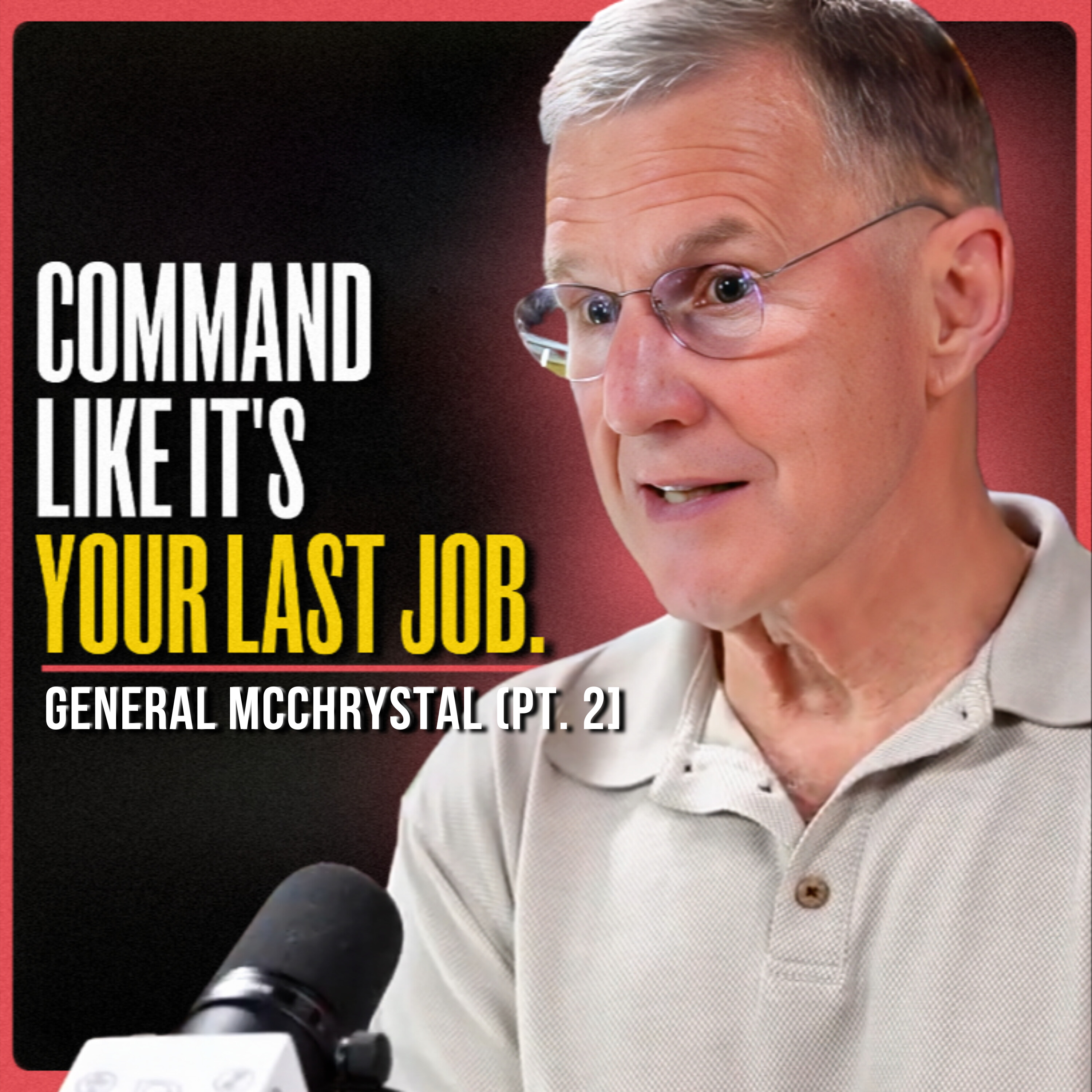
The test of character is simple: what do you do when you have nothing to lose… or everything? Ryan and General Stanley McChrystal continue their conversation about what true leadership demands, why “later” never comes, how parenting tests your values, and the lessons McChrystal carried into life after the military.
General McChrystal is a retired United States Army general best known for his command of Joint Special Operations Command in the mid-2000s. He established a consultancy firm, McChrystal Group, in 2011 and advises senior executives at multinational corporations on navigating complex change and building stronger teams.
📚 You can grab signed copies of On Character: Choices That Define A Life by General McChrystal at The Painted Porch | https://www.thepaintedporch.com/
🎙️ Listen to General Stanley McChrystal’s first interview on The Daily Stoic Podcast | Apple Podcasts, Spotify, & YouTube
📖 Preorder the final book in Ryan Holiday's The Stoic Virtues Series: "Wisdom Takes Work": https://store.dailystoic.com/pages/wisdom-takes-work
🎙️ Follow The Daily Stoic Podcast on Instagram: https://www.instagram.com/dailystoicpodcast
🎥 Watch top moments from The Daily Stoic Podcast on YouTube: https://www.youtube.com/@dailystoicpodcast
✉️ Want Stoic wisdom delivered to your inbox daily? Sign up for the FREE Daily Stoic email at https://dailystoic.com/dailyemail
🏛 Get Stoic inspired books, medallions, and prints to remember these lessons at the Daily Stoic Store: https://store.dailystoic.com/
📱 Follow us: Instagram, Twitter, YouTube, TikTok, and Facebook
See Privacy Policy at https://art19.com/privacy and California Privacy Notice at https://art19.com/privacy#do-not-sell-my-info.
