
 Ask ChatGPT



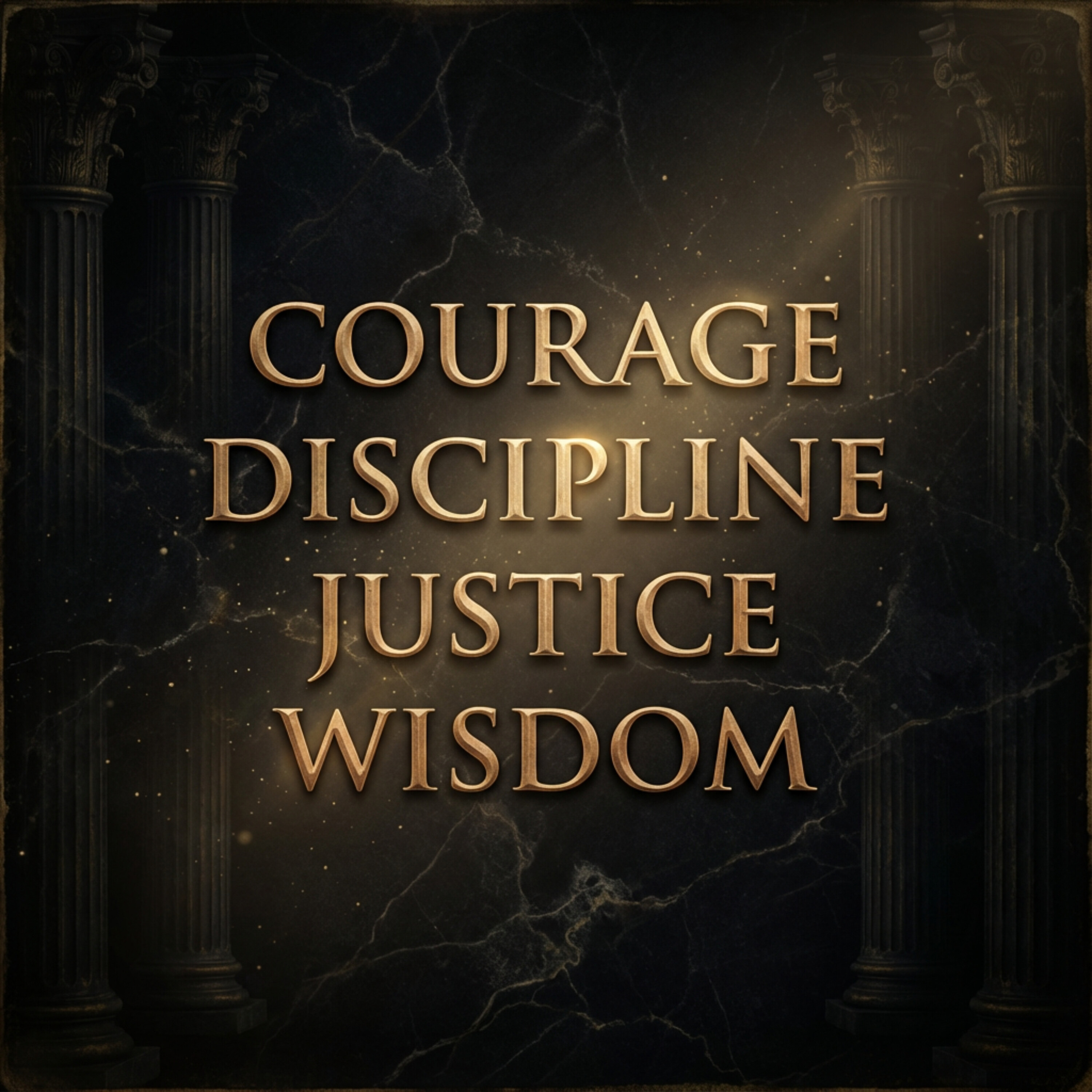
In this episode of The Daily Stoic, host Ryan Holiday explores the four Stoic virtues—courage, discipline, justice, and wisdom—through the lens of conversations with individuals who exemplify these traits in their lives. The episode emphasizes that virtue is a practice that manifests in everyday situations, not just grand theoretical concepts.
Written by AI. May contain mistakes.

Get the gist, explore an idea or ask about something said.
 Claude
On The Daily Stoic, what are the key points of this episode?
Searching your listeningAutomatic transcript. May contain errors.
0:28We always recommend Shopify. Hey, it's Ryan. I try not to make too many puns on my last name because I've been hearing it my whole life. But if you want to give a holiday gift of me, Ryan Holiday, and The Daily Stoic, well, you can. We have a special offer. If you want to give Daily Stoic Premium as a gift, you can do that. Your friends, your family members, co-workers, whoever you give it to You can get ad-free episodes, early access, and exclusive bonus content. Plus, we'll even throw in premium episodes of the Daily Dad podcast. You can get both premium plans together for 25 % off. It's a limited offer available now through the end of the holidays.
1:10That's through December 31st. You can click below to get it for them today. Happy holidays.
1:22Welcome to the Daily Stoic Podcast, where each weekday we bring you a meditation inspired by the ancient Stoics, a short passage of ancient wisdom designed to help you find strength and insight here in everyday life. And on Wednesdays, we talk to some of our fellow students of ancient philosophy, well-known and obscure, fascinating and powerful. With them, we discuss the strategies and habits that have helped them become who they are and also to find peace and wisdom in their lives.
2:07Hey, it's Ryan. Welcome to another episode of the Daily Stoic Podcast. So I was walking my dog last night, walking down the dirt road we live on. And it's not exactly night. It's like dusk. It's starting to get dark. I have like a little flashing light I put on her collar. I have a flashlight, like a running flashlight that I have. It's actually this cool one. It's kind of like an L shape. You sort of hold it. It's almost like you grip it. Anyways, this has nothing to do with what I'm saying. I'm walking the dog and I'm listening to music and this car kind of comes up behind me. It's a pretty small contained little rural area we're in.
2:45So it's someone down towards the end of the road and they're coming up behind me and I can hear them and I get over to the side and then they come like insanely close to me in their car. And I have the dog on the left side and they're coming up behind me. So they're on my right side. And I'm like, whoa, what is this? I kind of like throw my hands up, you know, like in a, in a shrug, like what the hell, man? And the car continues on, you know, maybe five yards. And then like, I see the brake lights come on and I go, oh no, I'm saying, oh no, not because like I'm afraid exactly as I'm not, but it's more just like they shouldn't have done this.
3:23I don't like that they did it. I'm fine. But did I need to express my frustration with the situation and now have to have a confrontation with the person? I remember I was younger in New Orleans and something similar had happened, like a car whipped out and I was like, threw up my arm like this, the person got out and I don't remember the details exactly, but I was like physically menaced as a result. And I was like, okay, like you're obviously in the right, the pedestrian is right here, but it's not something you need to die over. And so I generally try to as exasperated and frustrated as I can get with people who are not endangering me or doing dumb things in their car.
4:02I generally try to be chill about it because, you know, it's not worth it. That's what I'm saying. So the car not only slows down, but then like, I see like they come to a stop and then the like they reverse a little bit. And so I'm like, ah, great. And then I remember, oh, I'm actually, I'm because there's wild dogs in our neighborhood and sometimes hogs and stuff. I don't open carry. I guess I could, again, not a, not a big gun person. I don't have to be, but I do carry like a collapsible police baton. I've had to raise it over my head. Let's just say. So I realized, oh, I've got this thing on me.
4:41So I'm like feeling a little more, not sure myself, but I'm feeling a little like, all right, they don't know what's going on. And so as I sort of walk up to the car and half dreading, half just sort of going, I hope this goes good because it doesn't need to be bad, but I'm not as vulnerable as I initially thought, right? I approach the car, they roll down the window and it's, there's this sort of bunch of people live way down on the road and I know they don't speak English. And a guy rolls down the window. I don't think I've seen him before. and he goes, sorry, amigo. And then I go, oh, don't worry about it.
5:19And he rolls up the window. I was relieved, right? I was relieved in a couple of ways. It went from a negative situation that I was like, is this gonna be the worst of people to a thing where I'm like, this is the best of people, right? Like I was mad at myself for a little bit of lack of restraint that incited potentially a conflict. And then I was like impressed and pleased with this person who was in the wrong, by the way, like they almost clipped me with their car to de-escalate. Like he de-escalated first, even though he had no idea whether I was going to be upset or not, right? And what does this have to do with today's episode?
5:54Well, we're going to be talking about virtue in today's episode. And we tend to think of virtue as this big high-minded thing. But I actually think these cardinal virtues, courage, discipline, justice, wisdom, they apply to situations like this, right? A lack of restraint, lack of discipline on my part, That was like a part of the inciting incident here. The willingness to make amends or admit error, right? That's what my neighbor illustrated there. But also the courage to not run away from a situation, like just the, hey, I know how to handle myself in this situation. I'm not gonna needlessly back down from a situation.
6:33I'm gonna go in and I'm confident in my ability to handle this. Like I wasn't confident in my ability to have to do something. I was just confident in my ability that I didn't need to be afraid here because I knew I could handle myself right. And then wisdom, when you're younger, you tend to fly off the handle. You tend to, you just don't know how bad things can get. And you don't always take things seriously that you should take seriously. Is this really the perfect illustration of courage, discipline, justice, and wisdom? No, but it is just a little minor example that I was thinking about that tees up what we're going to talk about in today's little compilation episode.
7:12But obviously, these are themes I talk to our various guests on the podcast about. And so I'm going to run you four sections on four of the different virtues. And I think there's going to be a lot to learn here. At the beginning, we're talking with someone who I'm incredibly impressed with. This is former Air Force fighter pilot Michelle Mace Curran. She wrote a wonderful new book, The Flipside, How to Invert Your Perspective and Turn Fear into your superpower. She has nearly 2 ,000 hours of flight in an F-16. She flew combat missions in Afghanistan. She was also a lead solo pilot for the Thunderbirds.
7:52When it comes to courage, when it comes to sort of conquering fear, she knows what she's talking about.
8:01You know Aristotle's concept of the golden mean? No. So the golden mean is that all virtues sit between two vices. So like courage is not the opposite of cowardice. It's in the middle between recklessness and cowardice. And so I think there's something about confidence that sits between that sort of ego that we all recognize as the obvious ego, the sort of narcissistic, better than everyone ego, and then the sort of the quiet, well, I don't want to ask because I'll look stupid or, you know, the game is rigged against me. Imposter syndrome ego, which we don't typically think of as ego, but I think those are the two vices.
8:42And then confidence is somewhere in the middle of those two extremes. A hundred percent. And I have a little story from in the jet that actually is how I got my call sign, which call signs come from a mistake you made. Everyone thinks you get to pick them like Maverick's like, that sounds cool. Let me be Maverick. It's like soup because you ate a lot of soup one night. Yeah, sometimes they're as benign as that. Mine is like a kind of a cool flying story, but essentially second flight in Japan, mock dogfighting. So dogfighting training, obviously safe guns. We're not actually shooting bullets at our instructors.
9:13So my instructor and I going up and I'm supposed to point at him, shoot him with the gun, call the kill, celebrate all the things. Right. And I really want to do well because I'm so worried about what everyone thinks of me. Yeah. So I light the afterburner, wait a few seconds, roll, pull back on the stick. The F-16 pulls nine Gs, no problem. So nine times the force of gravity. Yeah. So I am experiencing that, which very easy to go unconscious from that G-induced loss of consciousness, blood gets forced out of your head. So I am doing that. I'm pulling, I'm just pulling and pulling and not able to point at him.
9:48And my experienced self later or logically would be like, oh, I need to change what I'm doing to adjust. Something's not right. I've done this like twice before in training. I'm just super young. But my ego is like, you must win. You must gun him. And I just keep pulling and I'm not giving up and I don't touch my throttle. So just max AB and I get to full light loss. So I am just blacked out as far as seeing nothing. But I am not quite G-locked. I'm not quite unconscious because I can still hear. And my instructor ends up making a radio call to knock the fight off because he's like, something's not right.
10:23And so I was pushing that so far where I was like the closest I've ever been to G-locking in my whole life. If you G-lock in a single seat aircraft, people have hit the ground and died. It is the highest repercussion. This is a training flight. My second one ever in my new squadron, there was zero reason for me to push it that far. But I was so worried about failing that that was more important to me than my physical safety. Yes. Like so illogical. Yeah, it's insane. But that's the appearances mattering more than reality. Yep. Yeah. And then the irony, of course, is that you did look really stupid, right?
11:04Yes. Like everyone is you're afraid of being judged and you end up doing this thing that causes you to be judged so much more. Yes. And that, yeah, your call sign, even that your call sign comes from it. Yeah. And so people ask otherwise. I accidentally went supersonic when I first lit the afterburner before I rolled and pulled, which is why I could pull so many Gs for so long and why I could never shoot my instructor because I couldn't turn tight enough. Imagine you're driving 60 miles an hour and you need to be driving 30 to make the turn. That was essentially me. And so they named me mock at circle entry, which is just the turn circle entry for dogfight.
11:39It gets into pilot jargon. But people are always like, how'd you get your call sign? Did you pepper spray a guy in a bar? I'm like, not yet. But yeah, like this thing is this thing where you were like, well, I don't want to look bad in this one single encounter. Yeah. Now follows you literally your entire career. And that's what we can't really think about in the moment. For sure. It's funny, too. You talked about asking for help. There's something about that, too, where it's like when other people ask us for help, we're like, oh, here, let me help you. We're like, what a fucking moron, a loser.
12:08Right. Like we're actually like excited or it doesn't even register. And then the next day we're like, well, if I ask for help, it's so great. Like the thing we get in our head about it. And then even though we have objective evidence that no one cares. Yeah. There's actually a famous Marx realist quote where he says, we're like soldiers storming a wall. He says, you've fallen and you have to ask a comrade for help. So what? And I love the so what of it because it really does pierce this kind of insane chain of assumptions we make up in our head. We're like, if you're all storming a wall and someone falls, you're not like, I told you not to do.
12:47Yeah, you idiot. Yeah, that's not occurring to anyone. And in fact, they're like, there's something beautiful about being able to help that person. And yet we're so reluctant to possibly ask for the help that we need to get better. When I was flying for the Thunderbirds, people would be like, you're so brave. I could never do that. And I'd be like, what a weird thing to say to me. I'm not brave. I've had so much self-doubt. I've had so many moments of fear. I just forge ahead anyway. And it was never about what they thought I was being brave for. The physical danger of the maneuvers was not the problem.
13:23But it's interesting you said that because that is the definition of bravery, though. Like if you're not afraid. That it's not brave. Yeah. And like if there was some pill you could give someone and it just suppresses all fear and doubt. First off, you wouldn't do that. They'd become extremely dangerous. Right. And that's why recklessness is the sort of vice that Aristotle holds up as the extreme end in that golden mean. But it's also like it would make the thing less impressive in a way, just in the sense that in the same way that steroids make the accomplishment less impressive. Right. Because you're like, oh, it's not really you.
13:57I mean, there's part of you in there. But it changes how we understand what you really did. For sure. And that's what makes it impressive, right? Yes. If we were just fearless and not in danger and not afraid of that at all. Yes. Anyone would do it. Yeah. If you're not getting over something, it could still be impressive. It's just we're just not talking about courage as the virtue that's there. Maybe it's discipline or some other thing. You're doing something that's hard. That's no question, but it's just you're not being brave. It's only because it's scary to you and you don't know. Like if someone could say, hey, the outcome is a foregone conclusion, you are definitely going to succeed.
14:41Well, like obviously a lot more people would do it. But then also doing it wouldn't be impressive in the same way. And it wouldn't require courage as we understand it. Yeah. If it was easy, everyone would do it. And that's a hard thing to remember while you're doing it. like when it's really fucking hard to go like, oh, this is keeping people out. But it is. Again, if there wasn't this sort of trough of despair in the middle, if there wasn't this valley that you had to go through, then everyone would do it because the rewards are obvious. Why people would want to be on the other side of it, very clear.
15:19It's just when you get in the shit of it that you can lose your bearings there. And so what those difficulties do is separate the people who really want it from the people who just kind of think it would be nice to have. For sure. And I think it's one of those careers that people think is sexy. Again, not to reference Top Gun for the third time, but that is such a pop culture phenom that has informed a lot of people's reality of the fighter pilot culture. So much of the job is so unsexy, right? It is stuck in a tiny cockpit for eight hours and going to the bathroom in there and sometimes messing that up.
15:59And like, where do I put my snacks to not have those two things overlap? And like, it's just that kind of stuff. And it's like sleep deprivation and sun's in your eye and trying to air refuel. And it's hard in the skill set, but it's also a grind just in like the work that has to happen. It's behind the scenes. The bureaucratic shit and the fact that not everyone's nice and that you're not paid that much. If it was all green lights, everyone would do it. The point is there's a bunch of red lights and detours and obstacles. And that's why not that many people make it all the way there. Yeah. I always laugh when people are like, what's like the behind the scenes of being a Thunderbird pilot?
16:40Because they see very tight flight suit, aviators, you know, locked in precision. and I'm like the number of interviews I did for local media where you fly cross country. So you fly four or five hour flight, you land from Las Vegas to Florida, you get out and there's like local ABC station there or whatever. It's like, tell us about the air show. And I'm standing there talking on camera and I'm not going to turn around because I've had a piddle pack mishap halfway there. And I'm a 35 year old expert in my field on this pedestal that has pee pants. I always think like adam sandler like all the cool kids beat their parents like if they only knew if it was glamour if if the practice was fun more people would do it right like like game day you get the rush for sure why people want to be a professional athlete or whatever but it's it's it's all the parts that are not fun that you have to in a way learn to love and enjoy otherwise you just won't do it.
17:40Like the amount of shit you have to go through to be in the position to do the fun part. That's the, I think the ratio of it that people don't really understand. Like publishing a book is pretty fun, you know, but writing is not that fun. Having written is great, but it actually is fun to me. Like I've had to get to a place where I understand that's the part of it that I control. That's the part of it that's not going away. That's the part of it that, you know, separates the amateurs from the... I have to go like, no, no, no. I like writing books, not having books. I like writing books. I don't like...
18:17Being an author is actually now my least favorite part. I like doing the thing. And the more you like doing the thing, the more you're going to fucking do the thing. Yeah. I feel like that's why most authors don't have... How many, 14, 15... How many books do you have? This is a lot. I don't know. Because you enjoy it. Yeah. I just... I spend a lot of time doing the thing. Yeah. And then when people ask you, they're like when people ask for shortcuts, like there's this famous story, a samurai wants to attach himself to this sort of young master or to this famous master. And he says, you know, how long does it take?
18:52And he says, it takes 10 years. And he goes, no, no, no, I'm going to like work really hard. I want to do it. Like, I'm really excited about this. And he goes, okay, 20 years. And he's like, what? You know, no, no, no, you don't understand. And he's like, I want to, I got to get this done now. And he's like, okay, 30 years. And the point is like, if you're trying to rush through it, you're missing the whole point. Like whenever people are like, do you have any tips for speed reading? And it's like, no, the point is that it takes a long time and you do a lot of it. That you're trying, that you're looking for the shortcut is what is going to make it take a long time for you.
19:26Yeah. No, some of it is just lived experience too. It's the reps.
19:37So we live on a Halloween street. We knew it was a Halloween street when we moved there. And then it has quickly become a Thanksgiving and then a Christmas street. Everyone's vying to outdo each other with their decorations. And I'll admit it sneaks up on us, especially as the competition gets more and more. The holidays are here. And if you're looking for holiday decor or last minute refreshes around the house. Get what you need fast with Wayfair. That's where we got a bunch of our Christmas decorations and a bunch of essentials because we have some of my wife's family visiting us for the holidays.
20:16Blankets, linens, all that kind of stuff. You can get all of it at Wayfair. You can also get big stuff like sofas and dining tables, beds, desks, and more, all shipped for free. They don't have huge delivery fees for furniture. Find all your must-haves from furniture and decor to appliances and cookware all in one convenient place. Get last-minute hosting essentials, gifts for all your loved ones, and decor to celebrate the holidays for way less. Head to Wayfair.com right now to shop all things home. W-A-Y-F-A-I-R dot com. Wayfair, every style, every home. Human. Your body has a performance superhighway.
20:4960 ,000 miles of blood vessels that deliver oxygen and nutrients to every cell. This, of course, is your cardiovascular system. It's the foundational system that powers everything we do. Both elite athletes and longevity experts invest directly in the cardiovascular system because supporting healthy blood flow is critical for energy, recovery, mental clarity, and overall performance. That's where Schumann comes in. That's Schumann with two Ns. They started out of research at the University of Texas, near where I live, and have 15 years of experience making award-winning supplements for nitric oxide production and healthy blood flow, now used by over 160 pro and college sports teams.
21:33Human Cardiovascular Health Daily is a plant-based and made from clinically studied ingredients like grapeseed and seed kelp extract. It supports nitric oxide production for healthy blood flow and energy while also supporting blood pressure and helping support the delicate interlining of your blood vessels. Just two capsules each morning will power energy and recovery while also playing the long game by supporting long-term vascular health and healthy aging. Human has an exclusive offer for our listeners. You can visit human.com slash stoic for an extra 15 % off your first purchase. That's enter code S-T-O-I-C, stoic at checkout.
22:08That's human with two N's, dot com slash stoic for an extra 15 % off with code stoic at checkout.
22:18And then next up, we have discipline. This is something I talked about with Nick Thompson, the CEO of The Atlantic. He's also an elite runner and marathoner. He talked a lot about his complicated past with his father and how that's helped him cultivate discipline in his own work and running life. Obviously, that's something I practice in my life. I'd run earlier yesterday morning, and then I was doing my sort of nightly dog walk in the afternoon. Nick also has an amazing book called The Running Ground, A Father, A Son, and the Simplest of Sports.
22:52there's a famous quote about tiger was another stanford person and says uh one of the after all the stuff had happened someone who knew him and his father he said mirror mirror on the wall we become like daddy after all yeah it's true yeah and i try it like so i try very hard not to let my discipline drop um in part because i don't want to be that do you feel like running was maybe for you an outlet, like, like running is a place where you're in control. It's simple. I always say like, I've never left for a run and not like gotten back, you know, like, like I've walked back, but like every time I've left my house, I've come back.
23:33So it's like, it's this wind baked into your, into your life, into your day. It's definitely that. So I get, you know, I run a little bit when I was like five or six years old with my dad. And then I get back into into high school where I, you know, get cut from the basketball team, joined the track team, and then like suddenly I'm very good. Right. And that creates this like self-confidence cycle that then helps me do better work, help makes me cool at school as opposed to kind of a loser. So it plays that role in life. I then, you know, go to college. I'm not quite good enough. I leave the team after the, after my first year and I take it back up in my twenties.
24:09And I definitely think that what you're talking about, kind of the daily practice, like I believe discipline is cumulative. I think if you do a hard thing first thing in the morning, it's easy to do the next hard thing, right? I also believe that the focus required for running helps you with everything else. Like if you can go run two hours at a focused pace, you're going to have a better time at your hard meeting at work, right? Like I absolutely believe that it creates these habits. And so part of why I do it is this like daily practice of I'm going to do this hard thing. I'm going to do it again tomorrow.
24:37And I think it's going to make everything else in my life work a little better. Yeah. Like when you're two thirds of the way into a manuscript and you're like, is this a fucking book? Like this is taking longer than I thought. It's not coming together. I don't want to do it. I hate this. You know, you're like, oh, I know this feeling. You just keep going. You keep going. You keep going. And then at some point you finish and you're like, oh, that was better than I thought. Right. And the thing you learn about running, like it's one of the best lessons is that if you run every day and if you run hard from time to time, you get faster.
25:09like it just happens and it always happens but imperceptibly so like you know there's not some magic day where you're like oh it's just this cumulative game that you're getting block by block i had that feeling this morning right so i ran this race two and a half weeks ago 100k i haven't really run much since i went out and ran 13 miles this morning i'm just like god i am so slow i'm like look at my heart rate look at my pace like what is going on i'm like every single time right like it's gonna take it takes a little time to recover like it's hard to recover from a race. It takes a while, but I guarantee you, like, I'm just going to run every day for the next six weeks.
25:43I'm going to run a bunch of workouts and six weeks from now, I'm going to be back in great shape. Right. And it just happens. And so that was a lesson. Like when I was writing this book, which took me, like, I have a hard day job, right? So you go to the Atlantic. I got to work all the time at the Atlantic. Right. So I'm working on the book like 20 minutes this morning or like, you know, like 30 minutes that night. Um, but part of it was the self-confidence from running that you just, you just do it a little bit here. You do it a little bit there and like, it gets done. Right. Eventually it's done.
26:07Right. Well, at some point you have the capacity to do a thing that seems unimaginably difficult. So like you're running, you run 10 miles and you run 20 miles and then you run eight miles and you just do this day in and day out. And then when you go do a heart, whether it's a marathon or an ultra marathon and you go, how did, where did my ability to do that thing came from? It came from these little things. And, and writing is, is, is similar in the sense of like, you worked on it for 20 minutes, You worked on it for, you thought about it. You read these books. It's just all this stuff is going in.
26:40And then at some point you have like a editable manuscript. Like, where did all this come from? How did this happen? I was just sitting in here yesterday and I finished the audio book for the book that I just did. And I'm like, oh, like I'm, it was almost, this thing was almost unrecognizable to me because I didn't, I didn't ever do it as a thing. Right. I did it as each of its component parts. Yep. Like one day I showed up and I wrote this paragraph. And then another day I wrote these seven paragraphs. And then at some point I stuck them together and moved them around and edited them. But like I never, there was never at any point, and maybe there are some writers this way, where I had the whole thing in my head and I went, I'm starting here and I'm ending here.
27:23It's this cumulative project, this chipping away and eventually cumulatively you have a thing. Right. And then when you have the thing, the other hard question is, okay, when do you start Stop, right? Because like, if I made it better yesterday, that means I might be able to make it better tomorrow. So when do you call it off? Yeah, when is it done? And shipping, that is very difficult.
27:49Now, the next virtue is one that people tend to get confused about. This is justice. And as I was working on the virtue series, I was worried that this one wasn't going to resonate, right? that people think of justice as something you get from the law courts or from a judge or a jury or from politics. But no, it's also how we treat our neighbors, right? It's apologizing when you get it wrong. It's being your own referee. It's the standards you hold yourself. It's how you treat people. Well, I spoke with Rutger Bregman over the summer. We had a really great conversation about justice as a virtue, not just how to embody it, but how to design our lives to bring more of it into the world.
28:27Rutger is a Dutch historian. He co-founded the School for Moral Ambition. He has this great new book called Moral Ambition, which I've been raving about. You can grab that at the Painted Porch.
28:39In your Justice book, you quote Aristotle, right? You don't become a harpist because you're born that way. You become a harpist by playing the harp, right? You become a builder by building. Virtue is something you do. Exactly. Yes. And that's, for me, such a fundamental insight. You're not born as a good person. You become a good person by doing good things. So just get started. What I would add to that then, because that's very groundbreaking to me, that it's about being asked. What great activists do is they don't write anyone or any segment of society off. They create inclusive movements. And like you look at Gandhi, you look at Martin Luther King, you look at Harvey Milk.
29:18What was almost frustrating about them to their followers was how uncynical they were in the sense that they were always trying to create alliances, collaboration. They didn't see anyone or anything as irredeemable, right? They were trying to bring people into the tent, which is kind of the opposite of how activism works today, right? Which is like, it's about purity. It's about exclusivity. It's about kicking people out of the movement for not being totally on board with it. This is why the left has almost no political power because they not just kicked all the people out of the big tent, but they were so egregious in doing so that they went to the other side.
29:57No one wants to exist in political no man's land. So when you decline an alliance with someone, you are often forcing them to ally with your opponents, right? When you cancel someone from the left, it's not a coincidence most of them end up on the right, you know? And so the idea of, hey, everyone is capable of being good of being on the right side of this, and we're not going to write you off for being currently on the wrong side of this. I think to go back to abolition, I'm forgetting the guy's name, but the guy that writes Amazing Grace, obviously a song about grace and redeemability, is a former slave trader.
30:31They don't prevent him from joining because he did horrible things to other human beings. They actually see him as a potential ally for the movement because he knows how it works. And so the idea of like, who are you asking to join and how are you bringing people along with you? That's what they say. Leaders create leaders, right? Great activists help make people who are not currently politically engaged decide that they should be engaged and capable of making a contribution. every great movement throughout history it was a coalition of people who very often didn't agree with one another yeah so my rule of thumb is always like if someone agrees with you for like 70 to 80 percent of the time sure that person is an ally not your enemy yes and indeed you see it when again the abolitionists the quakers initially didn't get much done yeah because they were this very weird protestant radical sect who deeply believed in their own dogmas yeah it's only once they started working together with the evangelicals, that they started to galvanize a movement.
31:30And for us, it's difficult to fully wrap our head around how difficult that was for them. These were very, very religious people. That's pretty important that they were able to overcome those differences to build that coalition. Well, I mean, even in the women's rights movement, right? There's all these debates about, should we let Mormon women in who were at that point polygamous, right? And so utterly foreign and objectionable to, you know, sort of conservative women in New York City or whatever. And then do we let black women in? Do we let poor women in? Right? And the women's rights movement succeeds when it is this sort of big, broad tent that covers, you know, not just a good swath of American society, but British society as well.
32:18The multi-racial, multi-ethnic, multi-class, multi-viewpoint coalition is ultimately the one that succeeds. Insular movements, not only do they tend not to get a lot of support, but they tend to implode and take a silly, idiosyncratic stance. They get themselves in trouble because there's not enough ideological diversity inside the movement. So that's one thing we need, the coalition building. The other thing that we can really learn here is the importance of perseverance. So I already said that only one of the founders of the British Society for the Abolition of the Slave Trade was still alive when they finally accomplished their goals.
32:59We'll take the women's right movement. Of the 68 women who came together at Seneca Falls in 1848, the first women's right convention in the United States, only one was still alive in 1920 when finally, what is it, the 20th Amendment was passed and the federal right to vote was there. And she was sick on the day of elections. This is Carrie Chapman cat who wasn't even born until after Seneca Falls. I know his quote. Yeah, this is a very powerful quote. To get the word male in effect out of the Constitution, it cost the women of the country 52 years of pauseless campaign. During that time, they were forced to conduct 56 campaigns of referenda to male voters, 480 campaigns to get legislatures to submit suffrage amendments, 47 campaigns to get state constitutional conventions to write women's suffrage into state constitutions.
33:45277 campaigns to get state party conventions to include women's suffrage blanks 30 campaigns to get presidential party conventions to adopt women's suffrage blanks and 19 campaigns with 19 successive congresses and this is again the thing like we only we study history and we know the end of the story like we know oh all's well that ends well you know women got the right to vote yes but susan b anthony you know she was dead before that amendment was passed elizabeth katie senton she didn't get to see it like so many of these these great pioneers they never saw yeah what we know what happened in the end and you had that realization that that perseverance to be part of something that's much bigger than you that just inspired in me an emotion that i like to describe as moral envy yes like i studied these great moral pioneers of the past and like this is what it means to live a great life to be able to how do you say that follow in the footsteps of those who came before you.
34:40It's almost a form of transcendence. I'm not a super religious guy myself. My father is a Protestant minister, but I never caught the bug in that way. I don't go to church often. But for me, this is almost a kind of religion. This is how I believe in the afterlife, right? It's just this feeling that you can follow in those footsteps. And like I mentioned factory farming, I don't think I'm going to see the end of that. Or I think it's going to take a lot, a lot of time at least. But knowing that you're part of something that's much bigger than you are, that gives me a lot of energy to work on that stuff.
35:13There's a line from a Longfellow poem, which I'll probably butcher, but I think about it all the time. He says, the lives of great men all remind us we can make our lives sublime and leave footprints behind us in the sands of time. He says, footprints that some other person struggling, difficulty can take solace and inspiration from that, that that's the meaning of life is that somebody did something that inspired you to do something and you in doing something can leave something behind that inspires some other person. And that's, it's this idea of a procession of torches. We don't study the abolition movement enough, Thomas Clarkson, but Thomas Clarkson puts in motion this movement, which leads to the women's rights movement, which leads to the civil rights movement, which leads to the gay rights movement, which leads to the environmental movement, which leads to everything that's happening right now.
36:09And that if you see it as this sort of one movement, learning and teaching and inspiring, and by the way, building up mailing lists and, you know, constituencies and experience and tactics and strategies that then the next group is inheriting and building on and adding on. That's really how you make a difference. It's like, how have you left? In that same long fellow poem, he says, you know, like, tomorrow should find you further than today. It's weird to be talking about moral ambition, but then also shrink it down to just that, which is like, how are you making progress on these things? That's the goal.
36:50This is, for me, the form of immortality we can all believe in, no matter. if you believe in God, yes or no, it's like building monuments in time. And no one can take that away from you, right? If you've done something, achieved something, created something that will inspire people who come after you. I mean, Thomas Clarkson is dead for two centuries now. And here we're fanboying about, you know, someone who's been so inspirational to us. And I read his memoirs and it's speaking through me, you know, through the centuries. And it's like, indeed, this is what it means to live a great life. It's almost like as if he's reaching out through the pages and asking me that question, like, do you want to do this as well?
37:25I'm like, yeah. So, yeah, it's been super influential on me. It's like with this book, for example, I thought, you know, I spent a decade now in the quote-unquote awareness industry, writing articles and books, which is powerful, which is important, sharing ideas. But learning more about these abolitionists really made me want to build something. So I became the co-founder of the School for Moral Ambition. We're helping as many people as possible to, you know, pivot their careers towards more socially meaningful jobs. And again, I never thought, if you would have asked me this a couple of years ago, I would have said, look, I'm just a writer.
37:58You know, I live in my little cave and I write books and that's what I do. I'm like, I'm not entrepreneurial at all. And reading about these people helped me to discover that, again, being entrepreneurial, this is not something you're born with. You can really get stuck in a kind of self-image like, oh, that's not who I am. No, you become someone by just doing it. It's such a simple lesson, but very powerful. Well, so the cardinal virtues of stoicism are courage. I think people know what that is. Discipline. People know what that is. Wisdom, they know what that is. And then justice is the one that we kind of skip over or we think we have a strange sense of.
38:30Like too many people think justice is a thing that you get, right? Like you get justice from the legal system. You get justice from a judge or a jury. You get justice because the law says this is how things are supposed to be. What I've tried to do in my writings, and this is what I did in the Justice book, and what I tried to build this series around is the idea that, no, no, no, all the virtues, But justice, perhaps most of all, is a thing that you do. Like justice is a thing that you give. Justice is not like, hey, here's how I think society should be. Like in the like, I'd like people to treat other people well.
39:06No, justice is how you treat people. Justice is not, hey, what I want those politicians in Brussels or D.C. to be doing. Justice is like, you run a small business, right? Right. Do you give your employees health insurance? Like justice is not, hey, what should the minimum wage law be? It is. But justice is also like, what do you pay the person who cleans your house? Right. Like justice is both smaller and bigger than I think we we unfortunately think about it. It's the most important one of all. Right. Of course. I read this piece the other day about I think the author called it modern monks. You know, these men who spend a lot of time going to the gym, you know, getting the right vitamins, taking care of their body uh i don't know meditating a lot and i think all of that is powerful but the most important question is like what for yes like what's the purpose if you're so healthy if you're so powerful like what are you going to do with all those talents and the answer is i would say justice yeah right so i think it's important all the other virtues are rendered meaningless if not directed at justice right so so yeah you're like incredibly self-disciplined and you're working incredibly hard on your body, and you just get really strong.
40:19That's just vanity. Have you created a strong body that can then work long hours in pursuit of something meaningful? If you are—there were a lot of brave soldiers in the Confederacy, right? There were, I'm sure, brave captains who led convoys of slave ships and challenged the elements. But if it's in pursuit of something morally bankrupt, it is itself morally bankrupt. None of these things exist in isolation, right? Like the people who decided I'm not going to get a vaccine during the middle of a pandemic and then like lost their jobs over. There's a certain amount of courage in that, I guess.
40:54It's just fucking stupid, though. Right. Like you've picked a dumb cause to go all in on. Right. And so, yeah, justice has to be the thing that your life is. It's the most important question. What do you actually work on?
41:18And then lastly, for The Virtue of Wisdom, that's the fourth and final book in the Virtue series. That came out back in October. Thanks to everyone who helped make it a New York Times bestseller. I've been loving signing all your copies. I sat down and talked with my friend and research assistant, Billy Oppenheimer, for just sort of what I mean when I talk about wisdom, how I see it as not so much a destination, but as a byproduct of doing the right things the right way at the right time. And in this chunk, he's sort of turning the tables and asking me some questions. Billy has a great weekly newsletter that I get something out of each and every week.
41:56It's called the Six at Six on Sunday. You can grab that at Billy Oppenheimer dot com.
42:05you say in the afterward to justice that that book was a kind of ethical will yes to your kids and i wondered if wisdom is sort of like the way you were thinking about education yes a little bit although you know it's funny in in the taylor branch series on martin luther king at the end of the last one and these are like that's like a if you want to talk about a trilogy that's like an epic trilogy. Is it four books? I think it's a trilogy. Anyways, in the acknowledgements at the end of the Taylor Branch book, he talks about how his son who was born as he was starting the first one helped with the research of the final book, like his senior year of college or something.
42:48So you're like, that's like an adult life, like from infant to functioning member of society, like the arc of it. So I remember being struck by that. So this is just a much smaller version of that. But yeah, well, one of the reasons I wanted to save the wisdom book for last in the series is that I just thought who I would be for five years later, I would have more to say about it. And then I also knew my kids were little. And so some of the thoughts on education and setting up an education would be more relevant to me. Weirdly, it's turned out every book in the Virtue series has been exactly the book that I needed to be thinking about in that moment.
43:32So courage during the depths of the pandemic, discipline during the other depths of the pandemic, the sort of where, you know, you're working from home, reimagining it just like as it had dragged on and then justice in the middle of a sort of social justice awakening, and then a political turbulence and turmoil. And then wisdom as my kids are, you know, sort of now fully in school and the mainstream integration of artificial intelligence and also, you know, a time of political misinformation and disinformation and making sense, you know, Orwell talked about how to like see what's right in front of your nose is the hardest thing to do in the world.
44:18that's the wisdom that i was interested in when i was writing the book not just like knowledge for knowledge sake but like how do you make sense of the moment that you were in which is a both a timely and a timeless moment yeah if you had started with wisdom like ai wasn't yet in the conversation sure the way and now this book opens with that great story of of seneca which is just like how ancient the desire for shortcuts is yes yeah yeah he's talking about this guy who hires these slaves to basically be his chat gpt yeah like to just be the repository of knowledge that he could have at any moment and then he could he could be smart without having to do the work to earn the knowledge that he was throwing around yeah and slave is like an llm for like...
45:10Yes, totally. Yes. And, you know, Seneca is laughing about how, you know, it's not something anyone can do for you and there's no shortcuts. And he says, you know, no one was ever wise by chance. Like no one's beaten the system basically. Yeah. That came very late in the book. I think there was a different intro, which I don't remember what it was built around exactly, but that came later. I remember forwarding you an email. Somebody had sent me and it made me think of the Seneca story. Oh, is that what happened? And I was like, probably a chapter on this. Yes. And then when I saw the first galleys, it was in the intro.
45:44Well, credit where credit is due, that was a great find. And there's something, my relationship with the Stoics, having read them many times, is that it's all kind of there. And why you have to reread the Stoics is that the The thing you're looking for or that would explain the moment you're in, it kind of pops out at you, right? And so that's why you have to have this kind of ongoing relationship with the text. Because when I first heard that story, however many years ago it was, I didn't go, oh, this will perfectly explain modern America's relationship with technology and wisdom in the year 2025.
46:23Obviously, that's insane. So, but it makes an impression and then you comes back to you and you're like, oh, this would work perfectly here. I used to write very intentional intros for my books. Robert Greene is the opposite. Robert Greene, if I remember correctly, does the intro last and I'm now kind of split the difference. Like I do kind of a light intro or a basic, it's like a warmup, like the intro is really just warming up the vibe and the tone that I want. And then I understand that almost certainly the ideas that it's going to be built around are going to come later. So that was like, oh, yeah, because I do like I do like it when the intros have a story like discipline, I think, is mostly built around Eisenhower, if I'm remembering correctly.
47:09Courage is Churchill and Justices. Who's the main person in Justices? I don't remember. Florence. No, no, no. In the intro. Oh, there's there's usually a story in the intros. Let me see for, this is more than you can have in your head. Oh, Hyman Rickover, do what you think is right. Slam down the phone. What was it like to have it? I mean, you have an actual copy there. Yeah. So this is my experience on all of the books, which is that, you know, I see them in Google Docs as you're working on them. Yes. And then my sort of role, I sort of off ramp and you have a lot more work to do. And then I see the galleys and it's like.
47:51Right, because it leaves, in my process, it leaves Google at some point and goes into Microsoft Word. Yes. And then there's really no sort of research assistant tasks pertaining to the more or less complete manuscript and then all the edits and stuff. Yeah. And so when I see, when I get the physical book, like, I don't recognize, I don't recognize. It's like a new book to me. Yeah. Yeah, I did. find that on Robert Greene's books, it was hard because I, yeah, I would see all these different things or I'd read it as a galley, but then I would never actually sit down and read it as a finished physical book.
48:30And there was something sad about that to me that I didn't, like, I love the access and the appreciation, but the cost was that I didn't get to experience it like everyone else. Like you, like if you work on a movie, you don't get to watch it for the first time in the theater with everyone that's never going to be your experience and so there's a little bit of that with seeing a book get made yeah but even i mean i sat here in this room to do the audiobook and there was like still changes i was making yeah i also was going through the box of note cards and the section of where you're kind of kicking around different structure ideas and what ultimately became the structure of this book there was like a note card and it was like on bike ride in like 2020 or something.
49:16Yeah. I forget the date, but it was like, and there was, you know, you had one that was like internal and external. Yeah. So do you remember like nailing down? Cause I know the importance for you of like cracking the structure. Yeah. We should find that note card. That's cool. I forgot about that. Yeah. And I'm trying to do better at saying when I found stuff because like, it's cool to me going back to it. It's a lot of it. You just forget. But no, I do remember that for the three other books, the three-part structure was obvious and pretty clear. And for this one, it was not. And actually, when I talked to Rick Rubin, I was talking about doing the fourth book.
49:57And he was like, have you thought about for the fourth one just like doing something totally different? Which I liked the idea. That's a very Rick Rubin thing. And I considered it. And there just wasn't anything that like called to me that like really felt like that would be right. And it wouldn't just be like sort of performative weirdness, you know, like there was, I had this fantasy, like, what if I just did it like really short, you know? Yeah. And then that was like one of the lessons, you know, and then I wouldn't have to do a long book. Like, and, and so I thought about a bunch of different ways and there was, it just didn't feel like it would come together.
50:29But the idea of like, and that is an idea in the book, it's just like, you respect precedence and tradition, but you question convention. And so I had done the same style in the same structure for the first three. And then you go to first principles, you go, what is actually the best way to organize this book? Putting aside what has been done before, what is the best way to do it? And I think doing it as a three-part structure, I eventually found the things that I wanted to say. And I knew from the outset that I wanted Lincoln to be a main character. Lincoln was originally going to be at the beginning as the self-education person, because that's what he's so famous for.
51:18And then I found that actually I wanted to talk about him more in moral terms. So he became at the end. So then it was who's going to be at the beginning. and that's where Montaigne came in. And then it was sort of who's going to be in the middle. I guess all of which is to say the structure took a lot longer on this book and was a harder puzzle to crack. But the idea of sort of, here's how you inform yourself. Basically, it's like that thing from The Office where Dwight says like, what I figured out is I asked myself, what would a stupid person do? And I don't do that. I wanted to spend a lot of time, not just sort of talking about what wisdom is, but as I did in the ego book, Like what is anti-wisdom?
51:57Like what is the opposite of wisdom? And how do we sort of lionize one and then steer clear of the others? So it took a while. Yeah. That's funny that it came together on a bike ride. Yeah. I wonder when that was. Part one opens with Montaigne. Yeah. A most unusual education. Yeah. And in some ways, it's very relevant to education today. Sure. his upbringing, his dad instills like a love of learning that almost gets snuffed out in the schooling system. Well, you know, what's funny is his dad like travels, he was like a soldier or something. His dad had traveled around Europe and was like fascinated by like these breakthroughs that were happening in education.
52:40Like he talked to all these educators. In the 1500s, he talked to these experts on education and then brought home these like cutting edge strategies. So there's something like kind of timeless and timely about like, well, what the old way is obviously not working. What's the new way? And it's like, this new way is 500 years old. But it also, when you're reading it, it feels radical. And this was actually something that my editor, Adrian, he was asking my wife, Samantha, he's asking her about what we were doing for education for our kids. And she was like, well, you know, we tried this. We're wondering about this.
53:17We don't know about this. You know, do you do private? Do you do public? Do you do tutors? What do you do? And he was like, the one thing I know is that there's not anyone of any socioeconomic status, high or low, you know, that is like things that they're like crushing. Like no one's like, we figured it out. It's perfect. We are totally happy with the option. So I guess the idea is that people have been struggling since there have been people to try to figure out the best way to teach their kids. Yeah. I did. The hard part about writing part one of the book is like, I didn't just want it to be about your kids.
53:52And I didn't just want it to be about how your education should have been. I wanted to think about the principles of learning generally, because like the epigraph of the book is like, if you think it's too late, you don't understand what wisdom is. Like it's an ongoing pursuit and it has to be seen as an ongoing pursuit. But like with learning languages, like younger is better.
54:17Obviously, these four virtues are the subject of the four virtues series, right? Courage is calling, discipline is destiny, right thing right now, and wisdom takes work. You can buy all four books as a set or you can grab a signed copy of any of them. I'll link to that in today's show notes. And I hope you are having a great holiday break.
54:38thanks so much for listening if you could rate this podcast and leave a review on itunes that would mean so much to us and it would really help the show we appreciate it and i'll see you next episode
55:06Thank you.
Virtue is not a theory. It is something you practice. In the moments where you could overreact. In the moments where quitting would be easier. In the moments where doing the right thing costs you something.
In this episode, Ryan explores the four Stoic virtues through conversations with people who actually live them. You’ll hear from a fighter pilot who shows courage under pressure, a marathon runner disciplined in daily practice, a historian who reframes justice as action, and Ryan himself on treating wisdom as a lifelong pursuit.
📚 Get a signed copy of each of the books in the Stoic Virtues Series: Courage is Calling, Discipline is Destiny, Right Thing Right Now, and Wisdom Takes Work
🎥 Watch the full episodes on The Daily Stoic YouTube Channel: https://www.youtube.com/@DailyStoic/videos
👉 Michelle “MACE” Curran is a former United States Air Force fighter pilot with nearly 2,000 hours of F-16 flying time. She flew combat missions in Afghanistan and honed her skills across the globe, becoming the second woman in history to serve as the Lead Solo Pilot for the Thunderbirds, the Air Force’s elite demonstration team.
📚 Check out Michelle’s book The Flipside: How to Invert Your Perspective and Turn Fear into Your Superpower
Follow Michelle on Instagram @Mace_Curran and learn more about her work at https://macecurran.com/
👉 Nick Thompson is the CEO of The Atlantic, an American magazine founded in 1857. He has long been a competitive runner; in 2021, he set the American record for men 45+ in the 50K race.
📚 Check out Nick’s new book The Running Ground: A Father, a Son, and the Simplest of Sports
Follow Nick on Instagram and X @NXThompson
👉 Rutger Bregman is a Dutch historian and author. In 2024, Rutger co-founded The School for Moral Ambition, a non-profit organization inspired by his latest book, Moral Ambition. The initiative helps people to take the step toward an impactful career.
📚 Check out Rutger's book Moral Ambition
Follow Rutger on Instagram and X | @RutgerBregman
👉 Billy Oppenheimer is Ryan Holiday’s research assistant and the writer behind the newsletter, Six at 6 on Sunday. To read more of his work, check out his website billyoppenheimer.com.
🎁 This holiday season, give the gift of Daily Stoic Premium | https://dailystoic.supercast.com/gifts/new
No more waiting. Demand the best for yourself. The Daily Stoic New Year New You challenge begins January 1, 2026. Learn more and sign up today at dailystoic.com/challenge
🎥 Watch the video episodes on The Daily Stoic YouTube channel: https://www.youtube.com/@DailyStoic/videos
🎙️ Follow The Daily Stoic Podcast on Instagram: https://www.instagram.com/dailystoicpodcast
✉️ Want Stoic wisdom delivered to your inbox daily? Sign up for the FREE Daily Stoic email at https://dailystoic.com/dailyemail
🏛 Get Stoic inspired books, medallions, and prints to remember these lessons at the Daily Stoic Store: https://store.dailystoic.com/
📱 Follow us: Instagram, Twitter, YouTube, TikTok, and Facebook
See Privacy Policy at https://art19.com/privacy and California Privacy Notice at https://art19.com/privacy#do-not-sell-my-info.
