
 Ask ChatGPT



Written by AI. May contain mistakes.

Get the gist, explore an idea or ask about something said.
 Claude
On The Daily Stoic, what are the key points of this episode?
Searching your listeningAutomatic transcript. May contain errors.
0:00I'm recording this on a Monday, and Monday is our grocery store day in our family. I usually pick my kids up from school and we go over to Whole Foods, get all our groceries for the week. Although here very shortly, we're going to go over there to get our Thanksgiving turkey because they've got a bunch of great options. Turkeys start at$1.49 a pound if you have Prime with organic birds at$2.99 a pound. And they only carry no antibiotic ever turkeys that will bring quality to your table at a great price. Whole Foods has great everyday prices on all your Thanksgiving essentials, whether you celebrate with a massive family or just a few close friends.
0:36Everything they sell has high standards to help you shop with confidence. Enjoy so many ways to save on your Thanksgiving spread at Whole Foods Market. At Designer Shoe Warehouse, we believe that shoes are an important part of, well, everything. From first steps to first dates, from all-nighters to all-time personal bests. From building pillow forts to building a life. For all the big and small moments that make up your whole world, DSW is there. And we've got just the shoes. Find a shoe for every you from brands you love at brag-worthy prices at your DSW store or DSW.com. Why choose a Sleep Number smart bed?
1:17Can I make my sight softer? Can I make my sight firmer? Can we sleep cooler? Sleep Number does that. Cools up to eight times faster and lets you choose your ideal comfort on either side. Your Sleep Number setting. Enjoy personalized comfort for better sleep night after night. It's the final days of our Black Friday sale. Recharge this season with a bundle of cozy, soothing comfort. Now only$17.99 for our C2 mattress and bays, plus free premium delivery. Prices higher in Alaska and Hawaii. Check it out at a Sleep Number store or sleepnumber.com today.
1:49Welcome to the weekend edition of The Daily Stoic. Each weekday, we bring you a meditation inspired by the ancient Stoics, something to help you live up to those four Stoic virtues of courage, justice, temperance, and wisdom. And then here on the weekend, we take a deeper dive into those same topics. We interview Stoic philosophers. We explore at length how these Stoic ideas can be applied to our actual lives and the challenging issues of our time. Here on the weekend, when you have a little bit more space when things have slowed down. Be sure to take some time to think, to go for a walk, to sit with your journal, and most importantly, to prepare for what the week ahead may bring.
2:41Hey, it's Ryan. Welcome to another episode of the Daily Stoic Podcast. One of my favorite quotes from Epictetus, he says, you know, some people, and I think he's riffing on Socrates here. He says, some people delight in improving their farm or their horses. He says, me, I delight in my own improvement day to day. And delight's not a word that you hear much from the Stoics. So I think it's revealing when we're hearing about when they find delight. Epictetus is saying he delights in improving, in getting better. Now, we hear him talk about using weightlifting as a metaphor that it's not how good you look.
3:25It's not how strong your shoulders look. It's what you can carry with them. So it wasn't this kind of vain self-improvement, right? It was about getting better as a person, right? It was about making better choices. And I think there's, you know, there's an earnestness to that and kind of a cynicism that looks down its nose at it, right? Like self-help is for dorks. It's not real literature. Even like, I think there's something about this in this sort of crisis for men out there. People who have it together aren't listening to podcasts about how to get it together. And so depending on where you're born, depending on your circumstances, depending on what you're struggling with, maybe you don't get why people listen to this show, why they follow this influence, or why they look up to this person.
4:12It's because that person is somewhere further along in the journey that they're trying to be in. And I've actually come to really respect that earnestness and tried to model it in my own life. I've been impressed that the people I ultimately really admire are reading this stuff, thinking about this stuff, trying to get better. They don't judge other people for their journey. In fact, they're really kind of earnestly and sincerely encouraging to other people on that stuff. And they're pretty open-minded, sometimes too open-minded, but they're pretty open-minded about sort of who they'll check out, what books they'll read.
4:47I don't know. To me, that's what stoicism is about, about becoming better. Certainly, that's what Socrates was after. I think it was more intellectual than, you know, say, success-oriented. But he was trying to get over his flaws, to solve for his ignorance or his inadequacies. And I think that's what we're trying to do. And so that's why when I saw this book, I was really excited to have the author on, Olga Kazan. She writes for The Atlantic. I've been reading her work for years. The title of the book is exactly what we're thinking about. It's called Me But Better, The Science and Promise of Personality Change.
5:30Like, how do you love yourself, like yourself, which is, I think, a big part of self-help, but also go, but I'm capable of more, and I aspire to more, and I'm going to focus on how I can get there. That's what we talk about in today's episode. She came out to Bastrop and we talked about, you know, how you do that, whether you're supposed to be faking it, do you make it? Some of these things which are predetermined, how much agency we have over our personality, over our bodies, over our fates and circumstances. I found this conversation utterly fascinating. And actually, I so enjoyed this conversation that afterwards I emailed Olga and I said, And there's a handful of writers who write about science or behavioral change or whatever.
6:15And some of them are really academic. Some of them are just thinking about it from a journalistic standpoint. But some people really have what it takes. Dan Pink is a great example of this. Charles Duhigg is a great example of this. Emily Oster is a great example of this, where they manage to cross over and make work that's accessible enough, interestingly enough, that it deserves, I think, a mass audience. And I think she's on the cusp of that. As I said, I really like her work. She has a great sub stack, which you can check out. I'll link to that. She recently had her first kid. So she's been writing a lot of parenting stuff.
6:47And there's nothing quite like being a parent that, you know, really challenges you to go, I want to be better than I was before. I got to be better for my kid. I thought this was a great conversation. You can check out Olga's work at The Atlantic. I'll link to that. You can follow her on Instagram and Twitter at Olga Nader. And you can grab signed copies of her new book, Me, but Better at the Painted Porch. I'm a really big fan and I think you will be too. And it comes off in this conversation.
7:15You know that quote in Men in Black where he says, people are stupid, but a person can be smart? Yes. I was thinking about that. It's like people don't change, but maybe a person can change. Right, right, right. Like there's a tension. Like we know other people don't change, but then we're supposed to believe like we ourselves are not fixed and can change and become all these different things. Right. I think people don't change is like kind of what we tell ourselves about other people. But then we ourselves are constantly trying to change and improve and become better. So really both can't be true.
7:48Yeah, right. Well, I mean, do you think people can change? I do think people can change. I think people do change. I mean, the research that we have suggests that people do change over the course of their lives. Almost everyone does. But also if people try to change, they can change even faster. Well, I guess we know people get worse all the time. So why can't they get better? Yeah, exactly. Right? In some ways, people get better. Yeah. Well, I just mean like you see very clearly like the result of someone's choice is how they can become a totally different person in a negative way, right? Like they can get addicted to things.
8:21They can become an egomaniac. Like we see people become worse all the time. So like obviously people can change. It's like the great man of history theory we're not supposed to believe, but we also can believe like a person can do something terrible that change, like if someone can do something terrible that changes the world, why can't someone do something, an individual do something good that changes the world? Right. And there's an interesting study by Dan Gilbert where he asked people, you know, do you think you've changed over the course of your life, like older people? And they were like, yeah, I have changed in all these different ways.
8:54But then he asked younger people like, do you think you will change as you get older? And they were like, no, I don't think I will. Do you think that's because they thought they were like perfect or they thought like they were helpless to believe that they could become different? I think it's that we do have this feeling like we don't change. You know, we think it's not likely or we can't imagine how we might change or how life might affect us and cause us to change. So I think it's in some ways more comforting to believe that we won't change. And so I think that's why people think that. Would you see some version of that assumption in the thing where people go, you know, if 16 year old me could see me right now, they'd be so disappointed or like they'd kick my ass.
9:35And it's like, who cares what a teenager thinks about anything? Right. Like if the younger version of me and it's like, I would hope that the younger version of you would not even be able to conceive of what older you is doing or believing. I mean, again, obviously you can betray what are good ideals, but I think for the most part, like Like they didn't know shit. Right. Exactly. I mean, we've all like gone back to visit old friends from high school, you know, and felt like you really nothing in common anymore because you change in different ways. You know, that time apart. Yeah. There's a Greek expression that character is fate or character is destiny that basically sort of like who you are in the inside ultimately sort of is determinative.
10:20And I guess that's tricky to jive with the idea that we can change and evolve and improve. Unless I guess what we're saying is that the one part of your character that's destiny is what you're realizing in the change. Yeah. So I think that that is like sort of true, that Greek expression in that personality traits determine a lot of our life outcomes, almost as much as like socioeconomic status and IQ, actually. Yeah. So in some ways, like who you are on the inside does determine what you'll achieve in life. But I think kind of what my book is sort of offering is that you can also change who you are on the inside.
10:56So you can kind of achieve more than you maybe would have otherwise. That is another, I think, very ancient idea, right? This idea that are these things something that you are or are they something that you do? Like Aristotle was very clear that virtue was an action, that it was more a verb than a noun. And I think we met because we go, oh, that's a good person or that's a smart person or whatever, and actually know what they're doing is good or decent actions or they are repeatedly doing or saying smart things like that. It's a habit. It's a practice as opposed to this thing that you are or aren't.
11:36Yeah. So I quote Aristotle in the book. And yeah, so he's like, to be a harpist, you must play the harp. And basically, that's where this psychological literature on personality change comes down, is that if you want to be a certain way, you basically have to act that way habitually. As if. Yeah, act as if. One of the studies that I looked at most is called You Have to Follow Through. They all have really weird titles like that, but it is kind of true that you have to behave in these ways that align with the personality traits that you'd like to have. Yeah, it's not quite fake it till you make it, but it is by doing it over and over and over again, you are becoming that thing.
12:17Or you're increasing your capacity to do that thing. And you are improving your consistency with that thing, which is more or less the same thing as being that thing. Yeah, yeah. So people are constantly like, well, but are you just faking it or did you really make it? You know, this is a line we're never going to resolve like, oh, do I just act this way all the time or am I really this way? But a lot of times like the way we see ourselves behaving is it starts to become part of our identity. We start to kind of internalize that and be like, I am a person who behaves this way. I must just be like this.
12:51Yeah. And so that's kind of where you start to, I guess, incorporate some of those habits or actions that you're doing into your personality. Yeah, I mean, with writing, right? Like identifying as a writer is not that important. It's do you spend a lot of time writing? Right, exactly. That's right. And that's kind of that way for everything. Like you see yourself as a runner, great. But did you go running today? You know, did you do the thing? That's ultimately how you can say whether you are or aren't that thing, I guess. Yeah, exactly. Like one of the people I interviewed for the book is this guy who's a self-proclaimed psychopath.
13:26he claims that he I don't know that this is totally true, but he claims that he like doesn't care about other people. He's like super selfish, you know, typical psychopathic traits. And then one day he decides he's going to stop being a psychopath and he's going to be nice to everyone in his life and really, you know, have a lot of empathy, compassion for others. So he goes around and he tries really hard to be nice. So he's like volunteers to do the dishes after dinner, you know, gives his wife a lot of compliments, just, you know, does nice guy stuff. And everyone really likes it. Like, they're like, you know, oh, you're being so nice lately.
14:00Like, this is great. We like it. And he's like, no, no, no. Like, you don't understand. I'm still a psychopath. Yeah, I don't really mean it. I'm a psychopath. Like, this is who I am inside. And they're like, we don't really care. Like, just keep this up. Like, this is like, what matters to us is how you treat us. What did his wife say about him before? Was she like, no, he's... oh god i wish i knew so the guy that i interviewed died while i was working on the book that's how long books take and i don't remember if he had like quotes from his wife from before but he i'm only assuming he has a wife here by the way because you said doing the difference like that he's with someone he's not a a lonely serial killer he did have a wife who presumably liked him enough to like get married to him and right that's what that's although i guess maybe he did a good job fooling her yeah i know but um but he he claims that she like really liked his transformation, which like, I don't know, like, I wish I would have interviewed her about like, why did you get married to a psychopath?
14:54Right, right, right. Or she's like, what is he talking about? He's doing nice things before also. Yeah, I don't know. That's interesting. Is there a difference between doing it, like, does meaning it actually matter? Like, when Aristotle is saying you got to do the verb to be the noun, like, if you're doing nice things for people. Are you nice? You know, like, does that sort of preclude being a psychopath? I don't know. I mean, I think you are nice if you're doing nice things for other people, because it doesn't. I mean, I talked to one behavioral geneticist and I basically asked this question, like, do super nice people actually like never have mean thoughts, basically?
15:32And she was like, no, everyone has mean thoughts. They just like don't act on them. Well, someone said once, I forget who it was, but they like there is no such thing as love. there's only loving actions. And I think that like, again, oh, I feel this affinity for you. What good is that for anyone? Right. Like the proof is in the pudding, right. You know them by their fruits. I think ultimately, I guess like if you're doing something for some profoundly manipulative reason, because in the end, it's actually going to be a mean thing. That's not what we're talking about. But like, like the no, no, I'm doing all this stuff, but I actually still am a psychopath.
16:06I'm not sure that if you're doing it, like you're a harpist, you're playing the harp. You can't be like, no, I'm practicing the harp, but I'm not actually a harpist. Like, you are the thing. So that's what it is. Yeah. Yeah. I tried to convince him of this, but he kind of didn't buy it. And then he died. So of natural causes. Yeah, he was he was old. Okay. I'm just wondering maybe maybe that would would make it clear whether he was a psychopath. He was murdered by his neighbor. Yeah, I guess he was a psychopath. Do you know who Tim Urban is? Yeah, I was talking to Tim one time and he was sort of talking about all the problems he has.
16:38But he's like, but I believe I can change them. Right. And I was like, so what you're saying is that you're broken, but not fixed. Right. And like, I think that's that's kind of how I would describe most of us is that we're all fundamentally broken, not what we're capable of being. but just because we are what we are now doesn't mean we have to remain that person. We can grow and change and be different. Although I guess it's sort of self-actualizing whether we believe, if you don't believe you can change, certainly you're not going to be able to change and improve. Yeah. I definitely encountered that viewpoint, I guess.
17:16They were like, well, I don't think I can change or I don't want to change. And my answer there would be like, you probably will not or you won't do these things that you find challenging. One of the concepts from this psychological literature is like high self monitors and low self monitors. What's a self monitor? High self monitors are people who can basically adapt to the situations that life throws at them. So this is like you're a total introvert. You're very shy. You do not like public speaking. But your boss is like, hey, you're going to give a big presentation to the executive suite of, you know, our company and you're like, OK, right on.
17:50And you work super hard to get better at public speaking in that intervening time. Like you learn whatever tips and tricks you try to bring down your heart rate or your stress level. You work really hard on the deck. You're like, I'm going to do a really good job on this presentation, even though that's an extroverted thing to do. And I'm an introvert. If you're a low self monitor, you would just say, I'm not going to give that presentation. I am an introvert. I don't like public speaking. That makes me nervous. I'm not going to do it. I think there is something to be said for being a high self-monitor and for taking on challenges that require skills that we don't have yet and learning those skills maybe in the process.
18:29Yeah. It's like if you identify too much with your identity, it freezes you in place. Exactly. So if you identify with your problems or your deficiencies or the status quo, then that's what you are. And you have to have this ability to sort of aspirationally identify with like some person that you're demonstrably not. Right. Exactly. Yeah. And maybe the way that isn't insane is that you are actually identifying with some slightly less visible trait. So I'm always curious, like, how do you know you can do something you've never done before, right? Other than like ego and delusion, which it can be helpful as an artist, certainly, or an entrepreneur.
19:14But I think what you're identifying with or what you're basing that on is like, I'm a fast learner. I don't quit. You know, I have changed before. I've done hard, I do hard things. So you're like, yeah, I might be like a clerk at a store now, but I'm not identifying in that position. I'm identifying with, you know, as this having all these traits that if, you know, I put resources and energy towards them, they can get me to where I want to go. Yeah. And I think that's like a much more hopeful way of thinking about personality change than like, I suck. I got to be different. You know, it's sort of like using your existing strengths and times that you know that you've changed or improved or just tackled something really hard in order to make lasting changes to yourself.
20:02And I mean, so this happened for me while I was working on the book, I was deciding whether or not to have a child. And it was that exact thing, which is how do you know that you can do something that you've never done before? And I was like, I don't think I can be a mom because I've never been a mom before. And I don't have any of the like mom ingredients that I see other people having. So I really like it was like kind of through some of the work on this book and some of the, I guess, thinking that I I kind of decided like, no, I know how to learn how to do things, hard things that come. Yeah.
20:33You're identifying with the part of it that is very much in your control, which is like, hey, I study things. I try. I don't quit on things. I've become other things. Yeah, that's fascinating. So it's not like, oh, of course I can do it because I can do anything. Right. But it's the I do have the necessary ingredients that if I go to work on this, it will probably turn out like similarly to other things that I've gone to work on. Right. Exactly. Like I yeah, I'm a generally capable person who is able to do new things. And a lot of the work on the book like did convince me of that because I did a lot of stuff that I was very uncomfortable with and went kind of OK.
21:15I was like, okay, if having a kid goes as okay as improv, it'll probably be fine. I'll identify with that right now.
21:30Thanks to Toyota Trucks for sponsoring this episode. When I bought my ranch in 2015 out here in Bastro County, I drove my car about halfway down the dirt road that we live on, thought this isn't going to work, stopped, parked it, walked the rest of the way home, borrowed my wife's car, drove in Austin and bought a truck. What I bought was a Toyota Tacoma. And this truck wasn't just transportation getting me to and from my house. It unlocked a whole different style of living for us, not just on the ranch, but in our little Texas towns. There were places I could go now that I couldn't go before, especially out here in the piney forests, through the fields, and on the unpaved roads like the one that I lived in.
22:16We got to go deep into the hill country's wild beauty. We've driven all the way out to East Texas. We've driven it across the country. And by we, I mean not just my wife, but both my kids who I drove home from the hospital in that truck. Toyota trucks are built for those who understand that the best adventures happen when you're willing to veer off course because you never know when you'll end up on a Toyota adventure detour. And of course, this is stoicism too, because every detour, every obstacle is an opportunity, but it's helpful if you can handle the difficulty inherent in that. If you've got the resilience and the right companion to make it wherever the road takes you, discover your uncharted territory.
22:57Learn more at toyota.com slash trucks slash adventure dash detours. We just took our kids to an outdoor performance at the Nutcracker. They had a snow cone and then they went insane in the car ride home. And one of the things I try to remind myself when that's happening is that I don't control my kids' behavior, especially when they're too far gone like that, but I do control how I respond, right? That's stoicism, but it's also what Dr. Becky talks about. Dr. Becky is a clinical psychologist and a best-selling author, and she founded Good Inside, which is there to give parents practical, actionable tools for handling those everyday challenges with confidence.
23:38My wife introduced me to Dr. Becky's books. I love them. I've recommended them a million times. I've had her on the podcast. And as it happens, Dr. Becky is hosting two live Q &A events for Good Inside members. I am one of them. She signed me up for it about a year and a half ago. I've loved it ever since. On December 1st, you can join Dr. Becky for her How Not to Raise Assholes event, which is about avoiding entitlement and raising kind, empathetic kids. And on December 15th, she's hosting her How Not to Lose It Over the Holidays event, which I'm sure we could all use. As I said, I'm a big fan of Dr.
24:15Becky. She's been a great influence for me as a parent and just as a human being. And daily Stoic listeners can join for 15 % off with code STOIC15. You just got to head over to goodinside.com to catch the events.
24:36I think there's something about like, you know, horseshoe theory, I find it explains a lot of things in life, but like weirdly, like ego and sort of like crippling insecurity or defeatism kind of has a similar ring to it where you're like, I can do anything. I'm the greatest. Of course, everything will fall my way. And then the like, nothing falls my way. Like I'm a loser. There's something fixed and certain and entitled weirdly about both worldviews that leaves them exactly as they are at all times. Right, right, right. Yeah. And that was a huge challenge for me because, so I did a lot of like Buddhist, like learning and reading about Buddhism.
25:18And I took a meditation class. A lot of it was about not striving. And that was a really hard thing for me because all I do is strive. Like that's all I ever want to do. I want all my articles to get a ton of traffic. You know, I want, you know, to be super successful. I want like everything to go really well. And this is like not what you're supposed to be doing as a Buddhist. And I really kind of found that it was sort of the middle of that horseshoe that was the sweet spot, which is striving super hard, knowing that you're capable of trying hard, that you're like, you know, a decently capable person, putting all your effort into something important, but then ultimately letting go and realizing that you can't perfectly control the outcome, that like some things are stochastic and unpredictable and that you don't have total say over how things go.
26:05To me, that was sort of the kind of sweet spot that I landed on because I did kind of ding between the two ends of that horseshoe otherwise. I think this is where Stoicism is better than Buddhism. To me, what the distinction is, is like, I'm going to be very ambitious and focused on the things that are up to me. And I'm going to be as indifferent as I can be to the things that are not up to me. So like, hey, like, I'm going to try to write the best article that I can. I'm going to try to write myself as much as I can, whether other people recognize that, appreciate it. You're going to want to sell as many books as you can, but you ultimately don't decide where it lands on the list or if it gets skunked on the list or if somebody bigger or more important than you comes out the same week.
26:51So it's like if you can become really ambitious and focused on where you have agency, which is like the process, and then striving is the wrong word, I think, because It's just less attached to outcomes outside the process. To me, that's not just a recipe for doing really great stuff and potentially succeeding, but it's also a way to be sane inside, potentially very disorienting process on one hand, like if you succeed, and then disappointing if you don't succeed. You're like, hey, I did everything that I was capable of doing. I grew from this. I made something I didn't even know was possible when I started.
27:32to that success. And then any material or, you know, critical success after that is just extra. That's philosophically where I try to think about it. Yeah, I think that's I think that's really smart. The quote that I kind of identified with most, maybe just because I've lived in D.C. for so long, is one by David Axelrod about how he thinks about political campaigns, which is all we can do is everything we can do. And this is just this idea that Kamala Harris really tried to become the president. She worked really hard. She gave a ton of talks. She campaigned as hard as she could. And she did everything she could do.
28:11And then she let go and didn't become the president. And I am not running for president. This is a different scale. But we all have things like that where we push as hard as we can. And then it sometimes doesn't work the way we wanted it to. Yes, I think I would agree philosophically if we want to get in the weeds on it. I definitely don't think she did everything she could do. Okay. Specifically, we're talking about podcasts. I think she could have done, I think her media strategy is fundamentally flawed. She should have done Rogan. Yes. And that's one of the dumbest, biggest, like bonehead, like that's one of the biggest, like what ifs, I think, of modern political history.
28:46But yeah, you have to be able to, and actually, I think that's a good test. Like when you're thinking about, should I do something or not do something? It's not regret, because regret, I think is tricky. But just going, hey, when I look back on this thing, is this going to be a thing that I think, oh, I wish I hadn't held back? Like there's a story I tell about Jimmy Carter. He's being interviewed after he graduates from the Naval Academy. He's trying to get a spot in the nuclear service. And he's being interviewed by General Hyman Rickover. And Rickover is sort of asking him all these questions.
29:20And he asked him, you know, how'd you do at the Naval Academy? And, you know, he's like, I was 39th in a class of 400 or whatever. and then he just goes, okay, but did you always do your best? And Carter goes, I mean, no. You know, like he wants to be able to say yes, but he decides to answer honestly. He goes, no. He's like thinking of things that he didn't do, right? Like questions he could have asked, like PT could have done, you know, extra credit he could have done. And so he says, no. And then Rickover just says, why not? And that like question haunts him the rest of his life. Like, why didn't I do all the things that I could do?
29:55And I think to me, to get to a place where whether it succeeded or failed, like you win the election, lose the election, the book sells, doesn't sell, the company succeeds, fails, whatever. If you can go, but I did do my best, that's success. Oh, totally. Because you can't ask for – well, I did my best and it didn't work. That's great. Well, it didn't work, but I didn't do my best. Then how do you know that that was the foregone conclusion? Yeah. Yeah, I feel like especially in the chapter that I wrote about conscientiousness, which is like the trait that has to do with, you know, getting places on time, scheduling, being super diligent, being productive.
30:33A lot of what was motivating the people who became conscientious after a lifetime of kind of failing or being middling, I guess, if I'm being honest, is sort of the prospect of pursuing a goal and feeling like they did everything they could in order to reach it. because often the stuff that we have to do every day in order to reach our goals is like not that interesting or not that compelling or kind of tedious. And so it was really important for them to have those tasks linked to a broader thing that was like an overarching goal for their life. So the one guy that I interviewed, Zach Hamrick, who's actually now a professor of psychology himself, started out college never having written a paper before, just sort of like doing just enough to get by.
31:15He like almost failed out of high school. No, he didn't fail, but he was like in the middle of the pack. And he really had to turn everything around and start, you know, making flashcards and studying really hard and reading really dense, you know, psychological material. And it was all in the service of this broader goal of like getting out of his hometown, getting out of these like sort of dead end jobs and having, you know, professional careers and academic. I think, yeah, he sort of had to like leave it all on the field in that way. And I think that that prospect of sort of not living up to his potential or not doing his best was one of the things that kind of haunted him.
31:50Well, and maybe to be able to do that, then you do have to have a clear sense of where you're trying to go. Right. Seneca's line was that if you don't know what port you're sailing towards, no wind is favorable. And so I think a lot of times people just sort of vaguely want to be better or fitter or smarter or success. They don't actually they They haven't done the work to sort of tangibly define that. And yeah, you have to be careful that it's not too much dependent on other people. Like, hey, I want to win a Nobel Prize. Well, okay, you better hope they like you. You know, like, or it's I want to be the fastest or smartest or whatever.
32:24I think ideally your goal is something more clearly within your grasp, right? But if you don't know where you're trying to go and you just have this vague dissatisfaction with where you currently are, who you currently are, that's not a recipe for getting there. Like, how do you know? You have to have a destination. Absolutely. Yeah. Yeah. So the psychological studies and literature is really clear that you this kind of personality change is most effective when it's in the service of what they call a personal project. Yeah. Which is sort of like a goal. It doesn't have to be a career goal for the conscientiousness chapter.
32:57A lot of those were career type goals, but it could be something like making more friends, being less isolated, being less anxious just for a reason, you know, maybe for your family or for your health. That kind of thing is honestly more motivating than just like, I should get out more, you know, or whatever it might be. So what do people get wrong about self-control? What people get wrong about self-control is that conscientious people actually don't have to use a lot of self-control. They are naturally kind of not tempted by a lot of things in their environment. They don't really have to try very hard to turn down the second drink, aren't tempted to hit the snooze button.
33:35And they kind of don't run late a lot because they kind of naturally leave on time. So they aren't actually always trying to control themselves. People who are high in conscientiousness have sort of set up their lives and set up their kind of internal body clock to kind of always be like a Swiss kind of precision. So are they giving themselves credit for self-control they don't actually have? Yeah, exactly. Or they won the battle early and it seems – do you know what I mean? I won the battle early. Okay. Yeah. So I am someone who went from having, I had low conscientiousness and now I have high conscientiousness.
34:13And it basically just required realizing that my life runs better when I am not always late, when I don't eat too much dessert, you know, when I don't drink too much, whatever it might be. And internalizing that and kind of like removing those temptations kind of, or like removing the urge to not be conscientious. Yeah, William James was saying that the person you pity most is the person who has to make a lot of decisions, right? That the more you can do out of habit or the more you can kind of make a foregone conclusion, the more successful you are. But if you're like waking up and you're like, who am I going to be today?
34:49What am I going to do today? You better hope you have a lot of willpower, a lot of control and that everything goes right. But if you maybe win that beforehand by having a strong identity, by controlling your environment or, you know, eliminating potential temptations in advance, then you can maybe consistently be that person. See, that's why I think AA is so successful is because they just like never drink. Yeah. Sometimes drink. Bright lines are very helpful. Yeah. Or they just have one, like they just don't. And I think that can actually be really useful because that works so much better than self-control or like, I'm just going to have one beer, you know, or whatever else, because they just remove this idea that they would ever drink.
35:29And I don't know. I think that that can really work for some people is having sort of a life set up or a system set up where you're just never tempted. Yes. Rules are helpful. And then I would imagine it's rules and then it's a system or a social structure that is repeatedly codifying and reminding you of those rules, right? So you're going to meetings daily, weekly, whatever. And they're like, remember, we don't drink at all. Not like we're a club that sometimes drinks and some of us drink more than others. It's like, remember, the main thing is that we don't drink. And here's why we don't drink.
36:08You know, that brings up another point, which is like, there's something like very earnest about self-improvement and trying to get better that I think a lot of people sort of sneer at or look down on. And I also think that's why like military cultures are successful. AA works, sports, they just say the same dumb cliches over and over and over again, and they take them seriously. And no one is allowed to think that they're better than those things or that they don't apply to them. And sometimes I think people are just like too smart for their own good. We're too smart for our own good, too cool for our own good.
36:45And you just actually have to like earnestly be like repeating these mantras to yourself. It matters and it works. So this meditation class that I took, I rolled my eyes at it like the whole time. I was like, this is stupid. I don't need meditation. I'm smart. And this class was taught by this like ancient old woman who's trying to do PowerPoint presentations every week. She like could never get it to work. The PowerPoints were like really bad. And she had little mantras on the PowerPoints. So one of them that I remembered was don't hit yourself with the double arrow. Yeah. Which is another. Yeah.
37:18So like for people who don't know, it's like this idea that when something bad happens to you, don't then be like, oh, I'm an idiot for like letting that happen. Or like, I'm an idiot for not working harder. You know, don't kind of blame yourself for these bad things. And like, it sounds so obvious. Like, yeah, of course, you're going to feel worse if you blame yourself for bad things happening. But I can't tell you the number of times I have reminded myself of the double arrow and like very earnestly been like, OK, I'm not going to double arrow this like this happened. Let's just move on. It is really helpful for me.
37:48Like a lot of the mantras literally from that class are really helpful for me in everyday life, even though I am like one of those cynical like, yeah, this is dumb people. And I think people are often very cynical in public or professionally. And then when you meet like successful, important, like they read self-help books and they have these little mantras and they say them to themselves. Right. And that's probably how they got there. It's sort of the openness, the earnestness, and then also like the not being afraid to do things that are a little cringe, you know, like, and if you think you're too good for it, you think you're too cool for it.
38:31hopefully you're just naturally these things. But if you're not, you're going to have trouble because it really, yeah, it's kind of this. I mean, that's what I think is so striking about Marx's realist is meditations. You have the most powerful man in the world just writing in his journal, like, hey, you don't have to turn this into something or like, hey, you got to get up early, bud. Believe in yourself. Yeah. And you're just like, oh, okay, that's what it is. And this sort of, we'd rather it be, I guess, somehow more inspiring or cooler or dramatic, but it's really kind of just like those mantras over and over again.
39:04Yeah. And like, so reducing neuroticism has this amazing effect on your life. Like you improve basically all outcomes, your mental health, your physical health, your career outcomes, your longevity, how much you make, basically everything you could possibly want. Reducing neuroticism helps you achieve it. But the strategies for reducing neuroticism are like so simple. Like people are like, well, how do I do it? How do I do it? And it's like positive self-talk, like meditate, like journal, write in a gratitude journal about things you're grateful for, like write a letter to someone who like did something positive for you.
39:38These are all things that like, you know, are kind of instinctual and have been definitely said many times over the years, but they work. Well, it's interesting that you brought up conscientiousness because in some way, I think self-consciousness really gets us into trouble. Like the ability to kind of suspend disbelief and just to like do this lame thing that somebody is saying like, this works. Like I went to this therapy thing one time, I was doing this inner child work and I had to like fucking hold this like ball, this heavy ball. And I had to like throw it and I say this dumb shit. And it was so like, I'm so glad, like, I'm so glad doing it that I paid to do it only myself.
40:17I could never have done it in a group. But as I'm doing it, they're like, you probably feel all this. And I was like, I don't feel any of this. But afterwards, I'm like, where did it go? Where did the weight go? It was this kind of, I would say that it worked. I feel that if I could somehow track my levels in the way that you could track blood work, if I could track how some certain resentments and pain went before, And then over the course of a period of time, like it went significantly down. But I had to like give myself over to this person who had this silly ritual. And maybe all the rituals are pointless.
40:56Do you know what I mean? Maybe it's the same as the tarot cards or a shaman or, you know, some sweat lodge thing. But maybe the whole point is like just getting out of yourself and doing this thing, kind of giving yourself a new, I don't know, a new wiring. something. Yeah. I mean, one of the most effective ways to change personality is psychedelics and MDMA in particular has been studied a lot for changing the personality trait of openness. And it's kind of funny because it doesn't actually like do anything in your brain to change your personality. It just helps you think differently about your problems.
41:31Like that's literally how they all work. How much do you think it's a placebo thing? Like if they told them you just did MDMA and like actually is like codeine or something, you know, just something like I just gave you a bunch of NyQuil and you hallucinated this hallucination, you'd be like, it works. I wonder how much of it is like even just the ritual and the process and the willingness to be open to the thing that's supposed to open you up magically, who would have guessed, opens you up. And the thing is like when they're doing these studies, they have a lot of therapy that goes with it. And the therapists are like really paying attention to your trauma and like asking you to talk about it and like, you know, probably suggesting different ways of thinking about their trauma.
42:16They're not grabbing an unsuspecting stranger off the street, giving them MDMA and they don't even know it. And then they're like, what do you know? I'm just much more open. Right. There's so much priming, I think, that goes into it. And then also the self-selection of it is like, you went into this looking to change. You weren't like, oh, I was at a rave and then I accidentally took it and now my whole life is different. I think there's a lot of I think it's like plausible that there's a lot of placebo. We basically scientifically the answer is we don't know because there's no studies on this because it's like so hard to do psychedelic studies.
42:48But I think it's like very plausible that there is is placebo involved. But I don't know that that's like a totally bad thing. No, no. I'm not. I'm not questioning the change. I'm questioning how much people are putting it on the thing instead of and maybe the whole point is you're not supposed to give yourself credit because that would be you're kind of trying to get out of ego to begin with. Right. But like, I wonder who's doing the work. Right, right, right. Yeah. And a lot of it is like the woman that I interviewed who did psychedelics was like all she saw on MDMA was like a Rolodex of like childhood memories, like fond childhood memories that were like playing in the snow or just like hanging out with her brother or whatever.
43:27And it really had nothing to do with the stuff that had happened to her. Like, it was just kind of a random, nice movie. And then she was like, aha, like, I see now that, like, life is good and I don't have to be sad all the time. And I was like, I guess. But, like, you know, but I think somehow it just they internalize those memories more. Yeah. It's like that is in every spiritual and philosophical text ever written. And what happened is you were open to hearing it for the first time. Like, you actually got it. Yeah. And so, again, if you're saying the medicine did it great or if it was a placebo effect, what matters is that it worked.
44:03Yeah. Matthew Johnson, one of the psychedelic researchers, was like, they've heard it before, but now they really get it. And that seems to be the difference. So I don't know. Yeah. And look, I mean, there's nothing in AA that the person hasn't heard before. It's just usually something happened preceding them going into AA. Right, right, right. And now they're willing to hear it because the consequences of not hearing it have been made clear to them. Totally. Right. So you said one of the things you wanted to change about yourself is you wanted to be a more agreeable parent. Define that for me.
44:37What is an agreeable parent? So an agreeable parent is a parent who has a lot of empathy for their child and who can take the child's perspective. And I guess like now that we're all in like gentle parenting land, it would be like that assertive parenting where you're not too much of a pushover, but you're not too harsh. You know, so there's like not a lot of yelling in the house. You know, there's not a lot of punishments in general. It's like very kind of cooperative. You're not like trying to get your way. Like you're maybe contrasting that with like authoritarian or authoritative parenting.
45:12Like I'm the parent. I know better. you're wrong, even though it's you're saying you're hot. I'm telling you you're not hot. Right, right. Like, because I said so. Yeah. Like, I really didn't want to be an authoritarian parent. Like, I didn't want my child to be like afraid of me or feel like I was mean or that they were just doing things because I said so. How's that going? He's 13 months. So he only does whatever he feels like doing and nothing that we would like him to do. And can't quite tell you to go fuck yourself no he cannot but he does in so many words uh yeah so the interesting thing is that the agreeableness aspect of parenthood has not been difficult for me like i i don't find it hard to be like super loving and like tender toward him um i think what is gonna get challenging is like as he gets older and like actually starts pushing boundaries and isn't like a cute little nugget anymore.
46:08Yeah. But I mean, I could see it even. It's like there's a certain amount of sleep training that is not agreeable at all. It's like, you are going to sleep and this is when, and then maybe a more agreeable sort of gentler parent is like, we'll follow your lead, bud. So how did you come down on that? Did we sleep train? So, okay. I should preface this by saying he had colic. So for the first, I guess, four months of his life, he just cried all the time, no matter what we did. And we I think that kind of like inoculated us against crying because we were just like he just always cries and there's like nothing we can do to stop it.
46:42It's not a result of something we're doing or not doing. So you kind of. Right. Yeah. Yeah. And like we held him. We tried the carriers. We tried not the carriers. We tried car rides like he just always cried. And so when we did we did like a little bit of sleep training, we would basically let him cry for like 10 minutes and then kind of go soothe him. And that was actually fine because that was less time than he had cried before. So yeah. But I would say in general, we are just, we only have one child. So we, we just aren't as hardcore about sleep training as we maybe should be.
47:25There's a Tom Segura joke. I like where he's saying, you know, people go, oh, having a kid, it changes you. And he's like, that's wrong. He's like, because I meet a lot of people who it doesn't change. He's like, the thing about parenting is that it should change you. Like, you have to let it change you. You have to make a bunch of changes. Not everyone does. And that's sort of, I think a lot of people just think they know better or they think that that's the hierarchy. I am the parent. I am this way. You're going to adapt yourself to me and my system and my view. that's just how it is and how it's always been.
48:02Because we have this thing called Daily Dad, or I do parenting advice every day. And I can just smell those parents from a mile away. Like on Instagram, do you know what I mean? And clearly it triggers something about my child because I cannot stand it. Do you know what I mean? I feel like I don't like the energy of that person. Right, right, right, yeah. Yeah, I feel like we really are not doing that. I mean, we're like, whatever you want. To the point where I'm like, we eventually are gonna have to set some boundaries or like do something. Do you? Yeah. I mean, yeah. Most good parents have. And agreeableness in general involves a lot of boundaries because you will get walked over if you, you know, are agreeable with no boundaries.
48:40I think you just find like a lot of the things you, I find myself doing it all the time. I did it today. Like, why do I care about this? Like, why have I decided that this, like, why does the food have to be eaten in this order? Why, what actual basis am I like? We hit, Screen time ends now. Like, this is arbitrary. You know, you're just realizing how silly most of the things that you get in power struggles with your kids are. And then I think what I'm trying to take from it, too, is like, that's how I am with all – like, just the arbitrariness of, like, making these delineations or, like, expectations of this is how it should be.
49:20Or if it's not this way, then I'm bad. Just how much conflict that creates in your life generally, you know? and that the misery is trying to expect it from another person. Like, it's one thing to be punctual because you think it's important. The problem is when you think other people should be punctual. Right, right, right. Because now you've just set yourself up for disappointment, frustration, and conflict. Totally, totally. Okay, I have one parenting humblebrag that relates to this. So I, like, I'm very, where I used to be, I guess I'd still, part of me is very rigid about, like, him acting like all the babies on Instagram and, like, doing what the other babies think is cool and like, you know.
50:00He's 13. What is he, what kind of peer pressure is he under? Oh, no, just like when I look at Instagram, like moms, you know, I'm like, oh, my baby should be playing with that toy that way or like, you know, whatever else. So he's obsessed with garbage. He loves the trash can. So he like - Garbage trucks? No, just like the literal trash can in our house. He loves to crawl over to the trash and like get up on it and like sometimes lick - Is it shiny? Yes, it's shiny. I think it's also interesting that like stuff goes in the garbage, but doesn't come back out. And like, we always like put things in the garbage.
50:33Like, why are we putting stuff in there? Where does it go? He loves the diaper pail and the trash can. And this used to really bother me. Like I was like, he's too into the garbage. Like he should be playing with his other toys that we spent money on and he should be doing this other stuff that I see on Instagram. And so finally I just bought him his own little garbage can, like just a garbage can off Amazon that is clean and is not for actual garbage. and he loves it. He plays with it all day. He plays with it more than honestly, I've ever seen him play with any of his other toys. Yeah. There's something about, it's like gatekeeping a little bit where you're like, no, no, no.
51:09The box is not the toy. This is the toy. And it's like, it's all the toy. I know. Yeah. You know, I had a breakthrough with that with my wife because I was, I was with the kids and I was like, they're driving me crazy. They're like, we want to play this. So then I would go like, get that down. And then they're like, actually want to do this. And then actually, and I'm like, we've now taken literally everything we own off the shelf. And my wife was like, she was laughing at me. And then she was like, you're the game. Like, she's like, you're the toy. They are playing with you the way they would play with a remote control car or robot.
51:39The game, they don't want to do any of it. They want you to go get it. That's what's funny to them. And then it's like, okay, so anything is the game. Anything is the thing. Like, I remember we were in New Orleans. We were going, we had this whole day planned because they'd wanted to go to the zoo. And then they want to go to this and they want to go to that. And then we, you know, we check into the hotel and it was a small hotel room. So it was like two queen beds and they're just like jumping back and forth on the things. And I'm like, guys, you have to stop doing this. We have to change so then we can go do the vacation.
52:08And then I was like, wait, this is the, like, this is the vacation. The vacation is playing in the hotel room too. Like, why have I decided that some of it is part of it and fun. And then the other part is like nonsense and roughhousing. Like it's all the thing. And so when I heard you talking about being agreeable as a parent, I just thought it's sort of the idea of just like saying yes to the stuff that they're interested in, the way they want to do it, the way they want to see it. Obviously within reason, but it's like, hey, if you're obsessed with trash cans, let's get you a trash can toy.
52:40If you're a boy and you like wearing pink, we'll get you all pink stuff. If you're a girl and you like doing something that, you know, based on your own childhood, you feel like isn't supposed to. But no, it is what it is, what they want it to be. Like, yes. Yeah. Yeah. I just feel like our days go a lot better when we're not constantly getting him away from the trash can. And instead we just like let him have the trash can anyway. Yeah. Yeah. Yeah. Or it's like, hey, this is what you want to watch. This is what we're watching. You know, like there's but there is just this sense of like knowing better and that there is a way it's supposed to be.
53:14And it is what it is. Yeah. Yeah, totally. Yeah, kids really like loosen the control freak in everyone, I think. I don't think that it's true at all. I think some people allow it to be loosened and then in other people, they become that control freak many times over. Right, right, right. Do you know what I mean? Yeah. And I think that's the point about like parenting can change you and more importantly, it can change you for the better. Or it can turn you into a monster. It can turn you into your own parents. Like you get to choose whether it improves you or. Oh, totally. Yeah. The only study I know of on this is that parenting does change people, but it changes everyone differently.
53:53Yes. Yeah. Yeah. But I mean, I think the decision to go, hey, I'm going to let this open me up or, hey, I'm going to let this change my priorities or like that. That's something I think you can to go to your point about conscientiousness. You can conscientiously parent and decide, hey, I'm going to be different than my own parents or I'm going to be different than how my generation does it. Like I'm going to do it the way that I think it should be done or whatever, as opposed to just kind of defaulting to what you know or what you're supposed to do. Yeah. Or what your parents did. The comparison thing is really hard though, right?
54:30Because you're saying about Instagram. I found it so striking that like you take your kid to the doctor for the first time and they're like telling you how they rank against other kids and things that things that you have no control over. Right. You're like, oh, they're 95th percentile in height. And you're like, yes. Yeah. And you had nothing to do with this. And they're like, this is like a snapshot of a measurement that ultimately it really doesn't matter how tall they are as a baby. Like even if you think being tall is good and you're going to there's something you can do about it. Them being tall now doesn't fucking matter.
55:03What matters is where they end up. Right, right, right, right. But you're all of a sudden going like, how do we stack up against other people? And I think the sooner you can realize that you don't have an average kid, you have your kid, the better it is for you and them. And that pretty much all the things even out in the end is really important and powerful. Yeah, that was part of my personality change was realizing that there are some things I don't have control over. And that just some things. Well, most things I don't have control over. And parenting has really been one of them. Like, I really have been surprised by you can kind of like what we were talking about earlier.
55:42You can do everything right. And you can still not necessarily have the outcome you want or the one that you expected or just crazy things can happen. And you have no way of predicting it. Yeah. Or even just like not wanting an outcome. Yeah. I've tried to think like, you know, like, like I guess wanting your kid to be or do certain things or want them to be or do certain things by certain ages. All this is creating, you know, the potential for a clash of expectations and reality. and again i think the more patient you are like like my eight-year-old just every time we tried to teach him how to ride a bike it just like didn't work it was like a miserable experience for him it was not good for us and we're like what are we doing wrong is this like some problem like did we not start it early enough you know like we just had all this and then one day he was like hey my friend has like this electric you know uh like motorcycle like electric dirt bike He's like, can I get one of those?
56:37And I was like, you can't ride a bike. So you got to do that first, right? And then he was like, okay. And then he just went in the garage and taught himself how to ride his bike. And then like we were riding bikes yesterday, you know, and it was like six weeks ago, this was not even conceivable to me as a thing. And so it's like, I just wish, knowing that that's where I ended up, I wish I had less opinions about it early on. Okay. Do you know what I mean? Like, I wish I just said it'll happen when it'll happen. I still could have made like I still making the same resources available. I think trying every once in a while.
57:12But like the pressure, obviously, the pressure and then the judgment and then the not that I think any of it went on him. But I'm just saying, like, I felt inadequate as a parent. That was all totally unnecessary in retrospect. It didn't change the like the outcome happened because at some point he decided he wanted to do a thing. And then that matched up with his physical reality and the fact that we physically owned a bike. That was all that was required for this to happen. He had a personal project. Totally. Yeah. He decided it was important to him for some reason and then was motivated to do it as opposed to maybe what we were trying before, which is pressure and potentially incentives, but not ones that he chose.
57:56And so it didn't go anywhere. The other question that people have asked me that they're always disappointed by the answer is whether you can change someone else or change someone else's personality. and unfortunately it's just really hard to do. Like it has to be something that the person themselves wants to do for a particular reason, kind of like riding a bike. Like it's just, it has to be intrinsically motivated. Yeah, maybe that comes back to the idea that like other people don't change, but people can change. Oh yeah. So it's like me as a person, I can change. Like a person can change, but other people can't.
58:27Yeah, yeah. And so only the individual can change, which is I think really hard also when you are motivated, driven, successful, whatever, it seems so obvious and so easy. So it's kind of baffling that other people aren't doing it. And then you on the other side, you're like, this is all the things you'll get out of it. Don't you get it? But I think just remembering that it's like, discipline is not a virtue. Self-discipline is a virtue, right? So it is by definition, not something that you can do or give to someone else. It's only something you can insist on yourself. Yeah. And I think that's actually kind of freeing because like, it's nice to only worry about yourself.
59:08Like it's nice to only worry about your own reactions to situations, your own, you know, things that are within your control, which is just your own cognition and your own behaviors. You know, if you're kind of thinking about how to get someone else to do something, you're probably not going to be successful. And so it's more stress in your life. Yeah. Someone came to Confucius once and was telling him about this other teacher who is critical of Confucius, like, you know, he has this flaw and this flaw and this flaw. And he said, how wonderful for him that he has time to focus on other people, like that he's so perfect that he can see the flaws in others.
59:45He's like, basically me, I'm, I'm kind of busy with myself. You know, I think that's the idea is like, when you go, hey, you can't control other people, you can only control yourself. And then go, that's, that's plenty. like that. I got my hands full over here. Yeah. Yeah. That's kind of like the basis of improv. I know you don't like the concept of improv, but it's very much about like you putting things out there regardless of what other people are putting out there. So it was a good kind of foundational activity for me to deal with a lot of my various neuroses. No, no. I probably have all the same neuroses, which is why I find the idea of like doing skits totally mortifying.
1:00:23Maybe you could do it like in a safe space with other people who promise to never talk about whatever it is you like said or did. I think that the pointlessness of it is probably what I would like. What am I doing? Do you know what I mean? Like, what is this for? Is this gotta be going? But again, this is all, the sort of criticisms or issues we have with something almost invariably tell us more about ourselves than the thing, right? It's like, oh, so you only do things, like, this is the conversation I would have with myself. Oh, you only do things if there's a reason, if there's a payoff, like you can't do something for fun, you know?
1:00:55And then it's like, yeah. That's pretty much it. But yeah, I really struggled with pointlessness during the extroversion chapter because I kind of had told myself that like having fun was pointless kind of subconsciously. I was like hanging out with people and having fun is not worth my time. Like I have better things I should be doing. And so I had to really become OK with wasting time and just things taking longer than they should or things kind of being suboptimal or just like not that mind blowing whenever they happened. And so that was like a big part of becoming more extroverted. Yeah. I mean, the impulse to sort of professionalize, to make things efficient, to make them a means to an end, this is obviously a sort of adaptive trait for like being successful, but it probably also sucks the fun out of a lot of things or makes you incapable of enjoying or appreciating things that people on a different wavelength are like, what?
1:01:51No, I'm just, it's fun. Yeah. I like being around people. I like, you know, like the idea of doing art as a hobby makes very little sense to me. But that's probably why I got good enough to be paid for it, you know, is that I turned it into a job. Okay. And do you enjoy it less now that it's a job? I love the puzzle of it. Like I love the solitary puzzle of like solving the thing. That's what I love doing. But the idea of like, oh, I make paintings just for me, you know, I feel like what? You know? Yeah. that even though I understand it, I also understand the value of it intellectually. It just doesn't do anything for me.
1:02:28I will say that it was good training again for having a child because so much of the baby phase is quite boring and you're just kind of like gazing at someone who doesn't talk and is doing stuff that you don't understand and find kind of stupid. And so it was, I'm glad that I did stuff that I thought was quote unquote pointless before I had a kid because I put way less pressure on him to like perform for lack of a better word? No, being versus doing is a thing I struggle with. Like, just like, what are we doing? What are we doing? Yeah. And it's like, we're not doing anything. What's the plan?
1:03:02Well, no, having a kid, I was trying to rush my family somewhere the other day and my son was like, dad, it's Saturday. We got, he said, we've had nowhere to be and nothing to do. And I was like, that's easy for you to say, you know, but he was totally right. You know, it's like, we can't win Saturday. Right. Right. Do you have hobbies? Like, what are your hobbies? Yeah, I do. But most of them I, you know, like I like running and working. So but I turn them into a like a habit or a practice, you know. So yeah, just the sort of idleness is maybe not my forte. Not your hobby. Okay. But the whole point of a hobby, a good hobby is that it expands your forte.
1:03:42Churchill wrote this book called Painting as a Pastime. Have you read it? I have not. It's fascinating. But he's like, he has this nervous breakdown and he gets this like children's paint set from his sister-in-law. And it's like the first thing in his life where he's like, he's really bad at it. It's outside. You know, he just does it. He does all these paintings and most of them are not good. Like he doesn't really ever become a great painter, but that wasn't the point. So again, I understand it intellectually. I just would probably rather die than be in an improv class. No, a lot of people feel that way.
1:04:12I also felt that way for a long time. So one of the questions I get a lot, people go, do you think you're born stoic or you can become stoic? And so do you think a lot of these things that we admire in people, they were born that way? Or looking at the research and then exploring it yourself, do you think you become that thing? So kind of scientifically speaking, 30 to 50 % of our personalities are genetic. Doesn't mean we're exactly like our parents, but they basically comes from our genes. So if both your parents are overweight, there's kind of a higher likelihood that you will be overweight.
1:04:49But it doesn't mean that you will be overweight. I think that's like a good way of understanding it. So you might have to try a little bit harder than the next person to, you know, resist the French fries or just, you know, to keep your weight down. But it's not impossible. And there's a very good chance that you will be not overweight. And it's the same with most of the personality traits. So both my parents are highly neurotic. They're both very anxious and depressed. And I think that's where a lot of my neuroticism comes from. And so I have to like battle it harder than someone who's totally chill and like doesn't experience anxiety, but it's still possible to get there.
1:05:25Yeah. Realizing there's another way is really eye-opening because it's like not just, you don't just have the genetic predisposition for whatever your parents have, but then you're raised around them. So it feels normal. and yeah one of the reasons travel and meeting people and trying things so important is you're like oh you're not like this yeah it doesn't have to be this way yeah that you don't just because it started that way doesn't mean it has to end that way and certainly doesn't have to continue that way and part of personality change and and really any kind of self-improvement is unlearning stories that you've internalized scripts yeah like scripts are just sometimes they're literal stories sometimes they're literal like saying so one of my parents uh sayings that they had growing up is if something is difficult it's not worth doing they really said that yeah like they say this a lot like if something is hard for you or is difficult for you then don't bother doing it okay and i i didn't even lie like you lie you're like we tell kids a lot of lies to encourage them.
1:06:30That's just like such a cynical, like sad thing to say to a person who's believing all the possibilities of the world. Yeah. My husband calls my dad a demotivational speaker. Yeah. So I and for a long time, I believed that I was like, oh, like this isn't coming like quickly enough to me. I must not be like destined to do it. So I shouldn't bother. And if you have that mentality about most most things are hard when you first try them, like Like no one knows. That precludes a lot of stuff. No one knows how to do anything. Don't do difficult things. Like a whole lot of things are off the table. Right, exactly.
1:07:04So like a big part of it was unlearning that and similar messages that I've gotten from other people. Wow, yeah. I don't think that's true, by the way. Yeah, yeah. Oh man, no. Pretty much everything that's worth doing is difficult at first. Yes, yeah. And that's, I mean, it kind of like also should, make you question what your personality is really like. Like, are you really an introvert? Or was it just that the first time you tried public speaking, it was anxiety inducing and challenging? You know, it is for everyone. It is for extroverts too. I don't know. I sometimes think that these things that we've sort of convinced ourselves are true, are just sort of like experiences that we had that we learned the wrong lesson from.
1:07:48Yeah. I mean, you see this with like dogs or whatever. It's like they had a negative experience with this. So they think they don't like that. Really, they just are repeating this same experience over and over. You got to show them like, oh, no, carpet is not actually scary. You know, like doors are not actually trying to get, and we're not that much smarter or different. Yeah. We're really not a lot smarter than dogs now. You're going to train it over and over again. And then you're like, oh, I've been saying like, it's easy. Like people say, you got to trust the process, but it's hard to trust a process that's never delivered for you or that you've never seen through.
1:08:19And so part of it too, is the meta skill. It's like, if you make a change and you become different, then you also have the ability to understand that you can go from here to there, that you were once not capable of a thing and now you are capable of a thing. It's like, this is your first book, right? Oh, it's my second book. Okay. So yeah, like this one was easier than the first in the sense that you at least knew you could finish a book. Yes. Yes. Whether you could finish this book or whether it would turn out well, but you're like, hey, if you start a thing and you don't quit on it and you more or less do these things, you end up like with the thing you turn in at some point, right?
1:08:53Like that you need that. Right. And then you entrust a process that you've been through. Right. And so the more times you put yourself through the process, big and small, you're like, okay, this is, and that goes to the, like, I have faith in these kinds of traits, not like who I am as a person, but I have traits of like, yeah, determination, curiosity, whatever you believe in that. Cause those are largely predictive of like the outcomes that you want to see. Yeah. Sometimes when I get kind of like down on myself or like I start to question that I can change, you know how Facebook will, I don't know if you're on Facebook, but it'll serve up these like quotes from you, your status updates from like 2009 or like 2010.
1:09:34Just read some of those. Like you will see how much you have changed. Like it is very easy to see how your life, your whole way of being, like the fact that you would even write Facebook status updates. Like we've all changed, you know, in the past five, 10, 15 years. I've had the excruciating privilege twice of doing updated editions of books that I wrote. I did one in a five-year anniversary and I did another one in a 10-year anniversary. And you just go, who is this? You know, like they published this sentence. Like this sentence was the result of not just writing, but like multiple rounds of editing.
1:10:10Like This person sucks, you know? And then even like I just did the 10-year anniversary of The Obstacle's Away. And I was like, they were like, can you rerecord the audiobook? And I was like, can I just record the new sections and you plug them in? And they were like, go listen to the audiobook. And I was listening to it and I did not recognize that person's voice. Like my voice is different. As a result of podcasts and other audio, like I have just talked so much in 10 years that my voice has changed. And yeah, you're a different person. Yeah, yeah. I don't know. I think stuff like that is really heartening.
1:10:47Totally, yeah. You go, oh, so in 10 years, I can, even if I don't change that much, I'll change a lot. Right, exactly. Like in 10 years of it. So why not try to intentionally be a different person in 10 years? Exactly, yeah. You wanna check out some books? Sure, yeah.
1:11:08thanks so much for listening if you could rate this podcast and leave a review on itunes that would mean so much to us and it would really help the show we appreciate it and i'll see you next episode
1:11:36Look, ads are annoying. They are to be avoided, if at all possible. I understand as a content creator why they need to exist. That's why I don't begrudge them when they appear on the shows that I listen to. But again, as a person who has to pay a podcast producer and has to pay for equipment and for the studio and the building that the studio is in, it's a lot to keep something like The Daily Stoic going. So if you want to support a show but not listen to ads, well, we have partnered with Supercast to bring you a ad-free version of Daily Stoic. We're calling it Daily Stoic Premium. And with Premium, you can listen to every episode of The Daily Stoic podcast completely ad-free.
1:12:23No interruptions, just the ideas, just the messages, just the conversations you came here for. And you can also get early access to episodes before they're available to the public. And we're going to have a bunch of exclusive bonus content and extended interviews in there just for Daily Stoic Premium members as well. If you want to remove distractions, go deeper into stoicism and support the work we do here. Well, it takes less than a minute to sign up for Daily Stoic Premium, and we are offering a limited time discount of 20 % off your first year. Just go to dailystoic.com slash premium to sign up right now or click the link in the show descriptions to make those ads go away.
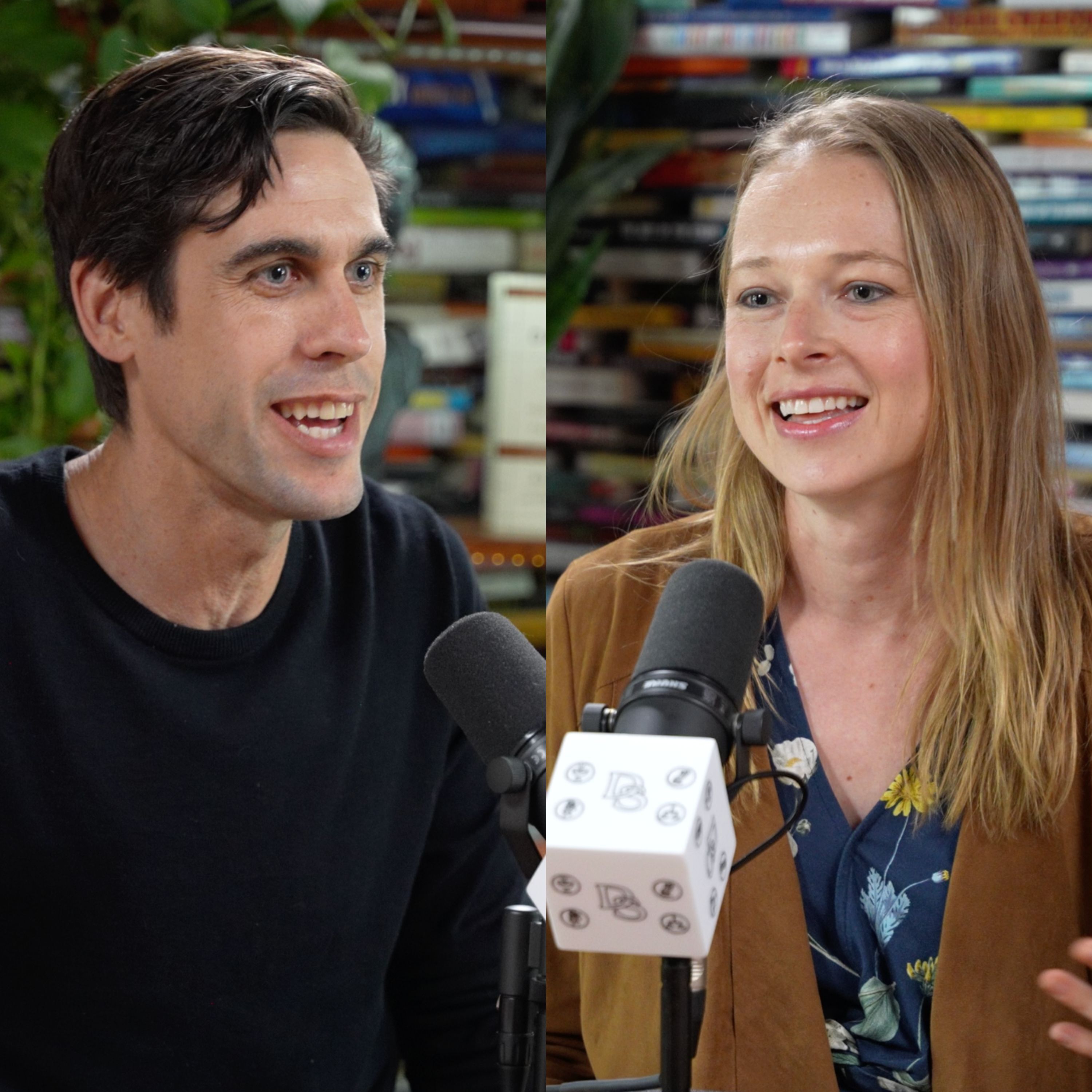
Can people actually change or are we just stuck with who we are? In this episode, author and journalist Olga Khazan joins Ryan to unpack the age-old debate: are personality traits fixed or can we reshape them over time? Olga shares what happened when she tried to change her own personality over the course of a year and what science says about whether that’s even possible.
Olga Khazan is a staff writer at The Atlantic and author of Me, But Better. You can follow Olga on Instagram and X @Olganator and read more of her work on Substack: https://olgakhazan.substack.com/
📚 Grab signed copies of her book Me, But Better at The Painted Porch!
🎙️ Follow The Daily Stoic Podcast on Instagram: https://www.instagram.com/dailystoicpodcast
🎥 Watch top moments from The Daily Stoic Podcast on YouTube: https://www.youtube.com/@dailystoicpodcast
✉️ Want Stoic wisdom delivered to your inbox daily? Sign up for the FREE Daily Stoic email at https://dailystoic.com/dailyemail
🏛 Get Stoic inspired books, medallions, and prints to remember these lessons at the Daily Stoic Store: https://store.dailystoic.com/
📱 Follow us: Instagram, Twitter, YouTube, TikTok, and Facebook
See Privacy Policy at https://art19.com/privacy and California Privacy Notice at https://art19.com/privacy#do-not-sell-my-info.
