
 Ask ChatGPT


 The Daily Stoic
26 Nov 2025 · 51m
```markdown
The Daily Stoic is a podcast hosted by Ryan Holiday that explores Stoic philosophy through daily meditations and interviews with various figures from different fields. The podcast aims to bring wisdom from ancient Stoic thinkers like Marcus Aurelius and Seneca into modern life.
Written by AI. May contain mistakes.

Get the gist, explore an idea or ask about something said.
 Claude
On The Daily Stoic, what are the key points of this episode?
Searching your listeningAutomatic transcript. May contain errors.
0:00I'm recording this on a Monday, and Monday is our grocery store day in our family. I usually pick my kids up from school and we go over to Whole Foods, get all our groceries for the week. Although here very shortly, we're going to go over there to get our Thanksgiving turkey because they've got a bunch of great options. Turkeys start at$1.49 a pound if you have Prime with organic birds at$2.99 a pound. And they only carry no antibiotic ever turkeys that will bring quality to your table at a great price. Whole Foods has great everyday prices on all your Thanksgiving essentials, whether you celebrate with a massive family or just a few close friends.
0:37Everything they sell has high standards to help you shop with confidence. Enjoy so many ways to save on your Thanksgiving spread at Whole Foods Market. Why choose a Sleep Number smart bed? Can I make my sight softer? Can I make my sight firmer? Can we sleep cooler? Sleep Number does that. Cools up to eight times faster and lets you choose your ideal comfort on either side. Your Sleep Number setting. Enjoy personalized comfort for better sleep night after night. It's the final days of our Black Friday sale. Recharge this season with a bundle of cozy, soothing comfort. Now only$17.99 for our C2 mattress and bays, plus free premium delivery.
1:11Prices higher in Alaska and Hawaii. Check it out at a Sleep Number store or sleepnumber.com today. Look, ads are annoying. They are to be avoided, if at all possible. I understand as a content creator why they need to exist. That's why I don't begrudge them when they appear on the shows that I listen to. But again, as a person who has to pay a podcast producer and has to pay for equipment and for the studio and the building that the studio is in, it's a lot to keep something like The Daily Stoic going. So if you want to support a show but not listen to ads, well, we have partnered with Supercast to bring you a ad free version of Daily Stoic.
1:56We're calling it Daily Stoic Premium. And with Premium, you can listen to every episode of the Daily Stoic podcast completely ad free, no interruptions, just the ideas, just the messages, just the conversations you came here for. And you can also get early access to episodes before they're available to the public. And we're going to have a bunch of exclusive bonus content and extended interviews in there just for Daily Stoic Premium members as well. If you want to remove distractions, go deeper into stoicism and support the work we do here. Well, it takes less than a minute to sign up for Daily Stoic Premium, and we are offering a limited time discount of 20 % off your first year.
2:34Just go to dailystoic.com slash premium to sign up right now, or click the link in the show descriptions to make those ads go away.
2:47Welcome to the Daily Stoic Podcast, where each weekday we bring you a meditation inspired by the ancient Stoics, a short passage of ancient wisdom designed to help you find strength and insight here in everyday life. And on Wednesdays, we talk to some of our fellow students of ancient philosophy, well-known and obscure, fascinating and powerful. With them, we discuss the strategies and habits that have helped them become who they are and also to find peace and wisdom in their lives.
3:33Hey, it's Ryan. Welcome to another episode of the Daily Stoic Podcast. I hope everyone is having a great Thanksgiving break if you are in fact on one because you're listening here in America. If not, sorry. But it's funny. We were at sort of like a Friendsgiving before we went out of town. I was sitting with some parents talking about things, eating. And Samantha, my wife, walked by and I said, hey, could you grab my phone? I think it's like somewhere on the other side of the house. And one of the parents was like, what? You don't have your phone with you? They weren't like, oh, you're not watching your kids because kids are there.
4:03They were like, how do you just not have it on you all the time? And I usually do, although I do try to actively sort of practice, you know, just like setting it down and walking away from it. I try to spend less time on my phone, right? I've talked about this before. One of my rules is I don't touch my phone for the first one hour that I'm awake. It doesn't always go that way. Sometimes I need directions or I'm listening to music or whatever. The idea is I'm not getting sucked into the phone right when I start the day. And we're all sort of amazed at different people who use their phones less or use their phones more.
4:36Most of us are just used to being on it all the time. Although I can imagine if you're from another time or if you've been to war or witnessed war up close or seen like some real shit, social media, the things people are doing on their phone might seem ridiculous. I can also imagine if you've ever been shot at, if you've ever been lined up for execution, as today's guest was, not just once, but twice, you're going to have a different perspective on social media. People scrolling their feed, people getting in fights, people chattering about stuff, people monitoring their followers. All that's going to seem, I think, silly to you, ridiculous to you, almost offensive to you in some ways.
5:24one of the stoic practices, right? We talk about this idea of memento mori. And I think when you have experienced different things, we've got that clarity that can come from understanding how quickly life can leave you. You know, it turns down the volume on some stuff. It gives you a different view on some stuff. And certainly today's guest knows all about that, Sebastian Younger because he doesn't have a smartphone. And, you know, you always meet people and you're like, what? How do you do this? And you just realize different people have different experiences. And from these different experiences, they experience life differently.
6:07And we get so used to the paradigm, the lens on which we experience reality that it seems inconceivable to us that there is any other way. I'm like, I was to him, you don't have a smartphone at all. And another parent was saying to me, you don't have your smartphone on your physical possession at all times. But yeah, we're all different. And he talks about that in today's episode. He talks about how technology gives us the illusion of control. We talk about one of our mutually favorite authors, Ambrose Bierce. And he tells some stories from his experiences as a journalist covering war. But I have loved reading today's guest's books over the years.
6:48Sebastian Junger is the number one New York Times bestselling author of The Perfect Storm, Fire, A Death in Belmont, War, Tribe, Freedom, and most recently In My Time of Dying, which is one of my absolute favorites. He's an award-winning journalist. He's a contributor to Vanny Fair, a special correspondent at ABC. He's won a National Magazine Award and a Peabody. He's a documentary filmmaker. You may have seen his form Restrepo, which was nominated for an Academy Award. Just an incredible thinker, writer, philosopher. I really enjoyed getting to spend some time with him. And I really liked this episode of the Daily Stoic Podcast.
7:25I'm going to split it up into two because we really got into it. You can grab signed copies of Sebastian's book, Tribe, Freedom, and In My Time of Dying at the Painted Porch right now. And I'll let you get back to whatever you are doing with your family. And I hope you enjoy this episode.
7:45So only a flip phone? Only a flip phone. It's all I've ever had. How's it work for you? It's great. Yeah. Because I can't do all this stuff that everyone gets sucked into. Like I can't get my email. Right. You know, I can't navigate. I can't book a taxi. I can't do anything. I have to do it all myself as a human being. Do you actually book taxis or do you call someone and they book you an Uber? No, I wave my arm. I live in New York. I wave my arm when a taxi stops. But what about like when you're traveling? You'd go places. Yeah, I just, I call it, sell the hotel. Like, in the old days, hey, can you call me a taxi?
8:17Really? Yeah. That's funny. And I don't count on being able to just go anywhere whenever I want. Like, that's not part of what life is. You know what I mean? Like, it's just not my reality. How do you think that changes your reality? Like, what does that give you that I'm missing with my smartphone? Well, I mean, the problem with the smartphone is that it's designed to be an addiction. Sure. Right? And I feel like once you crack that door open, suddenly there's social media. You know, as part of your every moment of every day. Yeah. Right? And email is this weird sort of Sisyphean task where the more email you do, the more you have to do.
9:01Yeah, sure. With every other job in the world, you do half the job. You only have half left. With email, you do half the job. You have three quarters left. Right? And so the less email you do during the day, the less you have to do. And it's just peace of mind. And the inconvenience, I mean, for me, an inconvenience is an opportunity. So I don't know how to get to the, where's the restaurant? So I'll ask someone, like, hey, do you know how to get to the Italian restaurant? You know, whatever. So I've just had a little human interaction. Right. Right. And then, this is why it drives my wife crazy, but like she has a smartphone, but sometimes we don't know where we are, we're driving.
9:38and I was like, listen, don't look at it. I'm just going to do this by the seat of my pants. The sun's over there. I know that's west. I know we're basically going south. Sure. Like, you know, like we're going to do this the old way. And it works. Like, I mean, it makes your brain engage with the world. I was thinking about this the other day and I had some sympathy from my parents. And like, when I leave to go pick up my kids from school, I know how long it's going to take me to get there. Not generally, but that trip. Like, it's telling me it's going to take 41 minutes. And so I can, and I was just thinking like how stressful and, you know, like, oh, stuff happens.
10:13You get stressed. You try to pick them up on time, whatever. I think like they would leave work every day in the dark, not knowing like, would they get there in time for, right? And like, just the stress of that, that I, as a kid was like, you made me wait for one minute in front of the school. Like, and just going, oh yeah, like not that long ago, you would leave and be like, it generally takes 30 minutes, but it could take 90 minutes. Right. I would say there's also a stress, a terrible stress of thinking you can control your life to within the minute. Also true. Right. And then when life doesn't accommodate that, it feels like everything falls apart.
10:50Right. So, so there's a, there's a, I feel like smartphones increase anxiety by increasing the illusion that you have control. Yes. And you don't. Yes. At the end of the day, you don't. Yeah. Right. And so the old way, it's like, yeah, it might take half an hour. It might take an hour. I'm going to bring a book in case I'm early. You know, they have a book in case I'm late. You know, like whatever. And then that's how life is for humanity and is still like that for most of humanity. Yeah. I mean, even just as an invention as simple as a clock, right, how it changes your sense of the world. Like you talk in Tribe about what life must have been like for people who weren't constantly aware that it was 1230.
11:31The clock in the mirror, right? I mean, you don't know what you look like, really, except in a very rough sense. Yes. Right. And you don't know how old you are. Yeah. Except in a very rough sense. And you don't know what time of day it is. And so if you're going to meet the other clan at the summer gathering at the forks of the river, you head there like a little after the apple blossoms come out. You generally leave it this time. Yeah, exactly. And then there's a lot of hanging out. But what's the point of life? It's appreciating the moment with people you love, like in safety, right? I mean, whatever.
12:05It's like, I mean, what else is there, right? And so the problem with the phone is it deprives us of that in a weird way. Yeah. Yeah. Yeah. No, I'm just like whenever someone is like living very differently than you. Right. It might not be for you, but it's always interesting to go, okay, what is, what are they getting out of that? And so I'm curious about how it changes your just, your interactions with the world. Yeah. Probably more people focused, larger margins for air, less awareness of certain things. Like you probably get home at the end of the day sometimes and find out big things happened.
12:38Oh, totally. Totally. You're like, oh, wow. But everyone else knew about this for eight hours. It didn't change it happening or change what they did about it, but they just carried it for eight more hours than you. Right. And the truth is that, I mean, collectively, rates of addiction and anxiety and depression, all that's in suicide, are just climbing and climbing and climbing. Right. I mean, if the outcomes for society were good, I'd be like, well, maybe I'm missing out on something. Yeah. Right? And, you know, I think antidepressants have helped the society quite a lot. But it's interesting that we need so many of them.
13:09Right? You know what I mean? Yeah. But the outcomes look horrible. Like, on the plane today, coming from New York, I sat next to a young couple who seemed to be married because they each had a wedding ring and they were acting married. And the plane landed and they each took out their phone. And they were too young to have been married very long. Yeah. They each took out their phones. And while we were in the back of the plane, row 35, right? So we had 20 minutes till. And they didn't talk to each other. They each took out their phone and watched TikTok videos separately on each of their phones.
13:40And one of the video that the young woman was watching was of a man who was saying it was a wedding. And the groom was sort of like saying something to his bride-to-be. and he was saying it by reading it off his phone. I'm like, what are you guys alive for? Yes. Right? I mean, why even bother with anything? And if you have kids, you're going to stick the kid on the screen as soon as you can so that you can get back to your screen. Like, let's just blow up the planet now and be done with it. You know what I mean? Like, I just don't understand it. But what did you do on the planet? Are you one of those people that, as they say, you raw dog a flight?
14:18Did you just sit there, stare at the seat in front of you? I had to get up before I am, so I slept the whole way. But I can sleep anywhere. But I have, you know, I have two books with me. Yeah. Right? And I read. Or I just sit and I think. You know, I mean, one of the great things about not having a smartphone is that your brain winds up in this sort of, in neutral, in this idle gear. Right? It's idling. And it's not, it doesn't have to do anything. It can't do anything distracting. And so you just sit there waiting for the bus. And, you know, I make my living with my mind. And those sort of neutral moments are way more productive in some ways than when I'm focused at my desk.
14:56Right. That's a very forebrained, cognitive, like, you know, word oriented state of mind for me. Yeah. But when I'm sort of spacing out somewhere, even driving, you know, it was a minimal task, you know, driving or in a plane or whatever. Or a walk. Yeah. Thoughts that come to me are intuitive and powerful and sometimes brilliant and totally essential to my work. And I would lose all of that. Yeah, I think most of the writing that I do at my desk is synthesizing and polishing thinking that I did elsewhere. Yeah, exactly. Yeah. And the problem with the smartphones is that you could endlessly distract yourself with like mundane tasks.
15:33It needs up to think in time. And these are things that don't matter. Yes. They don't endure. They don't affect your life. Like they're just, it's garbage. I mean, in some ways it's like really is garbage. I mean, it's garbage like fast food is garbage. It doesn't have nutrients. It doesn't sustain you. It just passes the time. But it tastes good. But it tastes good, and it keeps you from feeling hungry. Exactly. But I would say there's a great power in feeling hungry sometimes. What do you do for music, though? Do you also have an iPod? Or do you just don't listen to music unless you're, like, sitting?
16:00I don't listen to music unless I'm at home. Really? Yeah. I have a CD player. A CD player? I have an 8-track. No, I have a CD player, and I listen to music at home. Yeah. I never walk around listening to music. Really? No, I mean. Oh. That helps me get in the vibe, like, in the headspace. I find music unlocks my thing. Oh, totally. Yeah. Yeah. Yeah. And I can I can kind of see that. But, you know, the more you're injecting your brain with the less you're turning off different sounds to listen to specific sounds. I would. Right. And I love music. I play music. I love music. Like and my our home is filled with music.
16:34But I just not out in the world. Not in the world. And, you know, partly I live in New York City. I live in the Lower East Side. Right. Which it's not like the 80s or something when it was truly a dangerous place. But there's a lot of troubled people out there. And, you know, frankly, I want to be I want to have my awareness about me. Or does not get hit by a car? Yeah. Yeah. No, exactly. And particularly I have young children. So I'm like, I mean, it's not like I'm on combat patrol, but I do want to be switched on and observant. And, you know, music, because it's so lovely, you know, take it blunts that.
17:02Well, hearing this about you, it makes gives me a little context is one of my favorite stories about you. It's in the beginning of your episode with Tim Ferriss. You're going to meet him to do his podcast. I think you'd get to his house early and you just start going through the book. He's like, he's not there. So he tells you to let him in. And you walked in and you started going through the books on his shelf and you had started reading Seneca. And you guys talk about this at the beginning. But that sort of little bit of extra time that not, oh, I'll immediately go into my phone or I'll immediately go into work mode.
17:35It introduces a lot of serendipity and then a lot of time for reading. But that was, I guess, one of your introductions to the Stoics. Yeah, you know, it was my introduction to the Stoics, although I remember my dad talking about him. He was sort of classically educated in Europe. So, you know, all those Greeks and Romans, you know, he knew them all cold. But, yeah, there's a great pleasure in that for me. And, you know, I have a flip phone that I can make calls and I can text. Yeah. Right. Which is, you know, a great blessing, you know, particularly with young children. A couple of years ago, I worked on this project that got nominated for a Grammy.
18:08And so I went to the Grammys and they were like, you know, it's from like, there's two different Grammys. It was not the main musicians Grammys. It's all the jazz albums and the classical albums. There's one where they get through all the awards and then the one on TV is a separate ceremony with like 10 awards. But anyways, they were like, hey, it's from, you know, it starts at four and then it's done at nine. And I was like, I'm not sitting somewhere for nine hours. And I brought a book and everyone looked around and looked at me like I was insane. and I was like, I'm probably the only person walking the red carpet into the Grammys carrying a book, but I was like, what am I going to do for five hours?
18:43My award thing is going to be eight seconds if we're lucky. And also, um, I'm just going to spend this whole time on my phone. What am I going to do? When I was a kid, when I was in college, one summer I got, you know, my dad was a reader. He's brought up in Europe. I had a great education. I just read all the time I was a kid. I was a little nerd. And one summer after my freshman year in college, I got a job with the highway department in the little town that I lived in. And, you know, there were a bunch of World War II vets and Vietnam vets, basically, mostly white town. And there was a heat clause.
19:18And so if it was over, you know, 96 degrees or something, they couldn't send us out. But they couldn't send us home either. So we were stuck in the garage, right, the sort of maintenance garage with the bulldozers and the dump trucks and all this other stuff. And I just lived in terror of having eight hours to spend in the town garage on a hot day, right? So no matter what, I always had a book with me. And I was an anthropology student and totally enamored of anthropology. And I remember I brought, I don't know why they just didn't beat me up right then and there, but I brought Cloud Lovistros.
19:48Yeah. Right? The raw and the cooked, I think it was. And I was sort of reading my way through that. And so there was one day, it was a heat clause day, and I sort of curled up in the bucket of a bulldozer. Yeah. Right? Sure. And I sort of curled up and the steel was nice and cool. And I was reading my French anthropologists. You couldn't have imagined his book would ever be consumed in this setting. Exactly. And this old guy, I mean, to me, old guy, he was probably, you know, my age now, 60, but he came over and he tipped the book up to see what I was reading. Right. And all the guys were playing poker and looking at like girly magazines.
20:24You know what I mean? You can imagine. And smoking. You can imagine. And he tipped the book up to see what I was reading and just sort of frowned. And I was sort of braced for like, you know, I was the only college kid there. Like I was braced for the inevitable comment, right? And he nodded and he said, you keep doing that kid so that you don't wind up in a job like this. And so that's the power of reading and sort of the power of not having some other distracting thing to do. And it forces you to curl up with club-loving strokes. So sometimes your life has to be like, look, it would be wonderful if every subject was riveting and every author was compelling and they're not.
21:02And sometimes your life has to be boring to a degree that you could sit through things that otherwise would be too boring for you to sit through. Like you need eight hours to sit through some dense tome. If your life is incredibly stimulating or you have access to unlimited stimulation through your phone. Yeah, that's right. it's an impossible ask to make someone read that book. Absolutely. And so if you don't have that sort of easy task of scrolling through your social media all the time, you have to develop things that are harder to develop, but they're more rewarding. So I play music, right?
21:35And so I've been in many boring situations and I can practice music in my head because I can hear the notes in my mind and I can move my fingers in ways that correspond with the notes. and I literally can practice music. Like if I'm stuck somewhere for an hour, I could say, okay, I'm going to practice this song, which is I've been having trouble with. And they actually did a study and they found that people that practice music in their heads, they took beginners and taught them, you know, guitar or something. And the ones who practice music in their heads were told to practice in their heads. Yeah.
22:09Developed much quicker, much faster. They learned much faster than the ones who did not. Yeah. So if they just practice on guitar and didn't also practice in their heads and they had a limited amount of practice time, the people that practiced internally developed really quickly. I heard someone say once, it's very hard to be good at something that you don't think about in the shower. Oh, yeah. Like if you're not, if it's not so captivating to you that it is filling that all the time, it's insatiable, you're probably not gonna, you're just gonna, well, you're gonna be beaten by the person who is thinking about it in the shower.
22:45And the unconscious mind works in a really powerful way. So there's any number of, you know, mathematical problems that have been solved when someone's asleep. Yeah. Right. Or physicists have solved problems in their sleep. Archimedes in the bath or whatever. Yeah, that's right. That's right. But there's something about sleep that is very, very powerful as it unlocks the unconscious in ways that is like so powerful and intuitive that it will solve problems that the sort of like slow moving, like forebrain doesn't just can't quite do. And, you know, what I found is that if I'm practicing a really hard passage of music and I can't get it and I can't get it and I go to sleep, when I wake up in the morning, my brain has worked on the neural pathways involved with that piece of music.
23:27In the morning, I can play it. I don't think everyone needs to go get a flip phone. Not everyone's life is conducive to that, by the way. Like, I think we have some freedom to be a little bit more eccentric than, you know, your average person. But certainly you can decide that it's not going to be the last thing you see before bed and the first thing you see in the morning. And that gives you space to take advantage of that subconscious working while you're asleep. And yeah, I go to bed. I have some ideas. I write them down. I wake up in the morning. When you wake up in the morning and you're fresh and you don't know the awful things that happened in the world while you're sleeping, you didn't get any stupid emails from people yet.
24:07Toni Morrison talked about how she had to do it. do all of her writing before she heard the word mom for the first time. But it's like, there is something about that space that there's a virgin mental space in the morning. Absolutely. And a lot of people soil it before their feet hit the floor. Yeah. I like, I have a friend who they go to sleep with the TV on and I'm just like, your mind's definitely working all night, but you're stressed about whatever the CNN ticker is saying. So anyways, I think that, that fresh time in the morning, your mind has just done a reset. How much are you going to stay in that freshness before you soil it, I think is really essential.
24:47And I hear you about some people have jobs that just require apps that do this and that, but there is no reason for all of us to be carrying around social media in our pocket. Definitely. I have no social media on my phone. And done like that, the smartphone is a real tool. Basically music, navigation, a camera that I take lots Lots of pictures of my kids with. And, yeah, notes that I, you know, I can Google stuff or whatever. But for the most part, you got the thing. What are the things that are going to make you use it 10x more than you ordinarily would? Don't have those under phone. Right. And those, you know, those are the things that were designed as addictions.
25:26And those addictions, the companies that develop those addictions have monetized your addictions to the tune of trillions of dollars. Yes. Right. You're trading your peace of mind and your addicted life for their money. Right. And that to me is just like, I'm not doing that. Sorry. I'm just not giving you my money. And you give me your disease. Like, I'm not doing it. Yeah. If Steve Jobs is alive, do you think he'd have social media on his phone? Or do you think he probably would have created ways to, like, this is a Zen sort of Buddhist dude, right? I think it's interesting to look at the technology habits of the people who run these services.
26:06They're telling you, it's like finding out the smoking execs don't smoke or are upset if they catch their kids smoking. Yeah, right. Totally. Well, I mean, I haven't run this story down, but I heard that in Silicon Valley, all the people working in the tech industries, the private schools that they send their kids to do not allow smartphones. Totally. Right. So, you know, that's where Congress should sort of make some inquiries. Like if you if this is unhealthy for your children, you develop this shit. Right. Like what what legislation can we enact that would protect all the nation's children from the toxic effect of these addictions?
26:44Well, look, we were about to ban TikTok, which is one of the biggest social networks controlled by our primary foreign adversary. And we got to the one yard line. And why didn't we? it's because the people in power realized, oh, by saving said social network, they'll probably tweak the algorithm to be more favorable to us. And since the political leverage of, hey, do you want to get rid of something that's bad for everyone? Or would you like the thing that's bad for everyone to be slightly more favorable to the messages that you want out in the world? Yeah. And social media increases political division.
27:25Yeah. Right. And polarity. And, you know, there are both parties. But I think right now the Republicans particularly are invested in division as a form of political power. Yeah, look, the executives that he had in the front row, and again, I think this is less a political thing and more of a politics thing, right? The powerful billionaires that he had sitting in the front row of the inauguration were not munitions manufacturers. Yeah, yeah. They were attention merchants, right? They're not people who own casinos even, right? They were the billionaires who control the social networks, who control what consumes most of our cognitive power as a society.
28:07Because those are the people that you have to have on your side or have properly intimidated to not fuck with you. Yeah. And if, you know, if you can generate sort of rage in people, right, you can get them out to vote. And social media is great for generating rage. Yeah. Right. So, you know, I can totally see in today's political environment, like, I don't know, we don't want to get rid of social media. I mean, that's the soil that our plant grows in. This is the opium of the masses also. Yeah, exactly. Yeah.
28:41We just took our kids to an outdoor performance at the Nutcracker. They had a snow cone. And then they went insane in the car ride home. And one of the things I try to remind myself when that's happening is that I don't control my kids' behavior, especially when they're too far gone like that, but I do control how I respond, right? That's stoicism, but it's also what Dr. Becky talks about. Dr. Becky is a clinical psychologist and a best-selling author, and she founded Good Inside, which is there to give parents practical, actionable tools for handling those everyday challenges with confidence.
29:16My wife introduced me to Dr. Becky's books. I love them. I've recommended them a million times. I've had her on the podcast. And as it happens, Dr. Becky is hosting two live Q &A events for good inside members. I am one of them. She signed me up for it about a year and a half ago. I've loved it ever since. On December 1st, you can join Dr. Becky for her How Not to Raise Assholes event, which is about avoiding entitlement and raising kind, empathetic kids. And on December 15th, she's hosting her How Not to Lose It over the holidays event, which I'm sure we could all use. As I said, I'm a big fan of Dr.
29:53Becky. She's been a great influence for me as a parent and just as a human being. And Daily Stoic listeners can join for 15 % off with code STOIC15. You just got to head over to goodinside.com to catch the events. Thanks to Toyota Trucks for sponsoring this episode. When I bought my ranch in 2015 out here in Bastrop County, I drove my car about halfway down the dirt road that we live on, thought this isn't going to work, stopped, parked it, walked the rest of the way home, borrowed my wife's car, drove in Austin and bought a truck. What I bought was a Toyota Tacoma. And this truck wasn't just transportation getting me to and from my house.
30:35It unlocked a whole different style of living for us, not just on the ranch, but in our little Texas towns. There were places I could go now that I couldn't go before, especially out here in the piney forests, through the fields, and on the unpaved roads like the one that I lived in. We got to go deep into the hill country's wild beauty. We've driven all the way out to East Texas. We've driven across the country. And by we, I mean not just my wife, but both my kids who I drove home from the hospital in that truck. Toyota trucks are built for those who understand that the best adventures happen when you're willing to veer off course, because you never know when you'll end up on a Toyota adventure detour.
31:19And of course, this is stoicism, too, because every detour, every obstacle is an opportunity. But it's helpful if you can handle the difficulty inherent in that. If you've got the resilience and the right companion to make it wherever the road takes you. Discover your uncharted territory. Learn more at toyota.com slash trucks slash adventure dash detours.
31:46So in the book, In My Time and I, you open with this story of you almost drowning, right? Yeah. And you know what I thought of when I read that? I was like, is this a occurrence at Owl Creek Bridge situation? Yeah, right. The first thing I thought of was Ambrose Spears. Yeah. And then it made me think when you're talking about this sort of subconscious is this like, how do you know if you're dead or not? This could all be a flash of fleeting existence. And I mean, I think that's one of the greatest short stories of all time. Oh, it's amazing. I remember I read in seventh grade. My seventh grade teacher told me that I would like it and I did.
32:23And so I wasn't thinking about that explicitly when I wrote that section. But I did. That story came out of the same question and fear that I had after I almost drowned, which was afterwards, you know, I sort of had heard somewhere sort of, and it's a sort of urban myth maybe, but that when you drown, like you can live sort of an entire lifetime. Yeah. Time slows down. Yeah. And you might have the illusion of living out the whole rest of your life. Yes. And then you drown and that happens in 30 seconds, right? And I just started to obsess over the idea that I might have actually, that I might still be drowning right now.
32:59Yeah. And I think I'm 63, but I'm only 23 seconds into my 30 seconds of drowning and how would I know? And I, you know, I don't really think that, but I couldn't disprove it. Yeah. Well, Richard Linklater, who lives out in Bastrop, he has this whole movie called Waking life about that premise. The idea that we're, you know, you have these dreams and they feel interminably long and like they can tell from brain scans, it actually only occurred over, you know, one second. You know what I mean? In the dream, everything is, it's happening, right? And that, yeah, what if that's your life? It's kind of this philosophical mind-blowing of a thing.
33:35Right. And then you can sort of get into the quantum physics of everything, which is It's just, you know, it's equivalently surreal and unanswerable and bizarre. And I find, you know, pretty terrifying. Yeah. You know, Ambrose Bierce's father's name was Marcus Aurelius Bierce. And his uncle, his father's brother was Lucius Verus Bierce, the two brothers that are co-emperors. Wow. Yeah. That's amazing. Who were those parents? Yeah, right. Somebody was a Roman history nerd. Yeah, exactly. And then I'm fascinated with the, he's like, I'm going to give one of my sons the good brother's name. And then I'm going to give my other son the shitty brother's name.
34:13Wow. That's amazing. Just the heaviness and the lightness of that, I find fascinating. Yeah. Amazing. He's such an amazing writer too. It's sort of similar to you. And there's a handful of these where it's like, I think a lot of his stories come out of the PTSD from his horrible civil war experience. I mean, he's there at Shiloh. He's terribly wounded. And then basically never is able to fully reintegrate into society after this experience. Right. Yeah. I mean, I think that's one of the things civilians don't get because war is, in their mind, and it is truly, so terrible. Yeah. Right. So you would think that coming home would just be a welcome relief.
34:54Yeah. Right. And so I was talking to this guy who was in the Special Forces in Vietnam. He was a LERP, a long-range patrol. Crazy dangerous work. They dropped these guys behind enemy lines, really outside of any air support. So their faces are painted and they just, if their position is revealed, they'll die. And so he said that they would, at night, there was only like six of them. Yeah. Right? So they couldn't have a regular person on guard because there's just not enough hour. You know, you need your sleep. So they would sleep. They would create with their bodies the spokes of a wheel with their heads at the center and their feet all sticking out like the spokes of a wheel.
35:30So if they were compromised and everyone sat up, someone would be facing the enemy. Yeah. Right. Right. And as my buddy who was in the platoon I was with said, it gives a new meaning to the word spokesman. Yes. Right. So the problem with vets in the Civil War and on back for eternity, like the wrong with vets is they don't get to come home. They're no longer spokesmen. Yeah. They're not part of a wheel anymore. They're not part of a wheel. Yeah. You're by yourself. So you're in danger. Yeah. Right. You're more in danger by yourself in a society that's at peace than you are as a Lerp in Vietnam, like with your bros.
36:08Yes. That's where at least emotionally, that's what it feels like. Yeah. Right. And it's a very, very tough thing. Well, with with Ambrose Pierce, I think what's so interesting is he comes home. What was perhaps one of the most moral crusades of a war? It doesn't start that way, but it becomes that way because he fights for the union. And I think that's one of the one of the things that you sort of miss in that story is the guy that's being executed is is a shitty guy. He's a Confederate soldier. Right. Who is a spy. That's why he's being executed. But anyways, he comes back to what almost immediately becomes like Gilded Age America.
36:41And so it must have been so like the moral injury of the war, but then coming home to this decadent, corrupt, corroded society where these people who didn't serve in the war are now effectively billionaires because they hired a substitute. And then they've hijacked the government. You know, he starts in San Francisco, comes west as a political reporter. So he's familiar with Stanford and Huntington, all these sort of barons who have purchased the government effectively. And he's just like, do you know what happens to Ambrose Spears? No, don't tell me. Oh, it's a crazy story. So he becomes this sort of muckraking reporter, powerful, sort of cynical guy who's, you know, tearing everyone down.
37:28And then at some point he writes his sister, hey, I can't do this anymore. And he tours all the battlefields that he goes on, kind of like your thing where you go on your walk, tours all the battlefields and then heads to Mexico where Pancho Villa and the sort of revolution is happening. And he's like, I'm just going to cover this. but he writes a letter he goes i'm probably going to end up lined up his his last letter is i'll probably end up you know uh put in front of a wall somewhere and shot but if not you know i'll say you know i'll see again and then that's what ends up happening he predicts his own death and he's executed like they can't the the mexican army just can't wrap their head around this guy coming down to see what they're doing right for the lark of it and suspect he's some sort of spy and he gets executed and is never seen again.
38:15And he's kind of one of those first guys that gets killed that the rumors are maybe he's still alive somewhere. And so his legend lives on. But yeah, he tries to reintegrate in society. And even though he achieves all this success and fame and reaches the peak of his birth, he just can't make it work. There was a great journalist named John Reed, Jack Reed, who was down there at the same time as well. And he made it back. He was just a kid and he made it back. He wrote a book called Insurgent Mexico, and there's a paragraph that describes the tropa, Pancho Villa's troop, coming at a gallop towards him.
38:51And it's an extraordinary paragraph because basically Cormac McCarthy took that paragraph and was like, I can do this. And his famous paragraph of the Comanche attacking the soldiers in Mexico, that is a famous paragraph, right, from Blood Meridian. Yeah. I adore Cormac McCarthy, so I'm not dissing on him at all. Right. But you can see the influence. You can see that you could totally see the roots. It's extraordinary. Totally extraordinary. Even the cadence and there were some of the repetition and the attention to detail, the frock coat worn backwards, you know, like, I mean, just all this sort of Cormac-y in detail.
39:24I was like, oh, that's Jack Reed. Right. Totally amazing. After I finished my book In My Time of Dying, I came across this amazing anecdote about Dostoevsky that I didn't know. So when he was young, he was sort of a radical, like lefty sort of like radical. And he had some sort of lefty friends and they would get together and talk about like ending serfdom, like freeing the serfs and things like that. Right. And the equivalent of like defund the police or something. Right. You know, and and, you know, it got the czar's attention. And, you know, these are like sort of elite, elite society, you know, like intellectuals.
39:58And the kids were they were rounded up, arrested and put in jail for eight months for speaking against the czar. Yeah. Right. And wasn't a particularly serious crime. Right. They just needed their hands slapped, basically. And after eight months, they were released and loaded into a wagon, into a carriage. And they thought there were like six of them. And they thought they were going to be driven to the court and, you know, processed and discharged their families, right? Yeah. Of course. And instead, they were driven to a town square and tied stakes. Yeah. And a firing squad was arrayed in front of them.
40:30And the orders were given, you know, like, charge your rifles, ready, aim. And it was a mock execution, but of course, they didn't know that. So two of the six men were insane for the rest of their lives. Yeah. The last moment, a rider galloped into the square and said, the czar forgives them. So two of the six men were insane. It broke them psychologically, right? Dostoevsky was made of stronger stuff, and he wrote about it indirectly in one of his novels. But what he said was that in that moment, facing the rifle barrels, right? Like in that moment, he noticed sunlight glinting off the steeple of a church.
41:06And he had the extraordinary thought, in moments, I will join the sunlight. Yeah. And I will become part of all things. Yes. Like the overview effect that astronauts talk about. Exactly. basically has there and that part of everything right and i'm about to join everything and he also had time to think if i should somehow survive this i will turn each moment into an eternity right so that's what you were saying about you know when you're dreaming yeah like one second could last could last feels like it lasts an hour yeah so there is that sort of elasticity of time in these moments of like psychological extreme well two things one how fucking insane is it that we are still executing people by firing squad?
41:48Like that was brought back? Like, what does that say about who we are as a society? That that is a fucking real thing. That is deranged. But two, there's another Ambrose Spears story. It's called Parker Adderson Philosopher. And it's about a soldier who's captured and he's going to be executed. And he thinks he's going to die by a firing squad. And he's sort of very philosophical about it. And he's sort of cribbing like some of the stoic stuff. He's like, you know, I knew I was going to die when I was born. And he's talking with the general of the Confederates or whatever. And he's saying all the things that a philosopher, Seneca, going to his death, right?
42:26He's doing it. And then they have this long conversation. And then the sun comes up and the general goes, OK, take him out to be hung like a spy. and immediately he all the artifice of it collapses because in his mind he he saw himself getting you know an honorable death firing squad and then the shift and then this whole not spoiler it's a 200 almost 150 year old story but but he he sort of freaks out and he in the in the scuffle he grabs a sword and he ends up killing the general it's this crazy story but i think you You know, the meta-ness that you find out that Ambrose Beirce is killed as a spy is kind of mind-blowing.
43:04But he has this sense that like, hey, I'm going to be able to meet my death bravely because I prepared for it. And then in the face of the overwhelmingness of it, it breaks him psychologically, just like the Dostoevsky people were talking about. I thought it as Ambrose Beirce kind of making this commentary of the, it's all well and good to talk about these things. And then you don't know until you face your own imminent demise for real in that moment. Right. Yeah, I've twice in my life as a journalist been in a situation where I thought I was going to be executed. So it's not a combat situation, you know, but like there's nothing I can do and it's going to happen.
43:42And I just, I remember feeling incredibly weak. Like, I mean, like physically weak, weak and numb and not entirely there. Yeah. It was really, and the psychological consequences later of that state of mind, even for an hour, were profound. What do you mean? Oh, I mean, the sort of trauma of spending an hour thinking I'm going to be shot. It's like, lasts for years. Yes. Right. But it was really interesting. It was so frightening that it wasn't frightening. It was just a form of sort of a profound muscular weakness and just a removal. Like a disassociation? Yeah. Yeah, just hollow. Like, yeah, extremely unpleasant.
44:19When you are under the impression you are about to be executed, where does the mind go? Well, you know, in one case, I was told I was going to be, and I didn't quite believe them. Right? I'm like, I don't know. I'm in Nigeria. I was detained by this sort of rebel movement that accused me of being a spy. And this one guy walked up to me with a machine gun and said, when we kill you later, I'll be the one to do it. I was like, he's not the commander. There's a lot of reasons to be worried right now, but I'm not convinced this is going to happen. Right. So is that a protection mechanism, you think?
44:52Well, I think it was both a protection mechanism and, you know, I think I was right. Like, I was right. I mean, obviously, here I am. Right. And, you know, they would have been executing an American spy, like someone from the U.S. military who was spying, U.S. government who was spying. That's a big deal. Yeah. Right. I mean, I sort of knew like, OK, maybe there's nothing I can do about it, but this may be a bad move for you guys. Right. You maybe have sensed other profound recklessness. If that's what. And I bet you guys know that. If that's the stakes they're playing. And in the other, I was stopped by rebels in Sierra Leone on a remote road with a couple of government soldiers.
45:29And there's like these 20 rebels stepped out of the jungle with machine guns and, you know, extremely bad situation. And, you know, they were like sort of, it was a little like Dostoevsky, so leveled their, cocked their rifles, leveled them. One guy shouted, no, no, no, don't shoot. You know, like they were arguing about whether to shoot us. Yeah, right. And so it's not a planned thing. It's like, this could happen right now. Yeah, it was an ambush and they stopped us. And I was with government soldiers. They were the enemy. These guys were enemies, right? And a couple of journalists. And, you know, that went on.
45:58The argument went on for maybe 10 minutes. And it was a long 10 minutes. But I just felt, all I remember thinking is it's going to suck for my parents. I didn't have kids. I didn't have a family then. But it was going to suck for my parents. And I really hope it doesn't hurt. Yeah. I just remember that. I hope this doesn't hurt. Yeah.
46:22Human, your body has a performance superhighway. 60 ,000 miles of blood vessels that deliver oxygen and nutrients to every cell. This, of course, is your cardiovascular system. It's the foundational system that powers everything we do. Both elite athletes and longevity experts invest directly in the cardiovascular system because supporting healthy blood flow is critical for energy, recovery, mental clarity, and overall performance. That's where human comes in. That's human with two Ns. They started out of research at the University of Texas, near where I live, and have 15 years of experience making award-winning supplements for nitric oxide production and healthy blood flow, now used by over 160 pro and college sports teams.
47:10Human Cardiovascular Health Daily is a plant-based and made from clinically studied ingredients like grapeseed and seed kelp extract. It supports nitric oxide production for healthy blood flow and energy while also supporting blood pressure and helping support the delicate interlining of your blood vessels. Just two capsules each morning will power energy and recovery while also playing the long game by supporting long-term vascular health and healthy aging. Human has an exclusive offer for our listeners. You can visit human.com slash stoic for an extra 15 % off your first purchase. That's enter code S-T-O-I-C, stoic at checkout.
47:45That's human with two N's, dot com slash stoic for an extra 15 % off with code stoic at checkout.
47:56In the book, you say that what a near-death experience does is introduce you to death. like you are now on nodding terms with this thing that's kind of an abstraction prior and to basically everyone else who hasn't had that experience. Yeah. And my, you know, my sort of like self psychological sort of defense mechanism was that all the other times that I'd come close to getting killed and, you know, maybe three or four times in my career. Right. That it always been in war zones. I mean, I was going to places that are dangerous. That's the deal. You're going to go into a casino. You might lose some money.
48:29Right. I mean, that's the deal. Right. And you might make some money, but that's the deal, right? So I sort of knew that. So after my buddy Tim was killed in Libya, I made a movie called Restrepa with Tim. He and I shot it, directed it, produced it, the whole thing in eastern Afghanistan. And we were very, very close and went through a lot together. And after he was killed in Libya, I got out of war reporting. I'm done. And I had the idea, this delusion, that now I've slid into home base. Yeah. I'm safe. If I'm not going to war zones anymore, how could I die? Right? I'm not gambling with my life.
49:04I got married. I had children. And I just thought I'm fine. You know, I was a very fit 50-something-year-old, right? And I'm not a walking heart attack. I'm like, you know, I drive carefully. I mean, I sort of checked every box you can check, and I'm not going to war zones. So I had nothing to worry about. And what I didn't know, of course, is that your human body is a huge liability. It can be a huge liability, and you can be extremely healthy and still have something going on in it that can kill you. Entropy is working on us at all times. At all times. Yeah, exactly. And, you know, of course, I knew, okay, you get cancer and, you know, you're going to die in a few months or a few years.
49:41I mean, of course, we all know we're in that lottery. But what I didn't realize is that there's things that can kill completely healthy athletic people. Kill them, you know, a brain aneurysm. Sure. Or whatever. Like, you're dead by dinner. Yeah. You know, you think you're just having a normal Tuesday. and you're not going to be here by dinner time. And that really shook the foundations of my reality in a way that the war zone stuff didn't. And what I had was I had undiagnosed aneurysm in my pancreatic artery. And aneurysm is sort of unnatural ballooning of the artery for various reasons, but I have a ligament in the wrong place.
50:19And it's a very, very random, freaky thing, right? And it's extremely rare where I had it and extremely deadly. And, you know, in mid-sentence, like literally in mid-sentence talking to my wife, I felt a pain in my abdomen and I was dying. Like that quickly I was dying and I had an hour and a half to live. I was in Australia last summer and, you know, the walk from Bondi to that walk along the coast there. There's this cemetery, I think it's the Bronte Cemetery. It's the cemetery right on the coast. Maybe the prettiest cemetery in the world. And I'm looking out over it and I was just thinking every single person here was surprised when it happened.
50:59Like they all thought they had more time. Almost nobody dies and goes, I'm past due. Right. Right. Like even people who are old, even people who have cancer, everyone thinks it's going to happen a little bit further in the future than it does. And here we are walking around our normal life acting like we're not that person, like we're not going to be surprised by the thing that's obviously going to come too soon and surprise all of us. Yeah, I had this as I sort of tried to process what happened to me because, you know, I barely survived and the psychological consequences for me lasted way longer than the physical consequences of almost dying.
51:41and I had this thought like, okay, if I was in prison and I knew I was going to be executed tomorrow morning and I had some books, I had a musical instrument, like I had, you know, whatever, the things that have given me solace and comfort in my life, I had them available. Would I play music? Would I read my history books? Why would you? You're going to be dead tomorrow morning. But then it's like, okay, but I'm going to be dead at some point tomorrow morning. Why do anything? Right. And so I was the real question. Like, who do you want to be? If you know this is your last 24 hours, who do you want to be in those 24 hours?
52:16Right. Right. And that's where I come down against like smartphones, not to bring it around smartphones. Like, would you scroll through social media in those last 24 hours? And if you wouldn't, what the fuck are you doing doing it today? Because you don't know. Well, it's a tricky thing, right? Like the memento mori idea from the Stoics and from And the philosopher is like, someday you're going to die. Right. Or Mark Sturlus in meditation says you could leave life right now. Let that determine what you do and say anything. Now, if you knew you were going to die in 24 hours, like there's something existentially obliterating about knowing that an asteroid is coming or, you know, you just caught an infectious disease that kills in seven hours or what.
52:58Right. If you knew for certain you were going to die in a short amount of time, it's kind of it's actually not that sort of morally and philosophically clarifying because everything becomes meaningless in some sense, especially if you don't believe in an afterthought. but the after life i like after i believe in afterthought yeah yeah after especially if you don't believe in it in the afterlife but i think it's more that you could go in 24 hours you could go in 24 years whatever it is right and it's not so much the certain looming of it but the fact that the uncertainty of it that's what provides i think the moral clarity of like hey i got to be pretty good about how i spend this time i might have a lot of time i might have a little time but I do know it's a finite amount of time.
53:43And will I have a good accounting for it whenever it runs out? Well, I mean, I actually, I hear what you're saying. I think you could argue it either way, right? So you could also say that the fact that I only have 24 hours left makes those 24 hours more meaningful. Yeah, sure. Right. So do I want to spend those 24 hours with my children? Yes, I do. Right. How would I be with them? Would I be distracted and not paying attention? No, they'd be on my lap. I'd be holding them. I'd be telling them I love them. And then I'm going, but they, you know, we always with, you know, that's the parent. You should be really in some ways all the time.
54:18Right. And so I think you could argue that it's more meaningful and less meaningful. And that's the irony of life. Remember a couple of years ago when there was that missile alert in Hawaii and they alerted everyone? Like, what do you do? Right. Like, obviously, I just mean, like, you basically don't do anything. You just do a couple. You just you make a couple of phone calls depending on where you are. And then you kind of sit there and wait for it to happen. Right. So there's I just mean there's something obliterating about that. And so maybe people are intimidated about thinking about that.
54:47But it's it's also for certain that it is going to happen at some point. And so thinking about how do you spend your life day to day and not eliminating the enormous inefficiencies and time wastes and anxieties, that I think is very helpful. Obviously, you know, For Whom the Bell Tolls by Hemingway. And, you know, the sort of like central drama of it is this is a night before this military operation where Robert Jordan, I think his name is the narrator or the main character. He's pretty sure he's going to get killed. Yeah. Right. They're blowing up a bridge. They're blowing a bridge. in the morning, right?
55:22And, you know, he's just met this young woman. And I remember, this really struck me when I was young, I read this and he said they had, you know, one night to have a love affair. And he said, we have to make an entire lifetime together. We have to fit it all into one night. And so I think what we're both saying is true in different ways. But one way of looking at life is because I don't know, how do I fit a whole lifetime into today. Yes. Because it might be. Yeah. That actually might turn out to be what happens. Well, Seneca talks about, can you close the books on life each day? Like, can you, can you go, this was a good life up till this point?
56:00If it ended right now. Yeah. And then if you wake up tomorrow, you're with house money. And that I think is incredibly powerful and helpful. I've talked about this before, but I think about so many of the things we're doing, it's, it's because like, we're working on this project so we can get the rewards when it comes out, right? Like you work on a book and are you miserable while you're doing it for the reward of having done it? Well, in light of the fact that you could die before it comes out, that seems like a bad strategy. So how do you make some subtle shifts? So when you save the draft for the day, you're like, I am proud of where it is now and I'm putting it out now when I'm saving it and I'm putting it out tomorrow when I save it and the day after.
56:46It's just that you're seeing this all as this kind of self-contained thing and going, hey, this is good. I just try to think like, this is enough. Up until here, this has been so much as opposed to I need tomorrow to make the shittiness of today worth it. Right. Well, you know, I mean, there's a sort of lesson in there for parenthood. I mean, parenthood is hard, right? It's really hard. And for many people, I think it's just about the hardest thing they'll ever do. And one of the things that parents tell themselves, I think, is, well, it's going to get easier later. Just get through this part.
57:20It'll get easier later. But you're cheating yourself. Get through this part. What are you talking about? You have a two-year-old. You're going to mourn that two-year-old. Exactly. I mean, just because something's hard doesn't mean you can't take meaning and pleasure out of it. Yeah. Right? Hard. This society is allergic to things that are hard. I'm like, listen, Life is hard. Like, if that gets you to check out, if hardness gets you to check out of everything, you're going to lose. Better hope you get lucky. Yeah. And so, you know, you have to do is like, no, no, no. Having an 18-month-old who's colicky and crying all the time, that is enough.
57:55Yeah. That's what I want. That's enough. Yeah, it'll change. It'll get easier. But it won't necessarily get better. Right? This is it. Thanks so much for listening. If you could rate this podcast and leave a review on iTunes, that would mean so much to us and it would really help the show. We appreciate it. And I'll see you next episode.
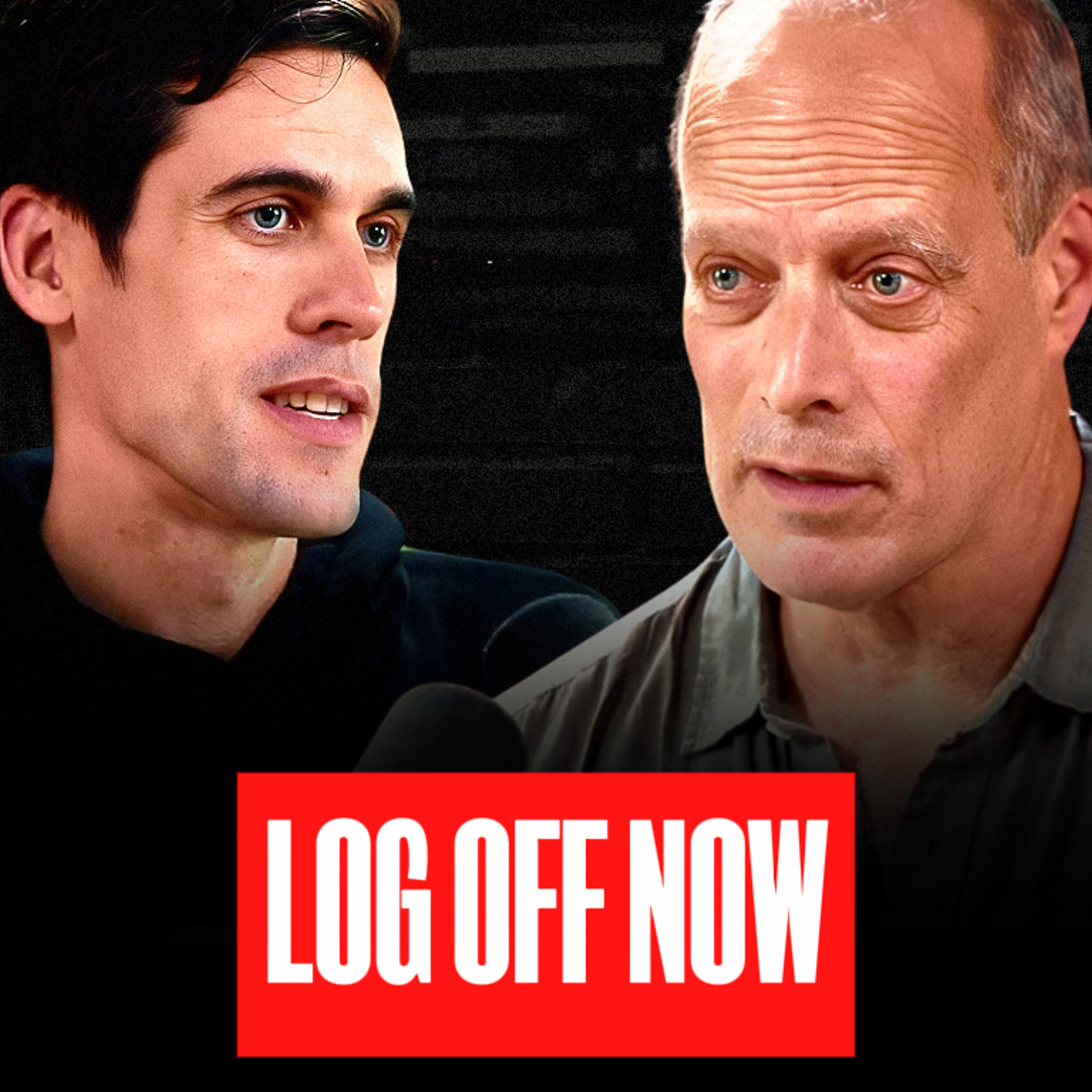
After you have faced death, you can’t believe what people care about online. In this episode, Ryan sits down with bestselling author and legendary war reporter Sebastian Junger. Sebastian talks about why he refuses to get a smartphone, how technology gives us the illusion of control, Ambrose Bierce, and the multiple times he was nearly executed as a war reporter.
Sebastian Junger is the #1 New York Times Bestselling author of The Perfect Storm, Fire, A Death In Belmont, War, Tribe, Freedom and In My Time Of Dying. As an award-winning journalist, a contributing editor to Vanity Fair and a special correspondent at ABC News, he has covered major international news stories around the world, and has received both a National Magazine Award and a Peabody Award. Junger is also a documentary filmmaker whose debut film "Restrepo", a feature-length documentary (co-directed with Tim Hetherington), was nominated for an Academy Award and won the Grand Jury Prize at Sundance. He is also the founder and director of Vets Town Hall.
Follow Sebastian on Instagram @SebastianJungerOfficial and on X @SebastianJunger
Grab signed copies of Sebastian’s books Tribe, Freedom and In My Time Of Dying at The Painted Porch | https://www.thepaintedporch.com
🎥 Watch Sebastian Junger's first episode on The Daily Stoic Podcast: https://www.youtube.com/watch?v=kApbOu6bXt0
👉 Support the podcast and go deeper into Stoicism by subscribing to The Daily Stoic Premium - unlock ad-free listening, early access, and bonus content: https://dailystoic.supercast.com/
🎙️ Follow The Daily Stoic Podcast on Instagram: https://www.instagram.com/dailystoicpodcast
✉️ Want Stoic wisdom delivered to your inbox daily? Sign up for the FREE Daily Stoic email at https://dailystoic.com/dailyemail
🏛 Get Stoic inspired books, medallions, and prints to remember these lessons at the Daily Stoic Store: https://store.dailystoic.com/
📱 Follow us: Instagram, Twitter, YouTube, TikTok, and Facebook
See Privacy Policy at https://art19.com/privacy and California Privacy Notice at https://art19.com/privacy#do-not-sell-my-info.
