
 Ask ChatGPT


 The Daily Stoic
5 Jul 2025 · 41m
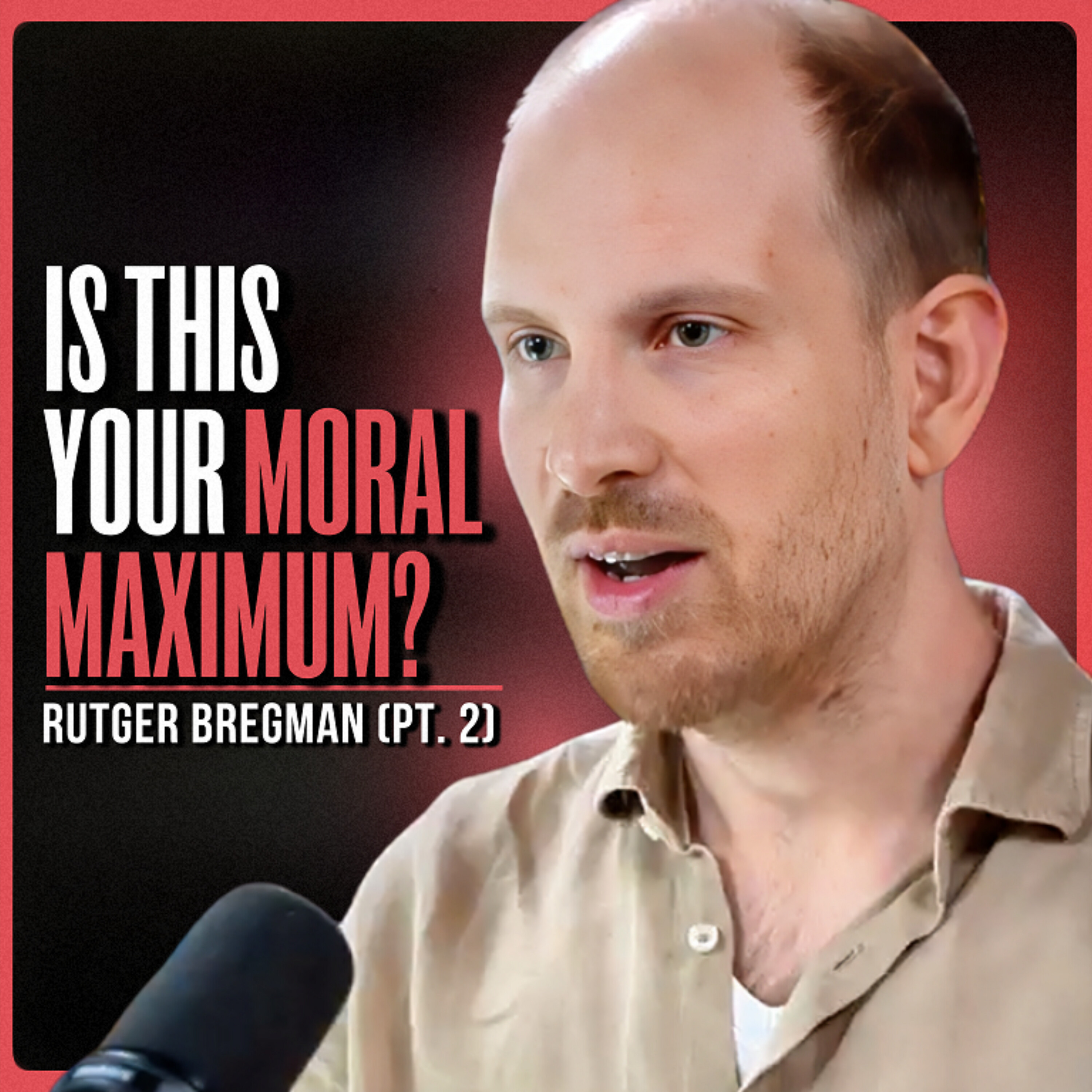
In the second part of a two-part series, historian and bestselling author Rutger Bregman joins Ryan Holiday to discuss the meaning of a fulfilling life and the common pitfalls that lead individuals to waste their potential. The conversation emphasizes the importance of moral ambition, personal impact, and the necessity of realigning one’s work with what truly matters.
Written by AI. May contain mistakes.

Get the gist, explore an idea or ask about something said.
 Claude
On The Daily Stoic, what are the key points of this episode?
Searching your listeningAutomatic transcript. May contain errors.
0:00I'm recording this on a Monday, and Monday is our grocery store day in our family. I usually pick my kids up from school and we go over to Whole Foods, get all our groceries for the week. Although here very shortly, we're going to go over there to get our Thanksgiving turkey because they've got a bunch of great options. Turkeys start at$149 a pound if you have Prime with organic birds at$299 a pound. And they only carry no antibiotic ever turkeys that will bring quality to your table at a great price. Whole Foods has great everyday prices on all your Thanksgiving essentials, whether you celebrate with a massive family or just a few close friends.
0:37Everything they sell has high standards to help you shop with confidence. Enjoy so many ways to save on your Thanksgiving spread at Whole Foods Market. Why choose a Sleep Number smart bed? Can I make my sight softer? Can I make my sight firmer? Can we sleep cooler? Sleep Number does that. Cools up to eight times faster and lets you choose your ideal comfort on either side. Your Sleep Number setting. Enjoy personalized comfort for better sleep night after night. It's the final days of our Black Friday sale. Recharge this season with a bundle of cozy, soothing comfort. Now only$17.99 for our C2 mattress and bays, plus free premium delivery.
1:11Prices higher in Alaska and Hawaii. Check it out at a Sleep Number store or sleepnumber.com today. This message comes from Capital One. The Capital One Venture X business card has no preset spending limit, so the card's purchasing power can adapt to meet business needs. Plus, the card earns unlimited double miles on every purchase, so the more a business spends, the more miles earned. And when traveling, the VentureX Business Card grants access to over 1 ,000 airport lounges. The VentureX Business Card. What's in your wallet? Terms and conditions apply. Find out more at CapitalOne.com slash VentureXBusiness.
1:49Welcome to the weekend edition of The Daily Stoic. Each weekday, we bring you a meditation inspired by the ancient Stoics, something to help you live up to those four Stoic virtues of courage, justice, temperance, and wisdom. And then here on the weekend, we take a deeper dive into those same topics. We interview Stoic philosophers. We explore at length how these Stoic ideas can be applied to our actual lives and the challenging issues of our time. Here on the weekend, when you have a little bit more space, when things have slowed down, be sure to take some time to think, to go for a walk, to sit with your journal, and most importantly, to prepare for what the week ahead may bring.
2:40Hey, it's Ryan. Welcome to another episode of the Daily Stoic Podcast. Now, one of my favorite sections in Courage is Calling is about this idea of moral luck. Do you know what moral luck is? Moral luck is a term sociologists and historians talk about. It's basically like not everyone finds themselves in a position to be a whistleblower about some government secret. Not everyone is there when somebody falls in the water and can't swim. You know, not everyone's Florence Nightingale and is born when nursing is primitive and then they can invent this whole thing. You know, some of us aren't lucky enough to be in the Spartan army when the Persians invade.
3:28Or, you know, we weren't screenwriters when the blacklist was there. Or we weren't feminists during the suffragette movement, if that's what you want to call luck. But obviously they couldn't have been courageous and just and done their important work if they weren't there at that moment in history. And so sometimes we sort of lament where we are now. Churchill, writing of the Earl of Roseberry, said with sadness that the man lived in an age of great men and small events. And what I end up saying in Courage's calling is that, well, there is a kind of boring tranquility to that Victorian period.
4:08Roseberry lived from 1847 to 1929. It's also totally wrong. I mean, Churchill is totally wrong. There were massive events in the middle of the 19th century, and there were great injustices that cried out for help. Where were these great men? You know, the United States doesn't abolish slavery until 1865. For the entirety of Roseberry's life, working conditions in England's factories were heinous and awful. Britain's colonial system and its abuses carried on for decades. The Irish question loomed over British politics. Countries were going to war for no reason. Millions of people were starving.
4:47Millions of people were being abused. Countless things went uninvented, unreformed and unchampioned. I guess what I'm saying is that there is plenty that could have been done in those years. And that was true even during the events of Churchill's time. You know, Churchill was tapped on the shoulder, but not about the Bengal famine. Why did he mishear Gandhi's moral call? Churchill had his finest hours, but he can't escape the blame for those he didn't answer. And that remains true for us today, right? That's what moral luck is. And I think if there's anywhere you can say we make our own luck, it's here.
5:27We make our own luck with what we do. And Marcus really says this. He says, true good fortune is what you make for yourself. Good fortune, good character, good intentions, and good actions. In part one of my episode with Breckner Bregman, we talked a lot about this, how we actually need to be more morally ambitious. We need to strive to do more, to make more changes, to have more of an impact. We need to be more ambitious not to make more money, not to have more followers, not to care about our legacy so much as to care about our impact on our fellow human beings. We talked a lot about Thomas Clarkson in part one.
6:03That's obviously someone we both write about in our books. I write about him in Right Thing Right Now. Rutger writes about him in his amazing book, Moral Ambition. Stop wasting your talent and start making a difference. I loved this book. He's got two other interesting books worth checking out, Humankind, A Hopeful History, and Utopia for Realists. The Guardian called him a Dutch wunderkind with new ideas. He's done some great TED Talks, and he just co-founded this thing called the School for Moral Ambition, which I'm really interested. I'm going to participate in. I want to be more ambitious.
6:33I feel like I've had a lot of impact in my work. That's been the rewarding thing, hearing how people, not that people liked it, but what people were able to do with it. But I want to do more, and I think we all need to do more. And I think stoicism calls for us to do more, to make our own moral luck, as Marcus Aurelius is saying. So look, I'll just get into this. Rutger is awesome. You can grab signed copies of Moral Ambition at the Painted Porch. He was nice enough to sign them. I think you're really going to like this book. You can follow him on Instagram at Twitter at Rutger Bregman. Go out there and do good.
7:04I really enjoyed this interview, and I think you're going to like listening to it.
7:10This is one big problem, right, with the study of history, that we know how the story ended. Yes. Like when we study the history of Nazi Germany, it's really hard to study it properly because we know how it ends. We know it ends with the mass murder of six million Jews and the gas chambers. But in a way that prevents us from properly understanding what happens in the early 1930s and why people were seduced by Hitler and why some conservative politicians decided to work with him because they hated the left so much. right yeah um that is i feel sometimes also the problem in this country right now we see what's happening to democracy we see what's happening to the rule of law but then we have historical examples you know that instinctively you know you like to refer to because yeah you are reminded of certain things that happened in italy maybe in in germany maybe but it's it's almost difficult because we always think of the end but that's not the thing like we don't know how it's going to end And that's exactly why we got to talk about what's happening right now.
8:10We need to celebrate more examples like Thomas Clarkson because Thomas Clarkson on that road goes, someone should do something about this. And then a lot of people think that, right? All the major issues of our time for all time, someone has thought someone should do something about this. The second part is the essential part, which is he said, and maybe that person should be me, right? Right. That's what we need more people to do to say, hey, maybe that person should be me. And I think we do a bad job teaching our kids. And it's weird because, you know, now there's all these arguments over history.
8:45I think this is something we should all agree on. We do a bad job celebrating and telling the stories of those exceptions. Like, for instance, we don't talk about Thomas Clarkson. We don't teach the Holocaust enough. A lot of kids don't even know that it occurred. But like a few years ago, I read this book called The Conspiracy of Decency. You read this book? It's about Denmark and how Denmark responded to the Holocaust. Oh, yeah, I know that book. And basically, the people of Denmark got together, and there was like a thousand or so Jews in Denmark at this time, and goes, hey, we're not going to do this.
9:17And there's this sort of countrywide resistance. Individually, they smuggle, like in the form of an underground railroad, one Denmark Jew after another out of the country into Switzerland, I think. No, into Norway and Sweden. Yeah, Norway and Sweden. And they did what we all tell ourselves we would do if something like this was happening. They do what we wish the rest of Europe had done. And then, so there is the positive example. And we just don't fucking talk about it. But that's what you would want. The study of history is not to remember a bunch of facts and figures. And it's certainly not to make you feel shitty and depressed and give up on humanity.
10:02The study of history, like the great biographers of the past, like Plutarch, was to celebrate the great men and women of history who changed the arc of things, who moved things, and to see ourselves in them, and then to hopefully do some version of that ourselves. There's so much to say about this. So maybe the first story is this. One of the chapters in my book is about resistance heroes during the Second World War. As a young boy, I was already fascinated by that question. Like, why did some people have that courage? As I said, I grew up in the Netherlands. The Netherlands was occupied by the Germans in 1940.
10:34And very quickly, Jews were taken away. And actually, the Netherlands had one of the highest percentage, around 80 % of Jews that were eventually murdered. And there was little resistance, I'm sad to say. Most people were against the Nazis. They didn't like the Nazis, but they also felt like they were bystanders and that they just couldn't do anything. And they also thought, well, we don't really know what's happening to them anyway. So there were a few exceptions. And I was really interested in the question, what makes them different? Like what makes a resistance hero? Is there something like the psychology of a resistance hero?
11:08Is there something in their DNA, their genes, in their upbringing? What's going on here? Now, after the war, there were these big research projects. One of them was at the, what is it, the California State University, Samuel and Pearl Olliner, two professors. they were like okay let's do hundreds of interviews with resistance heroes and they published a big book about it it's called the altruistic personality project i was very excited you know i ordered the book i read it and very quickly you know i looked at the appendix where all the statistical evidence was was gathered and i saw these same letters over and over again like ns ns ns ns meaning non-significant they were looking at many different variables and they couldn't just find anything it very much seemed to be a cross-section you know of the population people from the left to the right young old poor rich but then later a new group of researchers looked at the same data set and they did find one very predictive thing they found that around 96 percent of people said yes when they were asked to join the resistance so this is the this is like the crucial thing if you were asked to do something then very often people say yes so they realized that it's not really about the psychology of the resistance hero.
12:20No, it's about the sociology, right? It was a very contagious thing. And this also explains why resistance wasn't evenly distributed over the country, but that you could see pockets of resistance. And you also had these, I like to call them super spreaders, like people who just asked a huge amount of people to also join the resistance. I profiled one of them, a man named Arnold Dowis, and he was very persistent. like there's this one funny story where he convinced a lot of Amsterdam Jews to go to the province in Drenthe in the east of the Netherlands at some point he has two Jews that are looking for a hiding place and he goes to a farmer and then says hey do you have a place for these for this person and he says no we don't have a place well they're actually here come in come in and have a good day and they survived the war so that for me that was a big epiphany that it's not really about who you are, but it's about who you can become.
13:12In your Justice book, you quote Aristotle, right? You don't become a harpist because you're born that way. You become a harpist by playing the harp, right? You become a builder by building. Virtue is something you do. Exactly. And that's, for me, such a fundamental insight. You're not born as a good person. You become a good person by doing good things. So just get started. What I would add to that then, because that's very groundbreaking to me, that it's about being asked. What great activists do is they don't write anyone or any segment of society off. They create inclusive movements. And like you look at Gandhi, you look at Martin Luther King, you look at Harvey Milk, what was almost frustrating about them to their followers was how uncynical they were in the sense that they were always trying to create alliances, collaboration.
14:01They didn't see anyone or anything as irredeemable, right? They were trying to bring people into the tent, which is kind of the opposite of how activism works today, right? Which is like, it's about purity. It's about exclusivity. It's about kicking people out of the movement for not being totally on board with it. This is why the left has almost no political power because they not just kicked all the people out of the big tent, but they were so egregious in doing so that they went to the other side. No one wants to exist in political no man's land. So when you decline an alliance with someone, you are often forcing them to ally with your opponents, right?
14:39When you cancel someone from the left, it's not a coincidence most of them end up on the right, you know? And so the idea of, hey, everyone is capable of being good, of being on the right side of this, and we're not going to write you off for being currently on the wrong side of this. Like, I think to go back to abolition, I'm forgetting the guy's name, But the guy that writes Amazing Grace, obviously a song about grace and redeemability, is a former slave trader. They don't prevent him from joining because he did horrible things to other human beings. They actually see him as a potential ally for the movement because he knows how it works.
15:14And so the idea of like, who are you asking to join and how are you bringing people along with you? That's what they say. Leaders create leaders, right? Great activists help make people who are not currently politically engaged decide that they should be engaged and capable of making a contribution. Every great movement throughout history. It was a coalition of people who very often didn't agree with one another. So my rule of thumb is always like if someone agrees with you for like 70 to 80 percent of the time, that person is an ally, not your enemy. Yes. And indeed, you see it when, again, the abolitionists, the Quakers initially didn't get much done.
15:51Yeah. Because they were this very weird Protestant radical sect who deeply believed in their own dogmas. It's only once they started working together with the evangelicals that they started to galvanize a movement. And for us, it's difficult to fully wrap our head around how difficult that was for them. These were very, very religious people. And that's pretty important that they were able to overcome those differences to build that coalition.
16:24Thanks to Toyota Trucks for sponsoring this episode. When I bought my ranch in 2015 out here in Bastro County, I drove my car about halfway down the dirt road that we live on, thought this isn't going to work, stopped, parked it, walked the rest of the way home, borrowed my wife's car, drove into Austin and bought a truck. What I bought was a Toyota Tacoma. And this truck wasn't just transportation getting me to and from my house. It unlocked a whole different style of living for us, not just on the ranch, but in our little Texas towns. There were places I could go now that I couldn't go before, especially out here in the piney forests, through the fields, and on the unpaved roads like the one that I lived in.
17:09We got to go deep into the hill country's wild beauty. We've driven all the way out to East Texas. We've driven across the country. and by we I mean not just my wife but both my kids who I drove home from the hospital in that truck. Toyota trucks are built for those who understand that the best adventures happen when you're willing to veer off course because you never know when you'll end up on a Toyota adventure detour. And of course this is stoicism too because every detour, every obstacle is an opportunity. But it's helpful if you can handle the difficulty inherent in that. If you've got the resilience and the right companion to make it wherever the road takes you.
17:49Discover your uncharted territory. Learn more at toyota.com slash trucks slash adventure dash detours. We just took our kids to an outdoor performance at the Nutcracker. They had a snow cone and then they went insane in the car ride home. And one of the things I try to remind myself when that's happening is that I don't control my kids' behavior, especially when they're too far gone like that, but I do control how I respond, right? That's stoicism, but it's also what Dr. Becky talks about. Dr. Becky is a clinical psychologist and a best-selling author, and she founded Good Inside, which is there to give parents practical, actionable tools for handling those everyday challenges with confidence.
18:32My wife introduced me to Dr. Becky's books. I love them. I've recommended them a million times. I've had her on the podcast. And as it happens, Dr. Becky is hosting two live Q &A events for good inside members. I am one of them. She signed me up for it about a year and a half ago. I've loved it ever since. On December 1st, you can join Dr. Becky for her How Not to Raise Assholes event, which is about avoiding entitlement and raising kind, empathetic kids. And on December 15th, she's hosting her How Not to Lose It Over the Holidays event, which I'm sure we could all use. As I said, I'm a big fan of Dr.
19:09Becky. She's been a great influence for me as a parent and just as a human being. And Daily Stoic listeners can join for 15 % off with code STOIC15. You just got to head over to goodinside.com to catch the events.
19:30Well, I mean, even in the women's rights movement, right? There's all these debates about, should we let Mormon women in who were at that point polygamous, right? And so utterly foreign and objectionable to, you know, sort of conservative women in New York City or whatever. And then do we let black women in? Do we let poor women in, right? And the women's rights movement succeeds when it is this sort of big, broad tent that covers, you know, not just a good swath of American society, but British society as well, right? Like the multi-racial, multi-ethnic, multi-class, multi-viewpoint coalition is ultimately like the one that succeeds.
20:14Insular movements tends, not only do they tend not to get a lot of support, but they tend to implode and take, you know, sort of silly and so idiosyncratic stance. Yeah, like they get themselves in trouble because there's not enough ideological diversity inside the movement. So that's one thing we need, the coalition building. The other thing that we can really learn here is the importance of perseverance. Yes. So I already said that only one of the founders of the British Society for the Abolition of the Slave Trade was still alive when they finally accomplished their goals. We'll take the Women's Right Movement.
20:45of the 68 women who came together at Seneca Falls in 1848, you know, the first women's right convention in the United States. Only one was still alive in 1920 when finally, what is it, the 20th Amendment was passed and, you know, the federal right to vote was there. And she was sick on the day of elections. This is Carrie Chapman Catt, who wasn't even born until after Seneca Falls. I know which quote. Yeah, this is a very powerful quote. To get the word male in effect out of the Constitution, it cost the women of the country 52 years of pauseless campaign. During that time, they were forced to conduct 56 campaigns of referenda to male voters, 480 campaigns to get legislatures to submit suffrage amendments, 47 campaigns to get state constitutional conventions to write women's suffrage into state constitutions, 277 campaigns to get state party conventions to include women's suffrage blanks, 30 campaigns to get presidential party conventions to adopt women's suffrage blanks, and 19 campaigns with 19 successive Congresses.
21:43And this is, again, the thing, like we only, we study history and we know the end of the story. Like we know, oh, all's well that ends well, you know, women got the right to vote. But Susan B. Anthony, you know, she was dead before that amendment was passed. Elizabeth Cady Stanton, she didn't get to see it. Like so many of these great pioneers, they never saw what we know what happened in the end. And you had that realization, that perseverance to be part of something that's much bigger than you, that just inspired in me an emotion that I like to describe as moral envy. Yes. Like I studied these great moral pioneers of the past.
22:17I'm like, this is what it means to live a great life. To be able to, how do you say that, follow in the footsteps of those who came before you. Yes. It's almost a form of transcendence. Like I'm not a super religious guy myself. My father is a Protestant minister, but I never caught the bug in that way. I don't go to church often. But for me, this is almost a kind of religion. This is how I believe in the afterlife, right? Is just this feeling that you can follow in those footsteps. And that, like I mentioned factory farming, I don't think I'm going to see the end of that. Or I think it's going to take a lot, a lot of time at least.
22:52But knowing that you're part of something that's much bigger than you are, that gives me a lot of energy to work on that stuff. There's a line from a Longfellow poem, which I'll probably butcher, but I think about it all the time. He says, the lives of great men all remind us we can make our lives sublime and leave footprints behind us in the sands of time. He says, footprints that some other person struggling, difficulty, can take solace and inspiration from. That's the meaning of life, is that somebody did something that inspired you to do something. And you, in doing something, can leave something behind that inspires some other person.
23:29And that's it's this idea of a procession of torches. We don't study the abolition movement enough, Thomas Clarkson, but Thomas Clarkson puts in motion this movement, which leads to the women's rights movement, which leads to the civil rights movement, which leads to the gay rights movement, which leads to the environmental movement, which leads to everything that's happening right now. And that if you see it as this sort of one movement, learning and teaching and inspiring, and by the way, building up mailing lists and, you know, constituencies and experience and tactics and strategies that then the next group is inheriting and building on and adding on.
24:13That's really how you make a difference. It's like, how have you left? In that same Longfellow poem, he says, you know, like, tomorrow should find you further than today. It's weird to be talking about moral ambition, but then also shrink it down to just that, which is like, how are you making progress on these things? That's the goal. This is, for me, the form of immortality we can all believe in, no matter if you believe in God, yes or no. it's like building monuments in time and no one can take that away from you right if you've done something achieved something created something that will inspire people who come after you i mean thomas clarkson is dead for two centuries now and here we're fanboying about you know someone who's been so inspirational to us and i read his memoirs it's speaking through me you know that's through the centuries and it's like indeed this is what it means to live a great life it's almost like as if he's reaching out through the pages and asking me that question like do you want to do this as well i'm like yeah yes yeah so yeah it's been super influential on me it's like with this book for example i thought you know i spent a decade now in the quote-unquote awareness industry yeah writing articles and books which is powerful which is important sharing ideas but learning more about these abolitionists really made me want to build something so i became the co-founder of the school for moral ambition we're helping as many people as possible to you know pivot their careers towards more socially meaningful jobs.
25:38And again, I never thought, if you would have asked me this a couple of years ago, I would have said, look, I'm just a writer. You know, I live in my little cave and I write books and that's what I do. I'm like, I'm not entrepreneurial at all. And reading about these people helped me to discover that, again, being entrepreneurial, this is not something you're born with. You can really get stuck in a kind of self image like, oh, that's not who I am. No, you become someone by just doing it. It's such a simple lesson, but very powerful. Well, so the cardinal virtues of stoicism are courage. I think people know what that is.
26:07Discipline, people know what that is. Wisdom, they know what that is. And then justice is the one that we kind of skip over, or we think we have a strange sense of. Like too many people think justice is a thing that you get, right? Like you get justice from the legal system. You get justice from a judge or a jury. You get justice because the law says this is how things are supposed to be. What I've tried to do in my writings, and this is what I did in the Justice book, and what I tried to build this series around is the idea that, no, no, no, all the virtues, but justice, perhaps most of all, is a thing that you do.
26:41Like, justice is a thing that you give. Justice is not like, hey, here's how I think society should be. Like, in the, like, I'd like people to treat other people well. No, justice is how you treat people. Justice is not, hey, what I want those politicians in Brussels or D.C. to be doing. Justice is like, you run a small business, right? Do you give your employees health insurance? Like, justice is not, hey, what should the minimum wage law be? It is. But justice is also like, what do you pay the person who cleans your house, right? Like, justice is both smaller and bigger than I think we unfortunately think about it.
27:20It's the most important one of all, right? Of course. I read this piece the other day about, I think the author called it modern monks. You know, these men who spend a lot of time going to the gym, you know, getting the right vitamins, taking care of their body. I don't know, meditating a lot. And I think all of that is powerful, but the most important question is like, what for? Like, what's the purpose? If you're so healthy, if you're so powerful, like, what are you going to do with all those talents? And the answer is, I would say, justice. So I think it's important. All the other virtues are rendered meaningless, if not directed at justice.
27:57So yeah, you're incredibly self-disciplined. You're working incredibly hard on your body, and you just get really strong. That's just vanity. Have you created a strong body that can then work long hours in pursuit of something meaningful? There were a lot of brave soldiers in the Confederacy, right? There were, I'm sure, brave captains who led convoys of slave ships and challenged the elements. But if it's in pursuit of something morally bankrupt, it is itself morally bankrupt. None of these things exist in isolation, right? Like the people who decided, I'm not going to get a vaccine during the middle of a pandemic and then like lost their jobs over, there's a certain amount of courage in that, I guess.
28:39It's just fucking stupid though, right? Like you've picked a dumb cause to go all in on, right and so yeah justice has to be the thing that your life is it's the most important question what do you actually work on yeah i sometimes call this the gandalf frodo model of of doing good so we all know that story right uh gandalf knocks on frodo's door and says look uh situation evil wizard wants to kill us all uh you got to do this right we need you to do this and gandalf doesn't say hey frodo what's your passion right what do you feel good about well frodo would have said like gardening, you know, having a lot of second breakfast, living here in the Shire with my friends.
29:19No, he needed to apply his unique talents and skills to the most important, urgent challenge that was facing all the hobbits and humanity and all species. And I think we can ask that same question today. Like, what would Gandalf say? Find yourself an alt-wise wizard. At the organization I co-founded, we work with so-called prioritization researchers. So they the most pressing and most neglected issues we face as a species right now. So it's like three things that are important. Very sizable problems, very solvable, you got to know what to do, and sorely neglected. You focus on the stuff that, you know, it's maybe not that sexy.
29:58Right. So take something like global warming, climate change, super big problem, very sizable, very solvable as well. Is it sorely neglected? I think the good news is that it's less and less. so like millions of people are doing great work here so if you want to be really more ambitious then try and focus on the most neglected aspects on it which is by the way basic entrepreneurship you don't go where everyone else is going yeah you try to go towards a blue ocean you go where there's not competition again is this something only you could do what's your replacement yeah and so that's probably food so that's 20 of emissions and it's super neglected compared to the other aspects like clean cars or electric cars are doing really well clean energy is scaling up i mean we're in texas right now and texas is beating beating the world in that respect so uh that's a lot of good news but in terms of food sustainable alternative proteins there's still so much work to do but you can even say like well maybe climate isn't even the best problem to work on right now if you want to be super morally ambitious because the best time to join the movement would have been in the 1970s right when it was super small yeah you know that was the 1787 when the abolitionist movement got started in the UK.
31:07That was the comparable moment for climate. So what is a problem that is at that point right now? In my book, I give a couple of candidates. One could be the next pandemic. That could be way, way worse. And currently the whole world spends around a billion researching emerging infectious diseases like Zika and Ebola, which is the same as Americans spend bleaching their teeth. So super neglected. It could be such a huge problem. We already talked about factory farming. It could be these terrible diseases that hundreds of thousands of people die of that everyone seems to be ignoring, like we already mentioned malaria.
31:42I mean, the fact that - Sam Grimm just wrote an amazing book about tuberculosis. Yeah, exactly. Yeah, yeah. Fantastic. You had him on the show, right? No. Oh, no. Not yet. Okay. So that's a good example. It's 1.5 million people dying from it and super neglected. Very often the reason why these big problems are neglected is because there's no business model. So again, I'm a big believer in the power of markets. If you can make money on something, then usually something will be done about it. This also means that very often your warp is relatively low. If you're one of those commercial entrepreneurs solving one of those problems.
32:14Not saying that Zuckerberg solved a big problem with launching Facebook, but if he didn't do it, someone else would have. We can be pretty sure about that. But then with malaria, it's just this whole history of that in the book. In the early 1980s, people already realized, scientists already realized that we could make a vaccine, a very effective vaccine, you know, but that it would just take a lot more money and a lot more research. But it would surely be doable in a couple of years if governments or companies would say, let's get this done. Didn't happen. Why not? You can't make money on it.
32:46It's mostly very poor people in poor countries dying from it. In the end, it took 20 years until Bill Gates, of all people, had to come along and say, hey, this seems super neglected. I'll spend more money on it. And then other groups came in as well. And then it took 40 years. And in those 40 years, 40 million people died from malaria, which is as much as how many people died in Europe during the Second World War. So those are the problems. If we would have had a Thomas Clarkson in 1980 saying, I'm going to take this on. right i'm gonna lobby a government i'm gonna work inside a corporation i'm gonna find some way to make this happen that person could have saved millions and millions of lives
33:39don't you think it's kind of depressing when you think about someone like luigi mangioni Right. So here you have a kid, wealthy family, clearly very smart, an entrepreneur, wants to make a difference, outraged at the injustices of the world. And he sits down and says, I'm going to he has a Clarkson moment. Right. I'm going to do something about it. And what he decides to do about it is murder one CEO of one company, allegedly. But like he could have said, hey, I'm going to start a new kind of health care company. I'm going to start a nonprofit. I'm going to create a social media platform that, you know, I'm going to bring to light the horrors of this system and bring public awareness to it.
34:20He could have done so many morally ambitious things. And then instead he did an incredibly dangerous, scary—like he put his life on the line, like the death penalty over it. But the means with which he used, I think most of your Gondis and your Martin Luther Kings, et cetera, would have found morally repugnant, which I do as well. But also like the plan, what he's hoping to accomplish was also infused with this nihilism. Like the only impact I can have as an individual is to murder another individual. That's so pathetically self-disempowering. We have a total lack of role models here. On the left, we have the Luigi Mangione's.
35:00on the right we have Andrew Tate yeah yeah recently my uh son was born and um congratulations thank you it's our second so almost four years ago our daughter was born and then I was like okay cool let's let's buy a lot of books about what women can do and what they can build in this world and there are beautiful books about you know women are smart women are powerful women you know can do everything they want and I loved reading those books yes but then when our son was born I was like okay now i want to have all the books about how awesome boys are right what they can build and it's like why are those books right well who are the great role models here there's such a gap in the culture here yeah um who are the thomas clarksons of today that i can tell my son about like this is what it means to live a great life this is a man this is what a man does right this is what a great person does but like specifically this is what you this person in the same way that that it's important that everyone sees themselves represented in tv and movies and art so you go hey i can do that thing we've lost the track on being able to do that i think for young men also like who who do i want to be like what's my model i don't think there's a lot of great examples right yeah yeah and that's what we need right right we need a strategy to basically tell these young men like andrew tate is the point is not exactly the point is not like people on the left would say oh oh, he's so immoral.
36:27Like that doesn't work. No, he's a loser. Yes. He's just. He's a fucking loser. He's just an idiot. He's dumb and he's wasting his life on the most stupid things. Yes. And he's a, yeah, he's a fucking loser. He's a fucking loser. That's also something I've, I've experienced, you know, we've been recruiting people from, you know, big banks, corporate law firms, convincing them to quit their jobs and work on some of the most pressing issues. And the last thing you should do is to tell these people that they're so selfish and immoral and they'll say, oh, come on. You just can't keep up. You're jealous, right?
36:58You can't play the game like I do. No, what you say is like, look, you're so talented. You went to this brilliant university. You have this skill set. And this is what you do with it. You have to make it culturally aspirational. Yeah, yeah. And that was one of the great epiphanies when I studied, again, the British abolitionist movement. It was part of something much bigger, Ryan. So it wasn't just about abolitionism. It was about changing the whole culture. William Wilberforce, one of his biographers said this. it was his life's mission to make doing good more fashionable yeah on his deathbed if you would have asked him what are you most proud of he wouldn't have talked probably about the british society for the abolition of the slave trade he would have talked about this other uh ngo organization he started that was all about the the fight against vice and the the promotion of virtue yeah for him those two things were intimately connected in the 1770s there was this incredibly immoral period in in british history there was a lot of alcoholism in parliament politicians slurred their speeches one in five women was a street prostitute in london uh what was it the prince of wills was an incredible a-hole yeah and was behaving very immorally and these people wanted to start a counter-revolution against that they wanted to bring virtue back in fashion basically i think we've seen the same thing in the u.s in the u.s by the way, but the move from the Gilded Age to the progressive era, people like Theodore Roosevelt, people like Louis Brandes, people like Alva Vanderbilt.
38:27These were elites who were redefining what it means to be successful. And we desperately need that today. So how do you think, I feel like, look, like I had a successful marketing and business career. I could have kept writing marketing books. It's obviously a better niche as far as, you know, speeches and consulting. And I decided to write about an obscure school of ancient philosophy, which I, you know, popularized for millions of people. I love what I do. I feel like I've been ambitious in, I mean, look, I could have started a startup, a tech company. I could have, I could have done a bunch of things.
39:03And I said, decided to start a little bookstore in this little town. I feel like I have at various points in my life chosen a thing that's harder, more unusual. It's not selfless, but it's less selfish than maybe at earlier times in my life I would have intrinsically been. But how do you think I could be more morally ambitious? If I went to your school, what would you push me to start doing and thinking about? So the feeling I had after a decade in the awareness industry, you know, writing articles and books and talking about the great problems we face and then hoping that some other people would actually do the work of improving this world.
39:44Yeah, I had this nagging feeling that I wasn't doing enough. I looked at the great moral pioneers of history. I was like, wouldn't it be awesome to actually be in the arena? Yes. We all know the famous Theodore Roosevelt quote, it's not the critic who counts. It's the man or the woman in the arena, you know, with the sweat on his face, falling, standing back up again. And that's what I was yearning for. So perhaps it's something like that, right? You have created a pretty powerful, effective empire around a very powerful, ancient idea. In my view, it is all about bringing virtue back in fashion.
40:18But maybe it's now time to try and bridge that gap from awareness and ideas and books and podcasts to actually doing something, building something, like creating these tangible initiatives that really are about a specific cause, right? Yes. So maybe it's something like that. We'd love to work with you on it and figure it out. I mean, I try to use the platform for like causes I care about. I mean, it would be much easier and more profitable to me to not talk about the justice side of things at all. Like I knew in this series, the justice book would be the most controversial, piss off the most people.
40:53There's also a version where I didn't talk about anything that's happening contemporaneously. I could, you know, only talk about discipline and productivity and resilience. But I feel like I choose to talk about things that are happening in the world. I feel like we try to, like every year we do, instead of like Black Friday and Cyber Monday, which I think are gross, we just raise money for food banks. And so we've, you know, we've fed millions of people that way. I try to use this stuff, but there's something, yeah, there's something I feel that that's still coming up short. And from an accounting perspective, there's more to do.
41:27And I haven't quite figured out. Well, I read in your book about, you know, you make a decision of like with the little metals, right? And you're like, we're not going to buy them in China. We're going to buy them in the U.S., right? And that's nice. But for me, that is about looking for a moral minimum. Yes. And that's what we all should be doing. Like, don't consume meat from factory farms. Like, I don't know, compensate your CO2 emissions every once in a while. It's all nice, right? Yes, just the basic obligations as a person who's trying to not make the world worse. Yes, yes. But moral ambition is about looking for your moral maximum.
41:56Exactly. It's like, how far can you push yourself? Yes. And if you're ambitious as a commercial entrepreneur, you're not like, okay, now I've earned enough money, right? It's like, I don't know, it's not a million. I can pay my bills. And done, right? Maybe if you're in the fire movement, then it's all about retiring as early as possible, which I think is quite sad that that movement has taken off in that way. Like, oh, retirement is the greatest goal in life. The goal of life is to do nothing. Yeah, maybe that's the mindset we should adopt here. How can we push it? And again, I think cost selection is the most important determinant of your impact.
42:29That is the greatest multiplier here, looking for those neglected things. The fact that John Green wrote a book about tuberculosis, that is just incredibly impactful because no one gives a shit about tuberculosis. He took his unique skill set, like in the way that Wedgwood takes his, and he took a thing and he shined a spotlight on something that people were not caring about. And it's going to move the needle in some way. I would say that that's the question you've got to ask yourself. Like if Thomas Clarkson was alive today, what would he be working on, right? What is one of those neglected and probably also quite controversial causes today that the historians of the future will say like that was the thing, right?
43:10Because again, for us, it's easy to celebrate the Thomas Clarksons at the time, but it was a very small minority. And like most people, it was like worse than being a vegan today, right? People really hated you, absolutely hated you for talking about the elephant in the room and talking about how evil it was the way where people making money. So I don't know. I applaud you for that, that you're willing to go there. But yeah, probably if you know, no, there's probably going to need to be a bit more of that. No, there's a minimum. And then it's also like, I think once you have succeeded and done something, then you're obligated to go, are you just going to keep doing this over and over and over again?
43:50Or are you going to direct those talents to some other challenge or mountain? And what is that? And then when? Because it's easy to say someday, right? Like, I'm going to do it in the future when I have more money, when I'm more secure, when my kids are older. But yeah, why not do it now? So that's what I'm thinking about. So maybe I'll... Oh, postponement is one of the great risks there. That's what you hear when you talk about or talk to, say, young Harvard graduates who go and work for McKinsey. Give it away later. Yeah, exactly. They say, I'll just preserve my optionality. But they do not realize that the work itself will change them as a person and they will become more cynical in the process.
44:30And at some point they wake up and they realize, shit, I'm... What you work on works on you. and you are fast becoming the person who will not do anything about it. Well, if you want to go check out some books, let's go look at some books that might help. We'd love to. Yeah, absolutely.
44:51Thanks so much for listening. If you could rate this podcast and leave a review on iTunes, that would mean so much to us and it would really help the show. We appreciate it. And I'll see you next episode.
45:19Look, ads are annoying. They are to be avoided, if at all possible. I understand as a content creator why they need to exist. That's why I don't begrudge them when they appear on the shows that I listen to. But again, as a person who has to pay a podcast producer and has to pay for equipment and for the studio and the building that the studio is in, it's a lot to keep something like the Daily Stoic going. So if you want to support a show but not listen to ads, well, we have partnered with Supercast to bring you a ad-free version of Daily Stoic. We're calling it Daily Stoic Premium. And with Premium, you can listen to every episode of the Daily Stoic podcast completely ad-free.
46:07No interruptions, just the ideas, just the messages, just the conversations you came here for. And you can also get early access to episodes before they're available to the public. And we're going to have a bunch of exclusive bonus content and extended interviews in there just for Daily Stoic Premium members as well. If you want to remove distractions, go deeper into Stoicism and support the work we do here. Well, it takes less than a minute to sign up for Daily Stoic Premium, and we are offering a limited time discount of 20 % off your first year. Just go to dailystoic.com slash premium to sign up right now or click the link in the show descriptions to make those ads go away.
You’re not here to impress, you're here to make a difference. In this PT. 2 episode, historian and bestselling author Rutger Bregman sits down with Ryan for a deep dive into what a meaningful life actually looks like and why so many people end up wasting their one shot at it. They talk about how easy it is to chase the wrong goals, why real impact often goes unnoticed, and how to realign your work with what truly matters.
Rutger Bregman is a Dutch historian and author. His latest book Moral Ambition: Stop Wasting Your Talent and Start Making a Difference was released in April 2025.
In 2024, Rutger co-founded The School for Moral Ambition, a non-profit organization inspired by his latest book, Moral Ambition. The initiative helps people to take the step toward an impactful career.
Follow Rutger on Instagram and X | @RutgerBregman
📚 Grab signed copies of Moral Ambition at The Painted Porch | https://www.thepaintedporch.com
📖 Preorder the final book in Ryan Holiday's The Stoic Virtues Series: "Wisdom Takes Work": https://store.dailystoic.com/pages/wisdom-takes-work
🎙️ Follow The Daily Stoic Podcast on Instagram: https://www.instagram.com/dailystoicpodcast
🎥 Watch top moments from The Daily Stoic Podcast on YouTube: https://www.youtube.com/@dailystoicpodcast
✉️ Want Stoic wisdom delivered to your inbox daily? Sign up for the FREE Daily Stoic email at https://dailystoic.com/dailyemail
🏛 Get Stoic inspired books, medallions, and prints to remember these lessons at the Daily Stoic Store: https://store.dailystoic.com/
📱 Follow us: Instagram, Twitter, YouTube, TikTok, and Facebook
See Privacy Policy at https://art19.com/privacy and California Privacy Notice at https://art19.com/privacy#do-not-sell-my-info.
