
 Ask ChatGPT


 The Daily Stoic
2 Jul 2025 · 46m
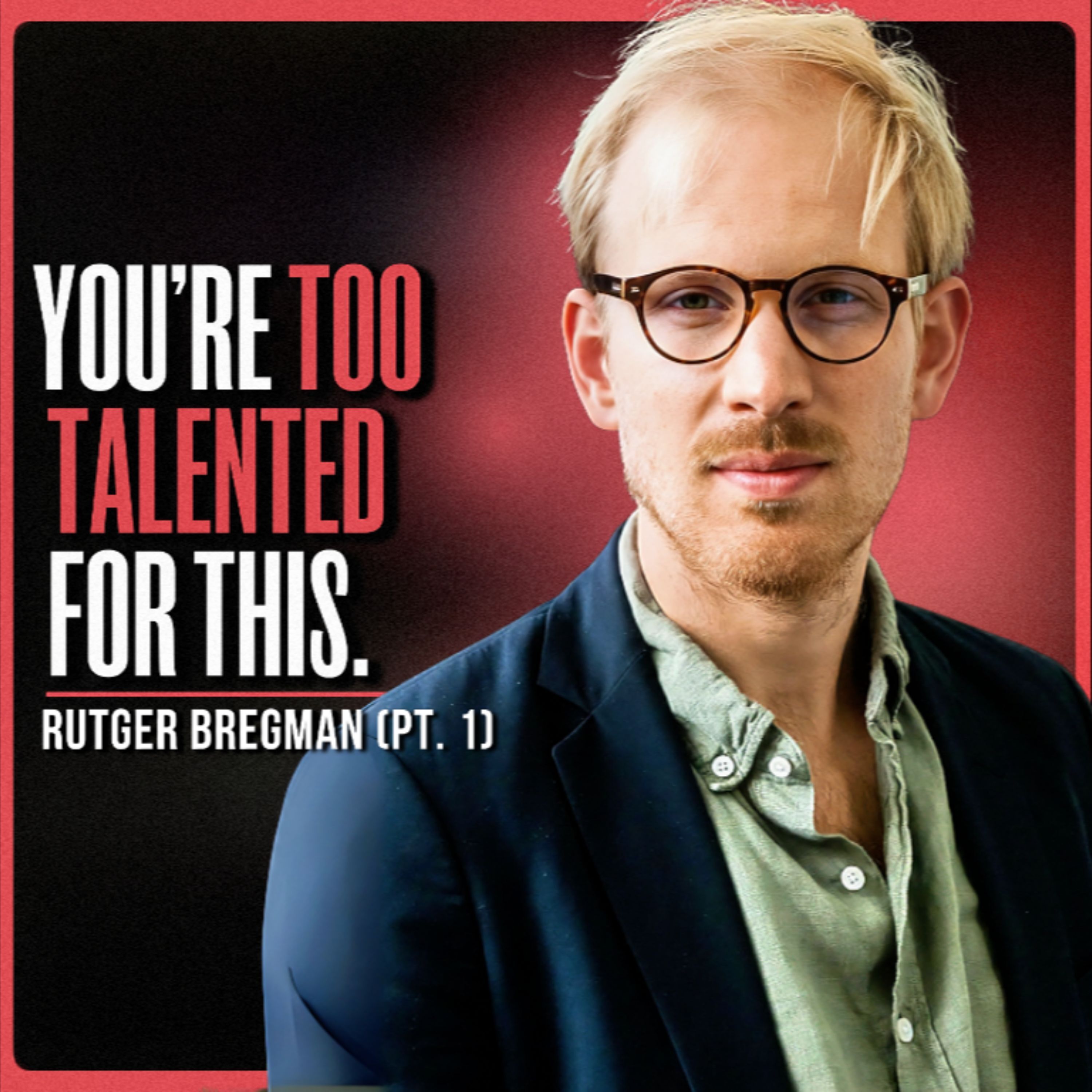
In this episode of The Daily Stoic, host Ryan Holiday converses with historian and author Rutger Bregman, exploring provocative themes around success, ambition, and meaningful work. Bregman's latest book, Moral Ambition: Stop Wasting Your Talent and Start Making a Difference, serves as a springboard for their discussions about societal values and the nature of ambition.
Written by AI. May contain mistakes.

Get the gist, explore an idea or ask about something said.
 Claude
On The Daily Stoic, what are the key points of this episode?
Searching your listeningAutomatic transcript. May contain errors.
0:00I'm recording this on a Monday, and Monday is our grocery store day in our family. I usually pick my kids up from school and we go over to Whole Foods, get all our groceries for the week. Although here very shortly, we're going to go over there to get our Thanksgiving turkey because they've got a bunch of great options. Turkeys start at$1.49 a pound if you have Prime with organic birds at$2.99 a pound. And they only carry no antibiotic ever turkeys that will bring quality to your table at a great price. Whole Foods has great everyday prices on all your Thanksgiving essentials, whether you celebrate with a massive family or just a few close friends.
0:37Everything they sell has high standards to help you shop with confidence. Enjoy so many ways to save on your Thanksgiving spread at Whole Foods Market. Why choose a Sleep Number smart bed? Can I make my sight softer? Can I make my sight firmer? Can we sleep cooler? Sleep Number does that. Cools up to eight times faster and lets you choose your ideal comfort on either side. Your Sleep Number setting. Enjoy personalized comfort for better sleep night after night. It's the final days of our Black Friday sale. Recharge this season with a bundle of cozy, soothing comfort. Now only$17.99 for our C2 mattress and bays, plus free premium delivery.
1:11Prices higher in Alaska and Hawaii. Check it out at a Sleep Number store or sleepnumber.com today. This message comes from Capital One. The Capital One Venture X business card has no preset spending limit, so the card's purchasing power can adapt to meet business needs. Plus, the card earns unlimited double miles on every purchase, so the more a business spends, the more miles earned. And when traveling, the VentureX Business Card grants access to over 1 ,000 airport lounges. The VentureX Business Card, what's in your wallet? Terms and conditions apply. Find out more at CapitalOne.com slash VentureXBusiness.
1:52Welcome to the Daily Stoic Podcast, where each weekday we bring you a meditation inspired by the ancient Stoics, a short passage of ancient wisdom designed to help you find strength and insight here in everyday life. And on Wednesdays, we talk to some of our fellow students of ancient philosophy, well-known and obscure, fascinating and powerful. With them, we discuss the strategies and habits that have helped them become who they are and also to find peace and wisdom in their lives.
2:37Hey, it's Ryan. Welcome to another episode of the Daily Stealic Podcast. There's a scene early in the movie Gladiator. Mark Cirelius is speaking to his son, Commodus, hauntingly played by Joaquin Phoenix, who, if anything, probably undersells just how awful Commodus was. Marcus is fictionally informing Commodus that he will not be succeeding him as emperor. This is, by the way, a conversation Marcus really should have had with Commodus in real life. Let me play this for you because it's really haunting. Commodus begins by listing the four virtues. You wrote to me once, listing the four chief virtues.
3:28Wisdom, justice, fortitude, and temperance. As I read the list, I knew I had none of them. I've died of other virtues, Father. Ambition. That can be a virtue when it drives us to excel. I think that's an interesting part, right? Is ambition a virtue? Because in meditation, the Marxist does talk about ambition quite a bit. And mostly he's negative on it. He talks about getting inside the minds of ambitious people, thinking about what they long for and they fear. He talks about trying to outgrow his ambition. He talks about the insanity of it, how it means tying our well-being to what other people say or do.
4:22So what did the Stoics think about ambition? Was it a good thing or a bad thing? I guess it more depends on what we are ambitious about, right? If our ambition is to be famous, is to be powerful, is to be rich, is to be remembered forever, I'm not sure that's the kind of ambition the Stoics would be for. But what about the ambition to change the world, to improve the world, to bring justice into the world, to leave the world better than you found it? That's what I want to talk about in today's episode. That's what I talked about in Right Thing Right Now, right? This virtue of justice. If there's anywhere to be ambitious, it's here, right?
5:16to try to make the world better, not for you, but for others. And there's this really fascinating book that just came out that I loved. It's by Rutger Bregman. He's a Dutch historian and sort of political activist. It's called Moral Ambition. I love the subtitle. It's Stop Wasting your talent and start making a difference. This idea of moral ambition, something that is embodied, I think, in someone I talk a lot about in Right Thing right now, Thomas Clarkson, who we nerd out quite a bit about in today's episode. It's going to be a two-parter, but in part one, we talk a lot about Thomas Clarkson.
6:00And we're talking about how there is a kind of a sadness in what people are aspiring to try to do today and how we can aspire to do more. Again, not to have more fans, not to get more followers, not to make more money, but to make more of a difference. Rutger has written a couple of other interesting books, Utopia for Realists, and then Humankind, A Hopeful History. Both were Sunday Times and New York Times bestsellers. They've been translated in 46 languages, but I don't think that's the kind of ambition we're talking about. I've done stuff like that. What you're trying to do with the book is change how people think, make a difference themselves.
6:41You're trying to change them so then they change the world. That's been the most rewarding part of the success of my books, for instance, and I think Rutger would agree. Anyways, let me just get into this episode. I think you're really going to like it. I really enjoyed this conversation. We had a great chat around the bookstore after. I'll put that up on YouTube soon. You really should check out Moral Ambition. It's a great book. I am excited for you to hear this. I'll bring you part two where we talk about a bunch of other awesome stuff. Anyways, talk soon. I think it's funny, like most of the time when we say like someone's wasting their life, we're like punching down.
7:17We're saying like you're wasting your life being a store clerk or, you know, you're like you're not being ambitious enough professionally. But I think it's interesting. You're basically saying a lot of the kinds of people we know are wasting their life, even though by every other metric, they're considered very successful. Yeah, yeah. This is what they were supposed to be doing. Yeah, yeah, yeah, yeah. No, it's the opposite, indeed. I mean, during the pandemic, we discovered that so many people work in essential jobs, right? I mean, we already knew that, but now we had a name for it. And when they go on strike, then we're in trouble.
7:54but yeah there are some people with very fancy resumes who are totally superfluous to society yeah they could stop doing what they're doing and we probably wouldn't notice yeah this was actually a story in my very first book utopia for realists when i wondered has it ever happened that bankers went on strike because that's sort of my method whenever there's a theoretical question we have i'm like well we could just look at history sure in one of my other books i have the Lord of the Flies story. I was just like, well, has it ever happened? Kids shipwrecking on an island. Let's see what happens.
8:26Turns out to be a very happy story. With the banker strike, I could find only one example in Ireland, 1970. Bankers were angry that their wages were not keeping up with inflation. And they're like, you know what? We'll go on strike and then you'll see how important we are. And that strike lasted for six months and nothing much happened, actually. It didn't apply the pressure to society that they thought. No, no, no. It was really interesting. So what people started doing is to write IOUs to each other, sometimes on the backs of cigar boxes or even on toilet paper. I've read the funniest stories.
8:57And yet the economy just kept growing and society was still operating. Now, there were obviously important differences. Like Ireland wasn't part of the big global economy that it is today. So, yeah, that's important to keep in mind. But I think it was quite funny that here you have this one example of bankers going on strike and nothing much happened. It's like what would happen if you weren't doing what you're doing? Would you immediately be replaced by a thousand other people? That's probably a sign that it's not that important. Yeah, yeah, yeah. To me, that's kind of a test is if you're spending your life well is if you stopped doing it, would you be replaced?
9:32Like, are you doing what only you could do? And if you're not doing what only you can do, that's probably not the best use of a person and a set of DNA that's never existed before in human history and will never exist again. Yeah, yeah, yeah. In the book, I use the term from baseball for like your value over replacement player. Yeah. So imagine you're a great pitcher. Yeah. But there are like 10 replacement players who are about as good as you are. Then if you are sick that day, then, you know, it doesn't matter all that much. Yes. And I think a lot of quote unquote prestigious jobs are like that.
10:08Like if you are that McKinsey consultant or the banker at Goldman Sachs, the reality is that if you didn't show up for work, then, you know, you're still quite replaceable. Even though you are super talented, you could have gone on and done great things. So in the book, I've got one story of a former consultant, you know, graduate from Harvard Business School. His name is Rob Mater. and he had this you know quote unquote conventionally successful career became quite wealthy you know build a cool company but then there was this one moment in his life where he was watching the bbc at the time he wanted to turn off the television press the wrong button on his remote and then suddenly saw a documentary about a little girl that you know was a victim of a terrible fire so her whole body had been burned and that moved him so much that he was like okay I want to do something for her.
10:58And then he applied his skill set, you know, as a consultant, as a manager to build a machine. You know, he organized this swim-a-thon. So people participated, you know, in this big fundraiser. They swam the distance from across the channel from the UK to France, raised hundreds of thousands of pounds. But then the next year he was like, okay, now my, my warp was like, I've helped one person. But what is actually the biggest problem in the world that kids are suffering from? So he started asking around and spoke to a couple of experts in global health. And they said, yeah, it's malaria. 600 ,000 people dying from it every year, mostly kids under five.
11:35So for the next year, he's like, okay, let's do another fundraiser. But now for malaria. He's the founder of the Against Malaria Foundation right now. It's arguably the most effective charity in the world. And one estimate says that they've saved, what is it, 150 ,000 lives now? So his warp has gone like... It's like$2 ,500 or$3 ,000 to save a life or something like that, right? It's like the best ROI you can have as far as donating a dollar to a charity. Yeah. I didn't know that was him. Yeah. That's fascinating. Yeah. Yeah. It's just an example of someone who, indeed, in terms of his impact on world history, it was, I might view, literally zero for most of his career.
12:12And then it went up a little bit when he started helping that little girl. And that was beautiful. But then it went through the roof when he founded the Against Malaria Foundation. And then you got to calculate the model that he sort of pioneers there of tackling. He's one of the pioneers of effective altruism, right? And so it's not just what is his impact with against malaria, but then what are other similar movements and charities that were founded on that model, which have also had an enormous impact. Yeah, yeah, yeah. Well, he did this way before effective altruism. No, I mean, he's like proving the model of effective altruism.
12:47Yes. Yeah, and he's been a huge inspiration and mentor to many people. So in my book, I write about this school in London. It used to be called charity entrepreneurship. Now it's called ambitious impact. I describe it as the Hogwarts for do-gooders. Wow. So people go there to start, you know, the most high impact charity that they can think of. Yeah. A little bit like Y Combinator in Silicon Valley, but not to make, you know, the most money, but for helping as many people as possible. And indeed, Rob Mater is one of the mentors there. And you could say he's one of the teachers. and it's just uh so wonderful to see here you have these incredibly ambitious young people who are like let's devote my career to fighting lead poisoning tuberculosis um helping animals in factory farms you name it but yeah they're not about things like small is beautiful or less is more they would never say something like that they're like i want to make the biggest possible impact
13:49thanks to toyota trucks for sponsoring this episode when i bought my ranch in 2015 out here in basco county i drove my car about halfway down the dirt road that we live on thought this isn't going to work stopped parked it walked the rest of the way home borrowed my wife's car drove in Austin and bought a truck. What I bought was a Toyota Tacoma. And this truck wasn't just transportation getting me to and from my house. It unlocked a whole different style of living for us, not just on the ranch, but in our little Texas towns. There were places I could go now that I couldn't go before, especially out here in the piney forests, through the fields, and on the unpaved roads like the one that I lived in.
14:35We got to go deep into the hill country's wild beauty. We've driven all the way out to East Texas. We've driven across the country. And by we, I mean not just my wife, but both my kids who I drove home from the hospital in that truck. Toyota trucks are built for those who understand that the best adventures happen when you're willing to veer off course, because you never know when you'll end up on a Toyota adventure detour. And of course, this is stoicism too, because every detour, every obstacle is an opportunity. But it's helpful if you can handle the difficulty inherent in that. If you've got the resilience and the right companion to make it wherever the road takes you, discover your uncharted territory.
15:16Learn more at toyota.com slash trucks slash adventure dash detours. We just took our kids to an outdoor performance at the Nutcracker. They had a snow cone and then they went insane in the car ride home. And one of the things I try to remind myself when that's happening is that I don't control my kids' behavior, especially when they're too far gone like that, but I do control how I respond, right? That's stoicism, but it's also what Dr. Becky talks about. Dr. Becky is a clinical psychologist and a best-selling author, and she founded Good Inside, which is there to give parents practical, actionable tools for handling those everyday challenges with confidence.
15:57My wife introduced me to Dr. Becky's books. I love them. I've recommended them a million times. I've had her on the podcast. And as it happens, Dr. Becky is hosting two live Q &A events for Good Inside members. I am one of them. She signed me up for it about a year and a half ago. I've loved it ever since. On December 1st, you can join Dr. Becky for her How Not to Raise Assholes event, which is about avoiding entitlement and raising kind, empathetic kids. And on December 15th, she's hosting her How Not to Lose It Over the Holidays event, which I'm sure we could all use. As I said, I'm a big fan of Dr.
16:34Becky. She's been a great influence for me as a parent and just as a human being. And daily Stoic listeners can join for 15 % off with code STOIC15. You just got to head over to goodinside.com to catch the events.
16:54sometimes a job is very well paid because it's extremely rare that someone can do it well right like you're being paid because you're talented like you're irreplaceable and then some jobs are very well paid because they fucking suck and like why is it that we give kids straight out of college with no experience or really expertise in the thing they're about to consult people in how to do Why do we pay them hundreds of thousands of dollars? It's because it's actually horrible. It's a horrible, soul-crushing, shitty life. It's a bad life. It's depressing work. And also, at some level, has zero impact whatsoever.
17:36Not even on the world. Like companies are paying for advice that they then don't listen to and don't implement and has no impact on the bottom line either. Right. It's just it's a total waste of almost everyone's time. And that's partly why you have to pay these people a lot of money, because you are. I think another way we should think about as a society is we are purchasing the opportunity costs of that person and their talent. We are going like, hey, you could be doing literally anything. what do I have to pay you to come over here and waste your existence yeah that's why it's well paid so you think it's well paid because it's important and prestigious and exciting and it's like actually everyone that's doing it is trying to get out of it until they get to some point where they have too many life expenses until they get so acclimated to it that they can't get out of it that's that's what you're being paid yeah and look sometimes I talk about this with my friends on right and they're like how could these quote-unquote bullshit jobs ever exist yeah because someone's paying them to do it so therefore it must be valuable right there's another form of value it's created and then i'm like i always make the comparison to pirates in say the 16th or the 17th century i'm like pirates you know they were highly skilled they went probably to i don't know some kind of pirate school you know they learned how to torture and to pillage and to rape and to all kinds of bad things and then they went out you know on the seven seas and they yeah, ripped a lot of people off.
19:04That is hard work, right? That is, yeah, you can make a lot of money doing that, but you're not really contributing in that way. And if you look at a lot of modern finance, and again, I'm not saying all of it, but you know, a big chunk of it is a little bit like the pirates back then, not as violent, but the business model in a way is similar, right? You're making money by, you know, taking that wealth from others. So in some respects, I sometimes think that we live in this kind of inverse welfare society. Very often the story we're being told is that the people who create the most value, they're at the top, right?
19:38They earn a lot of money, they pay more in taxes, and then that trickles down. I think actually very often it's the other way around. So at the quote-unquote bottom of society or in the middle classes, you have people with the essential jobs, you know, the teachers, the care workers, the nurses. If they go on strike, we're in trouble. So we're all relying on them. They're the strongest shoulders that carry us all. But then at the top of society, we have a lot of people, consultants, marketeers, bankers, who say that their own jobs, and it's not just me saying it. People could say, like, this guy's a historian.
20:10That's like the definition of socially used. I back to different. But no, it's people saying it about their own jobs, right? I could go on strike. It wouldn't matter all that much. And they obviously rely on those people in the essential jobs. So that's what I mean by, like, an inverse welfare society. And it really forces you to ask this question. How is wealth actually created? And how do we define that? I'm a big believer in the power of markets. Don't get me wrong. I believe in markets. I believe in society. I believe in governments. I think we need a healthy mix of all these three things.
20:38But if you start to believe that markets are the ultimate determinant of what wealth is, what value is, then you're lost. There's something I think about an honest exchange where you go, okay, a historian. Look, if you're a historian, you just work at some university, you collect an increasingly high salary that's taxpayer subsidized or on the backs of donors or you know from the obscene rising costs of tuition maybe that's not i don't think is an honest as an honest exchange as you wrote a book you publish that book people who want to purchase that book pay money for it and you capture a small amount of that value do you know what i mean there's something i think the honest exchange in capitalism in which you create value and people voluntarily compensate you for that value.
21:25That to me, I feel like you can make as much as you want to make that way. That strikes me as a relatively honest exchange. You could still have a discussion, though, about... Is that person as essential as a teacher? No, but... And also how much of the value actually comes from you, right? Because people who are more on the left side of the political spectrum would say, you didn't pay for that road. You got the education. You didn't decide to you know be born in the united states uh you didn't decide to have these parents and you know i'm personally quite radical i would like go all the way and say like everything is something that's been given to you nobody's self-made yeah and this is this is ultimately obviously where a fair and progressive tax system comes in yeah of course yeah yeah so i was in london i did a speaking to her in london in the fall and uh i wanted to see the print shop where thomas clarkson oh wow 12 people had met.
22:21I was there just a couple of weeks ago. What I think we need to talk about is why there's no fucking plaque there. It's a private equity firm right now. What does that say about society? One of the most consequential locations in the Western world. The site of one of humanity's great achievements. The whole idea that humans can't change things, that you can't, what, a master's tools can't be used to destroy the master's house. House. It is an anomaly of anomaly, like the exception that proves the rule in so many ways that a small group of committed individuals can utterly change the course of history.
23:00And not only does nobody know that it exists, but even the people who know that it exists haven't memorialized it in any consequential way. It is a travesty. Absolutely. So tell everyone what happened in this print shop. Okay, so we're writing May 1787. Twelve men with black hats walk into this print shop at George Yard No. 2. Nine out of 12 are Quakers. They're part of this radical Protestant sect that believes in the deep equality of everyone. They even have, you know, women in their meetings who are allowed to speak, which is really radical at the time. Ten out of 12 are entrepreneurs. So people who have built their own companies, scaled their own companies in quite a few cases are pretty wealthy.
23:44One of them is a mixture of a civil servant and a lawyer. So lawyers can be pretty useful sometimes. And one of them is, I would argue, a writer, Thomas Clarkson. And he's my very favorite abolitionist, maybe yours as well. We've both written about him. And together they founded the British Society for the Abolition of the Slave Trade. Now, this is something that is perhaps, you know, uncomfortable for Americans to hear and acknowledge. But the U.S. in the history of abolitionism is not the most important. And we come late to it. It's late to the show. And it's also not globally super influential.
24:20If you want to understand why the international slave trade was eventually abolished, it's all about Britain. It's about what happens in 1787 when those men come together. there because they founded you could say the mother of all movements like the the greatest movement for human rights that the world has ever seen now adam hawkshield the historian has written the book about this buried the chains one of my favorite books i've ever read every student should read it in high school absolutely yeah yeah can't agree more uh it's it's indeed one of those stories that shows that small groups of thoughtful committed citizens as margaret mead told us can massively change the world.
24:57What does he say? Indeed, that's the only people that ever have. Yeah, yeah. And for me, it's also a beautiful example of what I've come to describe as moral ambition. You know, the combination of the idealism of an activist and the ambition of an entrepreneur. When those two things come together, I think something really magical happens. So yeah, this was a movement that lasted for half a century when slavery was finally abolished across the British Empire in 1834. only Thomas Clarkson, the youngest, was still alive. So most of them didn't get to see the actual end of it. But yeah, it was an incredibly successful and maybe most importantly, highly pragmatic movement.
25:34So when we think about abolitionists today, I think very often we think like these people just, I don't know, raised their banner and said, no more, abolish slavery. It's wrong. Let's do something about it. Yeah. Yeah. That's a part of it. But it's like, I don't know, I would say like 5 % of it. This was a super pragmatic, incredibly entrepreneurial movement that came up with so many tactics and new tricks and ideas. They invent the playbook that we're still using today to create social change, like consumer boycott, banners, logos, pamphlets, like basically every petitions, all the things that we now like, I think it is, it's really important.
26:12Things become so commonplace that we forget that they were once inventions. and so much of what Thomas Clarkson comes up with, so much of what Gandhi comes up with, so much of what Martin Luther King Jr. comes up with. It's not just that it was morally correct and courageous that they did it, but it was also innovative and groundbreaking in how they did it. They invented a whole new way of thinking. It's not just that they were morally correct, but as you said, they were morally ambitious and then morally, what's the word? Competent. You know, they were competent in how they brought it into being strategic and cunning in some ways.
26:52Like, I think it's important, like, they didn't set out to abolish slavery as a whole. There was even pragmatism in there. Let's just get rid of the trade. Yeah. So they had a much more reasonable goal that they could get people on board with. You don't believe that the slave trade is wrong, but slavery is okay. Yeah. But you understand that some people too much changes. Like Lincoln does the same thing. I mean, Lincoln gets people go, oh, Lincoln wasn't actually opposed to slavery. No, Lincoln was pragmatic and he understood that the wedge issue for bringing about the abolition of slavery was first the legal argument that the expansion of slavery was illegal and forbidden in the Constitution.
27:38and and so he he finds out where he can get like a toehold and then he builds from there and Clarkson was great at that yeah yeah absolutely so a couple of years ago I started working on this book about the the great moral pioneers and I just wanted to learn who were the most successful ones initially I looked at my own country I'm from the Netherlands and that was quite a disappointment because in the Netherlands it was very small abolitionism it was mostly a bunch of Calvinists I would you could call them social justice warriors yeah who mainly cared about their own moral purity and didn't get much done in france you had a writers and intellectuals who wrote this beautiful essays and manifestos about this is wrong but again didn't get much done in spain there was pretty much nothing in portugal there was pretty much nothing in in the u.s it took a civil war um and in the u.s very often it was also i would say too purist and not pragmatic enough um so for example you had the free produce movement in the u.s that said like we're not going to consume anything that has anything to do with slavery yeah turns out you know you can consume almost anything it's a little bit like vegans today who are looking at every product like is there a little bit of milk powder in here and yeah it's not really the way to build a movement around something yeah but indeed as you rightly pointed out in the uk it did become a really big movement indeed in in june of that year 1787 they had that meeting about their ultimate goal like what do we focus on?
28:59And there was one of the 12, Granville Sharp. He was the most religious. He was actually one of the early abolitionists, very courageously. He was pretty much on his own in the 1760s and the 1770s. And he was the only one who's like, slavery is totally immoral. You know, that's going to be the goal. We're going to be the British society for the abolition of slavery. And then the entrepreneurs listened to him and they were like, yeah, that's not going to work. And they won the debate. And Granville Sharp was quite angry about that. But it turns out the entrepreneurs were right. Yes. Because they had some really interesting reasoning here.
29:31So one thing they said is if you first abolish the slave trade, then the supply of enslaved people towards the colonies will dry up. And slavery was so, so horrific that, you know, without the continuous inflow of new enslaved people, like enslaved population would go down because very often people would die in just a few years. So the reasoning here was that if you first abolish a slave trade, then that will basically lay the ground for abolishing slavery as a whole because then, yeah, these slaveholders will be forced to start treating their enslaved people better. You know, they tried to do that in the U.S.
30:08Like the U.S. Constitution forbids at a later date, it says like in 1820 or something like that will stop the importation of slaves. And they make it a capital crime. This is like Lincoln's point is like, you think the slave, you think the founders weren't opposed to slavery? You don't, you don't take something and make it a capital crime if you don't at some level know it's morally repugnant. But the problem in the U.S. was slavery was less brutal here than it was in the Caribbean, right? Your point is in the Caribbean, they're basically like, it's like in other countries where they've used slaves like in mines and stuff.
30:45It's so exploitative and inhuman that the lifespan is like two years or three. I mean, it's just unimaginable. But when the founders in America eradicate the slave trade, it has the unintended benefit of making certain American slave states, slave breeding states. So Virginia and South Carolina are the two big states originating in the Civil War. Virginia basically uses up its soil and then becomes a slave breeding state. So the whole idea of selling slaves down the river, that's where that comes from. What you're pointing out is that the entrepreneurs had a couple things going for them. One, a real sense of how the world works.
31:30Like they knew slavery not as an abstraction, but as an institution. because some of the people involved in that abolition movement that they talk about in Bury the Chains, like, had worked on slave ships. Like, they even knew how it worked, right? So they understood the institution not as an abstraction, but as a reality. And then I think, who was one of them? Wedgwood. He had a keen understanding of markets and people. I think he probably understood that, hey, the softer cell of we're just eradicating the slave trade, which is the worst, most egregious part, is a more compelling argument than we're going to get rid of this whole thing that you can't imagine your life without.
32:09Yeah, yeah. It's so fun nerding out about this. Totally. So the people around Wedgwood and some others in the movement, they created one of the most effective pieces of political propaganda that we've ever seen. And it was just the drawing, the illustration of a slave ship. Yes. What was so brilliant about it, it wasn't even an exaggeration. In a way, it was an understatement. So there was a small law implemented in the late 1780s to regulate the slave trade a little bit. It said that, you know, there's a maximum amount of people that you can put on a British slave ship. And now most people don't even follow that law.
32:44They just, you know, sailed under a different flag, but whatever. They made an illustration that said, OK, so this is legal. This is the max. And it's just this horrific image. So most people listening to this podcast now will probably have seen it because it's still like in so many history books. And it's just like this instant visual representation. Like you see it and you immediately know this is pure evil. Yes. And this is something to keep in mind that for many British people at the time, you know, they've never been on a slave ship. They've never been to the colonies. Slavery was far away.
33:13Yeah. There were a few thousand black people in London at the time. And slavery was pretty much illegal in London itself. There were some legal discussions around it, but it was very, very different than what was happening in the colonies. One other thing that they discovered was one of the most effective arguments in Westminster was actually not about enslaved people, but it was about how white sailors were treated on these ships. Right. So Thomas Clarkson and a colleague did a lot of investigative journalism into the question, what actually happens to these sailors? Because someone's making a lot of money here.
33:44Yeah. But that's the shareholders, you know. But these sailors, they go on a ship. Very often, you know, they're misled. They're made all kinds of promises. Doesn't happen. And what's most worrying of all, many of them die. Like 20 % of them die during one of these voyages, which is a very big benefit to the slave captain because you don't have to pay them. Right? So the journalism did a lot of, you know, statistical research. Then went to Westminster, talked to the prime minister, William Pitt. And they were like, the slave trade is so evil. And they didn't talk about because, you know, what it does to black enslaved people.
34:21No, it's what it's doing to our boys. And suddenly, you know, all the politicians in Westminster were listening. Like, what it's doing to our boys? Right. And that was a super effective political argument that they used. Yes. Very deliberately.
34:42day. When the 48 Laws of Power, Robert Greene, one of the more controversial laws is never appeal to mercy or gratitude, always appeal to self-interest. And this is one of the problems of, I think, moral movements and causes, is that they often argue that this should be implemented or this should be stopped because it's right and that's wrong. And if it were only that simple, it probably wouldn't be the status quo, right? Like the injustice or the cruelty or the problem is tolerated because it's good for someone somewhere, right? And so what effective people do is not say, oh, but it's bad for these people over here, so you should stop, is they find a way to make it in the self-interest or connect it to the identity of the person who is currently benefiting from the status quo.
35:40There has to be a savviness to it and a persuasive element that's almost always not going to be as simple as, let me show you what's right and let me show you what's wrong. And I think that's such an important leverage point. Clearly, most people in the 18th century just did not care about black people at all. They saw them as less than human. So part of the effectiveness of the abolition movement was first off, let's humanize black people. And this is their other very famous form of propaganda and marketing is the image of the black man holding a banner that says, am I not a man and a brother?
36:18But then the other part, you're right, is they go, well, who do you care about? And let me show you why what the status quo is bad for them too. So it's in your self-interest to care about this thing that you don't currently care about. And that's unsavory though. I think in today's world, a lot of activists and people on Twitter and, you know, we struggle with taking the time and effort to do that. We just go, this is wrong. It should end. In history, very often the right things happen for the wrong reasons. And you see it again and again. I was studying the women's right movement in the US the other day and was quite surprised to learn that you know they became much more effective once they convinced conservative women to join the movement as well yes and why did they manage to do this because it was all about temperance you know the fight against alcohol and conservative women were like yeah that's what we need to get rid of yeah and that's why we need the vote to basically pass prohibition it's really interesting from a progressive perspective right yeah that was one of the the main ingredients here i do have a question for you though here so yes you need moral reframing.
37:27That's what psychologists call it, using different kinds of arguments that appeal to different people than the people who are already in your bubble. But still, the moral argument was very important, right? And the one other book that I really loved about the British abolitionist movement was Moral Capital by Christopher Leslie Brown. And he argues that it had everything to do with the American Revolution. So after the American Revolution, British elites are lost. They're like, what is our place in the world? We don't have our great colonies anymore. Why are we superior to the rest? Like, why are we still the most awesome nation on earth?
38:02And he argues that abolitionism basically became that thing, that it was almost a British vanity, that now they found something, you know, a stick to beat others with, to say, like, we are going to be the great nation that will go out and first abolish the slave trade and then also will force other countries to stop slave trading. And that is exactly what happened. So my country, the Netherlands, we didn't stop on our own. It was basically the British said, like, you stop now or you'll be in trouble. And that's what happened to dozens of nations. There are two researchers who estimate that about 80 % of the global slave trade was abolished under British pressure.
38:37Yes. And I know that you consider ego the enemy. But here, I'm like, sometimes like this kind of vanity can also be channeled in a positive direction. Well, ego in yourself is a problem. But ego and other people is often a point of leverage, right? Like in politics, it's how do I, you think about what great diplomats do is they often get someone to give up ground by appealing to how they'll be remembered in history, right? It's like nobody wants to be the bigger person if it comes at a cost. But if I can show you how being the bigger person is going to make you celebrate it all over the world, that people are going to, right?
39:16So that appealing, I think that's what Robert Greene is saying is that if you just go, hey, you got to do this for me. I really need it. It'll make me feel good. I'm desperate. You go, you're the greatest statesman in the world, right? And you need to help my small nation to prove you have to appeal to vanity, self-interest, et cetera, someone's identity. not let me tell you all the reasons why you are morally obligated to do this thing. If people were clear about their moral obligations or are often primarily motivated by their moral obligations, we probably wouldn't be in this mess to begin with.
39:54So it's about that reframing. What do you think about Thomas Clarkson's story then? Because I mean, I know a lot of young people listen to you as well. And what I really love about his biography and his memoirs, probably my favorite political memoirs I've ever read, is that initially he was driven by quite a bit of vanity. So when he was 24, 25, this is the year 1785, he saw a big career for himself in the Church of England. He participated in all these essay contests. You know, that was the way to make a name for yourself. You know, you couldn't become an influencer, so you did a Latin essay contest at Cambridge University.
40:31And just by chance that year, 1785, he had to answer this question, is slavery okay, yes or no? is it morally defensible, yes or no? He'd never thought about the question, but he just wanted to win first prize. Okay, he did the research. He wrote a beautiful essay. He won first prize. And then there's this famous moment when he goes back from Cambridge to London, where he lived. He's near the city, the village of Wade's Mill. He keeps thinking about the essay. It really bothers him. He steps off of his horse. And then he's like, but soon did someone do something about this? And you read his memoirs.
41:06And part of you think this is a pretty vain man, right? You can really see that, yeah, a wall of possibilities opens up for him. He's like, the coolest thing is probably to take on the slave trade. Like, I could be a historical hero riding on my horse, you know, across the United Kingdom, spreading this abolitionist propaganda everywhere. The point for me is that he did it, right? There's this absolutely beautiful moment when he had a dinner in Teston. And back then the abolitionist movement was very small. And Teston was this other little village that was like the capital of the headquarters.
41:36of that movement and they have dinner together and here he is a young man who at some point during the dinner stands up and says i am ready to pledge myself to fight the slave trade and fight slavery and again part of you thinks like oh quite yeah yeah tone it down a little bit thomas but he did it and then he he goes to bristol you know the the great slave haven and when he's there he suddenly starts to don him and he's like oh fuck this is scary man sure this this could be quite Not way more than I should. Yeah. And at some point, you know, he really has to fear for his life. In Liverpool, people almost kill him and he managed to get away just in time.
42:11But initially it is that vanity, that ambition that drives him, but it's redirected in a more productive way. And then most importantly, the work itself utterly changes him as a person. Yes. So when he starts learning more and doing more, he realizes that it's actually not about him. Yeah. That he's part of a much bigger movement. And in the end, you know, he is offered, you know, a very posh funeral in a, you know, one of those great British churches. But he says, you know, I don't need that. And he's buried in an unmarked grave. Like we know the graveyard, but we don't even know where he lies.
42:43His legacy is what he did. Exactly. Exactly. That's the monument. So that's, I guess, something I've started to believe in. Maybe especially for younger people. Like it's fine to want to make a name for yourself. Yeah. Maybe it's also, it resonated so much because I, you know, saw a bit of myself in that. You know, when I was 25, I was like, you know, I want to become a bestselling author. I want to write about big ideas, et cetera. And, you know, now that I've been doing the work for a decade, you can feel that the work is transforming you. Yes. I think if it's just the ego and the ego is not directed at something profoundly humbling, it probably turns malignant very quickly.
43:22But if it's about something bigger than you, and if it's something extremely hard, I think those two can work well in concert with each other. But yeah, like the great man of history theory is not so popular academically or culturally, right? But if you don't believe you can change the world, certainly you will not be the one changing the world. I just think it's interesting that culturally we certainly accept that individuals can make the world a worse place. Like any one person has the power to negatively harm large groups of people. And, you know, we say like, if, you know, if you're not part of the solution, you're part of the problem or whatever.
43:59And then at the same time, we're really cynical and negative about any one individual's ability to make a positive difference. And we don't have a culture that encourages and celebrates people to really reimagine or imagine what a future could look like and that they themselves could be that person. Like, I've even come to really dislike that quote, which becomes popular in the civil rights movement. It was a favorite of Martin Luther King, that the arc of history is long, but it bends towards justice. There's an inherent fatalism. It's a positive fatalism, but there is a passivity. It implies that it inevitably gets better.
44:43And that is, if you have studied history, not true. The moral arc of the universe has progressed positively over a long timeline, but not on its own. In some respects, I would say. But in all the areas that we would say it's gotten better, it was because individuals or groups of individuals reached up and through sheer weight and force pulled. We bent the arc of history. And if we stopped doing that, it might very well snap back. And in some respects, like we've gone pretty much in the wrong direction. In the book, I talk a lot about the atrocity of factory farming. So I think that is one of the greatest moral atrocities of our time.
45:23We can ask this question, like how will the historians of the future look back on us? Because we can look back on the 18th century and say, okay, slavery was abhorrent. How could these people do this? Even though back then it was just an utterly normal part of how the economy worked. I think something like factory farming today is quite similar. Most people just don't realize how utterly evil this system is. How billions and billions of animals are tortured on a scale that is just hard to wrap your head around. Now, I think that it is very well possible that there may have been a few people, maybe in the 50s and the 60s, when this system was started, that could have been the Thomas Clarksons.
46:01who would have prevented this all from happening. Maybe they've fallen off their horse. That's the thing I realized. And I totally changed my mind about when I studied the British abolitionist movement. I used to be the kind of historian because that's how I was educated. As most historians are educated, I studied history by focusing more on the structural forces, right? Marxist history, right? You look at the underlayers and the rest is just all noise. And indeed, individuals possibly can't make a big difference. But you study the British abolitionist movement, the greatest movement that we've ever seen for human rights, and you realize it's bollocks.
46:36It's totally wrong. A few people could have, you know, passed away or something could have happened to them. And history could have looked totally, totally different. It is very well imaginable that slavery would have continued to go on for many, many decades, maybe well into the 20th century. Or would we have had to have some kind of global civil war about slavery? Like, imagine if a few people in the U.S. had been more effective as abolitionists or some. OK, this is nerding out about American history a little bit. But Stephen Douglas basically unleashes forces which not only prolong slavery, expand it temporarily and lead to the Civil War.
47:16One nefarious, self-interested politician, like the status quo in America was that slavery was not growing. And one politician who thinks that he's trying to control the direction of the transcontinental railroad, so he needs political power. And he basically says, well, I think that the Missouri Compromise and the Mason-Dix, all these compromises that we've worked out, let's toss it all up. He puts forth this thing called popular sovereignty, which he says, let the territories decide whether they'll have slavery or not. And Lincoln is aghast at this because he's saying you're acting like the expansion of slavery is any other dollar and cents issue.
47:59Like, should we do this or should we do that? He's saying, should we own and rape and kill other human beings in an exploitative labor system or not? You're saying, let the people decide. He's like, that's unconscionable. This is not how a constitutional republic is supposed to work. It's more complicated than that. We have a constitution for a reason, a declaration of independence for a reason. But basically, this one politician unleashes those forces, right? And so you go, hey, what if a handful of other politicians had unleashed positive forces earlier? Does slavery get eradicated peacefully in America?
48:33Do you save a half a million to a million lives in the Civil War? One of the problems with the study of history, historians make it seem like it could have only been the way that it was. And in fact, every single thing could have gone very differently. And understanding that what's happening right now can go differently, too, based on the choices we make, is an incredibly terrifying and empowering thing. And your point that, yeah, 10 years ago, 20 years ago, 30 years ago, certain individuals could have made decisions that could have changed the trajectory of climate change, infectious diseases.
49:09Factory farming is a moral nightmare. It's slightly better than it could be because of the work of someone like Temple Grandin. Like one individual by going like, hey, why are animals behaving the way that they are in these slaughterhouses, you know, makes certain decisions. You could argue she's just moving deck chairs around. I don't. I think she had a profound impact on alleviating suffering and then has opened the mind of activists who are now opposed to factory farming as a whole. But the point is, individuals can not just—abolition is eradicating or eliminating one thing. It's very impressive.
49:47But you can also moderate change. You can put things on a trajectory that might lead to the eradication or the elimination of some—the fatalism is the problem. that it can only be the way that it is, and it will always be the way that it is forever. Thanks so much for listening. If you could rate this podcast and leave a review on iTunes, that would mean so much to us and it would really help the show. We appreciate it. And I'll see you next episode.
50:30Look, ads are annoying. They are to be avoided, if at all possible. I understand as a content creator why they need to exist. That's why I don't begrudge them when they appear on the shows that I listen to. But again, as a person who has to pay a podcast producer and has to pay for equipment and for the studio and the building that the studio is in, it's a lot to keep something like the Daily Stoic going. So if you want to support a show but not listen to ads, well, we have partnered with Supercast to bring you a ad-free version of Daily Stoic. We're calling it Daily Stoic Premium. And with Premium, you can listen to every episode of the Daily Stoic podcast completely ad-free, no interruptions, just the ideas, just the messages, just the conversations you came here for.
51:24And you can also get early access to episodes before they're available to the public. And we're going to have a bunch of exclusive bonus content and extended interviews in there just for Daily Stoic Premium members as well. If you want to remove distractions, go deeper into stoicism and support the work we do here. Well, it takes less than a minute to sign up for Daily Stoic Premium, and we are offering a limited time discount of 20 % off your first year. Just go to dailystoic.com slash premium to sign up right now or click the link in the show descriptions to make those ads go away.
You could be doing anything with your life…so why are you choosing this? Historian and bestselling author Rutger Bregman joins Ryan to question everything we tend to believe about success, work, and impact. They discuss why many “prestigious” careers might actually be pointless, how a few regular people pulled off one of the biggest moral wins in history, and why meaningful work rarely looks like what society celebrates.
Rutger Bregman is a Dutch historian and author. His latest book Moral Ambition: Stop Wasting Your Talent and Start Making a Difference was released in April 2025.
In 2024, Rutger co-founded The School for Moral Ambition, a non-profit organization inspired by his latest book, Moral Ambition. The initiative helps people to take the step toward an impactful career.
Follow Rutger on Instagram and X | @RutgerBregman
📚 Grab signed copies of Moral Ambition at The Painted Porch | https://www.thepaintedporch.com
📖 Preorder the final book in Ryan Holiday's The Stoic Virtues Series: "Wisdom Takes Work": https://store.dailystoic.com/pages/wisdom-takes-work
🎙️ Follow The Daily Stoic Podcast on Instagram: https://www.instagram.com/dailystoicpodcast
🎥 Watch top moments from The Daily Stoic Podcast on YouTube: https://www.youtube.com/@dailystoicpodcast
✉️ Want Stoic wisdom delivered to your inbox daily? Sign up for the FREE Daily Stoic email at https://dailystoic.com/dailyemail
🏛 Get Stoic inspired books, medallions, and prints to remember these lessons at the Daily Stoic Store: https://store.dailystoic.com/
📱 Follow us: Instagram, Twitter, YouTube, TikTok, and Facebook
See Privacy Policy at https://art19.com/privacy and California Privacy Notice at https://art19.com/privacy#do-not-sell-my-info.
