
 Ask ChatGPT



Written by AI. May contain mistakes.

Get the gist, explore an idea or ask about something said.
 Claude
On The Daily Stoic, what are the key points of this episode?
Searching your listeningAutomatic transcript. May contain errors.
0:00The world is full of tours. But you don't choose a Toyota truck to follow the beaten path. You choose it to find the places in between. The detours, where each adventure pulls you toward the next. And wrong turns turn out right. So why would you ever take a tour when you could take a detour? Toyota Trucks. my family owns a 2023 toyota 4runner and honestly it's my favorite vehicle that i've ever owned around town it's smooth and reliable but where it really shines is on our trips into the back country we've taken it on backpacking adventures to colorado new mexico loaded up with gear and never had to think twice about whether it could handle the terrain that's what toyota trucks are built for off-road confidence rugged durability and the freedom to explore toyota has a long history with the outdoor community and they're committed to helping more people get out there and experience what nature has to offer.
1:00From remote trails to scenic byways, Toyota Trucks empowers you to take the detour, roam freely, and discover places that still feel wild and untouched. And they're not just making great trucks, they're working to expand access to adventure so more people can connect with the outdoors and pass that passion on to the next generation. Discover your uncharted territory. Learn more at toyota.com slash trucks slash adventure dash detours. That's toyota.com slash trucks slash adventure dash detours. I got an amazing night's sleep last night. One, because my six-year-old fell asleep in the car at like six o 'clock and he transferred him from the car seat to the bed and it stuck, which is just magic.
1:38So he's in bed way earlier than normal. But I sleep really well every night because I have a 8 Sleep Pod 5 Ultra, which is 8 Sleep's best product. I've used 8 Sleep for many years now. And it's just totally transformed how I sleep, made me sleep better, made my wife sleep better. It's amazing. So basically, 8 Sleep is this topper that goes over your mattress. It can heat and cool both sides separately. It can raise and lower each side separately. So it helps you fall asleep faster, stay asleep, and then wake up better. Eight Sleep buzzes me to wake gently every morning as opposed to some loud blaring alarm.
2:20And then I can check the app and it tells me my sleep score. It even helps me optimize my day based on how I slept. If you want to survive the holidays like a pro and just generally sleep better, Head over to 8sleep.com slash Daily Stoic and use code Daily Stoic to get$350 off your very own Pod 5 Ultra. The best part is you still get 30 days to try it at home and return it if you don't like it, but I know you will. Trust me, your body will thank you for this investment in better sleep, shipping to many countries worldwide. See details at 8sleep.com slash Daily Stoic.
3:01Welcome to the Daily Stoic Podcast, where each weekday we bring you a meditation inspired by the ancient Stoics, a short passage of ancient wisdom designed to help you find strength and insight here in everyday life. And on Wednesdays, we talk to some of our fellow students of ancient philosophy, well-known and obscure, fascinating, and powerful. With them, we discuss the strategies and habits that have helped them become who they are and also to find peace and wisdom in their lives.
3:46Hey, it's Ryan. Welcome to another episode of the Daily Stoic Podcast. I just had a lovely run around Town Lake. I've been doing eight or so miles every morning. I was in Central Park the other day, did eight on Monday, eight on Tuesday, and then eight today. Here on Wednesday, as I'm recording this, I'm an amateur though, right? I love running. I take it very seriously, but I'm an amateur. And I say that because I've had the pleasure over the years of meeting many professional athletes and Olympians, many of whom I've got to interview on the podcast or I've gotten to talk to their different teams or organizations over the years.
4:30And you just, you're like, wow, you see someone who's great at what they do. First up, genetically gifted in all these ways. And then just the intensity and the discipline and the training and the structure and the folks, it's always mind blowing and inspiring and really, really cool. But today's guest is actually a first because I think he's the youngest guest I've ever had on the Daily Stoic podcast, but he's also the first Paralympian on the show. As Refrec is a track and field athlete, an American track and field athlete, I should say, who competes in the high jump, the long jump, and in sprinting, is a two-time Paralympian, having competed at the 2020 Summer Paralympics, and he won two gold medals at the 2024 Paralympics.
5:16He also won two silver medals at the 2019 Parapen American Games. He's actually been a disability advocate for a long time. He was on the Ellen show talking about this stuff when he was nine years old. Actually, let me play you that clip real fast. Boy, oh boy, here's something else, Ezra. Okay, so the story is you were three years old and the doctors had to amputate your leg. Tell us your story. So I was born with one finger on my left hand and a leg that was curved. They removed the part that was curved. They took the big toe and they put it on my left hand. So now I have two fingers and a stump that they can put a prosthetic leg on.
5:58Right. So and it has not slowed you down a bit, has it? No. No. So and you love sports. I love sports. And you I mean, in this kid, it's amazing what you have done. You've done so many. What are all the sports you play? I play basketball. We're starting basketball season. I play soccer. Soccer season is next. This is actually my football jersey that we just ended. I was the QB. uh does that mean quarterback yeah
6:29and then uh and then the one that uh i love the most is probably track and field i set seven national records so your ultimate goal is what do you want to do with your life um i probably want to go to the paralympics someday hopefully the olympics well i'm a kid i'm nine years old i have like 20 more years to think about it but i don't know yeah well you should for sure i want to be an athlete you want to be an athlete and you will you are an athlete but you also should be a motivational speaker because you really should go and talk to kids
7:05it's crazy to think that that's who he is it's like you watch that clip of tiger woods when he's on some talk show and he's like two or three and then who would have guessed that this person would go on to be what they end up becoming. But here, the kid from that clip is now 20 and he's accomplished a lot. He actually, he'd just come from very far away, just been competing somewhere and it hadn't gone well. It was interesting to see him kind of shaken about that. We talked a lot about that thing that they call the sort of silver medal paradox, how, you know, bronze athletes are sometimes happier than silver athletes.
7:38And he was like raw from that experience. So it was a fascinating thing to be able to ask him about. We talked about how his parents shaped him. We talked about the pressure that comes when you are a representative of a group, right, of a minority, of a type of people when they see something in you and the public sees you as a representative of them. And we talked about how he learned to manage his emotions. It was also funny to find out that his dad had been sending him stuff from the Daily Stoic since he was a kid. And I was really excited to have him on. He just came out with this cool three-part docuseries with NBC Sports called Adaptive, which is about challenging some of those narratives about disability and how it's not something you overcome.
8:22It's something you embrace. It's something that helps you become what you're capable of being, that there's meaning in it and there's something to learn from it. I reached out to some people I know who are also Paralympians, one of whom's a wounded vet. And I asked him what he thought of Ezra. He said, only very nice things. So I was really excited to have him on. And I thought this made for a great interview. You can follow Ezra on Instagram and TikTok at Ezra Freck and on YouTube at It's Ezra Freck. I will link to that and check out the adaptive doc because it's really, really good. And I thought this was a great conversation.
9:04I think you're the youngest person on this podcast. So congratulations. Wow. I think so. I appreciate that. That's true. No, it's funny. That'll go on my resume. I was for many years, always the youngest person to do stuff. And then at some point you wake up and you're like, I remember I lived, I remember I was in LA and I was working at this talent agency and I was working for this guy and he was like, he was a movie producer, but he was 26, which was like very young. And to me, he was like super old, you know, he was like, and he was, he was, I remember he said to me, he was like, it's all very exciting.
9:36you're young and then you're more successful than all your friends and then he's like starting at about 26 27 they all start graduating from medical school and stuff and he's like and then it all evens out very quickly that's because because like i dropped out of college i was like in the mix very early and doing like exciting interesting stuff compared to your compared to my friends who like this is all around the financial crisis so most of them like either didn't find what they wanted to do right away because no one was hiring or they went back to get to grad school or whatever. And then it all, it all kind of evens out.
10:10It evens out because most students are in school for an extended period of time and then immediately enter the workforce. Yeah. No, I resonate with that. I totally resonate with that. It's also weird to be already in pursuit of your maybe career really early compared to your friends because you don't have a lot of shared experiences. And I guess in my, in my... Well, all your peers are older. Right. I have friends from high school and friends in college that are my age, but we're just operating in totally different worlds sometimes, if that makes sense. They, you know, they're interested in going out and partying and hanging out and doing this thing and finding internships at companies that I have the opportunity to partner with.
10:51Right. So it's just the totally weird, almost dynamic of career power in a way. But at the same time, it's like, you're right that at a certain point it completely evens out. And then it's like the friends that have been studying for eight years are now just like, you know, some successful doctor. And we're 27. And I mean, I'd like to think at 27, I'll be like this much further down my career. Well, being an athlete must be weird, too, because on the one hand, it's childlike, like you're still playing a game, you're doing a thing that you did, right? And it's like fun and interesting and exciting.
11:25It's not like the real world, like having to go to an office. And on the other hand, you have to be serious and professional in a way that your college friends don't. Like the college athlete is on campus as an athlete, like all the other students, but basically has a full-time unpaid job for sure. And the difference is that what I feel like I'm trying to pursue, especially in the Paralympic space, I mean, I've grown up obsessed with this dream, obsessed with this goal. I grew up dying to live the life that I'm able to live right now. And so I have a lot of gratitude just in that sense. But the reality is, at least the way the Paralympics is right now, it's maybe the best comparison.
12:06The best comparison would be women's sports 20 years ago or 15 years ago, where you're not able to make a living just by being good at your sport. That's the reality. The sport's not paying you. The sport's not paying you. Just being good at your sport, you don't make any money. I know five-time Paralympic gold medalists dominating their sport for years who are living paycheck to paycheck. That's the reality. People always talk about how difficult it is to be an Olympic athlete. And it's really difficult. And then it's ten times worse to be a Paralympic athlete. Yeah, of course. For many reasons.
12:35For many reasons. And so I'm sort of always in this uphill battle. So in the same way that I have to be hyper focused on my career, because everything that I do on the track has to be number one important because that sets up all these other opportunities. In that same way, I have to pursue things excluding the track, like the content creation, like the speaking, like the sponsor stuff, like whatever else we might be doing in order to actually in some ways fund that athletic career, which is which is super interesting. Yeah, you basically are a professional athlete and then your job is like content creator, influencer person.
13:11But instead of being like, I just put on these clothes, you have to run really fast. Exactly. And so think like to think about the type of commitment that goes into being the best, which is you have to be all in. I have to be all in on the track. I need to be putting my blood, sweat, tears into this. I need to sacrifice everything in my life. But then I also have to figure out ways to monetize. Sure. Because the sport isn't paying me. And then additionally hard to keep up with school. Like the reality is doing an essay late at night for a class that isn't that important to the general gist of my career is sometimes really hard to justify.
13:46But the school gives you the chance to perform in front of large groups of people and be in the NCAA mix in a way that like being, I don't know, an independent lacrosse player is not going to give you. Like that's where the fans are. I did one year competing on the collegiate team and then I went pro this past summer. Oh, so you can't run for USC anymore. I'm not running on USC anymore. Interesting. And the way track and field works is that because there's no league, you get what's called a professional contract. So professionalizing, going pro in track and field is signing to an apparel company where now you get paid for performance bonuses.
14:26You get paid to win the world title, break the world record, win a national championship. That's our equivalent running for an apparel company as getting drafted to the MLB or NHL or NBA. But if you were Caitlin Clark, you could have an apparel deal, no? And still play? Right, right, right. No, no, you can still. You can still on the NBA, NFL, you also get apparel deals on top of that. No, no, I mean like if you're Caitlin Clark and you're playing in college, she could have an apparel deal and not lose her. And I could too. And I could too. Oh, got it. But the type of apparel deal is different.
14:56I won't get paid for performance. Oh, interesting. It's an NIL deal where you basically, it's based on your name, image, likeness. You get a base amount of money. Got it. If I win a world title or break the world record, that amount doesn't change. So the incentives are what make you a pro. So it used to be like money versus no money. And now it's what little memo they put on the track. It's like, if you do well, if you perform well on the track, then you basically make more money, which is the closest equivalent to being an NBA player. And you do well and you get a bigger contract, right? That's the closest, closest equivalent.
15:35That's why in track it's called professionalizing because there's really no league. I just go compete at international meets around Europe. I wear Team USA on the world stage and stuff like that. And then you have, based on your sponsors, bonuses, assuming you do well. Did turning pro feel different? Like, like, did it change how you approach doing it? Or is it just an accounting switch? It changes a little bit. So the reality is, I had a pretty difficult first year, or I guess only year on the USC track team. I took a gap year when I graduated high school, I took the gap year to train entirely for the Paris Paralympic Games before I went to college.
16:15and what that allowed me to do is basically organize and optimize everything that i was doing in my day designed to perform on the track so 10 to 12 hours of sleep every night five six hours of recovery sauna red light cryo hyperbaric chamber a few hours on the track you know my morning meditation visuals everything that i was doing was intended to get me closer to winning paralympic gold right and then i went to college yeah after an amazing paralympic games after all of success. I go to college and now I'm dealing with teachers that don't care about anything else that I'm doing. I have homework assignments, an 8 a.m.
16:49class. We're only allowed to be on the track from this time to this time. We weightlift from this time. So it was, in a way, became really difficult for me to maintain that level of optimization that I had leading into Paris. And so because of that, I was just sort of struggling to find my way. Eventually, I got a little bit better at it. But in a way, going pro gives me the opportunity to get back to that place of full optimization. This is my main thing. This is my main thing. I build my schedule around this. And then what happened was, I just got back from a world championships in India. I landed literally in LA yesterday and then jumped on the flight two hours later to come here.
17:27Are you exhausted? I'm a little tired, but good energy in the room sometimes brings about your own mental energy. Some are right. But the reality is, I didn't do very well at this last world championships. right actually the one in india when i just got back from really poor really bad performance on my end and the ramifications of a difficult year where i wasn't fully optimized and so it's a lag indicator of exactly sim to sit what is performed badly mean to you in paris at the paralympics i won the high jump yeah i'm the world record holder on the high jump and i lost the world title i got the silver in the high jump in india and then i so bad for you is second place bad 100 is second place especially in high jump that's my main event that's that's my event and then the 100 meter which i won in paris i placed fifth in once again i mean it's been a it's been a difficult year a really unorthodox year ridiculed with injuries and things going on we released a documentary uh i had to do a whole press tour and so things were really inconsistent training wasn't really there and then that's what happens when you go to world championships under prepared like that's that's the result but i will say you know i'm i look back on this world championships quite fondly i'm sort of excited about all learnings and what will come but i i totally lost and it was really you know lots of tears the last couple weeks it's funny you say do you know that this sort of silver metal paradox have you heard this thing is it that getting silver is worse than getting bronze because when you're bronze you're happy to be on the podium yes but when you get silver you're so close to gold you feel like you were cheated or so bummed in a way you you actually feel that that checks out for you i mean 1000 that's real in a way because you know there's been times where you know i've gotten a bronze medal at some international competition and i'm so hyped that i got this bronze medal right but then you get a silver and you think oh man i was really close to gold i think circumstance is really important though yeah and so i am the world record holder on the high jump i should not lose that event if i lose the high jump it is uh it is me beating myself it is not my opponent beating me if that makes any sense so the fact that i lost that and got a silver and that's what couldn't it just as easily be the conditions or that the other person out like what so the other person performed really well but he had the best day of his life and i had to have a really bad day and there's so many you're right there's so many variables involved conditions injuries like a few weeks before the competition i could barely walk.
19:54I hurt my back real bad. Right. But at the end of the day, there's no excuses. Like I showed up next to this dude and he beat me. He's the world champion. And that eats me alive. Really? It eats you alive? Eats me alive. I mean, for context, just so you understand how I operate. I was 16 years old at the Tokyo 2020 Paralympic Games. Okay. I should have been on the podium. I was capable of it, but I was really young as my first games and I placed fifth. And are there age groups in the Olympics? No, no age groups. So, I mean, it's probably important to establish just some like general understanding for the viewers as well, which, and the listeners, which is the Paralympics happens two weeks after the Olympics.
20:32And it is for people with physical disabilities, 15 % of the world population, a billion people globally, 50 million in the U.S. that live with the physical disability, which is staggering numbers. And in contrast, people with cognitive disabilities that's two to three percent of the u.s population so this is a massive massive number and what people get confused on is they either think it's the same thing as the olympics they think i'm i'm an olympian which they are related but they are different different committees and different organizing committees and different games or they think i'm a special olympian which which is special olympics is great an amazing organization and they do programming for people with cognitive impairments, but it's inclusive.
21:13It's programming. Paralympics is the highest level sporting competition on the planet. People just happen to have a physical disability and there's classification. So I only compete against people with the same or similar disability. I'm not going to run against a blind dude, guy missing just his hand. He would beat me and they're more capable. And so in the Paralympics, my classification in the high jump when I was 16 years old in Tokyo. I got fifth. And I was the final chance for me to get the bronze medal. I take this high jump at a height that was basically my personal best. And I have the best jump of my life.
21:49I soar over the bar. I land on the mat. I don't even touch it. I don't feel myself touch it. And I jump up to go celebrate. And I see the red flag. And the bar's down. And I thought I just didn't touch this bar at all. And my prosthetic leg skimmed the top of the bar and I didn't feel it. And so I was devastated to lose on this, on the world stage. I felt like I let the fit my family down, my friends, everyone. And so that night I set the lock screen on my phone as a photo of the medalists when they took, they take that photo with the flags that I watched unfold that I'm not in with the words never again.
22:27So that every time I would open up my phone for those years in between Tokyo and the next games, which was obviously Paris, I would see a photo of the dudes that beat me and it would just always reinvigorate me. I got to go get this one back. But that's how I am. I am deeply motivated by my losses and failures and how I can learn from them. Do you think that's healthy? I don't know if that's healthy. I think that this is a question that my family poses to me a lot. Yeah. And my parents' job in a way has become to write reel me back in when they see me getting to a point because I'm an obsessive at heart.
23:03Yeah. And I think about this all day, 24 seven. It's all that goes through my head. I think that's almost a slight qualification to be successful at any things. You have to be all in and super committed. But I don't know if it's healthy. I do a lot of things to make sure I'm mentally in a good place. I meditate daily. I do quite a bit of journaling. My mom has basically been my mental coach for very many years. And so they're constantly aware of that. And am I going too far and how to reel me back in? But it's always sort of, that's kind of my personality. Do you think there's another form of motivation or that's the only thing that could propel you?
23:38It's not the only thing that propels me. It's actually not even close to the only thing. It's actually probably not even the biggest motivator. The biggest motivator for me is purpose. I genuinely feel in my heart of hearts, I was put on this earth to normalize disability, to be an example of what is possible as an amputee. Because the reality is you live with the physical disability, life is worse. People with physical disabilities are bullied in higher rates, have less job opportunities. The depression rate is higher, less physically active. I talk to kids with disabilities all the time. They're bullied in school 24 seven.
24:12And in my, they just have the thing to deal with, whatever it is. Right. Right. But even excluding that, which for a lot of people is just normal to them. Right. Their quality of life is substantially worse. And in my opinion, it's because I don't think that disability is properly included in society in a weird way. Like there's this stigma. People don't know what to say. They don't want to say the wrong thing. They don't want to offend anyone. They don't understand. Right. And so I think that my purpose in life is to normalize disability. And the way I believe I do that is through becoming the greatest Paralympian of all time, through putting myself out there and the media building a big enough brand to be the spokesperson for this contingent of the population.
24:53And so that's the biggest driver for me, which is I think of, you know, there's there's kids in parts of Africa, places in the Middle East. People with disabilities are considered cursed. There was a story that my mom read a few months after I was born about a Chinese trash scavenger that adopted 40-something children because they were born missing fingers and limbs and were thrown in the trash. And he found them there and adopted them. Kids with disabilities around the world. We have soldiers who came back from the Middle East and said that they found kids with disabilities shot and killed in the forest just because they were born different.
25:25And so if I think about the grand scheme of things, my purpose in life, this might not be the healthiest way to think about it. But if I don't accomplish my goals, if I don't rewire the way the world sees disability, more of these children suffer and more people with disabilities suffer. So where does getting second place next to another Paralympian, why do you have to feel shitty about that? Because winning and going down as the greatest Paralympian of all time, track is just one of the first steps to accomplishing that larger vision and elevating the profile of the Paralympics and broadening the brand and the opportunities that come from that.
26:06And so in my head, I need to go down as the greatest Paralympian of all time in order to then be at a place to create this sort of broader change. Yeah, I mean, I relate to it. It's a tension, right? because like, did you feel like there was something that you could have done that you didn't do and that's what you're kicking yourself about? Or are you mostly just mad about the result? So losing in general sucks. That's the reality. Nobody likes to lose. And I'm ultra - Losers do. Have you ever heard that joke? No. What is that? Show me a good loser and I'll show you a loser. Oh, right. Because if they're okay with losing, then they're a loser.
26:39Yeah. Yeah, yeah, yeah. That's funny. Well, no, if you're good with losing, you'll lose a lot. You'll lose a lot. Yeah, yeah. That's funny. I mean, so yeah, in general, losing sucks, But that's not sort of, I accept that. I know that in a sport that - You're not going to win all the time. You're not going to win all the time. That's the way it goes. Sure. And for me, it's more so what I do in the preparation. If I do everything in my power possible, if I leave no stone unturned, I can walk away from the track after the competition. Sure. Whether I'm pissed about losing, that's fine. But I did everything I could.
27:06There was no stone left unturned. And I do feel similarly about this last competition. The only thing is we just took a lot of risks throughout the year. I was the first above the knee amputee to ever compete on a d1 track team we didn't know what that was going to look like we made a lot of changes prosthetic wise there was I'm sort of battling a ton of adversity a few injuries and then we released this documentary on peacock it's called adaptive and I basically put my heart and soul into making this project so I had to do everything in my power to make sure that it's successful and people watch it and we did a whole media tour which I don't regret because we I needed to do that for the bigger purpose but it might have cost you but it cost me it did and so i had inconsistent training and you know within the circumstances i did the best i could right but this learning from the losses at this world championships is moving forward the main thing needs to be the main thing and this was the first year i've really struggled to juggle everything because after paris everything sort of elevated and we had opportunities come in beforehand but not at the same level and not in the same way And so now I have to figure out how to balance everything.
28:13And this year was just the learning.
28:23You hear that? That's not just a Toyota truck. That's the sound of no crowds, no alerts, no distractions, and no telling what you'll find next. You know, like a detour. So why would you ever take a tour when you could take a detour? Toyota Trucks. Thanks to Toyota Trucks for sponsoring this episode. When I bought my ranch in 2015 out here in Bastro County, I drove my car about halfway down the dirt road that we live on, thought this isn't going to work, stopped, parked it, walked the rest of the way home, borrowed my wife's car, drove in Austin and bought a truck. What I bought was a Toyota Tacoma.
29:12And this truck wasn't just transportation getting me to and from my house. It unlocked a whole different style of living for us, not just on the ranch, but in our little Texas towns. There were places I could go now that I couldn't go before, especially out here in the piney forests, through the fields and on the unpaved roads like the one that I lived in. We got to go deep into the hill country's wild beauty. We've driven all the way out to East Texas. We've driven across the country. And by we, I mean not just my wife, but both my kids who I drove home from the hospital in that truck. Toyota trucks are built for those who understand that the best adventures happen when you're willing to veer off course, because you never know when you'll end up on a Toyota adventure detour.
30:02And of course, this is stoicism too, because every detour, every obstacle is an opportunity. But it's helpful if you can handle the difficulty inherent in that. If you've got the resilience and the right companion to make it wherever the road takes you, discover your uncharted territory. Learn more at toyota.com slash trucks slash adventure dash detours.
30:29when the hard part is you do these other things because like like for me like you can't just be an author for the most part these days like just the economics of the business and and also the things that ultimately make people read the books you got to do over here like this podcast is a good example but the problem is all those other things as well as they can pay and as interesting They all have a cost, but you don't find out about the cost. You know the cost is there, but you think you're getting away with it. Right. And you don't pay the bill until some unexpected later moment. And it's often higher than you wanted it to be.
31:08That's exactly how I feel. You couldn't have articulated that any more perfectly. Because as you're juggling these things, of course you think you're doing it right. Yeah. and then you're putting it on a credit card and you never anticipate what it's actually going to build up to what you're going to have to pay at the end of it yeah and then you're putting on the credit card you're putting on the credit card and then you're paying the minimums on the credit card and then at one point you know because nobody looks at their mail one day you do open it and you're like oh shit uh and it's second place or it's not even qualifying or it's your immune system is bad because you were at a party the night before the thing because you agreed yeah Yeah.
31:46And you just or your spouse walks out on you. There's all these things that you don't know where the cost is being incurred. But just because you're not quantifying it doesn't mean it's not accumulating. Absolutely. And I think as disappointed as we can be in those moments, I was actually overcome with quite a bit of gratitude there, just in the fact that I'm able to have this learning opportunity come to me at such an early stage in my career, learn how to adjust, navigate and make sure that those mistakes don't happen again when the games come to my hometown in L.A. in three years. Better to learn it in India than Los Angeles.
32:26Exactly. Exactly. Do you think you'll actually learn it? Absolutely. Yeah. I would say. Because that's the problem. Life sort of gives us these reminders. It happens. And then tomorrow you got a bunch of requests and you're like, I think I can do it. Right. And also, what is that sort of philosophy or that sort of mental structure where it's like oftentimes things that it's better to be. I think I don't know. I think it's Chris Williamson who said this. He was like, it's better to be sometimes in a way worse position because you have more activation energy to get out of that than if something slightly goes wrong.
33:02Because if something's slightly going wrong, maybe you're in a little bit of an uncomfortable position. There's not enough activation energy for people to really pull themselves out of it. You can lie to yourself. You can lie to yourself. In this case, though, I feel like I'm on, this is one of the more difficult few weeks of my entire life competing at this world championships, knowing all that I put in and not feeling like I was prepared. and so i would like to think i'll learn from this but time will tell if i'm on the podium excuse me when i'm on the podium with three gold medals in la in 2028 we can look back on this and i can say you know what i did learn from it but we'll see time but it is interesting right like we have our sort of larger purpose which is meaningful and over a long time span and and and then we end up defaulting, though, to the much more easily measurable metrics.
33:53If I told you you could radically change people's idea of disabilities and whatever, but you were going to never stand on the podium again. I would accept that like this in a heartbeat. Right. But day to day, you're evaluating your progress on your race times and whether you're on the podium or not. Right. Like people do this with money, right? You picked this thing that is, of all the things, not the most lucrative. You could have gotten into cryptocurrency or hedge funds. If all you cared about was optimizing for money, there's many things you could choose. And so people don't choose that. They choose social work or this or that.
34:34And then, though, once they're in there, they're measuring themselves against other people by what kind of car they drive or how nice their house is. it's like you already said money was not the most important thing to you, but because the other thing isn't as quantifiable, you're kind of whipping yourself day to day or you're making individual decisions based on money, even though you've already made, you've already asserted your larger purpose as not that. Like I remember, I think I talked about this in one of my books, but so I told you I worked at American Apparel and the founder is this kind of weird Elon Musk character.
35:11And I remember someone, their big thing was they manufactured all their clothes in the U.S. And someone was saying like, hey, I don't know, like, obviously, you know this, but I'm just reiterating it to you that you should, if you move the factory to Mexico, you'd make a lot more money. And he was like, if all I cared about was making money, is what the owner said. He's like, I would have just become a drug dealer. And I think about that all the time. It's like, oh, yeah, he chose this thing because he loves this thing, not because it's the way to maximize profits. So why would he make individual decisions that are designed to maximize profits, right?
35:43And so that's kind of the paradox is like, we had this larger purpose and that's how we'll evaluate our life as a whole. But then day to day, we're like, does this get me more money? Does this get me more fame? Does this get me more this? And then we wonder why we don't end up doing the bigger, larger goal. Right. Which is an interesting dichotomy. That's an interesting balance between you have, the reality is you can have sort of long-term goals, but you have to have things in the short term to sort of keep yourself accountable as you get towards them. And it's making sure that those things are actually still in line.
36:17And that's why, yes, I know that getting a silver medal at this world championships, I'm not actually getting further away from maybe my larger purpose or the goals I want to accomplish. But part of that purpose, in my opinion, is the opportunity to elevate Paralympic sport because of what the Paralympics can do to change perceptions about people with disabilities. And the reality is in the Paralympics, or let's just say in any other sport movement, you have a person that is able to transcend the movement and bring it into the mainstream. Swimming wasn't on national TV the same way until Michael Phelps came along.
36:52Women's basketball, you can make an argument, recently hasn't reached new heights until Caitlin Clark comes along. The UFC was popular, but Conor McGregor took it to a whole nother level. I think that there's the opportunity for someone to do that for the Paralympics. and I feel like it's my duty to be that person. And so that's why the not winning has an added layer of frustration because I feel like I have the opportunity to elevate the movement and I have to win in order to do that, if that makes sense. No, it totally makes sense. It sounds like your parents did a really good job when you were young of like building you up, like of making you feel like you could be the person that could do that.
37:35Absolutely. My parents are the reason I am confident, secure. I mean, living with a disability, not fucking easy. Everywhere I went in public as a young kid, everywhere you have people staring and pointing fingers and whispering. I felt like a zoo animal for so many years of my life. I felt ostracized from society in a way. and the values and lessons that my parents instilled in me as a young kid completely helped shape the confidence that I believe I exhibit today. For example, I would be really insecure as a young kid and my mom would always tell me, she said, my whole upbringing, you walk into every room with your chin up, your chest out, and you walk in like you own the place.
38:18You don't retreat to that insecurity about your disability. And so growing up every room i walked into i had my chin up my chest held high my parents never treated me any differently i participated in sports my whole childhood they you know encouraged me to go after my dreams and so then over time i became this kid who was hyper confident in what he believed he was able to do regardless of disability or not and that just came from the words that my parents constantly reiterated to me throughout my childhood where do you think they learned how to do that like did they have experience? No, I was the first kid.
38:52Imagine your first child is born with a disability. And my parents were real environmental advocates up until that point. And then they sort of realized that, you know, the environment has plenty of people advocating for it, but that people with disabilities really don't. And so they sort of made it our family mission to be disability advocates. We have a nonprofit in LA that my dad ran and still runs called Angel City Sports, where we provide sports opportunities for people with physical disabilities. And so the whole family just shifted towards disability, but they haven't had any prior experience in raising a kid, had all these values.
39:25They just, I don't know, intuitively understood how to fill me up with confidence and make me secure in myself. And I think they should write a parenting book. I don't know. Well, reading about it, it must've been scary and hard for them in the sense that it was a process, like in the sense that you were born a certain way, but then there were a bunch of different surgeries and probably insanely difficult decisions that they had to make that affect you, but you can't like, you can't 20 year old, you can't go back and be like, Hey, I'm going to feel great about this. They, they're worried. Like they amputated a leg.
40:00They amputated a leg. So I had a left leg that was curved up towards my waist and it wouldn't have been functional as I work to continue to grow. And then I had one finger on my left hand. And so they traveled the world trying to find doctors that would basically propose a solution to make my life the most functional moving forward. Amputation. Some doctor says this thing. And so they had to basically make a decision that was going to permanently affect their child's life. Right. Without, you're right, his consent or understanding or any of that. Yeah. And so they made the decision to amputate my left leg right at the knee and then do a toe to hand transplant from the left foot on my left hand so that I could pick up and hold things.
40:41And I mean, they have a lot of stories about they canceled a surgery actually in the 11th hour, like right before because they had a gut feeling that it was wrong. Yeah. Just so much went on. But it's crazy to think about. I sometimes forget. And now that you're mentioning it, it's making me really think about it again. But it's insane to have to make decisions like that for you. Yeah. Yeah. No, there's a there's this guy named Chesty Puller who was one of the most decorated Marines in American history. Went through some of the worst battles of the Second World War. There's this story, you know, so you think he's like the hardest guy in the world.
41:12And there's a story about having to, like, take his daughter and your experiences at some point. But like the hardest part as a parent, if you've ever had a kid do any kind of serious medical procedure, is the like when you give your kid to this person and then that walk down the hallway where they're being like wheeled away. It's just like the heartbreaking, worst, most vulnerable moment you'll ever go through. And he, you know, she's getting her tonsils out like something minor. But he's like he's giving it to the doctor and he comes back to his wife and he's just weeping. And he says, you know, that that was worse than Peleliu, I think.
41:48That was worse than like one of the worst invasions of World War Two. And you go, yeah, because in this moment, the thing basically they say, like having a kid is like having your heart outside your body. And you're like having to give that thing to someone else that you've met once to like cut them open or do this terrible thing to them. And I can only imagine that, like, obviously you do all the research you think, and then you're like, hope we're fucking making the right decision. Yeah, that's crazy. That's so crazy. And it makes sense. And, you know, my mom always told me growing up, she's like, you will never understand how much I love you until you have a kid of your own.
42:29And my, you know, my family, my parents, those are the people I do it for. That's my village. Those are my biggest supporters in the world, but I can't even imagine what it must have been like to have to, you know, because this is 15 hours, 15 hours. Once again, amputating and cutting me open, like. And then all the recovery. And then all the recovery afterwards, you know, we didn't even know if the surgery was going to be successful. My body might not have taken on the new finger. They were connecting nerves and tendons and arteries. There was a memory I have actually when I was, I don't even know how long post-surgery, but I was in the bathtub and I was in the bath for an extended period of time.
43:03and my new thumb, my new finger, which was the toe, wrinkled in the bath for the first time, which is the sign that the body has accepted it. And my parents freaked out and were celebrating and crying. And, you know, as a young kid, I maybe didn't fully process it, but I just got chills retelling the story that that was the first sign that my body had accepted it. The surgery had been fully successful, which is crazy. Imagine it wasn't successful. You do all that and it still doesn't work. That was the risk they were taking. Well, and there's also this struggle as a parent because it's like you have this idea of what your kid is going to be.
43:40And then everyone gets not that or not the average. You get your kid. And every kid is different. And every kid is not what you expect. And then there's this process of having to go, oh, this is the assignment that we got. And it's not maybe the assignment that we expected. It's certainly not the easiest assignment. and it's not what our neighbor's assignment is or what all the other parents, and then you go, oh, I got to figure out what's being asked of me here and what the job is here and what success is here. And like, you're their first kid. And so like, first off, they just have no experience.
44:16They definitely have no experience in that specific thing. It must've been incredible. Yeah, that's a great way to put it. I love that assignment analogy. It's like, yeah, you don't know what homework assignment you're about to get in some way. But that's life. And I think what Stoic philosophy is also saying is like everyone gets a fucking assignment and sometimes it's a very privileged assignment and sometimes it's a very powerless assignment. But like your job is to play that hand well. Absolutely. And, you know, controlling your mind is the first step to being able to manage those external circumstances.
44:49Funny enough, my dad actually for, you know, all of my sort of elementary into middle school and even sometimes in high school years, he would he would just write, send me motivational quotes or things like that. And around my track competitions would actually he was subscribed to your newsletter. Oh, really? And he would be he would always send me, you know, whatever the write up of the day was. And so I went back and I looked at a couple of them today and I was just like back in my email. I just scrolled down and I was like, wow, that's really cool to see. well to go to the point about like someday all your friends also grow up that's the other thing is you do a thing long enough and then people are like oh yeah i've been reading your stuff since i was 12 right you're like i you don't feel like right like like you could be old like i just did the obstacles away just had its 10th anniversary and it's like i don't feel like a person who could have a 10 year old book that just that's not how it feels to me but then time is just always sort of working on you.
45:46Yeah. And you, you go from like the young to the not young. And then one day you wake up and you have gray hair and stuff. It's a, it's a weird process. Yeah, absolutely. No, it's, it's, it's totally surreal. And it's, I think that's sort of the beauty of it all, which is like, as you're going through something, sometimes you don't maybe appreciate it as much as possible. And that's something that I've tried to really think about, which is, I love the quote one. I It's hard to stop and smell the roses when you're riding on a horseback. Sure. And it's hard. I can imagine as you're constantly in pursuit and a million things are happening and you're going after these goals that you set for yourself to then really appreciate the moment.
46:28But then when you look back 10 years later, you go, oh my gosh, I've been, you know what I mean? I have so much appreciation for those early moments or this or that.
46:41creatine isn't just for building muscle it's actually a daily essential for strength and focus recovery aging cognitive performance and now momentous who's today's sponsor is making your daily creatine routine even easier with new creatine chews i took two of them this morning Each chew delivers exactly one gram of CreaPure creatine monohydrate, which is the gold standard. It's single sourced from Germany and it's NSF certified for sport. Momentus spent years testing until they created this new chewable that actually meets their momentous standard, which is uncompromising science, meticulous sourcing and real transparency.
47:25This is performance without pause made to support your body and your brain every single day. This is creatine done right. And right now, Momentus is offering our listeners up to 35 % off your first order with promo code STOIC. You just got to go to livemomentus.com and use promo code STOIC for up to 35 % off your first order. That's livemomentus.com, promo code STOIC. I'm picking my kids up from school today and then doing our weekly routine, which is I take them over to Whole Foods and we get all our groceries for the week. Then we have dinner. It's one of their favorite things to do. It's one of my favorite things to do.
47:59And then my wife loves because she doesn't have to take care of it. This holiday season, whether you're a guest or hosting the big dinner Whole Foods Market has what you need to delight everyone at your table. They even have heat and eat sides from the prepared foods department. You can make Whole Foods your one-stop shop. Everything follows Whole Foods Market's strict ingredients standards so you know it'll be delicious and good for you. You can also order online for pickup and even delivery in select zip codes to skip the crowds. Shop everything you need at Whole Foods Market, to our holiday headquarters.
48:35Well, every athlete I've ever talked to that's retired, they always say they wish they'd enjoyed playing more because it's the exact tension you're talking about, which is you're so driven and you're so, you've so locked into, you know, like winning is good and losing is bad that you're missing, like Bruce Springsteen says, like they call it playing for a reason. Like you get to do a fun thing professionally, but you can suck the fun out of it by going like losing is bad and it sucks to have to lose. Because what you're missing is that like you're missing all the people that wanted even a chance to compete that didn't make it.
49:18And then all the people whose dream it was to play that sport or music or whatever that dropped it along the way. So you're only comparing yourself against the two people in front of you or the one person in front of you or against the 10 other competitors in the heat that you're in. And you're not going, hey, actually, if I zoom out, you know, compared to all the other people that have ever done this sport or want to do this sport, I'm on the podium. And then I think in your case to be like, what's the average life quality of the person born the way that you were born? And then go, oh, shit, it's all fucking gravy from here.
49:56That's a great point. And that's something that I am continuing to grapple with, which is I love what I do. I'm so blessed. I get to travel around the world, go to cool places, compete in a sport that I love. I'm so grateful. I wake up every day and go to the track and love this. I love the recovery. I love getting great sleep. Like this is my life and I enjoy it so intentionally. and in that same vein though sure i also hold myself to a ridiculously high standard yes and believe that i'm capable of becoming the greatest paralympian of all time and then if i'm capable of it to not accomplish it would be an insult to all of the people that believe in me or behind me and even myself right and i remember so one of the one of the newsletters that my dad sent me that i reread today was about manifestation and about how the Stoics didn't really believe in manifestation.
50:52They believed in action. And that action is sort of the one thing you need to add to manifestation to make it happen. And I am thinking about it as thinking about it is nothing. Thinking about it is worthless if you're not actually intentionally trying to pursue that thing. And so, you know, I do wholeheartedly believe that if you are thinking about something and then also in pursuit of that thing aggressively, I think you have a higher likelihood of accomplishing it than if you have no emotional attachment, don't care at all. Right. But, you know, I read that this morning and it reminded me of just sort of this whole process of like action is everything here.
51:34And it's the person who takes action, who takes more action that will be more successful. Oftentimes, just thinking about it means you're going to take more action a little bit. Was your dad really into sports or was it a surprise for them that you went this direction? My dad was into sports in a way. He almost went pro in skateboarding. He could have done well in soccer. He was a great athlete, but never no one in my family, no one in my family has pursued anything athletically. I'm from a Persian family that, you know on paper doesn't have the greatest athletic genes one time there was we were actually at a at a family party and there was someone had to climb through a window to unlock a door it got jammed or whatever and they were about to send me and then all my family they were like no we can't send the only child that has any athletic potential and what does it say about it we have to keep them healthy but so yeah no real athletic genes in the family it seems like they had the drive to be elite at things which is i think sometimes people go think that like oh they're into sports, but actually you find like sports, acting, entrepreneurship, it's all the same kind of drive to perfect and perform and be really good at something.
52:47Yes, absolutely. That makes sense. And they did have that. Interesting. And have had that. So I imagine they probably understood that given some of the struggles you were going to go through and some of the maybe confidence issues that having a thing that you could control and throw yourself into would be really good for you. Absolutely. And the reality is sports is really powerful for that. Sure. One of the many, maybe universal connectors in a way where you can bring people together from totally different backgrounds, totally different experiences, and they're playing a sport together. There's a level of connection.
53:26And so for me, that was my way in to finding friends, finding myself, building confidence. The nature of my disability, I was able to just keep up with my friends, play sports all throughout elementary school. Most people with disabilities can't do that. Their disabilities might be more severe. Even the ones that do integrate face massive discrimination. That's why we have the nonprofit for people who aren't able to fully integrate in a way. But that's why I gravitated towards sports because I felt like I belonged. Everywhere I would go throughout the day, I didn't feel like I belonged. But then when I stepped on the court, when I step on the track, I felt like one of the guys.
54:01And that was powerful. When to have something that you're excellent at or that you're dominating at, it's like, I am enough. But that can be the tricky part is that you pick up early on that I'm only good when I achieve or I accomplish. Right. Which is why the foundation of I am enough who I am. Yes. And I love this quote that I heard one time where it was like, it's not about the journey and it's not about the destination it's about who you become in pursuit of the destination like in pursuit of your goals the person you become is more powerful than the destination or the journey itself and for me you know my parents made sure that i was confident who i was and sports was a part of that my family was a part of that my work ethic was a part of that my dreams right every variable that impacted my life of course is going to play a role in my confidence, but that foundation was strong thanks to them.
54:55Is it exhausting though, having to be a representative of something? Like I read this thing from John Thompson once, who's one of the first black coaches in college basketball. And he was saying like, the one thing about my career is I never just got to be a basketball coach. He's always a black basketball coach or he's always the first of this, or he has to represent a community in a way that insert random other coach, athlete, whatever, doesn't have to be. I can understand what he's saying. And if you don't intentionally sign up for that, I can see how one might be annoyed by that over an extended period of time.
55:33Yeah. I'm grateful for it. I love it. The opportunity to represent something bigger than myself is one of the biggest points of pride. I am so grateful to have that opportunity to represent this community, whether it be representing Team USA, whether it be representing my family lineage, whether it be representing all 1 billion people with a physical disability. I have so much gratitude that that's even the opportunity that I have. And it can be difficult in the sense that a lot of people come up and they go, well, that's so much pressure. You're putting so much pressure on yourself. And, you know, I don't feel the pressure.
56:08I wouldn't say that I almost feel like we oftentimes convince ourselves of things a little bit too much and then they become a reality. So, you know my mom growing up every time i was nervous or worried about something she'd always be like you're not nervous you're excited and the body is the same thing like convince yourself you're excited about these things and so you know and i'm not even just like saying this to convince myself of it it's become my reality which is i love this opportunity i see it as an opportunity i don't see it as anything negative there must be moments where it would be nice to just not have to carry that around.
56:42Like in the sense of like, I don't know, like you think about what other people can get away with, right? That don't see themselves as a representative. So they can be like one athlete can throw a temper tantrum and be an asshole in the way that perhaps Kaitlin Clark cannot, right? Or LeBron James as a high schooler to pro, there's a different set of expectations and he's having to prove a thing that, again, insert regular player does not have have to think about. Do you ever feel like you're carrying a weight that's not yours and you get tired of that? You know, that's a really interesting point.
57:18And it makes sense on paper. I can't say that I've ever felt like I'm carrying a burden that isn't mine. I feel like I put this on myself. And so I feel like I've strengthened my shoulders and back enough that I know the weight that I'm carrying. I have it on my shoulders. And if anything, it's like that's sort of the drive behind all of it. So even if there is something that maybe to someone else might seem like a negative, I haven't even in my head registered that thing as negative because I see it as a part of this larger purpose. Like, yes, on paper, I am not a normal college student. I don't have the luxury, luxury that most college kids where they can just hang out and chill all day and go do this and hang out with their friends and quit because they don't like it anymore or go to a party and stay out super late.
58:03I'm, you know, I'm in bed super early and I'm getting good sleep. I'm not out. I don't drink or do any of this other stuff. And so to the average person that looks like one of those things that sucks. What a burden you have to do this. You have to do that. You have to get up and go to the track, but I see it as I love this shit. I, this is so enjoyable. And so I don't even characterize it as a negative thing. Or for example, I don't eat, I don't eat sugar. I don't eat any desserts a year round. And my family's think my family thinks I'm crazy. Like just have one bite of the cake. I don't, I won't even have one bite, one bite, nothing.
58:36off the table off the table and to the average person it's like what a miserable life but it's like no i love this i love eating the steaks i love eating healthy i love the opportunity to be in better shape when the season rolls around and perform at the highest level so i don't see it as a negative if that makes sense well you were just saying your your mom's like when you go in you got to have your chest out and your chin up and like i got to imagine especially when you're a kid there's moments where you're like i just want to sulk into this room and feel sorry for myself. Absolutely. Yeah. But you don't get to, or you don't allow yourself to, or do you sometimes?
59:09The philosophy that my parents sort of instilled in me is not that I am to be void of any negative or insecure feelings, but rather feel them, accept them, and then remind myself of the things that helped me work through them. And so I had many moments growing up where, yes, I would cry to my parents as a young kid and say, why did God give me one leg? And why am I the only kid in my school with a disability? And that's of course tough. And in the same vein, I have moments on the track like a few weeks ago where I'm, you know, really struggling and sort of battling my own insecurities of, am I good enough?
59:50Am I, you know, able to accomplish these larger goals? Am I the athlete that I say I am, that I vocalize? Like, who am I? Of course, it's just about learning to navigate through that and I feel like that's what I've become really good at is in those moments sort of picking myself back up and piecing myself back together and then and then moving forward almost even stronger because of sort of those darker moments I really have felt a lot of them I mean there was there was one point where I sort of had this realization as a young kid where I was like sulking in this really dark place and I thought to myself well I genuinely can't change this I can't change the fact that I have a physical disability I'm not benefiting myself at all by just sulking in this place?
1:00:29Why don't I just say, fuck it and make the most out of my life? And so it's those moments that have shaped me into the person I am. Did your dad ever send you any emails about Epictetus? Maybe. I just looked at a few of them. So Epictetus is one of the Stoke philosophers. So he's born a slave or into slavery. He spends 30 years of his life in slavery and he's owned by this sort of cruel master. And so there's one scene that we hear about where the master is just like sadistically torturing him for some reason. And he ends up breaking Epictetus's leg in a way, or back then when the medical care was so bad, it doesn't heal right.
1:01:07And so he walks with this limp the rest of his life. So he's no, if you see some of the ancient etchings or drawings of Epictetus, he's usually with a crutch because this leg is lame as the parlance of the day was. And so he has this famous quote where he goes like, lameness is a disability of the leg, but not of the mind. And his point was that like, it actually doesn't really matter that much that my body is disabled in some way. Because for the Stoics, the only thing that mattered was what we think about it. And no physical injury to the body affects how we think about it. That is still in our control.
1:01:45And so ironically, or interestingly, Stoicism is at its core sort of a philosophy built around how do you make sense of and integrate something like this into your life? Absolutely. That's a beautiful quote, because in many ways, probably makes him more mentally resilient. Sure. It's a metaphor. It's a metaphor, you know, and so, you know, I definitely resonate with that. And that's that's super true. I feel I'm not the person I am today without my disability. People ask me all the time, they say, oh, do you think you would be super successful this or that if you had two legs or whatever? And I say, absolutely not.
1:02:21The grit and the way I approach my goals and the person I am is a direct product of the stuff I've gone through, of my disability, of the experiences I've had the same way. You know, you're not the same person without those real difficult times. You know, it probably you would be normal in the non-positive sense. Like you would probably just be like everyone else you went to school with. And everything I'm trying to be right now is the antithesis of normal. Yeah. And normal is it's ordinary versus extraordinary. Right. You would be ordinary. You'd have all the facilities and, you know, advantages of everyone.
1:03:00And then the disadvantage would be that you would take those things for granted. and when things were hard, you would probably quit. Or when something didn't go your way, you would accept it. And you probably also, your parents would have probably not been so intentional about the lessons and the values that they imparted because they would have gone like, he'll figure it out. It's not that hard, you know? And instead, they had to sort of put you through a kind of training school for the life that, you know, if you didn't have certain skills was awaiting you and then they succeeded so much in that, that you became extraordinary instead of ordinary.
1:03:40Thank you. No, that's great. It's absolutely right. It's super interesting to think about. And it's such a fun thought experiment because you don't realize it similarly to how we were talking about that. Oftentimes you don't realize maybe how things add up over time until you get to a point that's maybe easily understood or easily marked in the same way that you don't realize how much of your life is tied to certain parts of your identity until you take a real step back and think about it. And I don't think of myself as just a disabled person. When I think of myself throughout the day, I don't think, oh, I have one leg and two fingers all the time.
1:04:24That doesn't cross my mind. But then when you really take a step back and think about how many parts of my life and personality and character and upbringing has been tied to navigating something that is such a big part of my physical life. It's super interesting. You know, who am I without that? Yeah, you think you want it to go a certain way or you want to be dealt a certain hand. And it doesn't really matter what you think because you don't get to say. Exactly. But it turns out that oftentimes what you got, if you respond right, turns out to be exactly the right thing. it all impacts who you become.
1:04:58I was doing this radio interview when I was a young kid and I was maybe 10 or 11. And they asked me this question. They said, if you had the opportunity to go back and change your disability, would you do it? And my dad was there. It was the first time I had ever been asked a question like that. And I looked the host dead in the eyes and I was like, absolutely not. And my dad said it was really special for him to hear that. Yeah. Because that had me and I had really come around to accepting who I was and in fact, loving that part of myself. Sure. And just the, the, for them having, it's like now you have the weight of it as opposed to them.
1:05:36Right. You know what I mean? Like, it's like they, they took you to a certain point and now you're walking on your own, like sort of metaphorically. And if I had the opportunity to go back, I wouldn't because that's how appreciative I am for the person that I've become. Oh, that's beautiful. They're like, he's going to be all right. Do you want to go check out some books? Let's do it. Thanks so much for listening. If you could rate this podcast and leave a review on iTunes, that would mean so much to us and it would really help the show. We appreciate it. And I'll see you next episode.
1:06:25Hey, it's Ryan. I try not to make too many puns on my last name because I've been hearing it my whole life. But if you want to give a holiday gift of me, Ryan Holiday, and the Daily Stoic, well, you can. We have a special offer. If you want to give Daily Stoic Premium as a gift, you can do that. your friends, your family members, co-workers, whoever you give it to can get ad-free episodes, early access, and exclusive bonus content. Plus, we'll even throw in premium episodes of the Daily Dad podcast. You can get both premium plans together for 25 % off. It's a limited offer available now through the end of the holidays.
1:07:06That's through December 31st. You can click below to get it for them today. Happy holidays.
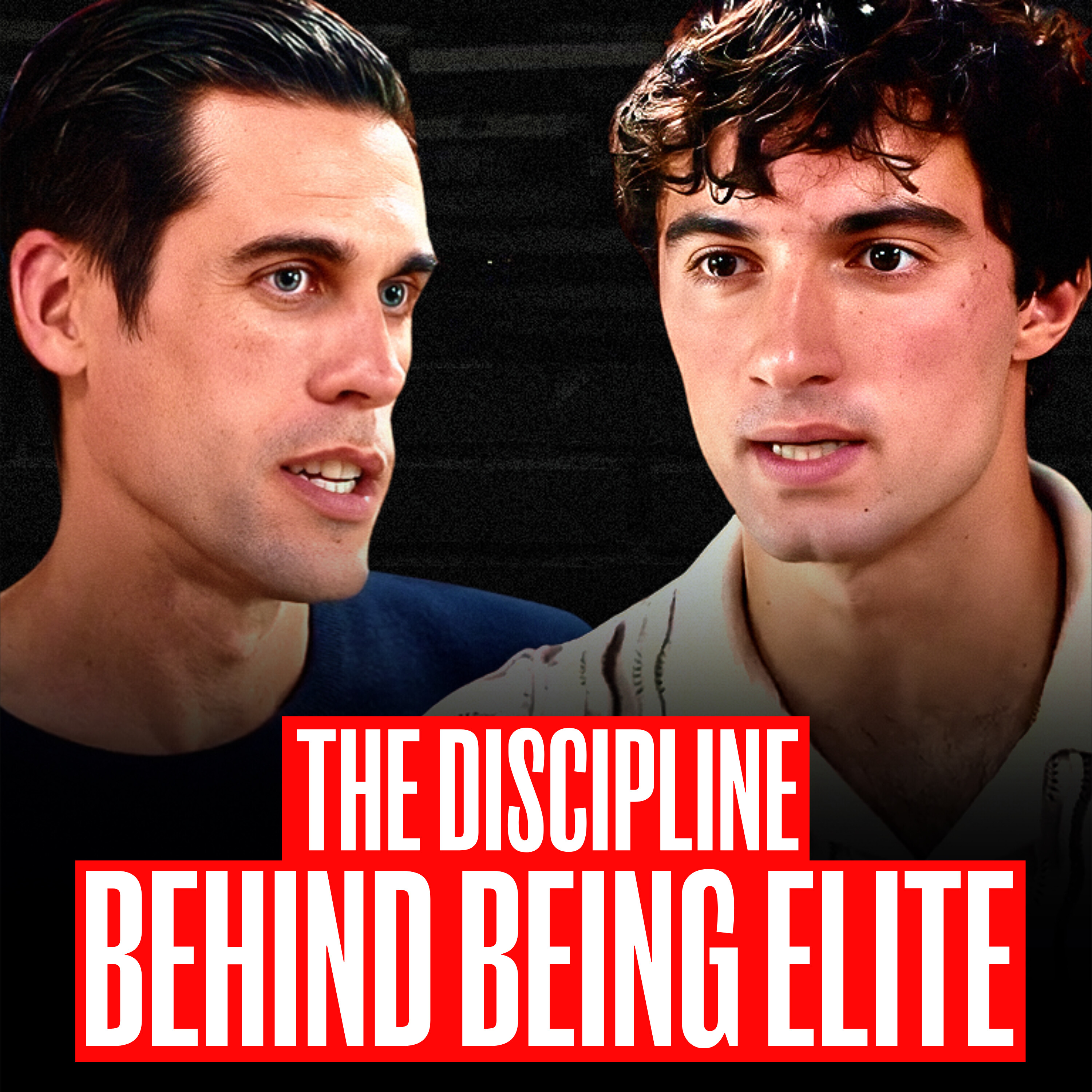
The pressure of being great changes when you’re carrying more than your own ambition. In today’s episode, Ryan sits down with Paralympian Ezra Frech to talk about the discipline required to compete at the highest level and the weight that comes with representing more than just yourself. Ezra shares what it actually takes to be a top professional Paralympian, his experience growing up with a disability, the role his parents played in building his confidence, and more.
Ezra Frech is an American track and field athlete who competes in high jump, long jump and sprinting events. He is a two-time Paralympian, having competed at the 2020 Summer Paralympics and won two gold medals at the 2024 Summer Paralympics.
Ezra co-created and produced a three-part docuseries called Adaptive with NBC Sports + Peacock. Check it out here!
Follow Ezra on Instagram and TikTok @EzraFrech and on YouTube @ItsEzraFrech
Make 2026 the year where you finally bring yourself closer to living your best life. No more waiting. Demand the best for yourself. The Daily Stoic New Year New You challenge begins January 1, 2026. Learn more and sign up today at dailystoic.com/challenge.
👉 Get The Daily Stoic New Year New You & all other Daily Stoic courses for FREE when you join Daily Stoic Life | dailystoic.com/life
🎥 Watch the video episodes on The Daily Stoic YouTube channel: https://www.youtube.com/@DailyStoic/videos
🎙️ Follow The Daily Stoic Podcast on Instagram: https://www.instagram.com/dailystoicpodcast
✉️ Want Stoic wisdom delivered to your inbox daily? Sign up for the FREE Daily Stoic email at https://dailystoic.com/dailyemail
🏛 Get Stoic inspired books, medallions, and prints to remember these lessons at the Daily Stoic Store: https://store.dailystoic.com/
📱 Follow us: Instagram, Twitter, YouTube, TikTok, and Facebook
See Privacy Policy at https://art19.com/privacy and California Privacy Notice at https://art19.com/privacy#do-not-sell-my-info.
