
 Ask ChatGPT


 The Daily T
5 Aug 2026 · 47m · 21 chapters
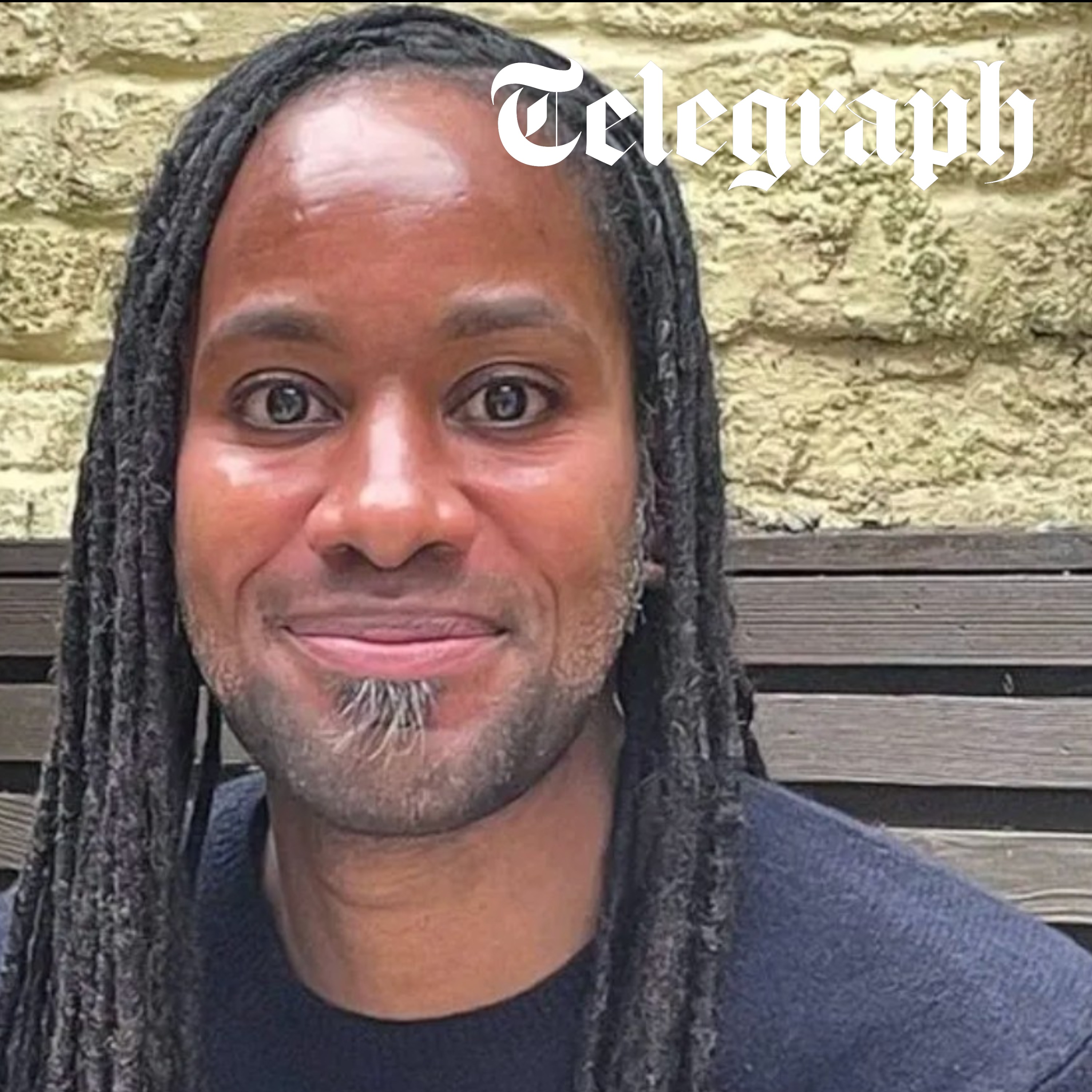
The episode criticizes Labour’s prison early-release scheme and argues it’s undermining law-and-order, then shifts to single-sex toilet/gym guidance for women and the ongoing trans-rights “contested spaces” debate. It also covers plagiarism allegations against Cambridge professor Jason Arday.
Baroness Sharon Davies, former Olympic swimmer and House of Lords member.
Davies is a women’s rights campaigner and former elite athlete; she speaks from a policy/legal perspective on sex-based single-sex spaces.
The government is delaying/softening enforcement of single-sex guidance; women’s privacy and safeguarding are being traded away by corporations/councils. Davies says trans-identifying men should not use women’s toilets; gender-neutral toilets are only acceptable if women’s sex-based spaces remain. She also argues women must “demand” rights rather than self-exclude.
Davies describes being shown a “transgender symbol” toilet at a theatre; she recounts a leisure-centre incident where men allegedly exposed themselves to two 10-year-old girls. The episode also discusses Arday’s alleged thesis plagiarism (188 similar passages), his police/legal response, and Cambridge/Liverpool John Moores saying he was cleared.
Written by AI. May contain mistakes.
Discussion about the early release of prisoners and its implications for public safety and the Labour government.
“I have a feeling that our new Prime Minister, Andy Burnham, is not having a particularly good holiday right now.”
Exploration of public sentiment regarding crime sentencing and the outrage expressed by citizens.
“So Burnham inherits a crisis that Starmer inherited, and Burnham has already said, I will not be releasing people accused of sexual crimes.”
Examination of the new single-sex guidance in restrooms and facilities, focusing on women's rights.
“It's not like people are going to stop committing offences.”
Conversation with Baroness Sharron Davies about the implications of the new guidance and safeguarding women’s rights.
“So even though we had that ruling at the Supreme Court in April of 2025, well over a year ago now, it didn't change anything.”
Discussion on the complexities of trans rights versus women's rights in public spaces.
“But on the one hand, the Supreme Court has said sex is biological sex and you must account for that.”
Sharron Davies shares a personal story highlighting the challenges faced by women in shared spaces.
“that anyone can feel their way out of a reality.”
Learn about women's experiences and challenges in single-sex spaces.
“And she said, I just need you to help me.”
Discussion on the importance of legal guidance regarding single-sex spaces.
“They self-exclude to protect themselves.”
An analysis of the political stances affecting women's rights today.
“You know, the moment you turn around and you allow a man to go into a woman's sport, that is a mixed sex competition.”
Exploring the impact of gender identity discussions on vulnerable children.
“I mean, Zach Polanski has said that women can have a penis.”
Critique of government inaction regarding women's legal protections.
“And they're not young enough to understand what the consequences of this is.”
Critique of government inaction regarding women's legal protections.
“and perhaps the most imaginative man, Dr Jason Arday.”
Exploring the life and achievements of Professor Jason Arday.
“Okay, Poppy, you'll have to excuse me if I'm a bit out of breath.”
Discussion on the controversies and achievements associated with Jason Arday.
“Well, hang on, I thought he couldn't read or write, but he still managed to get two GCSEs.”
Learn about the allegations surrounding Jason Arday's thesis and his responses.
“Isn't that kind of against the point of the programme?”
Explore the complexities of personal storytelling and academic integrity in Arday's case.
“I mean, I didn't blame him for calling the police.”
Understand how institutions react to allegations and the impact on academia.
“Because we have created in the liberal arts, a whole category of study, which is really about biography and is really about people like Jason Arde examining themselves.”
Discussion on how ideologies in academia can affect scholar opportunities.
“And this is why, although I don't want to talk far on a particular individual, because ultimately, Jason R.”
Exploration of academic integrity and the implications of personal claims.
“Conveniently also ignoring the many, many academics who I know are privately furious about having seen this happen.”
Hosts share humorous anecdotes about exaggerations during their university days.
“and not just him doing it, but people around him, I just don't think it needed to accompany what could otherwise have been a perfectly good academic career.”
Sign-off and mention of the next episode's guest.
“So that was probably the worst thing I've ever done.”

Get the gist, explore an idea or ask about something said.
 Claude
On The Daily T, what are the key points of this episode?
Searching your listeningAutomatic transcript. May contain errors.
0:03The Telegraph. A victory for women's rights or an embarrassing U-turn that women should never have to fight for. As new single sex-based guidance comes in for restrooms, gyms, etc, we speak to Baroness Sharon Davies on what this means for those who've campaigned for change. And we dive into the strange saga of a Cambridge professor and Tim's hero, Jason Arday and the plagiarism accusations that were made against him. Welcome to The Daily Tea with me, Tim Stanley. And me, Poppy Coburn.
0:45So much for silly season, Tim. I have a feeling that our new Prime Minister, Andy Burnham, is not having a particularly good holiday right now. No. It's supposed to be getting away from the news. It's the summertime. There's new stories that are happening. Relax, put a T-shirt on. Keir Starmer's final revenge. This prisoner release scheme, I think, is really going to come back to bite Andy Burnham. So he may return from a beach with a nice tan and immediately have a legal challenge slapped on his desk. So yesterday we spoke to Alina O 'Connor and she was telling us about the fury the police force is feeling about the early release of the killers of PC Harper.
1:20two of the people who were involved in his death they were charged with manslaughter and they were somehow eligible to be released because our prisons are overcrowded well there now may be some kind of block on that because the chief of PC Harper's police force that's Thames Valley Police is now considering a legal block which is a kind of administrative get out clause to stop this early release from happening because the crimes are so incredibly serious so it's no longer good enough for the Labour government to just throw their hands up and say, well, this is out of our hands, you know, this is a crisis situation, it's only temporary, because we know that's not the case.
1:56It's a change to sentencing laws. There is no end date on this that we know of. This is, I mean, at least in theory, going to happen in perpetuum. And to actually release Albert Boas and Jesse Cole, who are the people who were jailed for P.C. Harper's death, may now be stopped. Well, Jake Richards, a justice minister, has said that the government understands that people are angry and said that ministers are angry too. But this calls their bluff. This says something can be done and we are willing to do it. I am just staggered by a situation in which the police can take such action against their own government.
2:32I mean, doesn't that expose how bad the policy is, that the police now actually feel it's bad for their morale and their safety if this particular release goes ahead? Right. Now the government, so what Burnham will be thinking is, I inherited this policy from Keir Starmer, and Keir Starmer inherited the crisis from the Tories. We should point out that the crisis of crowding in prisons is in part the failure of the Tories to build new prisons to replace the ones that were closed down. No Category A prisons have been built in this country for the entire time that I've been alive. Right, exactly.
3:04So Burnham inherits a crisis that Starmer inherited, and Burnham has already said, I will not be releasing people accused of sexual crimes. Nonetheless, this is not just a high-profile case. This is a devastating case, which goes to the heart of law and order in this country. because if people can get out early having done this, then it's obviously going to undermine the ability of the police to do their job. And that's what Telegraph readers have been telling us. To quote a couple, Glenn Bradshaw says, the mere thought of releasing sniggering killers of a police officer who suffered a horrendous death is outrageous.
3:41The fact it hasn't already been stopped tells you a lot about our leaders. It's a disgrace. And Mike Miles says something which a lot of us think, the sentencing of criminals in this country is ridiculous. criminals should serve the time that they are sentenced to. Rather than be granted time off for good behaviour, time should be added for bad behaviour. Killers of policemen serving just 80 months is plainly wrong. I think as well what's going to really hurt Labour, and this isn't just an immediate problem, it's going to be hitting them down the years, which is the arbitrary nature of interventions made by Andy Burnham on this particular issue.
4:14So we had a series of articles that have been running on The Telegraph the last couple of weeks, particularly a fantastic piece by a young student called Thea Sewell, who had been sexually abused when she was a teenager. And she received the letter that the man who had abused her was going to be released potentially earlier under this scheme. And after all of that press came out, Andy Burnham did come out and say that we're not going to release sex offenders. Now, this, of course, doesn't make anything better because you're getting people who have committed manslaughter being released. But it doesn't even stop the problem of sex offenders or people who have committed offences against women for being released.
4:51And domestic abuse. Exactly. Culprits are going to be released as well. So 9 ,300 domestic abusers are set to be released in the next couple of years. So it's now got to the point where you're not just saying, well, we're getting rid of a few white collar criminals, maybe some people that have committed shoplifting. No, no, no. We are well past this point. The truth is those people don't even end up in jail anymore. If they commit a crime and the sentence is under 12 months, they don't get put in jail anymore. That's something that's changed under the Labour government. We are releasing serious criminals, criminals who have committed acts that we know have a high rate of re-offending as well.
5:27Sex offences are notorious for if you commit sex offences, you will likely go on to commit them again. That's why these offenders are so dangerous. And you are releasing them to the streets. And there's no short-term solution here. It's not like there are any nightingale prisons around the corner. It's not like people are going to stop committing offences. And the fact that Andy Burnham is on holiday, he's not here managing this crisis, which, you know, maybe it's not one of his creation, but it is now his responsibility. And I think the fact that he is not in the country, as this massive problem is occurring, doesn't exactly speak well to what kind of leader he's going to be.
6:03It's not good enough that Louise Hay is sending him a couple of text messages while he's on a beach. He needs to be here. Yeah, he wants to get the impression that he's on top of things. Of course, the big difference between him and Starmer is Starmer is always about telling us what can't be done. Burnham wants to show what can be done and to restore faith in activist government. And that's why we've seen in the two short weeks that he spent with us as prime minister, we've seen him doing things like capping bus fares or this intervention on not releasing sexual offenders. But as you've said, there are these big structural problems that don't go away.
6:34This is what the Starmerites are saying behind closed doors, all very well, coming in with your t-shirt and nice little gimmicks in photo ops what do you call a bread roll i call it about yeah but the but the point is what are you actually going to do about the criminals that and you can have these uh populist little demonstrations we're not going to let this group of people up but there's still loads and thousands and thousands of those who are going to be released um another example of this where he is a prisoner of the labor party its history and its philosophy is on transgenderism, right? So 16 months ago, the Supreme Court said that when we talk about sex, we mean biological sex, i.e.
7:15the thing you were born as. And we've been waiting to see what impact that would have upon service providers. The Equality and Human Rights Commission ruled that you must provide separate toilets for men and women, and men should use the men's, and women should use the women's. And now that advice has finally gone into effect. Well, campaigners for women's rights are delighted, but they still have concerns because what hasn't changed is the overall... The culture war is not over. Exactly. Translates activists are not going to go away and this debate is unfortunately still not being put to bed.
7:53So let's discuss this with Baroness Sharon Davies, former Olympic swimmer and now a member of the House of Lords. Sharon, first of all, your reaction to this guidance finally coming into force? Yeah, I mean, mixed joy, because, you know, the law has been the law and has never actually changed. So even though we had that ruling at the Supreme Court in April of 2025, well over a year ago now, it didn't change anything. It just clarified what the law had always been. And so an awful lot of these things have happened against the law. And there's still an awful lot of people dragging their feet. So yes, it's sort of tempered joy in the fact that the guidance is in place and you'd now like to think that sports and service providers and restaurants, et cetera, will do the correct thing.
8:41I just find it so frustrating that they're talking about risk assessments and costing assessments, but those were never considered when they gave away women's rights to privacy, dignity and opportunities. It's only now a problem when they've got to give them back. Sharon I'm just thinking because you know as you said the law never actually changed and a lot of this was just bad behavior particularly from people who are running big corporations who were using ambiguity as a get-out clause for doing the right thing on sex-based rights I actually had an experience last week where I went to the theater like I actually couldn't believe my eyes when I was looking for the toilets so there was a men's toilet normal men's toilet and then I said where's the ladies and they said well sorry let me just introduce you to the facility you'll be using and it was a transgender symbol on the toilet.
9:27So the men had their own toilets and the women had to use that. We always win. Gender neutral. We always win. You've got your sex-based rights. So what worries me here is although sex-based, single-sex toilets have to remain, will they use gender-neutral toilets as a kind of getaway? Yeah, I mean, Poppy, they actually can't do that. They are breaking the law. That is discrimination. So if they provided a men's facility, just the same if you provide a men's race, you have to provide a women's facility. So if they decide to have a gender neutral toilet, that's absolutely fine. And I'm all for that.
9:59If it's feasible, they have to, by law, provide a female space. So it's about trying to let the public know where they stand with regards to the law and then trying to give women the courage to demand for what they rightly deserve. And a lot of these things have been put in place for safeguarding, you know, and we're just ignoring safeguarding. I mean, one of the things that's been pushed really heavily in the leisure industry has been changing villages. And these multi-changing facilities just means that the voyeurism and the sexual assaults just go through the roof against women because it's a cost-saving exercise in lots of instances, or it's councils that just have no backbone whatsoever and they just cave to activists.
10:38So constantly women are the ones that lose out. And I find it so demoralizing that we've won so many battles as women and yet here we are again. And basically this is just old-fashioned misogyny. Sharon, is there a problem here that sort of baked in now to our legal system? But on the one hand, the Supreme Court has said sex is biological sex and you must account for that. But on the other hand, our law also says you shouldn't discriminate against trans people. And they are essentially fighting over, awful phrase, contested spaces. And we ought really to make, we have to make a choice. At some stage, we have to just make a choice.
11:17But the law kind of wants to have it both ways. And the EHRC has said it could be discriminatory to deny access to restrooms for trans people. And it has also said that where possible, you should provide gender neutral facilities. My point is, is that so long as the law is still trying to both defend women's rights and defend trans rights, there's always going to be a point of contention and something to battle over. Yeah. But except that no one has ever been denied access to sport, no one has ever been denied access to a bathroom it's just the bathroom that you're choosing to to use and trans activists you know trans identifying males in particular they are the ones that are saying we wish to use this bathroom well they don't get to do that you know no one is saying they had don't have access to a bathroom the problem is they are demanding to use the bathroom that they want to use and that at the moment is against the law so they're not losing their rights, right?
12:15They're not losing their opportunities to jobs. Discrimination is saying when they're not picked for a job, when they're qualified to have that job, you know, and they identify as a trans woman. And I 100 % back that in the same way I would for anyone that's disabled or anyone of colour, you know, or anyone of a particular religion. I believe in all of that. I believe in equality and I believe in giving people equal opportunities. But I believe that women deserve their safeguardings and women deserve their opportunities. And I do not believe that anyone can feel their way out of a reality. A biological reality is a biological reality.
12:46And if a men's toilet is unsafe for trans-identifying men, then that is a men's problem to solve, not a woman's problem. I'd be interested to know what you think would be the reaction from trans-rights activists to this guidance coming into force, because we've really seen over the last couple of years some of the tactics used, some of the rhetoric that's been employed has been almost like that of a war. Like that's how it's kind of been framed is like this existential battle for their rights. I cannot imagine they're going to take this guidance lying down. Do you think they're going to fight this as much as they can?
13:19Do you think they're going to continue campaigning against women's single sex spaces? Or have you won't? Yeah, I think they are. You know, of course they are. I mean, we know, you know, only have to look at social media to see particular activists, trans-right activists who are absolutely determined to carry on going into women's toilets. And they made it obvious. I think we have to be brave enough as women to call it out. The difficulty is that women have almost been programmed to self-exclude or to leave or to stay quiet. I'll give you one example. I won't say the actual leisure centre because it might get me into trouble.
13:50But at some point, I will actually be taking this leisure centre on if I don't do something about it as the women's sports union. There was a lady in there who was a barrister. And the reason she got hold of me was because she was disappointed in herself. And she said, I just need you to help me. And what do I do? She had a daughter who was 10 who had gone swimming. and had taken a friend with her. So there was two 10-year-old girls who were getting changed after their swimming session in the women's changing rooms. Both of them had no clothes on, standing in the middle of the changing room. Two men came in and stood right next to them.
14:22Didn't go to the corner, didn't go to a cubicle, stood right next to them and then stripped off right in front of them. This woman did not know what to do. She wrapped her two girls in towels, took them to the corner of the changing room, waited till the two men had put on their frilly girls swimsuits and gone out into the swimming pool. They were fully fledged, fully intact males. She's never been back. She went to the leisure centre entrance and she said, look, this has happened. My children are distraught. This shouldn't be happening. I'm a barrister. I know what the law is. And they just said, well, we allow people to self-identify in this leisure centre.
14:57And that was it. And she's never been back. So this is what women do. They self-exclude to protect themselves. We've got to try to give women the strength to say no. somehow. Yeah, I think that's exactly it. Because, you know, as you said at the beginning, the law hasn't changed in this equation. It's about guidance. And it's about awareness raising for people. Because I think so many of these institutions, because it's the easiest course of action, rather than taking on these activists who can be incredibly difficult to deal with, you know, they can really make quite serious threats against people or legal threats, even if they are empty.
15:32They just go, you know what, we're just going to let people do what they want we're just going to let them identify and pretend there's some ambiguity here i think this guidance is trying to remove that kind of veneer of ambiguity and say no no no the law is really really clear the guidance is very clear single sex spaces must exist and i think the more women that actually know about it hopefully the more confident they'll be able to feel about challenges this this situation absolutely i mean and to know that you know if if a category or a class or a changing room or a toilet says woman, girl, female, then that is sexed base.
16:05You know, the moment you turn around and you allow a man to go into a woman's sport, that is a mixed sex competition. It is no longer a female competition. All the women want is one category where they can have their own places and be first, second, third, whatever it is, so they can see where they rank with other women and they want their own rank. No women hold men's records. So this only goes one way. It's just women that are expected to give up their things. There is, of course, a political constituency that will oppose these changes and which now has the power to make a difference. The Green-led Lambeth Council has backed a motion at a full council meeting last month calling on them to refuse to implement the code.
16:45I mean, Zach Polanski has said that women can have a penis. And Ed Davey in 2024 was asked if women can have a penis. And he said yes, though he did qualify by saying the vast majority of women don't. Yeah, I also think that, you know, people in boathouses ought to pay their taxes as well, just like a political party. But is that we can't, it feels like we're winning, but there is a significant part of the political landscape, which is really sold on trans rights and has now made it part of its platform. uh yeah i mean we've been lying how do you shift that long time you know and it's and it's often vulnerable children it's it's children that are gay it's children that are autistic it's children that are in care for example four times as many children in care identify as trans it's the vulnerable children in our society that somehow think that identifying as the opposite sex is going to fix an awful lot of their problems it is not it's just just going to make their problems even worse and in many instances it's going to make the medical medical customers for life and it's going to sterilize them.
17:50And they're not young enough to understand what the consequences of this is. And we're not protecting our kids. You know, we're telling them fairy tales. We're going back to the emperor's new clothes. And deep down, they will all know. They all know that they're still biologically male or biologically female. And when it comes to medical records, it's really important. You know, this is even a safety issue, isn't it? You know, if we're going to lie on a medical record when somebody was unfortunately to pass out or something, it's important that we know what biological sex they are. So I think, I don't believe that in any official record should have a lie on it.
18:23But what I do believe is that we should be more accepting as a society of people that are feminine or masculine. And that doesn't matter if you are a feminine guy or a masculine girl. You know, that is where we need to learn acceptance. Absolutely. I mean, that's a plea for tolerance, which any liquid, humane society should exercise. But coming back to my point about the tensions in the law between and saying sex is biological, but let's not discriminate against trans people. We're still waiting, I feel, for the silver bullet that puts this issue to bed. And we're not going to get there until the political class says trans is a part of human experience, but it's not a biological reality.
19:01And I don't quite feel the political establishment has got there yet. No, I agree with you. And the problem with all of this is that the government is really not on board with this. You know, the government are sitting back and allowing women to do all the hard, dirty work. They're having to crowdfund to constantly take all these organisations to court. And when we go to court, we win and we win considerably and repeatedly. But we shouldn't be left to do this. Women should not have to be crowdfunding to get the law applied. This should be the job of the government and they are not doing it. Baroness Sharon Davies, thank you very much.
19:33You're welcome. Coming up next, we're going to be talking about the incredibly entertaining saga of the world's most talented and perhaps the most imaginative man, Dr Jason Arday.
19:49What makes a great pub? Is it the beer, the hospitality, the history? I'm Will Hawkes, journalist and co-author of The Telegraph's Guide to the UK's Best Pubs. I've visited thousands of them and enjoyed a few pints along the way in my search for pub perfection. Now I've had the job of whittling down the best of what the nation has to offer. Enter your postcode to see if your local made our list or filter to find your new favourites. Visit telegraph.co.uk forward slash best pubs today.
20:21Nirav Modi was a billionaire diamond tycoon whose jewellery was worn by Hollywood stars like Kate Winslet. But in 2018, he was accused of masterminding one of the world's biggest ever bank frauds and he disappeared. This is the extraordinary story of the rise and fall of Nirav Modi and of how we caught him. He was in the news all the time. Where is Nirav Modi? Why can we not find him? He's one of the most sought after criminal in India. You owe a lot of people a lot of money, Mr. Modi, who would very much like to know where you are. Sorry, no comment. The Indians will think we're a laughing stock.
21:02Here we are seven years later still speaking about this case. They think it's a sham. The Diamond King, a new podcast from The Telegraph, with me, Mick Brown. And me, Robert Mendick. Out now.
21:21Okay, Poppy, you'll have to excuse me if I'm a bit out of breath. But before coming here today, I actually ran 30 marathons in 35 days. Really, Tim? Yeah, I raised a lot of money for charity. I can't say how much because, you know, there are rules around this. I don't want to sound like I'm boasting, you know, don't seem like a big head. And actually, while I was running, mentioning my head while I was running one of the marathons, I actually slipped on my shoelaces and decapitated myself. But I didn't want to let the charities down. So I just put my head back on my shoulders and just carry on, carried on running.
21:55And can I just say one word, Tim? Hero. Yeah. Hero. Yeah. Well, I'm not alone. And this is the thing, you know they say that not all heroes wear capes but a lot of them do wear academic gowns and i i'm just trying to keep up with professor jason arday who is genuinely my hero i i think he's so no he really is i mean he is i mean you can do anything right i mean he's such an inspiration yeah you can come from whatever background you like uh but with you know a bit of guile, you too can make up the most fantastical backstory possible and live your dreams every day. In times past, you wanted to be the caveman with the biggest club, or then you wanted to be the guy who sailed to the Americas and found the gold.
22:42Now, the top position in our society, unquestionably, obviously, is head of the sociology of education at Cambridge. Right. And he's made it there. He became the youngest ever black professor at Cambridge, which is a serious achievement, especially considering his background. Right. Son of Ghanaian born parents. He had autism as a child. He was nonverbal until 11. Right. Professor of education. Couldn't speak till 11. Yeah. Could not read or write until he was 18. God, they should have gone on Cambridge courses, teachers. But he would not let not being able to read or write hold him back from reading or writing.
23:28And he left school with two GCSEs in PE and textiles. Well, hang on, I thought he couldn't read or write, but he still managed to get two GCSEs. Well, he can run and he can knit. But, OK, he learned how to read and write. OK, but don't take the mick. This is serious, right? Sorry, sorry. This is very inspirational. You know, I mean, what does he expect? It's like all of a twist, you know, where are you going to go with this? But other people saw something in him. And he has actually got a memoir coming out with Simon and Schuster. It's still going to come out despite all the trouble, it seems, but he's got the memoir coming out.
24:00And he talks about what he was doing in the 2000s. And he was actually, he says in the book, I was on a relief mission in Brazil, working with an organization installing water pumps in poor communities. I mean, this guy's just amazing. And he said,
24:44as well. It's never good when you have destined in your autobiography, is it? Yes. I'm destined to do I don't think I was destined to do anything. I was doomed to do certain things. You should have crossed someone's palm with silver to him when you were volunteering in the Andes or something. And then a woman kind of like with a big cloak over her looked into her crystal ball and said, one day you will be a podcaster at the Telegraph newspaper. You're destined to do all the things. But we should add because, I mean, you know, the thing is, you know what it's like in academia, you know, there are two sides to every story.
25:16And I just got to add briefly, several biographies of Professor Arday have referred to him installing clean water projects in South America and Africa for the charity WaterAid. The charity does not send volunteers abroad. And references to WaterAid have been removed from Professor Arday's biography page on the website of the speaking agency. Hang on, hang on. It says they don't send volunteers. What about heroes? They do send heroes. What about sending superheroes aboard? Maybe they just got the designation wrong. Men of Destiny. Anyway, he studies PE and teaching. He got a PhD from Liverpool, John Moores University.
25:49By the way, two weeks before the Viver, he had a benign brain tumour. Oh, that's nothing. That's nothing, right? Just a small setback to someone as brilliant as Jason Arden. No, no, no. But he continued to climb up the ladder, holding his brain in his hands, to become the youngest professor at Cambridge. His field is higher education. I didn't even know we had a department of higher education, but there we go. Because a lot of higher education now is dedicated to the study of higher education, right? So there's an element of... There's layers to this. There's an element of biography in it, right?
26:21And he's principally interested in how racism holds black minority and ethnic people back from getting on. And he has attracted a lot of entirely justified attention, right? He's been invited to produce an edition of the Today programme. He's been on Question Time. And despite all of this going on, he also likes to keep fit, right? He's, like me, he's run 30 marathons in 35 days, despite suffering a hairline fracture on day 21 that made his legs swell to twice its size. So he's got a brain tumour, a leg fracture. Yes. And he's also got really, really long hair, which I imagine you're just tripping over constantly.
27:00Well, I don't know if he had the hair at the time, but you've got to imagine Jason just
27:08for 30 marathons, right? He ran 300 miles in three days on a treadmill to raise money for charity. We don't have any proof of that, but he says it, so I believe it. And he also has run 600 miles in six days. He's actually qualified that and said it may have taken 12 days. Oh, well, fair enough. He believes he has raised£5.5 million for 70 charities. And this fundraising earned him a place as a 2012 London Olympics torchbearer. Right. Now, there's an interview which some people have drawn attention to. And I think this is an example. This is where, obviously, some people started looking at this and going, is this real?
27:50Because it's so good. Some horrible people said, is this real? and they started sort of going through his back catalogue of things he said and for example he said in an interview in 2022 i was part of a program actually which it doesn't exist anymore but was called seven up at the time and seven up is basically when they follow you over the duration of your life so they follow you at ages 7 14 21 i was pulled out of the project when i was 14 now referring here to a famous itv series where they followed kids from every seven years it's something my grandparents would be aware of well it started 20 years before he was born Right.
28:23Did they take latecomers? Isn't that kind of against the point of the programme? But he says he was referring to a community initiative and was not referring to the TV series. Even though he describes the TV series. This is where I really identify with him because, you know, I'm often saying to people, I was James Bond. In the late 90s, I was in five Bond films. Between Brosnan and the other one, I was in five Bond films. And obviously when I say that, I don't mean I was James Bond. I mean I was involved with a local repertory company Right, I see Doing sex farces on the south coast Is he a Bond girl?
28:58What was the big situation for that? Anyway, this all brings us to the question of his thesis Of course Right Now, he has been accused of plagiarism An analysis has suggested That there are 188 passages in his thesis That were identical or very similar to those of another student's thesis. And people have tried to investigate this, including a journalist called Jack Grove of Times Higher Education. And when he got in touch with Jason Arday and sent him some questions about the PhD, Jason did exactly what I would do. He called the police. Yes, exactly. And then employed the famously nasty lawyers, Carter Ruck.
29:47Yeah. just to make sure that if the police were storming the house, he would have legal protection additionally. Yes. You're attacking this hero. I mean, seriously. So he's a marathon runner. He's doing all this charity all over the world in vulnerable communities. He survived a brain tumour. He survived a hairline fracture. And now, I mean, really the pretty minor issue of plagiarising one's thesis. I mean, I didn't blame him for calling the police. That's totally reasonable. I think if you question someone like that, it's clearly a racism. Yeah. And you're clearly one step away from boiling their bunny in their kitchen.
30:23And, you know, just last week when I wrote this piece about climate change, a lot of people sent me emails saying your statistics are wrong. You're just, you've called this incorrectly. I was on the phone to the police for hours. I know this is true behind the scenes. Every single one. I mean, the first email I... You couldn't speak to Tim. He was just on the phone. The first tweet I saw by Matt Ridley, I called 999, right? And you're quite right. Carter Rock, I consider one of the four horses of the apocalypse. I mean, if you're going to bring them in, you know. Yeah, they've got a famous nickname, which we obviously cannot repeat.
30:53But I think you can pause that one together. Yeah, but he says that if there is any suspicion of plagiarism, it might partly be due to autism. Because autistic people quite often mimic other people's behavior. And of course, their words. He also says that he has been subject to many horrendous, by his account, racist attacks. He says he was confronted at his facility building by a masked man threatening to kill him if he did not resign. On the second occasion, which the man did it twice, the man had a knife. Now, this man was not picked up on CCTV. And Arde did not tell the police or colleagues.
31:35Well, the police were busy dealing with the Times higher education journalists. They had their hands full. He also says that a severed pig's head was sent to his family home and that the police had investigated, finding a whole hog had been sold by a local butcher on the day of the incident. Police have subsequently said that this claim is categorically incorrect. OK, Tim, I'm going to have to fact check you here. Given all that we know about Jason Arday, is it not plausible that he touched the head of the pig and it came back to life i mean that's one answer yeah yeah yeah yeah um when are when confronted about these claims by the guardian um he stood by them and professor arday said to be honest with you i thought you'd Just believe me.
32:30That's a killer line. Oh, you can't not love this guy, can you? He said, why would I lie? He would be jeopardising his career. Now, Cambridge University has previously said that allegations of plagiarism have been thoroughly investigated by the relevant institution and the journals in question and have said that Professor Arday has been cleared by those investigations of any wrongdoing. And Liverpool John Moores University said in 2025 that, yes, It has received allegations of academic misconduct against Arday, but a confidential procedure was conducted in response to these allegations and Professor Arday's PhD still stands.
33:03We will not comment further on a private matter between the university and a former student. And this is the interesting thing, isn't it? Part of this story, there are so many elements to it. I mean, there's a lot to unpack. There's a lot to unpack. It's a colourful life. But let's start with the fact that actually the universities involved are standing by him. They are. And the publishers are standing by him. Up to this point, the attention that Jason Arday has garnished has been entirely from people like you and I. It's been from journalists, when he's not threatening to call the police on them, of course, and from the general public who cannot quite believe that an institution like Cambridge University or a very respectable book publisher could look at this man and not immediately think, oh, well, he's a lunatic, that he has at the very least embellished certain aspects of his life.
33:49It's just a little bit too good to be true. I think we call that common sense. But for those who have a bit of experience dealing with the sorts of people who now run these so-called respectable institutions, I don't think there really is anything that surprising about what's happened here. Because the truth is, if anyone is coming away from this situation embarrassed, it's not Jason Arday. He's basically gotten away with it. He clearly doesn't have any shame. He's clearly quite happy to share his life story with everyone. and I do hope his book comes out without any rejections because I'm sure it will make a fantastic beach read.
34:23We should pass it on to Andy Burnham. But it's embarrassing for the institutions that took all of this at face value and promoted him and promoted him and promoted him over the years and now that refuse to deal with any legitimate questions about him because it reflects so poorly on their own judgment. Yeah, I do want to point out that this particular institution gave me a PhD. so i won't hear a word against them really have dropped haven't they okay i i do actually feel um that some of the pylon on him has been has has turned into cruelty um and i do feel rather sorry for him and i do feel uh that institutions have promoted him without perhaps doing due diligence or showing full support and he now does look very exposed uh and i just think his life must be a living hell right now.
35:15And I also think that young people make mistakes. And who here has not embellished a CV? I mean, my early CV is just read like a novel by Baron von Munchausen. I think there's an element of everyone does that. The problem is, and Giles Corrin said this, everybody fibs, but at some point you've got to stop. And he's now 41. And that's part of the problem is, is that all this stuff about running and all that, you reach a point in your life where it's no longer necessary to construct yourself, if that makes sense. Because young people are all in the process of self-construction. And part of that is about defining yourself in opposition to your background.
35:57So sometimes people, you know, when we tell stories about ourselves, we take together different bits of information and we carve out a narrative that suits us and our own image of ourselves. I think almost all human beings do that. And I'd be slightly suspicious, actually, of someone who didn't. I think in a way you're more cool and constructed and almost more fraudulent if you're 100 % honest. But at some point in an academic career, you have to stand on the work. And I think part of the issue here is the work itself. Because we have created in the liberal arts, a whole category of study, which is really about biography and is really about people like Jason Arde examining themselves.
36:43Yes, it's like the complete opposite of what most people would think the role of the academy is, which is to put knowledge and the pursuit of knowledge for most. This is about feeling. It is very, very touchy-feely. And I do encourage people to read the works that Jason Arde has published that are his own. I'm sure there are some words in there that he has originally produced. And you're completely right. The only stuff that he can actually produce, aside from academic scholarship, is just telling you about how he feels and about his life story and trying to make you feel sorry for him or trying to make you think what a wonderful person he is.
37:15And I think the way that he's responded to these accusations and also the people around him who have been defending him is very interesting. They've taken the entirely personal line where they have not even engaged with the plagiarism accusations because there's no pretense from people within the academy that are trying to defend Jason Arde that that matters anymore, that standards have to be upheld. No, no, no. We've already jettisoned that belief a long time ago. We just didn't tell you about it. What you're doing is going after Jason Arde, the person. And that is something that they cannot accept because I think it reflects very poorly on a certain ideological fashion that has taken over these places, which is DEI.
37:53I mean, it is relevant that he was promoted so much in the media for being the youngest black professor. It was a way for Cambridge University to show off itself. It's not normal to do a press release when you hire a new professor. And yet it was everywhere. It was totally inescapable. He was doing interviews on the BBC, as you said. He was invited to guest host the Today programme. Why was that? Well, it was because the institution wanted someone like Jason Alday to burnish their reputation. And this doesn't just happen in the UK. You know, a couple of years ago in America, the president of Harvard University, someone called Dr.
38:27Claudine Gay, had the exact same thing happen. It was a plagiarism scandal that was started by someone with conservative links. It became a totally polarized debate where the actual substance of whether or not she had plagiarized her work was kind of shunted to the side and it instead became a conversation about DEI. But that wasn't the point of Claudine Gay, just as that is not the point of Jason Arday. They exist to make these institutions feel that they are politically right on, to make them feel that they are modern to make them feel that they are keeping in with the correct sensibilities.
39:01They are not there to be scholars. I think in their defense, they are also genuinely embarrassed by a lack of diversity in the academy. And so they're keen not just to correct it, but to be seen to correct it, because they say that's the only way that we can persuade people from the kind of backgrounds that don't normally go to Oxbridge to apply to Oxbridge. But I also think when I hear about his background, there's an element of the urban myth of the child raised by walls. There's a lot of this in the 19th century. A kid is discovered who's supposedly been raised by walls and he very quickly turns into a genius.
39:37And it's that Rousseauian idea that there are certain people who have a kind of nobility of innocence about them. That because of his autism and his nonverbal status, and this is part of his work, he talks about neurodiversity all the time, is a key part of his work, that he has a perspective on society, which regular people don't have, regular white middle class people don't have. And so by bringing him into academia, wow, we're able to put our society under a microscope and he can bring this perspective that we wouldn't normally have. And I think that's one reason why so many academics leapt upon it, because they're buying into that old idea of the kid raised by wolves.
40:18We found a genius in the bushes yes and of course the fact of that he wasn't a genius he self-evidently isn't a genius didn't really matter because the story was just so compelling that they were willing to just send the idea that he was actually like a child's of arm it didn't really matter they just needed him to be this character for whom they could kind of project their own ideas and dreams onto i mean there are several videos that have now resurfaced in the last couple of weeks as people discovered just the scale of Jason Arde's storytelling, let's put it that way, of these middle-aged academics within Cambridge University talking about him as if he's a child.
40:57Like, isn't it just so inspirational? Isn't he such a wonderful person? And you just watch this and think, this is so weird. This is not how you talk about an academic. But it coincides with the Black Lives Matter moment, right? It coincides with a moment when many institutions felt guilty about their history and they were looking for people or they were looking for artworks or they were looking for books that could help them to confront that past and transcend it. So this is why I think he's a kind of a Tom Wolfe-like character. You know, Wolfe used to write these books which were about the moment, a history of the present, in which there were characters that embodied social dynamics.
41:36I'm starting to sound like a Jason Arday paper. And that is what Jason Arday does. That's why I think this scandal is so irresistible to people. It's not just because of every day a new detail comes out, which I think is kind of unfair, because I think if you put literally anyone's life under the microscope, you could produce a headline every day about something dumb they've said or done. But it's because he so obviously represents something that our elite wanted to promote until very recently. If I'm totally honest, I don't think it's until very recently. I think it's still happening. And this is why, although I don't want to talk far on a particular individual, because ultimately, Jason R.
42:14Delew's professorship, does it really matter? I mean, it's sociology of education. I'm not really sure that many people think that's a particularly legitimate discipline outside of the social sciences. But there we are. But there is a broader problem where there are very, very talented young scholars who are losing out on opportunities, despite the fact that they are very good and talented within their field because they don't have the right biography. Right. Because they can't fulfill the role that someone like Jason Arde does. And so I would encourage people to read this very good article by the conservative writer Helen Andrews, who is again examining this from the US side.
42:50This is not a victimless crime, as it were. People seriously can have the trajectory of their lives changed by these ideologies that jettison any ideal of meritocracy, even if it never was achieved, but at least striving towards it in favour of this kind of DEI project, this deification of the personal, of feeling, of actual scholarship. And so that's why it's so frustrating to see this, because I don't think Cambridge will change its mind. So they have done this before where they've not actually taken on board any of the legitimate criticism. They see it as like, this is all political right wing smears.
43:25We can just ignore this. Conveniently also ignoring the many, many academics who I know are privately furious about having seen this happen. Yes. Having struggled so much for their own careers and learn nothing. Well, many scholars will be thinking it is racist because you happen to be piling on, you happen to have chosen, they will say, a black scholar to pile on to. They also will feel like this is a bit of intrusion into the world of academia, which ought to be preserved from this kind of political scrutiny. But I have to say, I personally hope he doesn't lose his job. I don't think he needs to lose his job.
44:01I don't think an academic has to lose their title because they may have inflated how much money they gave to charity. I'm not saying he did, but if that is what he did, I just don't see why that has to be. And many academics have been fantabulists. They've been very strange and wild and wonderful people who had very peculiar personal lives and lived entirely in their own minds. I don't mind that. I just think that much of the fantasy that we have been spun about this particular character, and not just him doing it, but people around him, I just don't think it needed to accompany what could otherwise have been a perfectly good academic career.
44:36But we do need to answer a question from Graham Pack. Yes, so I've got an email here. A Cambridge professor makes Walter Mitty seem like an amateur with his wild claims. As both of you went to Cambridge, what's the biggest thing you embellished whilst you were there? I'm going to start with you, Tim, because I don't want to answer that question. Can you go first? Well, I don't remember Cambridge. And this isn't because of your old age, of course. No, no, no, it isn't. But I did briefly work on the newspaper and I was a common editor. And I was so decadent and dissolute that some weeks I couldn't be bothered to find writers.
45:16So I would just write the opinions myself under a pseudonym. and I had to produce four opinions, four different takes on one subject. And they were all written by different people in different styles. And I was eventually dragged before the student board who asked me to explain this. And they said, you know, who is this person? Where have they come from? And I said, as a journalist, I never reveal my sources. You could have been even better than Jason Arday if you'd stayed at Cambridge. You're wasted here, Tim. Yeah, well, this is why I've got Carter Rock on Speed Dark. What about you? I mean, I'm trying to remember.
45:55So I was a COVID student, so it did cut down on my opportunities for lying. I think actually the biggest lie, and I did engage in this lie literally every week when I had my supervisions, was that I was doing my course. I remember a particularly unpleasant experience with my director of studies in my second year, the beginning of my second year. and I was spinning some yarn about the reason I hadn't handed in my essay and I think I'd run through nearly every possible excuse for that point. I've done all the mental health stuff, I've done all the personal tragedy stuff. I was really an Elise Abba, I was like, I just couldn't do it.
46:29I just couldn't bring myself to do it, it's so difficult for me. She said, really, it's difficult for you. And I said, I can't leave my room, I can't leave my room, things are just so hard. She went, well, I just looked on your Facebook earlier, Poppy, and I see that you've been tagged in a photo and she held her phone aloft And it was me with a megaphone in my hand, cheering on a large march with hundreds of other students that obviously happened the day before. And I just kind of looked at her and thought, I didn't have the energy to lie. I'll give in my essay to borrow. So that was probably the worst thing I've ever done.
47:03Obviously, I have since learned my lesson. When I was making up these students who wrote these comment articles for me, I had someone who wrote every week who was a left wing student. What were they called? This is the interesting thing. What name did I come up with? I called them Ollie King. Ollie King. That is a very left-wing name. That is a very left-wing name. In the same way as Charles Moore says some people have a left-wing face, Ollie King is destined to be a journalist for The Guardian. Oh, who was your right-wing name? Was it Tim Stanley? Probably Charles something. Charles is a right-wing name.
47:38That's good. I'm going to say goodbye today from Poppy, because you're going to go away on holiday. I am indeed. And I'll be back tomorrow at 5pm with Jacob Rees-Mogg.
In this episode of The Daily T, Tim Stanley and Poppy Coburn speak with Baroness Sharron Davies, the former Olympic swimmer and member of the House of Lords, following the enforcement of updated EHRC guidance on single-sex spaces. Davies expresses only “tempered joy” at the move, arguing that clear legal guidance comes far too late after years of institutional cowardice and corporate foot-dragging. Blasting the ongoing burden placed on female campaigners, Davies calls out ministers for forcing women to self-exclude or launch expensive crowdfunded legal challenges just to secure basic dignity, safeguarding, and biological reality in public life.
Tim and Poppy also discuss the ongoing saga surrounding Cambridge’s youngest black professor, Jason Arday, as allegations of extensive plagiarism and other wild claims shake the academic establishment.
We want to hear from you! Email us at [email protected] or find @dailytpodcast on TikTok, Instagram and X
► Sign up to our most popular newsletter, From the Editor. Look forward to receiving free-thinking comment and the day's biggest stories, every morning. telegraph.co.uk/fromtheeditor
The Telegraph is the Publisher Podcast Awards' Podcast Publisher of the Year 2026
Studio Operator: Meghan Searle
Producers: Emma Williams and David Levene
Video Producer: Will Walters
Social Producer: Nada Aggour
Executive Producer: Charlotte Seligman
Editor: Camilla Tominey
Highlights:
Hosted on Acast. See acast.com/privacy for more information.


