
 Ask ChatGPT


 The Daily T
22 Aug 2025 · 53m · 13 chapters
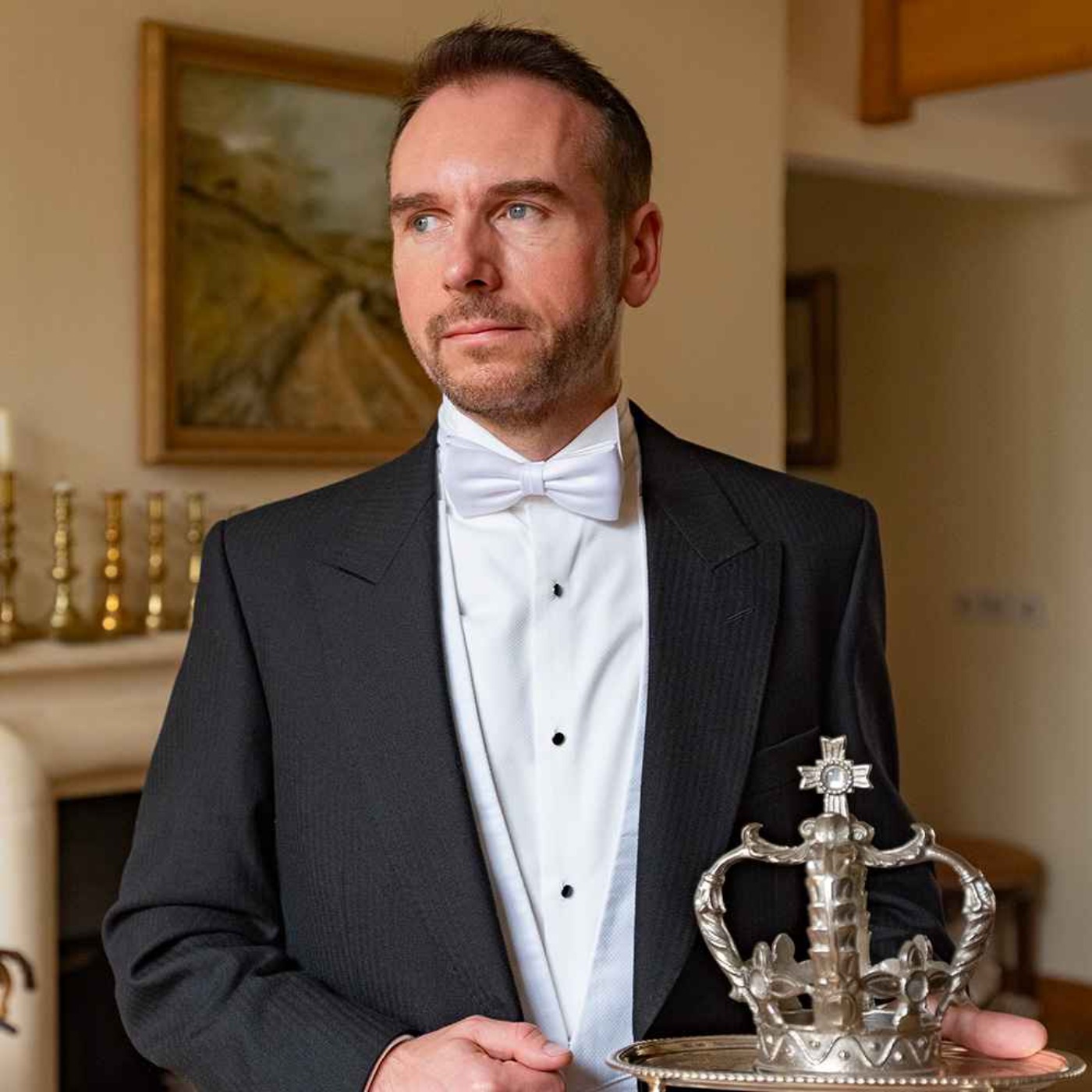
Former royal butler Grant Harrold explains what life is really like serving the British royal family, from etiquette and household routines to personal interactions with King Charles (then Prince Charles), Queen Elizabeth II, and the royal princes.
Grant Harrold is a former royal butler and author of The Royal Butler: My Remarkable Life of Royal Service. He previously worked for Prince Charles at Highgrove (2004–2011) and trained in traditional service at Woburn Abbey under Robin and Henrietta Tavistock.
Royal households differ by home; staff must adapt to each household’s specific “correct” methods. The Queen was strict on etiquette but conflict-avoiding and could be playful. Harrold says he never saw Charles lose his temper during his seven years of service. He also claims the royal family felt like a “happy household” behind the scenes.
Tea-pouring rules (milk after tea; gentle “royal wave” stirring). Philip’s reported “thank fuck that’s over” remark after the 2018 Harry and Meghan wedding. The Queen “trolling” her family by running down a corridor during a dinner protocol mishap. Prince William insisting “I’m just William,” and Prince Harry greeting Harrold with water balloons and a takeaway offer.
Written by AI. May contain mistakes.
Discussion on how to properly serve tea in royal settings, including milk placement and stirring technique.
“What is it like being up close and personal with the royal family?”
Exploration of the historical context behind the order of milk and tea in royal service.
“You normally take them out after a couple of minutes.”
Discussion on the proper way to prepare scones and the royal family's preferences.
“So the aristocracy and the royals would therefore pour the tea first followed by the milk as a status thing.”
Grant Harrold shares his journey to becoming a butler and his early influences.
“from the Butler point of view, is that every home, every home, there was only three, but the homes that I worked in, each one did things so differently.”
Grant reflects on his time serving in the royal household and the unique experiences it brought.
“First question is, how does someone, anyone, become a butler?”
Explore the guest's early aspirations of becoming a butler and his fascination with royalty.
“Louis XIV, one of his very first rules, because he was obviously the founder, well, not the founder, but the kind of creator of the modern, the etiquette rule book, if you like.”
A humorous recounting of a royal dinner announcement and an etiquette mishap with the Queen.
“and I remember thinking, why is she walking backwards?”
Discussion on the evolution of the butler role and personal experiences in his career.
“Things were done in a very traditional, you know, the tables were up traditionally, they had the old seven bells, all that kind of thing.”
Explore the concept of manifesting desires and personal ambitions.
“And I had this conversation, which I talk about in the book, as a chapter there, I talk about it, where I had this conversation with somebody about it.”
Hear the story of how the guest got hired after a surreal interview process with Prince Charles.
“and it doesn't actually specify that it's for the then Prince of Wales, but it's a job that I think your mum spots.”
Insights into working for the royal family and personal anecdotes about Charles and his sons.
“But at the same time, you know, there's always been these rumors that he can be a little bit tricky.”
Gain insights into the perspectives on family relationships within the royal household.
“I'm not great because I'm dyslexic, I've been listening to some of his audiobooks and stuff and there's things he said that just doesn't make sense.”
Discover what former butlers do after leaving royal service, including media ventures and etiquette training.
“I thought it was really sad because the brothers were so close.”

Get the gist, explore an idea or ask about something said.
 Claude
On The Daily T, what are the key points of this episode?
Searching your listeningAutomatic transcript. May contain errors.
0:02The Telegraph.
0:30it and launch. And if you want a hand, our podcast specialists are there to help you launch with confidence. This is podcast advertising without barriers. Get started at acast.com slash advertise.
0:48What is it like being up close and personal with the royal family? We interview former royal butler Grant Harrold.
0:56Grant Harrold: He tells us all about working for King Charles when he was then just Prince Charles. And what it was like to dance with the late Queen Elizabeth II and what Wyman Harry will really like behind closed doors. Welcome to The Daily Tea with me, Tim Stanley. And me, Camilla Tominy.
1:22Tim, I'm delighted to say that we're practically in the presence of royalty today because former royal butler Grant Harreld joins us with his book, The Royal Butler My Remarkable Life of Royal Service and ordinarily when we welcome a guest into the Daily Tea Studio we pour them a cup of tea from the big yellow teapot. I love the teapot I'm loving this. Now we do not have loose leaf tea which I'm sure you're going to frown upon No it's been lovely, thank you for having me That's alright But we also just wanted to put you to a little test.
1:55Grant Harrold: Yeah. Oh, no, I'm nervous. And find out if you did pour a cup of tea from that pot, how you would do it, Grant, because it's a huge debate in this country about milking first or not. So if you were going to serve that tea to a member of the royal family, could you just demonstrate how you would pour it? So I happily do that, but I'm curious to know how you do it from my point of view. Well, we basically just slosh it into a cup. I throw some milk in, he takes a cup from me. We don't do it in a full, proper way. So you put your milk in after? Yes. I put my milk in after, yeah. Interesting. Do you want me to quickly do this?
2:32Yes, you move around the studio. So I just put my fingers on top of the lid, just make sure it doesn't fall off, and just a slow pour, and then just leave in about an inch, really, from the top. Which, as I said, if you have milk or sugar, if you don't, it's fine. It also means the tea lasts a little bit. That's a little bit longer as well. Is the tea bags actually in? They are. Oh, they're still in there. Oh, so it's stewing. That would be delicious. Will you not leave the tea bags in? You normally take them out after a couple of minutes. Otherwise it's... Really? Yeah, because it makes it too strong.
3:02OK. So the idea is you take them out. Or the other option is if you leave them and have another pot of hot water and then you can water it down a little bit if it's too strong. Is that acceptable to reuse a tea bag? Oh, I wouldn't reuse the... The tea bag's already in there. You could... Yeah, you could top it up a little. Yeah, you could top it up. But the idea is you're trying to water it down so it's not too strong. Because you don't want too strong tea. And that looks quite strong. But are you happy with the milk in second? Oh, yes. Would you ever put milk in first? Never. So I'm going to come and do your milk.
3:32Yes. Is that OK? Perfect. That's like medium strength tea. And I'm going to come round here and do the...
3:37Grant Harrold: Thank you. There you go. So far just, again, the same. OK. Is that OK? Yes, that's perfect. Thank you very much. So what do you think we do next? Well, I think we pick up the cup and we drink from it. Oh, do we? No, we normally stir. You say, I wouldn't do that or I stick my finger in Tim's tea. I was a bit worried if you were going to stick your finger, but anyway. Slipping back in the household. There we are. Oh, interesting. What's wrong with that? Oh, yes, it's great fun. Well, I'm losing, sorry, I'm using my left hand just because my right hand's on my brief. No, no, no, that's fine. it's the motions a bit wrong.
4:18Right. How should one stir? So you're not supposed to do secular motions. Oh, is it? What is it? Because that's going to create a storm in a teacup. What you're supposed to do is a very gentle back and forward. It's a bit like a royal wave, actually. Yeah, like a royal wave. It's not something like that. It's not that. So it's very gentle, very gentle. Tim, can you demonstrate the part? Oh, and we don't, oh, no, no, no, we don't. You're not conducting the orchestra, so you don't, you don't, yeah. There's none of this. Yeah, none of that. Unless you're going to start the trombones up or something.
4:46And then... So I just... That's pet. That's very royal.
4:50Grant Harrold: Oh, look at you. That's very royal. But you already know that now. Yes, okay. That's very good. Okay. And then... And then... Place it down. Well, yes. Yeah, hopefully you've got somewhere... A little saucer. A saucer or something, yes. Can we drink it yet, Grant? Oh, yes. But don't we... Do we wait for somebody else to... So just to recap the milk thing, I just want to quickly cover that. So a few hundred years ago, we had to put milk in first. because otherwise the cups would crack. So the status was you put milk in first followed by the tea. However, Josiah Spohr, Spohr China, got the idea of animal bone in the china.
5:28So that's how you get this really fine bone china that you can put boiling liquids in and then the milk was then put in after. So it was no longer needed. Originally it was a coolant, now you didn't need the coolant. But you'd still, we were so used to having milk, people still wanted it. So the aristocracy and the royals would therefore pour the tea first followed by the milk as a status thing. And the downstairs staff would be putting the milk in first followed by the tea. So both of you are aristocracy is what I'm trying to say. I am Brie Camillo and you are called Timothy.
6:02Grant Harrold: Breeding speaks to breeding. Lord of Labor. It was going well until you stirred it a bit anyway. While we have you here, what is the official position on scones? Well, at least you said scone, which is a good start. So it's always scones. I don't even know how to pronounce it. How is it? Scones or something? I thought the Scots would say scone. No, because it's the palace. Because you know the palace? I was up there last week actually. I had this discussion with the actual owner up at scone about this. But it's scone. It's scone. It's always scone. And it's surely jam then cream. I would have gone the other way.
6:40You do cream, followed by, which is how I do it. Yes. You're doing it there. So here's my question. This is simple. So Tim, when you have your toast in the morning, do you put the butter on top of your jam? No. There we go. So we win the arguments.
6:57Grant Harrold: But cream is a different texture. Well, it is a different, yes. If you put the cream on first and then try and layer jam on top of it, I find it just sort of slides off or becomes a big glutinous mess, whereas a firm layer of jam with some soft cream on top of it makes much more sense. Which is the Cornish way. It's the Cornish way. And everyone used to say to me, how would you, you know, at the palace or one of the royal homes, how do you do it? 50-50. Half and half. Because then it's diplomacy, isn't it? You couldn't have an argument. It was always just the Queen was very clever. Yes. Always 50-50.
7:27Grant Harrold: I guess if an employer said to you, ultimately, this is what I want. Then you do that. You do do that. Then you do it, yeah. You don't argue back and say, I'm sorry, I'm here to do it the right way. But the interesting thing is, I think, is one of the things I was trying to get across from the Butler point of view, is that every home, every home, there was only three, but the homes that I worked in, each one did things so differently. You know, when I was working at that lodge in Scotland, they had a certain way of doing things. The way they laid the table was so different to how it was done at Wobanabe.
7:56They had their own unique way of doing things. And then when I went to the Royal Household, I remember in this meeting before I even got the job, and I remember one of the things said to me, you have to forget everything you've learnt because we're going to start all over again. And that was heartbreaking because I'd spent seven years training as to how to do things the correct way and suddenly they said you've got to forget. And then when they retrained me, it was more or less the same as I learnt in the other homes. It wasn't hugely different. Just the glass gets put a different way or the cutlery is obviously slightly different or just little things that were slightly different, but nothing major.
8:31Well, don't worry because we are going to go through the story about how a lad from North Lanarkshire ends up dancing with Queen Elizabeth II in a kilt at Balmoral. But before we do, I would like to just focus on a killer line in this book just before we explore your career, Grant. And that is the revelation that after Harry and Meghan's wedding at Windsor Castle in 2018, that the late Duke of Edinburgh turned around to his wife, apparently, and according to you said, and I quote, thank fuck that's over. Exactly what was said. And what was so shocking, I was with quite a few others. It wasn't just myself.
9:11A few other friends were there. There was also a few other secretaries in the household. We were all together and we saw them coming out because we were all excited to see them coming out. And that's exactly what he said. And I remember the Queen just, she just looked at him and kind of smiled and it was very surreal. It was because we were direct, because the thing was, we went in the church. So what happened, I don't know if you remember, there were so many people inside, obviously because of space, and then others that got invited were outside on the lawn, you know, by the Galileo door all the way up in that huge piece of grass.
9:42And we were all having picnics and gin and tonics, and it was great fun. And because I was also working with the media, I was running between that area and the media tents just up, kind of up the side. Yes, I remember them well. So that's what I was doing. I was running between the two. And I remember getting back, obviously as the ceremony began when all the media kind of stopped to watch the ceremony and I was sitting with my friends and the service was obviously great and it was great fun and we were enjoying it and it was great watching them all come out and as I say that's when Prince Philip made that amazing remark but we were all a bit, you know when you think you've heard it and you're thinking, okay let's just pretend we didn't hear that it was that kind of situation Was that meant to be a reflection on Bishop Currie's quite long speech?
10:24Well this is the thing, I've been asked this And that's what I'm assuming, because remember back then it was all apparently good. It was all the good old days when everybody was happy. So I'm assuming and reflecting that it was maybe to do with, because we saw the reactions from the Royal Family in the chapel, didn't we? How they were all, you know, Zara and even the Princess of Wales, the looks, the giggles, everything. So I was kind of wondering if that's maybe what it was more referring to, the fact that it was quite a long, long service. I remember it, Tim. It was the power of love. I mean, you're a good Christian and you might have felt...
10:55Grant Harrold: And at the time, we all pretended to enjoy it. I quite liked it because it was quite colourful and fun and not kind of High Church of England. Not a normal royal wedding, was it? It was slightly different. But what's interesting, his comments now, of course, do make people question because what's all happened, they're saying, oh, did he, was he, you know, referring to the whole... Was it a comment upon the marriage or the wedding? Yeah, exactly. Or did he just dislike weddings in general? Maybe just weddings in general. But what I loved about him, and I'm sure you've met him over the years, but he was always the same.
11:30He never pretended to be anything different. And the, oh, I mean, there's another story in the book again about when he did something similar. But he was, that was him. He used that language and we all knew him for it. And if anything, if he didn't use that language, then you'd be thinking, what's wrong? You know, it was that kind of thing. But isn't the truth, Grant, that they're all quite potty-mouthed? I would have said that he was probably the only one that I ever heard using that kind of language I never actually heard any of the others that I remember using kind of similar not saying they didn't think it or maybe even mouth it but I never actually heard them kind of say anything along those kind of lines yeah the late Queen dropping the F-bomb no never the Queen that was what was so interesting it was so different weren't it there was so a couple so much in love and an amazing team, but yet so different in the ways of doing things, but respecting each other, obviously, hugely.
12:30Grant Harrold: You worked for the Prince of Wales at Highgrove from 2004 to 2011. First question is, how does someone, anyone, become a butler? So I remember watching the movie Remains of the Day when I was 14. I was Anthony Hopkins and Emma Thompson. and weirdly I've met, I didn't tell her, I've met Emma Thompson a couple of times and I loved that movie, I liked everything. It was an escape. I think one thing I talk about is when I was at school, I was bullied, it was horrible, I had a horrible time and quite simply the only reason I was bullied was because I just thought differently and everybody wanted to go and work in banks and post offices and I liked the ideas of castles and palaces.
13:14Grant Harrold: You grew up in a humble household in Scotland. Yeah, yeah. It wasn't a council estate as such, but it was, by all means, it looked like that kind of, it looked like something like that. And, you know, our house is, you know, just a terraced house. And watching this movie was a bit of, I suppose, an escape, if you like. And the other thing that's quite funny that I think I've mentioned is that we had a little bit of grass outside the front of the house and my job was to maintain it. I was given the job of cutting the grass. good old parents to get the kid to cut the grass. But what I used to do, I used to put this little sign on the grass saying, do not walk on the grass.
13:54And what I love about this, because I've obviously got a love of etiquette, and what was interesting, I discovered a few years ago, Louis XIV, one of his very first rules, because he was obviously the founder, well, not the founder, but the kind of creator of the modern, the etiquette rule book, if you like. He was the one that allowed his gardener to put signs up at Versailles saying, do not walk on the grass. And I loved this. I thought, obviously, I've got delusions of grandeur, but I've obviously got some inner kings. This was your Versailles. That was my Versailles, exactly. But it was, so my parents were great.
14:26You know, they supported all my crazy ideas. And whenever I came up with another idea, you know, wanting to be a butler or something, I remember my mum's father was living with us and I used to kind of dress up and try to be his butler and clean his house, clean his room. I used to lay up the tables. My parents thought it was great, you know, laying up the tables, folding napkins. You were, you're the ideal son. Sounds perfect. Such housekeeping, vacuuming. So this is where it all began. And then obviously there was a documentary about the Royal Family in 92. And that's where the idea of, well, if I was to become a butler, why not have some...
15:01Well, it wasn't actually... I didn't actually want to be a butler for the Royal Family. I wanted to join the Royal Family. You wanted to be royal? I wanted to be royal. I wanted to be in the Royal Family. Or have some sort of a relationship. is in, you know, family or I don't know what I was thinking, but and I wanted to meet the Queen. I wanted to meet and dance with Queen Elizabeth. That was my, that was the main focus of my mind. I was going to ask actually, was she the most appealing figure at the time? Because the attraction might have been a Princess Diana one. No.
15:27Grant Harrold: You know, you're growing up, lots of people wanted to be her, emulate her. My mother used to dress as her. I remember some periods in the 80s and early 90s, but it was the Queen. It was the Queen. And I'll tell you why. I think I remember this. I remember thinking the Queen looked like she could be my grandmother. I remember thinking that and I thought, wouldn't it be great to have her as a granny? Both of my grandmothers, one had died, wow, about seven years before I was born. And the other one, I think, died when I was about two or three. So I didn't really know, obviously didn't know the first one, didn't really know the second one.
16:01And the Queen, I know it sounds really bizarre, but I saw pictures of my mum's mum and she reminded me a little bit of my mum's mum. And I used to kind of think, oh, she'd be the perfect granny. You know, as a kid do, I suppose. And I always thought she'd be so cool. I don't know why, because we didn't really see, you know, the Royal Family we've got to know now have got great sense of humour, but we didn't really see much of that back then. But yeah, I was convinced it'd be great fun to be around.
16:28Grant Harrold: She was also the embodiment of etiquette. She was. She never put a foot wrong or said a wrong thing. And she was quite, you know, with protocols and things, She was quite strict with all that, doing things just the right way. How would that manifest itself? Explain that a little bit. Because she wasn't dictatorial at all and she was a conflict avoider. But in her own quiet way. It was the look. Right. It was the look or she would do something or instigate something and you knew the look was everything, the way. The look. You knew if you were doing something right or wrong. or in all sorts of I mean there's a way I talk about the unusual day when I ran down a corridor with her and that was an etiquette there's a bit of an etiquette disaster because she'd come for dinner to Scotland to the king's home in Scotland and we I was given the honour of announcing dinner to which was a big deal because I hadn't actually announced dinner to the queen before and they said you want to announce that this is great and they ran through what I had to do they said you go into the drawing room, you nod your head, you say, green your majesty dinner is served, because I hadn't seen at this point, and they said the Queen will walk out with you, and they said what will happen is the rest of the royal family and guests will walk out, you come up the steps, there's a corridor, you walk slightly next to the Queen, just behind, and everyone walks, you know, a bit like a state banquet if you like, and you walk into the dining room, go behind the Queen's chair, we'll be in there, the other butler will be there to help see everyone else, it all seemed straightforward, So I went into the room, walked up to the Queen and she looked amazing.
18:06She had tiara and again an evening dress on, she looked beautiful. I nodded my head and said, good evening, your majesty, dinner is served. And she was like, oh, very good. And she kind of walked out with me, as they said, and we walked up the steps and we start walking and then suddenly we took maybe two or three steps and she stopped. And I thought she'd forgotten something. And then suddenly she started walking backwards on herself. and I remember thinking, why is she walking backwards? Because that doesn't make sense. And she kind of did this, she leaned right back and round the corner to look back into the room.
18:40And so I stood next to her and looked in and everybody else, the family, the king, everybody, they were all chatting and enjoying a drink and everything and they hadn't noticed the queen had left. Now protocol meant they should have left the room and they were all there. And she caught the king's eye and you could see he suddenly looked startled back and suddenly gathered everyone to start moving. And then the Queen said to me, right, let's see about that or something. And then she suddenly started running down the corridor. What? She ran down the corridor. And I didn't know... What kind of shoes was she in?
19:16I don't... I can't remember. I've got to say, hopefully sensible shoes. Sensible block heel. But can I say, for somebody in her 80s,
19:23Grant Harrold: she was bloody fast. and I didn't know what to do and I knew that I couldn't not be in the room at the same time as her because they told me and I didn't want to wait for them because they're all late so I then tried to keep up with her so I did like a trot the most ridiculous thing you've ever seen I call it the butler trot where it's like skipping along the corridor behind her to keep up with her and we got into the room and I ran her in a chair and she looked at her watch and she said let's see how long this takes and there was this thunderous noise like our scot your horses got on a race truck and they all came tearing into the room, almost falling over each other because of the way they all came in.
19:59And the Queen looked at me and smiled and winked. She just was having a laugh. Oh, having a laugh. She was having fun. She was trolling her own family. She was having fun. But she knew she had the power because that was the etiquette. So that's what was so clever. She could have fun with it. Even though she was a stickler for tradition and protocol and etiquette, she had fun.
20:16Grant Harrold: Did you learn that etiquette at a bottling school? No. Well, I mainly learnt the beginning of a butler at the estate in Scotland, but the etiquette I learnt at Woban Abbey when I was there during the time of Robin Tavistock and Henrietta. Was that your first proper job? That was my first butler. I'm calling it in service. Is that not the right way to say it? Yeah, in service. That's what I was learning from the butler there, but I was also learning from Henrietta and Robin Tavistock, and they were great bosses. I mean, they were great for them because they'd been in this TV series that I'd watched.
20:52And so I felt as if I knew them. What was that called, Graberman? Country House. Yes, Country House. Back in the late 90s. That was like a real life Downton Abbey. Downton Abbey. And I watched that. And because I watched it and thought, what an amazing, what an amazing family. I wrote to Henrietta and I said, I don't suppose you need a butler, a trainee butler. And she said, oh, she woke back and said, come and have tea with us. So we're from Scotland, Lanarkshire. Airdrie, we come all the way down to Woburn. We stayed over for one night, but we went to the Abbey to have this tea with them. And I remember there was this junior butler that took, I didn't meet the head but I met the junior butler and he took me in to meet them.
21:36And I remember we had to have tea and I was terrified because I didn't know how to take tea. So I was watching them as to what they did. And they were great fun, really nice. and I remember she said, you know, why do you want to be a butler? And I said about the movie and everything. And then I said, oh, but you've already got a butler here. And she said, oh, yes, he might be leaving. So I thought, oh, that's interesting. But I don't think he knew at the time. It was quite funny. And anyway, she said, we'll be in touch. But it was all very positive. And about a week, two weeks later, I got a letter back from her saying that we were going to offer you a job with us.
22:12But the exciting bit for me was it wasn't just a job. I then got a phone call from the butler to say that the BBC had been in touch, a wonderful guy called Nigel Farrow, who was very much a pioneer of the reality dokey kind of soaps from Tiger Aspects and he got in touch to say would I like to be one of the characters in this. So here I am, 21 years old, going up to Oban as a butler, but also getting to be in this reality show, which is great. I mean, I loved it. I mean, we did it for two or three years, three years. And it was great fun because it was great being a butler, but it was so cool, you know, at weekends when I'd be laying up the canal letter room, you have the public come round and they'd be coming to ask me to sign their guidebooks and having pictures and everything.
22:55But apart from the royals these days, how many families are living that kind of Downton Abbey, Gosford Park-esque existence anymore? Not many. I mean, I want to say there's a few big stately homes that still have a skeleton, staff, nothing like what it used to be. We're talking about a butler and a housekeeper, maybe an assistant housekeeper. I mean, was it like Downton Abbey? In reality, upstairs, downstairs? So, yes. So, my time at Warburn, if I was to go to Warburn as an example, was like, much smaller staff, but it was like Downton. Things were done in a very traditional, you know, the tables were up traditionally, they had the old seven bells, all that kind of thing.
23:37The household, I don't know if I had to say it was like I'm referring obviously to the now King's household which is very different to the Queen's household. The Queen's household probably was quite, if you want to say Dowton probably was quite like Dowton. You've got the footman in the red tunics and it's all very traditional. The King's household was very small small group of us, there wasn't many of us as butlers we didn't even wear traditional butler outfits, we used to wear suits with little garter badges and the lapels. So it was very it was very different. So it wasn't really like Doughton Abbey.
24:11I mean, yes, we'd serve meals and look after the guests and all the things you see in Doughton, but to my mind, Wobham was more like Doughton Abbey to me than Highgrove. It was slightly different.
24:21Grant Harrold: A friend of mine at university had a valet and Jacob Rees-Mogg has a factotum. Oh, I love her. These are different varieties and grades of butlering. But the impression I get from both of them is that in the modern era, really, the butler does everything. like an individual secretary, nanny, cook, waiter. Dresser, diary, organiser. Rather than in the past with Down to the Abbey, you had specialisms. I could do with one of these. There's someone who's on the hand to do everything. It'd be great to have a butler, wouldn't it? No, I'd find it strange and weird to have someone always around. Oh, no, I would love her.
24:53Is it strange and weird, Mark? No, I would love to have a butler. I think it'd be the best thing ever. I've got the best butler ever for me. I've retired as a butler and I look after myself.
25:02Grant Harrold: And is your house very clean and tidy and well organised? So, do you know what's funny? we because of the book I'm obviously doing a few interviews we had some people come up yesterday to do a couple of interviews and it was so funny they walked in and I'm very lucky I've got a very nice house it's quite a big house it's got a few it's got about seven bedrooms and it's in the courts holds it's an old it's a barn it's been converted but it is quite big and they walked into this entrance hall and they they looked around they said this is crazy you know we're coming to interview a butler and you're living in a house that you probably would be a butler in and I said well this is my dream I've always wanted to live in a house like this and they looked at the table and I'd laid the table up and they were so shocked at the table and they said but this looks like a royal table and I said but this is how I lay my table up this is how I so the way I've been taught and learnt everything is now what I put into practice so if you come to my house when you arrive I take your cases up to the room I don't unpack for you but I take the cases up to the room the rooms are all laid out as you would expect if you went to the royal home I've got the towels all done the same way you're going to laugh at this the way the plugs I have a special way doing plugs that I learnt in the royal household how to do a plug a setting what do you mean a plug in a wall or a plug in a sink plug in the sink sorry right so you know it's got that long chain yes what you're supposed to do is you wind the plug round you know what I mean you spin it round to make the chain go round and round and round and it makes it it looks very nice and tidy are you folding over the toilet paper yes oh yes what into a little diamond a diamond oh god it's not Kardashian Oh God, the royal household.
26:37As the course of this podcast continues, it's revealing that I am basically as common as much. You're making origami swans out of it. Sorry, what are you turning on the toilet roll? Into a little triangle. Just a traditional little triangle. A triangle. I think that's what I meant. Sorry, I didn't know. Diamond is complicated. That's origami. And a friend was showing me how with the loo roll, what they do is they push it up against the tap and you get just a couple of drips from the tap and it makes an indentation onto it, almost like a little crest. A seal. A seal, and I remember they did that, and I said, no, it looks like somebody's dribbled on it or something.
27:11Yes, no, that's not right. It looks awful. So sorry, are you saying, Grant, that say, for instance, you come back from a busy day at work, speaking to us on the Daily Tea, that you will set up the table, even if you're just going to have like a microwave lasagna? Oh, yeah, 100%. So basically, I'm very lucky. I've got a dining hall. So you walk in, you get the big entrance hall and you get a dining area with a big mahogany table. And I always sit there. I always sit at that. I always lay it up. Are we in the wrong profession? So I'm going to be indiscreet now. Are you living this Lord of the Manor lifestyle because you've done so well as a butler and then subsequently in your media career?
27:48I mean, I'm very lucky. So I'll tell you what, you're going to think this is the strangest thing, but I talk about it in the book. So I've been very lucky throughout my whole life and career with any reason, anything I've ever wanted to achieve, I've made it happen. And I had this conversation, which I talk about in the book, as a chapter there, I talk about it, where I had this conversation with somebody about it. I said, I don't understand how whenever I want something, but when I say I want it, it's not like I almost imagine I've got it. Does this make sense? You're manifesting. That's what I'm trying to say to you, okay?
28:21Manifesting. It's such a, people go, oh, here we go. I have done this my whole life, and every single thing that I've ever imagined, I've got every single thing. Everything from meeting people to, I mean, I don't talk this in the book, but some of my celeb friends I've become friends with who I grew up idolising, and I thought it'd be great to get to know them, and I've got to know them, including even Olivia Newton-John as an example. Some amazing people I've met along the way, Judy Dench.
28:50Grant Harrold: See, this is unexpected because you're an ambitious butler. I am. But one doesn't think of butlers being ambitious because one thinks of Downton Abbey, people associate it historically with it's a profession for the working classes who are not expected to raise much above being the grandest butler. But actually, this is a career, a successful career you've done successfully and you've risen as a result of it. It's funny. When I left the household, you know, I said, oh, now what are you going to do? Because you've done your dream. And I said, no, I haven't. I said, there's so much more I want to do.
29:22media I love my media work social media took off I mean at the moment I think I've got a bit a million uh followers across my platforms and so when I focus on something I really focus on it and I make it a success when I'm done I don't move away from it I still keep it there but I move on to the next thing so the house I'm in I'd always wanted to live in a big kind of grand house it's a it's a but to be clear it's a ban it's been converted so don't think it's a but you know it's exactly what I imagined I'd be living in I know it sounds strange it's aspiration Aspirational Butler, I think that's fantastic.
29:54We're all for aspirational. The Telegraph, I can assure you, Grant.
30:05Here's a tip for you. There's a podcast out there with fans waiting to be your next customer. They tune in every week. They trust the host. And that host wants to talk about brands like yours in their own words to their audience. The problem is you just haven't been introduced yet. We're Acast, where that introduction happens. As the world's largest podcast marketplace, we let you browse shows, see who's listening, and book host-read sponsorships or run your own ads all from one platform. Transparent pricing, real-time data, complete control. Start advertising on podcasts by visiting acast.com slash advertise.
30:53So you see this job advert in the Lady of All Places, and it doesn't actually specify that it's for the then Prince of Wales, but it's a job that I think your mum spots. You apply, you get invited for an interview, and the next thing you know, you're having Dutchies Original Biscuits. Absolutely. With Prince Charles. With Prince Charles at Clarence House. And it was the most surreal thing, because I remember I had a series of interviews over six months, and the last interview was to be with him. And I remember getting this phone call from this frightfully grand lady at Clannis' house and she said, I've got some good news, I've got some bad news.
31:26The good news is, your highness will see you. The bad news is he won't see you on your own. And I remember kind of saying, I can bring somebody with me. And he said, no, no, no, there has to be other butlers. And I said, why? And they said, because we want him to have the choice. And isn't this ridiculous? 25-year-old, and I turn around and say, well, I'm actually very busy. And I said, and if he hasn't got time to see my own, I can't wait. I said, which is fine. I said, but can you please let him know that I'll have to then withdraw my application? And I know. And this voice was so confused and said, oh, well, very good.
32:07And maybe wish you the best of luck with your career. And I will pass that on, thinking that's it. Phone goes down. I go back into the valeting room because I was doing some valeting. And the phone goes again about an hour later. And I pick up and here's this frightfully grand lady. and she said, Mr Harrow there, and I said, speaking. She said, yes, we spoke to your Royal Highness. Can you come next Tuesday? I thought, oh my God, I've just blackmailed the Prince of Wales. Right. And I said, yeah, of course I can. And she said, and I said, what about it? She said, no, no, no, he'll see you on your own.
32:32And so off I go up, you know, that Tuesday and I remember getting the taxi and saying, where to? Clarence House. Oh, I suppose you're off to see the King. I am, actually. That was very cool. Got to Clarence House, walked in, was shown into this little room next to the butler's pantry and there was a picture of him on the wall and I was so nervous when I saw this and I thought, what have I done? I thought, why am I, this is crazy, this whole thing. And I always remember this little sound of a bell going and it was a little buzzer. Oh, and the other thing they said to me, if you don't get the job, we'll give you the day card.
33:05He gets these, I'm sure you know this, he gets these little day cards. You can get the little day card. It's a day card, sorry. It tells him... Day card, it's like your, it's like a pseudo invitation of your, your name's on it and it's like in boxed. Yeah, to show you were there. It's showing that you were there. It's saying at what time you're meeting him and that kind of thing. Right. And I thought, I don't want the day cut, I want the job was what I thought. And anyway, so the buzzer goes, this buzzer goes, and I get called in. So I go in with the butler, and I thought, this is great, it's just us.
33:33But as we walked along, all these other people started appearing, and then we go in the room, and there's more people. But I didn't, initially I thought, why are all these people here? And I looked over at the prince, and now I'm nervous, and I walk over and he puts his hand out so I nod my head and we shake hands and he said we've got Mrs Packer Bowles because she was there because she was going to be the future she was part of the that's why she did it to me 2004, the following year I think it was nine months later I announced the engagement and I remember thinking that when I thought oh this is interesting because I thought this must be serious and he was lovely he got me to sit down and as you mentioned Dutchie, biscuits and the tea and everything was brought in and I remember again being really nervous thinking I mustn't spill this or better not stir my tea wrong or put the milk in the wrong time.
34:19So I'm watching him and I'm copying him. He's handling a china cup with his massive sausage fingers. And he was doing a great job of it and I'm watching how he's doing it and the both of them were talking to me but he was mainly leading the conversation. I asked him about my mum and dad and I asked him about my brother because my brother was working for the Queen at this point and all sorts of kind of questions but really nice questions and he loved the fact that I'd done some stonewalling and learning about woodturning when I was in Scotland before I went into private home. I did a course. Oh, he loves his dry stonewalling.
34:51He then said, I met me a turn and he said,
34:54Grant Harrold: oh, wonderful, I can get you to do some of the walls. And I was thinking, oh God, I thought I didn't plan on having to build walls. And I said, yeah, you know, of course. And what I remember is as I was leaving, he was standing there and he said, do you really, really want to work for me? And I said, so it'd be an absolute dream country. I didn't want to mention I stalked his family for 15 years prior and wanted to dance with his mother. But I said, I'd love that opportunity. And he said, let's see what we can do. And he said, I'm sure he'll back very soon. And it just gave me a bit of encouragement.
35:24And I left the room, went back thinking, okay, if it happens, it happens. If it doesn't, I've just got to move on. And then about two days later, this big A4 letter came in with ER cipher on it. And I remember opening it and very carefully pulling it because I was so nervous. and I remember saying we're pleased to inform you and when I saw pleased I thought I've got it and then I had to go and tell my boss he's the Duton Duchess of Bedford and I went into the room and bust into tears because I adored that family I still adore the family I bust into tears when I walked in What in reality was he like to work for because on one hand there's this picture of him being this kind of genial grandfatherly I talk to the plants good sense of humour, love Spike Milligan and the goons and all the rest of it.
36:12And then there are tales, aren't there, of multiple eggs being boiled in the morning and we witnessed his frustration, let's put it that way, with the fountain pen when he became king, which was obviously a very stressful period because his mother had just died for goodness sake. But at the same time, you know, there's always been these rumors that he can be a little bit tricky. So I'll enter secret. And again, I can't remember if I mentioned this in the book. The whole time I was there, The seven years that I was there, not once did he ever lose his temper with me. Did he ever shout at me? Not once.
36:46Every day that I was around him, he was an absolute gentleman. And I'm not even, I'm not forced to say that. That's completely factual. He was an amazing boss. And so when I've heard the story, don't get me wrong, I've heard the story. Of course I hear the stories as well, especially since leaving. And I don't know. I kind of think, well, unless maybe he's got older, he's got maybe more frustrated. I don't know. the pen incident I could understand that as you just said he just lost his mother he's under a lot of stress to have a pen suddenly leaking all over the place when you've got this job to do I mean somebody's got that badly wrong you know Having said that you would never have seen the late Queen behave like that in public No you would never you know you are right because the Queen would have it would have happened and you could just see her just look a bit puzzled but she wouldn't have done that that's why he's probably a bit more like his father sometimes he's got more he's definitely got his father's obviously genes as much of his mother which is why we see him being a bit more vocal.
37:41But when I was there, there was never, nothing like that ever happened. So I was always quite, I mean, maybe I was just very lucky.
37:50Grant Harrold: What about the boys? I know that the first time you met Harry, he pelted you with water balloons. Yeah, water balloons. It was hysterical. First time I met, so first time I met William, it was all very civilised and it was in the staff room and he came out and I remember being amazed at how tall he was. How old would he have been at that time? 20? Twenty, 21, 22, something like that. 22 is my age, so yes, 22. Yeah, I thought so. I thought so. And very, can I say, very dashing. You could see his mother's son, 100%. And he put his hand out, we shook hands, and said a little teacher. And then later on, I pan it thinking, I don't know what to call him, because everyone introduced him as Prince William.
38:31But then I didn't know if that was how I had to call him, if it was one-to-one. I didn't know what the rules were. And I remember I saw him later on, And I went up to find him when he was upstairs. And I said, I need to ask you a question. He said, what's wrong? And I said, well, I don't know what to call you. And he said, what do you mean? He said, well, is it Your Highness? Is it Prince William? Is it Sir? He went, no, I'm just William. And I said, well, you can call me Grant. Not really thinking about this situation.
38:56Grant Harrold: If you had said, please call me Mr. Harold. Yeah, please call me Mr. Harold. Another great power player. Call Mr. Harold. You can call me Mr. Harold. Actually, I don't talk about the book. I did have a nickname in the household. I don't talk about it. I was called young Harold. Young Harold. Young Harold, because Princess Margaret had a butler called Harold. Ah, OK. And I was young had. So I didn't even say that to him. That's affectionate. This is like small Paul and tall Paul in relation to Paul Burrell, who was Princess Diana's butler, and then Paul Wybrew, who was Queen Elizabeth II's longstanding butler.
39:23Yeah, Paul Wybrew, who I adored. I adored Paul Wybrew. Very, very tall. He's the one who features in the sketch before she goes and jumps out. No. Oh, it's Paddington, but it's also... No, sorry. No, you're right. He's the one who features as they walk down the corridor. Yes, the Olympic sketch. James Bond jumping out of the parachute. Yes, you're absolutely right. That was Paul. Carry on, sorry. And Prince Harry, my introduction of Prince Harry was a water... Yeah, I was standing in the kitchen. Somebody showed you the eye, turned around, water balloon gets pelleted towards me and it's Harry.
39:52And I remember... He would have been himself about 20 then, by the way. 19. It was interesting, as you say, the boys. We still infantilise these princes. Yes, but actually... Who were grown men at this point.
40:02Grant Harrold: But the fact that he's throwing water balloons at a member of staff at the age of 19, I'd have really hated that. Well, I was a bit shocked, but I quite liked it because I thought, well, this is great because he always feels comfortable, was what I thought. But then I didn't want to get wet because I don't like getting wet. So I dived into the ladder, the storage cupboard, the food cupboard. I locked the door and I climbed out a window that was so small. I can't even tell you. I mean, I'm amazed I got through this window. And I came out there, I said, like a champagne cork, landed on the grass, the earth.
40:35And I shouted, but get me now, trying to, you know, be smart. And the next thing I heard, oi again. And I looked up and he was above me and dropped one on my head from above. He'd run upstairs. Sorry, was he with somebody or was it just him making his own fun? Just him.
40:49Grant Harrold: See, I think that's an HR nightmare. Just him. I don't think that's good. I know. Just him. I guess it's because it's a family dynamic rather than the normal employer dynamic. Do you know what I liked? It made me think, this is actually a normal family. That's what I thought because now I've met all of them and they're just a family. They're just, well, not just a family, but they are, you know, behind the scenes. He shared a takeaway with you, is that right? He offered me a takeaway, yeah, because he was worried because I just moved into my house. He was worried that I didn't have any food and he says, would you like to have a takeaway?
41:18Grant Harrold: Oh, that's nice. Which I thought was really, really cool. I didn't actually have it. I sat with him where he had it, but I didn't have one. But that's what was nice about it. They were all like that though. So that's what I liked with those days. It was a, you know, now there's so many not great things going on. But back then it was a really fun, happy atmosphere. You know, some people. It's so interesting you say that because obviously he's written his autobiography, Spare. Yeah. And he sort of talks about constantly being at the lower end of the hierarchy when it came to him and his brother.
41:51And William always got the best room and that he always took precedence. I mean, is that true? No, no, no, I, no. I mean, I hear some of what he's saying and I've listened, because I'm not great because I'm dyslexic, I've been listening to some of his audiobooks and stuff and there's things he said that just doesn't make sense. I don't know why he said it. I generally don't get it. And I'm not trying to say he's wrong because it's his, everyone's versions and impressions and views of their own and he's all got every right to if he wants to say it but it's just some of what he said just didn't really make sense because I just remember being a genuinely a happy absolutely happy household completely happy household there's so much criticism of Camilla Parker Bowles as she then was I know and you know he accuses his stepmother of throwing them all under a bus and briefing against them and to be fair let's be honest her reputation has been massively rehabilitated since the day she was sort of dubbed public enemy number one by the Daily Mail.
42:56She's almost managed to achieve the impossible of slightly reaching almost national treasure status with her sort of interventions on strictly come dancing
43:06Grant Harrold: and reading and she's fun. But do you think that he was right to say, oh, they never really wanted their father to remarry her? No, because I never, I'm not saying I'm there for every conversation and obviously I've got to be capable and not repeat exact conversations, but I never witnessed any of that. And not only did I not witness it, I mean, we all saw at the wedding how they were chasing after the car and they tied all those cans to the back and they were getting us all excited. They were getting us cheering and shouting and, you know, they were getting us very much behind. And I'm thinking if you were that against it, you'd be very quiet, wouldn't you?
43:43I'd be quiet. I'd just be very quietly sitting in the back of a room disagreeing with the whole thing. But he was the opposite, complete opposite. How close do you get when you're in service? Very. So you are pretty much involved in their most intimate moments? You are. So, I mean, this is the tricky part, is that you do get to know them as well as you know your own family. 100%. In fact, you spend more time with them than your own family. Well, I did. I spent more time with them with my own family. Because you're around them all the time, day and late into the night. As we said earlier on, you know, but there's not just seven meals and drinks.
44:17You're there to do errands with them. you're there to help them with the guests when people can't see them you're there to walk around with them if they're out and about sometimes you're with them for whatever I don't know there could be a reason I mean I used to travel a lot around the UK with them so you get to know them even now it's really funny when I see the King or William on television I can tell if they're having a good or a bad day and what I mean I don't mean do you know just if they've been interviewed or something and I can tell if he's happy with this interview or not what are the tells?
44:49just his mannerisms, just the way he looks, the way that I know we all know how he touches his hands. But you can literally, I don't know, I had to explain to you. It's just, you know, if it's like your loved one, you would know with a loved one, if it's a good or a bad day. You can just, you just get a vibe. You can just tell. And after all those years with them, even now, and I've been gone 14 years, I can still pick up on it. I remember there was an interview I watched about two years ago and I was with some friends and we were watching it and I turned around and said, oh, he's not happy. And they said, what do you mean?
45:21I said, he's really not happy. He said, how can you tell? I said, I don't know. I said, I can just tell he's not happy with this interview. It was really interesting. What was Kate now, the Princess of Wales, like? She was lovely. She was very, in the early days, she was very quiet, quite a kind of shy, kind of quiet kind of girl. But as she got more, as she attended more events and kind of settled in, she was great fun. And what was nice about Kate, as with the boys, when she would arrive, she would come and say hello to everyone. We wouldn't just disappear, she would actually come through into the pantry and the kitchens or go and sit in the staff room and have a cup of tea with you.
46:00And, you know, you'd have a catch up. You know, she'd be asking what's been going on or you'd be asking her. And as the years went on, that became more so. Because then my role, even though I was a butler for the now King, interestingly, William never had a butler. well he didn't need a butler because he was with his first household and there was this thing about I remember kind of saying to somebody can I volunteer to do stuff for him because I didn't know what the rules were and I didn't want to get it wrong and I remember they said well you know as long as it doesn't impact your other duties there's no reason and I remember saying to him can I help do stuff you know if you want anything I'm happy doing it and he thought this was great and it built up a really nice relationship with him I'm with Kate I'm with Harry and so my weekend's off he'd maybe phone me and say I'm going up to Scotland, I'm doing this do you want to come with me?
46:48And I used to go off and it was great fun because I remember I think this is really cool, this is the grandson of the Queen, the son of the future King and I just got on really nicely with him and it was also, can I say it was pretty cool when your phone used to go off and it would be him on the end of the phone and people would hear me saying William and they'll say, you're not speaking to Prince William, are you? And I'll be like, yeah, that is really bizarre you've got William phoning you but it was Did you sense a change
47:14Grant Harrold: in the dynamic of the household with the arrival of Megan? So I had gone Right Long gone I was there in the days of Chelsea Right Chelsea Davy Davy and she was she was lovely she was great fun they were a nice little team she was quite private though very private but they were a nice nice team no I didn't obviously didn't know but I heard as we've all heard we've heard that you know heard about it and it's very clear that it's you know, it's been a test in time for them, I think. I feel for all of them. I think, and this is just my view, because I've been long gone. My view, because when the news all broke about this fallout between William and Harry, I didn't believe it.
47:56Because I witnessed how close they were, I didn't believe it. I remember being interviewed on it and said, I was saying it's fake news. I was saying I'm sure it's not true. And then when it became, you know, obviously that was true, I thought it was really sad because the brothers were so close. And for that, for something, I'm not saying it's Meghan, but for something to cause a breakdown and for all that mess at the end of the Queen's life, you know, that Sandra and Summit and all that, it was just so bizarre. But I think the only thing I wondered with Meghan is that I had a feeling that I wondered, because you know how the household works.
48:30Whether you join as a member of staff or you're going to become a member of the family, there's rules and there's protocols and procedures everybody has to follow, whether you're a staff or family. And I think she maybe went in thinking she could maybe do things the way she wanted, which isn't wrong. It's just, you know, you've got your own life, you've got your own way to do it, you've got your own friends. But you can't go in there and suddenly say, oh, I'm not going to do that event today because I'm off having tea with my friends. And I think that's where things started to go wrong. That's just my feeling.
48:57What's your reaction to her and Harry having accused both the royals and the royal household of being this viper's nest, men in grey suits, unfeeling and cold towards an American princess who is struggling with her mental health? No, it just doesn't make... It doesn't ring right to me. I'm not saying that... The thing about the household, it's a very old organisation. And Princess Diana talked about the men in suits. Now, the men in suits, what the event is, the secretaries and all the teams that run it. And they do run it. You know, they're there to kind of make sure it runs efficiently and to make sure that they're the ones that put the diaries together and make sure they know where to go and make sure there's cars to pick them up, make sure there's butleries to put their breakfast down in front of them.
49:41So they do, they're very important to it. And they're advising the royals as well. So it's possible you could have advisors saying, I'd be careful about this or that because that's their job. That's what they're there to do. But it'd be a bit unfair if they were to say, or because of, we've had this or that, or that would be a bit unfair. But you never know. That's the reality, but you don't know.
50:01Grant Harrold: Grant, you left the service in 2011. What's life been like since then? What have you been doing? So just to also mention, because people keep saying to me, why did you leave if it was your dream job? The sad bit was, it is a bit sad, they were getting ready for the Queen's demise, believe it or not, back in 2009, 10, 11, the Queen's death, sorry. And there were several jobs, including mine, that were seen as not, which is true, not necessary, you know not not needed especially as William and Kate were getting married or moving away Harry was moving away King was using Highgrove less so they were thinking of who do we need who we don't need and that's what resulted in me eventually I was offered alternative in London but what I didn't want to do which has happened to um when I tell this really good friends that staff members they went from being trusted you can abutters to looking after the office side of things and I just didn't want that and I mean thank god I did leave when I did because my colleagues that stayed a lot of them were made redundant when the Queen did die and can you imagine you know they've been in that profession 30 40 years and suddenly they've happened to think of new jobs so I was quite lucky and as soon as I left I went straight back into media because of the country house series that I did which I should mention the King and Queen did watch it as well I went straight back into the media got a few reality TV roles, different shows started working on my social media opened up a Butler school at Blenheim Palace and an etiquette school the Butler schools, we get clients we get them now and again the etiquette school is more interesting because I get royal celebrities VIP clients I travel over the world doing it learning how to behave learning how to behave, learning how to be royal if you like.
51:52It's a bit like Princess Diaries. Literally, that's what I do. You mean not homegrown royals because they'd have brought up with it but people marrying into them. Dynasties are suddenly changed from being one type of royal to a different type of royal family. You get a lot of that in the Middle East. It's great fun. My social media has become a full-time job which is extraordinary because you end up doing a lot off the back of that. Presumably the Americans love all that as well. They do and I meet a lot of Americans because I know they work with the cruise ships. most notably Cunard, which I love.
52:23In fact, I was on Cunard this year for three months going around Japan. And on there, I'm giving insights and talks about my life and my role, but I also run Etiquette. But it's actually a comedy we now run, comedy show. We even get the captain on stage and we have them doing, everything goes wrong and I'm trying to keep them right. So that's become my day job, obviously, and Royal Documentaries as we both do, the Royal Documentary and all that. But this book is obviously slightly different for me because we've been talking about it for a long, long, long time and it's really strange to actually see it finally happening.
52:55And you haven't had any backlash? You're not selling the family silver by any stretch of the imagination, but the royals don't like people talking out of school. No, they don't. So here's the thing. I didn't do a book for many years because I didn't want it to come across the wrong way. I wanted to keep it. I wanted to be very careful how I did it. And what I agreed to was tell a story about my journey, about my dreams of, if you like, making dreams come true. And that's what this is more about, is about making dreams come true. And of course, you can't not do a book and not give some insights into what it was like being around them.
53:23But rather than what other people may have done is tell the kind of gossipy stories. What I've more focused on is the fun, silly things that used to happen to give people a real insight into the fun side of it. Because Queen Elizabeth was all about fun. And that's what I'm hoping this comes across is about a kid that had some dreams, turning them into reality and having fun along the way. Walter, you must be mindful. You didn't want to be another Paul Burrell. No, I don't. And look, you know, he's done what he wanted to do. I've got a lot of people that said to me, please don't do it at Paul Barrow.
53:53And that's not what I want to do. I want to do something very different. And I'm hoping that that's what this is. I hope. The feedback I've had is, you know, a lot of people focus on the fact that this kid had this idea of wanting to meet the Queen and dancing with her. And that's what the kind of theme throughout it is all about that. But as I say, interweaved is all the other extraordinary things and the amazing people I've met along the way.
54:15Grant Harrold: Grant Harreld, author of The Royal Butler thank you very much and we will be back on Monday at 5pm
55:12We'll see you next time. reads or run your own ads and track every conversion in real time. Same skills you already have. Brand new results. Acast. Acast.com slash advertise.
On today’s Daily T, Grant Harrold recounts his extraordinary journey from a terraced house in North Lanarkshire to serving as butler to the then Prince of Wales at Highgrove.
Harrold’s boyhood fascination with the Queen set him on a path that ended with a critical role in the inner sanctum of every day Royal life, and he tells The Daily T how a young Prince Harry dropped water bombs on him, how the Queen’s mischievous nature saw him sprinting along a corridor with her at Charles’ residence in Scotland, and how Prince Philip turned the air blue after the Duke and Duchess of Sussex’s wedding in 2018.
He also states his belief that, although having left the household by then, Harry and Meghan’s unflattering account of life in the Royal family “doesn’t ring right” to him.
‘The Royal Butler: My remarkable life of royal service’ by Grant Harrold is published by Seven Dials on August 28 2025
Producer: Georgia Coan
Senior Producer: John Cadigan
Executive Producer: Charlotte Seligman
Planning Editor: Venetia Rainey
Video Editor: Will Walters
Studio Director: Meghan Searle
Hosted on Acast. See acast.com/privacy for more information.


