
- Podcasts
- The Deal with Alex Rodriguez and Jason Kelly
- How Blackstone’s David Blitzer Invested in Every Major Sport
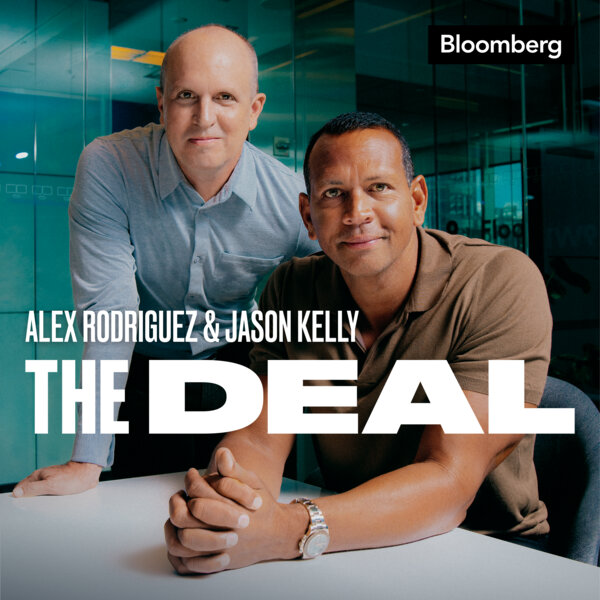
 The Deal with Alex Rodriguez and Jason Kelly
19 Jun 2025 · 45m
How Blackstone’s David Blitzer Invested in Every Major Sport

 Add vo to ChatGPT or Claude to ask about everything you hear
vo listened to this episode to put together the overview and transcript, so there may be the odd mistake.
In short
David Blitzer (Blackstone) explains how he became a cross-league sports investor and why sports franchises are attractive “content and media” assets. He also discusses using data/AI in scouting and fan personalization, plus league changes and youth sports investment.
Guest backgrounds
David Blitzer has been at Blackstone since 1991 and is a long-time sports investor. He partnered with Josh Harris (Apollo) to buy the Philadelphia 76ers (transaction signed summer 2011). He also invests across major North American leagues and European soccer, plus startup/niche sports and youth sports.
Key claims
Sports team supply is limited while demand rises with more billionaires and institutional capital. Teams are IP/content businesses. New owners should avoid big moves in the first season and focus on learning. AI requires strong underlying data; fan personalization is still early.
Notable examples
Campbell’s sponsorship across Commanders, Sixers, Devils, and Joe Gibbs Racing; NBA lockout context during 76ers entry; MLB rule changes (pitch clock, shift limits, base size) and youth baseball participation growth; personalized offers tied to fans’ behaviors and players (e.g., Tyrese Maxey).
Transcript
0:00Artificial intelligence is transforming how businesses operate. But what will it take to build a truly autonomous AI enterprise? On October 28th in Boston, join the Bloomberg Tech Briefing, Building the Agentic Enterprise, to hear business and technology leaders explore the strategies needed to build cyber resiliency and secure trusted AI systems for the agentic AI era. Proudly sponsored by HPE. Learn more and register at bloomberglive.com slash bloombergtechbriefing. Bloomberg Audio Studios. Podcasts. Radio. News.
0:41Alright, we're headed to Boston, the MIT Sloan Sports Analytics Conference. The guest this time is going to be none other than David Blitzer. I'm so excited about David. First of all, he's been at Blackstone since 1991. And on top of that, he probably owns equity on more teams and more leagues than any human alive. There are some big questions that come out of that, which is, what do you learn from all of that? How do you apply it? Because he's backing some of the most important sports franchises across the world. How do you feel about being back in Boston? Not so good. It's going to be great.
1:27All right. Thank you so much. Thank you guys for having us. It's good to be in Boston. It was funny. We were reminiscing, you know, on the way in and Alex was giving me what it's like to play at Fenway. You and I probably watch games at Fenway, but a little bit of a different experience. It's awesome. It's probably my favorite park to play other than old Yankee Stadium. It's classic. Yeah. It's not the easiest place to be a visiting fan. That is true. I've had some tough moments in the TD Garden. Yeah, TD Garden. Yeah, exactly. Exactly. I mean, this is going to be hopefully a very fun conversation.
2:02You know, Alex and I host this podcast called The Deal, where, you know, we talk to folks at this intersection of business, sports, and culture. And there are very few people who are in it as deep as our guest today, David Blitzer. Blitz is someone who, when we created this show, was at the top of our list as someone that we really wanted to chop it up with. So we're really excited, Blitz, that you're here with us. I guess I would start by asking you, and I'm going to go back to my own roots a little bit. You and I met when I covered private equity at Bloomberg, and you were a very successful guy at a little firm called Blackstone.
2:44And somewhere along the way, you became one of the most influential investors in sports. How did that happen? Well, A, thank you for having me. I've known Jason for a long time. I've known Alex for a long time, so it's really nice to be all here together. And I do think we also need to do a shout-out for Jessica Gellman. So we don't have the jersey. We blew that. But Jessica, happy 50th birthday. You do an amazing job with this conference. And we're all really happy to be here and to celebrate with you. So, yeah, private equity for, you know, now at this point in time, It's my 34th year in the business.
3:24And about, I guess it was 2010 was when my journey started on the sports side of the equation. So unlike Alex, one of the greatest athletes of all time, I was, like many probably in this room, a failed athlete. Which, like, I thought I was good when I was, you know, like a teenager. Then I realized by high school that I was adequate at best and certainly was not playing past high school. So instead of failed, maybe we say always aspiring. Always aspiring. I'm still aspiring, just new sports. But I basically am clearly a massive fan of sports in general. And obviously, I think a lot about business and investing in companies and, you know, what are trends that are out there that you can get behind really?
4:07Like we talk about good neighborhoods or mega trends. But I hadn't really thought about investing in a sports team until somebody came to see me. I was living in London for about a decade. And toward the end of that decade in London, a friend of mine came to see me and basically said he was involved in the NBA. He was like an assistant GM somewhere. And he basically said, hey, I think you should really think about investing in a basketball franchise. There's like six or seven that are for sale right now. We're looking for capital. And it was a very it was a real inflection point for the NBA for those who want to go back and remember.
4:42This was 2010 when this conversation first took place, and it was pretty clear that there was going to be a lockout, okay? There was going to be a new media rights agreement, and basically something like 23, 24, 25 of the teams are actually losing money at the time, which is why you were seeing a lot of things potentially go up for sale leading into that change. Anyway, long story short, I was really interested in the concept, but I was living in London when I was home over that December break of 2010. I went to see a friend of mine who I'd gotten to know quite well when he lived in London as well.
5:22A couple of years earlier, it was a guy named Josh Harris at Apollo. And I said, hey, Josh, he and I had gone to a pub one night when we were both living in London. And I don't know how this subject came up, but it stuck in the back of my head that he was interested in investing in sports. And so when this call came and I thought it was really interesting, I wanted to like really dig in, sitting there in London. And I went to see Josh and said, hey, why don't we look at the Philadelphia 76ers? Because amongst the teams that were for sale, they were actually officially for sale, you know, with a banker and a process.
5:51And, you know, some of the others were more, you know, sort of whisper campaigns. And you guys had both gone to school. We had both gone to school at the University of Pennsylvania. We both had other roots from family members in Pennsylvania and in Philadelphia. And it's an iconic brand. And our view was, yeah, let's go try to do that. So we agreed to sort of partner together and try to ultimately go buy or invest in the Philadelphia 76ers, which was a transaction that signed in the summer of 2011. And sure enough, there was a lockout that fall because I still remember my first ever NBA board meeting was not the easiest meeting in the world because it was in the middle of the lockout trying to figure out both the dynamics between obviously players and the league and the CBA, but also even amongst the various owners in the group.
6:35And, you know, I will just say, again, for those fans out there, it was kind of wild. I went into my first ever NBA board meeting, and I've got literally Larry Bird sitting on one side of me, Michael Jordan sitting about four seats down. And, again, the fan part, like, kicked in a little bit. I was like, oh, my God, this is kind of wild. But that was the start of the journey. The reality was we treated it very much like a very business-oriented investment. Like, does this make sense not just from an emotional standpoint, but, you know, from a business standpoint? And I think, you know, given what Josh and I had done for our careers in terms of investing in business and buying, you know, divisions out of, you know, larger corporations, et cetera, this was a purchase of a small business inside of a large corporation, being Comcast Corporation.
7:20And we had a lot of experience in corporate carve-outs. We had a lot of experience in bringing in new management teams and thinking about incentive structures in ways that I don't really think sports had really done, franchise had done that in the past. So in any case, all that said, it still isn't easy, as we all know. And Alex is on all sides of this equation. But being an investor in any of these teams and leagues is fun. It's rewarding. It's challenging. It's really difficult. Everybody always thinks about it as like the fun part, but like it's tough. So in 2010, that's a long time ago, what do you know now that you didn't know then?
7:57And how accurate was your thesis on investing in sports? Yeah. Well, I put that in two buckets. The first thing is I get a lot of people who come to me over the last whatever number of years that are thinking of investing in a sports franchise or a league, et cetera. And they always ask me, you know, for lots of advice. And I kind of boil it down to like one piece of advice that hopefully they will listen to me on, which is don't do anything in your first season. Like literally, don't just learn. Just go around and meet everyone in the organization. Watch what they do, how they do it. Do not come in and do big things in your first season.
8:30And by the way, no one has taken that advice. I was going to say, I don't think people are listening. No one listens to that piece of advice. And it is the best piece of advice. Take your time to really learn what's going on and don't just jump in and want to make a splash. You know, this isn't fantasy sports, right? And so what I've learned, number one, is take your time. Really know what you don't know, okay? Even though we've been investing in businesses our whole careers, the reality is sports team investments are very different than owning a consumer products company or investing in a data center or a metal bender, et cetera.
9:09And the nature of those businesses and the fact that what you really are is you really are a steward of a community business. Like let's not kid ourselves. That's what we are. and getting used to that versus just investing in a kind of more normal industry, I guess I would say, I don't know if normal is the right word, but, you know, et cetera. Traditional. Traditional is something I think it takes a lot to learn. But the thesis, Alex, at the time, to be honest with you, wasn't that complicated. And it's still, to me, a thesis that I have today on this sector, which is fundamental laws of supply and demand.
9:44It's the easiest thing I ever learned in school, which is just the basic, you know, law of supply and demand. And they're not making any more of these major teams. And the demand for them is going up dramatically. The demand is going up partly because, you know, you have, I think there's something like five times the number of billionaires in the world today that there was, you know, less than 20 years ago. Frankly, if you took that threshold up even more to like$10 billion or more, it's even more stark in terms of the growth. So you've got this massive demand side on high net worth. And then obviously, as I'm sure we'll talk a little bit about, but you now have institutional investors coming into the space.
10:22And having kind of watched that movie with my Blackstone lens over the years, when institutional money starts to come into a new area, a new asset class, et cetera, obviously capital formation can be quite dramatic and prices tend to move in an upward sloping direction. So you've got the ultra high net worth dynamics, you've got the institutional capital dynamics, and you don't have more supply. Okay? So that curve is unbelievable when you just think about that supply-demand curve. And then secondly, and I know everybody here knows this, but these are just – these are content and media businesses.
10:59And they have some of the best IP in the world. And frankly, in today's world, when you think about live content, there's probably nothing more valuable. There is nothing more valuable than sports content because other streamers and broadcasters and media companies have done an amazing job of basically delivering us whatever we want, literally whenever we want, other than sports. Yeah. Okay, so the combination of the growth in the value of the IP and the broadcast rates, and I would say, I wouldn't even say broadcast, I'd say media rates more broadly, coupled with this supply and demand was our thesis back in 2010 and would still be my thesis today.
12:05Thank you. and Schneider Electric. Learn more at bloomberglive.com slash techlondon.
12:24And so you go from being one of a few, you know, it's as Alex knows very well, these are pretty small clubs in terms of ownership across the major leagues. But now, and I think Alex, you would agree with this, now you're one of one because you have equity stakes, some majority, some minority, across literally every major sports league in North America. Then you tack on the EPL and other European soccer leagues, plus things like League One Volleyball. I had a press release come across my desk just this week. It was like, Table Tennis League, David Blitzer. And I was like, this guy. Okay. Help us understand that like broad portfolio approach that you have taken.
13:13All right. Let me try to put it into two different buckets. The first is on the major sports. Okay. So let's call it soccer. I'm sitting here in America. If I was in London, they would be very angry at me. So soccer slash football, American football, NBA, NHL, and MLB. In those sort of areas, to me, the real value in the equation of being across that piece is both from the business side of the equation, okay, what we can get as a synergy across having all those multiple sports is amazing. So both on the efficiency side of the equation, we can have sales reps and branding partners and sponsorship folks that go across the teams.
13:53Not everyone goes across the entire organization, right, but significant numbers do. So we can do a deal that we did earlier this year that I thought was really innovative. We did a deal with Campbell's across a number of their consumer products and across four of our properties. It was across the Commanders, the Sixers, the Devils, and Joe Gibbs Racing. If you only had one team, you have whatever your inventory is, that's what you can offer a sponsor, particularly in today's kind of global world that we have. our ability to look at some of the greatest companies in the world that are looking for those kinds of exposures and being able to offer to them both across geographies and, of course, across U.S.
14:30markets and different sports, I think is quite compelling. So that's sort of on that synergy side of the equation. And then if you just think about also where the world is going from a sports science perspective, from a technology perspective, from an AI and data analytics perspective, et cetera, our ability to invest in these areas and amortize that across four or five or more different organizations allows us to make investments that you just wouldn't make necessarily or couldn't make of that scale if you just had one particular little property. And I think about that a lot with my Blackstone hat on, which is our ability to invest in many things that are going to drive significant growth in the future, we can do because we're across all of these alternative investment products.
15:14Whereas if we were just a private equity firm or just a private credit firm, you wouldn't be able to make those types of investments. So speaking of Blackstone, you went to Penn and then 1991, you land as a young lad in Blackstone. What lessons, virtues have you taken from there in your 33 years and applied it to your sports portfolio? Yeah, well, I think, you know, the first part of that would have been the sort of the art of the deal. You know, basically there's a level of pattern recognition when one is investing in something just from the standpoint of dealing with the counterparties, understanding the key, items on our due diligence in order to be able to, you know, decide what we think something is worth.
15:55Being able to actually execute, these deals are immensely complicated. I know that's obvious, et cetera. But again, having done that your whole career, those types of financings, both equity and debt and those carve-outs of corporations and incentivizing the management teams in very different ways and really aligning interests across the organizations, I think a lot of that, you know, clearly came from my background at Blackstone. But the other thing I would say, again, is this megatrend question. You know, why am I still doing this? Meaning in this sports media and entertainment space, it really stems from a megatrend.
16:30And, you know, what I and many others at Blackstone spend a ton of time on are thinking about what those longer term trends are, and let's get behind them early. Okay? And so if you take like digital infrastructure as an example, everybody in the world wants to invest in digital infrastructure right now, right? But we've been doing it for 15-plus years all along the way, different journeys and different ways. Wee Blackstone, you mean? Wee Blackstone, okay? You have many we's, David. We have to define our we's here. So when you think about constantly looking for those megatrends and pattern recognition, being able to bring that to this, what I call my night job in the sports media and entertainment sector, I think has been really important.
17:08And so in terms of the data of it all, that is very of keen interest to this audience, especially. How do you approach the data side? You know, you talked about sponsorship opportunities and things like that. I would imagine there's also a massive amount of data and analytics possibilities when you look across both the professional portfolio, the sort of big cap, as you were talking about, as well as more of the startup level as well. How do you pick and choose and distill down the data side of it? Yeah, well, the good news, again, for somebody in my seat is I get to just ask a lot of questions and hire amazing people.
17:49Like I am by no means any expert in data and analytics. However, I've been dealing in data analytics my whole career, both, you know, from a Blackstone perspective and a sports perspective. So that allows me to go in and hire amazing people, both on the sporting side of the equation and on the business analytics side of the equation. Because as you mentioned, like these are, in many cases, two totally different worlds. Right. And so obviously, I think many of you in this room would obviously be familiar with, you know, Daryl Morey. Right. So, of course, the Philadelphia 76ers are going to have an amazing data and analytics department and where we're getting a ton of help on the business analytics side of the equation, as well as, of course, who we have on our existing teams and staffs right now.
18:33But again, the multi-property aspect of it allows us to really invest behind it. And I would say, what really is AI? I always ask people that because I don't know the answer. Like we've all been using data and analytics our whole careers to some degree. But obviously it's gone exponential, particularly in the last couple of years, right? And we're still on this large language model frontier and we're going to hit another frontier pretty soon, which is really going to be all the application layer side of the equation. But at its core, you need good data. All these tools in the world are sort of not that relevant if you don't actually have great underlying data.
19:07And each one of these sports and teams to some degree have different data sets. Right. Okay? And so like the baseball data is incredible because it's single event. There's a pitch and a swing over and over again. And these games have been filmed at that level for a really long time. Basketball then got cameras into the arenas pretty early. Okay? So basketball data, excellent in the pros. College is moving, but certainly behind where the NBA is. Hockey, doing a great job right now. But again, they didn't get cameras and we're able to capture certain types of data sets that we all capture today.
19:40I can't go back 20 years. I can't look at some of the things Wayne Gretzky was doing and what that means in today's NHL. And then soccer and motion-based also is quite different than single-event-based. And so that's a long way of saying the data is getting better and better. The models are obviously getting better and better. And ultimately, the insights will get better and better, both on the sporting side of the equation and on the business side. And I think that we're testing a lot of different things. You know, I was literally talking to Daryl about it earlier today and talking with our teams about it.
20:12And, you know, we're trialing lots of stuff. So on the one hand, sure, we can get coding done much more efficiently. Okay. But in terms of outcomes, okay, like will we be able to scout better? Will we be able to automate player tagging or pick and roll tagging as an example versus just having somebody sit there and watch 100 hours of film? Right. You just crank it into the computer. Okay. So those types of efficiencies. And then ultimately, again, as all of this is getting smarter and the data sets are getting better, et cetera, how far will it go in terms of will you still – where will your scouting department be?
20:47Mm-hmm. It's sort of an interesting question. I have no idea what the answer to that is, other than we try a lot of different things and we see, and we're in the super early innings. Similarly, on the business side, where everybody wants to get to is they want to actually know their fan base incredibly well. And most teams think they know their fan base as well. They don't, actually. Number one, they're getting better at it. And number two, they don't really know what they're doing very often outside of the arena. So yes, we're all capturing concession data. You know, there's plenty of good ticketing type data out there these days.
21:20But when you start going further and further and wanting a more and more personal experience, again, between a brand and the consumer, we're like in the first or second inning of that entire game. And AI is going to pay a huge role in that equation to where, you know, you're going to be getting offers from your team, okay, to a fan that's literally personalized to that one individual. Wow. And so all of that is super early innings. But I would basically just say, while we all are doing plenty on the data and analytics side, I think we're really, really early both sporting-wise and business-wise in terms of how we can get closer to that customer and fan and monetize it over time in very, very different ways.
22:03And when you say personalized blitz, you're talking about, I'm going to get an email or a text message that says, hey, come to this game. We know you like to sit in this particular spot. This is what you like to eat. I'm going to know where you go on your way home from the game. I'm going to know that your favorite player is Tyrese Maxey, and I'm going to send you a personalized Tyrese Maxey X, Y, or Z. I might then, depending on your level of spend with the organization, serve you up for an experience with Tyrese Maxey after the game on Thursday night if you can make it. I mean, it's going to be that level of detail and more.
22:36You talked about baseball a little bit. You have your investment with the Cleveland Guardians, your path to control. Baseball's had an extraordinary couple of years with the rule changes. Rob Manford's really on top of it. Our numbers at Fox were amazing. We did over 20 million people because we had the great matchups of the Dodgers versus the Yankees. My question is... You're making a lot of friends here in Boston, buddy. Well, yeah, yeah, yeah. Well, we lost, so it didn't really work out for us since 2009. But my question to you is, David... But we're not talking about 2004. No. Oh, no, no, no.
23:07Definitely not. Definitely not. If you were whispering in Rob Manford, the commissioner of baseball's ear, or if you're the commissioner for a day or a week, what are some of the things you would continue to improve in the game to make the game a little bit more dynamic and more really popular for the younger people? It's a really interesting question, Alex. I mean, what baseball did two years ago in terms of the size of the bases and what that did on a stolen base, what they did on the shift, and you can't have two guys on the other side of second base, what they did on the pitch clock and a few other smaller things.
23:40I mean, that's pretty dramatic in general for any league. Okay. And baseball, I find to be the one that more than any other sport, everyone says, well, we can't do that because that's the way it's always been done in baseball. Right. There's just more purists, I guess I would say, in the overall fan base and the ecosystem. So the fact that Commissioner Manfred, working with some wonderful executives, were able to come up with things that, by the way, the players didn't want to do that at first. And there were plenty of folks out in the analyst community and media, et cetera, who thought this was just like crazy.
24:11Baseball can't do this. And again, you're not going to have 100-0 type approval for it. But I think massive positive reaction to the fan base. So as a couple examples, number one, as you well know, the games are about 24, 25 minutes faster. And that is a huge difference to the fan base out there. You've had the average age of a viewer of Major League Baseball go down about four years over the last couple of years. You've had the average age of a new account on MLB.com is down something like six years in age. And if you looked at the viewership numbers and both the attendance, people in a seat and people watching on TV, the average age, again, has come down in and around five years.
24:54So from a demographic perspective, if you're Fox and some of the other kind of broadcasters, that's amazing. let alone the interest is up. You pointed out the numbers on, you know, kind of the World Series. But the reality is also, if you think about it from a global perspective, the interest going on right now more globally, and obviously a lot of that is Otani. All right. And so what else, you know, look, it's kind of funny. I don't really have the answers. I think Rob is continuing with his team, Commissioner Manfred, is continuing with his team to look at ways that we can increase the attractiveness and continue that push from a demographic perspective to lower the average age.
25:29I will say one other thing, having been involved in the youth sports business and particularly in baseball, you know, people will say kids aren't playing baseball anymore. Not like they used to. It's just wrong. It's just not true. More than ever. So first off, Little League World Series, go take a look at the ratings on the Little League World Series, but going to participation, which I think is more relevant. Youth participation was at a 10-year high this past year and has been growing at a CAGR of about 7 % on youth baseball participation. So depending on how you define it, because you can define it grassroots, it's about 9 million.
26:03And that's baseball. By the way, softball, which is amazing and finally getting more exposure, like many of the women's sports, I think youth participation in softball is like 8 million kids across the country. And again, both those numbers are significantly up over the last decade, not down. So we are getting people in the ecosystem. One of the problems with baseball is a lot of kids play baseball and they stop after that U13 year, unless they're on a track for a scholarship or they're, you know, a complete and utter unicorn, like my friend over here. But the reality is, is so a lot of kids age out at U13.
26:34So what I've talked to Major League Baseball a lot about is like, how do we open that funnel further from a participation perspective, but how do we not have that funnel closed so much at that U13 level? How do we create more and more pathways for kids continuing to play that aren't necessarily looking for that scholarship or that, you know, minor or major league baseball career? What would you do? Well, that's a great question. I've thought a lot about this. I think I would open up the floodgates. I mean, in a world where content is king, then certainly baseball should be king, right? You have 200 games in about 232 days, including spring training, playoffs.
27:08You guys went really deep into the playoffs last year, Blitz. Congrats on that. But look, if we're all at a desk, when you're at Blackstone, when you're in Bloomberg, there should be your phone or your iPad where you should be able to see all 30 teams in real time batting cages open. I want to see Aaron Judge. I want to see Otani, but not in uniform. I want to see him in shorts, behind the scenes. What is he working on? What can I share with my son or daughter of Otani's mechanic? Because I'm also hearing them. I'm also seeing weight rooms and bullpens. That's one thing. I would do a lot more microphone.
27:38I think one of the greatest things, we have some of the best athletes in our game today, but we have no idea who the hell they are. I mean, I barely know enough about Aaron Judge. I know him because I've known him since he was a kid. But Aaron Judge is an incredible story. We stole him from football, and he decided to go to a smaller college and play baseball. Well, that's a benefit to us. So Blitz, to your point, at age 13, how do we gap that 13 to age 17 when I got drafted? And we hopefully can create a lot more Aaron Judges. So I would say, think entertainment first. Baseball is just your moat.
28:09But I think media, entertainment, and you have to take the straitjacket of the history away and be able to try new things. Not everything's going to work, but the more chance you try, the more you fail, the better it is. You're totally right. And interestingly, again, maybe it goes back to a little bit of this purist concept. Maybe it doesn't. But the superstars haven't been marketed as clearly as they have in other sports. The teams have been, but that's different than the total superstars, right? And when you talk about like having the ability to watch Aaron Judge at Batting Cage or watch Skeens throw 100 and whatever miles an hour, however many times in a row, like that's a back to that's amazing content.
28:49Yeah. And, and the next generation is consuming content in completely different ways. We could spend hours talking about that, but that's the type of content that that next generation and that younger demographic wants versus, you know, watching an entire game of anything. Forget just baseball. My kids are huge sports fans. It is rare for a regular season game for them to watch any of the major sports all the way through.
29:15Here at Bloomberg, we spend all week talking about markets and the economy. And on Fridays, we help you make sense of what it all means for your money. Bloomberg Money is our weekly look at the forces shaping your financial life. We explore personal finance, investing and retirement with leading economists, strategists and wealth managers. Join me, Scarlett Fu. And me, Tom Keen, for smart conversations that help you make better financial decisions. Subscribe to Bloomberg Money on Apple, Spotify, or wherever you listen.
30:11hand tied behind your back. The greatest content in the world is like we have it hidden in the library. I mean, to watch Aaron Judge and Otani and some of these guys do their side work, Kershaw talk about what is he working on with technique if you're a lefty pitcher or you're a lefty pitcher who's a softball. There's so much content out there, so much value. I think if we unlock that, it could be really monetizing. Totally agree. And so, Blitz, building on that, I mean, with a lot of the investments you have in some of these, you know, not really challenger leagues, sort of startup leagues. You know, even I know you are deeply engaged in the NWSL, for instance, which is, I think, by definition, less purist because it's a new league.
30:53It's only been around for about a decade. It's the third try at, you know, professional women's soccer in this country. What are you learning there that you sort of apply or vice versa? Well, look, again, I put these in some slightly different buckets. I go back to this sort of thematic view that I have around a variety of things. So let's hit women's sports really quickly. So women's sports is, from my perspective, a mega trend, a mega theme that one should get behind from an either. Well, from every perspective, from a fan perspective, from an engagement perspective, from an investment perspective.
31:30It's probably for this audience, like a great place to go. Yeah, and by the way, aside from the fact that these athletes are absolutely incredible, and in my opinion, haven't been marketed particularly well over the years. So I look at even, you know, Caitlin Clark and Angel Reese, okay? Absolutely amazing, okay? And when they started getting marketed differently in college, take a look at those college ratings. So the NCAA women's final last year had, I believe, 18 million, 18 point something million people watched the women's final. the men's final got something like high 14s. And I remember sitting with Jimmy Pataro when he was like, the women outdrew the men.
32:10Chairman of ESPN. Okay. And he was following it all the way through because it wasn't just that one game, by the way, as well. My point is there have been amazing women basketball players for pick your period, 50 years, 80 years, whatever, since they invented the game. Okay. Why now? Why did it suddenly explode from a media perspective in popularity. And some of that was the same storytelling, okay? And content delivery that you described. Some of it was just plain marketing. I feel like CBS and ESPN really got behind women's basketball and did an amazing job. And once people watched, because I always talk about the funnel when I talk about fans, what you want to get is somebody who's not a fan to be a casual fan of a sport.
32:53And then you want to drive a journey of the casual fan to become an avid fan of the sport. Okay. So we have to start with the funnel. And I find when people watched, I remember taking my own daughters to a WNBA game and to a women's hockey game and said, like, let's just watch this game for what it is, meaning amazing athletes and performance. And they were hooked, but they had to be taken. Right. Right. In a sense, or at least in my case. That's why I always say to people like about hockey. So many of my friends have never been to a live hockey game. And I'm like, why don't you come to a hockey game?
33:29And they all go to a live hockey game. And they're like, oh, my God, that was absolutely incredible. So now I have a casual fan. So back to women's sports, I think the trends are there. I mean, just really big picture. I mean, if you think about the WNBA right now, aside from where the prices of these franchises seem to be going, look at the viewership numbers. Right. They're absolutely incredible. So it's not like it's just, I mean, I think it's something like 30 % of what an NBA game on average about is the WNBA, but they're getting 2 % of the media rights money. So what do you think is going to happen?
33:57The WNBA media rights over time, like they're going to go up back to my sort of content, IP, et cetera. So I'm bullish on all of the women's sports. You're right. I spent a ton of time on soccer. I'm extremely bullish on volleyball. I think hockey is doing an amazing job, which was a reboot because you used to have separate American and Canadian leagues and they finally merged. You could actually have the best players in the world all playing together. And then you mentioned startup leagues, which to be honest, you know, there's startup leagues in the sense of like venture capital. Right. Okay.
34:30And then there's some others that are maybe a different format. Okay. So like, if you think about TGL, which I think is getting an innovation award today, that was a different format that, you know, Mike McCauley and some colleagues realized that, you know, hey, we should think about competitive golf in a different way. Right. And again, I'm sure some of you have seen it. Others might not have. I think TGL has done an amazing job. Huge content play, too. I mean, that's what it's, that's. And again, demographic, very, very different from who's watching on Saturday or Sunday afternoon on a PGA tour event.
35:03Of course, there's crossover, but they're bringing a new demographic into the sport. So that's kind of like, hey, let's go try to do something different. Then, like you said, you've got, you know, major league table tennis. Right. You know, we'll see. But on these, I'm bullish because, again, on these niche sports, we all underestimate the audience numbers. And we're all used to hearing these broadcast numbers. but what we're not probably is attuned to, or that some of the people in this room might be, is the YouTube numbers, is the Instagram numbers, is that, you know, all of these different ways that younger folks are consuming, and not just younger folks, but I just point to, I don't know, I get in the habit of like looking at what my kids are doing and why, and they're friends, and so as an example, you know, you've got the, you've got the slap lead.
35:51Dana White. Dana White, genius. Okay? If I told you five years ago there was going to be this situation where we sat across the table for a while, I was going to slap you as hard as humanly possible. Okay? And then if you were able to get up, you were able to do it back to me. And that was going to be a sport that people were watching and turning into a league. I don't know that you would have thought that that was a very good idea. And the numbers are huge. They're unbelievable. But, I mean, you're just using, like, an example of people are consuming that content in incredibly different ways.
36:20The number of views on YouTube for some of these slap matches is like, you know, sort of stunning. So again, it comes a little bit back to Alex. You mentioned it before. Like, where do I think there can be great storytelling? And maybe it's in places that you didn't even think about. I mean, we all know about Drive to Survive. Okay. Like what Netflix did to Drive to Survive and what that did for Formula One is, you know, unbelievable. But like, I think about some others too. I think about like Queen's Gambit. Yeah. Okay. And what Queen's Gambit did to chess. I mean, it's beyond dramatic. in terms of there.
36:51And if you look at Welcome to Wrexham or Ted Lasso, okay, or you look at, you know, quarterbacks. So that storytelling goes back a lot to what you're saying. Let's bring these amazing athletes and sports closer to us in ways that we didn't consume it before. And let's watch that continued growth out there in the marketplace. All right. We'd be remiss if we didn't talk a little bit about youth sports. And one of the ways that I would love for you to get into it, Blitz, is you mentioned volleyball. And Caitlin Gao, who is CEO and co-founder of League One Volleyball, was on this stage earlier. You're an investor there.
37:27I remember you and I talking about this years ago, and you were talking about how compelling it was, mostly because it's youth to pro, which we don't see a lot of. Talk to us about the opportunity in youth sports. What's the through line for youth sports from an investment perspective? So from an investment perspective, it goes back to something we were talking a little bit about before. It's massively fragmented, right? So the demand is there. I think people, again, calculate it differently. I calculate the youth sports business at about$40 billion, growing it, you know, high single digits a year.
38:00Our own business is growing much faster than that. But if you think about it, most people who run a youth sports business is a relatively small mom and pop oriented business where they got into that business, I'd like to think in the vast, vast majority of cases, for the right reasons. Okay. They wanted to help kids. They wanted to get them active on fields. Okay. That's even become more prevalent in today's world where the kids are on screens way more than like when we grew up. So I think people got into these businesses to do really good things with kids, with youth. But they don't want to deal with accounts payable and insurance and, you know, legal and, you know, they just want to program, whether it's leagues or tournaments or I don't know, Alex, if you ever went through Baseball Factory.
38:47But as an example, Baseball Factory, you know, takes kids through their baseball journeys in terms of instruction at higher and higher levels along the way. So you have all these different areas of youth sports, but at its core, A, I think just again, big picture, it's great to have kids enrolled and engaged in as many sports as possible. And actually they spread it across. I think there's too much specialization is one of my other big things. Kids are specializing way too early. You talk to any professional athlete, they will tell you that they either did or wish they had played more sports for longer.
39:19Okay. So the ability to actually show up with capital now, then show up with great brands. So as an example, Cal Ripken was somebody who was like my idol as a player. But more relevantly, post his playing career, Cal basically wanted to help kids. He wanted to teach them to play baseball the right way in a safe environment. And he and his brother Bill started Ripken Baseball. And they have the best youth baseball business in the country, in my opinion. And once we got into youth sports, I had been talking to Cal for years about trying to partner with him in some way, shape, or form. And once our business started to grow, et cetera, I went back to Cal and said, hey, maybe we should merge our businesses here.
40:01You've got the best brand in the world, and you and Bill are still involved, which is amazing. And we'd love to keep all of that the same way. We're just going to give you a bigger platform. So you're going to be able to help more kids in more markets, et cetera. So again, that ability to bring capital to the equation. So we have better fields. We have safer environments. We have better instructors. We have better facilities overall, because a lot of them are now starting to turn into these sports vacations, right? Where you're going with your parents or your siblings, and maybe it's three days.
40:30It's a long weekend. In some cases, we have one of our baseball facilities in Cooperstown, New York, is basically a week. So you go with your whole family for an entire week, and we keep upgrading all of these facilities. And so it's sort of this fragmented industry that we think we're both doing something that's really good for society, for lack of a better term, for the kids and their families. But we also think that they're good business investments.
41:05All right. So we like to end every episode with a little rapid fire. so good luck to you we'll bounce it back and forth a little bit you know keep it tight and we're excited to hear what you bring to the table here Blitz what's one word to describe your deal making style? One word to describe my deal making style direct. What's more important to you, your gut or data?
41:34Keep in mind you are at the MIT Sloan Sports Analytics Conference Blackstone Data Sports Gut. Okay. Ooh, okay. Split the middle. Who is your dream deal-making partner? My dream deal-making partner. Well, I hope one day it's my kids. Ooh, okay. Good answer. What's the best piece of advice you received on deal-making or business? Well, I think it was somebody told me early on in my career, clearly because I wasn't doing it very well, but it's actually, it sounds simple, but it's the best advice I ever got, which is David, you talk too much. Listen a lot more. So you don't need to be the loudest voice in the room.
42:15You don't need to be the person who spent the most time talking in the middle of a meeting. Doesn't mean don't say anything. Just means listen a lot more. And why it might not feel that way, I'm actually a pretty good listener. What's the worst advice you've ever been given? Worst advice I've ever been given. Worst advice I've ever been given. Don't buy the Sixers. it was actually not the Sixers it was don't invest in hockey really it was terrible advice meaning because I didn't take the advice yeah I had people warning me that you know they didn't have national tv deals that were great and it was really a local business and don't do that and I didn't listen all right so what's your hype song before a big meeting or big negotiation my hype songs what's on my phone i think it's like bob marley um it's not so hyped up three little birds all right if you have to pick the top three teams from your portfolio what are they i can't answer it my answer anytime anybody asks me about your my favorite team is let's be clear it's who's your favorite kid which by the way so i'll answer it differently I do have a favorite kid sometimes, but it's a different favorite kid, depending on what's going on at that week or that year or whatever.
43:32So I definitely don't have a favorite team over a long period of time. But like right now, it's probably the commanders. Yeah. I mean, that's a pretty good answer. I'm kidding. No, no favorite team. Blitz, you can only watch one sport for the rest of your life. Which one is it? That's really brutal. one sport for the rest of my life hockey if it's live okay so live my answer is hockey this is funny because it's sort of it's sort of a retread of the earlier question but I'm going to ask it anyway what team do you want to see win a championship more than any that's their favorite kid question so can I give you a cheat on this one we asked the same question of Melody Hobson And you know what her answer was?
44:24What? Mine. Yeah. So that's a pretty good answer. Yeah, for sure. It would be nice to have won. We don't have a championship yet. Blitz, do you have a fun fact about yourself that will surprise all of us, but mainly your colleagues? Maybe that I, we talk about music a lot. And maybe it's how much I absolutely love Alanis Morissette. They would look at me like, really? Alanis Morissette because everyone thinks I'm just like a big Springsteen fan. All right. David Blitzer being a big Alanis Morissette fan. I mean, that's my takeaway from the brilliant insights you've given us about business. That's something I'm not going to soon forget.
45:06That was a curveball. That was a curveball. Yeah, I'm trying to think if I have something better for you. No, that's pretty good. I think we got to end it there. David Blitzer, what a treat to spend some time with you. Alex, always fun. MIT Sloan, you guys are the best. Thank you so much for having us. Really appreciate it. Thank you.
45:28The Deal is a production from Bloomberg Podcasts and Bloomberg Originals. The Deal is hosted by Alex Rodriguez and Jason Kelly. This show was produced by Anna Mazarakis, Lizzie Phillip, and Stacey Wong. Original music and engineering by Blake Maples. David E. Rivella is our managing editor. Our executive producers are Jason Kelly, Brendan Francis-Newnham, Jordan Opplinger, Trey Shallowhorn, Andrew Barden, Kelly Laferriere, and Ashley Honig. Sage Bauman is our head of podcasts. Special thanks to Rachel Carnivali, Elena Saus Angeles, Nick Silva, and the team at the MIT Sloan Sports Analytics Conference.
46:10Rubab Shakir is our creative director. Art direction is from Jacqueline Kessler. Joshua DeVoe is our Director of Photography. Camera Operation by David Degner. Listen to The Deal on Apple Podcasts, Spotify, or wherever you get your podcasts. You can also tune in to the Video Companion on Bloomberg Originals and on Bloomberg TV. Thanks for listening.
From the publisher
In this episode of The Deal, Alex Rodriguez and Jason Kelly talk with David Blitzer, Blackstone’s chairman and the co-founder of Harris Blitzer Sports & Entertainment, about how his teams use data and analytics to improve fan experience. In this conversation, which was taped in front of an audience at the MIT Sloan Sports Analytics Conference, Blitzer tells the hosts how a “failed athlete” came to be the first person to own teams in all five major American sports leagues, what he’s doing to invest in the “massively fragmented” world of youth sports and why having a favorite sports team is like having a favorite child.
See omnystudio.com/listener for privacy information.
More from The Deal with Alex Rodriguez and Jason Kelly
All episodesWe use cookies.They keep vo running smoothly and help us improve it. Privacy policy
Scan the code with your iPhone camera
Listen in the app.
- Play everything vo finds for you
- vo remembers everything you hear
Go to the App StoreFree on iPhone