
- Podcasts
- The Deal with Alex Rodriguez and Jason Kelly
- How Magic Johnson Went From NBA Legend to Billionaire
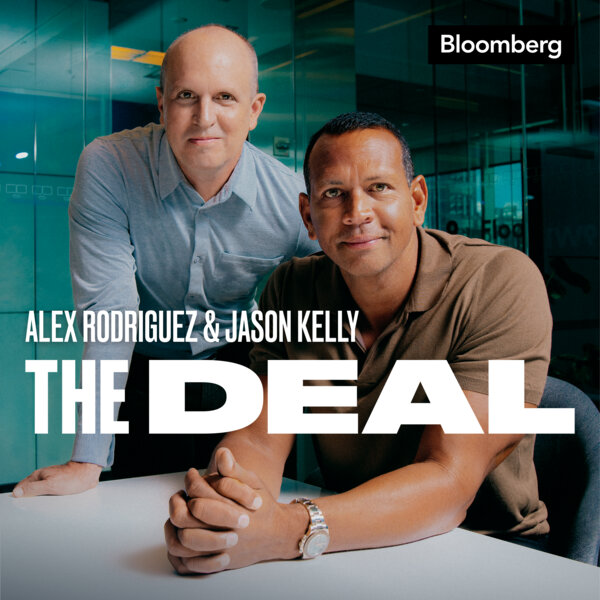
 The Deal with Alex Rodriguez and Jason Kelly
12 Jun 2025 · 25m
How Magic Johnson Went From NBA Legend to Billionaire

 Add vo to ChatGPT or Claude to ask about everything you hear
vo listened to this episode to put together the overview and transcript, so there may be the odd mistake.
In short
Magic Johnson discusses his transition from NBA legend to sports and business owner, focusing on partnership value, excellence/accountability, and using institutional capital to scale “urban America” investments.
Guests
Irvin “Magic” Johnson (NBA Hall of Famer; five-time Lakers champion; Olympic gold medalist; entrepreneur/investor; co-owner of the Los Angeles Dodgers; co-owner of the Washington Commanders). Interviewers: Jason Kelly and Alex Rodriguez (hosts of The Deal).
Key claims
Best deal-making includes a 3–5-year franchise plan, strong player relationships, and demanding accountability; athletes must remove ego, practice preparation, and avoid hidden agendas. Institutional capital (CalPERS/CalSTRS) enabled large-scale growth after overdelivering.
Notable examples
Washington Commanders ownership with Josh Harris/Mark Ein; Starbucks expansion via Howard Schultz (125 stores in 40 markets); CalPERS/CalSTRS $50M leading to a fund after a shopping-center turnaround; 1992 Olympic team changing the NBA’s global reach; comparisons to Larry Bird and Michael Jordan.
Transcript
0:00Get essential news on the people and companies pushing the tech sector to new frontiers. Hi, I'm Ed Ludlow. Join me for Bloomberg Tech, a daily podcast focused exclusively on technology, innovation and the future of business. Every weekday, we bring you the latest insights on Silicon Valley's top companies and conversations with tech's biggest decision makers. Listen to Bloomberg Tech on your commute home and stay ahead of the news cycle. Subscribe today on Apple, Spotify or anywhere you listen. Bloomberg Audio Studios, podcasts, radio, news.
0:42Welcome back to The Deal, everyone. I'm Jason Kelly alongside Alex Rodriguez. A very special episode of The Deal today. Magic Johnson, the one and only. We taped this live at the Milken & Stu Global Conference in Beverly Hills. It was electric, man. So electric. Well, Magic, I mean, he's one of one, right? And we were in his hometown right there in L.A. where he played for the Lakers and won five titles. I've known him almost 30 years. He's been a friend and a mentor. And I love the way he talked about valuing partnerships, demanding excellence. And he talked about some of his most recent partnerships, most notably his ownership stake in the Washington Commanders.
1:20He talked about Starbucks and a seminal deal that he made with Howard Schultz and what that took. He talked about institutional capital. And he talked about a couple iconic players. I mean, a team that we followed so closely, right? Oh, yeah. And that was the Olympic team in 1992. And of course, that changed the NBA, made it a global sport. And he specifically talked about none other than Larry Bird and Michael Jordan. You'll hear all of that coming up on this very special episode of The Deal.
2:00All right, so I'm going to say just, you know, as a human being, this is exciting for me. But my excitement, I'm telling you, is nothing compared to this guy's. Alex Rodriguez is not, he does not swoon. He does not, you know, be like, oh, I'm so excited about this. He's beside himself right now. All right. So I'm Jason Kelly. This is Alex Rodriguez. Now I'm embarrassed. Yeah. Oh, just wait. We host a show at Bloomberg called The Deal, and we couldn't be more excited to have you here with us, Magic. So thank you. Thank you. I appreciate that. So what's so interesting is there are a lot of fans in this room of both of these guys, but there is a very special relationship between these two.
2:42It's so interesting. As Alex and I have been doing this show, we have had a North Star, and I know Alex has a North Star in Magic. And this is a relationship that goes back a long way to a young Seattle Mariner who was essentially cold-calling heroes and trying to learn about business. Alex, I want you to take us back. It happened here in Los Angeles to what you took from what was meant to be 30 minutes turned into a few hours. You still have the notes. What's the takeaway from Magic? Yeah, thanks, Jason. And thanks, everybody, for being here. I'm a huge believer in the power of mentorship. So I called Lon Rosen, who's a longtime partner of Irvin.
3:24And I said, is there any way? Now, we're with the Mariners. There's like 25, 27 years ago. I'm just a young kid, 22, 23. And I said, Lon, can I get 30 minutes with the guy? And I'm thinking like, yeah, maybe in a couple years. He's like, hey, how's tomorrow night? I'm like, bet. I'm there. So we sat in a room. It was supposed to be 30 minutes. That led to almost a three-hour dinner where I have like nine pages of notes. And there's no question in my mind that Irvin has impacted me. And without that dinner, because here's a man of color. Here's a guy that was a Hall of Fame basketball player. He comes from humble beginnings.
3:58All things that I can relate with. And I said, if Magic can do it, why can't I? So anyways, I wouldn't own a team without Magic. I wouldn't have A-Rod Corp without Irvin. And I just want to say thank you. And I wanted to share that story with you. No, thank you. Well, let's talk about that because what you have done over the course of the last 30, 40 years is a series of unbelievable deals. And one of the most interesting things, and Alex and I talk about this all the time, is your movement to ownership. You have a partner, Mark Ein, here in the front row with the Washington Commanders. We spent some time with your partner, Josh Harris, last week in Miami.
4:32That's a seminal deal for the NFL. Right. I would argue it's a seminal deal for you. Would you agree? And how do you put that in the context of your deal making? No, it's the greatest deal I've ever done. I mean, listen, first, as a kid, I'm already a football fan. I played football, but I knew I was better at basketball. So I gave it up in high school to concentrate on basketball. But to know that I've been a big fan of the NFL, not knowing that a man of color could actually become an owner in the NFL. But I had Josh Harris said, hey, I want you to be a part of this ownership group. We had went after the Denver Broncos, but a young man for Walmart said, I don't care what you bid.
5:16I'm going to outbid you. So you might as well just keep your money. Right. And Josh said, I said, OK, we give. But the team we're supposed to own, we own. Why did I say that? Josh Harris is from D.C., so he watched the Redskins as a boy. Mark Iron is from D.C., so he watched the Redskins as a boy. Mitch Rails is from D.C. So now they got men who grew up loving this team, who now become the owners and the gatekeepers. and I think and I knew that we were going to do a fantastic job. And then for them to bring me in, it's a blessing for me, but also for men of color, but also former athletes as well.
6:05It shows them that we can go from the court to the boardroom. And I want to thank Mark because he's here. Josh has done a wonderful job of leading our team and the ownership group. And look where we – when we bought the team, look where we are today. You know, and it's going up and up and up. And I'm so happy to be a part of the ownership group. So, Irv, that's your best deal in sports. And we agree. That's just in the NFL is one of one. I mean, Roger Goodell does an incredible job. We know that. But going to outside of sports and business, going back to the Howard Schultz days with Starbucks, 125 stores, Mark Mastroff with 24 Hour Fitness and other deals.
6:45Also, you got an insurance business. What would you think is your seminal deal outside of sports? It have to be Starbucks because it gave me the stamp of approval. A lot of people wanted to take the meeting with me because they wanted the autograph and the picture. But then they said, no, they didn't want to be in business with me. I knew we were going to Seattle. I knew Howard Schultz set courtside. So I said to the PR guy of Seattle, which which one is Howard Schultz? And he said, there he is right there. I said, cool. I ran right over there to him, right? And I said, hey, I'm Irvin Johnson.
7:23I know who you are, man. And I asked him, I said, could I take you to lunch or dinner the next time that we're back playing the Supersonics and sit down and just go over business and talk to you? And he said, okay. So a few weeks later, we went back up there and my movie theaters was crushing it in the inner cities. It showed people you can make money doing business in the inner cities of America. So I went up there. I took the numbers up to him. I showed him, hey, we're doing great. My theaters are top 10 highest grossing theaters in the nation. And nobody thought, you know, we can make money.
8:05And he looked and said, wow. I said, the growth of your business would be through Urban America because you got one on every corner in suburban America. So he said, Urban, let me come down, see how you operate your business. And but also I got to talk to the board and the shareholders. I said, OK. So he came down, saw how I operated it. He was very impressed. And then the hardest thing I thought I was going to do was play against Larry Bird and Michael Jordan. The hardest thing was to go before the board and then go into a movie theater pack with good shareholders and try to convince them this is a great move for Starbucks.
8:45And sure enough, I was able to do that. And they all signed off. And I became the first person to ever own Starbucks outside of Starbucks. We built 125 in 40 different markets across America. They all did extremely well. And that really gave me, first of all, the stamp of approval. It gave me the track record that I needed of success so I can move on to something else. And then last but not least, Alex, this is the one thing it gave me, a chance to go up to CalPERS and CalSTRS. Yeah. Because I was using my money. But if I wanted sustainability and growth, I had to go to institutional capital. and it took me three years man to convince CalPERS to give me 50 million dollars and uh they said uh we love you magic but urban America we're not too uh excited about it how can we make money but they finally gave me the 50 and they said if you over deliver with this 50 you can come back and get hundreds and hundreds of millions of dollars I did that I over delivered I bought a shopping center only for 22 million it was only 40 occupied i made it 100 occupied i resold it for almost 50 million dollars took that 28 million dollar profit up north and they said i said here you go they said oh okay you do no business let's do it so that's when i started my fund and then you know i partnered with cat canyon partners to do urban urban america so we started an urban fund.
10:22Ron Burkle and I started a private equity fund together, which was another urban fund, Yucaipa Johnson. And then I just took off from there. How do you pick partners? Well, first of all, we all in here have been through a bad marriage with partners. No, every single one of At least one, right? So I went through one or two of those, and I said never again. And I always wanted to pick partners that could teach me something, that could help expand my knowledge in terms of business, mentor me in a sense. So sure enough, when I think about Mark Walters and Todd Bowley, Peter Gruber, All these people that we own, the Dodgers together, they have done an excellent job of allowing me to grow, but also to to use my expertise as well.
11:18It's been wonderful. Bobby Patton, all of them. So it's been great. And then Mark and Mitchell and Josh is doing the same thing. Issues in D.C. that they know that, hey, I can be a part of the board. Mark and I was on boards. Josh assigned us to. And so it's been wonderful to be a part of and have a voice, a real voice. Yeah. And so I thank Josh for that. And so I know what I know and I know what I don't know. Right. I think a lot of times when athletes are trying to become businessmen, they got to take their ego out of it and back up and really understand, hey, what do you really know? Right.
12:04And to Alice's point, you got to get mentors and you got to be with businessmen and women who want to help you grow. Right. And so all the teams that I'm involved in, it's been great to learn from the different people, men and women, and to expand my own personal growth.
12:43I'm Jennifer Zabasaja. Every week on the Next Africa podcast, we track capital flows and political shifts shaping the continent's future. The digitalization of Africa is going to power its growth. Breeding the world of something like HIV is possible. Population growth is so enormous in Africa. Listen to Next Africa on Apple, Spotify, or wherever you get your podcasts.
13:10So I remember when we bought the Dodgers, we started talking. and you were kind of peppering me with questions about baseball and all that. My question to you now is an owner of an NBA and a WNBA team. What are two or three things? Now, you learned from the best in Dr. Buss. You're one of the greatest of all times. What can I do to be a better owner? What are the two or three things I should be thinking about with my partner, Mark Laurie? Well, I think, first of all, to have a three - to five-year plan on where you want to take the franchise, Make sure that everybody is on the same page and everybody in your organization understands that plan and that strategy.
13:49Right. And have a great relationship with your players. I think that when you have a great relationship with your players, they'll come to you and they'll come and tell you, hey, we need this. We need that to be successful. And that's very important that those men or women are very happy and that they know that you care, you know. And then last but not least, listen, be demanding and hold everybody accountable. You know, I come around that corner. You may see a smile, but you let us be losing. No smiling. Right. My job is to hold everybody accountable. And so I will always talk to the guys, make sure they understand.
14:33What's the identity of this franchise? Right. And you have to say this is who we are. This is who we want to be and make sure those men or women understand that. And we've done that with we changed the whole identity with the Washington commanders. They know that we care about them, but they know we want to win. Yeah. Right. And the fans know that. And it's trickled down to everybody in that organization. from day one when we had a meeting with all the staff, we told them, we're here to win, and we're going to change the environment, that losing environment that they were in before. And we've done that step by step by step.
15:15We changed the stadium. We changed the locker room. All the things that players were complaining about, Josh did a wonderful job of jumping on top of that, right? And then he sends us out where we're strong. So you make sure, Mark, you might go one way, but Alex, you might go another way because there's plenty of things to tackle and then you tackle some together. And so that's what I would say to you. So to that point, Magic, and actually I'm going to turn this question on you too, Alex. You know, this whole notion of an athlete turned owner is fascinating to me. This may come as a surprise. I did not play professional sports.
15:55But I know some people who did. And so I'm going to ask this question. But as a player, former player, turned owner, what do you say to players? What's the sort of tack that you take to them? Because maybe they're in your sport. Maybe they're a baseball player or a soccer player or a football player. What's the tack you take to them? What's the secrets that you can sort of – the secret language, if there is one, that you can speak to them that a Josh or a Mark can't? Well, because we talk about preparation. and I talk to our commander players about preparation. It starts in practice. You've got to practice the way you're going to play on Sunday.
16:35So that starts on Monday all the way through, right? And losing has got to be a bad taste in your mouth, right? And then we've got to be a team. We lose as a team, we win as a team, right? It can't be hidden agendas. That kills you every time. Everybody got their – if a player got his own agenda and it's not about team goals, it's going to kill you. You're going to lose. And it trickles down within the locker room. Yeah. So that's what I would say. But the one thing we both have is that they respect us already. Yeah. And I can say something that Mark can't say. Right. Right. Because he's going to look at me and say, oh, he's been through it.
17:20Right. Do you find that, Alex? I mean, like, what's your experience so far with that? Yeah, I do agree with everything. Hold on one second. And then I walk in with 17 damn World Series or World Championship rings, right? So I'm walking in with jewelry so they understand that language real fast. Okay, go ahead. No, that's right. No, I think, look, I think Irvin and I, one thing we know, we know how the players feel. We know where they come from. We know the pressures. And, like, make no mistake, when Irvin and I played, it was hard to be an athlete. is no harder time to be an athlete than today.
17:53Thank God I didn't play at the height of social media. I got myself in enough trouble in New York City while winning a championship. But no one knows what you're doing. No one knows about that. You're fine.
18:11Harness the power of Bloomberg Intelligence every business day. Hi, I'm Scarlett Fu. And I'm Paul Sweeney, inviting you to join us for the Bloomberg Intelligence Podcast, We bring you deep dives into the company's moving markets from stocks like Apple, NVIDIA, Microsoft, and Alphabet. To private companies in the news like OpenAI and Anthropic. Listen on your way home from work to catch up on the analysis that keeps you ahead of the competition. Subscribe to the Bloomberg Intelligence Podcast today on Apple, Spotify, or anywhere you listen.
18:47All right. Can we do the rapid fire? Let's do it. All right. So on our show, The Deal, please tune in and download wherever you got your podcast. We do a little rapid fire segment. So we're going to hit you with this magic. Are you ready? Okay, I'm ready. All right. Just the first thing that comes to your mind. What's one word to describe your deal making style? One word. Wow. A lot of pressure. Yes. Dang. Success. Oh. Irv, what's more important to you? Data. Or your gut? It's always my feel. Feel. Always my feel. I'm going to always read the data, no question about it. But it's a feel. When they walk in and I can just feel, is it going to be a deal?
19:35And I know when it's not going to be a deal. Wow. Who's your dream deal-making partner? Wow. You've had a lot. Wow, that's big. Just the next guy. Just the next guy.
19:49Growth mode. Hey, no, I'm not choosy or picky. The next woman, next man, let's go get it done. And the one thing they're going to know about me, everything I'm supposed to do, ask Mark. I'm going to do it in more. So whatever my role is, I'm going to play it. What's the best piece of advice you've ever received on deal making or business? Ron Burkle once told me, Irvin, I brought him this little deal. He said, Irvin, the same amount of time I got to spend on that little deal, it's the same amount of time I got to spend making a billion dollars. I said, I got it. Thank you for that. No more small deals.
20:33What's the worst advice you've ever been given? The worst advice? Not with smart women and men. They don't give you really worse advice. Thank God that I'm in rooms like this a lot and that you with solid people and people who have really been successful at what they do. I think the worst advice Alex and I get is usually from people that don't have much success. They always talk a good game, but they don't really back it up with action and what they're doing. Or what's your hype song before a big game, meeting, or negotiation? Oh, that's good. Anything Michael Jackson. Okay. All right. That's my man.
21:22The greatest artist of all time to me. And I love Prince, too. So either one, put them on, I'm good. All right. You're one of the few people to win the basketball triple crown and NCAA championship, five NBA championships, and an Olympic gold medal. Which meant the most to you? I think the gold medal because of this. I finally got a chance to play with Michael and Larry. I've always, on my bucket list, I've always wanted to just throw a pass to both of those guys. Like a no-look pass. Like come down that damn middle. I'm coming down. And there's Larry in the corner. Just no-look him real fast.
22:00And let him shoot that beautiful jump shot. Like Larry does. And then Larry talks s*** too. I love that. He talks trash. I love that. And then Michael come down the middle with the tongue out. Nothing like it. And I'm telling you, when I threw the no-look pass at both of them dudes. What's better than that? That was it. Yeah, yeah. Nothing like it. I love both of them. They both made their teammates better. Michael's the greatest that's ever played this game. This dude, when I played with him, Larry. So, Alex, you're going to love this. So Larry and I got all the championships right. So he – true story.
22:48So he walks in. It ain't bragging if it's true. No, no, no. You know, so we walk in, and Michael comes in. Larry and I are sitting here talking, and he stands right there, and he says, I just want both of you guys to know there's a new sheriff in town. And we had to bow down. You're right. And he went on to win six championships and never lost in the finals. Yeah. So it's hard to argue about a man that great that could do the things that he could do. And his player got some of Michael's quality in terms of how he can go up in the air and do some of the things that he can do. Yeah. Special. All right.
23:30Last question. Okay. For this room, very successful people already. Very successful. But with a lot of ambition. what's your best advice to them who want a career like yours wow man oh man me giving these people advice wow um i think really just uh you know continue to be who they are and do what they do and uh don't forget this you know we all you know it's great to make a lot of money but also we'll be remembered by also giving back and how many people we touch to you know and that's very important. And so I would say, don't forget that part of it as well. The impact that they can make, whether it's with their wallet or with their power and expertise is very important, especially times like now.
24:20We really need that. And so I would say, continue to do what they're doing. I'm just excited to be here. Listen, Alex and I, when we had that meeting, never thought we would be here. I've been friends with Michael Milken for probably over 30 years, and the man has just been incredible in my life. And so for Alex and I to be on this stage at the Milken Conference, oh, man, this is – I got goosebumps already. Like, I'm getting ready to go play basketball. And so this is really outstanding for me. All right. Well, Magic, on behalf of Alex, the giddiest man in Hollywood right now, thank you so much for your time.
25:00this listening. God bless everybody. Thank you. Thank you, everyone.
25:30Brendan Francis Noonan, Jordan Opplinger, Trey Shallowhorn, Andrew Barden, Kelly Laferriere, and Ashley Honig. Sage Bauman is our head of podcasts. Rubab Shakir is our creative director. Art direction is from Jacqueline Kessler. Joshua DeVoe is our director of photography. Alex Diaconis is our video editor. Listen to The Deal on Apple Podcasts, Spotify, or wherever you get your podcasts. You can also tune in to the video companion on Bloomberg Originals and on Bloomberg TV. Thanks for listening.
From the publisher
In this episode of The Deal, Alex Rodriguez and Jason Kelly talk with Magic Johnson, the iconic point guard for the Los Angeles Lakers. In their conversation, taped in front of a live audience at the Milken Global Conference, Johnson reveals what he’s learned from his “greatest deal,” becoming part of the Washington Commanders ownership group. He also explains why pitching himself as a partner to the Starbucks board was the hardest thing he’s ever done, and how much it meant to win an Olympic gold medal alongside Michael Jordan and Larry Bird.
See omnystudio.com/listener for privacy information.
More from The Deal with Alex Rodriguez and Jason Kelly
All episodesWe use cookies.They keep vo running smoothly and help us improve it. Privacy policy
Scan the code with your iPhone camera
Listen in the app.
- Play everything vo finds for you
- vo remembers everything you hear
Go to the App StoreFree on iPhone