In short
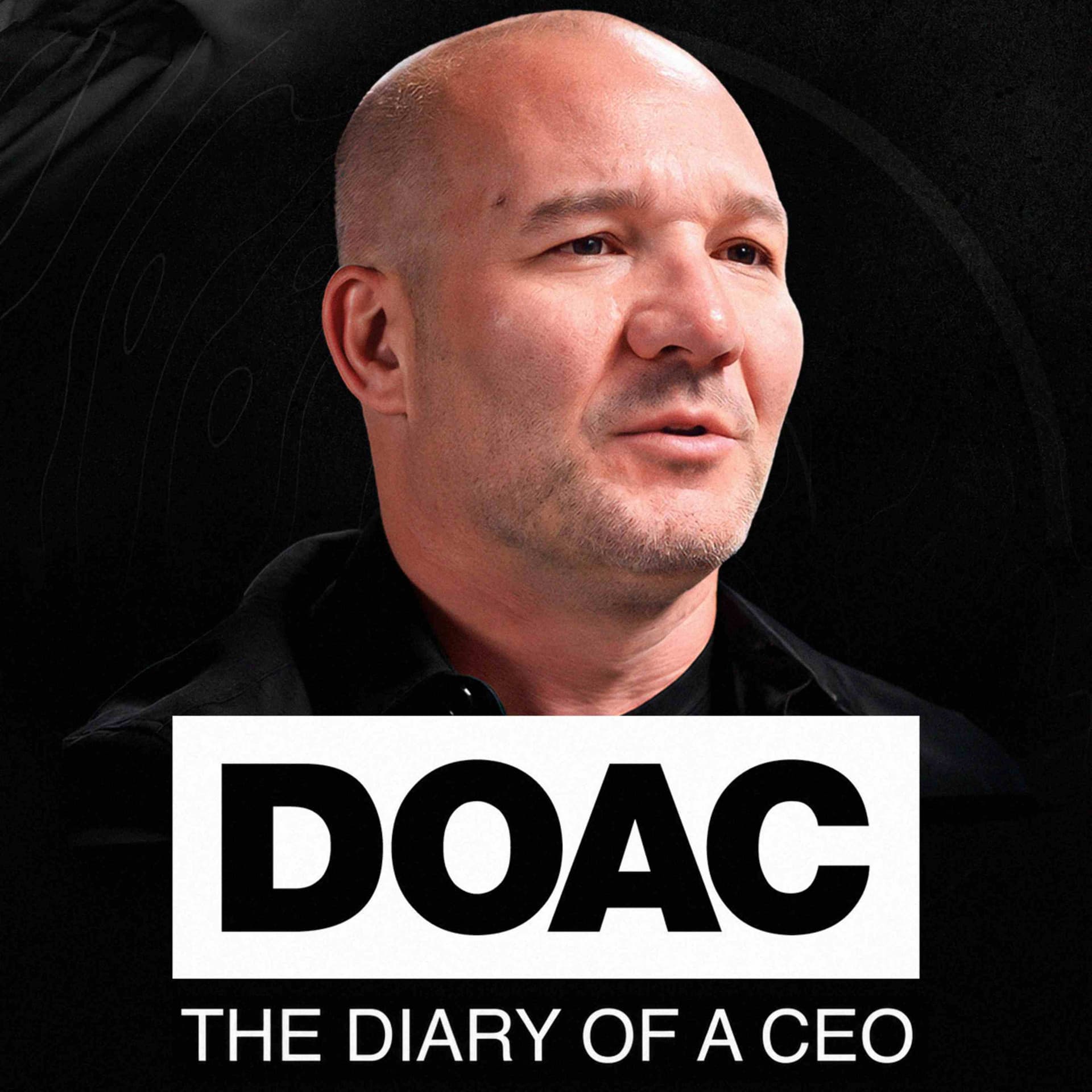
The Diary Of A CEO - Steven Bartlett
Podcast Episode Summary
Episode Title: Airbnb CEO: “IT WAS SO DARK WE NEARLY DIED!”. I Was Lonely, Deeply Sad & Wanted To Be Loved! [INSPIRING!] Brian Chesky
Host: Steven Bartlett
Guest: Brian Chesky, Co-founder and CEO of Airbnb
Introduction
In this episode, Steven Bartlett interviews Brian Chesky, the co-founder and CEO of Airbnb. The discussion dives into the personal and professional journey of Chesky, exploring the highs and lows of creating one of the world's most successful companies. The conversation covers a range of topics, including Chesky's childhood, his artistic aspirations, the founding and growth of Airbnb, the company's near collapse during the COVID-19 pandemic, and the personal challenges Chesky faced along the way.
Key Discussion Points
Early Life and Influences
- Childhood and Feeling of Being an Outsider: Chesky discusses his difficult childhood, always feeling different and like an outsider.
- Artistic Passion: His passion for art and design was a significant influence, with an art teacher playing a pivotal role in his life.
- Industrial Design: He pursued industrial design, which he credits as shaping his career as a CEO.
The Journey of Airbnb
- Founding Airbnb: Began as a way to pay rent, turning into a public company with a $100 billion IPO in 2020.
- Challenges and Opportunities: Discusses the initial doubts about the viability of Airbnb and how creativity played a critical role in its growth.
Personal Reflections
- Work Addiction and Search for Love: Chesky opens up about using work as a way to find love and the isolating nature of success.
- Loneliness and Connection: Talks about the importance of fighting to stay connected with people and how success won’t fix internal issues.
- Impact of Influential Figures: Mentions how figures like Obama and Walt Disney have impacted his perspective on leadership and creativity.
Company Culture and Leadership
- Importance of Creativity and Heart: Emphasizes creativity over data and the crucial role of company culture.
- Leadership and Vision: Asserts the necessity for leaders to set examples and how one's worst moments define them.
- Surviving the Pandemic: Shares how Airbnb survived the pandemic and the lessons learned about true happiness and connection.
Reflections on Success and the Future
- Defining Success: Chesky discusses the realization that success does not necessarily lead to happiness and fulfillment.
- Vision for Airbnb: Envisions Airbnb focusing more on people and community, pushing against the global loneliness pandemic.
- Crisis Management: Reflects on how crises define companies and the importance of making principle-based decisions during tough times.
Personal Growth and Relationships
- Reconnecting with Loved Ones: Chesky talks about the importance of maintaining relationships with family and friends.
- Romantic Relationships: Reflects on his single status and the challenges of dating as a high-profile CEO.
Concluding Thoughts
- On Culture and Values: Chesky shares insights on cultivating company culture, emphasizing the significance of leaders as role models.
- Creativity in Business: Advocates for integrating creativity into corporate structures for long-term success and innovation.
Final Questions
- Personal Introspection: Reflects on a question left by the previous podcast guest, addressing how he truly feels amidst his professional journey.
Resources and Links
- Follow Brian Chesky: [Instagram](https://bit.ly/46vt340), [Twitter](https://bit.ly/3RSjGYo)
- Steven Bartlett's Links: [Beacons.ai](https://beacons.ai/diaryofaceo)
Notable Quotes
- "Don't focus on the mountaintop. Focus on the first step."
- "A crisis is a terrible opportunity to waste."
- "The world needs human connection now more than ever."
Acknowledgments
- Sponsored by: Me Undies, NetSuite
This episode provides deep insights into the personal and organizational challenges faced by Brian Chesky, offering valuable lessons for entrepreneurs and leaders on resilience, creativity, and the importance of human connection.
Written by AI. May contain mistakes. Listen to the episode to check what was said.
Transcript
Automatic transcript. May contain errors.0:00This episode is brought to you by Me Undies. While Me Undies can't totally help your love life this Valentine's Day, they can offer you insanely comfy undies and loungewear to buy or gift. Me Undies has so many awesome Valentine's Day prints and styles. Plus, you can match with your partner, friends, or even your pets. This Valentine's Day, give the gift that'll keep them thinking of you and score huge sight -wide savings at Me Undies .com -sla -spotify. Me Undies .com -sla -spotify. Me Undies. Comfort from the outside in. You lose 80 % of your business in eight weeks and I knew there were questions.
0:36Is this the end of Airbnb? Will Airbnb exist? Brian Cheskey. Founder and CEO. Over $100 billion company. Airbnb, one of the most successful and most disruptive companies in the world. Airbnb Breakfast was just a way to keep paying rent before we came up with a big idea. We did not think Airbnb Breakfast would be a company where four million people a night would use. Don't focus on the mountaintop. Focus on the first step. A lot of breakthrough ideas don't seem breakthrough at the time. They seem crazy. People tend to overestimate what they can do in the year and underestimate what they can do in ten years.
1:09Ten years is a profoundly long period of time to get disciplined and focused. And you can have a small idea, a small dream, and you can build something vast. Airbnb is going to IPO and then disaster strikes. And the coronavirus emergency stay at home. Stay at home. You lose 80 % of your business in eight weeks and I knew there were questions. Is this the end of Airbnb? Will Airbnb exist? We had to make some incredibly difficult decisions. So I write this letter to the entire company. Here's what I said. It's a hard thing to read that. Yeah, yeah, no, no, I get a little emotional reading that. Why?
2:07Brian, I'm a fan believer that our external world can change and evolve and look different, but it tends to be the case that our internal world is much more stubborn, which is who we are at our core. And I also believe that who we are at our core is often shaped by our earliest experiences that's been supported by a lot of the psychologists I've sat here with. To understand you, the way you think and who you are, I think it's best to first understand that early experience and how it shaped the internal Brian that remains regardless of how everything else in your life has changed. Well, yeah, thank you for having me on.
2:48I came from a pretty normal, non -descript background, but in parallel to sports and all the regular things kids had, I had this other interest. It was a thing that most defined me and that was that I was an artist. I would be drawing and drawing and I have these pads of paper and I go with hundreds and hundreds of pages almost compulsively drawing. Both trying to learn how to mimic an environment and reproduce it in reality. And when I was 10, I could probably draw an adult and when I was in high school, I could draw probably a kin to a professional artist. I loved design worlds. I wanted to design an escape.
3:26At the age of 17, I decided I'm going to design school. I've already taken like 100 opportunities in life and now I'm like, okay, I'm going to do this. I'm not going to be like a politician, a doctor, a lawyer, a astronaut. I'm going to be an artist or designer. Halfery through freshman year, they tell you to declare a major. What kind of artist and designer? I'm like, I'm still 17. And I'm going to tell you what type of artist and designer this guy comes in. And he pitches in a apartment called industrial design. It's just sound to cool industrial design. And I was like, what is the industrial design?
4:02And I remember him saying something like, industrial design is the design of everything from a toothbrush to a spaceship and everything in between. To design a physical object, you have to understand three dimensions. You can't just design an object. You have to understand how to make the object. If you were a graph designer, you didn't really have to know how to make anything. And if you guess you have to know how to print it. But you didn't know manufacturing. What kind of materials is it? Are the materials sustainable? Where do you manufacture it? Well, how much is it going to cost? How much is going to cost?
4:37Has implications on how you design it? Well, how much is going to cost depends on who is the audience? How are you going to market it? You see, when architect designs a building, knowing like, blames the architect if the office building doesn't get leased out. But in industrial design, you can't design a product. It not sell and you say it was a good design. I would have never imagined that would have come to use to run a tech company. It turns out industrial design was one of the best educations to run a tech company. But I had no idea I was going to do that. I'm going to walk back through that because there's a couple of words you said across the way that really stuck out to me.
5:15The first word you said when you were talking about wanting to design your own world is I was trying to design a world that I could escape to. Yes. Do you serve the word escape as quite intentional but quite a strong word? What were you trying to escape?
5:34Great question. I think it was a very sensitive child. I think I was a very idealistic child.
5:50And I think I was trying to escape what might one might describe as the numerous challenges of child. I think child is really hard for people. And I think for me especially, I was young, small, undersized, I had trouble fitting in at school. I remember just having a really intense environment. And I remember when I was a kid, I would watch the ABC. They were like a Disney. They had this thing called the wonderful world of Disney. I would see these old videos of Walt Disney on television from the 80s. But it was from him in the 60s. And he described these magical worlds. I was just so obsessed with designing a world that was different and better than the one I was in.
6:48I just think I had a lot of kind of anxiousness as a kid. And I never really... I didn't really feel like I was at home. I felt like I was searching for home. And there's this great Bob Dylan quote, he said, it took me a long time to find my way home. And I think it did for me as well. I feel like I never found my way home until I was surrounded at school with other creatives. But before that, I was just kind of an outsider and things were very challenging and painful. So am I right in thinking that your desire to design a new world was also a desire to design a home where you might fit? It's about 100%.
7:35If you design the world as well, you get to control the world. And you get to... I... I think I want to design a world that I could live in, that I could fit into. Because I probably didn't think I fit quite into the world that I grew up in. Absolutely. That's 100 % the case. You said in some of your interviews that you are hyperactive child? Hyperactive, impulsive, difficulty concentrating. I was never diagnosed with ADHD. Maybe today if I was growing up, somebody might have... Maybe I've said that, but I don't know. But I had an intense energy. I was always trying to do things differently. I remember in junior...
8:19Middle school, I would try to redesign the school curriculum or something. Just kind of interesting, frankly kind of bizarre things. I was a bit of a performer. I wasn't into acting or anything. But I did a lot of public speaking. And I would do a lot of creative writing. But I remember I always was like, I was always different. And different wasn't good growing up. That was maybe the core thing. I think the core thing is I was different. That was different in almost every way. And different wasn't good. I sat here with a therapist and she said to me, there's two things at a very human level. She's, I mean, her clients are royalty and CEOs at the top of the world and athletes and gold medalists.
9:05She says, all my clients come to me with two, one of two things. And it's usually both. Either they don't believe they're enough or they feel like they're different. And those two things really haunt people in a world. You know, we're tribal animals. I've watched Airbnb's IPO video and this idea of connection really coming through strongly. We want to belong. We want to be in our tribes. And feeling like you're different, I was thinking about the superlens of a tribe, means that I don't belong in the tribe. Feeling like I'm not enough means I'm not valuable to the tribe. 100%. And I think both of those identified.
9:38I felt like my entire life, many people have like turned to addiction and if I turned to one it was work. And luckily my addiction was very productive. And so no one ever called at that. Like no one says if somebody's working all day and night, especially if they're doing something creative, if you're an access to entrepreneur. And it was mostly, I mostly was made me happy. But the challenge is that if you are doing something, hoping to become something, hoping you become something and then therefore you're going to feel a certain way because people are going to treat you a certain way, it turned out that what I wanted was love and what I was actually retracting was adulation.
10:18And so the problem is we try to seek conditional love. We do something great. We get noticed. And then people show us love and admiration. But it's probably not love or adulation. It's probably adulation. And adulation I think is like a cup with a hole at the bottom. And the problem is you fill up the cup, but then something leaks out the bottom. And so it kind of comes down and down and down. You have to keep filling it and keep filling it and keep filling it. And the problem is that like anything, you can't just do what you keep doing the same acts. You must do even bigger acts. You have to go bigger to get the feeling you had before.
10:51I think this is incredibly typical of people, like I know tech entrepreneurs, where a lot of them had challenges of authority, didn't fit in, wanted to be loved, and were really good at something. And it's not to take away any of that, but just to know where it comes from. Now that I know where it comes from, I've been able to have a much healthier relationship with it. I still love what I do. But I know it's really interesting. My motivations have gone more internal, more intrinsic. Instead of wanting to be super successful to feel a certain way, part of me says, why if I've not felt that way, I probably never will.
11:31And if I know about additional status or money or anything's going to make me feel better, because this amount hasn't actually changed how I feel. It turns out that like when you're, when you go on a rocket ship, you initially the success and the status and everything makes you initially probably happier because it's new. There's a novelty. And it's distracting. And at some point you adapt to it. And the moment of adaptation is the moment you probably go back to reverting to the way you felt before all of it. You're not worse, but you're persistently not better. Life is so much more than just climbing a ladder and getting the top and realizing you're not much higher than you ever were before.
12:13At the world is you had everything inside of yourself, mostly to be happy before the journey started. And probably what you needed most is purpose. You have that health and relationships. And I think that a lot of people take the last one for granted those relationships. And that's kind of probably been my journey. The cost of your addiction to work. In hindsight, you can maybe point at the cost and say, this was something I sacrificed at the expense of happiness because of that addiction to my work. What are those things? Let me first say that like it was mostly worth it. And so I want to be clear about that.
12:58That I wouldn't have done it dramatically different. I am, let me just say, I am, it's like the journey of Airbnb, of being able to build Airbnb has been unbelievable. It's been the great joy of my lifetime. And if people could experience what I had experienced, I would say to them it would be the most unbelievable ride of a lifetime. And I wouldn't want to change a ton because it's been amazing. But if there are about somebody's listening and they're about to go in this journey, I would forewarn them about some things that no one told me. And no one told me when I started this journey is two things.
13:38The first thing is how lonely it would be. And it doesn't have to be. But it's almost like by default. You see, when I started Airbnb, I started with my friends, to my friends. Then we hired people. And those people, there were employees, but they were also kind of our friends. And this notion that I was the boss and there was the power and balance, well, we're all like broke working at a three -vision apartment. So what does it mean that I'm CEO? That's kind of just a title. And so I felt really connected. We weren't a family, but we were more like a family than a business, if it was one or the other.
14:10And then as we got successful, then it became more of a corporation. There was a chain of command. There were more boundaries. You started hiring people that had families. And people with families don't hang out with you on nights and weekends. And then it becomes more formal. And that's the moment that your employees become your employees, unless you're friends. And that gets more and more isolating. And then people start looking at you a little bit differently. And it feels really good. But you can just find yourself working more and more to live up to the responsibility. And you feel like you're never working enough.
14:44And you're working 60 hours a week, then 80 hours a week, and a hundred hours a week. And you just almost feel guilty any second you're alive, and you're not working. And again, I'm huge, but poor in it, and pouring your life into something. But I think that what I thought was every incremental hour would make me more productive. But it would turn out that we need to step away from work. We need to be happy. We need to have some healthy relationships to probably make good decisions. I don't lonely leaders are probably not the best leaders. And when you're lonely, you're probably less empathetic, your offensive vigilance is up.
15:19You don't necessarily see problems really clearly. You don't have people to bounce ideas off of. When there's a challenge, you can feel like you're alone. You don't have as much resiliency. And so I remember going from being incredibly happy to feeling incredibly isolated, not having been prepared. Now, I was prepared for all the business challenges. People told me what it's like to scale a team, hire executives. But we weren't really well prepared for the psychological and emotional journey that we would go on. That turned out to be some incredibly intense journey. So that was the first thing.
15:52The first thing that I didn't know, no one for warn me about, and that I've now learned, is about the lonely journey it can be. And I would just tell people it doesn't have to be lonely. Keep in touch with your friends. Meet other entrepreneurs. Like, you've got to almost fight. The world, as you go on this journey, is going to isolate you into a bubble that's going to completely detach you from reality. And if you're not careful, you can lose a sense of yourself. And you have to fight every single day, like a person in an ocean without a life jacket. Just staying above water. And that staying above water is fighting the temptations of isolation so that you can remain connected.
16:31And if you're connected, you're going to be okay. But it's not going to just happen. Most people don't, like, don't think about breathing. You just breathe. You have to think about staying connected. The other thing is you can't try to be successful to think it's going to solve something inside of you. Being successful, other than maybe a sense of purpose. It turns out having a purpose and serving others and being focused on something, that's generally good for you. Beyond that, no amount of status and power is going to fill something inside of you. Whatever is inside of you that you're missing, you need to probably fill through introspection.
17:10Like we might call it solitude, connection to self. Or maybe, like many of us grow up, we're kind of lonely. And so we wanted to be loved. So we decided to pursue these things so that people would be connected to us. But then by working, we're just lonely or more more isolated. In fact, maybe the thing we had to do the entire time was reach out and bring people in. Maybe that was the thing we were missing. And that was probably what happened on me. If I could speak in, if you could talk into Brian Zia in October 2007, when you were 26 years old and you arrived in San Francisco. And you could say Brian, listen, here are some practical things I'm going to do.
17:50Here's how I'm going to change your schedule for the next 10, 15 years. I'm going to add one extra hour of something to your schedule every week. What would that one hour be?
18:05It's completely obvious to me that I would make time for the people I love. Who is that? I would start my family, such as my sister. I'm now really closer, but there were a bunch of the Airbnb journey. We would go weeks without talking. For no other reason, I was just busy. And there's this paradox that when you go on this crazy journey like I do, a lot of people don't reach out to you because they're afraid to reach out to you because they think they're bothering you. But you're so busy that you're dealing with inbound from the business that if no one, like you're just reacting all the time. So if your friends don't reach out to you, you're not going to reach out to them because you're just reacting to everything.
18:47And they're like, well, they're so busy if they want to talk to me, they reach out to me. You see how you end up in this like drift and drift and drift. I would have stayed connected to my high school friends. I would have, I have high school friends. I now do an annual trip with some of them I didn't talk to for almost 20 years. I graduate. I didn't keep in touch with them. It's one of the great regrets I have. I college friends I lived with after RISD, but every year as I went on my Airbnb journey, we talked less and less and less. And I drifted more and more away. And I could go down the list.
19:23I actually, I had this thing I've said, I talked about it once before. But I was, it was 2000 and 21. It was like mayor June. And I had developed a, at this point, long relationship with President Obama. He had left office and he became a bit of a mentor to me and he mentored me on like leadership and business. At a one point, he took a personal interest to me. And I remember I was single, got out of a relationship and I kind of felt lonely. And I remember telling him, I think I need to be in another relationship. And he said, I don't think you yet need to be in a relationship. I think what you need are friends.
20:04And I thought to myself, but I have friends. What do you mean? But then I, then he explained that like he had these like 15 people in his life, many of them before, you know, mostly before he was president. And he, like they were totally connected. And I realized I had all these people in my life. But if I call them first, they go, what's going on? Like what's new with you? And I have to get them all up to speed in my life. And if you have someone in your life where if you were to call them or text them, you have to get them up to speed, then you're not connected. People you're connected to are already up to speed.
20:37And I actually think that most of us being alone or being lonely is an illusion. Or maybe the illusion is that like people don't love us. And the fact is we have all these people, but we're not reaching out to them. And they're also not reaching out to us. And everyone's waiting for someone else to take some initiative. And it seems crazy because we're just a text message away from our entire life. And yet what do we do? We open the phone. And instead of texting people or FaceTiming or like seeing them, we would be open social media. So opening social media is like going to a dinner party except you don't go inside, you're looking in the window.
21:16And you know, like it's great if it's a way station to meet people. But if you're just looking in the window and that's your social life, then you're going to feel really sad. So knock on the door and walk in and start talking to people, start hanging out. So this is, that would be the thing I would do. I wouldn't have been totally isolated. I would have stayed connected to my family, my close friends. And really, the only other thing I'd say is I'm now friends with a bunch of other entrepreneurs, including you said you had Danielaq on the show. And I would call him a friend and I spend time with him and others.
21:52So in other words, I would have old friends. I would keep my old friends. And I would be friends with people in my situation. So Danielaq doesn't know the Brian before Airbnb. So maybe he doesn't know the real me, that that me. But he doesn't know a different real me that my childhood friends can't know. Because my high school and college friends can't possibly know what it's like for me to go through. I'm going through and I can tell it to them and they can have compassion. But they can't possibly know what I'm talking about. But Daniel can. And Daniel can know what it's like when an executive leaves you where everyone's kind of the walls are caving in and you feel like you're not scaling and you're like drowning in this stuff.
22:32You know, there's all these things that I can describe. We have a shared experience. So I think those two groups are really important. Your roots and your friends from the past and your friends for your present day shared experiences. And there was a period of time where I didn't have either of those really. As you were saying that, it reminded me of a phrase I had many years ago in a book I read that said, the things that are easy to do are also easy not to do. And as you talk about the, the just sending the texts are so easy to do, which is also why it's so easy not to do it. Because we're always just one text away.
23:06So what's the point sending it? But also reminded me of why I have that sand timer on the shelf over there. Because funny, I think I've lived so much of my life believing that I could do life later. Like I could pick up the relationship with my family later. And then that's, it's almost like we're living through the frame of that we're going to live forever. Like when you look at our decision making, you think, in fact, you're giving like three decades of your prime years to building this thing. And we're assuming that we can pick up the rest later and it'll all be there. And that's what I learned.
23:38I tried to pick it up later and there was nothing there. I think that metaphor of the hourglass with the sand is slowly dripping. And I think that's what I'm saying. Every day of your life is a window. And every day that window gets a little narrower and a little narrower and a little narrower. I say the difference though, just with the sand timer. Tell me. Is you, you know it's dripping, but you can't see how much you have left. Oh, that's a really good point. So it's, and that's why you should almost cover it up because we can, you know, with the sand timer, we can see how much sand we have left.
24:09But in life, I could, I could live for another six minutes. And so could you, or it could be six months or 60 years? Yes, that's a profound thought. And you're right, we don't really live our lives imagining if we had a limited time left. How will we live? I like to, I, an exercise I've done is imagining, you know, at a young age, 10 years left, because if I had one year left, I might be so dramatically different that I might not do something sustainable. I might like not work and just only spend time and that's not sustainable. But I think we always go about life thinking we have many decades.
Read the full transcript
24:51And I think that creates a sense of procrastination. And if you say to yourself, you have this decade, what would you want to do? It gives you enough urgency, but also it long enough to have routine to build towards something. And I think that like one of the most important things people can do, two thoughts come to my mind. The first thought is that you probably heard this saying, people tend to overestimate what they can do in a year and under mistake. We think we can do it 10 years. That 10 years is a profoundly long period of time in some ways if you're disciplined and focused. And you can have a small idea, a small dream, a small goal, and you can build something vast.
25:32And we have only done Airbnb for 15 years. So you think about what 10 years is. You wouldn't have hired me as your intern 15 years ago. The other thing about 10 years though is think about the amazing life experiences you can have with other people. And I think life is about experiences, but the best experiences are the ones you share with other people. Like on Airbnb, 80 % of our trips are with other travelers, like 80 % of people travel with other people. And I think, as I think about my memories growing up, and I rolled the school bus like 180 days a year, or more than 10 years, a thousand of days, and all those memories blend together.
26:11I don't really remember those. But I remember basically every vacation I've ever took, taken. I remember the first time I went to this city, the first time I went to that city, and they're burned in my mind. And I think that when I look back on my life, I'm going to remember all the experiences I went, all the places I saw, the friendships and the people I loved, and who loved me, and what I poured my heart and soul into. And I think that, like, that is an important way that I've thought about my life. And I made time for some of it, but I think the pressure of being successful made me so focused and focused on the most.
26:50I'm trying to climb a mountain that maybe I didn't focus enough on who I was climbing with, and who was along the way with me. Brony were interviewed, palliative patients on their last days on Earth. So she interviewed people on their deathbed, and asked them what their biggest regret was. Hypothetically, if you had six minutes left, and I was interviewing you to find out what your biggest regret might be, now you had six minutes left. What might you say to me? I think my biggest regret would be the time I didn't spend with people I love, maybe making sure those people knew how I felt about them.
27:34And then I'm 42. I've created many great things, and one thing I haven't created that I've always wanted was probably a family. I just couldn't even explain exactly rationally why, but we all think humans have many people of an urge to create a family, maybe to feel like they've created something, and they can leave something behind. I will have left a company behind, but maybe I can leave more than that behind. So those would be the things that I would regret. But importantly, I'd also like to say, I feel like in other ways I've lived multiple lifetimes, and I would be filled with so much love and gratitude for what I've been able to experience, because I never thought in my lifetime I would be able to experience what I've experienced right now, up to this point.
28:24The amount of people I get to meet, the amount of work I get to do, I get to work, come to work every day to obsess with some of the most creative people in the world, and you know, most people, they don't get to be surrounded, but the people they choose. When you're a CEO, you get to pick the people you're standing with. There's something really special. And I've gotten to select some most creative, kind, compassionate, intensely driven people in the world, making some things that I'm so proud of that of affect millions of people's lives. So, but I tend to think we regret the things we didn't do, not the things we did do.
29:00And I think we tend to regret, you know, the people we didn't spend time with, the people we loved that we didn't tell, or the people we, you know, could have met and didn't. This sacrifice involved in everyone's journey, especially when it's a great journey, and you're talking about being, I think, 25 years old when Walt Disney inspired you. Yeah.
29:25You'll get where I read this book twice. Yes, I read this book twice. This book, okay, so this book had a big effect on me. And there's two chapters that really affected me. So this is the Neo -Gabewer book. It's the definitive biography, and it's pretty extensive. It's like over 600 pages, so you can see it. The Walt Disney's biography? Yes, the biography about the man Walt Disney. And there's two entrepreneurs that I've always looked up to more than any others, and those are Walt Disney's Steve Jobs, partly because they built companies that lived beyond them. But more importantly, they were creative people that were basically running tech companies.
30:05I mean, Apple was clearly a tech -and -be -disney, was at a time very much like a technological marvel. The first chapter that really affected me was this chapter, I think it's Go Getter. It describes the period of time where he moves from Kansas City to Los Angeles. And he's early 20s. He moves to Los Angeles. He convinces his brother Roy Disney, Roy Disney, who I think has like... Kimmer what ailment he has, but he has like this horrible ailment, and they don't think he's even going to live. And Walt says, come to California, it's going to be good for you. And Roy, they were like brother... They were literally brothers.
30:46And I always thought of Joe, my co -founder, as like brothers. If we were like non -blood related brothers, but you know when you're a co -founder, you're almost like brothers. And him going to LA in the 20s, I think it was the 20s, was like me going to San Francisco in 2007. The gears of the world felt like they were turning there in some really important way. So this book I read right before I started Airbnb, I'm living in Los Angeles, I read this biography and I thought to myself, I don't have to work for someone like Walt Disney. I can try to become something like that. Even if I don't get to that level of scale of success, that's okay.
31:21I can do something much smaller, but I can do something like this. And then there was another chapter, four years into Airbnb called Folly. Folly is the title of the chapter about Snow White. And they called it Folly because they named it Disney's Folly. And the reason they named it Disney's Folly is because he bet the entire company on this feature length animated film. And everyone thought there was this terrible, the company's going on a business. And I thought I was reading that chapter and that's when the light bulb went off. He basically invented the storyboard for that movie because the movie was so long, right?
32:02No one had done a feature like anime film, they had a storyboard out the scenes. And I remember thinking to myself once I read that chapter, I said, what if we created a storyboard of the perfect vacation on Airbnb? From the time you book to the time you check in, and what if we literally designed the end -to -end journey? You might call this service design. And this became a guiding light to how we design our service. We didn't just design the screen, the apps, the emails. We designed the experience, the end -to -end experience, kind of like when I was in industrial design school. And we were like designing a ventilator or some product and you're trying to put yourself in the shoes of the user.
32:39So this book became very influential for me. And the final thing I'll just say is like somebody once said, numbers are the language of business. And I remember thinking to myself, no language is the language of business. Numbers are just the only way we have to measure them. But that you ever notice there's 500 companies in a four to five hundred. How many of them are creative people? I don't know how many, but like I might be one of the only ones that went to design school. They have boards of directors. Let's say there's 12 or 10 people per board. So that's like 5 ,000 board members. How many of them are creative people or designers or people from the humanities?
33:16Not many. How many CEOs have creative people reporting to them? Not many. And so we have this world now where we, many people are just satisfied with the way the world is. We are often given two bad options. We tend to be fighting zero sum when we could imagine something better. But we don't have a lot of people in person's power that can take creative leaps of the imagination and really understand how to design something better that we're in right now. And I think creativity is kind of being systematically squashed from maybe corporate America. You know, Pablo Picasso said it took me four years to learn the paint like Raphael, but a lifetime to learn the paint like a child.
34:01I think that childhood curiosity is something that creative people are able to typically, I think, hold on to. And I think that's being a little bit lost. And what I love about Walt Disney, and I also like to do a Steve Jobs, was as soon as they were truly creative people that had truly creative companies, they empowered them and they had an intuition. They didn't just paint the company by numbers. And that's the kind of company that I've always tried to do. I've had this dream of creating one of the most creative places on earth, like Disney or Apple. We may not get there, but at least we'll have the ideal.
34:34I want to talk about that moment where creativity won out over what a CFO or the numbers might say. But taking a step back to that, something else you said there, which is kind of alluded to this idea of creating for yourself being the path forward to creating brothers. And I saw that, it's actually one of the big things as an entrepreneur I've taken away from the Airbnb story that you don't have to sit there and think about what a million people want in a product. You just have to solve a problem like you and your best friend, and you can build an amazing business out of that. And that's really like the genesis of Airbnb if you go right back to the news.
35:09And that's almost every company in the world, by the way. Almost every company in the world. Maybe enterprise companies are not that people have this thing. People forget, take any giant company in the world. Nothing large started large. They always started small. It started with a few people, one or a few people. And many times they were making something that looked like a toy. It looked like a hobby. I remember one of my first investors said, Brian, don't worry about people stealing your idea because if there's any good, everyone will dismiss it. Everyone will dismiss it. Everyone will dismiss it.
35:45It turns out that a lot of breakthrough ideas don't seem breakthrough at the time. They seem crazy, or they seem unserious, or they seem like hobbies. They seem something small. Airbnb, we did not design away for a million of people to stay in a home. Airbnb started one weekend, it was October 2007. A design conference coming to San Francisco. All the hotels are sold out. And we had this idea. We said, what if we just turned our house into a bed and breakfast for a design conference? We can make enough rent. I think I actually have an email. Oh, yeah, you have the email that Joe sent me. Yeah, you have the email that Joe sent me.
36:20And I thought of a way to make a few bucks, turning our place into a designer's bed and breakfast, offering young designers who come into town, a place to crash during the four -day weekend. This is September 22nd, 2007. We thought we were just creating a way to create a bed and breakfast for the conference. Unfortunately, we didn't have any beds, but Joe had air beds. We pulled the air beds out of the closet, and we called it airbed and breakfast .com. Now, I can assure you, we did not think airbed and breakfast would be a company where three, four million people a night would use to sleep in.
36:57We did not think I'd be doing podcasts, and I'd be a giant public company. We thought it was going to be a way for three people, one weekend, to stay in our apartment, sleep on some air beds, pay us money. We'd have a cool weekend adventure, and we'd go about our lives. And if anything is, we thought it would pay the rent, while Joe and Nate and I, or Joe and I at the time, thought of the big idea. We kept talking about the big idea. An airbed and breakfast was just a way to keep solving our own problem, paying rent before we came up with a big idea. But when I joined Y Combinator, it's a very well -known startup incubator of sorts.
37:38The founder of Paul Graham used to have a saying, and it's the most important vice ever got, and it's what you were saying. And it's counterintuitive. He said, it's better to have 100 people love you than a million people that just sort of like you. If you have 100 people that love your service, when they love something, they'll tell everyone they know. I remember talking to somebody she loved airbed and be, I'm like, how many people do you've told airbed and be? She goes, I probably told 10 or 20, and their friends standing next to her go, no, she's told like 1 or 200 people. And I started realizing people who love something become your marketing department, and they'll tell other people.
38:14And if they tell other people, that grows by what we call word of mouth. So how do you get somebody to love something? I don't know how you get a million people to like something at the same time when you're starting from nothing. But I do know how you can get one or two people to like something. You can meet with them. You can understand what their needs are. And you can design something so perfectly spoke just for them. And you can literally think of them as recruiting one person at a time. If you have a business idea, you don't need to get to a million. Before you get to a million, you need to get to 100 ,000.
38:43Before you get to 100 ,000, you get to 10 ,000. Before 10 ,000, you get to 1 ,000. Before 10 ,000, you get to 100. So all you have to do, and all roads lead to 100, don't focus on the mat on top. Focus on the first step. Don't focus on the million. Focus just in 100. And as you do that, you make the problem small and manageable. Because a million has to build systems. And you start developing complexities you can't deal with. So all you got to do is get to 100. Once you get to 100, now you get to 1 ,000. And while you do, you get 1 ,000, you just keep going in orders of magnitude and the job changes.
39:18But people get paralyzed. Because they think they have to make something big. And they're like, well, Apple wasn't like this. Or Google wasn't like this. Well, actually Apple started by selling these blue boxes in the back of a trunk of a car. Google was this research project that we're going to sell for low millions of dollars. And they didn't really know what they had. These things all start as unprostigious toys that seem hacked together. And they're only made for you and your friends. That's almost always how it starts. And that question about creativity beating rationality from like a corporate America standpoint.
39:55The Airbnb story is riddled with moments where you chose creativity and customer experience over scalability and profits. But that wins out over a long period of time in the story. It always does, doesn't it? I think it's in our soul to be creative. I think most entrepreneurs are creative. It's funny. Almost every business is conceived intuitively. Maybe sometimes people have a business plan and they have some like statistical insights and data. But most people in the start come together. They have no data. Like they have no customers and even no customers. You probably have no data. And so everything is started with intuition with insights and understanding.
40:34And then the problem is, as you get more successful, you get more data. And as you get more data, you get more reliant on the data. And as you get more reliant on the data, you get more derivative. You get more iterative. And data is good. It's what we might call necessary but not sufficient. But why if something made you successful, would you abandon it? If you fall your intuition, if you fall your heart, if you had ideas, why would you seize to have them the bigger you get? You don't just have to found a company, you have to continue to re -found it, to rebuild. They continue to have new ideas.
41:07And I think the difference between Airbnb and a lot of other large multinational corporations is you think of a company like a body. Most companies, it's like they're cut off at the head. They're disconnected from their heart. And they're kind of cut off and they're focused on the one more analytical side of their brain. I think what most companies need is more creativity and maybe a little more heart and soul. Most people, what companies are loving, well -meaning people. They just don't act that way. You know, like the HR and legal departments are mostly really good people. But the departments sometimes work where the groups overly defer to these groups.
41:43They're very risk -averse. They round the edges off it. They seize to take risk. Not realizing the biggest risk is we don't change. In the world that we know will change. But no one wants to be the one to make a change, to take a risk. The organization starts focusing on itself rather than why it exists, to serve other people. So all these things start happening. And you start appointing more and more analytical people. And then pretty soon you wake up and the only people on your board are only analytical people. And they only value what can be measured. And the only things you are measuring are measured on a short -term horizon.
42:19So the quality of your product, the brand, how happy people are. The vision, whether you're moving in the right direction, are you about to be distraught from the latest technology. These things are all hard to measure. There's an old sign by a Nobel Prize winner named Linus Pauling says, not everything that counts can be counted. Not everything that can be counted counts. So we tend to have a bias towards short -term financial measurements. It doesn't mean they're unimportant. But if you only optimize for them, then you're going to be imperiled. And so pretty damn good guarantee that you're going to be irrelevant in the future.
42:51So I feel like there needs the more heart and business, more creativity in business. And not for the sake of the creative people, for the sake of the businesses, for the sake of the world we live in. Don't we want to live in a world that's more interesting, than more exciting. We need to bring the creativity, the artist, and scientists come together to bring. And it's that marriage of artists and scientists and operators all coming together that I think can design a significantly better world than we loan we have in now. We have all the technology we need to design a better world. We believe in and have all the money we need.
43:26We can say we need more money, but actually we can be more efficient and more productive for the resource that we have. This is going to require... Q1 is often when businesses start implementing new systems and processes in hopes of creating efficiencies for the year ahead. And over the course of my career, I've learnt just how crucial having the right systems in places, one which has helped me across many of my investments is NetSuite. They're also a sponsor of this podcast. NetSuite is the number one cloud financial system through their streamlined platform. You'll find all of your accounting financial management inventory and HR in one place.
44:00Their technology has been a real game changer, especially for my team at Flight Studio. As over the last year, we've moved out of startup mode and into scale at mode. We no longer have to juggle multiple systems and having everything together has reduced the number of manual tasks and errors. Over 41 ,000 businesses have chosen to future -proof their business with NetSuite. So if you'd like to learn how it can help your business, head to NetSuite .com slash Bartlett and free download the CFO's guide to AI and machine learning. That's NetSuite .com slash Bartlett. That's the activity. At the very beginning, I saw this email, which I think is really important, because maybe it's the most important thing, because there are going to be people starting companies now that are getting a lot of emails like that.
44:44This is from August 1st, 2008. By the way, so let me give the context this email. So Joni and I were trying to raise money. For everyone trying to raise money, I want you to know that Airbnb was trying to raise $150 ,000 at a $1 .5 million, I think, post -money valuation. I'll give you that right now. Exactly. And here's one of many rejection letters. Hi, Brian. Apologies for the delayed response. We've had a chance to discuss internally and unfortunately don't think that it's right for filling the blank investment firm from an investment perspective. The potential market opportunity did not seem large enough for a required model.
45:26Now, I want you to just put this perspective. Airbnb handles nearly as much money as the entire GDP of the country of Croatia today. One in about every $1 ,500 spent in the world, about $1 spent on Airbnb. That's a pretty large market. And our business is pretty much the same idea as the idea that we propose that person who set our market opportunity wasn't large enough. So there's probably a myriad of lessons in that, aren't there? And I think that it's a reminder that the world doesn't just change, or at least it doesn't just transform towards our dreams, ideals, and ambitions, that require certain types of people.
46:06We might call them entrepreneurs, inventors, all sorts of people in different domains, that believe the world could be a little different than the one that they live in. They have the audacity to believe that they can do it, and they have the ability to convince other people to go on that journey with them. But along that journey, everything's going to be different. You're going to get lost. You're going to be cold. You're going to have obstacles. Things are going to attack you. You're going to fall down pits. And the question is when people are cold and they're shivering and they're not sure what to do and you're running out of resources and rations, can you find your way up that mountain?
46:41Do you know why you're going? Can you invent all these different apparatus like there's a stream? You can't figure out. You can build a bridge to cross this stream with the limiter research you have. Can you recruit people along the way? And can you beat the drum? And when people are tired and they say, I want to sleep, say, yes, we're going to rest, but we've got to go. Just 500 more steps. I know it's right over the edge. I think we can do a little bit better. And can you push people outside their comfort zone? Not enough to hate you, but enough to feel like a trainer. You're like three more reps and you don't want to do it.
47:16And then that very moment, they're not your friend, but the end of work that you're like, thank you for pushing me that heart. This is that kind of person. And can you take divergent ideas that no one's ever seen before and just continue to reformulate them? Could you store these ideas in your head, a thousand competing ideas and just reformulate them in your mind? The turns out this stuff is difficult, but you can work your way up there. Most people watching this have the skill set to be an entrepreneur. Not everyone has a skill set or the desire to run a giant company. I don't think everyone needs to do that, but a lot of people have the skill set to do something, to start something.
47:59This is what you need to get up the mountain. And the problem is, imagine we got up the mountain and then somebody was dropped from a helicopter having never walked up the mountain. And you tell them, okay, now you lead this group up the next mountain. Can you imagine how hard it would be for that person to drop from the sky? Or maybe they joined a third of the way up the mountain, but they weren't there at the very beginning? You see a founder brings three things that a professional manager doesn't have. The first thing a founder has is they're the biological parent. So you can love something, but when you're the biological parent of something, like it came from you, it is you.
48:39There's a deep passion in love. The second thing a founder has is they have the permission. Like I can't tell another child what to do, but if they were my child, that probably could. I have the permission. And so you have a permission. I could re -brand the company and a professional manager would probably come and say, I can't do that. But I know how he named it. I know how he branded it. So you know what you can change. And the third thing that a founder brings is you built it. So you know how to rebuild it. You know the freezing temperature of a company. You know what temperature it melts.
49:13You know what this looked like before it was tooled. Where it came from, the alloys, where they were sourced from. You're not just managing it, you're building it. And the problem is professional managers typically don't have any of those three. It needs not in the abundance of founders. But the problem with founders, there's two problems. The first is most of them cannot scale the run a giant company. And even if they do, the last problem is they don't live forever. And companies, great companies usually want to live longer than humans do. And so therefore you end up with the inevitable challenge that Disney and Steve Jobs had, which is succession planning.
49:51And actually both of them died prematurely and didn't maybe Steve prepared more than Walt did. And that's the last step of the journey. But I think there's something really special about founders and founder -led companies. And I think that if you want the world to change, we need more entrepreneurs. We need more founders. If you want to empower more women, you should make more women entrepreneurs. If you want to lift up more economies around the world, you should lift up entrepreneurs in those economies. It's one of the greatest ways to create wealth, to change the world, and to just change the trajectory of society.
50:26So powerful, Brian. It made me think about what Steve Jobs did leave behind. And that's maybe where the word culture comes in. Because I would have bet against Apple surviving and flourishing in the wake of Steve Jobs' passing, because Steve was so, so special. But he clearly left a set of enduring principles behind culture. You know, I spoke to Daniela, as you said, as a friend of yours. He said to me, 20 years old, didn't care about culture. 30's old didn't know what it was. At 40's old, I think, company culture and team culture is the most important thing. When you think about culture, how important is that?
51:02What is it? How does one go about creating it? It's funny you asked this question. Because last week, I sent an email to the entire company to all 6 ,000 people. And my email was about culture and why it's important and what it is. Can I read you a portion of it? What a privilege. So the context of email is I hired a head of people in culture. Like a different name for HR. Jony and I have always believed that you must design the culture you want. Otherwise, it will be designed for you. And you might not like what emerges. The people and the culture they create at the heart of Airbnb. Simply put, culture is what creates the foundation for all future innovation.
51:49In the long run, the culture is the most important thing you will ever design. Because it's the engine that designs everything else. All good designs start with a vision. And I want working at Airbnb to feel like working at the world's largest startup. I believe we can grow into one of the largest companies in the world without feeling large. A company that's still like run like a startup. With the best people in every discipline collaborating at high speeds with intense focus, all more maintaining mental bureaucracy and communication layers. And to make this happen, we're going to reimagine HR function.
52:30Because too many companies have lost sight of which HR was originally designed to do, reducing it to merely an administrative function. Yet at score, HR is about people and culture. And it's one of the most strategic functions within a company. That's why we don't call it HR. Because it should be about bringing out the very best in people. Most of all, I want us to feel like we're building one of the most creative places on earth. A company that brings together some of the best people of our generation to dream up new products and services that capture the world's imagination. A place where years from now, people would say, if I was alive during that time, that's where I would have wanted to work.
53:15I literally wrote that email last week about culture. It's so incredible, so incredible, because the greatest leaders that I've met all arrive at the same conclusion about culture, even if it takes them 10 years or 20 years or whatever they arrive there, the question now, because so many CEOs could send that email. Everyone could just, they just had Brian Sets, they could be in Pasons and the team. The question is, how do you actually create that? It's so great. So big, huge insight here. I used to think you talk about the culture, and you talk about how important it is. And you write out a list of, well, what is your culture?
54:00Well, our culture are a bunch of principles or values we live by. So what makes us most unique? Let's do a session. Let's write out a list of our values. Now let's tell everyone the values. Let's print them on the walls. Let's have people repeat them. Let's keep telling people culture is important. And that stuff can help a little bit, but it's not how you build culture. So let me give you a few thoughts. Your culture is the shared way you do things. And often they're based on lessons you've learned. And the lessons you tend to remember the most are the ones that are seared in you. They come from trials and tribulations, from your most difficult times.
54:47It's the way you rise the occasion in the face of adversity. Your culture is the behaviors of the leaders that can mimic all the way down every single person. Your culture is every time you choose to hire someone. Every time you choose to fire someone, every time you choose to promote somebody. It's the way everyone does everything. And the way a leader designs the culture is not by writing out a list of values. It's by basically leading by example every single day and taking a survey of every single thing happening and constantly shaping it, pruning it, like a gardener. You don't just allow the culture to happen.
55:29You design the culture. You have an idea of what you want to do. And you're just constantly getting this group together. You might have a culture of excellence. And a culture of excellence means I review all the work. And I say not good enough, not good enough, not good enough. And eventually I could not join the meeting, but people know what I'd say. They'd say it's not good enough. This is our standard. And the moment I cannot be in the room and the same action happens as if I was in the room, that's the moment it goes from management to culture. So it's like a golf swing. To teach a golf swing, you've got to like probably I don't play golf, be it the instructor has to watch the person.
56:11And at some point the person learns how to swing a golf swing without the instructor there. That's the difference between management and culture. And culture is something that people learn, they develop these shared instincts. And it's so important because it's your ultimate intellectual property. Not your technology, not your recipes, not your exclusive contract vendor relationships. The way you know how to do something. That is the most important thing a company has, because all a company is, is a bunch of people, a bunch of money, and a direction that those people are using those resources to go towards people resources strategy.
56:51And the culture is a thing that bonds those things together. You're the smartest person I'm going to get to throw this idea of culture at. So I wanted to throw it at you because I've just, again a week ago I started thinking about it when I was asked the question on stage. People, because in a post pandemic world, and I'm trying to figure out if they're remote or in office or whatever else, trying to figure out their company culture. And I came to the conclusion that you shouldn't, you shouldn't try and create your company culture. It is already there, if you look closely and try and figure it out.
57:22And here's what I kind of concluded, that if someone's trying to figure out what their company culture is, think about the problem you're trying to solve in the world. Then from there, reverse engineer, the behaviors you need to solve the problem. Then from there, reverse engineer is the philosophies and values you need to create those behaviors. Then from there, implement the fucking things. Hi, the people. So through the lens of this podcast, how do we become the best in the world or what we do? Best podcast in the world. The behavior we need because we're dealing with algorithms that changed all the time is this experimental mindset.
57:52We need to constantly be leaning in every time something changes. That's the behavior we want. So one of our values is what we call 1%. What means that we obsess over the smallest details. And then how do we implement that into the business? What we had ahead of experimentation in this podcast full time. We have a full time data scientist. If you said about the vibe in the room, and I said this, the AI thing glued under the table recording the conversation with the track pad. So that's like our company culture. It was the behaviors we needed, the philosophies that created and then the systems, processes and people.
58:19We then hide through to make sure that we achieve that. Does that roughly, are you the first person I've ever said that to? That roughly makes sense. And please interrogate it for flaws because I need to improve my thinking. I think it's essentially correct. And I think the one thing I would add is when we say behaviors because I agree with the word behaviors, but I want to like round out behaviors because it's just a second. I used to think behaviors as the things in a dish. We used to say, the what in the how. This is something I always got wrong. There's what you did and how you did it. And people tend to think of the what as competency, how well you did your job.
59:01And culture is how you win about doing it. And like, so were you a jerk, were you nice? Did you make people around you better? And I don't think that's accurate. That's what I used to think. There's the what and the how. It turns out that how you do something creates the what. In other words, you can't break the core values and succeed at making something but like trample on people on the way. Your values, your culture is how you do something. So for example, let me take our example. Like, we don't even really have codified core values. We have old codified core values. But like our culture is as strong as when it's just like one shared consciousness.
59:44So the best cultures is one shared consciousness where everything in your head, everything you care about is permeated throughout the people. And they can finish your sentences. And people would do in a room without you what they would do if you were there. And that's when you create this collective consciousness. So my thing is the culture starts with the intersection of what your vision is. And what your personal values are and how you want to lead. And to use this, I just want to give one very concrete example where I left this out. I'm a perfectionist. I am the people who work for me will watch that actually laugh because that's kind of like a classic understatement.
1:00:23I want every part of the product to be perfect. I want our product to be perfectly designed. I wanted to look like one person designed it completely cohesive. I obsess over simplicity. I want to make sure that it's about reducing something to its essence. I want there to be the sense of heart and imagination. And the problem was the way we were running the company, I was running it the way I thought everyone else wanted to work. And they wanted to work in autonomous separate groups and divisions. They wanted to do lots of experimentation. And for me, I would like to be creative and experimental, but I'd not want to do micro experimental optimizations for software.
1:01:00Because with that meant, let me use an analogy. Let's say we're making a car. One team is experimenting on the tires. And then another team is experimenting on the wheels. But it turns out those two things don't fit together. And they fit together. They invent this new wheel. Now it's got to fit on a bigger car body. So now they got to go to the car body team and change the shape of the car. But that makes the car, I don't know, maybe heavier. They need a different battery. So now they go to the battery team. The battery team says we need to manufacture new battery. But now they need to actually capitalize that.
1:01:29They go to the finance team. And the finance team goes, we have to go to the IR investor relations to say we need to explain. We need more money. It's just a metaphor. The metaphor is that you're all in one team roaming together. And I realized that we need to be totally integrated. So I did some things that no one else did. I said, there's no more divisions. We're going to be run like a startup. We have a design department, a marketing department, engineering department, the sales. And this is how every little company is run. And almost no large companies in the entire world are run this way.
1:02:01People say you can't run a giant company like a startup. But I wanted to do that. And I know Steve Jobs had done it that way. And it's like, I'm going to try to do the same thing. The next thing is people tend to do measurement when you get really big. And you do small tactical micro optimizations. But then you tend to bias towards performance marketing, towards adwords, towards small optimizations. And you don't take big creative leaves. Because big creative leaps require the entire company to organize work together. You don't obsess over things you can't measure. And it's hard to measure quality.
1:02:34If this picks those off, that doesn't feel quite right. If this thing's complicated, it may be hard to measure. So maybe that doesn't matter. I said, no, that matters. That's our culture. And somebody once said, but we can't measure the impact. I said, that's exactly why it's our values. Because our culture and our values are we do something when nobody notices and we can't even measure it. And we don't even know if it works. But the reason we do it, because that's what we believe. It's like, you know, like this table, we want it to be a certain sheen. But I can't prove to you that more people want to sit in this room.
1:03:06But I want it that way. It matters to me. I always joke to people the most important customer is yourself. You have to love it. Because real artists want to sign their name to work. And you have to be willing to sign your name in the bottom right quarter of that thing to make it perfect. So this is the metaphor. So it starts at you, your values. And then the last thing is your behaviors. Those behaviors aren't just how you act and behave. It's your capabilities. It's how you make something. And maybe like your values are we're constantly trying new things. And that has to be rigorously detailed and documented.
1:03:41And I think you want to show by example, and I tend to skip level. Work with a team and watch them and keep meeting them. I meet every team in the company that works on projects that I see. I meet them either every week, every two weeks or every four weeks. And I have them show work. It's like watching a golf swing. I'm the chief editor or the orchestra conductor. I don't push decision making down. I pull it in. By pushing making this down, I'm pushing the company to be fragmented. By pulling decision making in, it's like a solar system. The planets are coming closer to sun. And at some point we're all one collective consciousness.
1:04:19We're totally integrated. We can row in the same direction. And we all have the same values. Every single thing you care about in your head as a leader, your culture as strong as everyone else caring as much as you do about every one of those things. They may never be a carbon copy. Individuality is good. But the further away from you, usually it's like a carbon copy of a carbon copy of a carbon copy. And so I think your job as a leader is to flatten the organization to make people feel as close as possible to you. By feeling close to you, they're going to be close to the values because you as a leader, you are the values.
1:04:55And then disaster strikes. And then disaster strikes. And then you know what? When disaster strikes, whatever you do in your darkest hour, that becomes your culture. Because your culture people think is the perks, the yoga, the free food. No, culture is like when everyone said, you know, you were going to fail. In your darkest hour, when you didn't know how to get out of the situation, when you were in this incredibly difficult position, maybe you're in a difficult negotiation, maybe you're about to run out of money, maybe you're in this horrible situation with a competitor. Whatever you do, and that difficult or the pen or in our case, the pandemic, and you're about to go public.
1:05:46And you're working on one of the biggest IPOs ever at that point. And then suddenly you lose 80 % of your business in eight weeks. That's what you lost. 80 % of our business, and we had a business larger. Our gross sales were probably higher than Starbucks. I think at that time was $35 billion, I think Starbucks is like $25 .30 billion. This is gross sales through the platform, gross revenue, gross booking value. When a company that big loses 80 % of its business in eight weeks, it's like an 18, we are going 80 miles an hour and slamming on the brakes. Nothing really good comes out of that situation, at least not initially.
1:06:27Was that your darkest hour? 100%. It was so dark, at least professionally. I mean, my darkest personal hour, I'll talk about in a second, but my darkest professional moment was, I remember there were news articles, is this the end of Airbnb? Will Airbnb exist? And this is eight weeks after we were preparing for one of the highest IPOs ever. How could we go from this noun never abused all over the world? To suddenly people were worrying, who will we even survive? And I knew there were probably some questions. Not only could we survive, but could I, could I, could I, Brian, lead us through this?
1:07:21I think no one doubted I knew how to build this. I did. I mean, that happened. But was I, enough of an adult and a grown up and a leader to be able to manage through a crisis? And that crisis occurred on March 15th. That's when the world shut down, the I'd the March. And I remember holding a emergency board meeting. And I remember there was a quote by Andy Grove, he's one of the founders of Intel, I believe. And he said, bad companies are destroyed by a crisis. Good companies survive a crisis. But great companies are defined by a crisis. And I told their board that we're going to be that third category.
1:08:05See, everyone was like, oh my God, why us? And I was like, no, no, watch us. And I told myself at that moment, this is our defining moment. I know evidence that this was a defining moment. But I said, this is our defining moment. And I said, what's about to ensue over the next six months will be the best six months in the company's history. We are going to redefine every part of our company. So I learned a lesson in a crisis. You make principal decisions, not business decisions. A business decision is you make a decision predicting the best possible outcome. A principal decision is your respect to the outcome.
1:08:46Maybe you have no idea how the outcome is going to play out. How do you want to be remembered? What's important to you? I wrote a bunch of principles. Some were pretty simple, like act decisive and fast. Everyone, by the way, data oriented people really struggle on crisis. Because the data is changing. They don't know what to do. And they are uncomfortable making intuitive decisions. You better do that in a crisis. The second, as I said, act with all stakeholders in mind. A lot of people suddenly, they don't think about everyone. And they get really cold and heartless. I mean, that's a temptation.
1:09:17And you should not do that in a crisis. Always imagine how do we want to be remembered in history? Maybe history won't remember you. Maybe we're not important if you remembered. But pretend like we are. If we had to be remembered, how we want to be remembered. Act decisive with all stakeholders in mind, preserve cash, win for the next travel season. People said travel may never come back and may not come back forever. I said, we'll come back and we're going to win. And I think the final thing is to remember that a crisis is a terrible opportunity to ways. If you tell yourself, this is my defining moment, then that creates an optimistic mindset.
1:09:55And that optimism is what everyone looks to. Because in a crisis, the hardest thing to... You know what the hardest thing to manage in a crisis is? This is what I learned. It's your own psychology. It's not the employees. It's not the financials. It's your own psychology. Because if you think you're screwed, people see in your eyes and they say, well, you have the most information, so we must be screwed. But if you're optimistic, and the optimism is rooted in reality, some basic facts, that people still want us to exist. And here's why. And then that optimism is going to be the conditions for creativity.
1:10:31And you damn only creativity in a crisis. Because in a crisis, you often have like two bad options. And you sometimes want that third path. And that's what creativity is. Oftentimes in life, creativity is that third path. That third row that doesn't exist that you pave with all the components that weren't ahead of you. So that's what we did. We rowied the company together. We got in a foxhole basically. And we rebuilt the company from the ground up. We had to make some incredibly difficult decisions. We had to reduce the size of a company by 25%. History will always remember how you did that. I hope so.
1:11:05And I hope they remember it well. I remember it. I read it one hour ago before you came here. I read every article about it and you were held. Are you the ending of it? Yeah. So I wrote this long letter when I never thought I would. And I just want to read the ending of it. Because I want to read just the close, the last three paragraphs. So I write this letter informing the company of a layoff. This is obviously very difficult. And actually in a pandemic, it's pretty traumatizing. And because it's uncertain, you're isolated, you're by yourself, maybe. And you don't know if you're laid off in a pandemic, who's hiring?
1:11:43Because the economy slowed down and we were in a recession. So I go through this email. I write out all the benefits. I'm not going to read the whole thing. I want to just fill the gap for you though. Okay. The benefits you gave. I read it upstairs. The benefits you gave people were unlike any other company did. The way you looked after their mental health, the way you offered to maintain their health care in the US people lose their health care if they lose their job. I looked at it and thought, fuck it. We created an alumni directory where if you were laid off, you could opt into a public directory.
1:12:16We'd publish your information and we'd point recruiters to your information. And we ended up getting like hundreds of thousands of people recruiters and people ended up visiting those profiles and a lot of those people got rehired. I was even calling CEOs. And I remember this is how long I'd been remembered. I only remember that when I'm in peril, when our darkest hour, I'm not just worrying about how we will survive. I'm trying to call CEOs of other companies to see if they can hire our people. But I want to read you what you made a long -term decision in that moment. Yeah. It's so clear. Why ask how do I want to be remembered?
1:12:52CFOs wouldn't have made, like, not saying CFOs in general, but finance, focus, data people would never have made those decisions. Yeah. And the lesson isn't that finance isn't good or data isn't good. It's that making, just solely on a financial basis are Jews, you're not good. Finance is an input. I appreciate my CFO and the finance team. I'd even be more than I ever have before before the pandemic. Before the pandemic, I did not have nearly as healthy relationship with my CFO. I saw them as somebody trying to control me and say no to me. And once the pandemic heard, I said, thank God, they're constraints.
1:13:25But you should never only make a decision based on purely financial reasons. So I end the letter and here's what I said. As I've learned these past eight weeks, a price crisis brings to clarity about what is truly important. Though you've been through a whirlwind, some things are more clear to me than ever before. First, I'm thankful for everyone here at Airbnb. Throughout this harrowing experience, I've been inspired by all of you. Even the worst of circumstances, I've seen the very best in you. The world needs human connection now more than ever. And I know that Airbnb will rise to the occasion because, and I believe this, because I believe in you.
1:14:08Second, I have a deep feeling of love for all of you. Our mission is not merely about travel. When we started Airbnb, our original tagline was, travel like a human. The human part was always more important than travel part. What we're about is belonging and what the center of belonging is love. To those of you staying, one of the most important ways we can honor those who are leaving is for them to know that their contributions mattered and that they will always be a part of Airbnb's history. I'm confident their work will live on, just like this mission will live on. To those leaving, I am truly sorry.
1:14:51Please know this is not your fault. The world will never stop seeking the qualities and talents that you brought to Airbnb, that helped make Airbnb. I want to thank you for the bottom of my heart for sharing them with us. Brian, that was... It's a hard for you to read them. Yeah, no, no, I get a little emotional reading them. Bye.
1:15:21Because of the thing I said, I had a deep feeling of love for all of them. Even the ones I had in Met, I knew them through the work and I knew how much sacrifice they made. The burden you have and your leader and you say, we should do this thing. It turns out somebody actually does that thing. That person who does that thing, they might sacrifice personally so that you can do that thing. Maybe you know them and you deal with the deep bond. But if you don't know them, they know you and they deal with a deep bond for you. And then in a darkest of hours and your dark hours, they're dark hour and you tell them that we can't be together anymore.
1:15:59And that's difficult. Imagine breaking up with somebody. Now imagine breaking up with 2 ,500 people or 2 ,000 people. It's very difficult. Sometimes some people think don't get emotionally involved in clouds of decision making. I would say the opposite. I say get as emotionally involved as possible so you understand the clouds of decisions. And now try to make a decision. But seeing the entire picture, the emotions, the financials, the strategy, you're a whole person. Bring all of it into the place. That letter was one of the most defining moments of my life and my career. And something remarkable happened right after that letter.
1:16:46I got hundreds of thank you letters from people who were laid off. It was the most unexpected, one of the most unexpected things in my life. And I think what they were thanking me for wasn't just the benefits we gave. I did say something. I said we have great people and other companies would be lucky to have them. In other words, people had even when they got laid off had to have dignity. And Digny required me to elevate them and remind people that these people are really good. And if I said people they're really good, other people might want to hire them. And the last thing is that I think many people just thanked me because they felt like we had created a very special place.
1:17:27That a special place in their heart. And many of them said we still want Airbnb to exist because there's no company quite like it. It doesn't mean we're better than everyone else, but it means like every person we're a little bit different. There's something different about us. And those that left that remained Airbnb, I think after that letter, I think they came to work even harder. And something happened after that. Those that remained, 4900 of us against all odds, on Zoom, in the middle of a pandemic, we rebuild the company for the ground up. We reorganize every part of the company. We rebuild all the products.
1:18:06We redo how we do marketing. Then something miraculous happens. Our business starts recovering because people start getting in cars and staying in Airbnb is like a tank of gas away. And then our bankers who put our IPO and hold say, you should dust off the S1. And then we decide to go public. And we go public at a valuation that probably valued at $48, $50 billion. And by the time within an hour of opening, we're $100 billion. And the huge amount of the tax measures emails they got weren't just current employees, were former employees. Some of the ones that were laid off, or people I'd been along the journey with, it was the most unbelievable seven or eight months of my life.
1:19:01And by the end of it, I remember saying, I think I was 39 at that point. I said, I'm 39 going on 59 because I've lived like 20 years this year. And I think that's the moment I really grew up. How did you feel in that moment? Your company's worth $100 billion. It's IPO'd. How does it feel? I had a lot of feelings, mostly great feelings in some sadness. Sadness. A little bit. I'd say it was 70 % pride and exaltation and sense of accomplishment. And I think why is I think obvious. I think the more insightful thing is that it wasn't, I wasn't sad in the IPO or post. I was mostly happy. But I had 20, 30 % sadness in a part of me.
1:19:52And it emerged after the high of the IPO started going down. And then I went about my daily life because IPO was December 10th and December 17th and December 20th and January 1st and January 10th. And you know what happened? The thing that shocked me was my life day to day was exactly like it was before the IPO. It was as if nothing had happened. The IPO and us being a public company mostly existed in my head as a consciousness. Yes, we were now public and yes, we now had a quarterly earnings report. But like I'd wake up on Monday and nothing was really different. And the point of the story is that if your goal was to be public, so you could say you're a public company CEO.
1:20:39You made people this money. You became a public. It's kind of like saying I became a doctor. I won this gold star. I did this thing. These things have merit. They're great to accumulate. But they're not going to fill you the way you think they will. The thing that's going to fill you is not what you achieve. It's going to be what you do every single day. If you do things you love and you sound so people you love, you're probably going to be happy. As long as you don't take those things for granted. And if you isolate yourself doing things that are painful or you don't love or you do, but along the way you don't make time for people that you love, then you might not be happy.
1:21:25Why is it so simple? I don't know, but that seems to be the case. You talked about your professional low moment being the pandemic. Your personal low moment over the last 15 years. It was. This leads into it after the IPO. Because 2020 was 24 -7. And it was a weirder's thing. In 2020 people, I would get a lot of condolence messages before the IPO. Like when we were down and now I would get condolences. I'm so sorry. I feel for you. And people felt bad for me. But I wasn't unhappy at that point. I was on adrenaline. I was working 24 -7. And I wasn't at least professionally lonely because 24 -7, I was in constant contact.
1:22:07I'm on the phone with my board members, my executive team, my employees. I'm on this rush. I have a purpose. Maybe I'm totally isolated. Maybe I'm totally disconnected from friends. But I'm in the field of battle. So I'm not thinking about that. And it's okay that I'll have time for that. Because we're sheltering in place and everyone's working. And I don't feel like there's not something I'm not getting. Of course. And then we become $100 billion in our company. We go public. We're no longer in crisis. Suddenly, I have weekends free. I have evenings free. I can choose to fill it with work. But I know I don't have to.
1:22:41And that moment, that's when I don't have the rush, the same level rush. I don't have the adrenaline. I'm at the top of a mountain. And now I say, what do I do now? And who do I do it with? And that was that moment of isolation. That I had been working for a year and a half from probably March of 2020 to like May, June, July, August or some general period of 2021. And I was working basically 16 hours a day, seven days a week. I knew it was a singular period in my life. I don't regret a minute having done it. I'm thankful I did not have like professional personal responsibilities like a family at that point.
1:23:27And I could dedicate. I don't want to do that again if I don't have to. But I wouldn't do anything different about that period in my life. But the moment that period ended, this deep sadness came in. Because now, Mike, well, I can't just keep filling it with work. And that's when I realized that I can, I don't want to say like, like, overly, and that won't say I designed my personal life. But I can, what I could do is design how I spend my time. I can be intentional. And I can be intentional about spending time with people that I love and people I care about. And that's when I started reaching back out to people.
1:24:05And that became the beginning of everything that was changed how I felt personally. How are you doing on that front on the personal front? I still struggle with it. I can't say I don't struggle. I'm doing much better. I've made so much progress. I feel pretty healthy. Like I exercise pretty regularly. So I'm like pretty healthy. I don't really drink alcohol very often ever. So I'm pretty healthy. On the front side, I just was a funny story. When I was turning 40, I was going to throw a big birthday party. And then because of COVID, I think it was the Delta strain or I end up not throwing a giant party, having a small party.
1:24:46But for the first time in my life, I'd write who all my friends are. Because I had to send an invite list. And I never, it's kind of like, if you're like going to get married, people have to create a wedding list. Maybe in your life, you've never written who all your friends are. Why would you? And the crazy thing is, as I wrote a list of my friends, I started realizing how many I hadn't kept up with. And so then I literally went down the list of dozens and dozens of friends. And now I'm pretty disciplined about staying connected to people. About romantic relationships. I've, I've, I've, I was in two relationships over the course of nine years.
1:25:24There were very long relationships. So I spent most of my thirties in two very long relationships. I'm single now. And I've dated some. But that's probably something I need to make more time for. And it's definitely like more complicated for me today than it was when I was in my early thirties. Is it hard for someone like you to meet someone? I think the part that's I kind of interesting is like, yes and no, I think you have a lot of, like you encounter a lot of people. And you have a lot of access. But at the same time, like, you know, there's a pretty big infrastructure around me. And my life is like pretty structured and organized.
1:26:10And there's not maybe as much spontaneity. Like I'm not just going to like bump into somebody at the grocery store as frequent as I used to. Like not to say that's where you meet somebody. But you know, I'm saying like, there's a little less spontaneity. It's definitely not the easiest. It's not the easiest thing. But I'm not sure it ever is easy. I think there's always this happenstance that occurs. So, you know, I kind of said like my job isn't to like try to find somebody. My job is to, it's kind of like, I think I wonder finding a partner is similar to finding what you want to do with your life.
1:26:42Some people say follow your, like follow your passion. And I always say, what if you know what your passion is? I think the better up thing is to follow your curiosity. But your curiosity is something you must actively participate in. You must actively put yourself out there in situations to discover what you love, what you love and who you love. And be open minded. And be open minded knowing that you might not predict what you want. And that you might not have a tight because to have a tight is to be so prescriptive that you think you know exactly what you want. You said a second ago the vision really actually starts with the founder.
1:27:20You've gone through a lot of personal changes over the last couple of years. And that's sort of inspired the next chapter of Airbnb. It seems about connection and being more than just people renting out their houses. What is that next chapter for Airbnb? So I think when people see Airbnb on the surface, they see homes. Most of those homes are empty. And the reason you book them is because you can save money. Maybe you can live like a local. You can have these really cool memorable vacations. But you know, it's a space. And I think that the center of gravity of Airbnb over time, I like to shift from the spaces to the people.
1:28:07I think at the end of the day, we're not just a service. We're not just a product. I think what I like everybody become is more of a community, more of a global travel community. And I think in that community, I imagine that everyone will have this really robust profile. And with this rich identity system. So we know who everyone is and everyone knows who everyone else is, which I think is the foundation of trust. The profiles are really rich with public information and personal information like preferences. And you come to Airbnb not just to find a space, but because Airbnb, the app, the brand, the company, you feel like it really knows you and understands who you are and really what you want.
1:28:54And maybe initially for travel, but eventually you could go beyond travel. And then our job is the app, the brand, the company is to be like the ultimate host. And what a host does, like what does a host of dinner party do, they don't just offer you food, they like, oh, hey, like meet, John meet Sally, like meet, meet each other. And so, so you can, you can start to connect people to places, homes, experiences, service all different types of things. And that we can use great design in the latest technology to really be able to match and connect people all over the world. And if we're successful, then, you know, I think we can push against this dark cloud of, you know, loneliness that has been, you know, cast anything shadows over society all over the world.
1:29:49I mean, literally right before this, I was at, the reason I'm in a dresser, I took my jacket off was I was at 10 Downing Street, but I wasn't mean the Prime Minister. I was meeting some of his members of the staff, including the Minister of Loneliness. They have a Minister of Loneliness. The fact that the United Kingdom needs to have a Minister of Loneliness, and probably many countries do, tells us that it's not just older people that are lonely. In fact, some of the loneliest people in the world are teenagers. This is crazy. And why is this? It's because the mall is now Amazon, the theater is now Netflix, the office now zoom.
1:30:28And it's not the fault of any of these things. I think these are all great inventions. I, I had this vision once, like, what is my purpose at a professional level at the most fundamental level is to help bring people together. That's kind of what we do at Airbnb. The most fundamental level. Maybe we bring you together with your friends, the travel, maybe you bring people from other cultures you've never met before. If we can bring people together, I can think we can reinforce these two core ideas that we've had since the day we started. The first is we believe people are basically fundamentally good.
1:30:58Like children, most children are good. You were born creative, curious, open -minded, loving for the most part. I think that we have the ability for goodness and not side of us. And the other thing is I think you said this in the beginning of our discussion. People are basically 99 .9 % the same. In fact, genetically speaking that, we know that's true. And the thing I'm surprised by is not how different we are as I travel the world is how similar I am we are. And that 0 .1 % that makes us all difference. We might call that diversity and culture and heritage. And we use all these different words to describe that 0 .1%.
1:31:34But as you spend time with those people, you're going to realize the shared humanity we have. And if we believe that 99 .9 % of people were the same, then it would be really hard to hate someone else. Because how could you hate someone that's 0 .1 % different than you? That would seem kind of pointless. And that suddenly you would find this common bond. So that's kind of at a conceptual level where I'd like us to go. I'm not saying who that's who we are. But that's saying at a conceptual level where I'd like us to go. The direction of travel. The direction of travel. And maybe even one day beyond.
1:32:05No pun intended. Exactly. Oh, I like that. Brian, we have a closing tradition on this podcast where the last guest leaves a question for the next guest not knowing who they're going to leave the question for. Oh, my God. So they've left this in the official diary of the CEO of you.
1:32:21There's a question we are often asked that we usually gloss over all lie about on a frequent basis. Will you answer this question and answer it honestly? The question is. How are you?
1:32:42I would say the feeling that I have right now is one of the feeling loved.
1:32:52Because the last, you know, this journey I've been on has been so intense. And by the way, like, I, this isn't the first podcast I talked about this stuff. I was on a couple others. And after I started talking about this, I had a lot of people in my life. I love it reached out to me and it's been a basis for some connections. And what I've realized as I was never as long as I thought I was and I had so many more people in my life than I realized. And they loved me more than I ever knew. It's kind of funny. We often wait till after people die to tell them how much we love them. At these like services, hoping maybe they're watching.
1:33:29And sometimes there's a reminder that we should tell them how we feel about them while they're still alive. And I've gotten the benefit of people telling me that. And I've been able to tell them that I had a cold and sometimes I, I have these temporary feelings of, I'm a little bit like, like, a little tired here and there. But those feelings come and go and the feelings that stick with you are like really basic feelings. And I think the most important feeling that I have is love. And it's, and I make my best decisions when I'm feeling that because that love is like the light. It's like a true North Star.
1:34:09And that's how I'm feeling right now. And also the more I think about it, the more I let it in, the better it feels and the more it's, it's true.
1:34:28Brian, thank you. Thank you very much. You are, I mean, you are one of a kind, that's for sure. And you're one of a kind in the most important ways because, you know, those people that are different, I think differently, that see the world differently, that are able to go back to first principles and design a new world and believe in the ability for us to design a new world. End up doing that. And just from sitting here with you over the last two hours, whatever it's been, I see someone who has the potential to do exactly that design a new and better world and also believes in it. And in doing so inspires others to believe that that's possible to that is a truly special thing.
1:35:03I've interviewed a lot of people, not everybody has that, be or born with it. And the cost of that so clearly to me is the feeling of being different. Yes. It's also probably a struggle to form connections in other ways where other people might do it so seamlessly. Yes. But from a societal perspective, the sacrifice you make in being different is one that society will owe you for long after your gun. And it's a worthy, worthy sacrifice. It's a truly worthy sacrifice because if there was ever a time as you said with the loneliness that Theresa May appointed that we needed someone to be thinking about bringing people together and designing a new world as you tried to when you're a young boy, it is now.
1:35:48So thank you. Well, thank you so much for having me here. It's been an incredible conversation.
1:36:16Q1 is often when businesses start implementing new systems and processes in hopes of creating efficiencies for the year ahead. And over the course of my career, I've learnt just how crucial having the right systems in places, one which has helped me across many of my investments is NetSuite. They're also a sponsor of this podcast. NetSuite is the number one cloud financial system through their streamlined platform. You'll find all of your accounting financial management inventory and HR in one place. Their technology has been a real game changer, especially for my team at Flight Studio. As over the last year, we've moved out of startup mode and interscale at mode.
1:36:51We no longer have to juggle multiple systems and having everything together has reduced the number of manual tasks and errors. Over 41 ,000 businesses have chosen to future proof their business with NetSuite. So if you'd like to learn how it can help your business, head to netsuite .com slash Bartlett and free download the CFO's guide to AI and machine learning. That's netsuite .com slash Bartlett.
From the publisher
If you enjoyed hearing about the highs and lows of creating the world’s biggest brands, I recommend you listen to my conversation with Spotify founder, Daniel Ek, here: https://www.youtube.com/watch?v=w_35cUaU_NA
Is being an artist the secret behind running a Fortune 500 company?
In this new episode Steven sits down again with the co-founder and CEO of Airbnb, Brian Chesky.
Brian created ‘Airbed and Breakfast’ in 2007 with his college friend Joe Gebbia as a scheme to pay their rent. Cut to 2020, when Airbnb became a public company, with its initial public offering reaching $100 billion, one of the highest in history. Brian has been named by Forbes as one of America's Richest Entrepreneurs Under 40, and one of Time’s 100 Most Influential People.
In this conversation Brian and Steven discuss topics, such as:
His difficult childhood
Always feeling like an outsider and different
How his art teacher changed his life
The way industrial design shaped his career as a CEO
Always wanting to design his own world
Wanting to escape his childhood
His work addiction
Working as a way of finding love
How success is isolating
What no one told him about success
The need to fight to be connected with people
Why success won't fix you
How Obama changed his life
The life changing impact of one text message
His biggest regret
The impact of Walt Disney upon him
How creativity changes the world
Airbnb initially just being a way to pay the rent
How creativity beats data
Why more companies need creativity and heart
Why company culture is everything
The importance of leaders as examples
How your worst moments define you
Airbnb’s fight for survival
What he learned about true happiness
The world’s loneliness pandemic
Follow Brian:
Instagram: https://bit.ly/46vt340
Twitter: https://bit.ly/3RSjGYo
Follow me:
https://beacons.ai/diaryofaceo
Learn more about your ad choices. Visit megaphone.fm/adchoices