In short
```markdown The Diary Of A CEO - Episode Summary
Episode Title
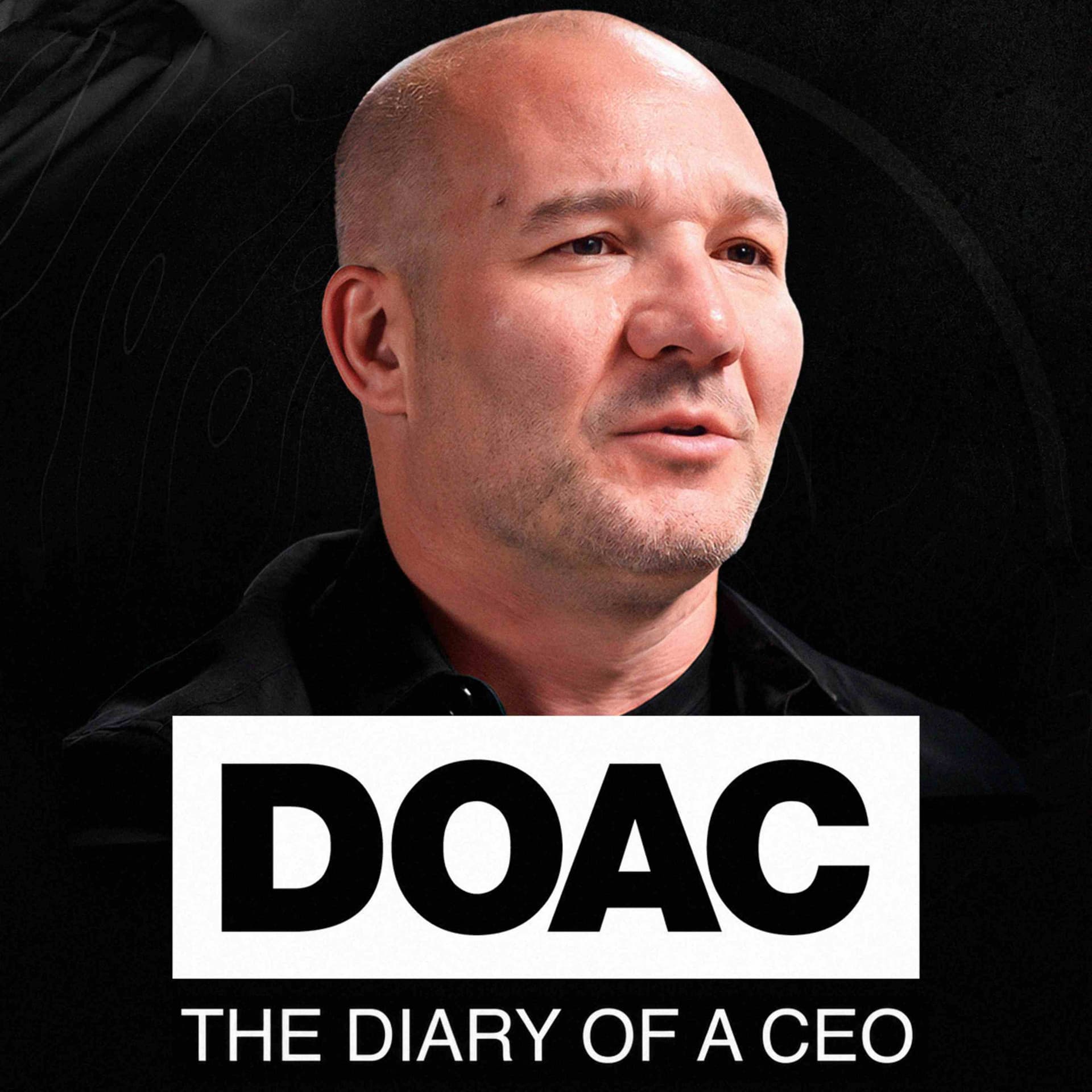
Moment 130: Shopify's President: The 1 Skill You MUST Have To Thrive In Business: Harley Finkelstein
Host
Steven Bartlett
Guest
Harley Finkelstein, President of Shopify
Key Themes
- The importance of diverse skillsets
- Leveraging "spikiness" or unique skills
- Entrepreneurship and leadership insights
Episode Overview
In this episode, Steven Bartlett interviews Harley Finkelstein, the President of Shopify, about the crucial skills entrepreneurs need to stand out and succeed in business. Harley emphasizes the value of having a diverse skillset, often acquired through hobbies and interests that may seem unrelated to one's primary business focus. He shares personal anecdotes and insights on how unconventional learning experiences have been instrumental in his entrepreneurial journey.
Key Discussions
The Concept of "Spikiness"
- Definition: "Spikiness" refers to having a standout skill or unique combination of skills that differentiate an entrepreneur.
- Importance: Harley argues that cultivating spikiness is crucial for entrepreneurial success. It's about finding and honing a skill set that makes you uniquely valuable.
- Example: Harley's decision to attend law school was not to become a lawyer but to acquire skills like negotiation, critical reasoning, and effective writing that would enhance his entrepreneurial capabilities.
Skill Stacking
- Concept: Combining several complementary skills, even at a moderate level, can make someone exceptional in their field.
- Illustration: The analogy of Cristiano Ronaldo, who excels in various aspects of football, making him considered one of the best players despite not being the top in any single skill.
- Impact: Skill stacking can create a competitive advantage, especially when skills are unique and not commonly found together.
Building Complementary Teams
- Advice: Entrepreneurs should seek partners and team members with complementary skills rather than those similar to themselves.
- Diverse Collaborations: Collaborations across different faculties or disciplines can lead to richer skill sets and innovative ideas.
Hobbies as Valuable Learning Experiences
- Application: Hobbies and side projects can provide unexpected insights and skills that apply to one's primary business.
- Examples: Harley shares how his experience as a DJ and running a small tea business contributed to his leadership at Shopify.
Overcoming Barriers to Entrepreneurship
- Mindset Shift: View starting a business as an iterative process rather than a monumental task.
- School as a Starting Point: Harley suggests school is an ideal time to experiment with business ideas due to lower expectations and risks.
Insights on Modern Entrepreneurship
- Exploration and Curiosity: Many successful businesses start from curiosity-driven projects or hobbies.
- Fail Fast, Learn Fast: The low cost of failure today allows for agile experimentation and learning.
- Real-life Examples: Brands like Gymshark and Allbirds began with simple ideas that were iteratively developed.
Conclusion Harley Finkelstein's insights emphasize the non-linear, exploratory path of modern entrepreneurship. By cultivating diverse skills and embracing curiosity, entrepreneurs can discover unique opportunities and create impactful businesses. The episode highlights the importance of stepping beyond conventional learning paths to find one's unique "spikiness" in the entrepreneurial landscape.
Resources and Links
- Full Episode: [Listen Here](https://g2ul0.app.link/RVuTuSXMEDb)
- Steven Bartlett's Instagram: [Instagram](https://www.instagram.com/steven)
- Harley Finkelstein's Instagram: [Instagram](https://www.instagram.com/harley/?hl=en)
- Harley Finkelstein's Website: [harleyf.com](https://harleyf.com)
- Learn More: Visit [megaphone.fm/adchoices](https://megaphone.fm/adchoices)
Sponsor This episode is sponsored by Me Undies and NetSuite. For more details on their offerings, visit [Me Undies](https://meundies.com/Spotify) and [NetSuite](http://netsuite.com/bartlett). ```
Written by AI. May contain mistakes. Listen to the episode to check what was said.
Transcript
Automatic transcript. May contain errors.0:00This episode is brought to you by Me Undies. While Me Undies can't totally help your love life this Valentine's Day, they can offer you insanely comfy undies and loungewear to buy or gift. Me Undies has so many awesome Valentine's Day prints and styles. Plus, you can match with your partner, friends, or even your pets. This Valentine's Day, give the gift that'll keep them thinking of you and score huge sight -wide savings at meundies .com slash Spotify. That's meundies .com slash Spotify. Me Undies. Comfort from the outside in.
0:33You reference spikiness. You know, you said you, and that made me flashbacks for conversation. I had with Jimmy Kaua. He said, we don't need more people that are shit at physics. Find the thing you're gonna double down there. As career advice for an entrepreneur, also when that's not an entrepreneur, what do you mean by spikiness and why is it important? Oh, so this is gonna be a long way to get there, but I think it's important. Go long. When I was building that T -shirt business in college, a mentor of mine, so his name is Philip Rimer, he's a senior partner at a very prestigious law firm called Dentons.
1:09They're everywhere, they're all over the world. He's like, you know, he's had this incredible white shoe law firm career. He basically convinced me to go to law school. And he convinced me to go to law school, not to become a lawyer. He's like the skills that you need given what I think your ambitions are around business creation, business building entrepreneurship. You are lacking some sophistication. You're always gonna struggle with these sort of things. He's like, but I have this idea, which is go to law school, not to get good grades necessarily, not to get, not to become a lawyer, but to effectively, selfishly disseminate all this information from your classes to make you a better entrepreneur.
1:48And I think because I sort of had a very clear view that, I wasn't sure at that time I was 21 when I started law school. I didn't know exactly what my spiky point was, but I knew it had to do with entrepreneurship. And so Phil, when you're 21, I didn't know very much at 21. I thought this T -shirt business would just be the thing I'd keep doing for many more years. But Phil had this idea that actually to sharpen your point, you should do something that is non -obvious. And in hindsight, it really feels like what Phil was helping me to figure out was finding more alpha in terms of entrepreneurship, finding some arbitrage operatives, something that exists that no one is looking at but that I can take advantage of.
2:24Something unique. Is that what you say? Yes, exactly. Something really unique. That hey, you're a good entrepreneur. You're not a great entrepreneur. You're not sophisticated. You don't understand all these different aspects of entrepreneurship. You should go to law school to not be a lawyer, but to be a better entrepreneur. And you should be selfish in law school in that, in your curriculum, in deriving as much insight as possible. So when you leave law school, you can return to entrepreneurship in a much better version of yourself. Because you'll have something that the competitor said, other entrepreneurs wouldn't have.
2:54That's right. So you could have gone, Steve Jobs did that typography class. That's right. And that's where we have these incredible devices in front of us. That's right. So it's an unobvious skill that's complementary. And that's why I say it's sort of finding alpha or an arbitrage opportunity because it's something that is not obvious to most people. But now in hindsight, when you think about it, you're like, well, that makes total sense. Look, I went to public high school and it was a good school, but I didn't learn how to write very well. And then I went to McGill and economics. I didn't learn how to write very well.
3:18I learned how to write really well in law school because all you're doing is writing factants and memos all day long. I learned how to negotiate and how to do a real critical debate and critical reasoning. I learned how to read 2000 pages and pick out the one line that matters. All of these things on their own doesn't seem like it would create the curriculum of a great long -term entrepreneur. But it did. And I think part of the reason why I allowed myself to go through that process of law school was I didn't know exactly what my spiky point was, but it felt like it's definitely in the realm of entrepreneurship.
3:52I didn't realize that I would help build a company that would create millions of new entrepreneurs. But I knew entrepreneurship was deeply personal to me because it helped me. It was my family story of survival. It just felt like this incredible tool that most people had not discovered yet. And so on that spiky point, I think the sooner you figure out that spiky point, you don't have to be precise. I didn't know I was going to run a software company. But I knew that entrepreneurship was deeply important to me. And so as I made decisions starting at 21 years old, every decision was under the lens of, is this going to help sharpen my point?
4:25Is this going to make me a better entrepreneur? And I think if I would have realized that 10 or 15 years later, it still would have been fine, but it may have not have happened as it wouldn't have happened the same way. And it may have not led me to join a group of, you know, a handful of really smart engineers building this crazy piece of software called Shopify 14 years ago. I think this is an exceptionally undisputed point, which is this idea of like skill stacking, but stacking skills that are unobvious and rare within an industry. So if we take, I think we should go through this in a little bit more detail, because I think it can really have a profound impact on people.
5:00I read about how the best people in the world, I think it's a mathematical equation where if you're the best at six skills in an industry that are like unobvious, you actually are the best in a million people at that thing. So I mean, if there's a village of a million people, and they showed this little graph, I remember seeing it, and writing about it a little bit, where if you just, if you're just in the top 10 % at six complimentary skills, you're the best in a village at that particular thing. Like, Cristiano Ronaldo, the football player, he's not the fastest player in the world. He's not the best shooter in the world.
5:30He doesn't take the best free kicks in the world, doesn't head the ball the best in the world. He's considered the best player in the world by many, because he indexes high, the top 10 % at various things. I think about Jack, he records this podcast. Now, if Jack wanted to be a podcast director, what all podcast directors or producers do, is they'll go learn how to do microphones and cameras. Now, interestingly, I don't think that's the place to be placing your time to become the best in the world. As we saw in the case of Steve Jobs, he went into typography and design, and then made these beautiful devices.
6:02Jack should probably go and try and get an unobvious, but skill, that would be in high demand and low supply in this industry. So if Jack went into theatre, he would learn maybe about how to construct a story arc. Or if he went and did like, I don't know. He set set design also. Yeah, he did. He went to be a DJ, then he would learn about stems in music and whatever else. Or set design if he went and did a theatre. And that would make him be, I'm not using Jack, I'm just saying, someone in Jack's position. That would make them be a real fucking hard to find talent. But it's funny because we can, in industries like, always think this about code is, and I don't hate to sort of generalize here, but it probably does sound like a generalization.
6:47It's sometimes hard to find someone who can code, who's also an exceptional storyteller in visionary. Often in companies, they're two separate roles, right? So if you're a, if you're a coder instead of becoming even better at coding, for example, going and doing those little like public speaking sessions is probably an unbelievable hack, because then you can build and sell? Sure. And actually, that brings up two points. One is, most people start companies with people just like them. Yeah. Yeah. Most people start companies with people that they would have been friends with in high school. I think that's a terrible idea.
7:19In fact, if you are in college right now listening or watching this, and you're in the business program commerce, or you're in the engineering program, don't start a company with the person sitting next to you. Walk across the street, go to a different faculty, go to the faculty arts, or the faculty of philosophy, or the faculty of engineering, and find someone they would start a company with. I think some of the best partnerships and relationships that I've seen that have built things that are, that change the world. From a company perspective, philanthropically, whatever they're trying to build might be.
7:48Building with other people with complementary skill sets is incredibly valuable. In fact, I think you get a much richer set of stacking of skills. You mentioned DJing in terms of skill set. I never appreciated ever how important my experience DJs, like hundreds and hundreds of bar mitzvahs over my time, hundreds. I never appreciated what I learned as a DJ and how I applied to running a large public company. But the truth is there's all these different things. So for example, something I noticed early on, it's like 14 or 15 years old, if the pre -meeting went really well with the clients, no matter how the party went, it was going to be a great result.
8:27Because I had a good relationship with a good connection with the client. Even if half the party didn't want to dance, the client knew me and knew enough about me and knew that I was going to try my best. That even if half the party was dancing, they were happy about that. And they were on your side. And they were on my side. There was this immediate connection. And so now, before I go into any serious negotiation, I try to get to know the person on the other side of the table. I try to find some common ground. We're both dads or parents or both, you know, whatever. We're both from the same place.
8:55That's the first thing. The second thing is, read the room. So one of the things about DJing, you have to do is you have to read the audience. And if the audience, you know, is clearly, if you're playing disco and no one's dancing, and you got to make, you know, like, a hard right into hip hop or a rap or something like that, or top 40, like, you can see glimpses of that. You try one song. You see how people watch their faces, how do people resonate. Oh, they really like this song. Great. I'm going to go like, Mo money, Mo problems from Tori's B .I .G. And the whole crowd erupts. Things like that really do make a difference.
9:27You know, there is, instead of asking people to get up from their chairs and come onto the dance floor, which is an awkward thing to ask people to do after dinner, instead have something in the middle of the dance where the people want to see. So maybe, for example, one of the people that is hosting makes a speech. And you say, ladies and gentlemen, at this point, please, please get up in your chairs and take the time steps forward because the father of the bride is going to say a few words. And everyone gets up and comes out of the dance floor. And then when that speech is done, everyone's already on the dance floor.
9:56And so finding these hacks and these sort of ways to not manipulate, but find better strategies for getting the thing accomplished. I learned all that in Dejing, and I can apply all that to running a large public company today. This, you know, when we start businesses and stuff, go back to that point again. Like, we tend to go deep on the subject matter. But what I've heard from that is our hobbies and the things and the curiosity we have outside of the area that we're building in is equally important. Then, like, if I'm building a, I don't know, if I'm building a, I'm building mugs for people to drink tea out of.
10:31Much of my inspiration will come from all the other things I do in my part. And the problem is we kind of deprioritize that part of our lives to focus on this thing. But taking a step away from the painting allows us to see the picture a bit clearer and also to create that picture a bit clearer. Which I think is a conversation people don't have enough because they think their hobbies are, again, deducted. Toys or games. Yeah, yeah, yeah. I mean, look, I mean, this is what a polymath is. A polymath understands a lot of different areas of the world, or comprehensiveist. I understand a lot of it, and pulls those different things in.
11:00What's a polymath, sorry? Polymath is someone who knows a lot about a lot of different things. Now, there are two things that I've done that were hobbies that ended up being hugely valuable as one. My wife started an ice cream company. In 2016, after we had our first daughter, after our first child, my wife really wanted to start an ice cream shop in our neighborhood. There was an ice cream shop. And so it was clear. It was her business, not mine. She was very clear about that she wanted independence. But even just helping her on things like accounting, or accounts payable or accounts receivable, or helping her procure ice cream from the ice cream makers, that was super valuable because one, it built huge empathy for the people that you shop that they're starting out.
11:40And the second thing I did was, during the pandemic, I was all by myself. I'm an extrovert, as you probably can tell. My anxiety had increased to a degree that I had not felt in many, many years. And what I realized was I was ringing so much more coffee, but I was by myself at home, way more, like double or even triple the consumption. And my best friend, who is sort of a tea guy, loves tea, said to me, I'm going to actually get you to stop drinking coffee in the afternoon and replace your coffee with really great green tea. I wasn't really a tea drinker. And so David started to bring me this great tea.
12:18And at some point, I was like, you know, David, I want to actually experiment with more of the features on shop with like, and I think this tea thing, I think most people's experience with tea was like, someone getting like, guess, gift basket. And there was some bunch of crappy tea in there. I was like, people don't know about this really great tea. They don't know how to make it. They don't know what to use it for, when to drink it. And so we created this little tea business called Firebally. And both those things were sort of hobbies in my life. They were sort of Sunday afternoon activities.
12:44I don't really watch sports on Sunday afternoon. I like to tinker and try different business ideas. Both those things have made me as a leader at shoplight so much more valuable. I understand pretty much every feature and functionality that shoplight has because I tried for myself. And initially when I told people that I was starting a little tea business, the answer was, I don't like why you doing that. That seems silly. You're not going to change your life financially. It feels like a distraction. And I would say that's one of the greatest tools that I've ever, greatest things that I've ever done that has made me a better leader at shopify.
13:15And it's just a hobby. There's something really, really powerful in that. Because when I started this conversation, I asked you why people don't take the leap. And a lot of the reason why I think is because, and we talked about this psychology, is when I think about starting a business, like a tea business, or any business, I'm still at the bottom of Mount Everest looking up thinking, Jesus Christ, like, I've got to find a website. As you said, I think I need loads of money. Who's going to work for me? Where do I get the tea from? How do I send it in a post? What's the packaging? I need to do branding.
13:43And I need to do all now. And also, there's this other thing, which in our minds, we think of success as being me making millions, or me making the ton of money. What I almost heard as you were telling that tea story was like, have this passion, remove the expectation, which so David Brails would told me that really well, just remove the expectation if you have ever been anything more than a hobby. And just get going. And you'll stumble forward along the way, and that's okay. I think if more entrepreneurs could see that Mount Everest, there's just a bunch of pebbles, and there's, and remove the timeframe where possible, remove the expectation of huge success, and just stumble forward through the process.
14:22We'd have so many great, great more businesses than we do now. And everyone listening to this has that. They have the hobby, they have the, they love tea, or they love, I don't know, coffee or match, or whatever it is. That perspective change of like, okay, well, today I'm going to start my shopper I still, tomorrow I'll think of the name. I wouldn't, I wouldn't even tell anybody just to remove even more expectation. And I'll just stumble forward through in my hobby and see where we get to in 10 years. Most people on Shopify don't register their business until weeks after they sign up for Shopify.
14:49So most people don't even assume they're going to need to register a business. And that's okay. And it's not to say that every idea you have in the shower needs to be commercialized, needs to see the light of day. But if there's an idea you have in the shower and you're having it a couple days in a row, try it out. Like, I mean, this isn't a pitch for Shopify, but like it's less than a couple Starbucks coffees to go start a business today. And if you fail, the cost of failure is as close as zero as it's ever been. You don't have to take a low amount, you don't have to mortgage your house, you don't have to take food off the table, hopefully.
15:23And if it works, you try it. And if it doesn't work, you try something different. But this idea of, yeah, there's like this barrier to getting started. And I think, you know, one of the reasons that I think one of the best times to start your entrepreneurial career or your entrepreneurial business is in school. The reason I think is because when you're in school as a student, there's very few expectations on you that this is going to be a huge success. So it's kind of the perfect time to get started. Whether you're in high school, like with my DJ business or in college with my, with when I sold T -shirts, there was very little expectation on me.
15:57No one thought it was going to be successful anyway. You sell one everyone clapped. Yeah, they're like, great, you're, that's so cool. You have a business. No one asked me what my revenue is, no one's asked me what my EBITDA margins. I think it is a lot easier to get started on a business when you're in school or you're, or you have a job and this is sort of your side hustle. The amount of people, Shopify right now is about 10 % of all e -commerce in the United States. In place like Australia, it's even way more than that. I know most of our largest merchants because I'm obsessed with this stuff.
16:26I love it. Most of the businesses on Shopify that are really successful, the homegrown success stories, they were accidental. It was Heather and Shrinas sitting at a coffee shop not too far from here. With a friend of theirs, I was a doctor who was wearing these hospital scrubs that just looked like shit. They looked like we can do this better. And that's a fix it was born. It was Ben Francis who said, why is there no clothes for just regular gym people? Either it's like gym rat stuff like bodybuilders or it's yoga. And that was how Jim Shark came to the world. Or it's Tim and Joey at Allbridge saying, why is there no really great sustainable sneaker that feels good?
17:00That's washable, that costs this amount of money. That's how Allbridge got started. So most, no one had this massive 80 -page business plan and then got started. That's not how business are created in modern times. They're created based on this nugget of an idea and they're explored and you get curious about it and try this other stuff. And that's how you build companies that are long -lasting that change the fucking world.
17:25Q1 is often when businesses start implementing new systems and processes in hopes of creating efficiencies for the year ahead. And over the course of my career, I've learnt just how crucial having the right systems in places, one which has helped me across many of my investments is NetSuite. They're also a sponsor of this podcast. NetSuite is the number one cloud financial system through their streamlined platform. You'll find all of your accounting financial management inventory and HR in one place. Their technology has been a real game changer, especially for my team at Flight Studio. As over the last year, we've moved out of startup mode and into scale at mode.
18:00We no longer have to juggle multiple systems and having everything together has reduced the number of manual tasks and errors. Over 41 ,000 businesses have chosen to future -proof their business with NetSuite. So if you'd like to learn how it can help your business, head to NetSuite .com slash Bartlett. And free download the CFO's guide to AI and machine learning. That's NetSuite .com slash Bartlett.
From the publisher
In this moment, the President of Shopify, Harley Finkelstein, discusses why having a diverse skillset is the best way to stand out in your industry and a way of becoming invaluable. A lot of the time you may think that having diverse skills in the form of hobbies or curiosities are a waste of time and take attention away from your main area of focus or business. However, Harley believes that these skills are actually priceless for an entrepreneur and leader, so much so that he attended law school just to become a better entrepreneur.
Listen To The Full Episode Here - https://g2ul0.app.link/RVuTuSXMEDb
Watch The Episodes On Youtube - https://www.youtube.com/c/%20TheDiaryOfACEO/videos
Harley: https://www.instagram.com/harley/?hl=en
https://harleyf.com
Learn more about your ad choices. Visit megaphone.fm/adchoices