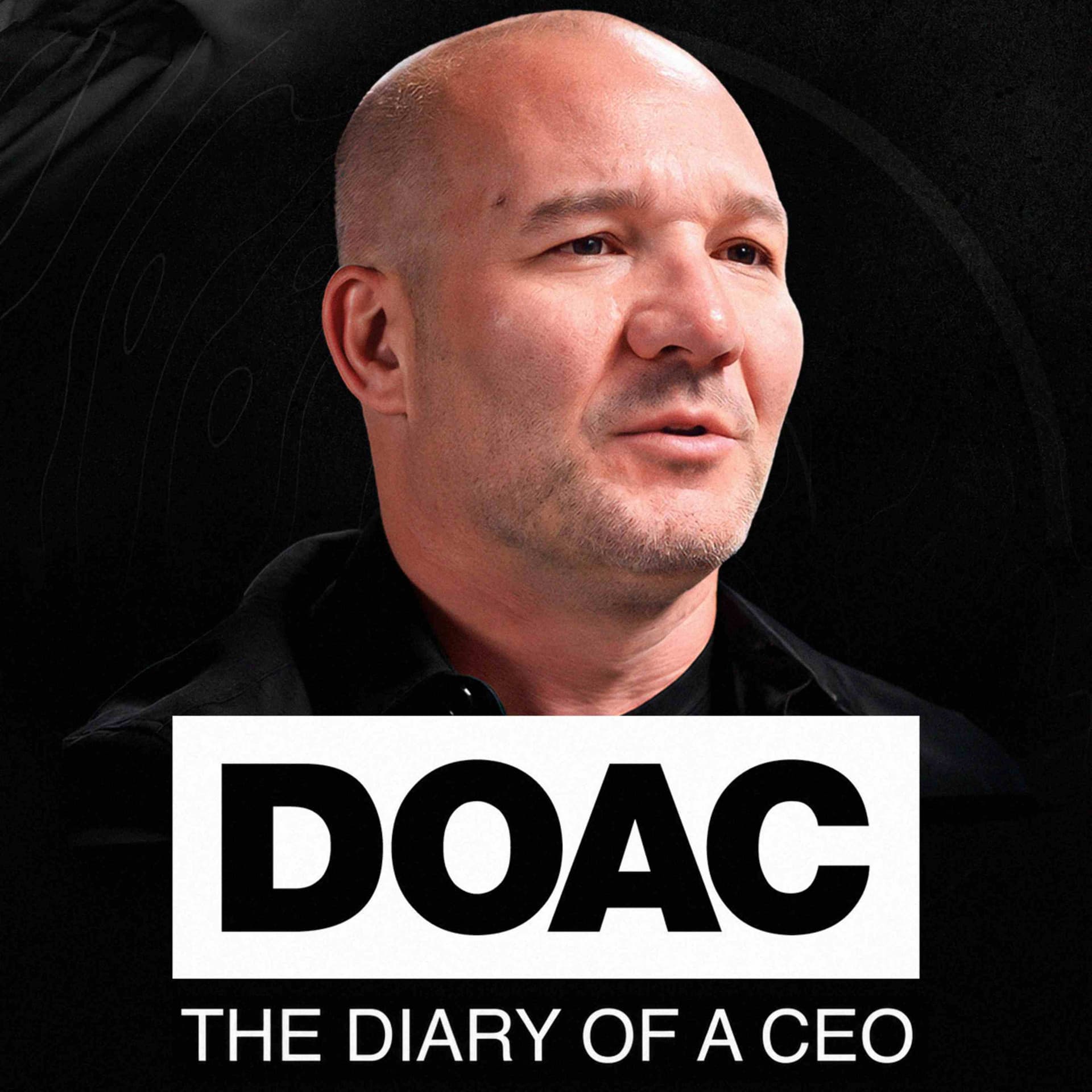
In short
The Diary of a CEO with Steven Bartlett
Podcast Overview Steven Bartlett, a former CEO, entrepreneur, and podcast host, shares impactful stories and insights from influential individuals on his podcast "The Diary of a CEO." In this episode, Dr. Joe Dispenza, a New York Times best-selling author and researcher, discusses strategies for breaking bad habits and transforming behavior.
Episode Details
Episode Title Moment 144: How To ACTUALLY Break Bad Habits: Joe Dispenza
Guest Dr. Joe Dispenza
- Author and researcher focused on neuroscience and habit change.
Key Concepts and Discussions
Understanding Habits
- Formation: Habits form when actions become hardwired into the subconscious through repetition.
- Breaking Habits: To change a habit, one must become aware of their unconscious patterns.
Neuroscience Principles
- Nerve Cells: "Nerve cells that fire together wire together," meaning repeated thoughts and actions create neural pathways.
- Conscious Change: To rewire these pathways, individuals must consciously choose their thoughts, actions, and emotions.
Practical Steps for Change
- Meditation: Used to bypass the analytical mind and access subconscious programming.
- Mental Rehearsal: Visualizing new behaviors mentally can prepare the brain for change.
- Morning and Evening Practices: Optimal times for accessing the subconscious are upon waking and before sleeping.
Overcoming Discomfort
- Stepping into the Unknown: Change involves discomfort as individuals move from known behaviors to new, untested paths.
- Consistency in Practice: Regularly practicing new thoughts and behaviors solidifies change.
Psychological Barriers
- Responsibility and Creation: Accepting personal responsibility for life outcomes is essential but can be uncomfortable.
- Victim vs. Creator Mindset: Shifting from a victim mentality to a creator mindset encourages proactive life changes.
Misconceptions in Behavior Change
- External Change Myth: Believing external circumstances must change for personal change to occur is a limiting belief.
- Internal Change Reality: Change begins within and reflects outwardly, transforming external circumstances as a result.
Key Takeaways
- Daily Practice: Integrate conscious awareness into daily routines to catch and alter habitual responses.
- Mental and Emotional Priming: Use visualization and emotional conditioning to set the stage for behavioral transformation.
- Long-Term Commitment: Habit change requires persistence and dedication to new thought patterns and emotional states.
Resources and Further Learning
- Full Episode: [Listen Here](https://g2ul0.app.link/3q2pKyW6gGb) | [Watch on YouTube](https://www.youtube.com/c/%20TheDiaryOfACEO/videos)
- Dr. Joe Dispenza: [Website](https://drjoedispenza.com) | [Instagram](https://www.instagram.com/drjoedispenza/)
---
Sponsorships
- Me Undies: Offering comfortable underwear and loungewear with unique prints.
- NetSuite: A cloud financial system providing integrated business solutions.
For more information on these sponsors, visit [Me Undies](https://meundies.com/Spotify) and [NetSuite](https://netsuite.com/Bartlett).
Written by AI. May contain mistakes. Listen to the episode to check what was said.
Transcript
Automatic transcript. May contain errors.0:00This episode is brought to you by Me Undies. While Me Undies can't totally help your love life this Valentine's Day, they can offer you insanely comfy undies and loungewear to buy or gift. Me Undies has so many awesome Valentine's Day prints and styles. Plus, you can match with your partner, friends, or even your pets. This Valentine's Day, give the gift that'll keep them thinking of you and score huge sight -wide savings at meundies .com slash Spotify. That's meundies .com slash Spotify. Me Undies. Comfort from the outside in. Q1 is often when businesses start implementing new systems and processes in hopes of creating efficiencies for the year ahead.
0:36And over the course of my career, I've learnt just how crucial having the right systems in places, one which has helped me across many of my investments is NetSuite. They're also a sponsor of this podcast. NetSuite is the number one cloud financial system through their streamlined platform. You'll find all of your accounting financial management inventory and HR in one place. Their technology has been a real game changer, especially for my team at Flight Studio. As over the last year, we've moved out of startup mode and into scale at mode. We no longer have to juggle multiple systems and having everything together has reduced the number of manual tasks and errors.
1:11Over 41 ,000 businesses have chosen to future -proof their business with NetSuite. So if you'd like to learn how it can help your business, head to netsuite .com slash Bartlett and free download the CFO's guide to AI and machine learning. That's netsuite .com slash Bartlett. The hardest part about change is not making the same choice as you did the day before. And the moment you decide to make a different choice, you're going to feel uncomfortable. Probably for most of my listeners who've had great advice from this podcast, and they think, yes, that's who I want to be. I have an intention to stop eating sugar at 1 a .m.
1:51at night or have an intention to become organized or to be this kind of friend or partner. They have the information. There's something stood in the way of me doing something about that information on a regular basis. Yeah. Habit is when you've done something so many times that your body now knows how to do it better than your conscious mind. Then it's programs subconsciously. So then when the body knows how to do it better than the conscious mind, then for the most part, the greatest habit we have to break is the habit of being ourselves. So there's a principle in neuroscience that says that nerve cells that fire together, wire together.
2:26If you keep thinking the same way, if you keep making the same choices, if you keep doing the same things, if you keep reproducing the same experiences and feeling the same emotions, your biology begins to become hardwired in a sense. It becomes programmed. So in order to change something to arrive at a new vision of your future, if you weren't wanted to arrive at a new goal or a new vision of your future, you'd have to change something about yourself in order to get there. And you'd have to change the way you think, the way you act, and the way you feel. So the change then is to become so conscious that you don't go unconscious again.
3:09People here that they go, how long? How much practice? You know, you're talking about, I've got to do this for three, four, five years, or, you know, and that practice. What does that look like practically? For someone like me, who hears everything you've just said and wants to make changes and cares of my life. Okay, so there's two times when the door to the subconscious mind opens up. When you wake up in the morning, because your brain waves are going from delta to the theta to alpha to beta. And when you go to bed at night, you go from beta to alpha to theta to delta. And you slip through that scale pretty quickly in the morning and the evening.
3:46But your brain waves start to change during those times. And one of the features, one of the important elements of meditation is to get beyond the analytical mind. And what separates the conscious mind from the subconscious mind is the analytical mind. So five percent, as we said, is our conscious mind 95 % is programmed subconsciously. And if you're going to try to change yourself with your conscious mind, you're outside the operating system. So then you got to learn how to change your brain waves, slow them down, get beyond the analytical mind, and enter the operating system where you can rewrite a program where you can make this changes.
4:21And so learn how to do that, practice, learn how to do that. And again, it's not a big deal. It's easy to learn. And then once you can slow your brain waves down and you're more suggestible to what you're thinking. Now you can reprogram. You can't do it with your conscious mind. You can say, I'm healthy, I'm healthy, I'm wealthy, I'm unlimited, I'm unlimited, I'm happy, I'm happy, I'm whole, I'm whole in your body saying, no, you're not dude, you're miserable. You're unhappy. That thought never makes it past the brains to reach the body, right? So it's important for us to in the morning or the evening, instead of reaching for our cell phone as the first thing as a habit that we do, and checking our texts and our WhatsApp and our telegram and our social media and our Instagram and our Twitter and Facebook, whenever else people do their emails, they get connected, everything known in their life.
5:14Before you start that, try this out as an experiment, before you start your day, instead of falling into that redundant habit. Go on autopilot, just say okay, if the change is to be greater than my body, to be greater than my environment, to be greater than time, and the environment is so seductive, and my body is craving certain emotions and it's programmed to get up and do things, I'm going to sit my body down, I'm going to tame the animal here, and when I'm ready to get up, we're going to get up not when it's tired or when it wants to go. And if you were sitting there in silence, aware of nothing but you, and you said okay, what is the greatest expression of myself I can be today?
5:55And do that exact process, let me write down two thoughts that are not going to slip by my awareness unnoticed by me today, two memories, whatever it is. What are two emotions that I live by every day that I can literally change? I want to become conscious of what they feel like in my body, I want to catch them, the moment I start feeling them, let me review them over and over again, enough times so I don't go unconscious. Okay, now I'm conscious of my unconscious that 95%. How do I want to think? How would greatness think today? Let me review it, let me repeat us. Let me remember how I am going to think.
6:27Let me remember how I am going to think. Let me remember how I'm going to behave here, how am I going to act here? Let me rehearse a change I want to make in the certain circumstance. Let me think about how I do want to feel today. Let me open my heart to life again. Let me feel kindness and care and love and gratitude and appreciation. Let me just bring up that feeling. Let me feel it with my heart. Let me keep bringing it up so I can bring it up enough times. I want to get so good at bringing up this feeling with my eyes closed. I can do it with my eyes open. We discovered that if you keep doing that every day, somehow you'll arrive at that destiny and your biology will literally begin to change to look like you're living in a different life.
7:10You practice that and you not make a decision to not get up until you feel that emotion. And ask yourself, can I stay in the state my entire day? And if you can't and you go unconscious, ask yourself at the end of the day, how do I do? Where I go unconscious. Okay, tomorrow morning, new day, new lifetime. Let me go again. Most people then they have that vision of the future, but they give up on that vision because in order for them to arrive at that vision, they have to do something. They have to think differently. They have to act differently. They have to feel differently. And it's so much easier to make the same choice every single day and the hardest part about change is not making the same choice as you did the day before.
7:53And the moment you decide to make a different choice, you're going to feel uncomfortable because you're stepping from the known into the unknown. So some people would rather cling to their self -pity than take a chance and possibility. They'd rather tell the story of their past instead of telling the story of their future. They'd rather believe in their past instead of believe in their future. What are some of the biggest myths relating to behavior change? And I guess character and personality change that hold people back. Unconsciously, we're always waiting for something out there in our life to change so that we can change or feel the relief of the lack of what we don't have.
8:40And I do think that's kind of a limited model of reality. I think when you start changing inside of you and you start seeing the changes happening outside of you, you go from being a victim in your life to being a creator of your life. And I think that when that occurs, then all of a sudden it's no longer a half to you. It's something that you want to do. You actually don't want the magic to end in your life. So now you become a work in progress by investing in yourself. And when you invest in yourself, you invest in your future. So there is probably a chronic disbelief that many of us have that we're not creators of our life.
9:19And the only one we get the parking space or something good happens to us, do we believe that we're the creator of our life? But imagine a world where everybody actually took responsibility in being the creator of their life and no longer the victim of their life. I think we would see a dramatic shift in consciousness. That makes people feel uncomfortable. This idea of personal responsibility. It's quite a, it's almost become quite a controversial, controversial idea. The idea that we are the creator of our lives, because then I have to accept responsibility for all the bad things that happened.
9:50Dave dumped me. I got fired from work. Someone bumped into my car and I got my neck. Maybe you're not creating. And the fact that you're not creating, you're left to the effects of your environment actually controlling you, controlling your feelings and thoughts. By creating, what do you mean by creating? Well, well, if you... If you woke up every morning and you truly made time to think like this, okay? If my personality creates my personal reality, and my personality is made of how I think, how I act, and how I feel, if I want to create a new personality, a new life, I'm going to have to change my personality.
10:35And most people try to create a new reality, a new personality, as the same personality that doesn't work, we literally have to become someone else. So if you said, okay, let me not default and go unconscious to that 95 % of who I am that's programmed. Let me become so conscious of the way I think, let me become so aware of how I'm going to act today. And then if you said, okay, the belief is just the thought I keep thinking over and over again. What thoughts do I want to fire and wire in my brain? And with attention and with intention to begin to familiarize yourself with the new way of thinking.
11:12Meditation means to become familiar with. If you keep firing and wiring those circuits, you're going to begin to install the hardware, repeat it enough times, and it becomes a software program, that could be the new voice in your head that says, I can, it is possible. If you said, okay, when did I fall from grace yesterday? When did I lose it? Oh my gosh, it was with, at work, with my coworkers, with my ex, with my enemy, with the news, with traffic. Acting this way is not going to make me happy. If I had another opportunity, another opportunity, how would I do it? If you could close your eyes and rehearse in your mind mentally, how you're going to behave in certain situations.
11:58Rousing a house. Well, mentally rehearsing, mentally rehearsal is one of these great ideas in neuroscience where you can actually install circuits in your brain, right? So everybody has done this. Musicians do it. They're playing a song in their mind all the time. Athletes do it. They're always going over. They're moves. Dancers do it. Actors do it. Not so many people rehearse mentally what they're about to do. And when they do that, they actually prime their brain. They actually can change their brain and change their body just by thought alone. Physiologically changed it. Physiologically changed.
12:34You can take a group of people that never played the piano before. And divide them into two different groups and do functional brain scans on both groups. One group. They'll come for two hours a day for five days. And they'll practice these one -handed scales and chords. Now, you learn something new. You make new connections in your brain. You get some instruction. You get your body involved. When you get your embodied involved, you're going to have an experience. You pay attention to what you're doing and you repeat it over and over again. And nerve cells that fire together, wire together. You're going to begin to install new circuits in the opposite side of your brain.
13:07That's common. You do the scan at the end. You see those actual physical changes. You take those people, the other group, and you ask them to close their eyes without lifting a finger. Have the mentally rehearsed those scales and chords. And at the end of five days, they grow the same amount of circuits in their brain as the people who actually physically demonstrated the act. In other words, they were so present with what they were doing. The brain did not know the difference between the real life experience and what they were imagining. The brain was physically changing to look like they already experienced it.
13:40They already did it. So now, you take those people, and they've replayed the piano before. They've just been mentally rehearsing for two hours a day for five days. You set them in front of a piano, and they could actually play those scales and chords. Why? Because they primed their brain for that behavior. So then if you're going to prime your brain for a new behavior, whether you're the CEO of a company, whether you're a parent, whether you're learning something, the more you rehearse it mentally, the more you prime your brain body for the act. So you could actually practice rehearsing how you're going to change in your life.
14:16And if you keep doing it enough times, your behaviors will match your intentions automatically, because you have the mind installed to do it. If you don't have the mind installed to do it, you'll go back to the same past behavior. So I play through that scenario of making the decision differently. Exactly. And rehearse it in your mind until it feels right, so you feel like I could actually do that, and go from start to finish without losing your attention. And so that it gets easier each time you do it, it makes sense then you'll actually do it. And then if you said, okay, enough of this guilt.
14:51I felt enough of it. I don't like feeling that way. I could actually break the conditioning of that emotion in my body. Can I condition my body? Can I teach my body to feel something differently? What would be the feeling that I want to feel if I was able to do it? Would it be worth? Would it be self -love? Would it be freedom? Would it be joy? Let me teach my body emotionally. What a future could actually feel like before it happens. If you keep doing it over and over again, you're going to start making more of those chemicals, and this will become easier for you to do it. It's going to become familiar to you.
15:25And that's exactly what meditation is to become familiar with an old self, to know thyself, to become so conscious of that unconscious self that you don't go unconscious to that self. And how many times do we have to forget until we stop forgetting and start remembering? That's the moment of change.
15:46Q1 is often when businesses start implementing new systems and processes in hopes of creating efficiencies for the year ahead. And over the course of my career, I've learnt just how crucial having the right systems in places, one which has helped me across many of my investments is NetSuite. They're also a sponsor of this podcast. NetSuite is the number one cloud financial system through their streamlined platform. You'll find all of your accounting financial management inventory and HR in one place. Their technology has been a real game changer, especially for my team at Flight Studio. As over the last year, we've moved out of startup mode and into scale at mode.
16:21We no longer have to juggle multiple systems and having everything together has reduced the number of manual tasks and errors. Over 41 ,000 businesses have chosen to future -proof their business with NetSuite. So if you'd like to learn how it can help your business, head to netsuite .com slash Bartlett and free download the CFO's Guide to AI and Machine Learning. That's netsuite .com slash Bartlett.
From the publisher
In this moment, New York Times best-selling author and researcher, Dr Joe Dispenza discusses how to change habits. A habit forms when you’ve done something so many times that it becomes hardwired into your subconscious, and is even programmed into the very nerve cells of your brain. So in order to break a habit, you have to break the bigger habit of being yourself. Dr Dispenza says that this change can happen when we become conscious of our unconscious. This awareness can come from meditation, as well as mentally rehearsing changes we want to make, so that we avoid the trap of unconsciously making the same choices everyday. By mentally rehearsing scenarios, this avoids the uncomfortableness that comes from taking a step into the unknown and stops you from being the creator of your life.
Listen To The Full Episode Here - https://g2ul0.app.link/3q2pKyW6gGb
Watch The Episodes On Youtube - https://www.youtube.com/c/%20TheDiaryOfACEO/videos
Joe: https://drjoedispenza.com
https://www.instagram.com/drjoedispenza/
Learn more about your ad choices. Visit megaphone.fm/adchoices