In short
Podcast Episode Summary: Moment 157 - The Money Expert's Investment Strategy NO ONE Is Talking About: Morgan Housel
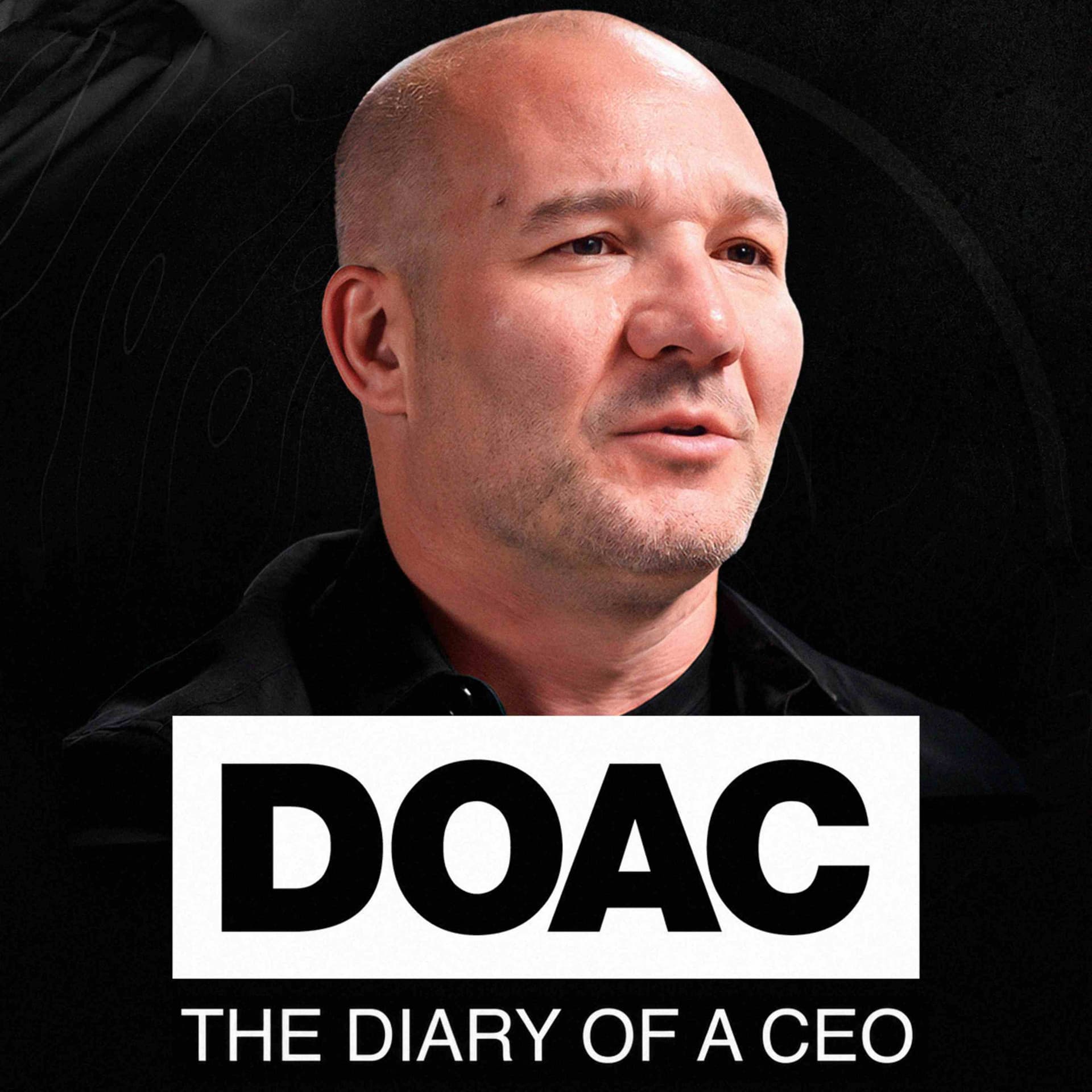
Podcast Overview Host: Steven Bartlett Guest: Morgan Housel, financial expert and bestselling author Episode Focus: Morgan Housel discusses the hidden costs of success and investments, emphasizing the importance of understanding these costs in various life aspects.
Key Themes and Concepts
The Hidden Costs of Success
- Unseen Price Tags: Every good aspect in life comes with hidden costs, which are not always measurable.
- Personal and Professional Sacrifices:
- Achieving success often involves long hours and time away from family.
- Relationships require sacrifices and compromises.
Time Horizons
- Understanding Time Horizons:
- The time gap between the present and one’s goals varies for each individual.
- Recognizing personal time horizons is crucial for decision-making regarding career, investments, and relationships.
The Price of Wealth
- Volatility and Unknowns:
- Wealth comes at the cost of enduring volatility and uncertainty in investments and career paths.
- Successful individuals learn to navigate these challenges without letting them derail their goals.
Wealth vs. Lifestyle Decisions
- Investing in Real Estate:
- Many people buy homes as financial investments; however, this mindset can lead to poor decisions.
- Housel emphasizes that buying a home should be viewed through the lens of lifestyle stability rather than a financial gain.
Emotional vs. Financial Decisions
- Deciding to Buy a Home:
- Home purchases should be evaluated based on emotional and lifestyle needs rather than financial returns.
- Housel shares personal experiences emphasizing the importance of stability for family over potential financial gains from real estate.
Key Takeaways
- Identify Costs Before Decisions:
- Understanding the cost associated with decisions in life is critical. This includes the emotional and financial costs of relationships, investments, and career choices.
- Be Aware of Blind Spots:
- Success can create blind spots; remain humble and aware of these to sustain long-term success.
- Know Your Goals:
- Different life stages and priorities influence decisions, and being aware of these shifts is essential for making informed choices.
- Invest Wisely:
- When considering investments, particularly in real estate, focus on personal needs rather than financial returns to avoid potential pitfalls.
Quotes
- "The cost of doing well in investing is putting up with volatility."
- "Nothing is ever free; the success in life is identifying what the cost is and being willing to pay it."
- "If you're buying a house to make money, stop."
Conclusion Morgan Housel's insights on the hidden costs of success and the importance of understanding one’s time horizons provide valuable guidance for making informed life and investment decisions. The emphasis on emotional well-being and lifestyle choices over purely financial motivations serves as a reminder to prioritize what truly matters.
Written by AI. May contain mistakes. Listen to the episode to check what was said.
Transcript
Automatic transcript. May contain errors.0:00Right now, with the Home Depot, you'll find storage solutions made to fit your needs. Grab an HDX Tough Tilt to protect your tools, or keep your sports equipment contained with reinforced snap fit lids, or stack up and make better use of your space with bins and totes built to last. Whatever your story, we've got the gear to keep it organized and protected at the Home Depot. How doers get more done?
0:34Comfortance, which comes from success often, really does create blind spots. And that's something I think about so much like, how do I stay aware of those blind spots in my life that the success I've had in various areas has undeniably created. And honestly, a lot of I just go to save loads of money, Steve, because the day you're wrong, you don't want to go broke. I also think about that. Like whenever the curtain comes down on my career, I want to make sure that I can say, like, hey, thank you for letting me have this. I'm so grateful for it, but I think I've saved enough that I'm ready to pass a baton to someone else.
1:08And that's a form of humility, too. There's a quote from Denzel Washington, where he's talking to Will Smith after Will Smith's slapped Chris Rock, remember that whole debacle? After that show, Denzel Washington comes up to Will Smith and he says, Will, when you're at your highest moment in your career, that's when the devil's going to get you. And it's like when you, when your career is so high and you're so famous, you think so highly of yourself that you can do anything, that's when you're going to get yourself in trouble. What a powerful quote. And I think just paying attention to that, that's the natural humility that goes into it.
1:40And it's not false humility. It's not like, oh, I, you know, false humility is like, I didn't do any of this. I just got lucky. That's all false humility. I think real humility is like, I built this through hard work and I made some good decisions, but I'm just a guy. I'm as fowlable as anybody else. I think that's, it's, that's not just important. I think that's critical to any amount of sustainable success. You taught me that the price you pay to be wealthy is the volatility you have to incur along the way. It's kind of how I think about it in my head. That's the cost of emission. To being wealthy and to be, to any level of success is putting up with an enduring unknowns and volatility and booms and bus and then other bullshit that you put up with in the investing market and in your career and in your relationships.
2:26There's always a cost for anything good in life. There's a cost that you have to pay. Like, of course, there's nothing's free like that. But most of the costs that you pay are not, they don't have a price tag that you can just measure very cleanly. Like the cost of doing well and investing is putting up with volatility. The cost of a successful career might be long hours where you are pulled away from your family. The cost of a relationship is like always needing to sacrifice and compromise for the other person. Nothing is ever free and so much of the success in life is just identifying what the cost is and being willing to pay it.
2:59Because for all of those things that just laid out, investing, career, relationships, the cost of emission is worth it. Putting up with the volatility is worth it over time because if you can put up with the stock market falling 30%, if you can just say, ah, it's not that big a deal, I'm just going to hold tight. Ten years from now, the cost is well worth doing that. If you can put up with the compromise that takes to have a successful relationship, buy and large, it's going to be a cost that's worth paying because you know like so much of what matters in life is just the relationships that you have.
3:29And once you identify the cost of that relationship, you're like, oh, I'll pay that cost all day long. It's so worth it. This requires you to be cognizant of time horizons and your own time horizons, which is something you talk a lot about in chapter 16 of the psychology of money. Why is it important for us to know our time horizons and what you mean by time horizon? It's the amount of time between now and whatever your goal is, which is very different for everybody, not just by age, but like if you want every tire early or whatever it would be, like everyone's going to have a slightly different time horizon.
3:57What's yours? Mine, I mean, you would break it up into different chunks. Like, I want to get to a point, or maybe I'm nearing a point in my career where I'm just doing things because I enjoy them. There's really no financial incentive to what I'm doing. That's one time horizon. Another is like, okay, once my kids start getting older, I want to make sure that like I'm always there for them when they need me teenage years or so difficult for people. Like I'm always 24 -7, I'll be there for you, which means I'm going to have to pull back. There's going to be a point where I just say, look, I've accomplished what I want to with writing and I want to be able to move on to something else.
4:33And there's going to be a point where I say, I really don't want to work that much anymore. I just want to move on. Maybe I need to take care of my parents when I be. So like, there's multiple different time horizons at different goals of your life. Is buying a house a good or bad financial decision? I'll tell you my own experience, which was in my 20s and early 30s, my wife and I lived in like seven different cities. And there was nothing better for us. Some of those were just like, let's try this new city for fun. Some of it was moving for work. We moved for her school. And our ability to just get up and go, hand the keys back to the landlord.
5:02Nothing was more valuable than that. Once we had our son, our first kid, then very quickly, nothing became more valuable to me than having an established, secure home base that nobody could take away from me. That was the cure. And also, like, kids are loud and they scream. And I didn't want neighbors in an apartment building that I was going to have to like, try to keep my kid quiet for themselves. I was like, I want my own house. That's mine. And it's just a stand -alone house. My kid can scream as loud as he wants and not bothering anybody else. That became important to me, like instantly. So it's like, I think people get caught up when they're like, well, the housing market returns for a half percent per year.
5:38That's like, stop with the spreadsheets. Like just do what's going to work for you. I know, I know Remietsetty has a lot of thoughts about this, about renting versus buying. And I think one of the differences between Remiets and myself is, I have two young kids. And so like that, if I didn't have kids, I think I would be like rent forever and try different cities. Move all around. What can be better than that? But when you have kids, what's more important to me is stability. Want my kids to go to a stable school, know their neighbors, have friends that they can be friends with for years? That's important.
6:11If we just think about investing, then in terms of, is buying a house a good financial investment? My brother, who works in my company, and so he's the one that introduced me to your book many, many years ago, said to me, something along the lines of, Steve, don't buy houses to make money because you have the ability to play a different set of games that very few people can play. And what I mean by that is he kind of explains it to me because listen, everyone can buy a house. So the returns there aren't going to be huge. Go find a game that only you can play, you'll get bigger returns. If you're buying a house because you think it's going to be a good financial investment, stop.
6:46Even if it turns out in hindsight that it was, it doesn't matter. I think these are just purely lifestyle decisions. And I think so many people get screwed up when they're in a spot in their life where they should be renting because they need to be mobile. They need to move around to a new job, new career, new school, whatever it is. But they end up buying because they think they're going to make money doing it. And that's a problem. So I own a house and if I ended up losing money on it, I don't think I'd care that that's not why I'm owning it. I'm owning it just because I want the stability from my family.
7:14I've just made an offer on my first ever house. And because I played other money games for the last decade of my life. And now I have a partner and we've been together many years and we're both like 31 years old and we're getting into that position now, you know? Yeah. And my brother explained to me, he goes, listen, this is a bad financial decision, but it's a good emotional social life decision. And you need to know how to separate the two. Don't mark this down as a way that you're trying to make money. Like you might make money until 20 years time if you're still living there. Look at it as, you know, you need someone to live.
7:47And I think you must have got that from you. When I, when we bought our last house, which was after I wrote this book, so this is a different experience. I thought at the time it's still thing today. I probably paid a little bit too much. I mean, I paid the market rate. But if you said, like, oh, did you get a good deal? I said, no, no, no, didn't bother me in the slightest. That's not why I was doing it for. It would be, I mean, it would be like if you ask, like, if someone is deciding whether or not to have kids and they think about the cost of kids, like forget about, of course, you're going to dump hundreds of thousands or millions of dollars into your kids.
8:18And it's good. It's like, if money is coming into the equation, like stop right there. This is, it should not do it. You're doing it for very different reasons. This is not an investment. People buy houses because they think they're making loads of money for kids. Because there have been periods of time in which people have made loads of money, historically, like that's the anomaly. Historically, in the US and the UK, housing prices, adjusted for inflation go nowhere. It's just been the last 20 or 30 years that there's this very brief window of time that owning a house was a great investment. Robert Schiller won the Nobel Prize about a decade ago for his work in showing that over the last 150 years in the United States adjusted for inflation, most home prices have been flat as a pancake.
8:56It's just the last 20 years that have inflated people's expectations of what a house can do. Statistically, there's going to be at least one person listening to this that has made an offer as we speak for a house under the assumption that it's going to help them stack wealth. If they were purely doing it for those reasons, what would you tell them to do instead? If that's purely the reason, run for your life, don't do it. Particularly, I mean, it used to be, and maybe it still is like this in many cities in America and the UK, but it used to be that rentals were almost without exception, shitty houses.
9:34There are no good rentals. A big change, at least in America in the last 20 years, is that most big cities have tons and tons of luxury apartments to live in, and there are great places to live. And they're in the city centers, and they got beautiful granite countertops, and there are great places to live. Don't fall for the idea that you can't live well if you're renting. I think that's the problem. And realize that if you're doing it for financial reasons, you're probably about to borrow a shitload of money for an investment that historically has been a very bad investment. If you put it in those terms, what are we doing here, man?
10:08You're going to borrow hundreds of thousands of dollars for an investment that historically has been a loss. That's what you're doing here. Does it feel good about that? That's what I'd say to that person. Godspeed.
From the publisher
In this moment, financial expert and bestselling author, Morgan Housel discusses the hidden costs of everything in life. Morgan says that that anything good in life comes with an unseen price tag, and part of achieving success in any area of life requires putting up with unknowns and volatility. In a career this might be long hours away from your family, in a relationship it may be the sacrifices and compromises made for another person. Part of this is being aware of your time horizons in life, and the amount of time between now and your goal, determining whether you are willing to sacrifice precious time to achieve the goal. In the end, Morgan says that the key to success in life is identifying what the cost is for any decision and being willing to pay it.
Listen to the full episode here
Apple - https://g2ul0.app.link/sXZ3OZpToHb
Spotify - https://g2ul0.app.link/nAu4hnmToHb
Watch the Episodes On Youtube - https://www.youtube.com/c/%20TheDiaryOfACEO/videos
Morgan:
https://www.instagram.com/morganhousel/?hl=en
https://twitter.com/morganhousel?ref_src=twsrc%5Egoogle%7Ctwcamp%5Eserp%7Ctwgr%5Eauthor
Learn more about your ad choices. Visit megaphone.fm/adchoices