In short
```markdown The Diary Of A CEO with Steven Bartlett
Episode
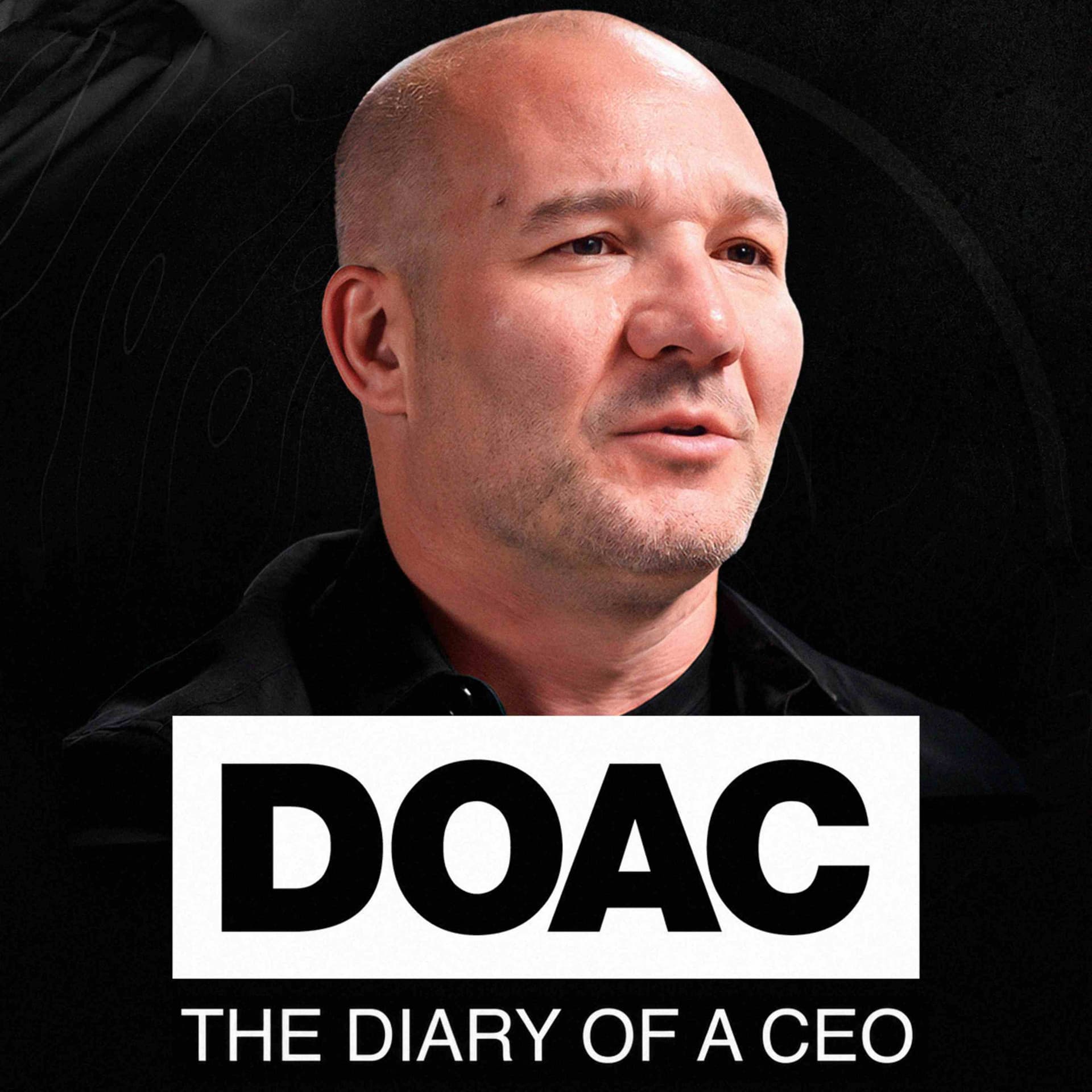
Moment 180: Neuroscientist's Top 5 WORST Habits That Are Destroying Your Brain - Wendy Suzuki
Description In this episode, neuroscientist Wendy Suzuki discusses detrimental habits that can harm brain health. While well-known factors like poor sleep and smoking are covered, Suzuki highlights more subtle dangers such as inadequate learning and excessive social media usage. The episode explores how these habits affect mental health and the physiological impact on the brain.
Key Sponsors
- Me Undies: Offers comfortable underwear and loungewear.
- NetSuite: A cloud-based financial system helping businesses streamline their operations.
Discussion Points
Harmful Habits for Brain Health
- Lack of Sleep: Essential for maintaining brain health; poor sleep affects cognitive functions.
- Smoking and Alcohol: Both have negative long-term effects, disrupting sleep and brain health.
- Processed Diet: Lacks nutrients necessary for brain health.
- Lack of Learning: Stimulates brain shrinkage; continual learning promotes brain growth.
- Absence of Mindfulness: Practices like meditation enhance brain plasticity and focus.
Impact of Social Media
- Social Media Concerns: Overuse, especially among the younger generation, impacts mental health by increasing depression and anxiety.
- Physiological Effects: Stress from social media leads to the release of stress hormones, damaging brain cells and connections.
- Dopamine Addiction: Continuous engagement with social media mimics addictive behaviors like gambling, reducing real-life social interactions and opportunities for brain development.
Personal Reflections and Recommendations
- Digital Detox: Suggested as a method to regain control over phone addiction.
- Real Social Connections: Emphasized as irreplaceable for mental and emotional well-being.
- Embracing Solitude: Learning to be alone with thoughts can enhance creativity and imagination.
Conclusion Wendy Suzuki underscores the importance of mindfulness, real social interactions, and continuous learning to foster a healthy brain. Acknowledging the pervasive influence of social media, she encourages listeners to be mindful of their habits and consider a digital detox to improve brain health and overall life satisfaction.
Additional Resources
- Wendy Suzuki's Website: [wendysuzuki.com](https://www.wendysuzuki.com/wendy)
- Steven Bartlett's Social Media: [Instagram](https://www.instagram.com/steven), [LinkedIn](https://www.linkedin.com/in/stevenbartlett-123)
Listen and Watch
- [Spotify](https://g2ul0.app.link//Dr04Ovfy1Mb)
- [Apple Podcasts](https://g2ul0.app.link//fXnzPEhy1Mb)
- [YouTube](https://www.youtube.com/c/%20TheDiaryOfACEO/videos)
---
For more insights on influential stories and untold dimensions of notable figures, continue tuning into *The Diary Of A CEO*. ```
Written by AI. May contain mistakes. Listen to the episode to check what was said.
Transcript
Automatic transcript. May contain errors.0:00This episode is brought to you by Me Undies. While Me Undies can't totally help your love life this Valentine's Day, they can offer you insanely comfy undies and loungewear to buy or gift. Me Undies has so many awesome Valentine's Day prints and styles. Plus, you can match with your partner, friends, or even your pets. This Valentine's Day, give the gift that'll keep them thinking of you and score huge sight -wide savings at meundies .com slash Spotify. That's meundies .com slash Spotify. Me Undies. Comfort from the outside in. Q1 is often when businesses start implementing new systems and processes in hopes of creating efficiencies for the year ahead.
0:36And over the course of my career, I've learnt just how crucial having the right systems in places, one which has helped me across many of my investments is NetSuite. They're also a sponsor of this podcast. NetSuite is the number one cloud financial system through their streamlined platform. You'll find all of your accounting financial management inventory and HR in one place. Their technology has been a real game changer, especially for my team at Flight Studio. As over the last year, we've moved out of startup mode and into scale at mode. We no longer have to juggle multiple systems and having everything together has reduced the number of manual tasks and errors.
1:11Over 41 ,000 businesses have chosen to future -proof their business with NetSuite. So if you'd like to learn how it can help your business, head to netsuite .com slash Bartlett. And free download the CFO's guide to AI and machine learning. That's netsuite .com slash Bartlett.
1:29What would I have to do to destroy my brain? So no sleep. Yeah. I'm going to be sad and tree. Yeah. I'm going to have no friends. Yeah. And smoking? Smoking is very bad for your health and your brain. Okay. Alcohol? Alcohol. I mean, yes, long -term alcohol can cause significant and named brain diseases. Even moderation now, studies have shown it is not very good. And the reason why it's not good is that alcohol disrupts your sleep. Even though people drink it to go to sleep faster, the sleep is much more superficial and is not deep and it's not the healthy sleep. So that is not good overall for the sleep, depth and health, and therefore brain health.
2:21I'm going to be a processed diet to hurt my brain. And I'm not going to have a lifestyle that is novel because we talked about learning. Right. Yes. So I'm not going to learn anything now. All of these things should shrink that little. That's it. You're not going to be mindful also. Does mine, is that evidence that being mindful, which is like meditation and being in the moment helps the brain? It does. There's beautiful studies showing brain plasticity in the brain. The areas that are important for focused attention. Meditation, the practice of meditation is basically a practice of enriching the function of your prefrontal cortex.
3:01So you can focus on that object, either the breath or loving kindness is a form of meditation. So yes, there's been studies that brain changes occur in long term meditators that are absolutely beneficial. What if I'm on social media all the time? Because there isn't that good for me because I'm going to be seeing lots of new things all the time and I'll be learning lots of new things. So isn't if I sat on a screen for seven hours a day. Is that good for my brain social media? Does that take you away from real people and interacting with real people? Yes. Okay. Then it's modulated by that. Is it not the same thing?
3:40There's a difference. And I think your brain knows it. And look, there's enormous amounts of evidence showing that the increase in use of social media, especially in young kids, correlate with huge increases in depression and anxiety levels, particularly in young girls. So when kids started getting the smartphones and started to spend more and more seven hours a day on social media, that's when the anxiety and depression went up. That's for young kids. I use social media as well as a tool for business. That is a little bit different. I'm not 13 years old and you're not 13 years old. So there's some warnings I think that need to go into that.
4:26But let me be clear. No, it's not the same. Social media is not the same as social interactions face to face with people. Are you concerned about what social media is doing to our brains? Yes. Because we hear those stats around young girls are struggling most with social media. And we think to ourselves, well, that's because there's a lot of comparison and all these kinds of things. And there's a lot of toxic messaging and such. But if we think about the physiological consequences of social media, what it's actually doing to our brains at a chemical level, what would you as a neuroscientist guess is the physiological harm to the brain?
5:06Not the psychological, I'm thinking about that. Not the psychological, okay, oh my god, she's more this than me, but like the physiological harm. But the psychological harm causes stress, stress releases stress hormone that goes into the brain that at too high and too constant level can start to first damage connections and then kill cells. So it's intertwined there. And that is part of what is happening. You can't pull one away from the other. Because our social media is designed to kind of, it's like pulling the slot machine handle. I pull down on the feed and I get ping all of this nice picture and ping, there's notifications and comments, et cetera.
5:48I think about the constant, the other day saying there's constant dopamine hit. Is it a dopamine hit? Is that's what happening when we're being stimulated by social media or a slot machine? Yes. And is there any harm in just a constant dopamine hit all day every day? Well, I would not, I'm going to answer that question by saying I would not want to be addicted to gambling. That gambling is addictive. It's hard to get away. You lose all these other things that we just decided were all good for you, including sleep, including social connections, including exercise. And I think that's part of what social media is doing for our young kids is not good.
6:26That they're not joining teams outside to be social and interactive in that kind of, now it seems like an old -fashioned way, but it's a very, very powerful way for development and brain health. I think I'm addicted to my phone. And I often ask myself, is that a problem? And from what you've said, it sounds like the problem is what I sacrifice through that addiction to that device. Yes. Is that the issue? The issue is I sacrifice social connections, maybe movement. Yeah. Although I do work out every day, but the brain is smart enough to know that there's no substitute for real human connections.
7:08Absolutely. Absolutely. And that's going to make me what? I'm trying to, I need you to help me, scare me out of this phone addiction that I think I have, but I know many other people have as well. So that is going to limit your potential for brain growth, for brain plasticity. It is going to limit your possibility for, you know, not to be dramatic, but joy in your life. There's different kinds of joy that you have in real person to person, social interactions that it feels pretty good on social media if you get lots of likes and, you know, but it's not the same. And I would, I would say that to scare yourself out, you're going to have to bite the bullet and do a two week phone detox.
8:04What would that do to you? How would you feel? I just could never imagine such a thing. Well, which is a real shame, isn't it really? Because I just think about like my ancestors and my parents, they must, they must think I'm so strange, but it's just the, just the way that like when my phone dies, I'm like, I'm like, I'm like nervously waiting for it to come back on. I'm like staring at it like, oh my god, like, what am I going to do with myself? And I remember those studies they did on people where they gave them the choice of either sitting alone with their own thoughts or giving them self an electric show.
8:37And a huge amount of people in that study actually would rather give themselves an electric shock than just sit alone with their thoughts because it's some kind of stimulation. That's kind of how I think I am now like, I don't know what I do without my phone. It's really sad. I know those people listening to me now that think I'm an absolute like, I'm really sad, but it's just the nitty's the truth, you know, and I do wonder what it's doing to my brain, but I think you're right. I think it's actually what it's doing to my like my life. Yeah. The joy, the connections, being, being that to experience things and, um, I mean, that point that you made is a very profound one, um, the not wanting to be alone with your thoughts is the core of meditation.
9:21Can you be alone with your thoughts and focus on something, something organic, usually the breath, but also a thought like loving kindness. Um, that is a very powerful practice to do and it, and it's hard. I find it hard to, um, and I actually, I noticed I find it harder when I'm, when I'm using social media and am using my phone more. Um, but I feel most creative and most imaginative when I do practice that, that is being alone with my thoughts. What comes into mind? Um, how, how does my own imagination work, which is very much dependent on the hippocampus as well. It's putting together all these things in your memory and new and interesting ways that are unique for you or unique for me.
10:12And it doesn't work the same if you are stimulating your brain with social media all the time.
10:21Q1 is often when businesses start implementing new systems and processes in hopes of creating efficiencies for the year ahead. And over the course of my career, I've learnt just how crucial having the right systems in places, one which has helped me across many of my investments is net suite. They're also a sponsor of this podcast. Net suite is the number one cloud financial system through their streamlined platform. You'll find all of your accounting financial management inventory and HR in one place. Their technology has been a real game changer, especially for my team at Flight Studio. As over the last year, we've moved out of startup mode and into scale at mode.
10:56We no longer have to juggle multiple systems and having everything together has reduced the number of manual tasks and errors. Over 41 ,000 businesses have chosen to future proof their business with net suite. So if you'd like to learn how it can help your business, head to netsweep .com slash Bartlett and free download the CFO's guide to AI and machine learning. That's netsweep .com slash Bartlett.
From the publisher
In this moment, professor and neuroscientist, Wendy Suzuki outlines how to destroy your brain.
Many of the ways to wreck your brain health are obvious, such as poor sleep, smoking, eating a processed diet and no exercise. However, some brain damaging habit are more subtle, including not learning and using social media.
Wendy says that the increased use of social media is a massive concern for how it will impact the younger generation. This is because their brains aren’t getting the benefits of real social connection and can suffer from increases in depression and anxiety, leading to the release of stress hormones which damage the brains cells and connections.
Listen to the full episode here -
Spotify- https://g2ul0.app.link//Dr04Ovfy1Mb
Apple - https://g2ul0.app.link//fXnzPEhy1Mb
Watch the Episodes On Youtube - https://www.youtube.com/c/%20TheDiaryOfACEO/videos
Wendy: https://www.wendysuzuki.com/wendy
Learn more about your ad choices. Visit megaphone.fm/adchoices