In short
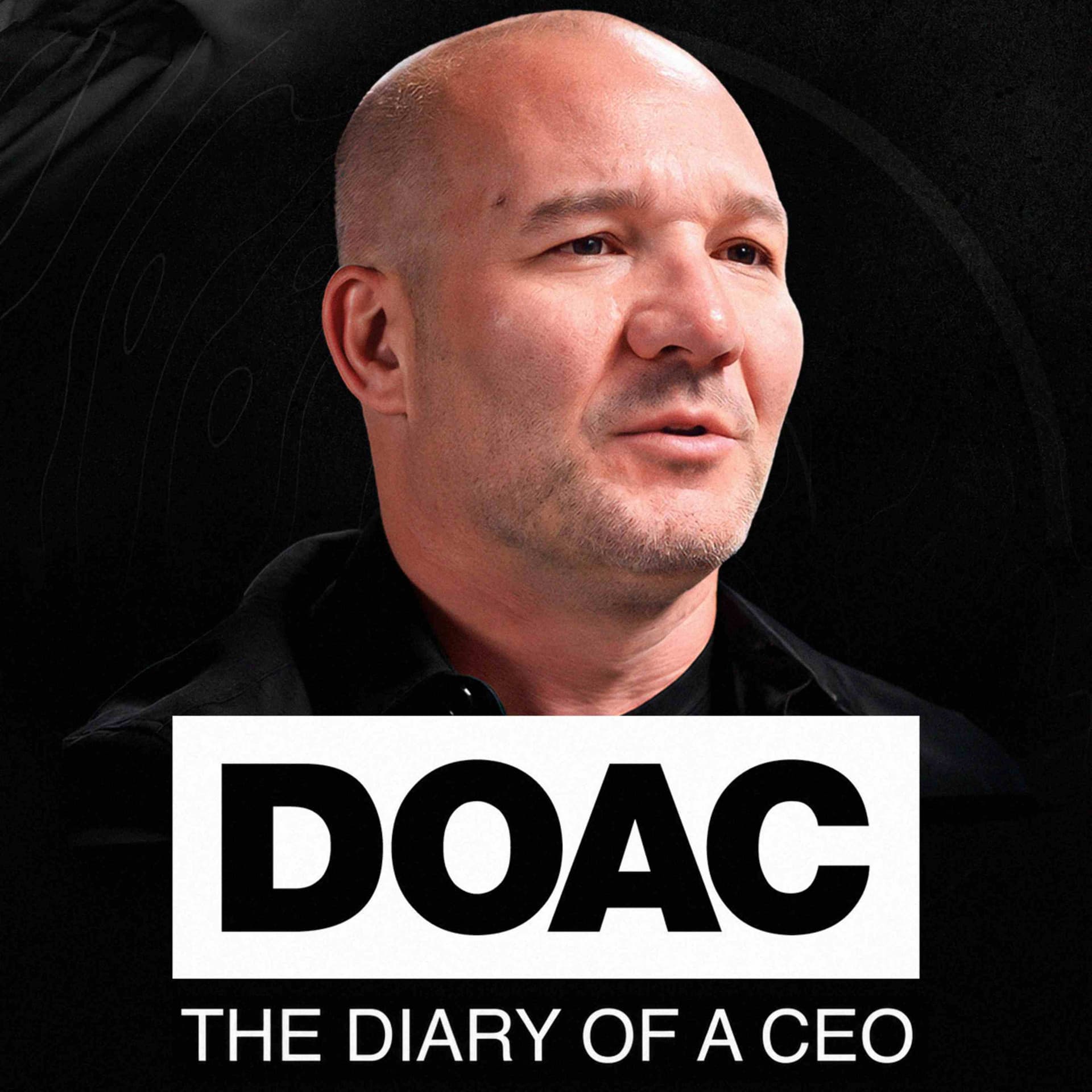
Podcast Summary: The Diary Of A CEO with Steven Bartlett - Moment 208: The Dumbest Financial Advice Everyone Weirdly Follows That’s Keeping Them Poor!
Overview In this episode of "The Diary Of A CEO," host Steven Bartlett interviews bestselling author and savings expert Morgan Housel. The discussion revolves around Housel's personal experiences and insights on risk, financial decision-making, and the importance of patience in investing.
Key Takeaways
- Personal Anecdote of Loss and Risk:
- Housel recounts a tragic experience from his teenage years when he survived an avalanche while his friends did not. This event profoundly shaped his understanding of risk and the unpredictability of life.
- He emphasizes that seemingly insignificant decisions can have life-altering consequences.
- The Nature of Risk:
- Housel argues that people often misjudge risk by focusing on major decisions while ignoring smaller, everyday choices that can alter their lives significantly.
- He suggests that most financial losses occur because individuals believe they can predict the future, which is inherently uncertain.
- Historical Analysis of Risk Events:
- Major risks in history (e.g., 9/11, COVID-19) were unexpected and not predicted. Housel highlights that the most dangerous events are those that catch us off-guard.
- Endurance Over Prediction:
- Housel introduces the idea that investing in preparedness rather than prediction is crucial. He quotes Nassim Taleb, stressing that “invest in preparedness, not in prediction.”
- Financial safety should feel excessive to ensure survival during unforeseen events.
- Investment Strategies:
- Simplicity is key in Housel's investment strategy: he focuses on cash, a house, and index funds.
- He advocates for dollar-cost averaging—investing a fixed amount regularly—regardless of market conditions.
- Long-Term Perspective:
- The discussion highlights that successful investing often requires patience and endurance rather than chasing quick gains.
- Housel shares that most of Warren Buffett's wealth was accumulated after the age of 60, underscoring the importance of time in wealth accumulation.
- The Importance of Flexibility:
- For young investors, Housel advises maintaining financial flexibility and liquidity while pursuing learning opportunities, especially in startups.
- He believes it’s crucial to take risks while young but to prioritize financial security as one ages.
- Lessons from Others:
- The episode references Ronald James Reed, a janitor who amassed a fortune through consistent investing and patience, exemplifying that substantial wealth can be built without complex strategies.
Conclusion Morgan Housel's insights fundamentally challenge conventional financial wisdom by emphasizing the significance of risk management, the unpredictability of life, and the virtues of patience and endurance in investing. The episode serves as a reminder that financial success is less about predicting the future and more about preparing for the unknown.
Additional Resources
- Listen to the Full Episode: [Spotify](https://g2ul0.app.link/H8BQBpwjsSb) | [Apple](https://g2ul0.app.link/Y3vybjBjsSb)
- Watch the Episodes on YouTube: [The Diary Of A CEO](https://www.youtube.com/c/%20TheDiaryOfACEO/videos)
- Morgan Housel's Books: [Morgan Housel](https://www.morganhousel.com/)
Relevant Quotes
- "Risk is what's left over when you think you've thought of everything."
- "Invest in preparedness, not in prediction."
- "The world hangs by a thread; tiny decisions can change the course of your life."
Written by AI. May contain mistakes. Listen to the episode to check what was said.
Transcript
Automatic transcript. May contain errors.0:01The Direvcio's brought to you by Progressive Insurance. Do you ever think about switching insurance companies to see if you could save some cash? Progressive makes it easy. Just drop in some details about yourself and see if you're eligible to save money when you bundle your home and auto policies. The process only takes minutes and it could mean hundreds more in your pocket. Visit progressive .com after this episode to see if you could save. Progressive casualty insurance company and affiliates. Potential savings will vary, not available in all states. I grew up skiing in Leittahua, California and I was a competitive skater -acer.
0:33All throughout my childhood and teenage years, I skied six days a week, ten months a year, all over the world. It was great. There were about 12 of us on the Squat Valley ski team. We had grown up together and we'd spent our entire lives together. When I was 17, this is in 2001, I was skiing with my two, two of my best friends, Brennan Allen and Brian Richmond. We would ski at a bounce, which is illegal. You're not supposed to do it. We would duck under the rope that says do not cross and we'd ski at a bounce because that's where a lot of the good skiing is. When we would do this, it would spit us out on this back country road.
1:06We'd have to hitchhike back. There's no chairlift when you ski at a bounce. You have to hitchhike your way back. We did it one morning in February, 2001. The three of us did it. When we did it, we triggered a very small avalanche. I remember it so clearly. I can still feel it 21 years, 22 years later. I can still feel what it is like. It's the weirdest sensation that I've had in my life because when you get hit by an avalanche, rather than pushing on the snow to gain traction with your skis, the ground is pushing you. All of a sudden, you're skiing along and you've got control and all of a sudden, boom, you have no control every more.
1:40The ground is pushing you around. Probably similar to what it feels like if you're standing on the ground during an earthquake. The ground's pushing you. It was a pretty small avalanche. It came up to our knees, ended pretty quickly. We had literally high -fived about it at the bottom and went about our day. We get back around to the base lodge. We hitchhike back. Brendan Bryan said they wanted to do it again. They wanted to ski again. I said, hey, for whatever reason, I just didn't want to do it. I said, hey, rather than hitchhiking back, why don't you guys go do it again? I'll drive my truck around and pick you up.
2:11We said, great. We made our plans when our separate ways. They went skiing. I went back around to take my boots off and jump in my truck and go pick them up. 20, 30 minutes later, I'd go to pick them up at the pickup spot and they weren't there. It only took us a minute to ski down the hill. 20 minutes later, I knew they weren't coming. I was not worried. I figured they had already hitchhiked home. After waiting for another 20 or 30 minutes, I just left and went back to the lodge. I expected them to be there and they weren't. I still didn't really worry. We didn't have cell phones back then and people were just comfortable being out of touch.
2:43If you didn't know where your buddy was, it wasn't that big a deal. When about the day, I started worrying a little bit. I remember I stopped at Brendan's house, inspected him to be there and he wasn't there either. I remember calling and leaving a message on his voicemail. I remember ending the voicemail by saying, I hope you're okay, man. Those are my last words. I remember that very clearly. The day went on and I think at about four or five o 'clock, Brian's mom called me and she said, Brian never showed up for work today. Do you know where he is? I told her what happened. I said, we skied the back side of Squaw where we'd hitchhike back.
3:16I was going to pick him up but they never showed up and I haven't seen them since. I also remember so clearly Brian's mom saying, oh my God, and hanging up the phone. That was so it's then we started getting worried. We called the police. The police didn't take it very seriously because they thought, they're out at a party. They ran off with a girl for the night. They weren't worried. We finally got search and rescue involved and rescuers, the probe poles, frowned Brendan and Brian buried under six feet of snow and they were, they had been killed from a massive avalanche. Look, I think virtually everyone listening to this, I'm sure you two have lost somebody close to you, somebody that you love.
3:51I know the experience was not unique in that way but it was the first time that I had experienced loss and it was the first bad thing that had ever happened to me in my life. I had a big impact on me and there were a lot of takeaways. I think at the time I didn't have the cognitive tools to piece together what happened. Or to learn about what happened. Like have any sort of takeaways but as I got older and thought about it and looking back, I put together all these like realizations of what that did to me, how it changed me and what were some of the lessons from it too. One that I talk about in the book that I think about all the time is my decision to not go with them on a second run.
4:32Was this completely brainless decision? I put no thought into that decision. It was not a cost -benefit analysis. I didn't think through it but it's the most important decision I've ever made in my life. A hundred percent chance if I was with them I would have died. And I had skied literally thousands of runs with Brendan and Brian. How many times did I deny a second run with them or say you guys keep going I'm going to go in almost never. But one time I did it saved my entire life. And so that, you really realize that the world hangs by a thread. Everybody thinks like oh you're going to put a lot of thought into your big decisions to make sure that you're successful in life where you go to college, what your career is going to be, who you marry.
5:09That's all great. But the world hangs by a thread and there are tiny little no -nothing decisions. Maybe that you made today of maybe it was wind across the street. Maybe it was when to leave to get in your car that can utterly change the course of your life. And so once you accept that of how much the world hangs by a thread, I think it becomes much more humble with your willingness to make forecasts about the future. What the economy is going to do, who's going to win the election, what's going to happen in my life, my career, my family's like we have no clue. We have no idea. Because all we can think about are the big decisions.
5:44We cannot piece together the chaos theory of I got in my car at the wrong time. I met the wrong person or I met the right person or you know I decided not to take a second run. We cannot forecast the impact of those things. And so that had a big impact on me too of just who are we to fool ourselves, though we can predict the next recession, that we can predict where our careers are going to be in 10 years, that we can predict how long our marriage is going to last, that we can predict how long we're going to live, we can't nobody can, because we can't predict how crazy these tiny events can turn into.
6:17And this comes right back to investing, doesn't it? Because most people that consider themselves to be investors, whether that's just putting a couple of quid into crypto or something else, engage in the idea that they can predict the future. And this is where it appears that most money is lost. Think about the biggest risk to the US economy over the last two generations. COVID? That's one of them. The others will be Pearl Harbor, 9 -11 COVID, and maybe Lehman Brothers couldn't find a buyer in 2008, which sparked the financial crisis of 2008. Those are the biggest risks by far. And the common denominator of every one of those stories is that nobody saw them coming.
6:56They were not in any newspaper before they happened. They were not in any economic outlook. Nobody was going on TV, warning you that this was coming. The common denominator of those is that they did all of their damage in two seconds. And that would be the case going forward. You can guarantee that the biggest news story and the biggest risk over the next year, or the next 10 years of our life, whatever it is, is something that nobody's talking about today. That you and I can't even fathom. Because it's always been like that. There's never been a time when the biggest news story was foreseeable.
7:27And it'll be like that going forward. So that's another just like embracing how fragile the world is. There's a great quote from a financial advisor who I really admire in Carl Richards. And he says, risk is what's left over when you think you've thought of everything. You can go out of your way to think about all of the risks that are in your life. And like, great. And like how you're going to prevent them. Great. That's a good thing to do. When you're done with that exercise, what's left over that you're not thinking about is what risk actually is. It's like by definition, we can never plan or even imagine what the biggest risks in our life are going to be.
7:58You say that insane as ever. You say, I think that the chapter title is risk is the things you can't see or something. Risk is what you don't see. Risk is what you don't see. That was a little bit terrifying. And it's true. And I think I think sometimes you can phrase it as terrifying. It's also kind of relieving that like, why are you going to put so much effort into trying to predict what the stock market's going to do next? What the economy is going to do next? Why are you building a forecasting model to figure out what the economy is going to do over the next 10 years? When you look at the last 10 or 20 years, how could you ever predict 9 .11 or COVID?
8:32And even look like something like COVID, there's like a 2015 Bill Gates TED Talk, where he talks about the biggest risk to society is a viral pandemic. So it's not that nobody saw that thing coming, but the specifics of when it's going to happen, how bad it's going to be, is it just going to shut down the economy for a week or two years? That is completely impossible. But there's also lots of other TED talks that say everything's going to be great. Of course. Of course. There's a lot more. So on balance, the world had no idea. I think on balance, the world breaks once per decade. Not exactly once per decade, but on average, once per decade, everything that you thought about risk and uncertainty and stability goes to shit.
9:12So how do I prepare? If risk is what I don't see, how do I prepare? There's another great quote from Nassim Talib that I like, where he says, invest in preparedness, not in prediction. So rather than going out of your way to be like, here's what I think is going to happen in crypto. Here's what I think is going to happen in the stock market. Just make sure that you have a big enough buffer in your finances, cash, liquidity being scared of debt. So no matter what happens, you'll at least have a fighting chance of endoring it and making through. One thing I've often thought about is that you should have enough cash in your investing portfolio.
9:47The amount of cash you should have should feel like it's too much. It should feel, it should make you wince a little bit. Because if you only have enough cash to put up with the risk that you can envision and the risk that you can foresee, you're going to miss a surprise every single time. Every single surprise is going to be a surprise to you. But if you feel like you have too much cash, then at least you have a fighting chance of putting up with the 9 -11, the COVID, the Pearl Harbor, whatever it might be. So when people look at my asset allocation, my investments, a lot of people look at it and say, you seem really conservative.
10:19Why do you have this much cash? What are you saving for? And my answer is always, I don't know. I have no idea what I'm saving for. Who are we to assume that we can predict the risks that are going to be in our own personal lives and throughout the broader world? Nobody can do it. The only way to prepare for it is to have what feels like too much safety. What is your capital allocation strategy? How do you invest your money? This is the thing people want to know most about you. I keep it as painfully simple as I possibly can. So literally my entire net worth is cash, a house, and index funds. And some shares of more KELOL, or I'm on the board of directors.
10:56And that's it. There's nothing else. I can summarize everything so easily and so cleanly. And truly, that's it. And it's not even like I have 20 bank accounts. I have one bank account, one brokerage account, and a house. And that's it. So simple. Why index funds? You're the reason I, your capital allocation strategy is almost identical to mine. I want to talk about the house thing as well. But after reading your book, I stopped trying to pick stocks. And I invested all of my available capital into index funds outside of investing it in starting companies. So I'm a shareholder and I don't know, 50, 60, 70 companies.
11:32I, all my other available capital is invested in index funds. And then I have a very long -standing, large position in Ethereum, which I've held for like six years or something, which has done me very well. Yeah. And the Ethereum investment is also based on the fact that I run a software business that is in blockchain. And I could see that developers are building on top of Ethereum more than any of the blockchain. So that insight was really beneficial to me. And six years, so even with the big fall of the last two years, so you're still up a lot. Yeah, I think your book taught me that successful investing is when you lose the password to your investment account.
12:11Yes. Exactly. I don't actually think you said that in there, but that's like, when I lose the password to my investment account, I'm so proud of myself. Yeah. Because it means I haven't checked it in forever. And so it was funny because you were coming today. I thought, oh, yeah, I have all this money in these index funds. I'll check it. And I thought, fuck, I don't know the password. I think that's good. That's why you're going to do OK. I'm so happy. The reason I do this, what's important is that I am not one of the people who says nobody can beat the market. So therefore, use index funds. That's not what I believe.
12:37I think it's extremely hard to beat the market and very few people will do it. But I think there are really smart people who can do it. And people who I know who I could invest with. The reason I don't is not because I don't believe it can be done. It's because the variable that I want to maximize for in my investments is endurance. If I can just earn average returns for an above average period of time, it's going to lead to a amount of success that will literally put you in the top 5 % of investors. My parents are a great example of this. My parents are smart people, but they really they have no financial background.
13:09And they have like minimal financial interest, I would say. And but they have dollar cost average into index funds for going on 40 years now. And literally, if you look at the returns, they've never sold anything ever. And literally, if you look at the returns, they'd probably be in the top 3 % of professional investors. What is for anyone that doesn't know what is dollar cost averaging and what is an index fund? Dollar cost averaging means you buy the same dollar amount of investments every single month to come hell or high water. Doesn't matter what the stock market's doing, recession, boom, bust, you say, I'm going to put $100 or whatever it is in the stock market on the first of every month.
13:42Now, most people who like have a 401k at work are doing this, whether they know it or not, they have $100 or whatever removed from every paycheck. And it goes into the funds that they own and they don't have to do anything. Whether you know it or not, you're actually doing it. The contrast to that would say, I'm going to buy and sell based off of how I feel in the stock market. I wake up, I watch CNBC, I decided to sell. I'm going to put it back in when I feel better about the market. It's the contrast to that. An index fund is just a single fund that owns hundreds or thousands of stocks within it.
14:12And if it's diverse enough, if it's big enough, really what you're doing is you're owning a slice of the global economy, which is how I think about it. It's thousands of individual stocks in there, Tesla, Apple, whatever it would be. But really what you're doing is you're owning a slice of capitalism. If I was your son and I said, Dad, prove to me that that's a better long term wealth creation strategy than buying crypto or buying companies that I use or like, how would you explain that to your kid? Your ability to do well over the next one year or five years is going to have no role whatsoever on your lifetime ability to generate wealth.
14:45All that's going to matter is not what are the best returns you can earn. All that matters is what are the returns that you can sustain for the longest period of time? All that matters is your endurance. It doesn't matter if you can double your money this year or even double your money again the next year. All that matters is can you stick and keep it going for 50 years? That's where compounding comes from. Previous. All because the formula for compounding is returns to the power of time. That's not quite it, but like more or less, that's it. So in that equation, if you understand the math, all of the heavy lifting comes from the exponent.
15:17Previous. Because that's how exponential growth works. That's how it works. It's literally exponential. Give me a case study where someone has followed that strategy and done well. OK, here's one way to explain it that I used in the book. 99 % of Warren Buffett's net worth was accumulated after his 60th birthday. After he turns 60 years old, 99 % of his wealth has been accumulated after that period. Because the longer you hold that for, the crazier the numbers get. When he was 60, I think he was worth about three billion dollars. A lot of money is multi -billionaire, but now that he's 90, he's worth over a hundred billion dollars.
15:50And he's given like a hundred billion away to charity. So if he didn't do that, he'd be worth, he'd go from three billion to two hundred billion. Since he's been 60. Because the numbers just get crazier at that point. He's worth a hundred billion dollars. So if his market, if his net worth goes up 10 % in one year, he makes ten billion dollars, which is three times that he was worth when he was 60. So that's when you look at somebody like Buffett, is he a great investor? Is he a great stock picker, of course. But the real secret to his success is that he's been a good investor for 80 years. And if he had retired at age 60 or at age 50, nobody would have ever heard of him.
16:23He would have been like one of the other multi -billionaires who lives in Florida and plays golf. And like, you've never heard of him. The reason he used a household name is because he's been doing this nonstop since he's been 11 years old. And he's never stopped. It's just the endurance that's made him so wealthy, not necessarily the annual returns. Patience. It's a difficult thing. It also reminds me of the story that you talk about in the introduction of your book about the janitor, Ronald James Reed, who when he died in 2014, age 92 had a net worth of over eight million. And he was a janitor.
16:57How did he do that? He took what very little money he could save from his job as a janitor, mopping floors at the gas station. He put it in stocks and he left it alone for 70 years. And that's it. That's all you need. That's all you need to do. If you have endurance in your investing and you can keep it going for years or decades, you don't need to be a genius stock picker. And not only do you not need to do it, if you have endurance, you're going to be literally 97 or 99 % of the genius stock pickers. And what's so interesting about it is like picking the right stocks is hard. It's supposed to be hard.
17:30There's no world in which everybody who tries to beat the market is going to do it. Of course, it's hard. Just like being an MBA player is hard. And but having endurance is like largely in your control. It's so much easier to just be patient than it is to pick the right stocks. Every single day. I think some people nature nurture. Some people like probably Ronald Reed and my parents just understand it naturally. It's not hard for them to be patient. But do like there are professional investors who work 80 hours a week for 30 years to try to beat the market and they can't do it. Not only some, that explains like most of them.
18:03And even the ones who can do it are maybe going to beat the market by half a percent per year, 1 % per year. But if you can have endurance, that is that's a bigger benefit than you can have by even being like a very successful stockbroker. Like somebody who outperforms the market by 1 % per year. And they can do that for 10 years. That's amazing. That's like now rush more investor. But somebody who earns average returns and doesn't for 20 years is going to have way more money. You do it for 30 years. You're going to be filthy rich. You'd be like Ronald Reed. You can be a janitor who leaves $8 million to charity when you die.
18:36You've spoken about a few of the skills that are required for making money. The one that really stuck out to me that you've discussed so far is this. The idea of endurance, patience, regardless of what's happening in the markets, regardless of the volatility, lose your password and sit on your hands. Just on that point as well, I remember reading somewhere, it might have even been your book. It's so crazy because the things that I know about money, I can't remember where I've got them from, but most of them came from this book. Like most of the principles came from this book. And one of the things that I read was that Warren Buffett would go like five years without allocating capital.
19:08And this quote where he said, the hardest thing to be a great investor is to be able to sit on your hands and do nothing. Sit on your ass and do nothing. That's it. That's a as a monger quote. And that's what we're doing right now. Berkshire Hathaway, which is Warren Buffett's company, has like $150 billion of cash right now. And that's their entire 60 year history of Warren Buffett and Berkshire Hathaway is build up a shit load of cash, wait 10 years for an opportunity, deploy it all, and then go back to waiting and building up cash. Crazy. And that's that's how they done it. Good opportunities are rare.
19:39Of course, Sarah, they should be rare. It shouldn't be that anybody can just open up their stock account and find the opportunity of a lifetime. What are the, it's going to come once a decade. What are the other skills that endurance patients to create to get money for the ordinary person endurance and patience is 99 % of what you need as an investor because the opportunities there to invest in a low cost index fund are available for everybody. And you can do that for your phone like you do from your phone, open up a Robin Hood account, buy some index funds, anybody can do that. And so that, and that was not always the case.
20:07It used to be like 20 years ago that the only people who could invest were people who had a lot of money and could afford a broker and had connection to a broker. And yet to like make a phone call. And make a phone call you had to know a guy and even then you were going to pay a ridiculous fee to that person. The pieces of paper and all kinds of it was a joke. That's 20 years ago. It was not that long ago. So I think like people aren't grateful enough or appreciative enough of how much things have changed that open up those opportunities for everybody. You talk about the skill of keeping money, which is different from the skill of getting money is predicated on survival.
20:40Financial survival and just putting up with all the unpredictable nonsense that's going to happen between now and the end of your life. And we talked earlier about the surprises, Pearl Harbor, 9 -11, all these big surprises. Just it's just your ability to endure things like that that's going to be literally 90 % of your financial success and your investing success. So gaining money is like being an optimist and taking a risk like being optimistic about yourself, swinging for the fences, you need that to get rich. Staying rich is like the exact opposite. You need a level of being conservative. You need to be scared.
21:14You need to be like acknowledged of all the unknown risks that are in front of us and have a financial allocation and a mindset that's going to allow you to endure them and survive them financially. You need both of those skills at the same time. So you're well. Your kid is 20 years old. He's broke. Do you tell him to go and take huge outsized risks? He's not got a family. He's not got a mortgage. He's not got a dog. What advice do you give him at that age to create wealth? I would actually say that I think this is a little counterintuitive that when somebody is young, you think you would say you got 50 years in front of you, swing for the fences.
21:47Go for it. It's also when your life is the most fragile. It's when you're most likely to be laid off, most likely to change your career, most likely to break up or get divorced, whatever it would be. And so for that, you need quite a bit of financial flexibility, just cash and liquidity. So once you had some level built up, whatever the level might be for a different person, then do something crazy. I also think that for careers, some of the best career advice, that's maybe not universal, but when you graduate college and you're looking at your career, don't take the safe job, which is usually the big company, the blue chick company, go for the weird company.
Read the full transcript
22:22Go for something crazy because when you're older, when you're 40 and you have two kids, in a mortgage, you're not going to want to take the weird job. That's when you want the stability. That's when you're probably going to want the job that's got good benefits and a stable paycheck because you need that. When you're 22 and you're not tied down by anything, don't go work for Goldman Sachs or Apple or Deloitte or something like that. Go for the weird startup where you, like, you're going to learn something completely different. Link to that point is in the weird startup, you're going to be so close to the failure and failure is the knowledge.
22:53You're going to learn so much more. There's so many people who take the blue chip, the safe job at a college and it puts them on a very predictable track. You're going to be an analyst for two years and then if you're good, you'll get promoted to senior analyst and then you'll get promoted to associate. It's like very stable and linear and that's like you're capping all of your upside. If you go for the weird company, you're either going to do one of two things. It's either going to fail and you're going to learn a lot from that or it's going to take off and you're going to learn a lot from that.
23:20Then maybe when you're 40, after going through all that, then you want the stable job at the big company. It's interesting. I was thinking as you're speaking that the proximity from your desk and the CEOs probably needs to widen over time. Yes. I think that's true. Absolutely. Most people, I think if you do it the other way around or most people would never do it the other round. If you start your career in the stable company, you're probably never going to leave. You're going to get addicted to the nice paycheck, the stable benefits, what not, and you're never going to take a risk and do anything else.
23:51Maybe that's okay. Maybe for some people's personalities, that's exactly what they want. But I think there is a higher level of regret for people that start in a safe company. And then they get the golden handcuffs they can't leave. And by the time they're 40 and they realize that they wanted to work at the crazy company, they can't because they got a mortgage and two kids and they're saving for retirement and they can't take the risk at that level of their life. You introduced this concept of tales, long tales. And this also changed my life. Change my investment strategy, I should probably say.
24:19We talk about the example of venture capital where for every 50 investments that venture capitalists make, statistically half of them will completely fail. 10 will do okay. And one or two will make huge profits that drive 100 % of the funds returns. This is a lesson about investing in finance, but it's also a lesson about life. It's always life. It applies to everything. Tales where just a couple of things that happen, explain 90 or 99 % of what matters. It's always the case. You see it in business where you take in the United States, there are thousands of public companies that you can buy stock in.
24:57But the huge majority of the value in the US stock market is in like 10 companies. Apple, Tesla, Microsoft. So even though you have thousands of companies, ten of them are the ones that really matter. And we're going to drive all of the returns over time. So why don't you just buy those ten? Because nobody knows what they're going to be. They're going to be in hindsight. That's the argument for owning a thousand of them is that you know that the ten that are going to be the next big ones are going to be in there. All of this is a case for humility. This is honestly what I took away from your book.
25:23You're expecting to walk away with tips, all these tips, these tricks, the special ways to make more money than everybody. What I came away with is this one important lesson that I've never been able to unsee, which is I don't know. I think that's great. And back to I wrote this book for myself, that's been the biggest lesson for me. There's not only do I know, but nobody else knows either. Everyone else is bullshitting their way through the investing market too. They don't know either. I mean this crypto chat, we're one of my friends. I'm disparaging one of my friends. He's the guy in the chat that's always posting the forecast graphs.
25:59You know those ones when they kind of like the little log of graphs where they forecast where the stock or the crypto is going to go. I think it's going to go right and it's always up into the right. And it's kind of like male horoscopes. I had someone say that. That's such a great. Yeah. I think that's I think what's closest to investing is something like the horoscope or even if you know it's bullshit, you want to read it. Why? Because it's comforting. Where a lot of people want out of their investing forecast or whatever it is, is they want to reduce the uncertainty that's giving them stress.
26:29Because everybody I think intuitively knows that the future in front of us is unknown and it's unknowable, but that hurts. And so if it hurts, you try to reduce that stress by finding someone who says I do know what's going to happen.
26:44If you're someone running a business today, that means you're probably operating in a world that doesn't sit still tariffs and trade policies are dynamic customer expectations shift constantly and the pace of innovation is relentless. So your margin of error is becoming increasingly smaller, making decisions without full visibility across your business is not only risky, but it inevitably slows down everything. And I see it all the time, businesses with the right ideas, but they're stuck because they're spread across five systems that don't talk to each other. Many of my companies now use our sponsor NetSuite by Oracle, which has an AI powered business management suite that allows you to see your business more clearly.
27:21Everything from financials to HR to operations lives in one place. So instead of chasing information, you've got it all in front of you. It operates in real time so you can forecast with assurance, spot problems before they even become problems and generally move faster without blind spots. If your business is generating seven figures or more, there's a free ebook that's worth your time reading. It's called Navigating Global Trade, three insights for leaders. And you can download it now from netsuite .com slash Bartlett. That's netsuite .com slash Bartlett. I'll link it below.
From the publisher
What if the key to investing wasn’t finding the next big thing—but surviving the next unknown?
Bestselling author and savings expert Morgan Housel shares the true story that changed how he sees risk forever—and how it reshaped his philosophy on money, markets, and why most people lose when they try to predict the future.
Listen to the full episode here -
Spotify - https://g2ul0.app.link/H8BQBpwjsSb
Apple - https://g2ul0.app.link/Y3vybjBjsSb
Watch the Episodes on YouTube - https://www.youtube.com/c/%20TheDiaryOfACEO/videos
Morgan Housel's books - https://www.morganhousel.com/
Learn more about your ad choices. Visit megaphone.fm/adchoices