In short
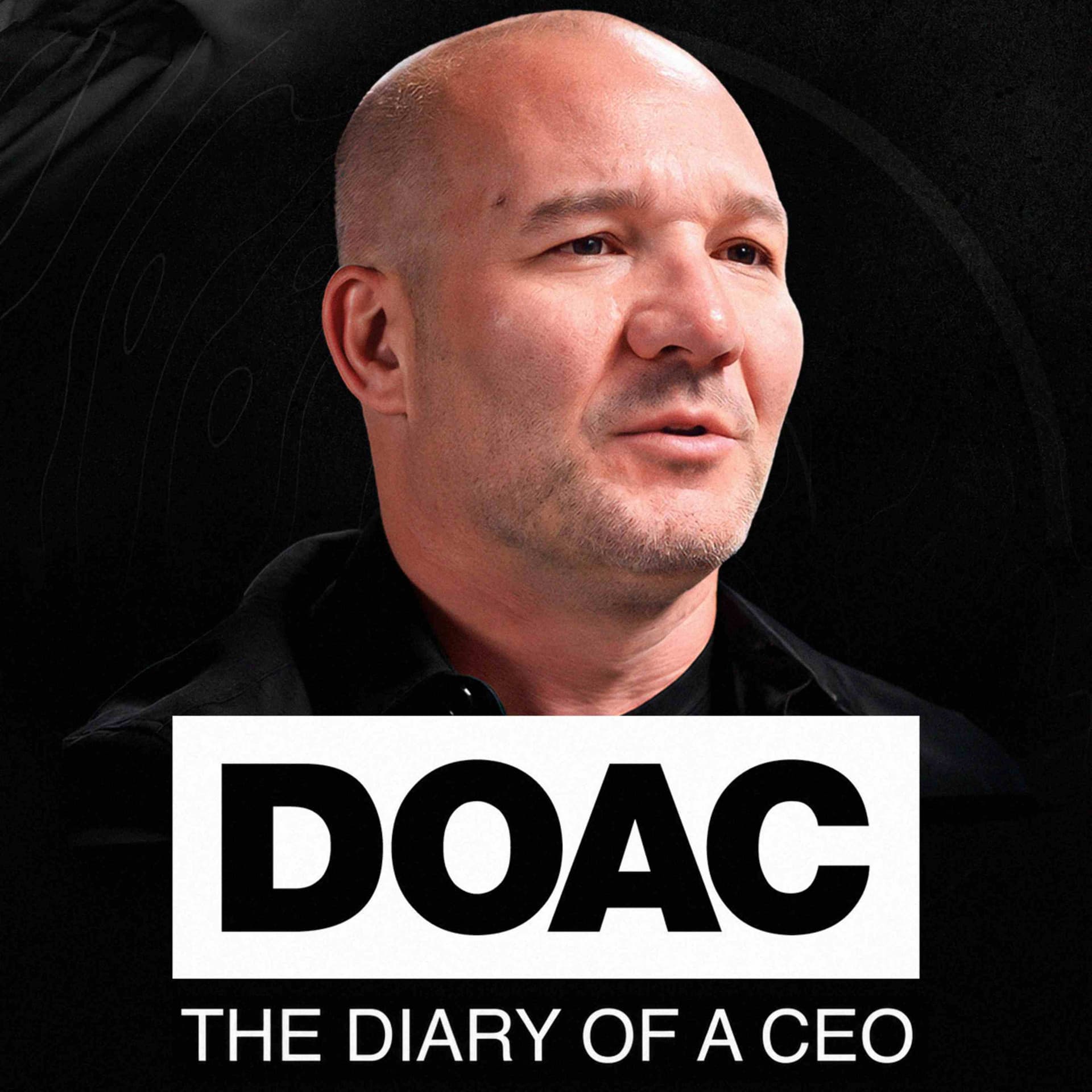
Podcast Episode Summary: The Diary Of A CEO with Steven Bartlett
Episode Title
Most Replayed Moment: 6 Daily Habits That Expose Your Fake Values - Deepak Chopra
Podcast Description In this episode, Steven Bartlett features Dr. Deepak Chopra, a prominent expert in mind-body medicine, who discusses the transformative power of daily habits and consciousness. With his extensive background, including over 85 books, Chopra presents strategies for breaking free from stress and rediscovering one’s authentic self.
Key Themes
- Transformative Daily Habits: Chopra emphasizes six essential daily habits that can lead to significant personal transformation.
- Consciousness and Awareness: The discussion focuses on the impact of heightened awareness and the importance of being present in the moment.
Key Insights from Deepak Chopra
- Understanding Stress
- Stress is often a result of resistance to existence in the moment.
- Embracing experiences, even the painful ones, allows for healing and growth.
- Shift in Identity
- Transitioning from an assumed self to a fundamental self is essential.
- Recognizing oneself as consciousness, separate from experiences, promotes independence from external stressors.
- Creativity vs. Determinism
- Creativity serves as a counterbalance to deterministic thinking.
- Fundamental creativity disrupts habitual patterns, leading to original thought and innovation.
- Daily Practices for Well-Being
- Sleep: Vital for mental and physical health; lack of sleep can lead to serious health issues.
- Mind-Quieting Practices: Meditation and reflection are crucial for calming the mind.
- Exercise: Engaging in physical activity is important for overall wellness.
- Mind-Body Coordination: Practices like yoga enhance self-regulation and connect mind and body.
- Healthy Environment: Surrounding oneself with positive social and emotional influences is vital.
- Nutrition: Emphasizing organic, whole foods contributes to physical health.
- Facing Existential Realities
- Acceptance of death and the impermanence of life is necessary for true self-awareness.
- Engaging with the idea of mortality fosters a deeper understanding of existence.
- The Role of Joy
- Joy is fundamental; loss of joy equates to a wasted life.
- Recognizing and cultivating joy and wonder is essential for a fulfilling life.
- The Importance of Play
- Engaging in play stimulates creativity and joy.
- Play should be seen as a valuable activity rather than a waste of time.
Conclusion Deepak Chopra’s insights encourage listeners to adopt daily habits that promote awareness and creativity, moving beyond mere existence to embrace a more joyful and meaningful life. By focusing on habits that enhance well-being and self-awareness, individuals can significantly transform their experiences and uncover deeper truths about themselves.
Additional Resources
- Full Episode Links:
- [Spotify](https://g2ul0.app.link/I2VIcxLycWb)
- [Apple](https://g2ul0.app.link/EyaS6APycWb)
- [YouTube](https://www.youtube.com/c/%20TheDiaryOfACEO/videos)
About the Host Steve Bartlett is an entrepreneur and public speaker known for his unfiltered exploration of influential stories through his podcast, aiming to shed light on personal transformation and consciousness.
Follow Steven Bartlett
- [Instagram](https://www.instagram.com/steven)
- [LinkedIn](https://www.linkedin.com/in/stevenbartlett-123)
---
This markdown file encapsulates the essence of the podcast episode, highlighting the vital points made by Deepak Chopra, thus providing an accessible summary for readers wishing to grasp the core ideas discussed.
Written by AI. May contain mistakes. Listen to the episode to check what was said.
Transcript
Automatic transcript. May contain errors.0:00Right now, with the Home Depot, you'll find stored solutions made to fit your needs. Grab an HDX tough tilt to protect your tools, or keep your sports equipment contained with reinforced snap fit lids, or stack up and make better use of your space with bins and totes built to last. Whatever your story, we've got the gear to keep it organized and protected at the Home Depot. How doers get more done?
0:34So in your life if someone dies, cut for a bit, do you suffer? You grieve which is a natural process and it has a life cycle. You don't hold onto it. In fact you embrace it. You embrace the, anytime you'd recoil or deny resistance creates even more stress. So what we call stress is resistance to existence in the moment. Okay, if you don't resist experience in the moment, you know, it's passing by. So something really bad happens at work. I get really bad. You know, my boss tells me I'm fired. The mindset required to avoid suffering in that case is to Take the news. It's not a mindset. It's a it's a step in awareness.
1:26the awareness of the mind is not the mind. Who is it that or what is it that knows a thought? That is what you need to shift to. Okay. Once you shift from the experience to the awareness in which the experience is happening, you're independent of it. And that's what actually those eight limbs of yoga are about. It's a process. a shift in identity, we started with that, a shift in identity from your assumed self to your fundamental self, which is infinite, which is without cause, which is not subject to birth and death, which is faceless, timeless, incomprehensible, infinite, irreducible and fundamental.
2:19It feels almost like I'm stepping out of myself and looking at myself. Correct. Looking at the projection of yourself. You're looking at the projection of yourself. Which is very hard to do. It's very hard to do because we are increasingly becoming avatars, especially with things like social media. We've been reinforced. like you know I have two million followers or a million followers of about five hundred thousand followers that's following my avatar. So we don't know who we are. You'll confuse yourself with the avatar and the battle is all between avatars wanting importance. How does one resign from that battle and take back my piece?
3:05Actually the opposite of that is creativity. The creativity is the opposite of determinism. If you don't want to be a biological robot or an algorithm, which is what we are now, we are biological algorithms, biological robots. And that's by the way part of our evolution. It's not something all animals, but the animals have an advantage, they live in the present moment. But you and I have an imagination that can see into the future, that can even look at death as the culmination of this life experience. We regret the past, we anticipate the future, we are never in the present, when this is the only place we are right now, is the present.
3:54There is no way to escape it, but in our imagination we escape it. So the worst use of imagination is stress. The best use of imagination is creativity. Creativity is a disruption in the algorithm. It's a discontinuity, fundamental creativity, not, you know, usual innovation like iPhone 13 instead of iPhone 12 with a better camera. That's not what creativity is. Creativity is a death and a resurrection. It's a death of context, meaning, relationship and story, and a new meaning, relationship and story. but that's fundamental creativity. That's Einstein coming up with the theory of relativity or the quantum physicists breaking every rule that we knew in Newtonian physics.
4:46Or a great piece of art, Beethoven's fifth. These are original creativity is a disruption in the algorithm. them. To this idea of my avatar, my avatar, getting into this sort of avatar wall with other avatars, my antidote to that is my own creativity. Your own creativity. Every moment you have a choice to repeat the past or be a pioneer of creativity of the future.
5:24And The world is not flat anymore. The ground is not stationary anymore. The world is not material anymore. Every technology that you use is based on the new idea that the essential nature of the physical world is not physical. If I could see you as you really are, I'd see a huge emptiness with a few scattered dots and spots and some random electrical discharges. And at the most fundamental level, there are no boundaries. boundaries are perceptual. So when we experience the spiritual ecstasy which is ineffable, there are no boundaries. That's why people in near -death experience, people with psychedelic experience, people with peak experiences, athletes, musical performance, any break from ordinary reality is ineffable and healing actually.
6:25That's why the recent Presurgence in psychedelics is very interesting because it takes you away from your identity of being squeezed into the volume of a body in the span of a lifetime. And point number four. The five points of suffering. Point number four. Point number four, confusing yourself with yourself, your ego identity. We've talked about that, and number five is death. Death. But all of them have one solution. First one, find out who you are. How does one find out who they are? Transcendence. How does one transcendence? There's no, here's another thing. There's no system of thought, no system of thought, religion, philosophy or science that that will get you into knowing true reality, because systems of thought are just that, systems of thought.
7:22What is it that gives rise to thought? That is what you want to know. And that's been the eternal quest in spiritual traditions. I'm not talking about religious dogma or ideology. You know, these days is very fashionable for people to say I'm not religious but I'm spiritual. It means the same thing. When you have a spiritual experience, number one, transcendence, you find your identity beyond space and time. Number two, emergence of platonic values, like truth, goodness, beauty, harmony, named after Plato, or love, compassion, joy, equanimity, and number three, loss of the fear of death. That's Jesus, that's Muhammad, that's Rumi, that's Buddha, that's every luminary that you have can study since people created systems of thought.
8:18So how does what's the easiest way to track? There's someone listening to this right now. They are driving up the motorway. They're a lorry driver. Take some time every day to be unoccupied. Even spiritual pursuit is an occupation. So take a little bit of, you know, what I think it was Kafka or somebody who said, all of human problems, humanities problems come from our inability to sit quietly and do nothing. We'd rather electrocute ourselves. We always doing, doing, doing. We have human doings. We're not human beings anymore. So if I take, I pull over the lorry that I'm driving up the motorway and I say, did you know, do you pack told me take some time for myself?
9:03So I sit in the lorry for 15 minutes every day. How is that going to help me to transcend? It starts a process. We begin to ask yourself, who am I? I'd reflect on this. These questions every day, who am I? What do I want? What is my purpose? What am I grateful for? And who am I without these constructs? It's a big mystery, right, who you are. Ultimately you realize you're the awareness in which all experience happens, but you're not the experience. The experience is in time, you are not in time. And this requires a different kind of education. It's not part of our culture. It used to be part of culture.
9:54You know, if you read Plato and the Republic and you'll see that this was part of every culture. But it was few luminaries. People romanticized even about this in India's spiritual country. Well, India's been violent forever. A few luminaries to the ages of the Upanishad, that we have a romance around them. Greek culture, you know, oh, Bob, you know, the Greeks were the most civilized in the world. Well, yes, Socrates and Parminides and, you know, Pythagoras and I can name a few, but the rest of the country, even in those times, you know, they had slavery, they had sexism, they had these, the source of the Olympics where they used to sacrifice humans and, you Even in our days, we're still repeating that cycle with the word you call cheerleaders, the virgin vessels of the past.
11:02We haven't changed actually much. What else in terms of starting your day like daily habits? So you talk about sleep. It's being incredibly important. Here are the daily habits. Number one is sleep. Now we know by the way that lack of sleep is the number one predictor of premature death from cardiovascular disease. Lack of sleep is also a predictor of Alzheimer's. Lack of sleep interferes with the creativity. Lack of sleep causes inflammation, so that's for sure. Number one, number two, I think is any practice that quietens the mind, meditation, reflection, contemplation, sitting quietly, watching a breath, etc.
11:47Number three is exercise. Number four is mind body coordination, as in that's different than regular exercise. Yoga practice and martial arts, breathing practices, Tai Chi Chi Gong, they actually activate a different part of your nervous system, which is the parasympathetic nervous system, which causes self -regulation in the body. So it's not just exercises, you know, something that puts mind and body together, even gymnastic or things like judo and I mentioned martial arts, but yoga is my practice. Then emotional, your emotional and physical environment, your social environment, because we live as social beings.
12:38So, you know, if you have toxic relationships, it's going to cause physical toxicity. Then nutrition, we now know that food that causes inflammation, refined, manufactured, processed food with chemicals, antibiotics, hormones, insecticides, pesticides. It's poison, it's like putting, putting agent orange in your body. So organic food, farm to table, maximum diversity of plant -based foods. Now we know a lot about micronutrients, we know about biological rhythms. But ultimately I think spiritual experience is very important because no matter what you do, no matter what you do, no matter how healthy you are, there is old age, there is infirmity and there is death.
13:31So unless you face those bright head -on, when you are healthy, not when you are in a crisis, not when somebody dies in your family, then everybody panics. I had a crisis in my life when I was six years old. My father was in England. He was training to be a cardiologist. I was living in my grandfather. And one day we got a telegram that my father had passed all his exams. He was now fellow of the Royal College of Physicians, big deal in those days. We got a telegram my grandfather wanted to celebrate so he took me and my little brother to a carnival, then to a movie. I even remember the movie, Ali Baba and the 40 thieves.
14:19Then we went to a fancy restaurant and then in the middle of the night he died. And they took him to for cremation, brought his ashes back in a little jar about the size of this coffee cup or a little bigger. And one of my uncle said, what happened? Yesterday he was taking the kids to a carnival and today he's a bunch of ashes. My little brother who'd later became the dean of education at Harvard Medical School. He was four years old. He started to lose his skin. His skin started peeling off. I went into a panic and And my uncle took my brother to every physician. They couldn't find a diagnosis till somebody said, you know, he's missing his parents, he's feeling vulnerable, he's losing his skin, shedding his skin because that's a metaphor for his vulnerability.
15:16He'll be fine when his parents come back and sure enough, as soon as they came, my brother was healed. So at six years I had a crisis, existential crisis. went on to become a doctor. But what happens? You go to medical school, the first thing you see is a corpse. You're supposed to understand life by dissecting a body. You know, it's the way we are trained. You started off by looking at a human being as an anatomical structure rather than a process and consciousness. So it took me a long time, you know, going through medical school, training, myself going through crises, smoking, addictive behaviour, alcohol.
16:01I remember resuscitating a patient, putting a pacemaker, putting him on the respirator and then going outside to smoke a cigarette. And then, you know, I was disgusted with myself. I threw a remissing rate. That evening, I threw away the scotch. And I decided that I wanted to understand who am I? If I made you Prime Minister or President of the world, you know, if there was one significant change you could make to lead us more towards that better future of enlightenment. I would say an education that does not sacrifice self -awareness. We have information overload right now. I don't need information overload.
16:50I can Google it or now go to chat GPT or something like that. What I need to know is who am I? How do you feel about chat GP? GPT. It's good. I think it's very good. And I think it's unavoidable also. So I actually went to a demonstration recently by Microsoft and something that's coming soon. It's called Prometheus. It's way beyond chat GPD. Interesting. It'll put most of us physicians out of business because it makes the best diagnosis, gives the best information. What happens then? It's your purpose and your meaning. Well, we have more time for creativity. fundamental creativity to create joy in the world.
17:37I think the essential message is, if you're not joyful, you wasted your life. I see entrepreneurs all the time, young guys coming up to me with amazing ideas, but they're talking about exit strategy before they've started the business. It's like, you know, dividing the loot before there's a train to rob. But they're already talking and we're living in a hustle culture, you know, I have five exits. You keep exiting, exiting, exiting and you're still hustling and you're dying and that's the final exit, you're still a hustler. So I see make joy and self understanding, self awareness, the fundamental purpose of existence and everything else will follow.
18:31Where's your joy? Where is that, where did you drive it from? The fact that I exist and I'm aware of existence, that's a perpetual surprise to me. I was looking at emotions and what's the healthiest emotion you can have? It's not love, it's not compassion, It's not even joy. It's all. It's wonder. Why do we exist? And why do we have the awareness that we exist? If you're perpetually surprised and full of wonder and joy, you return to essence. And what we've lost to this world today is the loss of innocence. How do I get my innocence back? Are you married? I'm in love. Okay, well, when you have a child, you'll see it.
19:30You'll see it. You know, a child is spontaneous. Isn't the moment? Is joyful, unless it's wet or hungry, but that's a different situation. but it's joyful. It's just looking. I was the other day I was in a train, you know, from Orlando Airport to baggage claim. Everybody was stressed in the train, bearing my Hispanic to mother on the phone and full of anxiety and shared a little baby in the crib. and this baby was looking around in total amazement. Finally, it caught my eyes and it gave the most amazing smile. And the whole room lighted up, just looking at that innocence. We have lost our innocence and we take it away from our children.
20:29So, you know, when children love laughter, they love stories, They love surprises. They love to play peekaboo. When's the last time you were surprised?
20:46I can't recall being surprised. So when I feel I want some joy, I just look at children playing. Is there a way to bring that to me back into our lives as a practice? That in a sense? Yeah. Play. Play, not drama. How does that old's play scene is a waste of time? No, play is when you find creativity and joy. I'm not talking about drama, I'm talking about play. Play for the sake of play. Now even sports has become competitive, but when you played because you were playing, when When a musician is playing, they're not thinking of the end. When you're singing a song, you're not thinking of the ending of the song.
21:36You're in the song. When you become the song, when you become that which you're playing, when the music and the musician become one, when the nor and the known become one, when the observer and the observer become one, when the lover and the beloved become one. That's transcendence. That's joy. That's play. What you just listened to was a most replayed moment from a previous episode. If you want to listen to that full episode, I've linked it down below. Check the description. Thank you.
22:13If you're someone running a business today, that means you're probably operating in a world that doesn't sit still. Tariffs and trade policies are dynamic. customer expectations shift constantly and the pace of innovation is relentless. So your margin of error is becoming increasingly smaller. Making decisions without full visibility across your business is not only risky, but it inevitably slows down everything. And I see it all the time, businesses with the right ideas, but they're stuck because they're spread across five systems that don't talk to each other. Many of my companies now use our sponsor NetSuite by Oracle, which has an AI -powered business management suite that allows you to see your business more clearly.
22:50Everything from financials to HR to operations lives in one place, so instead of chasing information, you've got it all in front of you. It operates in real time so you can forecast with assurance, spot problems before they even become problems and generally move faster without blind spots. If your business is generating seven figures or more, there's a free ebook that's worth your time reading. It's called Navigating Global Trade, three Insights for Leaders. And you can download it now from netsweep .com slash Bartlett. That's netsweep .com slash Bartlett. I'll link it below.
From the publisher
Dr Deepak Chopra is a world-renowned expert in mind-body medicine, a best-selling author, and a global leader in the field of personal transformation. With over 85 books to his name, Deepak's work has revolutionised the way we approach wellness and consciousness.
In today’s moment’s episode, Deepak Chopra reveals six daily habits that can radically transform your life. He also explores the profound impact of awareness, explaining how shifting your consciousness can help you break free from the cycle of stress and rediscover your true, authentic self.
Listen to the full episode here!
Spotify: https://g2ul0.app.link/I2VIcxLycWb
Apple: https://g2ul0.app.link/EyaS6APycWb
Watch the episodes on YouTube: https://www.youtube.com/c/%20TheDiaryOfACEO/videos
Learn more about your ad choices. Visit megaphone.fm/adchoices