In short
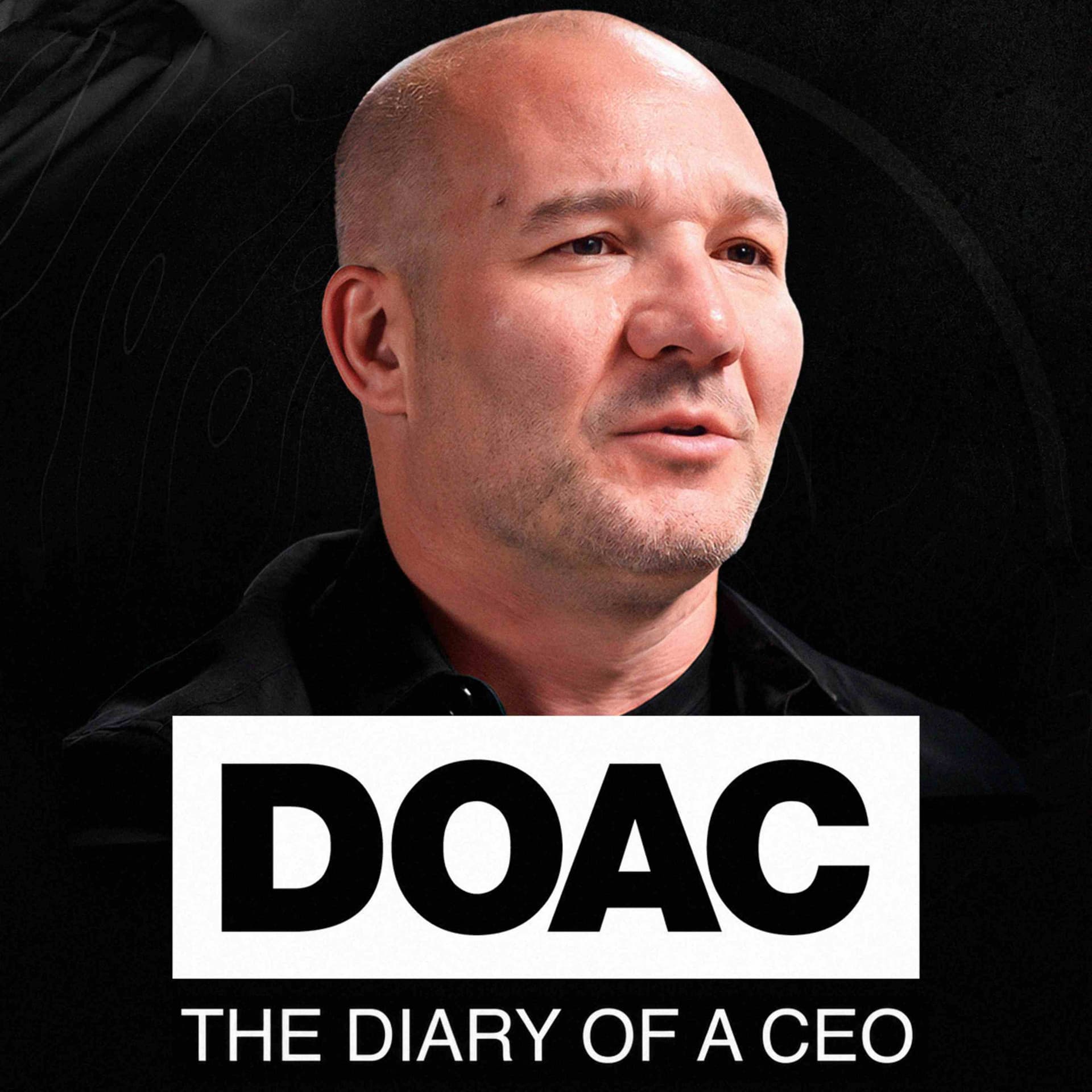
Podcast Summary: The Diary Of A CEO with Steven Bartlett
Episode Details
- Title: Most Replayed Moment: Confidence Can Be Taught! Use These Body Language Cues To Your Advantage!
- Guest: Joe Navarro, former FBI agent and body language expert
- Podcast Host: Steven Bartlett
- Listen to Full Episode:
- [Spotify](https://g2ul0.app.link/01Qhc2kbPYb)
- [Apple](https://g2ul0.app.link/NwkCj5obPYb)
- [YouTube](https://www.youtube.com/c/%20TheDiaryOfACEO/videos)
Key Themes and Insights
Importance of Body Language
- Posture:
- Reflects confidence: Shoulders back, calm breathing.
- Calmness can help hide nervousness, important in high-pressure situations (e.g., negotiations).
- Nonverbal Cues:
- Individuals show different states of confidence through body language.
- Gestures, posture, and overall demeanor convey nonverbal communication that can indicate confidence or neediness.
Observations During Interviews
- Candidates often display their level of confidence through body language:
- A relaxed posture signals higher self-worth and experience.
- Leaning forward may indicate eagerness or desperation.
Problem-Solving and Observational Skills
- Interview Focus:
- Emphasize problem-solving abilities over mere technical skills (e.g., Excel).
- Observational skills are crucial in understanding workplace dynamics and interpersonal relationships.
Teaching Confidence
- Confidence can be developed systematically:
- Start by being confident in one small area to build a foundation for wider confidence.
- Knowledge in a specific area enhances self-assurance in discussions or negotiations.
Vocal and Physical Presence
- Voice Control:
- A deeper, steadier voice conveys authority; avoid rising voice pitches that sound like questions.
- Cadence and Gesture:
- Speaking in a measured pace helps engage listeners.
- Hand gestures and spatial awareness play a role in conveying messages effectively.
Eye Contact
- Maintain appropriate eye contact to build rapport and communicate effectively:
- Focus on the face during conversations; avoid inappropriate gazes.
- Eye contact can also serve as a tool in negotiations to emphasize points.
Building Rapport
- The speed of movement and approach demonstrates care and engagement:
- Quick, proactive actions in social interactions can indicate confidence and attentiveness.
Practical Takeaways
- Training Techniques:
- Practice saying "no" with a lower tone to convey authority.
- Work on body language and posture to project confidence.
- Self-Reflection:
- Analyze personal interactions to identify areas for improvement in body language and confidence.
Conclusion Joe Navarro presents a compelling argument that confidence is not an innate trait but a skill that can be developed through practice and awareness of body language. His insights illustrate how nonverbal communication can profoundly affect business interactions, personal relationships, and one's overall presence. By being conscious of body language, posture, and vocal delivery, individuals can enhance their confidence and succeed in various aspects of life.
Written by AI. May contain mistakes. Listen to the episode to check what was said.
Transcript
Automatic transcript. May contain errors.0:03What about posture? Because that's kind of one way to make yourself taller. Yeah. Are there any clues in someone's posture and how important is sort of playing with our posture to create a different impression? Yeah, absolutely. Not just posture, but territory. So I look at posture as, you know, when we look confident, shoulders back, our breathing. To me, posture starts with the brain, how calm we are in our breathing. I was, again, in Valencia at this event, and a lady came up to me, and she says, you're getting ready to go on the stage. How can you not be nervous? And I said, well, I am nervous.
0:49I'm just hiding it. I'm acting like I'm in control. But I've learned to do that because you don't want to look like a nervous FBI agent. Trust me. You want to look cool, calm, and collected. In negotiations, you don't want to look needy. You don't want to look desperate. And at the same time, you don't want to come across as you're indifferent. And sometimes that demeanor, that posture, those gestures, the totality of it has a lot of meaning. Now, you have to keep in mind, a lot of successful businessmen I'm running into are actually on the spectrum, right? So the autism spectrum. And so they don't make as much eye contact.
1:41They may have behaviors that are irregular. I have one I deal with who has Asperger's, and so he sometimes jerks. And so there's a lot of discomfort I find from others in reading him. I don't have any problem. I just see it. Okay, this is his normal behaviors. and we get around. But you can tell a lot about a person. And when you've invested in things, you're doing your diligence and you're talking to people. Yeah, you can look at the numbers all day long, but you also are looking at the nonverbals and saying, you know, are they communicating confidence or are they communicating desire or need or any kind of frailty?
2:28I was just reflecting on a few of the interviews I've had recently. We've been interviewing for one particular very, very senior role. And there were two final stage candidates. And I was just reflecting, as you were saying, how one of the final stage candidates was extremely calm and sat back in their chair. And the other one was very much leaning forward. And upon reflection, the second candidate wanted the job a lot more. But the first candidate was probably more experienced, more confident and had higher self-worth. and their ability to be so relaxed in that environment and kind of own the chair in my boardroom, it actually made me kind of want them more because they were signaling to me that they had lots of options.
3:12They weren't intimidated. They weren't scared. They weren't nervous about this opportunity. You know, that's an interesting observation, Stephen, and it's very good that you observe the discrepancy. One of the things that I look for is what is their role going to be? I don't mind that somebody is nervous. I myself, early on, coming from a humble background, was often nervous. I tend to focus on the things that most organizations don't put into their plan to look for. One of them is problem solving. Give me a list of the problems you have solved. Most people, when they hire, they never ask that question.
4:07They tell, you know, I can do Excel. I know Microsoft. That's great. Please tell me what problems you have solved at your last job. and how efficiently did you do it? How do you know if they solved the problem or they were on a team where someone else solved the problem? Because one of the things that I look for is how many instances they tell and how they describe it because here's what's interesting. The person who solves the problem goes into the detail and feels the emotion of the person that's telling the story only conveys it, but doesn't know the emotion that is attached to solving it. So when that little child finally figures out how to, you know, you give them a trick lock where would things have to go this way or this way, and then the little thing opens.
5:09When they come back and tell you that, you see the gravity-defying behavior, the arching of the eyebrows, the bright eyes, and say, and I solved it. I solved it. I got in there. Yeah, right? The person that's just telling you this story doesn't know the emotion that goes with it. The other thing that I look for is, and they may be nervous or whatever, is how good are they at observing? This is the one question that has actually saved a lot of companies when I say, make sure that from now on you ask, how good are you observing? And they'll say, well, observing what? Everything that matters. People, events, opportunities, right?
6:02If you come to me and say, well, I can code this. Okay, that's great. but in the position that you're going to be in you're going to be managing people how good are you at observing people the great thing about companies that that seek this is all right so when you go and you business your you go see your subsidiary what are you what are you looking for what are you observing well when i look at the books and how about the attitude of the people Are people content? Are they happy? Or do they all look like they're constipated? I mean, I've been into companies that the minute I walk in, I go, oh, geez, you've got management problems here.
6:43And the guy goes, did somebody tell you? I said, well, you know, I'd have to be clinically stupid not to recognize that all these people are walking around with their heads hung low, that they make no eye contact, nobody, they pass each other in the subway and they don't talk to each other. You've got management issues here. And, you know, and it's like they hired for this skill. But is that really what you need when you actually need somebody that is a great observer? What about confidence? Is this something that you're born with? Or do you think confidence can be trained into somebody? I think confidence can absolutely be trained.
7:28And coming from Cuba where we lost everything, arriving as a refugee, having nothing. And then all of a sudden, the FBI asked me to become, and I didn't apply to the FBI. The FBI actually came to me and asked me to apply. And then all of a sudden, I said, are you guys serious? It's like, I'm 23 years old. I'm barely learning how to shave. and with no confidence whatsoever, and they teach you to be confident. You can teach confidence. And what I tell people is the easiest way to learn confidence is to be confident about one thing. I don't care if it's you stack papers better than anybody else. I don't care if it's the way you make your bed any small thing.
8:32Show me that you're confident. Show me that that's better than anybody else's. And the minute you can be confident about one thing, now you can be confident about two things. And then you can be confident about three things. This nonsense that I often see people say, well, just come in and be confident. I think that's nonsense. I think you have to learn and your physiology has to learn to be confident about one thing. You know, with me, I was confident in playing football. OK, I was fast. I could do certain things. I was confident about that. I knew that in basketball I could shoot a three-pointer.
9:19Okay, confident about that, but not confident about a host of other things. To be in a room full of executives, I remember when I had no confidence. So how do I work on that? You cannot, unless you're a world-class actor, you cannot walk into a place and all of a sudden pretend you're confident. I tell people, learn to be confident about one thing. And sometimes it's knowledge. I always, there is no meeting I go into that I am not well read on that subject. If you want to achieve confidence, know everything that you can about a particular subject. And that gives you so much great confidence. And I've seen young people come right out of college and they're sitting there, you know, their elbows are in, they're almost mousy looking, they're nervous, they're looking about constantly, they don't know where to look.
10:23And, you know, and I tell them, know your subject, know your subject, because the minute they begin to talk about that, they begin to flower and change. So competence in a particular area or vertical creates confidence, which then kind of permeates. Yes. And that's what the military, like the British military, that's what they take young people, 17, 18, 19 years old, and they say, you know, we're going to change you into a warrior. Well, how's that? By running, by getting you to climb up that rope, by doing any number of things where you can come away and feel that confidence. You talked in a video that I watched for Wired about a variety of different ways we can exhibit and be more confident and show confidence.
11:19One of them is really looking at the leaders in your life who are confident and trying to sort of replicate some of those confident behaviors. Right. The other one was about your voice. Use a deeper voice and do not rise at the end of the sentence as if it's a question. Right. So let me talk about those. don't try to reinvent what's successful. A confident person doesn't have to talk fast and doesn't talk high. I remember the first arrest I made, and I said, stop. This is the FBI. My voice was, nobody was going to stop. Nobody. Nobody. And the guys that were with me said, Joe, you've got to work on your voice.
12:01You have to have a command voice. Well, a command voice is down. Like? Like, stop right there. I'll give you an example. You talk to most executives and you say, no, that's not acceptable. It's too high. No is always said down. No. Are we going to? No. That sounds like a complete sentence. You get them to practice saying no. Absolutely. I did it for 10 years. Every February, the guy that Brian Hall, who encouraged me to write one of my books called Louder Than Words, invited me to go to Harvard. And I'll never forget, I had a complete Harvard class. I think there was 76 students. And I had them all saying the word, no, no, no, going lower.
12:57He had stepped out of the room to take a call. When he came back, he thought I had a cult going on. I said, no, Brian, I'm teaching them the right way because these are going to be future executives. You don't say, no, no, no, no, no. No. Now, that sounds like a complete sentence. No. No. That's not how it's going to work. And it's always lower. So we work on the words. More importantly, we work on the gestures, how much territory you occupy, because the territory that you occupy, if you're here. Sort of like shriveled and tight. You're shriveled. You don't want to be excessive. You don't want to look like a clown, but you want to have the space that you're entitled to.
13:47And then I think it's very important to learn to speak in cadence. When you speak in cadence, and I do it, is people listen. They have time to process what you're saying, but they can also attach the emotion that goes with it. Who spoke in cadence? Churchill. Martin Luther King. I have a dream that one day this nation will rise up and live out the true meaning of its creed. We hold these truths to be self-evident that all men are created equal. Powerful. Can you imagine if he stood up there and said, I have one dream that one day might? It's like, who would listen to that? But he was a preacher, and he knew how to command an audience.
14:42And when Churchill said, we will fight them in the air, we will fight them. We shall fight on the beaches. We shall fight on the landing grounds. We shall fight in the fields and in the streets. We shall fight in the hills. We shall never surrender. The cadence is not just seductive, it is powerful. and a lot of executives don't know how to use it. They just, I've been to presentations where people just let go. They're not even listening to what's being said. And yet somebody begins to talk to them in cadence and says, this is our offer. It is not final, but for the moment, it is our best offer.
15:33Now you're paying attention. You're paying attention not just to what I said, but the emotion behind it. That's a lot better to say, well, this is not our last offer, but, you know. There's a real authority when you slow things down just that little bit and provide the gaps. Which goes back to what I said, who controls time controls.
16:00You're establishing control over the theater of the negotiations. They don't teach that. Your hand gestures as well. You've got very complementary hand gestures to what you're saying. Even as you're speaking to me, you just went, who controls time? Controls. And so I'm wondering how our hand gestures. And my fingers are spread out, establishing how much we care about something. When we fear, our fingers come together. And when we fear a lot, our thumbs tuck in. I've seen people in negotiations give up a lot of information because all of a sudden they tuck their thumbs in. I say, okay, they're scared.
16:40Because dogs tuck their ears in, humans tuck their... The hands, no matter how dark you are, your hands, the palm of the hands are very visible. That evolved with us because they're expressive. So even in low light, we can use our hands to communicate. The more confident we are, the further our fingers are. I care. Imagine if I said, I care about you versus I care about you. It's a big difference. So in the first example, you kind of had your fingers together. In the second, you spread them out. This, I care about this. and so they potentiate the message. And the human brain evolved also to look for the hands because the hands, number one, can be used as a weapon, but number two, they are also emblematic of the emotions that we feel.
17:47And eye contact. Yes. A lot's been said about eye contact and the importance of it. What should I understand about eye contact confidence? eye contact in some ways is uh i mean we could spend about 40 minutes on it because and i as a teacher i can tell you because you want to have good eye contact for instance if you're dealing with a woman you don't want it to go you know normal eye contact is here you don't want it going down to here to the breasts okay so you stay looking at the face right so you want to keep it in the face, but you also don't want to intimidate unless you want to intimidate.
18:26So you have to employ things like eye gaze behavior. You have to employ things such as looking away. Now, you and I both look away as we're thinking about examples and different things. You can use eye contact for emphasizing. Look how often we use eye contact or our eyes to communicate opinions. Maybe with your partner, you said, what do you think? And immediately they'll look, he or she may look at your partner, not yours specifically, but somebody you live with, and they go, no. So with our eyes, we often give our opinions. So in negotiations, it's an important area. One of the things I think a lot about is about rapport building.
19:18very, very quickly. You know, someone that does this podcast a lot, I, sometimes I overthink it a little bit, especially when I'm meeting people like you, because I'm like, oh my God, this guy's going to be reading everything about me and da-da-da-da-da. Yes. So sometimes I'm like, I think I overthink it when I meet someone like you, a body language expert, someone who's good at behavioral science. I want to talk about rapport building. We actually videoed our interaction today. So when I walked in and I've got the video here, let me have a look at this, We'll put it on the screen for anyone that's watching.
19:47But I just want you to analyze my interaction with you when I met you and tell me how it could have been better. All right. Hello, Joe. Nice to meet you. First of all, you were waiting for me with arms akimbo, which is I'm in charge, I'm the big guy, and so your arms were here. Yeah, I got it. Okay. I actually do remember that. I remember thinking, get your hands off your fucking hips. No, no, no. But it's fine. This is your domain. I expect this from you in your domain. But one of the things you immediately did was you immediately went around the table and you went forward to shake my hand, right?
20:25So one of the things that I say is how much people matter to us is determined by how fast we act. Okay. So the fact that you actually went from there to here and you did it immediately, it demonstrates that you care. As early as 11 months, a baby will recognize individuals or even inanimate objects that care just based on how quickly they move. Towards them? Towards them to do something for them. Okay. It's called a pro-social act. And babies as young as 11 months recognize that. So this is something that I, it doesn't surprise me because you've been successful. You know, the success is, for me, is measured on how well people get along with others.
21:19Thank you for the wait. Appreciate you. Thank you. You're very, very smart. You look like someone who worked in the FBI. It's the FBI uniform. This is the... Will I be mic'd or is it just this? Just that one. Just that one. Perfect. Okay. You said something charming about how I was dressed, which I appreciated. This is always a good reminder to me of how old I look now. And the only note that I would add is I would have remained standing a little longer. Okay. And then make sure that, you know, as I'm sitting, then you sit at the same time. Okay, so invite you to sit and sit with you. At the same time, rather than allow me to all now, if you can see in that instance, I'm actually still over you while you're already seated.
22:20That is, in negotiations, that would be, as we say, contraindicated. What does that mean? It is. It's a no-no. It's a big word. It's a big word for Steve. Don't do that. What you just listened to was a most replayed moment from a previous episode. If you want to listen to that full episode, I've linked it down below. Check the description. Thank you.
From the publisher
Joe Navarro is a former FBI agent and one of the world’s leading experts in body language and nonverbal communication. In this Moment, Joe reveals the hidden signals behind body language and how to use nonverbal cues, such as posture and eye contact, to your advantage in business, relationships, and beyond.
Listen to the full episode with Joe Navarro on The Diary of a CEO below:
Spotify: https://g2ul0.app.link/01Qhc2kbPYb
Apple: https://g2ul0.app.link/NwkCj5obPYb
Watch the Episodes On YouTube:
https://www.youtube.com/c/%20TheDiaryOfACEO/videos
Joe Navarro: https://www.jnforensics.com/