In short
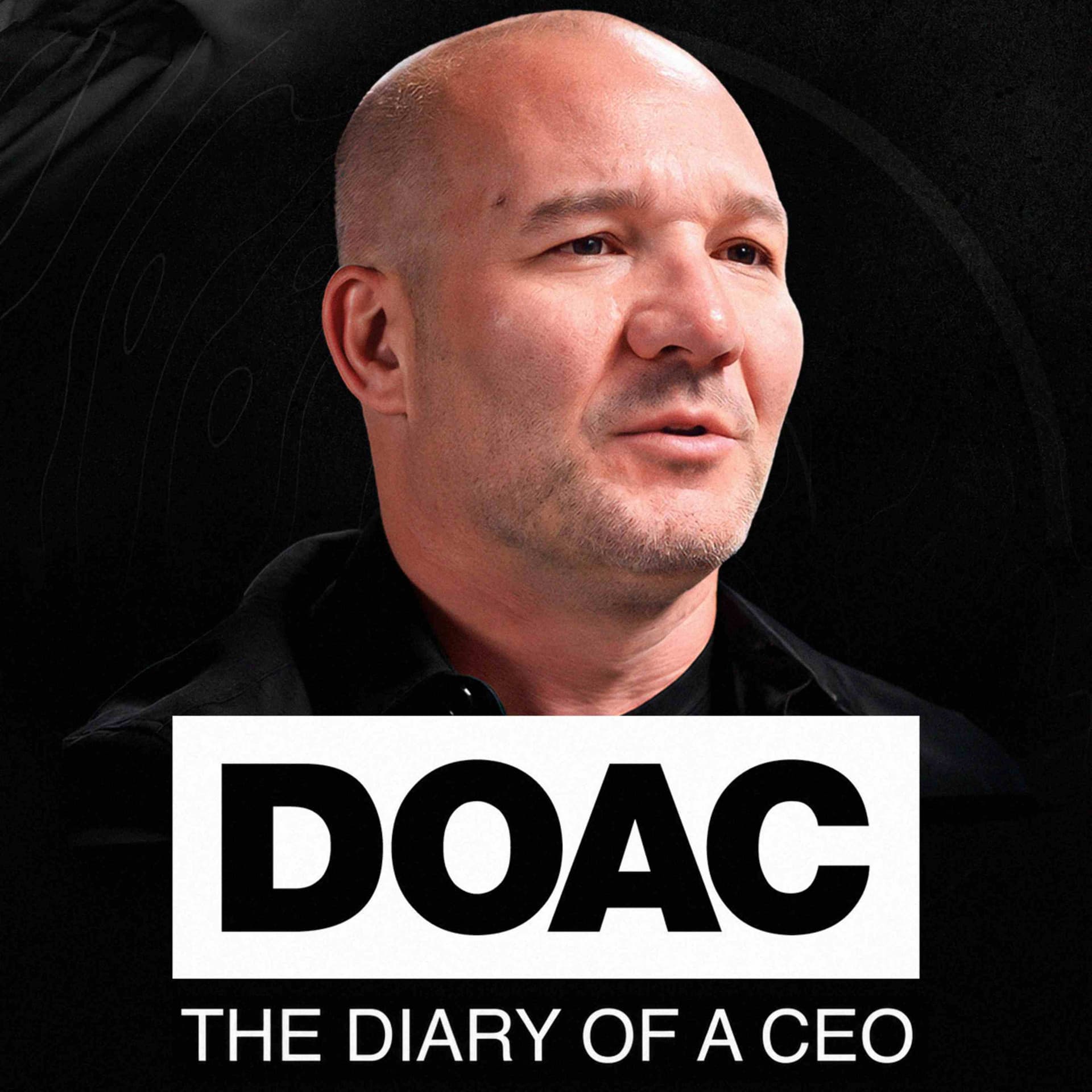
Podcast Summary: The Diary Of A CEO with Steven Bartlett Episode Title: Most Replayed Moment: The Truth Behind "Healthy" Food Labels - Dr. Chris Van Tulleken Guest: Dr. Chris Van Tulleken (The Junk Food Doctor)
Episode Overview In this episode of "The Diary Of A CEO," Dr. Chris Van Tulleken discusses the complexities and misconceptions surrounding food labeled as "healthy." He critiques how the food industry markets products like diet sodas and breakfast cereals, suggesting that these items may not be as beneficial as they claim. The conversation aims to raise awareness about consumer choices and encourage mindfulness regarding food.
Key Themes
- The Misleading Nature of Food Labels
- Healthy Food Myth: Many foods marketed as "healthy" can be misleading. For example, products like Diet Coke and breakfast cereals may not offer the health benefits they suggest.
- Traffic Light System: The episode discusses the traffic light labeling system in the UK, which categorizes food based on fat, sugar, and salt content, but may confuse consumers about what is genuinely healthy.
- Socioeconomic Factors Affecting Food Choices
- Economic Disparities: The podcast highlights that wealthier individuals tend to avoid unhealthy food, while those with lower incomes often have limited access to nutritious options.
- Cognitive Dissonance: Individuals from lower income brackets rationalize their food choices to cope with the realities of their circumstances.
- The Rise of Ultra-Processed Foods
- Historical Context: The industrialization of food began in the 1970s, leading to a significant increase in ultra-processed foods, which are now staples in many diets.
- Food System Financialization: The podcast discusses how a few large companies dominate the food supply, prioritizing profit over public health.
Detailed Discussion Points
Ultra-Processed Food Examples
- Diet Coke:
- Marketed as beneficial due to low sugar but contains artificial sweeteners and additives that may have adverse health effects.
- Breakfast Cereals:
- Often marketed as healthy but can be high in sugar and low in nutritional value. The conversation emphasizes the importance of whole foods over processed options.
Critique of Industry Practices
- Health Claims: Products with health claims on the packaging are often ultra-processed and don't offer real nutritional benefits.
- Additive Ingredients: Many labeled "healthy" products contain artificial ingredients and additives that can confuse physiological responses and may be harmful.
Recommended Alternatives
- Natural Choices: Emphasizing whole foods like fruits, vegetables, and minimally processed options such as milk and water instead of sugary drinks and ultra-processed snacks.
Conclusion Dr. Chris Van Tulleken's insights challenge the way consumers perceive food labels and the marketing strategies of the food industry. The episode encourages listeners to think critically about their dietary choices and the broader implications of food production systems on health.
Key Takeaways
- Mindfulness in Eating: Consumers should critically evaluate food labels and understand the actual contents of the products they consume.
- Education and Awareness: Providing knowledge about food sources and nutritional value is crucial for making healthier choices.
- Systemic Change Needed: There's a call for improvements in the food system to ensure access to healthy options for all socioeconomic groups.
Additional Resources
- Listen to the Episode: [Spotify](https://g2ul0.app.link/Vlc73NVEHUb) | [Apple](https://g2ul0.app.link/fZJ9EW0EHUb)
- Watch on YouTube: [The Diary Of A CEO](https://www.youtube.com/c/%20TheDiaryOfACEO/videos)
---
Thank you for tuning in and supporting "The Diary Of A CEO," where we strive to bring you insightful discussions on health, wellness, and personal growth.
Written by AI. May contain mistakes. Listen to the episode to check what was said.
Transcript
Automatic transcript. May contain errors.0:01The Direvcio's brought to you by Progressive Insurance. Do you ever think about switching insurance companies to see if you could save some cash? Progressive makes it easy. Just drop in some details about yourself and see if you're eligible to save money when you bundle your home and auto policies. The process only takes minutes and it could mean hundreds more in your pocket. Visit progressive .com after this episode to see if you could save. Progressive casualty insurance company and affiliates. Potential savings will vary, not available in all states. Rich people don't eat bad food because they don't want to eat bad food.
0:33And people without money eat bad food because they're forced to eat bad food. And the cognitive dissonance that you and I were talking about, quite often we will find people with low incomes making quite cogent arguments about the food that they eat, appearing to side with the companies that are predating on them. Because otherwise how could you live with this dissonance in your life? Otherwise you're just a powerless victim of translational food corporations. So I have almost no interest in personal responsibility. I think if you give people technical knowledge and you give people income and opportunity, most people want to be healthy and live good lives.
1:101970 the food environment changes. Can you tell exactly how the food environment change that caused multiple demographics to gain weight? There are two answers to that. One, the sort of proximate reason is the invention of ultra -processed food. So the industrialization of the food supply. You can talk about why that happened in a lot of different ways. Part of it was to a booming population post -war. And these products were extremely convenient. They allowed women to continue to be in the workplace. Of course, women had entered the workplace in the war. So there were a lot of things that were immediately appealing about these products.
1:49TV dinners, swanson TV dinners appearing in the 50s. And by the time of the 70s, these products had become very widespread. So in the same thing, we were a decade behind in the UK. But this stuff is now our national diet. Why exactly it took over is the subject of a lot of the research I'm talking at the moment. So now I work much more with economists than nutritionists. And what we see is the financialization of the food industry. So the primary determinants of almost every action that happens in almost every food company that supplies, say, 90 % of our calories, all the indicators are financial.
2:30And so part of it is the takeover of the food system. From being a system where people would grow a lot of their own food, make food at home, they buy ingredients from local shops to a small number of companies supplying food. So now 75 % of the calories that are consumed globally come from six companies. It kind of like sounds like a mafia of sorts, like a food mafia. I'm going to let you say that. Yeah, well, if I, no, don't say let me say it. I want them coming for me. I brought some food along with me today. I'm looking at it. Because I wanted to get you to be distracted. I wanted to get your opinion on it.
3:06So I brought a group of food products on the left here. Now these are things that I think growing up I thought were good. Yeah. So.
3:20You're very bold with these brands. I mean, you're really limiting sponsorship opportunities. Well, you know, you know, I do think about that sometimes, but I also don't really care. I think, like, I'm in the pursuit of truth here. So much of what I do this is to educate myself. And I think if I educate myself, then I'll help educate other people. That's why I'm also okay being a total idiot on the subject matter. Because that is the truth. So here I've got four products that are typically seen as being quite healthy. Breakfast cereal, Cheerios, I grew up thinking good for me. Actimal, good for me, Diet Coke.
3:57Great. Because there's no sugar in there. And then this is. Whole grain. Whole grain bread, 50 % of your daily whole grain in just two slices. Great. Perfect. So for a start, I have a slight onions. I'm going to talk about these products. I have a slight onions talking about any one product. Sure. The evidence applies to the category of food. And this kind of stuff, in a sense, I think your abs, these are such brilliant choices. Because this is the foundation of our diet. And one of the things that's happening at the moment is the food industry, exploring painting, me as a snob. Because I'm critiquing these sort of core things.
4:37You know, tins of beans with flavoring or supermarket bread, fish fingers. I think this stuff is at the shallow end of the pool in a way. It's not by any means the worst stuff. But in a way, it presents the biggest moral hazard because we think it's so healthy. I have to Diet Coke. Yeah. So Diet Coke is my favorite example. Because this is the ultimate health food. According to the way we label food at the moment, it has four, where's the camera? It's all green on the Earth. It's four green traffic lights, right? What do they call that? That traffic light system on the Earth? So this is the way we describe whether food is healthy or not in this country at the moment.
5:17And this system is quite influenced by the food industry. And it breaks all foods down into fat, saturated fat, sugars and salt. And says that, you know, if those are the bad things and if a food is high in them, it'll have orange isn't green. So if you look at the Cheerios, they're mostly on the front. It's on the front. It's optional, by the way. So it's not always on every packet. But the Cheerios are orange isn't green. Yeah. Now, Paul, there is a baked in confusion with this. Because what do you do at a traffic light that's orange and green? Or red orange and green? Do you go? Do you stop?
5:52Is it on the act of mal? Is it on? It's not on there. No, I can't see it on there. So it may be on the bottom.
6:00It's optional. So who knows if we don't have any way in this country of describing either healthy food or unhealthy food other than these traffic lights. Anyway, this is a healthy food. Now, if we look at the ingredients on the Diet Coke, carbonated water fine. Now, there's a color called Caramel E150D. Caramel makes you think of you as traditional. It's a French 19th century invention, burn sugar, creme brûlée. It's a bit naughty, but it's fine. Caramel E150D has nothing to do with caramel. It is carbohydrate treated with a mixture of acids and heat to produce things that contain ammonium and sulfite.
6:40So it's a food additive color with no benefits. Nothing to do with caramel. Artificial sweetness, aspartame and asusulfame K. Now, sweeteners are tricky. Because we know sugar is harmful because it rots teeth and it promotes weight gain because it makes you eat more. The weird thing about sweetness is they don't seem to help with weight loss at all. They may, some of them seem to be more metabolically harmful than sugar itself. Humans are quite good at eating sugar. When we lollipops, continuous kids or have sugary drinks, it's not good for us. But human societies have four millennia existed with a huge amount of honey and refined carbs.
7:21So sugar we can handle, although we should reduce our intake. Sweeteners are quite weird because they're a nutritional lie. You put sweet taste on the tongue, which says to your body, sugar is coming. So maybe put up some insulin. Maybe start preparing in other ways physiologically to receive refined carbohydrate. And when that refined carbohydrate, when the sugar never arrives, it seems to be physiologically confusing. So the World Health Organization now says sweetness aren't better than sugar when it comes to weight loss. And there is an anxiety about aspartame and cancer that I'm personally not not in a big sweat about.
7:57There's some evidence, but not at normal doses. Then we've got natural flavorings. We've got caffeine flavoring and addictive drug and phosphoric acid and citric acid. Natural, it said. Natural flavorings. I mean, you know. That's good. Well, flavorings are flavorings. Flavorings should signal nutritional content. When you eat a tomato, it has flavor. Not for fun. It has, maybe because it signals the nutritional content of the tomato. When you put flavorings out of context, even if you extract them from the tomato or the strawberry or the peach, it's very confusing for you physiologically. You have a very sophisticated internal system to link flavor molecules, which are broadly smell and taste molecules, salt, sweet, bitter, sour, and some savoury ones.
8:42Your body has a way of linking all that information with nutrition and information that you get from your gut subconsciously. When you muddle it all up in a product like this, it's very confusing. The phosphoric acid will dissolve the minerals out of your bones as well as dissolving your teeth. So what we have here is a solution of flavorings and addictive drug, an acid that will leach stuff out of your bones and sweeteners that seem to be metabolically confusing and certainly aren't better than sugar. And yet we think of this as a health product. So that for me is the archetypal, confused way of thinking about food.
9:15And what we also know is that when it comes to kids the age of my youngest, so the age three, they're drinking on average one can of artificially sweetened drinks every single day. So we've taxed sugar. Sugar has come out of our diet. We've seen no weight loss, no indication that it's helping health, and what we are doing is consuming huge numbers now of these artificial sweeteners, which we also know effect are microbiome. What is a better alternative that's popular on the market than, because it appears to me that all of the drinks in the bloody supermarket have artificial sweeteners and flavorings and...
9:52They do because of the sugar tax, so it's almost impossible now to buy fizzy tax without sweetness, so to buy fizzy drinks without sweetness. A bet so for kids, I try and not give any advice to anyone ever, but my kids... My kids eat a lot of UPF, but they don't have fizzy drinks. I think fizzy drinks are really quite harmful across the board. So kids should just drink milk and water, milk if they can have it, and grown -ups can do pretty well on milk and water if you drink milk. What about breakfast cereals and curios and things like that? So breakfast cereals are really convenient. I mean, let me see the curios.
10:34So I think these... So these probably do meet the... Yeah, these do meet the definition. Oh, they are. Yeah, so we've got things like palm oil, caramelized sugar syrup, colors, anatoin or bixin, and an antioxidant. So this is ultra -processed. It'll have some fiber. You'll have it with whole milk. I don't want to demonize breakfast cereals. My kids eat breakfast cereals for breakfast, but it's not like eating porridge, which is just whole grains or real bread. And what you will find is if you give this to a kid compared to Borges, they will be able to eat much, much more of this. And there is that there's a lot of marketing that this is a really, really healthy product.
11:24And I would say the evidence says that this falls into a category of foods that we actually know are associated with negative health outcomes. It says on the side there, doesn't it, a list of all the health benefits? A really good way of telling if a food is ultra -processed is if there is any health claim on the packet, it's almost certainly ultra -processed. And part of that is to do with this intellectual property thing, that the only food you can make lots of money out of is a branded product. So there's no money in broccoli, milk, steak, eggs, soup markets quite often make losses on all those things.
11:57There's no health claim on broccoli or on plums or on milk. There's no health claim on steak. It's only the ultra -processed things that you get marketed to you in this way, because there's enough money to do it. The ActML is interesting as well, the immune support. Well, it says immune support, and it says vitamin D and B6. So that rich in vitamin D, immune support, that is definitely healthy.
12:26I mean, this is a, this is where we need, we should have done the maths and shown how much sugar there was in each part. These are very high calorie shots of sugary liquid that will harm teeth. And I don't know why you'd have this if you could just have real yogurt and or milk. And the reason they back add the vitamins is to be able to make health claims. So generally foods with added vitamins, real food doesn't need added vitamins. And we're, again, we're pretty sure that, and I'm consciously, I'm talking to you here. I've got, I'm, I'm, I'm, I probably have to tread a bit carefully. Supplementing vitamins into food doesn't seem to have many health benefits for healthy people.
13:17So we've got quite a lot of very big data on this. And there are lots of studies that show benefits that are funded by people who make vitamins, but broadly, the independent evidence shows that when you get vitamins and minerals in the context of food, they're really good for you. And when you take them in pill or supplement form, they don't seem to have many benefits if you are healthy. And this food here, this bottle of cocoa I've got, can of pringles and cocoa pops Kellogg cereal. This is the stuff that I typically think of is like bad processed, ultra -preccessed, stay away from. You would, but give me the cocoa pops.
13:54So the cocoa pops. We look at these traffic lights, okay? Green, green, orange, orange. Pretty healthy. I mean, there is a, there is a monkey on the pack selling it to my, to my kids. Yeah, it says high in vitamins. High in fibres. Vitamin D, iron. Yeah, iron supporting your family's health. Right, sad, a goodness. I mean, everything about this tells you that this is a product not just a safer kids, but intended for kids. And we'll know you like, you can't sell things if they're not healthy, there must be some regulator dealing with that. And this is the thing that my six -year -old will eat five adult portions of.
14:34So when you eat five adult portions, the traffic lights only apply to a 30 gram serving for you. Now a 30 gram serving is, is a handful like that. It's, it's one big spoonful, okay? So this is the product that I, I recognize addictive behaviour in my kids. And frankly, myself, I mean, I could eat, you know, 300 grams of it. And the other thing that I went and got from the supermarket because I was thinking about what I typically think as ultra -processed and good for me, I went and got this frozen pizza here. And then I went and got a Tesco's finest. So this is high -end, you know, much more expensive, not frozen pizza.
15:19And I thought, surely, this pizza here is a lot better for me than this one here. So again, there's a complexity talking about is one better than the other because we've never done a trial testing them against each other. They're both ultra -processed. I know because I've looked at the ingredients. They both contain ingredients that you don't have in a domestic kitchen like palm fat or dextrose. And they're both made really in a sense by the same company. So both, they're both made by PLCs who will be owned by institutional investors with requirements for growth. So they come from the same food system with the same incentives about production.
16:04And my bet is that you or I would be able to eat the entire pizza at a single sitting and we'd be still licking the pack of both of them. So this is food that, in a sense, is engineered to be consumed to excess. You know, the pizza's got the cocoa parts and got the cocoa cola here. Is this food? I don't think it meets. So food is very poorly defined. We don't have a working definition of food sort of in law. But I think food is substance that you eat for nourishment. And it should be about nourishment culturally, socially, personally, psychologically, as well as physically. And these products are developed to generate financialised growth for institutional investors.
16:53They're not made by people who love you who want to nourish you. And so I don't think it meets what I think is a useful cultural definition of food. I think it's very useful to not think of them as food. And I don't think a mixture of coloring addictive drugs and phosphoric acid could be called food. In any sense, the word, it doesn't have nutrition. It only has things that will... We're pretty sure that almost every ingredient does you harm in some way. So I don't see how that could be called food. It's a way of commodifying your ill health for the benefit of a very small number of people. Two things I wanted to say.
17:31The first thing is a huge thank you for listening and tuning into the show. Week after week means the world to all of us. And this really is a dream that we absolutely never had and couldn't have imagined getting to this place. But secondly, it's a dream where we feel like we're only just getting started. And if you enjoy what we do here, please join the 24 % of people that listen to this podcast regularly and follow us on this app. Here's a promise I'm going to make to you. I'm going to do everything in my power to make this show as good as I can now and into the future. We're going to deliver the guests that you want me to speak to and we're going to continue to keep doing all of the things you love about this show.
18:07Thank you.
18:13The Diro of the Seos brought you by Progressive Insurance. Do you ever think about switching insurance companies to see if you could save some cash? Progressive makes it easy. Just drop in some details about yourself and see if you're eligible to save money when you bundle your home and auto policies. The process only takes minutes and it could mean hundreds more in your pocket. Visit Progressive .com after this episode to see if you could save. Progressive casualty insurance company and affiliates. Potential savings will vary not available in all states.
From the publisher
In this Moments episode, Dr. Chris Van Tulleken (the Junk Food Doctor) delves into the complexities of foods labelled as "healthy." He explores how certain food products, from diet sodas to breakfast cereals, might not be as beneficial as they're marketed to be, suggesting that the food industry's labelling tactics could influence consumer choices. Tune in to gain insight into how you can be more mindful of your food choices, starting today.
Listen to the full episode here -
Spotify: https://g2ul0.app.link/Vlc73NVEHUb
Apple: https://g2ul0.app.link/fZJ9EW0EHUb
Watch the Episodes On YouTube - https://www.youtube.com/c/%20TheDiaryOfACEO/videos
Learn more about your ad choices. Visit megaphone.fm/adchoices