In short
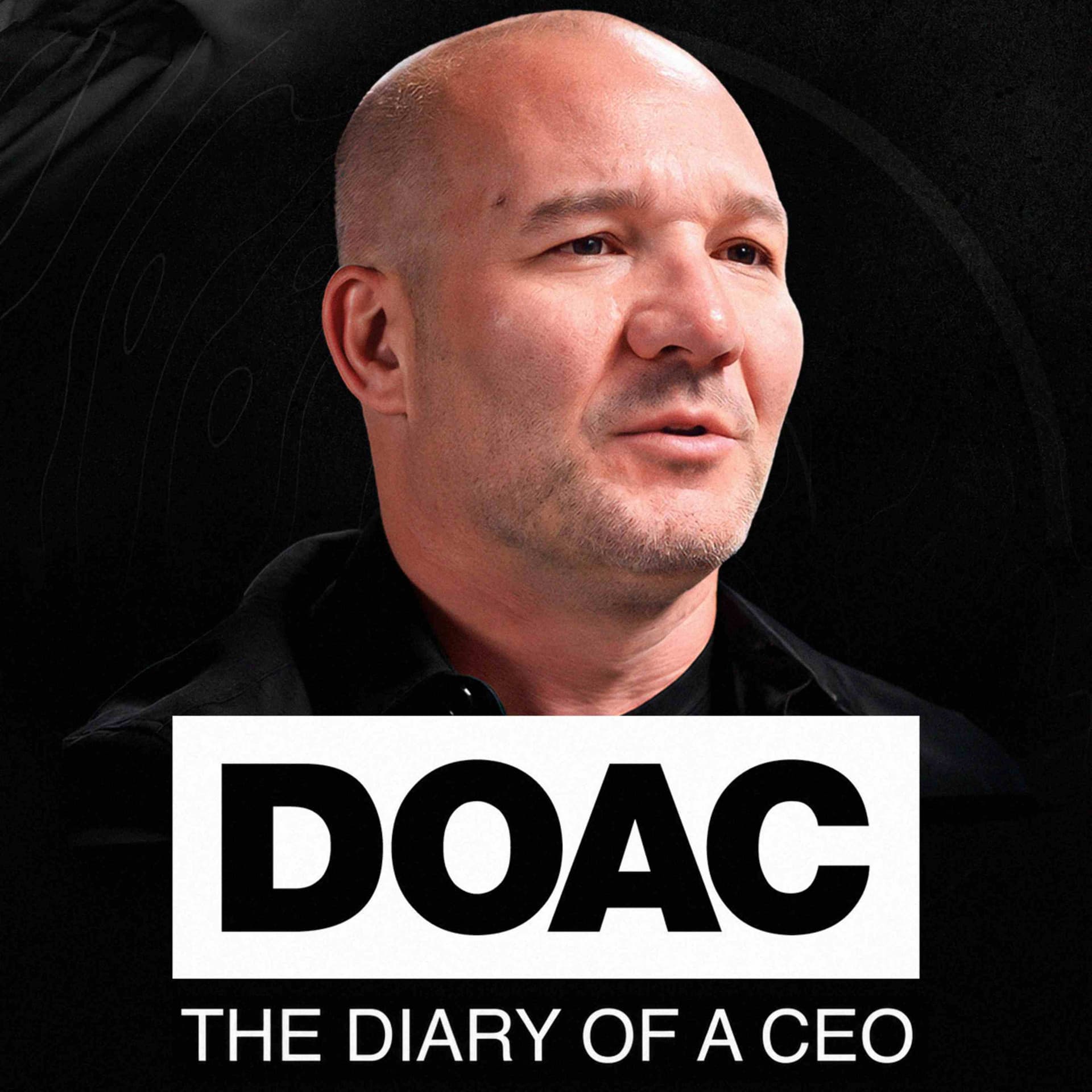
The Diary Of A CEO - Podcast Episode: Jim Kwik Interview
Introduction
- Podcast Title: The Diary Of A CEO with Steven Bartlett
- Episode Title: The Brain Coach To The World's Top Leaders & Billionaires! 10 Steps To Never Forget Anything Ever Again!: Jim Kwik
- Guest: Jim Kwik, world-renowned brain coach and expert in memory improvement.
- Episode Description: Jim Kwik shares his journey from suffering a childhood head injury to developing brain training techniques that have helped celebrities and companies like Google and Nike. He discusses strategies for improving memory, brain nutrition, and reading speed.
Key Discussion Points
Jim's Personal Journey
- Traumatic Experience: At five years old, Jim suffered a head injury that significantly impacted his learning ability and self-esteem.
- Transformation: Despite being labeled as "the boy with a broken brain," Jim developed cognitive strategies that led him to become a memory expert and author of the book "Limitless."
Brain Optimization Techniques
- Memory Enhancement: Jim emphasizes the importance of training the brain to improve memory, learning speed, and cognitive performance.
- The 10 Keys to Brain Health:
- Good Brain Diet: Consuming foods like avocados, blueberries, and dark chocolate.
- Killing ANTs (Automatic Negative Thoughts): Maintaining positive self-talk.
- Exercise: Physical activity enhances cognitive function.
- Brain Nutrients: Ensuring adequate intake of vitamins and omega-3.
- Clean Environment: Reducing exposure to toxins and pollutants.
- Sleep: Essential for memory consolidation and cognitive health.
- Brain Protection: Avoiding head injuries.
- New Learnings: Keeping the brain active through continuous learning.
- Stress Management: Implementing techniques to reduce stress.
- Social Connections: Engaging in meaningful relationships.
Reading and Learning
- Speed Reading Techniques: Jim shares methods to increase reading speed and comprehension, advocating the use of visual pacers and reducing sub-vocalization.
- Learning Retention: He explains the importance of teaching to solidify knowledge (explanation effect).
Overcoming Limiting Beliefs
- Mindset Shift: Changing the self-narrative from limitations to possibilities.
- Motivation Formula: Purpose x Energy x Small Simple Steps (P x E x S^3) as a framework to foster motivation.
Enhancing Focus and Flow
- Flow State: Achieving a state of deep concentration where work feels effortless.
- Cognitive Types: Understanding personal learning and thinking styles to optimize productivity.
Closing Insights
- Jim's Mission: To create a world where "no brain is left behind," emphasizing the importance of cognitive health and learning as a superpower.
- Reflections on Parenting: Jim shares his experiences as a new father, focusing on observing and learning from his child.
Calls to Action
- Engagement Challenge: Jim invites listeners to take a screenshot of the episode, reflect on a new habit or belief they've adopted that serves them, and share it on social media.
- Explore Further: Listeners are encouraged to explore Jim's resources, including his book "Limitless," his podcast, and online learning courses.
Links and Resources
- Follow Jim Kwik:
- [Instagram](https://bit.ly/3NLLVFz)
- [Twitter](https://bit.ly/3pcXdZR)
- [TikTok](https://bit.ly/3NLxmSf)
- [YouTube](https://bit.ly/3JsHGMw)
- Jim's Book: [Limitless: Upgrade Your Brain, Learn Anything Faster, and Unlock Your Exceptional Life](https://amzn.to/43VtUu7)
Hosts and Guest Links
- Steven Bartlett:
- [Instagram](https://www.instagram.com/steven)
- [LinkedIn](https://www.linkedin.com/in/stevenbartlett-123)
- Podcast Website: [The Diary Of A CEO](https://beacons.ai/diaryofaceo)
Written by AI. May contain mistakes. Listen to the episode to check what was said.
Transcript
Automatic transcript. May contain errors.0:00This episode is brought to you by Me Undies. While Me Undies can't totally help your love life this Valentine's Day, they can offer you insanely comfy undies and loungewear to buy or gift. Me Undies has so many awesome Valentine's Day prints and styles. Plus, you can match with your partner, friends, or even your pets. This Valentine's Day, give the gift that'll keep them thinking of you and score huge sight -wide savings at Me Undies .com slash Spotify. That's Me Undies .com slash Spotify. Me Undies. Comfort from the outside in. Just gone through life telling myself that I just have a bad memory.
0:33We could turn this into a little mastery class. Go ahead. So the three keys to a better memory are... If you're quick in the house, they globally recognize the leader in memory improvement. Training your brain to work better. If you want to learn faster, you want to retain that information. You are in for an absolute treat. Google, Virgin, Nike. Why are they coming to you? They're struggling with distraction, memory loss, it's affecting their performance, the productivity, our mind controls, all the treasures of our life. Yet it's not user -friendly. The reason I'm so passionate about it is because I grew up with a broken brain.
1:04I was five years old and I had a traumatic brain injury. I didn't understand things like everybody else. I was being teased, pretty bad. A teacher pointed to me and said, leave this kid alone. That's the boy with a broken brain. That was the darkest time of my life. And in that moment, I learned my mission to build better, brighter brains. Memory retention is getting worse and worse. We live in an age where the amount of information is doubling at dizzying speed. The higher reliance of technology. The store information that you would normally have to store in your brain means that not everybody is exercising those parts, keep our memory sharp.
1:34The other dip in cognitive performance. Often when people retire, they mentally retire. The body is not too far behind you. There's a study done on these nuns. They're living 90 and above. And because they were learning all the time, it had a year's to our life. It surprises a lot of people because they have this thinking that their intelligence is sick. The truth is, there's no such thing as good or bad memory. There's a train memory and there's an untrained memory. I'm going to give everybody right now the ten keys. And this is how real transformation happens. The boy with a broken brain. That's what his teachers called him after Jim had a tragic accident at a young age that left him with a permanent brain injury.
2:10And he believed it. He lived it. He embodied that identity. He believed he was broken. And then, because of a chance experience which we can all choose to have right now, that limiting belief was unlocked. And he realized that the stories we tell ourselves about ourselves, about who we are and what we're capable of achieving, and what we're capable of doing are exactly that. Stories. I've spent decades telling myself that I have a bad memory. So much so that at 30 years old, it's just part of my identity. And after this conversation, I realized that I'm wrong. If a man like Jim, the boy with a broken brain can go from that, poor memory, low potential, self -doubt, to being a memory expert and becoming limitless, then that says something about who any of us can become.
3:04If you want to learn faster, if you want to become more persuasive, better in business, work, creativity, podcasting, whatever it is you do, then knowing how to retain important information might just be the key to becoming limitless that you've been looking for. Google, Nike, SpaceX, they all use Jim to improve their team's memory and brain power. And today, he'll be coaching you for free.
3:32Jim, before we started recording, you used a curious word, you said mission. Yeah. What is your mission? What is the mission you're on? And why is that mission important to you, but also to the world? Our team is small in people, but we're big in purpose. Our mission is to build better, brighter brains. No brain left behind. I feel like we live in the millennium of the mind, where our mind controls so much in our lives, our relationships, our health, our careers, our schooling. And yet our mind doesn't come with an honest manual, and it's not user friendly. Yet it's our number one wealth building asset.
4:12Like nobody listening is paid. It's not like it was 100 years ago, where it's your brute strength. Today, it's your brain strength. It's not like it's your muscle power, today, it's your mind power. And I do believe the faster you learn, the faster you can earn, because knowledge today is not only power, knowledge is profit. And I don't just mean financial, that's kind of obvious, but it's all the treasures of our life. And the reason I'm so passionate about it is I grew up with a traumatic brain injury when I was a child. And it just didn't work for me like everybody else. And through those struggles, you know, I developed some strengths over the years.
4:47And I always thought it was interesting that there's no class on focus, on concentration, on recall, right? And so I put the schoolwork aside, because I wasn't getting gains there anyway. And I started really focusing on this learning, how to learn. And so I put my focus in those areas, start studying a little bit about adult learning theory. I got introduced to, you know, pneumonics, which is, you know, memory techniques, speed reading, the art and science of reading for better comprehension, understanding. And about two months into a light switch, like flipped on. And I just started to understand things in school for the first time.
5:29And it was so pronounced that I felt two emotions. I felt like this is awesome, because with my grades improving, my life improved. And I started to start to affect my identity and how I saw myself and how other people saw me. But the other emotion I felt, if I'm honest, was anger. I was so upset that I spent my entire childhood struggling every single day. I'm sure about myself, doubting myself. And there were simple things that I could have learned that would have made my life a lot easier. And I realized then in school that it's not how smart you are, it's how are you smart. It's not how smart you are, how smart your significant other is, your kids are, your teammates.
6:13It's how are they smart. And I do believe that we have this, if knowledge is power, then learning is our superpower. And it's a superpower we all have. And so from there, I couldn't help but help other people. And I'm kind of agnostic how it happens, whether it's our books or podcasts or YouTube or courses. But I want to have a positive impact on people's brains. As it relates to memory, I think I've just gone through life telling myself that I just have a bad memory. I'm the type of person that forgets names instantaneously. And I've just come to believe that that's just me. And I've almost resigned to that.
6:53So I'll be honest, I don't think I really try that hard anymore. Because I just think my type of brain is the type of brain that can't retain most information, especially if I don't consider it to be important information. Am I bullshitting myself? You are. It's complete BS belief systems. If you want to give it a label, BS belief systems. I believe our brains are just incredible, super computer and our self talk, our thoughts or beliefs are the program it will run. So if you tell yourself, I'm not good at remembering people's name. You will not remember the name and the next person you meet because you program a super computer not to.
7:31And it's more than anecdotal. I really do believe people at events will see me do these demonstrations. They're surprised to hear that I grew up with learning difficulties and put in special education. But before I go on stage, people invariably in the lobby, pull me aside and the whisper to me when no one's listening. Jim, I'm so glad you're here. I have a horrible memory. I'm getting way too old. I'm not smart enough. And I always say, stop. If you fight for your limitations, you get to keep them. If you fight for your limits, they're yours. If people truly understood how powerful their mind is, they wouldn't say or think something they didn't want to be true.
8:08And that's not to say you have one negative thought in ruins your life. Any more than eating that one donut will ruin your life. But you wait those donuts every single day. Consistency will compound. And it'll change the direction or the destination. I have to zoom in there. So four years old. Were you four years old when you had a brain injury? Yeah, I was five years old in public school, elementary school, kindergarten here in the States. I had an accident where I lost my balance and I went headfirst into the radiator separating the window and me. There's a lot of blood and I was rushed to the hospital.
8:45Where I really showed up, though, where my parents said, where I was very, as a child, very energized, very, like the most kids, very playful, very curious, very excited. I became very shut down. I had processing issues, they said. I didn't understand things like everybody else. Teachers would repeat themselves over and over again. And later on, when I was nine years old, I remember I was being teased pretty bad for slowing down the class. And a teacher came to my defense, but she pointed to me from the whole class and said, leave this kid alone. That's the boy with a broken brain. And that really became my identity.
9:25She was sincere, but she was trying to help. That's all I remembered was, I didn't know I had the broken brain. And so that became my explanatory schema for everything. Every single time I did badly in school, which was daily, I did badly on a test or report, or I would say, I had the broken brain. Or if I wasn't picked for sports, which was all the time, I was just this little kid. I would say, oh, because I have the broken brain. And that label became my limit. I do believe that we have to be solely responsible for our lives. So I don't want to say that was a victim, but we are shaped by our environment, by our experiences, by our external.
10:08And that was something that I really struggled with. You started the quick learning, 2001, when you were 28 years old. And if you think about the clients you have there, I mean, I read about a lot of them Google, Virgin, Nike, etc. They clients of yours at the very heart of it, the core of it. Why? Why are they coming to you? What is the benefit? The why, as you call it, that people are seeking? I think people tend to come to us because they are struggling with distraction, with memory loss, with overload, right? They don't get anxiety from information, anxiety, they're drowning information. I think people who come to me realize that their ability to learn and translate that learning in action is an incredible competitive advantage.
11:03In a world where there's lots of distraction, there's lots of overload, there's lots of technology that would make our life easier, but it also in some ways, while it's convenient. It also cripples us in a way that we're not using our mental faculties as much as just like my shirt here says use it. It's like use it or lose it. It's like our body. If I put my arm in a sling for a year, it wouldn't grow stronger. It wouldn't even say the same. It would atrophy. And the high reliance on technology, like using your phone as an external memory storage, they call it digital dementia. It's a new term in healthcare.
11:42Digital dementia is the high reliance of technology to store information that you would normally have to store in your brain. But now that you don't have to do it, not everybody is exercising those parts of our brain to keep our memory sharp. Is there science that shows we have to exercise our brain? You know, the two biggest, two dips, cognitively in terms of cognitive performance in people's life cycle. Usually happens when people graduate school. Because somehow they associate education along with learning. They think their traditional education is over so they're learning is that they're not learning.
12:17And that can be unconscious belief. But the other dip in cognitive performance is usually when people retire. Often when people retire out of their career, their job, sometimes they mentally retire. And it's interesting that once the mind kind of retires, the body is not too far behind. There is a study done on these nuns. I was a longevity study called aging with grace. Great, you know, great title. They were living 80, 90 and above. And they wanted to find out what was the cause of their longevity. And they said half of it was their emotional faith, the gratitude. The other half, they were lifelong learners.
12:55And because they were learning all the time on the daily, it had a year's total life, but also life to their years. It made the cover of a time magazine. But I do really do believe that we have to keep our minds active as much as we have to keep our bodies active. There's a lot of talk and there is an narrative that says when people retire, they die. There's like a long -held thing where there seems to be a startling correlation between when someone retires and then passing away soon after. There's also quite an interesting correlation between elderly couples. And when one of them passes away, the other one often passes away suspiciously soon after.
13:40Do you think that's linked what you're saying? That cognitive sort of stimulation is central to our physiological longevity? Yeah, I mean, this study aging would grace, would be evidence that you want to keep your mind active till the day you die. At every age or stage, that you could actually stave off brain aging challenges, much like an atrophy of the mind, if you will, just like you would keep your body active. I mean, I think most people would have the same understanding if they stop moving their body at the retirement years, then it would lead to probably unfavorable results. What's the evolutionary reason for that?
14:22Could you have a hypothesis as to why, from an evolutionary perspective, the body would decide to... You know, we talk about a mind -body connection. We hear that a lot. The primary reason you have a brain is to control your movement. That's the number one reason mammals have brains is to control movement. And it's not just a one -way connection that has, yes, your brain controls your movement, but actually moving actually stimulates different parts of your brain. I know that very well. Before I do this podcast, I do exercise. Yes, very much so. And even in development, we had our first born recently a few months ago.
15:07So crawling, as you look at the study of brain development, that cross -lateral is very important. And even we do that in our events. When we do our brain conferences and such, we get everybody standing up and doing these... This area of science called educational kinesiology popularized by brain gym where you take one knee as you're standing and lift it and touch it with the opposite hand and you go back and forth. Things that are crossing the midline forces left and right brain communication. So you have a left brain and your right brain and separated by that as a bridging station called the Corpus Colossum.
15:46And by doing these exercises, it increases communication between left and right brain. And this is an over simplification. Left brain is... If someone's left brain, they're said to be more logical, right? How do we know if someone's left brain? Left brain or right brain? Yeah, we have a couple assessments in limitless, but you could find it online, free assessments for brain dominance left or right brain. And there we have a multiple intelligence theory, a study out of research out of Harvard University by Howard Gardner says that there's not in the US in a lot of westernized societies. They tend to emphasize two kinds of intelligences, verbal linguistic and mathematical.
16:32Here in the States, we have the SATs, right? It's just verbal reading comprehension and mathematical. Howard Gardner says they're actually not limited to two intelligences and so they're more and each one can be developed. And so, for example, kinesthetic intelligence, great choreographers, great dancers, athletes, interpersonal intelligence, people who have this innate talent that could relate to people and connect. Visual spatial intelligence, people who are incredible graphic artists, architects, right? Musical intelligence, it just goes on. There are these other assessments and I really, the reason why you put so many of this in limitless and in our podcast and we created our own assessment recently this year, we haven't talked about it.
17:22We're just launching it now called cognitive types and these are I use animals as a metaphor because I think so much of us for happiness from mean has always been having the curiosity to know yourself. That's why you go to therapy or you journal or you meditate or you read about that that inter -entrup personal intelligence, self -to -self as opposed to interpersonal self -to -others. But once you have the curiosity to know yourself, having the courage to be yourself is a different game too because so many people mitigate their expression of who they are because of looking bad or how people would perceive them and so on.
18:01But this cognitive type, and I'll go back to you at the answer your question, we found and delineated, I pulled from, you know, Myers -Briggs and multiple intelligence theory, introvert, extrovert, ambivert, lateral thinking styles. So I realized that there are about four buckets of cognitive types and I used animals as a metaphor to represent them. So there's four cognitive types and it what's the acronym code? CODE. CODE. So what is the C stands for? So very briefly, the C and as you're listening to this you could see which one kind of hand raised for yourself and you're going to take a snapshot of this and post to which one you think you are where we have an assessment online also as well that's free.
18:44The C is Cheetah and these are your intuitives and you might know you might have someone on your team or a family member that are Cheetahs, they're fast -acting, they're just always moving. They thrive in fast -paced environments. Sophie? Or I can ask that's my assistant. Sophie? Maybe me as well Jack, what do you think? Do you think I'm a Cheetah? Fast -acting, thrive in fast -paced environments? Does that sound like me? You think so? Okay. And the O is the owl. And you might know people the owls often link to logic, critical thinking, they love data, facts, formulas, figures. They lean into that information.
19:26Sounds like Grace Miller on our team. Charles, we have a data scientist on our team as well. Very nice. Yeah. Michael as well, yeah. Okay. Lean into information, so that's the owl. Yeah. The D is are your dolphins and your dolphins are your creative visionaries. These people love problem solving, they love to be creative expression, great at pattern recognition. Right, they see patterns that maybe other people don't see as easily or naturally. Dolphins, are there the creatives amongst us? Yes. And I think a lot of the future belongs to the creatives, you know, the creators, if you will. You're thinking about AI, aren't you?
20:05Yeah, that's interesting conversation also as well. And finally, the E are your elephants. And your elephants, I chose them because I use them as a representative symbol for empathy. They love collaboration, tribes, right, working in team environment. So we created these models because you know yourself, right, even in the matrix when he's going to see the oracle and the sign right above in the kitchen was, you know, know thyself. And then we could be ourselves, but the more you know about yourself and then you have a way of filtering the world and then not being judgmental of yourself or even others is just how people are organized.
20:45You know, some people are just right handed or they're left handed, right, they have certain preferences. And so these are, it could help you inform you based on like yourself. If you know, like you thrive in certain environments, and then we give, you know, in the report careers that you would excel in. And this is kind of obvious, right, if somebody's creative, certain career paths. What if you're a couple of these things? Yeah. So we have, when you go through it, there's a primary and there's a secondary, you know, and so these are usually very, very few people because we have all the back and stats.
21:17We have, you know, is is completely even 25 % and so on. But we usually have a place where if I ask everybody to write their name on a piece of paper, you could do that. But if I asked you to switch hands and we're below it, write your first and last name below that. That second time is going to feel, is going to take longer. It's going to feel awkward and the quality is probably not going to be as good as the first one. And have you ever been in a situation where you're learning something and this is subject you're, you're interested in. But for some reason, you're just not getting it because you're just not connecting with the instructor.
21:56It's kind of like the way that they prefer to teach is different than the way you prefer to learn. And it's like you're two ships in the night and you're passing each other and there's no connection. Yeah. That's there. And so it feels like you're learning with the opposite hand. So what happens? It takes longer. The quality is not as good. And it feels a little weird and uncomfortable. So I feel like when you know what your strengths are, you could lean into it and then further refine it. And we get people suggestions if they want to improve areas that they're not as strong and to be able to boost that.
22:28But this is weighted right because you named a couple of those there and I thought, you know, I'm probably a cheater. I've got a little bit of elephant in me as well. They're pun intended. And I, you know, I like to think I can be a dolphin once in a while. So yeah. I think it expressed each other in different contexts as also as well. You know, and it's nice to have a level of cognitive flexibility, you know, and because that increases your learning agility. It's one of the things that we teach in limitless is a six thinking hats. It's created by Edward DiBono. And it's this idea that if you are facing a decision or a difficulty or a dilemma in your life, one of the reasons why we can't always think our way out of something is because we see something from a set.
23:15Point of view. And what six thinking hats does, it gives you permission to step out of yourself and try on another lens. Meaning imagine this table here has six color hats, right? Yeah. And I want everybody to think about who's listening or watching this right now, a decision you need to make or a difficulty doesn't have to be like life and death. But it's just something that, you know, that way to live, I'm thinking about this. Yes, perfect. Where to live. And then you have these hats. So the first hat is the white hat. I'm in no specific order. So imagine you're reaching out and you're putting on the white hat, right?
23:49And the white hat, and I'll give you a mnemonic because I'm the memory guy to help you remember what each one symbolizes. The white hat, imagine a white scientist lab coat, like a white lab coat. That's data, that's information, that's facts, right? So now you can only look at the situation or this decision tree through the through the eyes of logic. Okay, so I'm doing that now. So me and my partner are actually looking for someone to live in the moment and we're we've been looking it was really about which area to live in in London or maybe we're living in Portugal or maybe Dubai. So we're kind of trying to figure that out.
24:21Okay. So I've got my white hat on and my lab coat. And I can only think about logic. So price. Mm -hmm. I'm thinking about is it a good time to buy? Yes. What's the graph saying? I'm thinking about renting versus buying. Commute and travel and amenities that are here. Yeah, that would be all the factual. And then so you could take off the white hat and now look for the red hat. So you grab the red hat you put it on and the red hat is similar. This heart is emotions. Mm -hmm. So this is where you're going more with your gut, your feeling, you're putting logic aside. Mm -hmm. And just like what, what feels right for you?
25:03Her family lives in Portugal. So that's the first thing that came to mind when you said about feelings. So being close to family. Yeah, absolutely. And this is good. I hope everyone's doing this also. So you can take off the red hat and you could put on, let's say, the black hat. And the black hat, think about judges robe. And the judges robe, this is where you get a little bit, you could be judgmental. You could look at the risk or the devil's advocate. You could look at the other side in terms of what could go wrong. You might hate living there. You know, the places we're considering we've never lived in before.
25:39So what if we buy a place and then we immediately don't like it? Maybe we should stay where we are and not buy anywhere. Maybe the housing market will collapse and there'll be such a bad investment that will regret it. So you're shining a spotlight. So the idea here is that the information's out there but where are we choosing to put a spotlight and acknowledge and be aware of. So you could take off the black hat and we're doing this abbreviated, right? And then look for let the yellow hat. You put on the yellow hat and the yellow is like the sun and that's like optimism. And this is like all the things opposite of the black hat, go to wrong.
Read the full transcript
26:13What could go right? Like the way the upside. And even at all those things I just named, we'll figure it out. Yeah. We'll figure it out. We can always move somewhere else and we'll make it work. And the buys lovely, it's hot. Yeah. So it's port you go. Guys, and those are four hats and the last two take off the yellow hat and find the green hat. And so you put on the green hat and the green is possibility. It's like new growth. If you look at a plants that are green, imagine new foliage, new new growth. And these are like maybe thinking outside the box. Like maybe it's not, I go to, you know, I go to this job or this job.
26:53Maybe it's like, go back to school or maybe it's something I'm not entertaining. So that's possibility. So that would be in the context of me moving house. What is that? Yeah. The possibility of... So if it was like between this and this, it could be like choice three or choice four. Third option. So maybe we'll try America or we'll try another place to live in the world or maybe we'll just add being being all these places and we can live in all of them. Yeah. Okay, so that would be green. And then finally the last hat. So it could be done in any order. But the blue hat is always you end with.
27:29So put on the blue hat. And the blue imagine this guy overlooking everything. It's kind of like the manager hat. It listens to all the conversations with all the other color hats. And then it helps you make a decision. Because it informs you, see, here's the thing. You can only make decisions based on what's in your conscious awareness. And so many people live with a certain hat on. Like 24 -7. They are just that logical facts prove it to me. And they see through a certain lens. But if they're not looking at the emotional context or other possibilities or with the downside of... Branson's very good at that.
28:08He's very good at looking at... Everyone looks at him as very, very wristy. Like, do all these crazy things. But you have conversations with him. He looks at from the black hat. Look in terms of risk management. And mitigating the downside. And so, like, but if you just looked at everything through the yellow hat, investing, optimistic. You think everything is going to be good. And you go on that. And you're ignoring the other points of view. And so this allows you to have more information. So hopefully with that more information, you can make a more a wiser choice with something. And that's kind of...
28:43You know, you literally recommend people in chapter 15 of this book to buy multi -coloured hats. If you wanted to be able to do that, we could do this. We do this with our team. Where we'll go through with our team and say, either one of two things as a team building exercise. Or like, we're facing this initiative. We're launching a new book. Or we're doing this whatever. Like a social media challenge or whatever. And we'll have people like... Everyone put on the same color hat metaphorically. Like literally physically go like this and put it in a las if, you know, so they get their body into it also.
29:17And we are all looking at it through the same point of view. Or we'll assign different hats for different people. And we'll have this big kind of, you know, court case and conversation. And the rule is you have to talk as if you're from that, you know, point of view. And that allows us to get outside of ourself. It's similar to innovation. Where there's a book called The Structure of Scientific Revolution. It's not really fun read. But the essence of it is a lot of innovation and progress comes from people outside of that industry. Because it takes somebody from the outside to have a different lens or hat.
29:54That didn't have the same learned helplessness and taught the same limitations of how things should have been done. So maybe an Elon outside saying, well, if we're going to make a car today with today's technology, how would we go about doing that? Instead of doing just incremental improvements on, you know, what they have existing, right? And I think you ask a new question and you get a new answer. And part of these, you know, 60 ,000 thoughts we have, a lot of them are in form of questions. For all those questions, getting us shining a light, we have something called our reticular activating system, which we talk about a lot.
30:26That the brain primarily is a deletion device. Deletion. Deletion. We're trying to keep information out. Yeah. Like, because if we let everything in, yeah, of course, that way, that way, that way, that way, that way, you'd be stressed, right? And so we're primarily, but what we let in, we have part of our nervous system called the RAS that determines this is important to us. So if you're going around in the city and somebody shouts out your name, you're going to turn around, even if you know logically, you don't know that person, but your wired, your RAS is wired for your name, right? And think about how we got there.
30:58It's probably one of the first words you learned how to be able to write and say and how much praise you, you know, how much love is associated to be able to your identity around and say, you know, how much you want to be able to write and say, well, you're going to have a lot of time in order to have a lot of time to write and say, well, what's the name? But also what also helps us to channel our RAS in terms of our focus are the questions we ask. So a part of the book, I talk about a dominant question that I believe that everybody has a question that they ask more than any other question. And that question could determine a lot of your focus.
31:26And because your focus determines how you feel, what you do, and what you're experiencing life, and the results. So for example, a friend of mine, you know, we talked about this dominant question. We found out her dominant question. The one she's thinking about consciously or even unconsciously throughout the day is, how do I get people to like me? And now you don't know her career, what she looks like, you know, what you don't know anything about her, but you probably could guess a lot of things about her. If somebody was obsessed with answering the question, how do I get people to like me, what would you say her personality is like?
32:05Insecure? Mary, she's a martyr. A lot of people take advantage of her. Some people call it a sickle fan or a people pleaser. Maybe her personality. And I've seen this dynamic changes depending on who she's spending time with. You know, because she likes whatever they like and does whatever they do. So you don't know anything about her, but you know a lot about her, and you only know one question she asked herself. You know, I'd use this story with Will Smith in the book. I help a lot of actors to, you know, remember their lines or be focused on sad or speed read their scripts or whatever. We're in Toronto and they're shooting.
32:44We're training during the day. We're doing some brain training at night. They're shooting 6 p .m. to 6 a .m. And it's very cold. It's February, winter, Toronto at night. And a lot of people think it's very glamorous. Hollywood, but a lot of it, as you know, is very hurry up and just wait. Right. And this is waiting all the time. And it's an outdoor shoot. And his family happens to be visiting. And they're all just watching the monitors and there's a big break. And during that, they, he brings them, he makes hot chocolate and brings it to them, to all of us, right. Even though there's a crew that would do that, he's there cracking jokes and telling stories.
33:21Because we realized that his dominant question earlier that day is, how do I make this moment even more magical? He asked that unconsciously, wherever it came from, how do I make this moment magical? And I realized that he was living that question, his dominant question, which determines the dominant thoughts and actions. For me, I grew up with the broken brain. So I was like, I didn't have answers. I was like, how do I be invisible? And for years, I would just like shrink down and get sick psychologically before I had to take a test. So I get to go to the nurse instead of having to perform. But later I switched it to like, how do I fix this?
33:59And then my dominant question end up being, how do I make this better? And I'm obsessed, you know, when I were talking before we started recording this idea of being the best version of yourself. And at some level, you must have thoughts or a defining question that says, how do I make this better? Because that's probably, is that all I can convince the world that I'm enough? I think that's probably, that's definitely what the dominant question started within my life. Now, it's not that as much. And I look at my behavior as evidence. So I don't look at my words because I think my words and my thoughts are often deceived me going back.
34:34But I look at my behavior and the choices I make. And they seem to be more intrinsically motivated than extrinsically motivated. So they seem to be more about doing things for me, not for the proof of someone outside of me. Is there something that's more recent? Or was there something inside something that kind of put you on that where you went for, how do I prove to the world that I'm enough? I did the things that I thought would prove it. Oh, yeah. And you know, it's interesting because I, I've never really talked about this before. But I know a lot of people close to me that grew up with that feeling of like they didn't feel like they were enough.
35:19And so they committed the next sort of decade of their life to proving that they were in some way, whether it's business, sports, athletics, often to their parents, whatever. And this might be wrong. But my observation is they had to do that and then have the evidence let them down or they had to do that in order to kind of change the question. So it's funny because you'd hate to say to someone, listen, the only way you're going to believe that you are actually enough is if you go and become really, really successful. And then you can stop buying all that stuff. You don't actually like and stop showing off or whatever you that's the only way you're going to be able to do it.
35:58But that seems to be the case for a lot of my friends that are go on friend. That's the son of a billionaire. He went and built a billion dollar business himself. And until he did, he was one of the most insecure materialistic superficial people I've ever met. And then once he had built that tremendous business and established his own identity, kind of got on out of his father's shadow. Then he sold all the shit. He sold everything. He sold the nine sports cars. He sold the house just wears all black now. Doesn't seem to give a fuck anymore. And I, I can kind of relate without making a billion.
36:29I can kind of relate to what he's saying or that experience. So I think my question changed. What is my potential? That seems to be my dominant question. Yeah. And I would invite everybody. Everybody has a question and not only for yourself, because he just, just sometimes we're silent or we're under stress. We realize that those questions come out of us. We start asking questions. And you know, especially if we're faced difficulty and we go, mine is like, how do I fix this or how to make it better? Some people, because some people ask questions like, you know, why can't I do this or why, why don't I, why can't I ever have this, whatever it is?
37:06And they're getting answers that aren't very supportive. Right. It's this equivalent when people read and they want to understand more of what they read. Right. A lot of people read a page and a book at the end and just forget what they just read or not even understand it because they didn't have any questions to begin with. And so I think that a lot of times we get used to just listening to a podcast or watching YouTube or read a book and then we feel like our lives are different because of just that process. And I just want to remind everybody for every hour you spend listening to a podcast, I would challenge everybody to spend an equal hour putting that into play.
37:39And one of the ways you could do that as you're listening, something is ask yourself three dominant questions for me is, how can I use this? So I am obsessed with this question. How can I use this? You know, because then I start saying there's an answer, there's an answer, there's an answer. Second question, why must I use this? Because common sense is not common practice. Your listeners have probably forgotten more about life changing, transformation, health, wellness, business, and most people in their lives come across. That's just the truth. Right. They're probably like, why you always watching, you know, these podcasts and videos and all this stuff, you know, because sometimes family and friends don't want to lose you and they want to kind of keep you in a certain place.
38:20And and but if you ask yourself, why must I use this and you get into head, heart, and then hands, then you have this incredible purpose and drive. And then another question I ask besides, how can I use this? Why must I use this is when will I use this? I think one of the most important productivity performance tools we have is our calendar. But you'll see people with schedule, investor meetings, those schedule team calls, sales meetings, whatever, doctors appointments, but they're not always scheduling their execution of things that they read from that business book or something that they watched.
38:55And so I just want to encourage everybody that, you know, it's better, it's better well done than well said, you know, and the practice what we post and the way we do it is I think the life we live are the lessons we teach others. The life we live are lessons we teach because you're absolutely right that people can say something, but that does it's better to show it. You know, it's not one thing to promise it's not to prove it, right? You know, especially in the in the world that we are today. I've been thinking a lot about this in in the book that I've been writing coming out soon called the Darivisio 33 laws for business and life.
39:36And in chapter one, which is law one of the book, I was playing around with this idea of knowledge and skills and all of these things in the relationship they have between them and really was trying to find advice for young people that want to get to a point where they have reputation and a big network and lots of resources, right? And I try to figure out the order so I almost visualized it like five buckets in the first bucket I wrote down is knowledge. That's the first one. And these are sequential buckets. So they go from, you know, this is bucket one. And then once you fill that bucket, when you apply knowledge, it turns into a skill.
40:13And then once you have knowledge and applied knowledge, which I call skill, then you'll get these other things, then you'll get resources, you'll get a network and you'll get a reputation. But it's those first two buckets. You can't have skills without knowledge really. And knowledge is certainly the first one, but just having knowledge and a loan without that applied skill without that applied knowledge, which we call a skill, you will never get the reputation, the resources and the network. And the only two buckets that no one ever can take from you, the only two buckets that anyone can never unfill is the knowledge bucket and also the skill bucket.
40:52People can take away your reputation. They can take away your resources. They can take away your network, but they can never unfill these two buckets. And these two buckets are the first two buckets which go on to fill the other three. And that's why I think more recently in my life, I've become obsessed with learning. Am I a great learner? No. I don't think I am because I sit here, you know, I sit here with the greatest minds in the world. And I remember the very little of it. And it's funny as you're saying, I was like, I've been thinking this over the last couple of weeks, I've never really shared this with anybody.
41:21But I thought, gosh, you're in such a privileged position to get to meet all these incredible people. I should be like a human encyclopedia of information and wisdom. And I don't think I don't think I am, you know, I meet people that are, I say here with them. I think you're one of them. I give this kind of everything. And he's remembered everything. And he knows the names of studies and he can recall me. I can barely recall names of people. So I'm like, where, where do I start? Cause I'm in a privileged position meeting all these wonderful people in my listeners, our two. If anyone's, you know, loyal to this podcast, you're like me, I actually wrote something down as you're speaking.
41:56I was thinking, what we need to do here at the director of CO after the episode ends is we need to set the audience some homework. Yeah. And what I mean by that is say, okay, Jim said these three core ideas. After the episode, I want you to go and implement them. And then I want you to like tag me on social media of you implementing them. The action after the episode and share it with me. And that's what I think we should all do because then not only are we going to listen. Yeah, we're going to learn. And those are two very different things. Yeah, and I feel also when we teach something, we get to learn it twice, meaning you share that with your friends, your family, your followers, your fans.
42:36It takes advantage of something called the explanation effect. The explanation effect says that when you learn something with the intention of explaining it to somebody else, you're going to learn it much better. And that's kind of obvious, right? If you, you know, if we talked about speed reading or the best brain foods or changing your habits, optimizing your sleep, the kind of things that we specialize in. And somebody listening had to give a TEDx talk about it the following week, would they focus better? They would have a better concentration, would they take more notes, would they ask more post more questions online, right?
43:09They would own that information. And so I think that learning with the intention of teaching helps you to be able to certainly learn it better. I mean, that's even how you could even use, you could explain it to somebody. I mean, the whole Richard Feynman method was, you know, take this difficult subject. Neuroscience, whatever happens to be like social media marketing, AI, and explain it to me as if I am a six year old, you know, right? And that can, you know, and I can open up a whole thing with this conversation in terms of artificial intelligence, you know, and creatives. But I really feel like all these tools are there to augment.
43:47I don't even think it's artificial intelligence. For me, it's obviously machine learning, but it's, it's augmented intelligence. And I'm thinking like, how do I use this tool? Like how would you use a book or a computer and the internet, whatever, to AI to enhance H .I. Like human intelligence. I'm very interested in that. People, I think, I mean, you know, the Friman technique well, but I, when I came across it, it really was a game changer for me, because it explained why I'm some, I have good comprehension in certain subject matter. And then I'm quite loose on others. Could you explain it as simple?
44:22And you have a, you know, you speak to a version of it in the book, but for anybody that isn't aware of that technique. So the idea here is anyone can make things more complex, but the idea is when you really understand something, you could simplify it in a way that makes it usable for the end result, right? And not only the end result, but the process of learning it. So meaning I love reading the neuroscience papers and having deep conversations. And I think where, where if we've had any level of success is translating that in a way to people where it's conversational, where they see the relevance and their daily lives in the application.
45:03And, and as results oriented. And how does that impact our ability to learn the subject this Friman technique? Because stage one is of the Friman technique from what I remember is you learn something. And then stage two is, I believe you simplify it and then you share it. And then if you can't share it to the six year old, you go back to learning it. Right. And that that's a great synapses of of it. And I would say that so how how it builds. So every single time you have a new there's a Oliver Wendell Holmes quote that says a person's mind once stretched by a new idea never regains its original dimensions.
45:43And so when we have so neuroplasticity happens when we experience novelty. So we learn a new idea or something happens in our environment. It's neuroplasticity allows learning allows adaptation even allows recovery from traumatic brain injury. Right. It like I had these deficiencies if we call them that and I was able to compensate by creating workarounds like somebody would do in some kind of program. You know, and then you start building paths another way of neuroplasticity. It's kind of like if I walked through a field and there are lots of bushes, you know, I walked through once. And I didn't know not much changes.
46:24But if you take that path and you reinforce it through repetition or space repetition, interval training, then all of a sudden it becomes more of a path and eventually becomes a road and it becomes a highway. And we've made that connection. So I like I like pulling on things that are natural as as metaphors. But we learned through metaphors because all of learning is taking something you don't know and connecting it to something you do know. People say learning is repetition. They just say do just say it loads. Does that work? It does. But when we're looking at methodology repetition, the problem with repetition and certainly it leads it gets a result.
47:01It's wrote learning. It's like when the when the church is starting universities and how people would teach would be the teacher or professor would say a fact and to the class and the class repeated. And then the teacher would say it again in the class repeated. And so I'm making on video if you're watching this circular motion like wrote like rotary like a rotary club. They're simple as a wheel. The first half of the wheels the teacher saying the fact the second half of the wheel is the class repeating the fact and you do that 50 times and then you built that pathway and you have quote unquote learning.
47:38The problem with that is it takes so much time and now we live in an age where the amount of information is it's like doubling it is in speed right there's more information today in the newspaper than somebody in the 17th century ever came across in their whole life right. When you think about also blogs and social media and podcasts. It's just like it's overwhelming. So we can't be learning the same ways. So I've got a book coming out as I said and there's 33 laws and I've been saying to myself listen you're going to at some point start really promoting this book. So you need to memorize all 33 laws.
48:11Like I actually don't need to. I mean, so I need to look now. What am I doing with my life? 33 laws. I need to remember basically what the law is and then the gist of it. How would you help me do that? I can do that heartbeat. All right. So let's let's let's turn us into coaching and we could we could use just content that everyone could relate to because I don't know how much of the laws you want to share or how much you have. I'm sure on top. Okay. So the method I'm going to share with you. I call a pie P i e that three ingredients for a better memory, peace dance for place. We remember things based on where we put it.
48:50Like you put your keys in a certain spot each time you're in there. You're always going to find it because it's organized right. You forget someone's name you ask yourself where do I know the person. Sometimes the context gives you the content. So that's a place is a place to store the information. The I is imagine we remember things better that we could see and imagine meaning. I bet has difficult as names are to remember you remember faces. Yeah. So many people remember faces because you're more of your visual more of your brain is dedicated towards your visual cortex. It takes a more real estate.
49:26So we tend to remember things we see better than we hear. So you see the face and you go to one. I remember your face but I forgot your name every day of my life. You never go to somebody say the opposite. You never go say I remember your name but I forgot your face. I roll up to people and say hi nice to see you and then I realize I didn't remember the name. We're what I'll help you with that. Okay. So here here we go. So the I is imagine we tend to remember what we see. There's a proverb that says what you hear you forget what you see you remember what you do you understand what you hear you forget you heard the name you forgot it.
49:56You know do you see you remember you saw the face remember face so what you could see and we think in pictures when you like when you got on an airplane it doesn't say no longer to say no smoking fast in your seat belts. There's just pictures and we think in pictures pictures worth a thousand words. So you want to imagine this pictures and the E and Pi in twine in twine is where you're connecting in twine means to associate or to connect. And what are you connecting the P in the eye the place in the image. So let me give you an example five buckets. But low number one. Right. Yeah. Yeah. We can do the we can do the five buckets also.
50:30I was going to teach people do quickly 10 things that they could do the upgrade their brain. Let's do your 10. But certainly we could apply this towards buckets to. All right. So there are. So our our. We're blessed that the book was heavily endorsed by like the Cleveland Clinic Center for Brain Health. The founding director there. One of the top Alzheimer's research at a Harvard Dr. Rudy Tanzi. And when I speak at these organizations we know that about one third of your brain performance your memory is predetermined by genetics two thirds is in your control. They say the metaphor is that for example Alzheimer's and this is like we donated a lot of proceeds to Alzheimer's research for our book is in memory of my grandmother.
51:13They say that your genetics will load the gun but your lifestyle will fire it. Right. Kind of kind of makes sense. And it's not like all metaphors and not absolute. They're out of absolutes. But this is an idea to connect something you don't know to something you know. So going to this two thirds. I'm going to give everybody right now the 10 keys as you know it in the book. But I'm going to show you how to memorize them. But what I liked it to do whether or not people memorize them or not. And I find that people will be able to do it pretty easily and effortlessly is at least rate yourself zero to 10.
51:46How much energy and effort and tension are you putting towards this area. Because everyone wants to know the one thing they could do for an incredible memory. There's just not there's not a magic pill but there is a process right. So we'll go through them fast number one good brain diet. So everyone on a scale of zero to 10 10 being the best how much energy attention. Time are you putting towards a good brain diet. So there's certain foods that are very neuro protective. And I would also say I'm not a doctor and nutritionist. Everyone's bio individual. So do allergy testing, new functional medicine testing in terms of microbiome test, nutrient profile food sensitivity.
52:24So everyone's a little different in general. So my favorite brain foods, avocados, the monounsaturated fat is good for the brain blueberries. I like to call them brain berries very neuro protective. Broccoli good for your brain olive oil good for the brain. If your diet allows eggs the cold lean in eggs is good for cognitive health. Green leafy vegetables like kale and spinach. And now again some people are allergic to kale. So that wouldn't be for you. Another one. I would say wild sardines or like wild wild salmon or sardines like your brain is mostly fat. So those fish oils. Tumoric is a great brain food meaning it helps the lower inflammation.
53:07You can use that while you're cooking walnuts. Everybody's just waiting for you to say chocolate. Yeah. There you go walnuts and dark chocolate dark chocolate not not milk chocolate. So there's some of the brain food. So zero to 10 on the other side. That's not so good process. So you know, food's a high sugar. What does it do to the brain? So sugar is highly addictive right you've had guests on here probably talking about how it's more addictive than a lot of drugs right. There's certain things that are not good for the brain and I I know again people like we've had on our podcast or we've interviewed for the book that people like Dr.
53:41Dr. Mark Heimann, Dr. Daniel Aiman, you know sugar alcohol marijuana certain things are just certain things like alcohol could. Some people say they use it to help them sleep. There's a difference between getting knocked out and actually getting good deep sleep getting good REM sleep sleep is just personal focus of mine. But sure is highly addictive not good. A lot of people are also hyper you know the 80 HD that the hyper behavior a lot of times you could eliminate sugar but in the US schools it's tough. You know they we have any bending machines there with all the pop and the sodas and the. You know I just yeah but to get through the list zero to 10 how good your diet number two and I'll go through these fast killing ants.
54:29And killing ants actually clean improvement of a good for your brain ants I get this from Dr. Daniel Aiman automatic negative thoughts remember we talked about the power of your thoughts and just keeping it even if you say I don't have a great memory just add a little word like yet at the end it just changes you know the potential of that statement. So zero to 10 how encouraging optimistic you are your thoughts and your beliefs number three in those specific quarter again is exercise. There's so much research talking about the power of movement and the brain when you move by the way study show that when you listen to your podcast when people are listening to this podcast and they happen to be doing something rhythmic going for nice walk with the dogs are on a liptical they'll actually understand the information and retain it better.
55:16When your body moves your brain grooves just remember that when your body moves your brain grooves when you move your body you create brain derived neurotropic factors BDNF which is like fertilizer for the brain it's like fertilizer promoting neuroplasticity number four brain nutrients and this is I always prefer people get it from whole you know their own foods. But you know I think you can get so much data nowadays you can do a nutrient profile because if you're lacking your vitamin D levels are low you're not going to perform your brain stuck in perform at at its best you know if you're not getting your omega three's your brain is mostly you know made out of fat your DHA's your vitamin C your vitamin B's every comes here and talks to me about bloody vitamin D in omega three yeah everybody says the same two things supplements work for that right.
56:09Disupplements work for vitamin D quality supplements yeah I would again prefer people get it from sunlight and prefer people get it from natural sources like like being fish or whatever. Tell me what it go out in the sunlight enough to fix that yeah you you've had guests talking about the power of sunlight first thing in the morning to reset their circadian rhythm to help them sleep you know for for me in the morning I try to do I try to get the elements in my life so I think about thousands of years ago they thought the four elements made up of made everything up that you see so it's like you know in Babylonian times and Greek times you know four elements of air water fire and earth and so like I don't know I take this approach.
56:49In the morning you don't have to bio hack everything you do for free go out there outside and get some earth get your feet on the ground right really simple to do. To feel more grounded and more connected and there's those so and I think energetic people talk about post electromagnetic fields and everything but I don't know I feel more grounded when I just walk in the grass. Simple thing people could do and then I'm thinking about air I could do my my my deep breathing or some people do fire breathing alpha breathing whim off breathing first thing in the morning clear to cobwebs of the night and then some water drink some water or take your cold shower you get to integrate it however whatever your morning routine is and then fire is the is a sunlight for me you know first first thing in the morning but I just find that any of the bio hacking stuff and people follow me on Instagram you know I have my toys and everything else they're just to me.
57:39And I think that's the dynamic nature you know a lot of the times you know the red lights and the the cold plunges and all that all that stuff nature point number five is a clean environment. Yeah so after brain nutrients zero to 10 brain yourself five is a clean environment and I this is for everything including the quality of the air that you're breathing some you know like I had somebody on our podcast talking about the neurotoxins and brand new carpets of furniture. You know in terms of what they're sprayed with and the off gassing that comes from it and how we can have toxic effect you know on your brain.
58:15You wrote air pollution is a massive and underrated health risk they they cause up to 30 % of all strokes life expectancy is appreciably lower in cities than in the countryside even accounting for differences in wealth and lifestyle. Yeah I mean we sort we sorted through a number of research you know talking about air pollution a water pollution also as well you know in terms of the certain residues that tap into being in whether it's in tap water or what have you or some people are concerned about plastics that come from bottles also as well and other people are concerned about we've had a couple of episodes talking about EMFs you know just the how does it impact my brain there.
58:57I don't think we know you know all I know is that the brain hasn't changed a lot in the past hundred thousand years but technology certainly has and you know and we talk about you know these these videos that we make about morning routine and evening routines at millions of views just simple things like don't touch your phone the first 30 minutes of the day or the last 30 minutes of the day something so simple. And then seven's brain protection brain protection so clean environment even just cleaning your desktop you know your external brain. And then you know the external world reflection of your internal world are making your bed just helps you get how you do anything is how you do everything.
59:33Number number. Sorry that was number six. Yeah number seven is sleep so very concerning with sleep and brain performance we know when you don't sleep how is your thinking the next day you know how is your ability to sell problems how is your ability to focus remember things when you sleep if you have long term memory issues get a sleep study done. That's where you can solid a short to long term memory is during sleep when you sleep the sewage system in your brain kicks in because as you know energy to do so also as well and your brain doesn't it's not doesn't stop at night if anything it's it's sometimes ways more active it's consolidating short to long term memory it's cleaning out beta employed plaque that lead the brain aging challenges.
1:00:13Often a lot of the studies show that with a lot of disease there's a kind of asleep deficiency component also as well sometimes I wear a device to monitor because it's not that people ask the quantity of sleep what's the perfect amount seven eight nine hours it's absolutely not the quantity is the quality of your deep sleep and your REM sleep your deep sleep you can imagine is where you're recovering your body your REM sleep is where you're restoring your your mind so seven seven is sleep zero to 10 you know how much focus energy it's going to be. We're putting it towards it we've done stress management we talked about how stress impacts the brain we talked about sleep we talked about yeah so the last three really quickly are protect your brain yeah where helmet zero to you know your brain is very resilient but it's very fragile so I get to work with a lot of sports figures that have post concussions or TBI's yeah you know and so we have protocols for for that and obviously see a doctor zero to 10 rate yourself new learnings is big.
1:01:13We talked about the power of learning that's novelty and for me reading reading is to your mind with exercises your body I think it's the best people at you all fancy apps and everything else I think you look someone who has decades of experience like yourself or your guests and they put into a book and you sit down read that book in a few days you can download decades in the days that's the biggest advantage right and reading is incredible exercise for your mind especially the way we we teach it and then finally stress management which you mentioned you know zero to 10 how well. You're mitigating stress and coping with stress what mechanisms and tools are rituals or practices do you have you know my my go to as medicine.
1:01:51Q1 is often when businesses start implementing new systems and processes in hopes of creating efficiencies for the year ahead and over the course of my career I've learnt just how crucial having the right systems in places one which has helped me across many of my investments is net suite that also a sponsor of this podcast net suite is the number one cloud financial system through their stream line to platform your team. You'll find all of your accounting financial management inventory and HR in one place their technology has been a real game changer especially for my team at flight studio as over the last year we've moved out of startup mode and into scale at mode we no longer have to juggle multiple systems and having everything together has reduced the number of manual tasks and errors over 41 ,000 businesses have chosen to future proof their business with net suite so if you'd like to learn how it can help your business head to next week dot com slash Bartlett and free download the CFO's guide to AI and machine learning that's next week dot com slash Bartlett station how is all gut linked to our brain you know people often on this podcast have said to me that there's a really significant link between the two.
1:02:57Yeah they call your your gut your second brain right and so there's a lot of neurotransmitters there you create a lot of your your serotonin there also as well what you eat matters especially for your gray matter which we matters especially for your gray matter there's a lot of microbiome tests also that you get test for food sensitivity that exists in the market you know we had on the vj and on our podcast and he has a company called biome and they do that test you know also as well but it shows you green yellow red you know green you can eat pretty much as much as you want of it yellow you did sparingly and mild red ideally avoid but but imagine your gut is kind of like the roots of a plant that's feeding this this stem and the stalk and the flowers of of your brain so what you what eat it should nourish you because you are what not only you are what you eat you are what you absorb frankly and so gut health is is extremely important that's why you know we talk about the power of probiotics first for for people you know that taken on maybe they do it first thing in the morning but good bacteria my friend turned around to me this weekend on this tag do I was that and he said because we were talking about a book we'd read and he said to me does it matter that I don't read he doesn't read yeah he's dyslexic I think he struggles with reading a little bit yeah and he asked me does it matter that I don't read yeah just not interested in it so we can consume information however we consume it some people prefer to read it some people prefer to watch it some people prefer to listen to it and so we all have different styles because in your book chapter 14 it says there is a direct relationship between our ability to read and our success in life readers enjoy better jobs hiring comes and great opportunities yeah I do believe so if people have seen photos of me with Oprah or Elon or these individuals you know people invariably ask you know how did you connect how did you build we bonded over books you know you know you and I were geeking out over some of our favorite sci -fi books right and then he you know you brought me into the space acts I did training for their rocket scientists but it was leaders or readers you know you read to succeed you know I talked about earlier that someone's decades experience and they read it you can read it in a few days you can download decades in the days it's a huge advantage right and they say more from Buffett reads 500 pages a day so you want to read to succeed because you know you learn from other people's experiences you know what to spend the same time money trouble stress from from somebody else now now I have my reading has changed you know for four years I read a book a day because I was just so most people don't read because they're not good at it so I'm not very good at golf see if so like you don't find me on the courses on the links to very much because I'm not very good at it so I don't really want to do it and most people don't read because they're not good at it because reading is a skill and like all skills they can be developed through training but when's the last time you took a class called reading how how old were you when you took a class called not a college with literature but a reading class so most people are still reading like they're seven or six so the difficulty in demand has increased a whole lot but how people read it is from the last time they they learned it and people think just because they've been doing something for so long they're better at it that's not absolutely not true right somebody even somebody's the other day said I have 30 years experience and sales I'm like and then but you talked to them you're like not really with results he has like one year of experience as he's repeated 30 times there's a difference between growth and somebody's just kind of stalled right and same thing with reading if you're just doing the same thing just because you're doing the same it's like typing if I'm typing with two fingers there's a cap in terms of far and if you do this for 30 years or three years it doesn't matter you're only going to reach a certain point as opposed to people using one more of their faculties now I know people who are listening and mask triple their reading speed right not of everything like I can how do I triple my reading speed so okay so what I teach is not traditional speed reading traditional speed reading is more associated with skimming scanning skipping words getting the gist what you read you know we train a lot of wealth managers and and doctors you don't want your doctor to get the gist of what she reads right so you want to be able to retain it so there's smart reading so most of the time when we when we have students in every country in the world online through our academy we kind of built like a Khan Academy but instead of for math it's for accelerated learning reading memory and so on so on average people triple the reading speed how do you do it well I'll give you a couple of tips because there's different training is different than a tip right like we have time for a couple of quick tips doing a training would be skill acquisition and and but I'm if you allow like there's a link in my Instagram I put in for this public and there's a free one hour master class people could double their reading speed and bring whatever book they want and then I put in a book and go for it and it's is there did you say most of your your clients triple their reading speed on average about triple yeah reading speed so so reading is very it's very measurable now there's an upward cap like some people like think you can read 20 ,000 words a minute the average person reads about 200 words a minute on average you know and so now by the way when you read it doesn't make if you can't understand a subject reading it faster is not going to help right if you if you don't if you don't if you don't want to do it if you don't understand Arabic speed reading it's not going to if you don't understand nuclear physics reading it faster is not going to help right so there's there you need that you are not going to read any faster than you can understand but I'll give you everyone a couple quick tips number one when you're reading most people lose focus right and that slows them down their eyes go in different places and so if you use a visual pacer when you read your read faster what do I mean by visual pacer if you're watching on video I'm using my finger to underline or a pen or a highlighter a mouse on a computer will help you to read faster and don't believe everything I'm saying testus so what I would do is after this conversation grab a book that you're reading put a mark in the margin where you start and just read how you're going to read it and then you're going to read it and then you're going to read it and then you're going to read it and then you're going to read it and then you're going to read it and then you're going to read it and then you're going to read it and then you're going to read it and then you're going to read it and then you're going to read it and then you're going to read it and then you're going to read it and then you're going to read it and then read Kelly how you would normally read and time yourself on your phone for 60 seconds and then pick up where you left off give yourself another 60 seconds but this time just underline the words don't touch the screen if you're reading online or don't touch the book but just just you go back and forth and Ella is comfortable for you and then count the number of lines you read the second time that second time on average will be 25 % to 50 % faster And most people will say after they practice a little bit, you know, like practice for a few days, that their understanding is actually better.
1:09:35People feel more in touch with their reading. Now, tell you why. Number one, as hunter -gatherers, we are visual creatures. That's our survival. Right? If you are, you have to look at what moves. So if your fingers moving, you're gonna follow the visual pace, or because it's your survival. Like, if something ran across this room, you wouldn't look at me, you would look at what moves because that's your survival. Right? Because if you're hunter -gathering a bush and you're hunting that rabbit or that carrot, whatever your diet is, right? And that bush next to you moves, you have to look at what moves.
1:10:07Because number one, it could be lunch, or number two, you could be lunch. So either way, you have to look at what moves. So your fingers going across the page, your attention is being pulled through the information, as opposed your attention being pulled apart. Right? The other reason why, and I'll tell you neurologically, certain senses work very closely together. Meaning, you have your taste of a great piece of fruit, like fresh from the farmer's market, like a great tasting peach. You're not actually tasting the peach. You're smelling the peach. But your sense of smell and taste are so closely linked that your mind can't tell the difference.
1:10:43It can tell the difference if you're sick. If you can't breathe out of your nose and you're congested, what does food taste like? Nothing. It tastes bland, right? And so just as your sense of smell and taste or closely linked, so is your sense of sight and your sense of touch, that people literally using their finger while they read will say they feel more in touch with their reading. In fact, when people lose their sense of sight, how do they read? Touch, right? When you train people, so that's the first one is visual pace, or visual pace, is there another tip? Oh yeah, there are many. That will boost your reading speed and focus 25 -50 % across the board.
1:11:17And then you'll learn, so there's something called fixations. Fixation is where your eyes will stop and how many stops you make across the page determines how faster you're going to read. So it's like in traffic. If you're stopping, if they're 10 words, most people are stopping at every single word, so they're taking 10 stops. Faster train readers will actually use their peripheral vision to pull in more than one word. So if you look at a word on that page or on your screen, you could probably see the word to your left and to your right. And so that's a trained skill. So a person seeing three or four words doesn't have to make 10 stops.
1:11:53They can make two or three stops. So it's less taxing and you can go faster because it's not a star stop. And so there are all these different tips. And the masterclass will walk people through, so you actually get training on it and it's in again. 95 % of what we publish is absolutely free because we want to democratize this to the world. But for your comprehension, the key to comprehension, though, is asking more questions when we talked about. Most people are looking for the pug dogs. So even when you're taking a test, usually the questions are at the end. In my books, I put the questions in the beginning.
1:12:26So it charges, you're reticular acting, any systems, when you read, they're like, oh, there's an answer, there's an answer, there's an answer. But the real culprit to reading faster is something called sub vocalization. You ever notice when you're reading something, you hear that inner voice inside your head reading along with you? Yes, that's what was just happening. Hopefully, hopefully, should not you're it's hopefully, it's your own voice, right? So that's somebody else's voice. The reason why it is an obstacle to effective reading is if you have to say all the words in order to understand them, you can only read as fast as you could speak.
1:12:57That means your reading speed is limited to your talking speed and not your thinking speed. So what we do is we train individuals to reduce the sub vocalization because the truth is, do you have to say all the words? Do you have to say New York City to understand what New York City is? Do you have to say the word computer to understand what a computer is? The truth is you don't because 95 % of words are what they call side words. Their words you've seen tens of thousands of times, like a stop sign. You don't have to say stop every single time, but you understand what it means. 95 % of the words in your book that you're reading online, emails are words you've seen before.
1:13:34You don't have to say it in order to understand those words. So we train people to reduce the sub vocalization. Lastly, on concentration and flow and these kinds of topics, what advice would you give me if I'm trying to get into what they call the flow state more often and I'm trying to do deeper work and be less distracted?
1:13:55I mean, there's one of these different techniques, but what have you found to be most effective? All right. For those people who are struggling with concentration and focusing getting in the zone, right? We've done a number of podcasts. It was all chapter dedicated to flow. The the art and science of getting in the zone, right? Flow is a state where you feel your best and you perform your best. That's that those flow states. The markers of it are usually three things. Number one, you lose your sense of self, right? The second thing you lose, it's effortless. It almost feels like you're in that zone.
1:14:28You don't have to exert a lot of effort. And the third thing is you lose your sense of time. You don't know if five minutes went by or five hours because you're in the moment, you're present. So you could actually, here's the here's you like first principles. One of my first principles is taking nouns and turning them into verbs. I get in the habit every day of hearing a noun, turn into a verb, meaning I think a lot of people hypnotize themselves by the words that they use. They say, I don't have motivation today. I don't have focus today. I don't have energy. You do not have those things. You do them.
1:14:59So you don't have motivation. There's a process for motivating yourself. You don't have energy. There's a process for generating energy. You don't even have a memory. You do a memory. There's a three step process for memorizing, encoding, storing, and retrieving. So I think a lot of what our podcasts, your mind and our work is, is about transcending. Trans and it's about ending the trans. Ending this massive nocy's through marketing or media that were broken. I felt for so long that I felt like I wasn't enough, like for like you did, or transcending our own thoughts, meaning like I am a procrastinator.
1:15:37How do you change that? That's your identity. Going back to the power of words and Turk taking nouns, turn into the verbs, focus. You don't have focus. You do it. There's a process for focusing. What I would do, if I want to get into flow state, the trigger for flow getting in the zone is when competence and challenge connect, meaning that, imagine a diagram. On one axis is challenge and one axis is competence and skill. If something is too challenging and you have low competence, that's just stressful, right? This bigger challenge and you're capable of handling. If the child, if the capability is too high, you're highly skilled and the challenge is too low, then you're bored, right?
1:16:23You're too skilled and this challenge doesn't even, it's not even a challenge. So none, she's not getting enough flow state. Flow happens when you're at the edge where it's just challenging enough to keep you engaged and is stretching you also as well. So it's a state of mind that you could create. What I would recommend doing it with everything is a small, simple step. When you're in flow, the world disappears. You have this natural focus. Is there anything that you have in activity like writing, like you lose sense of time and it's kind of a perlis? People create that in their job and their relationship on the field also as well.
1:17:04So obviously, up -level your capabilities, right? And then have an acceptable amount of challenge there also as well. Also, a lot of that comes through finding passion and focus. So flow starts with focus and I would say is focused activities of work, eliminating distraction to the best your ability. You know, let's say you need to focus on this activity. Your phone is not there. People, your family knows that not to be bothered, right? And then you're engaging somewhere, somewhere. Meaning there's something called a zygonic effect I talk about in the book and this is a doctor. She was a that all the wait staff would easily memorize all the orders without writing them down until they were delivered.
1:18:00And once the wait staff delivered that order, they would forget, right? And she called it the zygonic effect after her last name that our ability, when we start something, there's a high propensity for us to want to finish it, right? To have closure, to have to close that loop. You know, that's how people keep people coming back to every Netflix show or whatever because there's an open loop, right? Some kind of suspense that they want to get closure on so you have to behave and follow through. The zygonic effect, if you start somewhere anywhere because you procrastinate, you're more likely to finish that activity because it's an open loop.
1:18:38And that open loop will engage somebody to get into into flow.
1:18:46Okay. What's the most important thing we haven't talked about in your view based on all of the the mission that you articulated so well at the start of this conversation? What's the most important thing? Okay, so I love this discussion about disrupting education, you know, in terms of the power of meta learning and learning how to learn. If there is a genie right now, can grant you anyone wish, but only one wish. Everyone who's watching listening would ask for more wishes, right? Because then they get money, they get everything else they want. If I was a you're a learning gene and I could help you become a master and expert at any one subject or skill.
1:19:24By the way, everyone thought food or something before he said one more wish. You're not the only one. So if I was you're a learning genie and I can grant you one wish to learn to become an expert in a subject or skill, people could think I want to be great dancer. I want to understand money or investing, whatever it is. The equivalent asking for limitless wishes is learning what? Learning how to learn. Because being learned how to focus and concentrate, read, understand, uh, remember. What can you apply that to? Everything. Yeah. Money, Mandarin, martial arts, music, management, marketing, everything gets so much easier, right?
1:19:57So it's sharpening the saw that to be you do that first and all the other everything after that cutting. It's a lead domino, right? And so I think that limitless is a treatise on an order's manual for brain, the best diet, sleep, everything else, and the processes for focusing, remembering, learning how to learn. I would say the thing that I would want on my professional tombstone would be a venn diagram with three things and this is the core to my work. I realize that a lot of people know what to do, but they don't do what they know. That most people have forgotten more about personal development and growth and transformation and money and wellness, whatever they're hearing, then most of the people that they know, because common sense is not common practice.
1:20:39How do you get yourself to overcome self -sabotage, procrastination, and actually get something done? And so I'll, I could, I would end with this. Limitless and not bad, but being perfect is about progress. But what in what area of your life if you're still listening to this, do you feel like you're stuck that you're not making progress? Think of, you don't have to share this, but I know you're very vulnerable, but is there an area of your life you feel like you're in a box? And it could be your learning. You might be feel like, yeah, I wish I could learn faster, remember better, read faster. You're so - I wish I was more organized.
1:21:10If you could see what my suitcase looks like right now, my cameraman looks into my room. It's like a fucking hurricane. It hit the room. Right. Yeah, that's embarrassing. And the organization also will help with your focus and everything else because you're extra -world. Exactly. So imagine everybody right now listening. Let's make this practical where you stuck. I'm going to admit something I've never admitted. When I connect my airports to my iPhone, it says, Apple AirPods brackets 23. Because that is my 23rd pair of Apple AirPods. So that's how I'm organized I am. You know, for me to keep hold of those little things, it's impossibility.
1:21:52So, I'm sorry. No, no, and we can work on that also because - Please. I mean, do you have - Well, the thing when I teach meditation or I do mindfulness, it's not just about that 20 minutes you're in silence externally and internally, whatever is going on, you could bring mindfulness into your eating. You know, I show people just just challenge them to brush your teeth with the opposite hand. Maybe engages a different part of your brain, right? The opposite side, but it forces people to be present, you know? And I think flexing that presence muscles and that mindfulness muscles, first thing in the morning is just very important, especially when you could tag it to a habit that you're already doing.
1:22:28And so eating. So it's not just what you eat. Ask the other questions, right? It's why you eat. It's where you eat. It's when you eat. It's how you eat also as well. Some people are so stressed out about their diet, you know, measuring every micronutrient and everything. And so stressed out about some ideology that it negates any health benefit they're getting from it because they're so much anxiety around eating, right? But it's also not only why you eat, but how you eat. Some people as they're eating, they're working at the same time. And you've heard about the sympathetic parasympathetic, right?
1:23:00In terms of our nervous system, the sympathetic is kind of like your beta, your fighter flight, but your sympathetic is rest and digest. But some people when they're working, they're not even that parasympathetic place where they could rest and digest their food because they're also while they're doing this, they're working and stressed out or on conversations or anything. So, you know, going going back to this, I want everyone just to imagine an area of their life. This is what I would teach on my professional tombstone is a limitless model. It's a Venn diagram, three intersecting circles. And I want everyone to imagine an area of your life where you feel stuck in a box, your income, your impact, your learning, your your finance, whatever it happens to be your relationships.
1:23:44Where do you feel like you're not making progress? And by definition, that box is a cube, right? And that cube is three -dimensional, right? So, the three forces that contain that box that keep you in there, it's the same three forces that will liberate you out. Now, the three forces that I'm talking about are the limitless model. And if you're watching this on video, I'm going to make three intersecting circles on a pad of paper. So, three intersecting circles. Most people know this as a Venn diagram. It kind of looks like Mickey Mouse, two ears and a head. And so, these are the three forces that will liberate you to help you become limitless in any area of your life.
1:24:22And this works for a person, a family, a team, a nation, a world. Okay? So, it could be a micro macro. And this is how real transformation happens. So, here's the thing. You're taking something specific. Maybe your income. Or your reading speed or your memory. Let's say your memory, you feel like you're in a box, you can't get out of it, right? The first circle, the top left, I'm going to give you three amps is your mindset, right? So, your first circle is your mindset. And your mindset, I am going to define as your set of assumptions and attitudes you have about something, your attitudes assumptions about...
1:24:56I mean being unorganized. Yeah, exactly. And that's going to contain you in that box, right? Because it's defining the borders and boundaries of what's possible. So, somebody could also use his finances, their mindset and assumptions and attitudes about money. If people think money is the root of all evil or money doesn't go on trees, whatever their mindset is, it could contain them in that box. If they're memory, if they feel like they're unlimited in a box, you know, it could be, I'm getting too old. I'm not smart enough, right? That's mindset. Attitudes and assumptions about something, especially attitudes assumptions besides your attitudes assumptions about a relationship.
1:25:30What does that mean? I mean, I lost my freedom. Does it mean whatever things, that's going to affect your quality of box. But the other part of it is your mindset and attitudes, assumptions about yourself. So, three things I would put in mindset, what I believe is possible. So, you can believe it's possible for, you know, Steve, I have like millions of followers and make all this money or whatever, but you might not believe it's possible for you. So, what I believe is possible, what I believe I'm capable of, that somebody could, those could be different. And the third thing is what I believe I deserve.
1:25:59Like, people don't feel like they deserve to have this body or this business or they have imposter syndrome or they don't think they deserve to be happy in a relationship. That's going to affect all behaviors, belief -driven, right? In order to get a result, new result, you have to new, new behavior. In order to do that new behavior, you need a belief that allows that to be possible. So, that's mindset. That's Mickey Mouse's left here. Right. Now, Mickey's right here is going to be the second am, which is motivation. Okay. Huge. Because you could have a limitless mindset about money, about palt about change about your health, your memory, and you're not motivated to get out of that box.
1:26:41So, you're not getting out of that box. So, motivation, people talk about it like a warm bath. For me, motivation is very structured. It's only three factors that you have to on limit. The formula for limitless motivation to motivate yourself to work out, to read, to meditate, or to motivate someone to buy or your kids to clean their room. Three things. P times E times S3. The letter P times the letter E times S3. And what does this mean? And now, see yourself in that box. If you're not motivated, you're procrastinating. The P is purpose. Start with why. As Simon talks about. But if you don't feel it, like I had, I saw somebody on the street the other day, and he was, I didn't recognize him.
1:27:27Because when I knew him years ago, he was so unhealthy. I mean, like the worst extreme. And all of friends would do interventions, say, give him suggestions, he would ignore all of it, he would take pride in being unhealthy, right? I see him on the street. He lost all his weight, he looks younger, I didn't recognize him. And I'm just like, what do you been doing? He tells me all this stuff. I'm like, we've been telling you for like 20 to do this stuff. Why use all of a sudden? And he's like, I came home, tell me about this work trip. He came home and his daughter was like crying hysterically. And she had a dream that he died, right?
1:28:02And wasn't there for him. And I was, and that's that was purpose, right? So that's the thing. We are not logical. We are biological. Dopamine, oxytosis, serotonin, endorphins, we could get that through life circumstances or to focus on something that drives us. So sometimes we need a rock bottom moment to get a new purpose in life. That kind of explains why that is the case. So so many of my guests here when I hear about the life stories say this particular thing happened. And then my life changed. What you're saying there is a, it was an increase in their purpose. I would say there's some things in my experience that you could only learn to restore them.
1:28:36Like some, some storms come to teach us things, you know, or to clear a path for us. But certainly rock bottom is an interesting perspective. We talked about the six thinking ads. We have a look at something from a different point of view. You know, so the purpose, so feel the purpose. And so just like people don't biologically, they buy emotionally, get them emotional, right? But then if you don't have an emotional reason to read that book, emotional reason to remember that name, emotional reason to this emotion. No, the E is the purpose, which is emotion, the E is energy. So some people are motivated because they're exhausted.
1:29:11You know, like so like the idea here is like, like I mentioned newborn baby, if you haven't slept for three nights in a row, you're not going to be very motivated to work out. Yeah. Right? If you had a big process meal and you're a food coma, you're not going to be very motivated to study or read that. Okay. So like physiological energy. Perfect. So, and remember, you don't have energy, you do it. So the things we talked about reducing stress, getting good night's sleep, eating the best brain foods. S three. Now, S three, somebody could have limitless purpose. They know why they do it. They do the right things for the right reasons and they could have an limited energy and still be not be motivated because they're overwhelmed or because they're confused.
1:29:45Maybe that goal is too big. They want to meet their soulmate and live happily ever after. That's way too big, right? They want to make the next unicorn. That's way too big, right? On dragonstone, whatever. S three, stands for small, simple steps. Because often what stalls us is we're intimidated or we're confused and a confused mind doesn't do anything. Right? Even if you're marketing to somebody, give them purpose, have them energy, meaning having resources, capital, but are you making it so simple they can't fail. Small, simple steps, right? Because if you make that too confusing, they won't go do anything.
1:30:19So a small, simple step, this is how you find it with a question. I ask myself this question every day. When I get confused, right, get overwhelmed. I say, what is the tiniest action I could take right now that will give me progress towards this goal right? Can't fail. What's the tiniest action I could take right now that will give me progress towards this goal right? Can't fail. So let's say somebody doesn't work out, right? Because this beyond that's too big of a jump. A small, simple step put on their running shoes. Maybe somebody leaders or readers are inspired now to say that they're going to read every day for an hour.
1:30:53That's too big. Maybe a small, simple step opening up the book, reading one line. Can't get your kids the floss or teeth. Get them the floss one tooth, right? Nobody's or put one sock in the hamper, you know, to get clean because nobody remembers this agonic effect. Nobody's going to stop one tooth. They're going to go to completion. So I believe little by little, a little becomes a lot and that's the key for motivation. Mine's that motivation. And then the last things that head there is the methods. And I put that last because a lot of people know the methods, but they are not doing it because they either have them don't have the right mindset or they don't have the right motivation.
1:31:30Now here's the reason why I share this and I'll put this on my professional tombstone is because this is the gap between what keeps people limited to limit less, meaning any area of your life, you control the controllables, right? And what you could always control is your mindset, your motivation, and the methods you're using to reach that goal. So what I would do with this is I would put like goal on top. And then you could even use this as a role modeling. I can listen to all your podcasts and discern and elicit what is their mindset? What is their beliefs and attitudes assumptions about that topic, money, redolio, whoever you're talking to, right?
1:32:06And then I would say what's their motivation? What's the purpose? You know, how are there small, simple steps? And then the methods that they're using because the methods that work today, you know, aren't they want the methods that work 10 years ago in marketing aren't necessarily the same methods that work for today, right? Or investing or in wellness because there's a big information upgrade. So my message for everybody is the past few years have been very frightening for a lot of people. And out of that fear, I feel like they've downgraded their dreams to meet this current situation. And I think that's the wrong approach.
1:32:38You shouldn't be downgrading your dreams to meet the current situation. You should be thinking, how do I upgrade my mindset? How do I upgrade my motivation? How do I upgrade the methods I'm using to be able to meet those bold, audacious goals? Right? Do you mean we have a closing traditional on this podcast where the last guest leaves a question for the next guest? Not knowing who they're leaving it for. Okay. The question that's been left for you is... Oh, wow. Good question. What is the last thing you did that you deeply regret? Okay. I'll say this. Without giving names, I committed to an event to speak out of this country in your neck of the woods.
1:33:27And it's a event I really want to go to. And I put it off for years. I do regret because I'm going to be missing Father's Day here in the United States. And this boy I've learned so much from. He's only a few months old. But it's funny going into Fatherhood, the three growth areas I've had in my life were entrepreneurship. And you could identify with that. But it's all lies on you. And if there's a people that rely on you to their livelihood and the impact, it's a lot of responsibility. My personal relationship, intimate with somebody and you're that vulnerable. But the third thing is Fatherhood.
1:34:06I went into this thinking, I'm going to upgrade this kid's brain and biohack to heck out of this kid. I've noticed over the past few months that I've taken a different approach. I'm just loving this kid so much, but just observing. And I don't remember the times I lot of my childhood because of what I went through. But just watching these revelations that he has hands and that he can manipulate the world. And I realized that my perspective as change is out of me teaching him stuff. I want to protect him and provide. But I feel like he's reminding me of these these important core memories that I had forgotten.
1:34:43Jim, thank you so much. Jim Quick knows how to get the maximum out of me as a human being. A wonderful quote that Will Smith is put on the front of his book. And that's exactly what you're doing for so many people. That's the mission you're on. And that's certainly what you've done for me. I've been a fan of yours for some time now. Having struggled with a lot of the things you talk about in this book, even the process of meeting you and getting to do the research has advanced so many of those critical areas of my life. Really, I think the key thing is it's let down a series of limiting beliefs that have helped me present prisoner and hostage.
1:35:14You know, the first, the left ear on that Mickey Mouse thing was mindset. That's probably where I'm struggling the most. And from reading your book limitless, that's certainly the wall that has been left that has been that has been torn down. So thank you for that. And thank you for the mission you're on because I can feel in everything you say and all the stories you tell how internally motivated and how authentic you are about what you're doing. And that's the service to the world that I think is incredibly necessary. So thank you so much, Jim. Thank you for your time. Thank you for your vulnerability and thank you for your wisdom.
1:35:44Can I challenge everyone to do something, Steve? Please. I would love everybody knowing that knowledge by itself is not power that the small simple step lead to something big is to take a screenshot of wherever they're consuming this on social media and Spotify on iTunes wherever and and tag you and I so we get to see it. And I have a question for everybody because this will be my question for your next guest is my normal question is what are you going to do for your brain today? And I would love to hear that also. But over the past 12 months, what is a new behavior or a belief or a habit and understanding that you've adopted that has served you this past year?
1:36:24A new behavior or belief that has been supportive of you. And I would love for you to post that tag us so we see it. I'll repost some of my favorites and actually give to a few copies randomly for the book out to people and yeah signed copies or we can do that also as well also as well books or or everything for me and then I encourage people to connect and again I put that link if that's okay to mention in our Instagram for the quiz for the brain animal my brain animal comm and to our podcast and everything but I appreciate Steve I'm being a big fan and follower of your work impeccable the amount of so many shows like you're on like somebody will say something so deep and then and I'll be so upset because the interviewer gone well my next question is this and I'm like whoa whoa you're so good at being present you know and I since you create space for so many people to just be vulnerable and you know it's real it's raw and it's extremely rewarding so thank you thank you so so unbelievably kind of you to say that means the world to me Jim thank you so much pleasure to meet you in the conference thank you q1 is often when businesses start implementing new systems and processes in hopes of creating efficiencies for the year ahead and over the course of my career I've learnt just how crucial having the right systems in places one which has helped me across many of my investments is net sweet they're also a sponsor of this podcast net sweet is the number one cloud financial system through their streamlined platform you'll find all of your accounting financial management inventory and HR in one place their technology has been a real game changer especially for my team at flight studio as over the last year we've moved out of startup mode and into scale at mode we no longer have to juggle multiple systems and having everything together has reduced the number of manual tasks and errors over 41 ,000 businesses have chosen to future proof their business with net sweet so if you'd like to learn how it can help your business head to netsweet .com slash Bartlett and free download the cfo's guide to AI and machine learning that's netsweet .com slash Bartlett
From the publisher
In this new episode Steven sits down with world-renowned brain coach and expert in memory improvement, Jim Kwik.
After a head injury at 5 years old left Jim struggling at school, he created strategies, system and learning habit to overcome cognitive problems and improve his mental performance. In 2001, he developed his knowledge of brain training into the online learning platform, ‘Kwik Learning’, which is now used in 195 countries. He has also worked with the celebrities, athletes, politicians, and CEO’s, as well as companies such as Google, Virgin and Nike. He is the author of the bestselling book, ‘Limitless’, and host of the ‘Kwik Brain’ podcast which is one of the top 50 podcasts in the world.
In this conversation Jim and Steven discuss topics, such as:
His work as a memory coach with the biggest stars and companies in the world
The best ways to retain information
How your brain is more powerful than you think
The best foods for increased brain power
How to triple reading speed
You can purchase Jim’s book, ‘Limitless: Upgrade Your Brain, Learn Anything Faster, and Unlock Your Exceptional Life’, here: https://amzn.to/43VtUu7
Follow Jim:
Instagram: https://bit.ly/3NLLVFz
Twitter: https://bit.ly/3pcXdZR
TikTok: https://bit.ly/3NLxmSf
YouTube: https://bit.ly/3JsHGMw
Follow me:
https://beacons.ai/diaryofaceo
Learn more about your ad choices. Visit megaphone.fm/adchoices