In short
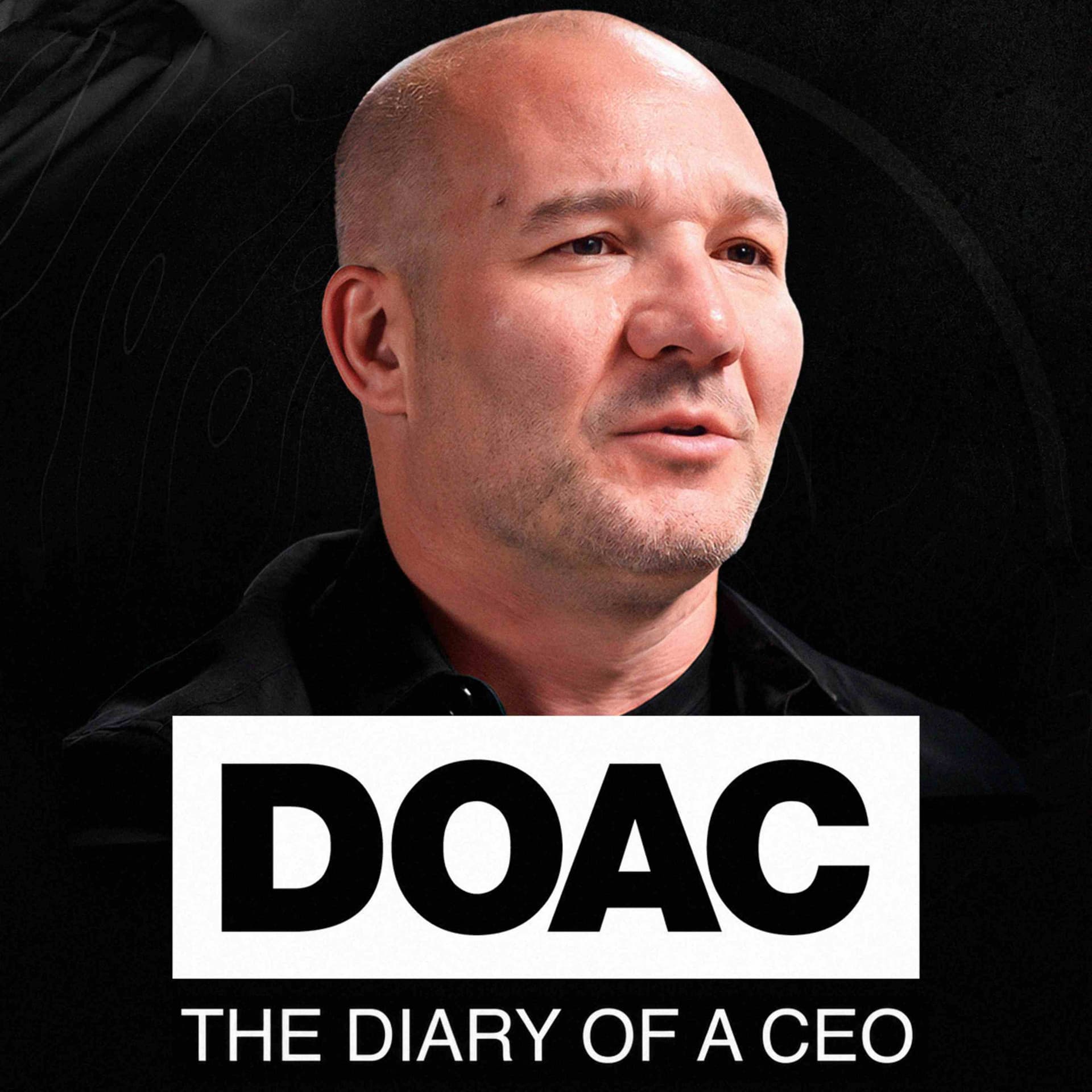
Podcast Summary: The Diary Of A CEO with Steven Bartlett - Episode with Kristen Holmes
Podcast Overview
- Title: The Diary Of A CEO with Steven Bartlett
- Host: Steven Bartlett
- Episode Title: The Fitness Scientist: "Even A Little Alcohol Is Hurting Your Health!", "Late Night Screen Time Linked To Cancer!", "Working Shifts Kills You 15 Years Early!" - Kristen Holmes
- Guest: Kristen Holmes - Vice President of Performance Science at WHOOP
- Focus: Understanding the impact of circadian rhythms, sleep, nutrition, and other lifestyle choices on health and performance.
Key Concepts Discussed
Circadian Rhythm
- Definition: Physical, mental, and behavioral changes that follow a 24-hour cycle.
- Health Implications: Disruption of circadian rhythms can lead to increased risks for cancer, cardiovascular diseases, infertility, and mental health issues.
- Shift workers may die, on average, 15 years earlier due to these disruptions.
- Exposure to blue light from screens during critical hours (10 PM - 4 AM) can have depressive effects.
Sleep and Performance
- Sleep-Wake Timing: Consistency in sleep-wake times is crucial for robust psychological functioning and resilience.
- Sleep's Impact on Recovery: Sleep duration is important, but sleep regularity is a stronger predictor of overall health and longevity.
- Mental Health Connection: Sleep disruptions correlate with higher rates of mental health disorders, including suicidal ideation.
Nutrition and Meal Timing
- Eating Windows: Consuming food within an 8-10 hour window can significantly improve metabolic outcomes.
- Food Timing: Eating too close to bedtime can negatively affect recovery and overall health.
- Meal Frequency: Consuming protein-rich meals earlier in the day is associated with better metabolic health.
Alcohol Consumption
- Effects on Health: Even moderate alcohol consumption can lead to decreased sleep quality and increased mental health risks.
- Melatonin Production: Alcohol reduces melatonin production, which is linked to numerous health disorders.
Exercise and Heart Rate Variability (HRV)
- HRV Significance: A higher HRV indicates better recovery and adaptability to stress.
- Exercise Recommendations: Engage in varied intensity workouts, including both high and low-intensity sessions, while ensuring adequate recovery time.
Psychological Factors
- Growth Mindset: Encouraging a growth mindset can enhance motivation and overall well-being.
- Gratitude: Practicing gratitude can have significant psychological benefits.
Practical Tips for Health Improvement
- Sleep Consistency: Wake up at the same time every day and expose yourself to natural light.
- Meal Timing: Consolidate eating to an earlier time frame and stop eating a few hours before bedtime.
- Limit Alcohol: Reduce or eliminate alcohol consumption to improve sleep quality and overall health.
Key Takeaways
- Managing lifestyle habits centered around sleep, diet, and physical activity can significantly enhance health outcomes.
- Understanding one's circadian rhythm is crucial for maximizing performance and well-being.
- Small, consistent changes in daily routines can lead to profound health improvements over time.
Closing Thoughts
- Kristen emphasizes the importance of aligning behaviors with personal values to foster a sense of purpose and direction.
- The conversation highlights the interconnectedness of physiological health, mental well-being, and lifestyle choices.
Social Media & Resources
- Follow Kristen Holmes: [Instagram](https://bit.ly/47oC8fh)
- Follow Steven Bartlett: [Diary of a CEO](https://beacons.ai/diaryofaceo)
- WHOOP: A physiological monitoring technology company focusing on optimizing health and performance.
This episode serves as a comprehensive guide to understanding the science behind health optimization through circadian rhythms, sleep, nutrition, and exercise, offering actionable insights for listeners to apply in their everyday lives.
Written by AI. May contain mistakes. Listen to the episode to check what was said.
Transcript
Automatic transcript. May contain errors.0:00Right now, with the Home Depot, you'll find storage solutions made to fit your needs. Grab an HDX Tough Tilt to protect your tools, or keep your sports equipment contained with reinforced snap fit lids, or stack up and make better use of your space with bins and totes built to last. Whatever your story, we've got the gear to keep it organized and protected at the Home Depot. How doers get more done? What the research says is that people who are having sex within a few hours of when they sleep have better markers of sleep and recovery. So does masturbation have the same implications? Well, what was so interesting about this research is that Kristen Holmes is the vice president of Performance Science at Woot.
0:46Who has access to health data from hundreds of thousands of people and her groundbreaking research will tell you the secrets of achieving perfect health and performance. The key to your health is your circadian rhythm, which are physical, mental, and behavioral changes that happen in a 24 -hour cycle. One of the most known circadian rhythms is being asleep during the night, and it has massive health consequences. For example, we know that shift workers on average are going to die 15 years sooner. But if you're awake for two hours between 10 pm and 4 am, two days per week for 25 days of the year, you qualify as a shift worker.
1:23You are putting yourself at increased risk for cancer, cardiovascular disease, mental health issues, and have trouble having children. We know that we haven't adapted to blue light. The light we get from screens. Yes. If you're viewing light to in the hours of 10 pm and 4 am, it actually has a pro -depressive effect. It always goes on and on. And a lot of people are like, I have to go to bed at 1 am because I'm a night owl. Total BS. You're making a choice. And if you want to perform consistently, increase your tolerance for stress and take control of your life, you need to, we want to eat. And most importantly, we need to...
2:06Kristen, why do you do the work that you do? I am a rationally passionate about human flourishing. And the frameworks, policies, basically determinants of human flourishing. And I've dedicated my life to understanding how the physiology and psychology work together to help people take control of their health. So they can understand how to apply their energy and attention in a way that's truly rewarding. What is your job title? I'm the vice president of Performance Science, Principal, Scientist at WOOP, which is a technology, a physiological monitoring technology company. And what does that mean?
2:51So I'm trying to make sure WOOP is a thought leader in human performance. So trying to see around the bend to understand what's going to be important for tomorrow, in terms of understanding how we can take control of the direction of our health. What are the markers that are important that we need to be tracking? What are the behaviors that we need to be engaging in in order to move those metrics around in a way that is health promoting? I look at a lot of the high stakes, high stress environments. So professional athletes, frontline healthcare clinicians, and military operators. So kind of understanding some of these extreme professions and crafts and what the physiology and the psychology looks like, we can then kind of abstract and I think in some ways generalize what that means for the regular population who are experiencing less extreme demands on their time and their energy and their cognitive bandwidth.
3:50And do you conduct your own studies? Yes. Yeah. So I'm a Principal Investigator on many studies, which means that I'm kind of leading those experiments from kind of a disease and I have a team that is kind of supporting that research in various aspects of expertise. But yeah, I mean, one of the studies that we published in May was looking at a thousand paratroopers in Army Alaska. So super extreme environments, harsh, but the Army came to us. They were, if you understand Alaska in general has a very high suicide rate. This base in Elmdorf, Alaska has a lot of mental health issues, a lot of suicide.
4:33And they're trying to understand, you know, what is actually going on here? And we were able to run a study where we showed that there's actually one behavior, one behavior that was surfaced, that was the most predictive of positive psychological functioning in these, in these soldiers. And that one behavior was sleep wake timing. So the more consistent and more stable the sleep wake, the sleep onset and offset of these soldiers, the higher levels of positive psychological functioning. So worklet place resilience, less home sickness, more feelings of control, more positive social networks. It bubbles up in every single piece of research that we do at WOOP.
5:21Sleep wake timing, I think, is the mother of all performance optimization behaviors. Sleep wake timing. So is this the same thing as your circadian rhythm? Yeah, so this is one of the most, I think when we think about circadian rhythms, which is just physical, mental and behavioral changes that happen in a 24 hour cycle, and your biological clock is kind of orchestrating these rhythms, right? And... Okay, so I'm going to have to take this right back to a monkey level stuff. What is a circadian rhythm, is if you're explaining it to a tenure. Yeah, so it's basically physical, mental and behavioral changes that happen over a 24 -hour cycle.
6:04Okay, so here's my read on it, correct me if I'm wrong. There's a clock in my head. Yes, the superchisematic nucleus is the master clock, which is somewhere in my body. It's in the hypothalamus. So it's in my brain. And this clock regulates every cell in my body. Cell tissue organ. Okay. And it releases...it controls the release of a chemical, which makes those cells organs every part of my body do stuff. Yeah, so it is your hypothalamus. So the superchisematic nucleus, it responds to light, and it responds to darkness. Okay. Okay, so that's like the most pronounced entrainment queue for this master clock.
6:55And it then tells it sends signals to every cell tissue in your body as to what it needs to be doing in the presence of light, in the presence of darkness. And when we are viewing light at a phase of the natural light -dark cycle, that is, if I am awake when I should be sleeping, or I am sleeping when I should be awake, when my body anticipates that, it causes huge amounts of stress in the system. If we do this once or twice, not a big deal. But if we're doing this chronically, it has massive health consequences, cancer, metabolic disease, cardiovascular disease, 100 % of mental health issues, there will be some level of circadian disruption.
7:47Okay, so when this light information comes in and tells these clocks to what to do, if I am going outside of my natural biological preferences, that is circadian disruption. And if you think about how many folks are walking around circadian disruption, it is mind -blowing. Basically, the definition that's been thrown out there is, if you are awake from the hours of 10 pm to 4 pm, if you are awake for two hours between 10 pm and 4 am, for two days per week, for 25 days of the year, you qualify as a kind of card carrying shift worker. And you likely have significant circadian disruption. Which means that I have...
8:44You are at risk for some of the... It's not going to happen tomorrow, but if you continue on that pattern that I just described, you are putting yourself at increased risk for cancer and cardiovascular disease, metabolic dysfunction. You can have trouble having children, it impacts fertility, mental health, psychiatric disorders. There is no disease or disorder, that circadian disruption doesn't touch. So, a way of thinking about this, so that I and everyone else can understand, is there's this master clock in our hypothalamus, look at me, hypothalamus, and this master clock regulates all of the other clocks through our entire body, and there's millions of them.
9:27Right. And the thing that's... The master clock is using as a signal, the clock in our brain is light and darkness. That's the most horrible. Yes. That's the signal that cares about it listens to the most, but there's other signals as well. Right. And if that master clock, if I'm up at 4 a .m. and I'm looking at a light at 4 a .m., that master clock is going to start firing off chemicals to all the other clocks, and then all the clocks are going to be out of sync because then when I wake up it's light and then... You're confusing. I'm confusing my body and it's firing off in all kinds of different ways.
10:01Right. So I need to form an alignment, which means basically sleeping at the right time, exposing myself to darkness at the right time, et cetera, et cetera. Your body loves regularity. And the problem is, Moderna is not set up for that. We have access. I think all the circadian research, unfortunately, was done after the advent of electricity. So we're kind of fighting this access to constant light. And we're starting to see the, I think, deleterious effects, or the negative consequences of exposure to light really after the sun goes down. We haven't adapted to blue light after dark. Right. After the sun goes down, we have not adapted to blue light.
10:49Blue light being the light we get from screens. Yes. There is a study that looked at the timing of light and its impact on mood and brain. And circuits, and they saw that if you're viewing light between the hours of, again, this is kind of this magic window of time, 10pm and 4am, it actually has a pro depressive effect. So it impacts your dopamine system, reward, motivation. Right. So when we wonder, you know, why are all that, what does this mental health crisis? I mean, we have to look at light first. And I just don't know, and I think what's hard about the discussion and hard about this behavior is that, you know, it's really hard for people to not engage with their phones, you know, before bed.
11:38It has its own addictive properties, right? But we just have to understand that these are our relationship to light will directly influence the trajectory of our health. There's just no question about that. To understand this from a more sort of prehistoric, ancestral lens, we go back, I know, tens of thousands of years to how maybe some of our ancestors used to live. They would have food at certain times and they would have a light exposure at certain times. They didn't have artificial light. Right. And invented that yet. The modern world is very much the antithesis of that. It is. We have food whenever we want it.
12:15We can order a cookie at 3am if I want to eat cookie at 3am. And I can watch YouTube video that I ever see, for example, like and subscribe, at any hour of the day. So is this kind of like a misalignment issue with the way our body was designed by nature and the world we now live in? Yeah, we have not evolved to digest food in the middle of the night or, or do you lighten the middle of the night or to be super active in the middle of the night, which is happened. And it does, it creates this, it creates a misalignment. And I think what's interesting if we are to kind of look at individuals, you know, or societies currently that don't have electricity.
12:57It's really interesting to, I think, see some of their behaviors, some of their sleep wake behaviors. And this is fascinating. There is a study done looking at kind of a hunter gatherer type of society who don't have access to any electricity. And when you observe their sleep wake times, they all fall asleep within 15 to 30 minutes of each other. And they all wake up between 15 and 30 minutes of each other. So this whole notion of chronotypes is like kind of like total BS. It's like, because I think that's, you know, I think that's the reason a lot of people are like, oh, I have to go to bed at 1am because I'm a night owl.
13:33No, you're making a choice, generally speaking. Now this isn't healthy populations, not people who have circadian, you know, disorders and things like that. Generally speaking, like if you were to throw everyone in this building on a mountain in Colorado and this experiment has actually been done with no electricity, we will literally all fall asleep within 30 minutes of each other after 48 hours. Like that is how powerful these light dark signals are to our body. And I think that just those two examples are really compelling in that, you know, we're, we have evolved to kind of wake up and fall asleep in relation to this light dark cycle.
14:11So one of this stuff we say to ourselves, because I say that to myself all the time, I told myself I'm a night owl. Yeah. And I've given myself the whole chrono touch feel. Yeah. That's BS. Yeah. In my opinion, the way I interpret the literature, it seems that, you know, the variability that I think is talked about or how we think about it as a society in terms of there's chronotypes that are, you know, very, you know, you're, you fall asleep. You want to, you, you're genetically predisposed to fall asleep at 1 a .m. And I'm genetically predisposed to fall asleep at 9 p .m. Yeah. I don't think it's that kind of variability.
14:46I think the variability maybe is an hour at the most, maybe an hour and a half. Obviously, it's age related as well. But for the most part, I don't, I don't think this variability is as pronounced as what, what we say it is. Sleep. Yeah. So conventional wisdom says it's all about how many hours you spend sleeping. We already, this has already been shown to be not true. Sleep duration is, is important, right? And we can put a pin in that. But sleep regularity predicts all cause mortality. And this is just recently published actually, not by my team. But looking at, it was actually UK, bio bank, 60 ,000 people, 10 million sleeps, objective measure of sleep.
15:36And they found that sleep regularity predicted mortality and independent of sleep duration. So it's not to say that sleep duration doesn't matter, but that is absolutely incomplete advice. How much time you spend in bed doesn't necessarily predict how long you live. It is the degree to which you stabilize when you go to bed and when you wake up. That predicts mortality. What did they find? What was the conclusion of that? It was there a sort of a percentage variance in those that are regular and regular sleep. Yeah. So the sleep onset offset times, I'm not sure, but actually this is research that my team is doing.
16:11And that we have not published yet. So this is preliminary data. But we are, we're actually able to determine down to the minute. What is a tolerable level of variability? So for the most elite athletes on the planet, the 0 .001%, 18 to 23 year olds, we know that 70 minutes of onset offset variability. At 70 minutes, we will see a sharp decline in markers of recovery, heart rate variability, resting heart rate. Which is a indicator of how you will adapt to load the next day. To stress the next day. To stress the next day. So life flow. So sleep wake time is really important. And we're doing research across every age bucket.
17:02But you can imagine that if these are the most robust humans on the planet, and they have 70 minutes of variability that is tolerable. Within that population, some are a little bit sooner. In terms of the, or can deal with less variability. And others can deal with slightly more variability. But the mean is 70, 70 minutes. So you can imagine for individuals who are more vulnerable, who have less, are less robust physically, mentally, emotionally. Their tolerable level is going to be a much narrower. What's going on inside of the body when we increase the variability or that we don't have a regular sleep and a regular wake time?
17:47What's actually going on from like a chemical physiological perspective? Yeah, so one of the things that's suppressed is melatonin. And circulating reductions in circulating melatonin have been shown to be linked to every disorder and disease in the body. Every disorder and disease in the body. When we have suppressed or reduced circulating melatonin, that is going to impact us on every level and make us more vulnerable to disease and disorders. So that is probably one of the most important thing when we have super unstable sleep wake time. We are going to have suppressed melatonin production, which leads to inflammation in the body.
18:32It's melatonin, I think, is one of the big players in the story. Growth hormones. Yes, yes. If you're not going to sleep late, you will not release human growth hormone as you'll get less of a ballast of release. And why does that matter? That's when all the physical restoration happens. So all the regeneration physically. So for bypassing that, we're basically all the work that we did in the gym or everything that we did during the day. We're just not going to recover from that in the same way that we would if we were getting that sleep. Is growth hormone essentially the thing that causes us with muscles to grow and repair?
19:12Yeah. I sometimes think this because I think if I'm sometimes in my life because I'm quite busy, I have to make the decision whether to go to the gym or get a great night's sleep. And the more I've learned about growth hormone in the body and weeping all those things, I've started to make the decision towards sleep versus going to the gym because my brain now goes well, you're not going to get the recovery and sort of restoration anyway. The benefits. Yeah, the benefits of going to the gym if you're poorly slept that night. Yeah, I think if it's, if you're consistently getting decent sleep and just simply going to bed and wake up, be similar times, you know, I would say it's okay to prioritize exercise sometimes.
19:54But sleep is very important and is probably the thing that needs to be prioritized first. How consistent are you with your sleep? Very consistent. I had that in 2017, you started trying to sleep within sort of 25 to 30 minutes every single day. Yeah, the same sleeping window. That's right. Yeah, and yeah, it was a paper that came out by Andrew Phillips actually in the summer of 2017. And it basically was a four year study that was conducted at Harvard University looking at students and they were basically students sleep and they were trying to see, okay, you know, what aspect of sleep is predictive of things like GPA and other, you know, measures of kind of flourishing.
20:40And what they found is that basically sleep way time predicted GPA. What's GPA for people? Oh, sorry, grade point average. Yeah, so it's the difference, you know, the more regular, you know, it's the difference in getting an A and a B by just stabilizing sleep way time. And so at that time, I was working with, you know, tons of collegiate athletes. So NCAA athletes, professional athletes. So, EPL, you know, NBA, NFL, MLB, you name it. Like the biggest high performers like in the world. And, and I started tracking this, you know, just manually, we at the time, we didn't actually track this. This wasn't automated.
21:22I had to like, you know, kind of do this in an Excel and then sure enough, you know, sleep way time started predicting all these performance metrics that people care about. And we started rolling in some subjective measures. We had internal load, we had external load, of course. So all of this objective measures, but I started rolling in some subjective measures and sure enough, sleep way time just continued to to ladder up to all these performance variables that people care about. So I started, of course, you know, because I have access to all of these these data, I started, I'm like, shit, I need to, I need to like start stabilizing my sleep way time.
21:54And sure enough, summer 2017, I just like, that's basically like my non -negotiable. And yeah, I mean, I haven't, I haven't been sick since 2017. I had a little tiny head cold that lasted 48 hours. But since then, I literally have not had a sniffle, a stomach ache. I didn't get COVID. Like, I literally have not been sick. And you know, there, I do a lot of other things well, but that has been the single biggest change. Just sleeping and waking up at the same time. That's it. What is your routine now? How do you ensure that happens? Because... Yeah, so the key to that is stabilizing when I wake up.
22:36So even when I travel and I do travel and I travel internationally, I travel to the west coast. I try to maintain my home time zone as much as I can, as long as I can fulfill my business commitments and social, you know, there might be a social and then as well. But for the most part, I stabilize when I wake up. So I keep that consistent. Even if I can't go to bed at the same time, I ensure that I wake up at the same time. And that basically sets my circadian rhythm. So I will then feel sleepy at the right time. And I can kind of keep that virtuous cycle going. If I have short sleep, I just basically try to build an a nap prior to 130 for 30 minutes to an hour.
23:18So I don't accumulate sleep debt. This is another thing that we can talk about. Sleep debt is wild in some of its correlations like psychological safety and executive function. But, but yeah, so I kind of... That's how I manage short sleep. But I always try to wake up at the same time. So I'm getting that bulls -a -light at the same time every single day. And what time do you wake up and go to sleep? So I go to bed around... I kind of get into bed usually around 9 .15, 9 .30. I read for a half an hour or 45 minutes a book, printed page dim light of... And then I fall asleep usually around 10. And then I wake up like at 6 .14.
24:00No, I'm just kidding. Like around 6. Around 6. You know, whenever I talk about these subjects, the rebuttal I get is when you might be able to predict. It's from a group of people that I can't yet relate to. Yeah. Do you know who I'm talking about? Parents. Oh, yeah, yeah. Well, shit. I've had two kids. So I totally understand the whole parenting thing. So yeah, I mean, there's no question there are going to be times in your life where you're literally a shift worker. Because you're caring for a sick parent or a sick child or you just literally have kids and they're young. You're a shift worker.
24:34I mean, there are things you're making decisions to go out and socialize. And in times that maybe, maybe aren't optimal for kind of human functioning. But yes, there's no question that there are periods in your life where it's going to be harder. That said, there are some things that you can do to mitigate some of the negative effects of both direction and timing. And one of those things is dialing in your feeding window, which is another kind of circadian behavior. So the timing of when you eat is pretty important. And can at least check some of the boxes in terms of its impact on metabolic functioning and heart health and things like that.
25:16So let's talk about that then, meal timing. What do I need to know about when I should be eating, what I should be eating, and the implications that has on my circadian rhythm, my body clocks? Yeah. So it's in the literature. There's time for sure to eat and there's time for sure to feed. And time for sure to feed generally, if you read the literature, is going to refer to mouse models, time for sure to eat. We'll refer to human studies. Mouse models being studies. Yes, sorry. Yeah, mice studies done with mice are just time for sure to feed and humans would be time for sure to eat. And not to confuse us with intermittent fasting, which I know is a hot topic and if you would love talking about it.
25:59Timestricted eating basically has a circadian component. So it's really about the timing when you're eating your food in relation to the light dark cycle. Intermittent fasting is basically just reducing calories. And so time for sure to eating does not have a calorie component to it. It's more about the timing. And there's been some, a lot of interesting studies that have been done that show if you eat, you know, within, you know, kind of eight to 12 hour window. You will have a much better metabolic outcomes. And this is pretty, this is well established. And if we see in the whoop data that if you're, if you stop eating three hours prior to when you sleep to when you fall asleep, markers of sleep and recovery are, are exponentially better.
26:52So timing of meals really, really does matter. And there's no question that's in we know this from from other research. You're more prime to metabolize food, closer to when you wake up in the morning. So earlier in the day, you're going to be much more prime to utilize the nutrients that you're, that you've digested. So does that mean we should be eating? We should have sort of an earlier eating when we're in. Yes. You know, Brian Johnson. Of course. Yeah, I know he stops eating at 11 a .m. Which is crazy. So which is insane and not super practical. But I think if you can stop eating around when the sun sets, you'll position yourself to improve your metabolic health.
27:35And I would go so far to say that, you know, regardless of what it is you're eating, because a lot of folks cannot afford to, you know, eat high quality food. That's just a reality. And a lot of those folks do suffer from, you know, at higher rates of cardio metabolic dysfunction. But if we can just consolidate our eating window to eight to 10 hours, we get ourselves like 60 % of the way to our kind of metabolic goals. Again, it's not say that content and quality does not matter. It absolutely does. But if we are going to, if we, if we can't focus on that for whatever it might be, consolidating or eating window.
28:16So eating every single one of our calories between, you know, an eight to 12 hour window, we will improve our health. And what's your eating window? So I do about 10 hours. Okay. Yeah. So I definitely, I pretty much don't eat after the sun goes down. When you say the sun goes down. Sunsets. Yeah. Is that like 5 p .m.? I mean, now it's early. Yeah. So I give myself like an hour window. Yeah. Like for right now, it's, it's definitely early. But, um, but for the most part, I can kind of get away with it based on my lifestyle. So ideally between sort of 7 a .m. and 4 p .m. Mm -hmm. And then just make sure you're not eating, you know, 2 to 3 hours before you fall asleep.
Read the full transcript
28:58Yes. That's the big key, I think. Is you want a nice big buffer between, uh, yeah, when you, when you have your lost calorie and, and when you go to sleep. Because that they're both, so digestion is a parasympathetic activity. What is that? Right. So that means, so your autonomic nervous system has 2 branches, your parasympathetic and your sympathetic, your parasympathetic is your rest and digest. Right. We also want to be in a parasympathetic state when we're sleeping. So when we are digesting food, we're basically kind of confusing our system in terms of where it should apply its resources. So it basically diverts resources away from, you know, the sleep and the restoration.
29:42And that's where, you know, if you have a big meal, you'll notice your heart rate is really, is a lot higher, right? And your stress score is higher, right? Some of the features on, on the web app. And when you are not having to digest, you'll see your stress score is lower, you'll see your heart rate is lower, your heart rate is lower. So when you are not having to digest, you'll see your stress score is higher in those situations. We want to make sure that when we're sleeping, we are not diverting any resources away from sleep. I mean, alcohol is another one, right? Like you just to metabolize alcohol, you're diverting, you know, significant resources away from the regeneration and the recovery that needs to happen during sleep.
30:15By bouncing you out of deeper stages of sleep. So the same sort of effect happens with food. And we see this, you know, at population levels on the web app, it's just very apparent that meal timing and alcohol are a really important thing. Really the two biggest disruptors to a good night's sleep. The Daryl Vaseo's brought you by Progressive Insurance. Do you ever think about switching insurance companies to see if you could save some cash? Progressive makes it easy. Just drop in some details about yourself and see if you're eligible to save money when you bundle your home and auto policies. The process only takes minutes and it could mean hundreds more in your pocket.
30:49Visit progressive .com after this episode to see if you could save. Progressive casualty insurance company and affiliates. Potential savings will vary, not available in all states. Legendary reliability. Excellent. Re -sale value. Check out Toyota's amazing lineup of affordable trucks like the rugged full -size Tundra or Off -Road Ready to Coma. Visit buyatoiotta .com for more Toyota. Let's go places. So interesting because I've always wondered there was a time in my life where I routinely ate super late at night because I would work very, very hard during the day. I would basically forget to eat.
31:25I'd get home maybe nine or ten at night. I would then order the food at nine or ten, which means it comes at 11 or 12. And then I'd eat at 11 or 12. Yeah, it's a very stressful food system. Yeah, tell me about it. The interesting thing that I started to notice was when I did that, I woke up feeling like I hadn't slept. I had a lot of fun with my body.
31:59I had a lot of fun with my body. I had a lot of fun with my body. I had a lot of fun with my body. I had a lot of fun with my body. I had a lot of fun with my body. I had a lot of fun with my body. I had a lot of fun with my body. I was difficult to fool again back to, I don't know, fully fucked, in the food. Yeah, fuck. And we know, you know, there's a really nice study that looked at. Basically, everyone is eating the exact same meals, and they're relatively the same age. Like, there is a really beautiful design. And they basically looked at folks who are eating after 3 P .M. And folks who are eating before 3 P .M.
32:36And the folks who ate a bulk of their calories before 3 P .M. had significantly better metabolic outcomes and lost more weight. So again, there's no calorie restriction component here. You know, they're all kind of eating similar diet, similar macronutrient distribution, similar calorie content. And it's the folks who were eating a bulk of their college prior to 3 PM who had the best outcomes. Exercise. One of the issues that I have sometimes in my life, today's one of those days, where because I was up very early this morning, it meant that I didn't go to the gym this morning, which means I'm probably gonna get home after being in the studio, being at the office today at maybe 7 .8 PM.
33:20And I'm super hungry then, usually, right? And I also need to work out. So sometimes what happens is I choose to work out first and then obviously it makes the meal late at night. But there's also days in my life where I end up working out. And I'm known for this, like 11 or 12 PM at night. Wow. And there was this old train of thought that was a good thing to do because people would say, oh, you're gonna be tired when you get in bed. But that doesn't seem to be what happens. Yeah. Do you feel more energized? I feel more energized. Yeah. Well, not surprising, right? You know, adrenaline, cortisol, like all the kind of hormones and chemicals that you need to kind of get to a place where you can exert that energy are kind of flowing through the system and it takes time for them to go back to normal levels.
34:07So to kind of get back to homeostasis is gonna take some time. And so yeah, I mean, it would make sense that you're kind of activated after exercise. So for some folks, there is a lot of individual variability. I think with exercise timing, some people are impacted more. But I honestly think that it has more to do with the light. You know, usually for an a gym, it's generally well lit, right? You're not in a dark gym. So you're getting exposure to light, which is gonna make you feel like more activated. And it's again, telling your body that it's time to be awake and alert. On that point of light, there's a school of thought that says you should look at lights when you wake up in the morning.
34:52My partner always gets up in the morning, walks out into the balcony and sits out there for 10 or 20 minutes in the morning. I love that. Yes, I love to hear that. Yes, she's the best. She's so annoying. She gets everything right. I love it. But for sure, that you wanna get light within, 100 ,000 lux is pretty much what you wanna get within five to 20 minutes of waking up to tell your body like it's time to go. 100 ,000 lux. Oh, lux. So just like photon energy. So pretty much if you're outside for five to 20 minutes, it sounds like your girlfriend is nailing this protocol. You'll get all of the photon energy that you need to tell your system that it is time to be awake.
35:34Can't you just go looking to a lamp or something? It will just take longer because it doesn't have the same light intensity. But if you're waking up prior to when the sun gets up, yeah, turn all the lights. You wanna try to mimic day as much as possible and then once the sun does come up, it's good to get outside. And before you get in bed, you reference that you read books versus being on an iPad or screens, etc. Does the same philosophy and principle apply to light exposure before sleep as to food exposure before sleep? Oh, no question, absolutely. We wanna try to restrict light. Basically after the sun goes down, we wanna dim our home environment to the degree that we can.
36:17We wanna try to minimize all artificial light in the lead up to bed. All artificial light. Yes, yeah, you wanna make it as dim as possible. So there are a lot of night, like blue light blocking glasses, the filters that you can put on your iPad and your phone, activate all of those. But again, we wanna protect our melaton release. Right? And for all the reasons I kind of have explained, when we don't have it, is linked to every disease and disorder. Right? So we know this. So we wanna protect our melaton release. And the only way we can release melatonin is by darkness. We need to be exposed to darkness in order for that master clock in our brain to know that it's time to go to sleep.
37:02And again, be able to tell our body, our tissues and organs and cells and our body, what it needs to do at that moment. When I was at the Wootpeg called as embossing, not so long ago, I saw them working on sleep masks. And I think I've always been quite dubious about sleep masks. You know, you got those planes and they hand you a sleep mask in the little bag. I was a little bunch of weirdos, you know, like putting that, strapping that thing to your face and embarrassing. I'm one of those weirdos now. Yeah, I mean, it's hard. Even the little dot on your, you know, from your alarm clock or your TV is gonna emit enough light.
37:37We're so sensitive to light, artificial light. So natural light, like the moon, totally fine. But any other type of light is really gonna impair our ability to get into these deeper stages of sleep. Where all the restoresh, restoration and regeneration happens. Do you use a sleep mask? I do, yes. What's your sort of routine there? Yeah, just when I start to feel sleepy, I just put it on and go to bed. Do you listen to anything when you go to sleep? No, I don't. Is there, are you aware of any research that might indicate that listening to serial killer documentaries at 3 a .m.? I think in principle, anything that activates you, stimulates you cognitively or makes you energized, you probably want to avoid reading.
38:28Interesting. I think there's a group of us out there. I'm yet to meet them. But I know that I'm not alone. That like to listen to horror and thriller and serial killer stuff at, you know, very late at night and it helps us to sleep. At least that's what we tell ourselves. I think if you perceive it as helpful, it probably is. And I think that's where, and if your objective data shows that you're getting, you know, the requisite time in these deep procedures of sleep, then go with it. I think what is actually, there's definitely the cold, dark quiet, right? You need your room to be cold, you need to be cold, you need to be dark, you need to be quiet.
39:05So there's the environmental stuff you need to, you know, stop eating a few hours before bed. Ideally, you need to have stable sleep. Big time, ideally, these are all things that are going to drive getting into these deep procedures of sleep. But the other thing that you probably do really well is you manage stress throughout the day. You know, like you, I think that's another, like the things that we do during the day, how we, you know, whether or not we're living our values, right? Do our behaviors align with things that we care about? Are we thinking about the things that we want to be thinking about?
39:36Are we managing our relations effectively? So all the things that can manifest a stress, negative stress will invariably re -retell during our life. We're asleep. But if we're managing those things during the day, proactively and relatively well, generally speaking, like sleep should happen, you know, pretty naturally. There's a huge group of people who listen to podcasts like this, and as they listen to these podcasts, they just feel more depressed about their situation. You know, because they, they believe they're trying, they're very best, and they're still struggling, especially as it relates to sleep.
40:12I think I've always wondered what the message one can send to them. And also, you know, I think there is a huge component of sort of personal responsibility and choice that you speak about as well, and that I believe in as well. But what is the most compelling message for those people that do have a choice? They, they know deep inside. Much of it is a lack of discipline. They know they could not watch YouTube. They know they could put their phone away at 9 p .m. They know they could not eat the cookie super late at night. They know they could, deep down, they know they could make a different set of choices.
40:45But they listen to these podcasts over and over again, whenever I have the health experts on, and maybe they even take notes, but they just don't do it. Yeah. What is the most compelling thing you can say to those people that do have a choice, but continually choose a bad option to get them pushed over the fence to the positive circadian rhythm, body clock loving side? Yeah. So if people are trying to develop new habits, you have to understand how that new habit links to your values. So the things that you believe in, the things that you say you care about, right? If I know growth and impact are my two most important values, presence is another one.
41:31How, what do I need to do every single day to back into that? So I can align my behaviors with the things I say I care about. And I think when folks are struggling, they don't really know who they want to be in the world, and they don't maybe understand exactly what is that they value. They're fuzzy about their desires, about their values. And I think you end up, when you're fuzzy about your desires and the things that you value, end up you're flinging yourself in all sorts of directions, emotionally, physically, mentally, right? And I think that's kind of the project, is figure out what you care about, and then align your behaviors and create outlets in your life.
42:15And that, frankly, might mean getting rid of people, who don't support those values. And I think we're way too lenient on our circle of friends. And in the sense of, I think we keep people around in our life who don't necessarily help us become a better version of ourselves. Have you had to shed some people? Yes, absolutely. Why did you shed them? Because it didn't really support who I wanted to be. Who did you want to be? I wanted to be able to wake up at a very simple level with as much joy and energy as I could. And I wanted to be present for my kids, and yeah, so. And so I think folks are engaging in behaviors that's, I think, create a situation where, yeah, I don't know how to say this, though.
43:34She's so yet. Yeah, I think, for me, I grew up in a household where my mom was an alcoholic. And that was a tough environment. And she ended up dying of cirrhosis, and it's not easy. So being in that kind of environment, so I think for me, you end up, it's crazy how when you live that life, you end up repeating those patterns. And I think, I had to, even though for me personally, I made choices where I really have never drank alcohol, right? Because I saw how it destroyed my family. But yet I was still hanging around people who were engaging in these behaviors. And it just was impacting me at my core.
44:44And it didn't mean that I didn't love those folks, but I had to get away. And a lot of this was related to, I was in an environment at a university where, that was just like the norm. Like it is just wild to me how educational institutions normalize binge drinking at a level that is just so destructive. And just to be, I suppose to just be around that all the time, I was just really not allowing me to show up daily as the person that I wanted to be, even though I wasn't engaging in that behavior, like it's still, it just made me feel like I couldn't be the version of myself that I wanted to be.
45:36So yeah, it's just a lot of hard decisions, but I let go of a lot to be able to create an environment infrastructure that supported who I wanted to be in this world. When I talk about being able to change your behavior and break a habit, it is nothing in the context of someone who is in snared by an addiction of sorts. There's not, it's a completely different conversation. Yeah. What is it like growing up with a mother who you observe at a very young age, you were how old? I mean, my whole life. Your whole life? Yeah, like she. As a child, when you see a parent, someone you love, that is sort of gripped by addiction, what is that like?
46:29Yeah, I mean, I think at a fundamental level, you just feel deprioritized, I think, generally, like you, I think you feel, you're unsupervised number one. There isn't a lot of supervision. So you end up really having to defend for yourself. My dad worked a lot. He was definitely workaholic. Such a good man. So much integrity. But I think that was his form of escape. But it kind of leads, you know, you got to figure out how to eat. You got to figure out how to do a lot of the basic stuff on your own. So you develop a lot of independence, I think, but it's hard to, you know, form emotional attachments, I think, as an adult, unless you really work through that, you know, because you're afraid that you're not going to be taken care of.
47:34What did you come to understand about your mother's addiction and what she was struggling with, if anything at all? Yeah, I mean, I think what was so sad about that time period is, is, you know, I think it was well understood, you know, I think a lot of those behaviors, I think, too, to be are normalized. And I don't know that they're the connection between depression. You know, she was, it's no question. She had massive seasonal effect disorder, which is one of the reasons why I'm so interested in, you know, kind of everything related to light and just the opportunity there for health. But, you know, she had major depressive disorder and, you know, it's not diagnosed properly.
48:21I don't even remember, I have no idea if she ever even went to the doctor to, you know, to try to get treated. So, you know, I think the biggest thing that I learned is that we can actually make choices. And I know that there are, you know, when you look at regions of the brain, we understand that people are predisposed. But I think there's a lot of things that we can actually control to reduce our vulnerability to some of these diseases. How has that experience defined and shaped you when you look back and connect dots? Yeah, I mean, I just, I always, I was very competitive, palatable, athlete representing the US.
49:08And so, there's definitely trying to understand my own body and my psychology so I could perform my potential. But there's no question that like this whole, everything that like underpins the work that I do is trying to understand, you know, how we can improve our own situation. So, we can, you know, self -actualize and live our potential. And so that was, I always, you know, felt so bad, you know, for my mom.
49:46Why? You know, she wasn't able to become the version of herself. Like, I wasn't able to relapse her potential. And she adds so much.
50:05I can't believe you did this to me.
50:11Would you like a tissue? Thanks.
50:19You're very, you're a very special person. It makes, makes sense. It's an essential way of processing such an incredible, incredible drive and mission to you. I didn't, I didn't know any of those, what you've just said, but I've never talked about that publicly. So, I'm just, yeah. What a wonderful way to channeled such an unimaginable pain to then sort of fix, you know, hundreds of thousands of people's other lives and help them get closer towards their own potential? Yeah, I, and I never want to like project my values onto other folks, but, but I think that's always been like at the core of like, why I do what I do is, and the reason why I coached for so long is, I just love seeing people like realize their potential or understand their potential, knowing that we're always, of course, the work in progress, but I just, like I want, like everyone to be able to wake up and feel, you know, be energetic and be able to like, really, really live the things that you care about, you know, and just an understanding, I think, the path to that, you know, requires some work, you know, in terms of making sure that you're attending to some of these non -negotiables that we're talking about.
51:42And I think sometimes it takes folks time to connect those dots, and there's a lot of wonderful learning that comes with that. But I think if I can kind of help accelerate some of that wisdom and keep people from experiencing, I think some of the pain that I felt, you know, it's worth it to me. It's the most incredible, incredible thing that you've committed your life to because, mean you're both aware that there's going to be a ton of people who are either on a path towards such an addiction or are currently enthralled by such an addiction. And the work that you were doing, the message you're spreading, is going to prevent and lift some of those people out of that situation, which has, has a wonderful comic effect on the world.
52:24And I think if there's anything that we can convert our pain into, it is, it is exactly that. I want to talk about alcohol. I've recently quit drinking alcohol. I think it was about three to four months ago now. It was so interesting. I had a conversation with some of my best friends. I said this on a podcast a couple of months ago. And one of my friends was an alcoholic. So he managed to quit alcohol and he's writing a book about it. And then as I look across the group of my other friends, none of them are alcoholics, but they're all sort of casual drinkers. And we were sat there together around this table having dinner.
53:00And he was telling us about this book. He's writing about quitting alcohol. And I was sat there thinking that book that he's writing doesn't necessarily resonate with me because I've never had, I didn't ever felt like I've had an addiction or really to be honest, any problem with it. I am such, I was such a casual drinker. I would have maybe one glass of wine a week if that. There's probably months I've gone without any alcohol at all. So I couldn't think of a reason to quit. So really, I was saying to him, is there another book that someone else could write for me that just takes those people that are those casual drinkers that are right on the fence and just gives us a reason to nudge over the other side?
53:40And because I have this podcast, I thought, you know, I'll just try and quit and see if see what the implications are for my life. Alcohol, health, circadian rhythms. What's your perspective on all of this? Well, I like to think about it. I love this, the principle of non -neutrality, right? And this is how I like to think about behaviors and how I've kind of always thought about it as if you've got a series of behaviors. We talked a lot about sleep and, you know, physiological things and you've got to be able to do that. your values kind of who you want to be in this world or they're not. And I think that's the lens with which I look at alcohol.
54:27You know, in what way is this supporting my values of growth and impact and presence and compassion and tolerance, you know, the things that are like core to who I want to be in this world? And I think when you look at it through that lens, the choice has become really clear to me. If you're honest with yourself and you have some degree of self -awareness, understand what you care about, I think choices become a lot clearer. Like there's way, way more clarity about how to live your life in the micro, which is really what we're talking about. There's just many choices throughout the day. Does it, does it, does it support who you want to be in the world or does it not?
55:10And there's very little gray actually. And the gray are excuses in my view. And we can rationalize and make stuff up all day long, right? To make ourselves feel better. But when you can step back from all of that and look at it really, you know, taking yourself kind of out of the equation and look at it from a very objective standpoint, you know, I think a choice like alcohol becomes very clear. But it helps me to socialize, Kristen. Yeah, if you need alcohol to bond or to, you know, form a connection, there's probably something else going on that is unaddressed and from my perspective. Is there such a thing as such a small dose of alcohol that it doesn't matter?
56:08In your opinion? Yeah, I mean, I think it depends on who you are. And I think there's a lot of individual variability there as well. I know risk fair, risk fair at all is somebody that's talked about a lot. And there's, you know, the, the, the, the, suppose there's in wine and grapes, there's risk fair at all. And that's been linked to enhanced health and well -being. But I think you'd have to drink like 10 bottles, something to get the amount of risk, the risk fair at all to actually make a, to make a dent. I don't think that's the argument. So, yeah, I don't know that really any amount of alcohol is going to be, is going to be helpful.
56:50And we know from the literature that just one to two drinks per week will can have, you know, negative implications on, on health. So it's actually, I don't know that any, like even in a moderate amount of alcohol is good for you. What's the implications for our circadian rhythms that we've been talking about? Yeah, it's mainly because it impacts sleep. It's going to impact when you go to bed and when you wake up. So I think that's the biggest, the biggest impact. And I think, again, when we go back to melatonin, you know, it's, when you're disrupting that, that sleep onset offset, that's going to, obviously have all the downstream negative effects that we, we've already spoken about.
57:33So as supposed to for drinking, we were staying out later. So we're exposing ourselves to, to light. So yeah, there's lots of, we're going to be eating later. There's other behaviors that accompany drinking that kind of, you know, pile on the, the negative effects. I was reading some research from the Sleep Foundation. And it says that a 2007 study with 29 young adults found that moderate doses of alcohol up to one hour before bedtime reduced melatonin production by nearly 20%. That's the study on alcohol and melatonin in young adults. A 2018 study of 4 ,908 Finnish participants found that sleep quality was, was reduced by 9 .3 % after one glass of wine.
58:18And by 24 % after two glasses of wine. And by almost 40%, 39 .2%, after three or more glasses of wine. Or an equivalent amount of alcohol. Which is really, really staggering. Now your sleep quality will could dip 40 % after three glasses of wine. Oh, yeah. It's, I mean, we see it is, we just finished this analysis actually looking at alcohol and markers of recovery, so heart rate variability and heart rate. And literally with every drink, it is just, there's a linear relationship in the decline. Like in it is significant. So I mean, yeah, it's, we're talking even one drink will produce clinically significant reductions and heart rate and heart rate variability.
59:03This was maybe the most compelling motivator for me to quit alcohol was when I got my week the first time. And then I think it was someone's birthday or something. So we went out and I had a glass of wine or something. I woke up the next day, looked at my heart rate variability, which is the measure of how well I'm going to be able to deal with stress and load and all those things the next day, how well my body's going to be able to deal with life. And it was flashing red, which is like a warning. And it says on there, when I clicked on the flashing red thing, it was like, did you have a really stressful day?
59:34Are you sick? Or did you drink alcohol last night? And I felt so targeted. And I was like, how does this thing know that I had one glass of wine last night with my friends? Why is something flashing red inside of me? People keep diaries on a week, don't they? They keep like the week journal. They do. So it's a goal -mind of information, actually. Really? Yeah. What have you learnt from that in terms of alcohol? I imagine that's where a lot of the conclusions come from. Yeah. I mean, we see a 6 % reduction in next day recovery after alcohol on average. So this is, you know, one drink to tendering.
1:00:08You know, it's just basically looking at the average is 6%. Okay. So the average of recovery. So if someone's having, if someone was being binge drinking, they could have a 30 or 40 % reduction. Yeah. But it kind of, and we might, and that specific data point, we might have controlled for, you know, the 30 drinks, or, you know, it's probably somewhere in the range of five drinks, you know, per night. And the average recovery reduction is 6%, 6%. And that's relying on cell reporting, right? So I wonder if this bias is in what? There might be, yeah. People that had 10 drinks think they had 10 drinks.
1:00:44Yeah. But I think, yeah, exactly. I don't really remember how many drinks I had. So yeah, I remember the drinks I had. Interesting. So you're interesting. The other thing we obviously drink is coffee. Yes. Caffeine. Surely there's a correlation between circadian disruption. Yeah. So that's definitely one of the circadian kind of, it definitely can disrupt circadian rhythms if we're having caffeine, you know, within eight to 12 hours, I would say of when we intend to sleep, it's going to impact our sleep onset, of course. And even if we're tired enough where we have, you know, we're sleep deprived, we might fall asleep, but it will invariably end up disrupting or fragmenting our sleep.
1:01:27So we're not kind of getting into that deeper stages of sleep or not achieving the sleep quality that is going to allow us to wake up feeling restored and refreshed. So timing of caffeine is really important. All of this conversation makes me have a huge amount of empathy for shift workers. And when I say shift workers, I don't mean people work in warehouses. I mean doctors, nurses, firefighters, the police, truck drivers, people that are baking. Yeah. Anyone who's up between the hours of, you know, for more than two hours between the hours of 10pm and 4am is considered a shift worker. So it's, yes, there's a lot of, a lot of individuals walking around to our shift workers.
1:02:10But people who are, you know, literally up during the biological night, you know, it's a huge sacrifice. We know those folks on average are going to die a 15 years sooner. It is, you know, shift work is considered a carcinogen by the World Health Organization. It's, you know, shift work is those folks making an enormous sacrifice. They're going to die 15 years sooner. On average. I mean, that's terrifying. I know.
1:02:41Is anybody, is anybody trying to solve for that? Yeah. I mean, that's a lot of the work that I do is looking at shift work, you know, trying to understand, you know, what other levers, you know, can we deploy to offset some of the impact of being awake during the biological night and, you know, time is to eating as a lever. You know, really thinking about when we're eating protein, you know, when we're viewing lights. You know, what, what do the, what's the cadence of, of, you know, on off. So we minimize the destruction, desirculating rhythms. I mean, the fact is like the roster size at these hospitals are just simply not big enough to be able to, I think, deploy schedules that mitigate some of the, the risk associated with this disrupted circadian rhythm.
1:03:36But it is frightening. And, you know, there is a lot of work to try to understand how we can mitigate some of the negative effects, but it's, it's, it's a tough problem to solve. It's not just, I guess it's not just that those individuals will die, you know, on average 15 years earlier, but their quality of life I imagine won't be as good because if they're not sleeping. Yeah, I mean, it's, it's, it's, it's, it's higher, you know, for, for folks in, in these professions, you know, who are having to operate counter to the natural dark cycle. So let's talk about that mental health depression, suicidality.
1:04:18What's the correlation there between? Yeah, so there's a lot of interesting research. I mean, you know, one is just, you know, we talk about just the late person. And so getting outside of shift work, we come back to shift work. You know, if you look at this most folks experience social jet lag, right, which is basically characterized as, you know, a big difference between our weekday sleep schedule and our weekends sleep schedule. Right. So pretty much anyone, you know, between 20, 20 to 30 probably is, you know, kind of falls into this bucket of having social jet lag. But one of the things that we want to research study, we saw looking at specifically a social jet lag in college students.
1:05:02They saw that for every hour of variability between weekday and weekend schedules, they saw a 17 % increase in non suicidal ideation. So these folks aren't committing suicide, but they're fantasizing about committing suicide and that increases 17%. And this was more pronounced in individuals who were already vulnerable. So kind of coming back to circadian disruption, being present in 100 % of mental health issues, we can see where shift workers would be extremely vulnerable, right, to mental health issues, given that their variability. And we look at the WOOP data, it's basically random in terms of looking at their sleep wake time.
1:05:47It's so variable that it's like we can't even see a pattern. It's random, which is frightening. Why is that frightening? Because, you know, the more variability you have, like the more psychological and physiological, you know, negative consequences, there'll be. Is there a correlation here between how we deal with stressful events in our lives as well? Because I mean, she would be less. Yes, absolutely. Managing stress throughout the day and the degree or even during the night can definitely increase your tolerance for stress. So, you know, deploying breathwork, for example, as, you know, on demand, self -regulation tool to pay down in the moment stress can be and to activate the parasite of branch of the nervous system can be really powerful.
1:06:42So, you know, I kind of call these many moments of deactivation. So doing that proactively for folks who are in these high -stakes, high -stress environments is an amazing strategy. Because lots of those folks, again, if you think about just baseline, when you are engaging in shift work and you're awake during the night, your system is humming at a, kind of a stress level that is above what would be normal, right? Like your system is having to work so much harder to maintain homeostasis because you're doing exactly the opposite of what your body wants to do. So all of the kind of biological preferences are being bypassed, right, when you're up during the biological night.
1:07:24So to pay down some of the stress, you know, these many moments of deactivation are absolutely critical for that population. So that means just literally taking 30 seconds where you're doing the physiological side, for example, which we know has emerged as being the most efficacious breathwork technique in the moment to reduce not only in the moment anxiety and stress. But actually, you know, your perception of anxiety and stress, like in the future. What is that selling? The physiological side. It's basically a double inhale followed by an extended exhale. Perfect. It's exactly right. So basically, like when you're crying, you know, you kind of do that double inhale, followed by an extended exhale.
1:08:09But that like reduces stress in the moment in a really powerful way. And if you do that, you know, five, ten times, you're going to activating the parasympathic branch. So you're reducing your heart rate. And, you know, kind of doing that throughout the day is a great way to mitigate negative stress accumulation. There's a pretty unfortunate paradox, a pretty tragic paradox. And the fact that our shift workers, some of them like doctors, especially, are the people that we need to be most focused on firing and also underscores. Exactly. Yeah. But those are the people that are from what I've learned today about the circadian rhythm most likely to suffer with things like focus and sleep in all of those things that are imperative to showing up well.
1:08:55Yeah. I mean, there's a relationship, you know, we know that with every 45 minutes of sleep deprivation accrued on the WU platform, we see a five to 10 % next day decrease in mental control. Mental control. Executive function. So we measure this with an M back and a stoop. So these kind of performance tests to measure executive function. And we see for every 45 minutes of sleep data crude, we see up to 10 % decrease or decline in the next day executive function. And what does executive function mean for people that are? Our ability to make decisions. Okay. Use the word that sleep that. What is sleep that?
1:09:36So that's basically what you need versus what you actually got. And that's highly individual, right? And that's one of the kind of beautiful things on the WU platform is that we learn your your body, we learn how efficient sleeper you are, we learn what your optimal sleep wake time should be. And we basically tell you how much time you need to spend in bed. So a lot of the work that my my team has done specifically at whoop is to try to understand, you know, what is this relationship to of sleep debt to other performance metrics that we care about, right? That tell us a story about someone's ability to kind of function in their environment.
1:10:14And one of the studies that we did was looking specifically at business executives. So CEO types. And we basically looked at is this one is a six month study looking at two different cohorts. But you know, I think equal distribution between men and men and women. And what we saw was for every 45 minutes of sleep to get that accrued in these business leaders, we saw a five to 10 % decrease in next day executive function. So the leaders ability to make decisions in the presence of sleep debt. You know, it gets worse, the more sleep that you accrue. We did a follow up study and this one was wild.
1:10:57So we basically looked at it was roughly, it was about 70 business executive CEO types. And we looked at all their objective markers, kind of sleep debt being one of them. And we look at the psychological safety of their direct reports during team meetings. And defines psychological safety. How how safe you feel to show up in your environment as your true most authentic self. And what we saw is again, for every 45 minutes of sleep that the leader had, there is a significant decrease in psychological safety of the direct reports. So they felt less safe in their environment to show up as their true self when their leader had 45 minutes of sleep debt accrued.
1:11:49And some of these folks were carrying a couple hours of sleep debt. So and there is a linear relationship between the amount of psychological safety and the amount of sleep that the leader had. So what was so interesting and I think compelling about this research is that the leader had no idea they couldn't perceive their own cognitive physical and emotional declines. But that's what's so insidious about sleep deprivation is that you can't really tell when you're operating at a lower level. You just adapt to that lower level of functioning. But everyone around you can feel it, right, just with how you hold your face, how you emote the kind of eye contact you make, how tall are you are.
1:12:32And you think about how sleep deprivation, you know, it did. And I think this is really what this research surfaces is, it's just, it's not just sleep deprivation just doesn't impact me, right. It's going to impact every single person I come in contact with. And from a business perspective, just from a sheer like numbers perspective, Google did a study called Aristotle and they looked at cycle, they looked at a bunch of different metrics related to the same. And what emerged in that study is being most predictive of team performance was the degree to which the team had psychological safety felt safe in their environment to kind of show up as their as their true self.
1:13:14And they brought in to the tune of $4 .5 million more than teams who are lacking psychological safety. So this is like a really important concept that I don't think a lot of people talk about. But when we go back to this concept of the principle of non neutrality, right, and what are behaviors that promote, enable you to live your values and kind of show up as your best self as consistently as possible. Minimizing sleep debt is right there at the top of the list. It's fascinating. And as it relates to sort of accident and injury, is there correlation between sort of injury of oneself and accidents you commit on others?
1:13:54Yeah. Correlation between that and sleep debt. It's very well established that the more sleep debt you're carrying, you know, the more accident prone you are, you know, the more risk you're going to take. And yeah, we see this in the medical field. We see this, you know, in, you know, just car accidents and yeah, the list goes on and on. Car accidents, a 2016 study by the foundation for traffic safety found that drivers who reported that they usually sleep four to five hours per day had five point four times the crash rate of drivers who usually sleep for seven hours or more a day, which is horrifying.
1:14:37Yeah, I know it's, it's a, yeah, I mean, when we think about, you know, sleep, it's, it's, we're not getting better at it as a society. And I think we're kind of coming at this conversation from the long, the wrong lines, you know, we're telling folks just to spend more time in bed without addressing the behaviors that are actually unable us to fall asleep and stay asleep. You know, that's, to me, that's, that's the conversation and, and it's not about spending more time in bed. And yeah, that might be what needs to happen. But it's, it's about, you're not going to get there for folks who, who are not thinking about all the circadian things that we're talking about.
1:15:18And, you know, some of the environmental stuff, the cold, dark, the quiet, yes, that matters. But, but at a foundational level, I think folks are not engaging the behaviors that are going to enable us to pay down this sleep deprivation. The other study that I found that was super interesting was that a 2021 study found that less than seven hours of sleep is associated with increased risk of injury. And if this is sustained for at least 14 days, the risk of muscle and bone injury is 1 .7 times almost two times higher. So if someone that goes to the gym a lot and likes to work out, if I have a high sleep debt, then I'm much more likely to get an injury, almost two times more likely to get an injury if that's sustained.
1:16:00That's right. Which is crazy. Yeah, it is. Yeah, and you know, I'm so grateful that I think folks are finally realizing that sleep is the greatest natural performance and the answer that we have on this planet. Yeah, that's and that is certainly super evident in all the research that we're doing. What about sleep and sex? Sex with a partner is a health promoting behavior. And we have found that in our in our research. What research have you done? Yeah, I mean, we just we actually haven't published it yet. So this is preliminary preliminary data. But, but we people who are reporting that they're having sex before bed.
1:16:43So within a few hours of when they intend to sleep with a partner have better markers of sleep and recovery. You said with a partner very intentionally that it is. Yeah, we don't we don't see the same effect when folks are are having sex without a partner reporting it. How do you have sex without a partner? I mean, that all right, I should say a partner like a spouse or a boyfriend or you know, someone who you're consistently with. So we're not talking about I guess not one night stands. Sorry, I should have clarified it. I thought you meant with without a human at all. Oh, yeah, we're talking about human sex here.
1:17:18Yeah, there's masturbation. Have the same implications. Do I know we didn't we didn't see big effects with masturbation? People reporting that they're on the show are they are. I should say that it is completely optional to track. So people can opt in to track these things. Again, it is completely de identified. We have no ability to know who's doing what in terms of journal tracking and behaviors. But yeah, so we don't actually see any big effects with with masturbation and any markers of sleep and recovery. So no, no strong, no strong effects there. We said something earlier about exercising before bed.
1:17:54Now, if I have sex before bed and you know, it lasts a long time. Yeah. Is that not then going to produce a ton of adrenaline and wake me up again? So after so it depends. If you ejaculate, then you will then release oxytocin, which is kind of a calming chemical. So guys typically after they ejaculate, feel sleepy because of the release of oxytocin. But then that goes back to my point about masturbation. Don't you release oxytocin when you masturbate? Yeah, I think I think that oxytocin is about connection. Okay. Right. So it's it's that's I think that's and that might be why we see these strong effects when you're having sex with a partner or spouse.
1:18:46Is that you're you're getting this benefit of this this beautiful connection with your partner and spouse provided it goes well. And then you release this oxytocin, which is you know kind of makes you feel connected and safe. And so all of those I think that those that kind of condition helps I think you fall asleep and potentially stay asleep. It does make sense because I do get very, very tired after I've had sex with my partner. And I've always wondered why that is. Yeah, I don't know that women. It seems to have women want to maybe snap and snuggle and talk a little bit more after sex. But but guys it seems gets sleepy and fall asleep.
1:19:30And all want to run off or that a bit of a stereotype. Yeah, it's back quite far pre historically. The other thing I would love to talk to you about because it's become a huge obsession in my life is this word. I guess it's not a word. It's an acronym, HRV, heart rate variability. But it become absolutely obsessed with it. Maybe a little bit too obsessed with it. One might argue. I just check it every day. So the first thing I do when I wake up in the morning is I look at it. Yeah. Just to understand how my body has recovered from the night before. Right. What is HRV? It's most simply the time interval between heart beats.
1:20:04And it's a function of the heart, but it's originates in the autonomic nervous system. And as we talked about the autonomic nervous system has two branches, the parasympathetic and the sympathetic. Parasympathetic, the rest and digest sympathetic is you know, fight or flight. And they're both competing to send signals to the heart. When you are super recovered, your your heart is going to be responsive to both branches of that autonomic nervous system. In a very kind of dynamic way. So whatever you want to do and what's happening in your environment, you're able to basically make a match. The more recovered you are, that makes sense.
1:20:44So you're able to respond and react to environmental stress in kind of a more high performing way. I suppose this is the best way to say it. So heart variability is kind of a measure of that ability to adapt your environment a functional way. And a high heart rate variability, which is more varying beats, heart beats. But it is better. Yeah, more variability, the better. So a higher heart rate variability should be correlated with a better adaptation to environmental stress. So a low heart rate variability would sound something like this. Bum, bum, bum, bum. That's exactly right. Bum, bum, very, very consistent, not good.
1:21:27Right. A high heart rate variability will sound like bum, bum, bum, bum, bum, bum. So really varied. Perfect. It's a beautiful, beautiful expression. Variation is better. It's better. Yeah. You'd think that if something was consistent, it would be better. I know. In all other cases, it is. But in the case of heart variability, it's very counterintuitive. And what's great is heart variability is modifiable to a degree. What's a good, what's an average heart variability? So it's all based on genetics. It's really tough, right? Because I don't know what your heart variability was when you were born, right?
1:22:05So I don't know like what your potential for heart variability is. And I think that's the only thing that I think we can say. And I think how people need to think about it is when you come on to a, you know, the boot platform, for example, you're going to get your heart variability. You're going to develop a baseline. And I think what people need to understand is that every behavior you've, every choice you've kind of made leading up to that moment is going to determine like your baseline heart variability. So if you, you know, the drink and take drugs and have a lot of childhood trauma, that might actually yield a lower baseline heart variability relative to your own potential, right?
1:22:52So it's, it's very hard to compare because of all of that. But then just genetics, heart size, gender, like all those things, biological sex, all those things have an impact on, on your heart variability on your baseline. So you don't want to compare there's no good, that said, I think the higher the better, generally. What's the average? What depends on age. So it decreases, you know, every year your heart variability is going to decrease a bit. I think it's like three to four percent or something. Which is kind of a lot. Yeah. The average on the boot platform, you know, from the 20 to 30 year olds is somewhere in the tune of, of kind of 65, 70, 30 to 40 year olds, a little bit lower, 40 to 50s.
1:23:40It's kind of in the 50s range, I think. So definitely gets worse as you age. But I think why people are obsessed about it is it's just, it is a really good marker of just the overall state of your mental, physical and emotional health. The women and men have variants in that. They do, yeah. So generally men would have higher heart variability than women, I think, at baseline. Bigger heart size. I'm trying to get my heart rate variability up. What are the most important things for me to be thinking about? Because it seems to be a bit of a mystery, this heart rate variability thing. So there's definitely some things that will directly impact your heart variability sleep awake time.
1:24:20So it's still rising when you go to better wake up. Yeah. Wake, wake onset being kind of the number one priority. You want to wake up at a regular time every single day. You want to get a huge pulse of light as soon as you wake up. You want to get a lot of natural light during the day. Okay. All of these things are going to impact inflammation and cortisol. Like all of the things that are kind of circulating in our body that we need to be circulating. And we're not doing some of these behaviors. They're not circulating in our body, which have negative downstreet effects. You want to mitigate stress throughout the day.
1:24:51So, you know, stress is not bad. But we need to proactively manage bouts of stress with appropriate levels of rest. Right. When we are going, going, going, and we can only sustain that for so long. So just being proactive with stress rest cycles throughout the day, really important. As we go, we want to eat a bulk of our calories in the morning, you know, lots and lots of protein. We want to make sure that we get lots of protein. I think folks don't probably get enough protein. We're going to get lots of protein bias early in the day. Stop eating a few hours before bedtime. And make sure you're hydrated throughout the day.
1:25:37Yes, absolutely. So I can go down a very deep rabbit hole in terms of optimal training protocols. But in some, we want to make sure that we're polarizing our training. And that we're doing, you know, zone five, which is, you know, kind of max effort, where we're at a breath a couple times a week, okay? Two to three times a week. And then we want to do zone two, which is kind of, you know, just a low level, you know, 60 % of our max heart rate. We want to do that for, you know, 200 to 300 minutes per week, which I know sounds like a lot. The recommendations 150 minutes, I think it's a little, I don't think that's enough, frankly, but if we're talking about optimizing heart rate variability, that would be the protocol.
1:26:24We want to strength train a few times a week. That would be a way to maximize interplay between the cardiovascular and the nervous system, right? There is definitely a way to train to do that. And what I just described, we'll kind of get you there roughly. So we talked about time, research, eating or stopping our feeding window three times before, three hours before we intend to sleep, huge, no alcohol. Obviously, again, if we're interested in optimizing our ability to adapt to environmental stress, that is an improve our heart rate variability. Really important we, we, we abstain from alcohol.
1:26:59And then I would say, you know, spending sufficient time in bed is going to be really important. That is not accumulating sleep debt. Well, that's one of us. What about having friends? Yes, connection. You know, folks being around individuals who support your values is absolutely essential. We talked about exercise there, but there's also just like the general set and tree nuts of our lives. I was looking at some research a couple of years ago, which I included in my first book, which shows that we get, in the Western world, we're getting increasingly more set and tree. It's kind of like this downward graph that just shows every year people move less, because we've got ubers now, and we have, we're working more in offices and we're working even more from home now, and we're optimizing activity out of our lives.
1:27:50And surely that has an implication for heart variability as well. There's no question that sedentary behavior. I think where we go wrong is we think I can wake up and work out for an hour, and then that gives me license to sit for the rest of the day. But we know that for individuals who are sitting for more than four hours in a row, so consolidated sitting for four hour blocks is associated with increased mortality rates. So four hours of sedentary behavior, which consolidated. So the ideal protocol, if we want to, you know, basically improve all these parameters of health that we're talking about, specifically heart variability, you want to break up your sedentary time.
1:28:35So every half an hour to an hour, you'd want to get up, move around for five minutes or so, and then get back to your work. In 2020, you wrote an article where you offered five ways to improve our HRV. And HRV, as I say, is super important because it's linked to all of these health markers. Yeah. It's linked to immunity, it's linked to all of these things that really really matter. And one of the, there was a couple of sort of surprising suggestions you made in that article. One of them was about practicing gratitude. Yeah, I mean, I think, I think what the research says is that actually receiving gratitude has the most powerful effect on our mood and our feelings of well -being.
1:29:20So if I were to receive a thank you letter, for example, and really internalize that, like that's going to have the biggest long -term effect on my feelings of well -being. But there's also great research that shows giving thanks as well and expressing gratitude. Also has lots of positive implications for our psychological functioning. And yes, this brings into focus the psychological element of health and HRV and all of them sleep and all of these things that we've talked about like stress and anxiety. You're currently finishing a PhD in psychology, right? That's right, yes. And again, it links to something that was written in that article as well, where you talk about a growth mindset.
1:30:03Again, that's psychology. Yes. Why does this matter? This growth mindset thing, this gratitude psychology, why does that matter? Yeah, I mean, I think it relates to just our, you know, whether or not we feel that growth in the future is possible. Do we feel like we have the potential to grow and to learn and do we feel optimistic about the future? I mean, that's really what growth mindset is, right? And you can imagine if you don't feel optimistic about the future, you don't feel like growth is possible, you feel really limited in your capabilities, right? And you feel limited in your happiness.
1:30:45So I think that, yeah, there's, I think a really strong connection between, you know, believing that the future is positive and that is going to manifest in a measure like heart rate variability. You know, it's going to, it's going to manifest physiologically. There's some author called Sean Enker. Oh, Sean Aker, yeah, from Harvard, yeah. Yeah, Aker. He does a lot of work on this idea of growth mindset as a way to sort of counteract stress, which I find fascinating. He does, yeah. He found that doctors in a positive state of mind performed diagnoses 19 % faster and more accurately than doctors that are neutral.
1:31:25And he also found that positive employees are 31 % more productive than negative employees. Yeah. And I, and I think our life circumstance, you know, kind of certainly can tilt us in one direction or another. But I do think that we have a genetic predisposition to, you know, the cup is half empty versus half full. You know, I think there's something to, to that, to that research and that literature. But all the things that we're talking about, I think provide a foundation, right? So a lot of the physiological stuff that we're talking about, the circadian stuff, the sleep stuff, the recovery stuff, right?
1:32:06The stress management, you know, when we're eating our food, the how we're training, right? All of these things kind of position us to, I think leverage our mindsets. In a way that is the most productive, right? When we're not kind of taking care of these physiological things, you know, we don't feel like we have purpose. We don't feel the skills and resources to do the things that we want to do in our life. It's really hard to talk ourselves into a better future, right? And it's hard to kind of move around our mindset. But if we can just kind of attend to some of these physiological and psychological things, we can actually start to take more control of our mindset.
1:32:45So I think a lot of times, and this is I think frustrating in the field of psychology, we talk about how we talk about gross mindset, with that actually talking about the behaviors that actually underpin that. And that's I think a lot of the work that I'm trying to do is that, you know, there's these core influences, physiological and psychological, that if we can understand and build an infrastructure to allow those kind of behaviors to come to life in our every day, we're in a position then to have like a growth mindset, right? But without that foundation of good habits and good behaviors, of good habits and behaviors, it's hard to believe that the future is bright.
1:33:33It brings into question something that I know a lot of people think when they hear conversations like this, they think, but I just don't have the motivation, Kristen, you know, and there's this ongoing conversation about which comes first. Is it the action or is it the motivation? There's clearly, in my life I've seen this clear two way link by through what I do and how I feel and how I feel and what I do. So if I want to influence the other, I do the other, i .e. if I want to feel great, I have to focus on my actions. And if I want to act great, I'll focus on how I feel for example, you know what I mean?
1:34:06Because people here, you know, the discipline that you practice in your life and they go, God, you must have so much motivation. You know, the people that are watching junk TV at 3am in the morning and eating junk food at 3am in the morning, they look at you and go, just got just, she just got something I just haven't got. So I can't relate, you know, I can't become a Kristen. What is the message those people need to hear? The ones that feel like motivation is their problem. I mean, I think it's understanding how do we actually produce energy, right? Because that's really, at the core, what motivation is, right?
1:34:47It's the energy, right? And a couple of things influence our energy production or put a ceiling on motivation. It's called, oh, it's appraisal. So how relevant we think a task is and then how we are perceiving the task. Is it hard? Is it easy? Is it challenging? Right? So appraisal and perception are going to work together to put a ceiling on your potential for motivation. Okay, so appraisal I hear is being like the why, why this matters. Totally. That's how relevant is it to me? It's so interesting because in my book I wrote this thing called the Discipline Equation and I think, you know, I think you've kind of summarized it a little bit there.
1:35:36Yeah, yeah, yeah, definitely. I mean, this is well understood, right? In the field of psychology and physiology that, yeah, you we all have potential motivation in the two things that move around is how we appraise the situation and how we perceive it. So in my discipline equation, this is the equation. Discipline equals the strength of one's why. Plus the reward of the pursuit minus the cost of the pursuit. Perfect. I love that. Yeah, that's beautiful. And I think that would hold that holds up clearly. Because that's all the fucking books. Yeah. God, you said that. Yeah, no, for sure. But I think, and I would, I would, I said, you know, one of the reasons why I think my teams were always so successful is I just deployed that principle over and over again in my environment.
1:36:22How? I helped my athletes understand the why, their personal why, like why were they showing up every single day to the field? How was that attached to their individual values? Not my team values to their personal values, right? And then I made the environment challenging, right? So they get excited about the work that they're doing every day, right? And I try to do that on an individual level. And that's why a lot of teams underperform, frankly, is that they don't understand the relationship between appraisal and perception. Like I literally think if you can understand that and you've written a book about it, right?
1:37:00So people can read this book. And if leaders can adopt the understand the importance of setting of creating infrastructure where you tap into the person's individual values and how that relates to the task, you have motivation. Like you will, you will increase the ceiling for potential motivation. It makes me think in some ways that people listening to this right now are without knowing it in a upward reinforcing spiral towards the person they want to be or in a downward reinforcing spiral away from the person they want to be because if you're showing up and acting in the right way, then you're going to release energy, you're going to feel good, which means you have a better chance of showing up and acting in the right way.
1:37:45And that spiral goes up. But if you're showing up in the wrong way, it means you're probably going to be a little bit of pressure. You're going to be have a lot of circadian disruption. You're not going to feel great, which means you have a less chance of showing up in the right way, the energy, the low energy, all of those things to downward spiral. So if you're in that downward spiral, I would, I would guess the way the only way to break out of it. I mean, as you listen to a podcast, but that's not going to help you break out of it alone. It's going to start with you making one different decision.
1:38:14Yeah. At one point, and that can be a tiny, tiny, tiny decision. Yeah. And I think that's like a lot of the work I'm doing right now is trying to figure out what does that actual text on to me, though. If someone really wants to make change, where do they start? Where do they start? You know, I'm going to say it. Sleep wake time. Like wake up at the same time every day and get as much as light as humanly possible. Within that, we'll set the tone for the rest of the day and put you in a position where you can fall asleep at a regular time, night after night. Like you have to address that. The second thing is I would consolidate your eating window.
1:38:52You know, keep it within a 10 hour timeframe. You'd all your calories within a 10 hour timeframe and try to leave a couple hour buffer between when you tend to sleep in your last calorie. Like just those two things are pretty low barrier to entry. Right? And that will increase mood. You'll improve your body composition, right? Just by narrowing that window, you will, you know, all the effects that we talked about in terms of the cardiometabolic effects from just stabilizing sleep way time, the mood effects from stabilizing sleep way time that will back you into having a better relationship with light, right?
1:39:27Which we know light is at the core of human health and functioning. So those two things I would say is the place to start. And I think the downstream effect of just those two things is pretty profound. And then I think in parallel, just figuring out who do you actually want to be in the world? Like what do you want your identity to be? And I don't know that people actually think enough about that. There's so many distractions in this world. I mean, we can just drown ourselves with just stuff that's just coming at us content all the time. And we can't discern. We haven't done the work to be able to discern what is actually important to us.
1:40:15Like we don't have the capacity to direct our thoughts and our attention in a way that's rewarding, right? Because we haven't built that skill or that muscle. So I think getting that under control is another way. It's really figuring out what is my relationship with technology? Like what do I want that to be? How do I actually want to spend my time? Have you written that down? For sure. Absolutely. And what format does that take? What medium did you use? Is that a vision board or something? Just like pen paper. I mean, I have, yeah, I mean, I ever know, you know, I revisit this quarterly. What do I value?
1:40:56What do I care about? How do I want to spend my time? And that has been the basis for which I make all my decisions. What does your evidence say? Oh, I mean, in terms of like my, how I think I have my list of values, right? That it always starts there, right? What are your values? So growth, impact, tolerance, compassion, and presence. Those are my top five values. And I meditate on those. Whenever I look for, I have some of my favorite authors that have written extensively about all those different things. Like James Baldwin on Compassion and Tolerance and I ran on impact and growth. I love her work.
1:41:39But yeah, I think really connecting to what do those beliefs and values actually look like in action? Right? If I don't know what, what, what growth looks like, if I don't know what tolerance looks like in action, how do I actually play that out in my, in my, in my day to day? Right? So you have to, you have to write about it. You have to internalize it. And then you have to practice that behavior. Right? So in, in my ever known, it's, I have a kind of like, what does this look like in action? Like, what are the things that I can do that I can practice to live these values? And then it's having an outlet for those things.
1:42:17What, what kind of things do I need to do? You know, like my PhD, that's not a goal. I don't have any goals. Like goals are, are total BSM, I view. It's, it's like living your values. Like the, my PhD allows me to live my values of a growth and impact. Right? If, if I want to be, if I want to impact health at scale, I need to have the credibility. I need to know how to run experiments. I need to be a scientist. Right? And, and so it's not, yeah, the, I'm reaching this goal of getting a PhD, but it's allowing me to live my values of growth and impact. And, and I think that's where folks kind of get it wrong.
1:42:55Is there like, I want to run a 10k. And then what's happens after you run the 10k? And, and I use that principle in, in my life, like I'm not, it's, it's, like I'm always just trying to live my values. And, and I, and I don't evaluate success on like achieving something. It's all about my scorecard is, and I'm living my values to my fullest. Like that to me is a win. And that's how I evaluated my environment when I was coaching collegially. It was like, are we living our values? And when you do that, you, you kind of always, you always win, you know? And I, it has a, you know, kind of second -order effect in terms of how you think about competition.
1:43:40Right? Like that's another area where, like I don't compete. I stopped competing a decade and a half ago. Like we wouldn't even, like our, when, you know, my team at Princeton, like these are just little things, but when we talk about going back to like an infrastructure to support your values, like we didn't even list our opponents. Like I didn't want them thinking about how, I didn't want them, like changing how they acted throughout the week, how they trained, the quality, what they did behaviorally based on our opponent. That didn't matter, right? If you want to perform consistently, you need to, you know, show up every single day with quality, right?
1:44:23And, and being willing to apply yourself in a way that is going to, you know, create the output that leads to the kind of quality that allows you to replicate, you know, performance levels. And it's about learning and development and it wasn't about an opponent, right? And that's why, that's why teams under perform, right? That's why individuals under perform is they've got this arbitrary kind of metric that they're, like, like team that they want to beat that they're focused on, right? Or person that they want to beat that they're focused on. Instead of looking, okay, what is my bar, like, and going back to that question, am I actually living my values?
1:45:05I think everything kind of works itself out if you can just do that. Kristen, we have a closing tradition on this podcast where the last guest leaves a question for the next guest, not knowing who they're going to be leaving it for. The question that has been left for you, what is the last thing that you would say? And I imagine the context, though, and this is just me taking a guess, is that if there was a last thing that you had to say, what is the last thing that you would say? I think figure out who you want to be in the world. And then set up your life so you can be that person. Kristen, thank you.
1:45:46So incredibly inspiring in so many ways. I would promote Woop, but I feel like you already have, just by being so inspiring, so smart, so wise. And that's, I mean, everything that Woop is in a nutshell. There's so many thank yous that I want to give you for so many different reasons, but I think the most important thank you that I'll give you is for both the hundreds and thousands of lives that your work has nudged in a better direction and transformed in many cases. But also for the millions and millions and hundreds of millions of lives that you're going to nudge in a much better direction over the course of the next decade and decade and decade and decade.
1:46:31It's a tremendous service to humanity having the potential service to humanity, having the skills, the storytelling abilities, the wisdom and that deep innate sense of drive that you have. And it is a service to humanity that humanity increasingly unfortunately needs. And I'm so excited to watch that play out for you. I deeply believe this is the very start of your journey and many respects, even though you're several decades into the work that you do. But there's something tells me that this is just the beginning. So Kristen, thank you for your generosity. Thank you for your wisdom and thank you for your time.
1:47:04Appreciate you. I appreciate you so much, Stephen. Thank you for all your good work.
1:47:16Thank you.
From the publisher
If you enjoy hearing about the transformative power of sleep, I recommend you check out my conversation with Dr Matthew Walker, which you can find here: https://www.youtube.com/watch?v=Us8n8VBQn_c
If you have ever wanted to understand what exactly Circadian Rhythm is, and its unbelievable total body impacts, this is the episode for you.
Kristen Holmes is the Vice President of Performance Science at the health and fitness monitoring company, WHOOP. Kristen’s focus is on understanding the scientific, psychological and personal factors that either promote or harm human performance.
In this interview, Steven and Kristen discuss everything from the amazing impact of harnessing your Circadian Rhythm, Heart Rate Variability, the psychology of peak performance, and how people can take control of their health.
Follow Kristen:
Instagram: https://bit.ly/47oC8fh
Follow me:
https://beacons.ai/diaryofaceo
Learn more about your ad choices. Visit megaphone.fm/adchoices