

- Podcasts
- The Dr. Brighten Show
- Womb Health Beyond Kegels: What Your Feet, Pelvic Floor, and Pregnancy Loss Have to Do With It
The Dr. Brighten Show17 Nov 2026 · 52m
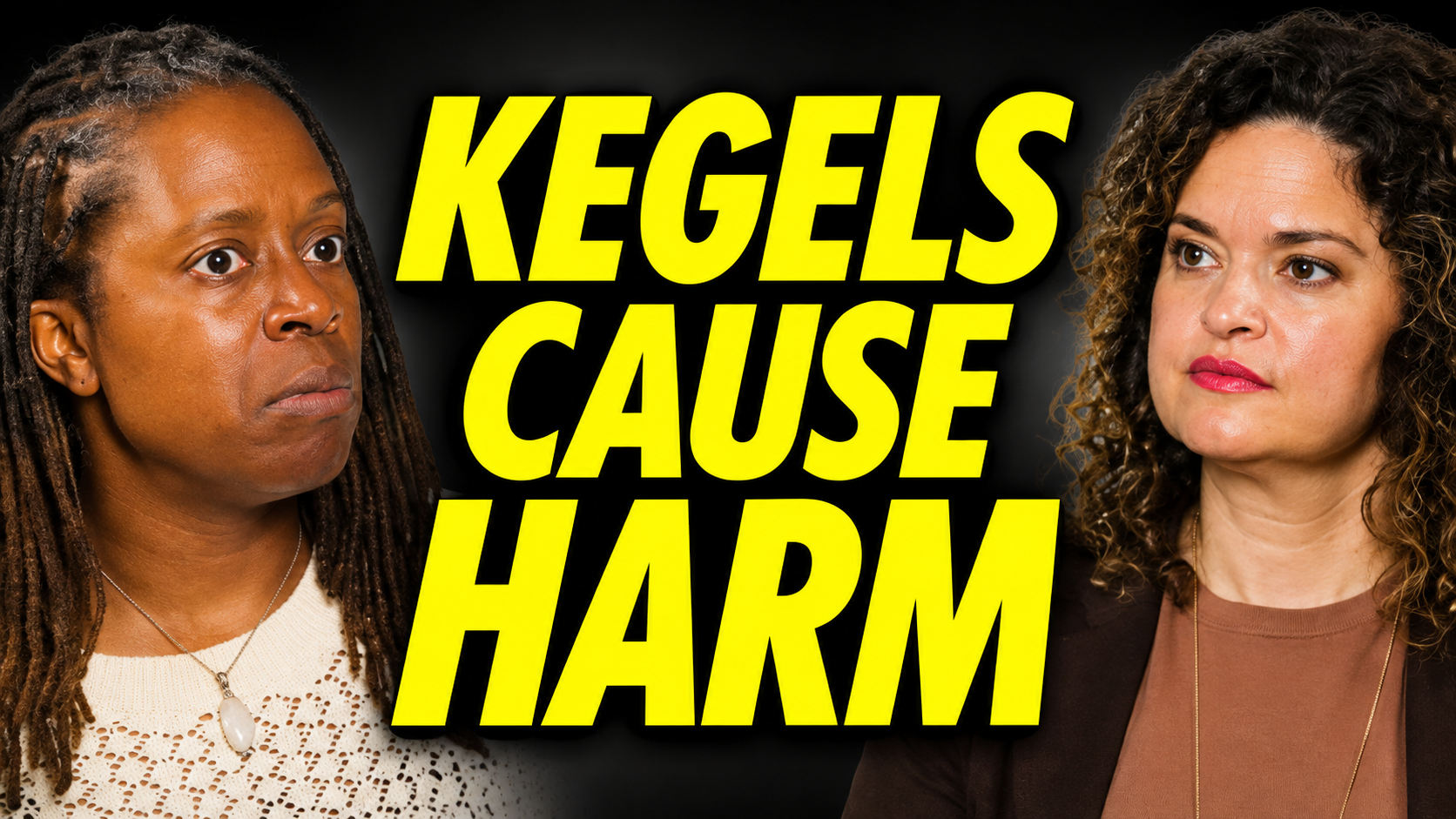
Womb Health Beyond Kegels: What Your Feet, Pelvic Floor, and Pregnancy Loss Have to Do With It

 Add vo to ChatGPT or Claude to ask about everything you hear
vo listened to this episode to put together the overview and transcript, so there may be the odd mistake.
In short
How “womb health” is affected by whole-body alignment—especially feet and pelvic positioning—plus practical, at-home supports for fertility, pregnancy loss, and postpartum recovery.
Key claims
High heels and other constricting shoes can tilt/malalign the pelvis (including retroverted uterus/tight hip flexors and posterior-chain tension), which may influence uterine/pelvic floor mechanics. Minimalist/flat, wide toe-box shoes may help but should be introduced gradually. Cultural practices (e.g., keeping feet warm; yoni/vaginal steaming) can be meaningful, but shouldn’t replace medical care.
Notable examples
Self-recovery after heels via barefoot walking, calf stretching, and travel tools like massage balls; “feather light sweeping” abdominal massage to assess tension; yoni steaming described as soothing and potentially supportive after a fibroid diagnosis and a 20-week loss.
Guest backgrounds
The episode features a pelvic/perinatal physical therapist and author (womb-health focus), who has personal experience with endometriosis and pregnancy losses (including a 20-week loss) and discusses her clinical work with perinatal clients.
Transcript
0:00Ultra running shoes are all about space. The space to go further. To feel better. To do something you never thought possible. And this space starts with Ultra Fit. Unlike traditional running shoes, Ultra Fit gives toes more room to move naturally. So every step is strong, balanced, and comfortable. Whatever you're lacing up for, stay out there. With Ultra. Shop now at ultrarunning.com. That's A-L-T-R-A running dot com. Progressive's Accident Response can contact emergency services if you're in a major accident. The only thing worse than someone you love being in an accident is not being able to help them.
0:40So Progressive is here to help when you can't. So get peace of mind knowing your loved ones are protected with Progressive's Accident Response. Learn more at Progressive.com. Progressive Casualty Insurance Company and Affiliates. Limited availability in California. Driver is responsible for emergency and towing charges not covered by the policy. Coverage subject to policy terms and conditions. How is your uterus connected to your feet? There's a lot of ways that the uterus is connected to your feet. I would say the first is really looking at a person's alignment. And so there's a difference between looking at alignment and looking at posture.
1:14So when I'm talking about alignment, it's really looking at how our body is stacked. So our head on top of our torso, torso on top of our pelvis, pelvis on top of our feet. And depending on what shoes a person is wearing, especially if they're wearing high heels, any type of heel, that's enough to go and throw off a person's alignment. So if you think of someone wearing high heel shoes, then that's going to create a lot of tilting in the pelvis. So the pelvis is going to tilt a little bit further forward. So that's going to create a malalignment or a misalignment in the pelvis and also throughout the whole entire body.
1:53And so because of that misalignment that's there, then that's going to also have an impact on how that pelvis is positioned. So it's going to be a little bit either posteriorly tucked or in some cases it might be a little bit too anteriorly tilted as well, too. And so if a person is used to wearing heels all the time or even sneakers, because same thing with sneakers, even if there's some type of heel, that's going to create some level of malalignment in the pelvis. And then if they've had a history of doing that for a really long time, then that can also just really throw things off with the position of the uterus as well, too.
2:24So there is a term of retroverted uterus or whether uterus is tilted backwards. And so that's definitely one thing that can occur or just, you know, will create some level of tightness as well, too. So whether something that we might see like in hip flexors, like in the psoas muscle, there could be a lot of tension or tightness there. There could also be tension along the posterior chain of the body. So a lot of the low back muscles or even in the hamstrings, just because of that extra tilt that's present, you know, in the feet. So that's one big piece of it and how that can really affect the uterus.
2:57The other would be also just, you know, the position that a person is standing. In my practice, you know, when I'm working with a lot, I work with the perinatal populations. I'm working with them, you know, in pregnancy and in postpartum. And the tendency that I usually see with how they're holding themselves like during pregnancy or even in postpartum when they're having to hold and carry their kids is sometimes that there is also this forward position or because of the changes that occur in their feet, just because the feet will sometimes be a little bit wider. So that will also change what's happening in the feet, whether the arches might collapse or if they have a tendency just to have their feet slightly turned out.
3:34It's just going to change the mechanics like all the way up through the rest of the body. So those are just, you know, a few instances of how feet position and how the feet can definitely have an impact on what's happening with the uterus and the uterus that's sitting inside of the or the uterus sitting inside of the pelvis. What are the worst shoes for pelvic organ health? I mean, I would say the worst shoes would really be anything with a heel. And I'm not, you know, condemning wearing heels. Like if you want to wear heels, if you love wearing heels, you know, that as long as it's something that it's not an everyday occurrence, you're not, you know, wearing it all the time.
4:12and that also you have some level of practice like okay if you go a night out you're wearing heels and then as soon as you come back home whether that evening or the next day you're doing some type of repair for those muscles so especially in the calf muscles and just addressing some of that tension or tightness or that you have a regular practice of getting the muscles and the bones in your feet to be able to move well so that way they're not kind of staying in this fixed or like constricted space because that's what a lot of high heel shoes you know potentially that's what they do. So I'd say like probably that would be the worst.
4:44But I think also knowing that there is some type of repair that can be done afterwards can also be really helpful. I want to talk about the repair, but I want to ask, so you're talking about a heel lift that can be, I know there's a lot of sports shoes out there. I don't know why they do this, but they have a heel lift. So when we're looking for shoes, are we looking for that zero heel drop so that the plane of the foot is just even? And how often do we want to spend time in a shoe like that? I mean, I would say ideally it should be something that is relatively flat. But like there's like a huge but that I think because our culture, especially our Western culture, we spend a lot of time in shoes, like from the moment that we are little and we can start walking, we're already in shoes.
5:31Not a lot of people spend time barefoot, you know, in order to actually allow for great articulation, you know, in their feet, in their ankle, in their toes, you know, climbing trees, you know, doing things with their feet. And so to go for a person, you know, just a person listening to this saying like, oh, I want to address my womb health. And I want to start, you know, with something easy enough as like addressing what shoes I'm wearing. And if they've always worn, whether it's heel shoes, whether it's sneakers, even just shoes that have like a really tight toe box as well, too, all of that creates some level of constriction.
6:04And then to go from that to wearing like a negative heel type shoe or the like the minimalist like barefoot type of shoes might be too much for them especially if they haven't had a practice of walking barefoot and encouraging good mobility and articulation you know in all of the joints you know in their feet so I'd say like yes that would be an optimal but I would say that it probably would have to be a step-by-step process, that it's not easy enough to just go from wearing heel shoes to wearing more minimalist or like negative type heel shoes and think that the issues, whatever issues it is that they're experiencing is going to go away.
6:45Because there's still a lot of other things, like whether it's looking at the biomechanics of how they're moving, we have habits. So in how we move, how we walk. And so that's something that also has to be addressed. But yeah, I would definitely say that those would be optimal. But there's also so many other layers that also have to be addressed. Yeah. And for people listening, I'm wearing heels right now with a narrow toe box. So we're not judging you. But I also, you know, sitting here thinking, like, how much do I spend barefoot? And I'm like, if I had to guess, I probably spend 95 % or more of my day barefoot.
7:18Yeah. And I always make a joke of like, I have Barney Rebel feet. Like, I'm very proud of how spread my toes are. And yeah, and I worked with a podiatrist during my clinical rotations in medical school. And oh, he just harped on me about the zero heel drop, the wide toe box, like all of these features of shoes. And as I gradually made my way into that, I can't go back. So I can't wear heels for a long period of time. I also decided in my 40s that like, I shouldn't have to be uncomfortable ever. Like I live with endometriosis, like I'm uncomfortable plenty. Like I don't need to be uncomfortable otherwise.
7:55But I want to talk more about, so we wear high heels. Let's say you got with your friends or you're at a conference and you're wearing high heels. What's an ideal recovery? You get back to your hotel room, you get back home at night. What would be ideal to help the feet recover from being in that position? Yeah. Well, I mean, taking the shoes off. And then if you're in your hotel room or wherever you're at, just to be able to walk barefoot, if that feels comfortable, you know, in your setting, just to kind of like allow for a reset, I think could be really helpful. I am a really big fan of any type of corrective, you know, exercise or even tools is full tune, especially if you're traveling and you're going to a conference.
8:37I'm a fan of tune up massage balls. And so, you know, there are two almost like tennis ball size massage balls that you can just, you know, put in your purse or have in your luggage. And so you can do some self-massage, you know, whether it's on the sole of your foot. So you just have the ball underneath your foot. You can roll it up and down just as you're standing or even while you're sitting. You can move it side to side. So whatever feels intuitively that where you're feeling like that tension or that tightness. So you can work with that. You can also use the balls for your calf muscles as well, too.
9:11So any type of calf stretching, you know, would be great. So if you're familiar with any, you know, type of calf stretches, just because again, like wearing those heels, it creates some level of shortening tightness, you know, in those muscles. So anything you can do to be able to lengthen them, to get more pliability in the tissue, you know, will be really helpful. Yeah. I have a set of silicone toe spreaders I travel with and I travel with a rocket ball. Oh, okay. Yeah. Okay. It's usually to release muscles and stuff. And the reason is, is because when you are confined in a plane for like 10 hours.
9:44And even if you get up and you move, like it just is afterwards, you just find these knots. And I'm like, it's something I think if you can just travel with tools to help release those things can be super helpful. And I want to ask, so if someone's listening to this right now, they're like, okay, helping my feet can help my pelvic floor health, can help my uterus, my ovaries, my low back, like it's all connected. Are there any tips you could provide to people? So I know you meet with people online that there's a big issue in the United States where people just can't get to a health care provider.
10:16And I think that especially pelvic floor physical therapists are some of the hardest to come by. But are there like three tips you might give people of like, this is something that you could start doing with your feet or maybe mobility work that it's going to help your pelvic floor? Yeah. Yes. So I definitely agree. Like there it's really, really hard to find a pelvic PT. And even like where I live in California and in the Bay Area, you know, there's a high demand, but definitely not enough providers to be able to provide this type of work that's needed. So I would say, I mean, it's hard to say like the three tips, but I think when it comes to just like overall having an understanding of your pelvic health and what are the things that you can do.
11:01The first is really kind of connecting. And I would say, especially like speaking to womb health is connecting to your belly, to your abdomen. That's where the pelvis or sorry, where the uterus is located. So like, what does that feel like generally? And then I think it will help to kind of get a sense. It's like, do you have a tendency to hold a lot of tension? Are you able to breathe into your belly, into your pelvis? So with something that I teach pretty much, you know, all of my patients, especially if it applies to them as abdominal massage or just even touching their belly. And a lot of that, you know, it's a very simple, you know, very simple practice of just like having hands on the belly.
11:39There's a technique called feather light sweeping, which doesn't require, you know, like technique or a lot of nuance, but it's really, you know, just kind of doing like this feather light sweeping along the belly and you're doing it just in all different directions. And it's a way to just kind of really assess and just like check in is like, what does my belly feel like? You know, are there areas of tension when I press into my abdomen? Is there pain? Is there discomfort? So I would say that that's going to be one of the first things, because in order to really address what's happening, you know, in the womb, in the belly, throughout the whole entire body, because I feel like that is such a huge conduit for where tension, you know, is present, is just really accessing and touching that space.
12:24So I would say abdominal belly massage, you know, can be one really great thing. I would say the second tip that I would offer is that there's some level of variety of movement throughout your day. So when I'm working with patients, and especially if they work and they sit for work, but they're having, you know, pelvic pain or whatever it is that they're experiencing. And I'm going into what are their day-to-day things, you know, especially if, you know, they sit for work. And so we talk about that. Okay, well, like, what is your sitting position? You know, do you have a standing work desk? If you sit, you know, are you allowing for a different variety and how your legs and your pelvis and your hips are moving.
13:05If you have a kid or a baby, you know, how are you moving? Are you always doing the same movement all the time? Like as you're, you know, putting your baby down to do tummy time, are you spending time down on the ground as well with your baby or with your kid while you're playing? And if you are, are you allowing for different types of positions and movement? So, you know, a couple of years ago, they said sitting is like the new smoking, but Sitting isn't necessarily bad. It's just, do we allow for a different variety with how we're sitting? So when there's more variety, there's more opportunity for our pelvis or hip joint, you know, to be able to actually move in a much more synchronized way rather than it feeling like very stiff or restricted because that's how we've always been moving.
13:50So it's like finding those movement snacks, you know, throughout the entire day. So those are the three tips that I would definitely offer for someone who's wanting just to kind of get a start in just really addressing their womb health. What are some of the things that you recommend women do like on a daily basis to care for their womb health? In the book, you know, I also mentioned just about like different things that you can do, you know, whether it's on a daily, whether it's a monthly, like a weekly basis. So if you're one who tracks your cycle to not just, you know, use an app and just like, okay, you know, I had my period, but like, what are the things that are leading up to you having your period?
14:30You know, are you experiencing mood changes? You know, do you have a headache, you know, compared to when you don't usually have a headache? Are you noticing that you're more bloated, you know, compared to, you know, other periods, you know, in your cycle? And I think when you're really able to attune and to listen, again, it's like listening to just all those little signals that your body's telling you that, yeah, there's a shift, there's a change in the hormones or that you're traveling a lot more. So things are, you know, the more restricted in your body, or you've been sitting a lot more just because you have a deadline at work, you know, telling you, oh, I haven't been exercising or moving as much.
15:05All of those are signals to be able to, you know, hopefully address before you get into a place where you're experiencing pain, you're experiencing, you know, some level of dysfunction or allowing things to then fester and become a bigger issue. So it's really, it's the listening and the touching. And that's something you can do anytime, like at any day, you know, whether it's in the private and intimacy of, you know, your bedroom, or even, you know, when you're sitting at your office and you're noticing like, wow, things don't feel good in my body. You can be able to just like listen to that and take those cues.
15:42In the book, you explore a lot of different cultural practices around fertility for a woman who's trying to conceive. What do you think, you know, in terms of these cultural practices, what do you think has like the biggest impact or the most benefit? Ultra running shoes are all about space. The space to go further, to feel better, to do something you never thought possible. And this space starts with ultra fit. Unlike traditional running shoes, ultra fit gives toes more room to move naturally. so every step is strong, balanced, and comfortable. Whatever you're lacing up for, stay out there with Ultra.
16:20Shop now at ultrarunning.com. That's A-L-T-R-A running.com. Hey, it's Kelly Rowland. You may not know this, but I have eczema, so I get how it can steal your time. But why let eczema take over when you can talk to your doctor about ebglis? Ebglis, Lubrikizumab LBKZ, A 250 mg per 2 ml injection is a prescription medicine used to treat adults and children 12 years of age and older who weigh at least 88 pounds or 40 kg with moderate to severe eczema. Also called atopic dermatitis that is not well controlled with prescription therapies used on the skin or topicals or who cannot use topical therapies, EBGLYS can be used with or without topical corticosteroids.
17:01Don't use if you are allergic to EBGLYS. Allergic reactions can occur that can be severe. Eye problems can occur. Tell your doctor if you have new or worsening eye problems. You should not receive a live vaccine when treated with EpGliss. Before starting EpGliss, tell your doctor if you have a parasitic infection. Paid partnership with Lilly. Respect your time. Ask your doctor about EpGliss and visit epgliss.com or call 1-800-LILLY-RX or 1-800-545-5979. Again, wound belly massage being one of them that you can do at the outset of your fertility journey in order to be able to really help encourage womb health, you know, throughout your whole entire reproductive journey.
17:43So I was just talking with a friend yesterday. She's Lebanese. I come from a large Mexican family and we were talking about how we're barefoot without shoes or socks all the time and how like that is just a no in our cultures. And so in Mexican culture, it's like you're going to catch your death if you have your shoes off. You're going to have worse periods. You won't get pregnant. your postpartum will be harder. Like there's all of these rules around keeping those feet warm because of the connection to the womb. And it's interesting because, you know, in Chinese culture, that's where like most people assign this, like keeping the feet warm.
18:20And even the 40 days your feet don't touch the floor postpartum. The same is true in Mexican culture as well. And a lot of cultures have this practice of like, you need to tend to your womb before you have a baby while you're pregnant and after you have a baby. Yeah, no, definitely. Yeah. And I think it's, I think it's, I see those, you know, you know, like keeping your feet warm, you know, not walking on barefoot and, you know, whether a lot of them are myths or whether, you know, there's a lot of validity to it. I think that there's a level of care, though, that at least is allowed for like, OK, yes, I have that understanding of like keeping the feet warm and noticing like when you are walking barefoot, especially when it is cold, how it does creep, you know, some of that cold, you know, into the body.
19:13um so yeah i think you know i think having like a healthy balance you know with regards to because there are a lot of like these myths that haven't been you know proven like yes that there is going to be some that there is some validity to it but i think you know having a balance of whatever you know your culture um you know generally states as to you know can be helpful for womb health um but also you know living your life um you know because it's the same i know like you know don't walk around, you know, with your hair wet as well too. So, you know, because then that's terrible, you know, or - My grandma was always mad at me.
19:49Yeah. Yeah. So I think, you know, it's just having that healthy balance. Because otherwise I also, I can also see, which I have seen with patients, is like where you go overboard and you're like, you're, you're scared, you know, of just being able to live life because, you know, you're trying to avoid all these things because you're trying to ensure, you know, your fertility so you can finally have that baby. And so I think then And that also can be a detriment as well, too. So I think it's, you know, it's finding that fine balance, you know, of doing the things that you feel, you know, that are really caring for yourself without living in a place of like fear or that you're going to do something negative, you know, to your body or that's going to, you know, negatively impact your fertility.
20:28Yeah. And I also think working with your constitution as well. And so why I'm always like barefoot, well, barefoot because I'm comfortable that way, but I don't wear socks. I don't like to wear socks. I will have my hair wet. I am opening up all the doors all the time. Like constitutionally, I run warm and I always have. And I see that in my youngest son where never wants to wear socks. It's, you know, you know, freezing cold outside. And he's like, I want to be in shorts and a t-shirt. I'm like, I feel this because I would rather be in the cold than ever be overly warm because just naturally I run so warm.
21:05Yeah, no, I'm exactly the same way. I grew up in New York. and I'm, my culture, my parents are Nigerian, so West African descent. And so I would assume that, like, yes, I would love the heat. I don't like heat. I don't like high heat. The weather here has been really great, you know. But, like, having lived in New York and as a little kid just walking around, especially when it would be snowing, I just, I hated wearing jackets just because I ran really, really warm. And I feel like I still maintain that level of constitution. I feel like it's definitely decreased a little bit as I've gotten older.
21:42But I love having the windows open. And that's helpful for me. Like, I feel like that's my self-care. Like, I want to be able to feel the breeze on me. I don't want to be, you know, constricted. You know, I want that wind, you know, to actually make contact with me. And so even though, yes, that there is, yeah, the thought of, yes, like maintaining, you know, warmth and staying, you know, warm and bundling. Yeah, I'm listening to my constitution. Also, what I feel like benefits me and what makes me feel comfortable is also really important, too. You brought up vaginal steaming in the book. Yeah.
22:22Or yoni steaming is what people call it. It is so controversial and it faces so much criticism. But every time I see the criticism come, there's never the regard for the cultural practice. And I think it's a big problem within the United States and a lot in that Western paradigm of medicine where cultural competency is seen as something that is a frivolous effort in your education and that all that matters is the hard science. And I think that turns a lot of people away. I also think it's incredibly disrespectful to cultures and societies and medicine that has existed far longer than the infant, which is conventional medicine, for conventional doctors to say vaginal steaming is just, you know, usually a Gwyneth Paltrow trend.
23:13And I'm like, well, do not. This is not Gwyneth Paltrow's practice. And that's very disrespectful. But the whole conversation is just women are too stupid to do this because they'll burn themselves and it has no benefits anyways. In your research for the book, what have you discovered regarding the cultural practice of vaginal steaming? Yeah, well, I mean, as you said, it is a practice that has been done in lots of other cultures. So in definitely in African, in Asian cultures, in Latin American cultures. and it's been done for a really long period of time and it's been done to address lots of different types of pelvic health issues and so again it's like that fine balance and so like even though as a physical therapist and yes I'm coming from like a research-based you know science-backed you know type of practice but also a lot of things that I'm also recommending to my patients is also to also explore, you know, because again, a lot of the things that they've been told, you know, to do to be able to help to address their pelvic pain or, you know, whatever it is that they're experiencing hasn't helped and it's actually had negative side effects.
24:23And if it's something that is like easy enough, you know, for them to be able to access, to be able to do on a regular basis, and also if it makes them feel good as well too. And so when I was doing the research, you know, about vaginal steaming or yoni steaming, you know, for my book, and like even if a person didn't notice you know the benefits of it but it still felt good you know just to be able to have that warmth you know in that area just to even have awareness of that part of their bodies like you know they're sitting on you know a yoni box and they're having steam you know touch their vulva you know and potentially also make its way up through the vaginal canal And it just brings awareness like, yeah, I'm doing something that's, you know, helping to, you know, help in some way, you know, their pelvis and whatever it is that they're experiencing.
25:13So I think like whether it's a placebo effect or, you know, whether it actually is having some benefit, I think it's worthwhile also being able to explore that as well, too. I have had, you know, a short practice of doing yoni steaming myself, especially. I had a diagnosis of fibroids before I conceived with my first baby before I had the loss at 20 weeks. And I've had other subsequent pregnancies as well, too. And I did, you know, do yoni steaming on and off. And I remember when I had when I was like that afternoon when I was told, you know, I was like seven, eight weeks pregnant. And when I was told that, you know, there was no longer a heartbeat.
25:58And knowing that I had been carrying this pregnancy for a period of time without knowing or sensing that there were changes, you know, because I was still having all the pregnancy symptoms. And I didn't want to take any medication. I didn't want to do a DNC. And so I knew that I just wanted to have spontaneous, you know, allowing the pregnancy just to release on its own. And so I looked at yoni steaming and I did do that. And I felt that that was even not having the herbs and the things that I needed, but just even having that intention and that space. And, you know, obviously speaking with like a midwife as well before doing it.
26:40But I feel like that was actually one of the things that was really helpful in just helping the pregnancy to release, you know, on its own when it was ready. So even if the science isn't there and it's not science backed, I'm also wanting to use that practice as something like intuitively that I feel like, you know, deep down, like, yeah, this is going to benefit me, even if it's not, you know, you know, backed by science or by research. You know, I feel like, yes, this is something that is going to, you know, actually be helpful. So I definitely I recommend it. You know, if if someone has heard about it, if it's something that they want to try, I say worthwhile, like, you know, give it a try.
27:22See if it helps you. You know, if you like it. Great. You know, continue that practice. If it doesn't, then that's something that just isn't for you. So, but yeah, but I definitely, and definitely I'm not one, you know, especially a cultural practice that has been practiced for a really long time. I'm not going to disregard it. Yeah. And I think it's important that we understand and we look through the historic lens of science interfacing with self-care practices. So going out and walking in nature, people reported they felt better. It's only been in the last handful of years that we now have research saying, oh my goodness.
27:57like just nature gazing even if it's on your computer seeing nature sceneries changes your brain does literally changes your brain chemistry we never needed any science to validate that you some of us feel better when we take a bath like there are all of these things that we've done that it like when we when we think about the funding for science we're like is it most important to be studying these things right now or maybe should we be investing you know in diseases that are costing people their lives. And so there's a bit of that balance that happens in science. And, you know, to your point, my Yoni Steven is not something I ever got into because I was lazy, honestly, if I'm being honest.
28:37I'm lazy. I'm like, no, I'm not going through all of that. That's like a lot of work for like, you know, something that maybe doesn't have any benefits. After my second was born, I had a vaginal tear and my immune system was very angry at those sutures. and there was so much inflammation. I had a granuloma. I was trying everything. Numbing sprays, sit spots. I mean, literally everything. And people online, as I was sharing this in my community, they said, try yawning steaming. Just try it. I'm like, you know what? Fine. I'm so desperate because I can't even sit. I'm in so much pain. And just sitting on that steam and breathing and my pelvic floor relaxed and it was the most soothing experience.
29:16And I'm like, okay, now I see why you guys are putting effort into this because like it there is something very soothing about the experience and do I have any science to say oh this would change something for everyone no I would never make that claim and you know because of that I wasn't even willing to do it until my audience was like just try it and I tried it and I was like this is the only thing that has brought me any relief no herbs nothing just sitting on the steam and breathing and it was like that you know when you get a facial and they put apply the steam. And your skin, you just like feel like you melt.
29:50You're just like, oh, the tension goes away. And it was that same experience. I would love to see research on that because I think, you know, is it the steam itself or is it that the steam, like the touch, brings the awareness and helps you connect into that space? And then, you know, you get to just basically leverage your neuroplasticity to start to create those changes. So I would love to see research on that. The things I refute is when people go online and say, if you just did yonin steaming, you would cure your endometriosis. And I'm like, I wish I would be the first to like tell you all about it.
30:25And so that's where I think things do become problematic when it's like, you know, when it's trying to say, just do this ritual and like, it keeps you from going and getting medical help. And I think you can always do both. There's always a place to do both, to pursue the, you know, the medications, whatever it needs, and also have your own rituals and self-care at home. Let me ask you, what do you wish that women knew before trying to conceive? That it's not all, it's not all roses, you know, it's not all easy process. I just, you know, I've, you know, working with women and then also a lot of my own experiences, there's this level of being very naive, you know, that, oh, you know, it should be really easy, you know, to be able to get pregnant.
31:23Or also for so long, you know, as young women, we're told, you know, don't get pregnant, like focus on your career. You don't want to have a baby at a young age, especially if you're not financially dependent or, you know, financially secure. And that then whenever you are ready to get pregnant, it's just going to happen. um and so i think it's important i think it's important to not have um i don't know whether the term is like these rose colored glasses you know that everything is just going to be perfect because i went into my first pregnancy um you know couldn't like yeah like i got married three months later you know i got pregnant great that's awesome so i'm gonna have a really easy pregnancy pregnancy, you know, I'm going to have this baby and everything's going to be perfect.
32:09And I was blindsided, like severely blindsided, like having a 20-week loss. And this is in my mid-20s or late 20s, not having had any like big issues or health issues, you know, and then having a 20-week loss and no one really telling me like, hey, this is something that could happen. And even though like pregnancy losses have occurred and they've occurred, you know, for millennia, it just isn't something that was talked about enough, enough that I heard it, you know, that I knew, OK, this is something that could potentially happen or that I can go into early labor, that I could, you know, have my water break in the middle of the night and, you know, just, yeah, for something bad to happen.
32:57And so I think that I that's like such a big premise in my book is that I want I want all women like who are reading the book to understand, like, yes, you know, if if conception is something that is something that you are wanting to achieve in the future to know. Yes, like even though despite how much it sucks and it's sad, things can happen like bad things can happen. And it's not, you know, to put a negative spin on, you know, a really beautiful time. But I think the more information and awareness that you have, I think the better prepared. And even if it's not something that's going to happen to you, you will have someone in your life, you know, whether it's your sister, whether it's your best friend, whether it's a coworker, you know, that you work with, who is going to experience, you know, whether it's a pregnancy loss or even a complication in their pregnancy, that there's that level of fear of like the uncertainty and of the unknown of like what could happen.
33:55And do they have that community? Do they have that support, you know, of someone who can understand, like, this is what they're going through and can, you know, actually rally around them and listen to them as well, too. Yeah, I think that that's the biggest. And I don't ever want to be like a downer, but I think that that was what I wish that I had known. Like, even if I, you know, I think it was like jinxing myself, I think I would have preferred to have known like yeah like going into conceiving like yeah there is that possibility that I could lose this pregnancy or that I could experience some complications or that I could experience pain you know during this pregnancy I think I would have been better prepared um yeah I think yeah that that's generally what I I would want every woman to know ultra running shoes are all about space the space to go further to feel better to do something you never thought possible and this space starts with ultra fit unlike traditional running shoes ultra fit gives toes more room to move naturally so every step is strong balanced and comfortable whatever you're lacing up for stay out there with ultra shop now at ultra running.com that's a-l-t-r-a running.com Hey, it's Kelly Rowland.
35:22You may not know this, but I have eczema, so I get how it can steal your time. But why let eczema take over when you can talk to your doctor about ebglis? Ebglis Lubrikizumab LBKZ, a 250 milligram per two milliliter injection, is a prescription medicine used to treat adults and children 12 years of age and older who weigh at least 88 pounds or 40 kilograms with moderate to severe eczema, also called atopic dermatitis that is not well controlled with prescription therapies used on the skin. or topicals, or who cannot use topical therapies. EBCLIS can be used with or without topical corticosteroids.
35:54Don't use if you are allergic to EBCLIS. Allergic reactions can occur that can be severe. Eye problems can occur. Tell your doctor if you have new or worsening eye problems. You should not receive a live vaccine when treated with EBCLIS. Before starting EBCLIS, tell your doctor if you have a parasitic infection. Paid partnership with Lilly. Respect your time. Ask your doctor about EBCLIS and visit EBCLIS.com. Or call 1-800-LILLY-RX or 1-800-545-5979. Why do you think it is that this information is almost withheld from women? It's not that we don't just talk about it. It's that we're told not to talk about it.
36:29I don't really know. I don't know why it isn't something that isn't widely shared on a regular basis. is I I don't want to be um naive I don't know I don't want to say um I feel that things are shifting I mean when I had my first loss like that was 13 years ago and I feel like yes with the rise of social media and I think that more people are sharing their stories more that I I think that you know there is more awareness of it but also I say like not so much because I still will encounter, whether it's my own patients or other people who reach out to me, who will just like, I didn't know that this could happen.
37:19And, you know, they're looking for support. They're looking for answers. And yeah, I just, I don't know why that is the case. You know, when I had my first loss and I didn't know who to, like even talking to my mom, you know, it like, yes, there women in my life, you know, who like my mom didn't experience any pregnancy loss, but, you know, I just feel like I just didn't have that community of people to, you know, talk to about it. And it wasn't until like a couple of weeks later, I was teaching yoga at the time, you know, I had returned the teach and it was, it's an older, it was an older population of folks that I was teaching and the amount of support, you know, and stories of women, older women who came up to me, like, they're in their 60s and 70s who said, yeah, I had a miscarriage.
38:10I had a miscarriage. And that just blew my mind just because I didn't know. I didn't know that this was something that they had experienced as well. So I don't know if it's a level of shame that's present. I think I definitely, initially speaking about this, there was definitely a level of shame that there was something wrong with me. There's something wrong with my body that I couldn't keep a pregnancy. um so i think shame is a big piece of it that maybe deters women from speaking more about it um yeah i think that's just a really hard answer yeah yeah well i think it's also not on women as well i think our medical providers don't prepare us for this they don't talk about i think there's an entire system in society that is sabotaging us and it wasn't the intention but it is sabotage when they tell us, you can get pregnant any day out of the month.
39:08You, you know, you should not, you know, you should do everything possible not to get pregnant because it's so easy to get pregnant. And the number of patients I have heard saying, I really wish my medical provider would have ever said to me, it's not that easy to get pregnant. You can only get pregnant one day out of the month. Sperm live longer, but you have a very finite window. But there is a myth, It's a lie that's perpetuated from sex ed through gynecology and beyond that women can just get pregnant any time of the month. And I think that lends itself to a lot of heartbreak because you try and you try and you don't realize you have to time things.
39:46And then I think there's another like it's almost superstitious in medicine where it's like don't talk about the possibility of a loss. Oh, yeah. Because if you do and then that happens, it's like, did you jinx this kind of person? You know, I don't know the right word for it. But I think there's also that doctors are not taught well enough to sit in discomfort with patients as well. And I remember in medical school, I mean, us having to go through classes and one of my teachers saying one of the best gifts you can give someone is to be present in their discomfort and just to be present. And I just don't think I don't think it's a doctor issue.
40:27I think it's a medical school training meets insurance model that just doesn't allow for the humanity of medicine. And so I think a lot of times that's, you know, what's going on. I mean, I remember experiencing a pregnancy loss and the gynecologist I was seeing just yanks the transvaginal ultrasound wand out. And it's just like, well, that's over. That's the end of story for you. Puts it up. And it's like, what do you want to do? Do you want a medication? Are you going to do this on your own? And I was like, I can't even process what is happening right now. And I'm like, this is something that you take as a normal experience happening in your practice every day.
41:03This is not a normal experience happening in my life every day for my body. And so I think there is just a lot of areas we have to be able to improve and improve health care for women. I totally agree. Yeah. I'm just remembering one of my experiences with a nurse practitioner where they had, they had the put the abdominal ultrasound and there wasn't a heartbeat and just the level, I don't want to say the level of, there was a level of not caring. There's no empathy really. I mean, I'm sitting there crying and in disbelief and not like, you know, I'm sorry or anything like that. And I don't know whether, like, yes, whether it's just the level of training, you know, that isn't received by most health care professionals, whether it's also this amount of time that's spent with them.
41:56Yeah. Yeah. And I think, you know, there's also this myth that, like, if you just make it to 12 weeks, which I think we all hold that in our minds, too. I had a second trimester loss as well. And that just absolutely devastated me. and I'm like you know that like it's just a statistic countdown of like if you make it to 12 weeks then statistically speaking like it drops and I you know when I was watching all the weeks I was going through and being like it's dropped it's dropped it's dropped like the miscarriage risk and then when it happened I was like I this percent was so small that it shouldn't have happened and yet like we're talking about a statistics game you don't know what your number is.
42:37Yeah, no, it's, it's, it's, it's so hard to predict. And yeah, it's just, it's so disheartening when you think that like, you'll beat that statistic, and then it still occurs, and it still happens. I remember, you know, with my first pregnancy, like having the book, like what to expect when you're expecting, and then like, at least that book, I don't know if there's like other like further you know newer um editions but where they don't really talk about that you know most pregnancy books are completely devoid of this information they only want to focus on the positive stories and even you know there's um there's just so many i feel like pregnancy books out there that people praise and i've honestly never been a fan i feel like people are not going to be happy but i've just never been a fan because i feel like it's painting best case scenario so often.
43:36And even the worst case scenario is not the actual worst case scenario that can happen. And I think that is, it's just problematic, but it's the way that we want to choose to see pregnancy and also as a species to continue to procreate. If we told the truth always, then maybe less people would opt into it. It would be scary. And I think, I mean, And it is scary. It is scary. Yes. And that's what I wanted, you know, for my book is to really talk about what are those pregnancy complications that can arise. And I have stories, you know, of other, you know, whether it's like other patients or colleagues who share.
44:14So whether it's, you know, experiencing preeclampsia or having an insufficient cervix and how that, you know, eventually led to, you know, their pregnancy loss. And I think the more we can hear stories, because I'd never heard of insufficient cervix, you know, like, and especially like I wasn't a PT yet, but just as a woman, you know, in my mid 20s, having lived on this planet, you know, for a period of time, like I never heard of that. And so that didn't occur to me that this is something that could happen. And so the more women hear these stories and have this like knowledge of, okay, yes, this is something that could happen.
44:56And I think then the more there's just, you know, again, not to drive fear, but again, it's just really just that education and that awareness that, yeah, they might not fall within that statistic. But if it does happen, again, you know, and again, it's up to them as to like what tools they'll, you know, they'll, you know, take in order to address, you know, whether it's like that mental health component or whether it's like that physical component to be able to ensure that they're maintaining some level of like sanity as well, too. because it's, I mean, when you get a diagnosis like that, it's like your world just spins and you just go into this deep dive of anxiety as to like, you know, will I have this baby?
45:38Like, what will occur? Like, and if I do have this baby, like, what's the future going to look like? Will my baby still be healthy? Like just all of these things that will definitely like spin out of control that at least, you know, hopefully they'll have resources, you know, of who they can go to in order to, you know, make sure that they're able to talk about it, you know, address it physically, you know, as needed. I think that's really, really important. You talk about in the book that postpartum occurs, whether or not you have a baby to take home. What are the tips you would give to women to care for their body postpartum?
46:11Yeah, I come back to abdominal massage, like that's going to be another big one. And I say that because, you know, now, yes, they've, they've birthed a baby, you know, um, and especially for those who don't go the DNC route, you know, if it's just a spontaneous, um, spontaneous birth that occurs, you know, at home, it's still a birthing, you know, whether, you know, of, um, a baby or just of themselves of like, they've gone, they've passed this, you know, threshold of just what occurred. so there's a definitely a need of tending and holding to their body um there's also going to be that sense of um disconnect um of a level of mistrust distrust you know with their body as well and so i think being able to you know ground and coming back to their body is a really great way of just helping to ground and to bring connection you know back into that space and again i feel you know, through touch, like that's going to be one of the best ways to be able to do that.
47:15So I definitely encourage, and also whether it's themselves or, you know, if they're working with like maybe a postpartum doula or, you know, someone who is going to provide some support, you know, for them during that postpartum period, that they get some abdominal massage or belly massage can be really, really helpful. So I would say that that would be, you know, or any type of body work, you know, as well, too. I know, like, like an Ayurvedic tradition, like doing Abhyanga can also be really helpful, where it's just like a full body, you know, oil massage. But I think some level of really healing, intentional body work, you know, can be really, really helpful.
47:55The other thing also is, you know, it could, you can also go the other way. It's like, I did everything right in order to ensure this pregnancy. I ate really well. And now, But this still happened. And so it can just, OK, well, I'm going to just let it fall, you know, to pieces and I'm just going to eat whatever I want. And it could just be, you know, like, yeah, if you're depressed, you're just going to eat crappy food. You know, it's not going to be food that's going to be really like sustain you and support you. So having someone again in your community to be able to help support you is really important.
48:28I would also say the other thing that could be really helpful, again, depending on where the loss or when the loss occurred, is there's, you know, you can still produce breast milk as well. And so having that understanding, and again, this is where it is important to understand before conception that if, okay, this doesn't happen, how can I care for my breasts if I have a pregnancy loss? because it's going to be a constant reminder of what you don't have. And I remember after having my 20-week loss and no one talked about this. I remember my breasts just got engorged and they were painful and no one taught me how to express milk.
49:12What do I do to relieve the pain? I just went online and I heard cabbage leaves and I did that. So then I'm in the shower crying. I'm trying to express milk and thinking about my loss. and, you know, what occurred. And, you know, I think having, again, a support person. So whether if you have a postpartum doula or, you know, a healthcare provider, someone just to kind of talk to you about like, yeah, these are things that can occur, you know, because your body is still producing those hormones. Thinking like, yes, the pregnancy, you know, was still happening or that you had the baby. So now let's, you know, provide the nourishment.
49:50What message would you leave women with today who are listening to all of this and maybe feeling like, wow, this is a little bit heavy because I hadn't considered these things before. Yeah. A message that I would want to leave. I think that our bodies are immensely, they're immensely smart and they're immensely adaptable as well too. But a lot of that needs to occur by that listening. I think just by taking that time to actually, you know, listen, be in tune with our bodies. I think the other, like, it's such a huge premise of my practice, more than just the physical hands-on manual therapy that I do, it's the education.
50:35And if we're not getting that education from our healthcare providers, like our OBGYN or primary care physician, if we're not getting that education, especially as a young girl, from our parents or from our schools. I want to, I'm hoping that this book at least be, is able to provide some level of just like basic education, that it becomes more than just like, oh, this is like my self-care for my womb. This is like, no, this is like basic education. Like in the first chapter, I go, you know, straight into like, okay, let's, you know, touch your vulva, like understand your genital anatomy you know know what it feels like to actually insert your finger in your vagina and to actually be able to feel for all of the soft tissue and the contours of it and understand you know we talk about like you know at least in mainstream media when we talk about pelvic health the only thing you ever hear about are kegels like that's the only thing you ever hear kegels and pap smears yeah kegels and pap smears and that's the only thing but there's so much more like okay well if you're going to do a kegel at least know how to do it right you know No one teaches you how to do this.
51:40Well, then you have to teach yourself, but then also understand your own anatomy to actually be able to like, how do I do a pelvic floor contraction? How does my breath have an impact? Oh, I have tension or tone in my pelvic floor. That's why it's uncomfortable for me to insert a tampon or understand why I'm having pain with intercourse. So all of this, it's more than just self-care. This is your body. You need to have a good understanding of it. And so I'm hoping that this book is able to make that come across like, yeah, that you should, you know, want to know and understand your body in a much more deeper and intimate level.
52:18It should not be your health care provider that's telling you this is what's wrong with you. It shouldn't be your partner that's telling you this is what's wrong with you because they're the only ones who are touching you down there. You should also be doing this yourself. Well, thank you so much for taking the time to sit down with us today. Sharing your story. I know a lot of women are going to be helped by that and this information. Yeah. Thank you so much, Dr. Brayden. Life is all about making decisions. Sometimes you make questionable ones, like buying a new TV that's too big for the wall because the electronics store employee was a little too good at their job.
52:54Then sometimes you make great ones, like protecting your home and auto with Progressive. You get customized coverage options so you can be sure you have the right coverage. Get your quote today at Progressive.com. Progressive Casualty Insurance Company affiliates and other insurers. Not available in all states.
53:35Freedom Free at heart Libre, the original eau de parfum Yves Saint Laurent
From the publisher
What do your feet have to do with your uterus? More than most of us were taught to consider. In this episode of The Dr. Brighten Show, Dr. Jolene Brighten talks with Dr. Tia Upke-Wallace, a pelvic health physical therapist, about womb health, footwear, movement, cultural practices, fertility, pregnancy loss, and postpartum care. Tia describes how she evaluates the whole body, while both women share personal experiences with loss and gaps in care that can leave women unprepared. You€'ll hear practical ways to notice your body, why footwear changes should be gradual, and what support may matter after a pregnancy loss.
Learn more about your ad choices. Visit megaphone.fm/adchoices
More from The Dr. Brighten Show
All episodesWe use cookies.They keep vo running smoothly and help us improve it. Privacy policy
Scan the code with your iPhone camera
Listen in the app.
- Play everything vo finds for you
- vo remembers everything you hear
Go to the App StoreFree on iPhone