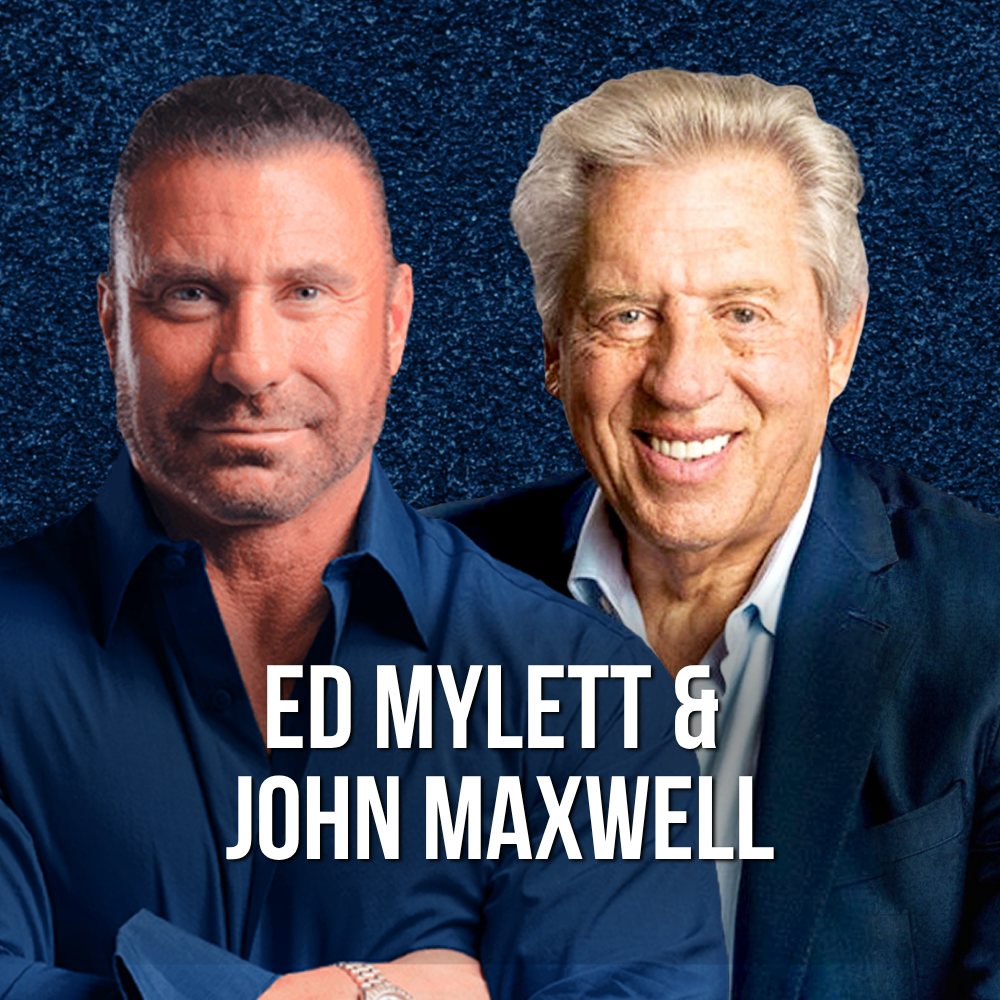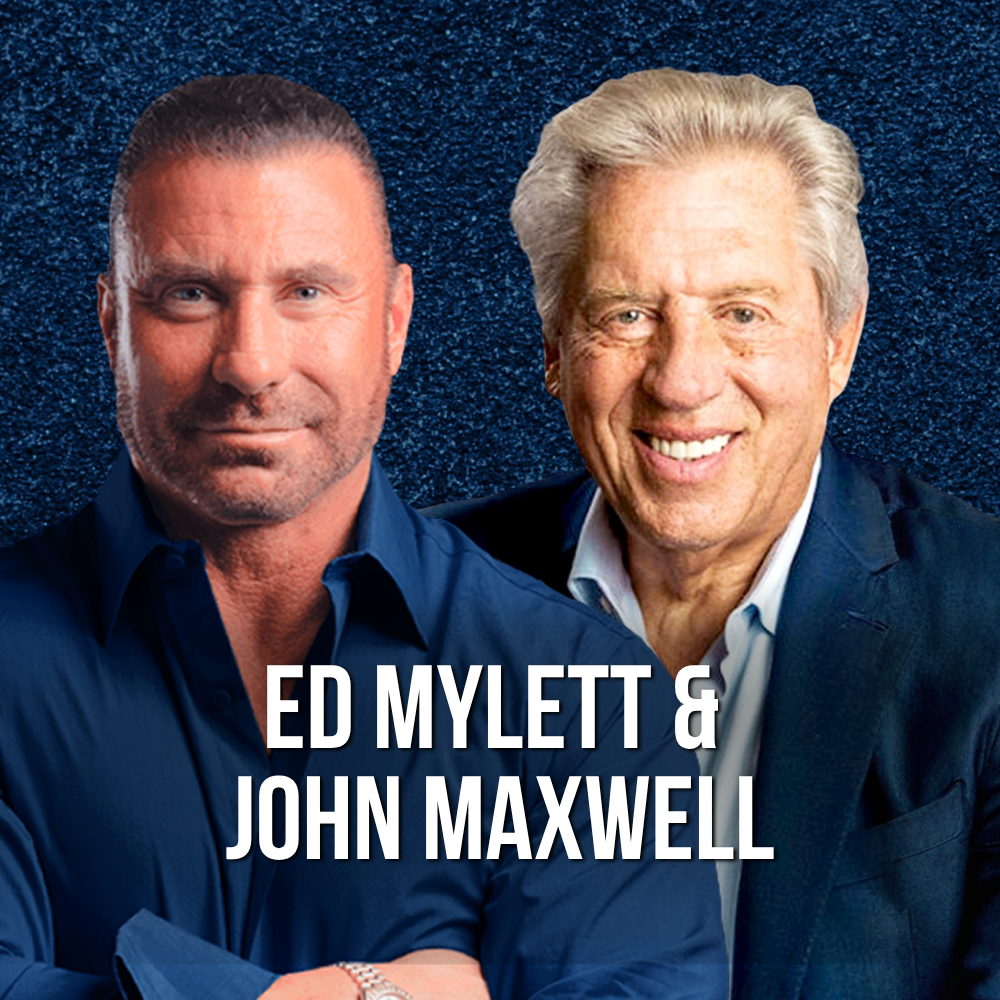
 THE ED MYLETT SHOW
24 Nov 2026 · 1h 6m


 Add vo to ChatGPT or Claude to ask about everything you hear
vo listened to this episode to put together the overview and transcript, so there may be the odd mistake.
Pastor Chris Hodges discusses building a legacy of faith, family, and purpose, emphasizing time with God, intentional relationships, “big rocks” priorities, rest, and succession/“torch passing” to avoid becoming irrelevant.
Chris Hodges, founder and chancellor of Highlands College and pastor of Church of the Highlands (major U.S. church). He’s also an author (Legacy Letters) and a golfer. Host is Ed Mylett (no guest beyond Hodges in the provided transcript).
Built Church of the Highlands; created Highlands College to train leaders/pastors; teaches pastors; influenced by John Maxwell and Michael Gerber; describes himself as task-oriented and not naturally a top-tier orator.
Relationships—not accomplishments—are the best part of life (“Who principle”). Live as if today is the day remembered. Order determines capacity (“big rocks”); master mornings (God time, movement, clarity). Outworking can become unhealthy if driven by insecurity (“security principle”); rest replenishes (“sharpening the saw”). Leaders must plan succession early.
“Rule of five” daily habits; device-free dining halls; Covey’s pickle-jar order lesson; 2011 burnout/panic attacks after father and father-in-law deaths; “two approaches to God” (tree of life vs knowledge of good and evil).
0:00You know, here's a stat that genuinely shocked me. Sales teams spend 50 % of their time on admin work rather than selling, building relationships, closing deals. That's where today's sponsor, Pipe Drive, comes in. An intelligent, AI-powered sales CRM loved by so many different growing sales teams, including two that I'm involved with. Some of the new features they have, which my producer is already using on this show, include pre-meeting briefs and AI note-taker during your meetings, which we use here on the podcast, it records and takes notes so you don't have to. You stay in the conversation.
0:35PipeDrive drives and takes care of the rest. So switch to a CRM built by salespeople for salespeople and join over the 100 ,000 other companies already using PipeDrive. My link gets you an exclusive 30 days free instead of the usual 14 days free. No credit card or payment needed. Just head to pipedrive.com slash Ed Mylett to get started. That's Pipedrive.com slash Ed Milet to get started.
1:26While supplies last, selection varies by location.
1:34This is the Ed Myron Show. Welcome back to the show, everybody. So today's really an honor for me. I've wanted to have this man on the show for really a long time, and I admired him. He doesn't know this, but I admired this man for quite a long time from a distance. We have a few mutual friends like John Maxwell that I admire so much. And when I would hear John Maxwell speak about Chris, it was like talking about literally a son that he cherished, not just a best friend, but like a son that he loved, but really admired so much. So by the time I met him, there was a very high bar that he needed to meet to match up to what I had heard.
2:12And I have to tell you, as we've become friends now the last couple of years, he's even exceeded those expectations and that bar. And I admire him even more now today than I did before I met him. And so you may know him as the pastor of Church of the Highlands, which is one of the biggest churches on the planet that he ended up building. Now he's the founder and chancellor of Highlands College. But to me, he's become a friend and a mentor and somebody that, you know, that I would take advice from. If I really needed something in a crunch time, there's probably a handful of men in my life now that I would call.
2:46And I think Chris would be one of those people. By the way, also a great golfer. Also a great golfer. wrote a book, Legacy Letters, Timeless Principles That I Learned, Lived, and Leave Behind. He's written a bunch of books, but this is the one that I want to talk about today with my friend, Chris Hodges. Chris, welcome to the show finally. Great to have you. Yeah, thank you so much, man. It's good to see you. Likewise. We just went on a great golfing trip together that he brought my son on, and I won't tell you where we were, but it was the hardest golf course I've ever played in my life, you guys.
3:16And my golf proved it, by the way. So this book, when you were writing it, we had talked and you said, I started to write it one way. And then I think it's turned into letters. I want to write my grandkids. Yeah. Go ahead. Friends and grandkids. Is that true? That is true. I, um, I'm 63. So when I turned 60, it's weird, uh, how you get to these stages of your life. And I feel like my whole life I've been building, building, building. And I got to 60 and it's like, man, what am I leaving, leaving? You know, like it's like my mindset changed. I'm still working. I think I got a good 30 years still in me to get after it.
3:53But, man, I just started thinking about, man, what are people going to say, especially about my grandkids. In fact, as of two weeks ago, have grandbaby number 13. That's awesome. It's the best part of life, man. It's just the best. And I started thinking about what I was going to leave in them. And if I'm anything, I'm very, very intentional. That's true. And I love being intentional about things. So I thought, yeah, I'm going to write down some things so that every time I'm with my kids and my grandkids, I'm going to work these into conversation. I'm going to just start jotting down some of my life principles.
4:34And all this, by the way, happened originally with conversation with John Maxwell. He said, Chris, you really ought to do this. You're at this stage of life. And he said, you're one of the most principle-centered people I know. Write down your principles. And so anyway, I was writing them out. I actually got away for a few weeks at a little cabin in the mountains that I love to get to where I can shut down and really just focus on things. And I was halfway through the principles. And I don't even know why I did it, Ed. I just summarized the last part of the chapter in letter form. And I just I wasn't even planning on doing it.
5:09I just saw myself go, dear grandkids. and I wrote this almost like a deathbed letter or a letter you would read after I was gone yeah like I don't have the chance to tell you this now but but read this you know Rockefeller did that for his son he wrote 38 letters to his son and so I um I wrote down this this um this letter and man I had tears in my own eyes writing this and I ran down my this office is on the second floor of my house and I ran downstairs and I said hey Tammy my wife read this chapter and then read this little letter I wrote the end. And I came back three minutes later and she's bawling on the couch.
5:44And I thought that's going to work, man. I just, I was kind of, I was kind of crying and excited at the same time. Cause you know, as an author, when you hit on something, you just know it was so accidental. And, um, and so I went back and I put a letter at the end of every one of the principles and that's why it's called legacy letters. It's so good by the way. And that's like a Holy spirit moment really is what that is. Before we get into these principles, you guys i want you all because this is not a guy with you know two million followers on social media right but this is a man who i'm built one of the biggest churches in the united states arguably number one or number two he's also built one of the most unique schools on the planet that basically trains leaders and pastors pastors to become leaders and so it's a very unique thing i consider chris like he's a very high iq guy born that way naturally he wouldn't tell you that but he is.
6:36He's a high IQ guy. But over the years, because of what he's accomplished and built and who he's been exposed to, he also has a tremendous amount of wisdom. And so I think wisdom and intellect are two different things. Chris is unique in the sense that he has both. And so as we go through these things today, you're going to be learning from someone who's not just talking it, he's done it. And that's what really separates him. So let me ask you a hard question to begin. I always go with the difficult stuff first, like curveballs. There's a lot of people listening to this today that they are spending the main years of their life trying to build something, a business, a financial empire, whatever it might be.
7:16And maybe they feel today like maybe they're making a little headway there, but maybe the people that they love back at home or that are around them are getting a little bit shortchanged. I think a lot of people feel that way. I've never asked anybody on the show this question. By the way, I felt that way for years. If I could go back, I would change that. what would you say to somebody who's feeling a little bit that way right now? Well, I think we've all done it. I've done it too. In fact, I've had two big misses where I was just flat out absent. And they weren't even for long stints. It was just, I got busy and I got away from, you know, focusing on my family and man, it burned me both times.
7:54And thank the Lord we came out of both of those. And, you know, I always say with my children, it was one of the hardest things I've ever done was raise a family. And, um, and, and the, and the, the story was definitely not always pretty. Um, but thank the Lord we're here, I think on the other side of it. And, and I'm so grateful for how close we are. And all of them are, you know, they all love the Lord. They're all very successful in life. And, and, um, but I have, I had those misses and I would just tell anybody who has, there's obviously nothing you can do about the moments that you miss but everybody on their deathbed is not going to say man i wish i could go spend another hour another hour at the office everybody on their deathbed is going to want to say you know something to their family and you know it hit me uh strongest i think and during the um 9 9 11 day whenever those people that were above the impact zone of the planes were making these final phone calls knowing knowing they're they were probably going to die and they and again They didn't go look at their calendar.
8:53They didn't go, you know, say what project everybody was thinking of somebody else that they wanted to say to that person, knowing this was probably my last chance. And obviously the point is, why aren't we doing that now? You know, we're not promised tomorrow. And why not live like this is the I always say this way. Why don't we live like today is the day that's going to be remembered? What if what if this is the day that everybody's going to remember, then how would you want to live that day? I think everybody thinks they're going to get around to it. I think there's so many things in life that people think, I'll get around to it.
9:28I'll get around to feeling the love from my family that we all deserve to feel. I'll get around to making memories. I'll get around to getting closer to God. I'll get around to it. But the challenge is you don't know how much time you have to get around to it. And that's why even in the book, you kind of reference, there's principles, guys. And what's really great, it's basically 31 days, and they get these principles from Chris. but one of them in there is the who principle right and and I think it's one of the best ones in the book they're all great but let's let's cover a few of them because I think you know you articulate it so well in the book I read the notes frankly not the entire thing and full disclosure so I'm going to ask you the ones that stood out the most to me and that I want more info on what is the who principle and why does it matter yeah the who principle simply is is that that as I look at my life and the best part of my life are my relationships.
10:22It's not my accomplishments. It's not what I'm doing. It's, it's the people in my life. In fact, before we even started this podcast today, you and I were talking about relationships that, you know, the people we played golf with together, how much fun we had with each other and those relationships have been forged over decades. I mean, with our two foursomes that we had together were some of the closest friends in my entire life that I've been doing life with for more than 40 years. And, um, and it's taken a lot of work, you know, these aren't, you know, in some ways it feels so natural that, uh, you know, cause we were so close that we don't really don't have to work on it.
10:58But at that same time, if we're not intentional about connecting with them every single day and, um, you know, they can easily drift away from you. But again, that's the part of my life that is the best part of my life, You know, and John's the one, John Maxwell, again, it's so funny. Let me back up and say that in the introduction, this book actually doesn't have an introduction. It's called My First Letter to You. And in the introduction, I explain why I'm sharing all these principles. And then I talk about where I got them from and and I talk about all the people who have impacted my life. And John is in so many of them that I almost got embarrassed in my writing because I was going to have to quote him a hundred times throughout the book.
11:37So in the introduction, I just say, listen, if any of this sounds like John Maxwell, it's because it is, you know. And and so but it was John who taught me the rule of five, that every day I need to focus on five activities that that I don't have to do all day, but I need to do every day and just be incredibly intentional about them. And and one of those is I'm going to take care of the people closest to me because because my relationships are everything. What's that look like for you? Like, how do you do that? Is it an intentional text or letter to somebody? Exactly. Yeah, exactly. So I do an audit of my day.
12:11It only takes five minutes at the end of my day. And I just say, you know, which one of these did I not yet have done? And if I had the opportunity to text somebody or call somebody or just, man, just five seconds. Hey, man, thinking about you, praying for you today. I hope you're well. I just, I try to do that. And what's interesting, my friend, is that I'm not even wired that way. I'm a task-oriented person. I'm not naturally relational, which means I have to be all the more intentional about it because I'll easily think about what task needs to be done at the end of the day. I'm very good at that, naturally good at that.
12:45But I have to work hard in relationships knowing how important they are to me. I'm exactly the same way, by the way. I don't know if you'd call it introverted, but I'm certainly, you put a to-do list together, it'll be done by me by the end of the day. But if I don't do that, I don't naturally have this proclivity to, I don't think that way well enough. What are the other five, or the other four, if you don't mind me asking, or do those change? Yeah, they haven't changed much over the years, but the first one is every day I spend time with God. I'm really, you know, obviously as a pastor, my faith is everything to me, and I prioritize that.
13:21That's the first thing that I do every day. Every day I try to invest in someone else. so I've always asked myself what did I give away what how did I help somebody one of those is every day I try to take care of myself because if I don't take care of me then I have nothing else to give so and every day I study because you know most of my job is bringing content to people and and it feels like you know six seven eight times a week I'm going to be speaking in front of some type of group and then because now information is free and everything you said is already available they don't need you for that if you don't if you're not producing new content and studying and getting better uh you can you can be irrelevant pretty quickly so those are my five that's interesting craig rochelle was telling me backstage at an event we were at i wonder what you feel by the way he probably built the other church just the two of you right that is we're very close yeah he said i think i'm a content creator now do you do you see it that way a little bit too.
14:23Oh, 100%. Really? That's so interesting. Because the information is free now. If you're not producing something fresh and new, what you said is already out there. I mean, the cat's out of the bag. Everybody's trying to reel in AI and all the stuff that's on YouTube. It's out there. In my opinion, it's out there. It's interesting because if a leader's listening to this, whatever their business is, so let's unpack that just for a second. We're going to get back into the principles, but I don't want people to be confused by the fact that you had But for you as a pastor, there's one overriding message, which is salvation, right?
14:55We're trying to get to heaven. I mean, at the end of the day, that's the story. Jesus died for our sins. He's paid the price, so we get eternal life if we accept that. Having said that, there's thousands of different ways to express that same message and teach the principles in Scripture. So what you're saying is that the overriding mission, if you will, doesn't change, but the way in which I communicate it and teach these principles does change. Is that what you mean? Because I think people could get views ago. Oh, so I'm supposed to change what I talk about all the time. Oh, no, no, not change.
15:30Just get better and have fresh content. I'm not even, you know, for me, not it's not even just content I would bring to a church crowd or a faith crowd. But even asking myself, you know, where am I growing? What am I learning? I just I have probably five different things I'm working on right now that I've never taught before in my entire life. life and just learning how to, you know, communicate it better, trying to learn the information about it better. Right now, I'm big on a thought of passing the torch. Here's the latest rev that I'm trying to work out. And that is most people think that, you know, of just the life you live and how you handled your life, all the things we're talking about.
16:12But the truth is we have two responsibilities in life, and that is not just to carry it ourselves, but to also make sure the handoff is successful because somebody is going to do it after us. And even in the Bible, you almost see every leader and you see their successor. And succession is obviously something that in the business world people think about, but I think they think about it way too late. And so they wait till they're done to start thinking about, man, who am I going to hand this business off to? When the truth is we need to be thinking torch passing way before we even get into that exchange zone in order for us to have a successful one.
16:47So I've been studying all these stories of succession in businesses and in churches. And honestly, most of them are not good stories. There's only a handful of really, really good succession stories where the business or the church or a person's life went far beyond because of who they handed it to. Many times, it actually goes in decline. And so anyway, I'm just fascinated with this concept. And every day I'm studying it. I've already brought two messages on this topic that I would give it a solid B -. And so I take it back and I make it better. And I've already tweaked it probably 12 times. And give me another couple months, I think I'm going to have a pretty good message on this idea.
17:29And that's what I mean by it. It's like every day, if we're not producing and thinking about new ways to share ideas with people, I think we'll become irrelevant pretty quickly. By the way, both those things are so true. I was thinking about, by the way, what he just said he's done, so you all know there was a succession plan at the church that he ended up implementing here just recently. But what's interesting about that concept, everybody, and don't let that just kind of blow past you. First off, the different ways to communicate and create content and messaging to your folks. But also this idea of at least thinking about succession because what that does is it causes you unconsciously, subconsciously to equip people even more.
18:09which is what Maxwell's taught you and I both so well. If you don't think somebody could have succession or move up or have upward mobility in your organization, you may rob yourself and them from this idea of equipping them to the max. So once you think about succession, that causes you to equip. Hey, everyone. This episode is sponsored by Incogni. You know, your data is everywhere online, making you an easy target for scammers. Believe me, I know. I've had it happen to me. Data exposure went up 211 % from 2023 to 2024. due mainly to five mega breaches. Incogni tracks down and removes your personal data from multiple sites, including online directories, people search sites, and even commercial databases.
18:49This process is fully automated for hundreds of known data brokers, companies that collect and sell your data without your consent. Data can reappear on these sites, so they repeatedly remove it for you. This means you and your loved ones are also at a constantly increasing risk of being caught up in any kind of data breach as your personal information remains exposed online. Go beyond automated data removal and choose Incogni to reduce the risk of scams. They'll protect your family online and offline policy. And take back control of your personal data. You're at huge risk for it. So to get an exclusive 60 % off your annual Incogni plan, go to incogni.com slash mylet.
19:25Did you know that over 75 % of Americans are chronically dehydrated? And 90 % don't even get enough potassium, a key electrolyte responsible for energy, muscle function, and clear thinking. That's why so many people feel tired, foggy, crampy, or even off or late day kind of just fatigue, even when they drink tons of water. Instant Hydration is a premium electrolyte drink designed to support hydration, energy, recovery, and focus without sugar or unnecessary additives. Instant Hydration is known for their refreshing flavors, not overly salty, smooth taste, and an easy daily habit. I love the icy and watermelon flavors.
20:01Watermelon's the best. They are the most refreshing packets that taste great. I've actually bought the icy flavors long before they even sponsored the show. For a better way to stay hydrated, go to instanthydration.com slash mylet. And use my promo code mylet for 40 % off your first subscription order. It's Instant Hydration's best offer available. That's instanthydration.com slash mylet. Promo code mylet. So it's a really huge principle. I'm going to ask you another thing that may surprise you. And I wanted to ask you this personally, but I'll use the podcast so I won't be nervous to ask you.
20:35He's built one of these giant movements, you guys, like one of the biggest movements in the country through his church. Also, Highlands College is just, it's growing and growing. And every time he sends me a picture, there's a new building, they're doing it. More people and more young people being influenced. You've done it, Chris. I say this out of respect. You've done it with what I would consider what I would not have expected from a pastor's personality. and you know what I mean when I say it okay what I mean by that is and I want because this will give a lot of people hope that are trying to build a business that go I don't speak like Ed Milet does or whatever or Jesse Itzler I'm not this like crazy orator whereas in your case you are a crazy orator it's a weird way to put it but you don't do it with like screaming and yelling and veins coming out of your neck.
21:26You have a different style that I would say wouldn't be the picture that most people would pick. You're more professorial, in my opinion, more like a teacher than you are. Your way of evangelizing is not like screaming and yelling and sweating all over the stage with a towel you've got to wipe your forehead. But that's how a lot of people, as you know, like our dear friend, like Stephen Furtick, is this unbelievable orator, but he does it differently than you. Whereas I find your style for me, it's like very pleasant. It's more of a teacher style. But I think you give people hope who may not think they're gregarious or outgoing or super extroverted that they could still build a movement of people.
22:08Speak to that for a second. So probably what influenced that most was I didn't ever consider myself to be talented, honestly. I was kind of a C student on my best day. I was actually, I am very smart, but I didn't test well. and um and that's a whole another you know another story of how that happened but um but I got him I got influenced early on whenever I was building our church uh by a book called the e-myth and and the e-myth Michael Gerber oh Mark it it probably shaped how my thinking more than anything else me too I can't believe you just said that same here number one other than Maxwell uh Gerber Keep going.
22:50Same here. 100%, because his thesis was you need to build something that is systems dependent, not personality dependent. That's right. Which was important for me because I didn't consider myself to be naturally talented. And I'm not a great orator. I mean, I can communicate. And obviously, we built something pretty great by the grace of God. I give God all the glory for that. But I knew I was in trouble, though, if I was going to do it on talent or personality alone. And so I started building a way to build, I build an organization around a system. And then when it came to teaching or communicating, I just, I settled on one simple goal.
23:30And that is what people say, when they listen to me, is he telling me the truth? My only goal was just to be as authentic and as real and as transparent as I possibly could be. And it created this teaching style that is, the way I say it is I'm not ever, I'm not looking for obedience. I'm looking for agreement. So, so when it comes, so when it comes to like the Bible, I'm not telling you because God said so, so just do it. I was trying to show people, you know, not go read your Bible, go pray. And I was like, let me show you how much fun this is. Let me, let me show you a way to actually enjoy this.
24:03And so it became more conversational and more just authentic and in a way where people wanted to do it, not had to do it. And bro, that's the thing that just took off. I actually teach this to pastors through a biblical example in the second story of the Bible. If you have creation as the first story, the second story of the Bible are these two trees. And I call them the two approaches to God. And one of them was called the tree of the knowledge of good and evil, meaning that you can do whatever you do because you just learn, it's learned behavior. It's learned right or wrong, or you could eat out of this tree of life.
24:42And the Bible says that if you eat out of this tree, you're going to die. But if you're out of this one, you will live. And what it means is, is that when you, when you're doing it because it's in you, not something you have to do, but it's in you, you have desire and passion to do that, that you're way more successful. I'm not a Christian because I don't want to go to hell. I'm a Christian because I love God. I really enjoy my relationship with God. And that one thing alone right there, Ed, made all the difference. I go all the way back to that Gerber approach of doing things through systems and doing it through this tree of life.
25:22Those were the two most impacting things that changed that whole trajectory. That's one of my favorite things ever said on the show, right there, ever, in a thousand episodes, because I so agree with you. It makes me emotional because I'm a believer. I'm a Christian because I love my relationship with God. Right. And that's not most people's story. Most people's story is they know he's there, but they really just don't enjoy it. So now they're doing it out of obligation and duty. One of the most powerful verses in the entire Bible, in my opinion. In fact, I'll go so far to say it's the verse that I have that has has been the biggest revelation of any verse in the entire Bible.
26:04And it's a verse where Jesus said, if you love me, you'll do what I command. It's out of John chapter 14. If you love me, comma, you'll do what I command. And there's two ways to read it. The wrong way is if you love me, prove it. Do what I don't even tell me you love me if you haven't done what I command. And that's not what it says. it says, if you love me, you will do what I command. Being in love with me now makes all of these commands not even burdensome anymore. They're not something you have to do, it's something you want to do. So let me put it in an example in marriage. We all know that committing adultery is not a good thing.
26:44It's actually one of the 10 commandments. Thou shalt commit adultery. and to keep that commandment, you can tell yourself every day, don't look, don't look around, be faithful, be faithful, or you can fall in love with your spouse. Wow, so good. And now you don't even have the desire for those other things because of your love. And that one thing can change everything about how people relate to God. Oh, that's so good. You guys, see, a lot of you that aren't believers yet, by the way, there are lots of different versions of learning about God and our Christian faith. And I love, had I sat at your church as a young man, I'd have become a Christian sooner, frankly.
27:24Because I want to be taught. I want to be fed. I want my cup filled up. And I feel like your approach is that way. You don't have to be a screamer and a yeller to build a business, to build a movement, to build a following. But what you do have to have is you have to have some of these principles that Chris teaches. And one of them that I love is the table principle. Because it's sort of in the same vein of what we're talking about here. that you don't have to have all the talents yourself. But talk about the table principle for a second. By the way, when he teaches this, he's leaving this legacy to his grandchildren.
27:55That's how big of a deal it is to him. Yeah, the table principle comes from the fact that as I look back over my life, my favorite moments, my all-time favorite moments are the places I've gone or even the golf courses I've played. It's the dinner table. It's the right people with the right food and the right conversation. as I look back I think those have meant more to me than anything else and we even said that of the great golf course that we recently played together I mean this is a world-class golf course that we played together sure is and we keep talking about our dinner that night not right not the golf holes yeah or even how we played or didn't play because that golf course is so hard we talked about our conversation and our laughter at the table and so I say and the principle is put down the phone and pull up a chair man we've got to get off of these um these by the way we have to get off of our phones and especially at the table one of my biggest pet peeves are people who sit at the table with people to have conversation and they leave the phone right there and to me it basically says i'm really enjoying this conversation until something more important than you pops up here and i need it close to me in case it does and so here here here at our school uh and i don't even know if you know this but all of our food halls every one of them.
29:07We have a fine dining restaurant here and we have just a regular food hall and every one of them are device free. All of the students check their phones at the door. We even have table topics on the tables because we're trying to teach the kids not to sit at a table and look at your phone, but to actually not even have the phone in the room so you can learn how to have real conversation with people. And again, as I look back, my greatest moments, again, you have to have the right people and the right food. It can't just be conversation. The food that matters to me, I'm a Cajun from South Louisiana.
29:39The food really, really matters. But there's nothing I love more or have learned more from or it's enriched my life more than a three-hour meal with great conversation. And, again, I want to shout out my friend John Maxwell, who is the greatest conversationalist in the whole world, and you know that to be true. But he intentionally comes to every meal with questions he's going to ask the table. Sure does. He sure does. He's the guy that we should be asking all the questions to, and he won't do it. I mean, he has actually the most knowledge and wisdom, but yet he'll come and just ask questions.
30:15And over the years, I've collected John's table questions. Every time he did it, I knew he was doing it. I would go back to my room, and I would write them down, and I would start bringing these questions into my own conversations. And, man, it's just nothing has enriched my life more than the right people with the right food. with the right. The other thing that John does that, you know, and you do it well too, but John has such humility that he actually really does want to know your answer. He actually does believe he's learning from you. All of you ought to take a little audit on that self.
30:47Like, are you still really learning? And by the way, I don't mean just like listening to me or Chris where you go, okay, you know, maybe they're a stage or two ahead of me in life. So I'll listen to them. But are you listening to the people that work with you? There's things to be learned from people that you may not think are quote unquote whatever this means in the world above you but you can learn from everybody because in life I certainly have not accomplished or achieved what John Maxwell does and it always makes me uncomfortable. He always says to me, Ed, I learn so much every time we're together and I just want to go, no you don't.
31:17I do. But he actually really means that. He believes that God puts everybody in his life to learn something from and are you all doing that? When I read the the principles, I thought, I don't know that I do all these very well, frankly, but one of them I might've done pretty well is the big rocks principle. I actually don't think you can get very far in life without this one. I actually, I think this is a biggie. So no pun intended, because it's the big rocks principle, but tell them what you would tell your grandchildren about that principle. Yeah. This story, I always liked it. When people ask me about these principles, I always like to go back to where I learned them.
31:54Yes. And then I had to, had to live them out. Then and now I'm leaving them behind. But this one was from Stephen Covey. I was actually at a conference in Denver. I want to say it was in the late 80s or early 90s. I don't really remember. And it was just a business seminar that I paid pretty much all I had to attend this thing. And that's another principle in itself. Invest in yourself, invest in yourself, invest in yourself. I mean, you've got to put yourself in environments where you're still growing. and it was when his seven uh habits uh book was coming out and i'll never forget it ed he brought out a giant pickle jar jar and he um you know he put the this he put water in it and sand in it and gravel in it and when he put the rocks in they stuck out of the top and it didn't fit and he used the exact same ingredients in reverse order so he put rocks in first then gravel then sand than water and there was room in the jar.
32:50And, and here's the principle. And that is order determines capacity. It's order determines capacity. It's, it's, it's where you place it in your life determines how much can fit. And you would know that like if you were, if you were packing something, you know, you can, you put your big, put big things in the suitcase first, and then you can stuff socks in the crevices. But if you do it the opposite, the big things don't fit if you put them in, put them in last. And so the principle that I wrote is then if order determines your capacity, then you have to master your mornings. And by the way, I don't know a great leader.
33:24I don't know a great leader that doesn't master mornings. I mean, I was even listening to your principles about stacking your day in these six hour increments. But the truth is if you don't get that first six one, right? The next two, six probably don't have a chance either. Totally true. It's, it's all, here's the principle all's well that begins well. It's not all's well that ends well. Like we really, it's the first things, first things. Of course, that's a huge biblical principle that the, in the Bible, the first had the power to bless the rest. It's what you did first. It's what you did first that actually set the, or set the, the, the, the culture and the, the mindset for the entire day.
34:03And so that's why it's actually principle number one, that, that you have to know what your big rocks are. And it goes back to kind of that rule of five. What is going to get in my calendar? And what's, you know, what's going to get in my life? And not only is it going to get in my life, but it needs to get in as early as possible. So amazing that you, you guys, by the way, this is good. So my morning, I've always had these very complicated routines. And then as I've gotten older, there's a part of me that thinks there was some silliness to the complication of it. And what I've really realized now about my mornings is there's really three things I want to get out of my mornings.
34:41I want my God time, I want to move my body, and I want clarity for the remainder of the day. That's sort of just what I got to get. The first things first. Give me some time with the Lord. Let me move my body and let me get clarity for what I'm going to go do with the remainder of my day. And I've found different ways to accomplish that than I used to. But I think also there's some complexity can be the enemy of execution everybody at some point a simple beginning of your day might be the most profound and I know that in I don't know if in your case I'm just curious like I know Maxwell he gets up and writes that's God time also for him but he writes do you do what he does do you write every day do you do that as well no I have a couple things that I have to do first of all I get that coffee I'll be honest the first thing I do is I grab some coffee yeah I have to make sure, Ed, that my devices aren't anywhere near me because I don't have red dots on my email.
35:36Like I have no unread emails that I have. I'm so task oriented. Like if I see a notification of any type, I can't handle it. I have to go see what it is or I have to go. So I have disciplined myself that is put away until I've finished with these first few things. And that's like you. It's my faith first. Honestly, I'm a little too tired just to get after it in prayer or something like that. So I just read my Bible. I journal a little bit. And like you, I start thinking about the day ahead. And I learned this from Michael Hyatt, who created the Full Focus Planner. He said that you physically write out the three tasks, that if you got just those three tasks done today, you could call that day a masterpiece.
36:21You're going to end up doing a whole lot more than three. But what are the top three? Not two, not four. What are the top three things that if I got these three things done today, I could call this day a masterpiece? And it forced me to think through the priorities of the day. Make sure you do these. And I would physically, I physically write them out every day to call that day a success. And man, the focus. And then I get into prayer and praying over those things. And then for me, my brain and my creativity is at its best early. It's pretty strong until lunch and it's kind of downhill from there, honestly.
37:00And so I do all my creating early in the morning, which means I don't give that time away. You can't get a breakfast with me. I'll give you any other time of the day, but I'm not going to give my most important activity away. Another pastor actually taught me this principle. Make sure your most important activity gets the best part of your day, whatever that is. and I'm a morning person. So my most important activities have to show up when I'm at my best, which is in the morning. By the way, that's one thing, I'm very much the same way. And I think everybody, we say we're morning people. I truly am.
37:34But I also think you should, all everyone there like know thyself, your most high impact meetings need to be, you need to do an audit. And when are you, or maybe you're better at two o 'clock in the afternoon. Maybe it takes you a while to get cranked up. That's exactly right. But you and your EA or whoever it is that schedules your time. You should have your high impact meetings meet your maximum capacity hours. And a lot of you don't aren't even cognizant of that. And I used to make the mistake as a younger business person. So you know those pieces in your closet that you find yourself wearing like on repeat all the time, that sweater that kind of just goes with everything or these perfect pair of pants.
38:08I'm wearing mine right now. Or the tee somehow that you always reach for first. That's what Quince does best. Quince focuses on high quality wardrobe staples with premium materials. The styles are timeless, versatile, and designed to become the dependable pieces you reach for every day. Got that tee on. I got those pants on. They give you the softness and quality you'd expect from a luxury brand without the price tag. Quince also makes premium pants, fitted tees and polos, and breathable active wear. Quality basics designed to work with your wardrobe and hold up to everyday wear. I love their cotton tees.
38:39I'm wearing one now, and I get a ton of compliments when I wear them on the podcast and when I speak. So, find your next fall favorites at Quince. Download the Quince app for app-exclusive offers or go to quince.com slash ed for free shipping, on your order, and 365-day returns. Now available in Canada and the UK, too. That's quince.com slash ed. This episode is sponsored by Rho. A lot of people assume GLP-1s cost a fortune, and that assumption keeps them from even looking into treatment. Rho helps people find a more affordable path to FDA-approved GLP-1 treatment. Rho wants to help people lose weight.
39:15That's why they have more affordable GLP-1 options, whether you're paying with insurance or cash. Rowe's free insurance checker makes it easy to see if you're covered for GLP-1 injections. Just submit your insurance card, and Rowe handles the rest. No paperwork, no waiting on hold, no confusing phone calls. And if insurance doesn't cover treatment, there are still options. Rowe offers the lowest-cost cash-pay FDA-approved GLP-1s, such as daily pills and multi-dose pens. I use products by Rowe, and you should, too. Go to ro.co.milet to see if you qualify. That's ro.co.milet to get started on Ro.
39:52For side effects of GLP-1 medications, including boxed warning, go to ro.co.safety. ro.co.safety. I'd be so fatigued with four, five, six draining meetings, and then I'd have the big one I got to deliver on at 3 o 'clock, and they're getting 60 % of me. So that is a principle, everybody. What would you say to somebody? I ask you a couple of personal things now. I teach, you know, one thing you got to be able to do is, I mean, at the bottom line, even I did this with my kids, you know, you want a quick pass to the success. Here's one little principle. Make sure you're outworking everybody. But when I've said that, I think sometimes everything can be taken to extremes.
40:30And because one of the things you talk about in the book is rest. And so I want you to talk about both of these things together. You do have to outwork people. You're not where you're at because you didn't put in a ton of focused hours of work. You just did, right? There's also an element of rest, and there's also this other element that I want you to speak to because you do in the book. But people are doing that to somehow prove something to other people, that there's this need to prove themselves that's so deep in people. Is that a good thing? Can it become unhealthy? And what about outworking versus rest?
41:06well for that first one is you it definitely could be unhealthy if you're doing it out of this out of a need for you know your own personal security if you're doing that because there's something missing in your life that accomplishing that thing is not going to be the thing that fills it for sure and so a lot of people do um perform to impress not they're not performing to get something actually ultimately done that matters they they're doing it for a completely different reasons. So that was absolutely huge. And I actually talk about, I know, called the security principle, you know, in the last part of the book.
41:43Tell me again the second question, Ed. The second part of it was more about rest versus outworking everybody, because you also talk about that in the book. Well, obviously that's a biblical principle too, that, you know, six days work, one day make it a Sabbath. And a Sabbath, by the way, doesn't necessarily mean rest, it means cease from labors. In the biblical culture, it was a way to honor God by saying, I don't have what I have just because of me. I have what I have because of you. And I'm going to honor you with not doing something, knowing that I can get more done in six days than I could in seven of working without you.
42:25And so it was really more of an honor principle but what happens on a well-planned a sabbath kind of a mindset or a rest day mindset is that it is a day to replenish this goes back to covey's i think it's his last principle of sharpening the saw yep that if you keep going keep going keep going with a dull blade yeah you're you're outworking everybody but there's not a lot of chips flying because your edge has gotten dull and all of us have to find something that replenishes us and resharpens us. And by the way, that's going to look different for every different person. I heard one person say that if you work with your hands, you now rest with your mind.
43:06But if you work with your mind, you need to go play with your hands. And that's true with me. I'm always in the office. I'm always thinking, creating, leading. So if I just get outside, get my hands dirty. I actually like gardening. I know that sounds a little corny, but I like getting out there and just cutting some branches off of something or plant something or go to the range and just hit a few balls. And just doing something active actually is a way for me to replenish. But we all need to know what that replenishing activity is and do it. And by the way, I'll add one more thing. That was also the day that you really focused on your relationships.
43:42Be very, very intentional about, you know, for me, a date lunch or a date night. I've been doing that for 40 years of marriage, almost without fail, have have gone out to lunch or dinner with my wife and and had had had a beautiful conversation. And just we do it all week long, but being very, very intentional about it on that day so that I can sharpen, you know, sharpen my soul and sharpen my soul. So good. I think, guys, that you're listening, everybody. That's another thing a lot of you think you're going to get around to doing. You're going to get around to resting. But right now, business is tanking, and so you've got to keep going and going and going.
44:19And what you're doing is grinding yourself into these just little fragments. And so this is not something to get around to doing. I know personally, if you could take any lesson from me, there's a bunch of what I've done wrong in my life. But one of the biggies was I would work myself down to such of a lesser version of myself, just grinding and grinding and grinding and thinking someday I'll rest. And what Chris is saying is it's actually not that high of a percentage of the time. The Bible tells us that we can work six and take a rest of the sevenths. And so please don't wait to get around to that.
44:53I'm going to ask you a couple of toughies now. Depression, mental health and depression. People see you and you're very composed, very together. You have a rich life. You've served God the vast majority of your life. you've built two huge movements between the church and the school. By all appearances, your family life is wonderful. You have a lot of contribution. You've got great friendships. I've watched them. I've laughed harder with your friends than I have most of mine, and I just met them all. But there's also been moments in your life where upstairs, everything wasn't going the way it should go.
45:31Can you talk about that a little bit and what advice you might give to somebody who right now, you know, they're somewhere between melancholy and really severely depressed, but just not living emotionally the way that they wish they could. Yeah, unfortunately, I can speak a lot to this. I had an all-out burnout in 2011 after the church was 10 years old. And man, I'll talk about grinding. I was grinding really, really hard. And then my father passed away, who was best man at my wedding, very, very close. And then my father-in-law, who was my best friend in the world, I actually got married because my father-in-law pursued me.
46:07I didn't even know who my wife was until my father-in-law actually sat me at a table and said, man, have you ever thought about taking my daughter out? Like, man, I don't even know who she is. And so that's a whole other story, but it's a funny story. But his name was Billy, and he was my best friend in the world. We talked every day on the phone for 27 years, every day for 27 years. and at 61 years old, had a little sore on the bottom of his foot. Looked like he had stepped on a thorn. Four doctors told him it was nothing. The fifth doctor did a biopsy, and he was already at stage four melanoma.
46:44And a year later, he was with the Lord. And so my dad died. Billy died, I mean, literally within nine months of each other, and just grinding with the church. And, Ed, I had an all-out four or five months of panic attacks that I actually thought were heart-related. And I thought I was having heart issues. And I went into the doctor, and he said, look, honestly, I'm not going to do any treadmill tests or things like that. You could pass those, and you could still have an issue. We're going to do a heart cath. We're going to go in there and look around. I was like, all right, sounds good. And when I came out from under the anesthesia, I'll never forget.
47:23I'm sitting kind of in the consultation room after this procedure. And this guy went to our church. This cardiologist went to our church. So it was a real more friendly conversation you would normally have with a doctor. He said, well, I got good news and bad news. I said, well, tell me the good news. He goes, your heart's perfect. He said, I said, well, tell me the bad news. He goes, you're crazy. You're out of your mind the way you're living your life. He says, man, you're running way too hard. You're drinking too much caffeine. You're traveling the wrong way. He said, bro, you better slow down.
47:51And that was actually the first year that I did an eight-week sabbatical where I wasn't on any device or anything for eight weeks. And that's a whole other story. Fast forward about eight more years, and I decided to do a message in our church on the topic of anxiety and depression. and really had never even talked about it and did some stuff out of the book of Daniel. And there was a whole other set of reasons there. I was actually going through another grieving process for an incident that had happened at the church. And I wrote this book on depression and anxiety. And, man, it became the most popular message times 100 at our church, a message that I called Out of the Cave.
48:45And so the publisher, my publisher came and said, man, I want you to write a book on this. And in the middle of writing that book, this almost 10 years later, man, I went through some of the darkest moments of my life where I would have never harmed my body. I'm not I'm not a suicidal kind of a guy. In fact, I'm very, very optimistic every day. But I was ready to commit ministry suicide. I was done. And I was I was done. And I write about it in this book I wrote called Out of the Cave that talks about how we can get into this cave of depression. And wonderfully enough, God's Word gives us a prescription for this that secular psychology would say works as well, just how we can pull ourselves out of that.
49:32So bottom line, I know that was a long set up. No, no, it's not. I actually want you to keep going because I guarantee you people driving in their car that are on the treadmill that are watching this on YouTube, they're leaning in the most right now. And so keep going, please. How do we get out of that cave? What's the biblical principle? Well, I did actually a verse by verse through the life of Elijah out of First Kings 18 and First Kings 19, two chapters in chapter 18. some of those powerful success stories ever. This brother, man, just defeats the prophets of Baal. He just has all these mighty miracles.
50:08I mean, this guy was a getter. And in the next chapter, I mean, just like a verse later, one queen threatens him, not even face-to-face. So it would be today like an Instagram comment or a Facebook post saying, I'm coming after you, and this guy's ready to take his life. And in that text, he does six of the nine things that doctors and psychologists say will get you in depression. He does at least six of them in this text. And then he ends up in this cave, which I think is the perfect metaphor of what it feels like. Because it's dark, it's disorienting, and you know there's a way out. You just don't know where it is.
50:54Tell me if I'm wrong. That is what it feels like. Absolutely. Yeah. When you're there, you it's dark, disorienting. And by the way, when things are dark, you start making up stuff. Yeah. You could be a moth flies by. You think it's a bat. Like you start your mind starts playing tricks on you. I'm a professional. I'm a professional. Yeah, exactly. Well, the the the psychologists call it ruminating. Yep. And and it comes from ruminating animals. What ruminating animals do is they chew the cud, which means they they eat something. they chew it we call it today processing we process something and then we swallow it get rid of it but ruminators bring it back up and when you bring it back up it never comes back up better it comes back up grosser like when you regurgitate your grass like the cow does it's not it's not better grass it's like gross grass so are your thoughts every time you swallow it you probably and it's okay to process but every time you swallow it get rid of it but if you bring it back up, they call it heightening your distress.
51:57So it's not that the distress isn't real. You're just making it way bigger than it really is. And it's a very, very, very dangerous place to be. And Elijah did all of that. If you read in the text, he completely lies to himself, something that is already established as fact in the previous chapter. He's even complaining to God about something that he knows for a fact isn't true, but his brain is playing these tricks on in himself. And it's just a place that we all get in. The good news is there is a way out though. All the things I've learned, I've sat and I went and did a talk for you, which I was honored to do.
52:34And then I heard something listening to you after I spoke that has made a huge impact on my life. So this is, it's still in the same line of depression to some extent. Like one of the things that I, I worry about for people in their life is that they don't get a big picture. They don't get a dream. They don't get a vision. And when you're in that cave, or actually when you're heading to the cave, one of the pathways into that cave is forgetting why and what it could look like and having a dream. And I'm sitting in the auditorium and you're speaking. By the way, I've stolen this from you multiple times, just so you know, and pretended like I knew what I was talking about.
53:15But I want you to talk about it. How important is it for people to, first off, there's a big picture principle in the book, which is sort of what I'm describing now, but also to have a dream and a vision and to reconnect for that and ask yourself, is this still my dream? Because you actually said something. You said when that talk, you said in the Hebrew, the same word essentially for dream is health. That's right. And so to me, the lack of a dream leads you into these caves of life. It's unhealthy not to have a dream. I learned that from you. So just talk about big picture principle, but also the dream part of life.
53:52Vision. Yeah. So what's interesting in the Elijah story is that God never directly addresses his depression. In other words, he doesn't give him a direct remedy or prescription for the depression. He redirects him to something else. So he just gets his eyes on something else. And I'll give it to you in this little metaphor. It's like I had one of my grandkids fell down, scraped their knee, could not get them to stop crying until I brought a lollipop on the scene. And the second they saw it, they stopped crying. And it wasn't because the pain of the knee went away. It's because something in their life better came in front of them.
54:31Amen. Which, by the way, Ed, is the best way to pastor people I've found over the years. it's like it's really not to solve their problems it's to give them something in their life bigger than their problems and and so what happens is they're there but they don't they don't have the same level of impact in your life because you're so excited about this over here and that is the power of a dream or a vision um it's actually in principle number uh five i call it the bucket list principle which by the way goes back to a john maxwell story i wrote my first bucket list because as John Maxwell challenged me to do so.
55:08But it simply says this, that if you want to start living, you've got to start dreaming, that it'll add life to you. And what God does to Elijah in chapter 19 is he just gives him new assignments. He goes, hey, I want you to go over here and get this guy and minister him. And I want you to go over here, and I want you to connect with this. And he just starts giving him new assignments, and immediately he jumps out of that cave of depression because he has something fresh in his heart and his life. And it's just something that we all need to continually do. And that is, and not just even like work-related.
55:43I mean, just something you're excited about, you're anticipating, a vacation or something. I think sometimes the planning of and the excitement of getting to it is even better than the thing itself. A thousand percent. By the way, this principle, everybody, that he's speaking to, this isn't just business or pastoring. This is family. Ask yourself, do your family have a dream? Is there a vision of what you're trying to do as a family? There's a little kind of dullness or nitpicking or stuff in your family. You could address it directly, which is what everybody does, or you could do what Chris just talked about with Elijah and what we do in our own lives, which is capture a dream for the family.
56:19Do something awesome. Maybe it's a vacation. Maybe it's something you're going to give. Maybe it's a mission you're going to go on. Maybe it's how you're going to start operating in the community. But you show me anything winning, whether it's a business that I've run or a church that he's run or a school that he's built, a Boy Scout troop, a baseball team, a family. If it's flourishing, it's led by a leader with a vision. Exactly. And by the way, we'll go into this next because there's a part of the book that's called The Goldmine Principle. And I said there's a lot of things in the book I need to do far better.
56:53This happens to be one I do well. I believe in people. Sometimes my wife says it's one of my weaknesses because I don't see people as they are ever. I see them as they could be. Every once in a while, you can be hurt by people because you see what they could be, not what they really are in front of you. But I'll take a couple hurts in my life to speak dreams into people and vision into people. But what I'd like you to talk about is part of that vision as a leader, you have to sell a big enough dream that the dreams of everybody within your stewardship can see their dreams coming true inside the one you're selling.
57:27So for a lot of you, it's not big enough. It's got to get bigger because they want their dreams to come true, and yours has to be big enough for them to fit inside it. This goes to the goldmine principle, Chris, because if you see, I'm going to talk about it when that talk you're asking me to give, if you can begin to see people as a goldmine and what they're capable of, it will cause you to sell a bigger dream, I think, because you also see their capacity. So what's the goldmine principle and why does it matter? Yeah, again, John Maxwell. Well, I told you it's almost every time he taught me, he said, put a 10.
57:59Every time you see something, put a 10 right there on their head. You realize that there are 10 in something, that there's gold in there somewhere that just you cannot see them for how they're how they're necessarily presenting themselves. Because a lot of people actually are acting out based on their own trauma or wounds or just whatever's happened to them up to that point. But there's you got to mine the gold that's on the inside of them. And so the discipline is, as you already said, it's a beautiful principle, and that is you never see somebody as they are. You always see them as they could be.
58:32And by the way, that's how God sees people. God doesn't judge people based on who they are. He sees who they can become. There's actually a verse in the New Testament that says that we can look into God's mirror. We behold as in a mirror the glory of God, which basically is a fancy Bible way to say that when you look in God's mirror, he never shows you who you are. He shows you what could happen in your life that is going to be so beautiful and so everything that you would want to happen in your life, and it's the beautiful part, it's why I love him so much, is because he never treats us as our sins deserve.
59:09He only pulls out the good, and for everything that's bad, he redeems it and takes it away. There's no one like him, right? so what would it be like if we did the same thing for people and I kind of stumbled on this um discipline um and raising my my children because I had a couple that gave me the gray hairs that I have on my head right here you know and especially I'll especially one of my five and I won't tell you who it is but his initials are David okay and by the way
59:44I jokingly do that because he knows I tell that story that way because he's doing so well. He's 30 years old now and doing so well. But, man, he put a lot of gray hairs on my head. And one time, actually, I was getting ready to preach a Good Friday. I just finished preaching our Good Friday services. So go listen to this story. 11 o 'clock, just laid my head down to go to bed. Got a huge weekend. We're going to do a million services over three days. The phone rings, and it's the police. And they say, we have your son, man, when you need to come. And they had done some underage drinking, you know, nothing major, but still wrong and gotten some trouble.
1:00:21And when I got there, one of the dads had already beaten me there, and he was berating his son, like just getting after him. I'm done with you. I'm sending you away. This is the last straw, that kind of stuff, yelling at him. And I saw just this stone face in this kid. And I knew, like, bro, I got to get this right. And so I walked over and I saw the police officer. I said, where's David? He goes, and when he saw me, he goes, Pastor Chris. I'm like, oh, great. Yeah, that's nice. So he recognized who I was when I walked up. And he didn't know that was my son. And anyway, he says he's right there in the back of the police car.
1:00:59And I walked over and the window was down. And I just looked in there and went, hey, buddy, how you doing, man? And he just bawled. So it was a completely different approach, right? Right. And I heard this come out of my mouth and it wasn't even planned. And I said, I know this is what you did, but, bro, this is not who you are. Let me tell you who you are. Pointing inside the police car, I said, let me tell you who you are. You're a man of God. You're going to change the world one day. This is not your destiny, my man. And I'm sticking with you. And, you know, I just basically get the opposite speech of what I just heard.
1:01:28And guess what? That's who he is today, because people tend to become. Listen to this. People tend to become who the most important people in their life say they'll become. so you not a here's the principle you don't eat you not only have to see their potential but you have to say that potential to them and watch watch that's the gold mine principle you can dig the gold out of people but you have to do it intentionally oh boy max my producer who's my son max that thing he just said right there i need you to text that to me when we're done please i'm gonna put it in my notes it's gonna go it's the greatest parenting line i've ever learned and that is when they do something wrong they still have to pay for it i'm not saying don't discipline them or whatever, let them, you know, have the consequences.
1:02:09But every time I said, I know this is what you did, but that is not who you are. Let me tell you who you are and then say it. I'm so grateful you said that I messed up so many things as a dad, but I have to say the couple of times that they both, I'm thinking of one time, particularly with my daughter, who's probably my David. And, uh, and, um, for some reason, my discernment told me in those moments to not come down on her and to love her and tell her how much I believe in her even more. And ironically, those of you that are listening into Two Dads Here talk, I think those times are literally the foundations of our closeness.
1:02:45I actually think our closeness is she knows her daddy when she really needs me, loves her, has her back, and believes in her. And those were actually opportunities for me to show that belief. And I think it's the foundation of why we're close. I don't know that I did everything right day to day. Frankly, I didn't. But in those moments, when she made her biggest missteps, by the way, for you to say that that's actually how the Lord looks at us makes me feel even more beautiful about those moments in my life. And so what a great lesson as a business leader, as a father for all of you. This has been so rich, Chris, like seriously rich conversation.
1:03:21It makes me think, I'm going to ask you one last thing. It makes me think I'd love for you to come on at least once a year. and let's just chop it up and share wisdom with people because that thing about belief with your children, that one's going to stay with me on the airplane after this. Let me ask you this last because we've had what I knew would be, even though you've been a pastor the majority of your life, I knew we would have a conversation that secular people would listen to as well. And quite frankly, part of my little reason for having you here is that I believe maybe some secular people would look at this now and go, this is a different way to look at the Lord.
1:03:56And maybe I'll take a look here finally. I hope so. And I really believe that. And it's one of your great gifts is that I think you reach people that because of your style, maybe others can't or don't. But let's assume somebody's listening to this. And this is the last question because I think a lot of people feel this way. Maybe they do know the Lord. Maybe they've gone to church for parts of their lives. Maybe they even had a pretty close relationship at some point. But like any relationship, it ebbed and flowed. Mine has over the years. And they find themselves at a point in their relationship with God right now that is distant.
1:04:38And they know it. And they don't feel good about it, but they've not done much about it. It's a little more distant. What would you say to them as like your final comments of the day? And by the way, everybody, before he answers, it's Legacy Letters, Timeless Principles, I Learned, Lived, and Leave Behind. It's such a beautiful book. You can tell from today. you should go get it. What would you say to somebody who's a little distant from God right now? I just love that question because that's exactly how the Bible describes how you can feel. And this is all out of Ephesians chapter 2 where it says that what Jesus did, he didn't come to make you perfect.
1:05:12He came just to bring you and the Father near again. That's actually how the text reads. That what he really does is he bridges the gap between something you are never going to be able to span yourself because you can't. God is so holy and we so are not. And what Jesus does is like, I'll just make up the difference. I'll bridge the gap before you. I'll bring the two of you close again. It's so funny that you say that because when I'm praying for people or offering to pray for people, that's exactly what I say. I say, if he feels a million miles away, he can be made close again. And there's nothing like the feeling of the closeness of God in your life.
1:05:50And what I would tell people is, is that you You absolutely cannot earn it. You can only receive it based on the fact that Jesus is willing to, whatever caused the distance, you can't make up the gap. Only Jesus doing it for you can you, which means I believe that you have to receive what he did for you. That's simply all it is. It's just saying yes to the offer or the plan for him to be the bridge of the gap that's between you and God. And there's nothing like the feeling of him being close again, that he was never really looking for your perfection because you can't offer that to him. What you can offer is a life that says, forgive me for living my life away from you, and I receive what Jesus did for me to bridge that gap, and then it's done.
1:06:37That's the moment that it's done, and it's so easy. That's the irony of it. It is so easy, but it does. I always say it's the simplest thing you'll ever do, but it will cost you everything. So it's the simplest thing you'll ever do, but it'll cost you everything because it means I'm going to stop trying to do it through my religion or my works or my own efforts. I'm going to simply receive what Jesus did for me by giving him my life. And then there's the closeness that I hope everybody listening at least pursues and considers. Y 'all see why I wanted this man on? Oh, my gosh. The times I've been with Chris, I leave.
1:07:15I've laughed a lot, but I leave. I said this to Max before he met him, my son. I said, your heart will be filled and your mind will be stimulated. And that's exactly what happened today for all of you. I know that. And so I'm grateful for you, brother. I'm so glad you're in my life now. We're getting closer. And I love you. And I'm just looking forward to more and more time. I just want more and more time with you. Thank you, man. I'll see you in a few weeks. We'll see you in a few weeks on the football feast. All right, everybody. That was Pastor. Well, I guess still Pastor. I think I can still call him Pastor.
1:07:45Chris Hodges and the book is Legacy Letters Timeless Principles I Learned, Lived, and Leave Behind. God bless you everybody. Share this episode. Max out your life.
1:07:58This is the Ed Myland Show.
What if you’re so focused on building a successful life that you’re missing the people and moments that make it meaningful?
This week on The Ed Mylett Show, I’m joined by my friend Pastor Chris Hodges, founder of Church of the Highlands and chancellor of Highlands College, for a conversation about faith, family, leadership, and the legacy we’re creating every single day.
Chris shares the heart behind his book, Legacy Letters—the life principles he began writing down for his children and grandchildren—and challenges us to ask a different question. Not just, “What am I building?” but, “What am I leaving in the people I love?”
We get into the Who Principle, why your closest relationships deserve daily attention, and the five practices Chris uses to stay intentional about what matters most. We also talk about the Table Principle—putting down your phone, pulling up a chair, and making room for the conversations that become your favorite memories.
For anyone trying to lead, grow a business, or make a bigger impact, Chris explains why you don’t need the loudest personality in the room to build something extraordinary. We discuss creating systems instead of depending on charisma, preparing the next generation to carry the torch, and using the Big Rocks Principle to put your highest priorities into your day first.
Then we get personal. Chris opens up about burnout, grief, panic attacks, and the difficult seasons that shaped his understanding of anxiety and depression. Drawing from his own experience and the biblical story of Elijah, he shares reflections on rest, rumination, and rediscovering a vision for your life.
One of the moments that will stay with me is Chris’s approach to parenting and leadership: “I know this is what you did, but that is not who you are.” His Gold Mine Principle is a reminder that seeing someone’s potential isn’t enough—we have to speak it into their life.
And if you’ve been feeling distant from God, stay with us through the end. Chris shares a heartfelt message about grace, receiving rather than earning, and what it means to feel close to God again.
If you’ve been telling yourself you’ll get around to your family, your faith, your health, or your dreams someday, this conversation is an invitation to stop waiting.
Your legacy isn’t just what you leave behind. It’s what you’re putting into people today.
In This Episode
- Why relationships—not accomplishments—are the best part of a meaningful life.
- The five daily practices Chris uses to stay grounded and intentional.
- How to lead authentically without becoming someone you’re not.
- Why your most important work deserves the best part of your day.
- The difference between working with purpose and performing to prove your worth.
- Why rest and replenishment belong in your schedule—not on your someday list.
- How to recognize and speak to the potential in your children and the people you lead.
- Chris’s perspective on reconnecting with God through love rather than obligation.
Share this episode with someone who’s working hard to build a great life—and needs a reminder not to miss the people they’re building it for. Subscribe and tell me in the comments: Which principle are you going to put into practice today?
MAX OUT your life.
#EdMylett #ChrisHodges #LegacyLetters #Faith #Family #Leadership #Purpose #PersonalGrowth #MaxOut
#EdMylett #ChrisHodges #LegacyLetters #Faith #Family #Leadership #Purpose #PersonalGrowth #MaxOut
Learn more about your ad choices. Visit megaphone.fm/adchoices
Scan the code with your iPhone camera
Listen in the app.