 THE ED MYLETT SHOW
19 Nov 2026 · 24m

 Add vo to ChatGPT or Claude to ask about everything you hear
vo listened to this episode to put together the overview and transcript, so there may be the odd mistake.
John Maxwell’s “Law of Legacy” (Law 21) argues that leadership’s lasting value is measured by succession—what continues after you leave the room.
Legacy isn’t fame; it’s what good in you continues through others. Leaders must transfer values, judgment, standards, faith, and wisdom so people can carry the mission without them. Reverse example: “indispensable” leaders whose organizations collapse when they exit.
the relay-race “exchange zone” (baton handoff) as the moment legacy is won or lost; mentoring an employee who later leads thousands; parents/teachers/mentors whose integrity shapes future generations.
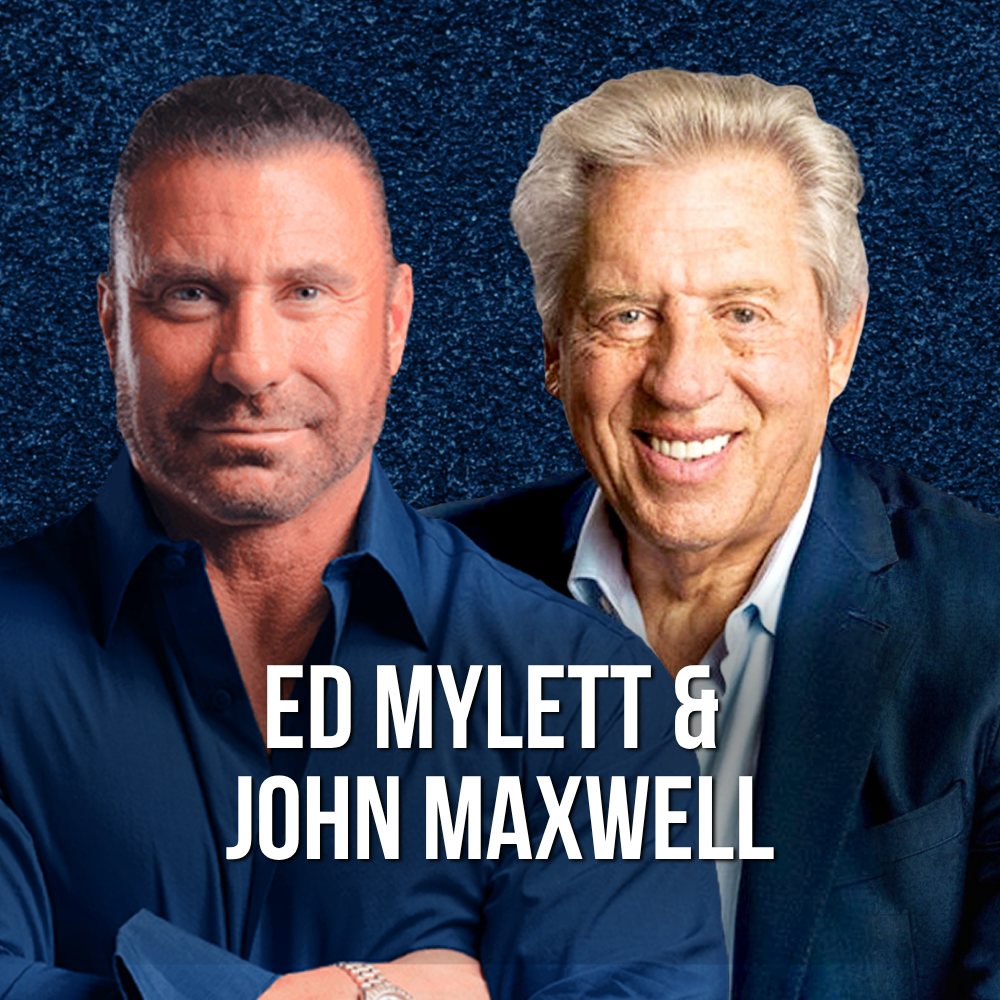
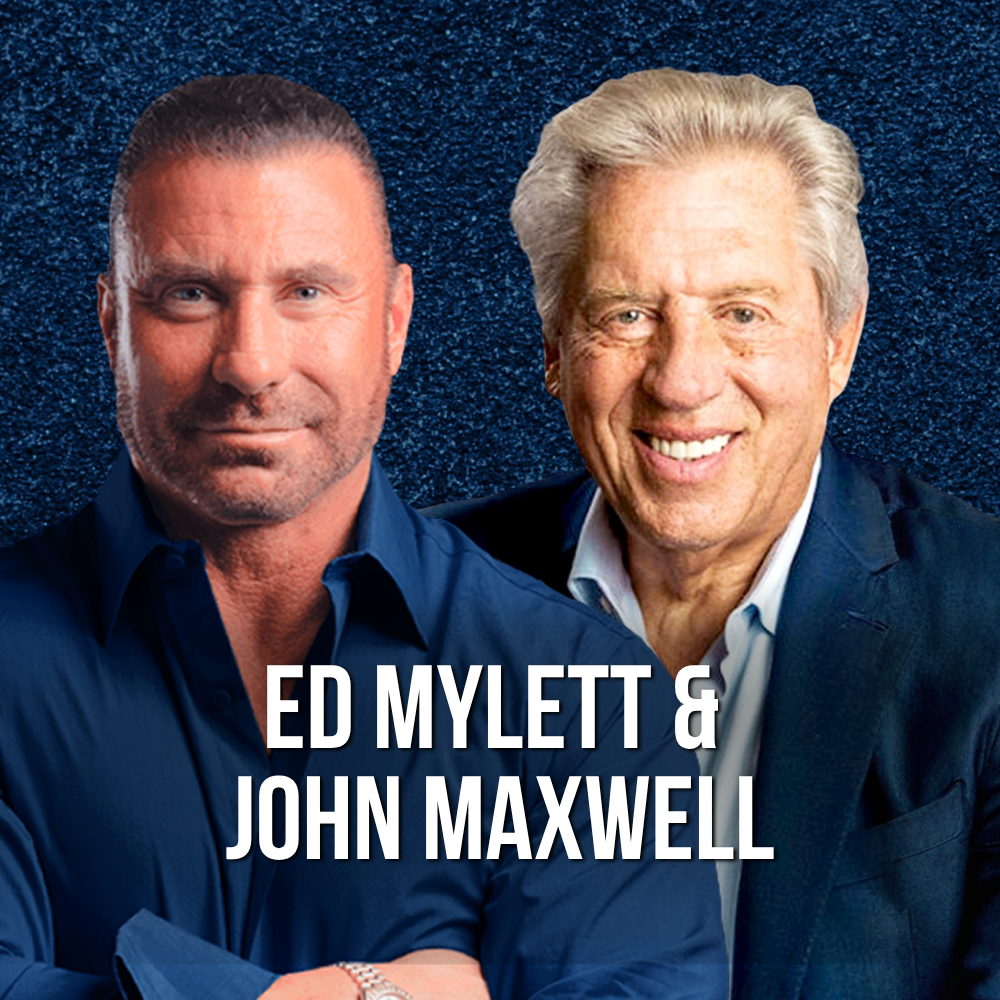
No guests are interviewed; the episode features host Ed Milet and John Maxwell’s teachings.
0:00You know, here's a stat that genuinely shocked me. Sales teams spend 50 % of their time on admin work rather than selling, building relationships, closing deals. That's where today's sponsor, Pipe Drive, comes in. An intelligent, AI-powered sales CRM loved by so many different growing sales teams, including two that I'm involved with. Some of the new features they have, which my producer is already using on this show, include pre-meeting briefs and AI note-taker during your meetings, which we use here on the podcast. It records and takes notes so you don't have to. You stay in the conversation.
0:35PipeDrive drives and takes care of the rest. So switch to a CRM built by salespeople for salespeople and join over the 100 ,000 other companies already using PipeDrive. My link gets you an exclusive 30 days free instead of the usual 14 days free. No credit card or payment needed. Just head to pipedrive.com slash Ed Milet to get started. That's Pipedrive.com slash Ed Milet to get started.
1:04This is the Ed Milet Show. 21 Irrefutable Laws of Leadership Series. Law 21. The law of legacy. One day somebody else will sit right in your chair. Somebody else will run the company. Somebody else is going to lead the team or your family. Your kids will grow up. Your career someday will end. Eventually, your name will no longer be attached to the thing you spent so much of your life building. So here's the final leadership question. What remains when you're no longer in the room? That's not a question about success. That's a question about legacy. And here's the final law, the law of legacy. Welcome back to the final law in this special series on John Maxwell's 21 Irrefutable Laws of Leadership.
1:54We've talked about influence, trust, connection, empowerment, priorities, sacrifice, momentum, developing leaders. But all of those laws lead us right to where we are now, the law of legacy. When I think of that, I think of John, the legacy that he's left and is still leaving to this day. John teaches me and you that a leader's lasting value is measured by succession. And I think this is one of the most beautiful ideas in leadership because it changes the scoreboard. Most of our lives, we're taught to measure and accumulate money, titles, followers, businesses, homes, recognition. But eventually, life confronts you with a bigger question.
2:38Who became better because you were here? That question hits differently, doesn't it? Legacy is not the same thing as fame. There are famous people who leave very little legacy. And there are people whose names you will never know who changed generations. A mother, a father, a coach, a teacher, a mentor, a business owner who believed in one employee, a person who showed somebody what integrity really looked like under pressure. Legacy happens when something good in you continues through someone else. And one of the biggest mistakes people make is thinking legacy is something old people think about.
3:17you're building a legacy right now. Every repeated behavior is part of it. Every standard, every conversation, every time your children watch you keep your word, every time you show up and work when it's uncomfortable and you don't feel like it, every time your team watches you own a mistake you make, every time you choose integrity when taking the shortcut would have been easier, every time you believe in somebody, you're leaving fingerprints literally on their life. The question is, what kind of fingerprints are you leaving? Throughout this series, we've talked repeatedly about identity. And I believe legacy may be the ultimate identity question.
3:52Not what did I get, but what did I give? Not how impressive did I become, but who did I help become more? You've heard me talk in The Power of One More in my book about the ripple effect of one more action, one more conversation, one more phone call, one more active belief, one more person. Legacy is what happens when those ripples keep moving after you can no longer see them. You may see something to your child today or say something to them, see something in them that they can teach their child 30 years from now. You may mentor an employee who someday runs a company and treats thousands of people differently because of how you treated them.
4:31You may encourage one person, somebody on the day where they were about to quit and they go on to change lives that you may never meet. That's legacy. And the interesting thing about legacy is that you may never see the full result of it. In fact, that's the coolest part. This requires a different kind of faith. You plant trees under whose shade you may never sit. Great leaders become comfortable with that. They stop needing every result to come back to them. They stop needing their name on everything. They realize the highest level of influence may be creating something that eventually does not require their presence or their recognition.
5:08And if that sounds familiar, it should, because all of these laws actually connect. The law of empowerment says develop people. The law of explosive growth says develop leaders. The law of legacy asks whether those people can continue their mission after you. That is succession. A lot of leaders secretly build organizations that cannot survive them. Every decision comes through them. Every relationship belongs to them. Every piece of wisdom lives in their head. Every major client depends on them. They call themselves indispensable. That's the reverse of a leader. But if the organization collapses when you leave, part of the leadership job was left unfinished.
5:45And that applies to families too. If your children only make good decisions when you're physically there forcing the decision, you have control, but not necessarily leadership. The goal is to transfer values, judgment, standards, faith, wisdom, so they can carry those things when you're not in the room. That's legacy. And I want to make this deeply personal for everybody watching. You do not need to wait until you have millions of dollars. You don't have to have a huge company. You don't need a platform. You're already leading somebody. Somebody's watching how you live. Somebody listens differently when you speak.
6:22Somebody understands. Their whole understanding of what's possible has been influenced by being around you. That means you already have a legacy in motion. The question isn't whether you have legacy. The question is whether you're building it intentionally. One day your trophies are going to collect dust. Somebody else will own your house. They're going to live there. Your job will belong to someone else. But what you put into people has the potential to keep moving. That's why I believe leadership ultimately becomes a stewardship. For a season, you get access to people, and they're a blessing.
6:56That blessing comes with influence, resources, opportunity, and knowledge. And you decide what to do with it. Do you keep it or do you multiply it? Do I use people to build my name or do I use my influence to build people? That's the legacy question. So before John teaches this final law, I want you to picture something. Imagine your leadership position ended tomorrow. No warning. You're simply no longer there. What keeps working now that you're not there? Who keeps working? Who steps up? What values remain? What standards remain? What wisdom has been transferred? What do people say they learn from watching your life?
7:39Things are caught, not taught. That answer is your current legacy, not someday, right now, today. If you don't like the answer, that's not a condemnation. That's an opportunity because you're still here. You can begin building it differently right now. Let's hear John Maxwell teach the final principle on 21 irrefutable laws of leadership. the law of legacy. So I was on Whatnot last night. You know what I found? My book, The Power of One More. Whatnot is where sellers shine and find their people. Repeat customers that come back to your face instead of just a logo. Whatnot is the largest dedicated live shopping platform, whether it's beauty, collectibles, electronics, luxury fashion.
8:22Sellers are building real thriving businesses on Whatnot. Anyone can sell, whether your business is big or small or even if it doesn't even exist yet. People selling on Whatnot, listen to this, they sell 10 times more than on other major marketplaces. That's because you're not just listing products, you're building real connections with buyers. Consistency pays off. This isn't a side hustle type thing. It's a real path to building something that lasts. Whatnot buyers spend more than an hour a day in the app. So they're not just browsing, they're engaged, they're buying, and they're coming back.
8:50So you go live, show off products in real time, and turn what you love into real income. So search Whatnot, W-H-A-T-N-O-T in the App Store. Download and you can start selling right away. If you're a small business, the right hire can make or break your company. I talk about this all the time on the podcast. Hoping the right people see your job post is not the best growth strategy. Indeed sponsored jobs get you quality candidates when you need them the most. In the minute I've been talking to you, companies like yours made 27 hires on Indeed. Well, we're sitting here talking. According to Indeed data worldwide, that's the stat.
9:26Spending less time searching and more time actually interviewing candidates who check all your boxes. Less stress, less time. Bottom line, more results. When you need the right person to cut through the chaos, this is a job for Indeed-sponsored jobs. And listeners of our show, they get a$75 sponsored job credit to help get your job the premium status it deserves at Indeed.com slash podcast. So just go to Indeed.com slash podcast right now and support our show by saying you heard about Indeed on the Ed Milet Show. Indeed.com slash podcast. Terms and conditions apply. Need to hire? This is a job for Indeed sponsored jobs.
10:03The 21st law of leadership and the final law. Somebody asked me one time, said, John, why did you write the 21 irrefutable laws of leadership? I said, because there are 21 irrefutable laws of leadership. If there had been 22, I would have written the 22 two irrefutable laws of leadership. There's 21. And the last one is the law of legacy. And the law of legacy says a leader's lasting value is measured by succession. In fact, Max Dupree, who wrote a great book called Leadership is an Art, said succession is one of the key responsibilities of leadership. I'm often reminded when I think of the law of legacy of the relay race.
10:51I had a coach one time of a very successful track team tell me that when you're doing the relay race and you have four runners, he said, John, the race is always won or lost. When the competition is keen and good, the race is always won or lost in the exchange zone. Those few yards where one runner is reaching out to a runner that is running before him, trying to pass on the baton, he said, that's where the race is won or lost. He said, the best coaches spend most time teaching the runners how to hand off the baton. In fact, he said, let me put it this way. Every other part of the race is individual.
11:34Every other part of the race is dependent upon a person's skill and speed and ability and giftedness. He said, there's no question about it. But when it comes to the exchange zone, that's when no longer are you running for yourself. You're running for somebody else. and your ability to put them in the best position. He said a good exchange in the exchange zone can give a runner even up to, he said, sometimes up to a second, which can be the deciding difference in a competitive match. He said, John, teaching the runners how to go from one to the other, how to hand off that baton, he said, is absolutely essential.
12:13The law of legacy, the law of succession says that you and I need to know how to hand off the baton well to other leaders so that our work, our business, our company, our organization can live way beyond ourselves. In your notes, I write four things. Achievement comes when someone is able to do great things for himself or for herself. That's achievement. Success comes when he or she empowers followers to do great things with them. Significant comes when he develops leaders to do great things for him. But legacy comes when he raises his organization to do great things without him. What we're talking about now is leaving a legacy.
13:20I'm in my middle 50s and I can tell you this is more important to me than anything else now. I'm running a decent race. I'm certainly doing my best, giving it my best shot, trying to help other people. I want to continue doing that. Have no desire to ever slow down or quit. I don't even think retirement is a word that I know. But here's what I do know. I'm much more concerned about passing the baton off than I ever had before. I'm spending a lot of time with young leaders. In fact, I love to be around young leaders. I have a Catalyst conference every year in Atlanta that is for leaders under 40.
13:56There'll be between 3 ,000 and 4 ,000 young leaders here this year. And it's a great time of excitement as I share leadership principles out of my life. And I want to talk to them about if they could spend one evening with me, here are the things that I would share with a young leader. Just words of wisdom and advice. Because I really want to pass the baton off well to someone else. In fact, I think there's really only one appropriate way to close, not only this law, the law of legacy, I think there's only one way to close the 21 irrefutable laws of leadership. So let me just take a moment and set the music stand aside and all the lecture notes.
14:44Let me just for, I don't know, two minutes, three minutes max, let me talk to you about my leadership journey and where I am now and what I think and what I feel. The first thing I would say to you about my journey is this. I want to make a difference. Now, that's nothing new. I've wanted to make a difference for a long time. In fact, as kind of a young person starting off in life wanting to be successful, back in the 20s, I can honestly say that I would say to you, I want to make a difference. So I worked hard and did everything that I could to make a difference. And to be honest with you, I was making a difference.
15:30And that was very good. But then I went into my 30s and one day I realized that although I was making a difference, I wasn't hitting full stride at all. I wasn't reaching my potential. I wasn't really doing what I knew that perhaps I could do. And I knew that I wasn't idling, but I wasn't hitting full stride. So in my 30s, I went from I want to make a difference to a whole new level. I went to this level. I want to make a difference with people. That's when I began to understand that if I was really going to accomplish a lot, I was going to have to be able to lead people. That's when I began to have a passion for leadership because all of a sudden I realized if I want to make a difference, I've got to make a difference with people.
16:21And the only way that you can make a difference with people is learning how to lead. That began me on my journey of being passionate about learning leadership. Read all the books I could read and still read all the books on leadership. If it's a leadership book, I've bought it, I can guarantee you. If it's got the word leadership on it, I'm reading, I'm learning, I'm still consuming. Because I realized I want to make a difference, but I want to make a difference with people. So I began to, in my 30s, include people in my life. people that I thought could take the journey with me. As I closed my 30s, I thought, you know, I still haven't hit my peak yet.
17:05And I want to make a difference, and the 20s was good, and I want to make a difference with people in the 30s was good. But what I learned in the 30s was that a lot of the people I had join my team, they weren't helping me. So in my 40s, I went to a whole new level. See, in my 40s, I went from I want to make a difference in my 20s to I want to make a difference with people in my 30s to by the time I got 40, I was saying I want to make a difference with people, hang on now, who want to make a difference. Oh, all of a sudden, I understood the law of the inner circle and those closest to me will determine the level of my success.
17:52And all of a sudden I said, I'm not out to recruit people. My goal isn't people on my team. My goal is the right people on my team. And there I began to be passionate about selecting the right people and choosing and hiring well and understanding what I needed and who I wanted and having a picture and a profile of a potential leader and bringing people on whose abilities were matched with their passion. And I found that when I started wanting to make a difference with people who wanted to make a difference, everything started compounding in my life. So as I entered my 40s, I thought, hey, hey, I'm doing pretty good.
18:43And then I realized as I turned 50, I'm still not there. There's a higher level. There's a higher level than I want to make a difference in my 20s to I want to make a difference with people in my 30s to I want to make a difference with people who want to make a difference in my 40s.
19:08You see, when I turned 50, I stepped it up again. You see, now I want to make a difference with people who want to make a difference doing something that makes a difference.
19:26All of a sudden, I began to ask myself the question, what am I living for? What am I doing this for? What's the return? And you see, that's when you begin to stake your life on things that have greater potential than yourself. That's where I decided that I wanted to add value to people because people are the only appreciable asset in any organization. That's where I began to make decisions and I began to do things that I think perhaps can last beyond me. and the reason that I'm teaching the 21 irrefutable laws of leadership to you is because I truly believe, I truly believe if you'll be a student of these laws, if you'll do more than write in blanks in a notebook, but you'll become a student and every day you'll learn to lead better and you'll talk to leaders and listen to leaders and you'll do leadership stuff.
20:25Here's what I believe in you and here's what I think about you and here's what I think about our time we've spent together. Oh, the 21 laws of leadership, that's not the end. That's the beginning. And I only want you to learn these laws if you're committed to adding value to people. I only want you to apply these laws if you're committed to handing off the baton to the next generation and letting them go above you. Here's what I know in closing. my time with you is extremely profitable because you're going to take these laws. And you're going to learn them and you're going to apply them and you're going to be better at them than I am.
21:12And although I may never meet you all personally, it's going to have a huge return. Because as you pour your life into others, as I've tried to pour my life into you, here's what I know. We'll add value to other people. And when we add value to other people, we add value to lives and organizations and communities and families. That's a good bottom line. That's worth me teaching leadership to you. If you haven't done it yet, click the link below. You need the 21-page workbook in your hands to complete the rep for all 21 laws and keep those principles with you beyond the series. We built this completely for free for you as our gift.
22:00There's no upsell. There's no funnel. It's just to help you. Make sure you're subscribed to both John and I for what comes next. Get the guide, finish strong, and let's get back to the teaching. 21 laws, but they all point to one idea. Leadership was never supposed to stop with you, the trust you build, the people you connect with, the leaders you empower, the standards you model, the sacrifices you make, the people you develop. Eventually, all of it becomes what you leave behind. So don't wait until the end of your life to think about legacy. Build it today. Think of Grow Rich. Napoleon Hill talks about beginning with the end in mind.
22:41Do that. Build it in your business. Build it with your family. Build it in your company. Build it in the people around you. Teach more what you know. Model what you believe. Give other people opportunity. Prepare somebody to carry what matters after you, because eventually all of us leave the room. And the greatest evidence that you'll lead well is that people, really good people, keep growing after you're gone. That's the law of legacy. So here's the rep, the final rep. I want you to do something deeper than a normal weekly exercise. So write this question in your workbook. What do I want to remain because I was here?
23:18then create four categories number one people write down the names of the people you most want to impact your children your spouse your team employees a mentee someone you coach then write what you want to leave inside them confidence integrity courage faith discipline leadership number two principles write down the values you hope people associate with your life Not your accomplishments, your values. If people who knew you best could only carry five things from your example, what would you want them to be? Number three, succession. Ask this, who am I currently preparing? If you run a team or an organization or a family, who could carry the mission?
24:03What do you still need to learn? What responsibility do you need to begin transferring right now? If this is your family, what life lessons have you assumed your children know, but you don't know for sure that they do? You don't know certainly. Start teaching them intentionally. Number four, proof. Finally, ask, does my calendar prove this legacy actually matters to me? If my family is part of my legacy, but they're only getting your leftovers, then you've got to change something. If developing leaders matters, but you never mentor anybody, schedule it. If generosity matters to you, but you never practice it, start.
24:40If integrity matters, identify where your life needs alignment. Then choose one legacy action you'll complete this week. Simple. One conversation. One letter. Maybe one mentoring session. One responsibility transferred. One story told to your children. The power of one more person encouraged. One principle documented. Because legacy is not built at the end of your life. it's built one decision at a time and your next one can start today this is the Ed Myland Show
25:18it's officially the holiday season and Abercrombie's new collection has outfits for everything on your calendar it's the busiest time of year and between shopping and party invites I don't have time to plan every look but Abercrombie's always got me covered their sweaters are the Perfect easy layer for low-key plans. And on a nice night out, I'm reaching for their classic trousers. Fill your closet with the pieces you'll need all season long. Have a very Abercrombie holiday. Shop in the app, online, and in stores.
📥 Download the free Leadership Workbook and submit your question for our Q&A with John and me HERE:
What remains when you’re no longer in the room?
In this final episode of our series on John Maxwell’s The 21 Irrefutable Laws of Leadership, we bring everything together with Law #21: The Law of Legacy.
“A leader’s lasting value is measured by succession.” — John C. Maxwell
Your titles will change. Someone else will eventually sit in your chair. But the values you model, the leaders you develop, and the belief you pour into people can continue long after you’re gone.
In this episode, John and I explore why leadership was never supposed to stop with you—and how to build something that doesn’t depend on your presence to keep growing.
John shares the powerful relay-race illustration of passing the baton, explains the difference between achievement, success, significance, and legacy, and reflects on how his own leadership journey evolved from wanting to make a difference to investing in people and work that could outlast him.
Whether you’re leading a business, a team, a family, or one person who looks up to you, you already have a legacy in motion. The question is whether you’re building it intentionally.
IN THIS EPISODE:
• Why legacy is about people—not fame, money, or recognition
• How everyday choices shape the influence you leave behind
• Why being indispensable isn’t the ultimate leadership goal
• How to prepare others to carry the mission forward
• What it means to pass the baton well to the next generation
• A practical exercise to turn your legacy into intentional action
YOUR FINAL REP
Write this question in your workbook:
“What do I want to remain because I was here?”
Then reflect on four areas:
1. PEOPLE — Who do you most want to impact, and what do you want to leave inside them?
2. PRINCIPLES — What values do you want people to carry forward from your example?
3. SUCCESSION — Who are you preparing, and what responsibility or wisdom do you need to begin transferring?
4. PROOF — Does your calendar show that this legacy actually matters to you?
Choose one legacy action to complete this week: one conversation, one mentoring session, one responsibility transferred, one letter, or one lesson intentionally shared with your children.
COMMENT BELOW
What’s one thing you want to remain because you were here—and what will you do this week to build it?
If this series has added value to your life, share this episode with someone who’s investing in the next generation. Subscribe to both my channel and John Maxwell’s channel for what comes next.
The series ends here. Your leadership journey doesn’t.
Learn more about your ad choices. Visit megaphone.fm/adchoices
Scan the code with your iPhone camera
Listen in the app.