

 Ask ChatGPT

- Podcasts
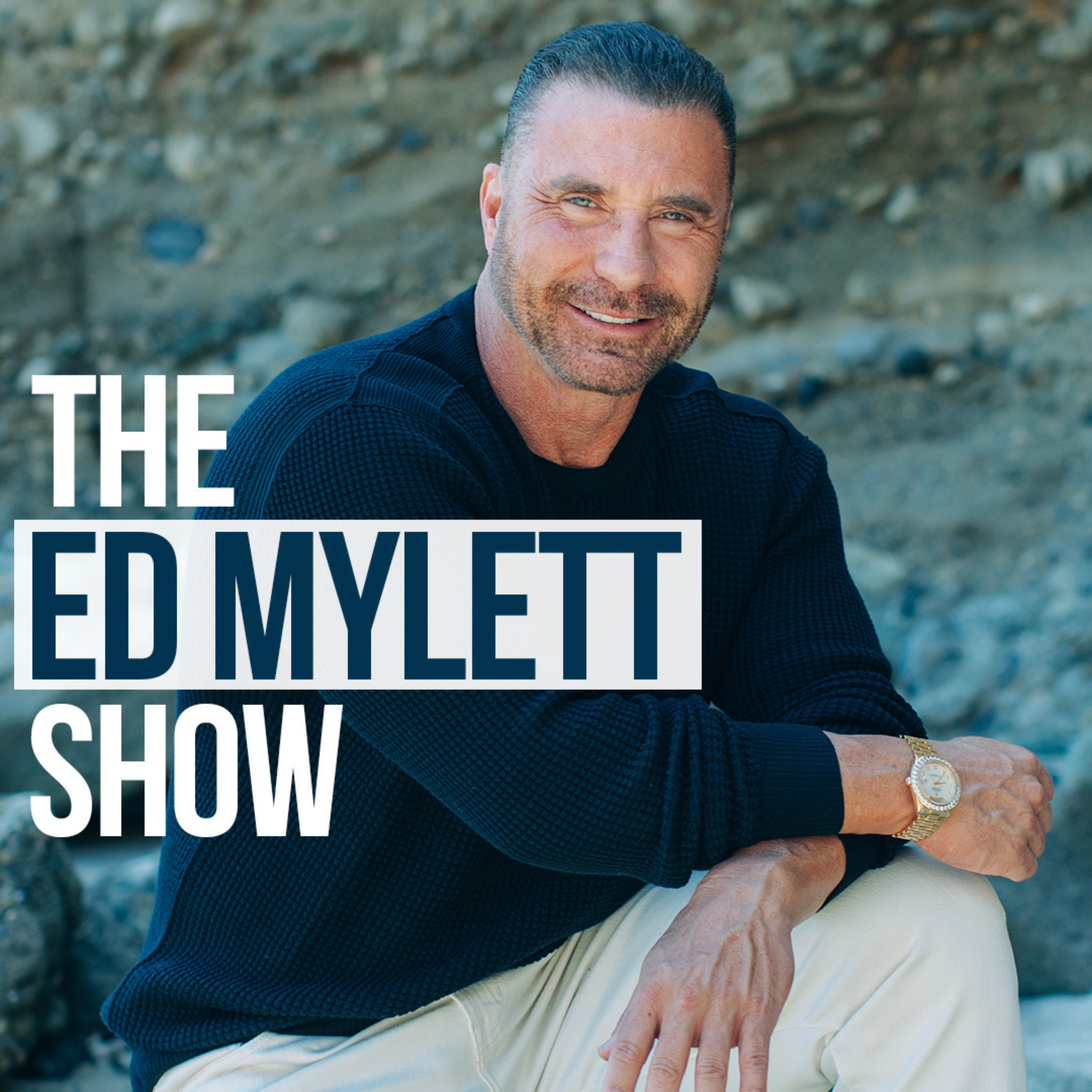
- THE ED MYLETT SHOW
- Train Your Brain to Get the Results You Want
In short
In this episode, Ed Mylett discusses the power of visualization and how it can be a transformative tool for achieving personal goals. He shares his own experiences and methods for using visualization effectively to align one’s actions with their aspirations.
Written by AI. May contain mistakes.

Ask about this episode
Get the gist, explore an idea or ask about something said.
 Claude
On THE ED MYLETT SHOW, what are the key points of this episode?
Searching your listeningTranscript
Automatic transcript. May contain errors.
0:28So, hey, guys, are you frustrated with where you're at right now?
0:33this is the admired show welcome back to the show everybody i'm excited to spend some time with you today covering something that you all ask about often which is the topic of visualization and i think it's a topic that most people don't understand nor do they take advantage of one of the key strategies in my entire life of producing the results that i've been blessed to produce has a lot to do. One of the key strategies is visualization, mental rehearsal, and understanding how to do it, understanding the power of it, and the reasons why you should be doing more mental rehearsal, more visualization.
1:07I'm blessed that I've had an opportunity to coach a lot of top CEOs, entrepreneurs, entertainers, and yes, a lot of athletes. Whether that be in the UFC, in the MMA, or a golfer, baseball player, I get asked often, what do you work on with a lot of these athletes. And although we work on a variety of different things, one of them is visualization because it's really an accepted practice in sports that you visualize things. But most people, you can ask yourself this to begin, how much visualization do you do in a directed, intentional way? In other words, you're visualizing things, your problems, your worries, your fears, you're visualizing an appointment, let's just say.
1:43But how often are you doing that proactively? Are you using it as a strategy for peak performance, a strategy for bliss, a strategy to be more productive and serve more people. Mental rehearsal and visualization is one of the greatest gifts you could give yourself. And it's a great hack to producing the results that you want. Because the truth of the matter is you are more than likely producing right now what you've already been visualizing. And so taking control of that and harnessing control of it is a really, really big deal. And why? Because we all have fears. We all have insecurities. These fears and insecurities will find a way to express themselves one way or the other.
2:21And so if we can't take control of our fears and our insecurities and we don't build up mental rehearsal and visualization of the things we want, the things that give us confidence, one or the other are going to end up expressing themselves. That's why it's so important that you really learn to take control of your mental rehearsal and visualization. And why is that the case? Here's the deal. You move towards what you're most familiar with in your life, okay? So there's a degree of familiarity in our lives that we move towards what's comfortable, what's safe, what's most familiar to us because it requires the least amount of thinking.
2:56Your brain really wants to operate and conserve energy as much as it can. So the more things it can do habitually without having to think, the easier it is on your brain. And so it's constantly trying to get you to move towards what's familiar. And so if what's most familiar to you is your fears, your worries, your anxieties, your insecurities, you will move towards them. If you wonder whether that's accurate or not, we try to avoid things that are unfamiliar to us. People have asked me, oh my gosh, I saw that golfer. He had a putt to win the golf tournament from five feet and he missed it. And he missed it for two reasons.
3:29Either he was very familiar with the mental rehearsal and the visualization he or she was of missing and they programmed that fear in so they moved towards what was familiar and which was missing the putt. Or they didn't do any mental rehearsal whatsoever. And when they got into that pressure situation, their brain was not familiar with that environment, with that situation. And so it wasn't able to function at its optimal level. And so the reason that we want to make sure that we're doing mental rehearsal and visualization regularly in our life is so that when we get there, we're familiar and we're likely to move towards that result we've already visualized.
4:04If we don't, if we only take visualization about our fears and worries, which is what most people do, you will move towards those because you're familiar with them as well. Or the absence of any preparation, when you walk into a meeting to give a presentation, you've not mentally rehearsed the result. You've not visualized the result. If you've not done that, you've left it up to your own devices. And more than likely, because you're unfamiliar, your brain cannot perform at its optimal level. So that's why mental rehearsal preparation, because your body doesn't know, your subconscious mind does not know the difference between what's real and what's imagined.
4:38And so the more you rehearse it, The more your brain believes, your mind believes that you've already done it, you've already accomplished it. So when you enter the environment, you enter the situation, you will gravitate and move towards what's most familiar.
4:53Think about it this way. How much thinking do you do when you walk into a room full of strangers? Right? You walk in, you don't know anybody in there. You're pulling up to an event and you don't know a soul. You're going to walk into a room with 50 or 100 people. You're doing some thinking, aren't you? You're thinking about, well, would I introduce myself? Is my hair the right way? Did I do my makeup correctly? What's a story that I could tell tonight that's funny? What if they ask me this? Your anxiety and nervousness level goes up no matter who you are, right? Because of the unknown, the unfamiliar.
5:22And so what happens is you just start thinking and going into pattern mode. You're going into mapping mode because where you're going is unfamiliar. Now, compare how much thinking you do when you walk into a room like that compared to just walking through your front door to your house where everybody's familiar. Do you really even have to think about it? When you walk from your kitchen to the living room where your family is, do you do any thinking whatsoever? Does your heart rate go up at all? Is there anything in your body that's changing from a neuro biochemistry standpoint? No, you're almost doing zero thinking because you're familiar with it.
5:57And so in life, if you can begin to become that familiar like you are with your own family and friends, with your dreams, your goals and your ambitions, or maybe it's as simple as just a specific result in one occasion. The more you've done that, the more you're not going to have to think nearly as much in process information. This is really called mapping. And so life is really better when you don't focus on what's going on around you, but you focus on what's going on inside of you. Okay, so think about that for a second. Life is always better when you don't focus on what's going on around you, but you focus on what's going on inside of you.
6:31So there's this great story that my producer was sharing with me. He's a big soccer fan about Wayne Rooney, who's one of the most legendary players of all time. And he said he would take his visualization to a level that blew most people's minds. And he would literally get with the equipment manager before a game and ask him, what uniform are we going to be wearing? And so he would get the actual uniform and know what it looked like. He would also want to know what music they're going to be playing when they came out, when they're getting ready to play. He would want to know the exact song and they would also want to know the weather.
7:00So he would then get back and the night before the games would visualize that uniform would visualize that music playing would visualize that weather So that when he got there, it was all familiar to him You know a lot of athletes and people ask me should I only visualize me getting the yes? Because i'm mapping making the putt making the putt making the putt or hitting the shot or having the knockout or closing the sale or You know getting whatever it is that you want Should I only visualize the positive things? That's a really interesting thing because the way your brain works, it actually probably serves you most to be always visualizing the positive result.
7:35I do think that it's okay sometimes in life to also visualize something that isn't favorable. So in other words, because it's going to happen. So do I let my athletes about 10 % of the time will say, okay, let's just, let's, let's hit a bad shot. We've hit a bad shot. What happens in our body? Now we're walking to that shot. How do we deal with it? And so they now are able to deal with something that's inevitable. Or if it's one of our fighters and I go, listen, you just had the first, you know, it's bad round. He got to you. You took a couple shots. Looks like he lost round one. You're sitting on the stool.
8:10Bam. How do we shift that and visualize from there? Because if you don't visualize some of the unforeseen circumstances that take place and your response to it, in my opinion, when that happens and it's unfamiliar territory, you're lost. But if you say, no, I've been there before. I've missed this putt before. I've missed a shot before in sales it's okay to visualize them not always saying yes but objecting and giving you a reason for not doing it they may have a question or a concern right so I don't think it's a negative thing sometimes I don't want to do I don't want to pattern this where it's a pattern I've created but I think it's okay to in sales visualize getting a no or an objection or in a sport, having a failure happen, and then from there what you need to visualize.
8:58So that when the inevitable happens, because life happens, you're going to miss a sale. You're going to not hit every putt. Not every at-bat's going to be a base hit, right? Not every shot's going to be in the basket. And so it's okay to say, okay, I just missed a shot. What do I visualize from there? So we're not really visualizing the miss. We're visualizing it's happened, what feels in my body. I know what that is. Now what do I do? And so because you'll watch in sports, most of the great athletes, it's not that they don't miss. It's what they do after they miss. It's not in life whether you're going to miss or get rejected or have a difficult circumstance or situation.
9:32It's what do you do when it happens? And so I think it's okay that you spend a little bit of time in that zone and then your visualization is your way out of there. So we're not visualizing misses. What I'm suggesting is that you're visualizing, okay, I've just missed. Now visualize the way out. mentally refers the way out. I think you can spend a little bit of time on that, just like the great Wayne Rooney did. I'll tell you one more story, and I don't know whether this is accurate or not. I don't remember the man's name, and I'm sure I'm messing the story up, so forgive me. But I think the premise of the story and the point that it illustrates is valid.
10:11And so the story goes, I was told this many years ago, that there was evidently a soldier who had spent some time in a POW camp. and when he was there in order to keep himself sane, frankly, he would mentally rehearse and visualize himself playing an entire 18-hole golf course, round of golf. And again, this is just a story that I was told. I hope I'm giving it justice, and the point of the story is that it illustrates the power of visualization. And even if I'm off by the facts a little bit, indulge me a little bit here. but he would visualize playing each shot throughout the day, mentally rehearse and visualize it.
10:52And many years later, when he got out of the POW camp, he went home. I believe it was to Texas, somewhere in the Midwest, and his body was totally atrophied. He had no muscle mass left. He had lost considerable weight. He had been obviously hurt and injured and beaten when he was in the camp. And one of the first things he asked to do when he got on his feet was to go play golf. and the story goes that he went out and that first round of golf shot even par and afterwards they asked him how in the world did you do that you've lost 50 pounds you you've had all these injuries you've had this terrible mental battle you've had to go through and he goes it's easy I haven't missed a putt in four years because what he had done is mentally rehearsed when he was playing those rounds making that putt hitting that shot now whether or not that's an accurate story or not, I don't know.
11:38But what I can tell you is that it's illustrative that I've seen something like that in many athletes and many business people's lives where in spite of external circumstances, they've controlled the inside so well that when they, like I've said, they focus on the inside, that when these variables happen, which is life, a failure, a setback, an unforeseen situation, that they're comfortable because they haven't missed a putt in years when they visualize their way out of that. And so inside of you, you can visualize. So give yourself the gift on a more regular basis of mentally rehearsing the meeting you're going to go to.
12:11Do it three, four, five, six times and actually sit in that visualization. Ask yourself questions when you visualize, by the way. The way you get better at it is you do more of it. In the beginning when we're visualizing or mentally rehearsing, we're not very good at it because we haven't done it before. We get distracted easily or we don't even realize, we don't even take control of what we're seeing. But begin to ask yourself, when I visualize, do I see it in black or white or color? Make some distinctions about what you're seeing. Can I feel things? Do I smell things? Do I hear things? Can I take this picture that I'm seeing, this result I want to produce, this award I want to win, this situation I want to get out of a date that I'm going on, this potential sale that I've got, this baseball I want to hit, this putter?
12:56when you watch it, start to ask yourself and take a look at what you're seeing. Like, for example, where's the camera? That'd be interesting, huh? Do you see the camera where you're looking at it out there? So you see it from your own perspective? Or do you see it from the person situation who's watching you? Do you see it from above? Just taking a minute when you go, wow, I'd never thought about that before. Well, think about it. It'll help you take better control. You know, when I work with athletes, when they're baseball hitters, I'll often ask them, I'll say, close your eyes and visualize, hit a line drive up the middle.
13:27And they'll go, great, I did it. And they'll open their eyes. I go, okay, good. Where was the camera? And they're like, huh? I said, where was the camera? I don't know. I said, well, let's close your eyes and do it again. I said, the camera could be a lot of different places. The camera could be you in the batter's box and you're seeing out at the pitcher in the field. It could be like you watch baseball on TV because you're familiar with it. And it's behind the center field fence looking over the pitcher into the catcher. It could even be the view you get on deck. But the first thing is to at least see what you see.
13:55Now you have a chance to play the video. And so I'll ask them, can you see what you see? Yes, okay. And they say, well, no, but it's for me in the batter's box. Awesome. So then we know. And we go much more detail than this. But it's beginning to just see what you see. Hear what you hear or don't hear. Smell what you smell or don't smell, right? For the most part, most people can very quickly go, I see things in black and white or I see them in color. And then just start to take control of what it looks like. And then the only other thing to ask yourself if you want to really reinforce a visualization is you could speed it up a little bit or you could slow it down.
14:28You could zoom in if you wanted to. And the more you just kind of play with your ability to visualize, the more it becomes a muscle. Zoom in, zoom out, change the color, add some music to it, right? Speed it up, slow it down, and then just repeatedly see something over and over again. It'll serve you. And so it's something that I teach the athletes that I do. It's not very complicated. It's just basically starting to take control of your mind's eye, of what you think about. You don't have to be very specific with it. It could just be the same thing you see every time. But the more you prepare, you will begin to move towards what you're most familiar with.
14:59And what's great about that is anxiety level goes down. And your brain, your subconscious mind at least, doesn't know the difference between what you're imagining and what's actually happening. And so you actually can get a hit every time you're up to the plate. You can make a putt every single time you stand over it. You can get a yes. And the more specific, when you start with a visualization, oftentimes in the beginning, they'll be very general. But the more you get good at it, maybe it gets more specific where you can even see when you've helped somebody out in your business, them thanking you and the smile on their face.
15:31Maybe you can begin to feel what it feels like with their gratitude. I'll have athletes often. I'll say, did you make the putt? How did it feel? Fist pump that thing. Lock it in. So the more you do it, the more it grows as something you build as a habit. But it doesn't need to be any more complicated than that. But I'm telling you, life is a whole lot better when you focus on what's going on inside of you as opposed to what's going on around you. And the more we just get internal, we begin to take some measure of control over the mental images we're feeding ourselves, the more we can produce a result that's in congruence with our goals.
16:06So I hope today helped you. I want to challenge you just to begin to do a little bit more visualization, just the concept of it, a little bit more mental rehearsal. and begin to train yourself to produce the results that you want in your life as you move towards the thing you're most familiar with, which is what you want instead of what you don't want. All right, everybody. God bless you. Max out. This is The Ed Myron Show.
From the publisher
I vividly remember days when SUCCESS seemed like a distant DREAM…
But it was through the ART OF VISUALIZATION, I painted a clear picture of where I wanted to be, aligning my actions with that vision. Whether it was visualizing speaking in front of thousands or closing significant business deals, THIS METHOD helped me solidify my intentions and turn them into tangible actions.
Every major achievement in my life first took shape in the workshop of my mind, setting the stage for the reality I live today.
Visualization isn't just about dreaming big — it's about creating a vivid mental blueprint of your success before it even happens.
It’s the #1 tool I've utilized to not only envision but also to achieve my goals. Whether it's sports, business, or personal development, understanding how to effectively visualize is a game-changer and in this episode, I’m breaking down how to MASTER THE ART OF VISUALIZATION.
Here’s what I’m unpacking:
Learn how to harness your mind's power through directed, intentional visualization techniques
I’ll show you how to apply visualization not only in achieving positive outcomes but also in managing and responding to life's inevitable challenges
Discover how top athletes and successful business leaders use visualization to enhance performance and make critical decisions under pressure
I’m walking you through specific, practical exercises designed to strengthen your visualization skills
Learn to enrich your visualizations with sensory details and emotions to make them more powerful and effective
Visualization is a lifestyle approach that can elevate your performance, enhance your mental strength, and lead you to live a life aligned with your deepest desires and ambitions. Tune in to reshape the way you see your world and how you operate within it.
More from THE ED MYLETT SHOW
All episodes

We use cookies.They keep VO running smoothly and help us improve it. Privacy policy