Ask ChatGPT


 The Founder`s Code
30 Oct 2026 · 1h 6m · 26 chapters

How to adopt AI in organizations without hype-driven “check-the-box” deployments, emphasizing change management, observability, and data readiness. Sean Adams argues teams can sabotage AI rollouts when they resist adoption, skip data architecture, or fail to measure efficacy.
Sean Adams, Head of Innovation at TruBridge (health tech company over 60 years old). Background includes work across Oracle, insurance, and healthcare technology; building dashboards, data pipelines, AI/rule solutions, and empirical models. His team sits at the intersection of data engineering and product, turning raw data into tools.
AI should augment workflows, not replace them outright; jobs change, but people who know AI will gain advantage. Many companies market AI to support valuations rather than solving customer problems. Success requires “observability” (usage + satisfaction signals) and evaluation criteria. Data quality and deterministic needs (“garbage in, garbage out”) are often overlooked.
Train energy-management software that advised fuel-efficient driving; crews resisted thinking it would replace them, but data showed overall performance improved as most adopted. AI “laggards” refusing to use systems stayed behind as the performance bell curve shifted.
Written by AI. May contain mistakes.
Exploration of the challenges and resistance faced by companies in adopting AI technologies.
“It's not going to be the 99th percentile.”
Discussion on the current state of AI technology and the importance of identifying genuine applications versus hype.
“So it's a really exciting time to be involved with this.”
Emphasis on the necessity for organizations to define the problems they are solving with AI and the importance of observability.
“Let's just make it AI compatible, for example, or moves like Salesforce doing the Headless 360.”
Addressing the critical role of data quality and architecture in successful AI and analytics implementations.
“Like, how are you approaching getting the data up to a standard to make sure that it's like ready for production use?”
Learn why a solid data architecture is crucial for effective AI solutions.
“We've been saying this concept for ever since I've been a professional.”
Discover how companies can manage and consolidate their diverse data sources.
“And only when that's done will the artifacts, the data products that are spun off of that really be valuable.”
Understand how organizations can leverage data for strategic advantage.
“And that's really, I guess that's part of the decision.”
Learn how to evaluate if your organization is ready for AI and how to measure success.
“Maybe we're dealing with public data all the time.”
Explore misconceptions around AI and jobs, focusing on roles and responsibilities.
“And that's where we see, you know, focus on the use case is what am I producing this LLM for?”
Discuss how to view AI as a tool for enhancement rather than a replacement.
“So that's on the doer side, the people side.”
Learn how AI can enhance job performance and the necessity to adapt.
“I think you said it right there, Shamil.”
Explore the psychological and social factors impacting AI adoption in workplaces.
“And you could do this exercise with any performance metric across anything.”
Discuss the characteristics of laggards in AI implementation and their effects on others.
“And now that performance gap becomes even more noticeable.”
Understand the inevitability of change in businesses due to technological advancements.
“The world needs people who want to push the button five times a day.”
Learn how to cope with the overwhelming pace of change in AI technology.
“So this is kind of like not the time for people to be like, oh, I don't want to do this.”
Discover how individuals can leverage AI tools for personal projects and efficiency.
“But we are also able to be productive at the same time.”
Learn how the speaker created a web app for family trip planning without coding experience.
“I created a web app that I shared with my family and it basically lists the day it's an itinerary planner.”
Discussion on how modern tools democratize access to skills and knowledge.
“Have you wanted to write a book or get into art?”
Exploring how AI tools are changing team roles and collaboration in projects.
“Like, this is back to the koi pond thing.”
Insights into how AI agents can interact and collaborate autonomously.
Understanding the trade-off between context management and cost in AI solutions.
“And what have you found is a good way to kind of manage the context?”
Strategies for individuals to innovate within organizational constraints.
“talking about those challenges, those risks.”
Learn how to utilize public APIs and synthetic data for AI applications in health tech.
“There's a lot of public databases that have public APIs that would give you the ability to plug a Claude or GPTN to that public API and start to go crazy on that data.”
Discover the importance of establishing personal competence in AI tools and governance.
“And we're going to start to get that incorporated into the organization.”
Explore the potential for AI to simplify daily tasks and enhance creative thinking.
“Just go out and take the bull by the horns and start to learn about this stuff.”
Understand how AI tools can democratize access to opportunities for many individuals.
“I am excited to see what it's going to do next.”

Get the gist, explore an idea or ask about something said.
 Claude
On The Founder`s Code, what are the key points of this episode?
Searching your listeningAutomatic transcript. May contain errors.
0:00We had our own screen on the train and there were numerous times I'd get on board that train and that screen would be smashed.
0:05Shamil Malachiyev: My guest today is the head of innovation at TrueBridge, a health tech company. So please welcome Sean Adams. So at TrueBridge, innovation right now focuses on what we call the three A's, which is AI, automation and analytics. honestly it feels a little bit like a bubble and it feels like the market is kind of shaming companies and don't scream from the rooftops about their ai capabilities and then here comes ai which is a huge change and now and now you get the shutdown disengagement and in some cases even sabotage really i mean let's put it out there everybody who hears that who is not an investor in a company is like well if it's gonna replace my job good luck trying to get me to help you adopt it or facilitate the implementation within the company train crews read between the lines and so here's a system on board my train that knows the way to train knows the length of the train and knows the territory that we're driving over and so it can it's advising how we drive this train in the most fuel efficient manner possible the next step is i'm not even i don't even need to be here ai will usually sit somewhere between like around the 75th percentile it's not going to be at the top.
1:14It's not going to be the 99th percentile. People will be at the 99th percentile. Your best absolute rock stars are probably always going to outperform technology. You can see in the data who was refusing to use the system because as everyone else moved to the right, they stayed there. Have a strategy, which isn't just see you later. Have an actual strategy for those laggards to try to make sure that they have opportunities to stay up with the bell curve as it moves to the right. It is coming to change your jobs. And if you're not going to change them with it, then there might not be a job for you.
1:43Pick a model. It doesn't matter. You're going to change your mind. So just pick a model now. Start to play with it. Maybe do that without worrying. But it's going to spend my entire bank account on like Labubus. Good morning, everyone.
1:56Shamil Malachiyev: And welcome to this week's episode of The AI Floor. My guest today is the head of innovation at TrueBridge, a health tech company that's been around for over 60 years now. He spent his career across Oracle, insurance, and healthcare technology, building everything from dashboards and data pipelines to AI applications, rack solutions, and empirical models. His team sits at the intersection of data engineering and product, turning raw data into the actual tools that people can use. So please welcome Sean Adams. Hi, Sean. Hi, Shamil. Nice to be here. Thank you for having me join the show. Thanks for coming to the show.
2:37Shamil Malachiyev: So can we start with you telling our listeners a little bit about you and the work you do currently at TrueBridge? Yeah, I'd love to. Hi. So, yeah, as you mentioned, my title is Head of Innovation at TrueBridge. And the term innovation gets thrown into titles commonly. But in my experience, innovation is very bespoke to different organizations and different organizations approach innovation differently. So at TrueBridge, innovation right now focuses on what we call the three A's, which is AI, automation, and analytics. And so ultimately, my team is responsible for identifying, designing, and developing solutions based off of kind of this emerging tech within those three pillars.
3:21And sometimes more interestingly, how those three pillars interact with each other to come up with ideas for solutions, both internally, externally, that can generate revenue, can increase efficiency, employee, customer satisfaction. Basically, they run a gambit of software product solutions. So it's a really exciting time to be involved with this. There's a lot of rapid change. And as a technologist, this is kind of a safe space for us right now.
3:50Shamil Malachiyev: So over the last three years, we've had just so much happening within the technology and AI world. How has your consideration of using the AAA method has been to all of the up and coming technologies and seeing where does it make sense to start trying things out? What's hype? What's not? Yeah, that's a good question. I wish I had the final answer for that. But I think the truthful answer is that we're still a work in progress. I think as an entire industry trying to figure out how this can be applied, how this ridiculously advanced technology that, like you said, is changing day by day. You know, the Will Smith eating spaghetti, that kind of has become the barometer test to see how quickly this technology is advancing.
4:35And the changes in the last year, year and a half have been remarkable. So it's a little bit of a gold rush right now where a lot of organizations are sensing that there's value here and they sense that they need to be involved and they want to have an opinion about it. But there's a lot of competing messaging around what is the value proposition behind this stuff and how easy is it to apply. And a lot of folks are getting a lot of pressure around apply AI. We need to have marketing. We need to have press releases around AI. and as a recovering product owner it's a little bit disheartening to see that in a sense we're kind of moving away from product 101 which is you know the first question you ask what's the problem that we're trying to solve and using ai as a tool and not the endpoint solution i think is really where we are now understanding how we can utilize ai to augment workflows and to make workflows better.
5:29Not necessarily, hey, we're going to adopt AI and save all this money because now we have a bunch of work that people don't have to do. And sometimes that works out. But in my experience, when you see companies that that's kind of like they're leading messaging, it's difficult. It's very difficult to do that because what people do is very complex and AI can handle complex tasks, but it needs to be pointed in the right direction. And so all that to say, I think that we're still trying to figure this out. And it's interesting, you know, the iPhone, I use this anecdote in 2008, 2009, whenever it was, the iPhone came out.
6:07It was kind of like the arrival of smartphone. So for the course time in human history, we had, you know, all of the power that we ever could ask for computationally in the palm of our hands. We could search for whatever we want. We could look for movie times. We could do encyclopedias, Wikipedia, do our research, all of that. and the most common app for the entire first year of the iPhone's existence was KoiPod. So we have the most advanced technological device ever created in humankind and for the entire first year of its existence, the most common usage was for people to look at like digital fish on their screen.
6:44It didn't really do anything, but it was kind of the novelty of it. I think that's where we are right now in AI. We're on the tail end of it, but we're still kind of in this novelty phase
6:52Shamil Malachiyev: where it's a little bit of shiny. shiny object syndrome. And I'm looking at all of the hype that's been burning out there in the industry. And the funny thing, you look at the company's financials, like most of the larger SaaS companies, and they're on average about 10 % up from the previous year. So financially, they're doing good. Revenues, their valuations, dropping like 40 to 70%, which is crazy. And when you ask, it's important to understand what problem are we solving? It seems like a lot of companies are just using AI to solve the problem of their evaluations declining. And they're like, we need to scream AI from every single balcony to make sure that everybody knows we're doing something with AI.
7:32Shamil Malachiyev: Whereas in reality, this has very little to do with what their customers want. Do they actually have a problem using our software? It doesn't matter. Let's just make it AI compatible, for example, or moves like Salesforce doing the Headless 360. Are we really there yet to like abandon all of like UI and dashboards. What is your take on all of this? That's interesting, you know, because you're right. I think ultimately we may get to a point where a lot of software, you all, I mean, and it's just a prompt and you describe to the software, I want to see, you know, as analytics, I want to see this data presented this way over this timeframe.
8:12And it can on the fly kind of generate that or I would like to see XYZ and it's able to do that or I want information about this, but we're not there yet. And that future is uncertain if users even want that. So what we see now is it's a little wild, wild west, which, you know, this what you're talking about is a little bit of a bubble. Honestly, it feels a little bit like a bubble. And it feels like the market is punishing companies that don't scream from the rooftops about their AI capabilities. So it creates a sort of like solo where companies have to do that. But you've got situations where companies are kind of, you know, you have large organizations that are providing software, and then they're just enabling a chatbot on top of it, an LLN.
8:56It doesn't really point to anything, but it's an LLN that users can interact with. And they're kind of checking the box on that, saying, no, no, we're AI capable. We have AI capabilities within our tools. But again, back to, you know, what is this? What are the use cases that the product teams discussed when we open this up? What is this going to help our customers or the users achieve? Will it help them achieve it quicker, with less errors, more satisfaction? You know, what are some of these metrics that we're actually observing that's going to give us confidence that this is actually working?
9:29I think you're on to something there, because in the rush to implement and integrate AI, you know, it's the old, we got so busy thinking, can we, that we forgot to ask, should we? And so that should question is observability, right? Is this actually doing what it's supposed to be doing? So first from that, you need to know what is this supposed to be doing? What is the problem that we're trying to solve? And then you put it out there. And what we're seeing now, what I'm seeing now, is a big focus on building observability into the tool from the beginning. Because you need that data. You need to know how often are users interacting with this.
10:03Do we have the right evaluation criteria to assess their satisfaction with this tool? It could be as simple as a thumbs up, thumbs down, but are we monitoring that? Do we know our customer, are they engaging with that? And if they are engaging with it, is it positive? Is it negative? Do we know why? Do we know, is there a certain flavor of questions and answers that they're not satisfied with? Is there a certain type of topic? If you're putting AI solutions out into the market and you're not building the infrastructure that's going to allow you to answer those questions, then you may find lightning in a bottle but the ability to repeat that in a predictable fashion is going to be very very difficult so it's more the approach that i think is more successful approach is more the scientific approach you know let's let's identify a problem that we're solving let's put the solution in the user's hands and let's observe them going through that so that we can confidently remark on the efficacy of this solution i think that piece is really a big piece that's missing right now is the efficacy.
11:01Are we actually doing what we're supposed to be doing with these solutions or are we just putting sound bites out there, you know, so that our marketing team can say, no, no, our company has AI. We have it. That's a goal. That's a goal. Some companies have that as a goal or that's not an invalid goal. But if we're talking about impact, then the observability, the evaluation criteria is all very critical.
11:23Shamil Malachiyev: I also think that, you know, any company that tries to implement any AI or genetic solutions like the first hurdle they have to get over is their the quality of their own data so like in any case the minimal thing that you're getting out of trying to adopt it whether it fits doesn't fit like you're gonna have to look at your data and make sure that it's up to the point for the future of work that can be you know having companies interact with your the data of your company Do you think a lot of companies have big problems with the way the data structure and like, what are you noticing? Like, how are you approaching getting the data up to a standard to make sure that it's like ready for production use?
12:09Yeah, it's a challenge. It's a challenge. Like you mentioned, TrueBridge has been around for a while. And so there's probably other folks out there in similar situations where we have a bunch of legacy data. We have a bunch of legacy data in legacy systems and disparate legacy systems. And it is a significant challenge to get all that data into the same spot, usable, formed, modeled, so that these AI systems or analytics or automation can go through and can act on this data. Then a big challenge is, so we spent the past 10, 15 minutes talking about this urgency and how there's this FOMO effect.
12:50And so what you get are organizations that are racing towards AI, but skipping the data part. And it creates a mismatch of expectations and reality that often gets frustrating to leadership because they're saying, hey, we have the people. You know, maybe we created a small team of AI specialists. We have them. They're here. We're talking about it in our marketing. We're talking about it in our 10Ks, our quarterly earnings. Our board knows about this. on the surface it seems that we're doing everything that we need to be doing to really lean into this ai stuff but the reality is the data ecosystem is critical that is an address and that's not a sexy fix that's an investment and for a lot of companies right now in this environment there's a little bit of fear about saying hey you know we're gonna get to this ai stuff but right now first we're investing in our theater architecture no no CEO, no company is going to be really thrilled about having to push that message up.
13:51But the reality is that has to happen. If the companies want to be very successful, if they want to be successful at AI, analytics, I mean, it's garbage in, garbage out. It's the same concept. We've been saying this concept for ever since I've been a professional. And it hasn't changed. So it really needs time and intentionality and thoughtfulness behind the data architecture or understanding, you know, just because I think it's pretty simple to ask for an AI chatbot that's an expert in policy. If I'm an insurance company, oh, well, you know, we have all this policy information. Why can't we just create a chatbot that knows all the policy information?
14:30And the reality is that policy information is probably spread across all different types of systems. And stitching that all together is possible, but it takes work and it takes focus and it takes investment. And only when that's done will the artifacts, the data products that are spun off of that really be valuable. Again, it's a similar concept where you can maybe catch lightning in a bottle. All of this stuff, these are not binaries. These are spectrums. And so sometimes everything's fine until it's not. And so sometimes creating AI solutions on shaky data can be valuable for a little while, especially maybe in like MVP contexts or proof of concept contexts.
15:07but if you need it to be deterministic that's that's a key thing about a lot of these ai solutions is you need it to be deterministic which means that you have to be pointing at data that's bulletproof because i don't want this lom if i'm talking about data i'm talking about policy information i don't want that lom to spit out a different answer for you than it spits out for me if i'm asking a very specific question and so having a solid data background that it can fall back on is really critical there and that's just it's over i wouldn't say it's ignored and i wouldn't say that it's a concept that doesn't get understood but it's overlooked it's overlooked because there's this thought oh we don't we can kind of cut corners there and if we really really can't you cannot put corners on the data architecture if you want to go to this emerging type of technology
15:53Shamil Malachiyev: and do you think there are like currently any good tools out there that like okay companies i'm for example, sitting in a company we've been on for like 40 years. And I'm thinking, okay, we have a lot of the data. Some of it's even on paper and some of them is in like Google drives on like some smart sheet or Google sheet. And what is the first step? Is there like a SaaS platform out there that can help me kind of facilitate all of the data from all of the sources and make sense of it to kind of make it AI ready? Yeah, there are, you know, there are a couple of solutions. There's the big players, the Snowflakes, the Databricks.
16:30And this is a little, I don't have the data background. I work with data teams to help this. But I know, you know, maybe three or four years ago, it felt very much, choose one. You know, it seemed like you had to either be a Databricks shop or you had to be a Snowflake shop or Azure or whatever. You had to be that. You had to be all in on a certain tech stack. And what I've seen more recently is that a lot of these vendors seem to understand that, you know, maybe that's not the best path. to success because like we just mentioned you know companies are made up of different parts a lot of organizations are stitched together maybe they've had a past of acquisitions and you know company x that was acquired 10 years ago uses this platform now we just acquired this company they use that platform life happens and for numerous reasons it's difficult to always have a consolidated kind of data architecture there so now what we're seeing is that the snowflakes and the Databricks of the world have kind of said, you know what, it's probably not our best strategy to try to urge our customers to be all in on our platform.
17:30Instead, we just will accept that we will have customers that are on other platforms as well, and we'll make the talking between Databricks and Snowflake easier. And so now what we see is, okay, we have to have our brain in a certain platform. We do have to have that, but then we have API endpoints or exposure that way that really makes the data flow back and forth. So I don't think, to answer your question, I don't think it's necessarily a matter of tools. There's quite a few tools out there, and there's vendors that will help, right?
18:01This technology is creating an entire ecosystem that didn't even exist before. So now you have vendors that will say, okay, you have really disparate data sources spread over the last 20, 40 years. What they can do is they can go through and create a digital twin or a new database. That digital twin phrase is becoming a common phrase. You know, there's companies that are offering that as a solution, and that's kind of what they're talking about. They'll take all of your jumbled data across multiple systems, and they'll create kind of a clean starting place for you, where now the data is actionable, it's modeled.
18:34And so that's one option. The other options are brute force and doing it internally. You know, and that's kind of what a couple of organizations I've been at have done. and said, okay, we're going to do this. We're going to spend some time, work already to create a data lay, data warehouse, whatever the right approach is for our needs. And we're going to create a competency here. And that's really, I guess that's part of the decision. You know, as you ask, what can companies do? I think now a lot of organizations have to have really honest conversations with themselves about where do we want to be good?
19:04Where do we want to be, you know, a leader? Where do we want to be a fast follower? And so to this data point, that question comes up, do we want this as a competency? Is our, you know, leaders should be asking, is our data a competitive advantage? And if our data is a competitive advantage, then probably you want to keep a tight arm around that data, which means probably you want to create that data structure yourself. Well, if you want to hire those people on, smart people who can decide what the tech stack needs to be for your organization and create a data foundation that can persist and that can continue to be fruitful for you.
19:39It's like fertilizing the fields, right? Like this is what we're doing with data is creating a foundation that can continue to produce solutions year after year, month after month. So if that's kind of your organization stance, then that's a feasible approach to you versus an organization. Maybe we're dealing with public data all the time. or maybe our data just isn't a competitive advantage, it's more what we do with the data, then as leaders of those companies, you can maybe look to offload some of that data management because it's not as critical. It's not IP. It's not your secret sauce. And focus on what your secret sauce is, which is just making sure, I don't care who handles the data.
20:14I just need to have clean, formed data by the side of my team. Whether we do that with a third party or whatever, those are some of the considerations that I've seen as organizations are navigating this kind of decision space.
20:28Shamil Malachiyev: And as a director of innovation, what is the spread between kind of looking at external innovation towards clients, vendors and internal innovation towards like optimizing the processes within the company, making sure that we use all the technologies there and there? Yeah, that's a good question. It really boils down to priority and effort a lot of times. So right now, my teams are predominantly opportunistic, meaning there's a lot of opportunity. There's a lot. We could do a lot of different things. but is it the best thing for us to spend five years on a really untested use case right now that may or may not succeed and who knows what could happen with it versus looking for opportunities that have more we'll call it like readiness right so there's a number of different things that we look at when we're looking to evaluate like is this ready and number one not surprisingly after the last 20 minutes, it's data.
21:26If we want to create an AI solution that requires XYZ data, is that XYZ data ready? Is it going to continue to be ready? Is it modeled? Is there an automated ingestion scheme that allows us constant access to that data? Is that taken care of first? If that's not taken care of, it's not automatically ruled out, but we've just been talking about it. That's a big challenge. And so if that's taken care of, then the next set of questions is around what problem are we trying to solve? Are we easily bound in whether this is successful or not? It becomes really interesting with, you know, it's not so much of a conversation, because part of this AI is like machine learning, empirical models.
22:07That's a little bit more black and white. But for a lot of the LLM stuff, conversational, that's not as black and white. How do you evaluate success on subjective, like subjective, you know, Whether the information that this system gave me is useful or not is a subjective response. And so how do you evaluate the accuracy, the efficacy of solutions like that? And that's where we see, you know, focus on the use case is what am I producing this LLM for? What am I producing this chatbot for? What am I producing this solution for, this automation for? And how can I measure its effectiveness? And then so it goes back into the observability, the evaluation criteria.
22:48area is all super critical to make sure that I know exactly what changed because of this solution. If I can't, if I can't picture a world where I can say, okay, I've got the data that I need. I know the problem that I'm trying to solve. And I know what I can measure to prove whether that problem has been solved or not. That's like the Holy Trinity of, if you can't answer those three questions, you're not ready to proceed.
23:12Shamil Malachiyev: And in your previous experience, because you, Within large companies, you have to speak to so many people and there are a lot of politics and everything. And people have different conceptions about what AI is, what it isn't. What are the common misconceptions that people have around what AI is and what it can do? Yeah, there's a lot. I think part of it is this whole concept of whether it augments workflows or whether it replaces workflows. That concept is difficult. You know, a lot of and I think part of that is it's pointing out different, maybe a little bit philosophical, but pointing out like different priorities, different objectives.
23:53And so when we see organizational leadership chomping at the bit for AI, a lot of times it's because they view this as a tool to make their organization more effective, more cost effective. And in some cases, that means maybe we don't need as many people to do the work as we did before. Like that, this is a force multiplier and it is AI can be a force multiplier. Where I see the schism happening is that you still need the people, you still need humans in the loop and you still need humans in the loop to be able to monitor. And in a lot of senses, what I think the future would hold is that a lot of the people, paradigm shifts like this, they, the reality is that you have job impacts.
24:34It would be, it would be silly for me to sit here and say, no, no, no, none of this ever impacts. No, it does. It absolutely impacts jobs. Every major paradigm shift throughout human history, as long as there's been jobs, has impacted that. You know, horse to cars, you know, any technology, Internet, you know, computers, iPhones, all of that stuff has had a significant impact on jobs. And a lot of the focus on the press releases and what we read is always about, oh, jobs are going away because of it. Jobs are going away. It's taking jobs away. Reality is just changing jobs. It's changing jobs.
25:06And so if you're out there and you're listening to this and you have anxiety about AI is coming, it's coming from my job. It might, but you have an opportunity to lean into this and embrace change. It's change. This is all that we're talking about here is change management. It's all change management. And change management is lean into it. If you want to survive the change, change is inevitable. So if you want to survive the change, usually the best tactic is lean into it. Embrace. Embrace if this is coming. And so your question about like what are a lot of the misconceptions is that that misconception, I think, is one of the biggest ones.
25:41It's coming for our jobs and it's just kind of full stop. And it's not. It is coming to change your jobs. And if you're not going to change it with it, then there might not be a job for you. But if you're willing to make the change with and you're willing to see what this new world would be like, there's opportunity for you to really become expert at this and actually provide more value. So that's on the doer side, the people side. So then on the leadership, that expectation has to be balanced with the people raising their hand and saying, you know, being proactive about how do we apply AI. It's almost in a sense for a lot of times, you know, since the managing up context of like being the boots on the ground to become the experts around this.
26:27And then that bias for ownership and saying, you know, I know how this solution could help. I'm going to start implementing in ways that I think could benefit. And then and then showing that to leadership and finding a way to meet in the middle there. Because we have this ridiculously valuable technology. Now it's just a matter of communicating around it the right way so that, you know, organizations can circle their wagons around. This is our AI strategy. This is how we adopt or implement or commercialize AI. And we're all on board, top to bottom. We all understand this. And this is where the change met again.
27:06Change management. Cotter's rules of change. Repeat. Repeat the message. Have a vision. Repeat the vision. Have a strategy. Repeat the strategy. You know, create buy-in. talk about senses of urgency, all that stuff. It's all just change management.
27:17Shamil Malachiyev: And I feel like that's where a lot of large companies, AI companies, actually like the LLM companies, they are shooting themselves in the lag with adoption. Because in order to kind of drive up the share price for their companies, they need to say that, you know, we're going to replace, this is the most powerful technology ever. We're going to replace all of the jobs with AI. That's what they have to say to make their technology seem more powerful than it actually is. And in turn, everybody who hears that, who is not an investor in a company is like, well, if it's going to replace my job, good luck trying to get me to help you adopt it or facilitate the implementation within the company.
27:59Shamil Malachiyev: How do you do these psychological work to ensure that people are more relaxed around AI as a kind of like augmentation tool, which can help you become better? Because people are probably not going to be replaced with AI, but they will definitely be replaced with people who know how to use the tool AI. Yeah. I think you said it right there, Shamil. Yeah, AI is not coming for your jobs, but people who are good at AI will come for your jobs because it is going to be a force multiplier. I use it every day. It makes me better at my job. That's the reality. It takes a lot of the work around, oh, I remember I had a conversation about this.
28:35I can't remember if it was in Teams or Outlook or a meeting. I remember someone else talking about the amount of unstructured information that it can understand and bring together. It's so powerful that way. And so I used to, previously I was in energy management and we would create systems, software systems that would sit on board freight trains here in the U.S. And it would advise the people driving the trains on, it was a physics-based software. And it advised the folks driving the train on the most fuel-attentioned manner to get over that territory. And not surprisingly, we had a bunch of pushback in the field because of kind of what you said.
29:15you know, a lot of train crews read between the lines and said, here's a system on board my train that knows the way to train, knows the length of the train, knows the territory that we're driving over. And so it can, it's advising how we drive this train in the most fuel efficient manner possible. The next step is I'm not even, I don't even need to be here. And I would have to be out in the field and training crews on this software, which they thought was very, it was coming for the jobs. And a lot of what I would tell them is kind of what I've been over here is like, you know, I can't, I'm doing my job.
29:46And part of my job as innovation is to make sure it's progress. It is. It is what it is. And I know there are people who feel mixed feelings about progress. It's a polarizing topic. But in my opinion, human species, like we are progressive species. We continue to change. We continue to see progress. And so when these changes happen, like sitting on board a train, trying to train a crew on software that they view as going to replace a job, it's the same message to say we always need students to be able to evaluate this and the more you lean into this the more you become an expert kind of be open-minded about what can this do can this help me i mean i would tell the train drivers that do you this is not going to be better than the best human and i don't think ai will be better than the best human but it can probably you know if we look at performance across anything so in this train example the performance would be how many gallons of fuel would a crew use over a certain run and then normalize that over all all the other crews that would use that same run and understand, you know, and then you get a normalized distribution of how much fuel crews are using.
30:50And you could do this exercise with any performance metric across anything. If you have a group of people that are doing the same thing, you can find a measure of performance and you get a normalized curve. So once you have this normalized curve and you introduce AI, really a messaging, which is a true message, is that we're not trying to white mouth that normalized curve. What we're trying to do is bring everybody to the right right the people and and on top of that part of this message is that that ai will usually sit somewhere between like around the 75th percentile it's not going to be at the top it's not going to be the 99th percentile people will be at the 99th percentile your best absolute rock stars are probably always going to outperform technology mostly maybe maybe that won't always be a true statement i think it's still true today so then you have at the very right hand the people who are all safe right and what you do is you look to that and say look there's always people out performing a system and what we do is we implement the system to ramp everybody to the right so now we implement the system so that as a population everybody's performing better and that's the messaging and that's it you know that's it can and should be a true message in a lot of cases but business is business and so as that normalized curve moves to the right anybody who's not adopting that and who is kind of, you know, crossing their arms and no, no, I'm not going to do it.
32:08I mean, that's their choice. But as that normalized curve moves them right, they stay. And that curve moves away from them. And now that performance gap becomes even more noticeable. And so that I've seen that. I saw it on the trains. I saw the people who would say, no, I'm not using this system. And as people adopted it, the overall fuel consumption for the population got better. And you can actually see in the data, you can see in the data who was refusing to use the system because as everyone else moved to the right, they stayed there. And so that's like a visual indication of who your early adopters are, who your laggards are.
32:43And assume that there will be laggards. And so that's on a personal level. Like that would be my advice to anyone saying, oh, AI is coming to my job. You know, lean into it. Lean into it because there will always be humans in the loop. And then on the organizational level, I would say as you implement these sorts of solutions, be aware that there will be that normalized curve and have a strategy, which isn't just see you later, have an actual strategy for those laggards to try to make sure that they have opportunities to stay up with the bell curve as it moves to the right.
33:14Shamil Malachiyev: and did you find any correlations because on the previous episode i've had a similar conversation and what we found is it was within procurement departments there's always the kind of lowest performing the person that cares not very much about the job because all they have to do is like print these couple of papers bring coffee over there do this thing and they are the ones who don't need any AI systems in place because they will make it evident how little value they're adding. And the question to you is, have you noticed that the laggards who don't want to implement the technology are usually the ones that underperform the most?
33:55Yeah, that is true. There's always a set of people that don't want things. It's about change. They don't want the stuff to change. They're more than happy to come in and push the button five times a day. Maybe that's the job. My job is I come in and I push this button five times a day. Well, what if the button needs to be pushed seven times a day? But that's not my job. My job is to push five times a day. And that's exactly what I do. Well, you know, and you could throw all these different wrinkles in there. But ultimately, these people are, that's their mindset. And that's totally fine. That's totally fine.
34:31The world needs people who want to push the button five times a day. But with progress and change, you know, there are going to be tools that can come out and push that button five times a day. And they can push the button five times a day with precision that is unmatched. And they can do it exactly as is prescribed. And then they can also adapt. And if you need them to push the button 10 times a day, they're more than happy to push it 10 times a day, too. So I think that's part of it, Shemiel, is that the people who would maybe be the non-adopters, the detractors, they probably have a relative period of time of change resistance anyways.
35:10And so that would probably, and I'm going out there a little bit on the left field of this, which is hypothesizing, because this is an interesting question that I don't think has ever, I've never really thought about it this way. But, you know, they probably have changes of scar tissue as the changes that they have resisted. And so it probably explains why maybe they're not the highest performing, because there have been changes for improvements. Maybe AI is just the latest one in a long line of changes that they've been resistant against. And this would explain why, you know, that's great. When we hired you 10 years ago to push the button five times, that's what we needed you to do 10 years ago was push the button five times.
35:48But we changed systems three times. Now you have to push the button three times and you have to pull the button twice. And they don't want to do it. They keep pushing the button five times because they're resistant against that change. And then here comes AI, which is a huge change. And now and now you get the shutdown disengagement. And in some cases, even sabotage, really. I mean, let's put it out there. There are there's back to the training example. We had our own screen on the train and there were numerous times I'd get on board that train and that screen would be smashed. So that's that it exists.
36:20But at the same time, Sean, when I'm looking at this, like all of these, like sabotage and everything at the end, it's pointless.
36:28Shamil Malachiyev: It's going to get to the point where, you know, the company has to move forward. Like it's a business. It has to survive. It has to be cost efficient, has to utilize the latest technology to become to be efficient. So this is kind of like not the time for people to be like, oh, I don't want to do this. I was like, of course, getting out of your comfort zone, learning something new, getting myself, I'm pretty sure you too, when this technology comes out and you hear all of this news coming every day, you probably have like some sub stacks or anything coming at you every day. We're like, oh, this came out.
37:01Shamil Malachiyev: This model is new. Images are better. And trying to incorporate all of that is just too much. like our brains like we have not evolved so fast to be able to adopt that much information that is being thrown at us the pace of change so i kind of understand that it's it's almost painful to the brain to have to constantly like rethink all of these things but i just see that there is no way around it like it's something that like what do these people do if if they don't embrace the change like you said there's always going to be like there's going to be like people still need people like that and i'm like where though yeah well you know you're gonna have you're gonna have companies so we talk about you know back to recovering product management personas so you have we talked a bit about the individual persona and you have individuals that are going to be resistant to change but you have company personas that are resistant to change to now how long they're going to be successful resisting that change.
38:03I don't know. Maybe not very long, but I think you'll have that. You'll have because you have companies led by people, right? So the same people that you have people at different levels of organizations that are going to be resistant to change. So you're going to have companies where the leadership is resistant to the change or they think it's hype. Or maybe they had a bad experience with the vendor and some vaporware, which is rampant right now. And it's, oh, no, see, we thought that this was ready and it's not ready. So we're just going to buckle down and we're going to continue to do things kind of manually.
38:31So I don't know. I mean, it's an interesting question to me. I don't know. I don't know as we continue to progress what will happen. It's interesting because we talk a lot, you know, about the challenges of adopting AI and admittedly have spent a lot of time on detracting and detractors and the ones who don't want to do it and the pushback and the resistance. And that's a big deal. But then, interestingly, on the other side of the spectrum is the people who people and organizations who say, oh, I know to your point about how there's so much information, so much information. I have anxiety. Do I know the latest?
39:08Am I implementing the latest stuff? And then what you get is interestingly like a crisis analysis on the very front end. It's like I'm stuck in this loop. I'm trying to ingest all the latest and greatest information. And I'm hesitant to make any action because I know tomorrow morning there's going to be an update on this. And I don't want to do this yet because now I'm locked in on this version of this tool. And I know there's something new coming out. So I'm just going to continue to wait and continue and continue. And the intent is good. But we've all probably seen paralysis analysis now. And it ends up being like, you guys got to make a decision.
39:41You have to make a decision. We have to roll with this now. And we have to do our best to try to make this as future-proof as possible, knowing that we don't even know what the future is. We're trying to make this compatible with a black box that we haven't even seen yet, let alone know what system interfaces or what's inside that black box. We just have to use all the tools at our disposal to try to make this as open-ended as possible so that as we do continue, as things do continue to change at an accelerated rate, that we are in a position where we can absorb these changes. But we are also able to be productive at the same time.
40:16Shamil Malachiyev: That's actually quite cool. And in order to prepare ourselves for these changes, because you told me that you already use these tools like on a personal level, because there's like a commercial and personal. What are like, for example, for somebody who's actually resisting the changes thinking, OK, I've missed it. You know, two years have gone by. There's always like thousands of models and everything. What is the like the easiest kind of entry point to test the waters? And at the same time, what are the tools that you're using on a personal level to kind of add to your own efficiency and structuring?
40:49Yeah, personal, I went to Cloud. I switched from GPT. In my experience, Cloud is the best for the stuff that I basically just putts around, like, you know, building code and doing web apps and figuring out. And that's always been my speed. So I'm always a tinkerer, an experimenter, whatever. I like to just jump in the deep end and let's figure it out. So for the people who are like that, I think to answer your question, that's it. Pick a model. It doesn't matter. You're going to change your mind. So just pick a model now. Start to play with it. Maybe do a Google to see where are some common use cases.
41:30I think first and foremost, for people who are thinking about, oh, I've not been paying attention to this for two years. And now, OK, I need to pay attention. I have to figure this out. Where do I even begin? Just Googling it right now. Because right now, I think the biggest thing is, what is this capable of? That would be the first question. It's like, what should I be using this for? If I haven't been using this for two years, I'm fine not using it. So you have to convince me that there's something that this thing can do that's worth me using it for. And people are doing all kinds of cool use cases.
42:00I've got a family trip coming up. And I'm not a coder. I'm a product site. I'm not a developer. I created a web app that I shared with my family and it basically lists the day it's an itinerary planner. And so it scrapes the web for things to do in the locations that we're going. And it solicits feedback from the people on the app like, hey, here's something to do. Would you like to do this? And then the family votes, thumbs up, thumbs down. And then they vote on where in an itinerary they want to put it. And as sure as I'm saying that, there are people who are thinking, holy cow, like, your family must be absolutely, like, hate me for this level of, but I'm, like, geeky about this.
42:39And so, but that's just an example of, like, someone who never coded and never had code. I can read code, then I can break code, but I can't write code. And for me to be able to spin something up like that in, like, two days and have that app out there and now my family's, you know, that's the kind of stuff that these tools make possible. They democratize. For people who are thinking, gosh, it's been two years since I've been listening to this. I don't know what to do. My opinion is the greatest value that these two controls bring is the democratization of knowledge. They lower the barriers. And admittedly, like as an engineer by trading, you know, I'm talking to my son.
43:17He's good in math. And the reality is being good in math is not a differentiator anymore. It's really not. These systems have democratized that. So now it's a matter of like, what problem? What have you always wanted to do? But you felt like you didn't have the right training or the right still set or the right education. Like, what have you wanted to do? Because more than likely, these systems can help you with that. And they can even help you like step by step. I don't even know where to begin. Like with the coding thing. I didn't even know where to begin. I never set up a repo. I never set up a GitHub.
43:48I know in concept what these things are, but I've never been hands-on keys to do it. And so I had to have the system literally like a kindergartner, step by step, tell me, all right, what do I have to do? I have to connect this there. And it was painful. It was painful. And I'm sure that, you know, some of the developers that I work with would have loved to have watched that process unfold and loved to have watched the pain that I went through and would have been able to say, oh, that was wrong and that was wrong and that was wrong. But ultimately, at the end of the day, it allowed me to do something that I would never have been able to do with Kodak.
44:21And so for the people who are thinking, what should I be doing this with? What have you always wanted to do? Have you wanted to create an app? Have you wanted to write a book or get into art? And I know there's a lot of polarization around utilizing AI for creative purposes. But, you know, we're not talking about monetization here. We're just talking about people using tools that they enjoy. And so if that's the kind of thing that you enjoy, you want to get more into that, these tools can help with that. And so they really, I would say that's where you start. Like, where do you want to, where do you want that democratization of information to happen in your personal life or your professional life?
44:54Shamil Malachiyev: And now take a look and see if these tools can help you there. And then beyond that, once you start to get kind of familiar with the operating principles of these tools, I'm like, what they're good at, what they're not good at. Then, like, for me, that was my path is doing that. and then starting to see in a professional context. Oh, I think this could do good at the end of the year. Oh, this is an interesting application for this year. I mean, that's what, for the technologists out there, this is the time to be alive because there's so much green space out in front of us. This is blue ocean territory right now.
45:28Like, what can we do with this? Like, this is back to the koi pond thing. We're just at the very beginning of this. We haven't even scraped the surface for like how this thing is really going to start to mature and kind of codify itself in our professional lives. It's really... It's exciting. I get excited by it. Yeah.
45:44Shamil Malachiyev: On a personal level, I can see that as well because it's only been, I think, three, three and a half months ever since like Cloud Opus 4.6 came out. That's where the coding capabilities have actually increased to the level well where the app can be built to like MVP level and work. And then obviously with GitHub and like Vercel deployment, you can just get everything deployed really quickly. and cloud can just commit itself to the point where like you have an idea in four hours it's out there you know in the real world and the the funny analogy that i've made in one of my teams is like when we have a standard team right there is back-end front-end designer product manager and now the designer is like well i don't need these guys anymore i i can just you know decoding myself the front-end developer is like well i don't need these guys anymore i can just do all with that myself.
46:36Shamil Malachiyev: Every one of them is like, we don't need the other people. We can just do everything by ourselves, too. Yeah, it's like the Spider-Man meme, where everybody's pointing at each other, like, I don't need you, I don't need you. As soon as you start saying that, and it's like the designer is saying, it's like, someone's saying they don't need the designer. Software developers are like, I don't need the product side anymore. I can utilize these tools to help me understand what the market research is, and what the pain point is. I've seen people experiment where they'll create five different AI agents as a squad, right?
47:07They'll have like a product agent. They'll have a developer agent. They'll have a QA agent. They'll have a BA agent. They'll have like maybe scrums. We've done it at that point. But and then they'll let this team loose and the bots will interact with each other and go off and there'll be a little product squad. And they will produce products. They will build products. Now, whether, you know, we're still not at a point where it's completely autonomous and they can go out and build products that people really want. But it's fascinating to watch for what's that kind of interaction that that's an example too like we don't even know where this is going to go you know initially the hallucinations are the big thing oh you can't use llm you can't depend on them because they'll hallucinate and so really novel really interesting solution okay if i hallucinate 10 of the time put another bot on the back end of this that just fine it could be the exact same bot that hallucinates 10 of the time and we're just stacking the statistics so if you know depending on what tolerance i want for that hallucination i can really and i'm being very simplistic about this but depending on the tolerance i want i can think it's prompt chaining and i can continue to stack these bots against each other and really reduce because the second bot reviews the output of the first plot and so on and so forth and so if you've got that hallucination then your second bot is going to catch it or your third bot's going to catch it so we're finding all these really like intriguing really interesting ways to apply this technology that 10 years ago knowing at least i'm not aware of anyone thinking about like the concept of prop chaining and having AI judge AI.
48:32Now it's a very viable path.
48:36Shamil Malachiyev: And what have you found is a good way to kind of manage the context? Because the more I've spent time with AI tools, the more I understood that like the biggest frustration is when some of the context is lost and you need to like bring the LM back up to speed. Have you found a good way to kind of manage all the context while at the same time not giving too much to the model so we'd know exactly what to look at. Yeah, that's still, we're getting better at that. Like the tokenization strategy, chunking strategies, usually, usually, maybe not always, is a balancing act of cost versus effectiveness.
49:15Because, you know, if you want to ramp up the cost, then you can hold on to chat conversation. You can increase the memory. You can really get the tokenization down on a very granular level. And if you need that level of decision and money's not an issue, then you can achieve that with a lot of the available configurations and the dials that you can turn on these existing models. That's not like a widespread solution because, you know, maybe good for like research or very specific sorts of use cases where accuracy is 100 % important. But it's a corner case. Those are corner cases. Most companies aren't going to be willing to spend that amount of money on their AI implementation because now you're defeating the purpose, right?
49:59Part of this is like, it's supposed to be a cheaper, more effective way of doing business. And if I end up spending millions, millions of dollars every year, maybe that's not the case. And so then in reality, what it becomes is a balancing act. And it also takes awareness. Someone developing a solution, typically product, it would take awareness of like, how accurate is this use case? What are the needs for actors who are going to use case? How much time and effort, aka money, Should I invest in bounding in the context of this use case versus the context of another use case? And so as an example, like we talk about analytics, there's a lot of a lot of the tools right now are integrating AI into their analytics.
50:43And so I may have a dashboard that already has AI attached to that dashboard. And so maybe the out of the box view of this dashboard gets me 90 percent of the way there. It gives me 90 percent of the data view that I need. I just need that extra 10 percent. and I can go to the AI LLM and say, hey, I love that you showed me every day of the week and whether it rained or not, but I need to know if it rained what time it rained. And, you know, previously, if I had a dashboard that was looking at this, I would have to go back to the developers and there's a whole build test cycle that's involved with that.
51:17But now with these LLMs, they can just output that right then and there. Now, but to your question, I need accuracy on this. I need it to be built through theta. And so I probably, as a designer of that solution, if I'm building this, I want to make sure that that truck, that truck organization, anything around that is accurate. Versus, you know, I can build an agent. I can spend an agent up in 30 minutes at my organization that is pointing to a SharePoint list around a certain team's initiatives. And now that agent can answer everybody's questions about those initiatives. Like if I want to know who's working on initiative B or I want to know the status update of initiative A or what the next milestone is for initiative C, this agent's just going to the SharePoint list and it's pulling this information out.
52:02I don't need that to be 100 % accurate. And so I can go to that and then I can share it internally and I can tell people like, hey, FYI, just double check the work. So back to your context question, it's really, it's contextual. tool it depends on what what are you trying to achieve with this and what level of precision and accuracy do you need because if you don't have a stance on how you can turn the dial on that you're going to end up overkilling a lot of your solutions because you don't need all of that you don't need all of that for like that internal status i don't need that for that internal status i just need something like quick and dirty that gives information i don't need like levels of governance and so then being able and so then interesting also when we talk about this becomes what is the organization's flexibility with ai solutions internally and do i have do i have the lane of the lane with to kind of move about in this without bumping up against compliance legal and getting a slap on the wrist because i'm utilizing these tools in a way that i shouldn't be so that gets interested because that's a whole we could spend a whole other hour talking about those challenges, those risks.
53:11But so yeah, all that to say, I think, I think back to the original kind of point, like what is the problem you're trying to solve? And what level of precision or accuracy do you need with that answer? And then, and then that informs all of your, your development type of decisions around how to establish a solution in a way that maximizes its chances at success.
53:35Shamil Malachiyev: And let's just maybe slightly get into that point of, for example, if we have people who would like to be on the forefront, they like technology and they have this great idea, they know that compliance teams, procurement teams or anything that will, you know, put stops on the way. What is kind of a correct approach for somebody like that to take who has innovative mind ideas and wants to make sure that he gets to this resolution quickly and efficiently? think about it that's like the grail in innovation is citizen development yeah as long as i've been involved with innovation my the organizations i've been in the teams that i've been on citizen development has been the holy grail because and it's ironic because in innovation like if and when i ever help an organization achieve citizen development i probably work myself out of the job right because that's like that means that now innovation is is fully enabled across the organization it's a competency and you don't need to put it in a single business unit anymore but so how how if someone's listening and thinking gosh i have all these great ideas i think a lot of it depends on the organizational stance i think a lot more organizations now are recognizing like gosh if we just kind of leave this we can't be you can't be prescriptive too prescriptive about how our employees use this, nor can we even be too prescriptive about who uses this.
55:07This is where organizations have to be really careful about this, because if they come across as too prescriptive in either of those two, then they're kind of shooting themselves in the foot. Because the reality is, like I mentioned, one of the valuable aspects of this is it lowers barriers. So that call center employee who's been with the organization for 25 years probably has some really good ideas about how to fix things. But that person just doesn't have the skill set to code. And if the organization focuses too much on prescribing who gets access to what, why, and how, then that call center employee might not ever have an opportunity to do anything valuable there.
55:46So I would say if we've got someone listening who's like that call center employee, I really wish I could do that. I would say first and foremost is you have the ability to develop skills outside of what your organization would support or not. There's a lot of public databases that have public APIs that would give you the ability to plug a Claude or GPTN to that public API and start to go crazy on that data. I would highly recommend anyone who's looking at getting into this, figure that out and ask Claude. Just like I had to ask Claude to walk me through hand by hand. Hey, I don't want to look at, you know, I'm in health tech, So there's tons and tons of public data around synthetic data around health records and all that.
56:27I could plug into a CMS database or something like that and get access to all the synthetic data. And so then I could start to work with synthetic but real data around, you know, how do I get this? So I would recommend don't wait. I guess that would be my first. Don't wait. Don't wait for the organization to empower you. Figure out what you want to do. You have the ability for free even. You don't even have to have a paid account. I mean, a paid account helps. You'll have to have that. You can go out and start to explore what you can do with this. That helps with the art and the possible. That helps seed the conversation so that now, on a personal level, you're going from, I don't know what I don't know, to, okay, I'm starting to learn things.
57:05I'm starting to have opinions about where this can be applied. I should continue to build off the call center employee example. I'm starting to have opinions about where we can apply this technology within my call center and make things better. Maybe it's a simple monitoring thing that shows like, you know, customer satisfaction versus time to call or whatever, whatever that is. Like I'm starting, maybe a month ago, I had no idea how I would approach that. And through the month of me playing with Claude and this eight, now I'm starting to get back. So then that's on a personal level. Now I can go to my manager and I can start to talk about, yeah, I have ideas about this or that.
57:38On the organizational level, governance is an important aspect. and wrapping, you know, that, in my opinion, governance is maybe the second or third step in the maturity model is organizations get used to AI. The first one is like, hey, this is a thing, right? Like, yes, I acknowledge AI exists. We acknowledge AI exists. We acknowledge it's here. And we're going to start to get that incorporated into the organization. Second step or continuation of the first step is usually, okay, let's get a cloud license or let's get co-pilot licenses, or let's start to expose a certain group of people to this and see what they can do.
58:14And then transitioning into that third step is like, once that group becomes relatively successful and we want to start to expand that out, now we need to start talking about governance. Now we need to start talking about what models are approved internally. Can we have databases that are approved internally? What is our, you know, health tech, so very sensitive data. And so a lot of our information has to go through numerous approvals. We have gotten to a point now, though, as an organization where we do have opinions and stances and approvals on certain tool sets and certain tech stacks versus others largely based off of HIPAA compliance.
58:46So then my advice to that person would be don't wait. Start to establish your own competency within this tool set. Start to have an opinion. Start to find your voice. I think that's also an interesting... Interestingly, I mentioned, the creative aspect of AI and polarization around AI being perceived as creating or copying creative material. But on the flip side of that is AI allows the end user endless creativity to get a task done too. And that's what's so interesting about it. Like I would go, you give me a problem to solve, yeah, I will go and solve it the way that I would normally solve it.
59:23Like I have preconceived notions about how to solve that. Someone else, you would have your own set but we can see notions about how everyone has their own notions about how to solve that. And so it's been fascinating to see the different approaches that different people take to solve problems because now they're capable of doing that with AI attached to their hip because it lowers that barrier. So I think that's probably a little bit of a wishy-washy answer. I know I don't have a super strong answer other than take control of your own destiny and start to learn that. But ultimately, if they're working for an organization that is just really hard-line, They can only control what they can control.
59:59That would be my point, right? Understand what's in your locus of control and better yourself in this. And don't wait for someone else to give you permission to get good at this. Just go out and take the bull by the horns and start to learn about this stuff. And it'll create just a flywheel example. At first, when you start getting in, it's going to be like everything is gobbledygook. I don't know how to do this. And then you start to get a couple of like on the surface, I mean, it looked like kind of like meaningless wins. Like the first time I got GitHub connected to my thing, I felt like I had to throw a party.
1:00:34Right. And for any other developer, are you kidding me? That takes me two seconds to do that. Like I don't even have to think about that. I'm an autopilot. But for me, that was a milestone. So celebrate the milestones. You know, as you get, as you're learning how to do this, don't be hard on yourself. Like the new wins and new wins. And so just continue to develop and continue to be curious. and if you find yourself with an organization that's not going to respect that, then there are daily organizations
1:00:59Shamil Malachiyev: that respect that and appreciate that and value that. That's actually funny enough because my wife was asking me to set up GitHub for her to help her do the whole setup with CloudCode because she's starting to build the CRM and I'm like, the best time to try ideas out. She was celebrating once the whole setup was completed. That's awesome. And as a closing question, what are you personally most excited about currently with the way technology is going? What gets you up in the morning? That is a good question. I am excited to see what it's going to do next. We went from like, hey, this tool can understand free text, unstructured text, super good.
1:01:49It can pass the LSAT. it can pass you know all these different tests that was kind of like a big benchmark it was like that's interesting and then it was like oh now it's actually doing things now it's actually coding stuff now it's actually moving data now it's actually making decisions um i guess what i'm excited for uh you know i got claude i'm one of those like i cannot wait to be able to turn it over to my bank account and to my financial so you know what handle it handle it i don't want to do witness like here's my growth strategy for the next 10 years like go out and do it like i'm excited for the time to do that without worrying that it's going to spend my entire bank account on like labubus you know like i don't want to go and do that i'm worried that it would do that we're not at a point where i feel confident that it's going to be a responsible shepherd of my critical finances but eventually it will be and so i think the interest so what i'm excited about is getting the possibility of getting a lot of the doldrums of day-to-day stuff off of our critical thinking plates.
1:02:50I'm a bit of a daydreamer. I'm a bit of a big creature, quite out in the future. And a point of frustration for me is when I have to get day-to-day stuff. My brain is more happy when I'm thinking about the future. And so what I get excited about is the capability of these tools to free up my day-to-day stuff, both personally and professionally, so that I can focus my brainpower on like, what do I want to be doing in two years? So what do I want this thing to be doing in a year? Or what do I want to accomplish? Or what do I want the team to accomplish? Or what goals are we trying? Like that's the kind of thinking that I don't think AI will ever replace.
1:03:28And so it's funny, you know, business 101, understand your business, lean into your competitive advantages. It's the same thing here. It's the exact same thing. You know, AI's competitive advantage is taking a massive amount of information and making sense out of it. So have it continue to do that. It's competitive advantage is not creation. Right. That's the thing. This art and the polarization is like it's not creating anything. It's just copying stuff. You're right. You're right. It's taking the information that it has. And I mean, you could say that's creation in a sense, but fine, whatever.
1:03:59Not in the strictest sense. It's not creation. So it's not as strong. So humans are very good at creation. Where this is in our lane. And so let's lean into what our competitive differentiator is. Let's utilize AI as a side-by-side buddy. And then together, like, who knows? Who knows what's going to happen? So that very long-winded way, I'm excited to see what it continues to enable within us. And I think the lowering of barriers is a really important concept. I think that's going to create this concept of where people were up in ivory towers being able to do what they do. You're going to have a democratization of access to these tools, which is going to be world-changing for some people who are extremely bright, extremely driven, extremely capable, but for numerous reasons just weren't maybe given the opportunities in life to be able to really explore that stuff.
1:04:48Well, now here, here, these tools come that are going to be accessible to most everybody with an internet connection and a computer. And who knows what they're going to be able to do with it. It's going to be incredible.
1:04:59Shamil Malachiyev: And it's the dreamers that are usually brave enough to envision the future. That's one of my favorite sayings. I don't remember who, who could be attributed to the best way to predict the future is to invent it. I like it. Yeah, it's good. Let's coin the term by Sean. Yep. it's a good one it's a good one well on that note i want to thank you so much for joining me for this week's episode this has been a fantastic episode packed with a lot of useful information knowledge and advice for anyone who wants to stay on top of the wave thanks so much it's been a pleasure
1:05:47Thank you.
Train crews were so sure a new system was coming for their jobs that the screen on board kept getting smashed. Sean Adams was the one who had to step onto the train and teach them to use it.
Today he's Head of Innovation at TruBridge, a health tech company, and he sees the same fear arriving with AI. Only bigger.
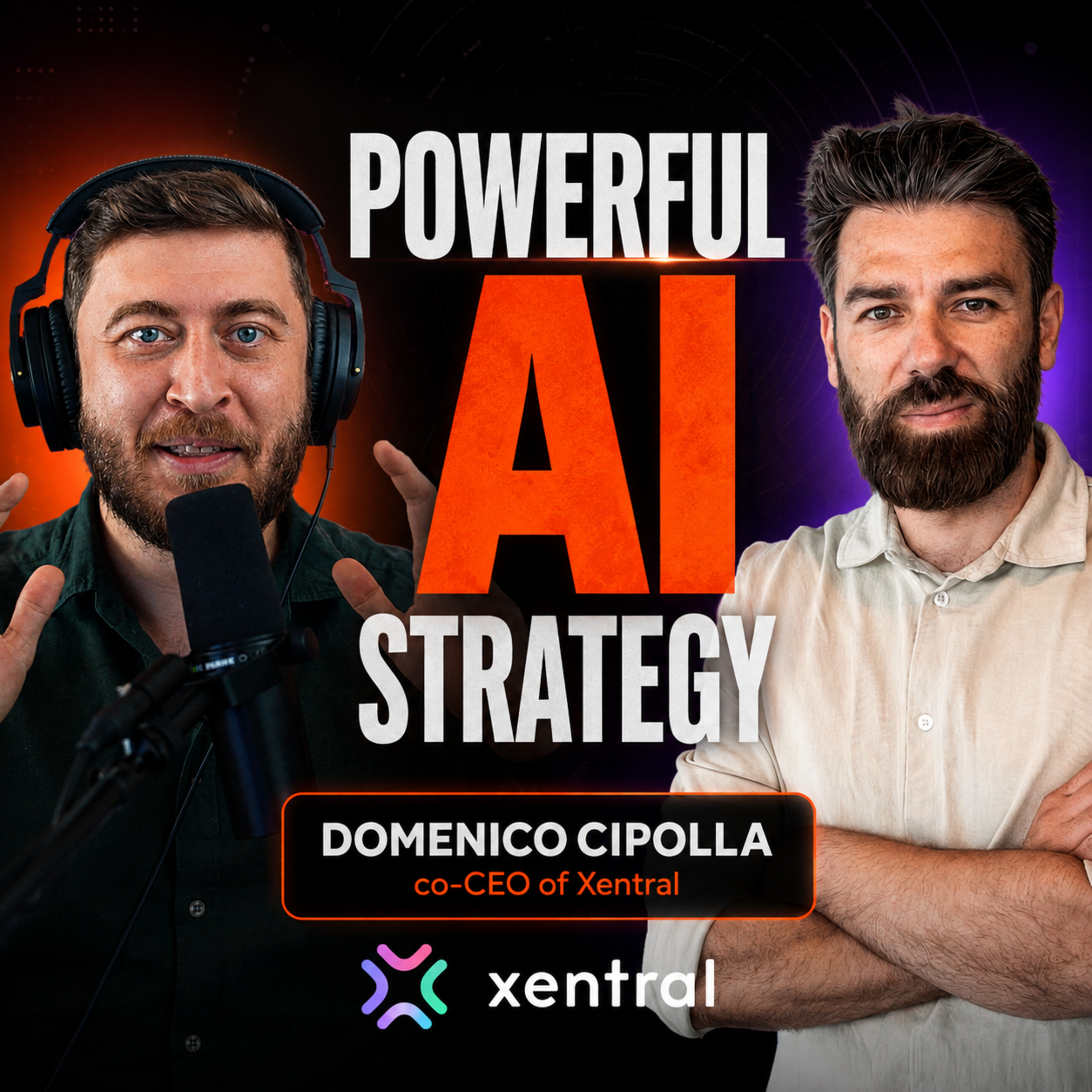
On The AI Floor, Shamil Malachiyev sits down with Sean, whose team covers what he calls the three A's: AI, automation and analytics. A self-described recovering product owner, he's blunt about what the current rush gets wrong: companies doing AI for the press release instead of starting with the problem, bolting on chatbots to check a box, and skipping the unglamorous data work that decides whether any of it pays off.
Expect to learn:
- Why disengagement, and sometimes sabotage, is a real response to AI rollouts
- Why, in his view, AI sits around the 75th percentile, and your best people still beat it
- Why the market punishes companies that don't shout about AI
- Why AI is still in its "digital fish" phase, like the iPhone's first year
- The three questions to answer before you start any AI project
- How a product person who can't write code built a web app in two days
- Why his end goal as head of innovation is to work himself out of a job
If you're the one being asked to "do AI" this quarter, or the one being asked to adopt it, this conversation is for you.
CHAPTERS
0:00 Highlights
1:55 Intro
2:53 The three A's: AI, automation and analytics
4:26 AI for the press release, or for the problem?
6:16 The iPhone's digital-fish phase, and where AI is now
7:23 Hype vs. what the financials actually show
8:27 Will software become just a prompt? Bubbles and checkbox chatbots
10:04 Can we, or should we? Is anyone even using it?
12:04 Data quality: the first hurdle
13:06 The unsexy fix: legacy systems and the data layer
16:38 Tools for getting decades of data in order
21:20 Internal vs external innovation, and three questions to ask first
24:10 Augment or replace? The biggest misconceptions about AI
28:19 How AI labs are hurting their own adoption
29:03 Freight trains, fear, and the 75th percentile
34:22 Who resists change, and why
36:17 When resistance turns into sabotage
41:47 Where to start if you feel you've missed it
47:07 Everyone thinks they don't need the rest of the team
50:04 Managing context without overloading the model
55:13 Getting innovation past compliance and procurement
1:03:11 What he's most excited about, and what still worries him
👇 CONNECT WITH SEAN ADAMS
Sean Adams ► https://www.linkedin.com/in/sean-adams-ee/
TruBridge ► https://trubridge.com/
👇 CONNECT WITH SHAMIL
Shamil Malachiyev ► https://www.linkedin.com/in/shamilmalachiyev/
FluidLabs ► https://fluidlabs.com/
🎙 LISTEN to The AI Floor (The Founder's Code, Season 2)
Spotify ► https://open.spotify.com/show/7v6YOQ77R1xzbOiiHsDawd
Apple ► https://podcasts.apple.com/sa/podcast/the-founder-s-code/id1797768317
🔔 SUBSCRIBE for more unfiltered, ground-level conversations with the people actually building AI inside real companies.
ABOUT THIS CHANNEL
The AI Floor - honest, ground-level conversations that cut through the AI hype and count what's really happening with automation and AI agents across the industry. No shiny LinkedIn posts, just AI reality from the people doing the work.
#AI #HealthTech #AIAdoption #ChangeManagement #Innovation #DataStrategy #SeanAdams #TruBridge #TheAIFloor #Podcast