Ask ChatGPT
 The Foundr Podcast with Nathan Chan
22 Oct 2026 · 58m · 22 chapters
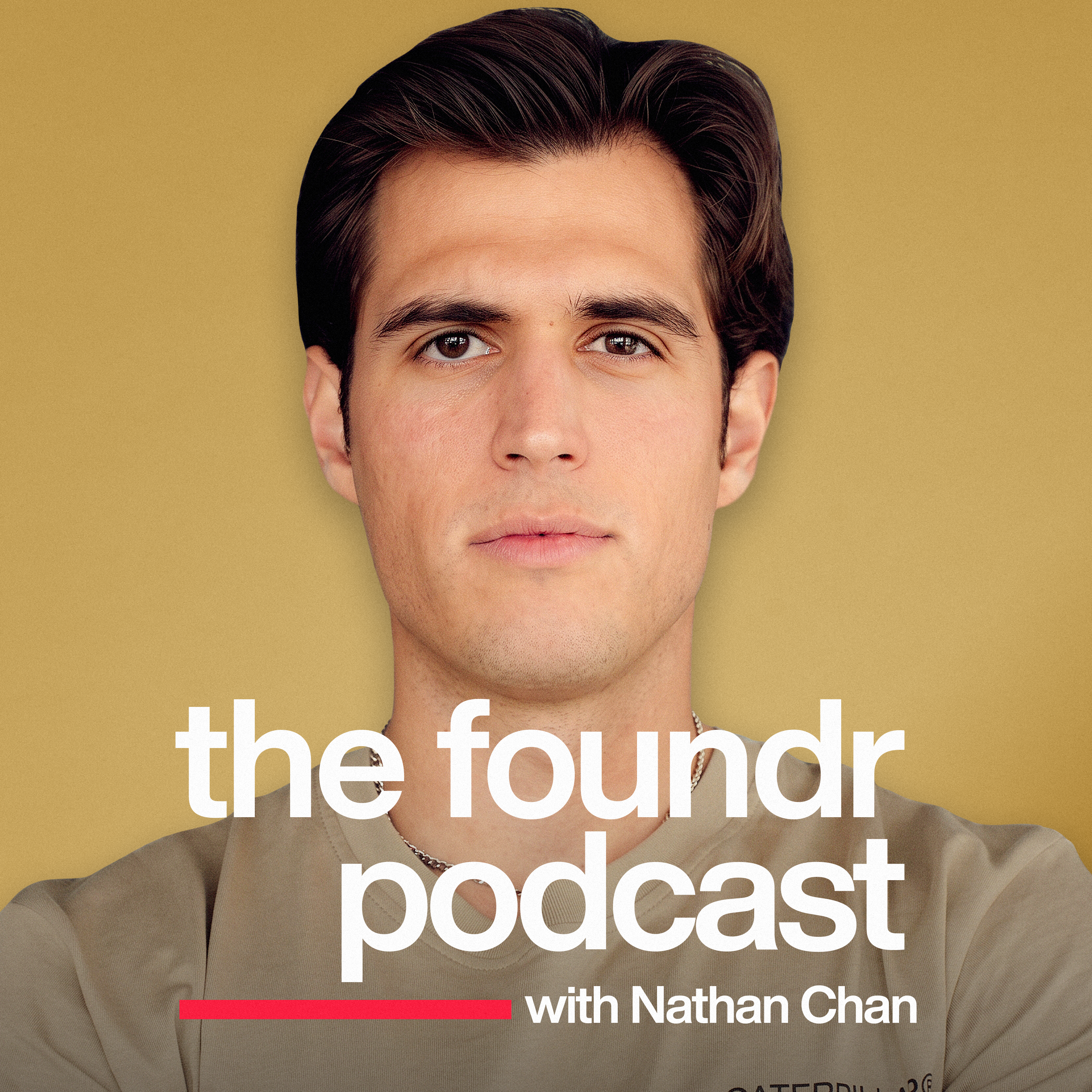
Lucas Pachter (Trybe) explains how his activewear brand went from ~$80K debt at age 23 to ~$250K/day revenue, and how he built Tribe to scale a creator-based sales engine for DTC brands.
Lucas Pachter founded and scaled an activewear DTC brand; he credits a mentor relationship with Hudson for growth. Tribe is now used by 16,000+ brands. The “Hudson” mentor is described as a major creator/brand operator with ~$1B annual revenue potential.
“Making other people money makes you more money” (10% commission to creators). CAC dropped from ~$89 to ~$29 via higher creator volume, unique angles (not variations), and better creator focus. Product-market fit required demand + distribution + offer + retention. Tribe replaces manual tracking with attribution (UTMs), approvals, and creator dashboards. AI will score/rank creator ads using brand-specific data, but humans still write/produce.
posting his bank account with ~$100 cash and ~$80K debt; scaling from ~400–500 creatives/month to 8,000 creatives/month; creator earning ~$70K commission in a month to potentially $100K+; price cut from $80 to $39 tees; bundles like quarter zip + tanks + shorts for $99 and a Black Friday “7 products for $199” offer.
Written by AI. May contain mistakes.
Lucas shares his journey from $80K in debt to making $250K a day.
“Welcome to the Founder Podcast with Nathan Chan.”
Lucas discusses the impact of meeting his mentor, Hudson, on his business.
“you know, make TikTok shop videos all day trying to sell our products.”
Exploring the strategy of helping others succeed to drive personal growth.
“And I just didn't know what I was doing, like any young founder, right?”
Lucas reveals crucial strategies shared by Hudson that fueled his brand's growth.
“story out of it, or it changes your life.”
Discussion on the importance of taking risks to achieve significant growth.
“in on specific products and stuff like that.”
How combining technology with marketing strategies creates growth opportunities.
“you know, I'm projecting 70 to 80 this year, we could do more, but let's say I were to do like 65, right?”
Learn how Tribe empowers creators with data to optimize their performance.
“meta and then moving videos back and forth between Google Drive, like it's a nightmare.”
Discover the significance of relationships and education in business growth.
“It's like, how do you, once again, just like a door-to-door sales team, teach people how to sell your product the right way and then give them the opportunity to succeed.”
Understand the factors affecting customer acquisition costs and revenue.
“And so now, our biggest challenge is how do we make the most of that customer being on our site, right?”
Explore the manual process of influencer marketing prior to Tribe's creation.
“And if anything, what's more important than getting more creators is just getting your current creators to do more.”
Learn how scaling creative production impacts customer acquisition costs.
“And so the really hard part in building these groups is getting them off the ground because people aren't going to make a lot of money in the early days.”
Discover effective strategies for finding and engaging content creators.
“And that was actually not the right strategy.”
Understand the development and purpose of Tribe as an internal tool.
“and then on my end, I can just click video to video with a little arrow and click a green button that approves it.”
Learn the essential components for creating a successful business offer.
“And if you don't have any of those three, then your business is cooked, right?”
Explore the strategies for retaining top talent within a growing business.
“I also think it's more fun when you cross the finish line and you get to celebrate with everybody and not just like being rich by yourself.”
Understand what failures can teach about product-market fit and business strategy.
“Yeah, look, for your size of business, you have an incredible revenue per employee.”
Discover how effective marketing can shift consumer perception and create trends.
“Demand, like you had demand unlock with this method, right?”
Examine how ad spending affects brand reputation and customer perception.
“Yeah, it's really interesting what you're talking about.”
Learn how pricing strategy shifts can impact brand perception and growth potential.
“So your instinct early was to sell premium.”
Discover strategies for creating irresistible offers while managing customer acquisition costs effectively.
“and you've got distribution on lock now with your method.”
Explore the role of AI in creative marketing and how it can enhance performance.
“So how do you think automated creative scoring and how's that going to change performance over the next five years and what still needs to be human?”
Learn how brands can effectively engage with older creators for better outreach.
“yet i think from a consumer purchase standpoint you have an advantage and i think if you're any type of brand you should absolutely try and you know sample and outreach to older creators as well because it works.”

Get the gist, explore an idea or ask about something said.
 Claude
On The Foundr Podcast with Nathan Chan, what are the key points of this episode?
Searching your listeningAutomatic transcript. May contain errors.
0:00Hey founder fam, before we jump in, I want to take a quick moment to talk about our sponsor OmniSend, the email marketing and SMS platform built specifically for e-commerce founders. We've been recommending OmniSend to founder students and members of our platform for a while now because it just works. So whether you're launching your first store or you're scaling it to seven figures, it really helps you automate your marketing and get results. And did you know, on average, OmniSend customers make$79 for every$1 they spend, which is an insanely good return on investment. And if you're already on another platform, here's the thing.
0:35In just five days, you could actually be paying 35 % less without doing an absolute thing. OmniSend will move every flow across, list, and template. You just show up when it's done. And finally, because you're part of the founder community, you get 50 % off your first three months with the code FOUNDER50. Just head to OmniSend.com forward slash founder and that's founder without the E to get started. All right, now let's jump in the show. He was like, give me 10 % of your business and I'll teach you everything I know. And I asked like 50 people that I really respect and literally 49 of them were like, you're a fucking idiot.
1:14At 23, Lucas Pachter had$100 in the bank and$80 ,000 in debt. Today, his brand brings in a quarter of a million dollars a day. So what changed? The pivotal realization you could say was that making other people money makes you more money. And what was revenue? What was revenue at the time? We were probably like doing, I don't know, 100, 200k a month, but losing money, like burning money. I kept saying online, we're going to build the fastest growing active world brand of all time. All these things that just had zero basis behind it. He goes, I would do this deal in a second if I were you, because you either get a great story out of it or it changes your life.
1:51And now a year later, we're the fastest growing active word brand in the country. We did a little under 9 million last year. We'll finish this year at like 70 to 80. It's crazy the growth that you're having, man. I bought enough inventory to do up to 120 million this year. But that PO, how'd you fund it? Haven't funded it yet, man.
2:14Hear the stories, learn the proven methods, and accelerate your growth and future through entrepreneurship. Welcome to the Founder Podcast with Nathan Chan.
2:28Hey, I have a quick ask. If you're loving these episodes, leaving a quick review is honestly the best way to support us. It helps the show grow and means we can keep bringing you the founder stories and insights you tune in for. Please share it with a friend. Thank you so much. Now let's get into it. Guys, welcome to the show. We have an incredible guest today. I was saying offline, he's been on a generational run. I followed Lucas over about a year ago, and I've just been watching him grow his brand house super fast. So you went from near bankrupt with your activewear brand with an$89 acquisition to doing over six figures a day and spun that growth playbook into the platform Tribe, which every DTC founder is talking about right now.
3:17Over 16 ,000 brands are using the platform. Talk us through what was the single pivotal moment that turned this whole trajectory around? Wow. So appreciate the intro, man. The pivotal moment was, if you had to pick one moment, it was meeting my mentor, who was a guest on the show. You guys might know him, Hudson. But I think the pivotal strategy or realization you could say was that making other people money makes you more money. So for me, it was like, you know, I was the one guy making content for our brand, I would, you know, make TikTok shop videos all day trying to sell our products. And then one day, I just realized, like, if I can make 10 other people six figures a year, and they're receiving 10 % commission.
4:07That means that I'm making$10 million a year just from them. So my entire thought process shifted to how do I try and make everybody else as much money as possible? And then that's even like what led into the technology and the idea for Tribe in the first place. So it was just a matter of like, how do I help other people make money? And then it all makes its way back to you. So I'd love to unpack that. So you said offline, you first heard about your mentor now Hudson who he's an absolute beast like oh my god um comfort I think is on track to do a billion dollars in annual revenue this year so you you know you watched our show or you you looked him up not before you met him but what happened talk us through take us back man so so you had this business that was struggling right and you've you've built many you've been building businesses since you were nine man like you've done other d2c brands so Like, what happened?
4:59Talk us through. So we were failing. No one knew that on social media at the time. Actually, people probably could, you know, gauge it. I was posting screenshots of our bank. I posted a video of our bank account and we owed like$80 ,000 in bills and credit cards. And I had like$100 in the bank account. That was a video that I shared with the internet. I did very well. You know, a couple million views. Most people were, you know, critical of it, talking shit, whatever. and I still felt very confident that we were going to figure it out, but we didn't really have like a method for growth. We were just trying things to try things.
5:34And what was revenue? What was revenue at the time? We were probably like doing, I don't know, 100, 200K a month, but losing money, like burning money. And I just didn't know what I was doing, like any young founder, right? But I had a lot of confidence. I kept saying online, we're going to build the fastest running active word brand of all time. all these things that just had zero basis behind it. I just, in my head, I felt like it was true. And then I got connected to Hudson through a friend and someone just said, yo, you guys should chat. You're very similar. I think you guys would like each other.
6:09And no one knew who he was yet. Cause I think the first podcast he ever did was with you. Yeah, it was, it was, it was. I remember, I remember there were certain things that he was like kind of nervous about talking about and all sorts of things around like his upbringing, all sorts of things so so like yeah yeah he was one of the first yeah yeah and i think so i must have met him right before that podcast because no one knew who he was yet and he gave me some really good advice on growth and scaling and how to think about things i was still like living in my friend's like my friend's house i remember that vividly when i first talked to him and we just became friends and then a couple months later he was like dude i like you you know you're me five years ago.
6:54And yeah, give me 10 % of your business and I'll teach you everything I know. And, you know, a lot of people hear that. A lot of people hear that. And, you know, these days people say, oh, you got lucky and like, oh, who wouldn't say yes to that deal? But, you know, the reality of the deal was like, there was no vesting, there was no, you know, contractual obligations or anything. It was more of like, yeah, just trust me and I'm going to help you and give me 10 % of your company. And I remember at the time I asked like 50 people that I really respect. I was asking, you know, I thought about this for weeks, like, should I do this deal?
7:29And I asked every single person that I knew that I respected that was like even remotely successful. I said, would you do this deal? And literally 49 of them were like, you're a fucking idiot. I would never do this deal. It was the worst deal I've ever heard in my life. Should I hand this guy 10 % of your company and oh, good luck, maybe it works out. And it was actually the founder of ProMix, Albert, very big supplement brand in the US. He said, you're how old? I said, I'm 23. He goes, I would do this deal in a second if I were you, because you either get a great story out of it, or it changes your life.
8:06And so I said, let's do it, right? We took the risk. And, you know, he taught me things that I then applied to my business. And we started after a couple months seeing a lot of success. So it was more the way I like to think of it is like, you know, Hudson was like one of the first guys to strike gold in this space. You know, I think like the gold rush is an analogy. And then he kind of saw me as like a struggling gold miner. And he said, yo, dude, you know, you're digging in the wrong spot. Like you're digging by the river, you got to dig up by the mountains. And so he wasn't like actively really in the business very much, but he gave me the direction and the advice and really like the overall perspective on how to look at this growth that really helped us.
8:51So he pointed me in the right direction. I was going to the right. He said, you got to go to the left. And then, you know, we, we talked pretty often, so it's been very helpful. Yeah. So you've now scaled that brand from, you know, roughly a couple hundred grand a month. So you're doing a couple hundred grand a day and that's in what, a year and a half? Yeah. So we did, we did 1 million in 2024. We did a little under 9 million last year. And then, yeah, we're doing like 250 a day right now. So I think we'll finish this year at like 70 to 80. It really depends on how, you know, November and December, like November and December could be massive.
9:28I bought enough inventory to do up to 120 million this year. so like I just we literally ordered more in inventory for a single quarter than the than every po ever placed in the business combined and that could be devastating right but I feel like when you are playing poker and you've had you know pocket aces since the start you have to go all in right um and so I think that's what business is all about and I think if Hudson was here right now he would agree with that because I know I've talked to him about some stories about going all in on specific products and stuff like that. And I think if you have the momentum, you have to.
10:06Before I get in, we've got to talk about like more, I want to hear way more depth around like some of the key strategic moves that Hudson shared with you that you made. I think I know what they are, but I'd love you to share them in depth with the audience and community. But that PO, So how'd you fund it? Was it through cashflow or? Haven't funded it yet, man. I'm the most honest transfer guy out there. We have insane payment terms with our manufacturer and it's because I flew out, I established a relationship with them and I didn't just say, give me terms because I think I'm going to blow up this year.
10:47I showed them like I showed them how our business works. I showed them tribe. I showed them the technology behind it. And I said, this is why like you can see it, why it's working so well and why it's going to continue working well. And I said, because our manufacturer was the main manufacturer for Gymshark when they were blowing up. Not anymore. But, you know, he wants to be a part of that second Gymshark. He wants to build, he wants to be a part of the next billion dollar brand. And I said, if you want us to be that opportunity for you, and we can be, I need you to take some risk. And so I pretty much got like, I think we're at like net 120 or net 150, something like that.
11:32So we haven't paid for it yet. We owe it at the end of Q4. And, you know, I'm always transparent and upfront about this, you know, we need to have a disgusting Q4 just to be able to pay our bills. But another thing I'll say real quick, once again, it's like, how do you look at risk? You know, a lot of people would say, bro, that's so risky. What's the, even if our business, you know, shit itself, right? What's the worst case scenario? Let's say I were to do like, you know, I'm projecting 70 to 80 this year, we could do more, but let's say I were to do like 65, right? And I needed to take on some debt or raise a little bit of money.
12:11It's really not that big of a deal. Like, okay, we still went from nine last year to 65 this year, you know, and who wouldn't want to lend us some money or invest, right? So I think people need to look at risk differently. And I think you have to take a lot of risk if you want to have the coolest and the craziest stories and the most potential upside. I really, really, really am blown away at this level of growth. I speak to a lot of founders and I've been watching from afar. And so, dude, what were the two or three things that Hudson told you that created this step change? I mean, in a nutshell, I kind of said it earlier, when you make other people money, you make money, right?
12:54So, I think the greatest thing that I gained from him was is the creator playbook, right? Like taking, you know, people that would be great customers of yours, and turning them into amazing salespeople for your business, right? Like that is the Hudson method in a nutshell. And, you know, in a way, it's kind of like door to door sales, except instead of being able to sell to one person right in front of you at a time, you're potentially selling to 1000s or hundreds of 1000s of people over your content, right? And that was really like what he taught me that was super effective. And then I think when you combine that with technology, that makes it more efficient and shares the data with the creators.
13:37That way they can go be entrepreneurs for you. That's really like where magic happens. Because in the early days, it was like, even just with a couple hundred creatives or a thousand creatives a month, which seems like a lot. We do about 8 ,000 creatives a month right now. Even just with a thousand, you know, having to use Google Sheets to track it all and tallying up all the sales and meta and then moving videos back and forth between Google Drive, like it's a nightmare. And you miss a lot of important information. And I think most importantly, your creators don't even know what's going on. So what Tribe did with this other business is it gave the creators the ability to make more money by being able to look at the data and see what's working and see what's not and everything being streamlined.
14:25And so those two combined, right? Like helping other people make money, teaching them how to sell, teaching them how to talk about your product the right way, and then giving them the tools they need to succeed. I think when you combine those two, that's when like a ton of growth happens and anyone can do it. It's not a money problem though. Like billion dollar brands, I feel like I'm getting connected to a billion dollar brand owner, like on a daily basis these days. not even exaggerating. And they're all like, who can I hire for this? Who can I pay? They want to throw money at this. And it's not a money thing.
15:01It's a relationship thing. It's an education thing. It's like, how do you, once again, just like a door-to-door sales team, teach people how to sell your product the right way and then give them the opportunity to succeed. And then your business blows up. So I'd love to unpack this a bit more. So you were paying to acquire a customer around$90. And then you started just absolutely crank creative. Tribe didn't exist. So you didn't have the software. How much did you cut your CPA down and how many, you know, you said you're launching 8 ,000 creatives a month right now. And I assume each one of those are individual angles or just slight variations.
15:47Individual angles. They used to be variations. We hit our meta ad limit cap. So it's like, oh, you can't go above 53 ,000 ads or whatever it is. So I had to tell my creators, no more variations. You can upload one variation max. But every video needs to be unique and individual. But in terms of your question, our caulk went from, yeah, like$89 about a year ago at like you know, two, 300 K a month to it's like a 29 right now. And, you know, it's funny because I built a model that would show how our CAC went down and our revenue would go up as well at the same rate as like the amount of creatives we were uploading would increase.
16:35So I have this whole model in my system that shows like, if we go from a thousand to 2000 ads, this is the revenue we can expect. And this is the CAC reduction we can expect as well. And it was working really well until like a month ago, it stopped working. And my CAC wouldn't go any lower. And I work with like one of the best fractional heads of growth out there. And I was like, well, I want to go lower, we're uploading more videos. And he's like, dude, your CAC cannot go like meta, meta in their back end has their CPM floors that they establish for every niche, every industry. For some, it's higher.
17:13For some, it's lower. Clothing is very competitive. And he's like, I've never seen a CAC as low as your guys. And it will not go lower. And so now, our biggest challenge is how do we make the most of that customer being on our site, right? So it's like amazing lifecycle and retention hires, the perfect offer for your customer, bundling, cross-sells, upsells, AI agents to resell people after stuff has been delivered, all that kind of stuff. Yeah. So we help founders scale in our community. And usually we've found it's easier to increase AOV than it is to lower CPA. That's from our experience. So you have a very, very, very unique method of growth, which is fascinating to me.
18:05So real quick, before we jump in, I want to shout out one of our sponsors, Xero. I've used Xero from day one of Founder, 13 years now, and it's still how we run the business today. It's cloud accounting software built for founders exactly like us. And it automates all the admin that I used to do when I first started founder invoicing, chasing payments, expenses, all the accounting, it really helps me get paid faster and keep an eye on cash flow to founder listeners get a crazy 95 % off for the first six months, just sign up through our form at founder.com forward slash zero terms and conditions apply.
18:44Remember, when you support our sponsors, you're supporting the show. All right, now let's jump back in so before tribe you were just going manual kind of like you would like the the influencer playbook send out product but you would be relationship building taking it a step further effectively recruiting these guys and then you would use affiliate links to show them how much money they were making etc like it was it's a very manual cumbersome process yeah how like when did the how long did it take for you to kind of see okay wow i'm starting to to drop cack and how many how many creative angles were you shipping a month when it started to change that's a great question and i think it i think the answer should hopefully be helpful um you know i think i think we started to use this playbook and we had gotten up to like 400 500 creatives a month and we still weren't really seeing a reduction in cac and i remember i told hudson i was like dude it's not working and he's like you're not uploading anywhere near enough ads like you need to be double that triple that 5x that so we just started going way harder it, right?
20:07More creators. And if anything, what's more important than getting more creators is just getting your current creators to do more. So on average, let's say I had a creator doing 30, you know, creatives a month, individual videos, one a day, you know, I would convince them to do two a day. And they started making a little more money. And our tax started finally going down a little bit. And then we doubled down on that again and doubled down on that again. And now my top creator probably makes like my top creator who made almost 70 grand in commissions last month he'll probably do over 100 this month he makes 600 ads for me a month he all he does is toss content he just this dude lives and breathes tank tops and and i think that's the difference here is a lot of brands work with creators and these creators kind of treat it like a side hustle It's like, oh, yeah, let me make a video for this brand.
21:00And then in a couple of days, I'll make a few more. But if you want to get the most effect, and this isn't just like my opinion. This is, I think, what worked for Hudson and all these other big brands on Tribe too, is you need to have creators that are fully focused on your brand. Just like a full-time salesman works for a company like Oracle or Salesforce, your salespeople, guy or girl, need to be fully focused on your brand. That needs to be what they think about in the shower, in the car, on the way to the gym, 100 % of their focus. And when you first launched this method, how much were you paying a creator and what kind of money were they making?
21:46It was always a percentage of sales. So, you know, it's always, you know, roughly been about 10 % of the sales they drive, they get to keep from their ads, right? And like I said at the beginning, in the early days, it was like I'd have to track it in meta. I'd have to go and see how much did James make from this ad and tally it on Excel. And I'd have to do that for like 500 ads a month. And it was a hassle. And I would just pay him out with PayPal. And then I switched over to Social Snowball eventually. And they weren't making a lot of money because it's directly correlated to the business. So if my business was only doing, let's say,$200 ,000,$300 ,000 a month, and let's say every single dollar came from these ads, which it doesn't, but let's just say every single dollar did, what would that mean?
22:32That there's really only$20 ,000 in commissions to go around for everybody, right? And so the really hard part in building these groups is getting them off the ground because people aren't going to make a lot of money in the early days. And then as your business scales and you start spending a lot more, now there's more money to go around for everyone. And how do you make sure you can maintain the quality of creative because it is a volume game, but it's quality content at volume and having enough spend to be able to test them? So I think quantity breeds quality. Obviously, there needs to be a quality standard when you're approving.
23:16So like, I'm not approving 8 ,000, you know, trash videos, like every single video I watch, or I have my team now, I have my team now do it, they watch start to finish. And if we don't genuinely think it's a video that has all the parts and components of a great ad and could do well, then we'll deny it. So it has to be high quality, it has to have hook body call to action. It has to have unique value propositions, all that kind of stuff. You know, no echoing, good lighting, good editing, all of that. If it doesn't have any of that, it's denied. If it's great, we approve it. But what happens is naturally over time, as your creators are doing more reps, they should, in theory, get better at making content for you because it's like a sport.
24:01It's like, you know, who's going to be better at soccer, the guy who practices an hour a day versus the kid who practices five hours a day, who's going to be better by the end of high school. And it's the same thing with creators. So I think, you know, the creators are mini entrepreneurs, they want to make money. And they're excited about this, especially when you give them those those dopamine hits through like our platform. And so if you just keep them aligned and keep them motivated and making sure that your brand is the focus of theirs, then it's naturally going to occur if they're working hard at least when it comes to recruiting and finding these creators before tribe how did you find them tick tock right so i would um actually in the early days any any like good looking jack dude i would go at the gym on the street you know because i had an activewear brand right so anyone i saw that i thought could be a great creator i'd go up and i'd start talking to them and i'd be like oh dude you should make content for my brand, some college athletes, baseball player, fighter, whatever.
25:06And that was actually not the right strategy. So please don't copy that anyone out there. I have a saying that I like to share with people. It's a lot easier to teach an actor how to act like an athlete than it is to teach an athlete to act like an actor. Right? So instead of just going for someone that you think could be good. You have to find someone that actually knows how to act. You have to find creators that have already started to make content. They know the basics. They know what they're doing. In the early days, like even still today, even with Tribe, even though there's like 280 ,000 creators, like TikTok is still an amazing place to find amazing creators.
25:47And I actually wouldn't go for the ones that make a ton of money. I would go for the ones that are making a couple thousand a month. That way they're excited about it. but your brand can be the life-changing opportunity for them. And then you just sell them on why your brand is the best opportunity. And when it comes to Tribe, so how long between you seeing the strategy work did you start to build Tribe? Because you're a smart guy. You obviously were like, oh, let's build an internal tool. We can scale this up. This is too manually laborious. Probably about six months. I think we started working on this group maybe early 2025.
26:28And then in the summer of 2025, the idea like hit me all at once. And I was like, Oh my God, how has no one done this before? And so I hit up the smartest people I knew. And we just started with the basics, right? Let's create a tool instead of Google Drive. Let's create something where our creators can just submit content all in one place. and then on my end, I can just click video to video with a little arrow and click a green button that approves it. And then let's make it so that I can track how much they're earning in here. Let's create an attribution model and UTM links to track everything.
27:05And then let's make it so the creators can see what's going on. And then new ideas just started coming. Let's make it so the creators can see the top content in general from our brand. That way they can make better decisions. but you know it's we've been open we probably even we probably started the c corp like a year ago so it's still very new but the idea came yeah probably about summer last year so six months after working on these groups you could say it's crazy the growth that you're having man like like 10 you've basically 10x in the past year just from this strategy is that all it is just creative volume at scale for the sales yeah right like there's three in my opinion there's three pieces to a successful brand right it's like you got to get the customer to the website that's where this model comes in right that gets the buyer interested but if you don't have a great offer that's both you know your website your pricing you know making the most out of the customer being there right you have to have a great offer to get them to actually buy it And then you actually have to have a great product to get them to come back.
28:13And if you don't have any of those three, then your business is cooked, right? So even if you had like the most amazing creative engine, but you had terrible LTV, because your product actually sucks, doesn't really matter. And you're also not going to get great creators to work with you if they don't genuinely like the product. So, you know, you got to have a great product, number one, then you got to build a great offer. And then you got to build a great sales team. And if you do all three of those, I think you create a monster business. but there's a ton of complexities and issues in there. Like you said at the beginning, cashflow.
28:46It's impossible to 10X without taking on debt, raising money or having insane terms with your manufacturer. And all of those are challenges, right? You got to have great teams. So like we're constantly always going and poaching people, literally, hopefully today, cross our fingers. I heard from my headhunter, I'm going to be hearing back from like one of the best CFOs in the country having to work for us. Right. So like, you know, if I don't have someone great like that, we're going to crumble. Right. So that's also part of the the playbook as well. It's like, how do you get the best people to work for you and keep them working for you?
29:26Because once your business starts growing really fast, what happens? Everybody else starts DMing your employees on LinkedIn saying, come work for me. I'll pay you way more. I'll give you equity. So how do you convince your people to work and stay with you when everyone's trying to poach them? That's a whole nother challenge, right? So it's crazy How are you working actively on solving that one? You give you give people that deserve it equity. I'm a big fan of giving out equity Some people are really against equity for some reason Maybe it's out of greed. Maybe it's just because they don't think they need to who knows, but I like to give away equity to people that deserve it I also think it's more fun when you cross the finish line and you get to celebrate with everybody and not just like being rich by yourself.
30:10So, you know, whether it's vesting an employee that's been with us for a long time, who deserves it, or, you know, giving an equity package to an amazing new hire like this one that's hopefully going to be coming in today. It's super important. And then bonuses, too. Like, but offer crazy bonuses. You know, we offer like anywhere between 50 to 100 % bonuses if our employees do really well and our company hits the targets we have. So I think that gets people at least sticking till the end of the year. And then it's a problem all over again. You got to set the benchmark for the next year, right?
30:44So talk me through team. Like how big is your team right now? What does it look like? Because different team for different stages, you've gone from low seven figures to basically multiple mid to high eight figures. You'll need a leadership team. Like it's a transition in of itself. and some people in that leadership team will be solid for low eight figure business, but won't be the team for high multiple eight figures, low nine figures. That's a great question. And then there's a great Larry Ellison clip out there, how he talks about the people that built his business to 10 were not the people for 100 and those were not the people for a billion and those were not the people for 10 billion.
31:36And that's kind of sad if you think about it. You know, it's like you want these people to rise to the occasion and, you know, ride with you. I think it's about picking the right level of seniority is what I'm learning, right? Like if you hire a COO too fast, and then your business 10X is like, there's going to be new challenges and problems and complexities at that level. And there's no one above a COO in the operations role, right? So you have to let that person go now if they can't rise to the equation. And that kind of sucks. So you have to make sure that you're hiring the right levels of seniority.
32:16I like to think about it. That way, when you grow, you can bring in actually someone above them to train them because they have great experience from somewhere else. So that's number one. Our team right now is probably too lean, I think, transparently. we have like 12 full-time employees, including my co-founder and I. So like 10 employees. We're actively hiring for like 10 roles right now because the business needs it. Everything from, you know, we need an amazing senior e-com manager or director of e-com. We need a great lifecycle person. I think we got our CFO locked down, but we need a head of growth or director of growth or a senior director of growth, right?
33:04So we're always hiring. I feel like 50 % of my job these days is hiring. And that's probably where it should be because I think we're understaffed. Yeah, makes sense. Yeah, look, for your size of business, you have an incredible revenue per employee. So it's super impressive, man. So you've started six other businesses. So you've been building businesses since you were nine, including an on-demand laundry service, a luxury-based hand sanitizer as well during COVID, most of which failed. I'm curious, what have these failures taught you about product market fit? So, you know, some of those businesses were businesses that I thought were great ideas.
33:53And then some of them were just like perfect opportunities that we're not fully taken advantage of. So I think like the laundry demand service one that quickly died. That was like, you know, I was, I wasn't actually the one that came up with the idea. It was like a guy in my fraternity at the time, and then he brought me in and it's just like, it was never going to work out. Right. I don't actually even know if I learned anything from that. Maybe it's that like actually ask customers first before you, you know, put your time, energy and money into something, if this is actually something they'd want, because everyone has a great business idea because they think it's a great idea, but you need to actually do the research to see that people would enjoy it and find value in it.
34:38The hand sanitizer, to make a long story short, I got screwed over on that one by my co-founder, unfortunately. That was a great lesson. Make sure you sign a contract before you get into business. You learn that lesson once. I think everybody does, and then you never make that mistake again but it could have been insane i mean the the premise behind it was like you know you you go to the grocery store and hand sanitizer is selling at 20x what it should be a two dollar bottle is selling for 20 like 30 to 40 during covid because it was so in demand and it was also so boring and ugly like hand sanitizer is not fun and so we created like this really cute and like, you know, almost like humorous hand sanitizer brand that was going to be called Sugar Baby.
35:30And our idea was like, let's go sell this and all of the really nice wineries and boutiques and nice restaurants and stores in the Napa Valley, which is where I grew up. And I still to this day think, you know, we could have made a couple million dollars from it at like 19 years old, but I got screwed over. So unfortunately that ended there. But as I've gotten older, I think even with Haas, I started Haas not because I saw a gap in the market. I started Haas because I wanted to create some clothes for myself. And there was no research done. And that's why it was so hard to get it off the ground.
36:07And we kind of just like forced this square peg into the round hole. And thankfully it worked. But with Tribe, it was like the exact opposite. it is like the perfect product market fit. And Tribe has really been the first business where I've seen what product market fit can actually mean in terms of success and growth and how fast you could do both. And it's fun when you find product, when you find product market fit, and like, you build a product that people actually want, and you don't need to convince them to buy, they come to you. So I don't know if that answers the question. But I think you just, You learn through every business a little bit more about what people actually want and that you can cater a solution for that.
36:48And with Haas, there's an argument to be made that, you know, you were losing money with that business. And what was the unlock was demand. Demand, like you had demand unlock with this method, right? It's, you know, I don't know. it's um because for a while i genuinely thought that we i never thought we were screwed or anything i never gave up hope but i had thought that you know we had hit our tam and i thought to myself like i yeah i genuinely we just were bottleneck at like 200k a month for a year and i was like we've hit our tam like for some like there's just there's too many activewear brands out there and there's not enough customers to buy it.
37:37And I was, you know, I was wrong on that. And I realized I just need to, I need to force so many creatives in front of people. And I think this will actually be helpful to know. We almost created a trend around the brand because when I, you know, the products have been the same. And when I was first talking about them with my own personal brand, making TikTok shop videos myself, people would comment horrible bullshit. They'd be like, no one wants to buy your brand, bro. This is hideous. This is not cool. It literally felt like merch. And people would say, no one wants to buy your merch. So if you run a brand, you're probably feeling this problem right now.
38:19You're relying heavily on Meta and Google to acquire new customers and finding another channel that you can scale profitably is not easy. So that's why I'm super excited to tell you about today's sponsor, Applovin. Now, there's a founder in our community who took the ads already working for them on Meta. They reformatted them for Applovin and within their first 30 days, they'd already scaled to more than$100 ,000 a month in ad spend or seeing really strong returns. Now, I asked them if I could shout them out and share the results, but they said no because they didn't want their competitors finding out about this platform or the results that they were getting, which is wild, right?
38:58So if you want to diversify your spend beyond Meta and Google, I highly recommend testing out Applovin. Now, founder listeners can get up to$10 ,000 in matched ad credits, plus$1 ,000 free in ad credits to test when you sign up through our link. So go to applovin.com forward slash founder.
39:20And now a year later, we're the fastest growing activewear brand in the country and it's the same products and the only difference is that you know these people who end up becoming our customers they just see the ads so often that you think you're missing out on something i think it's like oh if i'm seeing all these you know 50 to 100 good looking stud dudes talk about how this product has changed their life maybe i'm missing out too and so you can almost like create your own trend if you get enough people posting about it. Yeah, it's really interesting what you're talking about. I've often thought about this as well.
39:57A really smart founder friend of mine talked about this. He was the one that said to me, he's like, Nathan, people are so obsessed sometimes with you pay Facebook this and you get this return. But what people don't understand is you're still paying for that ad to be served to someone. How much do people pay for billboard advertising? You know what I mean? And it's not direct response, right? So if you can spend enough and have that compounding, you will see growth in other areas that is not attributable by Facebook. And that's why you need to measure through MER, right? Or contribution profit.
40:38That's all that really matters. What is your daily, weekly, monthly contribution profit? it because if you get so obsessed with, oh, Facebook's giving me this CPA, it's not working. If you can get a large enough scale, it can compound into other areas. Like, man, I'm sure you spend on Google as well, right? And you will see that the more you spend on Facebook, the more returns you supposedly get from Google. Why? It's exactly like what you're talking about. But you create this kind of FOMO effect over time if you can spend enough and slowly increase spend. For sure. No, I completely agree. And I think we'll – I don't think we've reached that point yet even.
41:21I think at the end of this year when we'll be close to nine figures, I think that's when we'll really start to see that spillover, incremental efficiency and effect, whatever you want to call it. of the brand becoming like, you know, so well known to the point where when you see an ad, it's not really a first touch point anymore. It's like, oh, I've already heard about this from friends or from some influencer I follow, whatever. And then you're, you know, I think our cackle actually, I think that's how you get the cackle down further. It's by having like a little bit of real estate in the consumer's minds.
42:01That way when they hear about you, it's not their first touch point yeah man that's brand that's brand right that's one thing and that's one thing you know we have like that is another really important hire um and i think we have focused so much on performance marketing and not enough on brand and that's going to be a huge focus for us this next year is doing these things that are maybe not necessarily direct roi right now, but will have a massive impact on the business long term. Yeah. So dude, a couple more questions. So your instinct early was to sell premium. So you had$80 graphic tees. As you said, you hit public backlash around the product, but then also you had painful acquisition costs.
42:50So you cut the price to$39. dollars so what changed when you cut the price and what did that teach you about volume versus prestige you know Hudson actually told me he was like you know your price is too high and I said what do you recommend changing it to and he said you should like cut in half and I said don't you think that'll make us look cheap you know and he said well do you want to be rich or do you want to be cool and you know I think everyone wants to have like a cool premium brand but there's just not that many people that can afford and more importantly are willing to spend that much money, right?
43:27If you sell$80 graphic tees or$100 tees or$100 shorts, you know, there might be a million people in the world that are able and willing to buy that. And able and willing is different, right? Whereas if you sell$40 shorts, there might be 50 million people willing to buy that. And so, you know, you can't grow extremely fast and far forever, I think, if you don't have a price that, you know, gives your TAM enough room to grow, right? So for us, it was a huge unlock, right? And we had to sacrifice being like the premium, you know, like you look at a brand like ASRV, like amazing brand, really high price point, but it's impossible for them to grow fast because not that many people can afford and are willing to buy products at that price.
44:18So I think low price is better. And I think like you look at the biggest brands in the world, Walmart, Amazon, it's all about offering products at an affordable price. Even Apple, even though Apple is very premium, when the first MacBook came out, it was like$2 ,000, I'm pretty sure, which in today's cost would, you know, with inflation, it'd be like 10 grand. And now you can get an Apple computer for like$1 ,400 if you get the lowest version, right? So it has to be something that a lot of people can and are willing to buy if you actually want a big brand, unless you want to take like 40 years to build Louis Vuitton or something like that.
44:55So you also said something interesting around, obviously, you need a distribution channel and you've got distribution on lock now with your method. You said you need a great offer. That was one piece of the puzzle. Then you need people returning. You're in the like, you know, we're in the repeat business, right? The best businesses are in the repeat business. So talk to me around how you've maximized the offer tests that you've made and that evolution there and how you've changed AOV over time? Sure. Yeah. So we've, you know, we're split testing all the time. I love split testing. Everything from price to name, you know, the layout of the pages, like every little improvement matters.
45:41But the biggest thing is just like genuinely, you know, you can move things around to get like a little bit of an incremental effect, but really like at the end of the day, the biggest improvements in AOV are just going to come down to like the actual value you're providing right so for us you know it was like how do we create uh you know this is just giving away my sauce right here but i'm sure anyone if they looked at our website can figure it out you can buy like entire outfits for a very affordable price like uh we have an offer right now it's like you know you could buy our quarter zip which is normally$110, our tank tops, and a best-selling pair of shorts for$99.
46:24And when you see that ad and you go to the website, you're like, who wouldn't try that out? Because it's just too good to pass up. And now the caveat here, though, is your CAC has to be extremely low in order to be profitable on that. I'm profitable when someone buys that. My gross margin on that offer is atrocious. It's like probably 50%. And so you have to have a CAC that's extremely competitive to make that work. And so they go hand in hand, right? And we do that a lot. Like we have, you know, we have another bundle coming out for Black Friday. It's going to be seven products for$199. And it's going to be like the ultimate holiday gift is what we're going to be calling it, It's like you can get every one of our best sellers for your dad, your brother, your boyfriend, whatever for less than 200 bucks.
47:20And then your holiday shopping is done and you got this person, you know, five different outfits when you combine pieces that they're going to wear for the next year. And so why wouldn't you want to take us up on that offer? Right. So I'm excited about that one. Man, how much margin are you going to make on that one? Even worse. The margin on that one is going to be like 40 percent. right but no but if my cac is you know 30 right that's still like uh you know let's do quick math right if my margin is if my margin let's call if my margin is 40 and my all-in cac is let's call it 20 of that so maybe around 40 including commissions and maybe like some other stuff, I'm still profiting 20%, which is$40 profit on a$200 cart.
48:09And more importantly, I've given this new customer so many different items to test that there's a very high chance that they fall in love with one of them and come back for more. One of the worst things you can do is, if you have a clothing brand, for example, is sell one product to a customer because you have one opportunity to win them and get them to come back. But if I get them to buy a big bundle and it has a quarter zip and pants and underwear and tank tops and shorts and a t-shirt and a sleeveless tank, whatever, there's pretty good odds that they're going to absolutely love one of those and find something that makes them really happy.
48:49And then they'll come back and buy more. So I'd almost be fine breaking even on a big bundle like that. But thankfully, we make some profit yeah because your cac is so low yeah okay so a couple last questions we've got a rap man but dude this is awesome um i'm really enjoying this conversation so where do you think creative marketing is heading like you're building ai that scores creators videos on you know it's hook you've got a creative dna before the media by even spends. So how do you think automated creative scoring and how's that going to change performance over the next five years and what still needs to be human?
49:30That's a great question. So I think there's a lot of platforms out there that claim to like use AI to run your entire created engine. And I just think that's like horseshit. No AI is going to come up with the perfect scripts for you and the perfect videos and do it all for it's just like I see so many platforms claiming that they can do that and whenever you talk to anyone about their results on those platforms they're like no there's nothing of value there right so I do think there needs to be a human elephant and and all of uh and all of sales in general right but kind of like I said at the beginning the more data and access and information you can give your sales people the better.
50:11So you kind of touched on it there, right? You know, we have an algorithm we're building right now that's collecting all the data for every brand, right? And storing it in Tribe. And eventually, when a creator uploads an ad, our system is going to essentially like rank that ad and what they're saying against all of the other top ads for that account specifically. and then it's going to come back and it's going to give them a score is you know the score isn't going to be the source of you know the source of truth like you know it's not a guarantee that that video will or will not do well but at least it'll give that creator more information to say hey you know the video that i just uploaded or you just uploaded as a creator when comparing it against all the other top performers from this brand specifically it doesn't look good right like your video is way off from the typical best performer.
51:09And so that at least can give you as a creator, some ability to go change some things. Maybe it's too long, maybe it's not long enough. And we're going to have like AI responses as well. It's like, you don't have a call to action in this video. Or what you're saying, the value proposition is effective, but there's no hook here. There's no way to, you know, reel people in. And so I think by doing that, I feel very confident in this. That's going to increase the output of these videos significantly. And once again, it's like the creators are the entrepreneurs in a way for your business. Now, they're not taking risk and buying inventory and creating, you know, a C-Corp or an LLC, but they're still getting creative and trying to sell a product for you.
51:55So how do we enable them to make those kind of decisions and be most effective. And that's really like the whole premise of Tribe. It's like, how do we help them be most effective so that they can make the businesses more money? And when it comes to static versus video, do you run any static in your ad account? A lot more now. Actually, my growth marketer guy, he was like, yeah, statics don't really work for for us and clothing brands. And, you know, six months ago they didn't. And then I just had a gut feeling. I said, let me just let my creators make statics. So I told all of my normal UGC creators that they can start submitting statics if they want.
52:36They got to prove themselves to me first and show me that they know what they're doing. But we've recently let all of our normal UGC creators submit statics and they're ripping right now. It's our number one ad in our account. um you know they're i don't know off the top of my head but i would imagine probably about 20 percent of sales right now are coming from statics and we only just started this so i would imagine it's going to be significantly more by the end of the year and i think there's a huge opportunity in statics from the same creators that are coming up with these unique angles and ways to sell a product over video, they're also in their minds creating the perfect script.
53:14So why could they not come up with great concepts and ideas for statics as well? And some brands or founders would be watching this and be thinking, this is an awesome strategy, but my customer isn't your typical creator that would be in university, in college, which would be the vast majority of your creators will this work for me my customer my icp is 40 to 50 years old what would you say so we're actually seeing like an overwhelming it's really interesting an overwhelming um what's the right way to put this advantage for older creators on tribe right no no one wants to buy from a 23 year old kid out of college, a guy, especially, right?
54:08Girls are much better at selling than guys. But you see this in videos, right? People will comment, how do I buy this without giving you commission? You just feel weird, like, you know, buying off a 23 year old or a 25 year old guy, right? So, but with that said, the creators that make a shit ton of money on Tribe, at least as of the last couple of weeks, have been like older women, older men. they're just more trustworthy. Even myself, I can admit this, I would much rather buy from a 55-year-old guy with a beard and maybe some tattoos. He just gives me more trustworthy vibes than some kid trying to shill me a product over TikTok shop or a Tribe video.
54:50So there's plenty of creators available on Tribe that fit those demographics. That would be my answer. And in my own experience owning a clothing brand, you know, are these days are fastest growing creators in terms of like how quickly they can go from joining the group to immediately making money and seeing success. An overwhelming majority of them are older guys. It's like, you know, grown ass men, I like to call them. And I think it's because of that trust factor. so I think there's more of an opportunity than there's ever been I think two years ago most of the people on TikTok shop were kids but these days a lot more yeah older or middle-aged individuals are not just open to the idea of doing content and making money from it but like they actually get more excited than kids they work harder than kids my girlfriend's mom and her friend just started doing tribe and like it's all they talk about and i think they're starting to do pretty well from what i've heard about it so um i think if you're older if you're watching this and you're a creator you actually have an advantage even though you might not be the most tech savvy yet i think from a consumer purchase standpoint you have an advantage and i think if you're any type of brand you should absolutely try and you know sample and outreach to older creators as well because it works.
56:17Well, dude, this has been an incredible interview. Congratulations on all of your success thus far. I've really, as I said, I've been watching from afar. Like, you know, I just follow certain people and I just kind of keep an eye. And then sometimes I might DM them and say, hey man, you're interested in coming on the pod or they might follow me back or whatever. And dude, like I've seen some of your posts on LinkedIn. I've been watching from afar. So I'm excited to see this journey and see how far you can take this billion dollar brand to come. And man, if anybody wants to know more about Tribe and tapping into this method, where can they go?
56:53It's just, well, first of all, appreciate it, man. Very kind words. And yeah, very grateful to be here. Happy to be here. It's just join trybe.com. And if you look up trybe on Google, you'll probably find it as well. So there you go. Awesome. Well, Lucas, thank you so much for your time, man. Appreciate it, brother. Thanks, man. Appreciate you having me on. Hey, FounderFam. Thank you so much for tuning in today. And if you enjoyed this episode, please take the time to leave us a review and let us know what you think. This podcast is 100 % free. We work so hard to go out and find the most successful founders and entrepreneurs all around the globe.
57:34So your feedback helps us grow, improve, and even bring on more incredible guests and insights. So if you have a second, please take a moment and leave us a review. It really means a lot to me and the founder team. It makes so much of a difference. Thank you again for listening and I'll catch you on the next episode.
Lukas Pakter filmed his bank account and posted it to the internet: $80,000 in debt, $100 to his name, an activewear brand quietly dying. A year and a half later he’s doing over $250,000 a day, on track for $70-80 million this year, and has turned his growth playbook into Tribe - a creator-sales platform now used by over 16,000 brands. The shift that changed everything was a single realisation: making other people money makes you more money. Instead of being the one guy filming TikTok Shop videos, he turned his best customers into an army of sellers - and built the software to run it.
In this interview, Lukas breaks down the creator playbook he learned from his mentor Hudson, why he placed a single purchase order bigger than every PO in his company’s history combined, and the counterintuitive reason older creators are quietly outselling 23-year-olds.
What you’ll learn in this interview:
The mentor deal everyone told him to refuse: giving away 10% of his company on nothing but a handshake
The core shift: why making other people money is the fastest way to make your own
The creator playbook: turning your best customers into a sales army that reaches thousands at once
Why he runs 8,000 unique creative angles a month - and how he blew past Meta’s ad limit
The all-in PO: why he ordered more inventory in one quarter than every order in company history combined
How he landed net-120 payment terms by flying out and showing his manufacturer the technology
The three pillars of a monster brand: a great product, a great offer, and a great sales team
Why he gives away equity and 50-100% bonuses to stop competitors poaching his team
What six failed businesses since age nine taught him about real product-market fit
Why older creators are outselling college kids - and the trust factor most brands are ignoring
If you’re building a DTC brand, trying to crack creator-led or affiliate sales, or wrestling with how to grow fast without burning cash, this conversation will fundamentally change how you think about risk, creators, and what it actually takes to scale from near-bankrupt to nine figures.
SAVE 50% ON OMNISEND FOR 3 MONTHS
Get 50% off your first 3 months of email and SMS marketing with Omnisend using the code FOUNDR50.
Start here → https://your.omnisend.com/foundr
SAVE 95% ON XERO FOR 6 MONTHS
Simplify your business finances with 95% off Xero for your first 6
months. Start here → https://foundr.com/xero
GET UP TO $10K IN MATCHED AD CREDITS ON APPLOVIN Scale your DTC brand beyond Meta and Google with up to $10,000 in matched ad credits, plus $1,000 free to test AppLovin. Start here → https://applovin.com/foundr
WANT TO GROW YOUR BRAND WITH META ADS?
Join the Foundr Operators Waitlist → https://foundr.com/operators
HOW WE CAN HELP YOU SCALE YOUR BUSINESS FASTER
Learn directly from 7, 8 & 9-figure founders inside Foundr+
Start your $1 trial → https://www.foundr.com/startdollartrial
PREFER A CUSTOM ROADMAP AND 1-ON-1 COACHING?
→ Starting from scratch? Apply here →
https://foundr.com/pages/coaching-start-application
→ Already have a store? Apply here →
https://foundr.com/pages/coaching-growth-application
CONNECT WITH NATHAN CHAN
Instagram → https://www.instagram.com/nathanchan
LinkedIn → https://www.linkedin.com/in/nathanhchan/
CONNECT WITH LUKAS PAKTER
Instagram → https://www.instagram.com/lukaspakter/
Website → https://www.lukaspakter.com/
Trybe → https://jointrybe.com/
Haus → https://gohaus.com/
FOLLOW FOUNDR FOR MORE BUSINESS GROWTH STRATEGIES
YouTube → https://bit.ly/2uyvzdt
Website → https://www.foundr.com
Instagram → https://www.instagram.com/foundr/
Facebook → https://www.facebook.com/foundr
Twitter → https://www.twitter.com/foundr
LinkedIn → https://www.linkedin.com/company/foundr/
Podcast → https://www.foundr.com/podcast