
 The Foundr Podcast with Nathan Chan
29 Oct 2026 · 39m

 Add vo to ChatGPT or Claude to ask about everything you hear
vo listened to this episode to put together the overview and transcript, so there may be the odd mistake.
How Warby Parker was founded and scaled—from a $700 glasses shock to a $2.89B company—by cutting out the middleman, selling direct-to-consumer, and de-risking online eyewear with Home Try-On.
Neil Blumenthal (spent years in the glasses industry; co-founder/CEO); Dave (MBA student at Wharton; lost/broke glasses after backpacking; inspired the problem); plus two other co-founders who met at Wharton business school and co-led early efforts (one ran a nonprofit training low-income women in vision screenings and selling glasses in rural Bangladesh and Guatemala).
Glasses markups were “egregious”; direct-to-consumer enables wholesale pricing with good margins; Home Try-On solved the “fit” objection; focus and customer de-risking drove early traction; PR/word-of-mouth beat paid acquisition early.
$120,000 life savings; 5-frame free Home Try-On (5 days); launched Feb 2010; featured in Vogue and GQ; sold out top 15 styles in 4 weeks; 20,000-person waitlist; “buy a pair, give a pair” for people lacking access.
0:00Hey founder fam, before we jump in, I want to take a quick moment to talk about our sponsor OmniSend, the email marketing and SMS platform built specifically for e-commerce founders. We've been recommending OmniSend to founder students and members of our platform for a while now because it just works. So whether you're launching your first store or you're scaling it to seven figures, it really helps you automate your marketing and get results. And did you know, on average, OmniSend customers make$79 for every$1 they spend, which is an insanely good return on investment. And if you're already on another platform, here's the thing.
0:35In just five days, you could actually be paying 35 % less without doing an absolute thing. OmniSend will move every flow across, list, and template. You just show up when it's done. And finally, because you're part of the founder community, you get 50 % off your first three months with the code FOUNDER50. Just head to OmniSend.com forward slash founder and that's founder without the E to get started. All right, now let's jump in the show.
1:03Just bought a new iPhone for$200 and realized that the glasses I had lost cost me$700. Here I was producing glasses for people living in less than$4 a day, but 10 feet away were factories that were producing the$700 pair of glasses that Dave had. After a year and a half of building, setbacks and betting their life savings, the founders were finally ready to put their idea to the test. We pulled together between the four of us$120 ,000, and it was our entire life savings. We had two years where we knew we were going to make zero income. None of us had built a website before. We had to scrap all that work, lost that money, and it forced us to reconsider our business model and come up with this idea of a home try-on program.
1:45We select five frames, we ship it to you free of cost, we turn the website on, we ended up hitting our first-year sales targets in three weeks, Sold out of our top 15 styles in four weeks. We had a wait list of 20 ,000 customers. 99.99 % of our customers had never bought glasses online before. When it came to the name, like why will it be Paco? It didn't really make any sense to me.
2:09Hear the stories, learn the proven methods, and accelerate your growth and future through entrepreneurship. Welcome to the Founder Podcast with Nathan Chan.
2:23Hey, I have a quick ask. If you're loving these episodes, leaving a quick review is honestly the best way to support us. It helps the show grow and means we can keep bringing you the founder stories and insights you tune in for. Please share it with a friend. Thank you so much. Now let's get into it. So the first question I ask everyone that comes on and that we interview is, how'd you get your job? I'm like, yeah, who wants to take this one? um yeah i feel lucky that we were able to i guess hire ourselves and so we met when we were in dave was begging me for a job uh we we met when we were in uh the first week of business school um we were on campus at wharton and i think we each had that frustrating experience of losing a pair of glasses or breaking a pair of glasses i'd just been backpacking through southeast asia and i I lost my only pair of glasses, left them on a plane, started complaining to anyone that would listen that glasses were so expensive, didn't really make any sense to me.
3:21I just bought a new iPhone for$200 and realized that the glasses I had lost cost me$700. And so I was going to be a full-time student and own a single pair of glasses. Fortunately, I met Neil. He had spent a few years in the glasses world, knew all about how glasses were manufactured, knew that there was really no reason for these egregious markups. And so we got together along with our two other co-founders and started a company and then, I guess, hired ourselves as co-CEOs. Crazy. So talk to me around, everyone has these aspirations to start a company. It's expensive. There's some capital required.
4:02You guys have raised venture funding now, but talk to me about the early days. Take me back. How did you build the first version of the product, getting samples in? Did you work with China? Talk to me about that because this is not easy. Yeah, I think there's this myth that you come up with a business idea and then the next day you have a business. We worked on the business for a year and a half before we launched the website and started selling to customers. And again, the best businesses solve real problems. So often you have to live a little to experience some problems and then have enough experience to know that this might be a solution for it.
4:39So Dave's point, right, he lost a pair of glasses. They were super expensive. Prior to us going to graduate school to get our MBAs, I ran a nonprofit that trained low-income women in the developing world to start their own businesses, actually giving vision screenings and selling glasses in their communities and where people living on less than$4 a day in like rural Bangladesh and rural Guatemala and had been to the factories where, you know, here I was producing glasses for people living on less than$4 a day. But 10 feet away were factories that were producing, right, the$700 pair of glasses that Dave had.
5:16So we knew something was awry. So when we started talking, that's when the light bulb went off. And then the question is, right from that light bulb, how do you put it into practice? And I think the first thing that we did was we started to just articulate, okay, what's the problem? Glasses are too expensive. What's the solution? Let's design classes that we want. Let's work with those manufacturers, some of which I knew of, to produce them for less. How are we going to sell them direct to customers? Oh, this magical thing called the internet. How do you build a website? None of us have built a website before.
5:47So we started talking to friends on how you build a website. And then we started visiting a bunch of websites that we would normally already go to. But now with a critical eye, we were understanding, okay, what's the shopping flow? And then we would literally sketch out because we didn't know how to code on a piece of paper. Okay, this is how we want the website to work and function. And it was just little tactics like that. And just start chipping away, chipping away. We spent a lot of time articulating what's our vision for this company, right? We want it to change the world. We want to provide vision to the world.
6:21We want to do all these great things. Okay, well, what's your vision statement? What's your mission statement? How do you describe yourself? And you need to do that. It's effectively a brand architecture before you even come up with the name. And it took us six months to come up with the name Warby Parker. We went through 2 ,000 different names. So especially if you're going to build a brand-led company, you got to spend the time and invest the time to articulate what you're trying to accomplish and who you are and how you're going to do it. I see. So when it came to the name, like why will it be Parker?
6:53Yeah. So we joke that the hardest part about starting the company was finding a name that we all liked. So there are four of us founders that we each had opinions and it took us about six months to come up with a name that we liked. We went over 2000 potential options. We drove all of our friends and family members crazy. Anytime we saw someone, we'd go, what do you think about this name? What do you think about that name? And at the time there, while less than 1 % of glasses in the US were sold online, there were some sites that were already selling glasses online. They had names like$39 glasses and Frames Direct and I Buy Direct.
7:30And they'd be literal with like no branding. Right. And really focused on just offering low cost glasses, but customers really sacrificing other elements of the brand in terms of quality, customer experience, having a brand that actually stood for something. And we wanted to take a very different approach and wanted to launch a fashion brand that happened to offer great value and great customer service and having efforts that made the world better. And so we wanted kind of a proper name. And we didn't think Gilboa Blumenthal, our last names, really rolled off the tongue. And so we spend a lot of time discussing different authors or artists that represented the brand ideals that we were trying to create.
8:21And in particular, I had a number of conversations about the Beat Generation writers, Jack Kerouac and his peers. And coincidentally, after kind of the six month debate and discussion, the New York Public Library had an exhibit on Jack Kerouac's private diaries. And so I went up there to see if I could be inspired by some of his early writings. And he had these journals that never made it into published works where he'd written about characters with really interesting names and to kind of jumped off the page. One was Warby Pepper and the other was Zag Parker. And so I took those back and the four of us were discussing and we all loved those names and were debating, do we pick one of those?
9:06and then decided to combine the two and make it our own. And the URL happened to be available for nine bucks, which was really helpful when we were kind of bootstrapping the business, working out of our apartments as full-time students. Yeah, no, it's a really classy name. It's really nice. So that's awesome. So talk to me around kind of what that first year and a half looked like. You said you guys were bootstrapping the business, working out of your apartments. Were you all in there together? How often, you know, was it sleepless nights? It's like, how'd you manage to study and all that kind of thing?
9:37Because a lot of people, you know, a common misconception, I believe, is, you know, they want to start a business, but they always say they don't have time. Right. You know, we were fortunate in that we weren't working full-time because we were full-time students. So we had some additional time, not to mention that the courses that we were taking were all relevant to the business that we were building, whether it was around marketing or management, or we even took an elective course called the legal aspects of entrepreneurship, in which it was actually taught by two attorneys. And they'd walk you through, how do you deal with landlords?
10:15Like, what does the lease look like? How do you deal with investors? What does a term sheet look like? How do you deal with employees? What does the employment contract look like? And their basic lesson was, everybody could screw you. So How do you protect yourself? But in building this brand, we realized what were the three things that we needed to launch, right? We needed product. We needed a store, effectively a website to sell it. And we needed to let people know that we existed. So we pulled together between the four of us,$120 ,000. And it was our entire life savings. Frankly, we thought that we were going to be able to start the business with only$100 ,000.
10:58We said, oh, we'll each commit$25 ,000. If we need to, we'll put in another$5 ,000 each. Of course, we needed to. And being in business school, we'd each worked for about five years before school. And so we had some savings and then we poured 100 % of savings into launching this business. So we used that money initially to design a collection, build a relationship with the factory, get prototypes, review them, then place our first purchase order of ophthalmic quality frames. Then we had to find a partner that could cut the lenses and insert them into the frames. Yes. And thankfully, that was going to be a variable cost.
11:40So once somebody placed an order, we would be able to grab one of our frames and then put in the prescription lenses and pay that partner to do that. And then we had to build a website. We, again, did it by hand and then worked with my friend's younger brother to sort of design it and then hired a guy to code the site. What was funny is the sort of lessons that every entrepreneur has. But we initially went out to three development shops to build our website and we got bids back. And one was half the price of the other two. So our thought was, oh, of course, we're going with these guys. And sometimes you get what you pay for.
12:24And we had to scrap all that work, lost that money and ended up hiring another person to actually build the website. And then the third thing about letting people know that we existed, we were building a fashion brand, right? glasses, they're a fashion accessory. There's a whole fashion press, whether it's Vogue, GQ, you name it. And it's an insider's game. So who's an insider? Well, a fashion publicist. And we hired a fashion publicist to help set up a bunch of meetings for us. And we would go, we'd bring our first collection, meet with the editors and the writers. And we were fortunate enough to get featured in Vogue and GQ.
13:05And this was February 2010. And the rest is history. Yeah. And being full-time students made it easier for us to take some risk. If you have a high paying job and you have a certain cost base and expectations that you need that income to be able to continue to live your life, it can become really daunting to to quit your job and take major risks to start a company for us. Yeah. It was in a lot of ways freeing that we had two years where we knew we were going to make zero income. Yeah. And, and we had some, some extra time and we were in business school where really our goal was to learn about business.
13:50And we, we thought, what better way to learn about one than than try to start one. And, and so I think just being in that, that academic environment just made it easier for us to think about starting a business than it would have if we were all four of us were working in normal day jobs. Yeah. And I guess it's kind of like, what's the worst that can happen? Like, you know, you get a ton of experience after it and you go again, right? Right. Yeah. So talk to me what happened next, like with the launch, you got your PR press, a few features, what happened? And at this point in time, you guys did a couple of things that were, they were kind of quite different to the market you did the you've you've got the the buy one give one yeah did you implement that model straight off the gate in the beginning okay i want to talk about that because a lot of people you know this is this is quite this is a growing trend you know this uh you know the use of social entrepreneurship the buy one give one model and um i'm just i'm interested to hear around kind of you know you've got these incredible glasses and you know it's really high quality and you're giving a portion to a developing country to give somebody else's site.
15:04So margins, physical products, it's difficult. And then did you guys do the try at home off the gate as well? So those were your two differentiators. Yeah. So for us, the business model innovation here was going direct to consumer. So designing our own frames, selling it direct to the customer, and as opposed to what previous companies were doing is that they would design glasses, then sell it to an optical shop who would then mark it up another three to five times before it got to the customer. So cutting out the middleman, we've been able to effectively sell glasses at wholesale prices and still have great margins and still be able to build a company in the way that we want to do good in the world.
15:53And we want to be an example to other entrepreneurs and executives. And we've always thought about how do we build this thing so that way every morning we're super excited to come to work. We're not going to roll over and hit the snooze button. And for us, it was about doing good. So, you know, being able to provide a pair for every pair that we sell, given that there's over a billion people on the planet that need glasses and don't have access. And e-commerce was really, you know, kind of an innovation that we were able to take advantage of. So if we kind of had this insight 10 years earlier and said, OK, we want to launch a direct consumer brand, the way to do that would have been to open a store.
16:36And being full time students with one hundred twenty thousand dollars, we probably wouldn't have been able to convince a landlord to let us sign a lease. And if we did, we would have one location that we might be able to attract some local customers. But with the power of the Internet, we were able to all of a sudden launch a store to the entire U.S. and be able to do so in a much more capital efficient way. And so that enabled us to build a brand right off the get go and then leverage kind of power of the Internet, the power of PR to establish an online presence. And now we started opening stores and we have around 100 stores around the U.S.
17:19and Canada. But when we were just kind of bootstrapping the business, we didn't have the financial resources or the capabilities to be able to do that. And so, you know, thinking about, you know, for other entrepreneurs, thinking about kind of what trends enable new business models is really critically important. And we talked to a bunch of people from the industry when we had this idea. And they said, you know, if this was such a great idea, someone would have done it before. But our thought was that. The worst commentator. Nobody should ever say that to another person. But the world is between, you know, before the Internet and after the Internet is dramatically different.
18:00And that's enabled us and a lot of other businesses and in many different categories to emerge that really wouldn't have been possible before. And even though people would say, well, if that was a good idea, someone would already do it, we would discount that type of comment. But if somebody said to us, I buy glasses, I don't know if I would buy them online, that's a valid criticism and a valid question that we had to answer. So when we got that feedback and we would ask all of our friends, all of our professors for feedback on the business model, because you have to be willing to take some criticism, but also be able to answer questions on why this will work, that kept coming up.
18:41Oh, fit is so important. And I don't know by looking on a screen if I can tell whether they fit my face or not. And during these journeys, right, there are moments where you feel super smart, you're on top of the world, and there are moments where you're in the doldrums. Getting a lot of that feedback made us question, like, hey, is this thing really going to work? And it forced us to reconsider our business model and come up with this idea of a home try-on program where you go to our website, you select five frames, we ship it to you free of cost, you have five days to try it on at home. And then if there's a pair that you want, we go ahead and make the glasses and ship it to you.
19:18And it's all for free. And that gave us the confidence to continue to push forward because then we figured we solved this customer issue. Because now when somebody says, I don't know if being on a screen, if I can try them on or not, we have the Home Try-On program that solves that. So when we launched, it was February 2010. We were featured in Vogue and GQ. Again, we wanted to be in the best fashion magazines out there. And there was a bunch of things that we were doing that was novel. Selling glasses online in 2010 was pretty novel. Having this home try-on program was really novel. Providing a pair of glasses for every pair that we sell was really novel.
20:01Charging$95 instead of$500 was really novel. So they wanted to write about us. And February 15th, those articles went out. We turned the website on, and we were inundated with orders, which is not common for most startups. But we ended up hitting our first-year sales targets in three weeks. sold out of our top 15 styles in four weeks. And it was just complete mayhem. We would be up all night responding to customer emails, helping to process orders. And I think what was really important was that we spent that year and a half from when we started talking about the idea to when we launched, really understanding customer problems and how we could solve them.
20:41And it started really by trying to solve our own problems. We were frustrated consumers and couldn't understand why glasses were so expensive, why the shopping experience of walking into a store that was cramped where all the product was behind lock and key. And you have a salesperson who's pressuring you into buying something that you don't really understand. And next thing you know, you're walking out with a bill for several hundred dollars. That didn't make sense to us. And then we spent a year and a half just doing surveys, focus groups, camping out in optical shops, observing how other people shopped.
21:13And that enabled us to come up with some of these innovations were really unique at the time, like a home try on program. And since we've launched, there have been a bunch of businesses that call themselves the Warby Parker of certain category, or you have the Airbnb of X or the Uber of Y. And I think you mentioned the best businesses solve real problems. And so really starting by understanding the problem that you're solving, not saying, oh, we can take that and transform it into this other category. Those insights tend not to be as powerful as really talking to customers, understanding what their key issues are, and then designing solutions like a home try-on instead of trying to copy something or transform something that exists in the world.
22:08Yeah, look, from what I'm hearing, that year and a half, it sounds like you guys really did the work. You didn't just come up with an idea, order some stock, and then just see what happens. You really did the work. And you came up with what is an incredible offer. Like it sounds like a no-brainer. So that's probably why would you say that things went gangbusters, great product, incredible offer. Like what do you have to lose? Right. Right. We realized we were asking consumers to change behavior, that 99.99 % of our customers had never bought glasses online before. And that can be, you know, it's a pretty foreign experience when you're used to walking into a store or going to your eye doctor's office and having someone kind of walk you through the experience.
22:53And so we said, okay, how do we make this value proposition so incredibly compelling that people feel comfortable doing something that they're not used to? And how can we de-risk the purchase process as much as possible for those consumers? So first, by having a really clean, easy-to-use website with great photography and great kind of a brand that conveys quality and trust, then offering free shipping and free returns, no questions asked. So really, again, de-risking that purchase, offering a free home try-on so that you can try on the product with no obligations, having great customer service.
23:41So our first customer service line was a 1-800 number that called all four of the founders' cell phones at the same time. And when one of us answered, it would stop ringing on other phones. So whoever answered it first, that was amazing. and yeah just really tried to make it as you said a no-brainer for customers to at least try this and so if you run a brand you're probably feeling this problem right now you're relying heavily on meta and google to acquire new customers and finding another channel that you can scale profitably is not easy so that's why i'm super excited to tell you about today's sponsor app lovin now there's a founder in our community who took the ads already working for them on Meta.
24:25They reformatted them for Applovin and within their first 30 days, they'd already scaled to more than$100 ,000 a month in ad spend while seeing really strong returns. Now I asked them if I could shout them out and share the results, but they said no because they didn't want their competitors finding out about this platform or the results that they were getting, which is wild, right? So if you want to diversify your spend beyond Meta and Google, I highly recommend testing out Applovin. Now, founder listeners can get up to$10 ,000 in matched ad credits plus$1 ,000 free in ad credits to test when you sign up through our link.
25:01So go to applovin.com forward slash founder.
25:09We knew from our own product testing that once people saw the glasses and put those glasses on their face, that they were really blown away by the quality and they couldn't believe the price. And so our goal was just to get as many glasses on people's faces as possible on them, let the product speak for itself. Interesting. So as you know, back then, there wasn't a Shopify, right? Like, you know, it's easy to spin out these incredible stores with templates. And there's a lot of brands that are starting to emerge now where they can go direct to consumer, e-commerce brands, they go direct to consumer, they can use the power of Facebook ads, social media, all these things to build these large companies and they can see what other companies are doing and replicate very, very fast.
25:55So I'm curious, as time has gone on, it's got much easier to create a physical product business similar to what you guys are doing. What would you say to anyone watching around dealing with competitors? Because it's hard to patent physical products and you know the name and all these all these different things so i'm curious if you want some barrier to entry um and something that you're doing different if not it's going to be really hard to stand out right so uh to your point it's never been easier to start a business it's never been less expensive um but it's also never been uh more crowded and more difficult to get somebody's attention.
26:45So when we started, it was before Facebook even monetized. So there weren't ads on Facebook. You would just get people to like your page. And now - Before Instagram even existed. Yeah. So now, right, you launch a business, you've got to set aside money to be advertising on Facebook and through other mediums. You might have competitors purchasing your brand name and other keywords to try and draw traffic away from you. So you really need to stand out from the fray and be doing something novel and different. And that is really value additive to the customer, similar to what we were doing in those early days.
27:26And I think at the end of the day, you know, the best businesses offer what consumers have always wanted, which is high quality products at a great price with convenience and great customer service. And so to Neil's point, there's more noise than ever. And so creating signal out of that noise requires you to have an offering that is really differentiated. And for us, right, because we were first, I think it was a little bit easier to have that. But we were also, again, kind of starting from first principles and really designing what we thought was a unique solution as opposed to trying to observe what other people were doing and then iterating on that.
28:14And as a result, when we launched, we immediately sold out of all our inventory. We had a wait list of 20 ,000 customers. We didn't spend a penny on customer acquisition for our first three years in business. It was all word of mouth and PR. And I think that is a little bit harder today, given how many startups there are and how much noise there is in the environment. And so kind of the tactics to launch are different. But at the end of the day, having a great product and great service is what has always made great businesses. so i'm curious like when you guys just like obviously the company blew up um one thing that a lot of people face when it comes to dealing with physical products is stock and cash flow and managing that obviously you know you guys had this advantage in the sense that you would own like you don't have to put in the lenses and you've you only selling the frame so you've got a little bit of leeway there was that able to help you guys scale i know you've raised over 300 million is that correct yep yeah we've raised about 300 million so so yeah in the early days though how did you like talk to me like what did that look like you know in the early days right we took a bet and uh bought a bunch of frames that we had designed and and produced um and frankly we couldn't even uh make bets on the ones that we thought would sell best because we just had to reach the minimum for each style and colorway.
29:51But going forward, we had some data that we could say, okay, these frames seem to be doing better than those. These colorways are doing better. Let's start purchasing based on that. But our thought was we'd rather sell out than necessarily be stuck with a ton of stock early on because we knew that we were going to learn things that we We want to tweak the product. So that was sort of our mindset in the beginning. We'd also just talked to a lot of other entrepreneurs that had launched websites or launched businesses. And they really tempered our expectations. They said, you know, just because you think you have a great idea doesn't mean anyone else will.
30:36And just because you launch a website doesn't mean anyone's going to know about it. And so we kind of joked around that, you know, if nothing else, maybe our parents will buy 100 pairs of glasses each to make us feel good about ourselves. Yeah, so we really didn't know. You know, we were at Orton and we put together this really fancy five-year financial model with a bunch of assumptions and projections. And day one had to throw that out the window because we hit our first year targets in three weeks. And so we really didn't know what to expect. But the one thing that we did know is that we had limited cash available because we had bootstrapped the business and I think that constrained the amount of inventory that we had.
31:18And then as we scaled, we really spent every penny on inventory instead of thinking about other areas that we could have spent money on. And I think that just forced us to be really disciplined and constraints force creativity. And, you know, today I think it's a lot easier for entrepreneurs to raise money, but that's not always the right option, even if that money is available because it can force or it can enable investments and things that aren't critically important in those early days of business. So was it easy for you guys with the traction you had to raise your seed? Yeah, was it your seed round?
32:04Yes. Because we didn't raise money until, you know, basically over a year from when we launched. So we had proof of concept. We had customers. We had a brand that was resonating publicly. So that definitely made it easier for us when we created that first presentation. It wasn't just the problem solution, the market size and the team. It was all those things plus actual business performance, plus a site that people could go on, plus a 1-800 number that people could call and, you know, somebody would answer the phone within six seconds and you could sort of feel their smile through the phone. So that made things a lot easier for us.
32:48And we tried to use that to really get the right partners. So people that understood branding, people that understood technology, having some geographic coverage between New York, San Francisco and the Bay Area and L.A., given how important those markets are to the tech startup world and to the fashion world, given that we were really a U.S.-focused business at the time. and that I think every time we do something, we try and think of sort of the 10 things that go into it. A couple last questions. The first question is I'm noticing a massive trend with a lot of D2C brands, direct to consumers starting to set up these retail stores to further build and foster their relationship with the customer and really build brand.
33:43So I would love to hear your thoughts on that And then the last one would be just any words of wisdom that you'd love to share just to finish off this interview. Sure. So we want to be serving our customers. And there's still a lot of customers that buy in physical stores. So we started opening up stores. We thought we'd have a handful of them. They start performing really well. So we started opening more. And it's really that simple, right? You try something, you de-risk it, you invest more into it. So our very first store was in our office. So it's not like we were paying extra rent for it. People were coming into our office to try on glasses.
34:21Suddenly we're selling several million dollars of glasses out of our office. And we thought, oh, maybe we should try this at street level. So we did a pop-up store. That did really well. We had a lot of learnings from it that gave us the confidence to then sign a 10-year lease. That store did well. So then we opened up another one and another one. And it's just about experimenting, testing, learning, and applying those learnings. And we'll continue to open up lots of stores because there's still lots of people buying glasses in stores. And we say buying, it's just one step of the shopping process because we find that people are transacting online and offline.
35:01And these journeys are far more complex than people think. The majority of people that transact in our stores have been to our website first. And they're not just there to look up the address or the hours of operation, because frankly, Google shows them that. They're there to shop and figuring out what pairs do they want to try on in person. So they're coming in informed and they know about the brand. So we just want to create as exceptional, holistic experience as possible through whatever mediums we have at our disposal. Incredible. um so yeah kind of parting words from each of you like uh anything that you wish you knew or want to share with anybody that are they've either just about to launch something or just recently launched something maybe just got their first batch of customers we got some uh advice early on that um if you're walking down a path towards a giant pot of gold um you shouldn't stop to get distracted by any little shiny coin that you see along the way And I think we've really taken that to heart where we think one of the biggest reasons that we've had success to date is our focus.
36:11And we sometimes tell our team that strategy is what we say no to. And it would have been in some ways easier for us to launch a dozen different products in different categories or expand into a bunch of other countries or say yes to all the partnership opportunities that people reach out to us about. But for us, we really want to stay focused on solving our customer problems, offering the best products and experience to our existing customer base and learning and iterating and then designing kind of adjacent opportunities for that customer set. And we've just seen so many businesses that have failed due to lack of focus.
36:59But it's rare that you'll see a business that fails for being too focused. Love it. Neil, want to continue on or anything you want to share? Do whatever it takes to make customers happy and make them feel good. Smile, personal notes, whatever it takes. Incredible. Well, look, thank you so much for your time, Neil. Thanks so much for having us. Yes, thank you. Incredible interview. And yeah, thank you so much. Thanks. Hey, FounderFam. Thank you so much for tuning in today. And if you enjoyed this episode, please take the time to leave us a review and let us know what you think. This podcast is 100 % free.
37:36We work so hard to go out and find the most successful founders and entrepreneurs all around the globe. So your feedback helps us grow, improve, and even bring on more incredible guests and insights. So if you have a second, please take a moment and leave us a review. It really means a lot to me and the founder team. It makes so much of a difference. Thank you again for listening, and I'll catch you on the next episode.
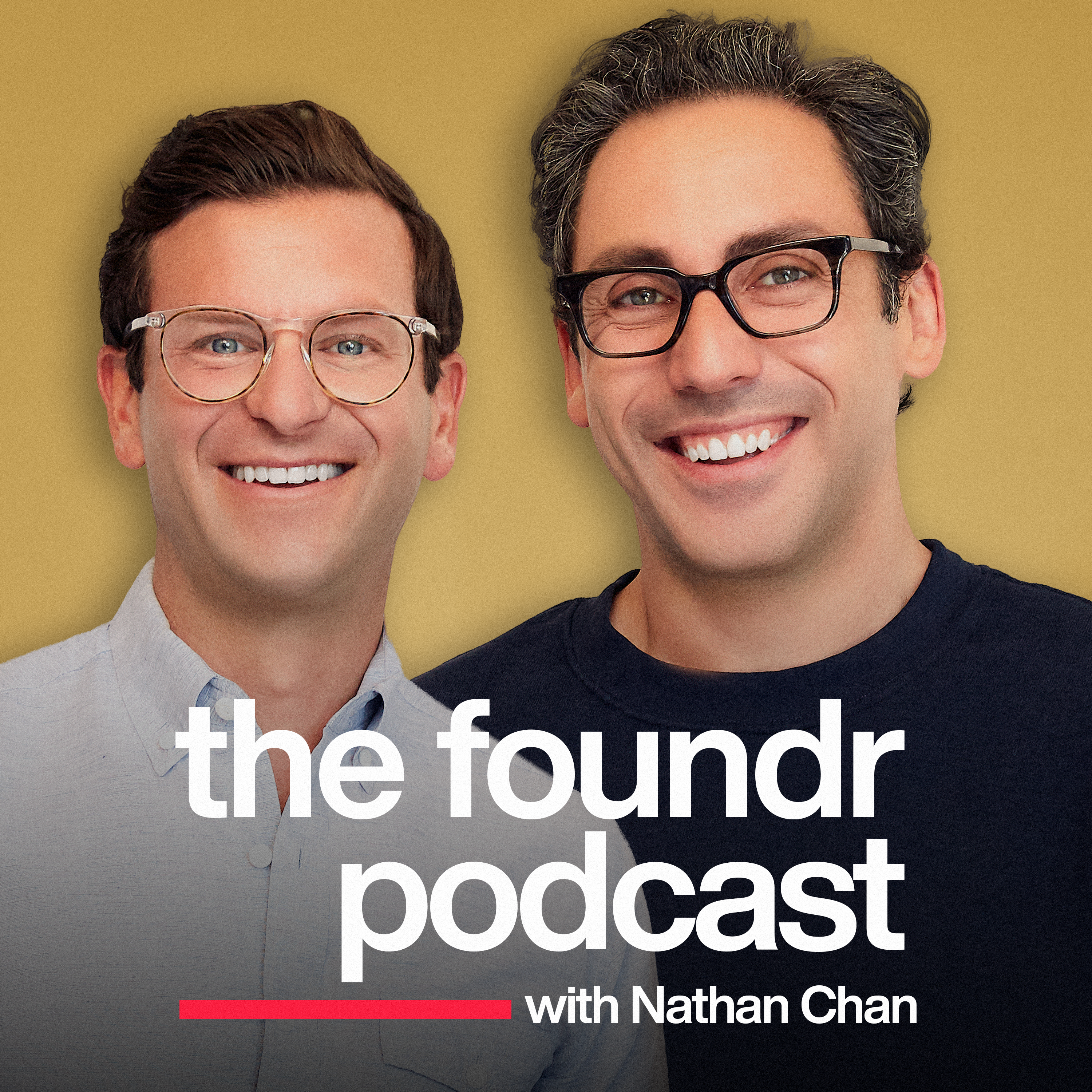
Warby Parker started with a simple, infuriating question: why did a pair of glasses cost more than an iPhone? Neil Blumenthal and Dave Gilboa met in the first week of business school, pooled $120,000 of their life savings with their two co-founders, and spent a year and a half building a brand before selling a single pair. When they launched in Vogue and GQ in February 2010, they sold out of their entire inventory, built a waitlist of 20,000 customers, and hit their first-year sales target in three weeks. They didn’t spend a penny on customer acquisition for three years. Today Warby Parker has raised around $300 million, is a public company, and is one of the brands that defined the entire direct-to-consumer era.
In this interview, the co-founders and co-CEOs of Warby Parker break down how they built a fashion brand from first principles, why they obsessed over the name for six months before anything else, and the discipline of staying focused while everyone told them to expand.
What you’ll learn in this interview:
Why a lost pair of glasses and a $700 bill became the insight for a category-defining brand
The brand-first approach: why they spent six months and 2,000 options getting the name right
How $120,000 of founder savings had to cover product, website, and PR - and why they ran out
The Vogue and GQ launch that sold out their entire inventory and built a 20,000-person waitlist
Why they spent zero on customer acquisition for three years - and how PR and word of mouth carried them
The de-risking playbook: free shipping, free returns, and the home try-on that got glasses on faces
Why being full-time students made it easier to take the risk than quitting a high-paying job
How they hit their first-year target in three weeks - and why constraints forced creativity on inventory
The retail accident: how selling glasses out of their own office led to a nationwide store rollout
Why “strategy is what you say no to” - and the shiny-coin advice that kept them focused
If you’re building a DTC or physical-product brand, trying to stand out in a crowded market, or wrestling with whether to raise money or stay lean, this conversation will fundamentally change how you think about brand, focus, and solving a real problem from first principles.
SAVE 50% ON OMNISEND FOR 3 MONTHS
Get 50% off your first 3 months of email and SMS marketing with Omnisend using the code FOUNDR50.
Start here → https://your.omnisend.com/foundr
SAVE 95% ON XERO FOR 6 MONTHS
Simplify your business finances with 95% off Xero for your first 6
months. Start here → https://foundr.com/xero
GET UP TO $10K IN MATCHED AD CREDITS ON APPLOVIN Scale your DTC brand beyond Meta and Google with up to $10,000 in matched ad credits, plus $1,000 free to test AppLovin. Start here → https://applovin.com/foundr
WANT TO GROW YOUR BRAND WITH META ADS?
Join the Foundr Operators Waitlist → https://foundr.com/operators
HOW WE CAN HELP YOU SCALE YOUR BUSINESS FASTER
Learn directly from 7, 8 & 9-figure founders inside Foundr+
Start your $1 trial → https://www.foundr.com/startdollartrial
PREFER A CUSTOM ROADMAP AND 1-ON-1 COACHING?
→ Starting from scratch? Apply here →
https://foundr.com/pages/coaching-start-application
→ Already have a store? Apply here →
https://foundr.com/pages/coaching-growth-application
CONNECT WITH NATHAN CHAN
Instagram → https://www.instagram.com/nathanchan
LinkedIn → https://www.linkedin.com/in/nathanhchan/
CONNECT WITH WARBY PARKER
Instagram → https://www.instagram.com/warbyparker/
Website → https://www.warbyparker.com/
Dave's LinkedIn → https://www.linkedin.com/in/davegilboa
Neil's LinkedIn → https://www.linkedin.com/in/nblumenthal
FOLLOW FOUNDR FOR MORE BUSINESS GROWTH STRATEGIES
YouTube → https://bit.ly/2uyvzdt
Website → https://www.foundr.com
Instagram → https://www.instagram.com/foundr/
Facebook → https://www.facebook.com/foundr
Twitter → https://www.twitter.com/foundr
LinkedIn → https://www.linkedin.com/company/foundr/
Podcast → https://www.foundr.com/podcast
Scan the code with your iPhone camera
Listen in the app.