
In short
Podcast Summary: Consistency Is The Key To Beating Your Competition | Ep 955
Podcast Overview
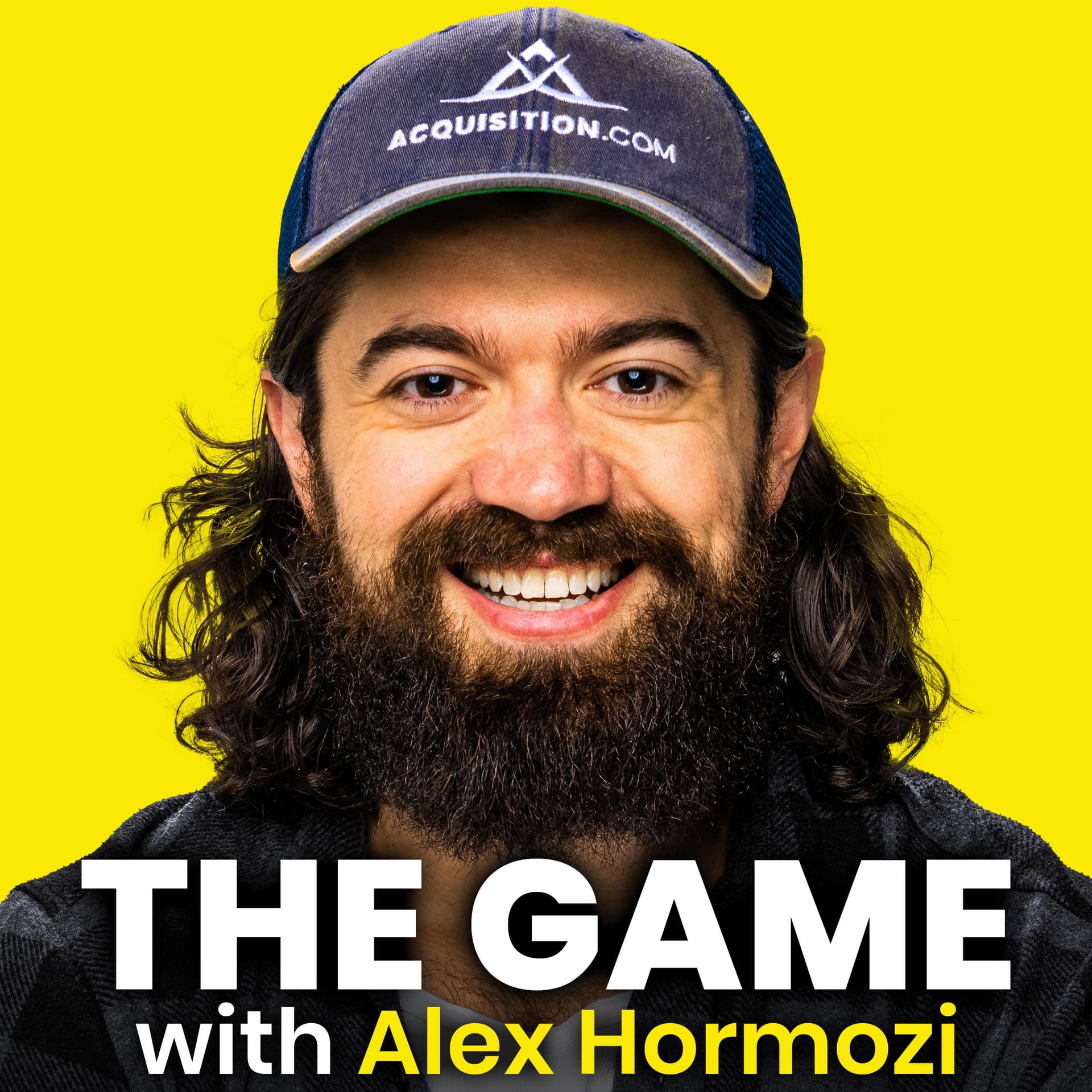
- Title: The Game with Alex Hormozi
- Host: Alex Hormozi, an entrepreneur and investor.
- Focus: Strategies on acquiring customers, maximizing profits, retaining customers, and sharing lessons from personal experiences.
Episode Description In this episode, Alex Hormozi emphasizes the importance of consistency in business and how it can be a competitive advantage. He shares his insights on content creation, branding, and building influence using a structured framework.
Key Themes
- Consistency as a Competitive Edge
- Consistency is often underestimated in its importance in business.
- Starting and maintaining a steady flow of content can lead to increased visibility and customer engagement.
- Content Strategy Overview
- Alex discusses his commitment to live streaming and creating content that engages his audience directly.
- He reveals that his content strategy has yielded millions of views, showcasing the power of regular content distribution.
- SPCL Framework for Building Influence
- Alex introduces the SPCL framework, which stands for:
- Status: Control over desirable resources increases influence.
- Power: Derived from the correlation between actions taken and positive outcomes.
- Credibility: Third-party validation enhances trust.
- Likeness: Relatability and shared values foster connections.
Breakdown of the SPCL Framework
- Status:
- Control over scarce resources leads to status.
- Example: A bartender has status in a bar due to controlling access to drinks.
- Power:
- Comes from the ability to influence behavior positively through reinforcement cycles.
- Example: Providing successful stock picks increases trust and power.
- Credibility:
- Established through third-party endorsements or tangible proof of success.
- Example: Achievements like a successful book launch validate credibility.
- Likeness:
- Relatability and shared values enhance influence.
- Authenticity in presenting oneself leads to stronger connections with the audience.
Content Creation Insights
- Emphasizes the need to create content that attracts the right audience rather than chasing views.
- Highlights the importance of creating valuable, niche-specific content to ensure the right prospects are engaged.
- Discusses the shift from "social media" to "interest media" where content should cater to specific interests of the target demographic.
Importance of Volume
- Alex compares his content output (35,000 pieces in a year) with other businesses, highlighting the linear relationship between content volume and business success.
- He stresses that consistent and high-volume content creation can amplify reach and engagement significantly.
Live Streaming as a Strategy
- Alex plans to focus on live interactive content, leveraging the immediacy and authenticity of live interactions to build deeper connections.
- He shares an anecdote about a conversation with Mr. Beast regarding the future of content, highlighting the rising importance of engaging, real-time media.
Conclusion
- The episode concludes with a strong message about starting now and being consistent in efforts.
- Offers a final thought: "You will not make less money by letting more people know about your stuff."
Key Takeaways
- Consistency in content creation is vital for long-term success.
- The SPCL framework can effectively enhance influence and audience engagement.
- Focus on quality and relevance of content rather than sheer volume of views.
- Live streaming is an effective way to connect with audiences authentically.
Social Media Links
- [LinkedIn](https://www.linkedin.com/in/alexhormozi/)
- [Instagram](https://www.instagram.com/hormozi/?hl=en)
- [Facebook](https://www.facebook.com/alex.hormozi)
- [YouTube](https://www.youtube.com/c/AlexHormozi)
- [Twitter](https://twitter.com/AlexHormozi?s=20&t=J9vPh75tO3ow9xExYLsBDQ)
- [Acquisition](https://www.acquisition.com/)
---
These structured notes encapsulate the key points and insights from the episode, ensuring clarity and easy reference for those interested in the concepts discussed by Alex Hormozi.
Written by AI. May contain mistakes. Listen to the episode to check what was said.
Transcript
Automatic transcript. May contain errors.0:01and like i'm telling you like if you can unlock consistency like you can become an incredibly dangerous competitor. It's wildly underestimated. And so for those of you who are like starting right now, like start, like start, you will not make less money by letting more people know about your stuff, period. Some of you guys may know this, but I've, I'm committing fully to, to do more live streaming and I want to do this so I could like make my content with you guys. And so you can kind of see like behind the scenes what it actually is. So the plan for the day is that one, I'm going to talk about some content strategy stuff that I think will be beneficial for you guys.
0:34And then And I'll be taking live Q &As from y 'all. Doing a little Hormozy Hotline action. We got 32.7 million views on YouTube this month. Here's how. So I posted 35 ,000 pieces of content this year. We did a$100 billion book launch for$100 million money models in 72 hours or three days. We did$100 million in sales, 105 point something or 6 million to be exact. And the issue that most people struggle with is that you're making not enough content, number one, and the types of content that you're making are not attracting the types of customers you want. And so the promise that I have for you today is that I will show you a framework that I have called SPCL, like special if you want.
1:11But it's how to build influence rather than how to get as many views as possible or anything like that. All right. But it's a four part framework. Special is how you can remember SPCL. And I want to break down each of the four components for you so that you can think about how you want to approach making content. All right. And building a brand in general. And so I also share this because I am not somebody who naturally, like some people just naturally have that like taste and, you know, brands, knowledge and like have cool factor for like I am not that way. Like I'm not naturally that way. I'm not artistic.
1:44I'm really not creative, but I will work hard. And so I'm going to show you stuff that I've learned so that you can hopefully if you just have work ethic, you can model it. OK, so SPCL. These are letters and hopefully overhead cam works. All right. So S-P-C-L. Okay, so what do these actually stand for? All right, so number one is status. And this is why you hear me talk about proof so much. But how do you define status from an operational perspective? For those of you who are new to the channel, I like to operationalize things, meaning like I like to look at objective reality and describe how we would see with your eyes rather than try and put a whole bunch of like emotional words around stuff because these are like that type of language is what confused me for a very long time when I was coming up.
2:26And it was only after I started defining things by what I could see, what I could observe, did reality feel like sharper, more crisp to me. And my ability to predict what was going to happen next increased by a lot. And so this is why I talk in this way. So how do I find status? So status is someone who controls reinforcers in a given environment. So that's a little bit fancy word. But fundamentally, if you control the good stuff that people want, then you will have status no matter what it is, right? And so the simplest example I have is like, if you go to a bar and it's a busy bar and there's a bartender and you have to get the bartender attention in order to get a drink or booze, that guy in that moment has status.
3:04He controls the scarce resource. Right. But if that guy walks out of the bar, no longer controlling that scarce resource, he does not have the same status or even close to it. Right. Like outside of the bar, he's not getting tips every single five seconds when he like moves his hands a little bit, like says something nice. Right. People aren't waving money at him as he walks to the street. Of course not. Right. is because he has status of one condition and he doesn't have another. Now, what's interesting about all four of these elements I'm going to break down, they all can work independently, but the idea is that you want all four of these stacked together.
3:32And this is what gives you the most influence, right? So like any of these four on their own would give you influence. Like that bartender, if he just says that, he would have some level of influence. And I'll give you a different example of this. If a kid inherits money, right, they're going to have status, right? Like if you have money, even if you didn't earn it, even if you didn't anything, If you have money, you will have some degree of status because you control something other people want, period. That's how it works. All right. But with that kid who has money, have the same status as a kid who has money, who also gave you, you know, 10 different crypto coin picks that all popped off.
4:10Right. Well, if he gave you 10 different picks and you followed them and they all popped off, you would for sure. think about how much more influence would that person have over them saying, hey, you should put money in this, or hey, you should give me money for X, Y, Z, or whatever it is. Obviously, I'm talking money because I'm a business person first. But think about how much more influence version two would have with just two of those things versus version one. That's the difference. But if you have all four, that's when you become super sad. One of my classic examples, which leads us to P, which is power.
4:40So status is number one, so you control scarce resources. Power is number two. I would say if I had to only pick one, I would pick power and I'll explain why. So power comes from something in the behavioral dynamics world called say do correspondence. What that means is if I say something and then you do it and then a good thing occurs, a reinforcing event happens afterwards, you are more likely to comply with a following request, right? So say different. I give you the example of the guy who says, hey, here's 10 stock picks, you buy them and then a good thing happens, right? The thing goes up.
5:14Great. That person now has power. So that person has status and power, which is why they are more influential than the trust fund kid who just has money, right? And so to the same degree, for many of you, we're trying to make content. One, it's like, okay, status, I want to demonstrate that I control a scarce resource that some people might want, right? And so what makes this a little bit more muddy is that sometimes one event can check multiple boxes. And so I'll give you a simple example. When we launched the book, we did a hundred million plus in sales, right? That in and of itself, me having money from the event gives me status.
5:50Me saying, Hey, you can launch stuff in this way. Give me credibility, right? Because I, I show that I have an event. I have something that has happened as a result of me doing it. They give me third party credibility. There's something that you can observe with your eyes, right? The reason that my ads do well when I have my$10 million building behind me is like, oh, well, that's hard to fake, right? And so you have credibility there. And so one event, like selling a company, can give you money, it can give you credibility. And then if I give people directions on how they can do things that are similar, and then good things happen, then all of a sudden you get power.
6:23And then the last is likeness. I know I'm skipping around, but credibility is number three. And I'm going to go in more detail on all these, all right and then likeness so what's likeness so likeness is that you see some this is some people say reliability this can be both uh psychological in terms of you share similar values with this person you let you like their vibe whatever you want to say right you like their behavior setting it and that behavior set matches to people who have been positive in your life in the past or they literally just look like you right so like layla and i could talk about the exact same stuff but she's a girl and so she's gonna have more chicks who follow her than me and so maybe it's because the topic but i would think you know at my onset i think oh it's because I talk about money and I start with my business.
7:00That's why I have a more male audience. But Layla, I think, is like 54 % female. And she talks about almost exclusively money and business. Obviously, she talks about some mindset stuff too. But I say this to say, okay, if we have these four things, and these are the things that create influence, and I would define influences, high likelihood of compliance with requests. Okay? So what does that mean? So if I say, hey, grab my new book, or I say, hey, come to this webinar. Hey, I'm going live. Come check it out. or hey, you should come to a workshop, whatever it is, right? You make some sort of solicitation.
7:30It could be like or subscribe. It doesn't matter. Like there's levels of how cool big of an ass something is. And if anybody's played like a video game, it's like you have like a role for like Dungeons & Dragons. And it like depends on how carries matter, how much influence you have, how high of a role or how low of a role rather, you'd need in order to be successful with the request, right? And so if you want to stack that stat for you, right? Then you want to min-max your influence, if you will. then you want to stack all four of these sticks. Okay. You're like, okay, I think I'm following with this.
7:59So how does this relate to content? So first off, starting from the back likeness, I think so much more of it is just like, just be you. I don't think, I don't think there's any, there's zero ROI in trying to be or act in a way that is different than who you are. And I like, it's, it's a relatively trite message, but like most people are NPCs. Most people say They pre-recorded scripts. They look at the four different outfit combinations that exist for different kind of mental stereotypes. It's like, oh, yeah, guy who loves barbecue and craft beers. Oh, yeah, that's that archetype. I'm just going to be that archetype.
8:38Or you've got, like, hipster bro who likes hipster shit, right? Or you've got, you know, like, just bro, right? You've got just like stir bro. And people, someone put me in that status, but I also like for a few years was wearing like sandals that look like really weird. And I wore those and I was not bro-y at all, but I wore them because they were super comfortable and I didn't have to like wear socks, which is a big thing for me. Anyways, the point is, it's like, I think what makes you unique is that you actually lean into the nuances that make you you and actually have a way to defend why you do what you do.
9:07Because most people don't even think about why they do what they do. And if you do things and you don't know why, it's not, it's because you're following someone else's directions for your life rather than you're up. weird, like real. And so, so much of us have been programmed by people earlier in our lives. And I say program as though we're like machines, but think about it like this. What person do you think in your life has super high max status, power, credibility, likeness? I'll wait. Who do you think has the highest, has these maxed out earlier on in your life? It's your parents, right? It's your parents.
9:39So think about all four of these elements. Status. Do your parents control scarce resources, things you want. They've got money and they've got toys that they can buy you. They've got food. They act like they control your shelter. They control what room you live in. They control if there's other people in the room. They have huge amounts of status in your life because they control all the scarce resources, all the things you want. And also to the degree for each of these SPCL, these are not binaries. So don't think like, oh, I have status. I don't have status. It's to what degree do you have status, right?
10:10Like if somebody's got more money than you, they might have some status. If you got$1 and someone got 10 grand, they got more status than you, right? But if someone's a billionaire, they have way more status than the guy who's 10 ,000, right? Okay. So again, think not in binaries, yes or no, but thinking continuums. So the next one is think about your parents' power. How many reinforcement cycles do you assume that your parents have from the time you were born? When I say reinforcement cycles, it means like they said, do this, you did that thing, and then a good thing happened. Now, you might be like, oh, I hate my dad or hate my mom or whatever your thing is.
10:43I don't really care. That doesn't matter for this purpose. The idea is that they probably said, don't go in the street or don't do that. And you avoided a bad thing or do this. And then a good thing happened, right? You tied your shoes the first time you put the two bunny ears together. You tied your shoes. A good thing happened. They thought you followed their directions. Think about how many times a parent has given you directions. You followed them and a bad thing was avoided or a good thing happened. Many. And so it makes sense that not only do they have a lot of status, they have a lot of power.
11:09Okay. What else do they have? Credibility. Now, this is one where I think parents sometimes might lack compared to the other things. Now, if you have a parent who also has credibility in that specific realm of whatever it is that they're talking about, then you have even more influence on you, right? And then finally, for parents, are they like you? Yeah, they literally look like you, right? And oftentimes, they share similar values to you, to a degree. Obviously, some people just go polar opposite from their parents. That's fine, but I'm talking in sweeping generalities for most people, right?
11:40And so this should at least explain or break down like why do parents have so much power over us? How they have so much influence over our behaviors? Even when you don't even, here's the really kooky part about this. You might not even want to listen to your parents. You might not even like your parents. But you can still feel that you have to like resist their requests. Because you are so programmed based on these elements of behavior to comply with their requests. All right. And so then the idea is, how do we take these four elements, right? And then how do we reverse engineer these into the content that we have so that we can build up true influence?
12:21Like, and again, we're defining influence as the likelihood of a compliance with a request, right? And that likelihood will depend on the nature of the request and how much your SPCL is in relation to that thing, right? If I was giving out fashion tips, I probably don't have a lot of credibility for fashion tips, right? I don't know if I control any scarce resources around fashion. I have no fashion hookups. I probably haven't given anyone specific fashion tips. I have no third party anything for credibility for it. And you probably don't look like me. And so I probably would have very low influence.
12:55And so these things are not, I mean, to some degree, they can generalize as you go up and up and up, but you have more influence in domain specificity, right? So of course, there's some things that will generalize over time. This is why people go to their hairstylist and they'll listen to them for relationship advice. It's like, how does this person who cuts my hair have anything? Like, why would I trust them in any way on relationship device or on a stock pick? The thing is, is that there is some degree that generalizes, but it's obviously going to be way more domain specific to whatever their thing is, right?
13:22So hopefully this makes some sense for you guys. Okay. So if we know these are the four things, that is power, credibility, like this, then for each of these things in our videos, right, we want to demonstrate that we control scarce resources. And so for me, like the very beginning, if you think about what the intro was, right? So I said, we did 32.7 million views. And we did over 105 point something million dollars in sales for the book launch in 72 hours. And so that's me demonstrating status. I have these things, right? Then power. So what I'm going to do in this video is I'm going to break down four things you can follow.
14:00And if you follow these things, you're going to be more likely to get people who can comply with a future request. And so that means that they're not just going to watch your video, but they're going to be more likely to, one, watch the next video. And if you have any kind of call to action in the video, whatever level of call to action that is for you, whether it's subscribe or like or share or buy something that's small or set up a call or whatever it is that you sell, then this is going to be second, right? Like you'll have included that in your content. So that credibility is going to be the third party stuff.
14:30So the reason that I had at my launch, for example, I had Guinness. I had to pay those judges. I'd pay three judges, 24 hours. To be on site was because I wanted to validate that the books that we did and the revenue that we generated was legit. So I had a third party that most people respect as a legitimate corporation, that their entire business is based on trust that they validate and verify proof that these records are broken. And so that gives credibility. And then with respect to the video, status and credibility can seem similar, but because so commonly the things are linked What I mean is like, if I say I just have money, I will have some status.
15:06But with relation to what this video is about, the credibility component will be more around the views that we're able to generate and the sales that we were able to generate from having content. And so money generically gives status. The credibility around the specific that I'm describing, which is like, how do you build influence inside of a video or a personal brand? That's going to be, that's the third, that's the kind of like the objective proof. Does that make sense? Hopefully that's a problem separating these for you. One is generic status. The other is going to be specific to whatever we're describing.
15:36All right. Now, the likeness piece, like I said earlier, is just you being you. Right. And so that's why I'm actually super pumped in these live streams, because this is like, honestly, way more fun for me. I honestly hate making YouTube videos. And what I mean, that is like staring at a camera and having like, you know, prompts to solicit me to say stuff. Like I will do it because I have a relatively high pain tolerance and I'll do what is required to get what I want. but like i'm going all in on this so if you guys are like what's alex's kind of like media strategy for the future i'm focusing on two words you can write this down live interactive there's the two things that's that is describing the uh acq you know 3.0 or mostly media 3.0 vision for what's going forward like that is what i'm focusing on and i'll tell you a story of why why i think this is so interesting so i had a conversation with a mega influencer i don't think you would mind with Mr.
16:24Beast a few weeks ago. And we were talking about kind of like the future of media and content. And so one of the things that he was talking about was the soccer game that came up that they do like UK versus US. And I've never watched the game, but you might've seen some like YouTube videos about it. So what ends up happening is that they have all these different celebrities or influencers from different platforms, right? And so starting from the lowest, the lowest people on this little totem pole, they would walk out in the stadium and this became the kind of the... de facto like measuring stick for who had the most cool points, right?
16:57These are the A-listers, okay? And so this is your typical kind of celebs from like movies and like 90s and the 2000s or whatever, right? People like they recognize because they're celebs, but like they don't have like huge, I guess they have some media presence, it's more like traditional media. The level of applause for these guys was almost nothing. Barely anyone cared. So then the next level that came up was the shorts, the shorts creators. So this is your like only TikTokers or people who only make reels, but like only short videos. Okay. And so they had a little bit more applause on the applause-o-meter compared to the A-listers.
17:34Then the long form guys came out. And this is when the audience got way rowdier. All right. So this is your podcasters, your YouTubers, the people who make long form pieces of content. And I'm going to pause here for a second to kind of like highlight why I think this is. So I don't think there's anything wrong with shorts. We made tons of shorts, but I see the purpose of shorts as many times a way to get someone to watch a long, right? They watch a couple of shorts and then think, okay, this guy seems legit or this gal seems legit. I'm going to risk my time because that's the risk. They're making an investment, right?
18:07You're making an investment today. I'm going to risk them to get good return on this, right? And so shorts then need the longs, but let me show you the difference from an influence perspective, how many reinforcing cycles do you think you can have in 30 seconds compared to two hours? It's like not even clips, right? And so if someone watched two one-hour pieces of content for me, period, okay? Two one-hour pieces, 120 minutes. For me to get that same level of exposure and kind of cycles of reinforcing with a prospect, right? And they were only consuming shorts, right? Let's say my average short, do you want my average short is?
18:39Life-wise, 15 seconds. Let's say 15 for Matt's sake. Okay. So let's say it's 15 seconds. so that means it's four shorts per minute so if i have 120 minutes for longs i have to do someone would have to watch 480 shorts to have the same level of exposure as watching two hours with me and think about how how important this is like what were the things that people said like this was the quote podcast election right this one that just happened trump went on and i don't care about the politics behind it but i do care about influence and persuasion and so like why is it that the two podcasts that I think really nudged this election, my opinion, is the Trump three-hour-plus podcast that he did with Rogan like a week or whatever it was before November, is it November 4th?
19:25I think it's November 4th. I think Elon getting on Tucker Carlson and doing that interview. I think those two interviews were some of the interviews that really nudged the election. And again, I don't care who you voted for. It doesn't matter to me. I just, again, I think about this from marketing persuasion, okay? And so because of that, audiences who were not sure got to spend three hours with the president of a candidate. As a result, it just nudged some of them in the direction to ultimately vote, okay? Now, back to our little story. A-listers have almost no applause. Shorts have slut applause.
19:51Longs have a legit applause. Then, the live streamers. When the live streamers came out, it was like the entire auditorium or stadium or arena erupted. And when I heard that, it was such a visual example of just like, I mean, we have this saying, just like butts in seats. some of you guys who are watching this have some level of follow-up or you make some sort of content, whatever. And some of you guys who don't might as well be stalking, right? But if you just make a bunch of meme content, right, you demonstrate almost none of these things, right? You demonstrate no status, you give no people any directions on what to do, so they get no positive results as a result in their life as it relates to whatever driving they care about.
20:32You're not demonstrating any kind of credibility. And maybe you have some element of likeness. That way you might have some element of light does not come from a meme sort of content, right? And so what happens is some of you guys are chasing views when what I think you want is you want to have prospects who are more likely to comply with a future request, right? And so we need to change our behavior to maximize the likelihood that occurs, right? And so in looking at this thing, this is why I'm telling you, like showing my cards, I'm going to be doing more live streams. And I think this also, and this is me like outside of SPCL, but I think like meta themes overall is that I think that the internet will always move towards truth.
21:12And so I think the A-listers, everything's super curated, everything's super polished, it's Photoshopped, it's scripted, right? And as you move closer this way, it's raw, like you have a three-hour podcast, like they're not scripted, right? Or most of them are, right? Streaming, it's like, yeah, we're live, right? I can't do anything. We're alive. And so this idea of how can we approximate the rawest reality of you, us hanging out, right? And actually going through this stuff. I think that is what will unlock the influence as long as you are still including these SPCL elements into it. And I think that's the marriage, right?
21:48How do I do SPCL and do it as many times as I possibly can? That's the idea. And so live stream provides that opportunity. Now, let's also think about the true context of volume, right? So whether you like or not, Rogan, tremendous influence, right? To the same degree, PVD, tremendous influence. Dave Ramsey, tremendous influence. What is it that these guys have in common, right? What is it they have in common? They're putting out hours of content every single day. So you guys are hearing something a little bit mind-blowing? So I said earlier that we had 35 ,000 pieces of content, right? Now, I hear plenty of times, there's tons of$1 million businesses,$2 million businesses, things like that.
22:27They put out one piece of content a day, right? And there's nothing wrong with that. That's 365 pieces of content a year. And if you think about the size of our business and not common in terms of our revenue, right? Compared to somebody who's doing$1 or$2 million a year, and they're doing 365 pieces of content, we're just quite literally doing 100 times more. That's it. We're literally just doing 100 times the volume. And as a result of that 100 times of all you, what do you think's happening? We get a hundred times the prospect. And so a lot, like people want to try and like outsmart themselves and thinking that they can like not do the work that's required, but it's actually far more linear than you would expect.
Read the full transcript
23:06So like, we just know that it was like one out of 10, you know, shorts is going to go, you know, is going to be a true three eggs outlier. We just know that math looks like same thing for logs, right? And so it's like, how do I just jam as much into that input output machine as I possibly can? and as long as I'm checking these boxes, like I'm making the right kind of content, then you're going to get the right kind of prospects. All right, so I'll give you one more nugget and then I'll open up for discussion. I don't care who you are. You have to respect that man's level of effort. Like he's been doing this for under 40 years, 40 years.
23:38He's been putting out three hours a day of content. It's like, I don't care what you think about him. Like the guy works and he's consistent. and the thing is is and he'll be the first day he's like i'm it's not like i'm superman or i'm not like you know some rocket scientist here he's like but the guy is consistent and like i'm telling you like if you can unlock consistency like you can become an incredibly dangerous competitor it's wildly underestimated and so for those you were like starting right now like start like get like start you will not make less money by letting more people know better stuff period full stop so you one more nugget like i said which is that some of you guys may have heard this and it's a concept of social media is now turning into interest media.
24:22Okay, so what does this mean? Let's unpack this for a second. So if you make content and you judge it by views, I think that's dumb and I'll explain why. If I have a grandma public come and just do a running slap and just slaps me across the face, that video will probably get views. But does it get the grandma views? No. Does it get me any more people who now believe more in my stuff? No. But what it will do is it will show it to people who are interested in humor, which is a lot of people, right? But those might not be your customers, and they probably aren't. So assuming you're not an entertainer and you are somebody who's a business person, and if you're in business, whatever business you have, e-commerce, SaaS, services, brick and mortar, doesn't matter.
25:06If you sell services to anyone, you're likely going to be an educator, not an entertainer, Meaning you're trying to provide value to people to change their behavior in some way. And ideally change their behavior that gets them to walk closer to you and buy stuff. Okay? So what do I mean by social versus interest? If you want to attract the right avatar, make content for that avatar. That sounds so obvious and simple. And the thing is that no one does it. Because here's the right or downer. The content is the targeting. Like the algorithm is so good now. It knows what you're talking about. it. It knows it can literally judge your background.
25:41It judges what you're wearing. It judges who you are and will display it to the people that they know have a history of watching content that is similar to that, that people find valuable. And so if you're making stuff about how to fix pianos, because you're a piano repitter guy, then you will have people who are trying to fix their pianos, right? Where they're making, or maybe they're making a purchasing decision relative to pianos. Maybe they want to see which ones break the leash or whatever. But if you're making that type of content, you might be like, Like, man, I'm only getting, you know, a thousand views of video.
26:09It's like, yeah, but the market of people who are buying pianos might be significantly smaller than the market of people who just want to be entertained or distracted. So it's not fair to compare your views against Mr. Beast. It doesn't make any sense, right? And so if I were to think to myself, like, I have a room of a thousand people that are going to watch this and all of them are only interested in fixing pianos, that's a hell of an opportunity. I care so much more about IRL responses. So what I mean by that. if I look at video and then I get texts from business owners that I like and that I respect being like, yo, that was fire.
26:41Then I'm like, okay, I'm on the right track. And so some of you guys, let me know the comments. You guys have seen a format that we talked about. We call it cash cows, but basically it's me. There's a business owner that presents a little bit of their business and they come to this side and we talked about how to preserve business. So let me know in the comments if you like that style. And if you do, let me know if you're a business owner or not. Okay. So I like that style and I'm not a business owner. I like that style and I am a business owner or I don't like that style and I'm a business owner or I don't like that style and I'm not a business owner.
27:08Here's the reality of it. Whenever people are here in person at our headquarters, right? You were like that style and you're a business owner. Okay, great. Yes. Okay. Yes, exactly. So if you are a business owner, when I have people who are here in person, IRL, in real life in Vegas, right? Business owners who fly out. I ask, I say, what is your favorite type of content. Dollars to donuts, that's their favorite type of content. And so I make more of that, even though, and it would make sense. Like it would make sense that there's fewer of those people, right? Because just think about math. So let's say that a hundred percent of people, like this represents a hundred percent.
27:45Let's just use USA because I already know all the numbers for USA. Okay. So let's say this is 100%. All right. You get a hundred percent of people are interested. Okay. Well, right now, only 9 % of people even own a business. Okay. 9%. So right off the bat, I'm going to have a huge percentage of people that aren't my ideal audience. Now, of course, I do have people who are business interested. And that's why I'm a co-founder of school. And we give people a way to go start a business online in a low cost way, right? Which you can do. It's nine months a month after a 14 day trial. You can check it out.
28:15There's a bunch of like training and community and all that good stuff. All right. But you can go school.com. I I think it's below this video. It doesn't matter. Point B, 9 % is what I'm competing for, okay? Now, that means that there's about 32 to 33 million business owners in the US, okay? 32 million. That's 100 % of all business owners. Now, within that, 95 % of that 9 % is below$1 million in revenue. 95%. So then I've got 5 % of that 9%. that are over a million. If you want to get weird with it, what percent do you think is over 10 million? 0.4%. One in 250. 0.4%. And then 100 million, nine figures, is I think one in roughly 3 ,000, depending on like your data source.
29:08One in 3 ,000 businesses gets to 100 million a year, this big. And so it would make sense then that we've given these numbers, right? 9 % is 32 million. So out of 5 % of that, there's only going to be a million and a half people. There's only a million and a half people who are business owners doing over a million based on the math that this is sensitive to it. Maybe there's this incorrect, but that's the myth, right? And so if we're looking at that's the market, then it would make sense that I'm not going to get all 100 % of them to watch my video, right? If I got one and a half million views and 100 % of them were business owners, that'd be insane, right?
29:40And so it would make sense that if I get 100 ,000 views on a video that's really made for that level of business owner, that are crushing it, right? And it doesn't make sense to look at, you know, Mr. Beast's video with 100 million views and be like, oh man, I suck. It's like, dude, we're going after, we had different games, right? And so I'd encourage you to create accurate expectations of the size of the market that you're going after. And also think about the translation of these numbers into IRL, real life. Because when I started out and I was making YouTube comment, like I started zero just like everybody else did.
30:12And I remember saying, like, I was like, can you believe, like, can you imagine and there's going to be a time where you get 10 ,000 views on the video. I remember saying this, I was like, dude, we're going to get 10 ,000 views in 24 hours. It's going to be sick. And that was because at that time I was getting like a thousand views in 24 hours. Right. But for me, I was like a thousand, like I worked in real life. I had brick and mortar. So for me to get a thousand people in a room, I was like, my God, I would do lunch alerts with 15 people. Right. So I got 15 views. I was like, hell yeah. I mean, I would do this in person and this is just being convenient for them.
30:40So it's at home. Right. And so I bring this up so that you don't judge one, the number of views. It's way more important to have quality of views. I have two businesses that I looked at in the last year that were doing over a million dollars a year with less than 5 ,000 followers. There's another business that's a B2B insurance company that I invested in that, I don't want to show the numbers, but okay, I won't show it. I'll just say many millions on like 10 ,000 followers. I'll just leave it there. All right. And so like you absolutely can make plenty of money with a very small following as long as you make content that's directly valuable for that fog.
31:11All right. With that being said, we just went over SPCL, status, power, credibility, and likeness. What do you want to include in the videos? Why I'm going all in on live stream and why the whole point is you want to get as much time with your prospects as you can be possible. You want to make the topics of your content based on the things that those people find interesting, not based on like being social, but being interesting. If you make it interesting for them, they will keep watching it. And then being realistic about your expectations on how many views you can get based on your size of market.
From the publisher
Welcome to The Game w/Alex Hormozi, hosted by entrepreneur, founder, investor, author, public speaker, and content creator Alex Hormozi. On this podcast you’ll hear how to get more customers, make more profit per customer, how to keep them longer, and the many failures and lessons Alex has learned and will learn on his path from $100M to $1B in net worth.
Wanna scale your business? Click here.
Follow Alex Hormozi’s Socials:
LinkedIn | Instagram | Facebook | YouTube | Twitter | Acquisition