Ask ChatGPT

 The Growth Podcast
20 Oct 2026 · 1h 8m · 27 chapters
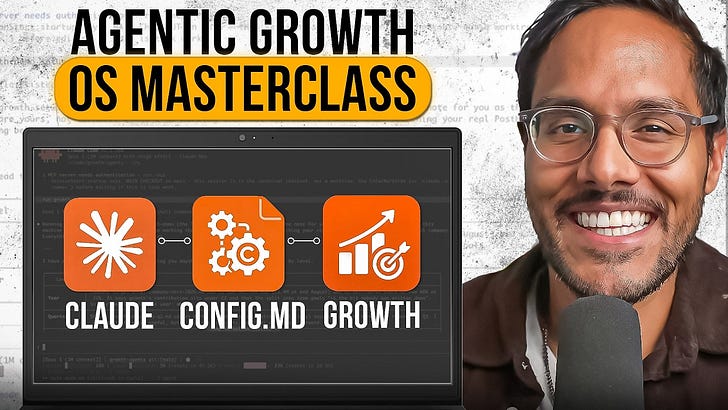
Using Claude Code as an “agentic growth operating system” to run growth work (SEO, ads, product marketing, experiments) inside the terminal with goal-driven guardrails, weekly/monthly retros, and disciplined experiment documentation.
James McAulay (spelled McAulay in transcript) is a growth/CEO operator. He helped ElevenLabs double from $100M to $200M ARR in nine months, spent a year at ElevenLabs, and previously ran his own marketplace startup (reached £100k monthly revenue after 6 years). He now teaches people to use AI agents to grow faster.
Engineers don’t need to build growth experiments; growth hires can “ship to production” with permission using Claude Code. The system prevents distraction, enforces OKRs/mission alignment, and closes the loop by ensuring experiments are finished and documented. Autonomous agents are overhyped; his approach is scheduled skills plus human-in-the-loop commands.
GitHub repo “growth agents” with skills like daily standup, weekly retro, PRD, SEO audit (Firecrawl + “data for SEO” + Lighthouse CLI), and multi-agent refine for OKRs. Demo includes an SEO audit flagging paywalled posts, missing SEO descriptions, crawlability issues, and title problems; and a multi-agent critique of stale/unmeasurable OKRs.
Written by AI. May contain mistakes.
James shares his journey in scaling businesses and the importance of growth skills.
“But actually, our launch processes were mostly custom GPTs.”
James shares his journey in scaling businesses and the importance of growth skills.
James discusses achieving rapid revenue growth without full-time employees.
“We've been talking a lot about how you use Claude Code for product work.”
James explains how to utilize Claude Code for various growth tasks.
“I'm going to show you some tools that I use, some growth experiment discipline for anyone to kind of approach growth in a rigorous way.”
James details how to structure a personalized growth system using AI.
“I've been using Ari from Oriso for a while now and the thing that hooked me isn't one feature it's the memory Most AI tools forget you the second chat ends.”
Discussion on the importance of retrospectives and stand-ups in growth.
“Amplitude custom agents will watch that funnel for you on the schedule you set.”
James reveals how AI can help spot patterns and blind spots in growth efforts.
“and it sort of checks that I'm working towards the biggest goal this week, which ties into the month, which ties into the OKRs.”
Exploration of AI's role in maintaining focus and strategic direction.
Learn how to effectively use AI tools like Claude to boost productivity and accountability in your projects.
“I have found, personally, I found Claude very good at like holding me to account on that.”
Discover strategies for running and documenting growth experiments effectively.
“And, you know, we want to make sure that our A-B tests are, you know, not only statistically significant, but like set up correctly.”
Learn how to utilize Claude to clarify and track growth objectives efficiently.
“Okay, so it's saying, yeah, you're a growth lead.”
Learn about various SEO tools and techniques to enhance website performance.
“No, I've been, you know, my company is SEMrush and then I live in labs.”
Understand how to create and manage autonomous growth agents for SEO tasks.
“I used it on my own website a few months ago.”
Discuss the limitations and realities of using autonomous agents in business.
“So they're not autonomous in the sense that they're not doing anything without my review.”
Gain insights from an SEO audit and understand its importance for web traffic.
“I think there we'll find that I don't focus on SEO quite enough.”
Learn how to utilize PRD skills effectively for project management.
Discover techniques for refining strategies through multi-agent collaboration.
“I think the sub-agent that I find particularly helpful, I don't know, yeah, here, this one missing.”
Learn how to employ multi-agent reviews to critique and refine OKRs effectively.
“Like I've seen all of this happen before, right?”
Discover how to set up disciplined experiments with templates and tools.
“So if I was in this demo, let's just like close this off, help me set up an experiment for a top of funnel landing page conversion on to test exit popup.”
Understand how to utilize PostHog effectively for tracking and analytics.
“that i recommend everyone set up have you used post hog yourself have you used it in product i use it yeah it's so good and in particular i feel like there's so much on the free plan which is so Nice.”
Learn the importance of integrating various tools for streamlined growth processes.
“I want you to like scan all of them, make the plan.”
Explore the evolution of AI tools in growth strategies since 2025.
“Now, if I hadn't connected all those tools, that would require an engineer.”
Learn about the advancements in AI tools for growth and product teams.
“So we talked a little bit about this at the beginning, but I want to circle back this.”
Explore the idea of autonomous companies and the future of AI agents.
Discover how to scale a business quickly using AI and effective strategies.
Understand how AI agents can improve their own systems and prompts.
“You've basically like taken everything you've done in the past and you've put it into like a business built around that skill set, which is genius.”
Learn how to connect with James and access his resources for AI growth.
“I mean, I post like daily tips on LinkedIn.”

Get the gist, explore an idea or ask about something said.
 Claude
On The Growth Podcast, what are the key points of this episode?
Searching your listeningAutomatic transcript. May contain errors.
0:00AI has just completely unlocked what growth people can do. We no longer need to wait for engineers to build growth experiments. You can simply ship to production with permission from your engineers yourself. We're seeing these full stack growth hires achieve incredible amounts as a single person in a startup. I guess you could call this like, yeah, an agentic growth operating system. You could use this if you were a full stack growth person, first growth hire. If you're going to be doing work inside of Claude, I think this operating system will like help you get better growth results. And it's my sort of take on how to work with Claude as a growth person.
0:33Meet James McCauley, who helped Eleven Labs double from 100 million to 200 million ARR in nine months and helped AI startups like Jack and Jill and Wonder Studios with their growth. When I was at Eleven Labs in 2025, we were definitely ahead of the curve with AI. But actually, our launch processes were mostly custom GPTs. And that's because skills hadn't been formalized across the AI ecosystem. How the hell did you scale up this business to 100k revenue in just four months? So my first startup was a marketplace. It actually took us six years to reach£100 ,000 of monthly revenue. My current business hit that goal in 95 days.
1:08I haven't hired a single full-time employee. So you've taught over 400 people now. What do most people get wrong as they're learning this stuff?
1:18Before we get into today's show, please take a second to check that you're subscribed on YouTube and following on Apple and Spotify podcasts. If you want access to all of my favorite AI tools, I've gotten them to give you an entire year of their paid plans. Check out bundle.akashg.com for an entire year of Bolt.new, Airtable, Speechify, Descript, Magic Patterns, Linear, Dovetail, Arise, and Mobbin. And now, into today's show.
1:50We've been talking a lot about how you use Claude Code for product work. But what about all the important growth work? SEO, ads, product marketing. These are really important skills. And if you are on a growth team, you might've been wondering, how do I apply everything in this channel? If you're a PM at a startup who has to handle growth work, you might've been wondering, how do I apply this to my growth work? Today, I've brought in an expert, somebody who's not only grown his own business to$100 ,000 monthly revenue, but he has helped grow other companies. James, welcome to the show. Thanks for having me.
2:25Really excited to be here. How do people know what they're going to see right now actually works? Yeah, in a nutshell, I ran my own company as CEO for 10 years, and I was responsible for growth there as the CEO is. Then after we were acquired, joined 11 Labs and spent a year at 11 Labs. And for me, that was a masterclass in growth, one of the fastest growing AI companies in history. and I learned a hell of a lot while I was there. After I left, I sort of spent a month going deep on Cloud Code. I did some growth consulting for a few other AI companies and now I'm running my own business teaching people how to use AI agents to grow faster.
3:05So I think my track record checks out and I think I've seen enough companies and I've seen a company like 11 Labs from the inside to hopefully know what I'm talking about. So what are we going to learn today? So I'm going to show you the system I use to run my business. 12 months ago, I was still using Cloud Chat like a lot of people. But today I run everything inside the terminal. And I'm going to walk you through the system that I'm using. I'm going to show you some skills. I'm going to show you some tools that I use, some growth experiment discipline for anyone to kind of approach growth in a rigorous way.
3:39And also this system I use for making sure that I'm like actually working towards what really matters. I think with AI, it's possible to get distracted. It's possible to go down rabbit holes, build anything. But I've sort of deliberately engineered this whole harness so that I'm constantly kept on track. And Claude or any agent that drops in here is sort of laser focused on the growth goals. So I've been using Claude Code for this. And if you go into the link at the bottom of this video, there's going to be like a way to download this. It'll be a GitHub repo. And you can just install this in like a couple of commands.
4:16this works in Claude Code, Codex, Hermes, OpenClaw if anyone's still using OpenClaw but I guess yeah 12 months ago I was you know like a lot of people in Claude Chat I had a project and I started putting like context into this project and I realized that with the right context as we all know by now an AI agent can be incredibly helpful and so I'd heard about Claude Code it was pretty new at the time but pretty much this time last year after I left to live in labs I actually like flew to Mallorca for a week went cycling and then when I wasn't on the bike I was just in the terminal like every every waking hour for like two weeks just becoming obsessed with this stuff and so I'll show you like the system that I've spent basically a year tweaking that I run my business through you know with with goals and also with skills and with tools and hopefully by the end of this video, you'll know how to put it to work and why I think it's worth implementing either my system or something very similar to this.
5:20Akash, where would you like to start? I guess, how do we set it up? What's the scaffolding here that makes it all work? Okay, so I've packaged this up as a GitHub repo. It's called growth agents. And there's like a couple of like instructions down here that will get it running. Essentially, what this is, is I've packaged up like some of the tools that I think are incredibly helpful for for working agentically I only work with tools that have like good APIs or good CLIs so everything sort of feeds back into whichever agent you're using I've also packaged up a bunch of skills and go through some of these these are skills genuinely that I use you know every day morning stand-up skill monthly retro but also like a good prd skill an seo audit etc we can get into that so it's a collection of skills it's a recommended set of tools i've got some uh weekly routines or like cron jobs depending on how you want to set it up that basically improves the harness every week so it looks at the way you're working and it suggests new skills or it goes looking for new clis so i guess you could call this like yeah an agentic growth operating system you could use this if you were like you know a full stack growth person first growth hire if you're quite specialized product marketer seo lead um you can basically onboard to this system and it will ask you about your goals and then sort of customize all of it to you maybe we start with this because i actually think that this is quite interesting unless you want to go somewhere else akash let's do it okay so this time last year i sort of wrote down you know my q4 goal and i edited the project instructions in Claude and said everything we talk about has to move me towards that goal and it was really helpful like Claude told me when I was getting distracted helped me prioritize really helped me with like career decisions actually you know I was tempted to go back into full-time work but I had told Claude that I wanted you know this freedom to run my own company again.
7:18I've been using Ari from Oriso for a while now and the thing that hooked me isn't one feature it's the memory Most AI tools forget you the second chat ends. Ari doesn't. It connects to my email, calendar, Slack, and it remembers everything. Every commitment I make, every thread I'm on, every person I've talked to and what we discuss. It tracks and organizes my work automatically, and it shows up before every meeting with exactly what I need. I never walk in cold anymore. That's the individual side. The bigger side is what Ariso does inside companies. It coaches managers, keeps teams aligned with the actual strategy, and turns all that scattered activity, the meetings, messages, and docs into a clear picture of how execution is really going.
7:57Leaders see drift before it costs them a quarter. One brain for you, shared clarity for the whole org. Try Ari at ariso.ai slash akash. That's A-R-I-S-O dot A-I slash A-A-K-A-S-H. Every growth team has a funnel they should be watching more closely. Usually, it's checkout. Amplitude custom agents will watch that funnel for you on the schedule you set. Let me show you. You start by describing the job. Watch my checkout drop off. The agent builder will ask a few questions to shape it and then the agent connectors plug it into your stack. That part matters. The agent reads the PRD, the tickets, the team conversations.
8:35So its analysis actually carries the full context of what's happened. From there, it monitors the funnel on a schedule and when it spots a problem, it acts. Right here, it files the linear ticket itself. The loop between knowing and doing closes on its own. That's the shift. Set up the agent once and it runs the work. Custom agents are free for all Amplitude customers in open beta right now. There's a library of pre-built agents too, including the exact checkout drop-off investigator. Start at amplitude.com slash AI dash agents. The agent library is linked right there. And Claude helped me like hold the line.
9:13And so this year, you know, I've got a big punchy goal for my company. and this goes into like a mission file. I then run quarterly OKRs. Don't need to explain those. I'm sure everyone working in product knows what OKRs are. And again, these are documented in the system. They tie back into the mission. I then run a monthly retro. And so at the end of every month, Claude pulls data from all the tools that matter. For me, it's Stripe, PostHog, Xero, Atio, and basically sort of ladders this up and says like, did you hit the OKRs? and like are we on track for the mission this year and helps me sort of like plan the following month.
9:51But then week to week, I'm also doing like a Friday retro and I'm not joking. I spend about an hour on these weekly retros, usually just with Whisperflow, just kind of like speaking into Claude about what went well this week and what didn't. And you'll notice here, I've said that it takes my personal reflections on like how I feel the week went and then it takes quantitative measurements from all the tools that are connected to it. So instead of me saying, oh, I feel like sales are maybe a bit slow this week, it just goes to ATEO and says, we're on track or we're not on track. If I say, oh, I'm not sure if the main landing page is converting, Claude just gets the hard, cold numbers.
10:31So I do that every week. And then I have a skill called daily standup. If you're in a company, I think daily standups, if they're done well, if they last about five minutes and if you're actually standing up, they're just really helpful. But when you're working by yourself, you don't have anyone to stand up with. So instead, I do my daily stand up with Claude, and it sort of checks that I'm working towards the biggest goal this week, which ties into the month, which ties into the OKRs. So this kind of cadence I find really helpful. Growth is all about prioritization. We do not want to get distracted.
11:05We don't want to waste time running the wrong experiments. And so I think this system is basically what's kind of like keeping me or you, if you install this on track and i've set up a session hook so that when you start claude every time it's basically reminding you of your goals so these are everything i'm going to show you is sort of fictitious numbers just as an example when you start claude instead of getting distracted and going off and using astra to build some 3d game that doesn't matter it's going to remind it's going to remind you right that like look here's the mission and this is what you said we would work on this quarter and it's gonna push back um basically when you install this your claude.md will get um sort of customized and so if claude sees you getting distracted um it's gonna sort of pull you back on track so yeah i guess you could think about this as having your own like growth lead who is just you know repeatedly saying is this a 10x bet is this going to move the needle why did you get distracted this week is there anything you want to get into on any of that well i have to admit i have tried this the weekly review the daily stand up i haven't tried the quarterly monthly part of it but what i found was that like ai would like miss certain context about something that changed rapidly or i'd have to be correcting it and so unlike a human where i felt like the stand-up and the retros were useful for alignment i have kind of stopped using these skills just sticking to execution but you're not the only guest who has emphasized how important these are so can you convince me like why should i be using ai as a thought partner for all these retros and stand-ups i have iterated on these skills you know the one i use most often is weekly retros like i sometimes forget to do a stand-up i'm gonna be honest like the stand-up is maybe like this sort of uh least valuable one and i often forget to do it but the weekly retro i am religious i think i've done like 10 15 of them over the last 10 15 weeks so for me it basically notices patterns and i'll give you an example like a lot of technical or engineering minded people i i sometimes overbuild i'm i'm sometimes like keen to just go and add more features and that's not what is actually going to move the needle and so claude noticed after like two or three retros because it can see my to-do list i've got it connected up to to-do could basically see that like there were certain outreach or certain like marketing tasks that were just stale every week and then it would look at github and it would say hang on you've you've shipped so much that like we did not need to ship you've like refactored part of your platform for no reason other than it was fun to refactor so i guess for me i think it's helpful just in like spotting blind spots and and basically being held to account on what you say matters because i i do think this is one of the biggest risks with AI now is that we can just get we can build anything right like it's not an exaggeration to say that if you or I sat down on you know tomorrow morning we could have a working sort of MVP or like a feature by the end of the day but if nobody wants that feature if nobody wants that product we've wasted our time so I think it's I think staying on track and I think like spotting your own patterns of maybe avoidance or procrastination or doing fun stuff instead of doing the stuff that's really going to move the needle.
14:29I have found, personally, I found Claude very good at like holding me to account on that. Okay. Well, maybe I'll have to give it a try with these updated skills. Maybe my skills just weren't very good. And maybe you can show us later what the output looks like. Yeah, of course. All right. So how do we spin up like our first agent? Okay. So let's try a live demo. I've basically set up a sort of folder of context for a fictitious product marketer. um let's get into claude and you're in iterm2 why iterm2 i just quite like the some of the themes in iterm uh it feels like quite a fast and snappy terminal but i mean it's basically the same it's basically the same as terminal i'm gonna get people in the comments saying it's not the same as terminal but um i think i installed it like 15 years ago when i was doing computer science at uni and every computer i've had since i've just installed iterm and then moved on to iterm Have you tried like a VS code or something?
15:24Like how should people be thinking about where you run Cloud Code? When I was learning Cloud Code last year, I was doing it inside Cursor. And so I had my files in the middle, agent on the right. And maybe I'm going to get hate for this from engineers as well. But I realized very quickly that I wasn't reading the files. Like I was setting up tests. I was inspecting all the front end. I was basically managing the coding agent but trusting that with the right testing harness it couldn't ship something that would break. And eventually I thought, well, I have this full screen, right? I've got my full desktop screen but I'm only using this column on the right.
16:07I'm ignoring all this. Why don't I just run terminal as my preferred way of running cloud code? I also think that the cursor pricing, I was running cloud code through cursor and I remember very quickly, you know, they were trying to move me up the pricing levels. And I think just running Claude Code, $200 a month plan inside the terminal was the fastest way to do it. And so I'm going to show you a demo here, right, where I've got like one screen. I've got this nice plugin called Claude Heads Up Display, just keeps an eye on my context, reminds me which branch, which work tree I'm in. But when I'm at home, I have like super wide screen and I will often have, you know, like two windows like this or maybe five.
16:47it's definitely not the most like aesthetically pleasing way to to work with agents but i find it just like snappiest fastest i i don't like the cloud code desktop app i find it just a little bit clunky compared to this cool so let's get this agent spun out okay so hopefully this is going to work i've set up like a demo folder it's got a bunch of context on like what this person's trying to achieve i've designed this in a way that it will interview you about your goals it will ask you where your goals are you know are they written down somewhere in asana are they in google docs are they in your head and it will try to sort of like crystallize all of this for you um and then basically um we'll sort of pressure test your goals and set up like a folder for growth experiments if i come back to here while this is just working i've set up a bunch of rules around like how to run growth experiments um i don't know if you've tried i don't know if you've tried this but i've actually find that Claude is a very good sort of analyst of data.
17:48And, you know, we want to make sure that our A-B tests are, you know, not only statistically significant, but like set up correctly. We want to make sure that we don't prematurely read the result of an experiment. So I've sort of packaged all of this up into like a set of rules. And then I've also set up this like loop that basically makes sure all your experiments get closed. So I don't know if this happen to you but it's it's very easy to start a growth experiment and then get distracted by shiny object syndrome and basically forget to close it and so like you try something and you never close the loop um or you know you get to the end of the year you have run like a bunch of growth experiments but they're not documented so you know you've got a bunch of post-hoc experiments but you haven't actually documented the learnings so this system is constantly asking you i'm looking at the data you know can we conclude this what did we learn let's document it let's like use that to inform the next growth experiment so it's trying to like it's trying to hold you to account basically if you start something make sure you finish it and make sure that whatever you learn is documented so the next experiment is better how often do we forget that right it's so easy and that's actually where the alpha is, is figuring out, okay, this one failed, but here's why.
19:07And like you said, I think Claude is pretty good at having like a rigor around these experiments. Like once I ran an experiment, it was like, oh wait, but here's this confound. So we have to actually look at this medium mixed model in order to look at it. So it's actually pretty smart at that point. Yeah, it's really good. I've seen this play out, you know, in my first company, we'd run a bunch of experiments and we wouldn't document them very well. And then we'd hire someone new and they would say oh i want to experiment here you know this part in the funnel and we'd say oh sorry like already tried that and they'd say cool like where can i see the results we were like um well we can tell you that it didn't work but we we don't actually have it documented so um i think with ai now there's kind of no excuse for for not documenting stuff okay so we've we've run this we've run this setup um and basically the agent has sort of looked through the folder that it's been like started in so i imagine most people watching your show have got their own maybe it's a second brain maybe it's like one folder on their computer that's got all the context they need but i'm not trying to like get anyone to create a new folder this is basically going to like run inside your existing folder and it's read through and it's saying okay here i can see that you've got some okrs already this is good you know you want six million net new arr um You've got some OKRs on Q2, but I don't see anything for Q3.
20:29I don't see anything about what your focus is this month. You've written some notes about this week and maybe some Q4 planning. A couple of tests I can see that you ran. Some information on the business. An export from product analytics. So it's like done an audit. It's like, okay, cool. I have some sense of what you're trying to achieve. So now it's asking me, do you want to do a rapid setup? where I just like ask you quick questions or do you want to do just like full setup where I interview you about like everything to do with your role and I get like full context. For the purposes of this demo, we should probably do rapid.
21:09But when I teach people like how to use co-work or code properly, the first exercise I do is getting them to do an interview with Claude that takes up to like two hours. and it feels like a slog. It feels like you're just answering loads of questions. But in doing that and having Claude basically sort of structure your context in a second brain, every answer, every question from there on out is better. I was just doing the full onboarding and just like switch on Whisperflow, just talk out loud. But for the sake of the interview, let's do some rapid onboarding. Agents and assistants are browsing, shopping and transacting alongside humans.
21:51while fraudsters use AI to build faster, cheaper, and more sophisticated attacks. Technical teams need device intelligence that evolves as quickly as these attacks do. Fingerprint is exactly that. Accuracy is the number one reason customers choose fingerprint, because their device intelligence goes deeper than identification alone, resolving visitors with precision that holds up through spoofing and evasion attempts for months at a time. Fingerprint collects more than 100 signals across devices, network, and behavior to build a single identifier. Then provide signals like bot, agency, proxy, and VPN detection to give technical teams a complete picture of risk.
22:28They ship hundreds of product updates a year, so they adapt first as browsers update, privacy requirements change, and fraud tactics change. With one API call, teams can get this running in minutes. Over 6 ,000 companies rely on fingerprint every day. Join them now at fingerprint.com. I used to think I had a retention problem. Turns out I had a messaging problem. I was sending the same onboarding emails to every new use, whether they activated on day one or never logged in again. I had no idea who was slipping or why. Customer.io changed that. Every message I send is now based on what users actually do in the product.
23:01Someone hits a key activation moment, they get nudged to the next one. Someone goes quiet, they get a different path entirely. Their AI agent makes it fast. I describe the campaign I want and it builds the full journey form. Triggers, timing, copy, even branching logic. And when I want to know how something is performing, I just ask the agent directly and it tells me what to do next. They also have an MCP server, which means AI tools like Claude can see directly what's happening in your customer.io workspace. Your segments, your customer data, your attribution, all of it. So instead of explaining your business context every time you need help, Claude already knows it.
23:34Notion used customer.io to personalize their onboarding and hit nearly 50 % open rate. Improved conversion by 6-7 % with localized campaigns. and pushed open rates up another 20 % through A-B testing. The idea is simple. Customer.io helps you deliver more impact from every message you send. If you're a PM or founder and your onboarding is still one size fits all, try Customer.io at Customer.io. Imagine learning AI product management, AI product strategy, AI product leadership, advanced PM with Claude code, all from frontier leaders at OpenAI, Anthropic, and Google for less than$10 a day. Actually, you don't have to imagine it.
24:16That's exactly what Product Faculty's AI Builder Fellowship gets you. One yearly membership, six live cohorts. Not recorded videos or another content library you never finish. Real live sessions with frontier AI leaders, hands-on AI build labs, executive insight sessions, capstone projects, unlimited retakes, and continuous access to new programs. as the AI landscape evolves. You'll also get every new certification they add while you're a fellow at no extra cost. The goal is simple. Help you master frontier AI skills to become an AI native product builder and operator, not just someone who talks about AI.
24:59Purchased separately, these programs are worth more than$19 ,245. The lowest price certification alone starts at$2 ,700. But founding members can join the entire fellowship for less than$3 ,600 per year. That's less than$10 a day. Soon, the price increases to$5 ,000 a year. So if you're serious about becoming the person your company turns to for AI, this is one of the highest ROI decisions you can make this year. Join the AI Builder Fellowship at productfaculty.com. Okay, so it's saying, yeah, you're a growth lead. I don't really know what your core objectives are. And it's saying here, do these exist already?
25:41Like, are these in Notion? Are they in Asana? linear. And then it's also noticed, you know, you exported some data from analytics. Like, is there a tool I can connect to? So I'm just going to say quick demo to make sure that it doesn't like go too deep into this, but like no Q3 objectives actually written down and data from post-talk. So yeah, it's going to like piece together all of this stuff. And then you're going to have uh let me just come back to here um it's gonna say okay cool like we got we got these skills you know do you want to do a daily stand-up probably not um and the skills i've like sort of put together we've got these like content skills that i use all the time like a tone of voice skill that sort of interviews you asks you for examples of your tone of voice i'm sure people have talked about that on your show before i do a lot of like youtube as you do for growth so I've got a skill that basically does the package the title description uh the keywords the research I've got a skill that looks at competitors you know there's some stuff in there for anyone doing YouTube uh you mentioned SEO at the start of the call so I've basically remixed a really good skill by a guy called Corey Haynes do you know Corey Haynes uh so he has done he's done this amazing uh set of skills called marketing skills I've I definitely think you should get him on the show um and his most popular one is seo audit um so i i took this i've sort of like put my own spin on it i noticed for example that like if you ask claude to scrape a website it often hits like cloudflare blocks or like doesn't doesn't read the website accurately uh so one of the tools that i've suggested installing for anyone doing seo is fire crawl just like turn any website into an md file and then also data for seo which is this like dirt cheap seo api i can't believe how cheap it is uh you give cloud code the api key and it can just research like any term for like a few cents so i've like kind of wired those into the seo audit so you don't recommend like uh whatever hundred dollar h refs subscription or something when you can just do it in cents for whatever you need from data for SEO?
28:00No, I've been, you know, my company is SEMrush and then I live in labs. I think we used SEMrush. But I noticed, you know, I've done years of SEO work. They were basically like the same tasks. I just wanted to see like my performance over, you know, certain keywords. I wanted to know our keyword gaps. I was often wanting to like put together a keyword universe. I found it so clunky in those tools to actually kind of like put together a keyword universe whereas with claude i said you know analyze my website analyze competitors use data for seo to create a keyword universe and then we will like attack the keywords that matter so yeah do you have a website like do you have a uh yeah like a personal website what is it www.news.akashg.com
28:53okay um so yeah i think this skill is amazing and not only is it going to analyze you know your backlink profile not only is it going to look for basic stuff like are your h1s correct are your links correct um it's also going to do a page speed analysis so i don't know how much you know about seo but there's a google tool called lighthouse measures like how quick your website workloads you used to have to like go to page speed their website to kind of like get a test export the test save it give it to the agent and then ask the agent to kind of like make the change but this uses the lighthouse cli so it basically just like tests it for you pulls all the data looks at you know if it's inside your repo so i'm doing a sort of like outsider test on your website but if i run this inside my own code base it immediately finds ways that we can like speed up our website, which actually matters quite a lot for SEO and helps with conversion.
29:52I think there was a study that said, you know, every second of load time that you can like reduce has this kind of like proven gain in conversion. So anyway, I think this is like a really good skill. You can see here, it's just kind of like crunching through. Maybe we can come back or I can send you that afterwards. But this is one I, this is genuinely one I use all the time. I used it on my own website a few months ago. I used it this morning. I literally deployed a new page and just ran SEO audit to check that again, it was like done correctly. So yeah, one of my favorite skills, if you pair it up with data for SEO and FireCloud.
30:31Can we go back to the agent that we spun up and that was pulling your context and just close the loop on how to build sort of like an autonomous growth agent? Yeah, of course. So I guess I want to like manage expectations here that these are not like fully autonomous growth agents. Like you can set up these skills to run on a schedule. You can take, you know, any of these skills and you could create like an agent using something like Vercel's Eve framework, OpenClaw, Hermes. My system is not really like, you know, this agent is kind of like 24 seven sitting on my Mac mini doing work for me. it's like i am in the driving seat and at any time i'm sort of like sending this agent off to do a piece of work that might take an hour and then i'm like sending this one off that might take you know another hour i've you know for example the seo audit i have a cloud code routine every sunday that like tests my whole site and tells me if anything's gotten slower so if i've shipped something that like had a negative impact then it sends me an email and it says there's been a regression and that was an agent that sort of woke up Sunday ran the test and then like sort of shut down um but yeah basically what I've this is more of like an operating system like if you're going to be doing work inside of Claude I think this operating system will like help you get better growth results and it's it's my sort of take on like how to work with Claude as a growth person so are autonomous agents overhyped or are they just not there at quality or why do we just have kind of like this schedule on skills that's a really good question overhyped in that i reckon like a lot of the people telling you on linkedin and x that they have you know autonomous agents doing stuff for them they're either like burning tokens on sort of like kind of useless stuff or you know these agents are maybe like going out to scan a competitor and sending a briefing back but in my experience like people are using these kind of autonomous agents to basically like summarize information once a day or like once a week you know i think we've both seen instinct go kind of viral on x over the last few weeks i wouldn't call instinct autonomous in that you know i don't think it kind of just decides to go and do a piece of work for you like these agents are like at your beck and call right you give them a command and they can go and spend like two or three hours 24 hours on a problem i'd say that's you know like relatively autonomous but the idea that we have these agents that we sort of create and then they just go off and like print money for us without us sort of doing anything I think is a little bit of a fantasy and maybe some kind of overhyping on Twitter what about you like do you have any agents that are sort of doing stuff without you really sort of steering them or is it is it like this kind of direct the agent have them work for a few hours come back I am painfully bad at focusing on growth stuff all I focus on is content content content so the only thing i have is like a couple schedules like i look at something religiously called like my linkedin post lab which basically i have a schedule which pulls from 100 creators who i follow on linkedin every morning so i don't actually browse linkedin really i just browse my linkedin post lab but i actually host it on my website and so that's just a schedule and then i have a couple loops running the idea with these loops is that they're going to go look at the feedback that I give them to become self-improving.
34:09So they're not autonomous in the sense that they're not doing anything without my review. But I do have, for example, a loop that's focused on helping me figure out what I'm going to post on LinkedIn. And so it'll go look at my post performance yesterday and it'll automatically update itself and say, okay, you tried this. Like for instance, realistically yesterday, I tried, hey, what if I post two posts instead of one post per day, one link post and one image, what's going to happen? And so this morning it came back to me and said, hey, your net impressions were actually lower than one post a day.
34:45So maybe that experiment didn't work. And so here's what I'm proposing you write about today. You just published this deep dive. You should write about that. So that's the only story. I mean, you said you're not doing much growth, but that sounds very scientific. it sounds like you're doing you're just you're doing content-led growth right and like you're you're trying to iterate you're trying to run experiments uh i think you're you're underselling what you've built slightly and and and that sounds cool i think we could we could call that sort of proactive agent you could say it's autonomous you know if you were sort of using the term liberally but as we both know like it's it's probably a skill that runs on a schedule does the same thing sort of every day and that that can be powerful but yeah I'm not claiming that you know if anyone installs this they can sort of like retire and just have agents like you know run their business for them I think this is like I mean I I feel like I had an analogy for this recently but yeah my day-to-day is like five or six tabs sending off different pieces of work to Claude code sometimes i use like glm or kimmy if like claude is down um but the whole harness around this is basically what is like you know sort of nudging me towards the goals and sort of making sure that we like document and learn from what we do and in these skills you know you can spin these up as sub agents you know but you could set them up as a schedule but i'm not sort of i'm not claiming that this is like an agentic team yeah that like runs itself not yet anyway So maybe can we circle back to the SEO audit?
36:17I think there we'll find that I don't focus on SEO quite enough. Okay, so yeah, one thing I forgot to do here is I forgot to ask for this as like an HTML report, but we got some issues. So, well, it thinks that the issue is a lot of your posts are paywalled, which is probably intentional. Apparently, a lot of posts don't have SEO descriptions. and there's a bunch of stuff about like crawlability some of your titles are quite long there's like some duplication going on you know like there's quite a lot of good stuff here and i remember 10 years ago paying seo agencies like quite a lot of money to come back there's a report like this like two or three weeks you know after we'd engaged them and then i remember giving a report like this to my developers and waiting two or three weeks to have it all sort of like prioritized backlogged built whereas now you know if i sent you this report you gave it to whichever agent is inside your repo and said like slash goal test and refine until all of these are solved it would do it and so you know in about a couple of hours we've just like tidied up your seo presence quite a lot does this match what you were expecting well i'm actually literally in the process of looking at what happened to my seo because in may i was getting like 25k visits from SEO and it's down to like 10k so these are all great next steps for me and I'm literally going to go do those after this yeah definitely um I don't have your email to hand but I will like I'll send this to you straight afterwards I mean a couple of things that I think are interesting um so we could talk about my PRD skill I mean effectively everyone in your audience knows what a PRD is I don't think we need to go into this in too much detail but again like I said earlier mine just really grills you on like why you want to build something so you know there's the famous um five whys test i think it was like toyota that came up with this where they were actually using it to like get to the root of a problem so something happened and they'll ask like well why did that happen okay well why did that happen and eventually you get a kind of root cause analysis i've taken that and i've basically like pointed it back at the user and said like why do you want to build this so for example I want to you know let's say I want to like build a new page on my marketing site and Claude will say okay cool like this seems like it might be a good idea tell me why like what metric is it going to move and I'll say well I think you know it might rank for this term on SEO and then it will sort of look at the data and say the the volume isn't actually that high are you sure you want to build it and so sometimes it's trying to talk you out of building something but then basically once it's got the PRD it's set up in a way that it's got all these checkboxes and the PRD and it just basically sort of ticks off its work as it goes and so if you hit a context limit or you need to like kill the session and you continue after that the agent just looks at the PRD and it sees you know I'm halfway through and then just just keeps going so I think this is like a good PRD skill but we don't need to sort of dwell on it too much this is something that I use all the time multi-agent refine I don't know if this visual is like the best visual but basically when i've written a prd when i've created anything when i've built something that i think is like quite critical like payments infrastructure i'll run this skill that basically spawns sub agents could be like three or four sometimes up to 10 and they all just take like a slightly different lens and so one of them is maybe like you know looking for technical correctness one of them is like asking if we missed anything one of them is looking for like simplicity um so if i'm building something then it's kind of these like sub-agents in an engineering sense but if i'm planning a piece of growth work then this multi-agent refine basically takes you know like a few different approaches on like growth strategy and then comes back and says okay your plan is strong in this area but like the critics the kind of like panel of critics found these weaknesses and as soon as i kind of like created this skill and started using it i I don't think I've stopped using it on a daily basis because even Fable, even Astra can miss quite big things.
40:35I think the sub-agent that I find particularly helpful, I don't know, yeah, here, this one missing. Often we will sort of have an idea, we'll go to an agent and we'll say, let's build this, maybe interview me before we build it, write the PRD. But it's kind of like we don't know what we don't know. and so if you ask an agent like what's missing from this plan it very often surfaces things that you hadn't thought of and that your primary agent hadn't thought of um so yeah i i love this skill um the one thing i would say about this is make sure that you're using sonnet sub-agents i accidentally spun up like 20 fable sub-agents yesterday and just immediately hit my limits so yeah make sure you're using sonnet or opus sub-agents for this one can you show us that in action yeah let's uh let's see what we got here okay let's uh so we got this i don't know if this is gonna open at the moment but we've got there like q2 growth okrs right and so i'm gonna say multi-agent refine okrs and so i use this quite a lot for like yeah strategy planning documents and so it's going to spin up maybe actually let me do this let me just switch this on it so that all our demos happen faster okay okay so it's going to spin up I think five subagents to kind of like critique our OKRs now as I've mentioned in like the GitHub repo you know there's some stock subagents that I use all the time like what's missing is this feasible you can also if you want i've seen people set up their kind of like panel of advisors you know like paul graham uh hormosi like whoever you look up to you can basically train an agent on their writing and then when you run multi-agent refine it will sort of like approach it as they would so what it's going to say is it's going to say do you want autonomous improvements so like it's going to run a first pass the master agent is going to like review the results and then just go and fix it for you or do you want to be involved like do you want to kind of like see the critics results and then like decide what you want to change i i use both but for this one let's say like we'll sort of check in it's you know notice that we are critiquing q2 goals in q3 but this is this is just a demo so yeah it's looking for like are these okrs measurable and rigorous are they feasible and do we have capacity to do them are they aligned with like the mission have we missed anything from these and then yeah those are the four so they're running here you can see these are sub agents uh this one you're a skeptical critic reviewing this company's growth okrs you are only oh okay it's back sonnet is fast uh so it's found a lot of problems here right um this document is stale i mean that's a that's an obvious problem uh there's a note in the retro that undermines these numbers, bunch of like technical things about like qualitative judgment instead of quantitative judgment.
43:46Like I've seen all of this happen before, right? When teams write OKRs, it's not set up, you know, to be measured correctly or they've kind of like hedged some of the numbers because the wording of the OKR was wrong. So yeah, these agents have just finished actually. I forgot how fast Sonnet 5 was. And so now our main agent is like synthesizing what they all found. And it's going to come back to me and say, say, okay, like P1s or even P0s, you need to fix these things in this document. P1, P2, and then P3, you can certainly leave that out. And again, just like adversarial review, this is called adversarial review, always, in my experience, surfaces like far more than just getting one agent to kind of like review its own work.
44:29So let's come back here and said, you know, numbers are stale again. It's not actually linked up to company OKRs. So we don't actually know if this person's OKRs are helping the company OKRs and et cetera. So you can run this and then it will say, which of these do you want to change? And you can sort of go through. So I think you have to try this skill out to kind of like experience the magic. But trust me, this is a very good skill. So should you be running like multi-agent review on the SEO audit or when should you be running that? Let's go to this example. Yeah. So it's basically found these issues.
45:01If this was my repo, I would then turn this into a PRD and, you know, the agent would go and research the code base. It would research the audit. It would put together like a phased PRD. And then I would multi-agent refine the PRD. So audit, PRD, five sub-agents like attack the PRD. And usually, yeah, they'll kind of find improvements and maybe like things that the first agent missed. so I'm often using multi-agent refine in this planning phase just before I then hand the plan over to you know the build agent or or agents and then once you have multi-agent review how do you get it to do the kind of the disciplined experiment process yeah so this is all sort of built in if I just come in here so we've got this like template uh here you know our hypothesis uh if it's tied to a key result like the baseline the primaries you know any confounders what might make us stop this experiment like this alone I wish I'd had this you know like many years ago when I was running growth in a small startup just this alone will force you to be rigorous in your experiments right and then we've also got like a playbook on a b testing uh maybe with like specific stuff on on your site.
46:19So if I was in this demo, let's just like close this off, help me set up an experiment for a top of funnel landing page conversion on to test exit popup. So with all these rules, with all these kind of templates, it's just going to make sure that your experiment is like like documented correctly and then all the skills i showed you like weekly retro even daily stand-up they look at the list of running experiments and kind of ask you to you know they'll say this one's finished like shall we do a review of it or this one's gone stale it was supposed to finish two weeks ago and you haven't documented it so the whole system is kind of like looking to make sure that these experiments get wrapped up so in this example you know it's asking me for baseline conversion rate traffic etc nobody should be answering these questions manually right this is all data that should come from post hog mix panel amplitude so in this demo folder i haven't got post hog set up but i've referred in this like set of tools post hog is like the first tool that i recommend everyone set up have you used post hog yourself have you used it in product i use it yeah it's so good and in particular i feel like there's so much on the free plan which is so Nice.
47:37You're literally the second person to say this to me in 24 hours. Like they're very generous with their free plan. And in fact, I think I only upgraded last week because I wanted, you know, retention past 12 months, but they have built just like a stunning MCP API CLI. Um, they've got like a sort of post-hog wizard now that you just like one line into code code and post-hog will sort of, run all your experiments for you. I mean, just to show you mine, I created this PostHawk account at the same time as I was discovering Cloud Code. And so I haven't created any of these dashboards. Cloud Code has done all of this through the API.
48:17Similarly, with my experiments, I haven't created these in the UI. Basically, Cloud's API key has permission to do this. It's set up the measurement. We're waiting for our test. So far, our test isn't quite working as we wanted it to but it's still got loads of time left so yeah like post hoc plus cloud code is to me just like a growth person's dream i also think you know if you're a growth person try to get try try try to get at least read-only access to your company like git repo like your team might not let you ship stuff but if your agent can see all the event definitions in post hog then you know it can basically sort of help you measure absolutely anything but if your kind of post hog system is a bit of a black box you know if you're a growth person that only has the ui and cannot see the code you're often going to be like pinging engineers on slack saying like when do we fire this event and like when was this event last updated and why have we got two of this event whereas if your team just give you a read-only key for git you can just answer all those questions yourself what are some tips and tricks to get the most out of post hog as a growth person okay so definitely what i just mentioned about having access to your code base if you can even if you're not going to be writing code or shipping prs just get access to git so that you can understand like how events are firing if you are shipping prs whether you're a sort of product person growth engineer i have set up a bunch of tests in my ci so i continuous integration when i push a pr and all the tests run one of the tests is that everything has to have a post hoc event so i cannot merge code into production unless it has all of the post hoc tracking set up because i know that i'm going to forget this like i'm going to be excited about a feature i'm going to create a new landing page and i'm just going to forget about post hoc whereas like right in you know day one of setting up this repo i thought okay what is the system that means i never forget post hoc events ever again and the system was you know a test when we submit a pr so i'd highly recommend doing that so you don't need to think about you know adding new events and then something else i did i'm trying to remember where it is in the ui and again i don't use the ui that often so i'm it's mainly like through cloud code right that's how i use it oh yeah i'm yeah yeah yeah this is me showing the ui because we're on screen and it's slightly more interesting one thing i did last week that was really helpful is I basically wrote very good definitions for every event so I was good at creating the events and you know every event existed I hired an agency who are doing some like a b tests across my funnel and they were in caught they were in post hoc chat and I noticed that one or two things were getting misinterpreted and it was because we had event names but we didn't have event definitions and so I basically wrote a prd where I said okay like we're going to define every single event.
51:19I want you to like scan all of them, make the plan. Then I multi-agent refined the PRD just to check that we were like taking the right approach. And now I can see every event says, you know, when this is fired, where it's fired, use this for, you know, measuring these types of things. And every single event in my entire sort of list of 350 is documented. Now, pre-AI, you'd only have this if you were working with like a god tier product manager right like i just i don't think anyone's data would be sort of this well annotated but this was a task i did in about two hours last week across like five different things i was doing so yeah highly recommend just making sure your data it's a bit boring but make sure your data is like well labeled well annotated what's like the right prompt here to cloud code like audit all of my telemetry and event definitions figure out gaps where we should create new events, figure out places where our definitions are wrong and help update, something like that?
52:19That was perfect. Yeah. Basically, I mean, if you like, I can go back into Cloud Code and find the exact prompt and we could show it on screen. But what you've just described would absolutely work. And just when you do that, just make sure, I'm not going to go into my API key settings right now, but just make sure that that key has the ability to read and write to your event definitions. So you've set up this agentic growth OS. A lot of people, they might just be getting access to the tools to set it up. You've made the mistakes along the way. What are the big mistakes and learnings that people can just speed up their process by learning from your mistakes?
52:59So when I started working with Claude Code, I think like everyone, I felt like a caveman that had discovered fire. And I kind of like fell under the spell of Claude Code and thought that it could do anything and I could solve any problem. And I realized that, you know, we've all experienced this, but like Claude will confidently give you information that's just wrong. And it will introduce bugs even when you're supposed to have tests. so I guess one thing on you know if you if you're doing this in any sort of technical capacity I now use cubic as like ai code reviewer uh which just like make sure I'm not shipping bugs because I had one or two bugs that were like they didn't cost me money but they were like quite annoying uh so definitely yeah cubic um and I also use sentry for error reporting so I highly recommend if you're going to be writing code you know don't trust claude on its own I've said here you know you can use any agent here.
53:55I'm primarily in cloud code, but like this is all set up in a kind of agent agnostic way. So like I do also open codecs sometimes and just kind of like keep working in this folder. I think my biggest piece of advice is like get everything connected as fast as possible. So like this is another diagram, right, of like my setup. And I've got, you know, century cubic that I just mentioned here. Playwright is great for kind of like testing stuff, but I think a lot of your audience aren't even writing code. So, you know, I've also got all my like content tools right like 11 labs epidemic mistral um on analytics i've got like vid iq data for seo like i would recommend just trying to plug everything into cloud code like giving it full context across every ecosystem you work in is is what kind of like helps it move at an incredible speed you know yesterday i don't know if i've got it here yeah i use kit for my mailing list and I was thinking oh wouldn't it be cool to get like an alert in slack every day that shows me people who engaged with an email right so I've like sent an email to like a thousand people show me the people who've engaged and then I thought well actually I don't want just everyone I want people who haven't bought from me before and also I want them to be enriched so I want to use something like Apollo to see their LinkedIn to see their profile and I want to use Atio my CRM to kind of check who's paid and who hasn't.
55:20Now, if I hadn't connected all those tools, that would require an engineer. Like that would just be a painful exercise. But that was a prompt. Like yesterday I sent that prompt saying like, I want a daily Slack alert that sends me non-booked leads enriched with Apollo using, you know, with a link to Atio. I'm not going to show you. I could show you on Slack, but it's got emails. So I'm not going to do that. And that flow is like so helpful for me and for someone who's helping me with sales at the moment. And it's only possible because everything is plugged in to Cloud Code, whether it's an official MCP, an official CLI, or just an API key.
55:59If you give Cloud Code an API key, it will usually work wonders for you. Wow. So we talked a little bit about this at the beginning, but I want to circle back this. How has this stuff evolved since you were at 11 Labs? Yeah, I was at Living Labs in 2025, and we were definitely ahead of the curve on AI. And in 2025, being ahead of the curve meant using custom GPTs. You know, skills, if I'm correct, you can fact check me on this, but I'm pretty sure that like skills as a concept were really formalized in like autumn last year. so for the majority of last year you know people weren't using agent skills we had a few different custom gpts we had one for just making sure that like copy was on brand for example like a living labs has a sort of like fairly well defined like tone of voice and so it was a custom gpt you could run anything through it and it would just sound on brand and so then we started to extend that you know we had a big spreadsheet like a launch checklist and every launch you would like duplicate this sheet you would like adjust it whether it was like a tier one product launch tier two product launch and then you just work through the sheet and we started to build out like custom gpts that would like take on parts of that process i am 100 sure now you know i left 11 labs last year but i'm 100 sure there is like a launch skill now um so i think it's it's come on a long way i would also bet that the majority of people in the growth team at 11 labs will be like working in the way that i just showed like inside cloud code plugged into all the tools 12 months ago you know even the developers were just discovering cloud code uh i don't think growth people and product people were inside cloud code you know this time last year so yeah as a as a growth industry as like a product industry i think we've we've been given these superpowers in the last 12 months that you know really do unlock so many abilities for like non-technical people it's actually wild what do you see as like the next frontier you mentioned instinct is that part of it what's like what's coming up in the next couple months that everybody in growth is going to be adopting well i think i've heard people talk about this idea of the autonomous company like the company of agents that kind of grows itself and i've seen like a few people on x kind of claim to have built something like this and i have had attempts at building something like this you know where i want to kind of like close my laptop at 6 p.m and just have agents as we talked about earlier like autonomously pick the right task work on it check their own work and then in the morning i sort of wake up review it maybe maybe i don't even review it so yeah to me i think it's like this notion of like a self-improving 24-7 company of agents and right now you know my system works really well but it still kind of waits for my prompt I've got some scheduled tasks like you have but I would love to reach a point where an agent came back to me and said like I've wrapped up this experiment it was a success I've kicked off the next one you didn't do anything um and I think just this this idea of like an agent running 24 7 is just not quite ironed out yet like versell have built a great framework called eve highly recommend trying that out um people bought mac minis and just sort of like set up open claw on them instinct is kind of the latest personal agent and like meta's muse assistant this week as well just this idea that like there's an agent not bound to your computer like running in the cloud somewhere kind of getting stuff done for you maybe even preempting what you want or or need whoever figures that out for companies i think is is going to make a lot of money and then i think you know growth people will be tasked with you know pointing these agents at the right experiments like you got to understand your customers to to run good experiments there's no point in running you know a b tests on a page that no one cares about so yeah that would be my sort of prediction i want to talk about you for a second how the hell did you scale up this business to 100k revenue in just four months okay so i was doing consulting i was doing growth consulting and i got asked to do like a workshop teaching execs on ai and actually like 12 years ago i was teaching execs coding through coding boot camps uh so i i did this one day workshop and i got really good feedback and people were like oh you're you know a good presenter feel like I transformed how I use Claude in two days and so I thought okay like maybe maybe I'm onto something and I'd been like plugging all my MCPs into Claude I had this pretty good system that was using like Apollo Granola Todoist and I ran a workshop online and I said hey I'm going to show you like how I'm running this business it's still consulting like at this point I'm still just doing growth consulting and I got something like 150 people attend that just mostly from my network and so again I thought okay there's appetite like I've got product market fit here people want to know how to actually use AI to grow faster and so I was doing consulting like four or five days a week and I thought okay I'm going to pull that back to three days a week and I'm going to give myself two days a week to run some sort of cohort like can I teach you know like a bunch companies maybe like 20 people can I teach them over four weeks how to like get all this stuff set up and I got 60 people signed up and so that was like the busiest month of my life was like three days a week of consulting and then sort of two to four days a week of like running this course um and yeah I think like you know I put my heart and soul into it I really made sure that everyone got good results uh and the word of mouth has just been kind of crazy so I incentivized them with a referral program I said you know if you've enjoyed this and you know someone that you want to to kind of like get trained here's your link and you know it gets them a discount it gets you some money again cloud code set it up for me i use something called rewardful with an api that was like very easy to use and then i got people referring you know like companies that wanted to train 20 people at once uh and with my pricing model like you know 20 people at once is pretty good so i've basically been sort of like building my own learning platform running cohorts like this every couple months uh and doing like private workshops as well so i've like just got back from Vegas uh went to Greece in the summer uh to do these like intensive like either hackathons or sort of like exec training sessions and yeah I think I've just I've found a format that you know people people want uh and I've used Claude you know fully as much as I can I've like maxed out that Claude$200 a month subscription and I just feel like I've applied everything that I learned like running a company being at 11 labs doing growth consulting so yeah I think just good timing and sort of like the right stage of my life to apply all the lessons I've learned.
1:03:14You've basically like taken everything you've done in the past and you've put it into like a business built around that skill set, which is genius. So you've taught over 400 people now. What do most people get wrong as they're learning this stuff? I think people don't realize that you can ask an agent to improve itself. Like so much of what I do. And actually I've seen maybe, yeah, one of the things I learned was like, I was at this company, Jack and Jill and they're an agent company I don't know if you've heard of them Jack kind of speaks to candidates and Jill speaks to recruiters and together they try to like match people and it's like a AI native you know like agentic first company and I would hear these like I'd hear conversations in the office where someone would say like I asked Jack how he would improve his own system prompt and he came back with like you know this 10-step list and I did it and now now he's better i was like what um you know where i'm not talking about you know recursive self-improvement in this sort of agi sense more just that like you can point an llm at its own system prompt or at its own skill and run evals or just say like how can we improve this and i think that's a skill that like a lot of people haven't even realized is possible you know quite often someone comes to me with a question they're like how can i improve my claude.md now i can give them my take on it i can say okay here's some best practices but what i usually say to them is like well have you asked claude like have you said to claude based on all of our recent interactions everything you know about me and by the way go and read the anthropic docs how could we improve my claude.md so yeah i think i think people just haven't yet sort of figured out that they can these agents can improve themselves i think as well that the reason for that is cloud chat isn't very good at like editing itself right like it's in the cloud it can't really like set up second brain it can't edit its own system instructions but once you get into cloud code and co-work you know they are able to like reflect on their own work and basically edit any file on your computer and i think when people make that jump from like cloud-based chat to kind of like file based agent they start to realize oh like Claude can fix anything about itself so yeah maybe that's like the biggest biggest breakthrough for a lot of people so I've got your LinkedIn here people got the github link below you're on YouTube you have a website you obviously have the agent accelerator is there anything else people should know if they want to work with James or learn more from you I think you've covered it.
1:05:55I mean, I post like daily tips on LinkedIn. I am posting like a good video every week on YouTube. If you want to book a call with me, there's like a link on the Agent Accelerator website to kind of like find out if we would be a good fit. But yeah, I think you are more prepared than I was there with all the links. So I think that covers it. All right, guys, we'll put those in the description or the email where you found this and see you in the next episode. I hope you learned as much from today's episode as I did. If you can do one thing that's totally free that would help the show, it would be to check that you're following on Apple and Spotify podcasts.
1:06:32Check that you've left ratings and reviews on those platforms. Check that you're subscribed on YouTube. Leave a like and a comment on this video and then share it with your friends. We're trying to make better and better podcasts. After two years, we think we've gotten something pretty good going. So let us know what we can do to make it even better, who else we should interview, and we will put on the best shows we possibly can. Finally, don't forget my offer for the bundle. You get an entire year of my paid newsletter. Plus my favorite AI tools, Bolt.new, Airtable, Speechify, Descript, Magic Patterns, Linear, Dovetail, Arise, and Mobbin.
1:07:09That's$27 ,000 worth of value for just$150. So check that out at bundle.akushji.com if it interests you. And I can't wait to share our next episode.
Brought to you by
Fingerprint: Identify good and bad visitors with industry-leading accuracy
Ariso: Ship AI agents and features faster, with fewer regressions
Customer.io: Send smarter messages using your product data
Amplitude: The market leader in product analytics
Product Faculty: Get $150 off their #1 AI PM Certification via code AAKASH150
Today's Episode
"We no longer need to wait for engineers to build growth experiments."
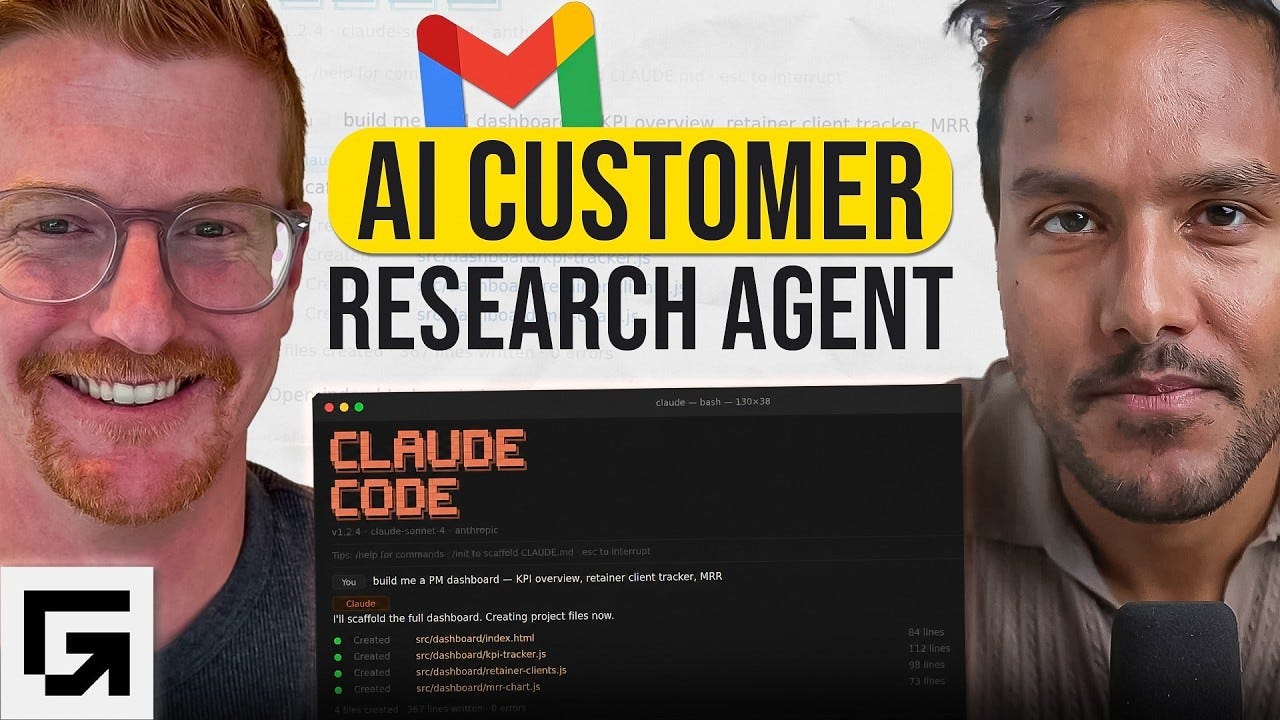
That's what James McAulay told me. Halfway through our recording, he showed me what he meant, on my own site. He ran one Claude Code skill, and a few minutes later I had a list of SEO fixes I'd been ignoring while my search traffic slid.
So I made this episode for every PM and founder doing growth with no team behind them. James led Creator Growth at ElevenLabs, and now he runs his whole business from one folder in Claude Code. I asked him to open it up.
He walks through:
The goal cascade that stops Claude (and you) from building features nobody asked for
An SEO audit skill wired to Firecrawl, DataForSEO and Lighthouse, run live on my site
Multi-agent refine, the panel of critic agents he runs on every plan before anything gets built
He runs his actual business on every piece of it, and that's why it holds up.
If you own growth and never seem to have time for it, start here.
Key Takeaways
1. Run growth from one folder - James's growth OS is one folder with three layers: tools with real APIs, skills he uses every day, and weekly routines that improve the setup. If the agent can't read a tool's data, the tool doesn't make the cut. That rule alone keeps the whole stack usable by an agent.
2. Tie every session to your goals - A goal cascade runs from a yearly mission file to quarterly OKRs, monthly and weekly retros, and a daily standup. A session hook shows Claude the mission at the start of every session. When you drift, it pushes back.
3. The weekly retro is the one that matters - James sometimes skips the standup, but never the Friday retro. Connected to his to-do list and GitHub, it caught him refactoring for fun while outreach tasks went stale for weeks. Your gut says one thing, the data checks it.
4. Do the long onboarding - The full setup is an interview with Claude that can run two hours. It feels like a slog. But once your context lives in files, every answer after it gets better.
5. Close every experiment - Each test starts from a template with a hypothesis, baseline, primary metric, confounders and stop conditions. The weekly retro and daily standup flag finished and stale tests. Every one ends in a documented learning instead of a forgotten dashboard.
6. Pull baselines, don't type them - When you set up a test, numbers like baseline conversion and traffic should come straight from PostHog, Mixpanel or Amplitude. James says nobody should be answering those questions by hand. Connect the analytics tool before you design the test.
7. Rebuild your SEO audit with cheap APIs - James's SEO audit skill adds Firecrawl to read any site, DataForSEO for keyword research at a few cents a term, and the Lighthouse CLI for page speed. Hand the report to the agent in your repo and it fixes the issues. What used to take an agency and a backlog weeks now takes hours.
8. Put critics in front of every build - Multi-agent refine sends a plan to 3 to 10 subagents, each with a different lens, then ranks the findings P0 to P3. The "what's missing" critic finds the most. Use Sonnet or Opus subagents so you don't burn through your limits.
9. Define every analytics event - James had Claude write definitions for all 350 of his PostHog events in about two hours. A CI test now blocks any PR that ships without tracking. Clean event data lets any agent or contractor measure your funnel correctly.
10. Ask your agent to improve itself - Ask Claude how to improve its own Claude.md, prompt or skill, and act on the answer. Most people miss this because chat can't edit its own instructions. Claude Code and Cowork can.
Related content
1. Podcasts
How to build a Company Operating System with Hermes and OpenClaw
How to Build Effective Product Loops in Claude Code, with Tyler Folkman
This CPO Uses Claude Code to Run his Entire Work Life, with Dave Killeen
2. Newsletters
I spent 100s of hours building a PM OS for you
How to build product-led growth in 2026
AI Agents: The Ultimate Guide for PMs
Where to find James McAulay
LinkedIn: https://www.linkedin.com/in/jamesmcaulay
X: https://x.com/thejamesmcaulay
YouTube: https://www.youtube.com/@JamesMcaulay0
Website: https://www.jamesmcaulay.co.uk
Agent Accelerator: https://agentaccelerator.ai
Where to find Aakash
LinkedIn: https://www.linkedin.com/in/aagupta/
Newsletter: https://www.news.aakashg.com
PS. Please subscribe on YouTube and follow on Apple & Spotify. It helps!
If you want to advertise, please email productgrowthppp[at]gmail[dot]com.
To hear more, visit news.aakashg.com