
 Ask ChatGPT


 The Hidden 20%
31 Dec 2025 · 55m · 18 chapters
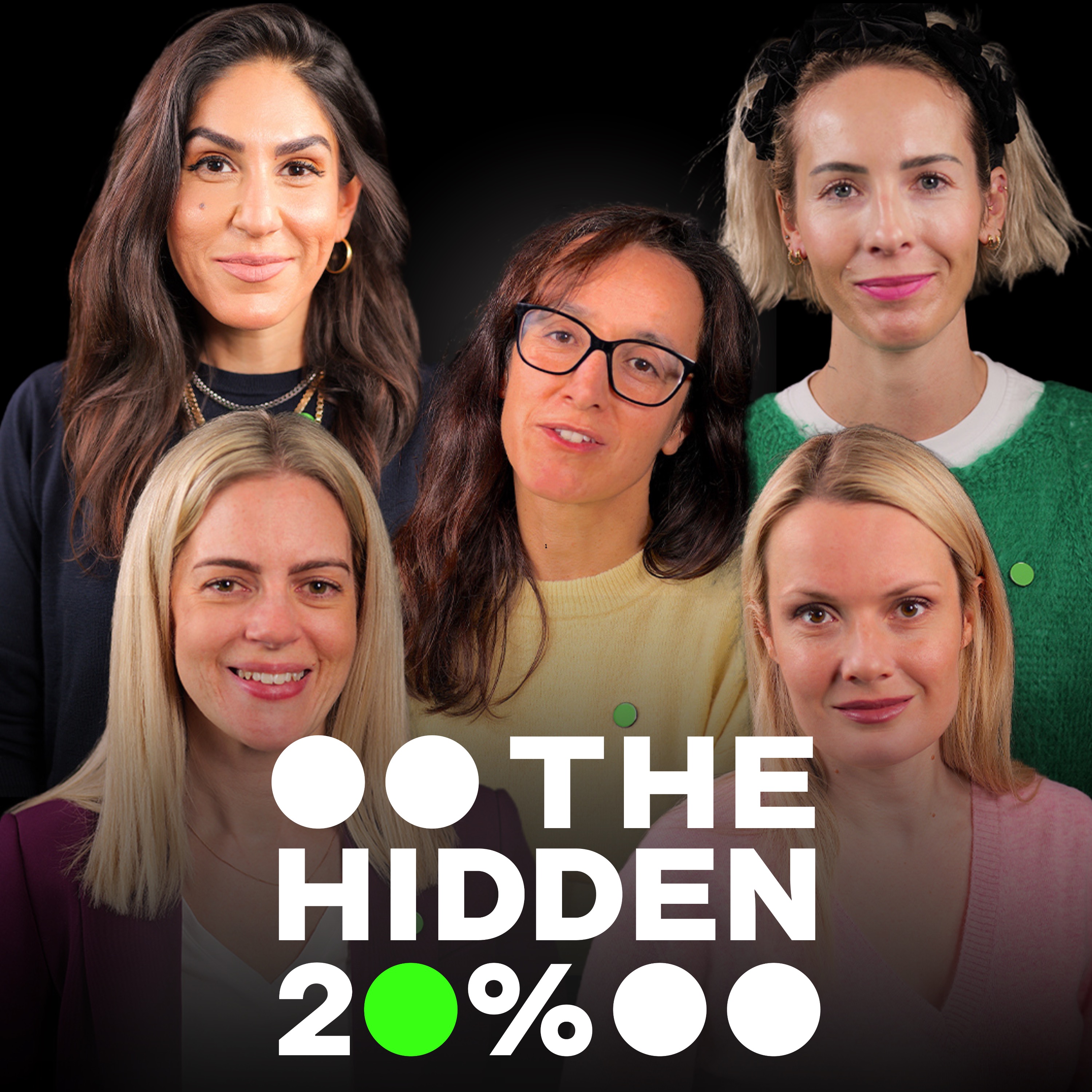
New Year’s Eve 2025 compilation episode about “New Year goals” for 2026, reframing resolutions as a kinder, longer-term “marathon not sprint” and emphasizing neurodivergent identity, cohesion, and action (not just awareness). It also discusses why resolutions exist (Babylonians ~4,000 years ago) and how to set achievable, small goals.
Renata (autism; hyper-focus; works from home; family routines like no phones during shared time). Shahroo Izadi (neurodivergent practitioner/voice; works with elite-sport clients; advocates for neurodivergent community cohesion). Dr Alison Lennox (psychiatrist; discusses resolution pressure and habit-based goals; ARFID research translation). Tony Lloyd (ADHD; semi-retired; writes/publishes a book; interested in noetic science). Ben (host; runs Hidden 20% charity).
“Awareness” has grown but community “tribes” fragment attention; need government/education/health action. Shift identity over pathology to reduce silos. Goals should be manageable and not tied to January 1st. Credibility and accurate information are essential to counter misinformation.
Renata’s plan to end work and return to family after 15 minutes; Alison’s ARFID “road shows” to clinicians; Tony’s 12 goals (including Japan) and noetic science interest; Shahroo’s “autistic” leaning and dog-collecting set; Tony’s wishes: ADHD task force action, SEN review improvements, and pride in neurodiversity.
Written by AI. May contain mistakes.
Discussion about the significance of New Year's resolutions and goals for the upcoming year.
“Thought we'd do this episode to be a bit of a compilation of loads of the guests that I've sat down with this year.”
Exploration of individual hopes and goals for 2026 from various guests.
“I'm going to 2026 and I want Hidden 20 to be loud and powerful.”
Guests share personal commitments to self-care and balance in the new year.
“I'm going to slow down and I hope when that happens, I'll be more available to those around me.”
Discussion on the importance of unity within the neurodivergent community and collective action.
“My New Year's resolution would be to continue to remember about how present I need to be with my family.”
Gain insights on the need for inclusivity within the neurodivergent community.
“And then you start questioning if the diagnosis is correct rather than actually realizing that, you know, factions are sort of forming a little bit.”
Explore the shift from a medical model to viewing neurodivergence as an identity.
“the less it can be ignored and therefore the more pressure on government, for example, or healthcare or education there is to take some action.”
Learn about the importance of research and community involvement in driving change.
“And actually you can have five hours of amazing sleep and eight hours of dreadful sleep.”
Understand the responsibilities of advocates within the neurodivergent community.
“You know, actually, we do need to be getting people to step up, put their head a bit above the parapet and tell the truth about things, because otherwise it stays the same.”
Discuss the pitfalls of New Year's resolutions and the value of setting realistic goals.
“So, Josephine, 2026, what are your thoughts on New Year's resolutions?”
The hosts discuss the importance of setting goals instead of New Year's resolutions.
“If you can't do it, you're in no worse a situation than you were before.”
A discussion on personal and professional aspirations for 2026, focusing on self-care and professional development.
“So I have my clinical work, which in terms of goals, I would say I just want to serve my patients better.”
Exploration of the fluidity of neurodiversity and the importance of continuous learning.
“It's a translation year, I sort of feel like, for us as well and actually for neurodiversity as a movement.”
The importance of credible communication in the medical field and the fear of misinformation.
“And And that's why I feel very fortunate to be in the career that I'm in, because it's a continuous learning curve.”
Tony shares his approach to setting multiple goals for the year, focusing on lifestyle and personal growth.
“Yeah, and nutrition and neurodivergence.”
Listen in as guests discuss their New Year goals and delve into noetic science.
“So I do, but I have 12, I don't have one.”
Guests share their wishes for advancing neurodiversity and the importance of self-acceptance.
“And it's the same with when people come to me, so, you know, they've had an ADHD diagnosis.”
Discussion on balancing family responsibilities with personal interests and self-care.
“So when I look at 2026, I can see it actually is a sort of dark brown colour.”
The team outlines their ambitions and plans for The Hidden 20% and its impact.
“The challenge is all of my hobbies and my interests have started out as hobbies and interests.”

Get the gist, explore an idea or ask about something said.
 Claude
On The Hidden 20%, what are the key points of this episode?
Searching your listeningAutomatic transcript. May contain errors.
0:00Welcome to The Hidden 20%, our neurodiversity charity on a mission to rewrite the future for people who think differently. Together with you and an eclectic range of brilliant guests, we can break the cycle of silence by smashing outdated stereotypes, exposing the myths and sharing the most up-to-date truths about what it really means to be just different, not deficient. The best way you can help is really simple. Subscribe so you never miss an episode, and if you can, donate to our charity through the link below. Enough preamble. I'm Ben, your host. Let's get into today's episode.
0:48So it's New Year's Eve, 2025. We made it. We made it. Let's take a breath for that. Thought we'd do this episode to be a bit of a compilation of loads of the guests that I've sat down with this year. New Year's resolutions, New Year's goals, hopes for 2026. And thought we'd start with you, Renata. I'm going to 2026 and I want Hidden 20 to be loud and powerful. in society. One of the interesting things though in talking with people about their New Year's goals and New Year's resolutions and I guess all the people that I've talked to and that this episode is going to reveal all work, all are either neurodivergent or work with neurodivergent people.
1:43Nobody signs up to New Year's resolutions. Yeah, because it's goal orientated, isn't it? It's about I have something to work towards. Very pragmatic. Yeah, I think People are going to hear like it is, it's more about goals. Yeah. It's more about the marathon, not the sprint. Yep. And it's about the year, not the day. Yes. And I think that's a really nice reframe on it rather than, oh my God, it's January the 1st and I've got to change something. I might have a goal that I need to do in December next year or in February. That feels like a much kinder way of approaching a new year. Do you know what?
2:32Because now you were talking about, and my thoughts are around transition. So you don't break up from previous year and starting something new. If you tackled adjustment, transition thinking, you can keep doing amazing things that you started in 25 and you can get better at it in 26. Or you can reflect on things that you didn't achieve or weren't great and you can try to make it better in the next year. So it's about a continuum rather than break. Yeah, rather than this cut and suddenly start something else. I feel like New Year can be such a, there can be so much pressure. Oh yes, absolutely.
3:17And there is this opportunity to kind of reset and kind of go again. But why is that? Why is not in March? Because, and people are going to hear this, we started New Year's resolutions 4 ,000 years ago. See, there is a story behind it. 4 ,000 years of New Year's resolutions as a tradition, as a thing. Well, but we do think differently. We do. But I also, I'm like, we should call these New Year's goals. Yeah. Not New Year's resolutions. We're not resolving anything. Just having some good goals. So that's what this episode is about. You're going to hear from lots of different people about their hopes and dreams and plans.
4:07for 2026 and yeah I hope 2025 was good for you well done for making it through the festive period because it is pretty brutal and yeah looking forward to sharing 2026 with you and what's going on Sam 2026 new year's resolutions goals where you go I am I'm going to take care of myself a bit more. Okay. I'm going to slow down and I hope when that happens, I'll be more available to those around me. And how are you going to do that? I don't know yet. I don't want to set goals. I don't want to tell you this time next year that I've not achieved it. Okay. I just, in my forefront of my mind, I just want to be kind to myself and I want to slow down.
5:01because I tend to run at 100 million miles an hour. And I just feel that if I slow down, I'll be slightly softer to those around me. Like me. Well, ideally you because I'm soft with everyone else. But what I mean is I just need to slow down and understand that and actually take a moment. And what do you hope for 2026 as a year? I just want to get my teeth into something. And by the self-care, I mean doing something for me in that creative sense where just feel to. So I don't know what it is. I don't know how long it's going to take, but I am going to be this time next year in a place where I can say I've started, I've done it, or I've thought about this direction.
5:52Sheru, 2026, any New Year's resolutions? I tend not to make resolutions as a result of my work. Why do you say that? Because I think when you know that you're someone who starts fast and then like, you know, the third week of January is my busiest week at work every single year. But I will say that my resolution or my intention for next year is to get a lot more clear on my finances. Okay. I really want to understand where things are going, what's going on, and not bury my head in the sand because I am not ambitious that way. But it's becoming more and more important as I get older. I'm becoming a lot more aware that I need like a margin.
6:31Yeah. And also I think that the value of what I do has come to my attention a lot more clearly this year. And the value that I bring and my value as a practitioner, as a voice. And so I feel that I finally want this year to be the year that I attach monetary value to it. And benefit from it in that sense because that's yet to happen. Yeah. Without guilt or sabotage or something like that from a scarcity place. So I think this year I want to actually know that it's okay. It's okay to hold on to good stuff when it comes to money. And it's not scary to keep an eye on everything. It is okay to want money.
7:05Yeah, I know. Sometimes when you work in the helping professions, though, you get like a crisis. But you're absolutely right. And I've realized that now because I was able to not work for a while when I needed to for my mental health. And I want to be able to do that again, especially if I'm someone who's always going to be intense, always going to want to do ambitious things. Yes. I want to make sure that should I need three or four months off. Yeah. I can do that. That's my aim next year. I think that's a really valid aim that you deserve to join the dots on. Thank you. I appreciate that. My New Year's resolution would be to continue to remember about how present I need to be with my family.
7:48A big part of my autism is hyper-focusing. And I really enjoy it when I'm genuinely present with my family. and I often can forget that with the hyper focusing so it would be a focus on less hyper focus I am trying at the moment in the last few weeks to finish work try and take 15 minutes to finish work and then as weird as it sounds like go back to my family yeah yeah rather than I finding so many occasions where I'm literally like, and I have a distillery at my home, so I work at home where I'm like, I want to get back. I need to make sure I see the kids. So I want to get back home. And therefore, I'm off some conference call, boom, laptop down, and then I'm running home and I'm taking it all with me.
8:42And then it comes into like, yeah, where are you? You're still there. yes and so I like I'm trying to plan in as ridiculous you know 15 minutes to regulate yeah yeah so that I don't bring it home and that's a good idea get it in the neck from my lovely wife that's a good idea a lot of my work is done from home which is sometimes that crossover is what can make it hard because you don't get there's no commute there's no like that decompression time yeah yeah we quite often get you know dinner's ready sort of thing and I come straight down and I'm literally straight in and you're right and I'm my head is still completely in what I'm doing that would be hard enough if even if you weren't hyper focusing you know so but we have things in place we when we do stuff together just playing games or eating or watching a film it's like no phones yeah like that's an absolute golden rule they just get you know shut away so you are with each other and when Kat and I train together I Don't talk about work.
9:42You know, that is a rule because otherwise it'll steamroll the whole session just talking about work. And it can not even be, you know, because it's different if it's something I'm passionate about, something I'm writing and the story and characters because that's also interesting. Sure. It's interesting for her. But I can go on about some email exchange. You know, the mundane things, this annoying email exchange I had yesterday. No one wants to hear about that. It's dull. But, you know, I'll just be locked in. So we have little systems in place to help with that. Good luck with that New Year's resolution.
10:10Thank you. Alison, let's talk about New Year and New Year's resolutions. I've just Googled it and found that New Year's resolutions originated 4 ,000 years ago from the Babylonians, later adopted by Christians and Romans into, I guess, what we see today. Psychologically, what is going on with the New Year's resolution? I've got no idea. I've got to be honest, until you've just told me this new historical fact, I've never had any interest in them. But that is now more compelling, isn't it? That actually there's a historical pull through that humans in different societies have used until today. What is it about news resolutions today for people that you can imagine or think is such a thing?
10:58Why are they such a thing? There's something very, very compelling about what our modern day idea of self-improvement isn't there. And I think we're constantly held to account that we need to improve. So to be given the chance to sort of bear witness to that is quite sexy really, isn't it? You know, I'm going to restart everything afresh right now. Let me ask you, do you have goals for 2026? So work-wise, I want to do more work with people who work in sort of elite sports because I really enjoy it because it's doing my job with cool neurodivergent people but in a different kind of way. Personally, I want to find all of the dogs on Instagram that are related to mine until I've completed the set.
11:40Something I've started doing. I'm not sure why. Have you actually? Yeah. How are you mapping that? I'm just tracking through everybody's followers dog by dog by dog through a breeder until I can find all the ones that are related to mine. Wow. I don't know why. How many do you think that is going to be? It's already excessive. It's already excessive. It's already led to my parents buying a dog that's related to my dog. because I've been talking about it so much. But I guess what I'm saying is what I want to do is to kind of lean more into those bits of like, actually, this is how my mind works and this is how it works well and this is what I like to do.
12:13Maybe sort of amp that up a bit this year, get a bit more of that in. Be a bit more autistic. That's why. What are your 2026 hopes for the kind of end-y space? There's a few things I would really like to be different. It almost feels a bit wrong to be saying we'd like it to be different because it's such a sort of precious space, isn't it? It's a precious space. And who am I as one person to comment on that? But what I notice, and I think what confuses a lot of people I meet who come to see me to find out if they're neurodivergent, is it feels that at the moment, awareness has grown into a degree of sort of territory holding and tribalism.
12:53So we have this autism tribe, we have this ADHD tribe. There's often a kind of war for which has more attention, which has more worthiness, which has more need. We have all the HD tick and Torex have been forgotten. All the other neurodivergences are being, you know, overlooked. And I think that there's a danger of kind of more fragmentation. So what I would really like is just a bit more cohesion within the community. Because actually, I think when we have kind of put voices together, the voice has been stronger and there's more chance of it being heard. And we've had the opportunity this year through the voices, through the ADHD task force and through the autism committee report that we've actually raised the platform here.
13:37We're not just talking about awareness, awareness, as you always say, you know, we're already aware. Yeah. That's not what we need. But I think what we need is some cohesion within the community so that the voices are louder. and actually most fundamentally we need some action from people in government stakeholders charities etc to to make some sort of response because i think it's taken a lot of courage for neurodivergent people to speak up in the way that's happened in the last 12 months and i feel very proud of that yeah i think 2025 has been a sort of speaking up kind of year which is great but there are still so many silos and like you're saying a bit territorial little bit combative for funding attention and actually when you kind of step back and go well within annd family you may well have autism Tourette's dyslexia we are all sort of fighting for the same thing which is we would like to be heard we would like to be understood we would like to be supported there's an acceptance and value side of that and i'm generalizing but i think as for all neuro minorities and so i'm with you i i really hope there's some kind of cohesion and and ultimately some community because i think what's difficult about the sort of the separations the sort of different tribes within neurodivergence is that it makes it very difficult for instance you You know, if you're a person who has been diagnosed, late diagnosed ADHD or diagnosed when you were so young that you didn't really make sense of it until adulthood anyway, that actually maybe you don't even really feel welcome to fit in within the bit that you're supposed to be.
15:27And then you start questioning if the diagnosis is correct rather than actually realizing that, you know, factions are sort of forming a little bit. So I think, as I said, for me, the most important thing is actually a bit of, I guess it's about inclusion. I mean, inclusion within the people who fall within the neurodivergent community that, OK, you know, you can be here and I can be there and we can be different. And you might not understand this about them or their child or that it might be, you know, but that's OK. Yeah. You know, we're still within this frame and that's supportive. Yeah. It's the kind of there's one community.
15:59Yeah. Let's just have one. You know, I guess my hope also connected to that is that we further this journey of identity versus pathology. and I believe and this is just my thought that part of the way or part of the pathway of having one community and being more together is it being more about identity than the medical clinical side because the medical clinical side is important but it's it naturally silos everything it silos the pathways it silos the assessments it silos the fund it is a sort yeah it is it is whereas when you put it innd identity i feel like it puts a completely different lens on it and you know that analogy where you i love it where people have said that you know why is there kind of more diagnosis of say you know adhd and it's like think of it like the sky you know it's just that we've built better telescopes so we can see more it's not that there are more stars but on one hand you have that and then on this kind of meta level you also have the fact that neurodivergence is all these other stars too it's a constellation right yeah and that and that's not captured medically no and that's not medically defined that that doesn't have like hard boundaries but do you think in 2026 we could get to a place where there's more of a resolution between kind of identity and the medical model?
17:36Because I suppose what I know that people who have sort of similar sort of roles to me say, particularly in the NHS, is that if we haven't got the framework, we won't get the funding. If neurodivergence doesn't fall under health, no one else is going to fund it. Yes. So do you think we could get to more of a kind of... I do. My view is that the more this community speaks up and rises up, and holds up the mirror and demands change, the less it can be ignored and therefore the more pressure on government, for example, or healthcare or education there is to take some action. That's in a slightly revolution-type way, right, of who is best to decide what is best for this community, the community or policy and decision makers and i have to side with the community i have to side with lived experience not some government magic wand and that's needed sure and and the worst thing would be that we have this amazing community that talks to itself but nothing else in society changes because whilst we all might feel a bit more supported with each other if the fundamental systemic narratives and norms don't adjust then we are going to be in that situation of the same things happening over and over again and the same over index ofnd people in divorce and exclusion and bullying and mental health and addiction and suicide and all you know all the bad things but i think there's a really horrid irony isn't there about like how much society is struggling with change given that's such a typical neurodivergent feature and then we're like guys we're just suggesting a little little change like yeah and And I think some of that is this is a rapidly evolving, fluid movement and situation that we actually, even academically, do not have all the answers to and do not have all the knowledge of.
20:01Or to put a finer point on it, many of the things that we thought were true are not that girls can be autistic. and adults can be autistic you know like even like those things that 30 years ago we did not believe that that is like is pretty wild that very clever people very very very intelligent people got it wrong with the best of their knowledge etc etc they have been proven that that's not the case And of course, that begs the, what else do we not even realize that this is not just with neurodiversity in mind. This goes across all like loads of things around health, etc. What vegetables we eat, how we sleep, etc.
20:57You know, it goes across our whole sort of lifestyle and wellness where we're suddenly going, oh my God, but I thought it was about the quantity of sleep that you got, not the quality. because eight hours a day was drilled into me growing up. And actually you can have five hours of amazing sleep and eight hours of dreadful sleep. And I love those bits where we're constantly proven wrong. But yeah, I think we got a demand action from government healthcare and education in a more unified way so that it's not great. We've made loads of great strides with ADHD in 2026. Oh, yeah, autism, we'll get to that.
21:40Yeah, there needs to be some... Cohesion. Yeah. Yeah. So you have no New Year's resolutions. You have some goals for 2026, professionally, personally. I'm always making little goals. Yeah. So not in a ticky way. It's just how my mind likes to know that. You know, I like to know where I'm going. It makes me feel safer to sort of plan to be somewhere. Yeah. Whether I get there or not doesn't matter. Do you have any goals for the Hidden 20 % for 2026? Many. Yeah, we've been doing this huge AI study with an amazing intelligence agency on collecting, collating and analyzing all of the studies that have been done from prevalence to barriers, gaps, etc.
22:33on neurodiversity and kind of mapping that and synthesizing that and clustering it and analyzing it and yeah that's a really big piece of work when you imagine how much has been done and how much has been studied even if you look at just the last 15 years so many studies have been done and I don't know what's going to come out of that but that kind of study has not been done And we, as the charity, believe and logically, I very strongly believe that is a really good place to start in terms of our work stepping into the world of research to have a good understanding of what do we even know before we start kind of demanding what we want to change, for example.
23:25Is it international as well, the information you're collating? Yeah, it's international and it's UK. It's great. It's cross neurotype. It's clinical and also societal and cultural. It's basically looking at it all through every single dimension. It's lived experience. It's everything from all the transcripts from our podcasts, like 80, 90 episodes. All of those get fed in. all the amazing NHS data, amazing ONS data, like Lancet, et cetera, et cetera. Whack it all in there. Whack it all in. Sort of like, yeah, sticking it all into a washing machine and then seeing what comes out. So that is a big piece of work and that's going to set off a whole load of other projects and work streams, a lot of them around sharing the truth and sharing truths or exposing truths and using that kind of research to have some influence hopefully and yeah try and get some things to change we've done a lot of work on the on the podcast obviously over the last 12 months for this for 2025 and 2026 is absolutely still about producing amazing content and building an amazing community and all of that good stuff but yeah we're going a level deeper into let's really get under the skin of yeah what the data says shots fired shots fired brilliant i think that's us as a team feeling we're part of this community we have value we deserve to be here we have an audience and a community that we're protective of and want to work with and like we've built a platform of sorts yeah okay that's a responsibility now what we're going to do with it right you know since meeting you ben i've been having quite similar thoughts and sense of like hang on i've just discovered that actually using the privilege of my platform to talk about some of these issues with you in terms of services, that resonates in the sense that this, I can help here.
25:38You know, actually, we do need to be getting people to step up, put their head a bit above the parapet and tell the truth about things, because otherwise it stays the same. Yeah. And it is recognizing that agency, isn't it? There is a responsibility there, I feel, or there is an opportunity to put a hand up. Yeah. But I think the responsibility, you know, for 2026 is for us to just try and do the right thing. Yeah. That's it. Simple. And more of it. So, Josephine, 2026, what are your thoughts on New Year's resolutions? That's your first get out because I've not asked you if you've got any. Just asking you what you think about them from a psychiatrist perspective.
26:24I think New Year's resolutions carry an awful lot of pressure and expectation. And if you look at the statistics, most people don't stick to them, even by the end of January. And I don't really think there's any other point of the year where we expect to be a brand new version of ourselves within 30 days and to stick to it. And from the work I've done, I think it's much better to start with small, manageable goals and build up rather than start with a huge goal that's unachievable and then feel really disappointed in yourself when you can't achieve that. And I say that having made lots of New Year's resolutions myself that I haven't necessarily stuck with.
27:14But I think it's an opportunity. I think New Year's resolutions tend for most people to center around food. And that's a bad thing in my view. Healthier habits, yes, that's great. Restrictive diets, not so great. Because that leads you into a cycle typically of not eating enough and then wanting to eat more once your body goes into hunger, starvation mode. Yeah. And the feeling that most people are generally left with then is disappointment in themselves. So you're setting yourself up to fail if you have a huge goal. Whereas if you said to yourself, for example, I'm going to eat my five a day, fruit and veg, five portions a day for the next two weeks.
28:04And if you can do that, great. No harm done. If you can't do it, you're in no worse a situation than you were before. But you also haven't committed yourself to in 2026, I'm going to completely overhaul my diet. Yeah. There is a lovely thing about the end of something and the beginning of something being that great opportunity to reflect, reset, kind of go again. And I don't have New Year's resolutions. Goals always, but they're not necessarily tied to January 1st. Yeah. You know? And I think goals are a much nicer way of working towards something rather than New Year's resolutions always have this association with I'm going to be better.
28:57Yes. I've done something wrong that I need to resolve. Okay, so we're replacing resolutions with goals. I'm happy with that. Good start. What are your goals for 2026? Lots. Great. Let's have some of them. I like to keep lots of plates spinning. So I have my clinical work, which in terms of goals, I would say I just want to serve my patients better. and for me that's through keeping myself well, educating myself, making sure that I'm keeping up even with you know what are the current questions that people will come and ask me, what are the things that people are seeing on TV that will make them interested in whatever's going on with their mental health or their eating or you know what's the climate, Yes.
29:52Sort of keeping my finger on the pulse in order to be current clinically. I have a managerial role, so making sure that I can do that effectively and develop services that will serve my patients well. I have a teaching role, which means that, again, I have to stay up to date with current knowledge. And I have a research role. so if I've kept all these plates spinning I've done well in the first place even if I don't change anything necessarily but in terms of goals 2026 will be focusing on changing research into practice and for me I've done quite a bit of research that has begun and ended in a scientific journal and that's great but it hasn't necessarily changed the world yeah 2026 is the year when my research will change the world love that which is a big goal but in terms of breaking that down the research i've done on arvid will be shared across the country in the form of road shows We are taking the research to clinicians, frontline clinicians, those working on the ground, not just in eating disorder services, but across different specialties, psychiatry, pediatricians, dieticians, a true multidisciplinary approach.
31:28What I loved about what you said in your kind of spinning plates analogy and the kind of four different hats that you wear that I find so refreshing is that ultimately, if I summarize what you said, you need to look after yourself. Yeah. because if you look after yourself, and I mean that in the full sense of you talking about keeping your finger on the pulse and being able to answer questions and keep up to date with what's going on, if you do that, you can be of use and help and service to both professionals and also your patients. Yeah. And it's that cliche analogy of fit your own oxygen mask before others.
32:09Yeah. If I don't look after myself and make sure I am well enough, informed enough to serve the people that I work with, I'm no use to anyone. To want to provide the best for your family, for the people you work with, for the people you love, you shouldn't sacrifice yourself necessarily. And I think it's an opportunity for people to recognize that self-care and self-love are really important. And you can't pass on love, confidence, joy unless you feel that in yourself in some way. Yeah. So 2026, ARFID-wise, sounds like a really big year and a translation year. Yeah. It's a translation year, I sort of feel like, for us as well and actually for neurodiversity as a movement.
33:04Lots of reports, lots of research, lots of studies, lots of kind of calls for change. And time that that moves into action, I think is good. And it's weird, isn't it, that changing the last number on a year suddenly means we look forward to that. We set that as a goal. It's a point of reflection, isn't it? Yeah. It's a point at which to say, we've got a period of time to look ahead to. What have we achieved so far? Yes. And what can we do? And how can we keep pushing things forwards? Yeah. And I think conversations like on podcasts like this are so important in a checkpoint of where are we now and what can we do next.
33:55I really look forward to 30 years in the future or my kids, you know, listening back to kind of episodes like this and kind of going, oh my God, we didn't know anything. Yeah. Like we had no idea. But in the same way, we're very fortunate sat here today because if we had this conversation a hundred years ago, we wouldn't be using any of this terminology. Yes. We'd be having a completely different conversation. Some of the same struggles, perhaps. Probably still be talking about New Year's resolutions. Yep. 4 ,000 years. Do you know we've had New Year's resolutions for 4 ,000 years? The ancient Babylonians.
34:38I didn't know that. Yeah, I found that out today. No wonder there's so much pressure. There's 4 ,000 years of pressure. 4 ,000 years of pressure. So I think, yes, we can always look at what we're not doing now. Sure. But we should be very grateful for the information that we have and the knowledge that we have now. Yeah. Yeah, we should. And I think the other thing that I am trying to keep in mind for 2026 is that this isn't finite. this is all fluid and definitely where neurodiversity is concerned and if we're learning that you know there's plasticity with the brain then we should apply that to things like neurodiversity things like narratives in society stigma etc where we can change our minds we can expand our minds and that there isn't a destination here and I hate that like journey destination cliche to hold the tension that it is fluid like it does move and it does morph and it can change and we can expand our understanding rather than thinking like oh we've got to do it all next year got it all in 2026.
35:55Yes and that's a really important concept because to speak from my experience I naively thought that by the time I finished medical school I would know everything I would have all the answers I would have learned all the textbook things I hadn't obviously even if I had that knowledge has changed. Yeah. In a relatively short space of time. Yeah. And And that's why I feel very fortunate to be in the career that I'm in, because it's a continuous learning curve. Yes. So whilst I talked about goals being related to staying current and keeping educated and well informed, that's part of the journey, to use your word, and part of the fascinating side of medicine.
36:47Yes. But also human psyche, right? Yeah. I say the word curious and curiosity, I feel like I say it all the time of like, it's the one thing, the one thing that I wish we all had more of is just that curiosity to, yeah, want to understand things a bit more, understand people a bit more. If we all understood ourselves a little better, we would understand everyone better. And I think lots of people are fascinated by how people think, how they tick, what makes them do things. But actually, what you learn about yourself through life teaches you a lot about other people and how you interact with other people, regardless of neurodiversity.
37:39Yes. So interesting humans. You know, that's what keeps me interested, right? That's what keeps us as a charity interested is we are every week learning more, every week exposed to more, every week exposed to more understanding of what we don't understand and what we don't know about. And it's also about knowing which information to listen to. Yes. And whose voice to amplify and whose voice to suppress. Yeah. and how to challenge misinformation. And going back to goals for 2026, one of the goals I would like to work towards is putting my voice out there more to share true information and accurate information.
38:31And that's a really scary thing for a doctor to do. Don't think as doctors we are naturally trained gifted at sharing our messages we are taught to communicate we are taught to educate but the way that communication and education is now done is so different yeah and actually it's extremely anxiety provoking for most people to put their head above the parapet and say, here is my opinion or here are the facts as I believe them to be true. Yes. And the reason I want to do more of that is because there is so much noise and so much misinformation, particularly around mental health out there. And nutrition.
39:18Yeah, and nutrition and neurodivergence. So it's easy to think that there's enough information out there, but actually the noise and the voices of the people who are misguided perhaps is very loud my number one not mine are as a charity number one thing that is so important to us and i'm so continually appropriately scared of not happening is we want to be credible because the number one thing we would love is that people trust our guests the work that we do our intentions and so credibility and trust and therefore safety and reassurance and clarity of like, just want the truth, just the truth.
40:23Credibility is really hard to achieve and one foot wrong can tear it all down. Yes. And so actually, again, going back to the concept of putting yourself out there and you do this on a regular basis, putting your personal story out there in the world, putting your family's story out there in the world is not an easy thing to do. No. But actually to build credibility to your brand, your charity, your work, you have to work really hard to make sure that the messaging is accurate. And I can see, you know, the hard work that you and your team put into that. And I'm certain it's going in the right direction.
41:13Well, we can't do it without credible people, right? We can't do it without great information and great stories. And it needs both. It needs a platform, but it needs the people to kind of come and share. I'm so pumped for you that Arfid's going on tour. That's a great thing. And you are wanting to speak up and cut through the noise.
41:43Tony, do you make New Year's resolutions? I do. I tend to call them goals for the year and that's what I do okay they usually there's 12 of them all right okay four of them are lifestyle goals about new habits I want to form four of them are things that are going to stretch me and make me kind of achieve something so I've started writing a book which I'm going to publish next year and going to go to Japan there's a few things that there's always things that are exciting to do, things that are challenging to do, and things that are good about sort of having a healthy lifestyle. So I do, but I have 12, I don't have one.
42:24But I think the thing that I... Of course you do, you're ADHD, you have 12. Of course, yeah. But I think one of the things I've enjoyed about semi-retirement, because I, you know, I still do some things. The whole pace of my life has kind of slowed. I'm not working 70, 80 hours a week and meditating every day and just changing the whole frequency of kind of how I live and feeling the benefit of it is I think probably in the course of the next 12 months, I'm going to find more opportunities to kind of have some kind of retreat and learn a lot more about noetic science and really kind of take better care of myself and the people around me, you know.
43:04Yeah. What is noetic science? It is the study of human consciousness that incorporates the fact that what we think we know about the human condition and the way we live in and scientific understanding about physics, that noetic science is a way of testing certain hypotheses that challenge long established conventions around what is human consciousness perhaps and how do we understand and learn certain things. So when we talked about this shift in society, this movement, this paradigm shift, then arguably you could say that there's this collective unconscious that's now becoming collectively conscious around our understanding of some aspects of human nature and the journey of humankind.
43:56mind that's a really good new year's goal i guess to have the time and have more space yeah now you're in semi-retirement yeah yeah to get into that yeah please do that because a it sounds fascinating b i constantly love when i don't know something or um or i thought i knew something and actually I'm wrong those moments are just make me feel really human and so if you can spend next year please learning much more about what we don't really know that we thought we knew about human consciousness and the neurodiversity aspect within that yeah then I can invite you back for a fourth time we can sit down and talk about it it's gonna be an interesting conversation so yeah I love that you've got 12 though 12 new year goals I tick them off as I go along yeah yeah yeah because goals can be fun yeah it's not always about stretch yeah it can be something that exactly you know I've always wanted to visit Japan so I'm going to visit Japan so I create a poster and I'll put photographs that are relevant to each goal yeah around that list of 12 goals and because ADHD a very visual thinker and kind of just look at it every day and think right okay i'm responsible for my own happiness yeah and i'm responsible for making the kind of things happen in my life that i want to happen and whether that's about visiting somewhere or developing a new habit yes i think we have this societal belief that it has to be january the first for the rest of your life where you're like no you know oh i'm stopping or i'm starting yeah rather than i'm evolving The year also.
45:47Yeah. And it's the same with when people come to me, so, you know, they've had an ADHD diagnosis. And I, okay, this is the start of a journey. It's an epiphany. Sure. But it's the start of a journey. And if you really want to improve the quality of your life and well-being and your subjective sense of happiness and fulfillment and whatever we want to do with your life, then recognize that learning that you have it, you know, recognizing that I have ADHD is one thing. learning how to live successfully with it which is unique for you you know it's going to take you at least a year yeah and it's up to you because okay even if you take medication which a lot of people don't you know pills don't teach skills they work for eight hours a day guess what your life lasts 24 hours a day and all the things that are going to improve your life are not going to be found in in a tablet yeah or in one day no i think thoughts how we think is really powerful or read a book called The Power of Eight by Lynn McTaggart or The Intention Experiment and you'll begin to get a sense of why noetic science is actually something that's been around for thousands of years.
46:55I can't wait to Google this. Also, there's part of my New Year's goals, Tony, to have a look a bit more into noetic science. Thank you. Tony, if I put you on the spot, can you give me three wishes of yours that you'd like to see happen, change for neurodiversity in 2026? Okay, well, the first one is obvious. I want politicians to actually have the political world to do something so that the National Task Force in ADHD doesn't just become another brilliant and wonderful document that gathers dust on the shelf, that they actually do something this time. And the second thing would be that the review of special educational needs in our schools, that we do something for those children and that we stop ignoring the 20, 25 % of young people who think differently for whom school is often a very distressing place for them to be.
47:54And the third thing would be that more and more people speak confidently and with pride about their neurodiversity. Don't let anybody ever, ever allow you to feel that you are in any way less than because you think differently. Because there's a perfectly good reason why you are who you are. And that is something to be proud of. Yeah, take action and speak up. Love that. Ben, what are your goals for next year? So when I look at 2026, I can see it actually is a sort of dark brown colour. Interesting. And it's that colour because it's strong and it's together. And I guess, therefore, when I think about next year, I just feel incredibly, I guess, pumped up, galvanized, committed, driven to absolutely smash this next year to the best of my ability.
49:08To break that down, I would really like to have less shutdowns. Okay. Interesting. Yeah. I have all the basics and core most important things to me that are continuums. Yeah. Spend time with my family, surprise my wife, love my team, my work, be there for my children. All that kind of like good foundational spend time in nature, stuff that I know works that I just want to continue. Yeah. What are you doing for yourself then? Because so far it's all about family. works or about others what about you that is still the thing that i'm trying to figure out and i know you know we spoke a few months ago and it's like i only really have these kind of two modes of me with my family yeah and being a husband and a father and then there's me working and I haven't yet found this and sort of where's me mode.
50:12Yeah. And I do think that is definitely connected to all the shutdowns I've had this year that I really do not want to have next year or I want to have less of them or I want to manage them better. So yeah, there's a bit of energy levels, triggers, self-care. time for myself the biggest challenge I have and I know I've said this to you before is my work doesn't feel like work yeah and that's okay and the majority of things that I'm interested in I channel into my work apart from Lego but then here's another goal that the hidden 20 % does some partnership and some work with Lego right there you're like great I'll funnel that into work as well.
51:01Therefore, my goal is, can I have some hobbies that aren't about work? Can I have some interests that don't become work? The challenge is all of my hobbies and my interests have started out as hobbies and interests. Yeah. And they have become work. why not instead of finding something that you don't want to be related with work less is more why don't you start to think about creating space just for you it doesn't matter remember we've had this conversation and i'm like yeah i love i love being in nature yeah i love if you are exploring the trees oh this is a good facility whatever just it's fine but it's just you in nature yeah and i do that i love spending time in nature and part of what i love spending time why i like spending time in nature is because i get to see it and notice things and feel part of it and be present and be present and grounded and connected yeah all that good stuff and then you know i go for a walk in the forest i see all the dead leaves on the floor my brain goes I wonder what they taste like.
52:21So then we're distilling dead leaves and the smell and the character is absolutely incredible. Yeah. I don't have the answer to that, but let's shut down. Hidden 20 % Lego partnership. We've got a huge year for the Hidden 20%. Huge year. We're going to be releasing some research that we've been doing that has not been done before, which is really exciting. Yeah. We've got a whole load of mega guests lined up. We've got loads of topics we need to get into. Lots of things we need to fight for. Lots of things we need to expose in the most positive sense of that kind of exposure word. I feel like we're kind of grown up a bit as a charity.
53:07I feel like we're a bit more of a proper charity now. And that's taken two years. I guess for the hidden 20%, we're really like walking into our clothes this next year and not f***ing about. Yeah. Owning it. Purpose. Yeah. And focused and single-minded and yeah, just want to share the truth, catch society up, break this f***ing ridiculous cycle. Yeah. Hold people to account. so that there's some like action. That's what I want, 26. Some action. Yeah, I'm really, I'm actually really, really excited about 26. Let's smash it. Yeah, I think it's going to be a strong year.
54:02That's it for today's episode of The Hidden 20%. But just before you go, a favour. The Hidden 20 % is a charity and we do this to bring you the truth, the latest research and the real stories that matter. So if this episode spoke to you, then please hit subscribe. And if you can, donate via the link below. Finally, a big shout out to you all for listening and our brilliant team who make this all happen. Phoebe, Charlie, Kristen, James, John, and the guys at TYX Studios. We'll see you next time.
54:44Thank you.
As another year closes, we’re taking a gentler approach to New Year’s thinking. In this special episode, Ben is joined by familiar voices from across the year and a hint of who’s to come in 2026 - as he sits down with clinicians, creators, advocates and friends of The Hidden 20% to talk about goals, not resolutions.
From Dr Renata Fialho to Shahroo Izadi, Céin McGillicuddy, Dr Alison Lennox, Dr Josephine Neale and Tony Lloyd, each guest reflects on what they’re carrying forward into 2026 and what they’re intentionally leaving behind.
Together, we unpack why “resolutions” can feel loaded, deficit-focused and unrealistic for neurodivergent brains, and why goals rooted in compassion, flexibility and self-trust tend to work better.
This is a calm, grounding end-of-year listen - focused less on fixing yourself, and more on meeting yourself where you are.
From all of us at The Hidden 20%, thank you for your support this year - we’ll see you in 2026. 🟢
Join us at hidden20.org/donate.
________
Host: Ben Branson
Production Manager: Phoebe De Leiburné
Video Editor: James Scriven
Social Media Manager: Charlie Young
Music: Jackson Greenberg
Head of Marketing: Kristen Fuller
00:00 Introduction
1:15 A Neurodivergent Rethink of New Year’s Resolutions with Dr Renata Fialho
4:25 Sam Branson on Realistic ND Goals & Letting Go of Pressure
5:50 Shahroo Izadi: Neurodivergence, Money & Rewriting Financial Goals
7:40 Céin McGillicuddy on ND Creativity, Balance & 2026 Intentions
10:13 Dr Alison Lennox’s New Year Goals as an Autistic Psychiatrist
12:19 Dr Alison Lennox: Hopes for Neurodivergence in 2026
22:10 The Hidden 20% Team: Community Goals for 2026
26:10 Dr Josephine Neale: Why “Goals” Work Better Than Resolutions for ND Brains
41:42 Tony Lloyd: How I Set ND-Friendly Goals Across Life, Work & Purpose
47:07 Tony Lloyd’s Three Wishes for Neurodivergence in 2026
48:25 Ben’s Personal New Year Goals for 2026
The Hidden 20% is a charity founded by AuDHD entrepreneur, Ben Branson.
Our mission is simple: To change how the world sees neurodivergence.
No more stigma. No more shame. No more silence.
1 in 5 people are neurodivergent. That’s 1.6 billion of us - yet too many are still excluded, misunderstood, or left without support.
To break the cycle, we amplify voices, challenge myths, and keep showing up. Spotlighting stories, stats and hard truths. Smashing stereotypes through honest voices, creative campaigns and research that can’t be ignored.Every month, over 50,000 people turn to The Hidden 20% to feel safe, seen and to learn about brilliant brains.
With your support, we can reach further, grow louder, and keep fighting for the 1 in 5 who deserve more.
Join us at hidden20.org/donate.
Become a monthly donor.
Be part of our community where great minds think differently.
Brought to you by charity The Hidden 20% #1203348
______________
Follow & subscribe…
Website: www.hidden20.org
Instagram / TikTok / Youtube / X: @Hidden20charity
Ben Branson @seedlip_ben
Dr Renata Fialho
Shahroo Izadi
Sam Branson
Dr Tony Lloyd
Dr Alison Lennox
Dr Josephine Neale
Céin McGillicuddy
If you'd like to support The Hidden 20%, you can buy a "green dot" badge at https://www.hidden20.org/thegreendot/p/badge. All proceeds go to the charity.
Hosted on Acast. See acast.com/privacy for more information.


