
 Ask ChatGPT


 The Hidden 20%
5 Nov 2025 · 1h · 27 chapters
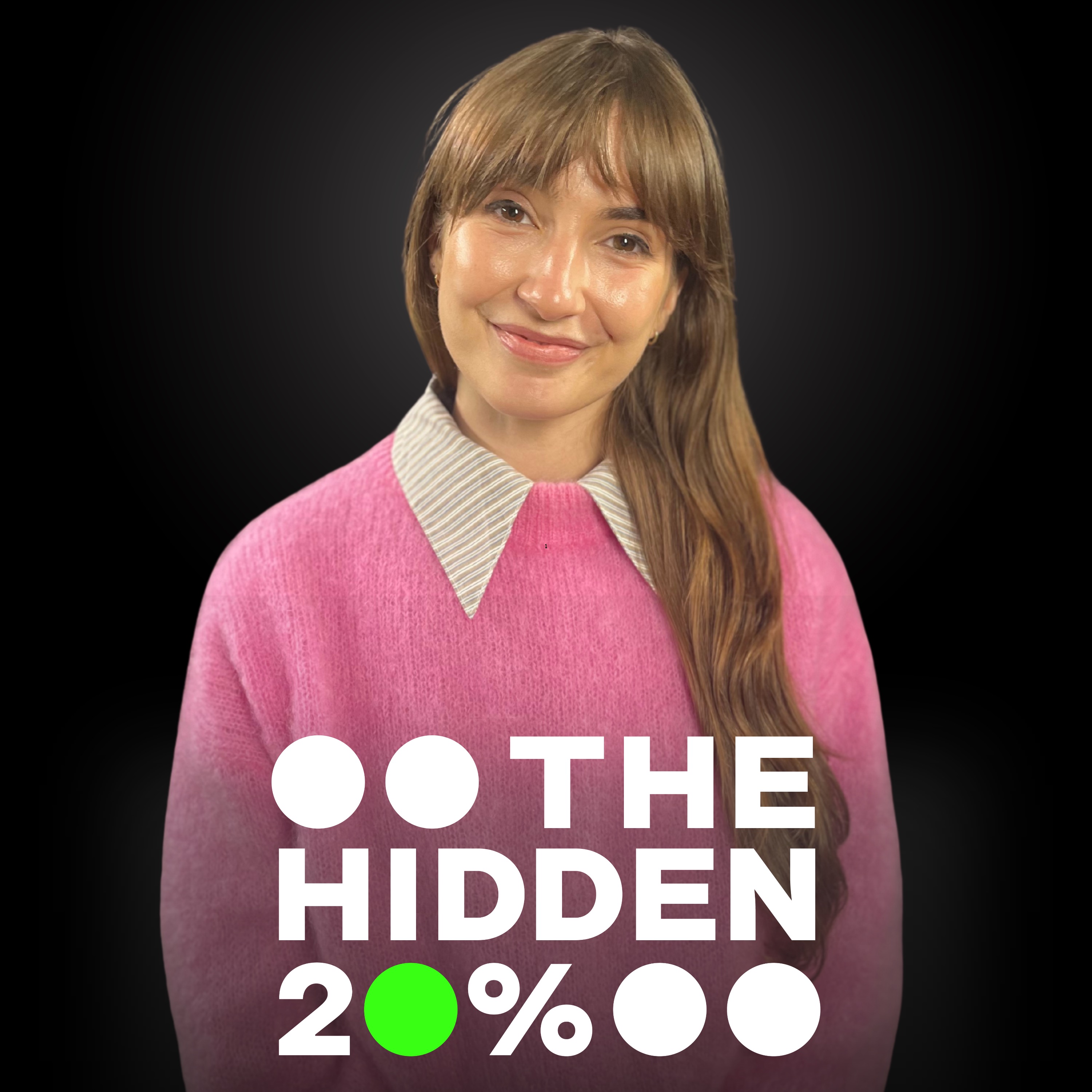
Sophie (plant-based chef and author) discusses ADHD/burnout and “belonging,” focusing on how family rejection and stigma led to estrangement, late diagnosis/misdiagnosis, and how she finds balance through supportive relationships, routines, and plant-based food.
Sophie is a plant-based chef, PT, best-selling author, and social media creator with 1.5M followers. She describes being undiagnosed for years, later receiving formal ADHD and autism diagnoses (with no family input). Her partner is portrayed as highly supportive and “almost definitely on the spectrum,” and her family is largely non-engaging about neurodivergence.
Neurodivergence is “at the heart” of why families don’t communicate; stigma (“keep calm and carry on”) blocks understanding. She rejects the “ADHD superpower” framing, emphasizing overwhelm, RSD, and burnout cycles. She argues plant-based eating supports brain-gut chemistry and emotional regulation.
Childhood school reports (“away with the fairies”), being told she’s “fine,” a workplace rumor in 2017/2018, estrangement for two years, “pile-breaking” sessions with her partner, stuck days triggered by phone use, and burnout from daily recipe posting (30 recipes in January 2023). She also dispels “plant-based can’t provide protein” and discusses B12/omega supplementation.
Written by AI. May contain mistakes.
Sophie discusses her family's rejection of her ADHD and her feelings about it.
“I went to my family and they very much rejected the idea.”
Sophie shares her thoughts on being herself and overcoming shame.
“and you've got like 1.5 million followers.”
Sophie reflects on her childhood, being shy, and her experiences with school and pets.
“Let's go back to childhood and what were you like as a young girl?”
Sophie discusses her experiences in school, her first relationship, and issues with alcohol.
“Ended up going to the university that kind of wasn't right for me.”
Sophie speaks on how her perception of her brain has evolved and her emotional growth.
“So, yeah, that's kind of a little wrap up of how puberty and early life went with it.”
Sophie recalls the moment she realized she might have ADHD and her family's response to it.
“But yeah, it was quite a hard pill to swallow for most of my 20s, I would say.”
Discussion on generational attitudes towards neurodivergence and family conversations.
“I remember in one of my jobs, one of the guys I was working with apparently went behind my back and told the rest of the team, I think Sophie has ADHD.”
Explore the impact of neurodivergence on family relationships.
“But that's not true of the whole of that generation, I guess.”
Discover how a supportive partner can help navigate challenges.
“So they don't want to engage with the process.”
Learn about the challenges and adaptations in a neurodivergent relationship.
“And I don't even like to think about if I hadn't have swiped on Hinge that time, what would have happened.”
Understand the personal and familial journey into vegetarianism.
“I'm right, aren't I, that you grew up vegetarian.”
Discuss the connection between nutrition and brain health.
“as opposed to, I mean, it's lovely to eat out, but if you're getting fast food or stuff, you feel it, don't you?”
Examine daily struggles with ADHD and strategies for productivity.
“I think it's something in the region of 80%, maybe even higher.”
Delve into the highs and lows of self-employment and burnout.
“So I get up and if I reach for my phone, game over.”
Learn how to cope with and prevent burnout in creative work.
Explore the challenges of burnout and the importance of outsourcing tasks.
“And that was basically the length of like a very long dissertation.”
Hear about the speaker's varied job experiences and the lessons learned from them.
“And then there's people that just are in their own lane doing their own thing.”
Discover the challenges faced in the advertising industry and the disconnect between creativity and client expectations.
“And then there was one set of keys in the car and then I couldn't get it open.”
Learn about a pivotal moment that led to a career change and pursuing passion project.
“Becoming all these fun ideas, fun campaigns, but they would all get shot down by the client or by my superiors.”
Discuss the double-edged nature of social media regarding mental health and creativity.
Examine ADHD's influence on content creation and the importance of relatability in the community.
“Sometimes I like to say I think I've got it under control.”
Debunk myths about plant-based diets and discuss the variety of plant proteins available.
Learn about various plant-based protein sources and their benefits.
“I would generally advise people to focus on things like seitan, tempeh, tofu, nuts and seeds.”
Discuss the environmental implications of meat consumption versus plant-based diets.
“I guess I'm also interested in the nutritional content of our plants, vegetables, fruits, etc.”
Explore the difficulties of discussing ADHD and the stigma surrounding it.
Explore the exhaustion of masking one's true self and the liberation of embracing authenticity.
“And yet, as you said, like so liberating when you don't have to do that.”
Acknowledging the importance of self-diagnosis and expressing gratitude for support.
“all that kind of stuff is as valid as ever with so many people on waiting lists, et cetera, et cetera.”

Get the gist, explore an idea or ask about something said.
 Claude
On The Hidden 20%, what are the key points of this episode?
Searching your listeningAutomatic transcript. May contain errors.
0:00I went to my family and they very much rejected the idea.
0:06Sophie Waplington: Of input or of you being ADHD or what? It was a, you're fine, there's nothing wrong with you. Who's told you this? I think neurodivergence is at the heart of why we don't speak to each other. And there's been a lot of stuff that's happened as a result of not understanding our brains. People talk about ADHD as a superpower. I'll be honest with you, I don't see it as a superpower. But I do thank it for getting me here. Maybe I'll go down the route of official diagnosis. Maybe I won't. But this feels like something that I needed to do because I for once feel normal. Welcome to The Hidden 20%, our neurodiversity charity on a mission to rewrite the future for people who think differently.
0:48Sophie Waplington: Together with you and an eclectic range of brilliant guests, we can break the cycle of silence by smashing outdated stereotypes, exposing the myths, and sharing the most up-to-date truths about what it really means to be just different, not deficient. The best way you can help is really simple. Subscribe so you never miss an episode, and if you can, donate to our charity through the link below. Enough preamble. I'm Ben, your host. Let's get into today's episode.
1:28Sophie Waplington: Sophie, so you are, let me get this right, plant-based chef, PT, best-selling author, and you've got like 1.5 million followers. That sounds quite impressive, doesn't it? But I'm just a girl. But yes, on paper, it sounds pretty weird to hear you say that. Well, that's my like shorthand. Here's Sophie. What's it like being in your head? oh god it's it's an interesting place yeah i mean right now like right right this second what's it like to be in my head because i mean it changes right now i i feel very happy to finally be me and to be almost opening up about the things that i've been so ashamed of so in a weird way i feel kind of proud at the moment which is a really lovely feeling to have and i'm trying to obviously squash the feelings of like imposter syndrome that I have.
2:23So that's what's going on right now. But on a day-to-day basis, many, many things.
2:30Sophie Waplington: Let's go back to childhood and what were you like as a young girl? Yeah, I mean, I probably grew up quite shy and withdrawn. I was an only child for the first 16 years of my life before my half-sister was born. Single parent family. I was somewhat studious but inattentive in a way that like typically my school report card would be she shows lots of promise but she's often away with the fairies okay and I was often away with the fairies quite a lot of the time I think being an only child as well you have to entertain yourself and I would often just spend hours looking at my own hands and I'd often forget where I was or what I was saying and what I was doing.
3:13And then mum actually tells this really funny anecdote where we used to have dinner in front of the TV sometimes. And she was like, yeah, you just used to hold your fork like that for a good 10 minutes while you were watching something and you just forget what you were doing. But yeah, it was quite a quiet childhood, I would say.
3:30Sophie Waplington: You had some interesting pets. Yeah, no, we had lots of pets in the house like over the years. What did we have? We started off with one cat, which became three cats. The cats didn't multiply. We got new ones. We also had fish who also multiplied. Fish I called cat and dog for some reason. We also had stick insects for a bit. We had a guinea pig and a rabbit. The rabbit was like free roam rabbit in the garden. And the guinea pig was called Lemon and the rabbit was called Honey. I don't know why I named the guinea pig Lemon. And then the stick insects would often escape in the house as well. So we'd have a stray stick insect.
4:05So it was fun.
4:08Sophie Waplington: how was school puberty relationships social side how did you find that yeah difficult I would say I definitely didn't feel like I was the archetypal student or friend and I often felt quite left out I often used to like think that I was being bullied or sidelined I don't know whether I was or not whether I could discern that as a kid and then as I grew into a teenager I had my first boyfriend I became absolutely obsessed with him like obsessed and then kind of retreated into this relationship and kind of that was all that was happening in my life and it was I had very intense feelings as a kid and I was it was you know if we ever had a fight it felt like the end of the world yes and we ended up breaking up at university actually initially went to a different university in London and he went to one in Southampton and I couldn't bear being apart so actually ended up moving university six weeks into term to be with him and then we ended up breaking up and then that kind of tipped off like a like a lot of events that you know socializing at university there's obviously a lot of alcohol sure so after that the demise of said relationship there was a lot of bad decisions made and my whole issue with alcohol started developing I would say around that time which was quite a tough couple of years and all the academic promise that I had as a child which It seems like kind of showy-offy to say this, but everybody predicted that I would get into like an Oxford University.
5:35Ended up not doing that at all. Ended up getting good GCSEs. Completely effed up my A-levels. Ended up going to the university that kind of wasn't right for me. And I guess maybe that was just because I was so distracted at the time with this relationship that was like everything to me.
5:51Sophie Waplington: Yes. And I just wasn't interested in schoolwork. So then it all went downhill from there, I would say. And then I felt maybe ashamed in a way. We'll push that down and medicate that with lots of alcohol and partying and going out and probably hanging out with people that maybe were not so good for me. So, yeah, that's kind of a little wrap up of how puberty and early life went with it. At the time, I was unaware as to why I would go out and I would be the one that was paralytic after four or five drinks. I was a very small person, but I couldn't regulate my alcohol use at all. And it led to me being in a lot of sticky situations.
6:30Yeah, yeah. Like some bad stuff happened.
6:33Sophie Waplington: What do you feel about your brain? What do I feel about it? Like now looking back? Yeah. I feel compassion, but in a way, like if you asked me that question a few years ago, I would have probably said frustration, like something, like a life that I felt like I lost out on in a way. Maybe didn't have control over completely. And I realized that I didn't have control over it now. And I'm quite forgiving of myself now. as I tried to understand things, as I've learned more about neurodivergence and what that meant for me. But yeah, looking back a couple of years ago, I was quite frustrated with myself and quite angry.
7:05But now I'm a little bit more at peace with it and I feel like a little bit more emotionally intelligent and I can look at all those things and see how they've led me to where I am today and be happy with that. But yeah, it was quite a hard pill to swallow for most of my 20s, I would say.
7:18Sophie Waplington: And how would you describe your brain? Right now? Yeah. Chaotic. Sometimes it can be my worst enemy. Sometimes it can be my best friend. It's one of the two. It all depends on how I set myself up and the things I put in place to control that. But yeah, I appreciate my brain for its creativity. And I think through a lot of recent years, I've been too harsh on myself, actually. And I thought, oh, if I can do this and everyone can do this. But in the last couple of years, as I've grown my business, I've realized that, okay, I have this talent and this is cool. And maybe people can't do this in the way that I can do it.
7:53and that's awesome and I need to give myself a bit more credit for that so I feel a bit more
7:57Sophie Waplington: a bit happier in my own head and you are not diagnosed that's correct no but you would like to be believe you are where are you where's your head at with that I don't think anything's been more obvious to me it's just like definitely from my partner's side as well like he believes that as well and I see a lot of the traits in my family as well and a lot of stuff in my past life has been explained by it so it's always for me like I feel like I don't need that tick box and also the process of actually getting diagnosed is something that repels me physically repels me like looking at lists and checkboxes and stuff like that and I've moved around so much in my life and stuff I've been registered with different GPs who perhaps have led me down the path thinking of this or that and misdiagnosed me with depression or anxiety blah blah blah blah when I don't really identify those things so it's just been really hard to kind of get somebody to understand that But there's just so many things that crop up.
8:54And I guess this has been due to the fact that over the past couple of years there's been a huge amount of awareness that's gone into late diagnosis, especially for women, that I was just like, oh, my God, this feels like me.
9:07Sophie Waplington: Can you remember a moment when you realised you might be ADHD? Yeah, yeah, I do, actually. I remember in one of my jobs, one of the guys I was working with apparently went behind my back and told the rest of the team, I think Sophie has ADHD. and then one of them told me at the time, this was like 2018, 2017 maybe, one of them told me. And I was like, oh, I was so offended. I was like, no, that's crazy. Like my initial recollection of what ADHD was, was like a small boy fidgeting around in his chair, being really annoying, perhaps lobbing things. You know, and I felt like - Disruptive. Yeah, no, I just felt like that was so unfair.
9:40And I was like, I really hated this guy. And, you know, I didn't speak to him from then on. It's probably another symptom, isn't it? just like a little bit of RSD happening there. Yes. Right? So that happened. And then from then on, I just kind of buried it for a little bit. And then obviously with the rise in reels and content that's been made about it. And as I was on my own healing journey as well from a lot of things that had happened in my life that didn't really make sense to me. It's like my early childhood and my teenage years and early twenties just didn't really match up. Like the path was just so jagged.
10:11And there was a lot of things that I couldn't understand. Like the paths that I had taken and weren't congruent with who I was as a person. And I really wanted to make sense of that. And I remember talking through, I think with a friend at the time who sent me a couple of pieces of content online. And it was a slow process. It wasn't like a eureka moment. It was a slow process. It was like a filtration gradually. And then I read about the genetic connection. And I just like remember back to my childhood when my mum would like fold the washing, shove it in the airing cupboard. And every time I would open it, the whole thing would fall down, you know.
10:44And then there were so many things that just like made sense all at once. And then I looked at my grandma and I was like, oh my gosh, she can't do paperwork to save her life. My granddad died. She just had so many problems with that. And she reacts very quickly. And she's a very emotional person as well. It all made sense in that moment. And I remember actually, I was like, how do I go about this? How do I? Because I know to get officially diagnosed, you have to like speak to family.
11:09Sophie Waplington: This is the second time I've heard this in the last two days, actually. and I just want to say because I didn't say it to the person who said this to me yesterday I didn't ask anybody with my process I was asked to ask family members my wife my brothers I didn't even tell my wife I was going for an assessment so yeah I didn't ask anybody because I didn't want anybody else's input because I just wanted to know for myself Yeah. How did you get that kind of, because I was told always by the NHS I would need. Yeah, I mean, we'll have to ask Renata because it was Renata who assessed me. But I did say, and I'm sure there are plenty of people who for a variety of different reasons don't want to get input from their family or can remember enough about their childhood to be able to kind of explain some of that.
12:03Sophie Waplington: But yeah, I have a formal ADHD and autism diagnosis without any input from my family or my wife? Passed music to my ears. Because I went to my family and they very much rejected the idea. Of input or of you being ADHD or what? It was a, you're fine, there's nothing wrong with you. Who's told you this? Okay. That kind of, and I realised then that... But they're also not the only people that have said that, right? You said to me before we started recording, you've been for an assessment and someone tells you, you're all right. Fine. Go away. Yeah, yeah. Because I guess when I did go for that, I felt a lot of shame.
12:50It was quite early on in this process. I was just curious about it. And I went in there with this like zipped up personality where I tried to show all the things I'd done to circumvent it.
13:02Sophie Waplington: Yeah. in a sense that they might see through that but they didn't but no I think for my family they are so deeply there that they can't even recognise it in themselves so and it explains a lot of explosive behaviour a lot of RST a lot of explosive behaviour we're a family that don't talk to each other I'm now estranged from my mum my mum can't even talk about this I don't think she's ever listened to the podcast she's never asked me about the charity I haven't even told her that River, our six year old daughter is diagnosed autistic she just can't just can't get there just won't engage with it yeah do you think it's because they have shame attached to it from like their generational background yeah I'm sure it's about the beliefs of I mean, it's been amazing.
13:59Sophie Waplington: We've had four or five people sit in that chair who are 60, 65 plus, who have a renewed understanding of their brain, very late diagnosed and can speak really openly about it. But that's not true of the whole of that generation, I guess. No, I think they've got like a very almost conservative attitude to everything's fine. Kind of keep calm and carry on. Yep. Definitely that boomer category. Is this basically a reason why you don't talk to your family? One of the reasons I think there's a lot of, I think neurodivergence is at the heart of why we don't speak to each other. And there's been a lot of stuff that's happened as a result of not understanding our brains.
14:43Yeah. That I think has caused certain actions or certain feelings towards certain people.
14:47Sophie Waplington: It's really sad though, isn't it? That lack of understanding and curiosity can like put such a wall in place. It's really sad. I just don't see them. I haven't seen them for two years now. So they don't want to engage with the process. They don't want to engage with the input and don't want to believe that your brain might be different. They don't understand it. I feel like there's such stigma. My mother herself has suffered with mental health problems in the past. I've learned this through my grandma. She's never been open with me about it. And there's always been that barrier up between us about mental health.
15:24I've been going through some really tough times and I've reached out to her and she doesn't know how to help. And I'm trying to understand from a compassionate perspective it's like maybe she's not in touch with her own because she's been putting her own walls up and going through her own pain for so long that she can't possibly try and understand someone else's.
15:39Sophie Waplington: Yeah. So I understand that in a way. So I'm trying to draw some peace with it. But you understand that intellectually, right? Yeah, yeah. But underneath, obviously, it hurts a little bit. Yeah. So then knowing that you don't necessarily need your family's input, how does that now land with you? I'm very lucky. I've got a very supportive partner who himself is almost definitely on the spectrum. Okay. So that's been really nice. We're so connected. He's given me all that love and that support. And his family are also incredibly loving and understanding. So it's almost like I've been incredibly lucky to find somebody like that.
16:19I know there's a lot of people in my position who might not have found that. And I don't even like to think about if I hadn't have swiped on Hinge that time, what would have happened. There's nobody like him that has ever been able to understand my struggles and how my brain works so perfectly.
16:35Sophie Waplington: And vice versa? Yeah, for sure. You get each other? We completely get each other. What have you learned about being in a neurodivergent relationship? and what challenges have you faced? So he's done a lot of reading about this, bless him, which has been really lovely. And I've sent him things as well to help him understand. But I think initially there was that period of like, why is the house so messy? Why is there always a pile of clothes somewhere? And like, he's somebody that likes a clean space and he likes to keep things tidy. So I came in and it was just like bull in a china shop. You know, like when we first moved in together, he had a very, very clean, tidy flat.
17:12And I was really worried because he used to moan about mess and stuff like that. I really, really tried for so long to keep this, like, pretense of cleanliness up. But then obviously, you know, just there's stuff happens and life gets in the way life gets busy. But also you relax with each other, right?
17:28Sophie Waplington: You're moving in together. You kind of sort of, hey, it's a bit okay now. He's really good with it. He does, like, he's very compassionate. He understands that I need somebody to help me break the pile. so every week we go we do a pile breaking session together which is great right there's also because of my lack of like understanding of object permanence or whatever it is so especially when i was writing my cookbook there would just be in the fridge the fridge was like a graveyard of stuff i would just forget it was there i just used to put stuff in shut the fridge forget about it slam it shut it was absolutely full like at one point it was really really bad it was just like rotting food everywhere.
18:09He was just like, what is going on here? Like, come on, we need to, and he'll sort it out for me. Like some days he'll just come and empty the fridge.
18:15Sophie Waplington: Okay. I do feel like he takes a lot of the mental load sometimes, especially in these really busy periods. And I'm very, very grateful for that. And I try and make that up in other ways. And I think I do, you know, he gets cooked meals every night. Yeah, exactly. So I think we fit quite nicely together. He's a good cook, but he prefers not to cook after a long day at work. So, you know, that's something that I offer him in that way. It's balancing that. It is a balance, isn't it? Yeah. Let's talk about food and your brain. I'm right, aren't I, that you grew up vegetarian. Yeah. It was not on the menu.
18:49It was not on the menu. No. Why have you made that into a career? I feel like it definitely just defined my identity. It just wove into me seamlessly as I grew up. My mum went veggie when she was 12. okay what happened was my grandma and my granddad took her to a farm and they said oh look at that cute little lamb and she goes oh it's very very cute and then my grandma or granddad says oh we're gonna be eating that for dinner and she's like what is it which i think is is another trait of her you know alleged neurodivergence perhaps yes and then she decided from then on to be the only vegetarian in the household and you know she carried that on and obviously gave that to me and I think it's a gift.
19:32It's lovely. I had that choice when I was 12 or 13 or so, like, hey, your friends are going to McDonald's. Do you want to go with them? This, by the way, is where it comes from. It's a living, breathing animal. Do you want to eat it? And I was like, no, obviously not. So I understood where it came from and I had context as well. And I felt very strongly about it. I think when you grow up with somebody who made an ethical decision to not want to harm animals, it kind of just bleeds into you as well. So there was that. And then obviously it comes with a lot of questions, especially you know in the early 2000s it wasn't as common as it was today so I'd often get lots and lots of questions about health and about like why so I was constantly answering and finding out more so it kind of made me an expert on the subject from a very very young age and that just developed as I got older you know when I went to university I was doing the cooking and I just kind of had to do that if I had a friend around in the uni halls for dinner I had to cook because they know how to cook vegetarian food so it was almost like i was kind of thrust with this like i shouldered that burden sure i'll do it yeah and became a better cook from quite a young age as well and mum used to love making things from scratch we were a very creative family she used to love making sausages and hummus and stuff like that so i grew up with this love of homemade food as opposed to ready meals or yes anything convenience based we were almost drawn to colorful creative food because it made our brains feel better, made my brain feel better.
20:59I noticed a huge difference when I cook and eat my own meals as opposed to, I mean, it's lovely to eat out, but if you're getting fast food or stuff, you feel it, don't you? You don't feel as good. So my brain just automatically made that connection and I was always cooking all the time and it was just notching up those hours and honing that skill until it became something that I was really proud of and people would always talk about how nice it was to eat my food. Yeah, it just kind of naturally grew, I'd say.
21:28Sophie Waplington: Why do you think your brain makes you really fucking good at this? Because it's always different. It's fun, isn't it? You're doing stuff with your hands. Like, I'm a very visual learner. I like to see things sizzle. I like to see things roast. If someone tries to explain something to me in like a verbal instruction, it's like, what did you say? So, you know, and I wasn't reading recipes properly. I was looking at stuff and just saying, oh, that might be quite nice. and then I liked certain tastes. So a lot of my recipes, you'll find a lot of the same ingredients and a lot of the same processes, but I just kind of combine them in different ways.
22:02You know, it's worn out of like a love of certain tastes with a lot of experimentation from different influences as well. So I don't think I've ever followed a recipe properly.
22:11Sophie Waplington: Why is it important to feed our brains? Well, gut health, I guess. I mean, one of the key proponents to every recipe I create is how many new things can we bring in? How many different colors can we bring in? Because that feeds our gut microbiome, our gut bugs and the happier our gut bugs are. This is obviously part of the brain-gut connection. The happier we are, basically. I mean, a lot of our serotonin, the happy hormone is made in the gut. I think it's something in the region of 80%, maybe even higher. And that has such a profound effect on how I feel day to day. So if I don't have like a diverse, colorful meal at some point during the day, I will feel it the next day.
22:55So that's why it's super, super important for my brain.
22:58Sophie Waplington: What are the top three foods for you, Sophie, that help an ADHD brain? So it's kind of funny, you know, because I never really go out to design a recipe around foods that will help my brain. But I automatically gravitate towards a few things. definitely berries like blueberries because they're like full of antioxidants which help reduce brain inflammation and then secondly i always include some kind of leafy green whether that's like kale or cavallonero if you're feeling posh or you know it's just some spinach in like a curry or something like that because they're full of vitamin b or b vitamins that help make neurotransmitters like dopamine which is really good for emotional regulation yeah of course and My brain needs more of it all the time.
23:40And then I always just go for a high-protein meal because it's just full of energy, like slow-release energy and, you know, supports my brain, cognitive and physical function because I do a lot of exercise and your brain needs the energy throughout the day, needs like sustained energy.
23:57Sophie Waplington: With your brain, what do you find challenging about your work? Where do you get stuck? Every day, Ben. Every day. Every day I have a choice, right? Okay. So I get up and if I reach for my phone, game over. If I wake up and I leave the phone, I get up, I have breakfast and I get out and I do some exercise. That sets the tone for the whole day. But if I don't, I will get stuck. And there's a lot of different variables that affect that. Like if I wake up, for example, on Monday it was raining. It was just pouring with rain. I woke up, I was like, oh God. and I just reach for my phone straight away and before I know it, it's 3pm, I'm sat on the couch I'm like, I'm stuck, I can't do anything there's all these things that I need to do there are tons of things I need to do, edits for my cookbook I need to email that person back, I need to film a recipe I need to respond to the 100 messages that I've got on social media and it just all piles up on me and I'm like, oh my god, I cannot do this and it all happens And what do you do at 3 o 'clock on the sofa when that overwhelm comes?
25:00Sophie Waplington: I feel overwhelmed hearing you say it so it's horrible isn't it I don't know if you ever have the same but it's very very difficult this is where Will my partner came in he saw he came in he was like right you're stuck he's also aware of it and he's like remember the goal that you have remember what you do now is going to affect that and it's like either I have to manually override and it takes a lot so it takes a lot of energy to do that sometimes it doesn't work or I have to just fall into it and accept that it's yes but it's a rest day and honor that and honor the fact that clearly my body or my brain needs to rest and that's okay and I'll put on something like a comfort watch and put the blanket on and get myself a tea and that works fine but it's just like before I remember in the early days when I first went self-employed I used to really savagely beat myself up over those stuck days I would say like you're not worth anything you're not good why are you doing this well if you're not productive all of the time and i think when you're self-employed as well like sometimes you'll catch up with somebody or sometimes you'll see somebody at an event and they'll reel off all this like this massive list of stuff they've done oh i filmed two recipes i got back to 20 people and then i did this and i did that and i blah blah blah blah blah blah and sometimes i just stand there like oh my god like i know i shouldn't compare myself but i do and you end up like feeling really dejected and like really horrible.
26:25Sophie Waplington: Yes. So yeah, it's really, really tough. And then give me the opposite when you've absolutely smashed it. Tell me about Sophie on fire. So I think when I first decided that I wanted to be self-employed after a huge string of corporate jobs that I either got fired from or left. You did like nine in nine years or something. Yeah, we can get into that. But I decided like enough was enough. Basically, there was a breaking point. So I decided, I think it was just before Christmas in 2022, that for the month of January in 2023, I would create a recipe and post it every single day for the month of January, which I did do.
27:03And I said to myself, if you find yourself sat there twiddling your thumbs, doing nothing, you need to work. You need to be editing, you need to be doing stuff. Even if you're commuting on your way to work, you need to be editing. If you're on the toilet, you need to be editing. If you manage to work from home and you've got like a 10 minute break, you need to be shopping for groceries or making a recipe. You need to grab every single minute to make this work because otherwise you're going to be stuck in this job and it's going to suck. And that was like the most intense month of my life. And I did it and I did smash it.
27:31I smashed out 30 recipes and it changed my entire life. But I am still recovering from that month. I was like intense burnout.
27:40Sophie Waplington: How long ago was that? It was 2023. Okay. And there have been periods. You're still dealing with it. Well, yeah. Yeah, I mean, my first cookbook, that again, I think I wrote like a massive introduction where I really went into the weeds on plant protein and how it was better for health and plant diversity and all of these things that I'm very passionate about and speak about almost daily on my account. And that was basically the length of like a very long dissertation. It was about 25 ,000 words. So that was another period. And there seems to be like one month a year that I'll do this, you know.
28:12This year, it was my second book. I went into like full testing mode. I was doing 10 recipes a day, absolutely flat out dead. And I will burn out and it will be really, really horrible. Like this is, I think, why I'm getting stuck days a little bit more often at the moment. It's now like every other day or every third day I'll get a stuck day. I'm burnt out. I need to realize that.
28:33Sophie Waplington: What are you trying to do to avoid the burnouts? Well, I speak to a lot of people and, you know, they'll come up with suggestions like, why don't you write a list or, you know, and that just doesn't work. And I think for me, it's the outsourcing thing. Yes. So you're going to be going like this forever. This cycle of intense work and burnout. If you don't offload some of this stuff, then you are going to just dry up. So I hired an assistant at a point where there was an especially busy period. I missed a posting date for an ad for a brand that I love. Almost completely sabotaged the relationship.
29:07And that was like a bit of a breaking point for me. I was like, there's too much stuff going on here and I'm not going to make it. so I ended up hiring an assistant and that's been really helpful but even that's tough I don't know how to direct her like I'm like can you just come and pull it out my brain is that okay what do you think you're like to work with I bet I'm really annoying to work with yeah my partner likes to call me an individual contributor what does that mean yeah in his world in his individual contributor in his tech marketing well there's two types of people there's people that manage effectively and can delegate and get things done efficiently.
29:45And then there's people that just are in their own lane doing their own thing.
29:51So that's me. Okay.
29:52Sophie Waplington: I've not heard that phrase before. I've actually forgotten the question, the original question. I just said, what do you like to work with? Oh, yeah. I mean, I think I can be perhaps quite erratic. Always late. This is from my corporate days. Yeah. So tell me about nine jobs in nine years. Yeah, I mean, I mean, it was interesting. I just thought I was a hopeless lost cause, to be honest. Like, I think I got fired from about three or four of the jobs, if I remember correctly. And then a lot of them, I just, you know, got bored and left. But I did everything. My first job out of uni was marketing assistant for a car dealership.
30:27And it was just like the most in classic junior marketing style roles. They'll give you everything to do. Hey, can you do the website? Can you do the social media? Can you also run this car show? Can you hold an event? for some rich banking dude who's going to come in and buy loads of cars.
30:41Sophie Waplington: We need a banner. Yeah. And I threw myself into it in classic ADHD style, managed to spin some plates for approximately three months. Yeah. And then bang, like... Get a load done. Yeah. And then I just lost all enthusiasm and I was like, I feel like I'm being exploited here. And yeah, and I was always late. There was one particular car show. I was 21 years old, told to run it, drive some of the cars down. This was the New Forest show. And then hire a temporary sales team, manage them, whilst also like being on site all day. And then I obviously overextended myself. So I was like moonlighting as a car salesman when I knew absolutely nothing about these cars.
31:18So I'm like opening the doors and slamming them. And also I booked a pitch that was too small. And the cars, all the doors were opening on each other. And I was like, oh, this is awful. And then the cars, because they're battery powered, electric, they ran flat. They ran flat. And then there was one set of keys in the car and then I couldn't get it open. And I was like, oh my God, I've messed up here. So I managed to get somebody from a different car to come and jumpstart the cars for me. Very arsed him politely. But yeah, that was one I got fired from.
31:52Sophie Waplington: Okay, okay. Don't know if it's because of that. Might have been a contributing factor. I remember actually there was this banking event that we had in the evening where I put one of my playlists on and it just like came out with some like hip hop rap and swearing. And I was like, oh my God. And I didn't even realize until the song was halfway through. And then somebody came up and told me, it's like this mezzanine type office. And they were like, what are you doing with the speakers? Brilliant. So there was a lot of things like that. So that one I was fired from. I also worked at a debt collection agency.
32:22I wasn't collecting debts. I was doing the marketing. Marketing debt collection. Marketing debt collection.
32:29Sophie Waplington: That's hardcore. That one, I got bored and left. Then there was a marketing agency that I worked for that I was writing, like, copywriting articles about things like fire curtains, which was very interesting. Okay. And plane tracking apps. Amazing. Have you heard of this? Yeah. Yeah. Okay, great. I mean, I hadn't. I was so bored. I was like, how do people do this? I remember sitting in that job and thinking, is this my life? How do people do this? What did you want to do? I don't know. at the time I didn't have any idea what I wanted to do this was like the third job in I think I had this idea that I wanted to be that person that came up with adverts you know like compare the meerkat which we thought was hilarious at the time so I wanted to work in advertising in some description ended up getting there in a roundabout way what do you think attracted you to marketing advertising I just thought it'd be fun I was wrong I was so wrong I mean I you know five jobs later after getting fired from that other marketing agency and then going up to London, getting fired by my own uncle.
33:32And then I worked for a little bit for a food company. That was fun, food marketing. And then I ended up in a big London advertising agency as a social media director, thinking how the hell do I get here doing ad campaigns for plasters? Okay. I was like, I wanted to cry every single day. And then there was also like a ferry company that we did it for as well. And it really wasn't what I thought it would be. Being creative as a social director, I thought it would be, you know, fun and glamorous. Sure. Becoming all these fun ideas, fun campaigns, but they would all get shot down by the client or by my superiors.
34:09So it would end up like we'd have a content calendar for plasters. Sure. And we have to create content for plasters. And some of these very, you know, like boring posts would go through. And I'm not joking here, 40 different emails. So a 40 long email chain to sign off one post. That post got four likes. And I was like, there's something wrong with work here. There's really something wrong. Yeah. And that was like my eureka moment, along with some of the brands we were working with not being totally ethical. and me thinking to myself, I don't want to put my time and my money towards something that's funding this that I don't totally agree with.
34:50So, yeah, that was my break point.
34:52Sophie Waplington: Having been fired lots and not found what you wanted to do, what did you therefore believe about yourself at that point? This is going to sound really woo-woo. Go for it. I think there's a word for it, but I've forgotten that word. I was sitting at dinner. It was like a Boxing Day dinner at my partner's brother's house. And I just felt this like really weird feeling. Always had an interest in food. I love social media. It was my job. I liked being creative on social media without limitations. And then in a weird way, I had this epiphany moment. And it felt like a really strong pull or a calling almost towards you can just go and do this on your own.
35:29And you should. And you've got something to give to the world that could help people. Not in those words, but it was more of a feeling than anything else. And I just sat there in silence for a bit. and then my partner's brother who's also very spiritual was like what are you thinking about and I told him and he was like that's really interesting and you should do it and then in the days between you know you have well no you have that period of like you don't have to work between Christmas and a year in some places well I did but I just used to wear all the mouse on slack and then just go back to what I was doing don't do this at home and then I just started stacking up all my videos ready to go for my 30-day challenge and I did it and at the time I think I had about 10 ,000 followers and yeah I 10x that I ended that month on 100 and then it just
36:16Sophie Waplington: kept going it kept going from there so it really felt like that you know I had that initial moment which was very very strange I haven't had that again since really and then I felt those green shoots and I said to myself if I don't feel those green shoots then I'll just accept it and maybe try something else i don't know something but the green shoots happened i think it was because i really really really wanted it and i really felt like it was the right thing to do yeah and i was just like i'm gonna regret this for the rest of my life if i don't do it yeah gotta find out yeah why do you think social media is great for your brain first question okay well it's very stimulating yes i can spend hours scrolling i don't know about you ben but i can while away many an hour yeah there are a lot of funny people on the internet yeah which i enjoy a lot and it kind of makes me feel less alone in a way because sometimes i have the most like banal chats with people and i'm like oh what's going on where are my people and then i open social media and there's some really funny people doing really funny stuff and i feel more myself and less alone and then what about the downside well yeah well that's the very point is very addicting and it feeds that cycle of like short dopamine which is obviously very bad for our brains and then it's so addicting that it takes away from my overall mission which is to keep creating content which takes time yeah and focus and energy and if i'm scrolling it's just not gonna happen So, yeah, it's tough.
37:54You have to find a balance. Still trying to find that balance. I think many of us are in many ways. Sometimes I like to say I think I've got it under control.
38:01Sophie Waplington: Okay. But I don't. And where do you see ADHD in social media? Relating to each other. Yeah. It's a double-edged sword. It's a blessing and a curse, isn't it? I think it's growing into more of a problem than we think it is. There's no long-term data on what this kind of like short-loop attention span is going to do to our brains. Yes. And the over-reliance on a device for our funnies. you know, like we should be getting that from the real world. We should be creating ourselves. Yeah, I mean, you've just said it. Like sometimes I can have really boring chats with people in the real world. Yeah. And be absolutely entertained.
38:33Yeah, exactly.
38:34Sophie Waplington: Through this little screen. Rather spend an hour with a screen than a real person, which is really bad, you know. I guess it's more about like I should be seeking out my tribe instead of just kind of just falling back into the scroll pattern. So I recognize that. It's obviously nice to be aware of it. And does neurodivergence come up? feeding the brain all that kind of does that come up with your community it's funny it's almost like i don't want to focus the whole account on that even speaking to you like it makes so much sense the whole account is born out of that and it's a huge part of my story and a huge part of my struggles which i try to show up in a very relatable way i'm not really creating like this perfect persona because i want people to know i'm definitely not perfect at all i get stuff wrong all the time and I know that it's quite damaging for me to assume that people on social media have their shit together so I try and tell people that I'm quite the opposite yeah so yeah I think it complements my content in a really lovely way at the moment I am thinking about doing a little bit more about it because it gets such a beautiful response from people everybody really loves it when I say hey I'm struggling with this today because as you know I have ADHD and I have these struggles and I think people enjoy that I don't want the whole account to become about that in a way yeah but I'm still finding that balance but I think it's going to feel really organic and natural when it does it makes sense when this is your career this is where it's come from you want people to feel great and food is an amazing vehicle to do that and so yeah in that kind of sense of nourishment and kind of being real and sort of telling the truth it feels like that doesn't sound weird to me yeah i think there's a lot more i could do to connect the two yeah there's some dots that could be connected there that might help a few more people i tend to talk about it more on stories okay and i do in in reels but i think that there is such a huge link between what we eat and how well our brains do day to day and how we can potentially alter our brain chemistry through food which is really really cool and I would honestly feel very fulfilled if people were to report back and say that that it had helped them in that sense it helped them manage their symptoms more effectively yeah because of all the other associated things that can come inflammation autoimmune etc etc that I definitely as I here see part and parcel of neurodivergence potentially for people is all this other stuff that being late diagnosed and having so many years misdiagnosed etc can lead to physically I guess my very layman's terms myth which you're going to dispel right now Sophie is that well you can't get any protein if you're just having plant-based please dispel that for me well I mean what do you feed your animals is it grass-fed i mean grass-fed hay apples acorns some pig nuts for the pigs chickens chicken feed grain corn yeah so it's a lot of the grains and the feed particularly a lot of industrially farmed animals are fed soybeans that's plant protein so plants they contain protein they always have done in pretty much every plant there's some protein okay some are higher than others yep but but each plant contains all of the essential amino acids just in different amounts and obviously you wouldn't just eat broccoli sure or you wouldn't just eat soy even though soy is actually quite a good distribution of amino acids you would naturally combine them so yeah i mean it's it's just as long as you're focusing on a more denser source of plant protein which there are many, you know, soy products being a key one, but obviously grains as well, like lots of pastas and rice and quinoa also contain protein.
42:38I would generally advise people to focus on things like seitan, tempeh, tofu, nuts and seeds. So having like a good diverse range of plant protein sources that are a bit denser is great. And obviously some of the vegetables come from the farm, but you might have like nuts and seeds as well on things like porridge. Sure. You know, and maybe, I don't know if you like oats.
43:03Sophie Waplington: Yes, I do. Yeah, oats also contain lots of protein. Yeah. So there's loads of sources of plant protein you're already getting. Not just beans and nuts. Yeah, or beans is one I've forgotten actually. Yeah, I forgot the beans. But what you do is you just replace the meat part of the meal with something that's a little bit denser in plant protein, like tofu, tempeh, beans, or seitan. And that's pretty much it. I mean, I tend to say to people, it's actually not complicated. Once you've got your head around those initial things, people think it's a lot more complicated than it actually is. But it's really not.
43:35And it can be a really fun process, actually. I mean, you kind of cook tofu and tempeh in the same way that you would cook chicken or steak. So really, there's not a lot. You just apply the same techniques. You would season, you'd sear it, you'd put a sauce, you might bread it, you might batter it, those kind of things.
43:51Sophie Waplington: It's just breaking down the old kind of traditional meat and two veg kind of that's how you do things. Yeah, it's tough, especially when that's all you've known. I come from a very unique position. I obviously have never had that. It's always been vegetarian protein sources or vegan protein sources. So I recognize that. That's what the whole, that's what Soap's Farm Kitchen is all about. What do you think about things like Impossible Foods? Yeah, I think it's cool. Yeah, no, it's great. obviously like not something to have every day i think they get a lot of get a lot of bad press meat replacements can actually be a lot healthier than actual meat especially processed meat okay and red meat yeah so that's always good to know in terms of like if you're thinking about environmental benefits it's always going to be a better option to choose like an imitation burger or an imitation steak rather than actually have it because of the land usage and the water usage I know there's like certain nuances around local regenerative farming, but also like that there's a lot of things that people should know, like the actual transportation of these products only accounts for 7 % of all emissions.
44:58So it's never been an arguing point. And also soy production, for example, people always say it drives deforestation. But most of that, in fact, like over 80 % of the soy that is grown after deforestation is fed to industrially farmed animals. yeah which is so double madness right yeah exactly and then you actually get less energy and less calories per like if you were to consume the soy directly from sauce you would get more calories than you would if you put it through an animal and then that animal needs to graze on land and needs a certain amount of water usage so if you add that all up per calorie it's way more expensive for the environment to eat meat than it is to consume plant-based but i recognize that it's It's not for everybody.
45:43I get that. And I think that's a really lovely way of having like the 75%, you know, the 70-30 or an 80-20 or whatever and working towards something that's a little bit more achievable like that. Especially if meat has been a big part of tradition, especially with farming. I completely get that. There's a lot of things that need to change. If plant proteins are to become super, super mainstream, there's going to need to be lots of government policy change, which I'm not sure will happen. There's lots of meat lobbies and stuff like that. So it's a very complex topic. It is a very complex topic.
46:11But this is, you know, this is my bag. This is what I love talking about.
46:15Sophie Waplington: Yeah, and it's super interesting. I guess I'm also interested in the nutritional content of our plants, vegetables, fruits, etc. now versus 30 years ago, which I know has massively declined. Do you take supplements? What do you think about supplements? Yeah, no, I do take supplements. You don't naturally get B12. I mean, B12 is a compound created in soils. You probably know more about this than I do, but I don't know whether it's naturally occurring unless you are eating just organic produce from really enriched soil. So a lot of animals are actually fed B12 supplements. Yep. And they're not always fed the B12 supplements.
46:55Sure. So actually there are some meat eaters that are deficient in B12 without even realizing it.
47:00Sophie Waplington: Yep. Which is interesting. Yep. And iron. Yeah, exactly. And also heme iron, which is the iron that is naturally occurring in meat, has been linked to some diseases as well. So if you're that way inclined or if you're looking to reduce your chances of doing that, it's probably best to weight it more in the plant focused area of the protein. But yeah, additionally, as well as B12, I take a vegan omega supplement. But a lot of people do take an omega-3 supplement, which is kind of fish oil. But for vegans, we take an algae supplement, which is what the fish eat. Yes. So essentially, we're just going straight to the source.
47:35Yes, yes. A common attack vector from a lot of meat enthusiasts is it's not natural. You need to supplement your diet.
47:42Sophie Waplington: Oh, you're not eating naturally because you're having to supplement? Yeah, yeah, exactly. that so that's often do you get a lot of flack do people give you some stick oh do you yeah i mean like my comment section is a daily battle oh let's talk about that for a second an rsd yeah if i have an episode i have to ban myself from the phone because i can really get into a back and forth with people okay and it will really affect me like for example i've had quite a good streak of not having that happen recently touchwood but a couple of months ago i posted something and there was just a lot of negativity in the comment section, a lot of misinformation.
48:21I react to misinformation like it's a personal affront. So when that happens, I can really just like, you know, unleash and then the whole trajectory of my day is ruined. I cannot get myself away from the phone. I'm constantly waiting for a reply. I'm really wired. I'm really amped up. It's really, really bad. Anything that I had planned on the agenda, forget it. It's really, really bad. It can ruin a day. If I look at it early enough in the morning, forget that day.
48:49Sophie Waplington: Who are these people? Well, I mean, a lot of them are probably trolls. Is it the meat plant debate? Is that what's so controversial or that they hate so much? Yeah. I mean, I think when someone's gone believing something their whole life and maybe they're in that industry and they're very much attached to the idea or the truth of something being a certain thing, if someone challenges that, then they can get quite aggressive and mean and rude. And because obviously keyboard warriors and the internet, it's a breathing ground for that kind of behavior. So it just happens. And yeah, it's just an easy target, I guess.
49:26Sophie Waplington: What are the general themes? You're a stupid little girl. You don't know what you're talking about. Okay. A lot of misogyny. A lot of sometimes death threats. Really? No, I just go straight to the block. Yeah, there are people that tell me to like go to the Gulag or something. I'll just block them. It's okay. I've grown past that stage of being really, really offended. And now I recognize it as somebody who's hurting and maybe needs help. So I prefer to just... You wouldn't engage with those? No, I used to engage with that or sometimes I used to pin them. Okay. But now I try and see, for example, if somebody is spouting misinformation on a post and perhaps that's generating some conversation, I might wait in there and be like hey this is misinformation because blah blah blah blah blah and then I might get into it back and forth with somebody who will not give up you know and will just want to have the last say yeah there was actually a particular girl who was saying something about how soy is the reason for deforestation or tofu is the reason for deforestation and I went back with my facts and it's kind of like it wouldn't go in properly I think sometimes you just need to quit while you're ahead how do you see adhd being represented in the media not just social but in the media and for women the headline that i always see is oh everyone's getting adhd it's just a trend that really annoys me and it almost stops me talking about it a bit more because even though i know like i'm 110 sure like i feel almost like i can't talk about it because i'm afraid of what people might think which is really tough because I feel like there's probably a lot of people out there like me who would benefit a lot from being a little bit more open and unmasking for once my god it feels good to even just talk to you about this stuff you know like I've gone through so many podcasts where I've just had to be on guard and stuff like that but it's incredibly freeing and it's actually so good for my mental health and I just feel very frustrated that those to the headlines that are getting through but obviously like you I tend to just keep myself away from a lot of news yeah because I don't necessarily align or trust it yeah you don't want to go down that path too much but yeah they're like ADHD or autism is trendy yeah I just cannot get my head around that at all she's a symptom of our times isn't it I think very much with what we were talking earlier about families and certain generations having their walls up about it and literally not accepting the truth.
52:05I think that there's a lot of people in editing positions or positions of power in media who definitely have that narrative and maybe they're just part of the problem and they've probably got neurodivergent kids who are screaming for them to perhaps take responsibility for certain things, maybe understand a little bit more, but that's how I think of it. I think perhaps we're just in this era where that generation still have control of a lot of mainstream media and I try not to internalize it too much yeah and so
52:34Sophie Waplington: why now like why come and sit and chat to me and talk about this yeah why are you here what are you doing here I feel like particularly today is almost quite emotional for me because it almost feels like I'm finally kind of proud to come out and say that like that I do struggle and it feels like a point in my journey and obviously maybe I'll go down the route of official diagnosis maybe I won't maybe I'll try meds maybe I won't but this feels like something that I needed to do because I for once feel normal like talking to you about this whereas I've never really felt like I was understood by the majority of people apart from my partner and it just feels like a bit of a milestone in that being able to be so honest and actually like owning stuff that happened years ago which created me into this person and in some ways I'm thankful for that it's almost like I don't people talk about ADSG as a superpower I'll be honest with you I don't see it as a superpower but I do thank it for getting me here and I thank it for some things that it has given me so yeah it's been it's been a real pleasure just to be here do you I notice you, do you know the word stimming?
53:53Oh, yeah, I stim all the time.
53:54Sophie Waplington: Yeah. Whilst you were saying that, you were, yeah, playing with your hair. So I've done this all my life. And actually, there's a bald patch in this side of my hair. So I've had to take it from the back because there's more hair there. And I'll do it wherever I am, whoever I'm talking to, regardless of anything. I've actually been holding it back for so long. I've just been in the back of my arm and just want to grab it. Yeah. Do you have one? God, if you ask Phoebe and Charlie who have to edit my ridiculousness, I do a lot of sniffing. My feet are usually part of the problem of not so much of a kind of tapper, but I am a...
54:34A wiggler.
54:34Sophie Waplington: Yeah, I probably am like a foot mover. Do you know what I've seen you do? Crossing your legs over and over. Do you know what I read the other day? This was really interesting. apparently there's some new research into your hips being a little bit asymmetrical one side of your back being tighter as an adhd or somebody who's neurodivergent so in order to kind of equal that out you will automatically cross your legs i'm actually hypermobile in the hips i have one hip that gives me a lot of pain which is why i always tend to find i don't know if you've seen these these reels where like maybe you'll be having a conversation and you'll just start stretching or we were just going to a deep lunge no i haven't seen those but it made a lot of sense and i was like okay sometimes i think to myself this link is tenuous is it really a thing and then i'm like well actually no like all of them are like all of them like tick tick tick tick there must be something in it yeah there must be so there you go yours is the cross leg yeah i i know i do do that a lot i have a very bad back and so i kind of oh there you go yeah you should Yeah.
55:43I'm really grateful that you've come on and talked about your brain and felt comfortable to do that.
55:53Sophie Waplington: And regardless of your kind of public profile, you absolutely deserve to be yourself. diagnosis not diagnosis family input not family input it doesn't matter like i and i'm only speaking i guess here from my experience of masking for so long and therefore so much pressure and so much energy needed to kind of appear normal and not even realizing that there was another way or that that even wasn't normal or that that even wasn't myself and that wasn't even a conscious choice. Not even like a conscious choice. It just is. It's exhausting. Yeah, it's so exhausting. And yet, as you said, like so liberating when you don't have to do that.
56:45It's really nice.
56:46Sophie Waplington: Yeah, and so in the nicest possible way, you do have some sort of responsibility, Sophie, to be yourself and you already help so many people but this site takes it to another level and it's not about making it all about adhd but it is about loving your brain and nourishing your brain and so yeah thank you very much because i know that this is going to be a really great one for our audience and it's an important one that we've not had lots of guests who are not diagnosed and self-diagnosis and self-assessment, all that kind of stuff is as valid as ever with so many people on waiting lists, et cetera, et cetera.
57:34Sophie Waplington: So yeah, I thank you very much. Thank you so much. I'm going to go sit in a car and zone out. Yeah, zone away. Don't look at social media. Yeah, need my time to just disconnect for a minute. Yeah, disconnect. Thank you so much. It's been a real pleasure to speak to you and just have this gorgeous conversation. Yeah, thank you. Last question. We have our green badges, which you have one that you are wearing. People can buy these from our website, charity. All the money comes to us. Yes, it does because it's a donation for our charity. But I'm giving you a second one today. Who would you like to give it to?
58:16Thank you and love what you do. I'm going to give it to my friend Charlotte Forbes, who I used to work with at that advertising agency.
58:25Sophie Waplington: Okay, on the plasters. Yeah, she also has ADHD and she left around the same time as me to go and set up her own ADHD coaching company called ADHD Club. And she's doing amazingly and she's great. So I'm going to give her one. Thanks, Sophie. And good luck with your run tomorrow. Thank you. Yeah, another 8K to do today. Wish me luck.
58:51Sophie Waplington: That's it for today's episode of The Hidden 20%. But just before you go, a favor. The Hidden 20 % is a charity and we do this to bring you the truth, the latest research and the real stories that matter. So if this episode spoke to you, then please hit subscribe. And if you can, donate via the link below. Finally, a big shout out to you all for listening and our brilliant team who make this all happen. Phoebe, Charlie, Kristen, James, John and the guys at TYX Studios we'll see you next time
In this Episode, Plant-based chef and author Sophie Waplington (@sophsplantkitchen) opens up for the first time about her self-diagnosed ADHD, family estrangement, and the burnout that comes with juggling business, creativity, and self-employment.
We talk about the emotional toll of family relationships when loved ones don’t believe in neurodivergence, the pressure to “perform” online, and why rest is sometimes the most productive thing you can do.
Along the way, Soph shares her favourite plant-based tips for ADHD brains and her reflections on sobriety, self-acceptance, and slowing down.
If you’ve ever felt misunderstood, overstimulated, or like you’re constantly starting over, this episode will remind you that you’re not broken - you’re just wired differently.
Join us at hidden20.org/donate.
_________
Host: Ben Branson
Production Manager: Phoebe De Leiburné
Video Editor: James Scriven
Social Media Manager: Charlie Young
Music: Jackson Greenberg
Head of Marketing: Kristen Fuller
The Hidden 20% is a charity founded by ADHD & autistic entrepreneur Ben Branson.
Our mission is simple: To change how the world sees neurodivergence.
No more stigma. No more shame. No more silence.
1 in 5 people are neurodivergent. That’s 1.6 billion of us - yet too many are still excluded, misunderstood, or left without support.
To break the cycle, we amplify voices, challenge myths, and keep showing up. Spotlighting stories, stats and hard truths. Smashing stereotypes through honest voices, creative campaigns and research that can’t be ignored.Every month, over 50,000 people turn to The Hidden 20% to feel safe, seen and to learn about brilliant brains.
With your support, we can reach further, grow louder, and keep fighting for the 1 in 5 who deserve more.
Join us at hidden20.org/donate.
Become a monthly donor.
Be part of our community where great minds think differently.
Brought to you by charity The Hidden 20% #1203348
______________
Follow & subscribe…
Website: www.hidden20.org
Instagram / TikTok / Youtube / X: @Hidden20charity
Ben Branson @seedlip_ben
Sophie Waplington @sophsplantkitchen
If you'd like to support The Hidden 20%, you can buy a "green dot" badge at https://www.hidden20.org/thegreendot/p/badge. All proceeds go to the charity.
Hosted on Acast. See acast.com/privacy for more information.


