
 Ask ChatGPT


 The Hidden 20%
16 Jul 2025 · 37m · 17 chapters
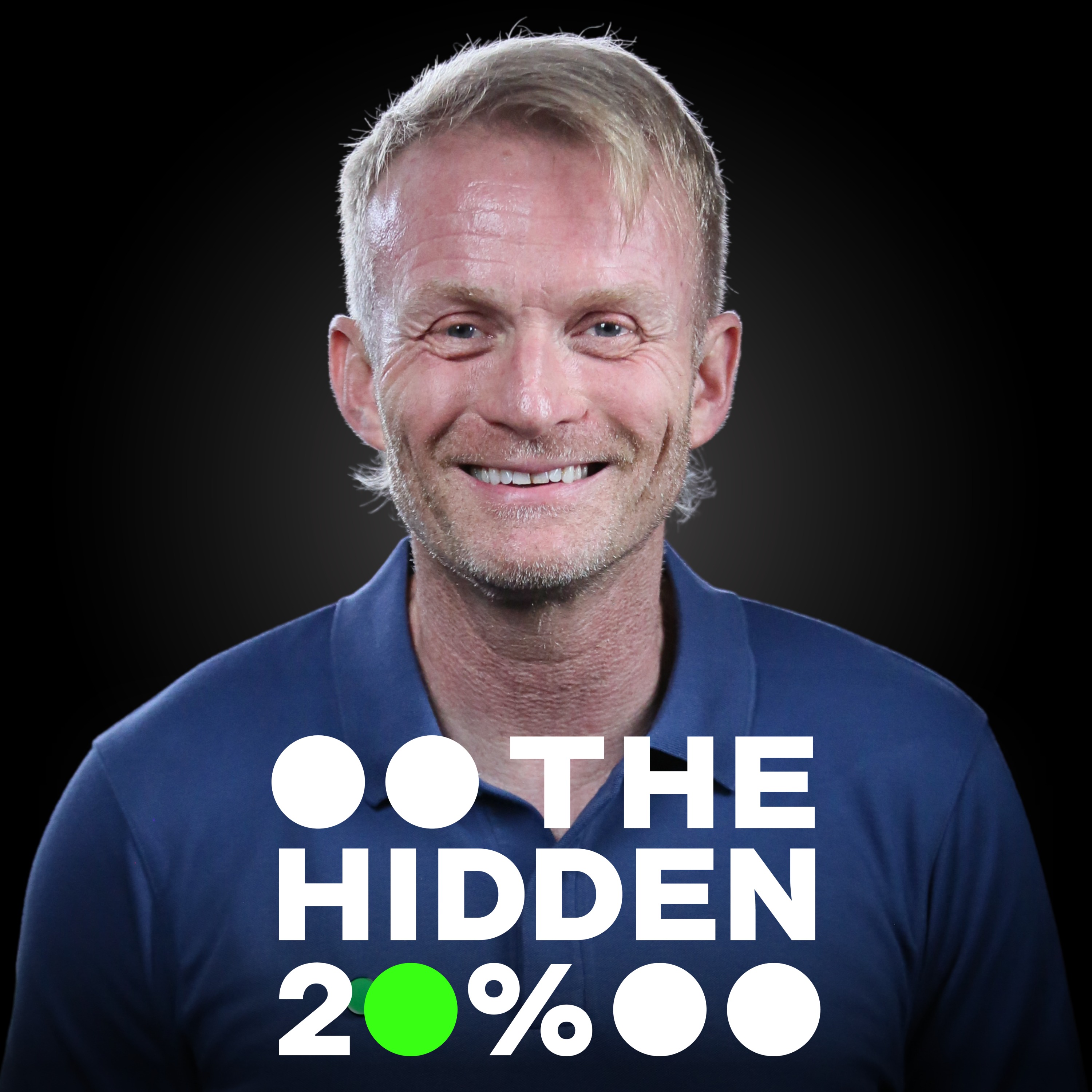
Matt Cain argues that autism/ADHD diagnoses are often overlooked or misread through stereotypes and stigma, especially for gay men. He frames “coming out” for neurodivergence as a visibility movement (parallel to LGBTQ pride) to change public perceptions and improve accommodations. He also discusses how negative stereotypes can mask traits like stimming, sensory sensitivities, meltdowns, routine needs, and rejection-sensitive dysphoria, leading to late diagnosis and self-shame.
Matt Cain is a bestselling author and witty broadcaster and a leading LGBTQIA+ voice. He felt “othered” for decades, attributing it to sexuality, until autism and ADHD were diagnosed just before age 50.
stereotypes (e.g., autistic people lack humor/empathy; ADHD people are always chaotic) delayed recognition; “overdiagnosis” is “utter crap”; visibility and accommodations help society, not harm neurotypicals.
bullying tied to effeminacy and gay stereotypes; fireworks and loud noises triggering overwhelm; “too gay” book rejections leading to crowdfunding success; psychotherapy and a period of sobriety; rejection-sensitive dysphoria explained as autism/ADHD symptom. Mentions his childhood best friend diagnosed alongside him.
Written by AI. May contain mistakes.
Discussion on Matt's experiences with his autism and ADHD diagnosis and its impact on his identity and humor.
“Let's see how great minds think differently.”
Matt shares his reflections on past bullying experiences and how they relate to growing up gay and neurodivergent.
“It's not what a lot of people think about with autistic, although possibly with ADHD.”
Exploration of how knowing his neurodivergent identity earlier might have changed Matt's life and career choices.
“So when I was growing up, it was the gay thing.”
Discussion on the parallels between Matt's experience with his sexuality and neurodivergence, focusing on shame and pride.
“Even the being rigidly attached to planning, that's really good when you're writing a novel and you need to stay across multiple timeframes and points of view and all your plot lines.”
Discussion on societal attitudes towards neurodivergence and the misconceptions surrounding diagnoses.
“I mean, can you imagine if somebody said that about cancer or, I don't know, any physical condition?”
Discussion on societal perceptions of neurodivergence and privilege.
“Actually, I think neurotypical people, some of them are feeling under threat, like we are, you know, going to take something away from them, rather than us just getting what we...”
Exploration of the relationship with alcohol and self-identity.
“And for the most part, nine out of 10 times, I could have a nice boozy meal with friends and then go home.”
Insights into autism and ADHD experiences and stereotypes.
“What surprised you, I guess, about being diagnosed?”
Impact of rejection sensitivity and its links to identity.
“and I looked on social media, all the responses were, who is this camp gay?”
Discussion on the complexities of identity and societal labels.
“recording this podcast, you tell me it's more ADHD.”
The role of neurodivergence in creative writing and character development.
“You know, there's a lack of, God, don't put any more barriers in front.”
Exploration of the creative process influenced by personal experiences.
“And that's what really connects with readers.”
Discussing the challenges and joys of writing, particularly for those with ADHD and autism.
“The idea usually comes from within me and a need to express it.”
Exploring the interplay between ADHD and autism in writing and creativity.
“So I think we've talked a lot about the positives of both autism and ADHD.”
Reflecting on the positives of neurodivergence and how understanding one's brain can enhance creativity.
“And I think it's actually the greatest gift for my career as a writer.”
Discussing the importance of visibility and advocacy for neurodivergent people, paralleling LGBTQ+ activism.
“So my parting shot, I can see you've got the green dot in your hand.”
Concluding remarks and acknowledgments, highlighting the importance of conversations around neurodiversity.
“Yeah, but it needs, as you're saying, come out, come out, wherever you are.”

Get the gist, explore an idea or ask about something said.
 Claude
On The Hidden 20%, what are the key points of this episode?
Searching your listeningAutomatic transcript. May contain errors.
0:00If you look at the social context then for gay men, there was so much negative stereotyping, demonization, and it was all about visibility and changing preconceptions. I actually feel like the arena I'm entering now with my neurodivergence is basically the same. Harvey Milk made a famous speech where he said, come out, come out wherever you are. If all the gay people came out, then everybody else would be able to see we're just like them. And I think now it's all about visibility with neurodivergence. And that's what we and everybody listening to this needs to do now, because if we all do, we can change the world.
0:41Our next guest is a bestselling author, witty broadcaster and a leading voice in the LGBTQIA plus community, Matt Cain. He's achieved so much, but for five decades, he felt fundamentally othered, attributing it to his sexuality. Until at 50, a diagnosis of autism and ADHD completely flipped the script. Matt's story is raw, honest, and shows the power of rewriting the narrative. Just a heads up, we do touch on some difficult topics in this episode, including mental health and suicide. Let's get into it. Let's see how great minds think differently.
1:27I spent the last like 10 minutes with you beforehand. And yeah, I'm really struck by how light and happy I feel in your company. We've had a laugh. And I love that we're just being incredibly blunt and open with each other. that tells me that we're going to have a good conversation and I think that you are someone who you have this lightness what impact has being diagnosed autistic and adhd had do you think on that lightness well I have always been very upbeat had a lot of energy people say I'm fun I sometimes I'm bursting with joy that doesn't mean to say that I haven't had struggles that I now understand better after my diagnosis.
2:17But I'm also understanding where a lot of the upbeat, positive expressions of who I am come from. But you said fun and you said blunt. And so part of the reason I came out as autistic, or I am coming out as autistic, is trying to work against the stereotypes. And one of the stereotypes is autistic people don't have a sense of humor, can't do jokes. It does take me a while to get jokes and I get really stressed going to stand up. But people have always said I'm funny. And you hit the nail on the head when you said blunt. I realized when I was in my assessment for autism that basically my jokes will consist of saying to a friend, look at that ugly bloke over there and they'll laugh.
3:04And that's actually not remotely witty it's just being blunt but i think i think also blunt gets a bad rap right blunt gets that word is probably more seen as negative and okay you could say being direct yeah that's the that's the kinder positive spin on it what i can do with proper jokes when i'm crafting them on the page over several drafts oh i like that's the other thing my books are packed with humor so people another reason why people wouldn't have spotted something. People think of me and they think energy, humour, fun. It's not what a lot of people think about with autistic, although possibly with ADHD.
3:48ADHD people are meant to be, according to the stereotypes, fun and firecrackers. Yeah, we've had Marcus Brickstock on here. He's not ADHD, but thought he's ADHD, saying how ADHD and comedians and humour is a big over. But I'm sort of struck knowing a bit about your history. I'm kind of struck by your use of humor when you've had some really shit times. This is the most interesting thing for me about my whole diagnosis and investigation. I found out I was diagnosed with autism and ADHD just before the age of 50. There were so many other factors confusing it and muddying the waters, as well as the stereotypes and the lack of proper understanding of what autism and ADHD were.
4:37Well, I don't think I knew what ADHD was when I was growing up. So I was the kid who was picked on, who obviously, not only am I gay, but I'm very obviously presenting as gay and always was. I was always effeminate, not very boyish. People would do impressions of my gay voice all the time. And humor was a coping mechanism. But that's the same for a lot of effeminate gay men and formerly boys. The thing that got me, like when I'm being investigated at the age of 49, is how little I knew about myself. Bearing in mind I'm supposed to be intelligent, I've written all these novels about self-discovery and characters working out who they are.
5:20And before I did the proper assessment, I did that questionnaire, the preliminary one by Simon Baron Cohen, who I know you've had on the podcast and who was great. And one of the questions was, are you shy? Okay. And I'm like, I literally don't know how to answer that. At the age I am now, I am not shy at all. I'm very outgoing, very relaxed in social situations and with this kind of thing. When I was growing up, I was so painfully shy. It's the first thing my mum had to tell anybody before she introduced me to anyone. But I thought, as I grew up and got over it, I thought I was so shy, I didn't want to open my mouth.
6:00Because as soon as I did, everybody did impressions of me and made fun of my gayness. It gave me away. So I had such terrible bullying. I was just always on the defensive from that. And now I've started to think, was that what it was? or was I also shy because of my personality, because of my neurotype, because of all the things? And how come I'm not now? Have I trained myself out of it or has my real personality that is actually outgoing come through? And I thought, how ridiculous that five decades into my life, I can't answer a question as simple as, are you shy? And so how do you, being diagnosed later in life, you know at 50 how do you then reflect back on your life with this understanding that you're autistic and ADHD god that's a big question I think I had it so hard I had so many things so hard I didn't realize what I was battling against I have all those eureka moments oh that's what was going on there yeah I do actually feel proud of myself for kind of getting through a lot of it Do you think it would have made any difference if you knew earlier on?
7:13Oh, that's a really good question. I've got to be honest. So when I was growing up, it was the gay thing. I literally had the s*** kicked out of me all the time, insulted, just on an hourly basis. I could see my weirdness. I could see I was hypersensitive. I had a security blanket. I used to twiddle between my fingers. Obviously, I didn't know that was stimming, but I knew it was weird. I had meltdowns. I couldn't stand certain noises. If my mom and dad took me to a firework display once and I went berserk and they had to take me home, people eating with their mouths wide open, I mean, literally, if I had an AK, I would take them out.
7:57I mean, I cannot bear it. Having to activate your defenses and all your powers not to go berserk at this person. So basically, it was so difficult, all the things that I knew I had with the gayness. I just couldn't go there with the things that made me weird. And so I tried to cover them up. You know, the fact that I was massively attached to routine and I just couldn't cope and was thrown. I did get called a weirdo. But what actually usually happened is the things that they had a go at me about that I can now see that were symptomatic of my neurotype, they used to say I was oversensitive, over emotional, a drama queen, if I had a meltdown.
8:42All these things fit with what they understood and stood at the time was being gay. You know, all those things fit with that. And even being really fastidious, really neat handwriting, working really hard at school, that made me a girly swat. Yes. And that was enough for the kids to say that was a sign that I was gay. So there's two things. First of all, I had so much on my plate, I just had to cover it up. And the other part of your question is, if I'd have known, I do sometimes think now, some of the jobs that I've done, you know, when I worked in the media, you know, I was editor of Attitude magazine.
9:17I was the arts correspondent on Channel 4 News. I was blatantly not suited to those jobs. I like to think that I nailed them, but at huge personal costs. If I knew the personal costs that were going to be involved, I wouldn't have put myself through them. The correct answer is I should have been able to do those kind of things with the right accommodations. But let's be honest, even 10 years ago, those accommodations didn't exist. I'm not even sure they do now. And jobs like that, editing attitude, being on screen on Channel 4 News, they set me up in my career. a career that has now, I've managed to steer in a positive direction for me, which is being on my own all day at home in my obsessions of whichever fictional world I'm creating and writing novels and all my hyper-empathy and my hyper-sensitivity works for me.
10:11Even the being rigidly attached to planning, that's really good when you're writing a novel and you need to stay across multiple timeframes and points of view and all your plot lines. I've managed to steer myself towards a situation that really works for me. Would it have been better for me to know? I actually don't know. What do you think about that? I know people who were diagnosed when they were children and they've actually been incredibly ashamed of that and hidden it and not wanted to talk about it, not wanted to deal with it, not wanted to open up about it and not wanted ultimately, I guess, to embrace it or harness it.
10:50That's what I would be like. And I feel, yeah, I feel kind of sad when I hear that because they're people who might have known something for 30 years about themselves. Now it's sort of a bit more awareness. It's a bit more in the media and people are owning it and embracing it and being public about it. And yet you've got a lot of people who are diagnosed young who are like wrestling with, hey, hold on a minute. I knew about this ages ago. Yeah, yeah, yeah. And when I was told, it was the worst thing ever. And so you don't talk about it. And now I've got people who are publicly taught. This is difficult to wrestle.
11:34It's a lot to take. It is absolutely a lot to take. And then I went through exactly the same thing with my gayness. Bear in mind that when I was growing up, it was the height of the AIDS crisis. I was in a small working class town in the north of England, and gay men were seen as dangerous, disease-carrying, sexual predators who couldn't be trusted around children. We were pariahs, and I went from a place of deep shame to a place of great pride. I think it's interesting that you're coming out twice, if that makes sense, of being gay, and then at 50, this new understanding of your brain. and so I'm thinking about our listeners and I'm kind of thinking I wonder what we can learn from you having sort of doing this twice in these minorities For me personally there's massive parallels because I did grow up in a place of shame with my sexuality and moved towards pride I do actually think that if you look at the social context then for gay men there was so much negative stereotyping demonization and it was all about visibility and changing preconceptions i actually feel like the arena i'm entering now with my neurodivergence is basically the same wow it's maybe a couple of years on but it's basically the same we're still stereotyped as neurodivergent people there's so much demonization there's resentment when we get any progress what do you think about the idea that people that were over-diagnosing.
13:12I mean, what utter crap. I mean, can you imagine if somebody said that about cancer or, I don't know, any physical condition? Also, why would people resent somebody finding a way to better understand themselves and live a happier life? It's so weird, isn't it? It's just so weird. I find it so amazing that it can be, change can be so threatening. Yeah, I know. That your brain and your experience and you doing something for you could be threatening to me. Like, it's so weird. I think then it's always the people who had it all who feel they're going to lose something. Okay. So the most telling comment I had, I only had most people have been very positive since I've come out for the second time, this time as autistic and ADHD.
14:02somebody said to me don't you think all this awareness of neurodivergence and all these accommodations that we're having to make is just going to make things harder for neurotypicals and that to me is like how do you respond to that well i said that's the equivalent of a member of my family i had an argument with him about he said it shouldn't be black lives matter it should be all lives matter and i was saying well who's saying that white lives don't matter and why You think you're going to lose something by giving black people the rights and the place in society that they deserve. Actually, I think neurotypical people, some of them are feeling under threat, like we are, you know, going to take something away from them, rather than us just getting what we...
14:48And if they've had privilege, predominance unfairly, give some of it up. Yeah. Yeah. But have you noticed, so the third rung is then you've stopped drinking alcohol. I did. I'm back on the booze. Oh, you're back on the booze. Yes. Okay. Oh my God, my relationship with alcohol. When I started psychotherapy and I said, right, I'm going to give up booze at the same time. I didn't know how long the psychotherapy would last and I gave it up for five years and then I once we'd worked through a lot of my issues and my therapist said you're ready we our work is complete you're ready to go and he kind of brought me out of the process gradually it did start drinking again and I'd like to say that once my gay shame and the dark urges that were making me want to self-destruct had gone I drank healthily it was all great.
15:49The truth is, I didn't drink out of an urge to take myself out and punish myself or self-sabotage anymore. But I couldn't cope with drink. And for the most part, nine out of 10 times, I could have a nice boozy meal with friends and then go home. There were times when accidentally, without intending anything, but I didn't realize I was working against the way my brain operated, I would get completely wasted and end up collapsing somewhere or I don't know staggering and staggering into some gay sex club or kind of slipping into old behavior and it's only since getting my diagnosis I've realized what I was fighting against and it was so much bigger than my negative self-image anybody from the cult of AA would say that I'd relapsed and I was justifying yes I was justifying my addiction yes do you do that where you judge your thoughts and feel like you need to explain.
16:47Yeah, I'm still like, I'm still working out. It is amazing, isn't it, that I'm sitting here at the age of 50, still working out who I am. Yeah. It's great though, isn't it? Because you are. Yeah, it is great, actually. You sound open to exploring that, like that you are curious about your own brain. I'm curious about my own brain. I'm excited and intrigued. keeps me going. I think not only do I not know at the age of 50 whether I'm shy or not, I don't know whether I'm an alcoholic or not. What do you know about yourself? Oh, that's good. I'm all in. Yep. There's no half measures. I'm fun. I'm sociable.
17:30I have really bad anxiety. I always do. And I thought the psychotherapy would make that better. It didn't. I know that I like my routine. I know that I like my home comforts. I know that I don't like spontaneity. I like myself. Yeah, that's great. I like myself and I didn't used to. I think I'm great. Yeah. What surprised you, I guess, about being diagnosed? The things that held me back a lot were the stereotypes, which is partly why I've come out, you know, that autistic people can't feel empathy, don't do emotion. I didn't realise that on the scale of emotional experience, neurotypical is a range in the middle and autistic can be either extreme, either hypo or hyper, either no emotions at all or so many and so intense, you literally can't control them.
18:29That surprised me. The whole interplay with autism and ADHD, I am still working out. So I must say about my ADHD, So I'm quite unusual of the three types, hyperactive, impulsive, then inattentive, and then combined. When I started to be curious, I'd look at lots of Instagram accounts and follow people who talked about it, and I just wouldn't see myself in them because I've got hyperactive, impulsive. I've not got inattentive or combined. So when people would talk, all these jokes amongst ADHD people about always being late and always being chaotic and jumping from one thing to another, not being able to follow things through, I'm not like that at all.
19:10I didn't think I was going to be ADHD for a while. Interplay between the two. There's certain things like heightened sensory sensitivities, rejection-sensitive dysphoria. I understand that can come from both. But again, the gayness threw me off course there because when I was growing up, I was rejected by everybody. Everybody hated me. When I started work, when I went on Channel 4 News and I looked on social media, all the responses were, who is this camp gay? I can't take him seriously. He's so gay. He hurts my ears. Literally one thing after another. He said I was to ask reporting what Wayne's sleep is to dance using another camp gay man.
19:54So I thought all these insults are hurting because they're reopening old wounds from when I was growing up. And I was in therapy at the time and that was what it was teaching me. And it was probably right. It did. And then when I started writing fiction, my first novel, The Madonna of Bolton, was rejected for 10 years by agents and then publishers. The overriding response was, over years and years and years, is this book is too gay. The central character is gay. The experiences he relates are those of a gay man. It's too niche. It's not going to cut through. I was incensed by this because I could see, I was the editor of Attitude at the time.
20:37I could see that TV and film and theater were proving this wrong and publishing was just old-fashioned, which is why I went and crowdfunded the book, showed The Guardian my rejection letters, whipped up outrage, broke the record for crowdfunding a novel in seven days and it became a hit. Great. Although I can also see that my dogged persistence and determination fixation on proving them wrong was probably down to my autism. But when I was getting all these rejections, the point I wanted to make was because they were homophobic, I just thought that was also reopening old wounds. And it's only all these years later that I find out rejection sensitive dysphoria is a symptom of both autism and ADHD.
21:22And I've got both. And it's only literally here recording this podcast, you tell me it's more ADHD. Just listening to you, I'm kind of struck by not in a bad way but how you've had to like compartmentalize your identities to a certain extent or you've your gayness has obviously been a huge part of your identity i mean you say yourself oh yeah absolutely and then we're now kind of adding these other things to your identity but later on in life like somebody said somebody did say to me meaning well are you sure you want to come out because you know you write these novels with gay characters you've had such a battle to prove they can have mainstream appeal i have proven that now thankfully and somebody said if you're adding autism in particular to the mix with all the stereotypes and misunderstandings about that are there going to be two reasons that the mainstream aren't gonna connect with you but i'm unboundaried i can't keep these things to myself i'm an overshower it all comes splurging I've not answered your question though.
22:30What was the question? No, you have. I'm interested, Matt, by your, and I can relate to this also being autistic of sort of placing things and structuring things of like, okay, that's being autistic. That's actually more ADHD. You talk about, okay, that's my gayness doing that. And I mean, it's all you, right? It's all you in your one personality and brain and et cetera. But, and I've heard this before with guests of sometimes there's a lack of like want for more labels. You know, there's a lack of, God, don't put any more barriers in front. And what I love hearing you talk is when people are saying, hey, look, if you tell people you're autistic, you're going to be more niche.
23:23Maybe that's not what you should be saying in public. And I completely relate to that because I'm like, well, no, I cannot not say anything about this. I need to talk about this. I need people to talk about it. And I finally understand a bit more about how I work. And I don't want anybody, I don't want my kids growing up worrying about their life or their brains or having all these unanswered questions. Well, it's interesting you say that. Yeah, so I have a massive, I didn't realize this was a symptom of ADHD, stroke, autism, both. Justice sensitivity. If there's some injustice, I just can't keep quiet about it.
24:03You know, the slightly racist family member making jokes that we keep quiet about to keep the peace. I mean, I can't keep quiet. I'm in there. So there's another really big thing, which is the reason that I have talked about this. And that was part of their struggles. When I was growing up in Bolton and everybody hated me, I had this one friend, the best friend I have ever had. I have never been so close to another human being. We met at nursery school at three. We just had this bond. We wanted to be together all the time. All our obsessions we shared. Nobody understood it. It was only about six months before I was diagnosed.
24:44We were having a walk together and she was telling me that she'd not seen a dad for 20 years, but he'd just died. Her mom divorced her dad. He was cut out of the family because of the domestic violence. She went to his funeral decades later and guess what she found out at his funeral? He'd been diagnosed autistic. This friend of mine who had no sense to the age of three then started on her journey at the same time as mine. she was one of the interviewees in my assessment about my childhood i was one of hers the following week we were both diagnosed together suddenly everything made sense about why we'd had this amazing connection and why other people didn't get it and didn't like it but also that's another reminder it's about people like her dad who didn't get the help he needed ruined people's lives as well as his own yeah and how many other people are there like that yeah and they don't have to be no no and and and yeah i listen to that and people are talking about over diagnosis i know i know so i'm going to ask you now that sense of social injustice that you're now mirroring quite brilliantly onto neurodivergence like we need you to do the same i'll do it line up the barriers i'll Batter him down.
26:07I'm going to do it. Please. What I think I probably need to do now and what I probably want to do is write novels where the characters are explicitly autistic or ADHD. I've always been writing these characters. So first of all, the central theme of my books is always the search for the self and blossoming into your best self. Although they're all very different, the situations, the characters, the plots, they're essentially all about characters who feel like they don't fit in have grown up being made to feel ashamed of who they are working towards a place of self-discovery self-love pride and i always thought this came from my gayness i now realize that my autism and adhd being made to feel ashamed of my weirdness and the other things that made me stand out has fed into it given more emotional depth to that central theme.
27:02And that's what really connects with readers. How much like pre-work do you do on when you develop the idea for a character? Like how? Well, this is where the autism comes in. So you get all the sparks of ADHD with all the creativity, loads of ideas. But because I've only got hyperactive, impulsive and not combined or inattentive, I don't have a problem following it through. The autism kicks in, head down, I'm obsessed. I'll keep going until I brought it to fruition. I'll plan and plan and plan, research and research and research, think about my themes, read around it, all that. I basically get obsessed and fixated.
27:40I'm curious that, like, I don't read any fiction apart from to my kids. But even then, I mean, River, who's autistic, she's five. She loves the encyclopedia. and I'm fully into that and she also loves that we're reading Matilda at the moment and so I kind of bring in if they want to you know learn about stuff then I'm happy to bring in the kind of non-fiction but I don't read fiction now and I know that autistics if you said okay let's be general what do autistics prefer non-fiction or fiction there would always be this lean towards facts and logic and i'm interested in kind of how your brain works where fiction's concerned and how much of this is really books being just this vehicle for you and your life and your thoughts and your experiences and how much of it is that you love creating these worlds It's definitely both.
28:46The idea usually comes from within me and a need to express it. Sometimes writing a book so hard and you sit down and I can't make myself stop. Sometimes you're not like actively enjoying it while you sit and write. It's almost like an exorcism. You've got to get it out of you. Which bit do you prefer then? The planning or the execution? I prefer the world creation, inventing it all. I do like the planning and I like lots of plots and twists. And I like kind of, you know, planning them all out. And I love writing the first draft. What I hate is rewriting and editing. Yeah, we're working on a book at the moment.
29:30that's... When you say we, do you mean the company or do you mean... I mean the charity. Oh. Yeah, but because we've been asked, you know, we've been approached and that is more of a writing book and that's, yeah, I'm... That's hard to just sit down and write. But is that in... So I think we've talked a lot about the positives of both autism and ADHD. So I don't feel bad in this context and knowing who your listeners and viewers are to talk about the negatives. Do you think you're battling your inattentive ADHD? I think I'm battling the fact that doing a book for the hidden 20 % is not a priority.
30:15That's what I'm battling. Partly because you know about the timescales and these things can take a long time. So if I think, right, so that's two and a half years away. Well, hold on a minute. Our work is now. So our work is now. And what's the world going to be like for neurodivergence in two and a half years time? It's going to be completely different in a great way, given the momentum that there is. Don't they say with inattentive ADHD, often you leave things to the last minute and the night before, it's a massive burst of activity. So is that not another expression of you looking at something that needs doing in two and a half years and thinking, oh, that can work?
30:54Well, I know two things. Firstly, break it down. And that's already less overwhelming. And so then breaking, this is where being autistic really helps, right? Because I can break it down into piecemeal chunks. And so I did. And then you're like, ADHD kick in. Great, I've written 1000 words. Okay, I'm not going to judge it. So a novel is different because you can't actually break it down in quite the same way. And what you need to do is, if you've got all these characters and subplots and themes and characters all have to speak, you know, we all have different speech patterns. You've got to stay across all those things and their backgrounds and backstories.
31:34And you basically have to keep it alive in your head all the time. When you're doing a first draft, you have to write every day. I take Sundays off, but if you take more than one day off, you're out of it. You've got to get back into it. Really? So how do you keep... We can't do that. How do you... I'm sort of imagining, you know, like a police investigation room with red arrows. Yeah, I do slightly have all the post-it notes and the cue cards and you move them around on the floor and all that. Yeah, I do have all that. And I plan and plan and plan. But I have to say, it's actually the interplay of autism and ADHD and where they both are in the mix when it comes to creativity.
32:11I think I've got them in exactly the right mix. I don't struggle with so many things. And they're a massive help in so many ways. I do remember, even when I was a kid and hating myself for the gayness and the weirdness, which I didn't understand was all about my neurotype. I do remember, even in the midst of that, being slightly in awe of how my brain worked. Isn't that weird? So I could still see the positives. People would often say to me, teachers and people would often say, I don't understand your capacity for work, how you can get so much done. And I always was in awe of it. And I think it's actually the greatest gift for my career as a writer.
32:54And that's all about self-realization, about who I'm meant to be, to have an ADHD brain. And what I think is so cool is that you've had a really successful career writing books. and you had no idea about the way that your brain worked, well, having more of an understanding now and channeling that into your work is going to be exciting. That's what I think. I think it's absolutely, I mean, yeah, more knowledge. It's just going to be even more of a benefit. I'm excited about the future because all the bad things that have happened, it strikes me that they were only allowed to become bad and have a negative impact on my life because I didn't know or understand what was happening.
33:47And now, I honestly think that I've got a better handle on the bad stuff. And the good stuff, as you say, understanding why all the positives work in my favor, that's really exciting. Hey, I tell you what. So my parting shot, I can see you've got the green dot in your hand. So my parting shot, you were interested in the parallels between my journey as a gay man and my journey as a neurodivergent person. Harvey Milk made a famous speech where he said, come out, come out, wherever you are. Can't quote the rest of it. But the upshot of it was, if all the gay people came out, then everybody else would be able to see we're just like them.
34:26Some of us are nice, some of us aren't. Some of us are camp, some of us like football, whatever, and it would change the world. And I think now, it's all about visibility with neurodivergence now. I think Harvey Milk's line, come out, come out, wherever you are, is very relevant. And that's what we, and everybody listening to this, needs to do now. Because if we all do, we can change the world. Yeah, but it needs, as you're saying, come out, come out, wherever you are. Like, it needs that sort of call to arms to kind of have that visibility first. Yeah, absolutely. Okay, well, that gives me hope.
35:04Green Dot badge, I've given you one, Matt, you're wearing it. we've got one outside for your husband who would you like to give this one to i would like to give it to my best childhood friend who was on the same journey different factors we both got there in the end we did it yeah lovely i've loved talking to you just whenever anyone comes and sits in these chairs that is willing basically to speak up is just great because it's like the conversation that needs to happen. So thanks, Matt, for coming. Thank you for having me. Yeah, you're like a great sort of fresh whirlwind of good fun. Thank you.
35:47I'm a firecracker, as I said at the beginning. And I love that. Thanks, Matt. You've been listening to The Hidden 20%. If you're still knocking about, then let me introduce you to the band. First up, main man on the mic, host Ben Branson Our wonderful producer, Bella Neal And the man who'll probably try and cut this bit Video editor, James Scriven Not forgetting our wondrous theme tune by Jackson Greenberg Lovers or haters, we want to know So be sure to leave a review wherever you're listening For the lovers amongst you, you'll find us on TikTok and Instagram at hidden20podcast or over on hidden20.org where you can join our mailing list.
CW: Addiction & Bullying
Bestselling author and broadcaster Matt Cain opens up about discovering autism and ADHD at 50 after decades of feeling "othered" as a gay man.
In this chat with Ben, Matt unpacks how his autism and ADHD were long blurred with queer expression, explains how ADHD fuels his creative work but also complicates his relationship with alcohol, and emphasises why "coming out" as proudly neurodivergent- just as he has as a gay man- is so vital.
_________________
On "The Hidden 20%," host Ben Branson chats with neurodivergent [ADHD, Autism, Dyscalculia, Dyslexia, Dyspraxia, Tourette's etc.] creatives, entrepreneurs, and experts to see how great minds.. think differently.
Host: Ben Branson
Head of Production: Bella Neale
Assistant Producer: Phoebe De Leiburné
Video Editor: James Scriven
Social Media Manager: Charlie Young
Music: Jackson Greenberg
Brought to you by charity The Hidden 20% #1203348
__________________
Follow & subscribe…
Website: www.hidden20.org
Instagram / TikTok / Youtube / X: @Hidden20charity
Ben Branson @seedlip_ben
Matt Cain @mattcainwriter
If you'd like to support The Hidden 20%, you can buy a "green dot" badge at https://www.hidden20.org/thegreendot/p/badge. All proceeds go to the charity.
Hosted on Acast. See acast.com/privacy for more information.


